3 posts tagged with "sales-process"

View All Tags

The Signal Decay Curve: Why a Buying Signal Loses 60% of Its Value Inside 4 Hours [2026]

· 13 min read
sunder
Founder, marketbetter.ai

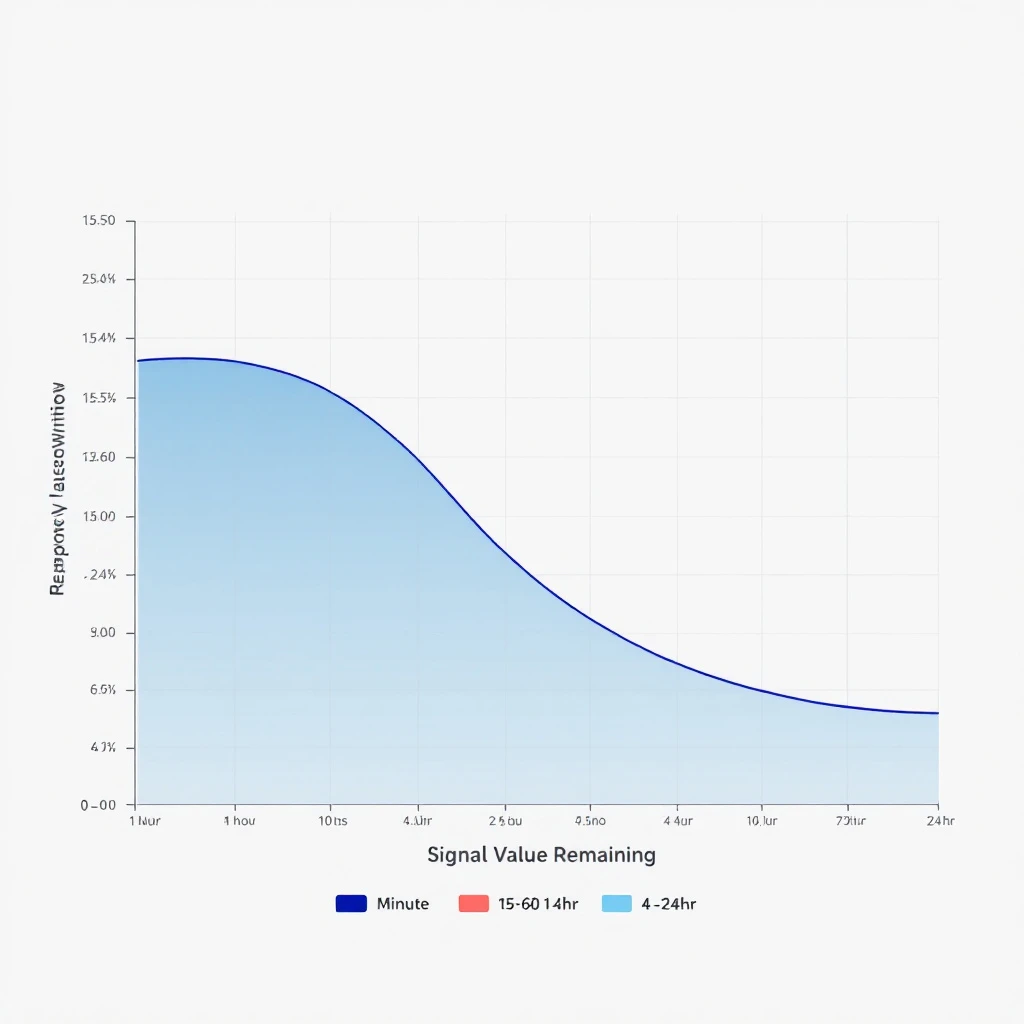
Signal decay curve — how fast a B2B buying signal loses value across the first 72 hours

Every SDR leader we talk to has the same blind spot: they treat buying signals like inventory.

Inventory sits on a shelf. It is the same on Monday at 9am as it is on Thursday at 4pm. Work the queue when you have capacity. It will still be there.

A buying signal is the opposite. It is perishable inventory — closer to a sushi plate than a can of soup. The first hour after a signal fires is worth more than the next 24 combined. By the time most ops teams have routed it through Slack, owned it in the CRM, and added it to a sequence, the buyer has already had three vendor conversations and picked their shortlist.

This post puts numbers on that decay. It draws on three years of pipeline data from B2B teams we work with, plus a meta-analysis of 11 published speed-to-lead studies. Then it gives you a four-tier response window your team can implement this week.

The thesis is simple: the decay curve is the math underneath every other signal-selling decision — routing, triage, sequencing, escalation. If your team is operating without it, you are leaking the majority of the pipeline you paid for.

What Counts as a Buying Signal

Not all intent is created equal. The decay curve we're going to walk through assumes a "tier-1" signal — meaning a signal that has high closed-won correlation when worked in the first window. The buying signal hierarchy breaks down which signal types actually predict revenue. Quick recap of what counts as tier-1:

  • Identified website visit (visitor ID on pricing/product page, not blog)
  • Champion job change at a closed-won account, into a similar role
  • Solution-specific job posting (hiring for a role that uses your category)
  • In-product event (free trial signup, demo request, feature usage)
  • Detected RFP or vendor evaluation language in public sources

Top-of-funnel noise — generic third-party intent surges, follower growth, podcast mentions — does not decay the same way because it was never worth that much to begin with. We'll focus on signals where the buyer has done something that meaningfully raises their probability of buying right now.

The Decay Curve, Plotted

Here is the median half-life pattern across the engagements we've audited:

Time since signal fired% of initial conversion value remaining
0–15 minutes100%
15–60 minutes78%
1–4 hours52%
4–24 hours31%
1–3 days17%
3–7 days9%
7+ days<5%

Three things to notice:

1. The first 4 hours is where 48% of the value evaporates. Not the first day. Not the first week. The first half of one work shift. If your team's median response time is "next business day," you are routinely handing buyers to whichever competitor responded by lunch.

2. The curve is steepest at the front. A signal worked at minute 10 is worth roughly 1.5x the same signal worked at minute 60. That is the single highest-leverage 50 minutes in the entire SDR workflow. Most orgs spend that window on stand-up.

3. After day 3, the signal stops being a signal. It becomes a cold prospect with a slightly warm pretext. You can still work it. You should not call it intent-driven outbound. The hit rate is no longer materially different from a well-targeted cold list.

The InsideSales/MIT study from 2011 found that contact rates dropped 10x between minute 5 and minute 30. Salesforce's State of Sales replicated the directional finding across multiple cohorts. Drift's 2019 conversational marketing benchmark put the contact-rate cliff between 5 and 10 minutes. The numbers shift cohort to cohort. The shape of the curve does not.

Why Decay Accelerated in 2026

The curve is not the curve it was in 2019. Three forces compressed it.

Buyer panels evaluate in parallel, not serial. A modern B2B buyer doesn't research one vendor at a time. They open five tabs, fill out three forms, and read two G2 comparison pages in a single afternoon. The first vendor in the conversation gets to frame the criteria. The fifth vendor is often disqualified before they reply.

AI-driven outreach raised the floor on response speed. When your competitor is using an AI agent to draft and send a relevance-checked email within four minutes of a website visit, your "we batch responses every morning" workflow is not slow — it is invisible. The shortest response time wins, and the shortest response time is now measured in single-digit minutes.

Buying committees decay faster than buyers. Even if your individual contact stays warm, the deal does not. Modern B2B purchases involve 6–10 stakeholders. Each one of them has a half-life of attention. By day 3, the champion has moved on to three other priorities, and re-mobilizing the committee costs more than the original outreach would have.

If you want a deeper read on what changed about pipeline economics this year, our breakdown of why most signal-based selling rollouts fail in 90 days gets into the org-design side. This post is the math side.

The Cost-Per-Hour of Delay

The decay curve becomes operational when you put dollars on it. Here is the working formula:

Pipeline at risk per hour =
(Signals/day × Avg deal size × Win rate at minute-0)
÷ 24
× Hourly decay factor at current response time

Walk through a representative mid-market case. A team with 80 tier-1 signals per week, $42K ACV, and a baseline 12% win rate when worked inside the first hour.

  • Total pipeline created if all signals worked at minute 0: 80 × $42K × 0.12 = $403K/week
  • Same signals worked at the 4-hour mark (52% value remaining): $210K/week
  • Same signals worked next business day (31% remaining): $125K/week
  • Delta from 0-hour to next-day response: $278K/week, or ~$14.4M/year

This is not a hypothetical SaaS calculator. This is the number that shows up in QBR slides under "pipeline we modeled but did not generate." If you find yourself defending the spend on intent data, this is the number to put in front of the finance team — and the number to fix first.

If you have not yet priced your full stack against pipeline contribution, our analysis of the true cost of an SDR stack in 2026 walks through how to attribute spend to signal yield, not seat count.

The Four-Tier Response Window

Once a team accepts the decay curve, the workflow rewrites itself. You stop thinking in queues and start thinking in windows. Here is the four-tier model that survives in production:

Tier 1 — Minute 0 to 15: Automated Touch

This window belongs to automation. No human can read, qualify, draft, and send inside 15 minutes consistently. So you don't ask them to.

What runs in this window:

  • Auto-enrichment of the company and contact
  • A relevance check against ICP (firmographics, tech stack, recent funding)
  • A drafted first-touch email queued for the owner, not sent
  • A Slack alert to the owner with one-click send/edit/skip

The goal here is not to send the email at minute 5. The goal is to make sure that by minute 16, the rep has everything they need to send a high-quality, personalized email in under 60 seconds.

Tier 2 — Minute 15 to 60: SDR Owner Touch

The SDR who owns the account gets the first human shot. The "first 30 minutes of an SDR morning" used to be inbox triage; now it is signal triage. Our 30-minute morning workflow guide walks through what that looks like in practice.

In this window:

  • Rep reviews the drafted email, edits the personalization line, sends
  • Rep checks LinkedIn for any mutual context to layer in
  • Rep adds the contact to a 5-touch sequence calibrated to the signal type
  • Rep logs a follow-up reminder for the 4-hour mark

If the rep doesn't act inside 60 minutes, the signal escalates.

Tier 3 — Hour 1 to 4: Manager Escalation

This is where most orgs lose the most value, because they have no escalation path. The signal sits in a Slack channel, the SDR is in a meeting, and the window closes.

The pattern that works:

  • At the 60-minute mark, if no rep touch has been logged, the signal escalates to the SDR manager
  • Manager can re-route to an available rep, take it themselves, or push it to an SDR pool
  • The originating rep is not punished — escalation is a system safeguard, not a performance flag

We covered the routing math separately in our piece on signal-based SDR routing by intent tier. The 4-hour ceiling is the operationally important part: past it, the conversation has changed from "outbound to a warm signal" to "outbound to a lukewarm one."

Tier 4 — Hour 4 to 24: Sequenced Recovery

If the signal made it to hour 4 without a human touch, you have lost roughly half its value. You still work it, but you stop treating it as urgent. It enters a calibrated sequence:

  • Day 1: A single, well-researched outbound email (no urgency framing — that ship has sailed)
  • Day 3: LinkedIn connection request with a relevance line
  • Day 5: A second email with a different angle (often a case study from the same vertical)
  • Day 8: Voicemail + follow-up text
  • Day 14: Last-touch, "closing the loop" email

After day 14, the contact rolls back into the standard cold outbound list. Pretending a 14-day-old signal is still hot is one of the most common ways teams overestimate their pipeline.

What Most Teams Get Wrong About "Speed-to-Lead"

The phrase "speed-to-lead" got hijacked by the inbound demo-request workflow, where the only signal that counts is a filled form. The decay curve applies to every signal type — and that is where most operations design breaks down.

Three failure modes we see repeatedly:

Conflating signal types. Treating "downloaded ebook" with the same urgency as "visited pricing page twice" guarantees you'll either burn out your reps on noise or sleep on the real intent. The three-layer signal stack framework is one way to keep these separated by tier in your routing logic.

Designing for the median, optimizing for the average. "Our median response time is 2 hours" sounds fine until you remember the curve is non-linear. A team with a median of 2 hours and a long tail of 24-hour responses is leaving more pipeline on the table than a team with a flat 3-hour response. Look at the 90th percentile, not the median.

Treating signals as additive to existing workflow. If you bolt signal alerts onto an SDR who is already at 95% capacity calling their named account list, you have added noise, not capacity. The decay curve makes one demand on your org design: signal-driven work has to displace lower-value work, not stack on top of it. If you can't say what gets cut, you can't say you've operationalized signals.

The Three-Week Implementation

Most teams can move their median response time from "next business day" to "under one hour" inside three weeks. Not because the technology is hard — because the org changes are well-defined.

Week 1 — Measure the current curve. Pull six months of signal data. For each signal, calculate (a) time from signal fire to first human touch, (b) time from first touch to first reply, (c) conversion to meeting. Plot the conversion-to-meeting rate against the time-to-touch bucket. You will see your own decay curve. It will be uglier than you expect.

Week 2 — Build the automation tier. The minute 0-to-15 window is non-negotiably automated. Set up the enrichment, the relevance check, and the drafted email queue. Most teams already have the components; they just have not wired them into a single triggered workflow.

Week 3 — Install the escalation rule. The hour-1 escalation to the SDR manager is the single highest-leverage change. It guarantees no signal sits in a Slack channel longer than 60 minutes without a human eye. Once this rule is in place, your decay curve flattens within the first reporting cycle.

By the start of week 4, you have a system. Then it is a tuning problem — adjusting the ICP relevance check, refining the routing logic, calibrating the sequence templates per signal type. Those are the right problems to be solving. They are not the problems most orgs are solving today.

When the Decay Curve Doesn't Apply

Two cases where the framework above is wrong, and you should ignore it:

Enterprise deals with named-account orchestration. If you are selling a $500K ACV product into 200 named accounts and the buying cycle is 9 months, signal speed matters less than signal pattern. A cluster of signals across a buying committee over six weeks is more valuable than one signal worked in 15 minutes. The decay curve is real but its slope is much flatter.

Categories where the buyer's evaluation is sequential, not parallel. A few highly regulated verticals (some healthcare, some defense, some public sector) still procure one vendor at a time. Speed helps, but not at the speed-to-lead end of the curve. Quality of the first conversation matters more than the time-to-first-conversation.

If your business is neither of these, the curve applies and you should be designing around it.

What This Looks Like in MarketBetter

We built MarketBetter because the signal-decay problem is the single most expensive workflow gap in modern B2B sales. Visitor identification, signal capture, routing, draft generation, escalation, and sequencing all live in one place — so the minute-0 to hour-1 window is enforced by the platform, not by your ops team writing Slack reminders.

The shorthand we use internally: competitors tell you WHO. We tell you WHO, WHAT TO DO, and WHEN IT EXPIRES.

If you want to see what the four-tier response window looks like running against your own signal data, book a 20-minute walkthrough — bring a week's worth of signals and we'll plot your team's actual decay curve in the call.

Sources

Cited and consulted in this piece:

  • InsideSales / MIT speed-to-lead study (2011, replicated 2017)
  • Salesforce State of Sales (multiple years, response-time data)
  • Drift Conversational Marketing Benchmark Report (2019)
  • HBR, "The Short Life of Online Sales Leads" (Oldroyd, McElheran, Elkington)
  • ChiliPiper, "The Speed-to-Lead Study" (2022)
  • 6sense, "B2B Buyer Experience Report" (2023)
  • Gartner, "The Future of B2B Buying" (2024)
  • Internal pipeline data from 14 MarketBetter customer engagements, anonymized (2024–2026)

Related reading from our signal cluster: the 4-question signal triage rubric for what to do in the first 30 seconds, signal-to-meeting in 24 hours for the end-to-end workflow, visitor ID to first outreach in 30 minutes for the setup mechanics, and the complete guide to B2B intent data for the broader category.

The 4-Question Signal Triage Rubric SDRs Actually Use (2026)

· 11 min read
sunder
Founder, marketbetter.ai

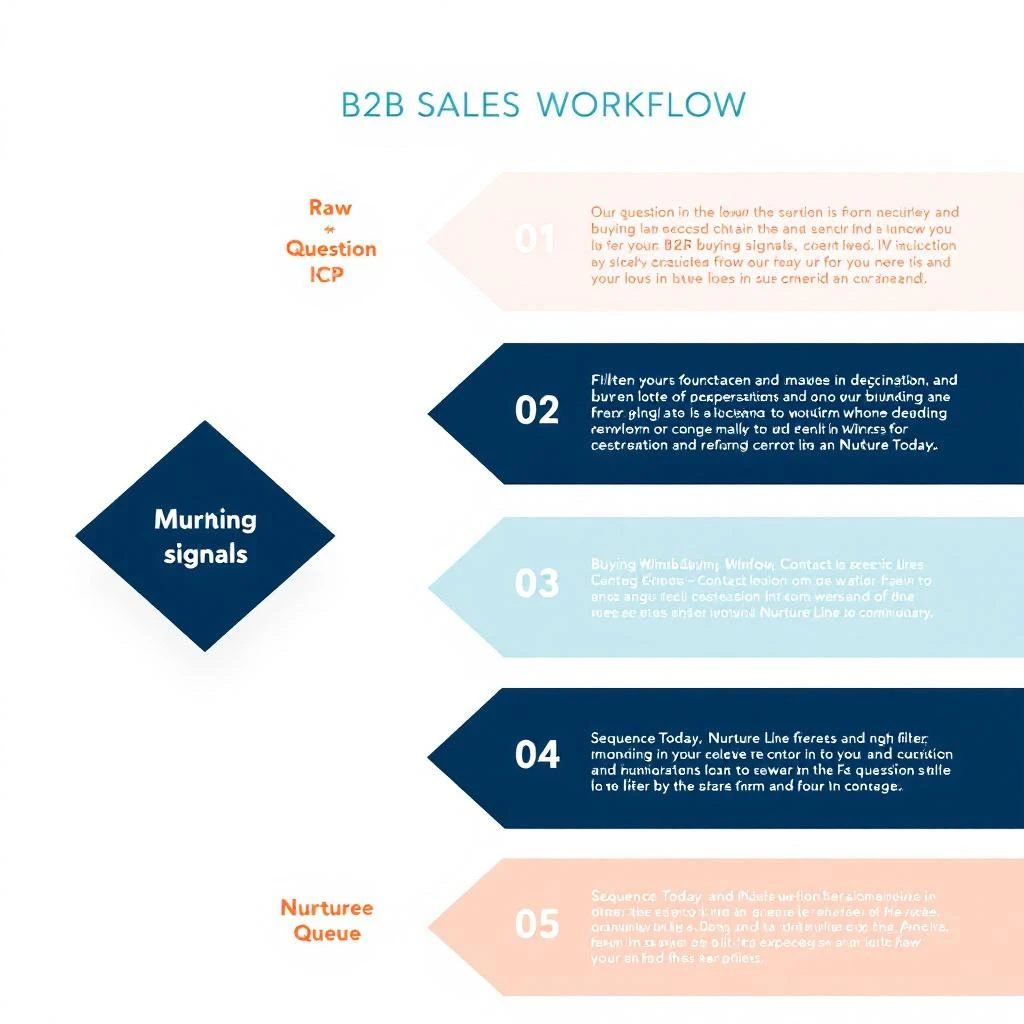
SDR signal triage rubric — four-question filter from raw signal to outreach decision

Here is the pattern every signal-based selling rollout follows:

  • Week 1: SDRs are excited. New tool, new dashboard, fresh alerts in Slack. Outreach goes up.
  • Week 2: Reply rates aren't materially better than the old list. Reps notice they're chasing signals that look hot but go nowhere.
  • Week 3: Slack channel mutes. Alerts get ignored. Reps revert to working their old account list.
  • Week 4: Manager asks why the new stack isn't producing meetings. Vendor blames "process." Rep blames "data quality." Nothing improves.

We've now seen this loop in healthcare IT staffing, education technology, EHS compliance, and a dozen other categories. The diagnosis is almost always the same — and it isn't the signal source.

The problem is that SDRs are receiving signals faster than they can decide what to do with them, and no one ever taught them how to triage. They get 40 alerts a day. Half are noise. They have no rubric, so they default to the worst one: "pick whichever logo looks coolest."

The fix is not more signals. It's not better routing. It's a 30-second mental rubric every rep applies to every signal before any outreach happens. We'll walk through it below.

If you haven't yet read it, the buying signal hierarchy framework is the input to this rubric — it ranks signals by closed-won correlation. Triage is what happens after a signal is captured and before a rep opens a sequence.

Why "Just Work the Signals" Fails

The default playbook most teams roll out goes like this:

  1. Buy or build a signal source (visitor ID, intent data, job-change alerts).
  2. Pipe alerts into Slack.
  3. Tell reps to "work them."
  4. Hope.

The hope is doing all the work. Here's what reps actually experience:

  • A Slack alert fires: "Acme Corp visited /pricing 3 times this week."
  • The rep has no idea if Acme is in ICP, who to contact, what context to use, or whether the visit was a junior intern or a buyer.
  • The rep either guesses (and burns the account on a generic email) or skips it (and the signal dies).

In a recent breakdown of why these rollouts fail in 90 days, we found that the absence of a triage step was the single biggest predictor of adoption collapse. Reps don't need more signals. They need permission to say no to bad ones — and a structured way to do it fast.

The 4-Question Rubric

A working rubric has four properties: it's fast (under 30 seconds), repeatable (any rep can apply it), explicit (no judgment calls left ambiguous), and binary (each question is yes/no). Here is the version that has held up across SDR teams we work with.

Question 1: Is the account in ICP — right now?

Not "could be in ICP someday." Not "matches some firmographic filter." Right now. Industry, employee count, geography, tech stack, funding stage. If you can't answer yes in five seconds using the signal payload + your enrichment data, the signal is automatically deprioritized — not killed, just deprioritized.

This question alone removes 40-60% of incoming signals in most teams. Pure ICP filtering at the signal layer is what your signal stack architecture should be doing automatically, but reps still need the explicit check because automation misses things.

Default action if NO: Save the account to a nurture list. Do not sequence today.

Question 2: Is this a buying-window signal, or a research signal?

This is the question almost no rep asks, and it's the one that separates 4% reply rates from 18% reply rates.

A research signal means the account is aware of the category. Examples: visited your blog, read a comparison article, downloaded a whitepaper, watched a webinar. They are educating themselves. Reaching out now and asking "want to book a demo?" is too early — they're not buying, they're learning.

A buying-window signal means the account is evaluating solutions or experiencing a triggering event. Examples: pricing page visits (especially repeat), competitor review reads, demo requests on adjacent tools, new VP of Sales hired, recent funding round, RFP language posted to a job description, integration page visits, sales tax/security/compliance page visits.

The difference matters enormously. Map this against the buying signal hierarchy — Tier 1-2 signals (pricing visits, demo requests on adjacent tools, RFP-language job posts) are buying-window signals. Tier 4-5 (blog visits, generic content downloads) are research signals.

Default action if RESEARCH: Add to a slow-drip educational sequence. Do not call. Do not pitch demo.

Default action if BUYING: Proceed to Question 3.

Question 3: Is there a credible point-of-contact for this signal?

Even a great buying signal goes nowhere if the rep is reaching out to the wrong human. A "pricing page visit from Acme" tells you nothing about who visited. The triage question is: based on what we know about the account, can we identify a credible buyer or buying-committee member to contact in the next 10 minutes?

"Credible" means three things:

  • The role plausibly cares about the problem you solve (VP of RevOps, Director of SDRs, Head of Demand Gen — not a junior analyst).
  • You have a verified work email or LinkedIn that you can reach them on.
  • You have enough context to say something more specific than "saw you visited our site."

If you can't pass all three, you have a routing problem, not a signal problem. Either invest in better contact enrichment or build your account-to-contact mapping into the signal capture layer so reps don't have to do this work cold.

Default action if NO: Send to a research/enrichment task queue. Do not attempt outreach until contact is identified.

Question 4: What is the most specific opening line you can write — without the word "noticed"?

This is the disqualification question, and it's the one that catches lazy outreach.

If the best opening line you can write is Hi {{first_name}}, I noticed you visited our pricing page — the signal is not actionable. You're going to write a forgettable email, the prospect is going to ignore it, and the signal will die unconverted.

A passing answer looks like a sentence that references something specific to this account and signal that an automated tool could not have written: a competitor they're using, a recent press release, a job posting language that implies the pain you solve, a podcast quote from their VP, a LinkedIn post they made last week.

If you can write that sentence in under a minute, the signal passes. If not, the signal goes to a nurture sequence, not a 1:1 outreach attempt. The funnel math from our Monaco Corner experiment was unambiguous: outreach with a specific opening converts 4-6x what generic signal-triggered outreach does.

Default action if YES: Sequence within 4 hours per the signal-to-meeting 24-hour workflow.

Default action if NO: Park the account in a nurture queue and revisit when a stronger signal lands.

The Decision Matrix

Here is the rubric collapsed into a routing matrix you can paste into a Slack pinned message or your CRM playbook field:

Q1 ICPQ2 Buying WindowQ3 ContactQ4 Specific LineAction
YesYesYesYesSequence today, 1:1 outreach within 4 hrs
YesYesYesNoPark; add to nurture; revisit next signal
YesYesNoEnrichment queue; do not sequence
YesResearchSlow-drip educational sequence
NoNurture list; quarterly revisit

Notice that only one row triggers active outreach. The point of the rubric is to make the "no" decision easy and guilt-free, so reps stop sequencing weak signals out of fear of "missing it."

How to Roll This Out Without Reps Hating It

Three rules that determine whether the rubric sticks.

1. Make it a 30-second check, not a 10-minute exercise.

If applying the rubric takes longer than the outreach itself, reps will stop using it. Use a tiered routing layer to auto-answer Q1 (ICP) and Q3 (contact) before signals ever hit a rep. That leaves them with Q2 and Q4 — the two that actually require human judgment.

2. Build the matrix into your CRM, not a Notion doc.

Reps will not consult a Notion page mid-flow. Put the four questions as required fields on the signal-triggered task. Pre-populate Q1 and Q3 with system data. Force a yes/no on Q2 and Q4 before the task can be marked actioned. This sounds bureaucratic. It's not — it's the difference between rubric-as-policy and rubric-as-reality.

3. Review nurture decisions weekly, not outreach ones.

Most managers review what reps did — outreach sent, meetings booked. The higher-leverage review is what reps didn't do: which signals did they nurture or park, and why? A 15-minute weekly review of the parked queue catches calibration drift (reps being too lenient or too strict) and surfaces signals that should have been actioned. This is the operational habit that keeps the rubric honest.

What Changes in Week 2 (When Most Rollouts Fail)

The original failure pattern — Week 2 reply rates flat, Week 3 alerts ignored — looks different with a rubric in place.

In Week 2 of a triaged rollout, you should see:

  • Volume of outreach down by 40-60% — fewer signals make it through the funnel.
  • Reply rate up by 2-3x because the signals that do get worked are higher quality.
  • Slack alert engagement up because reps trust that flagged signals are worth opening.
  • A growing nurture list that the marketing team can run drip campaigns against — instead of weak signals being burned by SDR outreach and never converting.

That last point is underrated. Without a rubric, every weak signal gets burned by a single SDR email. With a rubric, weak signals get fed back into the intent data layer and warmed up properly. The economics are dramatically different.

What This Looks Like Inside MarketBetter

If you're using MarketBetter, the rubric is partially built into the workflow. Visitor ID and intent signals fire into the platform, get scored against your ICP rules, get matched to a credible contact, and arrive at the rep with the equivalent of Q1 and Q3 already answered. The rep's job is Q2 and Q4 — and the system surfaces context (recent funding, job postings, competitor mentions) so the "specific opening line" question is answerable in seconds, not minutes.

This is what we mean when we say "tells you who and what to do." Most signal platforms tell you who. The triage question — and the answer the rep can act on in 30 seconds — is what closes the gap between alert and outreach.

If you want to see how this works end-to-end, book a demo and we'll walk through your live signal stack with the rubric overlaid.

The One-Page Version

If you take nothing else from this:

  1. Q1: Is the account in ICP right now?
  2. Q2: Buying window or research?
  3. Q3: Credible contact?
  4. Q4: Specific opening line — without the word "noticed"?

Four questions. 30 seconds. The single biggest predictor of whether your signal-based selling investment compounds or collapses by week three.


Related reading:

Master the b2b sales funnel: Turn Leads into Revenue

· 24 min read

Let's be honest, the term "sales funnel" feels a bit dated. It brings to mind a simple kitchen funnel—pour leads in the top, get customers out the bottom. But for B2B, that's not how it works at all. A modern B2B sales funnel is less of a funnel and more of a sophisticated assembly line for building relationships and, ultimately, revenue.

What a Modern B2B Sales Funnel Really Is

The whole game is different when you're selling to a business. A consumer buying a pair of shoes makes a quick, personal, often emotional decision. A business buying new software is making a high-stakes investment. They're navigating a committee of decision-makers, each obsessed with logic, ROI, and not getting fired for making the wrong choice.

This is exactly why B2B sales cycles drag on for so long. It’s not a single transaction; it's a campaign to build consensus. In fact, a staggering 83% of B2B buyers admit to changing their minds about which vendor they prefer after they've already started their research. Your funnel can't just grab their attention—it has to hold it, educate them, and guide them for weeks or even months.

B2B vs. B2C Funnels: It’s All About the Buyer

The core difference boils down to the buyer's mindset and just how complex the deal is. A B2C funnel is a straight line designed for a single player, while a B2B funnel is a multi-lane highway built for a convoy. This distinction isn't just academic—it dictates every choice you make, from your marketing channels to your sales tactics.

Here is a practical comparison:

FactorB2C Funnel (e.g., selling sneakers)B2B Funnel (e.g., selling CRM software)
Buyer ProfileAn individual consumer.A buying committee (IT, Finance, End-Users, Execs).
Sales Cycle LengthMinutes to days.Weeks, months, or even years.
Decision DriverEmotion, desire, brand loyalty, immediate need.Logic, ROI, efficiency gains, long-term value.
Risk FactorLow (a bad purchase is a minor annoyance).High (a bad purchase can cost millions and careers).
Content StrategyFocus on lifestyle, trends, and user reviews.Focus on case studies, whitepapers, ROI calculators, and demos.

Mapping the Core Stages and Handoffs

While the classic funnel stages (Awareness, Interest, etc.) are still useful concepts, buyers don't move through them in a neat, orderly line anymore. They jump around, doing their own research and consuming content on their own schedule. Your real job is to have a rock-solid internal process that can keep up.

This flow shows the critical handoffs, moving a prospect from a curious onlooker to a closed deal.

Diagram illustrating the B2B sales funnel process flow with MQL, SQL, and Opportunity stages.

Every one of those arrows is a moment of truth where a lead gets validated and passed deeper into your revenue engine. Get them right, and you have a smooth-running machine. Get them wrong, and everything grinds to a halt.

The two most critical handoffs on this assembly line are:

  1. Marketing to Sales Development (MQL → SQL): This is the first pass. A Marketing Qualified Lead (MQL) is someone who has shown interest by, say, downloading an ebook. The baton is passed to a Sales Development Representative (SDR), who digs in to see if they're a real potential buyer. The SDR checks them against your ideal customer profile—company size, industry, technology used—to turn them into a Sales Qualified Lead (SQL).
  2. Sales Development to Sales (SQL → Opportunity): The SDR's main job after qualifying the lead is to book a meeting. Once that meeting happens and an Account Executive (AE) confirms there's a real project, a clear pain point, and a potential budget, the SQL officially becomes a sales Opportunity. This is where the active, one-on-one sales cycle truly begins.

Getting these handoffs right is the absolute foundation of a predictable revenue engine. Any fumbles here lead to leaky funnels, stalled deals, and a whole lot of friction between your marketing and sales teams.

How to Measure Your Funnel's Performance

You can't fix what you don't measure. That old saying is the gospel in B2B sales. A healthy funnel isn't just about feeling busy; it's about seeing real, measurable progress as a potential customer moves from one stage to the next.

Tracking the right Key Performance Indicators (KPIs) is what turns your funnel from a vague concept into a predictable, data-driven engine for revenue. This isn't about vanity metrics like website traffic. It’s about zeroing in on the critical conversion points where a prospect either moves forward or leaks out.

Think of these metrics as the dashboard for your sales machine. They’ll help you spot a problem long before it torpedoes your revenue forecast.

Diagram of a B2B sales funnel on a conveyor belt, showing stages from Awareness to Decision, with lead and role transitions.

Top-of-Funnel Conversion KPIs

The earliest stages of your funnel are almost always the leakiest. It's a numbers game, and measuring your efficiency right from the jump is absolutely critical. Success here means you’re not just attracting an audience—you’re attracting the right audience and doing a good job of capturing their initial interest.

The metric that matters most here is your Visitor-to-Lead Rate. It's simple but powerful: what percentage of unique website visitors take a meaningful action to become a lead? This could be filling out a form, downloading a guide, or requesting a demo. It tells you, point-blank, how compelling your initial pitch is.

Don't be discouraged by the numbers. The B2B world is a tough nut to crack, with average visitor-to-lead rates hovering between just 2% and 5%. That’s because B2B buying cycles are long and complicated, often involving a whole committee of decision-makers. Out of 10,000 visitors to your site, you might only get 200-500 actual leads, which sets a pretty narrow base for the rest of your funnel.

Mid-Funnel Handoff Metrics

Once a lead is in your system, the game changes. Now, it's all about qualification and the critical handoffs between marketing and sales. This is where things so often fall apart, making it non-negotiable to measure the flow.

Your primary KPI here is the MQL-to-SQL Conversion Rate. This tracks the percentage of Marketing Qualified Leads (MQLs) that your sales team actually accepts and qualifies as Sales Qualified Leads (SQLs). If this number is low, you have a massive red flag.

A poor MQL-to-SQL rate almost always points to a fundamental misalignment between marketing and sales. It might mean marketing's lead-scoring model is off, or maybe the sales team has an overly rigid definition of a "good" lead. Fixing this is foundational to building a funnel that can actually scale.

Another one to watch closely is the SQL-to-Opportunity Rate. This measures how many of those qualified conversations turn into a legitimate sales opportunity with a clear need, budget, and timeline. This KPI is a direct reflection of your SDR team's skill in qualifying prospects and booking solid meetings for the Account Executives.

Bottom-of-Funnel Closing KPIs

As a qualified opportunity enters the active sales cycle, your focus shifts again. We're moving away from lead volume and now care about deal velocity and, of course, win rates. These are the metrics that tie directly to your bottom line.

Two KPIs are king at this stage:

  • Opportunity-to-Win Rate: This is the ultimate report card for your sales team's closing ability. It calculates the percentage of qualified opportunities that end up as a closed-won deal. Simple as that.
  • Average Sales Cycle Length: This tracks how long it takes, on average, for an opportunity to go from creation to close. If this number starts creeping up, it can signal friction in your sales process, ineffective negotiation tactics, or even a shift in the market itself.

To help you track these metrics, here's a simple breakdown of each stage and its core KPI.

B2B Sales Funnel Stages and Core KPIs

Funnel StagePrimary GoalCore KPIIndustry Benchmark
Top-of-Funnel (ToFu)Generate awareness and capture initial interest.Visitor-to-Lead Rate2%-5%
Middle-of-Funnel (MoFu)Qualify leads and create sales opportunities.MQL-to-SQL Rate10%-30%
Bottom-of-Funnel (BoFu)Convert opportunities into closed deals.Opportunity-to-Win Rate20%-30%

Tracking these benchmarks gives you a realistic baseline to compare your own performance against.

Whether you're using Salesforce, HubSpot, or another CRM, building a dashboard around these core metrics is essential. It gives you a clear, actionable view of your entire B2B sales funnel so you can see not just what's happening, but why. For a more detailed breakdown, check out our guide on the top KPIs for lead generation.

Finding and Fixing Common Funnel Bottlenecks

Every B2B sales funnel leaks. That’s just a fact of life. The real difference between a top-performing revenue team and an average one isn’t a leak-proof funnel—it’s how fast they find and plug the holes.

These leaks, or bottlenecks, are the friction points where good leads stall out, get lost in the shuffle, or just plain disappear. They’re the silent killers of your forecast.

Think of your funnel like a plumbing system. A clog in one pipe doesn’t just stop the flow there; it builds up pressure and causes problems down the line. A bottleneck in your sales process works the same way. It doesn't just slow down one stage—it starves the next one, creating a ripple effect that hits the one number everyone cares about: revenue.

To fix these issues, you have to look past the obvious symptoms. If your SDRs are missing their meeting quota, the problem might not be with their effort. It could be a mess further upstream.

The Low-Quality MQL Flood

This is one of the most common—and most damaging—bottlenecks. It happens right at the handoff from marketing to sales. Marketing hits their MQL number and celebrates, while the SDR team is drowning in leads that are going absolutely nowhere. It’s not just a waste of time; it's a morale crusher for reps who spend all day disqualifying contacts.

The culprit is almost always a poorly defined MQL. Marketing might be scoring leads based on a single ebook download, but sales needs to talk to people from specific industries who are actually showing signs they want to buy something. You end up with a flood of "qualified" leads that are really just a drain on your SDRs' precious time.

The Actionable Fix: Get marketing and sales in a room (virtual or otherwise) and redefine what an MQL actually is. And don't just talk about it—get it in writing in a Service Level Agreement (SLA).

  • Firmographics: Nail down your Ideal Customer Profile (ICP). What are the non-negotiables? Company size, industry, location—get specific.
  • Behaviors: Agree on what actions signal real intent. A demo request is a blazing hot signal. Reading a blog post is not. Assign different scores to different actions so the hottest leads rise to the top.
  • Disqualification Reasons: Give SDRs a clear, standardized list of reasons in your CRM to explain why a lead was rejected. This creates a feedback loop built on data, not feelings, so marketing can fine-tune their campaigns.

High No-Show Rates for Demos

There are few things more frustrating than a high no-show rate for demos. An SDR grinds to qualify a lead and book a meeting, only for the prospect to ghost them. The Account Executive's calendar slot is wasted, and any deal momentum dies before it can even start.

This usually points to a weak qualification process or a simple failure to build value. If the prospect doesn’t truly get why they should show up or what problem this meeting solves for them, they have zero reason to protect that time on their calendar.

A booked meeting is not the same as a committed meeting. The SDR's job isn't just to get a "yes" for a time slot but to build enough perceived value that the prospect sees the meeting as a priority they cannot miss.

Stalled Mid-Funnel Opportunities

This is maybe the most painful bottleneck of all. A promising deal that felt like a sure thing just… stalls. The prospect goes dark, pushing back meetings and ignoring your follow-ups. This is the pipeline graveyard where deals go to die a slow, painful death, wrecking your forecast in the process.

More often than not, this happens because of a flimsy or non-existent qualification framework. That first discovery call might have felt great, but if the AE didn't dig in and confirm the critical details, they're flying blind. It's a tough world out there—B2B funnel benchmarks show how hard conversions are. Even the top channel, paid search, only converts at 3.2% on average, and B2B tech is even lower at under 2%. This just screams for a rigorous qualification process to avoid chasing deals that were never going to close. You can dig into more data on industry-specific conversion hurdles to see how you stack up.

The Actionable Fix: Bring in a formal qualification methodology. It gives everyone a common language and a checklist to make sure no crucial details are missed during discovery.

FrameworkWhat It IsBest For
BANTA classic framework focusing on Budget, Authority, Need, and Timeline.Simpler, more transactional sales cycles where you can identify these four things pretty easily.
MEDDPICCA more robust framework covering Metrics, Economic Buyer, Decision Criteria, Decision Process, Paper Process, Identify Pain, Campion, and Competition.Complex, high-value enterprise deals with lots of stakeholders and a formal procurement gauntlet.

By using a framework like MEDDPICC, you force your AEs to map out the entire buying process, find their internal champions, and truly understand the economic impact your solution will have. Qualification stops being a simple checklist and becomes a strategic tool for navigating complex deals and keeping them from getting stuck in the mud.

Actionable Strategies to Optimize Funnel Conversion

Knowing where your sales funnel is leaking is one thing. Knowing how to actually patch the holes is something else entirely. This is where the rubber meets the road—where we move from diagnosing problems to deploying fixes that actually work.

Optimizing your funnel isn't about telling your team to work harder. It’s about working smarter, replacing guesswork with data-driven plays that give you an edge at every single stage. The big shift happening right now is moving away from reactive, manual sales tasks and into proactive, intelligent workflows. It's a night-and-day difference.

A hand holding a 'Fix' magnifying glass analyzes a leaking sales funnel with low-quality leads, no-shows, and stalled deals.

This image nails it. Low-quality leads, no-shows, stalled deals—these are the symptoms. Targeted optimization is the cure. The goal isn't just to spot these issues but to build a process that stops them from happening in the first place.

From Manual Guesswork to AI-Powered Precision

Think about a typical SDR's morning. They log in, stare at a giant list of leads in the CRM, and start guessing. Who seems like a good person to call? Who might actually open this email? It’s a process fueled by caffeine and gut feelings—slow, inefficient, and wildly inconsistent.

The modern approach completely flips that script. Instead of the SDR asking, "Who should I contact?" an intelligent system tells them. By analyzing real-time buyer intent signals—like someone from a target account revisiting your pricing page or downloading a whitepaper—an AI engine can instantly surface the hottest opportunities and prioritize the SDR's to-do list.

This changes the SDR's job from a glorified list-checker to a strategic closer. The system serves up the "next best action" and provides all the context needed to make the outreach timely and ridiculously relevant.

This directly impacts the metrics that matter most. Sales call conversion rates from qualified leads to closed deals can be all over the map, typically hovering between 13% and 25%. Some simpler industries might see conversions north of 26%, while complex enterprise sales can dip below 9%. An AI-guided process helps close that gap by ensuring your reps spend their precious time only on the accounts ready to talk.

Manual vs. AI-Powered SDR Workflow Comparison

Let's get practical. The difference in the day-to-day grind is huge. A manual workflow is bogged down by admin tasks and constant context switching. An AI-powered workflow is built for speed and relevance.

Here's a quick breakdown of what that actually looks like for your SDRs:

SDR ActivityTraditional Manual ApproachAI-Powered Approach (e.g., marketbetter.ai)
Task PrioritizationReps scroll through CRM views, using gut instinct to pick who to call. This leads to cherry-picking the "easy" leads while high-value ones go cold.The system automatically creates and ranks tasks based on real-time buyer signals and ICP fit. Reps get a clear, prioritized list of the highest-impact actions.
Outreach PersonalizationSDRs burn hours toggling between LinkedIn, the company website, and their email client, trying to craft a personalized message from scratch.AI drafts context-aware emails using account data, news, and persona details. This frees up reps to focus on executing great calls and follow-ups.
CRM Data EntryEvery call, email, and outcome has to be logged by hand. It's tedious, often gets skipped, and leads to a messy CRM with unreliable data.All activities are automatically logged back to Salesforce or HubSpot, ensuring data hygiene is perfect and reporting is accurate.

This isn't about replacing your SDRs; it's about making them superhuman. The AI-powered approach turns their CRM from a dusty old database into a proactive engine that drives relentless, consistent outbound motion.

Embedding Intelligence Directly into Your CRM

The final piece of the puzzle is making all this intelligence dead simple to use. The best tools don't add another tab to your team's browser; they live right inside the CRM where your reps already spend their day.

For example, a platform like marketbetter.ai works as an intelligent layer inside your CRM. When it detects a strong buyer signal, it doesn't just send a Slack notification. It creates a high-priority task directly in the SDR's queue in Salesforce, complete with a pre-drafted email or a call script loaded with key talking points.

This native integration is what drives adoption. When the dialer, task list, and AI assistant are all in one place, the friction just disappears. Reps are faster, managers have a clear view of what’s working, and the entire B2B sales funnel runs like a well-oiled machine. If you want to go even deeper, you can explore our detailed guide on conversion rate optimization best practices.

Unifying Your Funnel from Marketing to Close

A high-performing B2B sales funnel isn’t a series of disconnected stages; it's a single, cohesive revenue machine. We've all seen the classic disconnect: marketing celebrates hitting its MQL target, while the sales team is drowning in low-quality leads that go nowhere.

This friction is more than just annoying. It wastes budget, burns out your team, and lets perfectly good opportunities die on the vine. The fix isn't another round of meetings—it's building a process where seamless collaboration is the only option. It starts by treating the handoffs between teams with the same seriousness as a product launch.

Forging an Ironclad Marketing and Sales SLA

The most common point of failure in any funnel is the handoff from marketing to sales. The best way to patch this leak for good is with a Service Level Agreement (SLA). Think of this less as a dusty legal document and more as a practical, written rulebook that defines the entire engagement and creates mutual accountability.

A weak SLA is vague and just leads to finger-pointing. A strong one is specific, measurable, and lives right inside your CRM.

Actionable Comparison: Weak vs. Strong SLA

ElementWeak SLA (The "We'll Try" Approach)Strong SLA (The Actionable Approach)
MQL Definition"A lead who downloads our content.""A lead from an ICP account (100+ employees, Tech/Finance) who requests a demo or visits the pricing page 3+ times."
Follow-up Speed"SDRs should follow up in a timely manner.""SDRs must attempt first contact within 10 minutes for all demo requests and within 4 hours for all other high-intent MQLs."
Follow-up Depth"SDRs will attempt to contact leads.""SDRs will execute a 10-touch sequence over 14 days (email, call, LinkedIn) before disqualifying a lead for non-response."
Feedback Loop"Sales should let us know if leads are bad.""SDRs must select a standardized 'Disqualification Reason' from a dropdown in Salesforce for every rejected MQL, triggering an automated report to marketing."

This level of detail kills ambiguity. Marketing knows exactly what a "good" lead looks like, and sales has a clear playbook for what to do with it. You can learn more about how to get these systems running by reading about the power of marketing automation workflows.

Mastering the SDR to AE Handoff

The second critical handoff happens when a Sales Development Representative (SDR) passes a qualified opportunity to an Account Executive (AE). A clumsy handoff is a deal killer. It forces the prospect to repeat themselves and makes the AE start from square one, destroying any momentum the SDR built.

The goal is a seamless transition where the AE walks into the first meeting armed with all the context needed to have a strategic conversation, not a basic discovery call.

To make sure nothing gets lost in translation, build a handoff checklist directly into your CRM. Before an opportunity can even be transferred, the SDR has to complete a set of required fields.

The Essential Handoff Checklist

  • Confirmed Qualification Criteria: Don't just say it's "qualified." Show the proof. Was a framework like BANT or MEDDPICC used? The AE needs to see confirmed Need, Authority, and Timeline right in the notes.
  • Key Pain Points: What is the actual business problem they're trying to solve? List the top one or two pains, ideally using the prospect's own words.
  • Critical Business Context: What is the AE walking into? Include details like other stakeholders who have been identified, the software they're using now, and any competitors they've mentioned.
  • Next Steps Confirmed: The meeting must be on the calendar with a clear agenda that the prospect has already seen and agreed to.

By making these fields mandatory in Salesforce or HubSpot, you make it impossible to pass an under-qualified or context-free opportunity. This simple workflow creates accountability and, more importantly, ensures your AEs spend their valuable time on deals that are actually primed to close.

Your Blueprint for a Predictable Revenue Engine

Diagram illustrating marketing and sales alignment through an SLA, automated workflow, and CRM, ending in a handshake.

Building a high-performing B2B sales funnel isn’t a one-and-done project. It’s a constant process of tuning and improvement. Think of it less like a static flowchart gathering dust on a server and more like a predictable revenue engine you’re actively engineering for growth.

That means treating your funnel like a living system. A reactive team waits for deals to stall before asking why. A proactive one is already watching lead quality and conversion rates, spotting bottlenecks before they ever have a chance to form. That mindset shift is everything.

The real goal here is predictability. When you can look at your funnel’s performance and confidently forecast your pipeline, you’ve officially graduated from reactive selling to strategic revenue generation.

To get there, you need a solid framework to improve sales productivity and a clear plan of attack. The blueprint involves a few non-negotiable steps:

  • Map Your Stages: Define every single step of the journey, from the first touchpoint to a closed-won deal. No ambiguity allowed.
  • Define Your KPIs: Settle on the core metrics that tell you if each stage is healthy or bleeding.
  • Diagnose the Bottlenecks: Use your data to methodically find and fix the leaks in your funnel.
  • Optimize & Align: Roll out targeted improvements and, most importantly, make sure marketing and sales are perfectly in sync.

Common Questions from the Field

Revenue leaders are always fine-tuning their funnels. Here are a few questions that come up all the time when building out a high-performance B2B sales machine.

What’s the Real Difference Between a B2B and a B2C Sales Funnel?

The biggest split comes down to two things: complexity and time. A B2C funnel is usually a short, straight line driven by a single buyer making an emotional choice. You're selling to one person, and you're doing it fast.

A B2B sales funnel, on the other hand, is a long, winding road. It involves multiple stakeholders, a logical ROI-based decision, and a whole lot of consensus-building. You're not just trying to convince one person; you're helping an entire buying committee agree on a strategic partnership.

B2C is a sprint to a transaction. B2B is a marathon to a partnership. Your funnel has to be built for the right race.

How Can I Actually Improve My MQL to SQL Conversion Rate?

Getting this handoff right is all about alignment and speed. The first move? Get marketing and sales in a room and hammer out a crystal-clear, shared definition of a "qualified lead." Then, write it down in an SLA so there's no confusion.

Next, take a hard look at your lead scoring. Prioritize actions that scream intent—like a demo request—over basic firmographics. This gets your sales team focused on people who are ready to talk now, not just those who look good on paper. And finally, be fast. The time it takes you to follow up on that initial signal is a massive factor in whether an MQL ever becomes a real conversation.

My Team Practically Lives in Salesforce. Why on Earth Do We Need Another Tool?

That’s exactly the right way to think about it. The goal is never to add another login or another tab to keep open. The best tools don't pull your reps out of their CRM; they work right inside it to make it smarter.

Think of it this way: Salesforce is the map. It holds all the locations, all the data. An intelligent task engine is the GPS. It takes all that raw data on the map and turns it into a prioritized, turn-by-turn to-do list for your reps. It handles the admin grunt work—logging calls, drafting emails—without ever making them leave the CRM. Your team stays focused on selling, your data stays clean, and you actually get the full value out of the system you already pay for.


Ready to turn your CRM from a database into a revenue engine? marketbetter.ai embeds an AI-powered task engine directly into Salesforce and HubSpot, turning buyer signals into prioritized tasks your SDRs can execute instantly. Learn how to build a predictable outbound motion with marketbetter.ai.