11 posts tagged with "AI & Sales Automation"

AI SDR tools, automation workflows, and AI-powered selling strategies

View All Tags

We Built AI SEO Inside Our Marketing Platform: The Workflow 17,000 Wasted Impressions Taught Us

Β· 15 min read
MarketBetter Team
Content Team, marketbetter.ai

The problem looked stupid in a spreadsheet.

Eight blog posts on our own site, ranking somewhere between position four and position fifteen on Google, pulling in roughly seventeen thousand impressions a month between them β€” and almost no clicks. Apollo.io pricing. Attio CRM pricing. Marketing budget allocation. Monaco platform review. Cold email templates. The kind of buyer-intent queries that should convert. Showing up. Not getting clicked.

We were not failing at ranking. We were failing at the eight inches between Google's index and a buyer's index finger.

This is the post about what we did about it, why most of the SEO advice you have read is wrong about which half of the funnel matters at our stage, and the workflow we ran by hand for months before deciding to just ship it as a product.

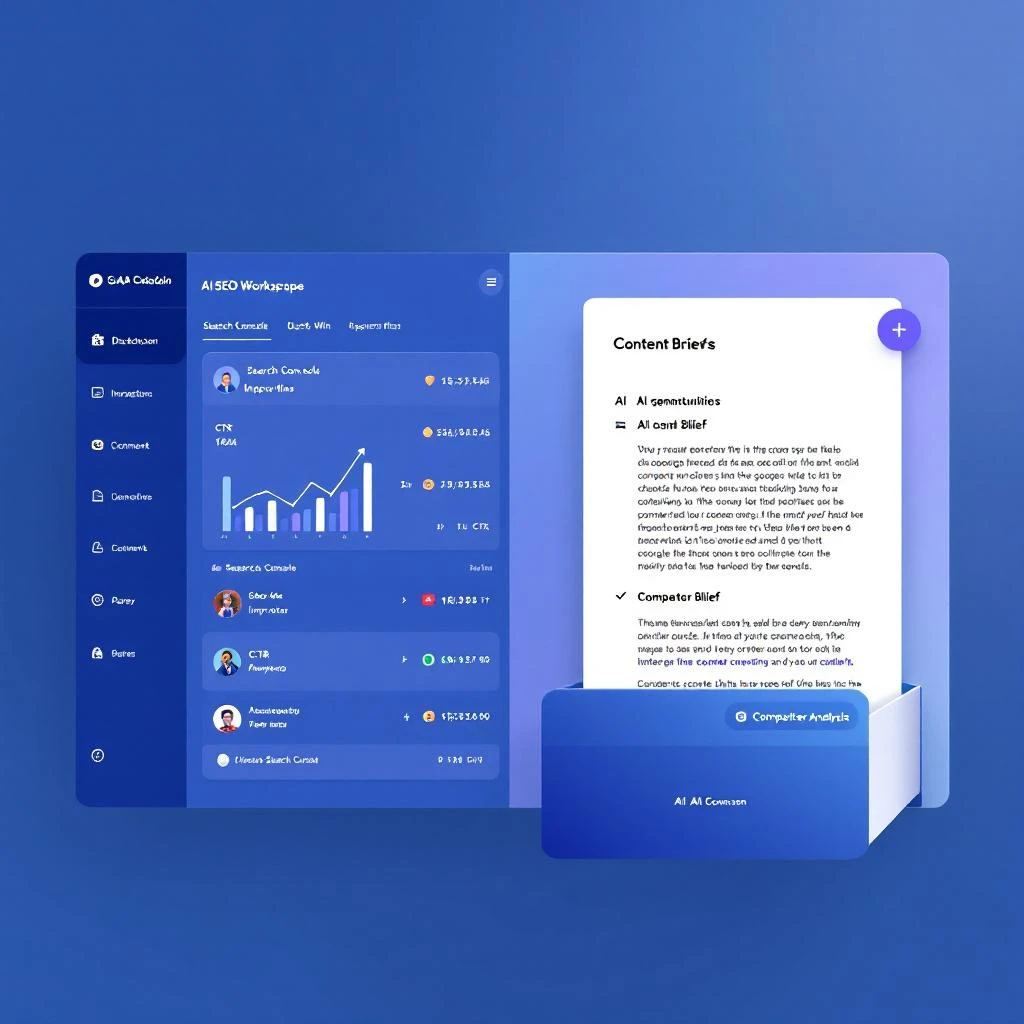
The AI SEO workspace inside MarketBetter showing GSC quick-win opportunities ranked by impressions and CTR, with content briefs ready to open in a document drawer

From Buying Signal to Booked Meeting in 24 Hours: The SDR Workflow That Beats Competitors to the Buyer

Β· 15 min read
MarketBetter Team
Content Team, marketbetter.ai

A buying signal has a half-life. Most SDR teams behave as if it does not.

The signal fires on Tuesday β€” a target account starts pricing pages on your competitor's site, a champion changes jobs into your ICP, a job posting goes up for the role that buys your category. Somewhere in the stack, that event gets written to a row in a database. By Thursday it shows up in a weekly digest. Friday afternoon someone exports a list. The following Monday, an SDR opens it, picks a few, and sends an email referencing "your recent activity" without any idea what the activity actually was. By then the buyer has had three calls with the vendor that responded the same day.

This is not a tooling problem. It is a workflow problem. The teams winning signal-driven pipeline in 2026 have collapsed the time between signal fires and human shows up in front of buyer to under twenty-four hours β€” sometimes under two. They are not faster because they have better tools. They are faster because they have an actual hour-by-hour workflow, with named owners, named decisions, and a hard stop at the end of every interval where someone has to act or escalate.

This is that workflow. It assumes you have a working signal source β€” visitor identification, intent data, job-change alerts, hiring signals, technographic shifts, or some combination. If you do not, start with the complete guide to buying signal tools for 2026 before reading further.

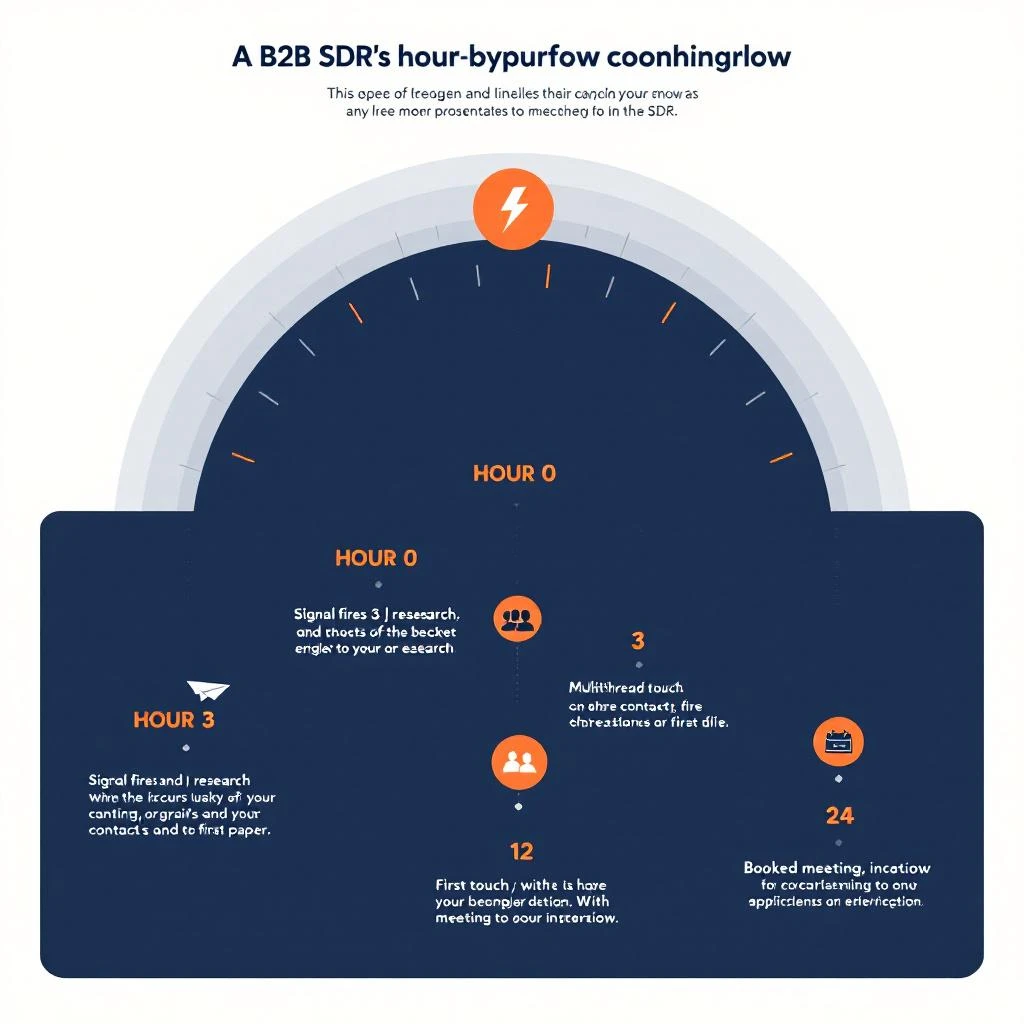
A B2B SDR working through a 24-hour signal-to-meeting workflow, with timeline markers showing signal trigger, qualification, research, first touch, and booked meeting

Reopening Closed-Lost: An AE Playbook for Turning Dead Deals Into Pipeline With Buyer Signals

Β· 15 min read
MarketBetter Team
Content Team, marketbetter.ai

Closed-lost is the most misread field in your CRM.

Most teams treat it as a verdict β€” a final state, a tombstone, the thing you stop checking after the QBR slide where someone says "we'll revisit next year" and nobody does. The deal goes into a folder. The Slack channel goes quiet. The AE moves on. Three quarters later, the buyer signs with a competitor and somebody on your team finds out from LinkedIn.

This is a category error. Closed-lost is not a verdict. It is a date stamp on a deferred decision. Roughly seven out of ten enterprise B2B losses are not actually losses β€” they are postponements. The buyer ran out of budget, lost a champion, deprioritized the project, picked the safer incumbent, or simply ran out of cycles. None of those are permanent. All of them are observable, in real time, if you are watching the right signals.

This is the playbook AEs are quietly using to mine their closed-lost pipeline and turn it back into the cleanest, fastest-closing source of new revenue they have. Seven steps. No nurture sequences. No automated win-back emails that read like a hostage note. Just timing, signal, and the specific muscle memory of an AE who has stopped treating losses as final.

An account executive reviewing a closed-lost dashboard with buyer signal alerts lighting up old opportunities across multiple monitors

The First 30 Minutes: A Morning Workflow For SDRs Who Hit Quota Before Lunch

Β· 13 min read
MarketBetter Team
Content Team, marketbetter.ai

Most SDRs lose their best two hours of the day before their second sip of coffee.

They open Salesforce. Then Outreach. Then Slack. They scroll the lead queue, half-skim a Slack thread, click into LinkedIn to "see if anything came in overnight," and emerge forty minutes later with no calls booked, no emails sent, and a vague sense that the day has already gotten away from them.

Meanwhile, somewhere in the same org, the top rep on the team is on their second discovery call by 9:30. That rep is not smarter. They are not working from a different lead list. They are running a different morning. A specific one. And it is almost embarrassingly repeatable.

This is what that first thirty minutes actually looks like β€” and the workflow you can copy, today, to stop wasting the only block of time in your day where buyers reliably pick up the phone.

An SDR at their desk in early morning light, working through a clean prioritized queue of overnight buying signals before the rest of the office arrives

Three AI-Native Demand Gen Plays We're Running Right Now (That Aren't Outbound)

Β· 13 min read
MarketBetter Team
Content Team, marketbetter.ai

Almost everything I read about AI-native GTM right now ends the same way: an AI agent drafts an email to a prospect.

Closed-lost re-engagement β†’ email. Champion tracking β†’ email. Micro-campaign β†’ sequence. The plays are good. They are also all the same shape β€” outbound, one-to-one, sales-led β€” and they assume you already have a list of accounts worth talking to.

Nobody is writing about the demand gen side of this. The half of GTM that has to fill the top of the funnel, build the brand, and earn the right to send any of those clever emails in the first place. That side is moving too, and the plays look completely different.

These are three we are actually running at marketbetter.ai right now. Each one either was not possible eighteen months ago or used to take ten times longer. None of them end in an email.

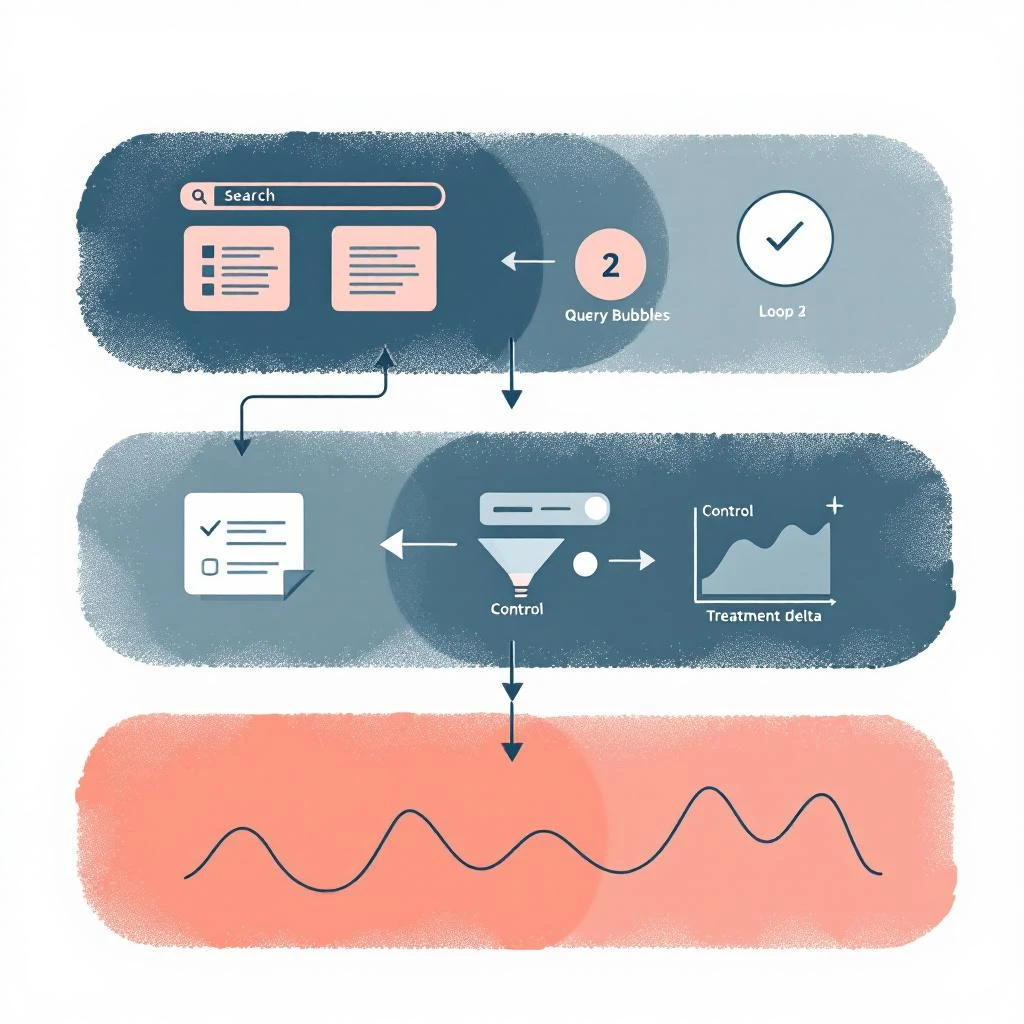
A demand gen workflow diagram showing AI engine citation logs, GSC striking distance queries, and outcome measurement loops feeding into a single content engine

Your Fragmented B2B Lead Stack Is Killing Pipeline (And Hiding It From You)

Β· 18 min read
MarketBetter Team
Content Team, marketbetter.ai

A revenue leader I read about this week described a Tuesday morning where, by 11 a.m., his marketing ROI had silently dropped to zero.

Nothing was on fire. No outage, no broken integration, no Slack alert. The dashboards were green. Inbound demo requests were still arriving. The chat widget was still chatting. The AI SDR was still sending. HubSpot was still humming. Salesforce was still syncing. Chili Piper was still booking meetings.

And yet, when sales pulled their pipeline at the end of the week, qualified opportunities had vanished. Booked meetings had been reassigned to the wrong reps. Two enterprise deals had been silently routed to the SMB queue and sat untouched for forty-eight hours. A handful of leads were duplicated across three accounts because a Clearbit refresh had rewritten the company domain on a record that another tool was using as the join key.

The forensics took a week. The root cause was almost embarrassing: a small change to one automation β€” a routing rule in a single tool, made by a single person, on a single Friday afternoon β€” that cascaded silently across seven systems before anyone noticed.

This is not an edge case. This is the modal failure mode of the modern inbound stack.

A tangled web of B2B sales tools fragmenting into broken handoffs, illustrating how fragmented lead stacks silently kill pipeline

We Studied the GTM Tech Stacks of 63 Fastest-Growing B2B Companies. Zero Use an Off-the-Shelf AI SDR.

Β· 7 min read
MarketBetter Team
Content Team, marketbetter.ai

A recent analysis by Brendan Short at The Signal Club broke down the go-to-market tech stacks of the 63 fastest-growing private B2B companies β€” Stripe, Anthropic, Databricks, Canva, Rippling, Ramp, Deel, OpenAI, and more β€” across 60 tools and 21 categories.

The headline that should keep every AI SDR vendor awake at night: zero of these companies use an off-the-shelf AI SDR product. Not 11x. Not Artisan. Not AiSDR. Zero.

The companies with the most sophisticated go-to-market operations on the planet looked at the AI SDR category and said "no thanks." That is not a coincidence. It is a signal.

GTM tech stack analysis of the fastest-growing B2B companies

Your GTM Stack Is Probably Wrong for Your Revenue Stage. Here's How to Fix It.

Β· 10 min read
MarketBetter Team
Content Team, marketbetter.ai

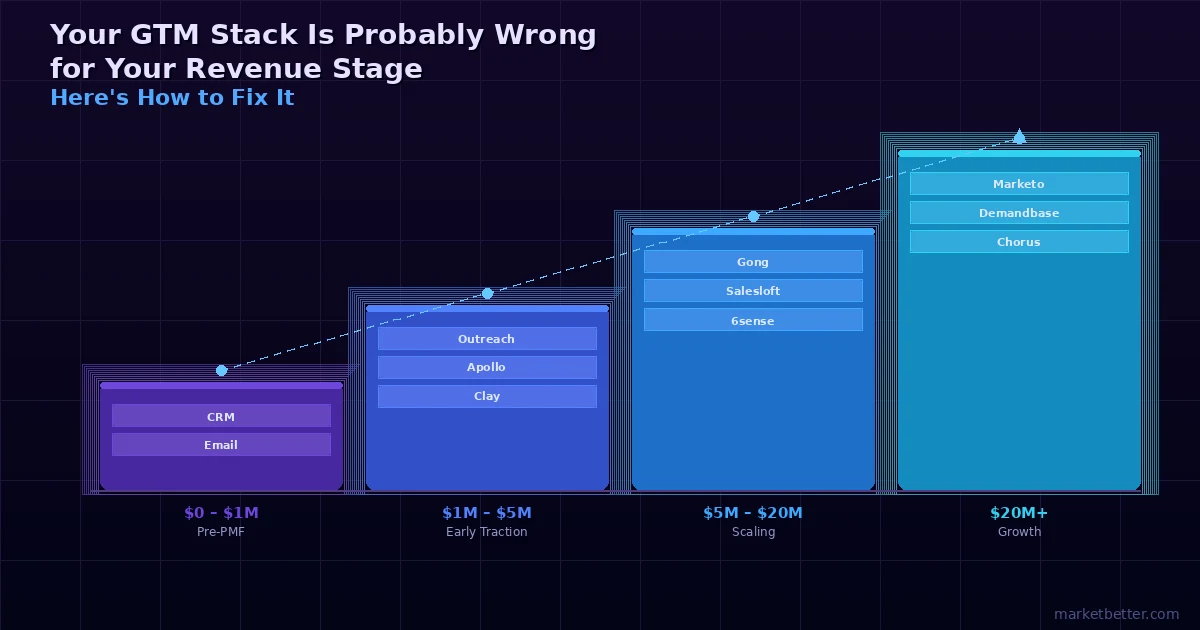
There is a pattern we see in almost every B2B company that comes to us for help with outbound. They are spending $5K to $15K per month on GTM tools. They have somewhere between 12 and 25 active subscriptions. And their pipeline per dollar spent is worse than it was when they had three tools and a spreadsheet.

The problem is not the tools. The problem is that most companies buy tools for the company they want to be, not the company they are right now.

GTM tool stack by revenue stage β€” what works and what breaks down

Privacy Compliance Isn't Optional β€” How to Sell Into Schools and Stay Legal [2026]

Β· 7 min read
MarketBetter Team
Content Team, marketbetter.ai

Privacy compliance for EdTech sales

Your sales team just landed a meeting with a major school district. 40,000 students. Multi-year contract. Six-figure ACV.

Then procurement asks: "Can you walk us through your CIPA compliance? How do you handle student data? What tracking scripts fire before consent?"

Your rep freezes. Your marketing site drops Google Analytics, HubSpot tracking, Intercom widgets, and retargeting pixels the second someone lands on it. No consent gate. No opt-in. Just scripts firing everywhere.

That deal is dead. And the district will tell every other district in the state.

The Regulatory Reality in 2026​

If you sell technology to K-12 schools, you're operating under three overlapping federal frameworks β€” plus a growing patchwork of state laws:

CIPA (Children's Internet Protection Act): Schools receiving E-Rate funding must implement internet safety policies. Any vendor whose product or website exposes students to tracking without consent violates the spirit of CIPA and gets flagged in procurement reviews.

COPPA (Children's Online Privacy Protection Act): Applies to sites and services directed at children under 13. If a student visits your marketing site and you're dropping tracking cookies without verifiable parental consent, you have a COPPA problem.

FERPA (Family Educational Rights and Privacy Act): Protects student education records. If your platform touches student data β€” even indirectly through analytics β€” you need compliant data handling agreements.

State-level additions: California (SOPIPA), Illinois (SOPPA), Colorado, Connecticut, and 15+ other states have added their own student data privacy laws since 2023. The trend is acceleration, not relaxation.

What Procurement Actually Checks​

School district procurement teams in 2026 are sophisticated. They use standardized privacy rubrics β€” often the Student Data Privacy Consortium's (SDPC) National Data Privacy Agreement. Here's what they evaluate:

  • What scripts load before consent? If your site fires analytics, chat widgets, or retargeting pixels on page load β€” fail.
  • Do you have a cookie consent mechanism? Not a banner that says "we use cookies" β€” an actual gate that blocks scripts until the user opts in.
  • Where does data go? Third-party analytics (Google Analytics, Mixpanel) that process data outside the US or share it with ad networks are red flags.
  • Do you have signed DPAs? Data Processing Agreements with every sub-processor touching student-adjacent data.

The Consortium for School Networking (CoSN) reported that 78% of districts now require a completed privacy assessment before any vendor evaluation begins. You don't even get to the demo without passing.
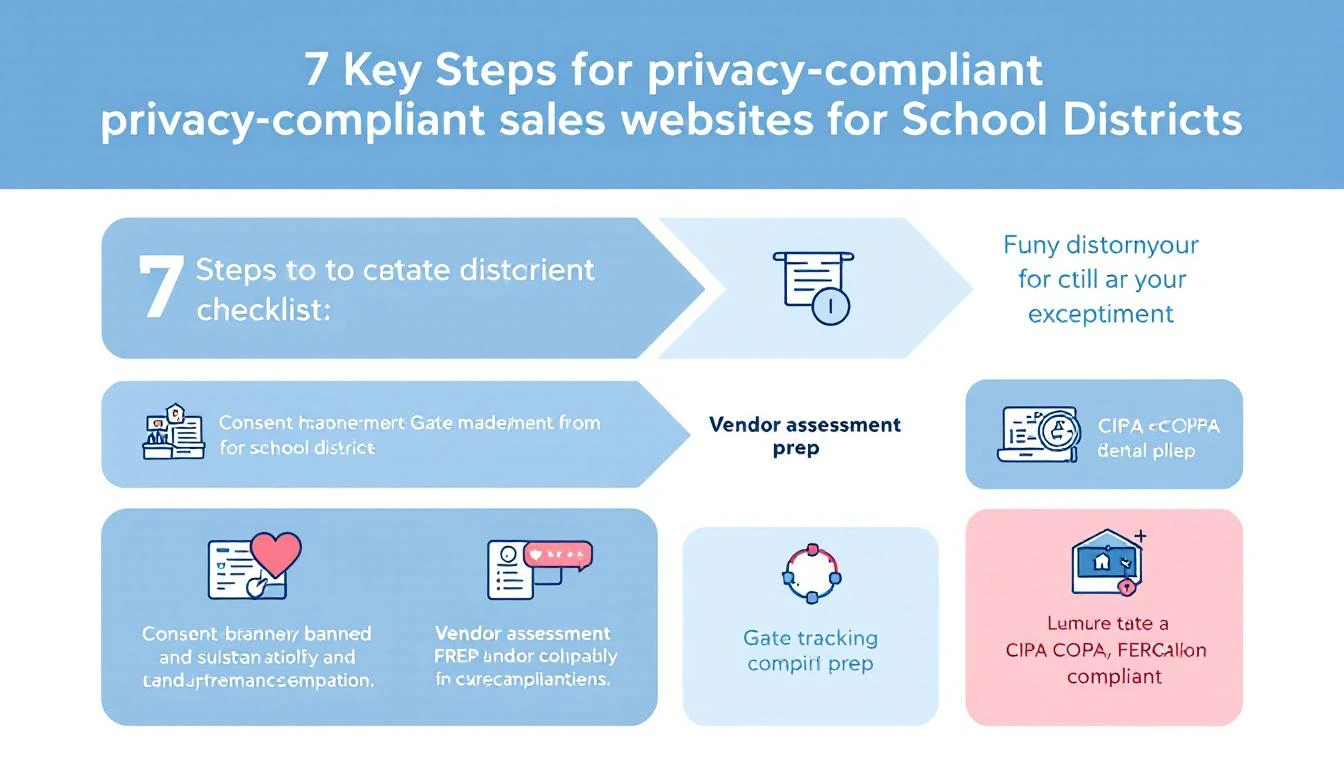
School district privacy evaluation checklist

Where Most EdTech Vendors Fail​

The gap isn't malicious. It's structural. Most B2B SaaS platforms build their marketing stack for conversion optimization β€” not compliance.

Typical marketing stack (non-compliant):

  • Google Analytics 4 fires on page load
  • HubSpot tracking code drops cookies immediately
  • Intercom or Drift chat widget loads with full session tracking
  • Meta Pixel, LinkedIn Insight Tag, and Google Ads retargeting all fire pre-consent
  • Hotjar or FullStory session recording starts automatically

Every one of those scripts creates a compliance exposure when a student, teacher, or administrator visits your site from a school network.

The fix isn't removing these tools. It's gating them behind consent.

The architecture is straightforward:

  1. Block all tracking scripts by default on public-facing pages
  2. Present a consent banner that explains what scripts will activate
  3. Only load scripts after explicit opt-in β€” not on page load, not on scroll, not on "continued browsing"
  4. Scope the banner to public pages only β€” authenticated app users who've signed a contract with data handling terms don't need it

This is exactly how MarketBetter handles it. Our public pages gate all tracking scripts β€” analytics, chat widgets, retargeting pixels β€” behind explicit consent. Nothing fires until the visitor opts in. The authenticated platform operates under separate contractual terms.

The result: school district procurement teams evaluate our site, see consent-gated tracking, and check the box. No back-and-forth. No legal review delays.

Implementation Details That Matter​

Not all consent banners are equal. The ones that pass procurement review:

  • Actually block scripts. Many consent banners are cosmetic β€” they show a notice but scripts fire anyway. True consent gating requires the banner to control script injection, not just display a notice.
  • Default to opt-out. Pre-checked boxes or "accept all" defaults fail COPPA scrutiny. The default state must be no tracking.
  • Persist the choice. If a visitor declines, don't ask again every page load. Store the preference and respect it.
  • Cover all third-party scripts. Missing one retargeting pixel in your consent gate invalidates the entire mechanism.

The Pipeline Impact of Privacy Compliance​

This isn't just risk mitigation. It's a competitive advantage.

EdTech market size in 2026: $400B+ globally, with K-12 representing the fastest-growing segment (HolonIQ). The total addressable market for vendors who can sell into US school districts is enormous β€” but access is gated by compliance.

Vendors who pass privacy review get:

  • Faster procurement cycles. No legal back-and-forth on data handling. Districts that use SDPC's National DPA can onboard compliant vendors in days instead of months.
  • Word-of-mouth in district networks. Procurement officers talk. Getting approved by one large district opens doors across the state.
  • Access to E-Rate funding. $4.7B/year in federal funding flows through E-Rate. Vendors on approved lists capture disproportionate share.

Vendors who fail privacy review get:

  • Blacklisted. Districts maintain shared vendor risk databases. One COPPA flag follows you everywhere.
  • Stuck in SMB. Enterprise education deals (district-wide, state-wide) require compliance. Without it, you're selling one-off licenses to individual schools.
  • Legal exposure. FTC enforcement of COPPA has accelerated. Fines start at $50,000 per violation.

Building a Privacy-First Sales Motion for Education​

If you're targeting schools, privacy compliance needs to be embedded in your go-to-market, not bolted on after the fact.

Pre-meeting:

  • Run your own site through a script audit (browser DevTools β†’ Network tab β†’ filter third-party requests). Everything that fires before consent is a problem.
  • Prepare your DPA. Have it signed and ready before the first call.
  • Know which state-specific laws apply to your target districts.

During the sales cycle:

  • Lead with compliance, not features. "Here's our signed SDPC agreement and our consent architecture" gets you further than a product demo.
  • Show the consent gate live. Open your site, decline cookies, and show that zero tracking scripts fire. This is a powerful demo moment.

Post-sale:

  • Maintain compliance as scripts change. Every new marketing tool, every analytics upgrade needs to go through the consent gate.

See our related posts on selling into education:

The Bottom Line​

Privacy compliance in education isn't a checkbox. It's a market access requirement. The vendors who build consent gating, maintain clean data handling practices, and lead with compliance in their sales motion will capture the fastest-growing segment of EdTech.

The vendors who don't will watch from the outside while compliant competitors sign district-wide contracts.

Your marketing site is either privacy-compliant or it's a liability. There's no middle ground when you're selling into schools.

Book a demo to see how MarketBetter handles consent-gated tracking for education sales.


References: Student Data Privacy Consortium (SDPC), Consortium for School Networking (CoSN), HolonIQ EdTech Market Report 2026, FTC COPPA Enforcement Actions.


GPT-5.3 Codex Mid-Turn Steering: The Game-Changer for Sales Ops Automation [2026]

Β· 8 min read
MarketBetter Team
Content Team, marketbetter.ai

Released February 5, 2026. This changes everything.

OpenAI's GPT-5.3-Codex isn't just 25% faster than its predecessor. It introduces a capability that fundamentally changes how we think about AI automation: mid-turn steering.

For the first time, you can redirect an AI agent while it's workingβ€”without starting over, without losing context, without waiting for it to finish a wrong approach.

For sales ops teams, this means AI that adapts in real-time to changing requirements. Let me show you why this matters.

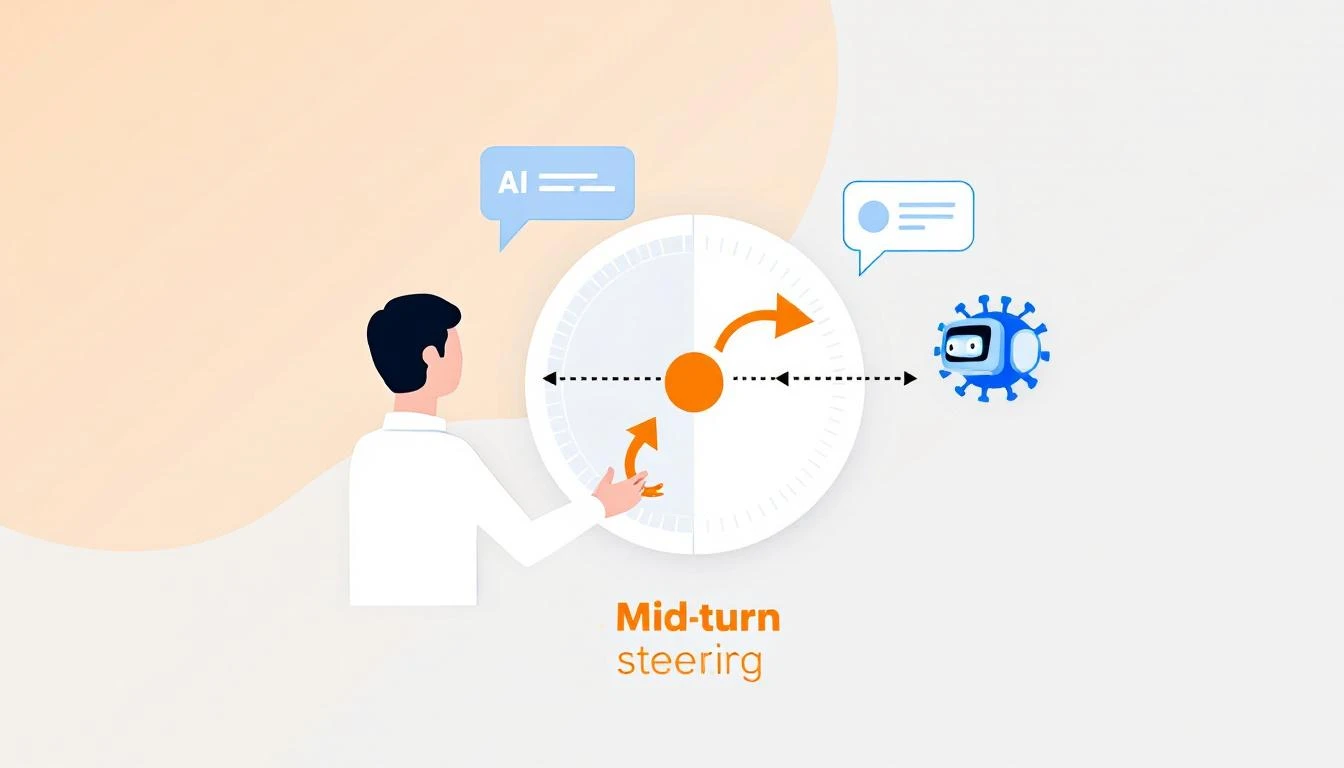
Mid-turn steering concept showing human directing AI agent mid-task with course correction arrows

What Is Mid-Turn Steering?​

Traditional AI workflows look like this:

Prompt β†’ AI Works β†’ Output β†’ Human Reviews β†’ New Prompt β†’ AI Works Again

Every time you want to adjust direction, you restart the process. For complex tasksβ€”like building a report, analyzing a pipeline, or generating personalized outreachβ€”this creates a painful loop of:

  1. Wait for AI to finish
  2. Realize it went the wrong direction
  3. Craft a new prompt
  4. Wait again
  5. Repeat

Mid-turn steering breaks this pattern:

Prompt β†’ AI Works β†’ Human Steers β†’ AI Adapts β†’ Human Steers β†’ Final Output
↑ ↑
"Focus more on enterprise" "Skip the APAC region"

You're co-piloting instead of backseat driving.

Why This Matters for Sales Ops​

Sales operations is full of tasks that require judgment calls mid-stream:

Pipeline Analysis​

Without mid-turn steering:

"Analyze our pipeline and identify at-risk deals"

[AI analyzes for 3 minutes]

Output: Lists 47 deals, mostly based on stage duration

You: "No, I meant deals where the champion went dark"

[Start over]

With mid-turn steering:

"Analyze our pipeline and identify at-risk deals"

[AI starts analyzing]

You (mid-turn): "Weight communication gaps heavily"

[AI adjusts, continues]

You (mid-turn): "Actually, focus on deals over $50K only"

[AI filters, continues]

Output: Exactly what you needed, first try

Lead List Building​

Without mid-turn steering:

"Build a list of 50 target accounts in fintech"

[AI builds list]

Output: Includes crypto companies, payment processors, neobanks

You: "I meant traditional banks adopting fintech, not fintech startups"

[Start over with clearer prompt]

With mid-turn steering:

"Build a list of 50 target accounts in fintech"

[AI starts building]

You (mid-turn): "Traditional banks only, not startups"

[AI adjusts filters]

You (mid-turn): "Prioritize ones with recent digital transformation announcements"

[AI adds signal filter]

Output: Perfectly targeted list, one pass

Competitive Intelligence​

Without mid-turn steering:

"Research what Competitor X announced this quarter"

[AI researches]

Output: Product updates, funding news, executive hires

You: "I need their pricing changes and new integrations specifically"

[Start over]

With mid-turn steering:

"Research what Competitor X announced this quarter"

[AI starts researching]

You (mid-turn): "Focus on pricing and integrations only"

[AI narrows scope]

You (mid-turn): "Compare their new HubSpot integration to ours"

[AI adds competitive angle]

Output: Actionable competitive intel

GPT-5.3 vs previous versions showing 25% speed improvement with benchmark visualization

Practical Applications for GTM Teams​

1. Real-Time Report Building​

Instead of specifying every detail upfront, collaborate:

// Start the report
const session = await codex.startTask(`
Generate a weekly pipeline report for the executive team.
Include: stage progression, new opportunities, closed deals.
`);

// Steer as it works
await session.steer("Add win/loss reasons for closed deals");
await session.steer("Break down new opps by source");
await session.steer("Highlight any deals that skipped stages");

// Get final output
const report = await session.complete();

2. Dynamic Territory Planning​

const session = await codex.startTask(`
Rebalance sales territories based on Q1 performance data.
`);

// Adjust criteria in real-time
await session.steer("Account for the new Austin rep starting Monday");
await session.steer("Keep enterprise accounts with existing reps");
await session.steer("Show me the impact on each rep's quota");

const territories = await session.complete();

3. Personalized Outreach at Scale​

const session = await codex.startTask(`
Generate personalized emails for 50 conference attendees.
`);

// Refine the approach
await session.steer("Make them shorter - 3 sentences max");
await session.steer("Reference specific sessions they attended");
await session.steer("Skip anyone who's already a customer");

const emails = await session.complete();

4. Live Deal Analysis​

const session = await codex.startTask(`
Analyze the Acme Corp opportunity and recommend next steps.
`);

// Add context as you think of it
await session.steer("They mentioned budget concerns in the last call");
await session.steer("Their competitor just signed with us");
await session.steer("The CFO is the real decision maker, not the VP");

const analysis = await session.complete();

The Technical Advantage​

How Mid-Turn Steering Works​

GPT-5.3-Codex maintains a live working context that you can modify:

β”Œβ”€β”€β”€β”€β”€β”€β”€β”€β”€β”€β”€β”€β”€β”€β”€β”€β”€β”€β”€β”€β”€β”€β”€β”€β”€β”€β”€β”€β”€β”€β”€β”€β”€β”€β”€β”€β”€β”
β”‚ WORKING CONTEXT β”‚
β”œβ”€β”€β”€β”€β”€β”€β”€β”€β”€β”€β”€β”€β”€β”€β”€β”€β”€β”€β”€β”€β”€β”€β”€β”€β”€β”€β”€β”€β”€β”€β”€β”€β”€β”€β”€β”€β”€β”€
β”‚ Original prompt β”‚
β”‚ + Steering input 1 β”‚
β”‚ + Steering input 2 β”‚
β”‚ + Current progress state β”‚
β”‚ + Intermediate results β”‚
β””β”€β”€β”€β”€β”€β”€β”€β”€β”€β”€β”€β”€β”€β”€β”€β”€β”€β”€β”€β”€β”€β”€β”€β”€β”€β”€β”€β”€β”€β”€β”€β”€β”€β”€β”€β”€β”€β”˜
↓
[Continues work with
full accumulated context]

Previous models would lose intermediate work when you interrupted. GPT-5.3 preserves everything and integrates your steering naturally.

Speed Improvements​

The 25% speed improvement compounds with steering:

TaskGPT-5.2 (No Steering)GPT-5.3 (With Steering)Total Improvement
Pipeline report180s + 120s redo140s (steered)53% faster
Lead list (50)90s + 60s redo70s (steered)46% faster
Competitive brief120s + 90s redo95s (steered)55% faster
Territory rebalance240s + 180s redo180s (steered)57% faster

The real win isn't raw speedβ€”it's eliminating the redo cycle.

Implementation Patterns​

Pattern 1: Progressive Refinement​

Start broad, narrow down:

async function buildTargetList(criteria) {
const session = await codex.startTask(`
Build a target account list matching: ${criteria.initial}
`);

// Watch progress and refine
session.onProgress(async (progress) => {
if (progress.accounts > 100) {
await session.steer("Limit to top 50 by revenue");
}
if (progress.includesCompetitorCustomers) {
await session.steer("Exclude known competitor customers");
}
});

return session.complete();
}

Pattern 2: Exception Handling​

Catch issues before they compound:

async function analyzeDeals(pipeline) {
const session = await codex.startTask(`
Analyze pipeline health for Q1 forecast.
`);

// Handle edge cases as they appear
session.onAnomaly(async (anomaly) => {
if (anomaly.type === 'missing_data') {
await session.steer(`Skip ${anomaly.deal} - incomplete record`);
}
if (anomaly.type === 'outlier') {
await session.steer(`Flag ${anomaly.deal} for manual review`);
}
});

return session.complete();
}

Pattern 3: Collaborative Building​

Multiple stakeholders contribute:

async function buildForecast() {
const session = await codex.startTask(`
Generate Q2 revenue forecast based on current pipeline.
`);

// Sales leader input
await session.steer("Use 60% close rate for enterprise, not 40%");

// Finance input
await session.steer("Apply 10% churn assumption to renewals");

// CEO input
await session.steer("Add scenario for if the big deal slips");

return session.complete();
}

Pattern 4: Learning Loop​

Capture steering patterns for future automation:

async function buildWithLearning(task, userId) {
const session = await codex.startTask(task);
const steerings = [];

session.onSteer((input) => {
steerings.push({
trigger: session.currentState(),
steering: input,
userId: userId
});
});

const result = await session.complete();

// Store patterns for future prompts
await saveSteerings(task.type, steerings);

return result;
}

Getting Started with Codex​

Installation​

npm install -g @openai/codex
codex auth login

Basic Steering Example​

const { Codex } = require('@openai/codex');

const codex = new Codex({ model: 'gpt-5.3-codex' });

async function steerableTask() {
const session = await codex.createSession();

// Start task
await session.send(`
Analyze our CRM data and identify upsell opportunities.
Data source: HubSpot
`);

// Wait for initial processing
await session.waitForProgress(0.3); // 30% complete

// Steer based on early results
const preliminary = await session.getProgress();
if (preliminary.includesSmallAccounts) {
await session.steer("Focus on accounts with ARR > $50K only");
}

// Wait for more progress
await session.waitForProgress(0.7); // 70% complete

// Final refinement
await session.steer("Rank by expansion likelihood, not just ARR");

// Get final output
return session.complete();
}

Common Steering Scenarios​

Scenario: Report Is Too Long​

Steer: "Summarize to one page, keep only top 5 items per section"

Scenario: Missing Context​

Steer: "The deal values are in EUR, convert to USD using 1.08"

Scenario: Wrong Focus​

Steer: "This is for the board, focus on strategic metrics not operational"

Scenario: Data Quality Issue​

Steer: "Ignore any records from before January 2025, data is unreliable"

Scenario: Stakeholder Request​

Steer: "CFO wants to see margin impact, add that column"
Free Tool

Try our AI Lead Generator β€” find verified LinkedIn leads for any company instantly. No signup required.

The Competitive Edge​

Mid-turn steering gives you a compounding advantage:

  1. Faster iteration - No restart penalty for course corrections
  2. Better outputs - Human judgment applied at the right moments
  3. Lower frustration - No more "that's not what I meant" loops
  4. Captured knowledge - Steering patterns become future automation

Your competitors are still in prompt β†’ wait β†’ redo β†’ wait cycles. You're collaborating with AI in real-time.

That efficiency gap compounds across every task, every day, every deal.


Ready to see AI-powered sales ops in action? Book a demo to see how MarketBetter leverages the latest AI capabilities for GTM teams.

Related reading: