How K-12 Education Technology Companies Can 3x Their Demo Pipeline With Territory-Based Signal Selling

· 11 min read
MarketBetter Team
Content Team, marketbetter.ai

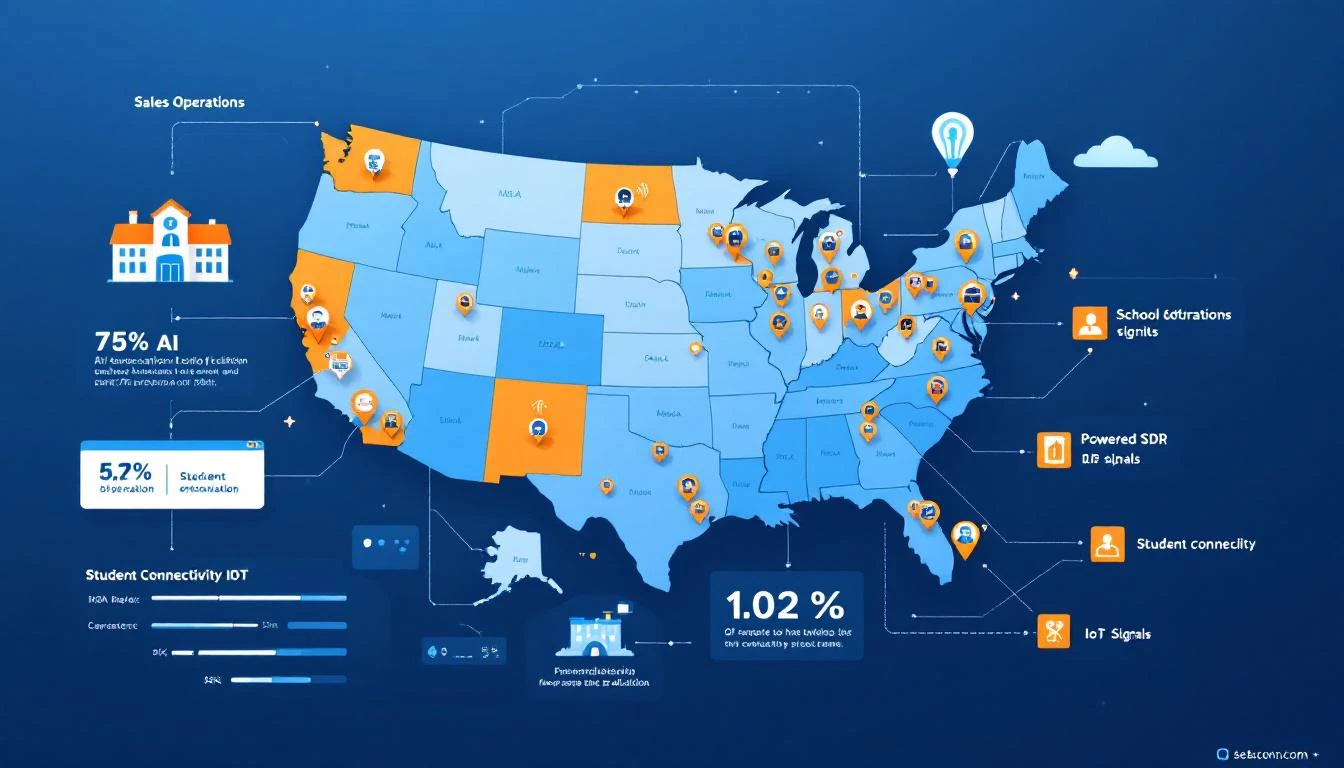
K-12 education technology SDR territory-based signal pipeline

Selling to K-12 school districts is unlike any other B2B sales motion on the planet.

Your buyers operate on budget cycles dictated by federal and state funding windows, not quarterly revenue targets. Your decision-makers — superintendents, CTOs, curriculum directors, and procurement officers — are drowning in vendor pitches from every edtech company that's ever raised a seed round. And your sales cycle can stretch from first contact to purchase order across two fiscal years if you time it wrong.

Now layer on the geographic complexity. School districts are inherently local. A district in rural West Texas has different infrastructure needs, different budgets, different political dynamics than a suburban district outside Chicago. Your SDRs don't just need to know the product — they need to know their territory. The superintendent's name. Whether the district passed their last bond measure. Which schools already have 1:1 device programs.

This is the story of how one K-12 education IoT connectivity company — serving over 1,400 school district customers nationwide — rebuilt their SDR operation from geographic cold outreach to territory-based signal selling. Three SDRs. Three territories. One platform. And a pipeline that finally matched the size of their addressable market.


The K-12 Sales Problem: Why Outbound Alone Can't Scale

Let's be honest about what K-12 edtech sales looks like at most companies:

1. The budget calendar runs everything. Districts finalize budgets between March and June (varying by state). E-Rate applications have their own deadlines. Title I and ESSER funding come in waves. If your SDR reaches a district in September, they're 6 months early — or 3 months late. Timing isn't just important; it's the entire game.

2. Cold outreach gets filtered aggressively. Superintendents and district IT directors get hundreds of vendor emails per week. Most districts have procurement policies that funnel everything through formal RFP processes anyway. Your beautifully crafted cold email to the superintendent? It went to a shared inbox that a procurement coordinator checks on Thursdays.

3. Territory knowledge is the moat — but it doesn't scale manually. The best K-12 reps know their districts inside and out. They know which ones just passed a technology bond. They know which superintendent is retiring. They know which districts piloted a competitor's solution and hated it. But this knowledge lives in the rep's head — and when they leave, it leaves with them.

4. Geographic territories create natural coverage gaps. With only 3 SDRs covering the entire United States, there are inevitably districts that don't get touched for months. The Southeast rep is busy with a cluster of Florida districts while Georgia and Tennessee go dark. Opportunities slip through — not because they don't exist, but because nobody was watching.

This was exactly the situation at a K-12 IoT connectivity company with a national footprint and a small, territory-based sales team.


Before: The Manual Territory Grind

Here's what their SDR operation looked like before the shift:

The team: 3 SDRs, each owning a geographic region (roughly West, Central, and East), managed through Salesforce.

The process:

  • Each SDR maintained a target account list of ~500 districts in their territory
  • Prospecting was manual: LinkedIn research, checking district websites for bond measures and tech initiatives, reading local education news
  • Outbound sequences were semi-personalized (district name, state-specific funding references) but fundamentally cold
  • Activity metrics drove behavior: 60 emails/day, 20 calls/day, 5 LinkedIn touches/day
  • Demo bookings averaged 8-12 per SDR per month — respectable, but plateauing

The problems:

  • Timing was random. SDRs had no way to know when a district was actively evaluating solutions. They'd sequence a district for 3 weeks, get no response, move on — only to learn later that the district bought a competitor the following month.
  • Signal blindness. The company's website had strong organic traffic from district IT directors searching for connectivity solutions, device management platforms, and IoT infrastructure for schools. But that traffic was 100% anonymous. An IT director in Fairfax County could spend 20 minutes on the product page and the Virginia SDR would never know.
  • Salesforce was a graveyard. The CRM had thousands of district contacts, many outdated. The CTOs moved to new districts. The procurement contacts retired. Nobody was systematically tracking which contacts were still at which districts — a critical gap when K-12 personnel turnover runs at 15-20% annually.
  • Territory coverage was uneven. Whichever region had an SDR in "flow" got all the attention. The others coasted on autopilot sequences that nobody was monitoring.

The ceiling was clear: this team was working harder, not smarter. They needed leverage.


The Shift: Territory-Based Signal Selling

The transformation happened in three stages — and it didn't require adding headcount.

Stage 1: Visitor Identification Meets Territory Routing

The first move was activating website visitor identification and connecting it directly to Salesforce territory assignments.

When a school district visited the website, the system would:

  1. Identify the district (or the managed service provider acting on their behalf)
  2. Match it to the correct territory in Salesforce based on state/region
  3. Route an alert to the assigned SDR within minutes — not hours, not days
  4. Include context: which pages they viewed, how long they spent, whether they'd visited before

The impact was immediate. Within the first week, the Central territory SDR received an alert: a large Texas ISD (independent school district) with 47 schools had visited the 1:1 device connectivity page three times in five days. Nobody in the CRM had logged a single interaction with this district in 18 months.

The SDR sent a personalized email within 2 hours. They booked a demo the next day. The district was actively evaluating vendors for a $200K connectivity deployment — and MarketBetter's visitor identification had caught the signal before any competitor even knew the opportunity existed.

Stage 2: Champion Tracking Across District Transitions

Here's something unique to K-12: people move between districts constantly. A CTO who implemented your solution at one district gets hired as the superintendent at a neighboring district. A curriculum director who championed your pilot moves to a state education agency.

These transitions are pure gold for K-12 sales — but only if you can track them.

The company implemented champion tracking signals that monitored job changes across their existing contact database:

  • Former champion moves to new district: High-priority alert → SDR reaches out referencing their previous experience
  • IT director leaves a customer district: Account management alert → check if the replacement is a detractor or neutral
  • Procurement officer joins a target district from another customer: Warm introduction opportunity — they already know the product

One champion transition alone generated a $150K opportunity: a former IT director who had deployed the company's IoT connectivity solution across 23 schools moved to a larger district in a neighboring state. The SDR in that territory got an alert, reached out, and the former champion pulled the company into an active RFP they hadn't known about.

Without the signal, that opportunity would have gone to whatever vendor the new district's existing contacts already knew.

Stage 3: Funding-Aware Sequencing

K-12 sales lives and dies by funding cycles. The team built signal-aware sequences that adjusted messaging based on known timing:

E-Rate filing season (January–March): Sequences emphasized total cost of ownership, managed services, and E-Rate eligible product configurations. Messaging shifted from "here's what we do" to "here's how to include this in your E-Rate Category 2 application."

Budget planning season (March–June): Visitor identification signals during this window received the highest priority. A district visiting the pricing page during budget season wasn't casually browsing — they were comparing vendors for a line-item decision. SDRs escalated these immediately.

Back-to-school (August–September): Messaging focused on rapid deployment and support. Districts that waited too long to procure during budget season would panic-buy in August. Signals during this window triggered urgency-focused sequences.

Bond measure tracking: The team started tracking which districts had upcoming bond measures for technology infrastructure. When a district with a pending bond measure showed up on the website, the SDR knew to reference the specific bond allocation and timeline.

This wasn't just personalization — it was synchronization. The SDRs' outreach rhythm matched the districts' buying rhythm for the first time.


The Results: Same Team, Completely Different Output

Demo bookings per SDR went from 8-12/month to 22-28/month. Not by working more hours — by working the right accounts at the right time.

Signal-sourced pipeline represented 55% of new opportunities within 90 days. More than half of all new pipeline came from accounts that were identified through website signals, champion tracking, or funding-cycle triggers — not cold outbound.

Average response rate on signal-triggered outreach: 34%. Compare that to 3-4% on their previous cold sequences. When you email a district CTO the same week they visited your product page three times, they respond — because you're relevant.

Territory coverage gaps disappeared. Even when an SDR was deep in a deal cycle with a cluster of districts, signals from other districts in their territory still surfaced. Nothing fell through the cracks because the system was watching all 500+ districts per territory simultaneously — something no human SDR can do manually.

Salesforce became alive. Instead of a database of stale contacts, the CRM now reflected real-time buyer behavior. Deals moved stages based on actual engagement, not optimistic SDR forecasts.


The K-12 EdTech Playbook: Lessons for Every Education Technology Company

Whether you sell connectivity, curriculum software, assessment tools, school safety systems, or any other K-12 solution, these principles apply:

1. Your Website Traffic Contains Your Best Leads

K-12 buyers research online before engaging vendors — often for weeks. If you're not running visitor identification, your best prospects are browsing your site and leaving without a trace. Fix that first.

2. Route Signals to Territory Owners Instantly

Speed matters enormously in K-12. Districts evaluate on compressed timelines dictated by budget cycles. A signal that reaches an SDR 48 hours after a district visited your site might as well be a week late. Build real-time routing from identification to territory owner.

3. Track Champions, Not Just Accounts

K-12 personnel turnover is one of your biggest pipeline risks and opportunities. When a champion moves to a new district, that's a warm introduction waiting to happen. When a detractor replaces a champion at a customer district, that's a churn risk you need to catch early.

4. Synchronize Outreach With Funding Cycles

Don't blast the same sequences year-round. Align your messaging to E-Rate filing windows, budget planning seasons, and bond measure timelines. A district that hears from you at the right moment in their procurement cycle is 10x more likely to engage than one you cold-email in November.

5. Let Signals Equalize Territory Coverage

Three SDRs can't manually monitor 1,500 districts. But a signal engine can. When website visits, champion moves, and funding events surface automatically, every district in every territory gets watched — regardless of which deals your SDRs are currently focused on.

6. Capture the Dark Funnel in Education

The B2B dark funnel is particularly deep in education. Buying committees do extensive research internally before ever reaching out to vendors. Committee members share links in email threads you'll never see. Visitor identification is the only way to know they're looking.


Why This Matters Now: The K-12 Market Opportunity

Over $190 billion in federal education technology funding has been allocated since 2020. E-Rate modernization continues to expand eligible technology categories. Districts are investing in IoT infrastructure, 1:1 connectivity, smart building systems, and digital learning platforms at unprecedented rates.

But the K-12 edtech market is also getting crowded. Dozens of vendors compete for every district's attention. The companies that win won't be the ones who send the most emails — they'll be the ones who reach the right district, at the right moment, with the right message.

For a lean SDR team with geographic territories, signal-based selling isn't a luxury. It's the only way to compete at scale without scaling headcount.

Three SDRs. Three territories. Over 1,400 customers. And a pipeline that finally reflects the real size of the opportunity.


Want to see which school districts are researching solutions on your website right now? Start identifying your anonymous education traffic →

Signal Quality vs. Speed to Lead: Why Calling First Doesn't Mean Closing First [2026]

· 12 min read
sunder
Founder, marketbetter.ai

Signal quality vs. speed: what actually predicts closed-won deals

Every sales leader has heard the stat: 78% of customers buy from the first company that responds.

It's cited in every speed-to-lead article, every sales enablement deck, and every cold calling training. It's become gospel.

But here's the problem with gospel — nobody questions it.

What if I told you that the obsession with speed-to-lead is creating a generation of SDR teams that are fast but blind? Teams that respond in under 5 minutes to every lead — including the ones that were never going to buy?

The real data tells a more nuanced story. Speed matters, but only when paired with signal quality. And most teams have the equation backwards.

The Speed-to-Lead Data Everyone Cites (And What It Actually Means)

Let's start with what we know from the research:

  • 78% of customers buy from the first responder (MIT/InsideSales.com Lead Response Management Study)
  • Responding within 5 minutes = 21x more likely to qualify vs. 30 minutes (Harvard Business Review)
  • 391% more conversions when you respond within 1 minute vs. waiting (Velocify)
  • Average B2B response time: 42 hours (Drift/InsideSales.com)
  • 55% of companies take 5+ days to respond (Drift Lead Response Report)
  • 30% of leads never get contacted at all (Voiso)

These stats are real, well-sourced, and important. The speed-to-lead gap is massive — most companies are embarrassingly slow.

But they're missing context. Here's what the same research doesn't tell you:

What was the signal quality of those leads?

The MIT study measured response time against inbound demo requests — leads who explicitly raised their hand. Of course speed matters when someone says "I want to talk to you right now." That's peak intent.

But what about the lead who downloaded a whitepaper three weeks ago? The contact who visited your pricing page once at 2 AM? The MQL that marketing auto-scored because they opened two emails?

When you treat all leads the same — and race to respond to every single one in under 5 minutes — you create a different problem entirely.

The Hidden Cost of Speed Without Signals

Here's what the speed-to-lead orthodoxy produces in practice:

The SDR Productivity Crisis

According to Salesforce's State of Sales report and multiple industry benchmarks:

  • SDRs spend only 18-30% of their time actually selling (Salesforce)
  • 70% of rep time goes to administrative tasks, data entry, research, and internal meetings (Gartner)
  • 43% of reps report administrative work consuming 10-20 hours per week (HubSpot, 2024 Sales Trends)
  • 83.4% of SDRs fail to consistently hit quota (SaleSo SDR Productivity Report, 2025)
  • Only 57% of reps reached targets in 2024 — the lowest in five years (SaleSo)

The median SDR books 15 meetings per month. Top 25% hit 12-15 meetings/month, while the median sits at 8-10 (Optifai Pipeline Study, 2026, N=939 companies).

That means your average SDR is making 50-80 calls per day, sending 30-50 emails, and booking less than one meeting every two days.

The question isn't "how do we make them faster?" It's "how do we make them smarter about who they spend time on?"

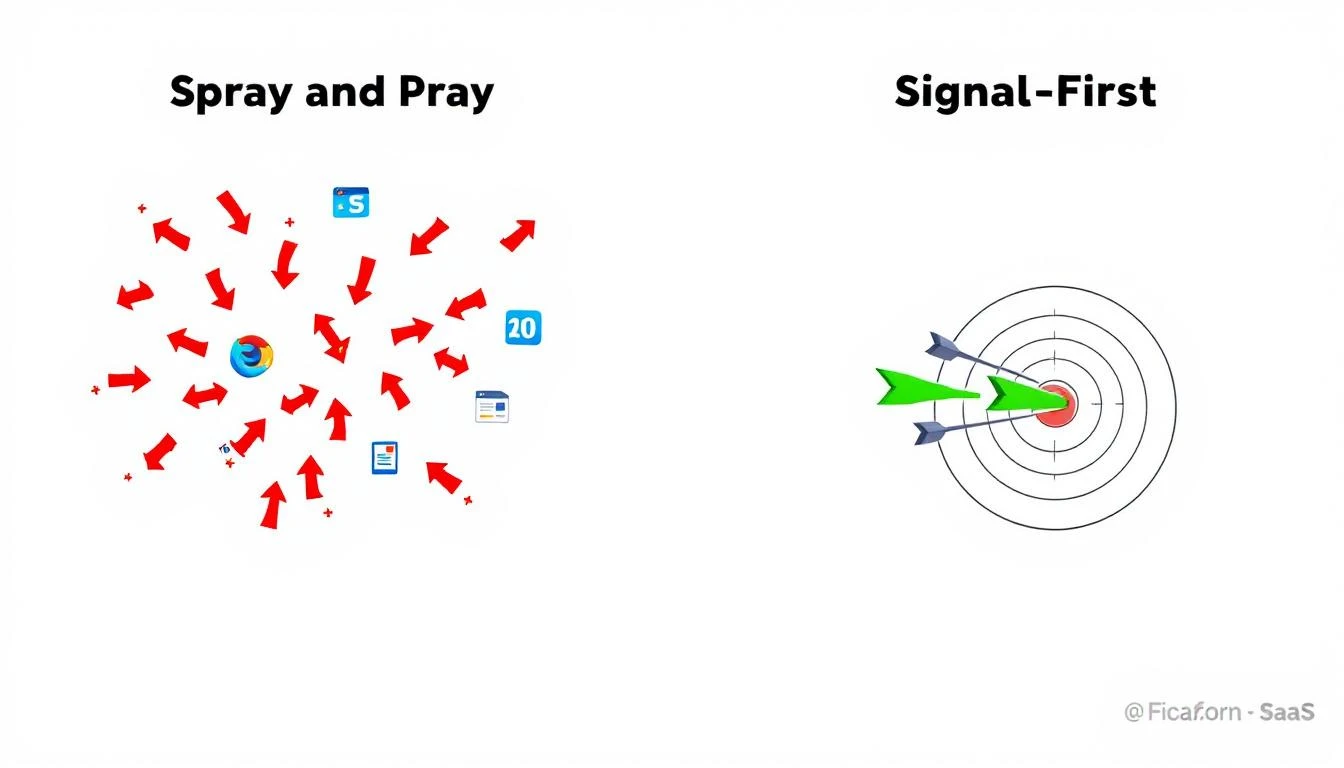
Spray and pray vs. signal-first selling

The Signal Quality Framework: What Actually Predicts Close

Speed to lead measures how fast you respond. Signal quality measures who you respond to and why. The best teams optimize for both.

Here's a framework based on how high-performing SDR teams (the ones consistently in the top 25%) actually prioritize their day:

Tier 1: Active Buying Signals (Respond in Under 5 Minutes)

These are the leads where speed genuinely determines the outcome:

  • Demo requests and pricing inquiries — Someone explicitly asking to talk
  • Multiple stakeholders from the same account visiting your site in the same week
  • Champion job changes — A former customer just started at a new company
  • Return visitors hitting pricing + product pages in the same session
  • Chatbot conversations where the prospect asks about implementation or pricing

For Tier 1 signals, the 5-minute rule absolutely applies. These buyers are in active evaluation mode. Every minute of delay is a gift to your competitor.

Benchmark: Tier 1 signals should convert to meetings at 40-60% when contacted within 5 minutes.

Tier 2: Warm Intent Signals (Respond Within 1 Hour)

These prospects are researching but haven't declared intent:

  • Repeat website visits over 2+ weeks (visitor identification data)
  • Email engagement spikes — opening 3+ emails in a sequence within 24 hours
  • Content consumption patterns — downloading case studies, ROI calculators, comparison guides
  • Social engagement — commenting on, sharing, or saving your posts
  • Technology evaluation signals — visiting integration pages, API docs, or security/compliance pages

For Tier 2, speed still matters but signal richness matters more. An SDR who calls within 30 minutes but references the specific case study the prospect downloaded will outperform one who calls in 2 minutes with a generic pitch.

Benchmark: Tier 2 signals should convert to meetings at 15-25% with personalized outreach within 1 hour.

Tier 3: Passive Signals (Next Business Day, Sequenced)

These are early-stage awareness signals that most platforms incorrectly score as high-priority:

  • Single website visit with no return
  • One email open without a click
  • Downloaded a generic whitepaper (often just for the content, not for buying)
  • Liked a LinkedIn post once
  • Visited your blog from an organic search (researching the topic, not necessarily your product)

Chasing Tier 3 signals with immediate phone calls is where most SDR teams waste the majority of their day. These prospects aren't ready for a sales conversation. A multi-touch nurture sequence is the correct play.

Benchmark: Tier 3 signals convert to meetings at 2-5% regardless of speed. Don't burn your best reps here.

Tier 4: Noise (Don't Contact)

Some "leads" in your CRM aren't leads at all:

  • Bot traffic triggering visitor identification
  • Competitors researching your product
  • Job seekers looking at your careers page
  • Students downloading content for research papers
  • Recycled leads that have been contacted 5+ times with no response

Filtering noise before it reaches your SDRs is one of the highest-leverage investments a sales team can make. Every minute spent on a non-lead is a minute stolen from a Tier 1 signal.

The Math That Changes Everything

Let's model two SDR teams with identical resources — 5 reps, 40 hours/week each.

Team A: Speed-First (Typical Approach)

  • Responds to every lead in under 5 minutes
  • Makes 60 calls/day per rep (industry average)
  • No signal prioritization — first in, first out
  • Connect rate: 8% (industry average for cold/warm blend)
  • Meeting conversion: 10% of connects

Monthly output: 5 reps × 60 calls × 20 days × 8% connect × 10% convert = 48 meetings

But wait — those 48 meetings include Tier 3 and Tier 4 leads. When you factor in meeting quality:

  • 40% are qualified (fit ICP and have budget/authority) = 19 qualified meetings
  • Pipeline from qualified meetings at $25K ACV × 30% close rate = $142,500/month

Team B: Signal-First (Prioritized Approach)

  • Responds to Tier 1 signals in under 5 minutes (20% of volume)
  • Responds to Tier 2 within 1 hour (30% of volume)
  • Sequences Tier 3 via automation (40% of volume)
  • Filters out Tier 4 entirely (10% of volume)
  • Makes 40 calls/day per rep (fewer calls, but targeted)
  • Connect rate: 18% (higher because prospects are warmer)
  • Meeting conversion: 22% of connects (higher because signal context enables personalization)

Monthly output: 5 reps × 40 calls × 20 days × 18% connect × 22% convert = 158 meetings

With better targeting, meeting quality jumps:

  • 65% are qualified = 103 qualified meetings
  • Pipeline: $25K ACV × 30% close rate = $772,500/month

Team B generates 5.4x more pipeline with 33% fewer calls. The difference isn't speed. It's signal intelligence.

Why the MQL-to-SQL Gap Is Actually a Signal Quality Problem

Remember the stat from the Martal Group benchmarks: only 15% of MQLs convert to SQLs. This is the single largest drop-off point in the B2B sales funnel.

Most teams diagnose this as a "qualification criteria" problem. They tighten lead scoring rules, adjust point thresholds, or add more demographic filters.

But the real issue is simpler: most MQLs are Tier 3 and Tier 4 signals being treated as Tier 1.

When a prospect downloads a whitepaper (Tier 3), marketing scores them as an MQL. The SDR calls within 5 minutes. The prospect is confused — they were just reading an article. The call goes nowhere. The MQL gets dispositioned as "not qualified."

The MQL wasn't bad. The prioritization was.

A signal-first approach would have:

  1. Noted the whitepaper download as a Tier 3 signal
  2. Added the prospect to a nurture sequence
  3. Waited for a Tier 2 signal (return visit, email engagement spike)
  4. Triggered SDR outreach only when the prospect showed genuine evaluation behavior

This single change — routing based on signal tier instead of lead score — can push MQL-to-SQL conversion from 15% to 30%+ by simply matching the right outreach to the right buyer stage.

Building a Signal-First SDR Operation

If you're convinced that signal quality matters more than raw speed, here's how to operationalize it:

Step 1: Audit Your Current Signal Stack

Map every signal source your team uses today:

Signal SourceSignal TypeCurrent PriorityShould Be
Demo formTier 1High ✅High ✅
Whitepaper downloadTier 3High ❌Low (sequence)
Website visit (1x)Tier 3Medium ❌Low (sequence)
Pricing page + product page same sessionTier 1Medium ❌High ✅
Multi-stakeholder visits from same accountTier 1Not tracked ❌Highest ✅
Champion job changeTier 1Not tracked ❌High ✅
Email 3+ opens in 24hTier 2Not tracked ❌Medium ✅
Competitor page visitTier 2Not tracked ❌Medium ✅

Most teams will find that their highest-value signals aren't being tracked at all, while their lowest-value signals are generating the most SDR activity.

Step 2: Build Your Daily Playbook Around Signal Tiers

Instead of a chronological call list, structure each SDR's day around signal priority:

First 2 hours: Tier 1 signals only — these are your money calls. Prepare personalization (30 seconds per call to review signal context), then dial immediately.

Next 2 hours: Tier 2 signals — slower, more consultative outreach. Reference their specific browsing behavior or content engagement. Send hyper-personalized emails that prove you know what they're evaluating.

Afternoon: Review and iterate — check which Tier 3 sequences are generating Tier 2 signals. Refine messaging based on morning conversations. Update your signal audit.

Automation handles: All Tier 3 nurture sequences and Tier 4 filtering — no human time spent.

Step 3: Measure Signal-Adjusted Metrics

Stop measuring raw speed-to-lead as a single number. Break it down by signal tier:

MetricTier 1 TargetTier 2 TargetTier 3 Target
Response time<5 min<1 hourAutomated (same day)
Connect rate25%+15%+N/A (sequenced)
Meeting rate40%+15%+3-5% (from sequence)
Qualified rate60%+40%+20%+
Pipeline/meeting$30K+$20K+$15K+

This gives you a clear picture of where your pipeline actually comes from — and it's almost always Tier 1 and Tier 2 signals driving 80%+ of qualified revenue.

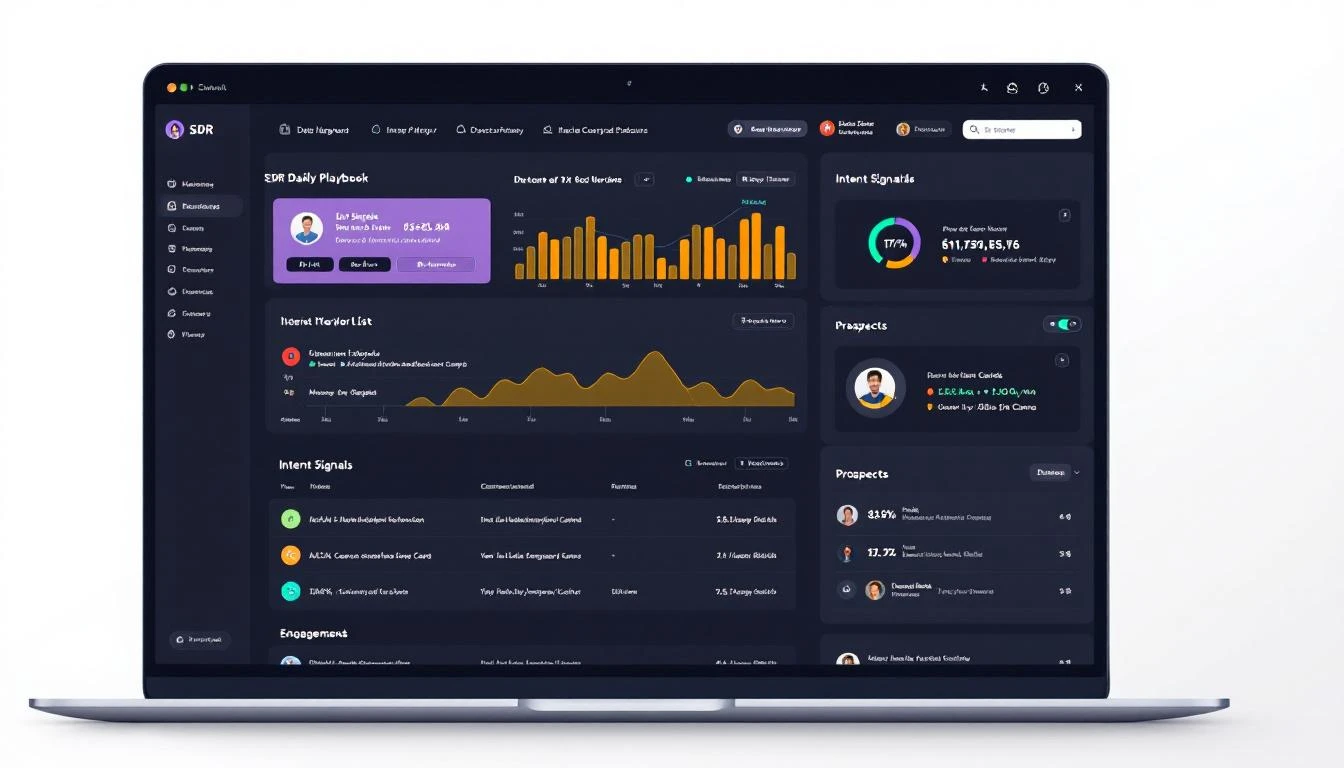
SDR daily playbook powered by intent signals

Step 4: Invest in Signal Infrastructure, Not More Reps

The typical response to "we need more pipeline" is "hire more SDRs." But the data shows that adding reps to a broken prioritization system just multiplies the waste.

Instead, invest in the signal stack:

  • Website visitor identification — Know which companies are on your site and what pages they're viewing
  • Multi-stakeholder tracking — Detect when multiple people from the same company are researching you (this is the strongest buying signal in B2B)
  • Champion tracking — Get alerts when former customers or engaged contacts change jobs
  • Email intent analysis — Move beyond open rates to engagement pattern detection
  • AI-powered signal routing — Automatically tier signals and surface the right leads to the right reps at the right time

A single platform that handles signal detection, prioritization, and SDR workflows eliminates the biggest productivity drain: context switching between 7+ tools just to figure out who to call next.

The Bottom Line: Speed Is Table Stakes. Signal Intelligence Is the Advantage.

The speed-to-lead research isn't wrong — it's incomplete.

Yes, you should respond to high-intent signals in under 5 minutes. Absolutely. The data on that is ironclad.

But treating all leads as equally urgent — blasting through a chronological call list as fast as possible — is the reason 83% of SDRs miss quota, 70% of their day is wasted on non-selling activities, and the average MQL-to-SQL conversion sits at a miserable 15%.

The teams that win in 2026 aren't just fast. They're intelligently fast. They use signal quality to decide who gets immediate attention and who goes into a nurture sequence. They build their daily playbook around buyer behavior, not lead score thresholds.

The shift from speed-first to signal-first isn't incremental. It's the difference between 19 qualified meetings a month and 103.

The first responder doesn't always win. The first informed responder does.


See Signal-First Selling in Action

MarketBetter's Daily SDR Playbook automatically tiers your signals, surfaces your highest-priority prospects, and tells your reps exactly what to do next — before they open 20 browser tabs.

Book a demo →


Sources

  • MIT/InsideSales.com Lead Response Management Study (Dr. James Oldroyd)
  • Harvard Business Review, "The Short Life of Online Sales Leads"
  • Velocify Lead Response Research
  • Drift/InsideSales.com Lead Response Report
  • Salesforce State of Sales Report
  • Gartner Sales Productivity Research
  • HubSpot 2024 Sales Trends Report
  • SaleSo SDR Productivity Report, 2025
  • Optifai Pipeline Study, 2026 (N=939 companies)
  • Martal Group B2B Sales Benchmarks, 2026
  • Voiso Lead Response Time Research

How Utility and Energy Monitoring Companies Build 3x More Pipeline with AI-Powered Visitor Intelligence [2026]

· 9 min read
sunder
Founder, marketbetter.ai

If you sell energy monitoring, utility analytics, or building performance software, you already know the challenge: your buyers don't fill out forms.

Facility managers, energy consultants, and sustainability officers visit your website to compare solutions. They read your case studies. They check your pricing page. Then they leave — and your sales team never knows they existed.

For most utility tech vendors, 95% of website traffic is invisible. That's not a rounding error. That's your pipeline walking out the door.

This is the story of how a utility and energy monitoring SaaS company — small team, tight budget, HubSpot CRM — turned anonymous website visitors into their primary pipeline source using AI-powered signal intelligence.

How Utility and Energy Monitoring Companies Can Turn Anonymous Website Traffic Into Real Pipeline

· 9 min read
MarketBetter Team
Content Team, marketbetter.ai

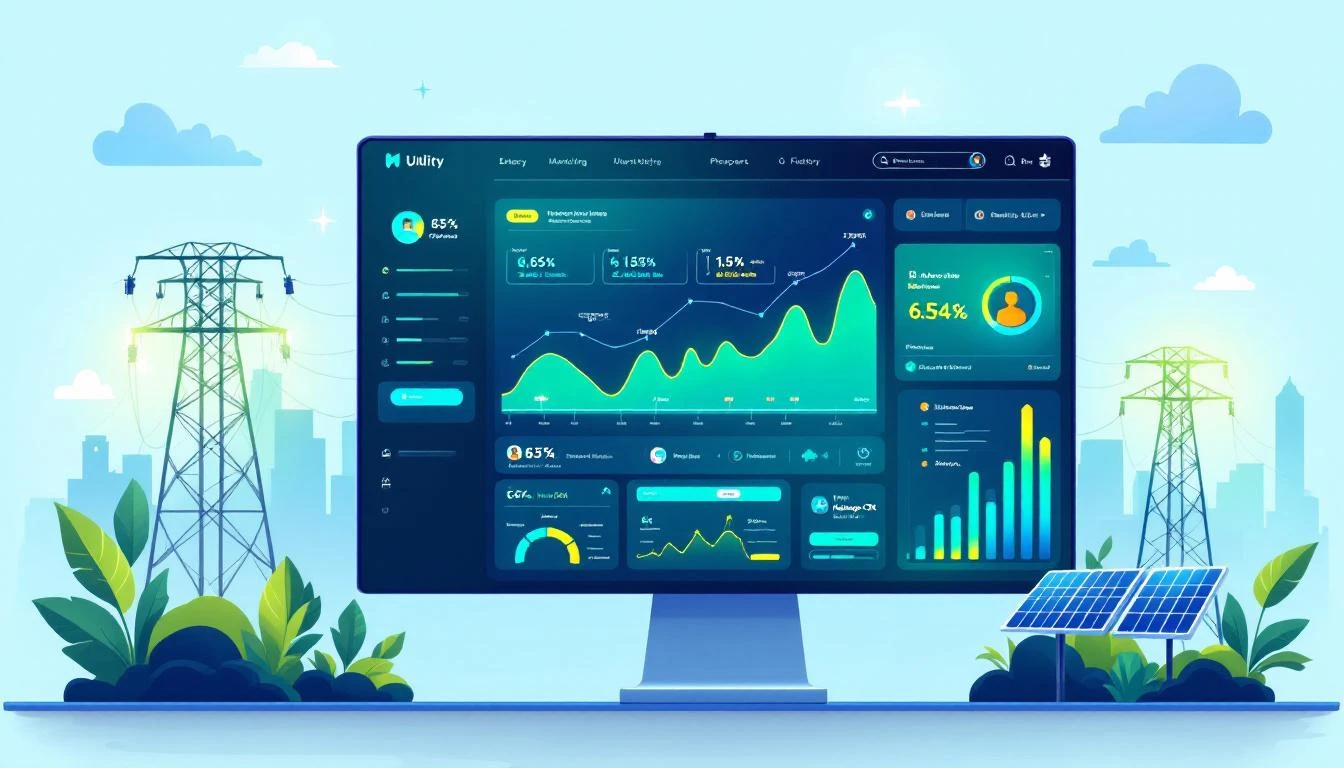
Utility and energy monitoring SaaS visitor identification pipeline

Utility and energy monitoring SaaS companies operate in one of the most paradoxical corners of B2B sales: the market is massive, the urgency is real, and yet pipeline generation feels impossibly slow.

Every facility manager, sustainability director, and energy procurement officer knows they need better monitoring. Regulatory pressure is mounting. ESG reporting requirements are tightening. Utility costs are climbing. The demand signal is everywhere — but somehow, the leads aren't.

Why? Because energy and utility tech buyers don't behave like typical SaaS prospects. They don't fill out demo request forms after reading a blog post. They don't respond to cold outbound sequences about "saving 20% on energy costs." They browse. They research. They compare. And then they go dark — talking to procurement internally for weeks before anyone on your sales team even knows they exist.

This is the story of how one utility monitoring SaaS company — a small team running lean on HubSpot — cracked the code by making visitor identification their primary pipeline engine. No army of SDRs. No massive outbound budget. Just signals, timing, and precision.


The Utility SaaS Sales Problem: Long Cycles, Silent Buyers

Here's what makes selling utility and energy monitoring software uniquely painful:

1. The buying committee is diffuse. A facility manager finds you. But the decision involves the VP of Operations, the CFO (because energy monitoring touches budget directly), and sometimes procurement or IT. By the time the facility manager gets internal alignment, they've forgotten which three vendors they were comparing.

2. Outbound is noisy and ineffective. Every energy company, every monitoring platform, every ESG compliance tool is blasting the same facility managers with the same cold emails. "Reduce your energy costs by 30%!" — the inbox equivalent of white noise. Response rates for utility-tech outbound hover around 1-2%, which means your small sales team is burning cycles on volume that never converts.

3. The website is your best (ignored) asset. Utility monitoring companies often have surprisingly strong organic traffic. Facility managers Google things like "real-time energy monitoring for multi-site operations" or "utility bill anomaly detection." They land on your site. They read your case studies. They check your integrations page. And then they leave — anonymously — because you have no idea they were there.

4. Small teams can't afford waste. You don't have 10 SDRs and an intent data budget. You have a founder, maybe a head of sales, and a handful of AEs who also prospect. Every hour spent on the wrong account is an hour stolen from the right one.

Sound familiar? One utility SaaS company decided to flip the entire model.


The Shift: From Outbound Spray to Signal-Based Pipeline

This company — a utility and energy monitoring SaaS platform serving commercial and industrial facilities — was running a classic small-team sales motion:

  • HubSpot CRM with basic lead scoring
  • Manual prospecting through LinkedIn and industry directories
  • Generic email sequences sent to facility managers and operations directors
  • Trade show follow-ups that produced a flurry of activity for two weeks, then nothing

The results were predictable: inconsistent pipeline, feast-or-famine months, and a constant feeling that they were missing something.

What they were missing was their own website traffic.

Step 1: Visitor Identification Changed Everything

When they activated website visitor identification, the picture changed overnight.

Instead of guessing which companies to target, they could see exactly who was visiting:

  • A Fortune 500 manufacturing company spent 14 minutes on the multi-site monitoring page — three separate visits in one week
  • A regional healthcare system browsed the case study page, then the pricing page, then the integrations page (classic high-intent behavior)
  • A university facilities department visited the ROI calculator page twice in 48 hours

None of these prospects had filled out a form. None of them were in the CRM. They were invisible — and they represented the highest-intent pipeline the team had ever seen.

The key insight: In utility and energy SaaS, buyers self-educate extensively before engaging sales. By the time they fill out a form (if they ever do), they've already shortlisted vendors. Visitor identification lets you enter the conversation during the research phase, not after it.

Step 2: HubSpot-Native Signal Workflows

Because the team was already on HubSpot, they built workflows that turned visitor signals into immediate action — no new tools, no complex integrations:

High-intent visitor alert workflow:

  • Trigger: Identified company visits pricing page OR case study page more than once in 7 days
  • Action: Create HubSpot deal in "Signal Detected" stage, assign to AE, Slack notification
  • Follow-up: Personalized email referencing their specific use case (manufacturing, healthcare, education, etc.)

Return visitor escalation:

  • Trigger: Same company returns after 14+ days of inactivity
  • Action: Move deal to "Re-Engaged" stage, trigger personalized sequence
  • Logic: If they came back, something changed internally — maybe budget opened, maybe a competing vendor disappointed them

Page-intent scoring:

  • Integrations page = +10 points (they're evaluating technical fit)
  • ROI calculator = +15 points (they're building a business case)
  • Multi-site features = +20 points (enterprise signal — larger deal)
  • Careers page = 0 points (not a buyer signal)

This scoring model fed directly into HubSpot's existing lead scoring, so the team didn't need a separate tool or dashboard. The daily SDR playbook surfaced the hottest signals every morning.

Step 3: Vertical-Specific Messaging That Actually Converts

Here's where most utility SaaS companies fumble: they send the same generic messaging to every prospect regardless of industry vertical.

A hospital system cares about compliance and patient safety — not just energy cost reduction. A manufacturing plant cares about production uptime — monitoring is about preventing shutdowns, not saving on the electric bill. A university cares about sustainability reporting for their ESG commitments.

This company built vertical-specific email sequences triggered by visitor identification:

For healthcare visitors: "We noticed your facilities team is evaluating energy monitoring solutions. For healthcare systems, the #1 driver isn't cost savings — it's ensuring critical equipment environments stay within spec. Here's how [similar healthcare system] reduced compliance incidents by 40%..."

For manufacturing visitors: "Multi-site manufacturing operations lose an average of $50K per unplanned shutdown. Real-time energy anomaly detection catches the electrical signatures of failing equipment 48 hours before downtime..."

For education visitors: "With ESG reporting requirements tightening for universities, your facilities team needs real-time data — not quarterly utility summaries. Here's how one university cut their Scope 2 reporting time from 3 weeks to 3 hours..."

Same product. Completely different conversation. The response rates doubled compared to their generic outbound sequences.


The Results: What Changed in 90 Days

The impact wasn't gradual — it was a step-change:

Pipeline sourced from visitor identification went from 0% to over 60% of total pipeline. The team went from wondering where their next deal was coming from to having a daily queue of signal-triggered opportunities.

Average deal cycle shortened by 3 weeks. Because they were engaging buyers during the research phase instead of after it, conversations started further down the funnel. Prospects had already read the case studies — the AE's job was to confirm fit, not educate.

Outbound volume dropped by 70%, but pipeline increased. The team stopped blasting 500 generic emails per week and started sending 30-40 hyper-targeted, signal-triggered messages. Fewer sends, dramatically better results.

HubSpot became the single source of truth. No switching between intent data platforms, visitor ID dashboards, and CRM. Everything lived in HubSpot — signals, scores, sequences, and deals — which meant the small team could actually manage it.


The Utility SaaS Playbook: Actionable Takeaways

If you're selling energy monitoring, utility optimization, sustainability SaaS, or any adjacent product, here's the framework:

1. Your Website Traffic Is Your Best Intent Signal

Utility and energy buyers research extensively before engaging. If you're not identifying who's visiting your site, you're ignoring your warmest pipeline. Start with visitor identification — it's the single highest-ROI investment for small teams.

2. Build Workflows in Your Existing CRM

You don't need a separate intent data platform if you're running HubSpot or Salesforce. Build signal-triggered workflows that create deals, assign owners, and fire personalized sequences automatically. The signal-based selling approach works inside the tools you already have.

3. Score by Page, Not Just by Company

Not all website visits are equal. A prospect reading your blog is mildly interested. A prospect who hits your pricing page, then your integrations page, then returns two days later — that's a buying signal. Weight your scoring accordingly.

4. Speak Their Vertical Language

"Save money on energy" is table stakes. Healthcare buyers care about compliance. Manufacturing cares about uptime. Education cares about ESG. Build vertical sequences triggered by the type of content they consume on your site.

5. Small Teams Win With Precision, Not Volume

You don't need 10 SDRs to build serious pipeline in utility SaaS. You need signals that tell your 2-3 sellers exactly who to talk to, when, and what to say. That's the difference between burning out on 500 cold emails and closing deals from 30 targeted conversations.

6. Engage the Dark Funnel

In utility and energy tech, the dark funnel is enormous — buyers consuming content, researching solutions, and building internal business cases without ever raising their hand. Visitor identification is how you illuminate it.


Why This Matters for the Energy Transition

The utility and energy monitoring market is projected to grow at 15%+ CAGR through 2030. Regulatory pressure, ESG mandates, and the simple economics of energy costs are driving adoption across every vertical.

But the companies that win won't be the ones with the biggest sales teams or the largest outbound budgets. They'll be the ones who see the buyer signals first and act on them with precision.

For small, lean utility SaaS teams, that's actually an advantage. You don't need scale — you need signals.


Ready to see which energy and facility companies are researching solutions on your website right now? Start identifying your anonymous traffic →

How Law Schools Use AI Chatbots to Convert More Prospective Students into Enrolled JDs

· 12 min read
MarketBetter Team
Content Team, marketbetter.ai

Law School AI Chatbot Enrollment Pipeline

Law school admissions offices are in crisis mode. Applications are surging — the Law School Admission Council reported double-digit application increases in recent cycles — but admissions staff hasn't grown to match. The result? Prospective students submit inquiries and wait days (or weeks) for responses. They visit the website at 11 PM on a Tuesday, read about the JD program, have questions about financial aid or clinic opportunities, and find... a contact form. By the time someone replies on Thursday, they've already scheduled visits at two competing schools.

In higher education, speed-to-response isn't a sales metric. It's an enrollment metric. And most law schools are losing candidates they've already attracted simply because they can't respond fast enough.

This is where AI chatbots are quietly transforming admissions — not as gimmicks, but as genuine operational infrastructure that handles the 80% of inquiries that follow predictable patterns, freeing admissions counselors to focus on the 20% that require human judgment.

How HR Benefits Technology Companies Can Build Territory-Based SDR Pipelines with AI-Powered Signals

· 11 min read
MarketBetter Team
Content Team, marketbetter.ai

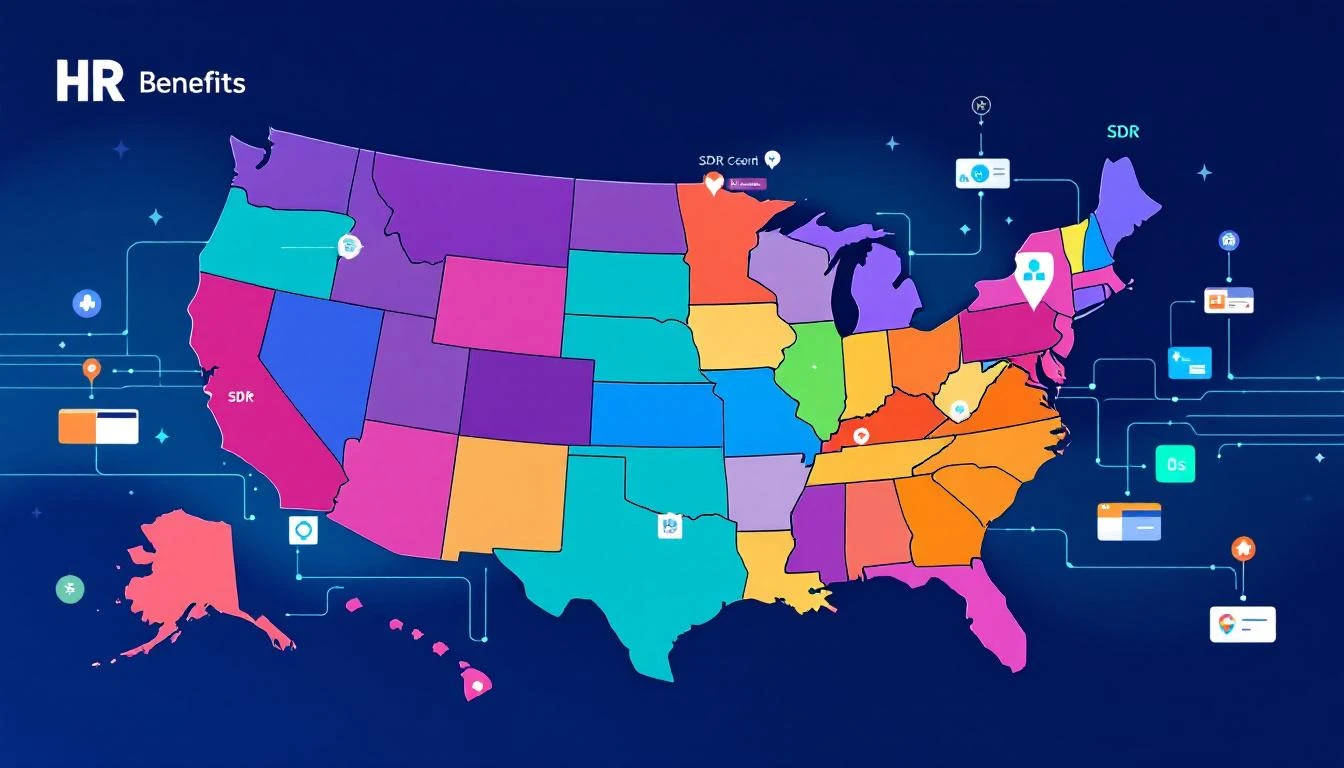
HR Benefits Technology Territory-Based SDR Pipeline

The HR benefits technology space is booming. Employers are scrambling to modernize how they distribute, manage, and communicate employee benefits — and the vendors serving them are growing fast. But growth creates a specific problem: how do you scale your sales development operation when your market segments are complex and your SDR team is still small?

This is the exact challenge facing benefits distribution platforms right now. Companies in this space typically sell to HR directors, benefits administrators, and brokers — but the buying motion varies wildly depending on company size, industry vertical, and geographic region. A 50-person startup evaluating benefits software has completely different needs than a 5,000-person manufacturing company with unionized workers across six states.

For SDR teams in HR tech, the result is chaos: reps waste time on accounts that don't fit, messaging falls flat because it's too generic, and pipeline stalls because nobody owns the right territory.

Signal-based selling changes the equation entirely.

The AI SDR Due Diligence Checklist: 10 Questions That Separate $50K Mistakes from Pipeline Machines [2026]

· 13 min read
sunder
Founder, marketbetter.ai

The AI SDR market will hit $15 billion by 2030. Venture capital has poured over $400 million into AI SDR startups in the last two years alone. Every vendor claims their platform will "revolutionize your pipeline."

Here's the number they don't put on their landing page: 50-70% of AI SDR tools churn within a year — roughly double the turnover rate of the human reps they're supposed to replace.

That's not a market with a product problem. That's a market with a buying problem. Teams are evaluating AI SDRs on demo polish, feature checklists, and pricing instead of the questions that actually predict whether the tool will generate pipeline 12 months from now.

This checklist is built from patterns we've observed across dozens of B2B sales teams evaluating AI SDR platforms. It's designed to cut through vendor hype and surface the structural differences that determine whether you'll renew or churn.

AI SDR Due Diligence Checklist

Why Most AI SDR Evaluations Fail

The typical evaluation process looks like this:

  1. VP of Sales sees a LinkedIn post about AI SDRs
  2. Team evaluates 3-4 vendors based on demos
  3. Signs an annual contract based on the best presentation
  4. Three months later, SDRs hate it, adoption stalls, meetings booked are garbage
  5. Churn at renewal

The root cause is almost always the same: the evaluation focused on what the tool does instead of what it produces.

A platform can send 10,000 emails a day. That's not a capability worth paying for — that's a liability. The question isn't volume. The question is: does it generate qualified meetings that close?

Here are the 10 questions that answer that.


Question 1: What Signals Does the Platform Actually Ingest?

Why it matters: The quality of your outreach is capped by the quality of your signals. A platform that only uses static firmographic data (company size, industry, job title) is just a fancy email blaster. You need behavioral and intent signals.

What to ask:

  • Does it identify companies visiting your website? At what match rate?
  • Does it track individual-level behavior (pages viewed, time on site, return visits)?
  • Does it ingest third-party intent data (G2, Bombora, TrustRadius)?
  • Can it detect champion job changes (a key account contact moves to a new company)?
  • Does it monitor email engagement signals (opens, clicks, replies) in real time?

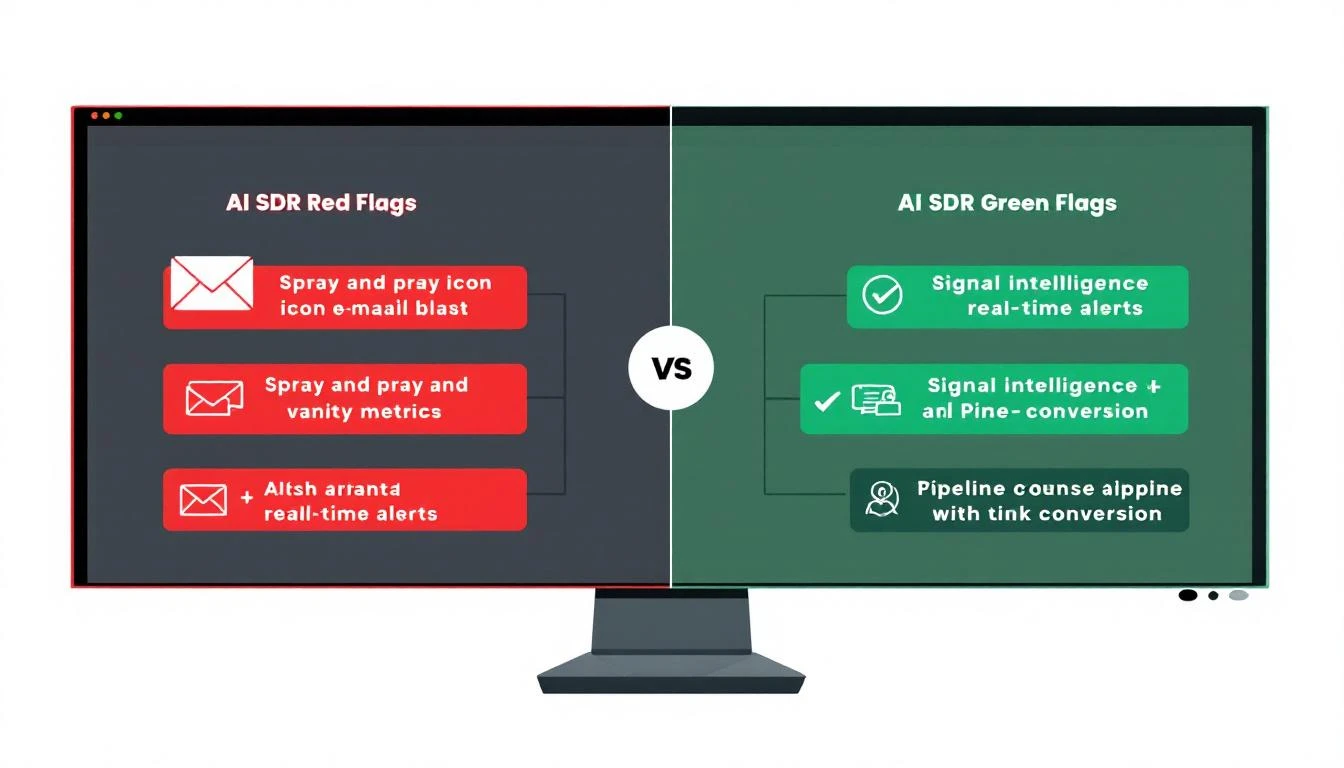
Red flag: If the vendor can't explain where their signals come from or says "we use AI to find intent," push harder. Intent data has a specific supply chain — Bombora panels, publisher co-ops, website pixel data. Vague answers mean vague signals.

Green flag: The platform layers multiple signal types (website visits + email engagement + third-party intent + job changes) and lets your team weight them based on your ICP.


Question 2: What Happens Between the Signal and the Action?

This is the single most revealing question in any AI SDR evaluation. Most platforms stop at surfacing signals. They show you a dashboard of companies visiting your website or accounts showing intent. Then your SDR has to figure out what to do about it.

What to ask:

  • When a high-intent signal fires, what does the SDR see? A dashboard notification? A prioritized task? An auto-drafted email ready to send?
  • How does the platform prioritize which signals matter most today?
  • Does the SDR get a daily playbook — a ranked list of exactly who to contact, how, and why?
  • Or is it "here are your signals, good luck"?

Red flag: If the answer is "we surface the data and your team takes action," you're buying a dashboard, not an SDR platform. Dashboards don't book meetings. Workflows do.

Green flag: The platform converts signals into specific, sequenced actions — call this person, send this email, follow up on LinkedIn — ranked by likelihood to convert. Your SDR opens the app and knows exactly what to do for the next 8 hours.

The fundamental question: Does this platform tell my SDRs WHO to contact, or does it tell them WHO to contact AND WHAT TO DO NEXT?

Red Flags vs Green Flags in AI SDR Evaluation


Question 3: How Does Personalization Actually Work?

Every AI SDR platform claims "hyper-personalization." This word has been beaten into meaninglessness. You need to understand the mechanics.

What to ask:

  • Show me a real email the platform generated. Not a cherry-picked example — pull one from a live campaign.
  • What data inputs does personalization draw from? (Company website? LinkedIn profile? Recent funding rounds? Technographic data? Or just {first_name} and {company}?)
  • Can the platform personalize based on the specific page a prospect visited on our website?
  • How does it handle accounts where enrichment data is thin?

Red flag: If "personalization" means inserting the prospect's name, company, and industry into a template, that's mail merge with a markup. GPT-4 can do that for $0.002 per email.

Green flag: Personalization is contextual — it references why you're reaching out (they visited your pricing page three times this week), what you can solve for them (based on their tech stack or hiring patterns), and how to frame the message (based on their role and the problems that role typically faces).


Question 4: What's the Real Match Rate on Visitor Identification?

Website visitor identification is table stakes in 2026. But match rates vary wildly — from 15% to 70% — depending on the vendor's data partnerships, IP resolution methodology, and enrichment depth.

What to ask:

  • What's your average company-level match rate? (Honest answer: 30-65% depending on traffic mix)
  • What's your individual-level match rate? (Honest answer: 15-40%)
  • How do you handle VPN and remote worker traffic? (This is where most vendors' numbers collapse)
  • Can I run a match rate test on my own traffic before signing?

Red flag: A vendor claiming 90%+ match rates is either lying or counting "partial matches" (identified the ISP but not the company). Ask for a test on your traffic — not their demo data.

Green flag: The vendor is transparent about match rate ranges, explains their methodology, and offers a proof-of-concept on your actual website traffic. They should be able to tell you exactly how many of your monthly visitors they can identify.


Question 5: How Does the Dialer Work — and Do They Have One?

Here's a dirty secret of the AI SDR market: most platforms don't have a dialer. They handle email and maybe LinkedIn. But research shows that responding to leads within 5 minutes makes you 21x more likely to qualify them. And phone is still the fastest channel for high-intent follow-up.

What to ask:

  • Does the platform include a built-in dialer, or do I need a separate tool?
  • Is the dialer connected to the same signal data that triggers emails and tasks?
  • Can my SDR see website visit history and email engagement before picking up the phone?
  • Does it support local presence dialing, call recording, and CRM logging?

Red flag: "We integrate with Aircall/Dialpad/RingCentral." Integration means context switching. Your SDR sees a signal in one tool, opens the dialer in another, and loses 3 minutes of context per call. Over a day, that's an hour of wasted time.

Green flag: The dialer is native to the platform, connected to the same signal and contact data that powers email sequences. When your SDR calls a prospect, they can see that the prospect visited the pricing page yesterday, opened the last email twice, and their company is on a G2 comparison page right now. That's a 45-second call prep instead of a 5-minute research session.


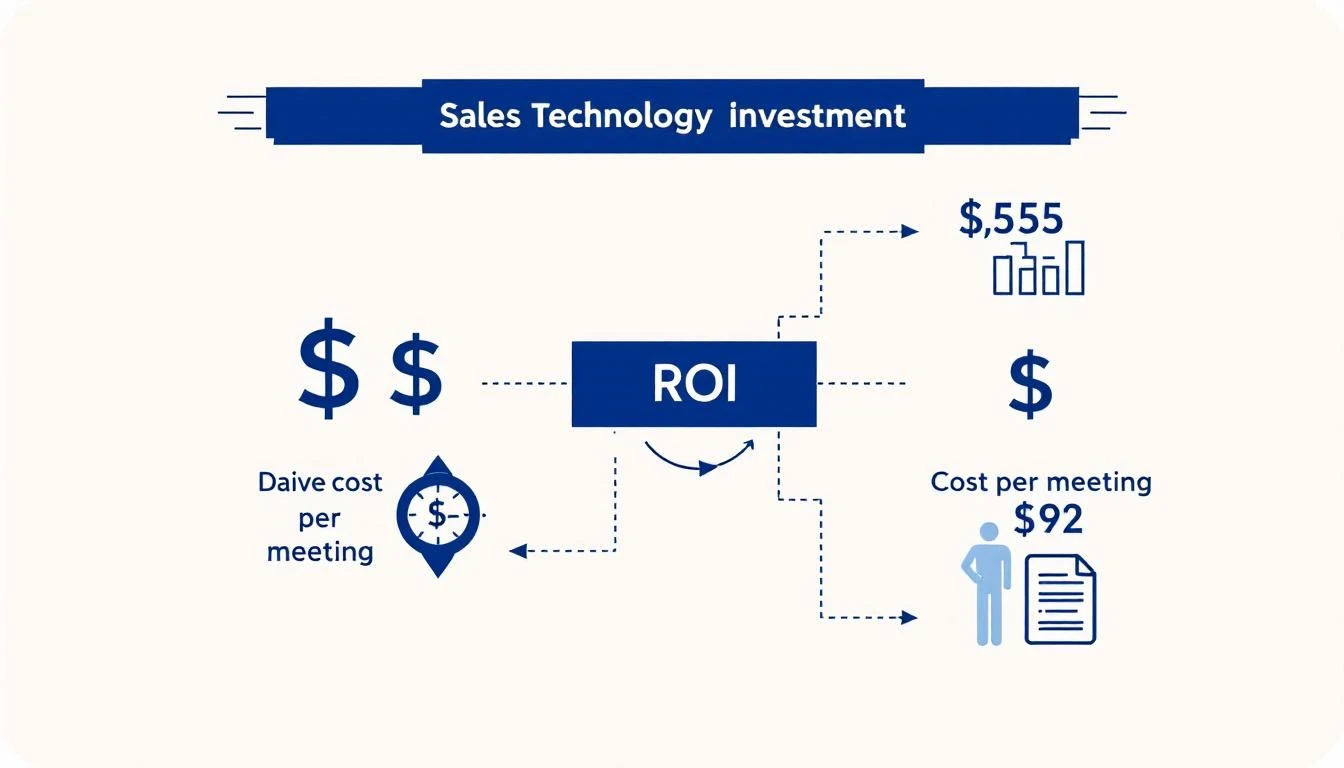
Question 6: What's the Actual Cost Per Meeting?

Annual contract price is a vanity metric. Cost per qualified meeting is the number that matters.

What to calculate:

ComponentHow to Calculate
Platform costAnnual contract ÷ 12
SDR time costHours spent on platform × fully-loaded hourly rate
Data costsAdditional enrichment, intent data, or dialer costs not included
Integration costsTime spent maintaining CRM sync, Zapier flows, etc.
Total monthly costSum of above
Qualified meetings/monthAsk vendor for customer benchmarks (not projections)
Cost per meetingTotal cost ÷ qualified meetings

What to ask:

  • What's the average cost per qualified meeting for customers in my segment?
  • Can you connect me with 3 references who will share their actual numbers?
  • What's the median time to first meeting booked?
  • What percentage of meetings booked through your platform progress to opportunity stage?

Red flag: If a vendor can't or won't share cost-per-meeting benchmarks from real customers, they either don't track it (bad) or the numbers aren't good (worse).

Green flag: The vendor shares real ROI data — not projections, not "potential" — from customers with similar team sizes and sales motions. The best vendors will confidently tell you: "Our average customer books X meetings per month at $Y per meeting."

ROI Calculation Framework for AI SDR Investment


Question 7: What Happens When a Key Contact Changes Jobs?

Champion tracking is one of the highest-ROI capabilities in B2B sales. When a VP who championed your deal at Company A moves to Company B, that's a warm lead at a new account — but only if you catch it within the first 30 days.

What to ask:

  • Does the platform monitor job changes for contacts in my CRM?
  • How frequently is this data refreshed? (Daily? Weekly? Monthly?)
  • What happens when a change is detected? Does the SDR get a task, a drafted email, or just a notification?
  • Can it detect not just the contact who left, but the new person filling their role at the original company?

Red flag: "We integrate with LinkedIn Sales Navigator for job change alerts." That's not a feature — that's a browser tab.

Green flag: Champion tracking is built into the platform's signal engine. When a job change fires, the SDR gets a prioritized task with context: who moved, where they went, what they bought from you before, and a personalized outreach draft. The best platforms also flag the replacement hire at the original account as a retention risk.


Question 8: How Does the Platform Handle Email Deliverability?

You can build the most personalized, signal-driven outreach in the world. If it lands in spam, it's worthless. Email deliverability is infrastructure, not a feature — and most AI SDR platforms treat it as an afterthought.

What to ask:

  • Does the platform manage domain warm-up and sender reputation?
  • How does it handle send limits across multiple mailboxes?
  • Does it support custom tracking domains to avoid shared domain blacklists?
  • What's the average inbox placement rate across your customer base?
  • If my domain gets flagged, what's the remediation process?

Red flag: If the vendor sends from a shared domain or shared IP pool, your deliverability is at the mercy of every other customer on that pool. One bad actor — or one customer blasting 10,000 cold emails a day — and your domain reputation tanks.

Green flag: The platform manages dedicated sending infrastructure per customer, includes warm-up automation, monitors bounce rates and spam complaints in real time, and automatically throttles send volume when deliverability signals degrade.


Question 9: What Does the SDR's Daily Experience Actually Look Like?

This question is the adoption killer. If your SDRs don't use the platform every day, nothing else matters. And the reason most SDRs abandon AI tools isn't capability — it's UX.

What to ask:

  • Walk me through a typical SDR's first 30 minutes in the platform.
  • How many clicks does it take to go from "I just opened the app" to "I'm doing productive outreach"?
  • Can my SDRs do everything in one tab, or do they need to jump between your platform, CRM, dialer, and LinkedIn?
  • What does the daily playbook look like? Is it a list of prioritized tasks, or a dashboard they have to interpret?

Red flag: If the demo shows 6 different tabs, 3 dashboards, and a "powerful but flexible" interface that "your team can customize to their workflow" — your SDRs will use it for 2 weeks and go back to spreadsheets.

Green flag: The SDR opens the app, sees a ranked list of exactly what to do today (call this person, email this person, follow up on LinkedIn with this person), and can execute every action without leaving the platform. One tab. One workflow. Zero interpretation required.

The measure of a great SDR platform isn't what it can do. It's how little your SDR has to think about what to do next.


Question 10: What Breaks at Scale?

Every platform works beautifully with 2 SDRs and 500 prospects. The question is what happens at 10 SDRs and 50,000 contacts.

What to ask:

  • How does the platform handle territory deduplication? (Two SDRs targeting the same account)
  • What happens when multiple SDRs have overlapping prospect lists?
  • How does it manage send volume across 10+ mailboxes without triggering deliverability issues?
  • Can I see reports broken down by SDR, territory, and campaign — not just aggregate numbers?
  • How does the platform handle multi-threading — multiple contacts at the same account getting sequenced simultaneously?

Red flag: "We handle dedup at the contact level." Contact-level dedup is table stakes. Account-level coordination is what matters. If two SDRs are simultaneously emailing different people at the same company with different messages, you look uncoordinated — and the prospect notices.

Green flag: The platform coordinates outreach at the account level, not just the contact level. It knows that SDR A is calling the VP of Sales at Acme while SDR B is emailing the Director of Marketing, and it spaces those touches to create a coordinated buying experience instead of an email barrage.


The 60-Second Evaluation Scorecard

Before your next vendor call, rate each area 1-5:

QuestionScore (1-5)Notes
1. Signal quality and sources
2. Signal-to-action workflow
3. Personalization depth
4. Visitor ID match rate
5. Native dialer
6. Cost per meeting data
7. Champion tracking
8. Email deliverability infrastructure
9. SDR daily experience
10. Scale and coordination
Total/50

40-50: Strong contender. Move to pilot. 30-39: Decent platform with gaps. Negotiate pricing to reflect missing capabilities. 20-29: You'll be buying additional tools to fill gaps. Factor total cost of ownership. Below 20: Walk away. This platform will churn.


The Bottom Line

The AI SDR market is flooded with tools that demo well and deliver poorly. The 50-70% annual churn rate isn't because AI doesn't work for sales — it's because most teams buy the wrong tool for the wrong reasons.

The right AI SDR platform doesn't just send more emails. It tells your SDRs exactly who to contact, why, and what to say — every single day. It turns signals into sequenced actions. It connects email, phone, and LinkedIn into a single workflow. And it produces a cost per meeting that justifies every dollar you spend.

Use this checklist. Score every vendor. Trust the math over the demo.

Your pipeline depends on it.


Want to see how MarketBetter scores against these 10 questions? Book a demo →

The B2B Dark Funnel: How to Capture the 73% of Buyers You Can't See [2026]

· 12 min read
sunder
Founder, marketbetter.ai

Your pipeline isn't broken. Your visibility is.

Right now, three out of four companies researching solutions like yours will never fill out a form, request a demo, or click your chatbot. They'll visit your pricing page at 11pm, read three comparison posts, check your G2 reviews, ask ChatGPT about your product — and then either buy from a competitor who spotted them first, or ghost entirely.

This invisible buying behavior is called the dark funnel. And in 2026, it's where the vast majority of your revenue lives.

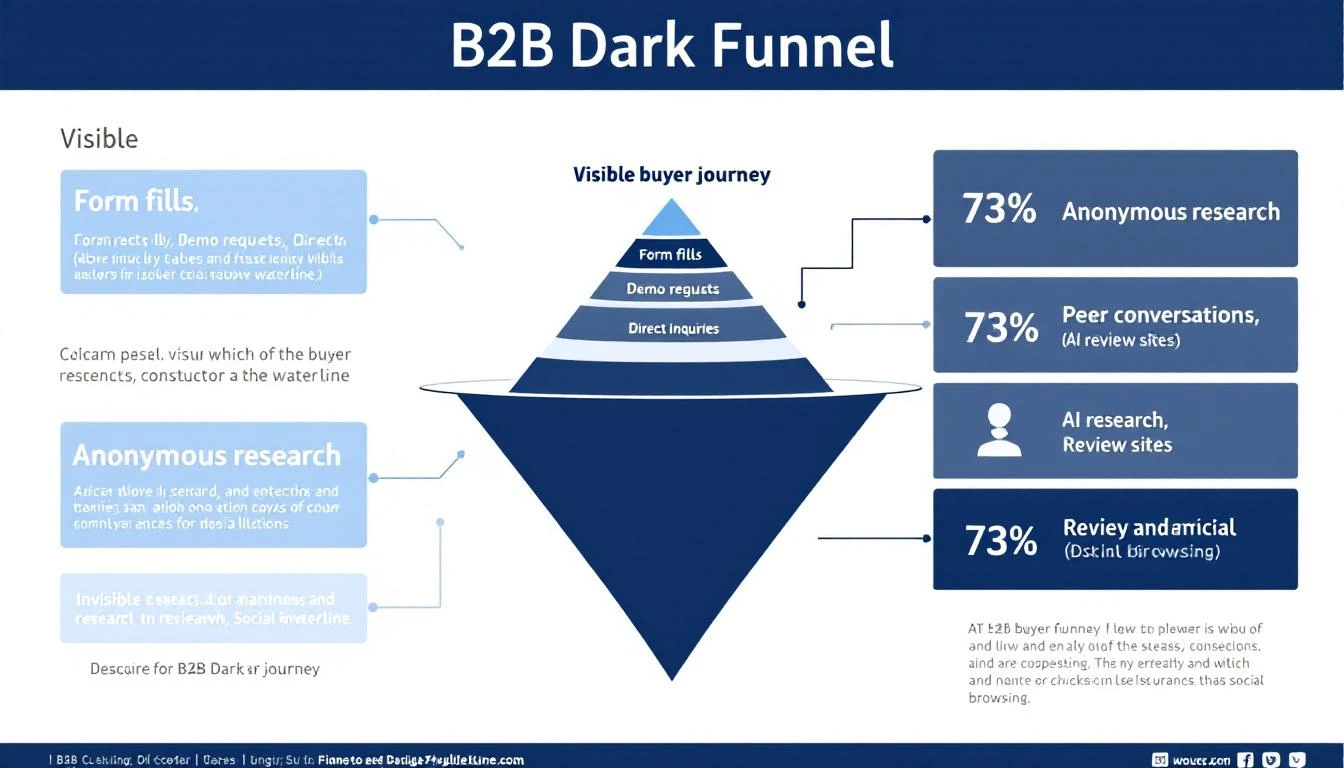
The B2B Dark Funnel — Most of the buyer journey happens below the surface

The Data: Your Buyers Are Already Here (You Just Can't See Them)

The gap between what B2B buyers actually do and what sellers can track has never been wider. Here's what the latest research reveals:

Buyers research anonymously longer than ever:

  • 73% of the B2B buying journey happens anonymously before a buyer ever contacts a vendor (6sense/Green Hat APAC Research)
  • 61% of B2B buyers prefer a completely rep-free buying experience (Gartner, 2025)
  • 83% of buyers fully define their purchase requirements before ever speaking with sales (6sense, 2025)
  • 92% of B2B buyers start their journey with at least one vendor already in mind (6sense, 2025)

AI is accelerating the invisible buying phase:

  • 94% of B2B buyers now use large language models (LLMs) during their buying process (6sense, 2025)
  • 72% of buyers encountered Google's AI Overviews during research, and 90% clicked through to at least one cited source (TrustRadius, 2025)
  • 35% of B2B buyers consult external influencers during their journey, expected to reach 50% by end of 2025 (Forrester, 2024)

And yet most companies still wait for form fills:

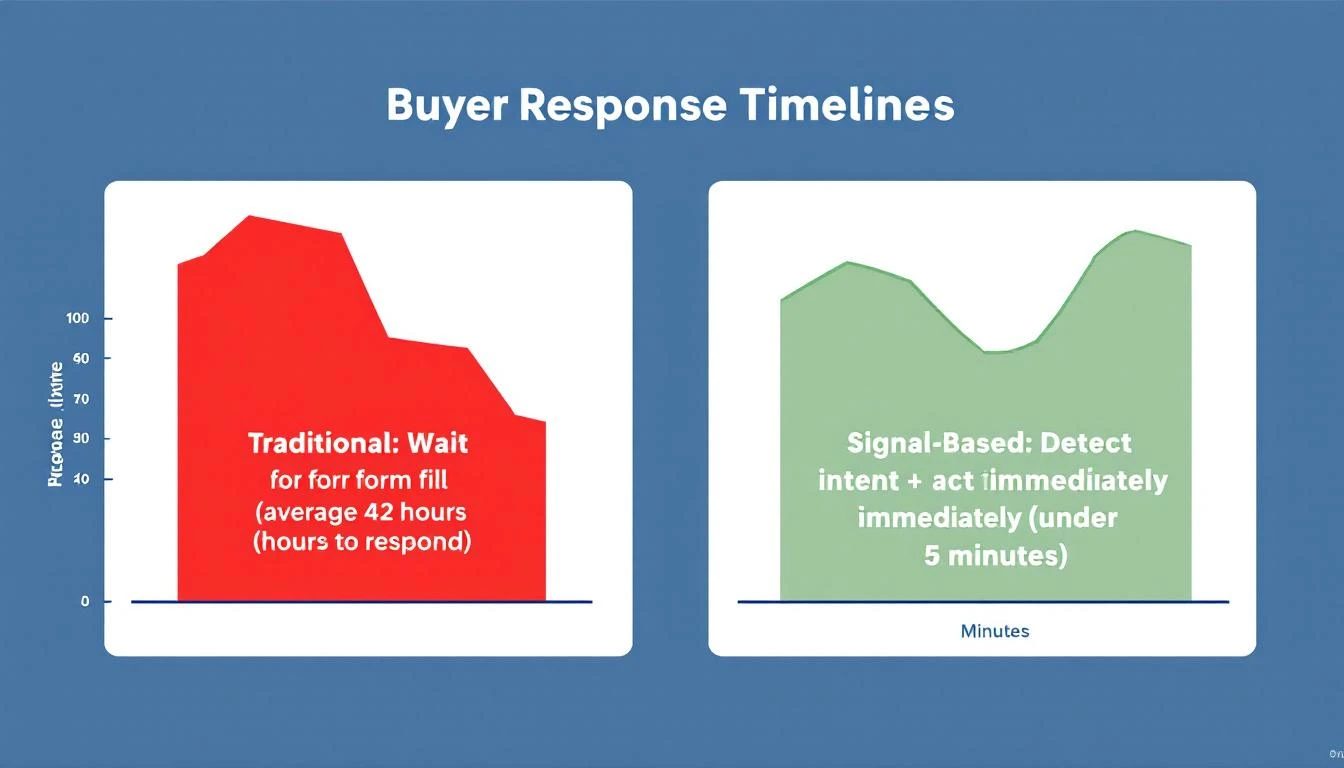
  • The average B2B lead response time is 42 hours — nearly two full business days (Kixie, 2025)
  • 78% of customers buy from the company that responds first (Gitnux, 2026)
  • Responding within 5 minutes makes you 21x more likely to qualify a lead versus waiting 30 minutes (InsideSales)

The math is devastating: 73% of buying happens where you can't see it, 83% of requirements are set before you're invited, and when a buyer finally does raise their hand, most teams take 42 hours to respond — by which point the buyer has already chosen someone faster.

What Exactly Is the Dark Funnel?

The dark funnel is every interaction a potential buyer has with your brand — or your competitors' brands — that your marketing and sales tools can't track.

It includes:

  • Anonymous website visits — someone from a target account browses your pricing page, reads three blog posts, and leaves without filling anything out
  • AI-powered research — a VP of Sales asks ChatGPT to "compare the top SDR platforms for mid-market B2B companies" and your product either appears or it doesn't
  • Peer conversations — a Slack community, LinkedIn DM, or dinner conversation where someone says "we switched to X and our meetings booked doubled"
  • Review site browsing — reading G2, TrustRadius, and Capterra reviews without creating an account or clicking a CTA
  • Social media lurking — scrolling past your LinkedIn posts, watching your team's content, absorbing positioning without engaging
  • Content consumption — downloading ungated PDFs, watching YouTube videos, reading comparison articles on third-party sites

Traditional analytics captures maybe 27% of the journey: the form fills, demo requests, direct inquiries, and tracked email clicks. The other 73%? Completely invisible to most sales teams.

Why the Dark Funnel Is Growing (Not Shrinking)

Three forces are making the dark funnel larger every year:

1. Buyers Trust AI More Than Sales Reps

With 94% of buyers using LLMs during their research, the role of the sales rep has fundamentally shifted. Buyers don't need someone to explain features — they've already asked Claude or ChatGPT to compare your product against five alternatives. They show up to sales calls pre-convinced (or pre-rejected), having formed opinions in channels you never see.

This means the selling often happens before you know a deal exists.

2. Buying Committees Are Now Buying Networks

The old model of a defined buying committee (economic buyer, technical evaluator, end user) has been replaced by fluid buying networks. A 6sense study found that decision dynamics have evolved — stakeholders pull in peers from different departments, external advisors, and AI agents to inform their choices.

These conversations happen in private Slack channels, on LinkedIn, in industry communities, and during peer dinners. Your CRM will never log them.

3. Privacy Regulations Remove Traditional Tracking

GDPR, CCPA, and the slow death of third-party cookies have systematically eliminated the tracking mechanisms that marketers relied on for a decade. Retargeting pools are smaller. Attribution is muddier. The easy days of pixel-based tracking are over.

The Signal Stack: How to See Into the Dark Funnel

You can't track every buyer interaction. But you can build a signal stack that illuminates enough of the dark funnel to act on.

The B2B Signal Stack — Layers of buyer intelligence

Think of it as three layers:

Layer 1: Website Visitor Identification (Foundation)

This is the most actionable signal you can capture. When a company visits your website, visitor identification technology reveals who they are — even without a form fill.

What you learn:

  • Which companies are on your site right now
  • Which pages they're visiting (pricing, competitor comparisons, case studies)
  • How many people from the same company are visiting
  • Whether they're returning or visiting for the first time

Why it matters: A company visiting your pricing page three times in a week is a buying signal as strong as a demo request — you just never see it without visitor ID.

The key differentiator: Most visitor ID tools stop at identification. The best ones tell you what to do next — which accounts to prioritize, what message to send, and when to reach out. Identification without action is just a more interesting dashboard.

Layer 2: Intent Signals (Context)

Visitor ID tells you WHO is looking. Intent signals tell you WHY.

Sources of intent data:

  • First-party intent: Pages visited, time on site, content downloaded, return frequency
  • Third-party intent: Content consumption across the web on topics related to your product category
  • Technographic signals: Tech stack changes, job postings, and funding events that indicate buying readiness
  • Champion tracking: When a previous customer or champion changes jobs, they often bring their preferred tools to the new company

Layering intent on top of visitor ID transforms a generic "Acme Corp visited your site" into "Acme Corp's VP of Sales visited your pricing page, read your competitor comparison with Outreach, and their company posted three SDR job listings this week."

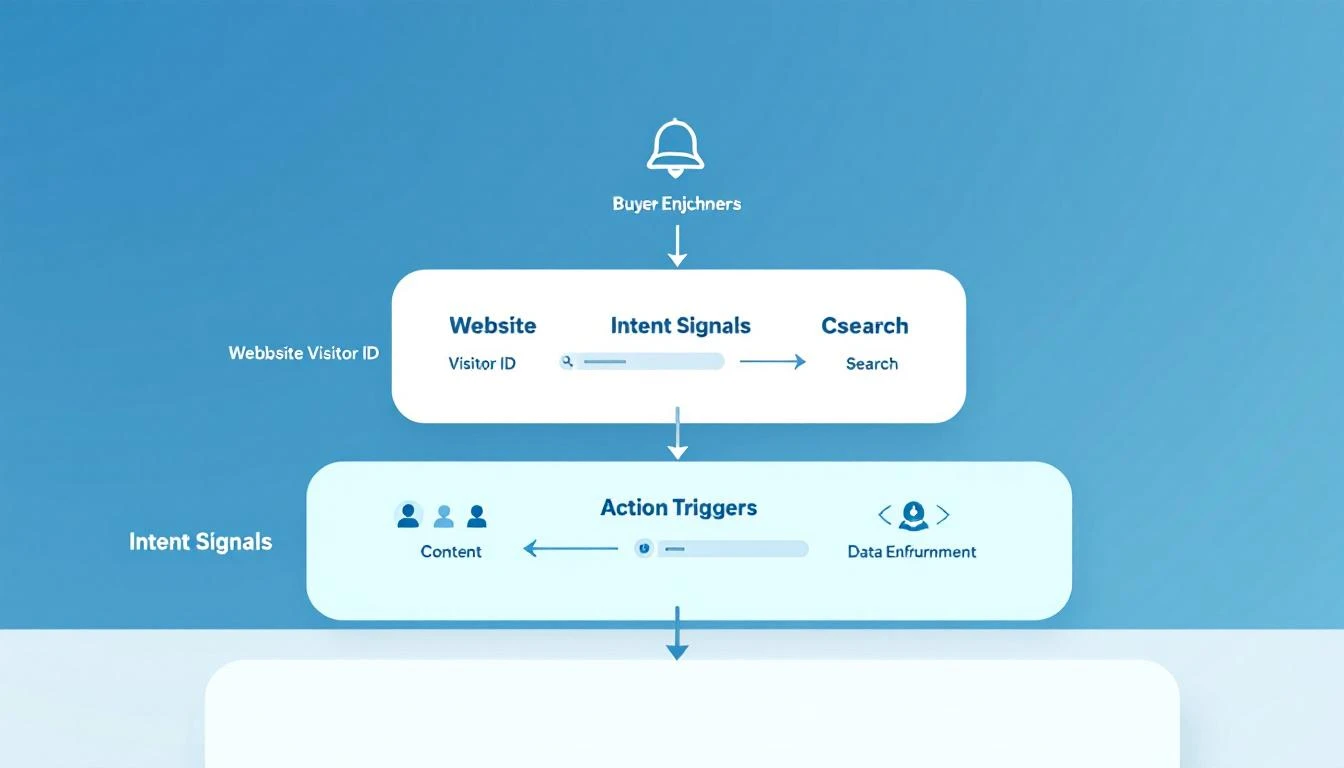
Layer 3: Action Triggers (Execution)

Signals without action are just noise. The top layer of the stack turns intelligence into specific, timed outreach:

  • Daily prioritized playbook: Instead of sorting through 200 accounts, your team gets the 10 accounts most likely to buy today, ranked by signal strength
  • Automated sequences: When a high-fit account hits a signal threshold (visited pricing + read comparison + returning visitor), trigger a personalized outreach sequence automatically
  • Real-time alerts: When a champion changes jobs, when a target account returns to your site, or when a competitor's customer shows dissatisfaction — your team knows immediately

Signal-Based Selling vs. Traditional Response

The Math That Changes Everything

Let's put real numbers to the dark funnel problem:

Typical B2B SaaS website:

  • 10,000 monthly visitors
  • 2% form fill rate = 200 known leads
  • 9,800 visitors leave anonymously

With website visitor identification (40-60% match rate):

  • 10,000 monthly visitors
  • 200 form fills (same)
  • 4,000-6,000 companies identified from anonymous traffic
  • 20-30x more pipeline opportunities

With signal-based prioritization:

  • Of those 4,000-6,000 identified companies, maybe 200-400 show genuine buying signals (multiple visits, pricing page views, competitive research patterns)
  • Each of those is as qualified as a form fill — often more so, because they've done deeper research

Now apply speed-to-lead data:

  • Responding to these signals in under 5 minutes makes you 21x more likely to qualify them
  • 78% of buyers choose the vendor that responds first
  • Reducing response from 42 hours to under 1 hour increases conversions by 7x

The compound effect: 20x more opportunities × 7x better conversion rate = a fundamentally different pipeline.

5 Plays to Capture Dark Funnel Revenue Today

Play 1: Deploy Visitor Identification on Day One

If you're running a B2B website without visitor identification, you're flying blind. This is the single highest-ROI investment in your go-to-market stack.

What to look for in a solution:

  • Match rate above 40% (anything below isn't worth the investment)
  • Company-level AND contact-level identification
  • Integration with your CRM and outreach tools
  • Actionable output — not just data, but recommended next steps

Common mistake: Buying visitor ID and treating it like another analytics dashboard. If your reps aren't acting on the data within 24 hours, it's wasted.

Play 2: Build a Signal-Based Daily Playbook

Kill the "spray and pray" outreach model. Instead of giving SDRs a static list of 200 accounts and saying "go call," build a signal-based daily playbook that prioritizes the 10-15 accounts showing active buying behavior.

The playbook should answer three questions every morning:

  1. Who should I contact first? (ranked by signal strength)
  2. What should I say? (context from their research behavior)
  3. Which channel should I use? (email, phone, LinkedIn — based on engagement patterns)

Teams using signal-based playbooks consistently report 2x higher meeting-booked rates because reps are calling companies that are actually in-market, not just on a list.

Play 3: Win the AI Visibility War

94% of your buyers are using AI to research solutions. If your product doesn't show up in AI-generated answers, you're invisible during the fastest-growing phase of the buyer journey.

Tactical steps:

  • Publish comprehensive, data-rich content that AI models cite (original research, comparison guides, "best X tools" lists)
  • Ensure your product appears on review sites (G2, TrustRadius, Capterra) with recent, authentic reviews — AI models heavily weight these
  • Monitor what AI says about your product. Ask ChatGPT, Claude, and Gemini "What are the best [your category] tools?" regularly and see where you rank
  • Create content specifically for the "messy middle" — comparison pages, pricing breakdowns, alternative lists — because that's what buyers ask AI about

Play 4: Activate Champion Tracking

When someone who used your product at their previous company changes jobs, they're the warmest possible lead at their new company. This signal is pure gold, and most teams ignore it entirely.

Set up alerts for:

  • Job changes from current customers to new companies
  • LinkedIn activity from power users at churned accounts
  • Hiring patterns at target accounts (posting for roles that indicate need for your product)

A champion at a new company converts 3-5x faster than a cold prospect because trust already exists. The dark funnel conversation happened before they even changed jobs — they were already telling their new team about you.

Play 5: Compress Response Time to Under 5 Minutes

Even after you identify dark funnel signals, most teams still take hours to act on them. That delay is the last leak in your pipeline.

Implement:

  • Automated alerts when high-value accounts hit signal thresholds
  • Pre-built outreach templates that reference the buyer's actual research behavior (not generic "I noticed you visited our website")
  • Round-robin routing that instantly assigns identified accounts to available reps
  • AI-powered chatbots that engage returning visitors in real-time, even outside business hours

Remember: reducing response time from 24 hours to 1 hour increases SaaS conversions by 360%. From 8 hours to under 5 minutes? The numbers get even more dramatic.

The Bottom Line: You Don't Have a Lead Gen Problem

If you're getting 10,000 monthly website visitors but only 200 leads, you don't have a traffic problem or a lead generation problem. You have a visibility problem.

73% of your buyer's journey is happening right now — on your website, in AI conversations, on review sites, in peer networks — and you can't see any of it.

The companies that will win in 2026 aren't the ones with the biggest ad budgets or the most SDRs. They're the ones that can see into the dark funnel and act before anyone else does.

The technology exists today. The data proves it works. The only question is whether you'll implement it before your competitors do.


Ready to see who's actually on your website? MarketBetter identifies anonymous visitors, surfaces buying signals, and tells your SDRs exactly who to contact and what to say — every morning. Book a demo →

How EHS & Safety Compliance Software Companies Can Build a Signal-Driven Sales Pipeline

· 9 min read
sunder
Founder, marketbetter.ai

The Environmental, Health & Safety (EHS) software market is projected to hit $3.4 billion by 2028. Behind that number is an uncomfortable truth: most EHS SaaS vendors are still running their sales motion like it's 2018 — cold lists, generic sequences, and BDRs burning through contact databases with zero signal intelligence.

If you sell safety compliance software, incident management platforms, or environmental monitoring tools, you already know the challenges. Your buyers are EHS directors, VP of Operations, and Chief Safety Officers — people who don't respond to "just checking in" emails. They respond to relevance.

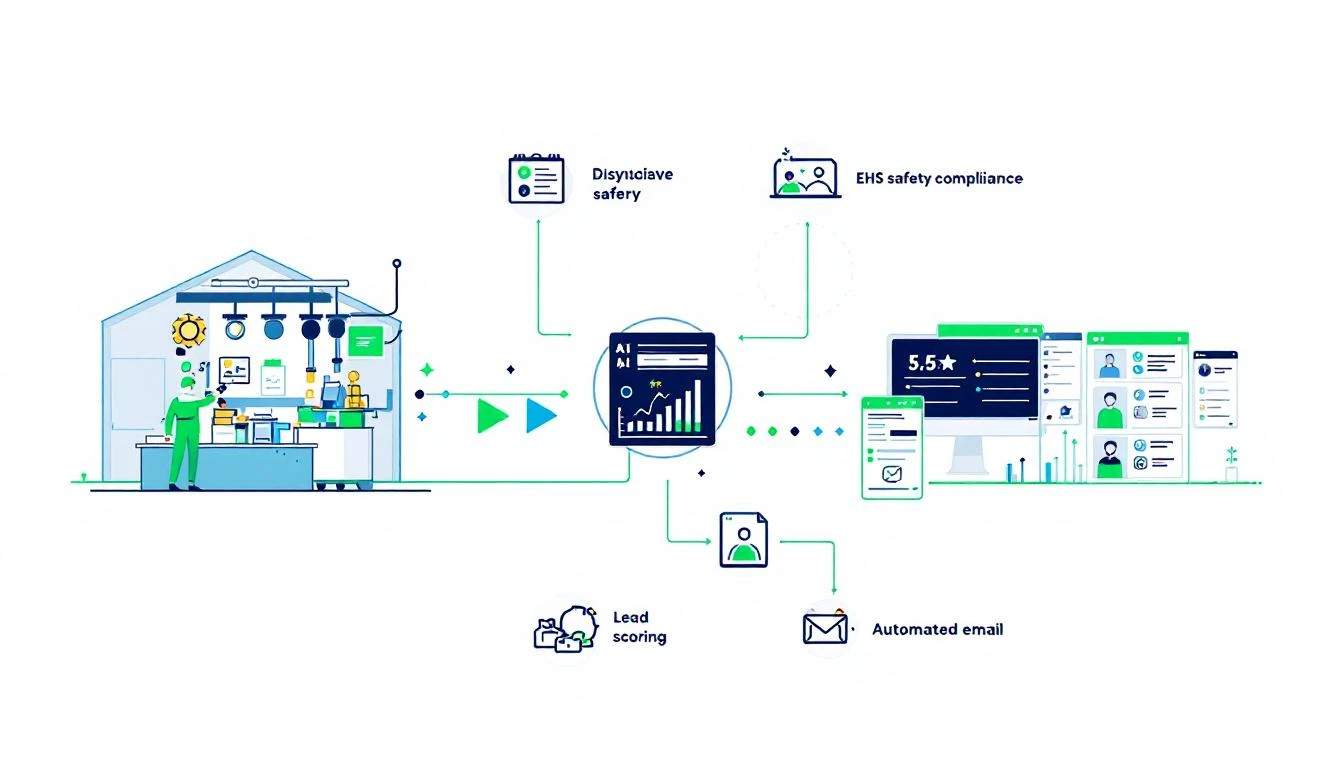
This article breaks down how one mid-market EHS compliance SaaS company transformed their outbound pipeline by replacing spray-and-pray tactics with AI-powered intent signals — and how the same playbook applies to every vendor in this space.

EHS compliance AI signals pipeline

Why Healthcare IT Staffing Companies Are Switching to Signal-Based Selling (And Booking 2x More Demos)

· 12 min read
MarketBetter Team
Content Team, marketbetter.ai

AI signals transforming healthcare IT staffing sales

Here's a number that should keep every healthcare IT staffing company up at night: the U.S. healthcare IT market is expected to exceed $390 billion by 2028. Hospitals, health systems, and payers are spending aggressively on EHR implementations, cybersecurity, interoperability, and AI-powered clinical tools.

And every single one of those projects needs people to build, implement, and maintain them.

That's your market. It's massive. But if you're a healthcare IT staffing firm, you already know the paradox: the market is huge, but your buyer pool is tiny.

You're not selling to millions of companies. You're selling to a few thousand health systems, hospitals, managed care organizations, and health IT vendors. The VP of IT at a 500-bed hospital system. The CISO at a regional health plan. The project manager overseeing an Epic implementation. These are the people who decide whether to bring in contract staff — and they are nearly impossible to reach through traditional outbound.

This is the story of how one healthcare IT staffing company — a niche firm with a small sales team — went from manual prospecting to signal-driven pipeline generation. And doubled their demo bookings in the process.