
B2B Dark Funnel 2026: How to Find the 73% of Buyers Hiding From You

Your pipeline isn't broken. Your visibility is.
Right now, three out of four companies researching solutions like yours will never fill out a form, request a demo, or click your chatbot. They'll visit your pricing page at 11pm, read three comparison posts, check your G2 reviews, ask ChatGPT about your product — and then either buy from a competitor who spotted them first, or ghost entirely.
This invisible buying behavior is called the dark funnel. And in 2026, it's where the vast majority of your revenue lives.
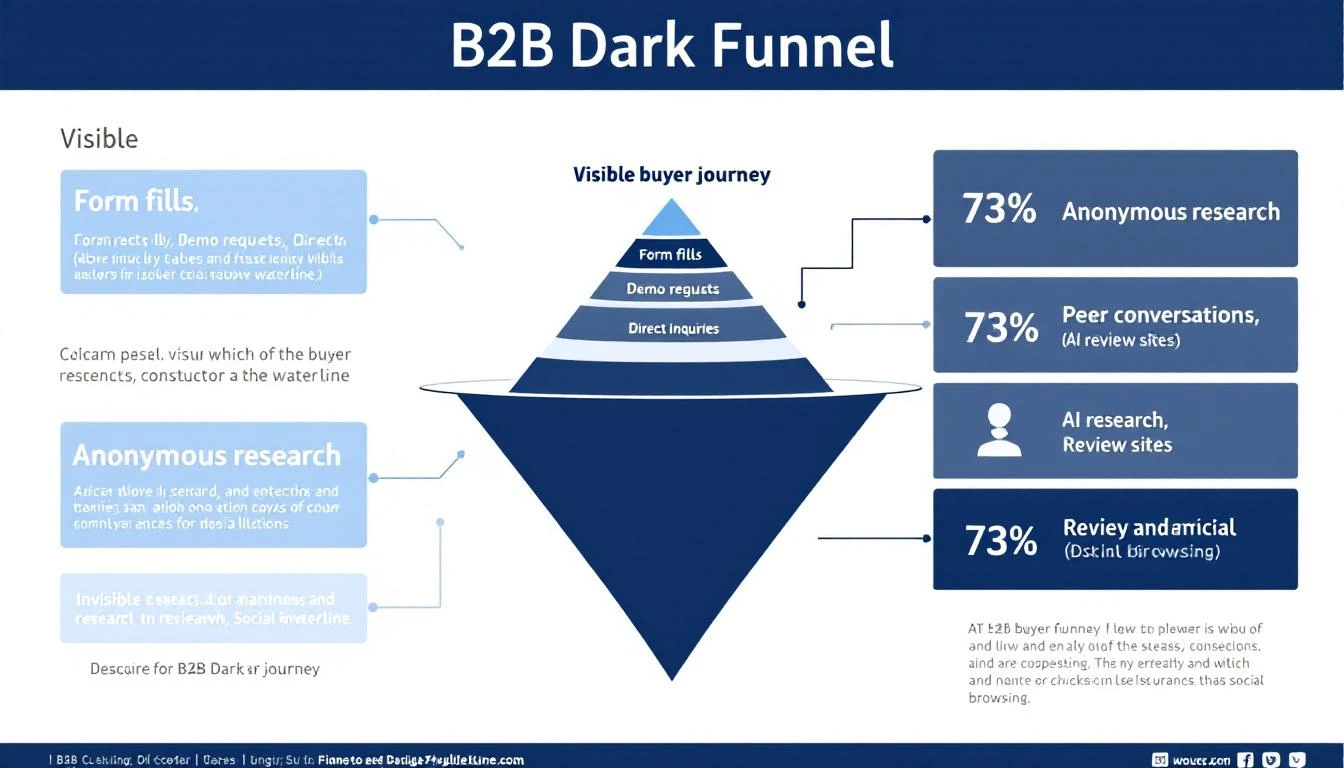
Quick answer: The B2B dark funnel is every buyer interaction your analytics can't track — anonymous website visits, AI chatbot research, peer conversations in Slack and LinkedIn DMs, review-site browsing, and dark social shares. Roughly 73% of the buying journey happens there. You capture it with a signal stack: website visitor identification, layered intent data, and automated action triggers — plus self-reported attribution to measure what tracking tools miss.
The Data: Your Buyers Are Already Here (You Just Can't See Them)
The gap between what B2B buyers actually do and what sellers can track has never been wider. Here's what the latest research reveals:
Buyers research anonymously longer than ever:
- 73% of the B2B buying journey happens anonymously before a buyer ever contacts a vendor (6sense/Green Hat APAC Research)
- 61% of B2B buyers prefer a completely rep-free buying experience (Gartner, 2025)
- 83% of buyers fully define their purchase requirements before ever speaking with sales (6sense, 2025)
- 92% of B2B buyers start their journey with at least one vendor already in mind (6sense, 2025)
AI is accelerating the invisible buying phase:
- 94% of B2B buyers now use large language models (LLMs) during their buying process (6sense, 2025)
- 72% of buyers encountered Google's AI Overviews during research, and 90% clicked through to at least one cited source (TrustRadius, 2025)
- 35% of B2B buyers consult external influencers during their journey, expected to reach 50% by end of 2025 (Forrester, 2024)
And yet most companies still wait for form fills:
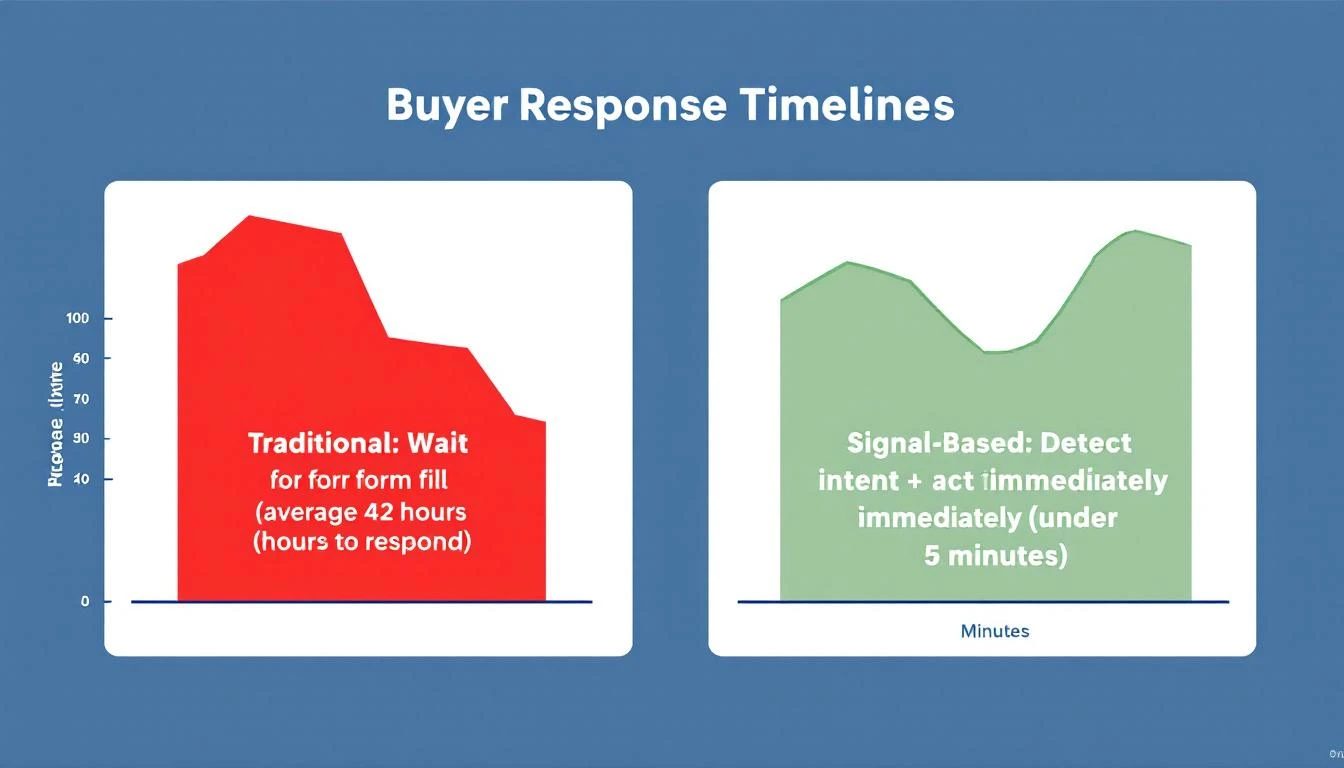
- The average B2B lead response time is 42 hours — nearly two full business days (Kixie, 2025)
- 78% of customers buy from the company that responds first (Gitnux, 2026)
- Responding within 5 minutes makes you 21x more likely to qualify a lead versus waiting 30 minutes (InsideSales)
The math is devastating: 73% of buying happens where you can't see it, 83% of requirements are set before you're invited, and when a buyer finally does raise their hand, most teams take 42 hours to respond — by which point the buyer has already chosen someone faster.
What Exactly Is the Dark Funnel?
The dark funnel is every interaction a potential buyer has with your brand — or your competitors' brands — that your marketing and sales tools can't track.
It includes:
- Anonymous website visits — someone from a target account browses your pricing page, reads three blog posts, and leaves without filling anything out
- AI-powered research — a VP of Sales asks ChatGPT to "compare the top SDR platforms for mid-market B2B companies" and your product either appears or it doesn't
- Peer conversations — a Slack community, LinkedIn DM, or dinner conversation where someone says "we switched to X and our meetings booked doubled"
- Review site browsing — reading G2, TrustRadius, and Capterra reviews without creating an account or clicking a CTA
- Social media lurking — scrolling past your LinkedIn posts, watching your team's content, absorbing positioning without engaging
- Content consumption — downloading ungated PDFs, watching YouTube videos, reading comparison articles on third-party sites
Traditional analytics captures maybe 27% of the journey: the form fills, demo requests, direct inquiries, and tracked email clicks. The other 73%? Completely invisible to most sales teams.
Dark Funnel vs. Dark Social
The terms get used interchangeably, but they're not the same thing:
- Dark social is a subset of the dark funnel: content shared through private channels — Slack messages, WhatsApp, LinkedIn DMs, email forwards — that shows up in your analytics as "direct traffic" with no referrer. When a RevOps leader pastes your pricing breakdown into their team's Slack channel, that's dark social.
- The dark funnel is the whole iceberg: dark social plus anonymous website visits, AI research sessions, review-site browsing, podcast listens, and community lurking.
The practical difference: you can partially recover dark social with UTM discipline and share buttons. The rest of the dark funnel requires visitor identification and self-reported attribution.
Why the Dark Funnel Is Growing (Not Shrinking)
Three forces are making the dark funnel larger every year:
1. Buyers Trust AI More Than Sales Reps
With 94% of buyers using LLMs during their research, the role of the sales rep has fundamentally shifted. Buyers don't need someone to explain features — they've already asked Claude or ChatGPT to compare your product against five alternatives. They show up to sales calls pre-convinced (or pre-rejected), having formed opinions in channels you never see.
This means the selling often happens before you know a deal exists.
2. Buying Committees Are Now Buying Networks
The old model of a defined buying committee (economic buyer, technical evaluator, end user) has been replaced by fluid buying networks. A 6sense study found that decision dynamics have evolved — stakeholders pull in peers from different departments, external advisors, and AI agents to inform their choices.
These conversations happen in private Slack channels, on LinkedIn, in industry communities, and during peer dinners. Your CRM will never log them.
3. Privacy Regulations Remove Traditional Tracking
GDPR, CCPA, and the slow death of third-party cookies have systematically eliminated the tracking mechanisms that marketers relied on for a decade. Retargeting pools are smaller. Attribution is muddier. The easy days of pixel-based tracking are over.
The Signal Stack: How to See Into the Dark Funnel
You can't track every buyer interaction. But you can build a signal stack that illuminates enough of the dark funnel to act on.
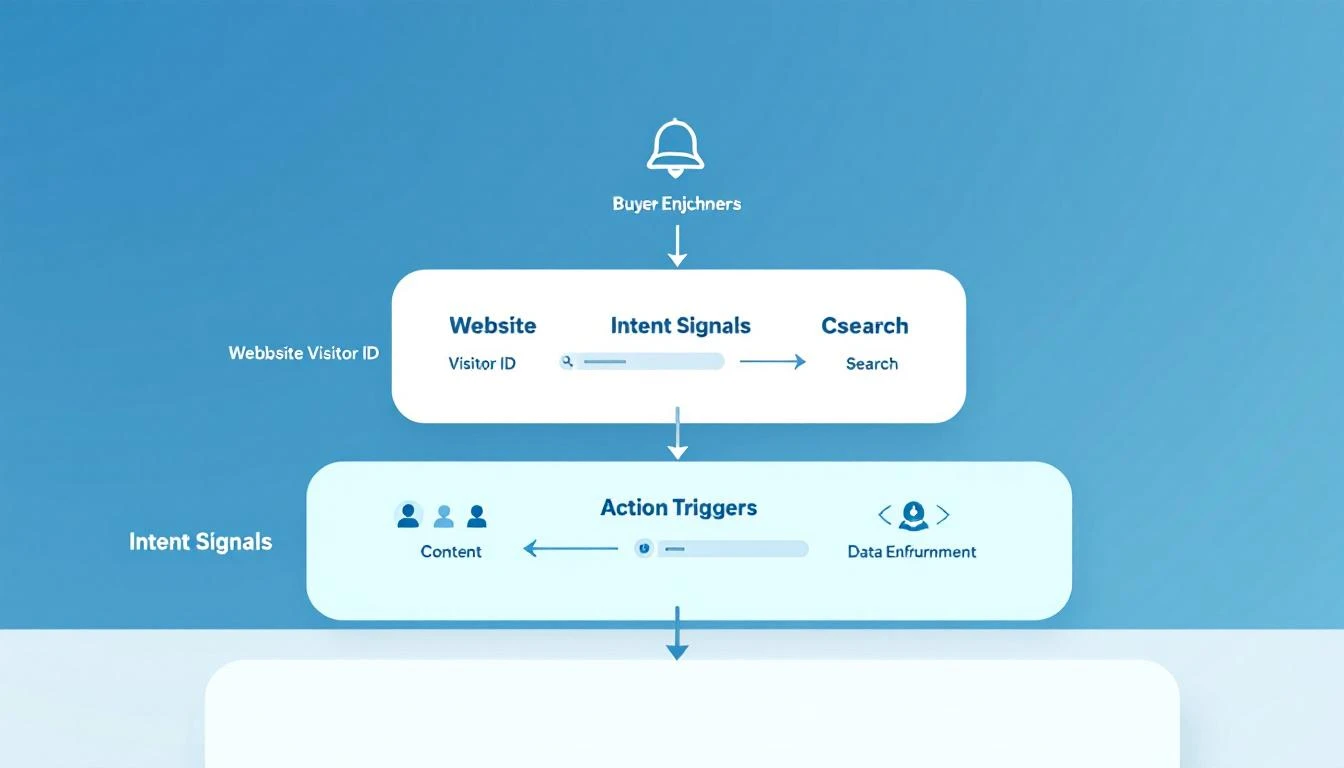
Think of it as three layers:
Layer 1: Website Visitor Identification (Foundation)
This is the most actionable signal you can capture. When a company visits your website, visitor identification technology reveals who they are — even without a form fill.
What you learn:
- Which companies are on your site right now
- Which pages they're visiting (pricing, competitor comparisons, case studies)
- How many people from the same company are visiting
- Whether they're returning or visiting for the first time
Why it matters: A company visiting your pricing page three times in a week is a buying signal as strong as a demo request — you just never see it without visitor ID.
The key differentiator: Most visitor ID tools stop at identification. The best ones tell you what to do next — which accounts to prioritize, what message to send, and when to reach out. Identification without action is just a more interesting dashboard.
Layer 2: Intent Signals (Context)
Visitor ID tells you WHO is looking. Intent signals tell you WHY.
Sources of intent data:
- First-party intent: Pages visited, time on site, content downloaded, return frequency
- Third-party intent: Content consumption across the web on topics related to your product category
- Technographic signals: Tech stack changes, job postings, and funding events that indicate buying readiness
- Champion tracking: When a previous customer or champion changes jobs, they often bring their preferred tools to the new company
Layering intent on top of visitor ID transforms a generic "Acme Corp visited your site" into "Acme Corp's VP of Sales visited your pricing page, read your competitor comparison with Outreach, and their company posted three SDR job listings this week."
Layer 3: Action Triggers (Execution)
Signals without action are just noise. The top layer of the stack turns intelligence into specific, timed outreach:
- Daily prioritized playbook: Instead of sorting through 200 accounts, your team gets the 10 accounts most likely to buy today, ranked by signal strength
- Automated sequences: When a high-fit account hits a signal threshold (visited pricing + read comparison + returning visitor), trigger a personalized outreach sequence automatically
- Real-time alerts: When a champion changes jobs, when a target account returns to your site, or when a competitor's customer shows dissatisfaction — your team knows immediately
The Math That Changes Everything
Let's put real numbers to the dark funnel problem:
Typical B2B SaaS website:
- 10,000 monthly visitors
- 2% form fill rate = 200 known leads
- 9,800 visitors leave anonymously
With website visitor identification (40-60% match rate):
- 10,000 monthly visitors
- 200 form fills (same)
- 4,000-6,000 companies identified from anonymous traffic
- 20-30x more pipeline opportunities
With signal-based prioritization:
- Of those 4,000-6,000 identified companies, maybe 200-400 show genuine buying signals (multiple visits, pricing page views, competitive research patterns)
- Each of those is as qualified as a form fill — often more so, because they've done deeper research
Now apply speed-to-lead data:
- Responding to these signals in under 5 minutes makes you 21x more likely to qualify them
- 78% of buyers choose the vendor that responds first
- Reducing response from 42 hours to under 1 hour increases conversions by 7x
The compound effect: 20x more opportunities × 7x better conversion rate = a fundamentally different pipeline.
How to Measure the Dark Funnel (Attribution That Actually Works)
You can't attribute what you can't see — so dark funnel measurement is less about perfect tracking and more about triangulation. Four methods, in order of effort:
| Method | What it captures | Effort | Blind spots |
|---|---|---|---|
| Self-reported attribution | Peer referrals, podcasts, communities, AI recommendations | Low | Memory bias, vague answers |
| Website visitor identification | Anonymous account-level research on your site | Low-medium | Off-site activity |
| Account-level signal correlation | Which signals precede closed-won deals | Medium | Needs deal volume to be meaningful |
| Incrementality testing | Whether dark-funnel channels actually drive pipeline | High | Slow; requires discipline |
Start With Self-Reported Attribution
Add one free-text question to every demo form and discovery call: "How did you hear about us?" — and make it a required, open-ended field, not a dropdown.
Software attribution will tell you the last click was "direct" or "organic." The buyer will tell you "a friend at my last company used you" or "ChatGPT recommended you when I asked for Clay alternatives." Those answers are your dark funnel map. Teams that run both consistently find self-reported answers contradicting software attribution on a large share of deals — and the self-reported version is usually closer to how the deal actually started.
Operational tips:
- Log the raw answer in your CRM verbatim; don't bucket it at capture time
- Have SDRs ask it again on the first call ("What made you take this meeting?") — verbal answers are richer than form fills
- Review answers monthly and tag them: peer referral, community, AI/LLM, podcast, review site, content
- Compare against your software attribution to see which channels are systematically undercounted
Correlate Signals to Closed-Won
Once visitor identification is live, work backwards from every closed-won deal: what did that account do in the 90 days before the first meeting? Pricing-page visits, comparison-post reads, repeat sessions, job postings, champion job changes. Patterns emerge fast — and they become your signal-based selling scoring model. For a deeper walkthrough of signal types and scoring, see our complete guide to B2B intent data.
5 Plays to Capture Dark Funnel Revenue Today
Play 1: Deploy Visitor Identification on Day One
If you're running a B2B website without visitor identification, you're flying blind. This is the single highest-ROI investment in your go-to-market stack.
What to look for in a solution:
- Match rate above 40% (anything below isn't worth the investment)
- Company-level AND contact-level identification
- Integration with your CRM and outreach tools
- Actionable output — not just data, but recommended next steps
Common mistake: Buying visitor ID and treating it like another analytics dashboard. If your reps aren't acting on the data within 24 hours, it's wasted.
Play 2: Build a Signal-Based Daily Playbook
Kill the "spray and pray" outreach model. Instead of giving SDRs a static list of 200 accounts and saying "go call," build a signal-based daily playbook that prioritizes the 10-15 accounts showing active buying behavior.
The playbook should answer three questions every morning:
- Who should I contact first? (ranked by signal strength)
- What should I say? (context from their research behavior)
- Which channel should I use? (email, phone, LinkedIn — based on engagement patterns)
Teams using signal-based playbooks consistently report 2x higher meeting-booked rates because reps are calling companies that are actually in-market, not just on a list.
Play 3: Win the AI Visibility War
94% of your buyers are using AI to research solutions. If your product doesn't show up in AI-generated answers, you're invisible during the fastest-growing phase of the buyer journey.
Tactical steps:
- Publish comprehensive, data-rich content that AI models cite (original research, comparison guides, "best X tools" lists)
- Ensure your product appears on review sites (G2, TrustRadius, Capterra) with recent, authentic reviews — AI models heavily weight these
- Monitor what AI says about your product. Ask ChatGPT, Claude, and Gemini "What are the best [your category] tools?" regularly and see where you rank
- Create content specifically for the "messy middle" — comparison pages, pricing breakdowns, alternative lists — because that's what buyers ask AI about
Play 4: Activate Champion Tracking
When someone who used your product at their previous company changes jobs, they're the warmest possible lead at their new company. This signal is pure gold, and most teams ignore it entirely.
Set up alerts for:
- Job changes from current customers to new companies
- LinkedIn activity from power users at churned accounts
- Hiring patterns at target accounts (posting for roles that indicate need for your product)
A champion at a new company converts 3-5x faster than a cold prospect because trust already exists. The dark funnel conversation happened before they even changed jobs — they were already telling their new team about you.
Play 5: Compress Response Time to Under 5 Minutes
Even after you identify dark funnel signals, most teams still take hours to act on them. That delay is the last leak in your pipeline.
Implement:
- Automated alerts when high-value accounts hit signal thresholds
- Pre-built outreach templates that reference the buyer's actual research behavior (not generic "I noticed you visited our website")
- Round-robin routing that instantly assigns identified accounts to available reps
- AI-powered chatbots that engage returning visitors in real-time, even outside business hours
Remember: reducing response time from 24 hours to 1 hour increases SaaS conversions by 360%. From 8 hours to under 5 minutes? The numbers get even more dramatic.
Dark Funnel FAQ
What is the dark funnel in B2B marketing? The dark funnel is all buyer research and word-of-mouth activity that happens in channels your analytics can't track: anonymous website visits, AI chatbot research, private Slack and LinkedIn conversations, review-site browsing, and podcast listens. Research from 6sense puts roughly 73% of the B2B buying journey in these untrackable channels.
How is the dark funnel different from dark social? Dark social is one slice of the dark funnel — privately shared links that show up as "direct traffic." The dark funnel also includes anonymous site visits, AI research, communities, and review sites.
Can you actually track the dark funnel? Partially. Website visitor identification reveals which companies research you anonymously, and self-reported attribution ("How did you hear about us?") surfaces the peer conversations and AI recommendations software can't see. You'll never track 100% — the goal is enough visibility to act.
What tools illuminate the dark funnel? Three layers: visitor identification (who's on your site), intent data (what they're researching across the web), and action triggers (automated outreach when signals stack up). See our visitor identification tools comparison and buyer intent data tools breakdown.
Why is the dark funnel growing? Three drivers: buyers prefer rep-free research (61% per Gartner), AI assistants now handle much of the comparison work (94% of buyers use LLMs), and privacy regulation keeps dismantling third-party tracking.
The Bottom Line: You Don't Have a Lead Gen Problem
If you're getting 10,000 monthly website visitors but only 200 leads, you don't have a traffic problem or a lead generation problem. You have a visibility problem.
73% of your buyer's journey is happening right now — on your website, in AI conversations, on review sites, in peer networks — and you can't see any of it.
The companies that will win in 2026 aren't the ones with the biggest ad budgets or the most SDRs. They're the ones that can see into the dark funnel and act before anyone else does.
The technology exists today. The data proves it works. The only question is whether you'll implement it before your competitors do.
Ready to see who's actually on your website? MarketBetter identifies anonymous visitors, surfaces buying signals, and tells your SDRs exactly who to contact and what to say — every morning. Book a demo →
Related Reading
- How to Identify Anonymous Website Visitors: 7 Methods Ranked
- The Complete Guide to B2B Intent Data
- The Complete Guide to Signal-Based Selling
- Best Website Visitor Identification Tools [2026]
- Speed-to-Lead: Why Response Time Decides Who Wins
- SDR Playbook: From Signal to Meeting in 24 Hours
- Best Buyer Intent Data Tools [2026]
- Champion Tracking: Turn Job Changes Into Revenue
- Why Intent Data Fails Most Sales Teams
- Warm Outbound Playbook: Using Buying Signals in 2026
- Best AI SDR Tools Compared [2026]
- MarketBetter vs. Warmly: Signal Aggregation vs. SDR Workflow