The Discovery Call Diagnostic: 8 In-Call Signals That Predict If a Deal Will Close [2026]

Most AEs walk out of a discovery call and write the same recap in CRM: "Good convo. Strong interest. Sending follow-up." Two weeks later half of those deals are in slow-fade limbo, and nobody can explain what changed. Nothing changed. The deal was already dead at minute eight — the AE just didn't notice.
The hard truth: discovery call outcome is mostly decided by what the buyer brings to the table, not what the AE asks. Budget, authority, timing — the classic BANT — are answers buyers give you because you forced the question. Real intent is something you have to listen for, and it shows up fast. If you know what to listen for, you can call the deal in the first 10-15 minutes with surprising accuracy.
This is the diagnostic. Eight signals. Where they show up. What they actually mean. And what to do when you don't see them.
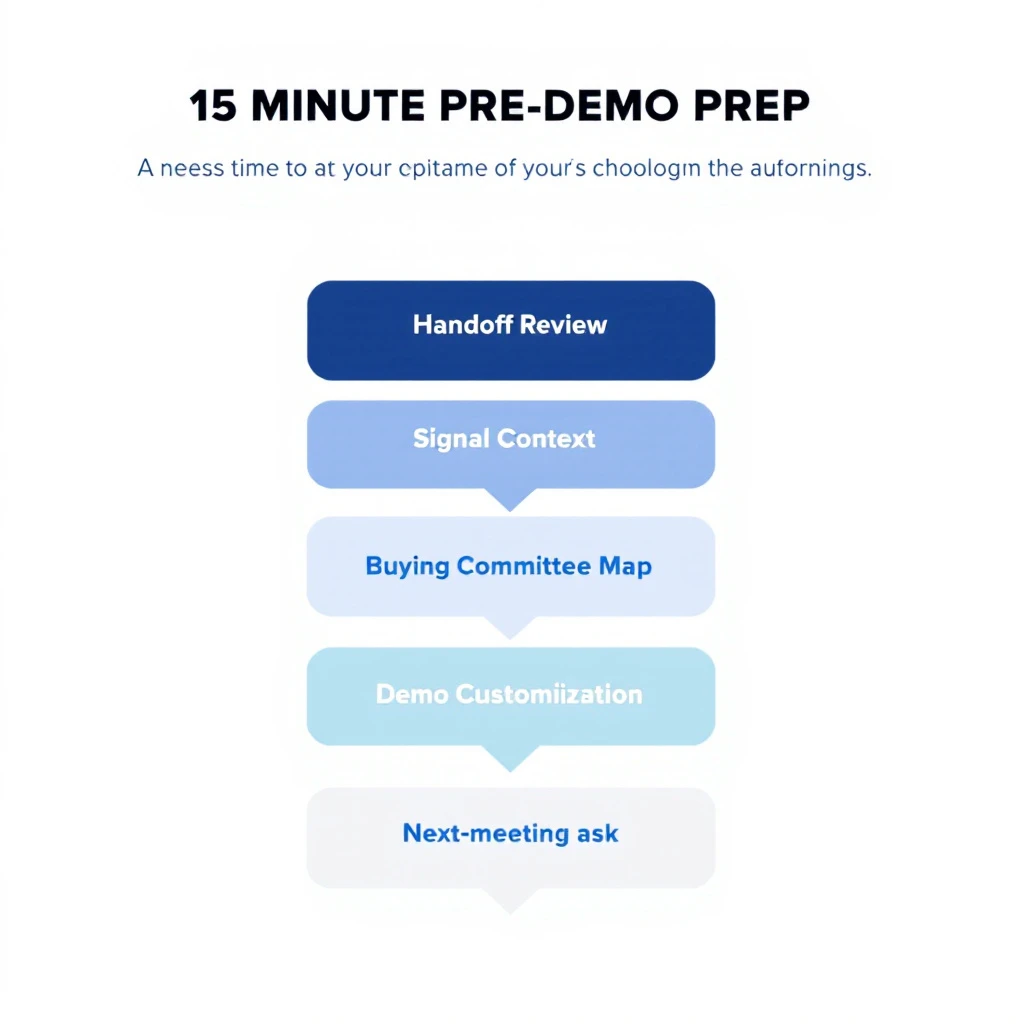
If you want the wider context, this fits between the 15-minute pre-demo prep playbook and the 14-day post-demo AE daily playbook — discovery is the inflection point between the two. For automating the research that feeds these calls, see our AI sales meeting prep guide.
Why "discovery questions" frameworks miss the point
Every sales methodology — MEDDPICC, SPIN, Sandler, GAP — gives you a list of questions to ask. They're fine. The problem is that the AE who's reading off a question list is, by definition, leading the conversation. Leading a discovery call is the opposite of discovery. You're shaping their answers instead of letting them reveal themselves.
The diagnostic flips the model. Instead of asking better questions, you create the conditions for the buyer to talk for 60-70% of the call, and then you score what you hear. The questions matter less. The patterns inside their answers matter enormously.
Eight patterns. If a deal shows 5 or more, it's real. If it shows 2 or fewer, your follow-up is mostly nurture — don't burn AE cycles. The middle is where coaching and multi-threading make the difference.
Signal 1 — They name the trigger before you ask
The strongest qualifier in any discovery call is a compelling event volunteered without prompting. When a buyer opens with "we just lost our biggest rep and need to ramp two new ones in 60 days" or "our contract with the current vendor is up in November and renewal pricing went up 40%," they are telling you the deal already has a forcing function.
What to listen for: a specific event, a date attached to it, and a cost of doing nothing. Generic statements like "we're always looking to improve" or "we want to grow faster" are not triggers. Triggers have edges. They hurt.
If you don't hear one in the first 10 minutes, ask once: "What made now the right time to take this call?" If the answer is hand-wavy, mark this signal as absent. Don't pretend it's there.
Signal 2 — They say "we" not "I"
Pay attention to pronouns. Buyers who frame the problem in first-person singular ("I'm trying to figure out…", "I want to see if…", "I've been thinking about…") are usually exploring on their own. Deals with one-person curiosity at the top of funnel close at a fraction of the rate of deals where the buyer has already framed the project as a team need.
"We" language signals that the conversation has already happened internally. They've talked about this with their VP. The pain has been named in a leadership meeting. The exploration call is one step of a process, not a personal hobby.
Listen for: "we're evaluating," "our team decided," "my CRO asked me to look at," "we agreed we'd shortlist." Each one is a deal-team artifact you didn't have to build yourself. Compare to multi-threading from the discovery stage — if they're already using "we," the deal team is partially formed before you ever pitched.
Signal 3 — They cite specific numbers unprompted
When buyers volunteer numbers without you fishing for them, the deal is already real in their head. "We have 47 SDRs and roughly 8,000 target accounts" is different from "we have a pretty big sales team." The first one means they've measured the problem. The second one means they're guessing.
Numbers to listen for: team headcount, current tool spend, conversion rates, quota attainment, deal sizes, pipeline coverage, churn rate. The specific metric matters less than the act of volunteering it. Buyers who have measured their problem have, almost by definition, already decided it's a problem worth solving.
The inverse signal is just as useful: if a buyer can't (or won't) give you a number for anything quantitative, they haven't done the internal work. The deal is at "interesting topic," not "active project."
Signal 4 — They reference a deadline that isn't yours
Self-imposed deadlines are different from sales-imposed deadlines. "We need to make a decision by end of quarter" said in response to your "what's your timeline?" is a polite answer. "Board meeting in August, I need to have a recommendation by July 15" is a deadline that exists whether or not you're in the picture.
The best deadline signals are tied to events you can verify: a board meeting, a fiscal year cutover, a hiring plan that needs tooling, a vendor contract expiration, a product launch that needs sales infrastructure, a fundraise that requires GTM hardening. Each one creates signal decay on a known curve — the deal has gravity pulling it toward a date.
If you don't hear a deadline, ask: "What happens if this isn't solved in the next 90 days?" If the honest answer is "not much," the deal will drift. Note it.
Signal 5 — They ask about implementation
This is the single most underrated signal in B2B sales. Buyers who ask "what does onboarding look like?" or "how long does it take to get a team trained?" or "who would we work with after the contract signs?" are not asking out of curiosity. They are mentally rehearsing what life is like after they buy.
The brain only does that rehearsal when the buying decision has tipped past 50%. You can almost feel it happen on a call — the conversation shifts from "tell me what you do" to "tell me what we'd do." That pivot is everything.
When you hear an implementation question, your job is to answer it precisely and then ask "is the implementation timeline a factor in your decision?" Their answer tells you whether they're sequencing toward a real go-live or just collecting reassurance for a hypothetical purchase. Either way, lean in. This is the highest-leverage signal on this list.
Signal 6 — They name competitors they're also evaluating
It feels counterintuitive — competitors should be a threat, right? In discovery, the opposite is true. A buyer who names two or three competitors they're also looking at is a buyer who has built a shortlist, which means they have budget, authority, and intent. They are buying. The only question is from whom.
A buyer who insists they're "just exploring" and "not really comparing anyone right now" is in a much weaker position. They haven't done the work to scope the market. They're educational. Education calls close at maybe 5-10%. Shortlist calls close at 30-50%.
When you hear competitor names, do three things: (1) ask what they liked about each one — this tells you their evaluation criteria, (2) ask where they are in each conversation — this tells you the order of decision, (3) note the names, because your follow-up content needs to address those specific comparisons. This is where feature-to-feature competitor knowledge earns its keep.
Signal 7 — They mention internal work they've already done
Strong deals have history. By the time they reach you, the buyer has usually built some artifact — a one-pager for their VP, a spreadsheet comparing two or three vendors, a doc summarizing the current tool's gaps, a Slack thread with their team about the project. When they reference these in passing ("I put together a deck for our CRO last week" or "I have a spreadsheet I've been filling out"), they are showing you that the buying process is already running inside their org.
The artifact itself isn't the signal. The fact that they made one is. Internal work means an internal champion is forming, which is the single biggest predictor of whether the deal will survive the champion-goes-quiet moment later in the cycle.
Ask, gently: "Would it help if I sent you a one-pager you can share internally?" or "Want me to put together a version of the comparison for your team?" If they say yes enthusiastically, you have a champion in the making. If they deflect ("oh, I'll handle that myself"), the deal is more single-threaded than it looked.
Signal 8 — They self-propose the next call participants
The cleanest tell of all: at some point in the back half of discovery, the buyer says some version of "I think it would make sense to get our [VP / RevOps lead / IT person / finance partner] on the next call." Not because you asked. Because they're already imagining the next step.
A buyer who is sequencing toward a multi-stakeholder conversation has decided this is a real evaluation. They're showing you who they need to align internally. You should help them. Offer a specific agenda for the next call ("I can prepare a 20-minute demo focused on what your VP will care about, plus 10 minutes for Q&A"). Get the calendar invite while you're still on Zoom.
If the buyer doesn't self-propose, you do it — but treat it as a softer signal. "Who else internally would want to be on the next conversation?" is a fine question. Their willingness to name people is the signal. A vague "let me think about who else should weigh in" is a deferred answer, which means weak coalition. Mark it as half-credit.
Scoring the call
After the call, score 0-8. Don't fudge.
| Score | Read | Action |
|---|---|---|
| 6-8 signals present | Real deal | Move to multi-threaded demo, prep next call within 5 business days |
| 4-5 signals present | Real but needs work | Champion-building plays — share a custom one-pager, line up a peer customer reference |
| 2-3 signals present | Educational / nurture | Long-cycle drip, re-engage on trigger events, do not invest AE hours |
| 0-1 signals present | Wrong-fit or wrong-time | Move on. Politely. Open the AE calendar for a real deal |
The mistake most AEs make is treating the 2-3 signal calls like the 6-8 signal calls — same follow-up energy, same calendar time, same hope. That's how pipeline math breaks. Most reps don't have a fit problem; they have a discipline problem about where to spend hours.
What to do when you don't see the signals
Two paths. The first is honest disqualification — most AEs are too generous with their own time, and a clean "this isn't the right moment for us, here's what we'd recommend instead" preserves both your hours and your reputation.
The second is to flip the call. If you're at minute 12 and you haven't heard any of the eight, change the conversation: "I want to make sure I'm being useful — can I share what we typically see at companies that look like yours, and you tell me if any of it resonates?" This forces the buyer to either react (which is itself diagnostic) or stay flat (which confirms the call was a research call, not a buying call).
Either way, write the right CRM note. "No compelling event, no deadline, single-threaded, no internal work done — nurture only" is more valuable than "good convo, sending follow-up" — both to you, and to your manager forecasting the quarter.
How signal-driven selling changes discovery
This whole diagnostic gets easier when the AE walks into the call already knowing the buyer's trigger events and signal stack. When you've seen the company hire two new sales leaders, fundraise, and visit your pricing page three times in a week, you don't need to ask "what made now the right time?" — you already know. You can spend the discovery call confirming and deepening instead of starting from zero.
That's the entire premise of signal-based selling: by the time the meeting happens, the AE has a sharpened hypothesis, and the discovery call is about confirming the diagnosis, not running blood tests. Discovery without signals is forensic work. Discovery with signals is consultative work. The outcomes are wildly different.
The bigger arc
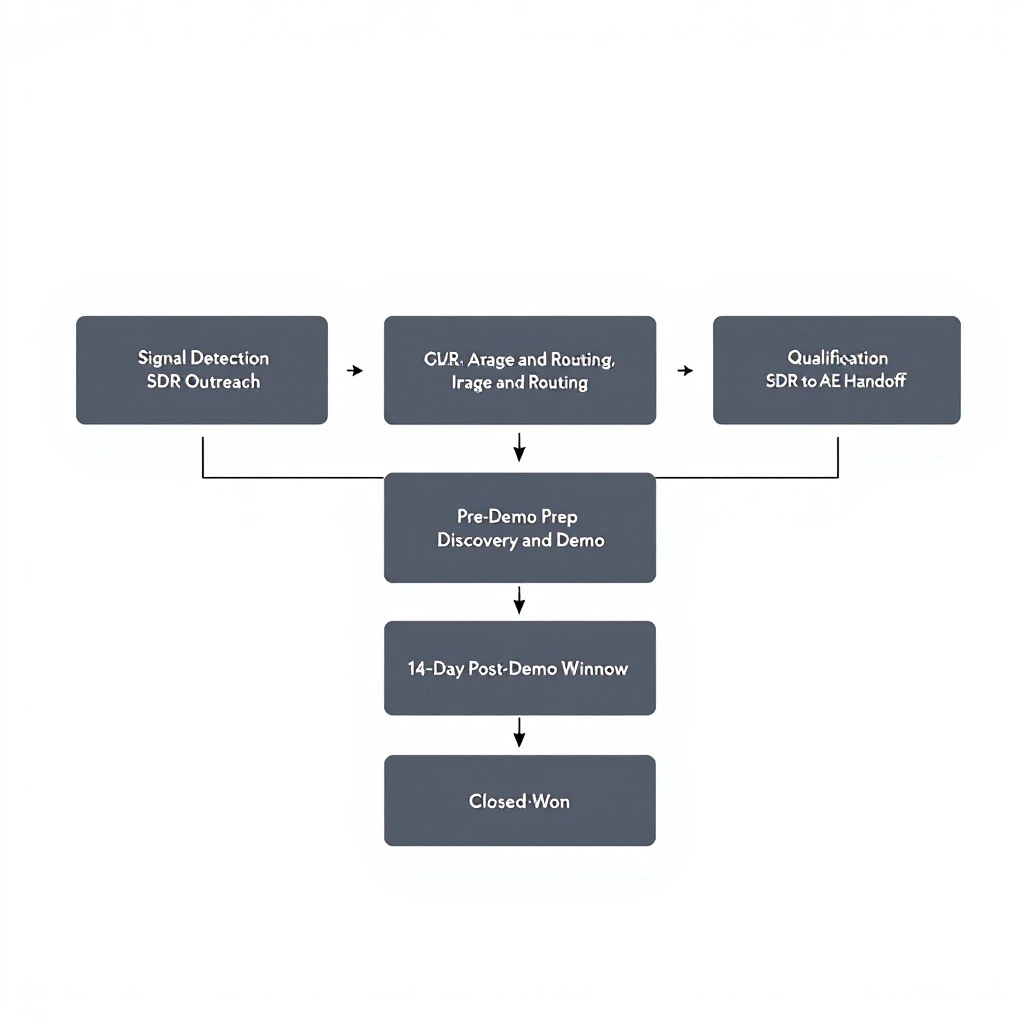
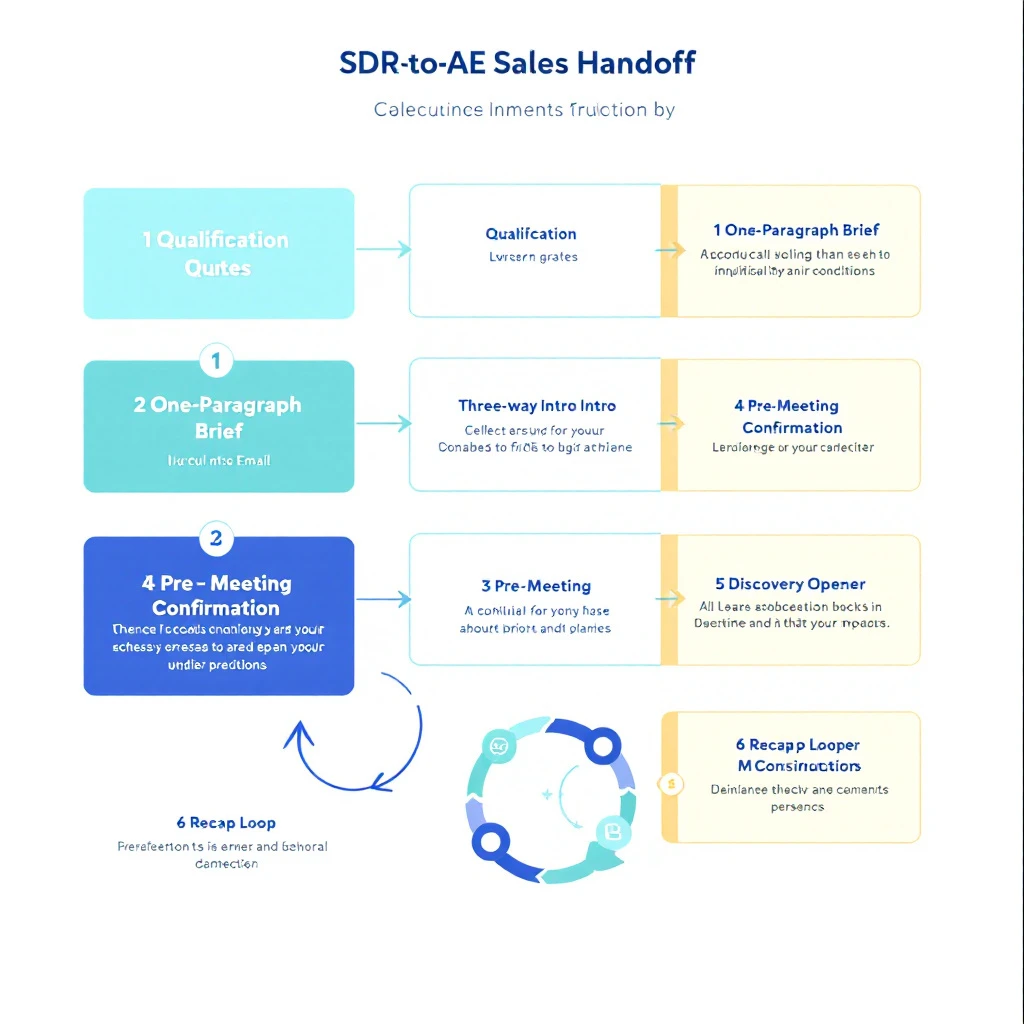
Discovery is one stage in the signal-to-closed-won sales cycle. The signals you score on the discovery call become the inputs for the 14-day post-demo plan, the SDR-to-AE handoff quality check, and ultimately the forecast call your VP runs every Friday. Sharpening the discovery diagnostic improves every downstream stage. There is no other single hour in the sales process where small changes in skill produce larger changes in outcome.
The teams that win the next two years won't be the ones with the most discovery calls. They'll be the ones who can call the deal at minute 12 and act accordingly — invest where signals are loud, disqualify where they're absent, and stop pretending the middle 40% of pipeline is real.
Want to see what an AE pipeline looks like when discovery is signal-driven from day one? Book a demo →