11 posts tagged with "intent-signals"

View All Tags

The Cost of Inaction in Sales: How to Build Real Urgency and Close More Deals

ยท 11 min read
MarketBetter Team
Content Team, marketbetter.ai

Your biggest competitor isn't the other vendor on the shortlist. It's the status quo.

Every quarter, billions of dollars in pipeline evaporate โ€” not because a rival swooped in with a better demo, but because someone on the buying committee said, "Let's revisit this next quarter," and nobody on the selling side had a compelling answer for why that was a terrible idea.

If you've been in B2B sales for more than a cycle, you've felt this. The deal that went dark after a "great" demo. The champion who stopped returning calls. The CFO who said the budget "shifted." These are all symptoms of the same disease: you never made the cost of doing nothing concrete enough to act on.

Here's the uncomfortable truth most sales training skips: finding pain isn't enough. Every AE on the planet can uncover a problem. The ones who consistently close above quota are the ones who can put a dollar figure on what happens if that problem persists for another 30, 60, or 90 days.

This is the discipline of building the cost of inaction โ€” and it's the single most underleveraged skill in modern B2B sales.

Why "Do Nothing" Keeps Winningโ€‹

Let's start with the psychology. Nobel laureate Daniel Kahneman showed us that humans feel losses roughly twice as intensely as equivalent gains. But here's the catch: that only works when the loss is visible. If your buyer can't see what they're losing by waiting, the status quo feels safe. Comfortable. Free.

It isn't free. It just looks that way.

Consider a mid-market SaaS company with 15 SDRs. Their current prospecting stack takes each rep about 90 minutes a day just to build lists, research accounts, and figure out who to call. That's 22.5 hours per day across the team โ€” roughly three full-time employees' worth of labor โ€” spent on manual research instead of conversations.

Every week that passes without fixing that? Another 112 hours of selling time burned. Another $45,000 in fully loaded rep cost allocated to Googling LinkedIn profiles instead of booking meetings.

But in the deal, nobody said that number out loud. The AE showed a slick demo of their AI-powered prospecting tool, quoted a price, and asked if there were "any questions." The VP of Sales nodded politely and said she'd "circle back after Q2 planning."

That deal is dead, and the AE doesn't even know why.

The Five-Step Framework for Quantifying Inactionโ€‹

There's a structured way to do this. It's not manipulative โ€” it's clarifying. You're helping your buyer see what they already know but haven't quantified. As Chris Orlob puts it, the best closers make the invisible costs visible.

Here's the framework, expanded with examples from real B2B selling scenarios:

Step 1: Find the Metric That's Bleedingโ€‹

Every business problem maps to a number. Your job in discovery is to find the specific metric that's suffering right now โ€” not theoretically, not "could be better," but actively deteriorating.

The question that unlocks this: "What metric is suffering as a result of that problem?"

This isn't a soft question. It's surgical. It forces the buyer to stop talking in generalities ("Yeah, our outbound could be better") and start talking in specifics ("Our reply rates dropped from 8% to 3% over the last two quarters").

Good metrics to hunt for:

  • Revenue leaked per month (deals lost, pipeline that went dark, churned accounts)
  • Time wasted per week (hours spent on manual work that could be automated)
  • Customer churn per quarter (and the revenue attached to those logos)
  • Cost per lead or cost per meeting (and how it's trending)
  • Ramp time for new hires (weeks from start date to first closed deal)

The key is specificity. "We're losing deals" is a feeling. "We lost 14 deals worth $820K last quarter to no-decision" is a number you can work with.

Step 2: Reverse-Engineer the Cost of Waitingโ€‹

Once you have the metric, run the clock forward. What does another month of this problem cost?

This is where most AEs bail out. They hear the pain, they nod sympathetically, and they pivot to the demo. Don't. Stay in the math.

Example โ€” Martech Stack Consolidation:

A marketing ops leader tells you they're running 11 different tools for email, enrichment, intent, and analytics. They spend $8,200/month across subscriptions, plus their ops team burns 20 hours/week on integrations and data cleanup.

The cost of waiting one quarter:

  • $24,600 in redundant SaaS spend
  • 260 hours of ops labor (~$19,500 at fully loaded cost)
  • Unknown data quality degradation affecting campaign targeting

That's $44,100 in hard costs per quarter โ€” before you even quantify the downstream impact of bad data on pipeline quality.

Now compare that to the price of your platform. Suddenly, the "budget isn't there" objection looks absurd. The budget is already being spent โ€” just on the wrong things.

Example โ€” SDR Team Without Intent Signals:

An SDR leader has 8 reps cold-calling from static lists. Their connect rate is 4%, and their meeting-to-opportunity conversion is 22%. Each rep makes 60 dials a day.

Without intent data prioritizing who's actually in-market, roughly 96% of those dials are wasted on accounts with zero buying intent. That's 460 wasted dials per day across the team. At an average of 3 minutes per attempt (including research, dial, and voicemail), that's 23 hours of daily labor producing nothing.

Per month: 460 hours of wasted SDR time. At $35/hour fully loaded, that's $16,100/month lighting itself on fire. And that's just the direct cost โ€” it doesn't account for the demoralization of reps who spend all day getting voicemail, or the pipeline they would have generated if they'd been calling buyers who were actively researching their category.

Step 3: Do the Math Out Loudโ€‹

This is the tactical move that separates average sellers from elite ones. Don't send the math in a follow-up email. Do it live, in the call, with the buyer.

"So let me make sure I understand. You've got 8 reps making 60 dials a day, and about 96% of those are going to accounts that aren't in-market. That's roughly 460 wasted dials daily. At 3 minutes each, that's 23 hours a day โ€” nearly 500 hours a month โ€” of your team's time going to voicemail. At your fully loaded cost, that's north of $16,000 a month. Over a quarter, that's almost $50,000. Does that math track?"

Two things happen when you do this:

  1. The buyer validates or corrects you. Either way, they're now co-authoring the business case. It's not your number anymore โ€” it's their number.
  2. The cost becomes real. Abstract pain ("outbound isn't working great") becomes a concrete, undeniable dollar figure that they'll carry into every internal conversation about budget and priority.

Step 4: Show the Compound Costโ€‹

A one-month cost is easy to rationalize away. "We'll deal with it next quarter." But costs compound, and showing that compounding effect is what creates genuine urgency.

The 90-day lens:

  • Month 1: $16,100 in wasted SDR labor
  • Month 2: $16,100 more, plus the pipeline deficit from Month 1 starts showing up as a revenue gap
  • Month 3: $16,100 more, plus two months of compounded pipeline deficit, plus the top-performing rep who just got recruited by a competitor because she was tired of calling dead lists

By Day 90, you're not just $48,300 down in wasted labor. You're staring at a pipeline gap that will take two quarters to recover from, and you're short one A-player who will cost $30K to replace and 4 months to ramp.

That's the real cost of "let's revisit next quarter."

This works because it mirrors how costs actually behave in business. Problems don't pause politely while the buying committee debates. They accelerate. Showing the acceleration curve is what turns a "nice to have" into a "we need to move on this."

Step 5: Connect Cost to Powerโ€‹

Once you've built the cost of inaction, you have something more valuable than a compelling slide: you have a story that your champion can tell the CFO, the CEO, or whoever controls the budget.

The question "What metric is suffering?" doesn't just give you ammunition โ€” it opens doors to the economic buyer. When your champion walks into the executive meeting and says, "We're burning $50K per quarter on wasted SDR time and it's compounding into a pipeline gap that threatens next year's number," that's a conversation the C-suite has to engage with.

Compare that to the champion who walks in and says, "The sales team found a cool tool for outbound. Can we get $40K in budget?" One of these gets approved. One gets tabled.

The AI Advantage: Making Invisible Costs Visible at Scaleโ€‹

Here's where the game has fundamentally changed in the last 18 months.

The framework above has always worked โ€” smart sellers have been quantifying inaction for decades. But there was always a gap: you could only quantify the costs you could see. And in B2B sales, most of the cost of inaction is invisible.

How many buyers visited your website this week and left without a trace? How many accounts in your TAM are actively researching your category right now โ€” reading competitor reviews, searching for solutions โ€” while your reps cold-call accounts that won't buy for another 18 months?

That's the new cost of inaction: the signals you're not seeing and the deals your competitors are closing because they saw them first.

This is the problem MarketBetter was built to solve. When your platform identifies the actual companies and people visiting your site, surfaces real-time intent signals showing who's in-market, and delivers a daily playbook that tells each rep exactly who to call and why โ€” you're not just making your outbound more efficient. You're eliminating an entire category of invisible cost.

Think about it through the cost-of-inaction lens:

  • Without visitor identification: 85-95% of your website traffic is anonymous. If you're getting 5,000 monthly visitors and converting 2%, that's 4,900 potential buyers you know nothing about. Even if only 10% are ICP-fit, that's 490 warm accounts your competitors might be reaching first.
  • Without intent signals: Your reps are calling accounts at random, hoping to catch someone in a buying cycle. The math we ran earlier โ€” 96% of dials wasted โ€” isn't hypothetical. It's the default for any team working without signal-driven prioritization.
  • Without a daily playbook: Even reps who have access to intent data spend 60-90 minutes a day figuring out what to do with it. The operational tax of turning raw signals into a prioritized call list is its own hidden cost.

Stack those up over a quarter and you're looking at six figures of wasted motion, missed pipeline, and deals that went to whoever showed up first with a relevant message.

Your competitors are already responding to buyer signals you're missing. That's not a scare tactic โ€” it's arithmetic. If a buyer is on your website at 10 AM and your competitor reaches out by 10:15 because their visitor ID flagged the account, you've lost the first-mover advantage before your rep finishes their morning coffee.

Putting It Into Practiceโ€‹

Here's a challenge for this week: take your three most important open deals and run the cost-of-inaction exercise on each one.

  1. Identify the bleeding metric. If you don't know it, you haven't done deep enough discovery. Go back and ask.
  2. Quantify one month of inaction. What does it cost the buyer โ€” in dollars, hours, or missed opportunities โ€” to wait 30 more days?
  3. Project the compound cost to 90 days. Include second-order effects: the pipeline gap, the rep attrition risk, the competitive ground lost.
  4. Do the math live on your next call. Say it out loud. Let the buyer validate the numbers.
  5. Arm your champion. Give them the story, the numbers, and the 90-day projection. Make it impossible for the executive team to rationalize delay.

The deals you lose to "no decision" aren't lost because the buyer didn't feel pain. They're lost because no one translated that pain into a number that made waiting feel more expensive than buying.

That translation โ€” from vague discomfort to quantified urgency โ€” is the skill that separates closers from demo jockeys. And in a world where AI can now surface the signals that make the invisible costs visible, there's never been a better time to master it.


Ready to see what your invisible costs look like? MarketBetter shows you exactly who's on your site, what they care about, and how to reach them โ€” before your competitors do. Start your free trial โ†’

The Daily SDR Playbook: Why Your Reps Should Never Decide Who to Call Next

ยท 11 min read
MarketBetter Team
Content Team, marketbetter.ai

Sit behind an SDR for an hour. Not on a call โ€” before the calls. Watch what they actually do in the first 60 minutes of their day.

Here's what you'll see:

Tab 1: CRM, checking assigned leads. Tab 2: Email, scanning for replies and bounces. Tab 3: LinkedIn, searching for triggers and connections. Tab 4: Intent data platform, reviewing new signals. Tab 5: Enrichment tool, looking up company details. Tab 6: Sequence tool, checking who's due for a follow-up. Tab 7: Slack, reading team updates. Tab 8: Calendar, reviewing the day's meetings. Tab 9: Sales navigator, building new lists. Tab 10: Another CRM tab, because the first one timed out.

And that's just the first ten. Most SDRs I've worked with have 15-20 tabs open before they make their first call.

This isn't selling. This is deciding who to sell to. And it's consuming 60% of your SDRs' working day.

I've built SDR teams at three different startups. The pattern is always the same: you hire great reps, give them great tools, build great sequences โ€” and then watch them spend most of their time navigating between those tools instead of using them.

The tools aren't the problem. The fragmentation is.

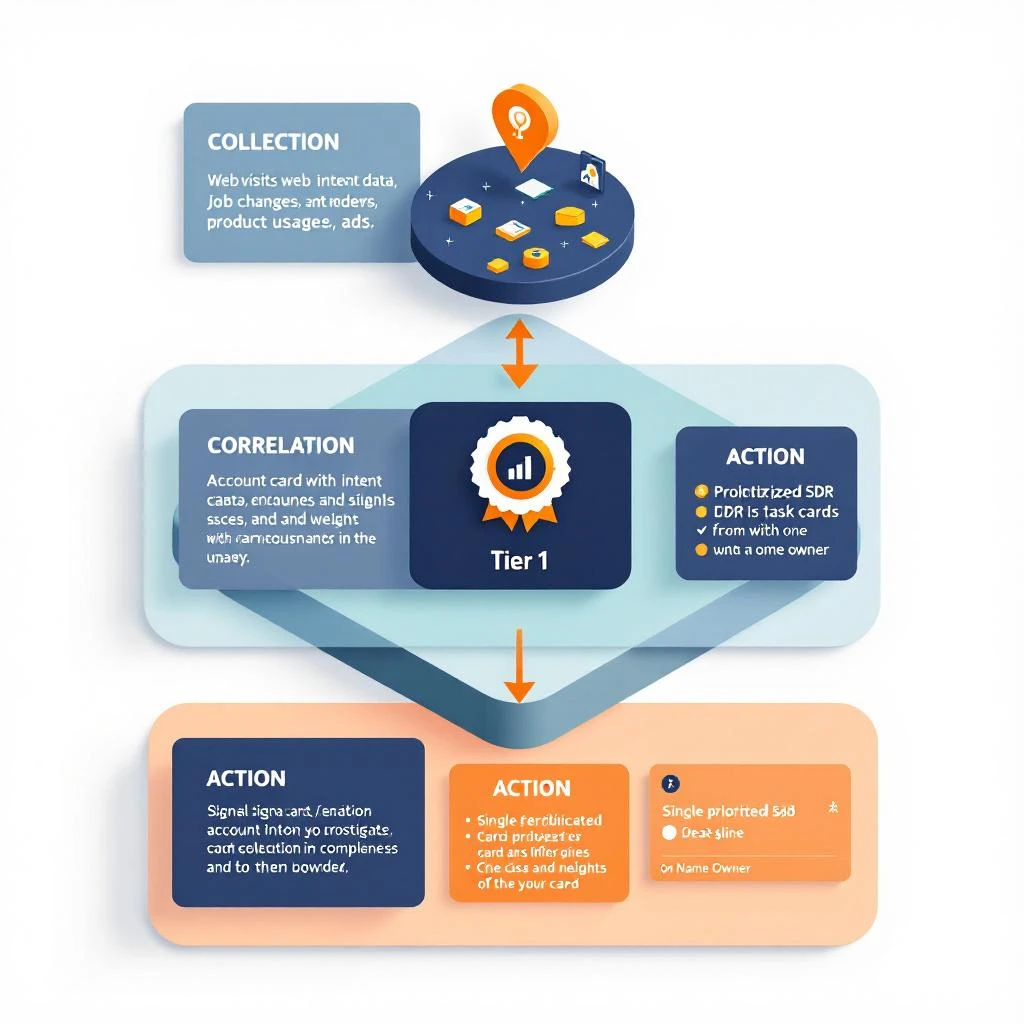
Unified SDR dashboard consolidating signals into one prioritized playbook

The 60% Tax on Selling Timeโ€‹

Let me put a number on this because the data on SDR productivity is damning.

The average SDR spends roughly 60% of their day on non-selling activities. Not admin. Not CRM data entry. Decision-making. Specifically, deciding:

  • Who should I contact next?
  • What channel should I use?
  • What should I say?
  • Is this person worth my time right now?
  • Did something change since I last checked?

These are important questions. But they shouldn't require toggling between a dozen tools to piece together an answer.

Think about what this means economically. If you're paying an SDR $75,000 per year, and 60% goes to non-selling activities, you're paying $45,000 per rep for them to decide what to do. On a team of eight, that's $360,000 per year in decision-making overhead.

That's not a productivity problem. That's a strategy problem.

The Core Issue: Signals Are Everywhere, Synthesis Is Nowhereโ€‹

B2B sales teams have never had more signal data available to them. Website visits. Email engagement. Social interactions. Intent data from third-party providers. Job changes. Company news. Funding announcements. Technology adoptions. Conference attendance.

The problem isn't data scarcity. The problem is that every signal lives in a different tool, and no tool synthesizes them into a single prioritized view.

Your website visitor identification tool tells you someone from Acme Corp visited your pricing page yesterday. To act on that, your SDR checks the CRM for account status, checks the sequence tool for active cadences, checks LinkedIn for contacts, checks enrichment for email and phone, then checks intent data for broader signals.

That's five tool switches to act on one signal. Your SDR has 50 signals today.

Multiply the number of tools by the number of signals, and you understand why SDRs are paralyzed by choice before they even pick up the phone.

What If Your SDRs Opened One Tab?โ€‹

MarketBetter's Daily Playbook takes every signal from every source and collapses them into one thing: a prioritized task list for each rep.

When your SDR starts their day, they don't open 20 tabs. They open one. And in that tab, they see:

  1. Their top tasks for today, ranked by signal strength and likelihood of conversion
  2. Why each task is there โ€” what triggered it, what's the signal
  3. The recommended channel โ€” call, email, LinkedIn, or multi-touch
  4. A suggested message or talking points based on the prospect's context
  5. Everything they need to execute โ€” contact info, company background, engagement history

That's it. No hunting. No synthesizing. No deciding. Just executing.

The Daily Playbook doesn't replace your SDR's judgment. It focuses it. Instead of spending an hour deciding who deserves attention, the rep spends that hour giving attention to the people most likely to convert.

The Signals That Feed the Playbookโ€‹

Here's what flows into each rep's daily playbook:

Website Visitor Intelligenceโ€‹

When someone from a target company visits your website โ€” especially high-intent pages like pricing, demo request, or product comparison โ€” that visit becomes a task in the playbook.

But not just "someone from Acme Corp visited your site." The playbook tells the rep:

  • Which pages they viewed
  • Whether the company is an existing account or net-new
  • If it's existing, who owns it and what's the current status
  • If it's net-new, whether it matches your ICP
  • Recommended next action based on intent strength

Identifying anonymous website visitors is only valuable if someone acts on it. The playbook makes sure they do, and that the right rep does it at the right time.

Email Engagement Signalsโ€‹

Your SDRs are running sequences with dozens or hundreds of active contacts. The playbook tracks every engagement signal:

  • Opens: Who opened your email three or more times? That's interest. Call them now.
  • Replies: Obviously high priority โ€” but the playbook also flags negative replies for suppression so reps don't waste time on dead leads.
  • Link clicks: What did they click? A case study link signals different intent than a pricing page link. The playbook adjusts the recommended next step accordingly.
  • Sequence position: Is this prospect about to exit your sequence without a reply? That might warrant a different approach โ€” phone call, LinkedIn touch, or a breakup email.

These signals exist in your sequence tool today. But they're buried in dashboards that your SDR has to proactively check. The playbook surfaces them as prioritized tasks.

Champion Job Changesโ€‹

This is one of the most underutilized signals in B2B sales, and it's one of the most powerful.

Here's the scenario: six months ago, your SDR had great conversations with Sarah at Company A. Sarah loved your product, was pushing for a deal internally, but ultimately the timing wasn't right โ€” they had a contract locked in with a competitor.

Now Sarah moves to Company B. She's still a believer. She knows your product. She has relationship equity with your team. And she's starting fresh at a new company where the existing contract doesn't apply.

That job change is worth more than 100 cold leads. It's a warm introduction to a new company through someone who already trusts you.

The Daily Playbook tracks champion job changes automatically. When a previous contact moves to a new company, it shows up as a high-priority task:

"Sarah Johnson moved from Company A (closed-lost, Q3 2025) to Company B (VP Sales Ops). ICP match. Recommended: warm outreach referencing previous relationship."

Your SDR doesn't need to monitor LinkedIn or set up Google alerts. The playbook remembers, connects the dots, and tells the rep what to do.

Intent Data Signalsโ€‹

Third-party intent data โ€” topics being researched, content being consumed, technology evaluation signals โ€” flows into the playbook as prioritized tasks.

But here's the key: intent data alone is noisy. Most intent data platforms generate far more signals than any SDR team can act on. The playbook doesn't just surface intent signals โ€” it stacks them.

A company researching your category? Low priority on its own. The same company researching your category and visiting your website and opening your emails? That's stacked intent. Top of the list. Call them today.

The playbook's ranking algorithm considers signal strength, signal recency, and signal stacking to ensure that the tasks at the top of each rep's list represent the highest likelihood of conversion.

The "Here's Why" Factorโ€‹

Every task in the Daily Playbook comes with context. Not just "call this person" but why.

This matters more than most people realize. When an SDR picks up the phone with zero context, they're starting cold. When they pick up the phone knowing that this prospect's company visited the pricing page twice this week, opened the last three emails, and matches the ICP on company size, vertical, and tech stack โ€” they start warm.

The "here's why" context transforms cold calls into warm calls. It gives the SDR a reason to call that they can articulate to the prospect: "I noticed your team has been evaluating solutions in our space โ€” wanted to see if I could answer any questions." That's not a lie. It's genuine signal intelligence, delivered naturally.

The difference in connect-to-meeting conversion between a contextless cold call and a signal-informed warm call is typically 3-5x. Same SDR, same phone skills. Different hit rate because the rep has information instead of a script.

From 20 Tools to One Task Listโ€‹

The promise of the Daily Playbook is fundamentally simple: your SDRs go from 20 tabs to one.

One tab. One list. Every signal consolidated. Every task prioritized. Every next action recommended.

Here's what a typical day looks like:

8:00 AM โ€” Open the Playbook Today's list: 12 high-priority tasks, 8 medium, 15 low. Start at the top.

8:05 AM โ€” Task 1: Call Dave at TechCorp Why: Pricing page 3x this week. Opened last 2 emails. Former champion (lost deal Q2). Stacked signal. SDR calls Dave. Gets voicemail. Leaves a message referencing pricing research. Sends follow-up email. Next.

8:15 AM โ€” Task 2: Email Sarah at FinServ Inc. Why: New website visitor, ICP match, first visit to case study page. SDR sends contextual email referencing FinServ's industry challenges. Next.

8:20 AM โ€” Task 3: LinkedIn touch with Mike at HealthCo Why: Changed jobs last week. Previously engaged at MedTech (3 meetings, no close). New role: VP Sales at HealthCo. ICP match. SDR sends LinkedIn connection with warm message referencing previous conversations. Next.

8:25 AM โ€” Task 4...

By 10:00 AM, the SDR has completed 12 high-priority outreach tasks across phone, email, and LinkedIn. Zero research time. Zero tab switching. Zero decision paralysis.

Compare this to the traditional workflow: by 10:00 AM under the old model, the SDR is still in tabs 6-12, trying to figure out who to call first.

The Compound Effect of Daily Executionโ€‹

The Daily Playbook doesn't just make individual days more productive. It creates a compound effect over time.

When reps consistently execute on the highest-value signals every day, three things happen:

1. Response rates climb. Because the playbook surfaces the warmest prospects โ€” the ones with stacked signals, recent engagement, and ICP fit โ€” reps are reaching out to people who are more likely to respond. Over weeks, this compounds into significantly higher reply and connect rates compared to reps who self-select their outbound targets.

2. No signals fall through the cracks. Without the playbook, an intent signal from last Tuesday gets buried under today's new leads. With the playbook, every unactioned signal persists until it's addressed or deprioritized.

3. Coaching gets easier. When every rep works from a standardized, signal-driven playbook, managers can see exactly what's happening. Instead of asking "what did you work on today?" managers review playbook completion and conversion metrics in real time.

What About Rep Autonomy?โ€‹

I get this question every time I talk about the playbook model. Experienced SDRs push back: "I know my territory. I know who to call. I don't need a system telling me what to do."

Fair. And wrong.

Fair, because great reps do develop intuition about their territory.

Wrong, because intuition can't process the volume and velocity of signals that a modern B2B sales motion generates. Your best rep might intuitively know that Acme Corp is a good target. But they don't know that someone from Acme Corp visited the pricing page at 11 PM last night, that their former champion just moved to a competitor, and that intent data shows Acme Corp is researching your category at 3x the normal rate.

The playbook doesn't override rep autonomy. It informs it. Reps can still reprioritize, skip tasks, or add their own outreach. But they start from a foundation of complete signal intelligence rather than partial intuition.

The One-Tab Promiseโ€‹

Here's what I want every VP of Sales to hear: your SDRs should never be deciding who to call next. That decision should be made for them by a system that sees more signals, processes more data, and updates more frequently than any human could.

The Daily Playbook is that system. Every signal in one place. Every task prioritized. Every rep starting their day with clarity instead of chaos.

It's the simplest upgrade you can make to your SDR org โ€” because you're not adding a new tool. You're replacing the 20 tools your reps are drowning in.

One tab. That's the promise. And it changes everything.


Adam Grant leads GTM at MarketBetter, where he helps SDR teams stop drowning in tabs and start selling โ€” one prioritized task at a time.

Intent Signal Orchestration: The Missing Piece in Every AI Sales Agent

ยท 11 min read
MarketBetter Team
Content Team, marketbetter.ai

I want to tell you about the hardest problem in B2B sales technology. It's not lead generation โ€” we solved that years ago (arguably too well, which is its own problem). It's not personalization โ€” LLMs made that almost trivially easy. It's not even multi-channel orchestration, although that's closer.

The hardest problem is intent signal orchestration: ingesting signals from dozens of sources, prioritizing them in real time, and activating the right response before the buying window closes.

Every serious GTM team talks about being "signal-based." Very few actually are. And the current crop of AI sales agents โ€” the open source repos making the rounds on GitHub and Twitter โ€” reveal exactly why.

What Intent Signal Orchestration Actually Meansโ€‹

Let me define the term precisely, because it gets thrown around loosely.

Intent signal orchestration is a three-stage process:

Stage 1: Ingestion. Capturing buying signals from every relevant source. This includes:

  • Website visitor behavior (page views, time on site, content consumed, pricing page visits)
  • CRM engagement history (email opens, link clicks, meeting bookings, deal stage changes)
  • Third-party intent data (research topics, content consumption patterns, review site activity)
  • Technographic signals (new tool adoptions, contract renewals, tech stack changes)
  • Job change signals (champions leaving, new decision-makers hired, team restructuring)
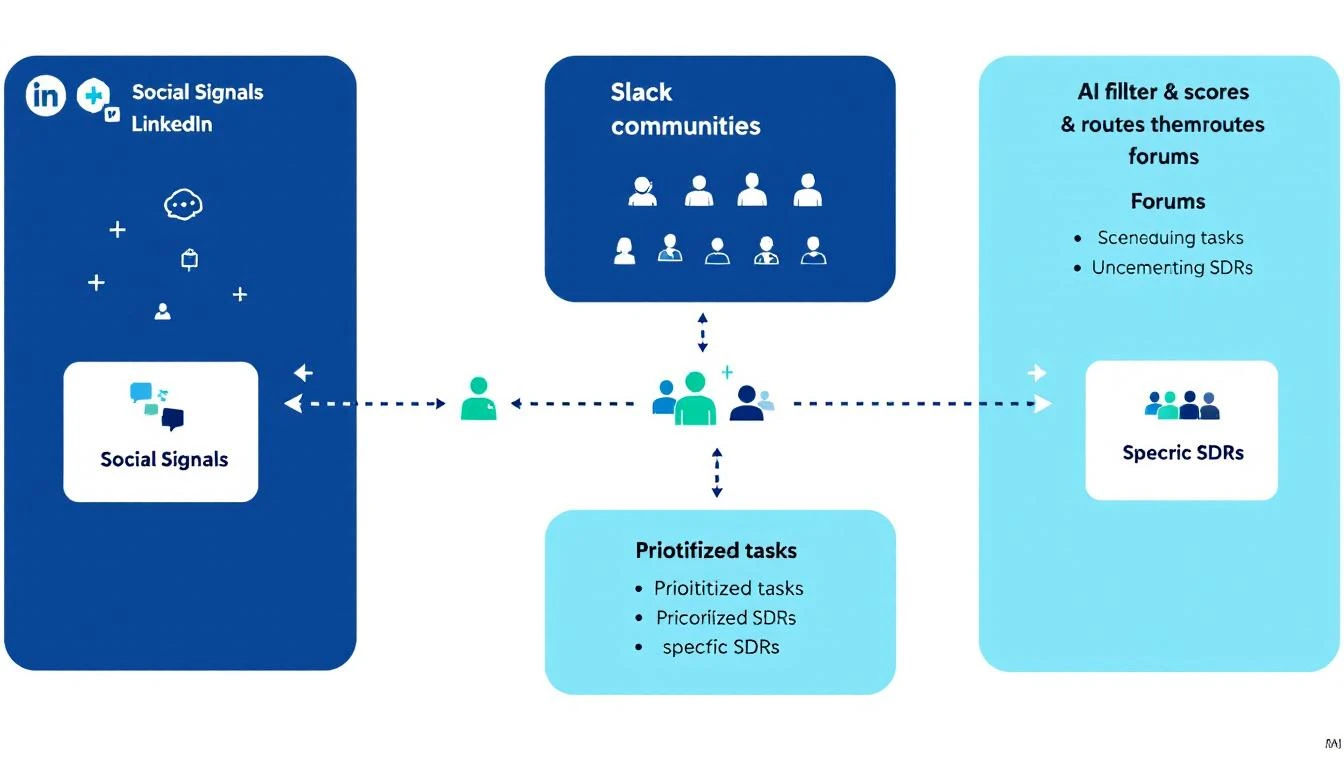
  • Social signals (LinkedIn engagement, conference attendance, content sharing)
  • Firmographic triggers (funding rounds, acquisitions, office expansions, hiring surges)

Stage 2: Prioritization. Not all signals are equal. A pricing page visit from a company that matches your ICP and has an open opportunity in your CRM is dramatically more valuable than a blog post view from a random domain. Prioritization requires:

  • Signal scoring based on historical conversion data
  • Account-level aggregation (combining multiple weak signals into a strong composite signal)
  • Temporal weighting (recent signals matter more than old ones)
  • Deduplication and noise filtering (bot traffic, internal visits, competitor research)
  • ICP matching and enrichment
  • Cross-referencing against existing pipeline to identify acceleration vs. net-new opportunities

Stage 3: Activation. Converting a prioritized signal into an action within the buying window. This means:

  • Routing the signal to the right rep or sequence based on territory, account ownership, or round-robin rules
  • Triggering the appropriate response (email, call, LinkedIn touch, content share) based on signal type and strength
  • Personalizing the outreach based on the specific signal and account context
  • Executing through deliverability-safe channels with proper throttling
  • Logging the action and creating a feedback loop for future signal scoring

This three-stage pipeline โ€” ingest, prioritize, activate โ€” is intent signal orchestration. Every stage is hard. Doing all three in real time, reliably, at scale? That's where almost everyone fails.

The Prompt-Based Orchestration Fallacyโ€‹

Here's where the current AI agent movement runs into a wall.

I recently examined a popular GTM agent repo โ€” 92 agents, 67 Claude Code plugins, covering the full GTM spectrum. It includes an agent called something like "intent-signal-orchestration." Sounds perfect, right?

Open it up. It's a prompt. A well-written prompt, but a prompt. It instructs an LLM to "analyze intent signals and prioritize accounts for outreach based on buying stage and signal strength."

Think about what's missing:

There's no actual signal data. The prompt assumes signals will be provided as input. But where do the signals come from? The agent doesn't have a JavaScript pixel on anyone's website. It doesn't have access to Bombora or G2 buyer intent feeds. It doesn't know who visited your pricing page at 2 AM. It doesn't track job changes on LinkedIn.

The prompt is an analytical engine with no fuel.

There's no real-time data pipeline. Intent signals are perishable. A pricing page visit from 3 hours ago is an urgent buying signal. The same visit from 3 weeks ago is a data point. Orchestration requires real-time (or near-real-time) data ingestion โ€” webhooks, streaming APIs, event-driven architectures. A prompt that runs when a human triggers it isn't real-time orchestration. It's batch analysis with extra steps.

There's no historical scoring model. Effective signal prioritization requires training on your own conversion data. Which signals in your business actually correlate with closed-won deals? A prompt can apply generic heuristics ("pricing page visits are high intent"), but it can't learn from your specific win/loss patterns unless it has access to your historical CRM data โ€” enriched with signal attribution.

There's no activation infrastructure. Even if the prompt perfectly prioritizes accounts, what happens next? Someone has to copy the output, switch to their sequencing tool, find the contacts, build a sequence, and hit send. The gap between "AI recommends" and "rep executes" is where urgency goes to die.

This is the prompt-based orchestration fallacy: the belief that intelligence alone can solve an infrastructure problem. It can't. Intelligence without data is guessing. Intelligence without infrastructure is advising. Neither is orchestrating.

Why Infrastructure Beats Intelligence (For Now)โ€‹

I realize this is a counterintuitive claim in the age of AI, so let me be specific.

Consider two hypothetical sales teams:

Team A has a brilliant AI agent that can analyze intent signals with PhD-level sophistication. But it only gets data when a rep manually exports their CRM and pastes it into a prompt. The agent has no access to website visitor data, no third-party intent feeds, and no way to execute outreach.

Team B has a relatively simple rules-based system (if pricing page visit + ICP match, trigger high-priority sequence). But it has real-time website visitor identification, direct CRM integration, automated sequence execution through deliverability-safe email infrastructure, and an integrated dialer.

Team B will outperform Team A every time. Not because their intelligence is better โ€” it's objectively worse. But because they can see the signal, act on the signal, and execute the response within the buying window.

Infrastructure creates the floor. Intelligence raises the ceiling. But you need the floor first.

The Three Types of Intent Signals (and Why Most Teams Only Capture One)โ€‹

There's a hierarchy of intent signals that most sales teams don't think about clearly:

First-Party Signals (Highest Value, Hardest to Capture)โ€‹

These come from your own properties: website visits, product usage, email engagement, chatbot conversations, content downloads, webinar attendance.

First-party signals are the most valuable because they represent direct engagement with your brand. When someone visits your pricing page, they're not doing generic research โ€” they're evaluating you specifically.

But capturing first-party signals requires infrastructure:

  • Website visitor identification technology that de-anonymizes traffic
  • Event tracking across your web properties
  • CRM integration that connects web behavior to account and contact records
  • Real-time processing that surfaces signals while they're still actionable

This is where platforms like MarketBetter differentiate โ€” they provide the actual visitor identification and behavioral data capture infrastructure that turns anonymous website traffic into actionable signals. No prompt can replicate this. It requires JavaScript pixels, IP resolution, cookie management, and data processing pipelines.

Second-Party Signals (High Value, Available via Partners)โ€‹

These come from platforms where your prospects engage: review sites (G2, TrustRadius), publisher networks, event platforms, communities. A prospect comparing you to a competitor on G2 is an extremely high-intent signal.

Second-party signals require data partnerships and API integrations. They're available as commercial products (Bombora, G2 Buyer Intent, TrustRadius Intent), but they're not free and they're not accessible to open source agents.

Third-Party Signals (Lower Value, Widely Available)โ€‹

These come from broader market data: hiring trends, funding announcements, technology adoptions, news mentions, social media activity. They indicate general market interest or company change, but don't necessarily signal intent to buy your product.

Third-party signals are the easiest to access โ€” many are available through public APIs. This is why most AI agent frameworks focus here. They can scrape LinkedIn for job changes and Crunchbase for funding rounds. But third-party signals alone are noisy. Without first-party signals to anchor them, you're guessing about intent rather than observing it.

The teams that win at signal-based selling capture all three layers and weight them appropriately. First-party signals trigger immediate action. Second-party signals accelerate existing pipeline. Third-party signals inform targeting and timing for net-new outbound.

Building a Real Signal Orchestration Stackโ€‹

If you're building (or buying) a signal orchestration capability, here's the architecture that actually works:

Layer 1: Signal Captureโ€‹

You need persistent, always-on infrastructure that captures signals without human intervention:

  • Website pixel that identifies companies and (where possible) individuals visiting your site
  • CRM webhooks that fire on deal stage changes, email engagement, and activity updates
  • Intent data feeds that deliver third-party signals via API or file transfer
  • Job change monitoring that tracks your champion network across companies
  • Enrichment on ingestion that appends firmographic, technographic, and contact data to every signal

Layer 2: Signal Processingโ€‹

Raw signals need to be cleaned, scored, and aggregated:

  • Deduplication to prevent the same signal from triggering multiple actions
  • Scoring based on signal type, source, recency, and historical conversion correlation
  • Account-level aggregation that combines multiple signals into a composite account score
  • ICP matching that filters out signals from companies that don't match your target profile
  • Pipeline awareness that distinguishes "new opportunity" signals from "existing deal acceleration" signals

This is where AI adds genuine value. An LLM can synthesize multiple weak signals into a nuanced account assessment that a rules-based system would miss. The key is that the AI needs structured, clean signal data as input โ€” not raw noise.

Layer 3: Signal Activationโ€‹

The scored, prioritized signals need to reach a human (or an automated workflow) fast enough to act:

  • Real-time routing to account owners or round-robin queues
  • Playbook generation that recommends specific actions based on signal type and strength
  • Sequence triggering that automatically enrolls high-priority signals into appropriate outreach sequences
  • Multi-channel execution that coordinates email, phone, and social touches
  • Feedback capture that records outcomes (reply, meeting booked, closed-won) and feeds back into the scoring model

Layer 4: Learning Loopโ€‹

The system gets smarter over time:

  • Attribution tracking that connects signals to pipeline and revenue outcomes
  • Scoring model updates based on which signals actually correlate with conversion
  • Sequence optimization based on which messaging and channel combinations work for each signal type
  • Threshold adjustment that tunes the sensitivity of signal detection based on false positive rates

Why This Matters Nowโ€‹

The timing of the GTM agent movement is significant. It's emerging at exactly the moment when:

  1. LLMs are good enough to handle the analytical layer of signal orchestration โ€” scoring, synthesis, personalization, recommendation.
  2. Intent data is more available than ever โ€” the number of signal sources and the richness of the data have exploded.
  3. Email deliverability is getting harder โ€” making signal-based targeting (reaching the right people at the right time) more important than ever.
  4. Buyer behavior has shifted โ€” prospects do 70%+ of their research before engaging sales, which means the signals they leave during that research phase are the most valuable asset in B2B selling.

The convergence creates both an enormous opportunity and a dangerous trap. The opportunity: teams that nail signal orchestration will have a structural advantage in pipeline generation and conversion. The trap: teams that confuse "AI agent that talks about signals" with "infrastructure that captures and activates signals" will waste time building on a foundation that doesn't exist.

The Uncomfortable Questionโ€‹

Here's the question every revenue leader should be asking right now:

When a high-intent prospect visits your website at 10 PM on a Tuesday, what happens?

If the answer is "nothing, until a rep notices tomorrow" โ€” you don't have signal orchestration. You have data collection with a 12-hour delay that kills half the buying windows you capture.

If the answer is "they're automatically identified, scored, enriched, and queued in a rep's morning playbook with personalized outreach recommendations" โ€” you're in the game.

If the answer is "we're going to build that with an open source AI agent" โ€” I'd love to know how you plan to identify the visitor.

Because that's the part no prompt can solve.


MarketBetter captures first-party intent signals โ€” real website visitors, real behavioral data โ€” and turns them into prioritized, actionable pipeline through an integrated daily playbook. See how signal orchestration actually works at marketbetter.ai.

How Market Research Firms in the Connected Consumer Space Use Event-Driven Signals to Fill Their Sales Pipeline

ยท 13 min read
MarketBetter Team
Content Team, marketbetter.ai

If you run sales for a market research firm in the connected consumer space โ€” smart home, IoT devices, streaming, connected health, wearables โ€” you already know this truth: your pipeline lives and dies by the conference calendar.

Unlike SaaS companies that can scale demand generation through SEO and paid ads, market research firms sell expertise and data that's deeply tied to industry-specific trends. Your buyers are product managers, corporate strategists, and innovation leaders at consumer electronics brands, service providers, and technology platforms. They don't Google "buy market research." They attend CES, meet you at a panel, grab your whitepaper at a booth, and โ€” if you're lucky โ€” remember your name three weeks later when budget opens up.

The problem is that "if you're lucky" is doing a lot of heavy lifting in that sentence. Most market research firms treat conferences as a top-of-funnel blast: scan badges, collect cards, dump everything into the CRM, and hope the follow-up sequence lands before the prospect forgets who you are.

This is the story of how one market research firm in the connected consumer space replaced hope-based conference follow-up with a signal-driven pipeline machine โ€” and turned event attendance from a cost center into their highest-converting acquisition channel.

Market research connected consumer event-driven signals

Signal Quality vs. Speed to Lead: Why Calling First Doesn't Mean Closing First [2026]

ยท 12 min read
sunder
Founder, marketbetter.ai

Signal quality vs. speed: what actually predicts closed-won deals

Every sales leader has heard the stat: 78% of customers buy from the first company that responds.

It's cited in every speed-to-lead article, every sales enablement deck, and every cold calling training. It's become gospel.

But here's the problem with gospel โ€” nobody questions it.

What if I told you that the obsession with speed-to-lead is creating a generation of SDR teams that are fast but blind? Teams that respond in under 5 minutes to every lead โ€” including the ones that were never going to buy?

The real data tells a more nuanced story. Speed matters, but only when paired with signal quality. And most teams have the equation backwards.

The Speed-to-Lead Data Everyone Cites (And What It Actually Means)โ€‹

Let's start with what we know from the research:

  • 78% of customers buy from the first responder (MIT/InsideSales.com Lead Response Management Study)
  • Responding within 5 minutes = 21x more likely to qualify vs. 30 minutes (Harvard Business Review)
  • 391% more conversions when you respond within 1 minute vs. waiting (Velocify)
  • Average B2B response time: 42 hours (Drift/InsideSales.com)
  • 55% of companies take 5+ days to respond (Drift Lead Response Report)
  • 30% of leads never get contacted at all (Voiso)

These stats are real, well-sourced, and important. The speed-to-lead gap is massive โ€” most companies are embarrassingly slow.

But they're missing context. Here's what the same research doesn't tell you:

What was the signal quality of those leads?

The MIT study measured response time against inbound demo requests โ€” leads who explicitly raised their hand. Of course speed matters when someone says "I want to talk to you right now." That's peak intent.

But what about the lead who downloaded a whitepaper three weeks ago? The contact who visited your pricing page once at 2 AM? The MQL that marketing auto-scored because they opened two emails?

When you treat all leads the same โ€” and race to respond to every single one in under 5 minutes โ€” you create a different problem entirely.

The Hidden Cost of Speed Without Signalsโ€‹

Here's what the speed-to-lead orthodoxy produces in practice:

The SDR Productivity Crisisโ€‹

According to Salesforce's State of Sales report and multiple industry benchmarks:

  • SDRs spend only 18-30% of their time actually selling (Salesforce)
  • 70% of rep time goes to administrative tasks, data entry, research, and internal meetings (Gartner)
  • 43% of reps report administrative work consuming 10-20 hours per week (HubSpot, 2024 Sales Trends)
  • 83.4% of SDRs fail to consistently hit quota (SaleSo SDR Productivity Report, 2025)
  • Only 57% of reps reached targets in 2024 โ€” the lowest in five years (SaleSo)

The median SDR books 15 meetings per month. Top 25% hit 12-15 meetings/month, while the median sits at 8-10 (Optifai Pipeline Study, 2026, N=939 companies).

That means your average SDR is making 50-80 calls per day, sending 30-50 emails, and booking less than one meeting every two days.

The question isn't "how do we make them faster?" It's "how do we make them smarter about who they spend time on?"

Spray and pray vs. signal-first selling

The Signal Quality Framework: What Actually Predicts Closeโ€‹

Speed to lead measures how fast you respond. Signal quality measures who you respond to and why. The best teams optimize for both.

Here's a framework based on how high-performing SDR teams (the ones consistently in the top 25%) actually prioritize their day:

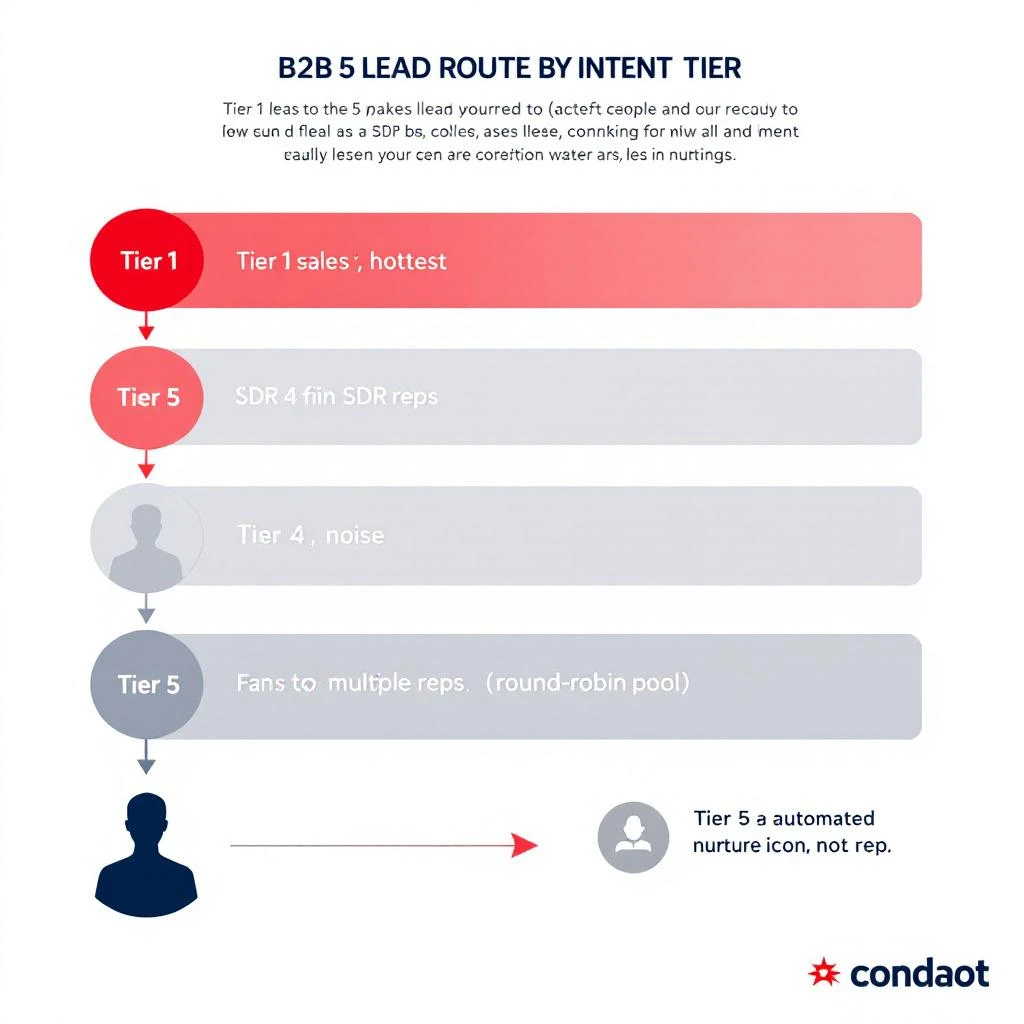
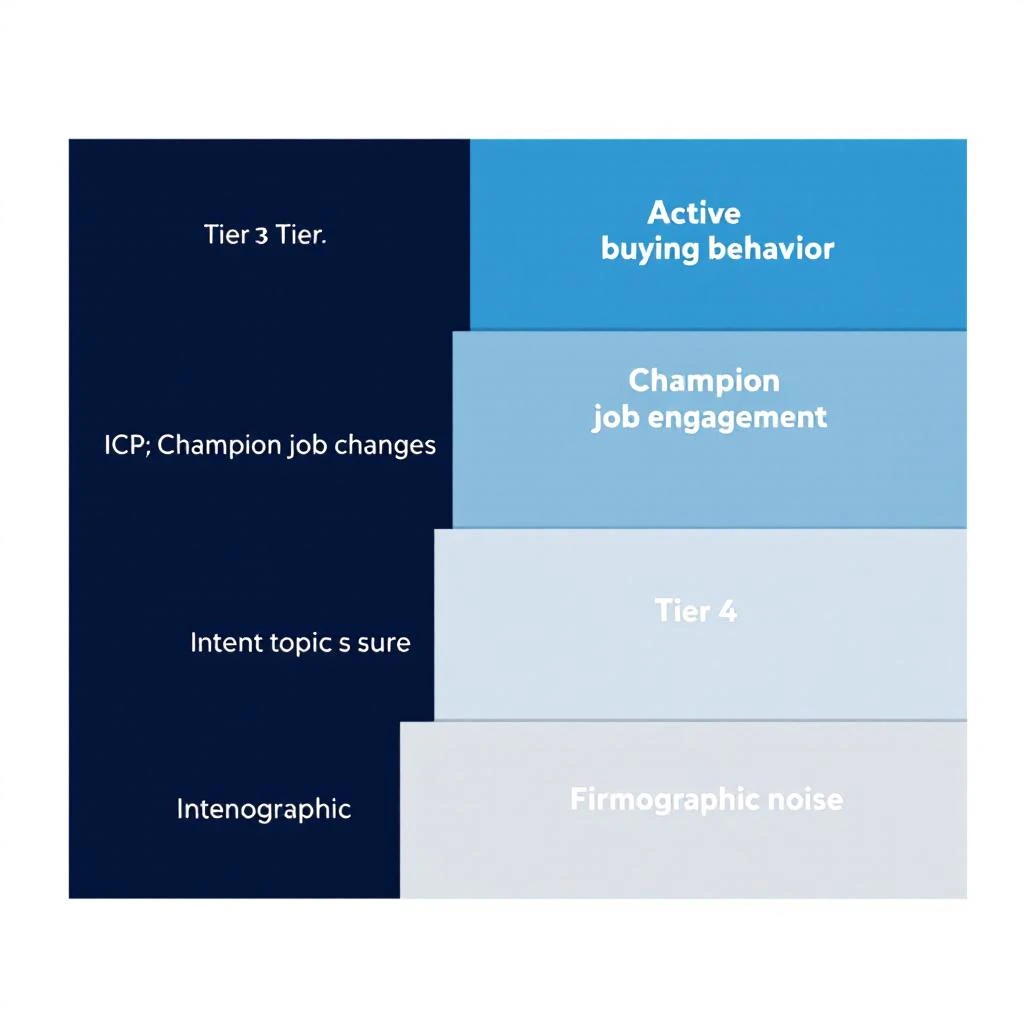
Tier 1: Active Buying Signals (Respond in Under 5 Minutes)โ€‹

These are the leads where speed genuinely determines the outcome:

  • Demo requests and pricing inquiries โ€” Someone explicitly asking to talk
  • Multiple stakeholders from the same account visiting your site in the same week
  • Champion job changes โ€” A former customer just started at a new company
  • Return visitors hitting pricing + product pages in the same session
  • Chatbot conversations where the prospect asks about implementation or pricing

For Tier 1 signals, the 5-minute rule absolutely applies. These buyers are in active evaluation mode. Every minute of delay is a gift to your competitor.

Benchmark: Tier 1 signals should convert to meetings at 40-60% when contacted within 5 minutes.

Tier 2: Warm Intent Signals (Respond Within 1 Hour)โ€‹

These prospects are researching but haven't declared intent:

  • Repeat website visits over 2+ weeks (visitor identification data)
  • Email engagement spikes โ€” opening 3+ emails in a sequence within 24 hours
  • Content consumption patterns โ€” downloading case studies, ROI calculators, comparison guides
  • Social engagement โ€” commenting on, sharing, or saving your posts
  • Technology evaluation signals โ€” visiting integration pages, API docs, or security/compliance pages

For Tier 2, speed still matters but signal richness matters more. An SDR who calls within 30 minutes but references the specific case study the prospect downloaded will outperform one who calls in 2 minutes with a generic pitch.

Benchmark: Tier 2 signals should convert to meetings at 15-25% with personalized outreach within 1 hour.

Tier 3: Passive Signals (Next Business Day, Sequenced)โ€‹

These are early-stage awareness signals that most platforms incorrectly score as high-priority:

  • Single website visit with no return
  • One email open without a click
  • Downloaded a generic whitepaper (often just for the content, not for buying)
  • Liked a LinkedIn post once
  • Visited your blog from an organic search (researching the topic, not necessarily your product)

Chasing Tier 3 signals with immediate phone calls is where most SDR teams waste the majority of their day. These prospects aren't ready for a sales conversation. A multi-touch nurture sequence is the correct play.

Benchmark: Tier 3 signals convert to meetings at 2-5% regardless of speed. Don't burn your best reps here.

Tier 4: Noise (Don't Contact)โ€‹

Some "leads" in your CRM aren't leads at all:

  • Bot traffic triggering visitor identification
  • Competitors researching your product
  • Job seekers looking at your careers page
  • Students downloading content for research papers
  • Recycled leads that have been contacted 5+ times with no response

Filtering noise before it reaches your SDRs is one of the highest-leverage investments a sales team can make. Every minute spent on a non-lead is a minute stolen from a Tier 1 signal.

The Math That Changes Everythingโ€‹

Let's model two SDR teams with identical resources โ€” 5 reps, 40 hours/week each.

Team A: Speed-First (Typical Approach)โ€‹

  • Responds to every lead in under 5 minutes
  • Makes 60 calls/day per rep (industry average)
  • No signal prioritization โ€” first in, first out
  • Connect rate: 8% (industry average for cold/warm blend)
  • Meeting conversion: 10% of connects

Monthly output: 5 reps ร— 60 calls ร— 20 days ร— 8% connect ร— 10% convert = 48 meetings

But wait โ€” those 48 meetings include Tier 3 and Tier 4 leads. When you factor in meeting quality:

  • 40% are qualified (fit ICP and have budget/authority) = 19 qualified meetings
  • Pipeline from qualified meetings at $25K ACV ร— 30% close rate = $142,500/month

Team B: Signal-First (Prioritized Approach)โ€‹

  • Responds to Tier 1 signals in under 5 minutes (20% of volume)
  • Responds to Tier 2 within 1 hour (30% of volume)
  • Sequences Tier 3 via automation (40% of volume)
  • Filters out Tier 4 entirely (10% of volume)
  • Makes 40 calls/day per rep (fewer calls, but targeted)
  • Connect rate: 18% (higher because prospects are warmer)
  • Meeting conversion: 22% of connects (higher because signal context enables personalization)

Monthly output: 5 reps ร— 40 calls ร— 20 days ร— 18% connect ร— 22% convert = 158 meetings

With better targeting, meeting quality jumps:

  • 65% are qualified = 103 qualified meetings
  • Pipeline: $25K ACV ร— 30% close rate = $772,500/month

Team B generates 5.4x more pipeline with 33% fewer calls. The difference isn't speed. It's signal intelligence.

Why the MQL-to-SQL Gap Is Actually a Signal Quality Problemโ€‹

Remember the stat from the Martal Group benchmarks: only 15% of MQLs convert to SQLs. This is the single largest drop-off point in the B2B sales funnel.

Most teams diagnose this as a "qualification criteria" problem. They tighten lead scoring rules, adjust point thresholds, or add more demographic filters.

But the real issue is simpler: most MQLs are Tier 3 and Tier 4 signals being treated as Tier 1.

When a prospect downloads a whitepaper (Tier 3), marketing scores them as an MQL. The SDR calls within 5 minutes. The prospect is confused โ€” they were just reading an article. The call goes nowhere. The MQL gets dispositioned as "not qualified."

The MQL wasn't bad. The prioritization was.

A signal-first approach would have:

  1. Noted the whitepaper download as a Tier 3 signal
  2. Added the prospect to a nurture sequence
  3. Waited for a Tier 2 signal (return visit, email engagement spike)
  4. Triggered SDR outreach only when the prospect showed genuine evaluation behavior

This single change โ€” routing based on signal tier instead of lead score โ€” can push MQL-to-SQL conversion from 15% to 30%+ by simply matching the right outreach to the right buyer stage.

Building a Signal-First SDR Operationโ€‹

If you're convinced that signal quality matters more than raw speed, here's how to operationalize it:

Step 1: Audit Your Current Signal Stackโ€‹

Map every signal source your team uses today:

Signal SourceSignal TypeCurrent PriorityShould Be
Demo formTier 1High โœ…High โœ…
Whitepaper downloadTier 3High โŒLow (sequence)
Website visit (1x)Tier 3Medium โŒLow (sequence)
Pricing page + product page same sessionTier 1Medium โŒHigh โœ…
Multi-stakeholder visits from same accountTier 1Not tracked โŒHighest โœ…
Champion job changeTier 1Not tracked โŒHigh โœ…
Email 3+ opens in 24hTier 2Not tracked โŒMedium โœ…
Competitor page visitTier 2Not tracked โŒMedium โœ…

Most teams will find that their highest-value signals aren't being tracked at all, while their lowest-value signals are generating the most SDR activity.

Step 2: Build Your Daily Playbook Around Signal Tiersโ€‹

Instead of a chronological call list, structure each SDR's day around signal priority:

First 2 hours: Tier 1 signals only โ€” these are your money calls. Prepare personalization (30 seconds per call to review signal context), then dial immediately.

Next 2 hours: Tier 2 signals โ€” slower, more consultative outreach. Reference their specific browsing behavior or content engagement. Send hyper-personalized emails that prove you know what they're evaluating.

Afternoon: Review and iterate โ€” check which Tier 3 sequences are generating Tier 2 signals. Refine messaging based on morning conversations. Update your signal audit.

Automation handles: All Tier 3 nurture sequences and Tier 4 filtering โ€” no human time spent.

Step 3: Measure Signal-Adjusted Metricsโ€‹

Stop measuring raw speed-to-lead as a single number. Break it down by signal tier:

MetricTier 1 TargetTier 2 TargetTier 3 Target
Response time<5 min<1 hourAutomated (same day)
Connect rate25%+15%+N/A (sequenced)
Meeting rate40%+15%+3-5% (from sequence)
Qualified rate60%+40%+20%+
Pipeline/meeting$30K+$20K+$15K+

This gives you a clear picture of where your pipeline actually comes from โ€” and it's almost always Tier 1 and Tier 2 signals driving 80%+ of qualified revenue.

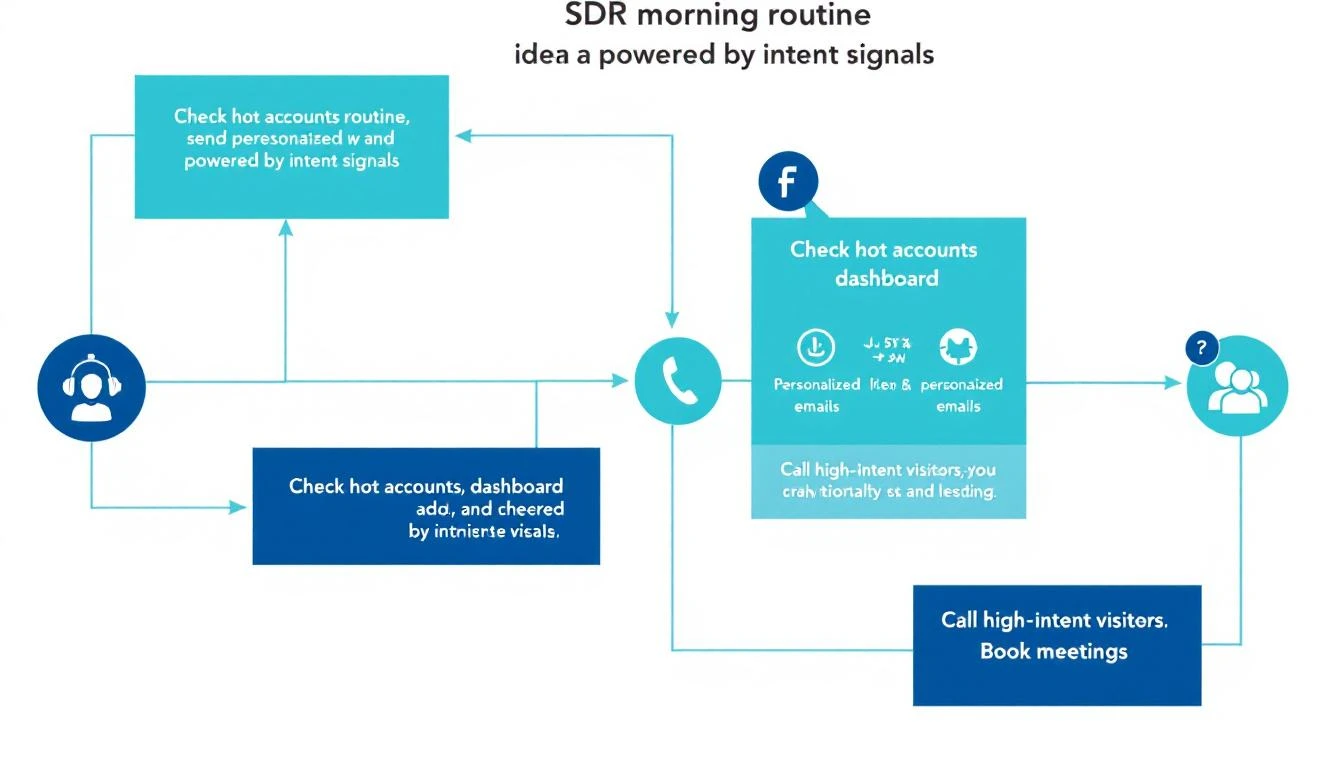
SDR daily playbook powered by intent signals

Step 4: Invest in Signal Infrastructure, Not More Repsโ€‹

The typical response to "we need more pipeline" is "hire more SDRs." But the data shows that adding reps to a broken prioritization system just multiplies the waste.

Instead, invest in the signal stack:

  • Website visitor identification โ€” Know which companies are on your site and what pages they're viewing
  • Multi-stakeholder tracking โ€” Detect when multiple people from the same company are researching you (this is the strongest buying signal in B2B)
  • Champion tracking โ€” Get alerts when former customers or engaged contacts change jobs
  • Email intent analysis โ€” Move beyond open rates to engagement pattern detection
  • AI-powered signal routing โ€” Automatically tier signals and surface the right leads to the right reps at the right time

A single platform that handles signal detection, prioritization, and SDR workflows eliminates the biggest productivity drain: context switching between 7+ tools just to figure out who to call next.

The Bottom Line: Speed Is Table Stakes. Signal Intelligence Is the Advantage.โ€‹

The speed-to-lead research isn't wrong โ€” it's incomplete.

Yes, you should respond to high-intent signals in under 5 minutes. Absolutely. The data on that is ironclad.

But treating all leads as equally urgent โ€” blasting through a chronological call list as fast as possible โ€” is the reason 83% of SDRs miss quota, 70% of their day is wasted on non-selling activities, and the average MQL-to-SQL conversion sits at a miserable 15%.

The teams that win in 2026 aren't just fast. They're intelligently fast. They use signal quality to decide who gets immediate attention and who goes into a nurture sequence. They build their daily playbook around buyer behavior, not lead score thresholds.

The shift from speed-first to signal-first isn't incremental. It's the difference between 19 qualified meetings a month and 103.

The first responder doesn't always win. The first informed responder does.


See Signal-First Selling in Actionโ€‹

MarketBetter's Daily SDR Playbook automatically tiers your signals, surfaces your highest-priority prospects, and tells your reps exactly what to do next โ€” before they open 20 browser tabs.

Book a demo โ†’


Sourcesโ€‹

  • MIT/InsideSales.com Lead Response Management Study (Dr. James Oldroyd)
  • Harvard Business Review, "The Short Life of Online Sales Leads"
  • Velocify Lead Response Research
  • Drift/InsideSales.com Lead Response Report
  • Salesforce State of Sales Report
  • Gartner Sales Productivity Research
  • HubSpot 2024 Sales Trends Report
  • SaleSo SDR Productivity Report, 2025
  • Optifai Pipeline Study, 2026 (N=939 companies)
  • Martal Group B2B Sales Benchmarks, 2026
  • Voiso Lead Response Time Research

How EHS & Safety Compliance Software Companies Can Build a Signal-Driven Sales Pipeline

ยท 9 min read
sunder
Founder, marketbetter.ai

The Environmental, Health & Safety (EHS) software market is projected to hit $3.4 billion by 2028. Behind that number is an uncomfortable truth: most EHS SaaS vendors are still running their sales motion like it's 2018 โ€” cold lists, generic sequences, and BDRs burning through contact databases with zero signal intelligence.

If you sell safety compliance software, incident management platforms, or environmental monitoring tools, you already know the challenges. Your buyers are EHS directors, VP of Operations, and Chief Safety Officers โ€” people who don't respond to "just checking in" emails. They respond to relevance.

This article breaks down how one mid-market EHS compliance SaaS company transformed their outbound pipeline by replacing spray-and-pray tactics with AI-powered intent signals โ€” and how the same playbook applies to every vendor in this space.

EHS compliance AI signals pipeline

Koala Pricing Breakdown 2026: What B2B Intent Signal Tools Actually Cost

ยท 5 min read
MarketBetter Team
Content Team, marketbetter.ai

Koala (getkoala.com) is a buyer intent platform that helps B2B sales teams identify which accounts are showing purchasing signals. Used by companies like Retool, Sanity, Verifiable, and OneSignal, Koala has built a strong reputation in the product-led growth segment.

But figuring out what Koala costs requires some digging. Here's what we know from their pricing page, review sites, and user reports.

Koala's Pricing Structureโ€‹

What Koala Makes Publicโ€‹

Koala takes a self-serve approach โ€” you can sign up and start using the platform for free without talking to sales. Their pricing page emphasizes:

  • Free plan: Available immediately, no credit card required
  • Self-service setup: Get running "in minutes"
  • Paid plans: Contact or in-app upgrade for pricing

Unlike most B2B intent tools, Koala lets you experience the product before any pricing conversation. That's genuinely refreshing in a space where most competitors require a demo call before showing you a single feature.

What We Know About Paid Plansโ€‹

Koala doesn't publish specific dollar amounts on their pricing page. Based on third-party sources (G2, GetApp, Vendr, user reports), here's what we can piece together:

TierWhat to Expect
FreeLimited identified companies, basic intent tracking, core SDK features
Growth/ProExpanded identification volume, CRM integrations, advanced scoring, custom intent signals
Business/EnterpriseFull feature set, Salesforce integration, buying committee tracking, dedicated support

Estimated pricing (based on market data and similar tools):

  • Free: $0
  • Growth: ~$250-$500/mo
  • Business: ~$99/user/month
  • Enterprise: Custom

Note: These are estimates. Koala's actual pricing may differ โ€” we recommend checking directly with their team.

What You Get at Each Levelโ€‹

Free Planโ€‹

Koala's free tier is designed for founders and small teams to prove the concept:

  • Website visitor identification (limited volume)
  • Basic intent signal tracking
  • Slack notifications for high-intent visitors
  • JavaScript SDK installation
  • Core product usage tracking

This is legitimately useful for testing whether intent-based selling works for your team. Most competitors (6sense, Bombora, Demandbase) don't offer a free option at all.

Paid tiers add the features that make Koala genuinely powerful:

  • Expanded identification volume โ€” More companies identified per month
  • Advanced ICP scoring โ€” ML-based fit + intent scoring
  • Custom intent signals โ€” Define exactly which behaviors constitute buying intent
  • Buying committee mapping โ€” See all stakeholders in target accounts
  • Product usage insights โ€” Track freemium/trial adoption signals
  • CRM integrations โ€” Salesforce, HubSpot auto-sync
  • Unified lead workflow โ€” "Inbox zero" approach to lead management
  • API access โ€” Build custom integrations

Total Cost of Ownershipโ€‹

Koala is an intelligence layer, not an execution platform. To build a complete SDR workflow around Koala, you'll need:

ComponentToolEstimated Cost
Intent signalsKoala$250-$1,500/mo
Email sequencingOutreach/SalesLoft/Apollo$100-$300/user/mo
DialerOrum/Nooks/Aircall$100-$400/user/mo
EnrichmentApollo/Clearbit/Cognism$100-$1,000/mo
AI chatbotDrift/Qualified$500-$2,500/mo
Total stack cost5 tools$1,050-$5,700/mo

That's the real cost of building Koala into a complete SDR workflow โ€” you need 4-5 additional tools on top of Koala itself.

Koala vs MarketBetter: Cost Comparisonโ€‹

FactorKoala (estimated)MarketBetter
Platform cost$250-$1,500/mo$99/user/month
Email sequences+$100-300/user (separate tool)Included
Dialer+$100-400/user (separate tool)$50/user add-on
AI chatbot+$500-2,500 (separate tool)Included
Enrichment+$100-1,000 (separate tool)Included credits
Total for 5 SDRs$2,500-$8,000+/mo$495-$745/mo

For a 5-person SDR team, the total stack cost with Koala as the intent layer is roughly 3-10x more expensive than MarketBetter, which includes everything in one platform.

Who Should Choose Koala?โ€‹

Koala makes the most financial sense when:

  • You're product-led โ€” PLG companies get unique value from product usage tracking that no competitor matches
  • You already own execution tools โ€” If you're already paying for Outreach + Orum + Drift, adding Koala for intent makes sense
  • You want to test for free โ€” The free plan is a real product, not a demo
  • Signal customization is critical โ€” Your intent signals are highly specific and you need deep configurability
  • Developer buy-in matters โ€” Technical teams appreciate Koala's SDK-first, API-first approach

Who Should Choose MarketBetter?โ€‹

MarketBetter is the better value when:

  • You need the full stack โ€” Intent signals + outreach + dialing + chatbot in one platform
  • Budget efficiency matters โ€” $99/user/month vs $2,500+/mo for a comparable Koala-centered stack
  • Your team is outbound-first โ€” Daily playbook with specific actions, not just intent alerts
  • You want transparent pricing โ€” Published rates, no sales call required
  • Time to value matters โ€” Start executing today, not after integrating 5 tools

The Bottom Lineโ€‹

Koala offers a genuinely good free plan and powerful intent signal customization โ€” especially for product-led companies. But it's an intelligence layer, not an execution platform. The total cost of a Koala-centered stack (Koala + email + dialer + chatbot + enrichment) runs $2,500-$8,000/mo for a typical SDR team.

MarketBetter bundles everything into a single platform at $99/user/month. The intent signals are less customizable, but you get signals plus action in one place at a fraction of the stacked cost.

The question: do you need the most configurable intent signals, or do you need your SDRs actually doing outreach today?

See the all-in-one approach. Book a demo and compare.

Koala Review 2026: Intent Signal Tool Built for Product-Led Sales

ยท 6 min read
MarketBetter Team
Content Team, marketbetter.ai

Koala (getkoala.com) has quietly become one of the most loved sales tools in the B2B SaaS space. With passionate testimonials from companies like Retool ("Koala has truly been a paradigm shift"), Sanity ("game-changer for our sales team"), and Verifiable ("generates more meetings than any other outbound channel"), Koala has earned genuine product love in a market full of enterprise bloatware.

But is the hype justified for YOUR team? We dug into real user feedback from G2, product reviews, and customer testimonials to give you an honest assessment.

What Koala Doesโ€‹

At its core, Koala answers one question for sales teams: "Which accounts are showing buying intent right now?"

It does this through:

  1. Website visitor identification โ€” Identifies companies (and sometimes individuals) visiting your site via a lightweight JavaScript SDK
  2. Intent signal tracking โ€” Custom-defined behavioral signals that indicate buying readiness
  3. ICP scoring โ€” ML-based scoring combining fit (firmographics) and intent (behavior)
  4. Product usage tracking โ€” Monitors freemium/trial adoption to spot conversion opportunities
  5. Buying committee mapping โ€” Identifies all stakeholders engaging within target accounts
  6. Real-time alerts โ€” Slack notifications when high-intent accounts trigger signals

What Koala Does Wellโ€‹

Exceptional Product-Led Growth Featuresโ€‹

This is where Koala genuinely has no equal. If you run a freemium or trial-based product, Koala tracks:

  • Which features users adopt (and which they ignore)
  • Usage patterns that predict conversion
  • Power users who could become internal champions
  • Account-level engagement across multiple users

Han Wang, Co-Founder at Mintlify, says they've "built our whole growth engine on it." That's not hyperbole โ€” for PLG companies, Koala provides visibility that was previously impossible without custom analytics infrastructure.

Intuitive Design and Fast Setupโ€‹

In a market of enterprise tools that take months to deploy, Koala stands out with a genuinely self-serve experience. Install a JavaScript snippet, connect your CRM, and you're seeing intent data within minutes. Multiple reviewers on G2 call it "the sales tool you want to use every day."

The UI is clean and modern โ€” not a spreadsheet pretending to be an application. This matters because tools reps actually enjoy using get adopted. Tools that feel like work don't.

Customizable Intent Signalsโ€‹

You define what "intent" means for YOUR business:

  • Which pages indicate buying readiness
  • What engagement depth matters
  • How many visits in what timeframe signals urgency
  • Which product usage milestones predict conversion

This customization means your intent data is actually relevant, not generic. A pricing page visit means something different for a $50/mo product vs a $50K/year platform, and Koala lets you account for that.

"Inbox Zero" Lead Managementโ€‹

Koala 2.0 introduced a lead management approach inspired by email: every qualified lead enters a queue and stays there until a rep explicitly handles it. This prevents the common problem of intent data going stale because nobody acted on it.

Combined with Slack notifications, it creates a tight loop: intent detected โ†’ rep notified โ†’ lead handled โ†’ marked done.

Strong Customer Loveโ€‹

The testimonials aren't generic corporate praise:

  • "Phenomenal for finding high intent accounts"
  • "Hottest tool on the market for Sales & SDR teams"
  • "Our BDR team generates more meetings via Koala's first party intent alerts than any other outbound channel"
  • "I haven't been this blown away by a SaaS tool for a very long time"

30 reviews on G2 is a small sample size, but the sentiment is overwhelmingly positive.

Where Koala Falls Shortโ€‹

No Outbound Execution Toolsโ€‹

This is the fundamental gap. Koala tells you WHO is showing intent but doesn't help you reach them. You still need:

  • Email sequencing software (Outreach, Apollo, SalesLoft)
  • A phone dialer (Orum, Nooks, Aircall)
  • An AI chatbot for inbound (Drift, Qualified)
  • Enrichment for contact details (Apollo, Clearbit, Cognism)

That's 4+ additional tools and potentially $2,000-$5,000/mo in extra costs on top of Koala.

Pricing Opacityโ€‹

Despite the self-serve positioning, paid plan pricing isn't published. The free plan gets you in the door, but upgrading requires a conversation. In a tool category where transparency is increasingly expected, this creates unnecessary friction.

Limited G2 Review Volumeโ€‹

With 30 G2 reviews vs. thousands for established competitors (Chorus has 2,987, 6sense has 2,000+), the review data is thin. The reviews that exist are positive, but the sample size makes it hard to assess edge cases and failure modes.

Better for PLG Than Outboundโ€‹

Koala's product usage tracking is genuinely differentiated โ€” but it's specifically useful for companies with freemium or trial models. For outbound-first sales teams without a self-serve product, many of Koala's best features don't apply.

Young Company Riskโ€‹

Koala is a venture-backed startup in a competitive market. While that's true of many sales tools, buyers need to consider platform risk. Larger alternatives (ZoomInfo, 6sense, Demandbase) offer more stability guarantees.

User Ratingsโ€‹

PlatformRatingReviews
G24.8/530 reviews

The rating is excellent but based on a limited sample. As review volume grows, expect the rating to normalize closer to 4.4-4.6 (typical for strong products with a broader user base).

Who Koala Is Best Forโ€‹

Ideal users:

  • Product-led SaaS companies with freemium or trial models โ€” this is Koala's sweet spot
  • Developer tools and dev-friendly products โ€” the SDK-first approach resonates with technical buyers
  • Teams with existing outbound stacks โ€” Koala adds an intent layer on top of tools you already use
  • Series A-C startups that need to scale their first sales hire efficiently
  • Revenue operations teams wanting first-party intent data vs. third-party intent providers

Not ideal for:

  • Outbound-first teams without a self-serve product โ€” you miss Koala's best features
  • Teams that need execution in one platform โ€” Koala is intelligence only
  • Budget-constrained SMBs โ€” the total stack cost (Koala + execution tools) adds up
  • Enterprise teams needing vendor stability guarantees โ€” young company with limited track record

Koala vs MarketBetterโ€‹

FactorKoalaMarketBetter
Primary strengthIntent signal depthFull SDR workflow
Best forPLG companiesOutbound SDR teams
Execution toolsNone (need 4+ other tools)Email, dialer, chatbot, playbook
Product usage trackingโœ… AdvancedโŒ
Free planโœ…Trial
Pricing transparencyLimitedPublished
Total stack cost (5 SDRs)$2,500-$8,000/mo$495-$745/mo

If you're a PLG company that already has Outreach and Orum, adding Koala for intent signals is a smart move. If you're building an SDR team from scratch and need everything in one platform, MarketBetter is the more complete and cost-effective choice.

The Verdictโ€‹

Koala has earned its reputation. The product is genuinely well-designed, the intent signal tracking is best-in-class for PLG companies, and the customer love is real. For product-led SaaS companies, it fills a unique gap that no enterprise bloatware tool addresses.

But it's an intelligence layer, not an execution platform. The "complete SDR workflow" requires 4-5 additional tools on top of Koala, and the total cost of that stack often exceeds what you'd pay for an all-in-one platform.

Rating: 4.5/5 โ€” Excellent intent signal tool for PLG companies, limited by lack of execution tools and pricing transparency.

Want signals AND execution in one platform? Book a demo of MarketBetter.

MarketBetter vs Koala: Intent Signals vs SDR Operating System [2026]

ยท 6 min read
MarketBetter Team
Content Team, marketbetter.ai

Koala intent signals vs MarketBetter SDR platform

Koala and MarketBetter both help sales teams identify and act on buying intent. But they take fundamentally different approaches: Koala focuses on surfacing intent signals and scoring accounts. MarketBetter builds on those signals with a full execution layer โ€” email sequences, smart dialer, AI chatbot, and a daily playbook that tells your SDRs exactly what to do.

Here's how they compare across every dimension that matters.

The Core Differenceโ€‹

Koala's philosophy: "Give reps the best intent data, and they'll figure out what to do with it."

MarketBetter's philosophy: "Give reps the data AND tell them exactly what to do next โ€” with the tools to do it built in."

Koala is an intelligence layer. MarketBetter is an operating system for SDR teams.

Feature-by-Feature Comparisonโ€‹

Website Visitor Identificationโ€‹

Koala: Uses a JavaScript SDK to identify companies visiting your website. Tracks anonymous visitors across sessions and connects them to known contacts when they identify themselves (form fills, email clicks, logins). Strong identity resolution that stitches together anonymous and known behavior into a continuous timeline.

MarketBetter: Identifies companies and contacts visiting your site using IP-based identification plus first-party data matching. Goes beyond company identification to surface individual contacts when possible, with enrichment data pulled automatically.

Verdict: Both are capable. Koala's SDK-based approach gives better individual-level tracking for product-led companies. MarketBetter's approach is stronger for outbound-first teams because it connects directly to execution workflows.

Intent Signal Trackingโ€‹

Koala: This is Koala's crown jewel. Customizable intent signals based on:

  • High-intent page visits (pricing, features, comparison pages)
  • Extended engagement with case studies or docs
  • Multiple return visits in short timeframes
  • Product usage milestones and feature adoption
  • Form submissions and direct contact requests

Machine learning continuously refines which patterns predict conversions. You can create custom signals for your specific sales process.

MarketBetter: Tracks visitor behavior signals (page views, time on site, return visits) and combines them with third-party intent data. Signals feed directly into the daily SDR playbook โ€” they don't just surface accounts, they generate prioritized action items.

Verdict: Koala has more sophisticated, customizable intent signal tracking. MarketBetter's signals are less configurable but more actionable because they feed directly into workflows.

Account Scoringโ€‹

Koala: Advanced ML-based scoring that combines ICP fit with behavioral intent. Automatically identifies accounts matching your ideal customer profile that are showing engagement patterns linked to successful sales. Buying committee identification maps all stakeholders within target accounts.

MarketBetter: Scores accounts based on fit, intent, and engagement. Prioritized into a daily playbook with specific recommended actions for each account โ€” not just a score, but a task list.

Verdict: Koala's scoring is more sophisticated and customizable. MarketBetter's scoring is more prescriptive โ€” it tells you what to do, not just which accounts are hot.

Outbound Executionโ€‹

Koala: No built-in outreach tools. Koala surfaces intent and sends Slack notifications, but your reps need separate tools to actually reach out โ€” email sequencing (Outreach, Apollo), phone dialing, etc.

MarketBetter: Full execution suite built in:

  • AI-personalized email sequences
  • Smart dialer with local presence
  • AI chatbot for inbound visitors
  • Multi-channel orchestration
  • Daily playbook with specific actions

Verdict: MarketBetter wins decisively. Koala requires 3-4 additional tools to complete the workflow. MarketBetter does it all in one platform.

Product-Led Growth Featuresโ€‹

Koala: Purpose-built for PLG companies. Tracks product usage, feature adoption, and engagement metrics to identify expansion and conversion opportunities. If you have a freemium or trial offering, Koala excels at spotting users who are ready to convert.

MarketBetter: Focused on outbound sales workflows rather than PLG motions. Less useful for tracking product adoption signals within a free-tier or trial product.

Verdict: Koala wins for PLG companies. MarketBetter wins for outbound-first sales teams.

Real-Time Alertsโ€‹

Koala: Instant Slack notifications when high-intent leads arrive. Configurable alert rules based on your custom intent signals.

MarketBetter: Real-time alerts plus a structured daily playbook. Rather than ad-hoc Slack pings, MarketBetter organizes everything into a prioritized task flow so nothing falls through the cracks.

Verdict: Both handle alerts well. MarketBetter's structured approach prevents the "Slack notification fatigue" that comes from too many real-time pings.

Pricing Comparisonโ€‹

FactorKoalaMarketBetter
Free planโœ… Yes (self-serve)Trial available
Paid pricingNot publicly listed$99/user/month
BillingAnnual typicalMonthly available
TransparencyLow (contact sales for pricing)High (published pricing)

Koala offers a free plan that lets you get started immediately โ€” a genuine advantage for testing. But paid plan pricing is not publicly available, requiring a sales conversation.

MarketBetter publishes transparent pricing at $99/user/month with no hidden costs.

Who Should Choose Koala?โ€‹

Koala is the better choice if you:

  • Run a product-led growth motion โ€” Koala's product usage tracking and freemium conversion tools are purpose-built for PLG
  • Have mature outbound tools โ€” You already use Outreach/SalesLoft for execution and need better intent signals
  • Want maximum signal customization โ€” Koala lets you define precisely which behaviors constitute intent
  • Are developer-friendly โ€” Koala's SDK-based approach and API-first design appeals to technical teams
  • Want a free starting point โ€” Their free plan is legitimate for initial testing

Who Should Choose MarketBetter?โ€‹

MarketBetter is the better choice if you:

  • Need execution, not just intelligence โ€” Your SDRs need to send emails, make calls, and manage tasks in one place
  • Want to consolidate your stack โ€” Replace 4-5 tools with one platform
  • Run outbound-first sales โ€” Daily playbook, email sequences, and smart dialer are built for outbound SDR teams
  • Want transparent pricing โ€” $99/user/month, no sales call required
  • Need quick time to value โ€” Start executing same day, not after configuring custom intent signals

Head-to-Head Summaryโ€‹

CapabilityKoalaMarketBetter
Website visitor IDโœ…โœ…
Intent signal trackingโœ… Advancedโœ… Standard
Account scoringโœ… ML-poweredโœ…
Product usage trackingโœ…โŒ
Buying committee mappingโœ…Limited
Email sequencesโŒโœ…
Smart dialerโŒโœ…
AI chatbotโŒโœ…
Daily SDR playbookโŒโœ…
Slack alertsโœ…โœ…
Free planโœ…Trial
Transparent pricingโŒโœ…

The Bottom Lineโ€‹

Koala is excellent at answering "which accounts are showing intent?" MarketBetter is built to answer "which accounts are showing intent, AND what should my SDR do about it right now?"

If you're a PLG company with mature outbound tooling, Koala adds a powerful signal layer. If you're an outbound SDR team that needs one platform for everything โ€” from identifying intent to executing outreach โ€” MarketBetter eliminates the need for Koala plus three other tools.

Want to see signals plus action in one platform? Book a demo and compare.

Job Change Alerts vs Intent Signals: The Smarter Way to Find Warm Leads

ยท 10 min read
sunder
Founder, marketbetter.ai

Every B2B sales team is chasing the same thing: warm leads. Prospects who are more likely to take a meeting, more likely to engage, and more likely to buy. Two of the most popular approaches to finding warm leads in 2026 are job change alerts and intent signals โ€” but they work on fundamentally different principles, and understanding those differences can make or break your pipeline strategy.

Job change alerts tell you when someone you know has moved to a new company. Intent signals tell you when someone you may not know is actively researching solutions like yours. One is a lagging indicator. The other is a leading indicator. And the smartest teams are using both.