38 posts tagged with "visitor identification"

View All Tags

B2B Website Visitor Identification Software: The Complete 2026 Guide

Β· 22 min read

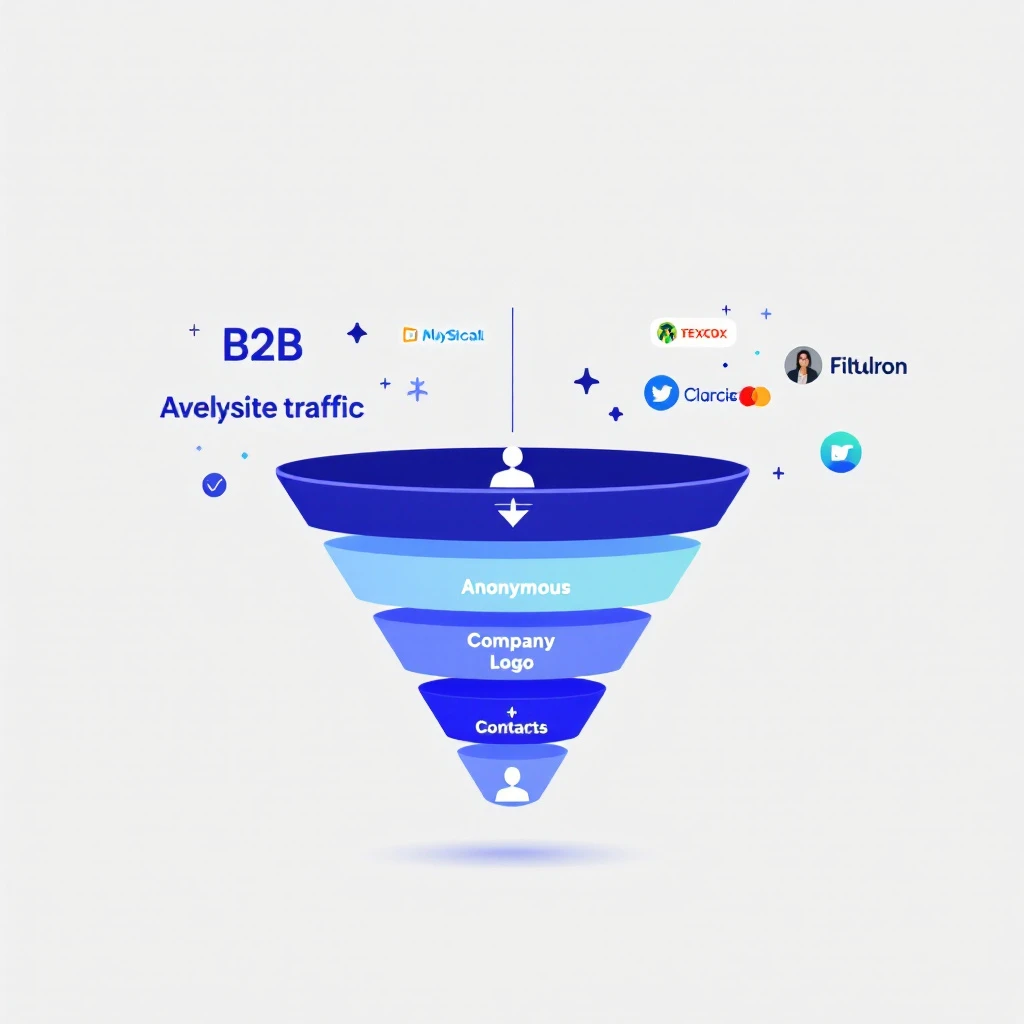
B2B website visitor identification process β€” from anonymous traffic to identified accounts

98% of B2B website visitors leave without filling out a form. They read your pricing page, compare you to competitors, check your case studies β€” then vanish.

You're spending thousands on Google Ads, SEO, and content to drive this traffic. And 98 out of every 100 visitors give you nothing in return. No name, no email, no company. Just another anonymous session in Google Analytics.

Website visitor identification changes that. It reveals which companies are visiting your site, what pages they're viewing, and in many cases, who the actual people are β€” so your sales team can reach out while the buying intent is hot.

This guide covers everything: how the technology works, what match rates you can actually expect (hint: most vendors lie), the 2026 software landscape, how to evaluate tools, and how to turn identified visitors into pipeline. No fluff. No vendor spin.

Updated for 2026. This is the pillar guide in our visitor-intelligence series. Jump to the deep dives when you need them: the 12 best visitor ID tools compared, visitor tracking software reviews, how to identify anonymous website visitors, and turning identified visitors into pipeline.


What Is B2B Website Visitor Identification?​

B2B website visitor identification is the process of revealing the companies and individuals behind your anonymous website traffic. Instead of seeing "500 sessions from Austin, TX" in your analytics, you see "Hologram's VP of Sales visited your pricing page 3 times this week."

There are two levels of identification:

Company-Level Identification​

The most common approach. When someone visits your website, their browser sends an IP address. Visitor identification tools match that IP against databases of known corporate IP ranges to identify which company the visitor works for.

How it works:

  1. A JavaScript snippet on your website captures the visitor's IP address
  2. The tool performs a reverse IP lookup (rDNS) against a database of millions of company IP ranges
  3. If there's a match, you see the company name, industry, size, and location
  4. You also see which pages they visited and for how long

Typical match rates: 20-40% of total traffic. This sounds low, but remember β€” most consumer traffic (personal devices, mobile networks, VPNs) will never match. The 20-40% that does match is almost entirely B2B traffic, which is exactly what you want.

The catch: Company-level ID tells you which company is looking, but not who at the company. You know Salesforce visited your pricing page β€” but was it an intern doing research or the VP of Revenue Operations evaluating tools?

Person-Level Identification​

The newer, more powerful approach. Person-level identification goes beyond the company and attempts to identify the specific individual visiting your site.

How it works:

  1. Beyond IP matching, tools use a combination of first-party cookies, device fingerprinting, and cross-referencing identity graphs
  2. Some tools match against databases of known professional identities (built from opt-in data, public profiles, etc.)
  3. The result: you get a name, title, email, and LinkedIn profile β€” not just a company name

Typical match rates: 5-15% of B2B traffic. Person-level is significantly harder than company-level. Any vendor claiming 40%+ person-level match rates is either misleading you or conflating company-level and person-level stats.

The privacy question: Person-level ID raises legitimate GDPR/CCPA concerns. The best tools build their identity graphs from opt-in sources and comply with privacy regulations. The worst ones scrape data without consent. Always ask your vendor where their data comes from.


How Does Website Visitor Identification Actually Work?​

Under the hood, visitor identification combines multiple data signals. Here's the technical reality without the marketing buzzwords.

1. Reverse IP Lookup (Foundation Layer)​

Every device connected to the internet has an IP address. Companies with office networks have static IP ranges registered to their organization. When an employee visits your website from the office, their request comes from one of these known IPs.

Reverse IP lookup (rDNS) cross-references the visitor's IP against databases of corporate IP ranges. These databases are maintained by data providers like:

  • Demandbase β€” proprietary IP intelligence network
  • Clearbit (now Hubspot) β€” company identification API
  • 6sense β€” predictive intelligence platform
  • Bombora β€” intent data + IP matching

Limitation: Remote work has eroded IP-based identification. When your target buyer works from home on a Comcast connection, their IP doesn't map to their employer. This is why pure IP-based tools have seen match rates decline since 2020.

2. First-Party Cookies + Device Fingerprinting (Enhancement Layer)​

To compensate for remote work, modern tools layer additional signals:

  • First-party cookies track returning visitors across sessions, building a behavioral profile even before identity resolution
  • Device fingerprinting uses browser attributes (screen resolution, timezone, installed fonts, WebGL renderer) to create a semi-unique identifier
  • Email pixel matching β€” when a prospect clicks a link in your marketing email, the tool can link their known email to their website session

3. Identity Graphs (Resolution Layer)​

The most sophisticated tools maintain identity graphs β€” massive databases that connect professional identities across multiple touchpoints. When a visitor arrives on your site, the tool checks:

  • Does this device/cookie match a known identity?
  • Has this IP been associated with previous known visitors?
  • Does the behavioral pattern (pages visited, time on site) match a known account?

The larger and more accurate the identity graph, the higher the match rate. This is why tools backed by large data networks (Demandbase, 6sense, ZoomInfo) often outperform standalone startups on raw identification volume.


Anonymous, Company-Level, or Person-Level: What You Actually Get​

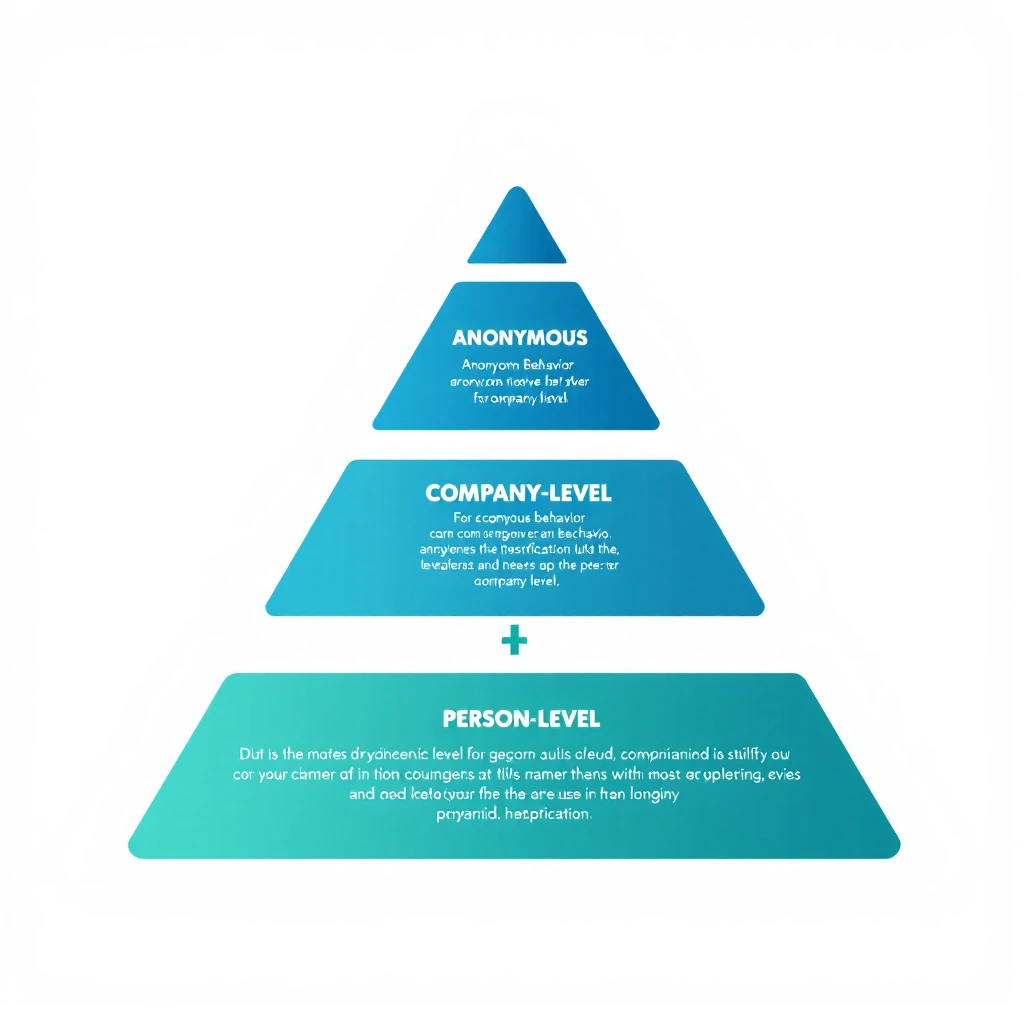
The three tiers of website visitor identification β€” anonymous behavior, company-level, and person-level

Not all "identification" is created equal. When vendors say they identify your visitors, they mean one of three very different things β€” and buying the wrong tier is the most common mistake we see.

TierWhat you learnTypical match rateBest for
Anonymous behaviorSession patterns, pages viewed, repeat visits β€” but no identity100% of trafficIntent scoring, retargeting fuel, content optimization
Company-levelThe organization behind the visit (name, industry, size)20-40% of trafficABM alerts, account prioritization, warm outbound
Person-levelThe specific individual (name, title, email, LinkedIn)5-15% of B2B trafficDirect 1:1 outreach, low-friction SDR follow-up

Anonymous visitor identification is the foundation everyone starts with β€” you can score and segment behavior even when you can't put a name to it. Action-based identification layers intent on top: a visitor who hits your pricing page twice and your case studies once is a different signal than someone who bounces off your homepage, regardless of whether you know their name yet.

The right answer for most B2B teams is company-level as the workhorse, with person-level as the bonus when the identity graph resolves it. Chasing 100% person-level identification is a fool's errand β€” and any vendor promising it is selling you inflated numbers. For the full breakdown of how to read these signals, see our guide on identifying anonymous website visitors and how to track website visitors.


What Match Rates Should You Actually Expect?​

This is where most vendors mislead you. Here's the truth.

The Match Rate Reality Check​

Identification TypeClaimed RangeRealistic RangeWhat Drives It
Company-level"Up to 80%"20-40%IP database coverage, % of office vs. remote traffic
Person-level"Up to 50%"5-15%Identity graph size, cookie persistence, email matching
Combined (inflated)"70-90%"25-45%Vendors often blend both numbers to inflate stats

Why the gap? Vendors run match rate tests on their best-case scenarios β€” enterprise companies with mostly in-office workers, lots of direct traffic, and established cookies. Your results will vary based on:

  • Your audience mix β€” Enterprise companies with office networks match better than SMBs with remote teams
  • Traffic sources β€” Direct and organic traffic matches better than paid (ad blockers, VPNs)
  • Geography β€” US and EU corporate IP databases are more complete than emerging markets
  • Industry β€” Tech companies match well; healthcare and government often don't

How to Run Your Own Match Rate Test​

Don't trust vendor demos. Run a blind test with your actual traffic:

  1. Install 2-3 tools on your website simultaneously (most offer free trials)
  2. Run for 30 days to get a statistically meaningful sample
  3. Compare identified visitors against known accounts in your CRM
  4. Calculate your real match rate: Identified visitors / Total unique B2B sessions
  5. Check accuracy: Are the identified companies actually relevant? Or is it mostly ISPs and universities?

The tool that identifies the most relevant accounts at the highest accuracy wins β€” not the one with the biggest raw number.


The B2B Visitor Identification Software Landscape in 2026​

The market has split into distinct categories. Knowing which one you're shopping in saves you from comparing tools that were never meant to compete.

Enterprise Visitor Identification Platforms​

Large, data-network-backed platforms that bundle visitor ID into a broader ABM and intent suite.

  • Who: Demandbase, 6sense, ZoomInfo
  • Strengths: Deep IP intelligence, third-party intent data, predictive scoring, enterprise integrations
  • Trade-offs: Six-figure contracts, long implementations, and a data-heavy experience that assumes you have an ops team to run it. Great identification, but the "what do I do next" layer is often thin.

Mid-Market Visitor Intelligence Tools​

Purpose-built for revenue teams that want signal plus action without an enterprise price tag.

  • Who: Warmly, RB2B, Vector, MarketBetter
  • Strengths: Faster setup, real-time alerts (Slack, email), and increasingly, a workflow layer that tells SDRs who to contact. This is where the market is innovating fastest.
  • Trade-offs: Smaller identity graphs than the enterprise players, so raw match volume can be lower β€” but accuracy on ICP accounts is often better.

Person-Level Specialists​

Tools that focus specifically on de-anonymizing individual US-based visitors.

  • Who: RB2B, Vector, Retention.com-style tools
  • Strengths: When they resolve a person, you get a name and LinkedIn instantly β€” ideal for high-velocity SDR follow-up.
  • Trade-offs: US-heavy coverage, privacy scrutiny, and match rates that are honest only when they're modest.

Analytics-Adjacent and Reverse-IP Tools​

Entry-level company-level identification, often bolted onto analytics.

  • Who: Albacross, Leadfeeder-style tools, various reverse-IP products
  • Strengths: Cheap, easy to install, fine for a first taste of company-level data.
  • Trade-offs: Dashboard-only. You get a list of companies and no help acting on it.

How to choose: Match the category to your maturity. If you're validating the concept, start analytics-adjacent. If you're running an SDR team that needs to act on signals daily, the mid-market action-layer tools deliver the most pipeline per dollar. For a head-to-head breakdown of specific products, see our 12 best visitor identification tools comparison and best visitor tracking software reviews.

What Does Visitor Identification Software Cost?​

Pricing ranges from roughly $50/month for entry-level reverse-IP tools to six figures a year for enterprise platforms. Mid-market tools typically land in the $500-$2,000/month range and price on traffic volume or identified accounts. We broke down the real, all-in cost of a modern GTM stack β€” including visitor ID β€” in our AI SDR pricing teardown. The short version: the tool cost is almost never the expensive part. The wasted SDR hours from a dashboard nobody actions is.


Turning Identified Visitors Into Pipeline​

Identification alone doesn't close deals. The real value is in what your team does with the data. Here's where most companies waste their investment.

The Workflow Problem​

Most visitor identification tools stop at identification. They show you a dashboard of companies that visited your site. Then what?

Your SDR logs in, scrolls through a list of 50 companies, tries to figure out who to contact, opens LinkedIn to find the right person, switches to their CRM to check if there's an existing relationship, then goes to their email tool to write outreach.

That's 5 tools and 15 minutes per lead β€” and they have 50 to get through. By the time they reach out, the buyer's intent has cooled.

What a Complete Visitor ID Workflow Looks Like​

The best approach connects identification to action:

  1. Identify β€” Visitor arrives, company and/or person identified
  2. Qualify β€” Automatically check: does this company match your ICP? Are they in your CRM already? What's their revenue/employee count?
  3. Prioritize β€” Rank by buying signals: pricing page visits > blog reads. Repeat visitors > first-timers. Decision makers > individual contributors.
  4. Enrich β€” Pull in additional context: recent funding, job postings, tech stack, social media activity
  5. Route β€” Assign to the right SDR based on territory, industry, or account ownership
  6. Act β€” Present a daily playbook: "These 5 accounts visited your pricing page yesterday. Here's who to contact and what to say."

This is the difference between data and action. Tools that stop at step 1 create dashboards. Tools that go through step 6 create pipeline.

Measuring ROI​

The ROI formula for visitor identification is straightforward:

Monthly ROI = (Meetings booked from identified visitors Γ— Average deal value Γ— Win rate) - Tool cost

Example for a mid-market B2B company:

  • 1,000 unique B2B visitors/month
  • 30% company-level match rate = 300 identified companies
  • 10% are ICP-fit = 30 qualified accounts
  • SDR reaches out to all 30, books 5 meetings (17% meeting rate)
  • Average deal size: $30,000
  • Win rate: 25%
  • Monthly pipeline created: $37,500
  • Tool cost: $500-$2,000/month
  • ROI: 18-75x

Even conservative estimates show massive ROI β€” because you're reaching prospects who already demonstrated buying intent by visiting your site.


Visitor identification operates in a gray area that's getting clearer (and stricter) every year. Here's what you need to know.

GDPR (EU/UK)​

  • Company-level identification is generally considered legitimate interest under GDPR β€” you're identifying organizations, not individuals
  • Person-level identification requires more careful handling. The tool must source identity data from compliant, opt-in databases
  • Cookie consent is required. Your cookie banner must disclose analytics and identification tracking
  • Data processing agreements (DPAs) should be in place with your vendor

CCPA (California)​

  • Visitors can opt out of "sale" of personal information
  • Company-level data is generally exempt
  • Person-level data may fall under CCPA if it includes personal identifiers

SOC 2​

If you're selling to enterprise, they'll ask about your security posture. Choose a vendor that's SOC 2 certified β€” it means they've been audited on data handling practices.

Best Practices​

  1. Disclose tracking in your privacy policy β€” mention website analytics and business identification
  2. Honor opt-outs β€” if someone requests data deletion, your vendor should support it
  3. Use compliant data sources β€” ask vendors: "Where does your identity graph data come from?"
  4. Keep data hygiene tight β€” don't store identified visitor data indefinitely; set retention policies

How to Evaluate Website Visitor Identification Tools​

When shopping for a visitor ID tool, here's what actually matters (and what doesn't).

What Matters​

FactorWhy It MattersHow to Evaluate
Match rate on YOUR trafficVendor benchmarks are meaningless for your specific audienceRun a 30-day trial with your actual traffic
Accuracy40% match rate with 50% accuracy = 20% usable dataCross-reference identified companies against your CRM
Integration depthData that sits in a dashboard creates zero pipelineCheck CRM sync, Slack alerts, daily playbook features
Action layerIdentification without workflow = expensive analyticsDoes it tell SDRs what to DO, not just what happened?
Person-level capabilityCompany-level alone requires manual researchCan it surface the specific contact to reach out to?
Pricing transparencyHidden pricing usually means enterprise-onlyCan you see pricing before talking to sales?

What Doesn't Matter (Much)​

  • Size of the "contact database" β€” 300M contacts means nothing if 90% are outdated
  • Number of integrations β€” you need 3-4 deep integrations, not 100 shallow ones
  • AI buzzwords β€” "AI-powered identification" is marketing. The data quality matters more.
  • Free tier generosity β€” free tools with low match rates waste your time with bad data

Questions to Ask Vendors​

  1. "What's my expected match rate based on my traffic profile?"
  2. "Is your identification company-level, person-level, or both?"
  3. "Where does your identity graph data come from? Is it opt-in?"
  4. "What happens when a visitor's company is identified β€” what's the next step for my SDR?"
  5. "Are you SOC 2 certified? GDPR compliant?"
  6. "Can I see a breakdown of your match accuracy (not just match rate)?"

Special Cases: Ecommerce, Cross-Domain, and Multi-Touch​

Visitor identification isn't one-size-fits-all. A few scenarios come up constantly and deserve their own answer.

Ecommerce and B2C Visitor Identification​

B2B and B2C identification are fundamentally different problems. B2B relies on corporate IP ranges and professional identity graphs β€” it works because businesses have stable, registered network footprints. Ecommerce visitor identification and B2C in general lean on first-party data, logged-in sessions, and email-based identity resolution, because consumer traffic on home and mobile networks rarely maps to anything useful via IP. If you're running a DTC store, look for tools built around first-party pixels and post-click email resolution, not reverse-IP B2B tools β€” the match rates and the compliance model are both different.

Cross-Domain Visitor Identification​

If you run multiple properties β€” a marketing site, a docs subdomain, a separate product domain β€” cross-domain visitor identification stitches a single visitor's journey across all of them. This matters because a buyer who reads your docs, then your pricing page, then your competitor-comparison content is showing a far stronger signal than three isolated sessions suggest. Look for tools that support first-party cookie sharing across your domains and a unified account timeline, so a visit on one property enriches the profile on another.

Multi-Touch and Behavior-Data Identification​

The most useful signal isn't a single visit β€” it's the pattern. Behavior-data identification weights repeat visits, page sequence, and recency to separate idle browsers from active buyers. A well-designed system treats "third pricing-page visit this week" as a priority alert, not just another row in a dashboard. This is the bridge from identification to action, and it's exactly what our visitor-ID-to-first-outreach playbook is built around.


The Future of Visitor Identification (2026 and Beyond)​

Three trends are reshaping this space:

1. The Post-Cookie World​

Google is phasing out third-party cookies (slowly, painfully). Tools that rely heavily on third-party cookie matching will see declining match rates. First-party data and server-side tracking are becoming essential.

What this means for you: Choose tools investing in cookieless identification methods β€” IP intelligence, first-party data enrichment, and authenticated traffic matching.

2. AI-Powered Intent Scoring​

Raw identification is becoming table stakes. The differentiator is what the tool does with the data. AI models that score buying intent based on page visit patterns, visit frequency, content consumed, and account-level behavior will separate useful tools from expensive dashboards.

3. From Identification to Orchestration​

The market is moving from "tell me who visited" to "tell my SDR what to do about it." Daily playbooks, automated outreach triggers, and real-time alerts are becoming standard expectations, not premium features.


Getting Started: Your First 30 Days​

Here's a practical roadmap for implementing visitor identification:

Week 1: Install and Configure

  • Install 2-3 tools for a head-to-head trial
  • Configure your ICP filters (industry, company size, geography)
  • Connect your CRM so identified accounts are automatically matched to existing opportunities

Week 2: Baseline Measurement

  • Track total identified visitors vs. total traffic
  • Note how many identified companies match your ICP
  • Measure how long it takes SDRs to action the identified accounts

Week 3: Optimize Workflow

  • Set up automated alerts for high-intent visits (pricing page, comparison pages, demo page)
  • Create SDR playbooks: "When Account X visits the pricing page, do Y"
  • Build daily dashboards showing SDRs their priority outreach list

Week 4: Measure and Decide

  • Calculate: meetings booked from identified visitors
  • Compare tool match rates and accuracy head-to-head
  • Make your vendor decision based on real data, not demos

Common Use Cases by Team​

For SDR Teams​

  • Warm outreach priority list: Instead of cold-calling from a static list, SDRs start each day with a list of accounts that visited your website in the last 24 hours. These aren't cold β€” the prospect already knows you exist.
  • Personalized first touch: "I noticed your team was looking at our pricing page yesterday" is 3x more effective than a generic cold email. Visitor data gives SDRs the context to write outreach that feels relevant, not random.
  • Account progression tracking: See which accounts are moving from blog content to pricing pages to case studies β€” that's a buying signal you can act on before the prospect fills out a form.

For Demand Gen Teams​

  • Attribution clarity: Which campaigns drive the most identified, ICP-fit visitors? Visitor ID bridges the gap between "we got 500 clicks" and "we got visits from 12 target accounts."
  • Content optimization: See which blog posts attract target accounts and which attract irrelevant traffic. Double down on what works.
  • Retargeting fuel: Build retargeting audiences from identified accounts. Instead of broad display ads, target the specific companies who've already shown interest.

For Account Executives​

  • Deal acceleration: When a prospect you're working goes quiet but keeps visiting your site, you know the deal isn't dead β€” they're still evaluating. Time to re-engage.
  • Multi-threading alerts: If 3 different people from the same company visit your case studies page, your champion is building internal consensus. The AE should know.
  • Competitive intelligence: Prospect visiting your comparison pages? They're evaluating alternatives. Send them your win-loss analysis before they talk to the competitor.

Frequently Asked Questions​

Company-level identification is legal in the US, EU, and most global markets. It uses publicly available corporate IP data and doesn't identify individuals. Person-level identification requires more careful compliance, especially under GDPR. Choose vendors that source data from opt-in, compliant databases and have clear privacy policies.

What's the difference between visitor identification and analytics?​

Google Analytics tells you "50 people from Austin visited your pricing page." Visitor identification tells you "Hologram, Datadog, and Cloudflare visited your pricing page." Analytics gives you aggregate patterns. Identification gives you accounts to call.

Do I need visitor identification if I already have a CRM?​

Yes. Your CRM only knows about prospects who've already identified themselves (form fills, email replies, demo requests). Visitor identification reveals the 98% who are researching you but haven't raised their hand yet. Think of it as the top-of-funnel radar your CRM can't provide.

How does remote work affect match rates?​

Remote work reduces IP-based match rates because home internet connections don't map to corporate IP ranges. The best tools compensate with first-party cookies, email pixel matching, and identity graphs. Expect 10-15% lower match rates compared to pre-2020, but the identified visitors are still highly valuable.

How many visitors do I need for this to be worth it?​

Most tools become cost-effective at 1,000+ unique monthly visitors. Below that, you won't identify enough accounts to justify the investment. Above 5,000 visitors, the ROI compounds quickly because each additional identified account is essentially free incremental pipeline.

Can I use visitor identification with ABM (Account-Based Marketing)?​

Absolutely β€” this is one of the strongest use cases. Upload your target account list, and the tool alerts you the moment any of those accounts visit your site. Instead of waiting for them to fill out a form, you can trigger outreach immediately. Some tools even track which specific pages target accounts visit, giving your ABM campaigns real-time feedback on messaging effectiveness.


Bottom Line​

Website visitor identification isn't magic β€” it's infrastructure. The 98% of visitors who leave without converting aren't gone. They're just anonymous. The right tool makes them visible. The right workflow makes them reachable. And the right team turns them into customers.

The question isn't whether to invest in visitor identification. It's whether you can afford not to β€” while your competitors are already reaching out to the same buyers who just left your site.

Ready to see who's visiting your website? Book a demo and see MarketBetter's visitor identification in action β€” complete with daily SDR playbook, AI chatbot, and multi-channel outreach built in.


Keep Reading: The Visitor Intelligence Series​

Have questions about B2B website visitor identification software? See how MarketBetter compares to Warmly, then book a demo to watch it identify your traffic live.


Visitor ID to First Outreach in 30 Minutes: The Setup Playbook SDR Teams Actually Follow [2026]

Β· 11 min read
MarketBetter Team
Content Team, marketbetter.ai

Most "visitor identification" rollouts die the same way. A RevOps lead buys a tool in March, IT signs the data-processing addendum in April, the script ships in May, the SDRs ignore the dashboard in June, and by July everyone agrees the tool "didn't work." Then the next vendor gets pitched the same problem and the cycle restarts.

The dirty truth: identifying anonymous visitors is a 30-minute job. Doing something with the identification is where every team falls down β€” and that part has nothing to do with the vendor you picked. It's a workflow problem masquerading as a tooling problem.

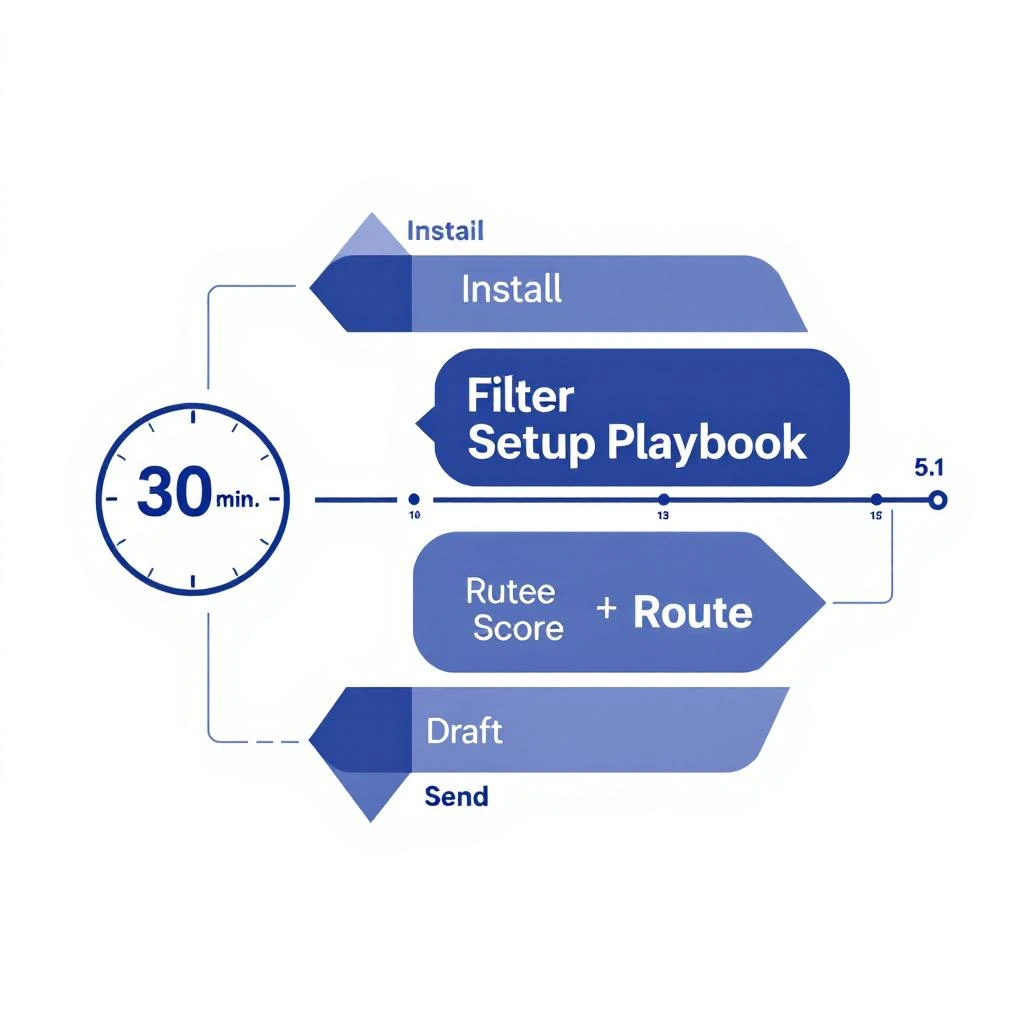
This post is the antidote: a six-block, 30-minute playbook that takes a B2B team from "zero visitor data" to "first personalized email going out the door." Every block has a clear output. If you can't finish a block in five minutes, you have the wrong problem, not the wrong process.

A clean horizontal six-block timeline diagram with a 30 minute clock face on the left, each block labeled Install, Filter, Score, Route, Draft, Send, minimalist blue and grey design on white background

How a Utility Energy Monitoring SaaS Built 80% of Their Pipeline Through Visitor Identification

Β· 10 min read
MarketBetter Team
Content Team, marketbetter.ai

Utility Energy SaaS Pipeline

The utility and energy monitoring space is brutally niche. You're selling complex SaaS to a buyer pool that's small, slow-moving, and deeply skeptical of new vendors. Most energy monitoring platforms serve a few hundred target accounts at best β€” and those accounts are bombarded by every IoT vendor, smart grid consultant, and legacy SCADA provider on the planet.

So how does a small team β€” we're talking fewer than ten people β€” build a predictable pipeline without an army of SDRs or a seven-figure ad budget?

One company figured it out. And the answer wasn't more cold calls.

How Healthcare Technology Vendors Use Buyer Intent Signals to Navigate 18-Month Sales Cycles and Win More Contracts

Β· 12 min read
MarketBetter Team
Content Team, marketbetter.ai

How Healthcare Technology Vendors Navigate Long Sales Cycles With Intent Signals

Healthcare technology sales is a different animal.

In most B2B verticals, a sales cycle stretches three to six months. You identify a prospect, build a relationship with a decision-maker, demo the product, negotiate, and close. The process is well-understood and well-tooled.

In healthcare, that timeline doubles or triples. An 18-month sales cycle isn't unusual β€” it's expected. The buying committee includes clinical stakeholders, IT security teams, compliance officers, procurement departments, and C-suite executives who all need to sign off. Budget cycles are annual and rigid. Vendor evaluation processes involve security questionnaires, HIPAA compliance reviews, and pilot programs that run for months before a purchase decision is even tabled.

Most sales methodologies weren't built for this. And most sales tools actively hurt you in healthcare because they optimize for speed and volume when your actual competitive advantage is precision and persistence.

Here's how one healthcare technology vendor β€” a company selling into hospital systems, clinics, and health IT departments β€” rebuilt their pipeline strategy around buyer intent signals instead of outbound volume. The results reshaped how they think about healthcare sales entirely.

The Healthcare Sales Problem Nobody Talks About​

Every healthcare technology vendor faces the same invisible challenge: you can't tell who's evaluating you.

In faster-moving B2B verticals, buying signals are visible. A prospect requests a demo, downloads a comparison guide, or responds to an email. The timeline from signal to conversation is short enough that you can attribute pipeline directly to specific actions.

In healthcare, the evaluation process is largely invisible to the vendor being evaluated.

Here's what actually happens inside a hospital system considering a new technology purchase:

  1. Month 1-3: A department head identifies a need. They start researching vendors independently β€” visiting websites, downloading whitepapers, reading peer reviews. The vendor has zero visibility into this activity.

  2. Month 3-6: The department head builds an internal business case. They may involve IT and compliance early to assess feasibility. More website visits, competitive comparisons, and conversations with peers at other health systems. Still no vendor contact.

  3. Month 6-9: A formal evaluation committee forms. The RFP or RFI process begins. The vendor may hear about this for the first time β€” or the committee may shortlist vendors without ever making direct contact, based entirely on their independent research.

  4. Month 9-12: Vendor demos, security reviews, reference checks, and pilot programs. This is the visible part of the funnel. But by this point, the buyer's preferences are largely formed. You're either the front-runner or you're catching up.

  5. Month 12-18: Budget approval, contract negotiation, legal review, and implementation planning. The slowest phase, often stalled by budget cycles or competing priorities.

The problem is obvious: the first 6-9 months of the buying process happen in the dark. The vendor who figures out what's happening during those invisible months has a structural advantage over every competitor who waits for the RFP to land.

What One Healthcare Tech Vendor Did Differently​

This particular company β€” a niche healthcare IT vendor with a small sales team β€” was stuck in the reactive pattern. They'd hear about opportunities when the RFP arrived, scramble to respond, and find themselves competing against vendors who'd been in conversations with the buying committee for months.

Their pipeline was feast-or-famine. When RFPs came in, they'd close at a reasonable rate. But they had no control over when or how many RFPs appeared. Growth was unpredictable and unmanageable.

They made three fundamental changes.

1. Visitor Identification Became Their Early Warning System​

The first breakthrough was implementing website visitor identification not as a lead generation tool but as a buying cycle detection system.

In healthcare, the research phase is long and thorough. A hospital system evaluating technology vendors will visit the vendor's website multiple times over weeks or months. But unlike retail or SMB buyers, they rarely fill out forms or request demos during the research phase. They evaluate silently.

Visitor identification changed the game by revealing which health systems were in the research phase before any form fill, demo request, or RFP:

Signal: A hospital system visits the platform overview page, the pricing page, and the security/compliance documentation within the same week.

  • Old response: Nothing. The vendor had no idea this was happening.
  • New response: The sales rep researches that health system, identifies likely stakeholders (department heads, IT directors, compliance officers), and begins a warm outreach sequence timed to the evaluation window.

Signal: The same hospital system returns to the website 3 weeks later, this time visiting the integration documentation and case studies page.

  • Old response: Still nothing.
  • New response: The rep escalates the account to "active evaluation" status and introduces a peer reference β€” a similar health system already using the platform β€” to establish credibility before the committee formalizes.

Signal: Multiple visitors from the same hospital system, visiting different sections of the site within the same month.

  • Old response: Invisible.
  • New response: The rep recognizes this as a committee formation signal β€” multiple stakeholders researching independently means the evaluation is becoming formal. Time to ensure the right materials (security questionnaires, compliance certifications, implementation timelines) are proactively ready.

This wasn't about generating more leads. It was about seeing the buying cycle 6 months before the RFP landed and using that visibility to enter the conversation as a trusted advisor rather than an unknown vendor responding to a cold request.

2. Stakeholder Mapping Replaced Single-Threaded Selling​

Healthcare buying committees are large. Eight to twelve stakeholders is common for a significant technology purchase. The vendor who only knows the department head is at a structural disadvantage β€” one person cannot champion a purchase through a committee of twelve.

Using visitor identification data and signal-based selling patterns, this healthcare tech vendor built a stakeholder mapping discipline:

When visitor ID shows multiple visitors from one health system:

  • Cross-reference with LinkedIn and the health system's organizational chart
  • Identify which departments are represented (clinical, IT, compliance, procurement)
  • Map the likely decision-making structure
  • Begin relationship-building with multiple stakeholders simultaneously

When a known contact engages (email open, content download):

  • Identify their role in the buying committee
  • Adjust messaging to address their specific concerns (IT cares about integration, compliance cares about HIPAA, clinical cares about workflow impact)
  • Provide role-specific resources rather than generic sales materials

When champion job changes are detected:

  • Healthcare executives move between health systems frequently
  • A champion who left one hospital for another is the warmest possible lead at the new system
  • The vendor tracks these transitions and initiates outreach within the first 90 days at the new role β€” before the executive has committed to existing vendor relationships

This multi-threaded approach fundamentally changed their win rates. In healthcare, deals rarely die because the product wasn't good enough. They die because the internal champion couldn't build enough consensus across the buying committee. By engaging multiple stakeholders early, the vendor was effectively helping their champion build the business case β€” even before being formally invited to present.

3. Signal-Based Timing Replaced Calendar-Based Follow-Up​

The third shift was the subtlest but arguably the most impactful.

Traditional healthcare sales operates on calendar-based cadences: follow up every 30 days, check in quarterly, touch base before budget season. This approach treats every account the same regardless of where they are in the buying process.

Signal-based timing means engaging when the buyer is actively engaged, not when your CRM says it's been 30 days.

Examples from their new workflow:

  • A health system visits three pages in one week after 60 days of silence. This isn't a "check in" moment β€” it's a re-engagement signal. Something changed internally (new budget approval, leadership change, competitor failure). The rep reaches out within 24 hours with a contextually relevant message.

  • A procurement contact visits the pricing page for the first time. Procurement engagement typically means the evaluation has advanced to budget justification. The rep proactively sends a pricing framework, ROI calculator, and reference customer who can speak to total cost of ownership β€” before being asked.

  • Website activity drops to zero after months of consistent visits. This isn't "the deal died." In healthcare, it often means the committee is now in internal deliberation (pilots, security review, reference checks). The rep doesn't panic or blast follow-up emails. They send a single, useful touchpoint β€” an industry report, a relevant regulatory update β€” to stay top-of-mind without being pushy.

The distinction matters enormously in healthcare. Buyers in this space are sophisticated and have zero tolerance for pushy, out-of-context sales outreach. A rep who reaches out precisely when the buyer is actively researching feels helpful. A rep who follows up because their CRM reminder fired feels like noise.

The Results: What Changed in 12 Months​

After a year of running this signal-based healthcare sales motion:

Time-to-first-meeting compressed by 4 months. By identifying research-phase activity through visitor identification, the team consistently entered conversations months before competitors who waited for RFPs. In healthcare, being first isn't just an advantage β€” it often determines the shortlist.

Win rate on competitive evaluations increased from 22% to 41%. Multi-stakeholder engagement meant the vendor had relationships across the buying committee, not just with a single champion. When competitors showed up to present, this vendor already had internal advocates in clinical, IT, and compliance.

Pipeline predictability improved dramatically. Instead of waiting for RFPs to appear randomly, the team could see which health systems were in early-stage research, mid-stage evaluation, or late-stage committee review. Pipeline forecasting went from guesswork to data-driven projection.

Average deal size increased 28%. Early engagement gave the vendor time to demonstrate the full platform value β€” including capabilities the buyer didn't know they needed. Deals that would have been single-department implementations expanded to multi-department rollouts because the vendor had time to educate rather than just respond.

The Playbook: What Healthcare Technology Vendors Should Do Now​

If you sell technology into healthcare systems, hospitals, or health IT departments, here's the actionable framework:

Implement Visitor Identification as a Buying Cycle Detector​

Don't think of visitor identification as lead generation. Think of it as buying cycle visibility. In healthcare, the research phase is your biggest blindspot. Every hospital system currently evaluating your category is probably visiting your website. You just can't see them yet.

The signal value isn't "someone visited your website." It's the pattern: which pages, how often, how many people from the same organization, and how does activity change over time. That pattern reveals where they are in the 18-month buying cycle.

Build Your Stakeholder Map Before You're Asked to Present​

In most healthcare deals, you first meet the buying committee during a formal vendor presentation. By then, preferences are formed. If you can identify and engage multiple stakeholders during the research phase β€” providing useful, role-specific resources without being salesy β€” you enter the formal process with relationships already built.

This is especially critical for IT and compliance stakeholders, who typically have veto power over technology purchases but are rarely the ones initiating vendor contact.

Stop Following Up on a Calendar. Start Following Up on Signals.​

Healthcare buyers are slow and deliberate. They do not appreciate cadence-based follow-ups that ignore their actual buying timeline. A rep who reaches out when the buyer is actively researching is helpful. A rep who reaches out because "it's been 30 days" is annoying.

Intent signal orchestration gives you the ability to time your outreach to the buyer's activity, not your own schedule. In a market where trust is everything, timing is how you build it.

Track Champion Job Changes Religiously​

Healthcare executives rotate between systems. A CIO who championed your platform at one hospital system is your strongest possible lead when they move to another. These transitions are both frequent and high-value in healthcare.

Set up automated champion tracking for every stakeholder who's ever evaluated your platform. When they move, you should know within days β€” not months.

Invest in Content That Serves the Invisible Evaluation Phase​

Most healthcare tech vendors invest heavily in sales materials (pitch decks, ROI calculators, case studies) and ignore the research phase. But the research phase is where buying preferences form.

Create content that healthcare buyers consume during their independent evaluation: detailed security documentation, compliance certifications, integration architecture guides, and peer-authored case studies. Make it ungated β€” healthcare evaluators don't fill out forms during research. They just leave.

If your security documentation is behind a form, you're losing to the competitor whose documentation is open and thorough.

Why This Matters Now​

Healthcare technology spending is accelerating. Digital health, AI diagnostics, telehealth infrastructure, cybersecurity, and clinical workflow automation are all growing categories. Every health system in the country is evaluating multiple technology vendors simultaneously.

But the buying process hasn't changed. It's still slow, committee-driven, and largely invisible to vendors.

The healthcare tech vendors who win in 2026 and beyond won't be the ones with the best product features or the biggest SDR teams. They'll be the ones who can see the buying cycle earlier, engage the right stakeholders sooner, and time their outreach to the buyer's actual evaluation timeline instead of their own arbitrary cadence.

That's not a sales methodology. It's a signal infrastructure. And in a market where deals take 18 months and buying committees have 12 people, the vendor with better signal intelligence doesn't just win more deals β€” they win them faster, bigger, and more predictably.


Selling healthcare technology and want to see buying signals you're currently missing? Start a free trial or book a demo to see how MarketBetter identifies healthcare buyers in the research phase.

How University Enrollment Teams Use Website Visitor Intelligence to Identify High-Intent Prospective Students

Β· 10 min read
MarketBetter Team
Content Team, marketbetter.ai

Higher education enrollment visitor intelligence

The higher education enrollment funnel is broken in a way that most admissions teams feel but rarely quantify.

Here's the math that should terrify every enrollment VP: the average university website gets tens of thousands of visitors per month during peak recruitment season. Of those, maybe 3–5% fill out an inquiry form. The other 95% browse program pages, check tuition costs, read faculty bios, look at campus life content β€” and leave without ever identifying themselves.

Your enrollment marketing budget drove them there. Your SEO, your digital ads, your college fair follow-ups, your email campaigns β€” all of it worked. They showed up. And then they vanished into the anonymous traffic data, indistinguishable from a high school junior seriously evaluating your nursing program and a parent casually browsing during lunch.

The problem isn't traffic. It's identification.

Most universities are spending $1,500–$4,000 per enrolled student in marketing costs. Yet they're making enrollment decisions β€” where to allocate counselor time, which programs to promote, which geographic markets to invest in β€” based on the tiny fraction of prospects who voluntarily raise their hand. The silent majority? Invisible.

One institution changed that. And the results reshaped how their entire enrollment team operates.

How Professional Services Firms Replace Word-of-Mouth with Predictable, Signal-Driven Pipeline

Β· 11 min read
MarketBetter Team
Content Team, marketbetter.ai

Every professional services firm hits the same ceiling. Business is good β€” until the referrals slow down.

You've built something real: expertise that clients rave about, a reputation that precedes you, a network that keeps the pipeline moving. But here's the uncomfortable truth that most services firm owners avoid confronting: referral-based growth is not a strategy. It's luck with a nice suit on.

The moment a key referral partner retires, a whale client churns, or the economy tightens and everyone stops introducing vendors to each other β€” the pipeline goes cold. And unlike SaaS companies with inbound marketing engines and SDR teams, most services firms have zero infrastructure to generate their own demand.

This isn't a theoretical problem. It's the #1 growth constraint for professional services businesses across every vertical β€” from investigation firms to boutique consultancies, from specialized staffing agencies to niche advisory practices.

This is the story of how one professional services firm β€” a mid-sized operation with roughly $750K in annual revenue, a lean team where the founder was simultaneously the lead practitioner, the sales team, and operations β€” broke the referral dependency entirely.

Professional services firm dashboard showing signal-driven pipeline

How Niche Healthcare IT Staffing Firms Win Enterprise Contracts with Only 2 SDRs and AI Visitor Intelligence

Β· 11 min read
MarketBetter Team
Content Team, marketbetter.ai

There's a paradox in niche B2B sales: the smaller your total addressable market, the more valuable every signal becomes β€” and the more devastating every missed opportunity is.

Healthcare IT staffing sits at the extreme end of this spectrum. The universe of companies that hire specialized healthcare IT professionals β€” EHR implementation consultants, clinical informatics specialists, health system IT directors β€” is measured in the hundreds, not thousands. Every hospital system, every health tech vendor, every payer organization that needs IT talent is a known entity.

And yet, most healthcare IT staffing firms still sell like they're in a mass-market business: blasting cold emails, attending the same HIMSS conferences, and hoping the phone rings.

One niche healthcare IT staffing company β€” a small team with just two SDRs β€” found a better way. They turned website visitor identification into their primary pipeline source, and in doing so, uncovered a playbook that any niche vertical company can replicate.

Healthcare IT staffing niche visitor intelligence

The Niche Vertical Trap​

Healthcare IT staffing isn't like general IT staffing. The buyers are different. The talent pool is different. The sales cycle is different.

Here's what makes it uniquely challenging:

A Tiny Buyer Universe​

There are approximately 6,000 hospitals in the United States, but only a fraction actively recruit specialized healthcare IT talent through staffing firms. Add health tech vendors, payer organizations, and government health agencies, and you're looking at a total addressable market of maybe 400–600 organizations β€” many of which already have existing staffing relationships.

When your entire market can fit on a spreadsheet, traditional top-of-funnel volume metrics are meaningless. You don't need 10,000 leads. You need the right 30 conversations at the right time.

Invisible Buying Windows​

Healthcare organizations don't announce when they need IT staffing help. There's no intent data vendor that tracks "hospital system needs EHR migration consultant." The buying window opens when:

  • A major EHR implementation or migration kicks off (Epic, Cerner/Oracle Health)
  • An IT leader leaves and the team is understaffed
  • A compliance deadline approaches (HIPAA audit, Meaningful Use attestation)
  • A merger or acquisition creates IT integration needs

These windows are narrow and unpredictable. Miss them by two weeks, and the contract goes to whoever was already in the conversation.

Relationship-Driven, Trust-Heavy​

Healthcare organizations are cautious buyers. They're placing IT professionals who will have access to protected health information (PHI), patient systems, and critical infrastructure. They don't hire staffing firms from a cold email. They hire firms they know and trust.

This creates a chicken-and-egg problem for smaller firms: you need relationships to win contracts, but you need contracts to build relationships.

Before: The Spray-and-Pray Era​

Before implementing signal-based selling, this healthcare IT staffing company's sales motion looked like this:

Team: 2 SDRs (that's the entire outbound function)

Approach:

  • Attend 3–4 healthcare IT conferences per year (HIMSS, CHIME, ViVE, regional health IT events)
  • Collect business cards and badge scans
  • Upload to CRM
  • Run a generic drip sequence: "Would you like to discuss your IT staffing needs?"
  • Repeat next quarter

Results:

  • 600 contacts in CRM, most aging and unresponsive
  • 8–12 qualified conversations per quarter
  • Average response rate on cold outreach: 2.3%
  • No visibility into which accounts were actively looking for staffing help
  • Pipeline entirely dependent on conference networking and word-of-mouth referrals

The two SDRs were spending most of their time on activities that didn't convert β€” researching accounts that weren't in-market, writing emails that weren't read, and following up with contacts who had no current need.

For a company with a tiny team and a tiny market, every wasted hour was expensive.

The Shift: When Your Website Becomes Your Best Salesperson​

The breakthrough came from a simple realization: their website was already telling them who was in-market.

Healthcare organizations researching IT staffing options don't fill out forms. They don't download whitepapers. But they do visit websites. They check capabilities pages, look at case studies, review the types of IT professionals available, and compare pricing models.

When the staffing firm implemented visitor identification, they discovered something remarkable: 3–5 new healthcare organizations were visiting their website every week β€” organizations they had no idea were evaluating them.

And these weren't random visitors. They were:

  • Hospital systems with open IT roles on their careers page
  • Health tech vendors in active hiring mode
  • Organizations whose existing staffing contracts were up for renewal

Every single one of these visitors represented a warm lead β€” someone who had already found the firm, already started evaluating them, and was somewhere in an active buying process.

The Data That Changed Everything​

In the first 30 days of running visitor identification, the team cataloged:

  • 19 unique healthcare organizations visiting the website
  • 7 of those were net-new (not in the CRM at all)
  • 4 were former clients who hadn't engaged in 12+ months
  • 3 showed repeat visit patterns (visiting multiple pages over several days β€” a strong buying signal)

Of the 19, the team prioritized the 3 repeat visitors and the 4 returning former clients for immediate outreach. That prioritization alone was worth more than a quarter's worth of cold calling.

Building the Niche Vertical Playbook​

Here's how the team operationalized visitor intelligence for their specific vertical:

Rule 1: In Niche Markets, Every Visitor Is a Named Account​

In a mass-market B2B business, a website visit from an unknown company might mean nothing. But when your total addressable market is 500 organizations, every identified visitor is significant.

The team created a "known universe" list of every healthcare organization they could potentially serve. When a visitor ID matched an organization on that list, it triggered an immediate alert β€” not a weekly digest, not a dashboard check, but a real-time notification to both SDRs.

Rule 2: Match Visitor Behavior to Healthcare Buying Signals​

Not all page views are equal. The team mapped specific website behaviors to healthcare-specific buying signals:

Website BehaviorLikely Buying Signal
Visited "EHR Implementation Staffing" pageActive EHR migration or upgrade
Viewed "Clinical Informatics" capabilitiesExpanding health informatics team
Checked "Compliance & Security IT" sectionUpcoming HIPAA audit or compliance deadline
Viewed case studies for similar-sized hospitalsEvaluating firms, likely comparing options
Visited pricing/engagement models pageLate-stage evaluation, ready for proposal
Multiple visits over 3+ daysHigh intent, likely building internal business case

This mapping turned raw traffic data into actionable intelligence. Instead of "General Hospital visited our website," the SDR knew "General Hospital is likely planning an EHR migration and is evaluating staffing options."

Rule 3: Outreach Must Be Hyper-Specific and Immediate​

In a niche market, generic outreach is a death sentence. The team abandoned templates and built what they called "signal-informed personalization":

Example β€” Former Client Returns:

"Hi [Name], I noticed [Hospital System] has been exploring healthcare IT staffing options again. We placed three clinical informatics specialists with your team back in 2024 β€” all of whom are still there, by the way. If you're gearing up for another initiative, I'd love to catch up on what's changed. 15 minutes this week?"

Example β€” Net-New Visitor with EHR Signal:

"Hi [Name], we work with health systems navigating EHR transitions β€” specifically helping them find implementation consultants who've done Epic/Cerner migrations at similar-sized organizations. If your team is evaluating staffing support for an upcoming project, I can share how we've structured similar engagements. Would a brief call be helpful?"

Notice what's NOT in these messages: no "checking in," no "touching base," no "would you like to discuss your IT staffing needs." Every word is informed by what the visitor data revealed about their likely situation.

Rule 4: Two SDRs Need Ruthless Prioritization​

With only two SDRs, the team couldn't work 19 accounts simultaneously. They built a simple scoring model:

Tier 1 (Immediate Outreach):

  • Repeat visitors (3+ visits in 7 days)
  • Visitors viewing pricing/engagement pages
  • Former clients returning after 6+ months
  • Organizations with known active EHR implementations

Tier 2 (Same-Week Outreach):

  • First-time visitors from known universe accounts
  • Visitors viewing capability pages matching current job postings on the org's career site

Tier 3 (Nurture):

  • Single-visit, single-page visitors
  • Organizations outside the core ICP
  • Visitors from departments unlikely to buy (HR checking comp data, students researching)

This prioritization meant the two SDRs spent 80% of their time on Tier 1 and Tier 2 accounts β€” the ones with the highest probability of conversion.

Rule 5: Layer Visitor Data with Public Healthcare Signals​

Visitor identification alone is powerful. But when combined with publicly available healthcare signals, it becomes predictive:

  • Job postings: When a healthcare organization posts IT roles AND visits the website, they're likely considering staff augmentation alongside direct hires
  • Press releases: Announced EHR migrations, mergers, or expansions paired with website visits indicate budget allocation
  • Regulatory deadlines: CMS reporting deadlines, HIPAA compliance cycles, and Meaningful Use attestation windows create predictable demand patterns
  • Leadership changes: New CIO or CMIO appointments often trigger staffing reviews β€” champion tracking catches these

The team built a simple weekly ritual: every Monday, both SDRs spent 30 minutes cross-referencing the week's visitor data with job postings and healthcare news. This "signal stack" identified the highest-intent accounts for the week.

The Results: Small Team, Outsized Pipeline​

After six months of running the visitor intelligence playbook:

MetricBeforeAfter
Qualified conversations per quarter8–1222–28
Response rate (signal-informed outreach)2.3%18.7%
Net-new accounts discovered via visitor ID0/quarter12–15/quarter
Former clients reactivated1–2/year6 in first 6 months
Average time from signal to first contactN/A4.2 hours
Pipeline generated per SDR~$180K/quarter~$420K/quarter

The most telling metric: 18.7% response rate on signal-informed outreach versus 2.3% on cold. That's an 8x improvement β€” achieved not by writing better emails, but by reaching the right people at the right time with the right context.

The Former Client Effect​

The biggest surprise was the former client reactivation channel. Four organizations that had used the staffing firm 12–18 months ago returned to the website β€” likely evaluating whether to re-engage or try a new vendor.

Because the team caught these visits in real time, they reached out within hours with personalized messages referencing the previous engagement. All four converted to new conversations, and three became active clients again within 60 days.

Without visitor identification, these former clients would have quietly evaluated and potentially chosen a competitor. The staffing firm would never have known they were even in-market.

Lessons for Any Niche Vertical Company​

This playbook isn't unique to healthcare IT staffing. It applies to any B2B company selling into a small, well-defined market:

1. The Smaller Your Market, the More Valuable Each Signal​

If you sell to 500 potential buyers, a website visit from one of them is statistically significant. Treat it that way. Don't batch these into weekly reports β€” act on them within hours.

2. Cold Outbound Doesn't Scale in Niche Markets​

When your entire TAM can fit in a spreadsheet, blasting 10,000 emails isn't just inefficient β€” it's damaging. You're burning relationships in a market where reputation matters. Signal-based selling replaces volume with precision.

3. Your Website Is Already Doing Lead Gen (You're Just Not Listening)​

Every niche B2B company has prospects visiting their website right now. Without visitor identification, those visits are invisible. With it, they become your highest-converting pipeline source.

4. Two Good SDRs with Signals Beat Ten SDRs Without​

This company didn't hire more reps. They didn't increase their marketing budget. They just gave their existing two SDRs better information β€” and those SDRs more than doubled their pipeline output.

5. Former Clients Are Your Warmest Reactivation Channel​

In niche markets, client churn isn't always permanent. Organizations cycle through vendors, and the ones who come back to your website are telling you something. Champion tracking and visitor ID together catch these signals before competitors do.

The Niche Advantage​

There's a counterintuitive truth in B2B sales: selling to a small market is actually easier than selling to a large one β€” if you have the right intelligence.

When your buyer universe is finite and knowable, every signal is amplified. Every website visit, every job change, every conference interaction carries weight. You don't need massive intent data platforms built for enterprises with 50,000 target accounts. You need precise, real-time visibility into the 500 accounts that matter.

Healthcare IT staffing is proof of concept. A two-person SDR team, armed with visitor intelligence and a disciplined playbook, can outperform teams five times their size that rely on volume alone.

The question isn't whether your niche vertical can benefit from signal-based selling. It's whether you can afford to keep selling blind.


MarketBetter's visitor identification and AI-powered signal routing help small B2B teams in niche verticals identify and convert their highest-intent buyers. See how it works β†’

How K-12 Education Technology Companies Can 3x Their Demo Pipeline With Territory-Based Signal Selling

Β· 11 min read
MarketBetter Team
Content Team, marketbetter.ai

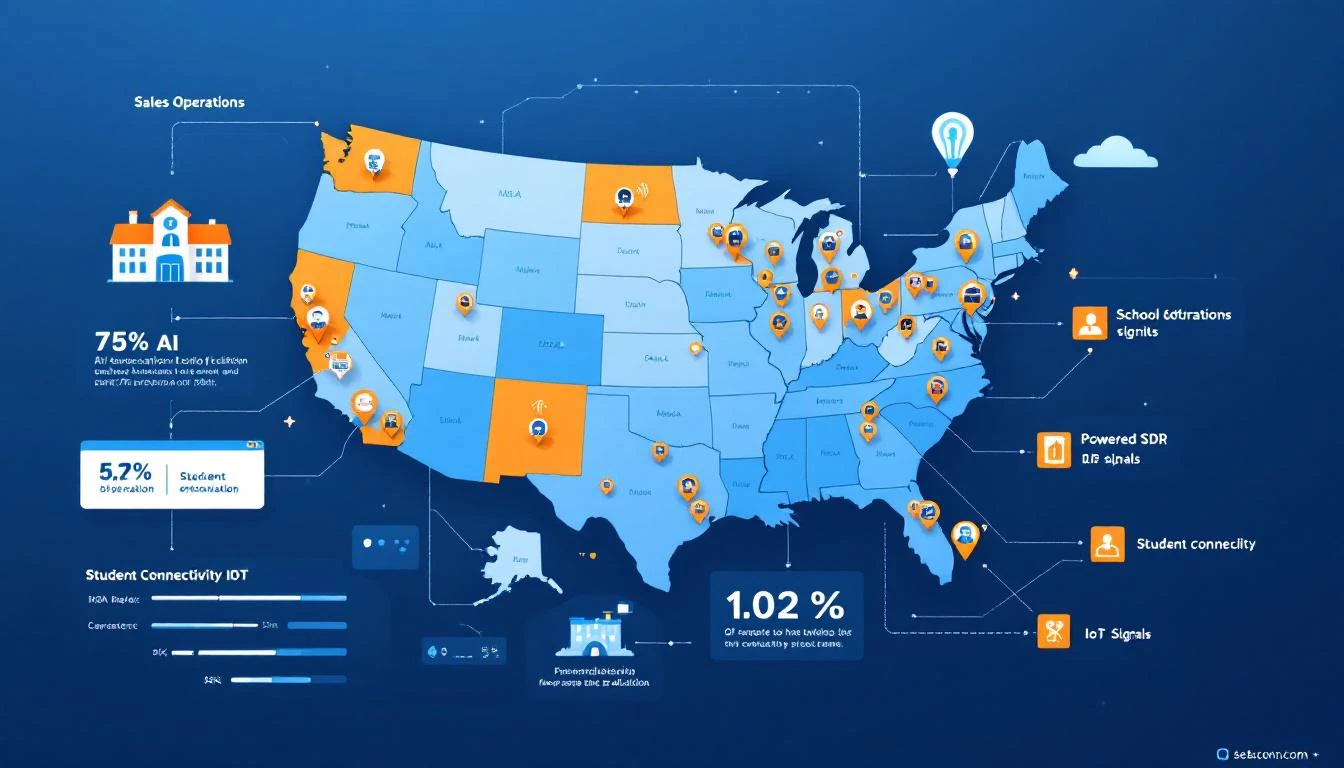
K-12 education technology SDR territory-based signal pipeline

Selling to K-12 school districts is unlike any other B2B sales motion on the planet.

Your buyers operate on budget cycles dictated by federal and state funding windows, not quarterly revenue targets. Your decision-makers β€” superintendents, CTOs, curriculum directors, and procurement officers β€” are drowning in vendor pitches from every edtech company that's ever raised a seed round. And your sales cycle can stretch from first contact to purchase order across two fiscal years if you time it wrong.

Now layer on the geographic complexity. School districts are inherently local. A district in rural West Texas has different infrastructure needs, different budgets, different political dynamics than a suburban district outside Chicago. Your SDRs don't just need to know the product β€” they need to know their territory. The superintendent's name. Whether the district passed their last bond measure. Which schools already have 1:1 device programs.

This is the story of how one K-12 education IoT connectivity company β€” serving over 1,400 school district customers nationwide β€” rebuilt their SDR operation from geographic cold outreach to territory-based signal selling. Three SDRs. Three territories. One platform. And a pipeline that finally matched the size of their addressable market.


The K-12 Sales Problem: Why Outbound Alone Can't Scale​

Let's be honest about what K-12 edtech sales looks like at most companies:

1. The budget calendar runs everything. Districts finalize budgets between March and June (varying by state). E-Rate applications have their own deadlines. Title I and ESSER funding come in waves. If your SDR reaches a district in September, they're 6 months early β€” or 3 months late. Timing isn't just important; it's the entire game.

2. Cold outreach gets filtered aggressively. Superintendents and district IT directors get hundreds of vendor emails per week. Most districts have procurement policies that funnel everything through formal RFP processes anyway. Your beautifully crafted cold email to the superintendent? It went to a shared inbox that a procurement coordinator checks on Thursdays.

3. Territory knowledge is the moat β€” but it doesn't scale manually. The best K-12 reps know their districts inside and out. They know which ones just passed a technology bond. They know which superintendent is retiring. They know which districts piloted a competitor's solution and hated it. But this knowledge lives in the rep's head β€” and when they leave, it leaves with them.

4. Geographic territories create natural coverage gaps. With only 3 SDRs covering the entire United States, there are inevitably districts that don't get touched for months. The Southeast rep is busy with a cluster of Florida districts while Georgia and Tennessee go dark. Opportunities slip through β€” not because they don't exist, but because nobody was watching.

This was exactly the situation at a K-12 IoT connectivity company with a national footprint and a small, territory-based sales team.


Before: The Manual Territory Grind​

Here's what their SDR operation looked like before the shift:

The team: 3 SDRs, each owning a geographic region (roughly West, Central, and East), managed through Salesforce.

The process:

  • Each SDR maintained a target account list of ~500 districts in their territory
  • Prospecting was manual: LinkedIn research, checking district websites for bond measures and tech initiatives, reading local education news
  • Outbound sequences were semi-personalized (district name, state-specific funding references) but fundamentally cold
  • Activity metrics drove behavior: 60 emails/day, 20 calls/day, 5 LinkedIn touches/day
  • Demo bookings averaged 8-12 per SDR per month β€” respectable, but plateauing

The problems:

  • Timing was random. SDRs had no way to know when a district was actively evaluating solutions. They'd sequence a district for 3 weeks, get no response, move on β€” only to learn later that the district bought a competitor the following month.
  • Signal blindness. The company's website had strong organic traffic from district IT directors searching for connectivity solutions, device management platforms, and IoT infrastructure for schools. But that traffic was 100% anonymous. An IT director in Fairfax County could spend 20 minutes on the product page and the Virginia SDR would never know.
  • Salesforce was a graveyard. The CRM had thousands of district contacts, many outdated. The CTOs moved to new districts. The procurement contacts retired. Nobody was systematically tracking which contacts were still at which districts β€” a critical gap when K-12 personnel turnover runs at 15-20% annually.
  • Territory coverage was uneven. Whichever region had an SDR in "flow" got all the attention. The others coasted on autopilot sequences that nobody was monitoring.

The ceiling was clear: this team was working harder, not smarter. They needed leverage.


The Shift: Territory-Based Signal Selling​

The transformation happened in three stages β€” and it didn't require adding headcount.

Stage 1: Visitor Identification Meets Territory Routing​

The first move was activating website visitor identification and connecting it directly to Salesforce territory assignments.

When a school district visited the website, the system would:

  1. Identify the district (or the managed service provider acting on their behalf)
  2. Match it to the correct territory in Salesforce based on state/region
  3. Route an alert to the assigned SDR within minutes β€” not hours, not days
  4. Include context: which pages they viewed, how long they spent, whether they'd visited before

The impact was immediate. Within the first week, the Central territory SDR received an alert: a large Texas ISD (independent school district) with 47 schools had visited the 1:1 device connectivity page three times in five days. Nobody in the CRM had logged a single interaction with this district in 18 months.

The SDR sent a personalized email within 2 hours. They booked a demo the next day. The district was actively evaluating vendors for a $200K connectivity deployment β€” and MarketBetter's visitor identification had caught the signal before any competitor even knew the opportunity existed.

Stage 2: Champion Tracking Across District Transitions​

Here's something unique to K-12: people move between districts constantly. A CTO who implemented your solution at one district gets hired as the superintendent at a neighboring district. A curriculum director who championed your pilot moves to a state education agency.

These transitions are pure gold for K-12 sales β€” but only if you can track them.

The company implemented champion tracking signals that monitored job changes across their existing contact database:

  • Former champion moves to new district: High-priority alert β†’ SDR reaches out referencing their previous experience
  • IT director leaves a customer district: Account management alert β†’ check if the replacement is a detractor or neutral
  • Procurement officer joins a target district from another customer: Warm introduction opportunity β€” they already know the product

One champion transition alone generated a $150K opportunity: a former IT director who had deployed the company's IoT connectivity solution across 23 schools moved to a larger district in a neighboring state. The SDR in that territory got an alert, reached out, and the former champion pulled the company into an active RFP they hadn't known about.

Without the signal, that opportunity would have gone to whatever vendor the new district's existing contacts already knew.

Stage 3: Funding-Aware Sequencing​

K-12 sales lives and dies by funding cycles. The team built signal-aware sequences that adjusted messaging based on known timing:

E-Rate filing season (January–March): Sequences emphasized total cost of ownership, managed services, and E-Rate eligible product configurations. Messaging shifted from "here's what we do" to "here's how to include this in your E-Rate Category 2 application."

Budget planning season (March–June): Visitor identification signals during this window received the highest priority. A district visiting the pricing page during budget season wasn't casually browsing β€” they were comparing vendors for a line-item decision. SDRs escalated these immediately.

Back-to-school (August–September): Messaging focused on rapid deployment and support. Districts that waited too long to procure during budget season would panic-buy in August. Signals during this window triggered urgency-focused sequences.

Bond measure tracking: The team started tracking which districts had upcoming bond measures for technology infrastructure. When a district with a pending bond measure showed up on the website, the SDR knew to reference the specific bond allocation and timeline.

This wasn't just personalization β€” it was synchronization. The SDRs' outreach rhythm matched the districts' buying rhythm for the first time.


The Results: Same Team, Completely Different Output​

Demo bookings per SDR went from 8-12/month to 22-28/month. Not by working more hours β€” by working the right accounts at the right time.

Signal-sourced pipeline represented 55% of new opportunities within 90 days. More than half of all new pipeline came from accounts that were identified through website signals, champion tracking, or funding-cycle triggers β€” not cold outbound.

Average response rate on signal-triggered outreach: 34%. Compare that to 3-4% on their previous cold sequences. When you email a district CTO the same week they visited your product page three times, they respond β€” because you're relevant.

Territory coverage gaps disappeared. Even when an SDR was deep in a deal cycle with a cluster of districts, signals from other districts in their territory still surfaced. Nothing fell through the cracks because the system was watching all 500+ districts per territory simultaneously β€” something no human SDR can do manually.

Salesforce became alive. Instead of a database of stale contacts, the CRM now reflected real-time buyer behavior. Deals moved stages based on actual engagement, not optimistic SDR forecasts.


The K-12 EdTech Playbook: Lessons for Every Education Technology Company​

Whether you sell connectivity, curriculum software, assessment tools, school safety systems, or any other K-12 solution, these principles apply:

1. Your Website Traffic Contains Your Best Leads​

K-12 buyers research online before engaging vendors β€” often for weeks. If you're not running visitor identification, your best prospects are browsing your site and leaving without a trace. Fix that first.

2. Route Signals to Territory Owners Instantly​

Speed matters enormously in K-12. Districts evaluate on compressed timelines dictated by budget cycles. A signal that reaches an SDR 48 hours after a district visited your site might as well be a week late. Build real-time routing from identification to territory owner.

3. Track Champions, Not Just Accounts​

K-12 personnel turnover is one of your biggest pipeline risks and opportunities. When a champion moves to a new district, that's a warm introduction waiting to happen. When a detractor replaces a champion at a customer district, that's a churn risk you need to catch early.

4. Synchronize Outreach With Funding Cycles​

Don't blast the same sequences year-round. Align your messaging to E-Rate filing windows, budget planning seasons, and bond measure timelines. A district that hears from you at the right moment in their procurement cycle is 10x more likely to engage than one you cold-email in November.

5. Let Signals Equalize Territory Coverage​

Three SDRs can't manually monitor 1,500 districts. But a signal engine can. When website visits, champion moves, and funding events surface automatically, every district in every territory gets watched β€” regardless of which deals your SDRs are currently focused on.

6. Capture the Dark Funnel in Education​

The B2B dark funnel is particularly deep in education. Buying committees do extensive research internally before ever reaching out to vendors. Committee members share links in email threads you'll never see. Visitor identification is the only way to know they're looking.


Why This Matters Now: The K-12 Market Opportunity​

Over $190 billion in federal education technology funding has been allocated since 2020. E-Rate modernization continues to expand eligible technology categories. Districts are investing in IoT infrastructure, 1:1 connectivity, smart building systems, and digital learning platforms at unprecedented rates.

But the K-12 edtech market is also getting crowded. Dozens of vendors compete for every district's attention. The companies that win won't be the ones who send the most emails β€” they'll be the ones who reach the right district, at the right moment, with the right message.

For a lean SDR team with geographic territories, signal-based selling isn't a luxury. It's the only way to compete at scale without scaling headcount.

Three SDRs. Three territories. Over 1,400 customers. And a pipeline that finally reflects the real size of the opportunity.


Want to see which school districts are researching solutions on your website right now? Start identifying your anonymous education traffic β†’

How Utility and Energy Monitoring Companies Build 3x More Pipeline with AI-Powered Visitor Intelligence [2026]

Β· 9 min read
sunder
Founder, marketbetter.ai

If you sell energy monitoring, utility analytics, or building performance software, you already know the challenge: your buyers don't fill out forms.

Facility managers, energy consultants, and sustainability officers visit your website to compare solutions. They read your case studies. They check your pricing page. Then they leave β€” and your sales team never knows they existed.

For most utility tech vendors, 95% of website traffic is invisible. That's not a rounding error. That's your pipeline walking out the door.

This is the story of how a utility and energy monitoring SaaS company β€” small team, tight budget, HubSpot CRM β€” turned anonymous website visitors into their primary pipeline source using AI-powered signal intelligence.

How Utility and Energy Monitoring Companies Can Turn Anonymous Website Traffic Into Real Pipeline

Β· 9 min read
MarketBetter Team
Content Team, marketbetter.ai

Utility and energy monitoring SaaS visitor identification pipeline

Utility and energy monitoring SaaS companies operate in one of the most paradoxical corners of B2B sales: the market is massive, the urgency is real, and yet pipeline generation feels impossibly slow.

Every facility manager, sustainability director, and energy procurement officer knows they need better monitoring. Regulatory pressure is mounting. ESG reporting requirements are tightening. Utility costs are climbing. The demand signal is everywhere β€” but somehow, the leads aren't.

Why? Because energy and utility tech buyers don't behave like typical SaaS prospects. They don't fill out demo request forms after reading a blog post. They don't respond to cold outbound sequences about "saving 20% on energy costs." They browse. They research. They compare. And then they go dark β€” talking to procurement internally for weeks before anyone on your sales team even knows they exist.

This is the story of how one utility monitoring SaaS company β€” a small team running lean on HubSpot β€” cracked the code by making visitor identification their primary pipeline engine. No army of SDRs. No massive outbound budget. Just signals, timing, and precision.


The Utility SaaS Sales Problem: Long Cycles, Silent Buyers​

Here's what makes selling utility and energy monitoring software uniquely painful:

1. The buying committee is diffuse. A facility manager finds you. But the decision involves the VP of Operations, the CFO (because energy monitoring touches budget directly), and sometimes procurement or IT. By the time the facility manager gets internal alignment, they've forgotten which three vendors they were comparing.

2. Outbound is noisy and ineffective. Every energy company, every monitoring platform, every ESG compliance tool is blasting the same facility managers with the same cold emails. "Reduce your energy costs by 30%!" β€” the inbox equivalent of white noise. Response rates for utility-tech outbound hover around 1-2%, which means your small sales team is burning cycles on volume that never converts.

3. The website is your best (ignored) asset. Utility monitoring companies often have surprisingly strong organic traffic. Facility managers Google things like "real-time energy monitoring for multi-site operations" or "utility bill anomaly detection." They land on your site. They read your case studies. They check your integrations page. And then they leave β€” anonymously β€” because you have no idea they were there.

4. Small teams can't afford waste. You don't have 10 SDRs and an intent data budget. You have a founder, maybe a head of sales, and a handful of AEs who also prospect. Every hour spent on the wrong account is an hour stolen from the right one.

Sound familiar? One utility SaaS company decided to flip the entire model.


The Shift: From Outbound Spray to Signal-Based Pipeline​

This company β€” a utility and energy monitoring SaaS platform serving commercial and industrial facilities β€” was running a classic small-team sales motion:

  • HubSpot CRM with basic lead scoring
  • Manual prospecting through LinkedIn and industry directories
  • Generic email sequences sent to facility managers and operations directors
  • Trade show follow-ups that produced a flurry of activity for two weeks, then nothing

The results were predictable: inconsistent pipeline, feast-or-famine months, and a constant feeling that they were missing something.

What they were missing was their own website traffic.

Step 1: Visitor Identification Changed Everything​

When they activated website visitor identification, the picture changed overnight.

Instead of guessing which companies to target, they could see exactly who was visiting:

  • A Fortune 500 manufacturing company spent 14 minutes on the multi-site monitoring page β€” three separate visits in one week
  • A regional healthcare system browsed the case study page, then the pricing page, then the integrations page (classic high-intent behavior)
  • A university facilities department visited the ROI calculator page twice in 48 hours

None of these prospects had filled out a form. None of them were in the CRM. They were invisible β€” and they represented the highest-intent pipeline the team had ever seen.

The key insight: In utility and energy SaaS, buyers self-educate extensively before engaging sales. By the time they fill out a form (if they ever do), they've already shortlisted vendors. Visitor identification lets you enter the conversation during the research phase, not after it.

Step 2: HubSpot-Native Signal Workflows​

Because the team was already on HubSpot, they built workflows that turned visitor signals into immediate action β€” no new tools, no complex integrations:

High-intent visitor alert workflow:

  • Trigger: Identified company visits pricing page OR case study page more than once in 7 days
  • Action: Create HubSpot deal in "Signal Detected" stage, assign to AE, Slack notification
  • Follow-up: Personalized email referencing their specific use case (manufacturing, healthcare, education, etc.)

Return visitor escalation:

  • Trigger: Same company returns after 14+ days of inactivity
  • Action: Move deal to "Re-Engaged" stage, trigger personalized sequence
  • Logic: If they came back, something changed internally β€” maybe budget opened, maybe a competing vendor disappointed them

Page-intent scoring:

  • Integrations page = +10 points (they're evaluating technical fit)
  • ROI calculator = +15 points (they're building a business case)
  • Multi-site features = +20 points (enterprise signal β€” larger deal)
  • Careers page = 0 points (not a buyer signal)

This scoring model fed directly into HubSpot's existing lead scoring, so the team didn't need a separate tool or dashboard. The daily SDR playbook surfaced the hottest signals every morning.

Step 3: Vertical-Specific Messaging That Actually Converts​

Here's where most utility SaaS companies fumble: they send the same generic messaging to every prospect regardless of industry vertical.

A hospital system cares about compliance and patient safety β€” not just energy cost reduction. A manufacturing plant cares about production uptime β€” monitoring is about preventing shutdowns, not saving on the electric bill. A university cares about sustainability reporting for their ESG commitments.

This company built vertical-specific email sequences triggered by visitor identification:

For healthcare visitors: "We noticed your facilities team is evaluating energy monitoring solutions. For healthcare systems, the #1 driver isn't cost savings β€” it's ensuring critical equipment environments stay within spec. Here's how [similar healthcare system] reduced compliance incidents by 40%..."

For manufacturing visitors: "Multi-site manufacturing operations lose an average of $50K per unplanned shutdown. Real-time energy anomaly detection catches the electrical signatures of failing equipment 48 hours before downtime..."

For education visitors: "With ESG reporting requirements tightening for universities, your facilities team needs real-time data β€” not quarterly utility summaries. Here's how one university cut their Scope 2 reporting time from 3 weeks to 3 hours..."

Same product. Completely different conversation. The response rates doubled compared to their generic outbound sequences.


The Results: What Changed in 90 Days​

The impact wasn't gradual β€” it was a step-change:

Pipeline sourced from visitor identification went from 0% to over 60% of total pipeline. The team went from wondering where their next deal was coming from to having a daily queue of signal-triggered opportunities.

Average deal cycle shortened by 3 weeks. Because they were engaging buyers during the research phase instead of after it, conversations started further down the funnel. Prospects had already read the case studies β€” the AE's job was to confirm fit, not educate.

Outbound volume dropped by 70%, but pipeline increased. The team stopped blasting 500 generic emails per week and started sending 30-40 hyper-targeted, signal-triggered messages. Fewer sends, dramatically better results.

HubSpot became the single source of truth. No switching between intent data platforms, visitor ID dashboards, and CRM. Everything lived in HubSpot β€” signals, scores, sequences, and deals β€” which meant the small team could actually manage it.


The Utility SaaS Playbook: Actionable Takeaways​

If you're selling energy monitoring, utility optimization, sustainability SaaS, or any adjacent product, here's the framework:

1. Your Website Traffic Is Your Best Intent Signal​

Utility and energy buyers research extensively before engaging. If you're not identifying who's visiting your site, you're ignoring your warmest pipeline. Start with visitor identification β€” it's the single highest-ROI investment for small teams.

2. Build Workflows in Your Existing CRM​

You don't need a separate intent data platform if you're running HubSpot or Salesforce. Build signal-triggered workflows that create deals, assign owners, and fire personalized sequences automatically. The signal-based selling approach works inside the tools you already have.

3. Score by Page, Not Just by Company​

Not all website visits are equal. A prospect reading your blog is mildly interested. A prospect who hits your pricing page, then your integrations page, then returns two days later β€” that's a buying signal. Weight your scoring accordingly.

4. Speak Their Vertical Language​

"Save money on energy" is table stakes. Healthcare buyers care about compliance. Manufacturing cares about uptime. Education cares about ESG. Build vertical sequences triggered by the type of content they consume on your site.

5. Small Teams Win With Precision, Not Volume​

You don't need 10 SDRs to build serious pipeline in utility SaaS. You need signals that tell your 2-3 sellers exactly who to talk to, when, and what to say. That's the difference between burning out on 500 cold emails and closing deals from 30 targeted conversations.

6. Engage the Dark Funnel​

In utility and energy tech, the dark funnel is enormous β€” buyers consuming content, researching solutions, and building internal business cases without ever raising their hand. Visitor identification is how you illuminate it.


Why This Matters for the Energy Transition​

The utility and energy monitoring market is projected to grow at 15%+ CAGR through 2030. Regulatory pressure, ESG mandates, and the simple economics of energy costs are driving adoption across every vertical.

But the companies that win won't be the ones with the biggest sales teams or the largest outbound budgets. They'll be the ones who see the buyer signals first and act on them with precision.

For small, lean utility SaaS teams, that's actually an advantage. You don't need scale β€” you need signals.


Ready to see which energy and facility companies are researching solutions on your website right now? Start identifying your anonymous traffic β†’