58 posts tagged with "Pricing & Buyer's Guides"

Software pricing breakdowns, cost comparisons, and buyer's guides

View All Tags

We Priced Out Every B2B Sales Stack in 2026 β€” Here's What Teams Actually Pay

Β· 14 min read
sunder
Founder, marketbetter.ai

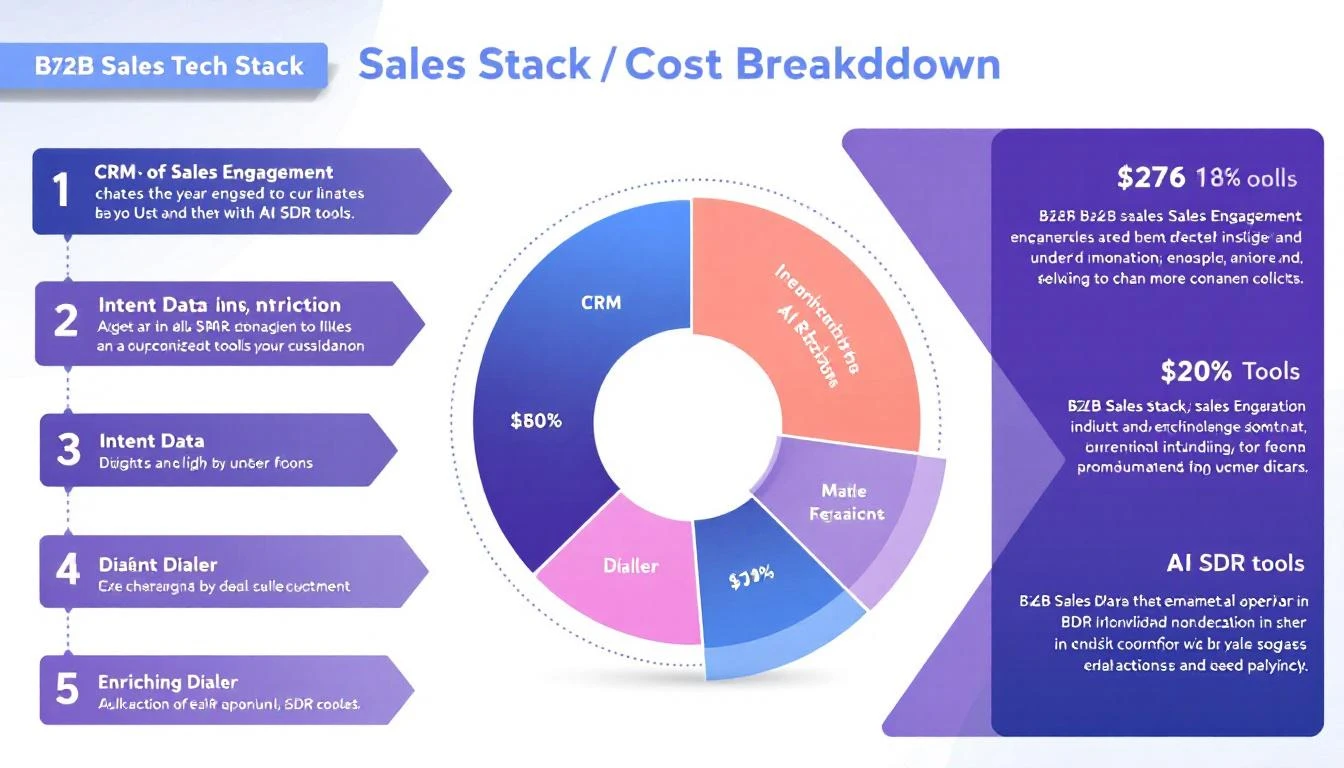
B2B GTM stack cost breakdown for 2026

The average B2B SDR uses 4 to 10 different tools every day (Source: UpLead, 2025). That's 4–10 logins, 4–10 tabs, 4–10 invoices.

But here's the number nobody talks about: what does all of that actually cost?

Not the "starting at $49/mo" from landing pages. The real number β€” after annual commitments, per-seat fees, credit overages, add-ons, and the enterprise pricing wall that shows up the moment you ask for a demo.

We did the math. We pulled real pricing data from 15+ sales tools across six categories β€” CRM, sales engagement, intent data, enrichment, dialers, and AI SDR platforms β€” and calculated the true total cost of ownership (TCO) for SDR teams of different sizes.

The results aren't pretty.


The Six Categories Every SDR Stack Needs​

Before we get into the numbers, here's what a modern B2B sales development stack typically includes:

  1. CRM β€” Where deals live (HubSpot, Salesforce, Pipedrive)
  2. Sales Engagement β€” Sequence automation, email cadences (Outreach, SalesLoft, Apollo)
  3. Intent Data / Signals β€” Who's in-market right now (6sense, Bombora, MarketBetter)
  4. Data Enrichment β€” Contact info, firmographics (ZoomInfo, Cognism, Clearbit)
  5. Dialer β€” Calling at scale (Orum, Nooks, MarketBetter Smart Dialer)
  6. AI SDR / Automation β€” AI-assisted prospecting and outreach (11x, Artisan, MarketBetter AI)

Most teams cobble together one tool from each category. Some use two. A few brave souls try to use all-in-ones.

Let's price out each layer.


Layer 1: CRM β€” The Foundation You Can't Skip​

ToolStarting PriceMid-Market (5 Seats)Notes
HubSpot Sales Hub$20/user/mo (Starter)$500/mo (Professional)Professional tier required for sequences, automation
Salesforce Sales Cloud$25/user/mo (Essentials)$825/mo (Professional)Most teams need Professional at $165/user/mo
Pipedrive$14/user/mo$250/mo (Professional)Good value, but limited enterprise features
Close$49/user/mo$495/mo (Professional)Built-in calling β€” reduces dialer need

Realistic CRM cost for a 5-SDR team: $250–$825/mo

The gotcha with CRM pricing is that the "Starter" tier almost never has the features SDR teams need. Sequences, workflow automation, reporting dashboards β€” all gated behind Professional or Enterprise tiers. HubSpot's jump from $20/user to $100/user at Professional is the most dramatic.


Layer 2: Sales Engagement β€” Where the Bills Start Climbing​

This is where most SDR budgets blow up. Sales engagement platforms handle email sequences, call tasks, and multi-touch cadences.

ToolPer Seat/Month5-Seat Annual CostOur Deep Dive
Outreach$100–$150/user/mo$6,000–$9,000/yrFull pricing breakdown β†’
SalesLoft$83–$125/user/mo$5,000–$7,500/yrFull pricing breakdown β†’
Apollo$49–$79/user/mo$2,940–$4,740/yrFull pricing breakdown β†’
Instantly$30–$78/user/mo$1,800–$4,680/yrFull pricing breakdown β†’
Lemlist$32–$79/user/mo$1,920–$4,740/yrFull pricing breakdown β†’
SmartLead$39–$94/user/mo$2,340–$5,640/yrFull pricing breakdown β†’

Realistic sales engagement cost for a 5-SDR team: $250–$750/mo

The hidden cost here isn't the seat price β€” it's the annual commitment. Outreach and SalesLoft don't offer monthly contracts. You're signing a 12-month deal on day one, and renewal increases of 10–20% are standard.

Apollo is the budget-friendly option, but once you need advanced features (AI scoring, dialer, advanced analytics), you're back to $79/user/mo β€” which puts it on par with the "expensive" platforms.


Layer 3: Intent Data β€” The Most Expensive Layer Nobody Budgets For​

Intent data is where the sticker shock hits. These platforms tell you which accounts are actively researching solutions like yours. The problem? They price like it.

ToolStarting PriceMid-Market AnnualOur Deep Dive
6sense$25,000+/yr$40,000–$100,000/yrFull pricing breakdown β†’
Bombora$25,000+/yr$36,000–$60,000/yrEnterprise-only, no self-serve
ZoomInfo + Intent$15,000+/yr (base)$30,000–$60,000/yrFull pricing breakdown β†’
Common RoomCustom pricing$24,000–$48,000/yrFull pricing breakdown β†’
Warmly$700/mo$8,400–$15,000/yrFull pricing breakdown β†’
MarketBetter$500/mo$6,000–$18,000/yrBook a demo β†’

Realistic intent data cost for a 5-SDR team: $700–$5,000+/mo

Here's the uncomfortable truth about intent data pricing: you're paying for the signal, not the seat. 6sense and Bombora don't scale with your team size β€” they scale with your TAM size, data volume, and integration requirements. A 5-person SDR team at a mid-market company easily spends $40K–$60K/year on intent data alone.

This is also the category with the most buyer's remorse. According to G2 reviews, the #1 complaint about 6sense and Bombora is "hard to prove ROI." You're paying enterprise prices for data that your SDRs may or may not act on.

The consolidation opportunity is massive here. Tools like MarketBetter bundle visitor identification, intent signals, AND the SDR playbook that tells reps what to do with those signals β€” starting at a fraction of the standalone intent data cost. Learn more in our Complete Guide to B2B Intent Data.


Layer 4: Data Enrichment β€” The Credit Trap​

Enrichment tools provide contact details (emails, phone numbers, firmographics). They all look affordable until you run out of credits.

ToolStarting PriceReal Cost (5 SDRs)Our Deep Dive
ZoomInfo$15,000/yr (3 seats)$30,000–$60,000/yrFull pricing breakdown β†’
CognismCustom (est. $15K+/yr)$20,000–$40,000/yrMarketBetter vs Cognism β†’
Clearbit (now Breeze)Bundled with HubSpot$0 (if HubSpot) or $12K+/yr standaloneMarketBetter vs Clearbit β†’
ApolloIncluded in platform$2,940–$4,740/yrCredits-based, overages common
Clay$149–$800/mo$1,788–$9,600/yrFull pricing breakdown β†’

Realistic enrichment cost for a 5-SDR team: $250–$2,500/mo

ZoomInfo is the gorilla here. At $15K minimum (annual-only contracts), it's often the single most expensive tool in an SDR's stack. And that's the starting price β€” real-world costs typically land between $30K and $60K once you factor in credit overages and add-ons.

The credit model is designed to upsell. You start with 5,000 credits, burn through them in month two, and suddenly you're negotiating a mid-contract upgrade. Every enrichment vendor does this.


Layer 5: Dialer β€” Calling Isn't Dead, But It's Expensive​

SDR teams that do phone outreach (and the data says you should β€” cold calls convert at 2.0–3.5%) need a dedicated dialer.

ToolPer Seat/Month5-Seat AnnualNotes
Orum$200–$300/user/mo$12,000–$18,000/yrAI parallel dialer, premium tier
Nooks$150–$250/user/mo$9,000–$15,000/yrVirtual sales floor + dialer
PhoneBurner$127–$152/user/mo$7,620–$9,120/yrPower dialer, lower-end
Close (built-in)$0 extraIncluded with CRMBasic power dialer
MarketBetter Smart DialerIncluded$0 extraIncluded in platform β†’

Realistic dialer cost for a 5-SDR team: $0–$1,500/mo

Dialers are the category where consolidation pays off the most. If your CRM or sales engagement platform includes one, you save $9K–$18K/year. If you're paying for a standalone parallel dialer like Orum on top of Outreach on top of ZoomInfo... your per-SDR tooling cost is going to be eye-watering.

Check out our Best Sales Dialers for SDR Teams for a deeper comparison.


Layer 6: AI SDR Platforms β€” The New (Expensive) Category​

AI SDR tools promise to automate prospecting, personalization, and outreach. They're also the most aggressively priced category in 2026.

ToolStarting Price5-SDR EquivalentOur Deep Dive
11x (Alice)$50,000+/yr$50,000+/yrFull pricing breakdown β†’
Artisan (Ava)$750+/mo$9,000+/yrFull pricing breakdown β†’
MonacoCustomEst. $24,000+/yrMarketBetter vs Monaco β†’
UnifyCustomEst. $18,000+/yrMarketBetter vs Unify β†’
MarketBetter$500/mo$6,000/yrBook a demo β†’

Realistic AI SDR cost: $500–$4,000+/mo

The AI SDR category is the Wild West of pricing. 11x charges $50K+ per year for a single AI agent β€” roughly the cost of a junior human SDR. Artisan is more accessible but still commands $9K+ annually. Most of these tools are so new that pricing changes quarter to quarter.

The key question isn't "can AI replace my SDRs?" β€” it's "does the AI tool integrate with my existing stack, or is it yet another silo?" More on this in our Best AI SDR Tools comparison.


The Total: Three Real-World GTM Stacks, Priced Out​

GTM stack tier comparison β€” Budget vs Mid-Market vs Enterprise

Here's what it actually costs to equip a 5-SDR team in 2026, across three common configurations:

Stack A: "Bootstrap Budget" β€” $1,200–$2,400/mo​

CategoryToolMonthly Cost
CRMHubSpot Starter or Pipedrive$100–$250
Sales EngagementApollo or Instantly$200–$400
Intent DataMarketBetter (includes visitor ID + signals)$500
EnrichmentApollo (included) or Clay Starter$0–$150
DialerIncluded with MarketBetter$0
AI AutomationMarketBetter (included)$0
Total$800–$1,300/mo
Per SDR$160–$260/mo

This stack works for seed-stage and early Series A companies. The trade-off: you're running lean, which means your SDRs are doing more manual work β€” but your tooling cost per rep is under $260/mo.

Stack B: "Mid-Market Standard" β€” $3,500–$5,500/mo​

CategoryToolMonthly Cost
CRMHubSpot Professional or Salesforce$500–$825
Sales EngagementOutreach or SalesLoft$500–$750
Intent DataWarmly or MarketBetter Growth$700–$1,500
EnrichmentZoomInfo (basic) or Cognism$1,250–$2,000
DialerIncluded with Outreach or standalone$0–$500
AI AutomationNone or basic$0
Total$2,950–$5,575/mo
Per SDR$590–$1,115/mo

This is where most Series B and established mid-market companies land. The jump from Stack A is dramatic β€” enrichment alone can add $15K–$25K annually. And notice: no AI SDR automation. Most companies at this tier can't afford to layer AI on top of their existing stack.

Stack C: "Enterprise Full-Send" β€” $8,500–$15,000+/mo​

CategoryToolMonthly Cost
CRMSalesforce Enterprise$1,650+
Sales EngagementOutreach + Gong$1,500–$2,500
Intent Data6sense or Bombora$2,000–$5,000
EnrichmentZoomInfo Advanced$2,500–$5,000
DialerOrum or Nooks$1,000–$1,500
AI Automation11x or custom$1,000–$4,000
Total$9,650–$19,000/mo
Per SDR$1,930–$3,800/mo

Enterprise stacks routinely hit $100K–$200K+ per year for a 5-person SDR team. That's before headcount. A fully-loaded SDR (salary + tools + management overhead) at this tier costs the company $150K–$200K annually.

Read our outbound sales strategy guide for how to actually make this investment pay off.


The Tool Sprawl Tax: What Nobody Measures​

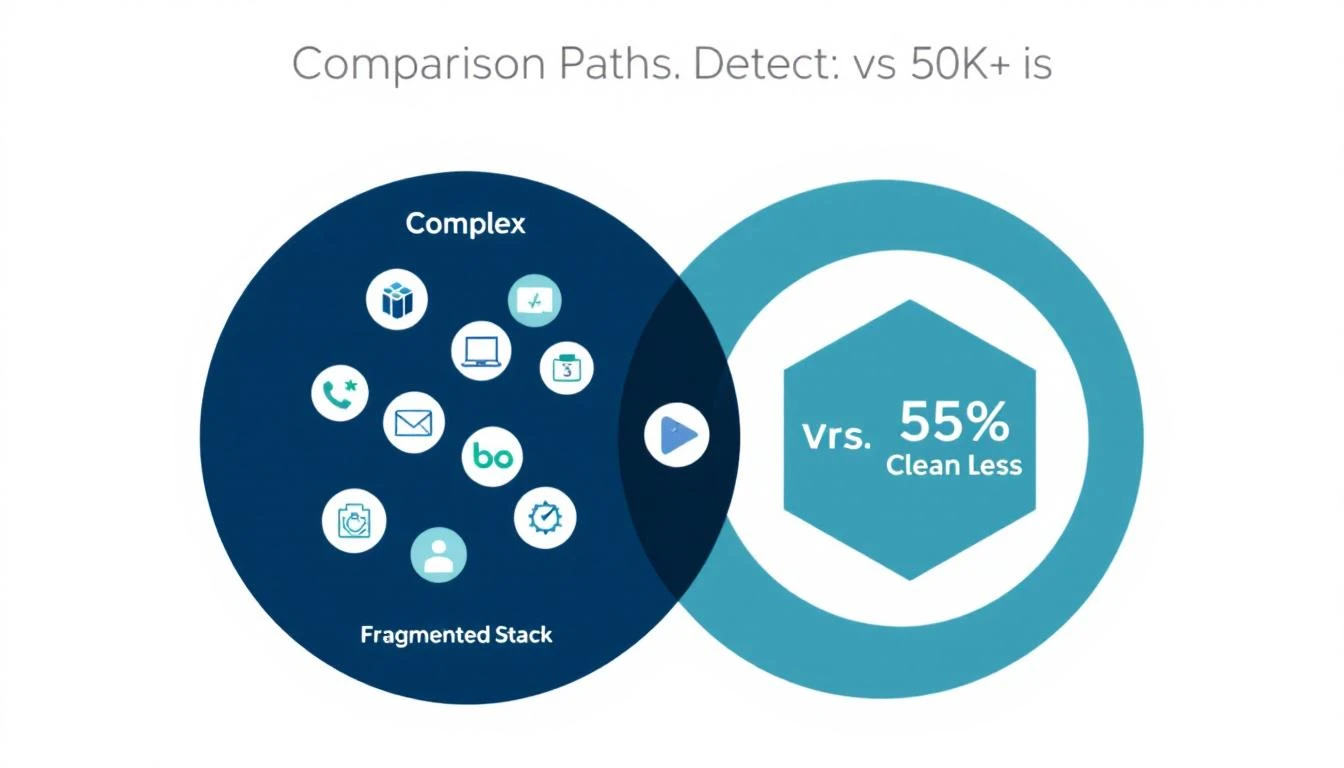
SDR tool sprawl β€” the hidden cost of too many tabs

Beyond the dollar cost, there's a productivity cost that's almost impossible to measure:

Context switching. Every time an SDR Alt-Tabs between ZoomInfo, Outreach, Salesforce, and Gong, they lose focus. Research from the American Psychological Association estimates that task-switching can consume up to 40% of productive time.

At the Optifai benchmark of 8–10 qualified meetings per month for a median SDR, that means 3–4 meetings per month are lost to tool friction alone.

Here's what that looks like in practice:

  • Step 1: Check intent signals in 6sense (Tab 1)
  • Step 2: Enrich the contact in ZoomInfo (Tab 2)
  • Step 3: Build a sequence in Outreach (Tab 3)
  • Step 4: Log the activity in Salesforce (Tab 4)
  • Step 5: Review the last call recording in Gong (Tab 5)
  • Step 6: Update the deal stage in your CRM (back to Tab 4)

Six steps, four tools, zero flow state.

This is why the industry is moving toward consolidation. Platforms that combine signals + engagement + dialer into one workflow β€” like what we've built at MarketBetter β€” eliminate the tab-switching tax and let SDRs stay in one place.

Our SDR Playbook Template Guide shows exactly how a consolidated workflow operates.


The Consolidation Math: Where the Real Savings Are​

Here's the financial case for stack consolidation, using real numbers:

Fragmented stack (Mid-Market Standard):

  • 5 tools Γ— 5 SDRs = 25 licenses to manage
  • Annual cost: $35,000–$67,000
  • Admin overhead: 1 RevOps person managing integrations (~$80K/yr fully loaded)
  • Total annual cost: $115K–$147K

Consolidated platform approach:

  • 1-2 tools Γ— 5 SDRs = 5–10 licenses
  • Annual cost: $10,000–$25,000
  • Admin overhead: Minimal (one platform, native integrations)
  • Total annual cost: $10K–$25K

Annual savings: $90K–$120K β€” enough to hire another SDR.

This isn't theoretical. Only 19% of companies increased SDR headcount in 2025 (Source: SaaStr), the lowest growth rate across all sales functions. Teams are consolidating tools and doing more with less.

The question isn't "which is the best tool in each category?" It's "which platform eliminates the most categories?"


Our Take: The Stack That Wins in 2026​

Based on our analysis of pricing across 15+ tools, here's what we'd recommend for a 5-SDR team targeting $500K–$5M ACV deals:

The essentials (pick your approach):

  1. CRM: HubSpot Professional ($500/mo) or Salesforce Professional ($825/mo) β€” you need a CRM, period
  2. Everything else: A consolidated platform that combines signals + engagement + dialer + AI

Why "everything else" should be one platform:

  • Intent data as a standalone category is dying. Bombora's third-party intent data is being questioned by the very teams that buy it
  • Sales engagement platforms (Outreach, SalesLoft) are adding AI features, but they don't have their own intent signals
  • Enrichment providers (ZoomInfo) are adding engagement features, but they're bolted on, not native
  • The winner is whoever combines signal detection + recommended action + execution in a single workflow

This is exactly what MarketBetter's Daily SDR Playbook does: identifies who's on your site, enriches the contact, surfaces the intent signal, and tells your SDR exactly what to do next β€” all in one screen. No tab-switching. No context loss. No $60K ZoomInfo invoice.

Start with our Best Sales Prospecting Tools guide to see how we compare across every category.


Methodology​

This analysis used pricing data from the following sources:

  • Official pricing pages (accessed February–March 2026)
  • Vendr marketplace data for enterprise negotiated rates
  • G2 and Capterra reviews mentioning specific price points
  • Reddit r/sales threads with real user-reported costs
  • Our own published pricing breakdowns (linked throughout)

All prices are in USD. "Per seat" pricing assumes annual billing unless noted. Enterprise quotes are estimated ranges based on multiple sources β€” actual quotes vary by company size, use case, and negotiation leverage.

For tool-specific deep dives, visit our pricing breakdown series:


Ready to Simplify Your Stack?​

If your SDR team is drowning in tools and your per-rep tooling cost is north of $1,000/mo, there's a better way.

MarketBetter combines visitor identification, intent signals, the daily SDR playbook, smart dialer, AI chatbot, and email automation β€” starting at $500/mo. One platform. One login. One invoice.

Book a demo β†’

The Real Cost of Building a B2B Sales Tech Stack in 2026: A Data-Driven Breakdown

Β· 12 min read
MarketBetter Team
Content Team, marketbetter.ai

Here's a number that should terrify every VP of Sales: sellers who feel overwhelmed by their tech stack are 43% less likely to hit quota. Not slightly less likely. Nearly half as likely.

Yet somehow, the average B2B sales organization keeps adding tools. More point solutions. More logins. More invoices. The 2025 B2B sales benchmarks show organizations now average 8.3 tools per SDR at roughly $187 per rep per month β€” and that's the conservative estimate.

We dug into the actual pricing of every major sales tool category to answer a question nobody wants to ask out loud: What does it really cost to equip an SDR team in 2026?

The answer isn't pretty.

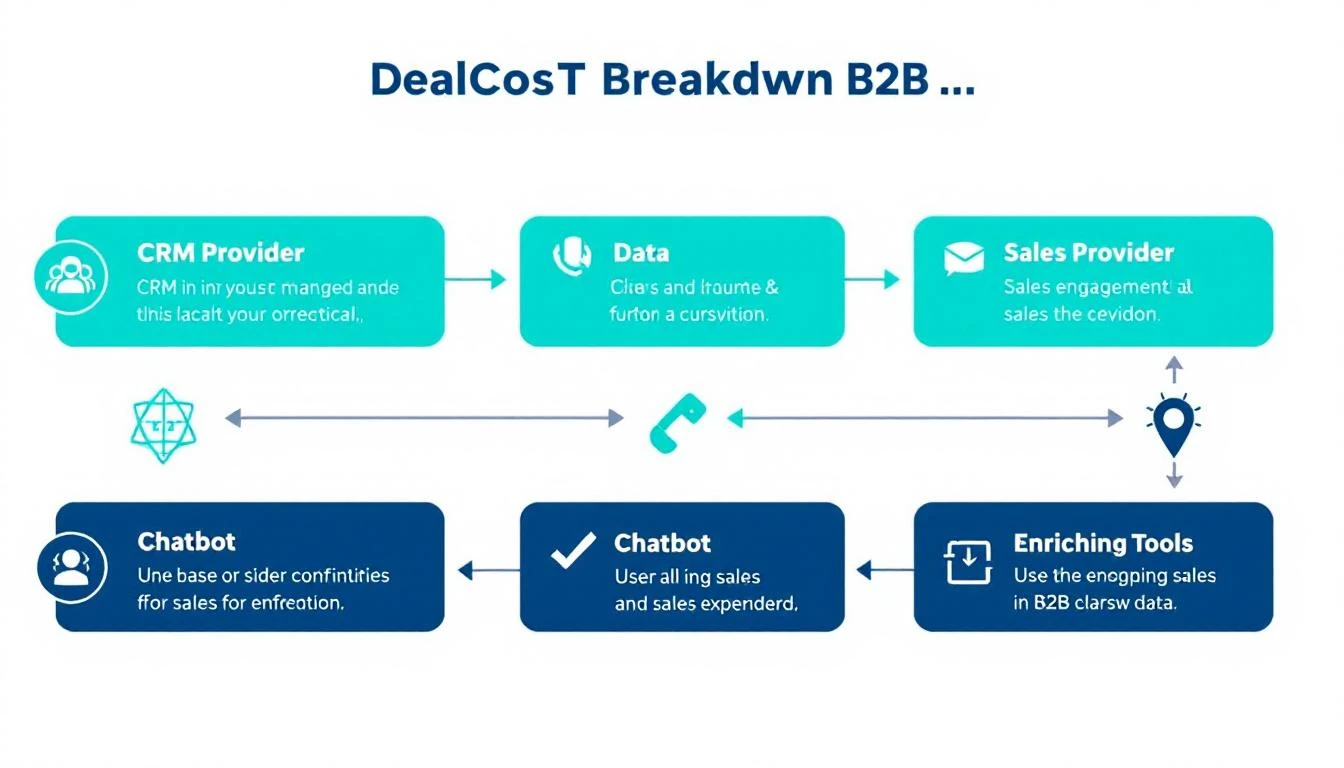
B2B Sales Tech Stack Cost Breakdown

The 7 Tool Categories Every SDR Team Pays For​

Before we get to the numbers, let's map the categories. A fully equipped outbound SDR team typically needs tools across seven distinct functions:

  1. CRM β€” The system of record (Salesforce, HubSpot)
  2. Data Provider β€” Contact and company information (ZoomInfo, Apollo, Cognism)
  3. Sales Engagement β€” Email sequences, cadences, multi-channel orchestration (Outreach, SalesLoft)
  4. Visitor Identification β€” Website deanonymization and intent signals (Warmly, Clearbit, 6sense)
  5. Dialer β€” Power/parallel dialing for phone outreach (Orum, Nooks, Kixie)
  6. Enrichment β€” Data append, job change tracking, technographic data (Clearbit, Clay, Lusha)
  7. Conversation Intelligence β€” Call recording, coaching, deal insights (Gong, Chorus)

Some teams add an eighth: chatbot or live chat for inbound conversion. Others add a ninth: ABM/advertising for targeted display campaigns. The sprawl adds up fast.

What Each Category Actually Costs​

We pulled publicly available pricing data, G2 reviews, analyst reports, and vendor disclosures to build a realistic picture of what each tool category costs per seat, per year. Where vendors hide pricing (looking at you, ZoomInfo and 6sense), we used reported ranges from customer reviews and industry benchmarks.

1. CRM: $0–$1,800/user/year​

ToolAnnual Cost Per UserNotes
HubSpot (Free)$0Limited features, fine for tiny teams
HubSpot Sales Hub Pro$1,080/yr ($90/mo)Most common SMB choice
Salesforce Sales Cloud Pro$1,200/yr ($100/mo)Enterprise standard
Salesforce Enterprise$1,980/yr ($165/mo)With forecasting + pipeline inspection
Pipedrive Advanced$396/yr ($33/mo)Budget-friendly alternative

Typical mid-market spend: $1,000–$1,500/user/year

2. Data Provider: $600–$15,000+/user/year​

This is where the sticker shock hits. Data is the most expensive variable in any sales stack.

ToolAnnual Cost Per UserNotes
Apollo.io Basic$588/yr ($49/mo)Limited credits, common starter
Apollo.io Professional$1,188/yr ($99/mo)Uncapped emails, better data
Cognism$1,500–$3,000/yr (est.)European data strength
Lusha Pro$432/yr ($36/mo)Phone number focused
ZoomInfo Professional$14,995+/yr (platform)Per-seat pricing unclear, annual contracts
ZoomInfo Advanced$24,995+/yr (platform)With intent data

Typical mid-market spend: $1,200–$5,000/user/year (varies wildly by vendor)

3. Sales Engagement: $1,200–$1,800/user/year​

ToolAnnual Cost Per UserNotes
Outreach Standard$1,200–$1,800/yr (est.)Custom pricing, annual only
SalesLoft Advanced$1,500–$1,800/yr (est.)Now owned by Vista Equity
Apollo.io (built-in)Included in data planBasic sequencing
Instantly$360/yr ($30/mo)Email-only, volume play
Reply.io$708/yr ($59/mo)Multi-channel

Typical mid-market spend: $1,200–$1,800/user/year for dedicated engagement platforms

4. Visitor Identification: $4,200–$100,000+/year​

This category has the widest pricing range in all of B2B sales tech. It's also where teams often get the least value for their spend.

ToolAnnual Cost (Platform)Notes
Warmly$8,400–$18,000/yr ($700–$1,500/mo)SMB-focused
Clearbit$12,000–$50,000+/yrNow part of HubSpot
6sense Growth$25,000–$60,000+/yrEnterprise ABM platform
6sense Enterprise$60,000–$100,000+/yrFull suite
Demandbase$30,000–$80,000+/yrEnterprise only
RB2B$4,200/yr ($350/mo)Startup, person-level ID

Typical mid-market spend: $8,000–$30,000/year (platform-level, not per seat)

5. Dialer: $600–$1,800/user/year​

ToolAnnual Cost Per UserNotes
Orum$1,200–$1,800/yr (est.)AI parallel dialer
Nooks$1,200–$1,500/yr (est.)Virtual sales floor + dialer
Kixie$420/yr ($35/mo)Click-to-call, basic
PhoneBurner$1,668/yr ($139/mo)Power dialer

Typical mid-market spend: $1,000–$1,500/user/year

6. Enrichment: $1,200–$12,000/year​

ToolAnnual CostNotes
Clay$4,788–$9,588/yr ($399–$799/mo)Waterfall enrichment, usage-based
Clearbit (standalone)$12,000–$50,000+/yrEnterprise enrichment
Lusha (enrichment)$432–$1,068/yrPhone + email append
People Data LabsUsage-basedAPI pricing

Typical mid-market spend: $3,000–$8,000/year (platform-level)

7. Conversation Intelligence: $1,200–$3,600/user/year​

ToolAnnual Cost Per UserNotes
Gong$1,200–$3,600/yr (est.)Market leader, custom pricing
Chorus (ZoomInfo)Bundled with ZoomInfoHard to price standalone
Fireflies.ai Pro$228/yr ($19/mo)AI meeting notes
Clari Copilot$1,200+/yr (est.)Revenue intelligence

Typical mid-market spend: $1,200–$2,400/user/year

The Total: What a 5-Person SDR Team Actually Pays​

Let's put it all together. Here's what a typical B2B company with 5 SDRs spends across three common stack configurations:

Scenario A: Budget Stack (Startup, Series A)​

CategoryToolAnnual Cost
CRMHubSpot Sales Hub Starter$900 (2 seats free + 3 paid)
Data + EngagementApollo.io Professional$5,940 (5 Γ— $99/mo)
Visitor IDRB2B$4,200
DialerKixie$2,100 (5 Γ— $35/mo)
EnrichmentIncluded in Apollo$0
Conversation IntelFireflies.ai$1,140 (5 Γ— $19/mo)
Total$14,280/year
Per SDR$2,856/year

Scenario B: Mid-Market Stack (Series B/C, 50-200 employees)​

CategoryToolAnnual Cost
CRMSalesforce Pro$6,000 (5 Γ— $100/mo)
DataZoomInfo Professional$14,995 (platform)
EngagementOutreach$7,500 (5 Γ— $125/mo est.)
Visitor IDWarmly$10,800 ($900/mo)
DialerOrum$7,500 (5 Γ— $125/mo est.)
EnrichmentClay$5,988 ($499/mo)
Conversation IntelGong$9,000 (5 Γ— $150/mo est.)
Total$61,783/year
Per SDR$12,357/year

Scenario C: Enterprise Stack (500+ employees)​

CategoryToolAnnual Cost
CRMSalesforce Enterprise$9,900 (5 Γ— $165/mo)
DataZoomInfo Advanced$24,995 (platform)
EngagementOutreach + SalesLoft$12,000 (some teams run both)
Visitor ID6sense Growth$40,000 (platform)
DialerOrum Enterprise$10,000 (5 seats est.)
EnrichmentClearbit + Clay$18,000
Conversation IntelGong Enterprise$15,000 (5 seats est.)
ABM/AdsDemandbase$30,000
Total$159,895/year
Per SDR$31,979/year

Read that again. An enterprise sales team can easily spend $32,000 per SDR per year on software alone β€” before salary, benefits, or management overhead.

Fragmented vs Consolidated Tech Stack

The Hidden Costs Nobody Talks About​

The tool licenses are just the invoice line items. The real costs are harder to see:

Integration Tax​

Every tool needs to connect to every other tool. CRM syncs with engagement. Engagement syncs with data. Data syncs with enrichment. That's a combinatorial explosion of API connections, each one a potential failure point.

Most mid-market teams spend 10-15 hours per month managing integrations, troubleshooting sync failures, and deduplicating records across platforms. At a RevOps salary, that's $3,000-$5,000/year in hidden labor.

Context-Switching Cost​

Here's the stat that should change how you think about your stack: SDRs spend only 28% of their time actually selling. The rest? Logging activities, switching between tools, finding the right data, and formatting reports.

With 8+ tools, an SDR might tab-switch hundreds of times per day. Each switch costs 23 minutes of refocused attention (according to UC Irvine research on task switching). The cumulative productivity loss is staggering.

Ramp Time Multiplication​

Average SDR ramp time is already 3.1-3.2 months. But that assumes they're learning one workflow. When you add 8 separate tools β€” each with its own UI, its own logic, its own quirks β€” ramp time quietly extends to 4-5 months.

And with average SDR tenure at just 14-16 months, that means you get roughly 9-10 months of productive output before you start over. You're paying ramp costs every single year for each seat.

Vendor Lock-In and Annual Contracts​

Most enterprise sales tools require annual contracts with 30-60 day cancellation windows. If a tool isn't working after month 3, you're paying for 9 more months of shelfware. ZoomInfo and 6sense are notorious for this β€” teams report paying for features they never implemented.

The Real Fully Loaded Cost Per SDR​

Let's combine tool costs with the human costs from industry benchmarks to see the full picture:

Cost ComponentConservativeMid-RangeEnterprise
Cash compensation (base + variable)$75,000$85,000$95,000
Benefits and payroll taxes (28%)$21,000$23,800$26,600
Tech stack (from scenarios above)$2,856$12,357$31,979
Management + enablement allocation$10,000$18,000$25,000
Recruiting + ramp + turnover (annualized)$10,000$20,000$30,000
Fully Loaded Annual Cost Per SDR$118,856$159,157$208,579

The turnover line is the killer. Replacing a single SDR costs an estimated $100,000+ when you factor in recruiting fees, lost pipeline, onboarding time, and management bandwidth. With average tenure at 14-16 months, you're essentially baking $35,000-$50,000 in annual churn cost into every SDR seat.

SDR Total Cost of Ownership

The Consolidation Opportunity​

Here's what the data tells us: most of the cost isn't in individual tools β€” it's in having too many of them.

The hidden costs (integration tax, context-switching, extended ramp, shelfware) dwarf the visible ones. A team running 8 tools at $8,000/year each isn't actually paying $64,000 β€” it's paying $64,000 + $15,000 in integration labor + $30,000 in lost productivity + $10,000 in extended ramp. The real cost is closer to $119,000.

What if you could collapse 5-6 of those tools into one?

That's the thesis behind platform consolidation in sales tech. Instead of a CRM + separate data provider + separate engagement platform + separate visitor ID + separate dialer + separate enrichment, you run a unified system that handles the full workflow:

  • Signal capture (visitor ID + intent data + job changes) β†’ no separate 6sense or Warmly subscription
  • Contact enrichment (email + phone + firmographics) β†’ no separate ZoomInfo or Clearbit contract
  • Sequence orchestration (email + phone + LinkedIn) β†’ no separate Outreach or SalesLoft license
  • Dialer (click-to-call with AI prep) β†’ no separate Orum subscription
  • Daily playbook (prioritized actions, not raw data) β†’ no separate dashboard to interpret

The math gets compelling fast. A mid-market team paying $61,783/year across 7 tools could consolidate to a unified platform at $15,000-$25,000/year β€” a 60-75% reduction in tool spend, plus the elimination of integration tax, faster ramp, and less context-switching.

The Decision Framework: Should You Consolidate?​

Not every team should consolidate tomorrow. Here's how to think about it:

Consolidate If...​

  • You have 6+ tools and your SDRs complain about tab-switching
  • Your RevOps team spends more than 10 hours/month on integration maintenance
  • New SDR ramp takes more than 3 months due to tool complexity
  • You're paying for features you don't use across multiple platforms
  • Your cost per held meeting is above $500

Stay Fragmented If...​

  • You have a dedicated RevOps team that manages integrations well
  • You've negotiated strong enterprise discounts with existing vendors
  • Your team is 20+ SDRs and switching costs are prohibitive in the short term
  • Specific tools are deeply embedded in your workflow with no alternative

The Audit Checklist​

Run this audit quarterly to find consolidation opportunities:

  1. List every tool with per-seat cost and actual monthly active users
  2. Identify overlap β€” are 2+ tools providing the same data or function?
  3. Calculate integration hours β€” how much RevOps time goes to keeping tools in sync?
  4. Survey your SDRs β€” which tools do they actually open daily vs. never?
  5. Measure cost per held meeting β€” the only metric that connects tool spend to pipeline

What the Smartest Teams Are Doing in 2026​

The trend is unmistakable. Only 19% of companies increased SDR headcount in 2025 β€” the lowest growth rate across all sales functions (SaaStr). Teams aren't adding reps. They're making existing reps more productive by reducing the cognitive overhead of a fragmented stack.

The winners in 2026 are doing three things differently:

1. Choosing platforms over point solutions. Instead of best-of-breed for every function, they pick one platform that covers 70-80% of their needs and add 1-2 specialized tools for the rest. The integration savings alone pay for the trade-off.

2. Measuring cost per held meeting, not cost per tool. A $50,000/year platform that delivers 200 held meetings ($250 each) beats a $20,000 stack that only delivers 60 ($333 each). Total cost of ownership matters more than line-item pricing.

3. Prioritizing speed to lead over data volume. The MIT/InsideSales study still holds: 35-50% of sales go to the vendor that responds first. A tool that tells you WHO is interesting but useless. A tool that tells you WHO + WHAT TO DO + WHEN is worth 10x more.

The Bottom Line​

The average B2B sales team is spending $47,000-$156,000/year on tools for a 5-person SDR team β€” and getting maybe 60% of the value they're paying for. The other 40% leaks out through integration failures, context-switching, shelfware, and extended ramp times.

The question isn't "which tools should I buy?" It's "how few tools can I run while capturing 90% of the functionality?"

Every tool you eliminate isn't just a canceled invoice. It's one fewer login for your SDRs to remember, one fewer integration to maintain, one fewer vendor to negotiate with, and one less thing standing between your rep and a booked meeting.

The most expensive sales tech stack is the one your team doesn't use.


Ready to Consolidate Your Sales Tech Stack?​

MarketBetter combines visitor identification, intent signals, email sequences, smart dialer, AI chatbot, and a daily SDR playbook into one platform β€” starting at $99/user/month.

Stop paying for 8 tools. Start booking meetings with one.

Book a demo β†’

Bombora Pricing Breakdown 2026: $30K/yr Starting β€” Is Intent Data Worth It?

Β· 5 min read
sunder
Founder, marketbetter.ai

Bombora doesn't publish pricing on their website. You have to "contact sales" and sit through a discovery call before they'll tell you what their intent data costs. That's by design β€” it lets them price based on your company size and perceived budget.

We analyzed public contract data, G2 reviews, and verified user reports to build the most complete Bombora pricing guide available. Here's what companies actually pay in 2026.

Bombora Pricing Overview​

Bombora operates on annual contracts with custom pricing. No monthly plans exist. Here's the realistic range:

Company SizeTypical Annual CostMonthly Equivalent
Startup/Small Business (10-50 employees)$30,000+~$2,500/mo
Mid-Market (50-500 employees)$50,000-$100,000$4,200-$8,300/mo
Enterprise (500+ employees)$100,000-$300,000+$8,300-$25,000/mo

These are for Bombora's intent data alone. Not email. Not enrichment. Not dialing. Just the signal layer.

What Drives Bombora's Price Up​

Bombora's pricing is based on several variables, each of which can significantly increase your total cost:

1. Number of Intent Topics​

Bombora tracks 13,000+ B2B topics. But you don't get all of them. Each topic (or topic cluster) you want to monitor affects your pricing.

  • Basic topics: $500-$2,000 each annually
  • Premium topics with unlimited signals: $5,000-$25,000 per topic annually

Most teams need 20-50 topics to cover their ICP's buying signals. At even the low end, that's $10,000-$100,000 just for topic access.

2. Data Volume and Refresh Frequency​

  • Standard: Weekly Company Surge reports
  • Enhanced: More frequent updates, larger account lists
  • Enterprise: Custom refresh cadence, API access, unlimited accounts

Weekly is the default. If you want faster updates, you pay more.

3. Audience Solutions Add-Ons​

Bombora offers audience targeting for advertising platforms (LinkedIn, programmatic). These are separate line items:

  • LinkedIn audience targeting: Additional fee on top of base intent data
  • Programmatic ad audiences: Priced per campaign or CPM
  • Custom audience segments: Enterprise pricing

4. Implementation and Support​

  • Standard onboarding: Included (limited)
  • Premium implementation: $5,000-$15,000 (dedicated success manager, custom integrations)
  • API access: Enterprise tier only, additional cost

The Hidden Costs Bombora Doesn't Mention​

This is the part that catches buyers off guard. Bombora is an intelligence layer β€” it requires additional tools to actually use the data:

Tool You Still NeedPurposeTypical Annual Cost
Contact enrichment (ZoomInfo, Lusha)Find WHO to contact at surging accounts$10,000-$50,000
Email sequencing (Outreach, SalesLoft)Actually send emails to those contacts$12,000-$36,000
Dialer (Nooks, Orum, Aircall)Make calls to high-intent accounts$6,000-$18,000
Chat/conversational (Drift, Qualified)Engage visitors from intent data ads$12,000-$60,000
CRM (Salesforce, HubSpot)Track all activity and pipeline$3,600-$36,000

Total realistic stack cost with Bombora: $73,600-$200,000+ per year.

Even at Bombora's cheapest tier ($30K), your total cost of acting on that data easily reaches $75K-$100K annually.

What G2 Users Say About Bombora Pricing​

Bombora has a 4.4/5 rating on G2, but pricing complaints are consistent:

"I think it is costly for a small firm to implement." β€” G2 Verified Review

"The intent data is EXTREMELY pricey." β€” G2 Verified Review

"Lack of high-quality company data makes Bombora almost useless. If you are trying to focus on specific industries and company sizes the Bombora database is really bad." β€” G2 Verified Review

The precision concern is worth noting β€” an independent test by Brixon Group found Bombora achieved 81% precision in correctly identifying actual purchase interests, compared to 92% for Echobot and 87% for G2 Buyer Intent.

Bombora vs Alternatives: Price Comparison​

PlatformAnnual Cost (5-Person SDR Team)What's Included
Bombora$30,000-$100,000Intent data only. No enrichment, email, dialer, or chat
6sense$60,000-$150,000+Intent + ABM orchestration. No dialer, limited email
Demandbase$50,000-$200,000+Intent + ABM + ads. No dialer
ZoomInfo$15,000-$40,000Contact data + basic intent. No dialer, limited playbook
MarketBetter$5,940Visitor ID + intent signals + email + dialer + chatbot + daily playbook

MarketBetter includes visitor identification, behavioral intent signals, email automation, smart dialer, AI chatbot, and a daily SDR playbook β€” all for $99/user/month. That's roughly 5x less than Bombora's intent data alone, and it includes the execution tools Bombora makes you buy separately.

Is Bombora Worth It?​

For enterprise teams with $100K+ budgets: Possibly yes. If you already have Salesforce, Outreach, ZoomInfo, and a dialer, Bombora's consent-based intent data adds a genuine signal layer on top of your existing stack. The Data Co-op is the largest of its kind, and topic-level granularity across 13,000+ categories is unmatched.

For teams spending under $50K on sales tools: Almost certainly no. At $30K minimum β€” before you buy any execution tools β€” Bombora consumes most of your budget for a weekly report that still requires 3-4 other platforms to act on.

For growing teams (2-15 SDRs): No. You need signals AND execution in one place. Bombora gives you half the equation at enterprise prices.

The Smarter Alternative​

MarketBetter combines visitor identification, intent signals, email automation, a smart dialer, and an AI chatbot into one platform with a daily SDR playbook. Instead of buying intent data and figuring out what to do with it, your SDRs get a prioritized task list every morning.

$99/user/month. No annual contracts required. Free trial available.

See what your SDRs would do on day one β†’

Dealfront Pricing Breakdown 2026: What You'll Actually Pay

Β· 5 min read
MarketBetter Team
Content Team, marketbetter.ai

Dealfront vs MarketBetter comparison

Dealfront β€” the platform born from the merger of Leadfeeder and Echobot β€” positions itself as the European go-to-market solution for B2B sales teams. But between modular pricing, credit-based systems, and "contact us" pages, figuring out what you'll actually pay requires some detective work.

We dug into public pricing pages, third-party review sites, and real user reports to break down every Dealfront plan so you can budget accurately.

Dealfront's Modular Pricing Structure​

Dealfront doesn't sell one product β€” it sells five modules that can be purchased separately or bundled:

  1. Web Visitors (formerly Leadfeeder) β€” Website visitor identification
  2. Target β€” B2B prospecting and list building
  3. Connect β€” Company and contact profiles
  4. Datacare β€” Data cleansing and enrichment
  5. Promote β€” IP-based B2B display advertising

Each module has its own pricing logic. Let's break them down.

Web Visitors (Leadfeeder) Pricing​

This is Dealfront's most transparent product with publicly listed prices:

PlanPriceWhat You Get
Free$0/moUp to 100 identified companies, 7 days of data retention
PaidFrom $99/moUnlimited data retention, CRM integrations, custom feeds

The paid plan scales based on the number of companies identified per month. According to SalesHive's analysis:

  • 100-200 companies/mo: ~$99-$149/mo
  • 200-500 companies/mo: ~$149-$249/mo
  • 500+ companies/mo: Custom pricing

All paid plans are billed annually.

The catch: The free plan only stores 7 days of visitor data. If you don't check daily, you lose historical insights. And 100 companies is a very low cap β€” most B2B sites identify more than that in a week.

Target, Connect & Datacare Pricing​

Here's where things get opaque. Dealfront uses a credit-based system for its sales intelligence modules:

  • Unlimited searches: You can browse and filter as much as you want
  • Credits consumed on export: You only use credits when you download contacts or sync to CRM
  • Pricing is custom-quoted based on team size, usage volume, and which modules you need

Based on third-party reports and Vendr data, expect:

ModuleEstimated Cost
Target (prospecting)$500-$2,000/mo
Connect (profiles)Often bundled with Target
Datacare (enrichment)$300-$1,000/mo
Full platform bundle$1,500-$5,000+/mo

These are estimates β€” Dealfront tailors pricing to each customer. Reviewers on Capterra note that "pricing transparency could be improved."

Promote (Display Advertising) Pricing​

Dealfront Promote runs IP-based B2B display campaigns. This is priced separately on a CPM (cost per thousand impressions) basis, similar to a demand-side platform. Budget requirements typically start at $1,000-$2,000/mo in ad spend, plus platform fees.

Total Cost of Ownership​

For a typical mid-market sales team (5-10 reps) wanting visitor ID + prospecting:

ComponentMonthly Cost
Web Visitors (paid plan)$149-$249/mo
Target + Connect bundle$1,000-$2,500/mo
Datacare (optional)$300-$1,000/mo
Total platform cost$1,449-$3,749/mo

And that's before you add outbound execution tools. Dealfront identifies prospects and provides data, but you still need separate tools for:

  • Email sequencing (Outreach, SalesLoft, etc.)
  • Phone dialing
  • AI chatbot for inbound
  • SDR workflow management

Those tools add another $1,000-$3,000/mo to your stack.

Dealfront vs MarketBetter Pricing​

CapabilityDealfrontMarketBetter
Website visitor IDFrom $99/mo (limited free plan)Included in all plans
B2B prospecting dataCustom ($500-$2,000/mo)Included with enrichment credits
Email sequencesNot included (need 3rd party)Built-in with AI personalization
Smart dialerNot includedAvailable as add-on
AI chatbotNot includedIncluded in all plans
Daily SDR playbookNot includedCore feature
Starting price~$1,500/mo (for useful bundle)$99/user/month

The fundamental difference: Dealfront is a data platform β€” it tells you WHO to target. MarketBetter is an SDR operating system β€” it tells you who to target AND what to do next, with execution tools built in.

Who Should Choose Dealfront?​

Dealfront makes sense if you:

  • Sell primarily into European markets β€” Their GDPR compliance and EU data sourcing is best-in-class
  • Already have execution tools β€” You have Outreach/SalesLoft and just need better data
  • Need IP-based advertising β€” Promote is genuinely unique for account-based display ads
  • Want Leadfeeder specifically β€” The free plan is a decent entry point for small teams

Who Should Choose MarketBetter?​

MarketBetter is the better fit if you:

  • Need visitor ID plus execution in one platform β€” No stitching together 5 tools
  • Want an AI-powered daily playbook that tells SDRs exactly what to do
  • Need transparent, predictable pricing β€” $99/user/month, not custom quotes
  • Want to reduce your total tool count from 5+ to 1

The Bottom Line​

Dealfront's modular approach gives you flexibility, but that flexibility comes with complexity and cost. A useful Dealfront setup runs $1,500-$3,750/mo before you add execution tools. MarketBetter consolidates visitor ID, prospecting, outreach, and workflow management into a single platform starting at $99/user/month.

The question isn't which has better data β€” it's whether you want a data layer you build on top of, or a complete SDR platform that includes the data.

Ready to see how MarketBetter compares? Book a demo and we'll show you the difference between data and action.

Koala Pricing Breakdown 2026: What B2B Intent Signal Tools Actually Cost

Β· 5 min read
MarketBetter Team
Content Team, marketbetter.ai

Koala (getkoala.com) is a buyer intent platform that helps B2B sales teams identify which accounts are showing purchasing signals. Used by companies like Retool, Sanity, Verifiable, and OneSignal, Koala has built a strong reputation in the product-led growth segment.

But figuring out what Koala costs requires some digging. Here's what we know from their pricing page, review sites, and user reports.

Koala's Pricing Structure​

What Koala Makes Public​

Koala takes a self-serve approach β€” you can sign up and start using the platform for free without talking to sales. Their pricing page emphasizes:

  • Free plan: Available immediately, no credit card required
  • Self-service setup: Get running "in minutes"
  • Paid plans: Contact or in-app upgrade for pricing

Unlike most B2B intent tools, Koala lets you experience the product before any pricing conversation. That's genuinely refreshing in a space where most competitors require a demo call before showing you a single feature.

What We Know About Paid Plans​

Koala doesn't publish specific dollar amounts on their pricing page. Based on third-party sources (G2, GetApp, Vendr, user reports), here's what we can piece together:

TierWhat to Expect
FreeLimited identified companies, basic intent tracking, core SDK features
Growth/ProExpanded identification volume, CRM integrations, advanced scoring, custom intent signals
Business/EnterpriseFull feature set, Salesforce integration, buying committee tracking, dedicated support

Estimated pricing (based on market data and similar tools):

  • Free: $0
  • Growth: ~$250-$500/mo
  • Business: ~$99/user/month
  • Enterprise: Custom

Note: These are estimates. Koala's actual pricing may differ β€” we recommend checking directly with their team.

What You Get at Each Level​

Free Plan​

Koala's free tier is designed for founders and small teams to prove the concept:

  • Website visitor identification (limited volume)
  • Basic intent signal tracking
  • Slack notifications for high-intent visitors
  • JavaScript SDK installation
  • Core product usage tracking

This is legitimately useful for testing whether intent-based selling works for your team. Most competitors (6sense, Bombora, Demandbase) don't offer a free option at all.

Paid tiers add the features that make Koala genuinely powerful:

  • Expanded identification volume β€” More companies identified per month
  • Advanced ICP scoring β€” ML-based fit + intent scoring
  • Custom intent signals β€” Define exactly which behaviors constitute buying intent
  • Buying committee mapping β€” See all stakeholders in target accounts
  • Product usage insights β€” Track freemium/trial adoption signals
  • CRM integrations β€” Salesforce, HubSpot auto-sync
  • Unified lead workflow β€” "Inbox zero" approach to lead management
  • API access β€” Build custom integrations

Total Cost of Ownership​

Koala is an intelligence layer, not an execution platform. To build a complete SDR workflow around Koala, you'll need:

ComponentToolEstimated Cost
Intent signalsKoala$250-$1,500/mo
Email sequencingOutreach/SalesLoft/Apollo$100-$300/user/mo
DialerOrum/Nooks/Aircall$100-$400/user/mo
EnrichmentApollo/Clearbit/Cognism$100-$1,000/mo
AI chatbotDrift/Qualified$500-$2,500/mo
Total stack cost5 tools$1,050-$5,700/mo

That's the real cost of building Koala into a complete SDR workflow β€” you need 4-5 additional tools on top of Koala itself.

Koala vs MarketBetter: Cost Comparison​

FactorKoala (estimated)MarketBetter
Platform cost$250-$1,500/mo$99/user/month
Email sequences+$100-300/user (separate tool)Included
Dialer+$100-400/user (separate tool)$50/user add-on
AI chatbot+$500-2,500 (separate tool)Included
Enrichment+$100-1,000 (separate tool)Included credits
Total for 5 SDRs$2,500-$8,000+/mo$495-$745/mo

For a 5-person SDR team, the total stack cost with Koala as the intent layer is roughly 3-10x more expensive than MarketBetter, which includes everything in one platform.

Who Should Choose Koala?​

Koala makes the most financial sense when:

  • You're product-led β€” PLG companies get unique value from product usage tracking that no competitor matches
  • You already own execution tools β€” If you're already paying for Outreach + Orum + Drift, adding Koala for intent makes sense
  • You want to test for free β€” The free plan is a real product, not a demo
  • Signal customization is critical β€” Your intent signals are highly specific and you need deep configurability
  • Developer buy-in matters β€” Technical teams appreciate Koala's SDK-first, API-first approach

Who Should Choose MarketBetter?​

MarketBetter is the better value when:

  • You need the full stack β€” Intent signals + outreach + dialing + chatbot in one platform
  • Budget efficiency matters β€” $99/user/month vs $2,500+/mo for a comparable Koala-centered stack
  • Your team is outbound-first β€” Daily playbook with specific actions, not just intent alerts
  • You want transparent pricing β€” Published rates, no sales call required
  • Time to value matters β€” Start executing today, not after integrating 5 tools

The Bottom Line​

Koala offers a genuinely good free plan and powerful intent signal customization β€” especially for product-led companies. But it's an intelligence layer, not an execution platform. The total cost of a Koala-centered stack (Koala + email + dialer + chatbot + enrichment) runs $2,500-$8,000/mo for a typical SDR team.

MarketBetter bundles everything into a single platform at $99/user/month. The intent signals are less customizable, but you get signals plus action in one place at a fraction of the stacked cost.

The question: do you need the most configurable intent signals, or do you need your SDRs actually doing outreach today?

See the all-in-one approach. Book a demo and compare.

Overloop Pricing Breakdown 2026: Plans, Credits, and True Cost for SDR Teams

Β· 6 min read

Overloop pricing breakdown β€” plans, credits, and true cost analysis for sales teams

Overloop AI markets itself as an affordable AI prospecting platform. But their credit-based model means the sticker price rarely matches what you actually pay.

We pulled Overloop's pricing directly from overloop.com/pricing in February 2026 and calculated the real cost for teams of 1, 3, 5, and 10 SDRs. Here is what we found.

Overloop AI Pricing Plans at a Glance​

Overloop offers three tiers, all billed per user per month:

Starter β€” $69/user/month

  • 250 credits per user per month
  • 1 email account per user
  • 3 active campaigns
  • Basic integrations (Slack, Chrome Extension, Zapier)
  • Shared IP for secondary domains
  • CASA Tier 2 certified, GDPR compliant
  • Self-onboarding, chat support

Growth β€” $99/user/month

  • 500 credits per user per month
  • 3 email accounts per user
  • 10 active campaigns
  • HubSpot and Pipedrive integration
  • REST API access
  • Everything in Starter

Enterprise β€” Custom pricing

  • 1,000 credits per user per month
  • Unlimited email accounts
  • Unlimited campaigns
  • Salesforce integration
  • Dedicated IP for secondary domains
  • Dedicated Customer Success Manager
  • 1:1 personalized onboarding
  • Priority chat and email support

All plans include AI-powered campaigns, access to their 450M+ prospect database, verified email addresses, multichannel outreach (Email + LinkedIn), and AI-powered follow-ups.

What Are Overloop Credits?​

This is where it gets important. Overloop uses a credit system for lead sourcing and enrichment. Each plan includes a fixed number of credits per user per month.

Here is what credits cover:

  • Sourcing a new prospect from Overloop's database
  • Finding and verifying an email address
  • Enriching a lead with additional data

One credit does not equal one outreach action. Sending emails and LinkedIn messages does not consume credits. Credits are specifically for lead discovery and enrichment.

The critical question: how many credits does it actually take to build a workable pipeline?

If each SDR needs to prospect 50 new leads per week (a typical B2B pace), that is roughly 200 leads per month. On the Starter plan with 250 credits, you barely cover that β€” leaving almost no room for list experimentation or wasted lookups.

Real Cost Breakdown by Team Size​

1 SDR​

PlanMonthly CostCreditsCost per Credit
Starter$69250$0.28
Growth$99500$0.20

3 SDRs​

PlanMonthly CostTotal CreditsCost per Credit
Starter$207750$0.28
Growth$2971,500$0.20

5 SDRs​

PlanMonthly CostTotal CreditsCost per Credit
Starter$3451,250$0.28
Growth$4952,500$0.20

10 SDRs​

PlanMonthly CostTotal CreditsCost per Credit
Starter$6902,500$0.28
Growth$9905,000$0.20

Enterprise pricing is custom β€” you will need to contact their sales team for a quote.

The Hidden Cost: Campaign Limits​

The campaign limit is easy to miss but has real operational impact:

  • Starter: 3 campaigns. For an individual SDR running one ICP segment, this might work. But if you are testing multiple verticals, messaging angles, or A/B tests, you hit the wall fast.
  • Growth: 10 campaigns. More workable, but still restrictive for teams running territory-based or persona-based segmentation.
  • Enterprise: Unlimited. The only tier where campaign limits will not bottleneck your team.

For SDR teams doing any kind of serious outreach experimentation, the Starter plan's 3-campaign cap is a real constraint β€” not just a number on a pricing page.

What Overloop Does Not Include​

Understanding what is missing helps you calculate the real total cost of ownership:

  1. No website visitor identification. Overloop does not tell you who is visiting your website. You need a separate tool like Clearbit Reveal or MarketBetter for that.

  2. No smart dialer. If your SDRs make phone calls (and they should), you need a standalone dialer β€” Aircall, Dialpad, or similar. Budget $50-100/user/month extra.

  3. No AI chatbot. No way to engage website visitors in real time. Another tool to buy.

  4. No daily playbook. Overloop tells your SDRs who to contact but not how to prioritize their day across channels. Your managers still need to build that workflow manually.

  5. No intent signals beyond LinkedIn. The platform does not aggregate signals from G2, review sites, job changes, or technology installations.

Total Cost of Ownership: Overloop vs Full SDR Stack​

For a realistic 5-SDR team that needs prospecting, email, phone, and visitor ID:

ComponentOverloop StackMarketBetter
Prospecting$495/mo (Growth)Included
Dialer$350-500/mo (separate)Built-in smart dialer
Visitor ID$300-500/mo (separate)Built-in
Chatbot$200-400/mo (separate)Built-in AI chatbot
Daily playbookManual effortAI-generated daily
Total$1,345-1,895/mo$495/mo

MarketBetter's Standard plan at $99/user/month gives you all of these capabilities in a single platform β€” no credit caps on core functionality, no per-channel add-ons.

Who Overloop Is Built For​

Overloop works best for:

  • Solo SDRs or very small teams (1-2 reps) who primarily prospect through LinkedIn and cold email
  • Teams that already have a dialer, visitor ID, and chatbot and just need prospecting automation
  • Organizations focused on European markets β€” Overloop is based in Brussels and emphasizes GDPR compliance

Who Should Look Elsewhere​

If your SDR team needs:

  • A unified platform across email, phone, LinkedIn, chat, and visitor ID
  • A daily AI-generated playbook that prioritizes leads across all channels
  • No credit limits on core outreach functionality
  • Built-in calling capabilities

Then a full SDR operating system like MarketBetter will likely deliver better ROI than assembling an Overloop-centered stack from multiple point solutions.

The Bottom Line​

Overloop's pricing is transparent and competitive for what it is β€” an AI-powered prospecting and cold outreach tool. The $69-99/user/month range is reasonable for teams that only need LinkedIn and email automation.

But the total cost of building a complete SDR workflow around Overloop often doubles or triples the sticker price once you add a dialer, visitor identification, chatbot, and playbook management.

Before committing, calculate your full-stack cost β€” not just the Overloop invoice.

Ready to see what a complete SDR platform looks like? Book a demo with MarketBetter and see how one platform replaces the Overloop + dialer + visitor ID + chatbot stack.


Pricing data sourced from overloop.com/pricing in February 2026. Prices may change β€” verify directly with Overloop for current rates.

Revenue.io Pricing Breakdown 2026: What It Actually Costs (Activate vs Engage vs Orchestrate)

Β· 5 min read

Revenue.io doesn't publish pricing on their website. The pricing page says "Contact Sales" for all three tiers. That's a red flag for many buyers β€” but we dug into third-party data to give you real numbers.

What Revenue.io Costs (Real Data)​

According to Vendr (based on 20 verified purchases):

  • Median annual contract: $59,460/year
  • Low end: $20,413/year
  • High end: $393,213/year

Third-party benchmarks from SalesHive estimate starting prices around $95/user/month, but actual costs depend heavily on which tier you choose, team size, and negotiation.

Revenue.io's Three Pricing Tiers​

Revenue.io uses a tiered model where each level builds on the previous one:

Activate (Entry Tier)​

Best for: Teams focused on inbound response, call performance, and rep productivity.

What you get:

  • RingDNA Salesforce-native dialer
  • Momentsβ„’ real-time AI call guidance
  • CallerDNA call tracking
  • Hot Leads speed-to-lead routing
  • Call recording, routing, and campaign tracking
  • Local Presence dialing
  • Omni-channel basics: SMS/MMS, IVR, voicemail drop
  • DialNext + call transfer

What you don't get: Cadences, email sequencing, deal management, AI insights, or forecasting.

Estimated cost: Based on market data, expect $75-$100/user/month for Activate.

Engage (Mid Tier)​

Best for: Teams needing structured cadences and multichannel pipeline acceleration.

Everything in Activate, plus:

  • Guided Selling cadences
  • Dynamic Lead Prioritization (Next Best Contact)
  • Quick Actions for instant follow-ups
  • Email + SMS sequencing
  • Centralized tasks and upcoming actions
  • Outcome attribution tied to revenue
  • Opportunity playbooks and deal management
  • No-show, lost-deal, stalled deal re-engagement
  • Standard onboarding

What you don't get: AI deal/call queries, deal scoring, forecasting, conversation intelligence, or dedicated support.

Estimated cost: Based on the $59,460 median for 20 purchases, Engage likely runs $120-$180/user/month for mid-market teams.

Orchestrate (Top Tier)​

Best for: Teams who need unified AI workflows, better coaching, and higher win rates.

Everything in Engage, plus:

  • Ask Revenueβ„’ (AI queries for deals, calls, accounts)
  • Deal Scoring and Pipeline Risk Insights
  • AI call + deal summaries
  • AI Coaching Feedback and AI Scorecards
  • Revenue Intelligence Dashboard
  • Forecast Analyzer (risk, upside, pacing)
  • Agentic AI to build custom agents
  • Full Conversation Intelligence suite
  • Salesforce-certified implementation
  • Dedicated success manager

Estimated cost: For Orchestrate with conversation intelligence and forecasting, expect $200-$350/user/month. This is where the $393K high-end contracts come from β€” large enterprise teams on full Orchestrate.

Total Cost of Ownership​

Revenue.io pricing per user only tells part of the story. Here's what a real deployment costs:

5-SDR Team (SMB/Mid-Market)​

Cost ComponentActivateEngageOrchestrate
Revenue.io licenses (5 users)~$5,000-$6,000/yr~$7,200-$10,800/yr~$12,000-$21,000/yr
Salesforce licenses (required)$4,500/yr ($75/user/mo)$4,500/yr$4,500/yr
Phone/telecom costs$1,200-$2,400/yr$1,200-$2,400/yr$1,200-$2,400/yr
ImplementationIncluded (basic)Included (standard)Included (certified)
Total Annual Cost$10,700-$12,900$12,900-$17,700$17,700-$27,900

15-SDR Team (Mid-Market/Enterprise)​

Cost ComponentActivateEngageOrchestrate
Revenue.io licenses (15 users)~$13,500-$18,000/yr~$21,600-$32,400/yr~$36,000-$63,000/yr
Salesforce licenses (required)$13,500/yr$13,500/yr$13,500/yr
Phone/telecom costs$3,600-$7,200/yr$3,600-$7,200/yr$3,600-$7,200/yr
Total Annual Cost$30,600-$38,700$38,700-$53,100$53,100-$83,700

The Salesforce Tax​

Revenue.io requires Salesforce. If you don't already have Salesforce, add $75-$300/user/month for Sales Cloud licenses. For a 10-person team, that's an extra $9,000-$36,000/year before you even pay for Revenue.io.

This is the biggest hidden cost. Teams on HubSpot, Pipedrive, or Zoho would need to migrate their entire CRM to use Revenue.io.

What You Get vs. What You Still Need​

Even on the Orchestrate tier, Revenue.io doesn't include:

  • Website visitor identification β€” You'll need a separate tool like Clearbit Reveal or 6sense ($15,000-$50,000+/year)
  • AI-generated lead lists β€” Revenue.io works your existing Salesforce contacts, it doesn't find new ones
  • AI chatbot for website β€” You'll need Drift/Qualified ($30,000-$100,000+/year for enterprise)
  • Buyer intent signals β€” No first-party intent from website behavior

When you add these tools to fill the gaps, total stack cost for a mid-market team can easily exceed $100K/year.

How Revenue.io Pricing Compares​

PlatformStarting PriceMedian ContractCRM Required
Revenue.io~$95/user/mo (est.)$59,460/yrSalesforce only
SalesLoft~$108/user/mo (Vendr)$82,500/yrAny
Outreach~$100/user/mo (est.)$72,000/yrAny
Gong~$100/user/mo (est.)$80,000/yrAny
MarketBetter$99/user/month (published)~$12,000/yrAny

Revenue.io is positioned between SalesLoft and Outreach on price, but below Gong. The key difference: Revenue.io bundles dialing + engagement + conversation intelligence, while competitors often charge separately for each.

Negotiation Tips​

Based on Vendr's savings data (average 14.71% savings through negotiation):

  1. Push for annual pricing transparency β€” Revenue.io's lack of published pricing means there's room to negotiate
  2. Start with Activate β€” Don't buy Orchestrate upfront. Prove ROI on the dialer first, then upgrade
  3. Leverage Salesforce relationship β€” If you're a large Salesforce customer, Revenue.io may offer partnership pricing
  4. Ask about pilot programs β€” Smaller initial deployments at reduced rates
  5. Compare against SalesLoft β€” Revenue.io competes directly; use competitive quotes as leverage

Is Revenue.io Worth the Investment?​

Yes, if:

  • You're a Salesforce shop with 15+ reps who live on the phone
  • Call coaching and conversation intelligence are your primary needs
  • You're willing to invest $40K-$80K+/year in sales execution tooling
  • You already have lead sources and just need better execution

Consider alternatives if:

  • You're spending more time finding leads than executing on them
  • Your budget is under $20K/year for sales tooling
  • You need visitor identification, chatbot, or intent signals
  • You're not on Salesforce (or don't want to be locked in)

MarketBetter combines visitor identification, email automation, smart dialing, AI chatbot, and daily playbook for $99/user/month β€” with transparent pricing and no CRM lock-in. For teams that need the full pipeline from identification to close, it's a fraction of what a Revenue.io + supplementary tools stack costs.

Compare MarketBetter's transparent pricing β†’

SalesHandy Pricing Breakdown 2026: What $25/mo Actually Gets You (Hidden Costs Exposed)

Β· 8 min read

SalesHandy pricing plans compared for 2026

SalesHandy markets itself as starting at $25/month. That's technically true β€” their Outreach Starter plan costs $25/mo on annual billing. But that plan limits you to 6,000 emails per month and only 2,000 active prospects.

For any real SDR team running cold outreach at scale, you're looking at $69-$139/mo per account β€” and that's before you factor in the credits you'll burn through for lead finding and email verification.

Here's the full breakdown of every SalesHandy plan in 2026, what each tier actually includes, and the total cost of running a real outbound program on their platform.

SalesHandy Plans at a Glance (February 2026)​

FeatureOutreach StarterOutreach ProOutreach ScaleOutreach Scale Plus
Monthly Price (Annual)$25/mo$69/mo$139/mo$199/mo
Monthly Price (Monthly)$36/mo$99/mo$199/mo$299/mo
Emails Per Month6,000150,000240,000360,000
Active Prospects2,00030,00060,000100,000
Email Accounts Per Sequence101001,000Unlimited
Team Members1UnlimitedUnlimitedUnlimited
Lead Finder Credits50 (one-time)100 (one-time)100 (one-time)100 (one-time)
AI Credits100 (one-time)200 (one-time)500 (one-time)1,000 (one-time)
Email Verification Credits1,000 (one-time)5,000 (one-time)10,000 (one-time)10,000 (one-time)
SubsequencesβŒβœ…βœ…βœ…
IntegrationsβŒβœ…βœ…βœ…
Whitelabel (Agencies)βŒβŒβœ…βœ…
SSOβŒβŒβœ…βœ…
Inbox Placement Test❌123

Pricing verified from saleshandy.com/pricing, February 2026.

The $25/mo Plan: What You Actually Get​

SalesHandy's Outreach Starter at $25/mo (annual) sounds like a deal. Here's the reality:

6,000 emails per month. That's roughly 200 emails per day. For a solo founder doing light outreach, this might work. For an SDR team? You'll hit the cap in a week.

2,000 active prospects. You can only have 2,000 contacts in active sequences at any given time. Once you've contacted them, you need to remove them before adding new ones.

10 email accounts per sequence. Sender rotation is limited to 10 mailboxes. For cold email deliverability in 2026, you want 3-5 emails per mailbox per day β€” so 10 accounts at 5 emails each gives you only 50 emails/day. That's well below the 200/day the plan "allows."

No integrations. No Salesforce, no HubSpot, no Pipedrive. No API access. No webhooks. Your data lives in SalesHandy and only SalesHandy.

No subsequences. You can't create conditional follow-up paths. Everyone in a sequence gets the same emails in the same order.

50 Lead Finder credits β€” one-time. That's 50 contacts revealed, total. After that, you buy more at SalesHandy's credit rates.

Starter Plan Verdict​

The Starter plan is fine for testing. It's not a real outbound tool. You'll hit the email cap, the prospect cap, and the credit cap within your first month.

Outreach Pro ($69/mo): Where It Gets Real​

The Pro plan at $69/mo (annual) is where SalesHandy becomes functional for actual SDR work:

150,000 emails per month. That's 5,000/day β€” enough for a small team running 3-5 sequences simultaneously.

30,000 active prospects. A meaningful upgrade from 2,000. You can run multiple campaigns without constantly clearing old contacts.

100 email accounts per sequence. Proper sender rotation for deliverability. At 3-5 emails per account per day, you have real volume capacity.

Integrations included. Salesforce, HubSpot, Pipedrive, Zoho β€” your data can actually flow to your CRM.

Subsequences. Conditional follow-ups based on opens, clicks, and replies. This is essential for multi-touch campaigns.

MCP Access. SalesHandy added MCP (Model Context Protocol) support β€” you can connect it to LLMs for AI-powered outreach management.

Pro Plan Cost for a 5-Person Team​

SalesHandy doesn't charge per seat on Pro β€” it's unlimited team members. But the $69/mo covers ONE account's email volume. If 5 SDRs are all working from the same account:

  • Base cost: $69/mo
  • Additional email accounts: Included (unlimited mailboxes)
  • Lead Finder credits: 100 one-time, then purchased separately
  • Email verification: 5,000 one-time credits

Total: $69/mo + credit purchases. Estimate $100-150/mo once you factor in lead finding and verification credits.

Outreach Scale ($139/mo): For Agencies and Large Teams​

The Scale plan at $139/mo adds:

  • 240,000 emails/month β€” 8,000/day
  • 60,000 active prospects
  • 1,000 email accounts per sequence
  • Whitelabel for agencies β€” use your own branding
  • SSO β€” enterprise security requirement
  • 2 Inbox Placement Tests β€” check if emails land in inbox vs spam

This plan is designed for agencies managing multiple clients or mid-market SDR teams with 10+ reps.

The Real Cost: SalesHandy's Credit System​

Here's what trips people up: SalesHandy's listed price is just the platform fee. The credits are where ongoing costs add up.

Lead Finder Credits​

SalesHandy's Lead Finder lets you search for prospects and reveal their contact details. Each reveal costs a credit. The included credits are one-time β€” they don't renew monthly.

Once you burn through your 50-100 included credits, you need to buy more. SalesHandy's credit pricing isn't prominently displayed, but based on user reports and their blog, expect to pay roughly $0.03-0.05 per credit for bulk purchases.

For a team prospecting 500 new leads per month, that's $15-25/mo in lead finder costs alone.

Email Verification Credits​

Email verification is critical for deliverability. Every bounced email hurts your sender reputation. SalesHandy gives 1,000-10,000 one-time verification credits depending on your plan.

If you're importing external lists, you'll burn through these quickly. Additional verification credits cost roughly $0.003-0.005 each.

AI Credits​

AI credits power the AI Sequence Copilot (generates email sequences from your website) and data enrichment. These are one-time and limited (100-1,000 depending on plan).

SalesHandy vs the Competition: Price Comparison​

ToolStarting PriceEmail VolumeKey Difference
SalesHandy$25/mo6,000/moVolume-based cold email cannon
Instantly$30/mo5,000/moSimilar approach, better UI opinions
Lemlist$39/moPer userMulti-channel (email + LinkedIn)
Woodpecker$29/mo500 contactsTighter deliverability focus
Mailshake$29/mo1,500/moSimpler, dialer included on higher tiers
MarketBetterCustomUnlimitedFull SDR OS: visitor ID + playbook + dialer + email

The Total Stack Cost Problem​

SalesHandy solves cold email. But it doesn't solve:

  • Who to email β€” You need a lead database (Apollo, ZoomInfo, or SalesHandy's own Lead Finder credits)
  • Website visitor identification β€” No visitor ID capability
  • Phone outreach β€” No dialer
  • Daily prioritization β€” No AI playbook telling SDRs what to do first
  • Intent signals β€” No buyer intent detection beyond email engagement

For a complete outbound stack, most teams pair SalesHandy with 2-3 other tools. That total cost quickly reaches $300-500/mo per SDR:

  • SalesHandy Pro: $69/mo
  • Lead database (Apollo/ZoomInfo): $99-249/mo per seat
  • Dialer (Orum/Nooks): $200-400/mo per seat
  • CRM (HubSpot Sales): $50-150/mo per seat

Total stack cost: $418-868/mo per SDR

Compare that to an all-in-one platform like MarketBetter that bundles visitor ID, email automation, smart dialer, and AI-powered daily playbook into a single subscription.

Who SalesHandy Is Best For​

Good fit:

  • Agencies managing cold email for multiple clients (whitelabel on Scale plan)
  • Solo founders or small teams doing high-volume cold outreach
  • Teams that already have a lead database and just need an email sending engine
  • Budget-conscious teams willing to manage multiple tools

Not a fit:

  • Teams needing multi-channel outreach (phone + LinkedIn + email)
  • Companies wanting visitor identification and intent signals
  • SDR managers who need a prioritized daily workflow, not just email automation
  • Mid-market teams that want one platform instead of 4 separate tools

Should You Choose SalesHandy in 2026?​

SalesHandy is a solid cold email tool at a competitive price point. The $25/mo entry is real β€” it's just limited. Most serious users land on the Pro plan at $69/mo, which offers genuine value for high-volume cold email.

The question isn't whether SalesHandy is good at email β€” it is. The question is whether email alone is enough for your outbound motion. In 2026, buyers ignore generic cold emails. They respond to warm, timely, multi-channel outreach informed by real buying signals.

If you're evaluating your outbound stack, it's worth comparing a dedicated email tool like SalesHandy against a full SDR platform that combines signals, prioritization, and execution in one place.

See how MarketBetter compares β†’

Waalaxy Pricing Breakdown 2026: Plans, Credit Costs, and What SDR Teams Actually Pay

Β· 6 min read

Waalaxy pricing breakdown β€” plans, credits, and real cost for LinkedIn automation

Waalaxy has 100,000+ users doing LinkedIn outreach. Their pricing looks simple β€” €19 to €69 per user per month. But add the LinkedIn Inbox add-on, limited email finder credits, and the price hikes users keep complaining about, and the real cost is not as straightforward as it appears.

We pulled all pricing data from waalaxy.com/pricing in February 2026 and calculated what different team sizes actually pay.

Waalaxy Pricing Plans at a Glance​

Waalaxy offers four tiers (prices shown for monthly billing):

Pro β€” €19/user/month​

  • 300 LinkedIn invitations per month
  • 25 email finder credits
  • Automated follow-up messages
  • Unlimited campaigns
  • Smart reply detection
  • CRM sync (via Zapier, 2,000+ tools)
  • CSV imports and exports
  • Imports from LinkedIn Basic, Sales Navigator, Recruiter Lite
  • Duplicate prevention
  • Support reply within 48 hours

Advanced β€” €49/user/month​

  • 800 LinkedIn invitations per month
  • Everything in Pro plus 500 extra invitations
  • Live chat support

Business β€” €69/user/month​

  • 800 LinkedIn invitations per month
  • Everything in Advanced plus:
  • Cold email sequences
  • Automated email follow-up
  • Multiple email sender accounts
  • 500 email finder credits
  • Priority support

Enterprise β€” Custom pricing​

  • 800 LinkedIn invitations per month
  • Team workspace
  • Volume discounts
  • Unified payment
  • Team analytics dashboard
  • Anti-duplicate security across accounts
  • Multi-account import
  • Dedicated onboarding session
  • Choose any feature tier (Pro/Advanced/Business features)

Free Plan​

Waalaxy offers a free tier with 80 LinkedIn invitations per month and basic automation. No email functionality.

Annual Discount​

Waalaxy offers a 50% discount on annual plans. So the monthly costs drop to:

  • Pro: ~€9.50/user/month
  • Advanced: ~€24.50/user/month
  • Business: ~€34.50/user/month

LinkedIn Inbox Add-On β€” €20/month​

Separately, Waalaxy offers a LinkedIn Inbox tool for managing replies at scale. This includes response templates, scheduled follow-ups, lead tagging, and reminder features. It is billed as a separate add-on, not included in any plan.

The Credit Math: What Prospects Actually Cost​

Here is where the pricing gets real. Waalaxy's email finder credits are limited:

  • Pro: 25 email finder credits per month β€” enough for about 1 email per business day
  • Advanced: Unclear (likely similar to Pro)
  • Business: 500 email finder credits per month β€” roughly 25 per business day

If your SDRs rely on email outreach alongside LinkedIn, the Pro and Advanced plans are effectively LinkedIn-only tools. You need Business ($69/user/month) to get meaningful email finder volume.

Per-prospect costs (Business plan):

MetricCalculation
Monthly cost per user€69 (~$75 USD)
LinkedIn invitations800/month
Email finder credits500/month
Cost per LinkedIn invitation~€0.09
Cost per email found~€0.14

Real Cost by Team Size (Business Plan, Monthly Billing)​

For teams that need both LinkedIn and email outreach:

Team SizeMonthly (€)Monthly (USD ~)Annual (50% off, €)Annual (USD ~)
1 SDR€69~$75€414~$450
3 SDRs€207~$225€1,242~$1,350
5 SDRs€345~$375€2,070~$2,250
10 SDRs€690~$750€4,140~$4,500

Add €20/month for the LinkedIn Inbox if you want reply management. For 5 users that is an extra €100/month.

The Price Hike Problem​

Multiple third-party reviewers β€” notably SalesRobot (January 2026 update) β€” flag that Waalaxy has hiked prices roughly 2x without adding proportional new features:

"They've hiked their prices 2x without adding new features. Still worth it?" β€” SalesRobot Review, January 2026

"Quite expensive" β€” HeyReach Review, February 2026

The free plan was also cut from generous limits down to just 80 invitations per week. This matters for teams evaluating long-term costs β€” Waalaxy has a track record of raising prices on existing customers.

What Waalaxy Does Not Include​

Even on the Business plan, here is what you do not get:

  1. No website visitor identification. No way to know which companies are browsing your website. You need a separate tool for this.

  2. No phone dialer. LinkedIn and email only. If your SDRs call prospects (essential for B2B), you need a standalone dialer.

  3. No AI chatbot. Cannot engage website visitors in real time.

  4. No daily SDR playbook. Waalaxy automates outreach steps but does not tell your SDRs which leads to prioritize each morning based on intent signals.

  5. No intent signal aggregation. No tracking of G2 visits, job changes, technology installations, or other buying signals beyond LinkedIn engagement.

  6. Chrome extension dependency. Waalaxy runs as a Chrome extension (despite some cloud features), which means it needs your browser open to execute LinkedIn automation. This also increases LinkedIn ban risk compared to fully cloud-based solutions.

Total Cost: Waalaxy Stack vs Complete SDR Platform​

For a realistic 5-SDR team that needs LinkedIn, email, phone, and visitor ID:

ComponentWaalaxy StackMarketBetter
LinkedIn + Email€345/mo (~$375)Included
Inbox Add-On€100/mo (~$109)Included
Dialer$350-500/mo (separate)Built-in smart dialer
Visitor ID$300-500/mo (separate)Built-in
Chatbot$200-400/mo (separate)Built-in AI chatbot
Daily playbookManual effortAI-generated daily
Total~$1,334-1,884/mo$495/mo

Even with Waalaxy's aggressive annual discounts, the total stack cost with separate dialer, visitor ID, and chatbot tools exceeds what a complete SDR platform costs.

Who Waalaxy Is Built For​

Waalaxy works well for:

  • Solo LinkedIn prospectors who want to automate connection requests, messages, and follow-ups on a budget (Pro at €19/month is genuinely affordable)
  • Agencies managing multiple LinkedIn accounts via the Enterprise tier
  • European teams where LinkedIn is the primary prospecting channel and phone outreach is less common
  • Recruiters and marketers who need LinkedIn automation but not a full sales tech stack

Who Should Look Elsewhere​

If your SDR team:

  • Prospects across email, phone, LinkedIn, and chat (most effective B2B teams do)
  • Needs to know which companies are visiting your website before reaching out
  • Wants an AI-generated daily priority list, not just campaign automation
  • Plans to scale beyond 5 reps and needs team-wide analytics

Then a purpose-built SDR platform like MarketBetter will deliver better ROI than building a multi-tool stack around Waalaxy.

The Bottom Line​

Waalaxy's entry pricing is genuinely affordable β€” €19/month for LinkedIn automation is hard to beat. For individuals and very small teams focused purely on LinkedIn outreach, it is solid value.

But the moment you need email (Business at €69/month), reply management (€20/month add-on), and any additional channels, costs escalate fast. Add the documented history of price hikes and the Chrome extension dependency, and Waalaxy works best as a specialized LinkedIn automation tool β€” not the foundation of your entire SDR workflow.

See how a complete SDR platform compares: MarketBetter vs Waalaxy

Ready to replace your multi-tool SDR stack? Book a demo with MarketBetter


Pricing data sourced from waalaxy.com/pricing and third-party review sites in February 2026. Prices may change β€” verify directly with Waalaxy for current rates.

Albacross Pricing Breakdown: Plans, Credits, and True Cost [2026]

Β· 6 min read
sunder
Founder, marketbetter.ai

Albacross is one of the few visitor identification platforms that actually publishes pricing β€” and at €59/month, their entry point looks attractive. But dig into the credit system and you'll find the headline price doesn't tell the full story.

Here's a complete breakdown of what each Albacross plan includes, what the credits actually mean for your team, and what you'll really spend to run outbound effectively.

Albacross Pricing Plans​

Albacross offers three tiers. Pricing shown is for annual billing (monthly billing costs more).

Starter β€” €59/month (€84/month if billed monthly)​

The entry-level plan for small teams getting started with visitor identification.

Included:

  • Website visitor identification (company-level)
  • 10 verified email credits/month
  • 5 verified phone credits/month
  • AI-powered automatic email sequences
  • AI-powered automatic LinkedIn sequences
  • AI buyer persona recommendations
  • AI-powered segmentation
  • AI-powered lead insights
  • LinkedIn Contact Finder (Chrome extension)
  • Team outreach statistics
  • Advanced filters and segments
  • Slack and Teams integration
  • Pipedrive integration

Not included: HubSpot integration, Salesforce integration, CSV export, unlimited sequences, priority support, API access, ABM features.

For growing teams that need more credits and integrations.

Everything in Starter, plus:

  • 25 verified email credits/month
  • 10 verified phone credits/month
  • No sequences limit
  • LinkedIn Ads integration
  • Google Sheets integration
  • CSV export
  • Priority support
  • HubSpot integration

Not included: Salesforce integration, API access, webhooks, ABM, user roles and permissions, dedicated CSM.

Organisation β€” €375/month​

For larger teams needing enterprise features.

Everything in Professional, plus:

  • 200 verified email credits/month
  • 60 verified phone credits/month
  • User roles and permissions
  • Salesforce integration (bi-directional)
  • App security settings
  • Automatic CSV export
  • API access (upon request)
  • Webhooks (upon request)
  • ABM features (upon request)
  • Dedicated Customer Success Manager

Annual Cost Summary​

PlanMonthly (Annual)Monthly (Monthly)Annual Total
Starter€59€84€708 (~$770)
Professional€149Not published€1,788 (~$1,950)
Organisation€375Not published€4,500 (~$4,900)

Understanding the Credit System​

This is where Albacross pricing gets interesting. The monthly fees are low, but the credit limits are the real constraint.

What Credits Mean​

Albacross uses a "data waterfall" process from multiple providers to verify contact information. Each verified email or phone number costs one credit.

The math for a real SDR team:

ScenarioStarter (10 emails/mo)Professional (25/mo)Organisation (200/mo)
1 SDR, 5 prospects/dayRuns out in 2 daysRuns out in 5 daysLasts ~8 weeks
3 SDRs, 5 prospects/dayRuns out in ~16 hoursRuns out in ~40 hoursRuns out in ~13 days
5 SDRs, 5 prospects/dayRuns out in ~8 hoursRuns out in ~24 hoursRuns out in ~8 days

Even on the Organisation plan with 200 email credits, a team of 5 SDRs doing standard outbound volume will exhaust credits before month's end. Additional credits presumably cost extra (pricing not published for overages).

Phone Credits Are Even Tighter​

5 phone credits on Starter. If your SDRs make calls, that's 5 verified phone numbers per month. For context, an active SDR typically dials 40-80 numbers per day.

The Practical Impact​

At Starter (€59/month), you're essentially getting a visitor identification dashboard with a very limited ability to act on the data. The AI sequences and LinkedIn automation are there, but you can only enrich 10 contacts per month to put into them.

This makes the Starter plan more of a "see who's visiting" tool than an "identify and contact prospects" tool.

Hidden Costs and Considerations​

1. Integration Lock-In by Tier​

  • Starter: Only Pipedrive integration
  • Professional: Adds HubSpot
  • Organisation: Adds Salesforce

If you use HubSpot, you're already at €149/month minimum. Salesforce users start at €375/month. This is a significant hidden constraint.

2. API Access Requires Organisation​

If you want to pull data into your own systems via API, you need the €375/month plan β€” and it's "upon request," not automatic.

3. ABM Features Are Gated​

Account-Based Marketing capabilities are only available on Organisation and require a separate request. If ABM is core to your strategy, budget for the top tier.

4. Additional Credits Pricing Unknown​

Albacross doesn't publish overage credit pricing. If you exceed your monthly allotment, the cost of additional credits could significantly increase your monthly spend.

Albacross vs. Competitor Pricing​

How does Albacross compare to alternatives?

ToolEntry PriceCredits/ContactsKey Differentiator
Albacross Starter€59/mo (~$65)10 emails, 5 phonesLowest entry, tight limits
Albacross Organisation€375/mo (~$410)200 emails, 60 phonesFull features, still capped
Snitcher$39/moUp to 100 companiesBudget visitor ID
Leadfeeder (Dealfront)Free + €99/moVaries by planGoogle Analytics integration
Lead Forensics~$500-8,000/moUnlimited (company only)Largest IP database
Standard$99/user/month500 enrichment credits per seatFull SDR workflow included
Standard$99/user/month500 enrichment credits per seatPlaybook, dialer, chatbot
WarmlyFree tierLimitedChat + basic visitor ID

The Value Gap​

At Albacross's Professional level (€149/month, 25 credits), you're paying ~$6/verified contact. At Organisation (€375/month, 200 credits), it drops to ~$2/contact.

MarketBetter's Standard plan at $99/user/month with 500 enrichment credits per seat works out to ~$0.25/credit. Plus you get the chatbot, dialer, and daily playbook that Albacross doesn't offer at any tier.

Who Albacross Is Best For​

Great fit:​

  • Early-stage startups testing visitor identification for the first time (€59/month is low risk)
  • European companies needing EU-focused data and GDPR-first approach
  • Marketing teams that primarily want visitor insights, not sales outreach
  • Pipedrive users who want tight integration at the lowest tier
  • Small teams with fewer than 25 target accounts per month
  • LinkedIn-first outreach β€” native LinkedIn sequences are a genuine differentiator

Not ideal for:​

  • Volume outbound teams β€” Credit limits are too restrictive for serious SDR operations
  • Salesforce/HubSpot shops on a budget β€” forced into higher tiers for basic CRM sync
  • Teams needing a dialer β€” No calling capability at any tier
  • Companies wanting real-time chat β€” No chatbot to engage live visitors
  • SDR teams needing daily direction β€” No playbook or task prioritization

The Bottom Line​

Albacross is genuinely affordable at the entry level. €59/month for basic visitor identification with some AI features is competitive. But the credit limits mean you're paying for a window into who's visiting β€” with a small door to actually reach them.

If you need visitor identification as one input into a broader marketing analytics workflow, Albacross is solid. If you need visitor identification to drive pipeline and SDR activity, you'll either burn through credits on day 2 or end up stacking additional tools until your total spend exceeds what an all-in-one platform would cost.

Want visitor identification that comes with the execution tools your SDRs need? See MarketBetter in action β†’


Related reading: