3 posts tagged with "enterprise-sales"

View All Tags

The Multi-Threading Playbook: Build a 5-Stakeholder Deal Team Before the Champion Goes Quiet [2026]

ยท 14 min read
sunder
Founder, marketbetter.ai

Most AEs treat multi-threading like a fire extinguisher: you only reach for it when something is already burning. Your champion went dark. Procurement appeared out of nowhere. Legal kicked the contract back with redlines that read like a different deal.

By then, multi-threading is damage control. You are scrambling to find allies inside an account that has already decided you are not a priority.

The reps who consistently hit 110% of quota do something different. They build the deal team before they need it โ€” usually inside the first two meetings โ€” and treat stakeholder coverage as a leading indicator of pipeline health, not a Q4 panic move.

This playbook is the system. Five roles to identify, four weekly cadences to keep them warm, a CRM hygiene model that flags single-threaded deals before they stall, and the exact messages that get a CFO or VP Engineering to take a 15-minute call when they have never heard of you.
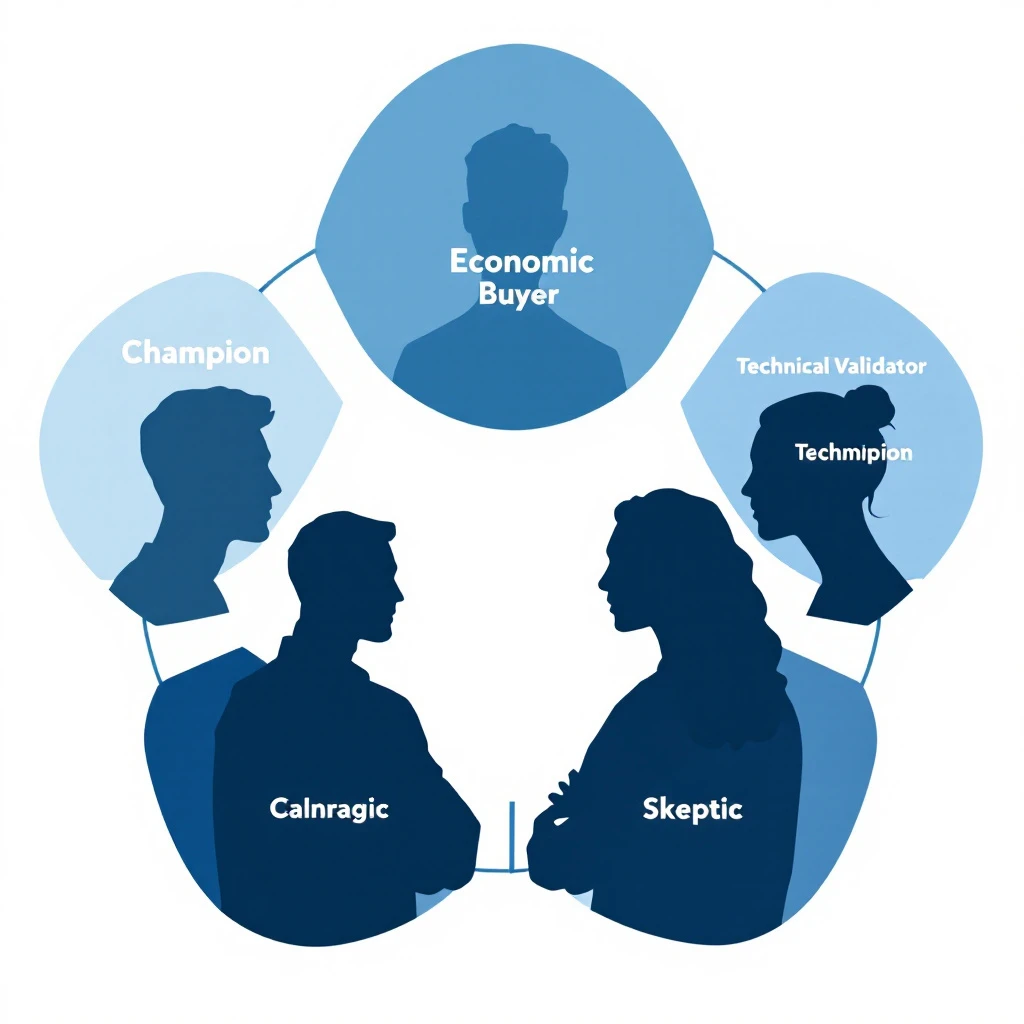
Five-stakeholder deal team diagram

Why single-threaded deals die quietlyโ€‹

Gartner's most-cited B2B buying research puts the average enterprise buying committee at 6 to 10 people. Forrester's data lands closer to 11. The deals that close involve the buyer talking to your team an average of 17 times across multiple stakeholders.

If your only relationship is with one champion, you are betting your forecast on three things going right at once:

  1. The champion never changes jobs, never gets reorged, never goes on parental leave
  2. The champion has the political capital and skill to sell internally without you in the room
  3. Every other stakeholder defers to the champion's recommendation without an independent opinion

Forrester says 86% of B2B deals are won or lost based on multi-thread coverage. If you have ever watched a deal you were "sure about" slip a quarter, the post-mortem almost always reveals the same thing: you had one relationship. The buyer had nine.

When the champion goes quiet โ€” which happens to roughly one in three enterprise deals โ€” your only signal is silence. We wrote a full re-engagement workflow for that case in our champion-quiet stalled deal playbook, but the better fix is upstream: never let a deal sit at one thread.

The 5 roles on every B2B deal teamโ€‹

Forget org charts. Buying committees don't show up on org charts. They form ad hoc around a project and dissolve when it closes. The roles below are functional โ€” one person can play two, two people can share one, but every winning deal has all five seats filled.

1. The Champion (the seller-internal-to-the-account)โ€‹

The person who wants you to win. They sell on your behalf in meetings you are not invited to. They know your roadmap, they can rattle off your pricing, they actively defend you against alternatives.

Most AEs stop here. That is the mistake.

A champion without backup is a single point of failure. If they go on PTO during the final week of the quarter, your deal slips. If they get poached by a competitor โ€” and B2B SaaS attrition averages 13% annually โ€” your deal restarts from zero.

Coverage signal: You have a champion. Good. That puts the deal at 20% stakeholder coverage. Not 100%.

2. The Economic Buyer (the budget owner)โ€‹

The person who signs the PO. In a 50-500 employee company, this is usually a VP or C-level. In enterprise, it could be a director with a discretionary budget below a threshold and an SVP above it.

The Economic Buyer's question is never "is this the best product?" It is "is this worth the opportunity cost of the budget?" They are weighing your line item against headcount, against another tool, against doing nothing.

You do not sell features to the Economic Buyer. You sell ROI math and risk reduction. And you sell it directly โ€” not through the champion. The champion's framing of your ROI is always weaker than yours, because they are not professionally trained to negotiate against a CFO's skepticism.

Coverage signal: If you have not had a 15+ minute conversation with the Economic Buyer by the second demo, the deal is not real yet.

3. The Technical Validator (the gatekeeper)โ€‹

VP of Engineering, Head of IT, Director of Security, Chief Architect. Whoever has the authority to say "we can't run this in our environment" and end the deal.

The Technical Validator is the most under-engaged stakeholder in B2B sales. Reps fear them, so they delay the introduction. Then in week 11 of a 13-week deal cycle, the security questionnaire arrives, the SOC 2 conversation happens, the integration concerns surface โ€” and the deal slips a quarter while you chase answers.

Bring them in early. Week two. Give them documentation before they ask for it. Make them feel respected as a peer reviewer, not an obstacle.

Coverage signal: A Technical Validator who has reviewed your docs and asked at least one clarifying question is a coverage point. A Technical Validator who has never been introduced is a hidden veto waiting to happen.

4. The User Champion (the end-user advocate)โ€‹

The person whose daily workflow your product changes. Usually different from the Champion. The Champion is often a manager or director โ€” the User Champion is the SDR, the marketer, the analyst who will actually log in every day.

Why they matter: in modern B2B sales, end-user adoption is a procurement criterion. CFOs ask, "will the team actually use this?" If the User Champion can answer yes in their own voice โ€” not through your champion โ€” the deal accelerates.

End-users also surface real objections faster than directors do. They will tell you in 60 seconds that your UI is confusing or that your CSV export is missing a column the team needs. That intel saves you from a 6-week stall later.

Coverage signal: Did the User Champion attend the demo? Did they ask questions? Have they tried the trial themselves? If no to all three, you are selling a director on a tool their team has not validated.

5. The Skeptic (the loyal opposition)โ€‹

Every deal has one. The person who is paid, structurally, to push back. CFO. Procurement. Legal. Sometimes a competing department head who wanted to build instead of buy.

You cannot avoid the Skeptic. You can only get to them first.

The mistake reps make is treating the Skeptic as the enemy. They are not. They are doing their job โ€” protecting the company from a bad procurement decision. Your job is to give them the answers they need before they have to dig for them.

Ask the champion: "Who is going to push back on this internally? Walk me through their concerns before the meeting." Then prep direct answers โ€” not deflections, not "let me get back to you," but the answer.

Coverage signal: Have you been told who the Skeptic is? Have you addressed their objection in writing? If no, the deal has a landmine you cannot see.

How to recruit each stakeholder (with what to say)โ€‹

Identification is the easy half. Getting on calendars is where most reps fail. Below is the exact ask for each role, tested in real outbound. Adjust the names and product specifics, but keep the structure.

Recruiting the Economic Buyerโ€‹

After demo 2 with the champion, ask:

"[Champion], based on where we are, I think this is the right time to bring [VP/CFO name] into the next conversation. I want to make sure they hear the ROI math directly from me, not summarized through you โ€” that protects you from any 'why didn't you push back on X' questions later. Can you make the intro this week? I will own the agenda and keep it to 15 minutes."

The framing matters. You are protecting the champion, not bypassing them. Champions accept this because it is true.

If the champion stalls on the intro for more than 7 days, that is itself a coverage signal: they either lack the political capital to make the intro, or the deal is less real than they have implied. Both are diagnostic. See our signal-decay framework for what to do when intent signals stop refreshing.

Recruiting the Technical Validatorโ€‹

Cold-introduce yourself directly. Do not wait for the champion. A 3-sentence message:

"Hi [Name] โ€” I am working with [Champion] at [Company] on evaluating [product category]. Wanted to introduce myself ahead of any security or integration conversations so we are not strangers when those come up. Happy to share our SOC 2 report and architecture overview now if useful. 15-minute intro call this week or next?"

Half will not respond. The other half will, because you have signaled three things: you know they exist, you respect their role, and you are not going to waste their time later.

Recruiting the User Championโ€‹

Get them into the demo. If the champion will not invite them, ask:

"We see a real difference in adoption when the daily users see the tool before procurement, not after. Can we do a 30-minute working session with 2-3 people from the [SDR/marketing/ops] team? It also gives me real product feedback before we get to pricing."

Buyers know this is true. Most will say yes.

Recruiting the Skepticโ€‹

You do not "recruit" the Skeptic โ€” you preempt them. As soon as you know who they are, send the champion a one-page document titled "[Skeptic role] FAQ" with the three objections they are most likely to raise and your written answers.

Then ask: "Can you forward this to [Skeptic] before our next meeting and ask them if there's anything else they'd want addressed?" This converts the Skeptic from an ambush into a structured conversation.

The weekly cadence: keeping the deal team warmโ€‹

Identifying stakeholders does not multi-thread the deal. Recurring contact does. Below is the cadence that separates AEs who hold 80% close rates from AEs who lose 40% of late-stage deals to "no decision."

StakeholderTouch FrequencyChannelMessage Type
ChampionWeeklySlack or textUpdate + question
Economic BuyerBi-weeklyEmailForwarded relevant insight
Technical ValidatorBi-weeklyEmailDocumentation + status
User ChampionWeekly during evalEmail or async videoProduct tip + feedback ask
SkepticAs-neededThrough championPre-emptive FAQ updates

The "forwarded relevant insight" pattern for the Economic Buyer is the highest-ROI touch in this entire playbook. You are not pitching. You are sending them a single article, benchmark, or customer story that addresses their specific concern. Three sentences. No CTA. Their reply rate to this pattern, in our internal data, is 4x higher than any "checking in" email.

For the User Champion, the highest-converting touch is asking for feedback on a specific feature โ€” not generic "how is the trial going." Specific feedback requests get specific replies. Specific replies build relationship.

CRM hygiene: how to flag single-threaded deals automaticallyโ€‹

You cannot multi-thread what you cannot see. Most CRMs let you log contacts but do not surface coverage gaps as a forecasting signal. Build the view yourself.

In your opportunity record, add three fields:

  1. Stakeholders Identified (number): How many of the 5 roles have a named person?
  2. Stakeholders Engaged (number): How many of those 5 have had a 1:1 conversation with you in the last 21 days?
  3. Coverage Risk (calculated): Red if Engaged is less than 3, yellow if 3-4, green if 5.

Run a weekly report filtering all opportunities forecasted to close this quarter where Coverage Risk is red. That list is your priority for next week's stakeholder outreach. It is also the list you bring to your manager's deal review.

This is the same operating principle behind our 14-day post-demo window playbook: make coverage visible, then make it accountable.

Multi-threading from inbound vs outbound dealsโ€‹

The playbook works for both, but the entry point differs.

Inbound deals start with a single contact who filled out a form. You do not yet know if they are the Champion, the User, or just someone doing research. Your first job is diagnosis. Use the first call to map: who else is involved in this evaluation? Who would sign the contract? Who needs to approve from a technical side?

Our inbound triage tier system flags hot inbound for 5-minute response โ€” multi-threading takes over from there in the post-demo phase.

Outbound deals start with you picking the entry point. Pick wrong and you spend two months selling to someone who has no authority to buy. We covered first-touch strategy in our signal-to-meeting 24-hour workflow and our visitor ID to outreach playbook โ€” multi-threading starts the moment the first meeting is booked, not after the demo.

What multi-threading does not solveโ€‹

This playbook is not magic. It does not:

  • Compensate for product-market fit gaps. If the prospect's pain is not real or your product is not the right shape for it, no stakeholder coverage will close the deal.
  • Replace strong discovery. You can multi-thread perfectly and still lose because the champion sold you on a vision the Economic Buyer never agreed was a priority.
  • Save deals from competitive switching costs. If the prospect is on a 3-year contract with your competitor and the cost of breaking it exceeds your annual price, more stakeholders does not change the math.

Multi-threading is the second-most-important variable in B2B win rate, behind discovery. Treat it accordingly.

The 60-second pipeline review questionโ€‹

Once you have built the playbook above, your pipeline reviews change shape. Stop asking "what is the status of this deal?" Start asking:

"Walk me through the deal team. Who has been engaged in the last 14 days? Who has not? What is the plan to engage them?"

Reps who can answer this in 30 seconds have real pipeline. Reps who cannot โ€” even on deals they are calling "committed" โ€” are running on optimism and a single contact. That is the deal you will lose in week 11, the one that becomes a champion-quiet re-engagement project, the one that turns into a closed-lost reopen attempt six months later (we wrote that workflow up in our closed-lost reopen playbook, but it is much cheaper to never get there).

How MarketBetter helps you multi-thread without burning hoursโ€‹

Manually maintaining a 5-stakeholder map across 30 active opportunities is a part-time job. The reason most reps do not multi-thread is not philosophical โ€” it is bandwidth.

MarketBetter pulls intent signals across your active accounts, tracks champion movements (job changes are a leading indicator of deal risk and a re-engagement opportunity โ€” we covered this in our buying committee post and our blind committee post), and surfaces which stakeholders in each account have engaged recently versus gone cold.

Instead of telling you who exists at the account, MarketBetter tells you which stakeholder to contact next, what to say based on their recent activity, and which deals have coverage gaps that are about to slip. The signal becomes the action โ€” not just data on a dashboard.

If you have ever lost a deal because the champion went on PTO during the final week, or because procurement showed up in week 10 with objections you could have addressed in week 2, the gap was not strategy. It was visibility.


Want to see how MarketBetter surfaces coverage gaps across your pipeline before they cost you a deal? Book a 20-minute demo โ†’

The Person Who Signs the Check Never Sees Your Email โ€” Here's Why [2026]

ยท 15 min read
sunder
Founder, marketbetter.ai

Your SDR just sent the best cold email of their career. Personalized. Researched. Timed perfectly.

The director opens it, reads it, and thinks: "This is interesting. Let me loop in my VP and procurement."

So they forward it.

And just like that, your carefully crafted outreach is now buried in a forwarded thread โ€” stripped of tracking, missing context, and invisible to you. The VP sees a wall of > characters. Procurement sees a random vendor name. Nobody replies.

Your deal just died, and you don't even know it happened.

This is the single-threaded selling trap. And if your outreach tool can't automatically CC the right people, loop in meeting attendees, and keep the full buying committee engaged โ€” you're selling to one person while four others are making the decision without you.

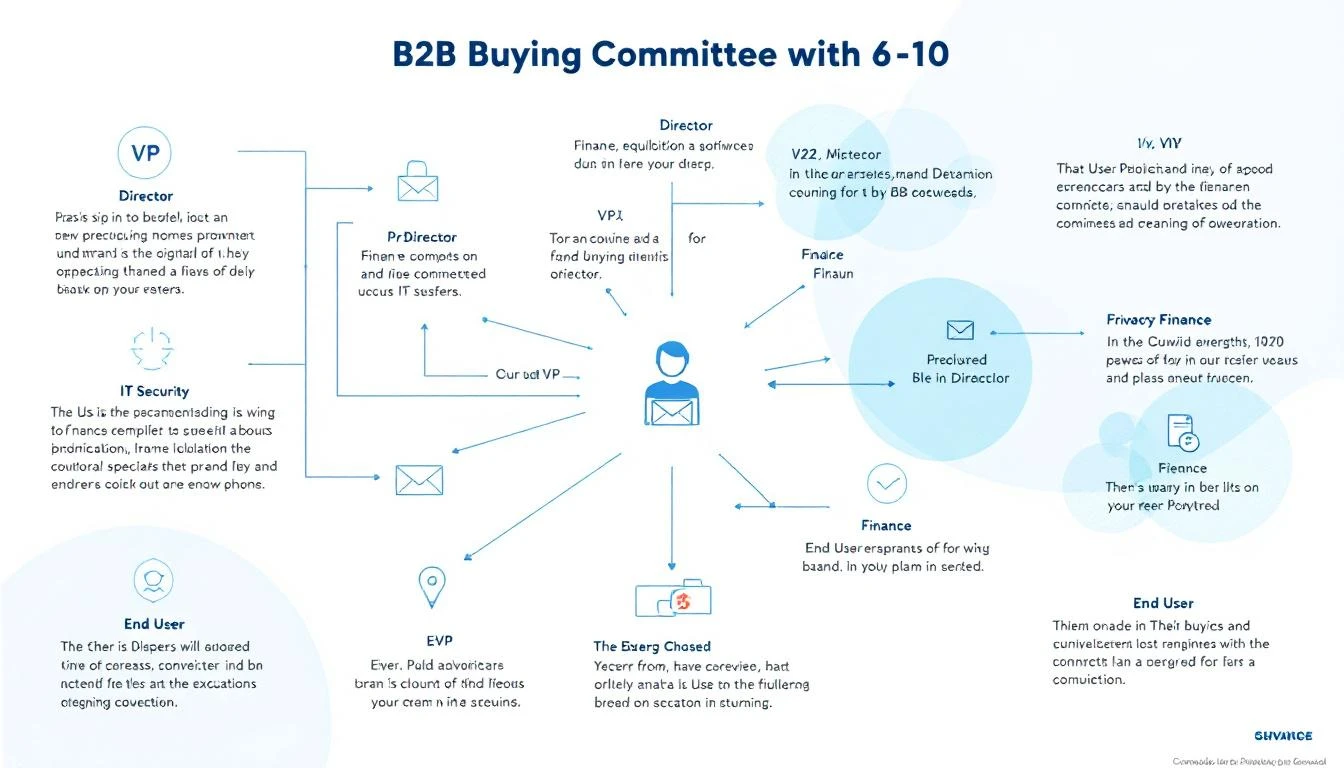
B2B buying committee stakeholder map showing how email threads break when forwarded between decision makers

The Buying Committee Problem: Why One Contact Is Never Enoughโ€‹

Let's start with the math that should terrify every sales leader.

According to Gartner, the average B2B buying committee now includes 6 to 10 decision makers โ€” each entering the process with 4 to 5 pieces of independent research. For enterprise deals, that number climbs to 11 to 13 stakeholders. Forrester's latest data puts it even higher: 89% of buying decisions cross multiple departments.

And yet, 70% of B2B opportunities still have only one point of contact in the CRM.

Think about that. Seven out of ten deals in your pipeline right now are single-threaded. You're engaging one person. The other six to nine people making the decision? They've never heard from you.

The Real Numbers on Single-Threaded Dealsโ€‹

The data on what happens to single-threaded deals is brutal:

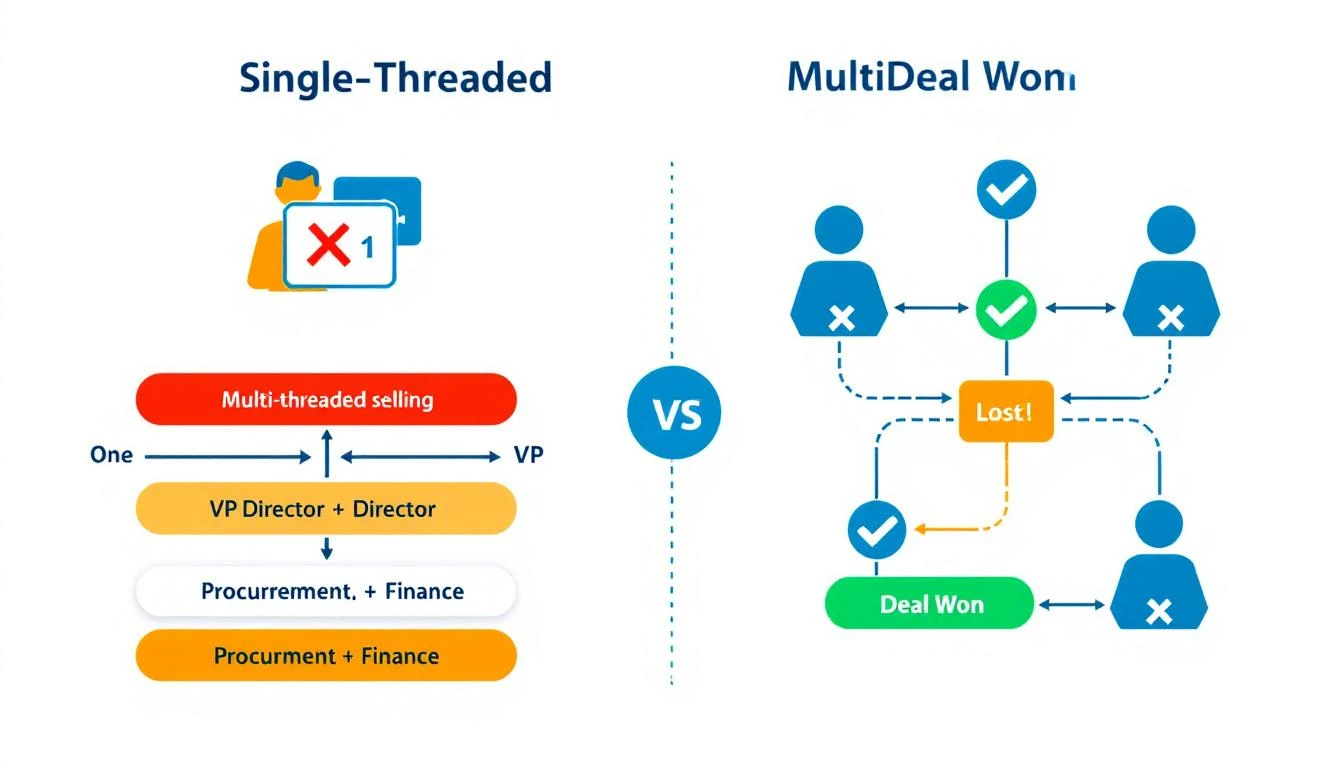
  • Single-threaded deals close at 5%. Multi-threaded deals close at 30% โ€” a 6x improvement.
  • Deals with 3+ contacts engaged close at 2.4x the rate of single-threaded deals. For enterprise, that jumps to 3.1x.
  • 61% of deals are lost to buyer indecision, not to a competitor. When stakeholders can't align internally, the default outcome is "no decision."
  • Over 40% of B2B deals stall because stakeholders fail to align โ€” not because a competitor won.

The "no decision" outcome kills more pipeline than any competitor ever will. And the root cause is almost always the same: you were talking to one person while the rest of the committee was having a separate conversation you weren't part of.

Why Single-Thread Deals Dieโ€‹

Single-threaded selling feels efficient. You found the right person. They're engaged. They love the product. Why complicate things?

Here's why: your champion is not the decision maker. They're the messenger.

And messengers lose deals in predictable ways:

1. The Forwarded Email Problemโ€‹

Your champion forwards your email to their VP. But forwarded emails lose:

  • Tracking โ€” you have no idea the VP even saw it
  • Formatting โ€” your carefully designed message becomes nested quote blocks
  • Context โ€” the VP doesn't know why this matters or what problem it solves
  • Your ability to follow up โ€” you don't know the VP exists, let alone their email

The VP glances at it, doesn't understand why it's relevant to them specifically, and archives it. Your champion thinks they've "looped in" leadership. You think the deal is progressing. Everyone is wrong.

2. The Internal Champion Bottleneckโ€‹

Even the best champions have limits:

  • They can't articulate your value prop as well as you can
  • They don't know every stakeholder's specific concerns
  • They have their own job to do โ€” selling your product internally isn't their priority
  • They might not even know who all the decision makers are

When you rely on a single champion to socialize your solution internally, you're outsourcing your most critical sales motion to someone with incomplete information and competing priorities.

3. The Procurement Ambushโ€‹

The deal is moving. Your champion is excited. Then procurement enters the picture at stage 4 โ€” and they've never heard of you. They don't understand the urgency. They have questions your champion can't answer. The deal stalls for weeks while your champion tries to play telephone between you and procurement.

This happens in over 40% of enterprise deals. And it's entirely preventable if procurement was looped in from the start.

Comparison diagram showing single-threaded selling with one contact versus multi-threaded selling engaging the full buying committee

How to Identify the Full Buying Committeeโ€‹

You can't sell to people you don't know exist. The first step in multi-threaded selling is mapping the buying committee before the deal stalls.

The Five Roles in Every B2B Buying Committeeโ€‹

Every enterprise deal โ€” regardless of industry โ€” involves some version of these roles:

RoleWho They AreWhat They Care About
Economic BuyerVP/C-suite who controls budgetROI, strategic alignment, risk
ChampionYour internal advocateMaking themselves look good, solving their pain
Technical EvaluatorIT, Security, or RevOpsIntegration, security, data compliance
End UserSDRs, AEs, or marketers who use it dailyEase of use, workflow improvement
ProcurementFinance or legalPricing, contract terms, vendor risk

If you're only talking to one of these people, you're not selling โ€” you're hoping.

Signals That Reveal the Full Committeeโ€‹

Here's how to identify stakeholders you're missing:

From your meetings:

  • Who does your champion mention by name? ("I need to run this by Sarah in finance")
  • Who joins discovery calls unexpectedly?
  • Who gets CC'd on internal emails your champion shares?

From your tools:

  • Who else from the account is visiting your website?
  • Who's engaging with your content and emails?
  • Who attended the meeting but hasn't received a follow-up?

From LinkedIn:

  • Who reports to your champion?
  • Who's in adjacent roles (RevOps if you're talking to Sales, IT if you're talking to Marketing)?

The best sales teams don't wait for stakeholders to surface. They proactively identify them and build relationships before the deal stalls.

How to Keep the Full Buying Committee in the Loopโ€‹

Identifying the committee is step one. The harder problem is keeping every stakeholder engaged throughout a sales cycle that can span months.

The CC Problem Most Tools Ignoreโ€‹

Here's a dirty secret about most outreach tools: they're built for one-to-one communication. One sender, one recipient. Maybe a sequence. But the moment you need to CC a VP on a follow-up, or loop procurement into an existing thread, or add meeting attendees to the conversation โ€” the tool breaks down.

Your SDR ends up manually:

  • Adding CCs in Gmail
  • Forwarding threads with "FYI" notes
  • Creating separate email chains for different stakeholders
  • Losing track of who's seen what

This is where deals go to die. Not because the product wasn't right, but because the communication infrastructure couldn't handle a multi-stakeholder conversation.

What Multi-Threaded Outreach Actually Looks Likeโ€‹

Effective multi-threaded selling requires your outreach system to do four things:

1. CC the Right People Automatically

When your SDR sends a follow-up after a meeting, every attendee should be on that thread โ€” not just the person who booked the call. The VP who joined for 10 minutes needs to see the recap. The technical evaluator who asked about integrations needs to see the answers.

2. Loop in Meeting Attendees Without Manual Work

After every meeting, your system should identify who was in the room and automatically include them in follow-up communications. No more "Hey, can you forward this to your VP who was on the call?"

3. Personalize for Each Stakeholder's Concerns

The VP cares about ROI. The technical evaluator cares about integration and data security. Procurement cares about pricing. A single follow-up email can't address all three. Your system needs to tailor messaging to each stakeholder's role and concerns โ€” informed by what was actually discussed in the meeting.

4. Keep the Full Thread Alive

Every stakeholder should be part of the same conversation. When procurement asks a question, the champion should see the answer. When the VP gives approval, the technical evaluator should know. Fragmented communication across separate threads is how deals stall.

Meeting Intelligence: The Missing Piece of Multi-Threaded Sellingโ€‹

Here's what most sales teams miss: your meetings contain everything you need to sell to the full committee.

Every sales call reveals:

  • Who the decision makers are (by name)
  • What each stakeholder cares about (from their questions)
  • What objections exist (and who raised them)
  • What the next steps should be (and who owns them)

But most teams treat meetings as a black box. The call happens, someone takes rough notes, and 80% of the intelligence is lost by the next day.

How Meeting Intelligence Feeds Multi-Threaded Outreachโ€‹

The best approach turns meeting content into automated selling actions:

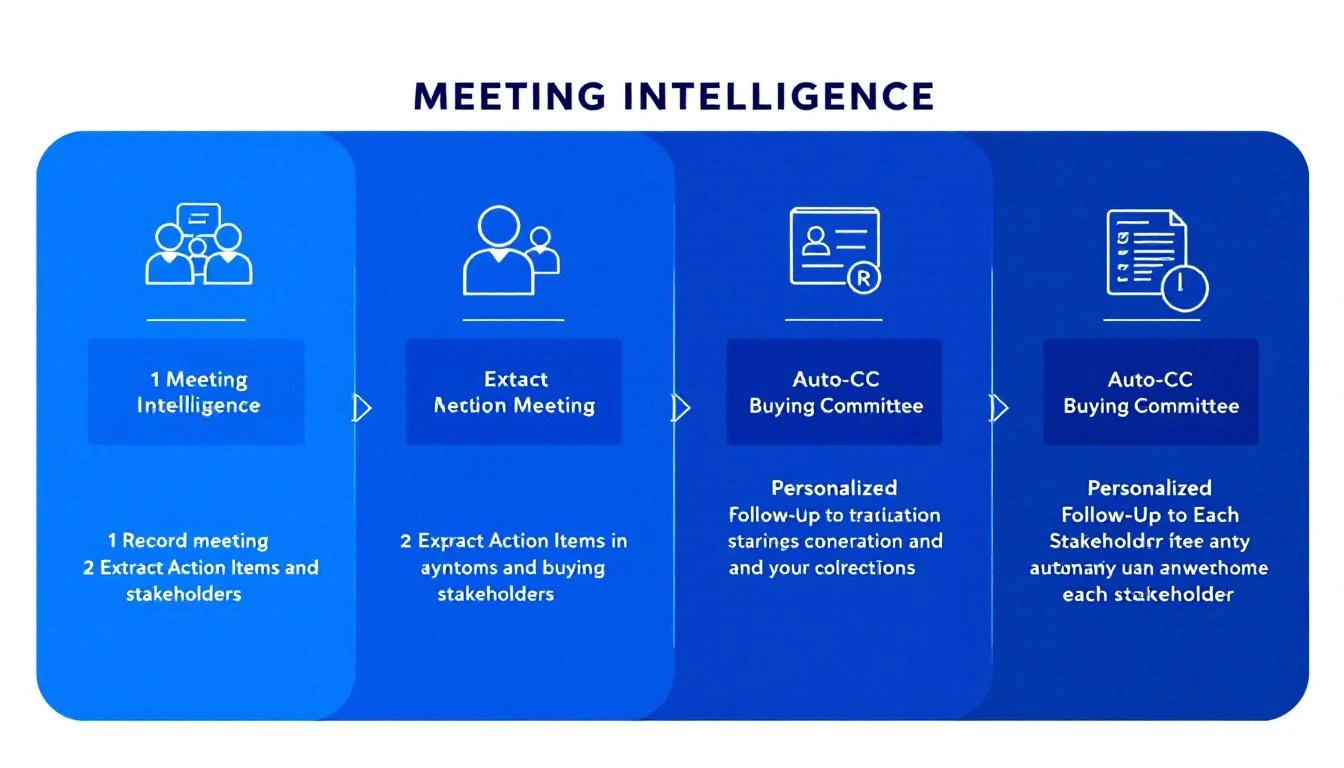
Extract stakeholder mentions โ€” When your champion says "I need to get buy-in from our VP of Engineering, Mark," that's a signal to identify Mark, find his email, and include him in follow-up communications.

Map concerns to stakeholders โ€” If the technical evaluator spent 10 minutes asking about API integrations and data handling, your follow-up to them should address those specific questions โ€” not a generic recap.

Generate role-specific follow-ups โ€” Instead of one "great meeting" email, send tailored follow-ups that speak to each stakeholder's priorities. The VP gets the ROI case. The technical evaluator gets the integration documentation. Procurement gets the pricing breakdown.

Identify next steps and owners โ€” "Sarah will check with legal by Friday" becomes a trackable action item with automatic follow-up if Friday passes without a response.

Workflow showing how meeting intelligence feeds into automated, personalized follow-up actions for each buying committee member

The Multi-Threaded Selling Playbook: A Step-by-Step Frameworkโ€‹

Here's how to operationalize multi-threaded selling across your team:

Step 1: Map Before You Prospectโ€‹

Before your SDR sends the first email, identify at least three stakeholders at the target account. Use visitor identification and intent data to see who's already researching solutions.

Minimum viable committee map:

  • The person with the pain (your champion)
  • The person with the budget (economic buyer)
  • The person who can block you (technical or procurement)

Step 2: Multi-Thread From the First Touchโ€‹

Don't wait until the deal stalls to engage additional stakeholders. Your initial outreach should target multiple roles simultaneously โ€” with messaging tailored to each.

For the champion: Focus on the pain and the solution. How does this make their life easier?

For the economic buyer: Focus on business impact. What's the cost of the current problem?

For the technical evaluator: Focus on fit. How does this integrate with their existing stack?

This isn't about blasting the same email to everyone. It's about crafting personalized messages that speak to each stakeholder's specific concerns.

Step 3: Use Meetings to Expand the Threadโ€‹

Every meeting is an opportunity to identify new stakeholders and deepen existing relationships.

Before the meeting: Review pre-meeting briefs that include who's attending, their role, their likely concerns, and any website activity from their account.

During the meeting: Listen for names, titles, and approval processes. "We'll need to run this by..." is the most valuable phrase in B2B sales.

After the meeting: Automatically include all attendees in follow-up communications. Send role-specific recaps. Set up follow-up sequences for newly identified stakeholders.

Step 4: Keep Scoreโ€‹

Track your multi-threading coverage with a simple metric: stakeholder engagement ratio.

For every deal in your pipeline:

  • How many stakeholders have you identified?
  • How many have you engaged directly?
  • How many have been active in the last 14 days?

If the ratio drops below 50% (engaged vs. identified), the deal is at risk. According to Gong's analysis of 1.8 million opportunities, deals that close successfully have twice as many buyer contacts as those that don't.

Step 5: Automate the Follow-Up Loopโ€‹

The biggest failure point in multi-threaded selling isn't strategy โ€” it's execution. SDRs know they should engage multiple stakeholders. They just don't have time to manually:

  • Track who attended each meeting
  • Write personalized follow-ups for each role
  • CC the right people on every communication
  • Monitor which stakeholders have gone dark

This is where automation becomes essential. Your SDR workflow should handle the mechanical parts โ€” identifying attendees, generating personalized content, managing CC lists, flagging silent stakeholders โ€” so your reps can focus on the human parts: building relationships and having conversations.

What This Looks Like in Practiceโ€‹

Let's walk through a real scenario:

Day 1: Your SDR sends a personalized email to a Director of Sales at a mid-market SaaS company. The email references recent intent signals โ€” the company has been researching visitor identification tools.

Day 3: The Director replies and books a discovery call. Your system automatically identifies other stakeholders at the account who've visited your site: a RevOps Manager and a VP of Marketing.

Day 5: Discovery call happens. The Director brings their VP of Sales (economic buyer) and a RevOps analyst (technical evaluator). Your meeting intelligence captures every question, concern, and next step.

Day 5 (automated): Your system sends three different follow-up emails:

  • To the Director: Recap of the pain points discussed, link to a relevant case study
  • To the VP: Executive summary focused on ROI and competitive advantage, CC'd on the main thread
  • To the RevOps analyst: Technical integration details, API documentation, CC'd on the main thread

All three are on the same thread. All three see each other's questions and your answers. The conversation stays alive.

Day 8: The VP forwards the thread to Procurement. Because they're already on the thread (not receiving a forwarded email from a stranger), Procurement has full context. They reply directly to your SDR with questions about pricing and terms.

Day 12: Deal closes. Not because you had a better product than the competition โ€” but because you were the only vendor talking to all five stakeholders simultaneously.

The Cost of Staying Single-Threadedโ€‹

If you're still running single-threaded outreach in 2026, here's what you're leaving on the table:

  • 5x lower close rates compared to multi-threaded deals
  • Longer sales cycles as champions play telephone between you and their committee
  • More "no decision" losses โ€” the #1 pipeline killer, responsible for 61% of lost deals
  • Zero visibility into what's happening inside the account
  • Wasted SDR time on deals that were never going to close because the right people weren't engaged

The enterprise B2B landscape has shifted. Buying committees are bigger, more distributed, and more consensus-driven than ever. The tools that worked for one-to-one selling โ€” basic email sequences, single-contact CRM records, manual follow-ups โ€” can't handle this complexity.

What to Look for in a Multi-Threaded Selling Platformโ€‹

If you're evaluating tools to support multi-threaded selling, here's your checklist:

Must-haves:

  • โœ… CC support in outbound emails (not just one-to-one sequences)
  • โœ… Automatic stakeholder identification from meetings
  • โœ… Meeting intelligence that extracts action items and stakeholder concerns
  • โœ… Role-specific email personalization at scale
  • โœ… Unified thread management across the full buying committee

Nice-to-haves:

  • Visitor identification showing which stakeholders are researching you
  • Intent data revealing buying signals across the account
  • CRM sync that maps the full committee, not just the primary contact
  • Pre-meeting briefs that prepare reps for every stakeholder in the room

Red flags:

  • โŒ Sequences that only support one recipient
  • โŒ No CC functionality in outbound
  • โŒ Meeting notes that require manual entry
  • โŒ CRM records limited to one contact per opportunity

Stop Selling to One Person. Start Selling to the Room.โ€‹

The person who signs the check almost never sees your first email. That's not a flaw in your outreach โ€” it's a flaw in your infrastructure.

Multi-threaded selling isn't a strategy you can execute manually. It requires systems that automatically identify stakeholders, keep every decision maker in the loop, extract intelligence from every meeting, and personalize follow-ups for every role in the buying committee.

The deals you're losing right now aren't going to competitors. They're dying in forwarded email threads that no one reads, in internal Slack channels where your champion is trying to explain your value prop from memory, in procurement queues where no one knows why this purchase matters.

Fix the infrastructure, and the deals will follow.


Ready to stop losing deals to single-threaded selling? MarketBetter automatically CCs the right stakeholders, loops in meeting attendees, and uses meeting intelligence to personalize follow-ups for every member of the buying committee.

See how it works โ€” Book a demo โ†’

How Healthcare Technology Vendors Use Buyer Intent Signals to Navigate 18-Month Sales Cycles and Win More Contracts

ยท 12 min read
MarketBetter Team
Content Team, marketbetter.ai

How Healthcare Technology Vendors Navigate Long Sales Cycles With Intent Signals

Healthcare technology sales is a different animal.

In most B2B verticals, a sales cycle stretches three to six months. You identify a prospect, build a relationship with a decision-maker, demo the product, negotiate, and close. The process is well-understood and well-tooled.

In healthcare, that timeline doubles or triples. An 18-month sales cycle isn't unusual โ€” it's expected. The buying committee includes clinical stakeholders, IT security teams, compliance officers, procurement departments, and C-suite executives who all need to sign off. Budget cycles are annual and rigid. Vendor evaluation processes involve security questionnaires, HIPAA compliance reviews, and pilot programs that run for months before a purchase decision is even tabled.

Most sales methodologies weren't built for this. And most sales tools actively hurt you in healthcare because they optimize for speed and volume when your actual competitive advantage is precision and persistence.

Here's how one healthcare technology vendor โ€” a company selling into hospital systems, clinics, and health IT departments โ€” rebuilt their pipeline strategy around buyer intent signals instead of outbound volume. The results reshaped how they think about healthcare sales entirely.

The Healthcare Sales Problem Nobody Talks Aboutโ€‹

Every healthcare technology vendor faces the same invisible challenge: you can't tell who's evaluating you.

In faster-moving B2B verticals, buying signals are visible. A prospect requests a demo, downloads a comparison guide, or responds to an email. The timeline from signal to conversation is short enough that you can attribute pipeline directly to specific actions.

In healthcare, the evaluation process is largely invisible to the vendor being evaluated.

Here's what actually happens inside a hospital system considering a new technology purchase:

  1. Month 1-3: A department head identifies a need. They start researching vendors independently โ€” visiting websites, downloading whitepapers, reading peer reviews. The vendor has zero visibility into this activity.

  2. Month 3-6: The department head builds an internal business case. They may involve IT and compliance early to assess feasibility. More website visits, competitive comparisons, and conversations with peers at other health systems. Still no vendor contact.

  3. Month 6-9: A formal evaluation committee forms. The RFP or RFI process begins. The vendor may hear about this for the first time โ€” or the committee may shortlist vendors without ever making direct contact, based entirely on their independent research.

  4. Month 9-12: Vendor demos, security reviews, reference checks, and pilot programs. This is the visible part of the funnel. But by this point, the buyer's preferences are largely formed. You're either the front-runner or you're catching up.

  5. Month 12-18: Budget approval, contract negotiation, legal review, and implementation planning. The slowest phase, often stalled by budget cycles or competing priorities.

The problem is obvious: the first 6-9 months of the buying process happen in the dark. The vendor who figures out what's happening during those invisible months has a structural advantage over every competitor who waits for the RFP to land.

What One Healthcare Tech Vendor Did Differentlyโ€‹

This particular company โ€” a niche healthcare IT vendor with a small sales team โ€” was stuck in the reactive pattern. They'd hear about opportunities when the RFP arrived, scramble to respond, and find themselves competing against vendors who'd been in conversations with the buying committee for months.

Their pipeline was feast-or-famine. When RFPs came in, they'd close at a reasonable rate. But they had no control over when or how many RFPs appeared. Growth was unpredictable and unmanageable.

They made three fundamental changes.

1. Visitor Identification Became Their Early Warning Systemโ€‹

The first breakthrough was implementing website visitor identification not as a lead generation tool but as a buying cycle detection system.

In healthcare, the research phase is long and thorough. A hospital system evaluating technology vendors will visit the vendor's website multiple times over weeks or months. But unlike retail or SMB buyers, they rarely fill out forms or request demos during the research phase. They evaluate silently.

Visitor identification changed the game by revealing which health systems were in the research phase before any form fill, demo request, or RFP:

Signal: A hospital system visits the platform overview page, the pricing page, and the security/compliance documentation within the same week.

  • Old response: Nothing. The vendor had no idea this was happening.
  • New response: The sales rep researches that health system, identifies likely stakeholders (department heads, IT directors, compliance officers), and begins a warm outreach sequence timed to the evaluation window.

Signal: The same hospital system returns to the website 3 weeks later, this time visiting the integration documentation and case studies page.

  • Old response: Still nothing.
  • New response: The rep escalates the account to "active evaluation" status and introduces a peer reference โ€” a similar health system already using the platform โ€” to establish credibility before the committee formalizes.

Signal: Multiple visitors from the same hospital system, visiting different sections of the site within the same month.

  • Old response: Invisible.
  • New response: The rep recognizes this as a committee formation signal โ€” multiple stakeholders researching independently means the evaluation is becoming formal. Time to ensure the right materials (security questionnaires, compliance certifications, implementation timelines) are proactively ready.

This wasn't about generating more leads. It was about seeing the buying cycle 6 months before the RFP landed and using that visibility to enter the conversation as a trusted advisor rather than an unknown vendor responding to a cold request.

2. Stakeholder Mapping Replaced Single-Threaded Sellingโ€‹

Healthcare buying committees are large. Eight to twelve stakeholders is common for a significant technology purchase. The vendor who only knows the department head is at a structural disadvantage โ€” one person cannot champion a purchase through a committee of twelve.

Using visitor identification data and signal-based selling patterns, this healthcare tech vendor built a stakeholder mapping discipline:

When visitor ID shows multiple visitors from one health system:

  • Cross-reference with LinkedIn and the health system's organizational chart
  • Identify which departments are represented (clinical, IT, compliance, procurement)
  • Map the likely decision-making structure
  • Begin relationship-building with multiple stakeholders simultaneously

When a known contact engages (email open, content download):

  • Identify their role in the buying committee
  • Adjust messaging to address their specific concerns (IT cares about integration, compliance cares about HIPAA, clinical cares about workflow impact)
  • Provide role-specific resources rather than generic sales materials

When champion job changes are detected:

  • Healthcare executives move between health systems frequently
  • A champion who left one hospital for another is the warmest possible lead at the new system
  • The vendor tracks these transitions and initiates outreach within the first 90 days at the new role โ€” before the executive has committed to existing vendor relationships

This multi-threaded approach fundamentally changed their win rates. In healthcare, deals rarely die because the product wasn't good enough. They die because the internal champion couldn't build enough consensus across the buying committee. By engaging multiple stakeholders early, the vendor was effectively helping their champion build the business case โ€” even before being formally invited to present.

3. Signal-Based Timing Replaced Calendar-Based Follow-Upโ€‹

The third shift was the subtlest but arguably the most impactful.

Traditional healthcare sales operates on calendar-based cadences: follow up every 30 days, check in quarterly, touch base before budget season. This approach treats every account the same regardless of where they are in the buying process.

Signal-based timing means engaging when the buyer is actively engaged, not when your CRM says it's been 30 days.

Examples from their new workflow:

  • A health system visits three pages in one week after 60 days of silence. This isn't a "check in" moment โ€” it's a re-engagement signal. Something changed internally (new budget approval, leadership change, competitor failure). The rep reaches out within 24 hours with a contextually relevant message.

  • A procurement contact visits the pricing page for the first time. Procurement engagement typically means the evaluation has advanced to budget justification. The rep proactively sends a pricing framework, ROI calculator, and reference customer who can speak to total cost of ownership โ€” before being asked.

  • Website activity drops to zero after months of consistent visits. This isn't "the deal died." In healthcare, it often means the committee is now in internal deliberation (pilots, security review, reference checks). The rep doesn't panic or blast follow-up emails. They send a single, useful touchpoint โ€” an industry report, a relevant regulatory update โ€” to stay top-of-mind without being pushy.

The distinction matters enormously in healthcare. Buyers in this space are sophisticated and have zero tolerance for pushy, out-of-context sales outreach. A rep who reaches out precisely when the buyer is actively researching feels helpful. A rep who follows up because their CRM reminder fired feels like noise.

The Results: What Changed in 12 Monthsโ€‹

After a year of running this signal-based healthcare sales motion:

Time-to-first-meeting compressed by 4 months. By identifying research-phase activity through visitor identification, the team consistently entered conversations months before competitors who waited for RFPs. In healthcare, being first isn't just an advantage โ€” it often determines the shortlist.

Win rate on competitive evaluations increased from 22% to 41%. Multi-stakeholder engagement meant the vendor had relationships across the buying committee, not just with a single champion. When competitors showed up to present, this vendor already had internal advocates in clinical, IT, and compliance.

Pipeline predictability improved dramatically. Instead of waiting for RFPs to appear randomly, the team could see which health systems were in early-stage research, mid-stage evaluation, or late-stage committee review. Pipeline forecasting went from guesswork to data-driven projection.

Average deal size increased 28%. Early engagement gave the vendor time to demonstrate the full platform value โ€” including capabilities the buyer didn't know they needed. Deals that would have been single-department implementations expanded to multi-department rollouts because the vendor had time to educate rather than just respond.

The Playbook: What Healthcare Technology Vendors Should Do Nowโ€‹

If you sell technology into healthcare systems, hospitals, or health IT departments, here's the actionable framework:

Implement Visitor Identification as a Buying Cycle Detectorโ€‹

Don't think of visitor identification as lead generation. Think of it as buying cycle visibility. In healthcare, the research phase is your biggest blindspot. Every hospital system currently evaluating your category is probably visiting your website. You just can't see them yet.

The signal value isn't "someone visited your website." It's the pattern: which pages, how often, how many people from the same organization, and how does activity change over time. That pattern reveals where they are in the 18-month buying cycle.

Build Your Stakeholder Map Before You're Asked to Presentโ€‹

In most healthcare deals, you first meet the buying committee during a formal vendor presentation. By then, preferences are formed. If you can identify and engage multiple stakeholders during the research phase โ€” providing useful, role-specific resources without being salesy โ€” you enter the formal process with relationships already built.

This is especially critical for IT and compliance stakeholders, who typically have veto power over technology purchases but are rarely the ones initiating vendor contact.

Stop Following Up on a Calendar. Start Following Up on Signals.โ€‹

Healthcare buyers are slow and deliberate. They do not appreciate cadence-based follow-ups that ignore their actual buying timeline. A rep who reaches out when the buyer is actively researching is helpful. A rep who reaches out because "it's been 30 days" is annoying.

Intent signal orchestration gives you the ability to time your outreach to the buyer's activity, not your own schedule. In a market where trust is everything, timing is how you build it.

Track Champion Job Changes Religiouslyโ€‹

Healthcare executives rotate between systems. A CIO who championed your platform at one hospital system is your strongest possible lead when they move to another. These transitions are both frequent and high-value in healthcare.

Set up automated champion tracking for every stakeholder who's ever evaluated your platform. When they move, you should know within days โ€” not months.

Invest in Content That Serves the Invisible Evaluation Phaseโ€‹

Most healthcare tech vendors invest heavily in sales materials (pitch decks, ROI calculators, case studies) and ignore the research phase. But the research phase is where buying preferences form.

Create content that healthcare buyers consume during their independent evaluation: detailed security documentation, compliance certifications, integration architecture guides, and peer-authored case studies. Make it ungated โ€” healthcare evaluators don't fill out forms during research. They just leave.

If your security documentation is behind a form, you're losing to the competitor whose documentation is open and thorough.

Why This Matters Nowโ€‹

Healthcare technology spending is accelerating. Digital health, AI diagnostics, telehealth infrastructure, cybersecurity, and clinical workflow automation are all growing categories. Every health system in the country is evaluating multiple technology vendors simultaneously.

But the buying process hasn't changed. It's still slow, committee-driven, and largely invisible to vendors.

The healthcare tech vendors who win in 2026 and beyond won't be the ones with the best product features or the biggest SDR teams. They'll be the ones who can see the buying cycle earlier, engage the right stakeholders sooner, and time their outreach to the buyer's actual evaluation timeline instead of their own arbitrary cadence.

That's not a sales methodology. It's a signal infrastructure. And in a market where deals take 18 months and buying committees have 12 people, the vendor with better signal intelligence doesn't just win more deals โ€” they win them faster, bigger, and more predictably.


Selling healthcare technology and want to see buying signals you're currently missing? Start a free trial or book a demo to see how MarketBetter identifies healthcare buyers in the research phase.