
3 posts tagged with "telecom"

View All Tags

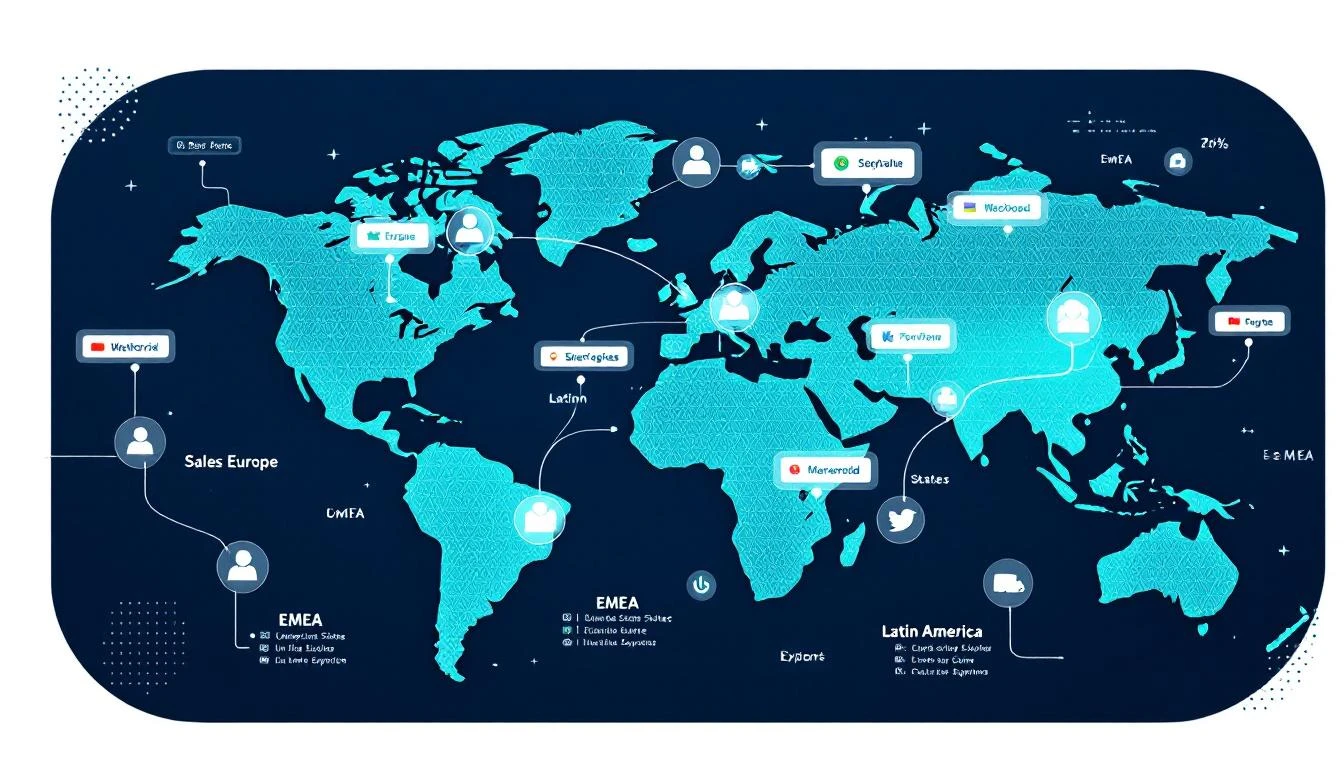
How Global IoT Platforms Coordinate Multi-Language SDR Teams Across 3 Continents With Signal-Based Territory Playbooks

ยท 10 min read
MarketBetter Team
Content Team, marketbetter.ai

How Global IoT Platforms Coordinate Multi-Language SDR Teams

If you sell IoT connectivity into enterprises across multiple continents, you already know the coordination nightmare.

Your EMEA SDR is working a prospect in Germany while your US rep has a contact at the same company's North American headquarters. Meanwhile, your Latin American rep โ€” the one who speaks fluent Spanish and has relationships across Mexico and Colombia โ€” is nurturing leads at the same enterprise's regional offices.

Three reps. Three languages. Three time zones. One account. And none of them know what the others are doing.

This is the reality for every IoT and telecom platform that's scaled past a single-region sales motion. The technology scales globally. The sales coordination doesn't.

Here's how one enterprise IoT connectivity platform with SDRs spanning EMEA, the United States, and Latin America built a signal-based territory system that eliminated handoff chaos and turned their multi-language team from a coordination liability into a compounding advantage.

The Problem: Global Coverage, Local Chaosโ€‹

This particular platform provides cellular connectivity infrastructure to enterprises โ€” the kind of product that naturally attracts multinational buyers. A logistics company in Dallas might need IoT SIMs across warehouses in Mexico, fulfillment centers in Poland, and headquarters in Chicago.

Before implementing signal-based territory playbooks, their sales process looked like this:

Duplicate outreach everywhere. The EMEA rep would cold-email the CTO of a European subsidiary while the US rep was already in conversations with the same company's VP of Operations. Neither knew. The prospect received nearly identical pitches from two different people at the same vendor within 48 hours.

Language mismatches killing deals. Their Latin American pipeline required Spanish-language communication โ€” not just translation, but culturally appropriate messaging for enterprise buyers in Mexico City, Bogotรก, and Sรฃo Paulo. When English-language sequences accidentally fired to LatAm contacts, response rates dropped to near zero.

No signal attribution across regions. When a company's German office visited the pricing page and their US office requested a whitepaper, those signals went to different reps with no connection. The buying committee spanned continents, but the intent picture was fragmented.

Territory disputes consuming manager time. Roughly 30% of their sales manager's week was spent arbitrating "who owns this account" conversations. With global enterprises, the answer was never simple.

The Shift: Territory-Based Signal Routingโ€‹

The transformation started with a deceptively simple principle: signals should route to the right rep automatically, based on territory rules โ€” not manual assignment.

Here's what they built:

1. Geographic Signal Routing by Territoryโ€‹

Every intent signal โ€” website visit, content download, champion job change, email engagement โ€” now routes through territory logic before hitting any rep's queue.

The rules aren't complicated:

  • IP geolocation determines initial territory assignment
  • Company HQ location acts as the tiebreaker for global accounts
  • Language preference (browser language, form submissions) overrides geography for LatAm contacts
  • Named account lists lock strategic accounts to specific reps regardless of signal origin

When a prospect from a German subsidiary visits the platform's pricing page, the signal routes to the EMEA SDR. When that same company's US headquarters downloads a case study, it routes to the US SDR โ€” but both signals appear on a shared account timeline.

2. Multi-Language Playbook Architectureโ€‹

This is where most global sales teams fall apart. They build one English playbook and "translate" it. That doesn't work.

This IoT platform built three native playbooks โ€” not translations, but culturally distinct sequences:

US Playbook: Direct, ROI-focused, shorter sequences (4 touches over 12 days). American enterprise buyers expect specificity early: deployment timelines, integration compatibility, pricing ranges by the second email.

EMEA Playbook: Relationship-first, compliance-conscious, longer nurture (6 touches over 21 days). European buyers โ€” especially in Germany, the Nordics, and the UK โ€” want to understand data residency, GDPR compliance, and existing customer references in their region before engaging in a pricing conversation.

LatAm Playbook (Spanish): Relationship-driven with higher emphasis on personal connection, WhatsApp integration for follow-ups, and references to regional deployments. Their Spanish-speaking SDR wrote these sequences natively โ€” not translated from English โ€” with idioms, cultural references, and business etiquette that resonated in Mexico, Colombia, and Chile.

The results were immediate:

RegionResponse Rate (Before)Response Rate (After)Change
US4.2%7.8%+86%
EMEA3.1%6.4%+106%
LatAm1.8%9.2%+411%

The LatAm improvement was staggering โ€” but predictable. Sending English-language cold emails to Spanish-speaking enterprise buyers in Mexico City was never going to work. The previous "strategy" wasn't a strategy; it was negligence disguised as global coverage.

3. Unified Account Intelligence Across Regionsโ€‹

The real unlock wasn't routing or language โ€” it was the shared account view.

When their visitor identification system detects activity from a global account, every SDR who touches that account sees the full picture:

  • The German office visited the IoT security documentation three times this week
  • The US headquarters downloaded the enterprise pricing guide
  • A director-level contact at the Colombian subsidiary opened every email in the LatAm sequence

Instead of three isolated SDRs working three isolated leads, the team sees one account with buying signals across three regions. The US SDR can reference the European team's interest in security when positioning to the American buyer. The LatAm rep knows the US office is already evaluating pricing, so they can align their timing.

This is signal orchestration at its most practical. Not a buzzword โ€” a necessary coordination layer for any team selling globally.

4. Handoff Protocols That Actually Workโ€‹

Before signal routing, handoffs between regions happened via Slack messages that got lost, forwarded emails that lacked context, and "hey, can you take this?" conversations in team meetings.

Now, territory transfers follow a structured protocol:

  1. Signal triggers handoff suggestion. When a EMEA-routed account shows US-based buying signals (US IP visiting pricing, US phone number on a form), the system flags it for potential territory reassignment.

  2. Context transfers automatically. The receiving SDR gets the full signal history, engagement timeline, and any notes from the originating rep โ€” not a vague "this might be a lead."

  3. Dual ownership for strategic accounts. For enterprises with genuine multi-region buying committees, both reps stay involved. The primary owner is whoever has the strongest champion relationship, and territory designation reflects coordination responsibility rather than credit assignment.

  4. Revenue attribution is shared. This eliminated 90% of territory disputes overnight. When a deal closes with contacts across two regions, both reps get credit. The incentive shifted from "protect my territory" to "help this account advance."

The Numbers: What Changedโ€‹

After six months running territory-based signal playbooks across all three regions:

Pipeline velocity increased 2.4x. Deals moved faster because the right rep engaged the right contact in the right language from the first touch. No more "let me transfer you to my colleague who handles your region."

Average deal size grew 35%. Multi-region visibility meant SDRs could identify and sell into the full global footprint of an account, not just the single office that happened to raise their hand first. A deal that would have been a single-region deployment became a three-continent rollout.

SDR productivity jumped measurably. With automatic signal routing, reps spent zero time figuring out if a lead was "theirs." Signals arrived pre-qualified by territory, pre-assigned by language, and pre-enriched with account context.

LatAm became their fastest-growing region. Having a native Spanish-speaking SDR with culturally appropriate sequences turned Latin America from an afterthought into a primary pipeline source. Within four months, LatAm represented 28% of new pipeline โ€” up from 8%.

What This Means for Your IoT or Telecom Sales Teamโ€‹

If you're selling IoT connectivity, telecom infrastructure, or any technology product across multiple regions, here's the playbook:

Start With Territory Rules, Not More Repsโ€‹

Most global sales teams try to solve coordination problems by hiring more people. That compounds the problem. Before adding headcount, implement signal routing that automatically assigns leads based on geography, language, and named account lists.

Territory planning automation isn't a luxury for global teams โ€” it's table stakes.

Build Native Playbooks, Not Translationsโ€‹

If you have a Spanish-speaking SDR covering Latin America, let them write the LatAm playbook from scratch. Same for EMEA โ€” let your European rep build sequences that reflect how European buyers actually purchase technology.

The performance difference between a translated playbook and a native one is 3-4x in response rates. That's not marginal. That's the difference between a region that generates pipeline and a region you're subsidizing.

Invest in Account-Level Signal Visibilityโ€‹

Individual lead-level signals are useful. Account-level signal aggregation across regions is transformational. When your US SDR can see that the European office is deep in evaluation, they can time their outreach to create a coordinated buying moment instead of a confused one.

This is where visitor identification tools pay for themselves many times over in a global context.

Make Territory Disputes Impossible, Not Adjudicatedโ€‹

If your sales manager spends any meaningful time deciding "who gets credit for this deal," your territory system is broken. Implement shared attribution for multi-region accounts. When both reps benefit from the deal closing, they stop fighting over ownership and start collaborating on advancement.

Don't Underestimate Language as a Pipeline Leverโ€‹

For IoT and telecom companies, Latin America represents massive growth potential. But you can't capture it with English-only outreach. A single fluent Spanish-speaking SDR with proper signal routing and native sequences can outperform a team of three running translated content.

Language isn't a nice-to-have in global sales. It's the single biggest lever most teams haven't pulled.

Ready to coordinate your global SDR team with signal-based territory routing? Book a demo โ†’

The Bigger Pictureโ€‹

The IoT connectivity market is inherently global. Your customers deploy across borders. Your competitors sell across continents. The question isn't whether you need multi-region sales capability โ€” it's whether your sales infrastructure can coordinate it without drowning in handoff chaos.

Signal-based territory playbooks aren't about technology. They're about giving every rep โ€” whether they're in Dallas, London, or Mexico City โ€” the same quality of intent data, the same account context, and the same ability to engage the right buyer in the right language at the right time.

The companies that figure this out don't just grow faster. They win the accounts that span continents โ€” the largest, most strategic deals in IoT โ€” because they're the only vendor who shows up coordinated when everyone else shows up fragmented.

That's not a marginal improvement. That's a structural advantage that compounds with every global account you land.


Want to see how signal-based territory routing works for global sales teams? Start a free trial or book a demo to see MarketBetter in action.


How IoT Connectivity Platforms Use Champion Job Change Signals to Reactivate Dormant Pipeline Worth $500K+

ยท 9 min read
MarketBetter Team
Content Team, marketbetter.ai

If you sell IoT connectivity โ€” cellular modules, SIM management, device platforms โ€” you know a painful truth: your deals die when your champion leaves.

The average enterprise IoT deal takes 6โ€“9 months to close. You've navigated procurement, security reviews, technical evaluations, and pilot programs. Then one morning, your champion's LinkedIn updates to a new title at a new company. Your deal goes cold overnight.

For most IoT sales teams, that's where the story ends. The deal sits in a "closed-lost" or "stalled" bucket. Nobody follows up. The new company your champion joined? Nobody even notices.

But for one global IoT cellular connectivity platform running SDR teams across EMEA, the US, and Latin America, champion job changes became their single highest-converting signal โ€” turning what used to be lost pipeline into a reliable revenue engine.

Here's how they did it.

IoT connectivity champion job change pipeline

The Problem: A Global Team Drowning in Cold Outboundโ€‹

This company โ€” an enterprise IoT cellular connectivity platform โ€” had a familiar setup that wasn't scaling:

  • Three regional SDR teams: EMEA, US, and Latin America (including a Spanish-speaking rep dedicated to the LatAm market)
  • Long sales cycles: 6โ€“12 months for enterprise deals involving hardware integrations
  • High champion turnover: IoT product managers and engineering leads change roles frequently, especially in fast-growing verticals like logistics, fleet management, and smart agriculture
  • CRM full of ghosts: Hundreds of contacts marked as "left company" or "no longer responds" โ€” with no systematic way to track where they went

The sales team was spending 70% of their time on cold outbound. They'd source lists from conferences, scrape LinkedIn, and blast generic sequences. Response rates hovered around 1.2%.

Meanwhile, their best deals โ€” the ones with a warm champion who already understood IoT connectivity โ€” were leaking out the side door every quarter.

The Hidden Cost Nobody Measuredโ€‹

Here's what the leadership team didn't realize until they ran the numbers:

  • 42 champions had left target accounts in the previous 12 months
  • Those champions had been associated with $2.1M in pipeline (at various stages)
  • Of those 42, at least 18 had moved to companies that also needed IoT connectivity
  • Zero of those 18 transitions had been flagged or followed up on

They weren't just losing deals. They were losing their warmest possible pipeline source โ€” people who already knew the product, trusted the team, and had budget authority at a new organization.

The Signal-Based Approach: Champion Tracking Meets Territory Intelligenceโ€‹

The transformation started when the team stopped treating champion departures as losses and started treating them as signals.

Step 1: Map Every Champion to a Job Change Alertโ€‹

Instead of relying on reps to manually check LinkedIn (they didn't), the team implemented automated champion tracking that monitored every contact who had:

  • Attended a demo or technical evaluation
  • Been the primary point of contact on a deal
  • Engaged with more than 3 emails in a sequence
  • Downloaded technical documentation or API specs

When any of these contacts changed jobs, the system flagged it in real time โ€” not weeks later when someone happened to notice.

Step 2: Route Alerts to the Right Regional Repโ€‹

This is where most champion tracking implementations fall apart. The alert fires, but it goes to a general inbox or the wrong rep.

For a global team spanning EMEA, US, and Latin America, routing matters enormously:

  • A champion who moved from a logistics company in Germany to a fleet management startup in Sรฃo Paulo needed to be routed to the Spanish-speaking LatAm rep โ€” not the EMEA SDR who originally owned the relationship
  • A champion who moved from an agriculture IoT company in Iowa to a smart city project in London needed to go to the EMEA team
  • A champion who stayed in the US but moved to a competitor's customer needed special handling โ€” a different playbook entirely

The team built territory-aware routing rules that matched job change alerts against intent signals, ensuring the right rep got the right signal at the right time.

Step 3: Create a Champion Reactivation Playbookโ€‹

Cold outbound to a stranger gets a 1โ€“2% response rate. But reaching out to a former champion who already knows your product? That's a fundamentally different conversation.

The team developed a three-touch playbook specifically for champion job changes:

Touch 1 (Day 1): The Warm Reconnection A personal email from the original account owner, congratulating them on the new role and asking if IoT connectivity is relevant at the new org. No pitch. Just a human check-in.

Touch 2 (Day 4): The Value Reminder A brief message referencing what they'd accomplished together โ€” "You were evaluating our cellular connectivity for your fleet management platform. Does [new company] have similar needs?" This leverages shared history that no competitor can replicate.

Touch 3 (Day 10): The Multi-Channel Follow-Up A LinkedIn connection request from the regional rep (if different from the original contact), plus a phone call using the smart dialer. By this point, they've warmed the contact across three channels.

Step 4: Cross-Reference with Visitor Intelligenceโ€‹

Here's where it got really powerful. The team layered champion job change signals on top of website visitor identification.

When a former champion's new company showed up on the website โ€” visiting the pricing page, the API documentation, or the coverage maps โ€” that was a compound signal. It meant the champion was likely already evaluating IoT connectivity options at their new org and had come back to the platform they already knew.

These compound signals (champion moved + new company visiting website) had a 34% demo booking rate โ€” nearly 30x their cold outbound average.

The Results: From Pipeline Graveyard to Revenue Engineโ€‹

After six months of running the champion reactivation program:

MetricBeforeAfter
Champion job changes detected per quarter038
Reactivation outreach response rateN/A41%
Demos booked from reactivation signals014/quarter
Pipeline reactivated$0$540K
Cold outbound response rate1.2%Unchanged (but volume reduced 40%)
Average deal velocity (reactivated)N/A67 days (vs. 180 days for new prospects)

The most striking finding: deals sourced from champion reactivation closed 2.7x faster than net-new pipeline. Why? Because the champion already understood the technology, had internal credibility at their new organization, and could shortcut the evaluation process.

The LatAm Breakthroughโ€‹

The Spanish-speaking SDR covering Latin America saw the most dramatic results. The LatAm IoT market is relationship-driven โ€” cold outbound from a US-based company rarely converts. But when a former champion who had evaluated the platform in a US role moved to a LatAm company, the warm connection transcended the typical regional trust barrier.

Three of the team's largest LatAm deals in the period came from champion reactivation โ€” all from contacts who had originally engaged through the US team.

Why This Matters for IoT and Telecom Specificallyโ€‹

Champion tracking works in any B2B vertical, but it's disproportionately valuable in IoT and telecom for several reasons:

1. Technical Champions Are Rare and Valuableโ€‹

Not every buyer understands cellular connectivity, eSIM management, or device-to-cloud architecture. When you find someone who does โ€” and who's already been through your technical evaluation โ€” losing them is catastrophic. Champion tracking for startups is especially critical when your total addressable market of qualified technical buyers is small.

2. IoT Has High Switching Costsโ€‹

Once an IoT platform is embedded in a product, switching is expensive. Champions know this. When they move to a new company and need connectivity, they're strongly inclined to go with what they already know โ€” if you reach them first.

3. Global Teams Need Automated Routingโ€‹

IoT companies typically sell across regions with distinct languages, regulations, and buying behaviors. Manual champion tracking doesn't scale across time zones. Automated intent signals with territory-aware routing solve this.

4. Conference-Driven Relationships Compoundโ€‹

IoT is a conference-heavy industry (MWC, CES, Embedded World, IoT World). Champions you met at events two years ago are some of your warmest contacts โ€” but only if you're tracking where they go. Layer event-driven signals on top of job change alerts for maximum coverage.

How to Build Your Own Champion Reactivation Engineโ€‹

If you're selling IoT connectivity, telecom infrastructure, or any technical B2B product with long sales cycles, here's how to get started:

Step 1: Audit Your CRM for Champion Dataโ€‹

Pull every contact from the last 24 months who:

  • Attended a demo or technical call
  • Was the primary contact on a deal (won or lost)
  • Engaged meaningfully with your content or documentation

This is your champion database. For most IoT companies, it's 200โ€“500 contacts.

Step 2: Implement Automated Job Change Monitoringโ€‹

Stop relying on LinkedIn stalking. Set up automated alerts that fire the moment a champion updates their role. The faster you act on a job change, the higher your conversion rate โ€” speed matters more than signal quality in the first 72 hours.

Step 3: Build Territory-Aware Routingโ€‹

If you have regional teams, ensure alerts route to the right rep based on the champion's new company location, not their old one. A champion who moves from EMEA to LatAm shouldn't stay with the EMEA SDR.

Step 4: Create Differentiated Playbooksโ€‹

Champion reactivation is NOT regular outbound. Don't put these contacts into your standard 12-email drip sequence. They deserve a personal, high-touch approach that leverages your shared history.

Step 5: Layer with Visitor Intelligenceโ€‹

The compound signal (champion moved + new company visiting your site) is gold. Make sure your visitor identification system is running so you can catch these overlaps.

The Bottom Lineโ€‹

IoT and telecom companies are sitting on a pipeline goldmine they don't even know about. Every champion who leaves a target account isn't a loss โ€” it's a signal. Every "closed-lost" deal with a departed champion isn't dead โ€” it's dormant, waiting for the right trigger.

The companies that systematically track these movements, route them intelligently across global teams, and activate them with the right playbook are seeing results that make cold outbound look like a rounding error.

Your champions are already out there, starting new roles, evaluating new vendors, and remembering the platforms that treated them well. The only question is whether you'll find them before your competitor does.


MarketBetter combines website visitor identification, champion job change tracking, and AI-powered signal routing to help B2B sales teams โ€” including IoT and telecom companies โ€” build pipeline from their warmest signals. See how it works โ†’

How IoT SIM Management Startups Can Build Outbound Pipeline from Scratch with AI-Powered Sales Signals

ยท 12 min read
MarketBetter Team
Content Team, marketbetter.ai

The IoT SIM management space is one of the most lopsided markets in B2B technology. On one side, you have entrenched players โ€” massive telecom carriers and global connectivity platforms with thousands of enterprise customers, dedicated sales teams spanning three continents, and marketing budgets that dwarf your entire annual revenue. On the other, you have scrappy startups with a genuinely differentiated product, maybe two or three people wearing every hat, and a desperate need to get in front of the right buyers before runway disappears.

If you're building an IoT SIM management platform โ€” the kind that helps companies provision, monitor, and manage cellular connectivity for their device fleets โ€” you already know the product challenge is only half the battle. The harder fight is getting anyone to pay attention when they've never heard of you.

This is the story of how one small IoT SIM management company transformed its outbound motion from "spray and pray" to a precision operation โ€” without hiring a single additional SDR.

IoT SIM management AI-powered sales signals