6 posts tagged with "sales enablement"

View All Tags

Your Actionable Sales enablement strategy Playbook

· 26 min read

Let's be honest, a sales enablement strategy isn't some abstract business school concept. It's the playbook that stops your sales team from running in circles and starts them closing deals. Think of it as the difference between a garage band making a racket and a symphony orchestra creating something powerful. Without a conductor—your strategy—you just have a lot of talented people playing their own tune, making noise instead of revenue.

A strategy without actionable steps is just a wish. A sales team without a clear strategy is just a group of individuals making calls. This guide will give you both: a clear strategy and the actionable steps to implement it.

Why You Can't Afford to Ignore Sales Enablement Anymore

A diagram illustrating a central CRM system orchestrating content, training, coaching, and a sales team.

Cutting through the jargon, a sales enablement strategy is all about systematically removing friction from the sales process. It attacks the biggest problem on most sales floors: your reps are drowning in busywork and spending way too little time actually selling.

Let’s compare the two realities:

  • Without a Strategy: "Sales support" is chaotic. Marketing creates content that sales never uses. A great training session is forgotten by next week. Expensive new tools gather digital dust. The team runs on gut feelings, leading to inconsistent results and frustrated reps.
  • With a Strategy: The entire process is proactive and predictable. The right asset is delivered to the right rep at the right time. Training sticks because it’s reinforced. Tools are adopted because they eliminate work, not create it. The team operates as a cohesive, revenue-generating machine.

A well-executed sales enablement strategy transforms this reactive chaos into a proactive, predictable sales machine. It’s not just about giving reps more stuff; it’s about delivering the right asset, at the right time, in the right context to move a deal forward.

From Disconnected Tools to an Integrated Engine

Picture a typical sales development representative (SDR). They're juggling a CRM, a separate dialer, a messy folder of outdated PDFs, and their email client. This chaos forces them to toggle between a dozen tabs and manually log every single activity, burning through precious selling time.

It's a bigger problem than you think. In today's B2B world, reps spend just 30% of their time selling. The rest is lost to admin tasks, internal meetings, and wrestling with their CRM. But there's good news: companies with formal enablement programs see 49% higher win rates on forecasted deals because they reclaim that lost time. You can dig into more sales enablement statistics and their impact on team performance to see the full picture.

A modern sales enablement strategy tackles this mess head-on by integrating tools and processes right where reps work. Instead of a clunky, standalone dialer, imagine a click-to-call button inside the CRM that automatically logs every conversation. Instead of reps digging through folders for a case study, picture the perfect one being suggested based on the deal stage and prospect's industry.

This is where a CRM-native execution engine changes the game. It embeds productivity directly into the daily workflow by connecting three critical areas:

  • Signals: Spotting buyer intent from things like website visits or content downloads.
  • Tasks: Turning those signals into a prioritized to-do list for each rep.
  • Execution: Giving them the tools—like an integrated dialer or AI-assisted email writer—to complete those tasks efficiently, all without leaving the CRM.

By tying these pieces together, a strong enablement strategy does more than just support your sales team. It becomes the central nervous system that guides every action, ensuring reps spend their days building pipeline, not fighting their tech stack.

Core Pillars Of A Modern Sales Enablement Strategy

PillarCore PurposeKey Activities & Tools
Content EnablementTo arm reps with the right marketing and sales assets at the perfect moment in the buyer's journey.- Content Management Systems (CMS): Highspot, Seismic
- Activities: Creating battle cards, case studies, one-pagers, ROI calculators, and organizing them for easy access.
Sales TrainingTo build foundational knowledge and skills, from product expertise to mastering the sales methodology.- Learning Management Systems (LMS): Lessonly, Brainshark
- Activities: Onboarding programs, product training, certification courses, and competitive intelligence sessions.
Sales CoachingTo provide personalized, real-time feedback that reinforces training and improves rep performance on live deals.- Conversation Intelligence: Gong, Chorus.ai
- Activities: Call shadowing, deal reviews, role-playing, and one-on-one coaching based on call recordings.
Tools & TechnologyTo automate administrative tasks and streamline workflows, freeing up reps to focus on selling.- CRM-Native Execution Engines: marketbetter.ai
- Activities: Implementing dialers, email automation, lead routing, and reporting dashboards directly within the CRM.

Ultimately, these four pillars aren't separate functions; they're interconnected parts of a single engine designed to make your entire sales organization more effective and predictable.

The Four Pillars Of A Powerful Enablement Program

A killer sales enablement strategy doesn’t just happen. It's built on four pillars that have to work together, feeding off each other to create a high-performance sales engine. When these pillars are solid, your team is set up to win. When they're wobbly or disconnected, all you get is friction, wasted time, and missed quotas.

Enough with the theory. Let's look at what actually makes each pillar work by comparing the broken, old-school approach with a modern, actionable one.

Pillar 1: Content

First up is Content. At its core, this is all about giving your reps the right thing to say at exactly the right moment.

The old way is a dumpster fire of decentralized folders. Picture a shared drive choked with outdated PDFs, slide decks with names like Final_Deck_v9_USE_THIS_ONE, and case studies from three years ago. Reps burn more time hunting for a decent asset than they do talking to prospects. Eventually, they just give up and create their own rogue materials.

A modern content strategy is the polar opposite. It’s a living, breathing, central hub where every single asset is current, on-brand, and dead simple to find.

Ineffective Content ApproachEffective Content Strategy
Decentralized & Chaotic: Assets are lost in shared drives, ancient email threads, and local desktops.Centralized & Organized: A single source of truth, usually a content management system (CMS), where reps know to go.
Static & Outdated: Content gathers dust, leaving reps to share wrong pricing or obsolete product features.Dynamic & Contextual: Assets are updated in real-time and even suggested to reps based on deal stage or a competitor's name.
Generic & Irrelevant: One-size-fits-all materials that land with a thud because they don't speak to specific buyers.Personalized & Timely: Battle cards, ROI calculators, and industry-specific case studies are available instantly.

Actionable Tip: Don't just build a content library; build a playbook. For each stage of your sales process, define the one key asset reps need to move the deal forward. Make that the priority.

Pillar 2: Training

Next is Training, which is how you build and lock in the skills your team needs to actually close deals.

Bad training is all about one-off events. The classic example is the annual sales kickoff—a high-energy workshop packed with information that everyone forgets within two weeks. Without reinforcement, the knowledge just evaporates, and reps slide right back into their old habits.

A winning training program, on the other hand, builds a culture of continuous learning.

The goal of training isn't just to dump information on people; it's to change their behavior. The best training is reinforced daily, right inside the tools reps already use, connecting the dots between theory and the live deals they're working on.

Instead of one huge event, think of an ongoing drip of micro-learnings. A new rep gets short, video-based lessons on handling objections delivered to their inbox weekly, maybe with a quick quiz. This approach makes learning stick because it's bite-sized and directly tied to the challenges they're facing right now. For more on this, you can dig into various sales enablement best practices that champion this continuous approach.

Actionable Tip: Implement a "certification" program for core skills like your elevator pitch or a key objection response. Have reps record themselves, submit it, and get direct feedback from a manager. This turns passive learning into active practice.

Pillar 3: Coaching

While training builds the foundation, Coaching is what sharpens the skills. This pillar is all about personalized, one-on-one guidance that actually moves the needle on performance.

Poor coaching is vague and runs on gut feelings. A manager listens to one call and offers useless advice like, "You need more confidence," or "Just build more rapport." That kind of feedback is impossible to act on and almost never leads to improvement.

Data-driven coaching delivers specific, actionable insights. Using a tool like Gong or Chorus to analyze call recordings, a manager can pinpoint the exact moment a deal started to go south.

  • Vague Feedback: "You lost control of the call during the pricing part."
  • Data-Driven Coaching: "I noticed you did 90% of the talking after the prospect mentioned price. Next time, let's try asking an open-ended question right there to figure out their budget concerns before you present our numbers."

Actionable Tip: Dedicate a specific part of your weekly 1:1s to reviewing one call recording. Don't just talk about deals; listen to them. This makes coaching a consistent, expected part of the rhythm of the business.

Pillar 4: Technology

Finally, the Technology pillar holds everything else up. This is the infrastructure that automates the grunt work and connects workflows so your reps can spend their time, you know, selling.

A fragmented tech stack is the enemy of productivity. When reps have to bounce between their CRM, a separate dialer, an email tool, and a content portal, they waste a ton of time on context switching and manual data entry. Adoption tanks because the tools create more work than they save.

An integrated tech stack kills that friction. The most powerful setup is a CRM-native execution engine. Instead of bolting on yet another standalone tool, it embeds key functions—like a dialer or an AI email writer—directly within the CRM. When a rep needs to make a call, they click a button right on the contact record in Salesforce. The call is made, logged, and dispositioned without ever leaving the screen.

Actionable Tip: Before buying any new sales tool, ask one question: "Does this integrate seamlessly into our CRM and remove a manual step, or does it add one?" If it adds a step, it will likely fail.

How To Build Your Sales Enablement Strategy

Building a killer sales enablement strategy isn't about flipping a switch. It's a deliberate process, like building a high-performance engine piece by piece, designed to create a revenue machine that actually lasts. For sales leaders and RevOps pros, this means getting beyond random acts of sales support and finally building a real framework. You can't just bolt on new tools and hope for the best. You need a blueprint.

That blueprint follows four distinct phases: Audit, Align, Build, and Integrate.

This isn’t just a checklist; it’s a flow.

A four-step process for building a sales strategy: audit, align, build, integrate.

Each stage stacks on the one before it, making sure your strategy is built on solid data, backed by the right people, and actually has the teeth to drive results.

Phase 1: Audit And Goal Setting

Before you can build anything, you have to know what you're working with. The audit phase is about getting brutally honest about where your sales process is leaking money. This isn't about pointing fingers; it's about finding the friction that grinds your reps to a halt and quietly kills deals.

Actionable Steps for Your Audit:

  1. Map the Sales Process: Identify every single step from lead to close. Where do deals consistently get stuck or slow down?
  2. Interview Your Team: Ask SDRs and AEs to walk you through their day. Where do they waste the most time? What manual tasks are slowing them down? Use a simple survey if needed.
  3. Analyze Content Usage: Run a report in your CMS or shared drive. Which assets are used most? Which are never touched? Ask reps why.
  4. Review the Tech Stack: List every tool the sales team uses. Which ones have high adoption? Which are being ignored?

This process will uncover the ugly truth about productivity gaps. Once you’ve pinpointed the real problems, you can set goals that matter.

A vague goal like "improve sales" is completely useless. An actionable goal is "increase meetings booked per SDR by 15% this quarter by cutting call prep time in half."

That level of clarity turns a simple review into a strategic weapon. It gives your entire enablement effort a clear target to hit.

Phase 2: Stakeholder Alignment

A sales enablement strategy built in a silo is dead on arrival. You absolutely need buy-in from every single department that touches the revenue journey. This alignment phase is all about getting everyone rowing in the same direction, with shared goals and a crystal-clear understanding of their part to play.

Actionable Steps for Alignment:

  1. Form an Enablement Council: Schedule a recurring meeting with leaders from Sales, Marketing, Product, and RevOps. This is not a one-time thing.
  2. Share the Audit Findings: Present the data from Phase 1. Frame the problems in terms of shared business impact (e.g., "Our outdated content is costing us deals, which affects both Marketing ROI and sales quota.").
  3. Define a Shared Charter: Create a one-page document that outlines the enablement program's mission, primary goal for the quarter, and each department's role.

Alignment isn't a one-off meeting; it's an ongoing conversation. By setting up a cross-functional "enablement council," you create a permanent feedback loop where marketing learns what content actually moves the needle and sales understands the why behind new campaigns.

Phase 3: Content And Training Development

With your goals locked in and your teams aligned, it’s time to start building the actual assets. This phase is all about creating the resources your reps will lean on every single day to be more effective.

First, focus on building a practical content library, not a digital graveyard where PDFs go to die. This is all about quality over quantity.

Actionable Steps for Content:

  • Prioritize Based on Gaps: Use your audit findings. If reps are losing to a specific competitor, make that battle card the #1 priority.
  • Build Reusable Templates: Create email templates for common scenarios (e.g., post-demo follow-up, breaking up with a prospect) and load them into your sales engagement tool.
  • Launch an "Asset of the Week": Highlight one new or underused piece of content in your weekly sales meeting to drive awareness and adoption.

Next, design an SDR onboarding and training program that actually sticks. Forget those week-long bootcamps crammed with theory. The modern approach is all about continuous, in-workflow learning. New reps should get bite-sized lessons on objection handling, immediately followed by role-play sessions with managers who can give instant, data-backed feedback.

Phase 4: Technology Integration

Finally, you need the right tech to bring your strategy to life. This is where so many companies stumble. The old way was to just bolt another standalone tool onto an already bloated tech stack. This just creates more friction, kills adoption, and forces reps to work outside the one system they live in all day—the CRM.

A modern, integrated approach is the only way to win. When you’re choosing your tools, think consolidation and workflow. You can find some of the best CRM software options to serve as your foundation.

Actionable Steps for Technology:

  1. Conduct a Tech Audit: Review your existing tools. Are there overlapping functionalities you can consolidate to save money and reduce complexity?
  2. Prioritize CRM-Native Solutions: When evaluating new tech, make "deep integration with our CRM" a non-negotiable requirement.
  3. Focus on Adoption, Not Just Implementation: A tool isn't "launched" when it's turned on. It's launched when reps are using it consistently. Build a simple dashboard to track weekly active usage for every key tool.

There's a reason over 90% of high-growth companies now run dedicated sales enablement programs. The most mature functions see 32% higher quota attainment because they've cracked this code of integration and efficiency.

How To Measure The ROI Of Your Sales Enablement

Figuring out if your enablement strategy is actually working can feel like trying to nail Jell-O to a wall. But proving its value to the C-suite isn't about fuzzy feelings or vanity metrics. It’s about drawing a straight, undeniable line from your efforts to the company's bottom line.

To do that, you need to track what matters. This means splitting your KPIs into two buckets: leading indicators (the activities) and lagging indicators (the results).

  • Leading indicators are your early warning system. They track adoption and behavior—is the team doing the things you enabled them to do?
  • Lagging indicators are the final score. They measure business outcomes like revenue, win rates, and quota attainment.

Leading Indicators: Are We On The Right Track?

Leading indicators give you a real-time pulse check. Is the team actually using the new content, tools, and processes you rolled out? These metrics are your secret weapon for course-correcting mid-quarter, long before you miss a target.

Here's what to keep an eye on:

  • Content Adoption Rate: What percentage of reps are actively using the new battle cards in live deals?
  • Training Program Completion & Certification: Are reps not just finishing modules but also passing skill certifications?
  • Key Tool Adoption: How many reps are logging in and using the new dialer or content portal daily?

If you ignore these, you're basically flying blind. A low adoption rate is a sign that your initiative is irrelevant or too complex, and you can fix it before the quarter is lost.

Lagging Indicators: Did We Actually Make More Money?

While leading indicators track the doing, lagging indicators measure the winning. These are the results you march into the boardroom with to justify your budget and prove the ROI of your entire strategy.

Focus on these heavy hitters:

  • Quota Attainment Percentage: What slice of your sales team is hitting or crushing their number?
  • Win Rate: Of all the qualified opportunities your team works, what percentage do they actually close?
  • Average Sales Cycle Length: How long does it take to get a deal done, from the first "hello" to a signed contract?

The data backs this up. Organizations where sales and marketing are tightly aligned through enablement see 20% annual revenue growth, while misaligned teams can actually see a 4% revenue decline. Some studies on the financial returns of mature enablement programs show they can deliver as high as a 4:1 return on investment.

Leading vs Lagging Indicators For Enablement ROI

This table breaks down how to think about both types of metrics. Leading indicators tell you if your process is working today, while lagging indicators confirm it's impacting the business tomorrow.

Metric TypeKPI ExampleWhat It MeasuresHow An Integrated System Helps
LeadingContent Adoption RateAre reps using the right assets in active deals?Automatically links content usage to CRM opportunities.
LeadingTraining Assessment ScoresIs knowledge from training being retained and applied?Tracks completion and ties performance to rep activity data.
LeadingCRM Activity LoggingAre calls and emails being captured accurately?Auto-logs all activities, eliminating manual data entry.
LaggingWin Rate PercentageHow effective are reps at closing qualified deals?Provides clean data to connect winning deals to specific plays.
LaggingSales Cycle LengthHow efficient is the sales process from start to finish?Clearly shows how new processes impact deal velocity.
LaggingQuota AttainmentWhat percentage of the team is hitting their target?Connects individual rep performance to their adoption of tools.

Ultimately, you need both. Leading indicators let you coach and fix problems in real-time, while lagging indicators prove the long-term value of your program.

The Manual Nightmare vs. Integrated Clarity

Let's be honest about how this data gets collected in most companies.

  • The Old Way (Manual Nightmare): The RevOps leader spends half their week begging reps to log their calls. The data is messy and incomplete. Trying to connect which email template drove the most meetings is a pipe dream.
  • The Modern Way (Integrated Clarity): A CRM-native system auto-logs activities. When a rep uses a tool like marketbetter.ai to make a call from inside Salesforce, the activity is captured automatically. The data is clean and reliable.

This is how you stop guessing about your impact and start knowing it. The principles for tracking sales enablement ROI are closely related to proving the value of any GTM function. You can explore a deeper dive in our guide on how to calculate marketing ROI.

Common Sales Enablement Traps That’ll Kill Your Momentum

Even the smartest sales leaders fall into them. A sales enablement plan looks great on a whiteboard, but it can quickly unravel in the real world. It usually isn't one big disaster that sinks the ship; it's a series of small, well-intentioned mistakes that create drag, frustrate reps, and ultimately fail to move the needle on revenue.

Let's walk through the most common traps and, more importantly, how you can sidestep them.

Pitfall 1: Launching "Random Acts of Enablement"

This is the classic, number-one mistake. A sales leader sees a problem—call connect rates are down—and their first move is to buy a shiny new dialer. Problem solved, right? Wrong. This is a “random act of enablement.” It’s a knee-jerk reaction that treats a symptom without ever diagnosing the actual disease.

The Trap (What Not To Do)The Fix (What To Do Instead)
Reactive Problem-Solving: Buying a new tool for every little hiccup. The result? A messy, expensive, and fragmented tech stack that nobody fully uses.Strategic Diagnosis: Hit pause. Ask why connect rates are low. Is it bad data? Are we calling at the wrong times? Are the talk tracks stale? Or is the tool actually the issue?
Siloed Decisions: The sales manager buys the dialer without talking to RevOps, marketing, or the very reps who have to use it every single day.Cross-Functional Huddle: Get a small group together from sales, marketing, and ops. Make sure every new initiative solves a real, agreed-upon problem that everyone sees.

Actionable Tip: Before launching any new initiative, force yourself to complete this sentence: "We are doing this because [insert data-backed problem from your audit] in order to achieve [insert specific, measurable goal]." If you can't fill in the blanks, don't do it.

Pitfall 2: Drowning Reps in Theory, Not Practice

So many enablement programs feel like a college course. Reps get fire-hosed with hours of PowerPoints on sales methodologies, product specs, and competitor battle cards. That knowledge is important, but it has a shockingly short half-life if it’s not put into practice immediately.

You end up with reps who can ace a multiple-choice quiz but freeze up when a real prospect hits them with an objection they weren't expecting.

The goal isn't to create reps who are certified academics. The goal is to build reps who can consistently run the right play when a deal is on the line. Training is measured by behavior change, not by certificates of completion.

Actionable Tip: Follow the "3:1 Rule." For every three hours of theoretical training, schedule at least one hour of practical application like role-playing, call reviews, or a certification exercise. This ensures knowledge is immediately put into practice.

Pitfall 3: Picking Tech That Reps Hate (and Ignore)

This trap is the direct result of the first two. You buy that standalone dialer or a separate content portal, thinking you’ve checked a box. But because it doesn't live inside the CRM—the place where your reps spend 90% of their workday—it gets ignored. Forcing reps to constantly juggle tabs is a workflow killer.

Think about the classic standalone dialer fail: A manager rolls out a new dialer. Reps have to alt-tab out of Salesforce, find the contact, make the call, then tab back to Salesforce to manually log the activity. By week three, adoption has flatlined.

Now, compare that with an integrated approach: With a CRM-native task engine like marketbetter.ai, the dialer is built right into the Salesforce interface. A rep clicks a button on the contact record, the call connects, and the outcome is logged automatically. Zero friction.

Actionable Tip: Create a "Day in the Life" map of your reps' workflow. Before buying any new tech, physically map out how it will fit into that day. How many extra clicks does it add? If it adds friction instead of removing it, it's the wrong tool.

The Future Of Enablement Is Integrated

A whimsical sketch of a software interface with floating digital icons, representing content management.

If this playbook makes one thing clear, it's this: modern sales enablement isn’t just another department. It's the operational engine that drives your entire revenue team. The days of fragmented tools and siloed initiatives are over. Frankly, they create more friction than they solve.

The future belongs to integrated—or embedded—enablement. This is where your content, your coaching, and your execution tools live directly inside the platforms your reps use all day, every day. Think CRM.

Instead of forcing reps to hunt for a battle card in one portal and log a call in another, an integrated system surfaces the right asset and auto-logs the activity without them ever leaving their workflow.

This approach just makes sense. It kills the friction that tanks tool adoption and gives leadership a crystal-clear, real-time view of what actually drives performance.

The takeaway is simple: stop adding more tabs to your tech stack. It's time to build a unified system that makes your sales process smarter from the inside out. A huge piece of this puzzle is making sure your core systems are set up for it. You can see how the best tools achieve seamless integration with SFDC to make this a reality.

Common Questions, Answered

If you're building a sales enablement program, you've probably got questions. Here are a few of the most common ones I hear from leaders trying to get it right.

What’s The Biggest Mistake People Make In Sales Enablement?

Without a doubt, it's launching what I call "random acts of enablement." This is when leaders buy a shiny new tool or create a one-off training deck without first tying it to a real business problem. It’s a solution in search of a problem.

A great strategy doesn't start with a tool. It starts by diagnosing the friction in your sales process. A reactive approach just buys a new dialer. A strategic one digs in and asks why call volume is low—is it bad data? Clunky workflows? Weak talk tracks?—and then builds a focused plan to fix it.

How Is Sales Enablement Different From Sales Operations?

This one comes up all the time, and it's a critical distinction. The easiest way to think about it is like a Formula 1 race team.

  • Sales Operations is the pit crew chief. They build and maintain the car—territory planning, comp plans, forecasting, and keeping the CRM running. Ops makes sure the machine is in perfect working order.
  • Sales Enablement is the driver's coach. Their job is to make the driver faster and smarter on the track. They provide the right training, content, and in-the-moment coaching to help the driver navigate every turn and win the race.

They work hand-in-glove, but Ops owns the process and infrastructure, while Enablement owns the rep’s effectiveness and productivity.

How Do You Actually Measure If An Enablement Strategy Is Working?

You measure success by drawing a straight line from your enablement activities to real business outcomes. Forget vanity metrics like how many times a PDF was downloaded.

The only way to prove value is by tracking both leading and lagging indicators. Leading indicators—like tool adoption or reps completing a new training module—show if your team is engaging. Lagging indicators—like higher quota attainment, better win rates, and shorter sales cycles—prove it's actually hitting the bottom line.

Modern enablement makes this easy. Instead of guessing, you can see clear proof, like reps who use a specific battle card having a 10% higher win rate. That's an undeniable ROI.

What Does The Future Of Enablement Look Like?

The future is all about being integrated and AI-driven. Standalone tools and one-off training are on their way out. The next evolution is "embedded enablement," where support lives directly inside the tools your reps use every single day, like the CRM.

Instead of a rep digging through a content library to find the right case study, AI will surface it for them in the middle of a live call. The focus is shifting from simply equipping reps to actively helping them execute in the moment, automating the grunt work so they can spend all their energy selling.


Ready to embed an execution engine directly into your CRM? marketbetter.ai turns buyer signals into prioritized tasks and helps SDRs execute faster with an AI-powered dialer and email writer inside Salesforce and HubSpot. Stop chasing reps to log activities and start building a predictable outbound motion. Learn more at marketbetter.ai.

AI Objection Handling: Build a Real-Time Battle Script Generator [2026]

· 11 min read
MarketBetter Team
Content Team, marketbetter.ai

"We need to think about it."

Those six words have killed more deals than any competitor ever could. And most sales reps respond with some variation of "I understand, when should I follow up?"—essentially handing the deal to the graveyard of "we'll get back to you."

The best closers don't just handle objections—they anticipate them, reframe them, and use them as springboards to close. The problem? That skill takes years to develop. Most reps never get there.

Real-Time Objection Handling System

What if every rep could have a top performer whispering in their ear during every call? With AI, they can. This guide shows you how to build a real-time objection handling system that generates contextual battle scripts on demand—turning your entire team into elite closers.

The Objection Problem in B2B Sales

Here's the brutal data:

  • 44% of sales reps give up after one objection
  • 92% give up after four "no's"
  • 80% of sales require five follow-ups after the initial meeting
  • Top performers are 2.5x more likely to persist through objections

Objection Response Strategy Map

The gap between average and excellent isn't effort—it's skill. Specifically, the skill of knowing exactly what to say when a prospect pushes back. That skill can now be automated.

Why Generic Battle Cards Fail

Most companies have battle cards. They sit in a Google Drive folder, forgotten after onboarding. Here's why:

Too Generic: "If they mention price, emphasize value." Thanks, that's helpful.

Too Long: Nobody's reading a 3-page response during a live call.

Not Contextual: The response to "it's too expensive" is completely different when talking to a startup CTO vs. an enterprise procurement team.

Static: Written once, never updated with what actually works.

The solution isn't better battle cards—it's dynamic battle scripts generated for each specific situation.

The Architecture of AI Objection Handling

Here's how a modern objection handling system works:

1. Real-Time Transcription

Capture what the prospect says as they say it.

2. Objection Detection

AI identifies when an objection is raised and categorizes it.

3. Context Enrichment

Pull in deal history, prospect info, and what's worked before.

4. Script Generation

Generate a tailored response for this specific situation.

5. Delivery

Surface the script to the rep via screen overlay, Slack, or voice whisper.

AI Copilot for Sales Calls

Building the System with Claude Code + OpenClaw

Step 1: Objection Detection

First, build the detection layer that identifies objections in real-time:

const OBJECTION_CATEGORIES = [
{ id: 'price', patterns: ['too expensive', 'budget', 'cost', 'cheaper', 'price'], severity: 'high' },
{ id: 'timing', patterns: ['not right now', 'next quarter', 'not ready', 'too soon'], severity: 'medium' },
{ id: 'competition', patterns: ['looking at', 'comparing', 'competitor', 'other options'], severity: 'high' },
{ id: 'authority', patterns: ['need to talk to', 'not my decision', 'get approval', 'run it by'], severity: 'medium' },
{ id: 'trust', patterns: ['never heard of', 'new company', 'references', 'case studies'], severity: 'low' },
{ id: 'status_quo', patterns: ['we\'re fine', 'not broken', 'current solution works', 'happy with'], severity: 'high' },
{ id: 'urgency', patterns: ['think about it', 'get back to you', 'need time', 'not urgent'], severity: 'critical' }
];

async function detectObjection(transcript) {
// First pass: pattern matching for speed
for (const category of OBJECTION_CATEGORIES) {
const pattern = new RegExp(category.patterns.join('|'), 'i');
if (pattern.test(transcript.latestUtterance)) {
return { detected: true, category: category.id, severity: category.severity };
}
}

// Second pass: AI classification for nuanced objections
const classification = await claude.messages.create({
model: 'claude-3-5-sonnet-20241022',
max_tokens: 200,
messages: [{
role: 'user',
content: `Is this an objection? If so, classify it:

"${transcript.latestUtterance}"

Categories: price, timing, competition, authority, trust, status_quo, urgency, none

Output JSON: { "isObjection": boolean, "category": string, "severity": "low"|"medium"|"high"|"critical" }`
}]
});

return JSON.parse(classification.content[0].text);
}

Step 2: Context Gathering

When an objection is detected, gather all relevant context:

async function gatherObjectionContext(dealId, objection) {
// Get deal and contact info
const deal = await crm.getDeal(dealId);
const contact = await crm.getContact(deal.primaryContactId);
const company = await crm.getCompany(deal.companyId);

// Get conversation history
const previousCalls = await crm.getCallNotes(dealId);
const emails = await crm.getEmails(dealId);

// Find similar objections that were overcome
const successfulHandles = await objectionDb.find({
category: objection.category,
industry: company.industry,
outcome: 'overcome'
});

// Get competitor intel if competition objection
let competitorIntel = null;
if (objection.category === 'competition') {
const mentioned = extractCompetitorMentions(previousCalls);
competitorIntel = await getCompetitorBattlecards(mentioned);
}

return {
deal,
contact,
company,
conversationHistory: [...previousCalls, ...emails],
successfulHandles,
competitorIntel,
currentCallTranscript: objection.transcript
};
}

Step 3: Dynamic Script Generation

Now, generate a response tailored to this exact situation:

async function generateObjectionResponse(objection, context) {
const systemPrompt = `You are a world-class sales coach generating
real-time objection handling scripts. Your responses:

1. ACKNOWLEDGE the concern (don't dismiss or argue)
2. CLARIFY to understand the real issue
3. RESPOND with context-specific evidence
4. ADVANCE toward next steps

Guidelines:
- Keep total response under 30 seconds of speaking time (~75 words)
- Use the prospect's exact language when possible
- Reference specific things from their situation
- Include one concrete data point or example
- End with a question that moves forward

NEVER:
- Sound scripted or robotic
- Use generic platitudes
- Argue or get defensive
- Ignore the emotional component`;

const response = await claude.messages.create({
model: 'claude-3-5-sonnet-20241022',
max_tokens: 500,
system: systemPrompt,
messages: [{
role: 'user',
content: `Generate an objection response for this situation:

OBJECTION CATEGORY: ${objection.category}
EXACT WORDS: "${objection.exactPhrase}"

PROSPECT CONTEXT:
- Name: ${context.contact.name}
- Title: ${context.contact.title}
- Company: ${context.company.name} (${context.company.industry})
- Company Size: ${context.company.employeeCount}
- Deal Value: $${context.deal.amount}

CONVERSATION CONTEXT:
- Stage: ${context.deal.stage}
- Days in pipeline: ${context.deal.daysInPipeline}
- Previous objections overcome: ${context.conversationHistory.filter(c => c.objectionOvercome).length}

${context.competitorIntel ? `COMPETITOR MENTIONED: ${context.competitorIntel.name}
Key Differentiator: ${context.competitorIntel.primaryDifferentiator}` : ''}

SUCCESSFUL HANDLES FOR SIMILAR SITUATIONS:
${context.successfulHandles.slice(0, 2).map(h =>
`- "${h.objection}" → Response: "${h.response}" → Outcome: ${h.outcome}`
).join('\n')}

Generate a natural, conversational response the rep can use RIGHT NOW.`
}]
});

return {
script: response.content[0].text,
category: objection.category,
followUpQuestions: await generateFollowUps(objection, context),
resources: await findRelevantResources(objection, context)
};
}

Step 4: Delivery to the Rep

Get the script to the rep in real-time:

// Option 1: Screen overlay
async function overlayDelivery(response, sessionId) {
await callAssistant.showOverlay(sessionId, {
type: 'objection_response',
category: response.category,
script: response.script,
followUps: response.followUpQuestions,
ttl: 60000 // Visible for 60 seconds
});
}

// Option 2: Slack whisper
async function slackDelivery(response, repId) {
await slack.sendDM(repId, {
text: `🎯 *Objection Detected: ${response.category}*\n\n${response.script}`,
attachments: [{
title: 'Follow-up Questions',
text: response.followUpQuestions.join('\n• ')
}]
});
}

// Option 3: Voice whisper (for phone calls)
async function voiceWhisper(response, callSessionId) {
// Text-to-speech through the rep's earpiece
await twilio.whisper(callSessionId, {
text: `Objection: ${response.category}. Try: ${response.script.substring(0, 100)}`,
voice: 'concise'
});
}

Objection-Specific Templates

Here are production-tested templates for common objections:

Price Objection

const PRICE_TEMPLATE = {
pattern: /too expensive|budget|cost|price/i,
contextQuestions: [
'What other solutions were they comparing to?',
'What\'s their current spend on this problem?',
'Who else is involved in budget decisions?'
],
responseFramework: `
ACKNOWLEDGE: "I hear you—{dealSize} is a meaningful investment."

CLARIFY: "Help me understand: is it that the total cost is higher than
expected, or that you're not yet seeing how the ROI justifies it?"

RESPOND (if ROI unclear): "Companies like {similarCustomer} in {industry}
typically see {specificROI} within {timeframe}. For your team of
{teamSize}, that translates to roughly {calculatedSavings}."

RESPOND (if truly budget-constrained): "I appreciate the transparency.
A few options: We could start with {reducedScope} at {lowerPrice}, or
structure payments {alternativePayment}. What works better for your
planning cycles?"

ADVANCE: "What would you need to see to feel confident this pays for
itself within {paybackPeriod}?"
`
};

Status Quo Objection

const STATUS_QUO_TEMPLATE = {
pattern: /we're fine|not broken|current solution works|happy with/i,
contextQuestions: [
'What are they currently using?',
'How long have they been using it?',
'What triggered this conversation in the first place?'
],
responseFramework: `
ACKNOWLEDGE: "It sounds like things are working—that's great.
Most of our best customers weren't in crisis mode either."

CLARIFY: "I'm curious though—you took this meeting for a reason.
Was there something specific that made you want to explore alternatives?"

RESPOND: "The companies that wait for things to break usually find
the switch costs 3-4x more because they're doing it under pressure.
{similarCustomer} told us they wished they'd moved six months earlier—
they left {specificAmount} on the table waiting."

ADVANCE: "What would 'good enough' need to become 'not good enough'
for you to prioritize this?"
`
};

"Need to Think About It" Objection

const STALL_TEMPLATE = {
pattern: /think about it|get back to you|need time|not urgent/i,
contextQuestions: [
'What specific concerns haven\'t been addressed?',
'Who else needs to be involved?',
'What\'s their actual timeline?'
],
responseFramework: `
ACKNOWLEDGE: "Totally fair—this is a meaningful decision."

CLARIFY: "When you say you need to think about it, is it more about
{option1: 'getting alignment with others'}, {option2: 'comparing to
other options'}, or {option3: 'making sure it fits the budget'}?"

RESPOND (alignment): "Who else needs to weigh in? I'd be happy to
jump on a quick call with {stakeholder} to answer their specific
questions—usually helps move things along."

RESPOND (comparison): "What specifically are you hoping the other
options offer that you haven't seen from us? I want to make sure
you have what you need to compare apples to apples."

RESPOND (budget): [See price objection framework]

ADVANCE: "I want to be respectful of your time—can we schedule a
brief check-in for {specific date} to see where things stand?
That way you have time to think, and I can answer any questions
that come up."
`
};

Learning from Outcomes

The system gets smarter over time by tracking what works:

async function logObjectionOutcome(objectionId, outcome, repFeedback) {
await objectionDb.update(objectionId, {
outcome: outcome, // 'overcome', 'stalled', 'lost'
repFeedback: repFeedback,
scriptUsed: true
});

// If successful, boost similar responses
if (outcome === 'overcome') {
const objection = await objectionDb.get(objectionId);
await updateSuccessWeights({
category: objection.category,
industry: objection.industry,
dealSize: objection.dealSize,
response: objection.generatedScript
});
}
}

// Use success data to improve future generations
async function getWeightedExamples(category, context) {
const examples = await objectionDb.find({
category,
industry: context.company.industry,
dealSizeRange: getDealSizeRange(context.deal.amount),
outcome: 'overcome'
});

// Sort by success rate and recency
return examples
.sort((a, b) => b.successScore - a.successScore)
.slice(0, 5);
}

Real-World Example: Handling a Competitive Objection

Situation:

  • Prospect: VP of Sales at a 200-person fintech
  • Objection: "We're also looking at ZoomInfo and Apollo."
  • Deal Stage: Evaluation
  • Deal Size: $48,000/year

Context Gathered:

  • They've been in ZoomInfo trial for 2 weeks
  • Discovery call mentioned "data quality" as key concern
  • Industry benchmark: 30% of fintech companies cite ZoomInfo data decay issues

Generated Response:

"That makes sense—ZoomInfo and Apollo are solid options. I'm curious: after two weeks with ZoomInfo, how are you finding the data quality, especially for your fintech prospects? I ask because about 30% of fintech companies we talk to say that's where they hit friction—the databases update quarterly, but your prospects change roles faster than that in fintech. What's been your experience?"

Why it works:

  • Doesn't bash competitors
  • Acknowledges they're legitimate options
  • Surfaces a known pain point for their industry
  • Uses a question to let THEM discover the limitation
  • Based on actual industry data, not generic claims

Integration with Gong/Chorus

For teams already using conversation intelligence:

// Gong webhook for real-time transcription
app.post('/webhooks/gong/transcript', async (req, res) => {
const { callId, transcript, speakerSegments } = req.body;

// Get latest prospect utterance
const prospectSegments = speakerSegments.filter(s => s.speaker === 'prospect');
const latestUtterance = prospectSegments[prospectSegments.length - 1];

// Check for objection
const objection = await detectObjection({
latestUtterance: latestUtterance.text,
fullTranscript: transcript
});

if (objection.detected) {
const dealId = await crm.getDealByCallId(callId);
const context = await gatherObjectionContext(dealId, objection);
const response = await generateObjectionResponse(objection, context);

// Deliver to rep
const rep = await getRepByCallId(callId);
await overlayDelivery(response, rep.sessionId);
}

res.sendStatus(200);
});

Measuring Impact

Track these metrics to prove ROI:

MetricBefore AIAfter AIImprovement
Objection-to-advance rate32%54%+69%
Average attempts before giving up2.14.7+124%
Time to respond to objection8 sec3 sec-63%
Rep confidence (self-reported)5.2/107.8/10+50%
Deal win rate22%28%+27%

The compounding effect: If better objection handling increases your win rate by 6 points, and you're running 100 deals/month at $40K ACV, that's an additional $2.4M in ARR annually.

Getting Started with MarketBetter

Building real-time objection handling is powerful, but it requires integration across transcription, CRM, and delivery systems. MarketBetter provides the complete solution:

  • Real-time objection detection — Identifies objections as they happen
  • Context-aware scripts — Pulls from deal history, competitor intel, and proven responses
  • Multi-channel delivery — Screen overlay, Slack, or voice whisper
  • Learning loop — Gets smarter with every call, tracking what actually works

Combined with AI lead research, automated follow-ups, and pipeline monitoring, it creates a system where your reps always know exactly what to say.

Book a Demo →

Key Takeaways

  1. Objections kill deals, but only when mishandled — Top performers are 2.5x more likely to persist
  2. Generic battle cards don't work — Context-specific, real-time responses do
  3. AI enables dynamic generation — Claude + Codex can generate scripts in seconds
  4. Delivery matters — Get the response to the rep before the moment passes
  5. The system learns — Track outcomes to improve over time

Every objection is actually a buying signal in disguise. The prospect cares enough to push back. With AI-powered objection handling, your team will know exactly how to turn that pushback into a closed deal.

How to Auto-Generate Sales Proposals with Claude Code [2026]

· 10 min read
MarketBetter Team
Content Team, marketbetter.ai

Your sales team just had a great discovery call. The prospect is ready for a proposal. Now comes the bottleneck: someone needs to spend 2-4 hours pulling together a customized deck with the right case studies, accurate pricing, and messaging that addresses this specific buyer's pain points.

What if that proposal could write itself?

AI Proposal Generation Workflow

With Claude Code and the right architecture, you can reduce proposal generation from hours to minutes—while actually increasing personalization. This guide shows you how to build an AI proposal generator that pulls context from your CRM, incorporates meeting notes, and produces polished documents ready for review.

Why Manual Proposals Kill Deal Velocity

Proposals are a critical bottleneck in the sales cycle. Here's why:

Time Cost:

  • Average proposal takes 2-4 hours to create
  • Senior AEs spend 6-8 hours/week on proposals
  • At $150K OTE, that's ~$18K/year per AE on document creation

Quality Variance:

  • Junior reps produce weaker proposals than veterans
  • Copy-paste errors creep in (wrong company names, outdated pricing)
  • Generic messaging fails to address specific prospect concerns

Velocity Impact:

  • Deals stall waiting for proposals
  • Prospects go cold while documents are in progress
  • Competitors who respond faster win the deal

Time Savings: Manual vs AI Proposals

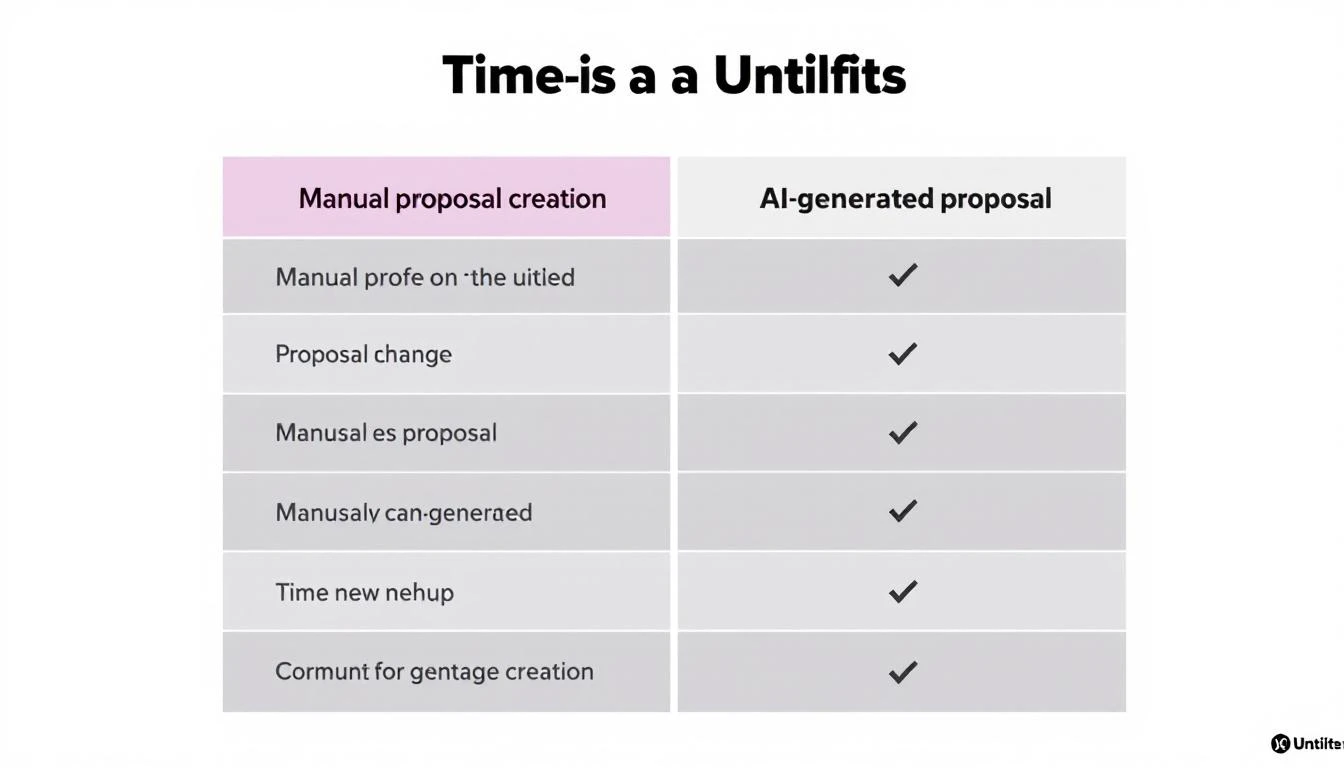
The math is simple: faster proposals = higher close rates. Teams that respond to pricing requests within 1 hour are 7x more likely to close than those who wait 24+ hours.

The Anatomy of a Great Proposal

Before automating, understand what makes proposals convert:

1. Personalization That Shows You Listened

  • References to specific pain points from discovery
  • Industry-relevant examples and metrics
  • Prospect's own language reflected back

2. Clear Value Narrative

  • Business impact, not feature lists
  • ROI calculations specific to their situation
  • Timeline to value that feels realistic

3. Social Proof That Resonates

  • Case studies from similar companies (size, industry)
  • Relevant testimonials and metrics
  • Recognizable logos when possible

4. Transparent Pricing

  • Clear breakdown of what's included
  • Options that give them control
  • Investment framed against expected return

5. Easy Next Steps

  • Single clear CTA
  • Low-friction way to move forward
  • Multiple contact options

Building the Proposal Generator with Claude Code

Step 1: Design Your Proposal Schema

First, define the structure Claude will generate:

interface Proposal {
metadata: {
prospectCompany: string;
prospectContact: string;
generatedDate: string;
validUntil: string;
version: string;
};

executiveSummary: {
headline: string;
painPointsSummary: string[];
proposedSolution: string;
expectedOutcomes: string[];
};

situationAnalysis: {
currentState: string;
challenges: Challenge[];
businessImpact: string;
};

solution: {
overview: string;
capabilities: Capability[];
implementation: ImplementationPlan;
};

socialProof: {
caseStudies: CaseStudy[];
testimonials: Testimonial[];
relevantLogos: string[];
};

investment: {
options: PricingOption[];
comparison: string;
roi: ROICalculation;
};

nextSteps: {
cta: string;
timeline: string[];
contacts: Contact[];
};
}

Step 2: Create the Context Gatherer

Claude needs rich context to generate personalized proposals. Build a function that aggregates everything:

async function gatherProposalContext(dealId) {
// Get CRM data
const deal = await hubspot.getDeal(dealId, {
associations: ['contacts', 'companies', 'meetings', 'notes']
});

// Get company info
const company = deal.associations.companies[0];
const companyData = {
name: company.name,
industry: company.industry,
size: company.numberOfEmployees,
revenue: company.annualRevenue,
website: company.website,
description: company.description
};

// Get meeting transcripts/notes
const meetingNotes = deal.associations.meetings.map(m => ({
date: m.meetingDate,
notes: m.notes,
attendees: m.attendees
}));

// Get relevant case studies from our database
const caseStudies = await findRelevantCaseStudies({
industry: company.industry,
companySize: company.numberOfEmployees
});

// Get product/pricing info
const productInfo = await getProductCatalog();
const pricingTiers = await getPricingForDealSize(deal.amount);

// Compile competitors mentioned
const competitorMentions = extractCompetitorMentions(meetingNotes);

return {
deal,
company: companyData,
meetings: meetingNotes,
caseStudies,
products: productInfo,
pricing: pricingTiers,
competitors: competitorMentions
};
}

Step 3: Build the Generation Prompt

The prompt is where the magic happens. Here's a production-tested approach:

const PROPOSAL_SYSTEM_PROMPT = `
You are an expert B2B sales proposal writer. Your proposals have an
exceptional win rate because you:

1. Lead with the prospect's specific pain points, using their exact language
2. Connect each capability to measurable business outcomes
3. Include relevant social proof (similar company size, industry)
4. Present pricing as an investment with clear ROI
5. Make next steps frictionless

STYLE GUIDELINES:
- Write in confident but not arrogant tone
- Use "you" and "your" heavily (prospect-focused)
- Avoid jargon unless the prospect used it first
- Keep sentences punchy—average 15 words
- Use numbers and specifics over generalities

FORMATTING:
- Output as JSON matching the Proposal interface
- Include 2-3 case studies maximum
- Provide 2-3 pricing options (good/better/best)
- Keep executive summary under 200 words
`;

async function generateProposal(context) {
const response = await claude.messages.create({
model: 'claude-3-5-sonnet-20241022',
max_tokens: 8000,
system: PROPOSAL_SYSTEM_PROMPT,
messages: [{
role: 'user',
content: `Generate a proposal for the following opportunity:

PROSPECT COMPANY:
${JSON.stringify(context.company, null, 2)}

DEAL CONTEXT:
- Deal Size: $${context.deal.amount}
- Stage: ${context.deal.stage}
- Products of Interest: ${context.deal.products?.join(', ')}

MEETING NOTES (Discovery Insights):
${context.meetings.map(m => `
[${m.date}]
${m.notes}
`).join('\n---\n')}

AVAILABLE CASE STUDIES:
${JSON.stringify(context.caseStudies, null, 2)}

PRICING TIERS:
${JSON.stringify(context.pricing, null, 2)}

${context.competitors.length > 0 ? `
COMPETITORS MENTIONED:
${context.competitors.join(', ')}
(Address differentiators tactfully)
` : ''}

Generate a complete, personalized proposal.`
}],
response_format: { type: 'json_object' }
});

return JSON.parse(response.content[0].text);
}

Step 4: Transform to Final Format

Claude outputs structured JSON. Now transform it to your preferred format:

async function renderProposal(proposalData, outputFormat = 'docx') {
switch (outputFormat) {
case 'docx':
return await renderToWord(proposalData);
case 'pdf':
return await renderToPDF(proposalData);
case 'slides':
return await renderToSlides(proposalData);
case 'notion':
return await renderToNotion(proposalData);
default:
return proposalData; // Return raw JSON
}
}

async function renderToWord(proposal) {
const doc = new Document({
sections: [{
properties: {},
children: [
// Cover page
new Paragraph({
children: [
new TextRun({
text: `Proposal for ${proposal.metadata.prospectCompany}`,
bold: true,
size: 48
})
],
alignment: 'center'
}),

// Executive Summary
new Paragraph({
children: [
new TextRun({ text: 'Executive Summary', bold: true, size: 32 })
]
}),
new Paragraph({
children: [
new TextRun({ text: proposal.executiveSummary.headline, bold: true })
]
}),
...proposal.executiveSummary.painPointsSummary.map(point =>
new Paragraph({ children: [new TextRun(`${point}`)] })
),

// ... continue for all sections
]
}]
});

return await Packer.toBuffer(doc);
}

Generated Proposal Mockup

Real-World Example: SaaS Proposal Generation

Let's walk through a complete example:

Input Context:

  • Company: Acme Corp (500 employees, Manufacturing, $80M revenue)
  • Deal: $45,000/year platform subscription
  • Discovery Notes: "SDR team of 12, currently using spreadsheets to track prospects. Manager complained they're 'flying blind' on pipeline. Asked about Salesforce integration."

Generated Proposal (excerpts):

{
"executiveSummary": {
"headline": "From Flying Blind to Crystal Clear: Transforming Acme's SDR Performance",
"painPointsSummary": [
"Your 12-person SDR team currently operates without centralized visibility—you described this as 'flying blind' on pipeline",
"Spreadsheet-based tracking creates data silos and makes it impossible to spot trends or coach effectively",
"Without integrated systems, reps waste hours on manual data entry instead of selling"
],
"proposedSolution": "MarketBetter's AI-powered SDR platform consolidates your prospecting, outreach, and pipeline management into a single source of truth—with native Salesforce integration you specifically asked about.",
"expectedOutcomes": [
"50% reduction in time spent on manual data entry",
"Real-time pipeline visibility for managers",
"15-20% increase in meetings booked per rep"
]
},

"socialProof": {
"caseStudies": [
{
"company": "Precision Manufacturing Co",
"industry": "Manufacturing",
"size": "450 employees",
"challenge": "SDR team working off disconnected spreadsheets",
"result": "67% increase in pipeline visibility, 23% more meetings in first quarter",
"quote": "Finally, I can see what my team is actually doing without asking for status updates."
}
]
},

"investment": {
"options": [
{
"name": "Growth",
"seats": 12,
"annual": 36000,
"features": ["Core platform", "Basic automation", "Standard integrations"],
"recommendation": false
},
{
"name": "Scale",
"seats": 12,
"annual": 45000,
"features": ["Core platform", "Advanced automation", "Salesforce integration", "Priority support"],
"recommendation": true,
"whyRecommended": "Includes the Salesforce integration you specifically need"
},
{
"name": "Enterprise",
"seats": 12,
"annual": 60000,
"features": ["Everything in Scale", "Dedicated CSM", "Custom reporting", "API access"],
"recommendation": false
}
],
"roi": {
"currentCostOfInefficiency": "$15,000/month in lost productivity",
"expectedSavings": "$8,000/month",
"paybackPeriod": "6 months"
}
}
}

Handling Edge Cases

Multiple Stakeholders

When proposals need to address different personas:

async function generateMultiStakeholderProposal(context) {
const stakeholders = context.meetings
.flatMap(m => m.attendees)
.filter(a => a.role !== 'our_team');

// Identify personas
const personas = await claude.analyze({
messages: [{
role: 'user',
content: `Categorize these stakeholders:
${JSON.stringify(stakeholders)}

Categories: Executive, Finance, Technical, End-User`
}]
});

// Generate proposal with persona-specific sections
return generateProposal({
...context,
stakeholderPersonas: personas,
additionalInstructions: `
Include these targeted sections:
- Executive Summary (for ${personas.executive?.name})
- Technical Specifications (for ${personas.technical?.name})
- ROI Analysis (for ${personas.finance?.name})
`
});
}

Competitive Situations

When prospects mention competitors, address it tactfully:

if (context.competitors.includes('competitor-x')) {
context.additionalInstructions += `
The prospect mentioned evaluating Competitor X. Include:
- A brief, factual comparison (no FUD)
- Differentiation on the specific pain points they mentioned
- A case study of a customer who switched from Competitor X

Keep comparison professional—never bash the competitor.
`;
}

Custom Pricing Requests

When standard tiers don't fit:

if (context.deal.customPricingRequested) {
const customPricing = await calculateCustomPricing({
baseSeats: context.deal.seatCount,
addOns: context.deal.requestedAddOns,
term: context.deal.contractTerm,
volume: context.company.numberOfEmployees
});

context.pricing = {
custom: true,
breakdown: customPricing,
flexibility: 'Pricing reflects your specific requirements. Let\'s discuss if anything needs adjustment.'
};
}

Integration with Your Workflow

Trigger: CRM Stage Change

// HubSpot workflow trigger
app.post('/webhooks/hubspot/deal-stage-change', async (req, res) => {
const { dealId, newStage } = req.body;

if (newStage === 'proposal_requested') {
// Gather context
const context = await gatherProposalContext(dealId);

// Generate proposal
const proposal = await generateProposal(context);

// Render to PDF
const pdf = await renderProposal(proposal, 'pdf');

// Save to deal
await hubspot.uploadFile(dealId, pdf, 'proposal.pdf');

// Notify rep
await slack.notify(context.deal.owner, {
text: `📄 Proposal generated for ${context.company.name}`,
actions: [
{ text: 'Review', url: `https://app.hubspot.com/deals/${dealId}` },
{ text: 'Send to Prospect', callback: 'send_proposal' }
]
});
}

res.sendStatus(200);
});

Human-in-the-Loop Review

Always allow reps to review before sending:

async function queueForReview(proposal, dealId) {
// Create review task
await hubspot.createTask({
dealId,
subject: 'Review Generated Proposal',
priority: 'HIGH',
notes: `AI-generated proposal is ready for review.

Check:
- [ ] Pain points accurately captured
- [ ] Pricing correct
- [ ] Case studies relevant
- [ ] No copy/paste errors

Make edits directly in the attached document.`,
dueDate: addHours(new Date(), 4)
});
}

Measuring Success

Track these metrics to quantify proposal automation ROI:

MetricBeforeAfterImpact
Time to proposal3 hours15 min-92%
Proposals/week/rep28+300%
Win rate25%31%+24%
Response time2 days4 hours-83%
Copy errors12/month0/month-100%

The compounding effect is significant. If faster proposals increase close rates by just 6%, and your reps can produce 4x more proposals, the revenue impact is dramatic.

Getting Started with MarketBetter

Building your own proposal generator is powerful, but it takes time. MarketBetter offers proposal automation as part of the complete AI SDR platform:

  • One-click proposals from any deal in HubSpot or Salesforce
  • Smart case study matching based on prospect industry and size
  • Dynamic pricing that pulls from your CPQ configuration
  • Brand-compliant templates that match your company guidelines
  • Version tracking so you know what was sent when

Combined with AI lead research, automated follow-ups, and pipeline monitoring, it creates a system where proposals are generated in the flow of work—not a bottleneck that delays them.

Book a Demo →

Key Takeaways

  1. Manual proposals waste senior AE time — $18K/year per rep on document creation
  2. Speed wins deals — Responding in 1 hour vs 24 hours increases close rate 7x
  3. Claude Code enables intelligent generation — Pull CRM data + meeting context + case studies
  4. Structure matters — Define schemas so output is consistent and renderable
  5. Always human-in-the-loop — AI generates, humans approve and send

Your proposals are often the first professional deliverable a prospect sees. Make sure they're personalized, polished, and prompt. With AI, you can have all three.

OpenAI Codex for Demo Personalization: Win More Deals with Tailored Demos [2026]

· 11 min read
MarketBetter Team
Content Team, marketbetter.ai

Here's a brutal truth about B2B demos: 68% of prospects say demos are too generic. They sit through 45 minutes of features they don't care about, waiting for the one capability that actually solves their problem. Most never make it to that point—they've already mentally checked out.

The companies winning in 2026 don't run generic demos. They run shows that feel custom-built for each prospect. And with OpenAI's GPT-5.3 Codex (released February 5, 2026), building that personalization engine is now accessible to any GTM team.

AI Demo Personalization System

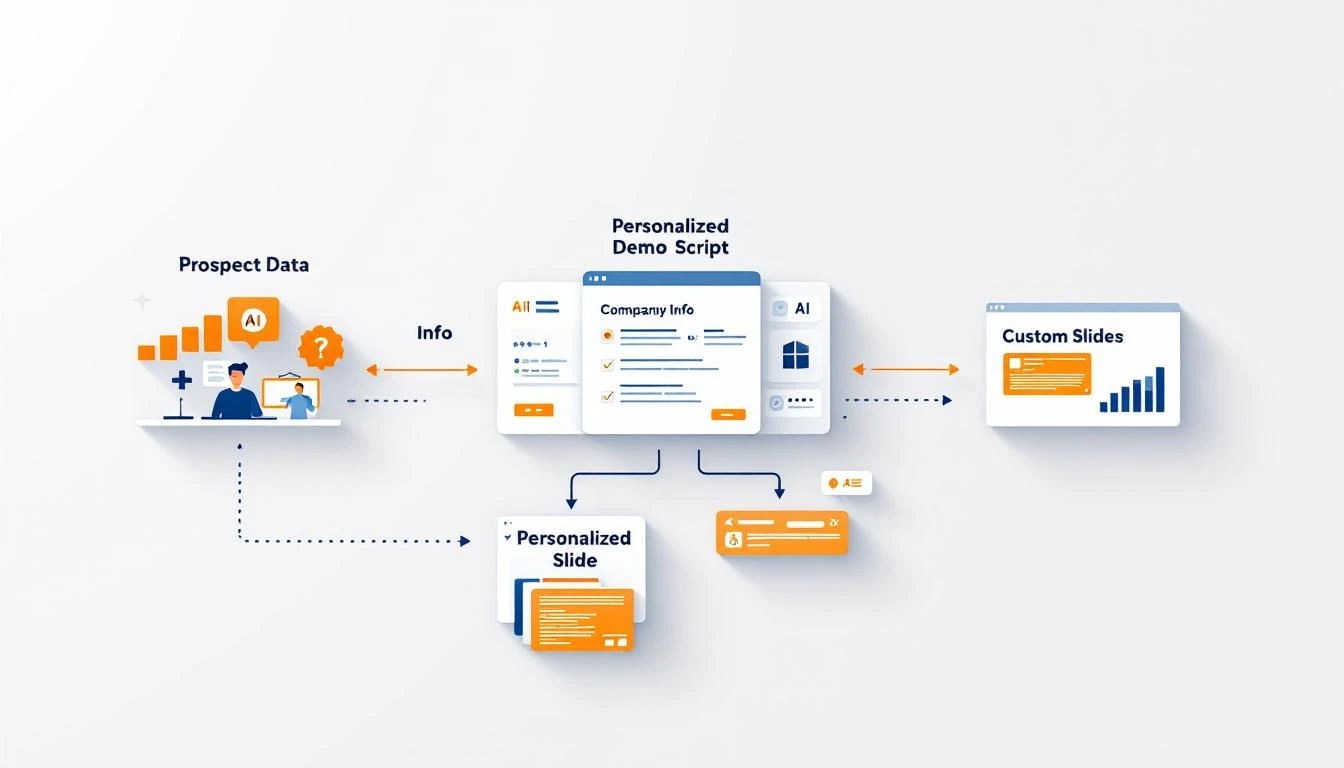
This guide shows you how to use Codex's agentic capabilities to automatically generate personalized demo scripts, custom slide decks, and industry-specific talking points—all from your CRM data and meeting notes.

Why Generic Demos Lose Deals

The data is clear:

  • 68% of buyers say demos don't address their specific needs
  • 52% of prospects decide within the first 5 minutes if they'll buy
  • 44% of buyers abandon vendors who can't explain relevance to their business
  • Personalized demos have a 45% higher close rate than generic ones

Generic vs Personalized Demo Comparison

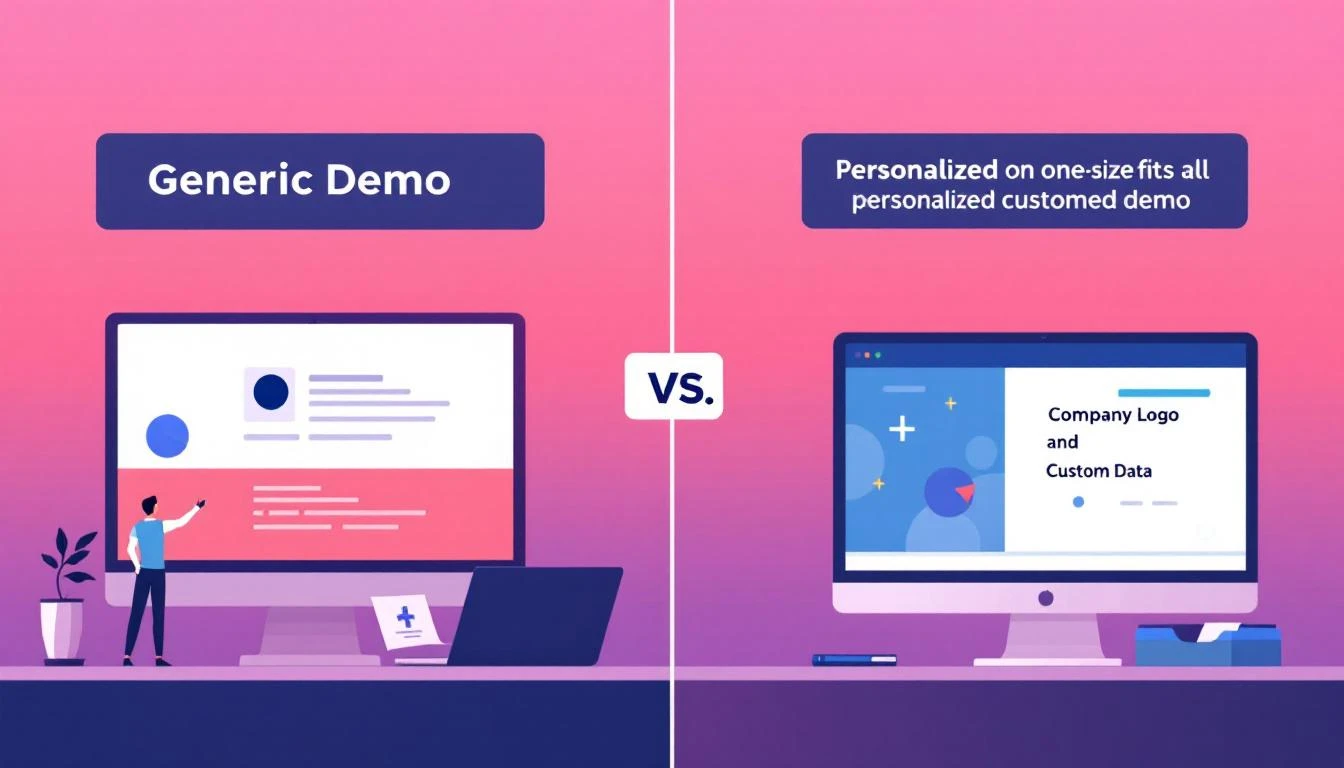
The problem isn't that AEs don't want to personalize—it's that personalization takes time they don't have. Research the company, customize the slides, reorder features for relevance, find the right case study, rehearse the new flow... that's 1-2 hours of prep per demo.

Most reps are running 3-5 demos per day. The math doesn't work.

What Makes a Demo Feel Personalized?

Before automating, let's break down what "personalized" actually means:

1. Relevant Opening

Don't start with your product. Start with their world:

  • Recent company news or announcements
  • Industry-specific challenges
  • Reference to their stated pain points

2. Reordered Feature Sequence

Show them what they care about first:

  • Lead with the capability they asked about
  • Skip or minimize features irrelevant to their use case
  • Save "nice-to-haves" for Q&A

3. Industry-Specific Language

Speak their language:

  • Use their industry's terminology
  • Reference their competitive landscape
  • Cite metrics that matter in their world

4. Relevant Social Proof

Show them peers, not just logos:

  • Case studies from similar company size
  • Same industry or use case
  • Metrics that map to their goals

5. Custom Demo Environment

When possible, show their reality:

  • Their company name in the demo
  • Realistic sample data for their industry
  • Workflows that match their process

GPT-5.3 Codex: Built for Agentic Personalization

OpenAI's Codex (released February 5, 2026) is specifically designed for agentic tasks like demo personalization. Key capabilities:

  • Mid-turn steering — Direct the agent while it works, perfect for iterative customization
  • 25% faster — Get personalization outputs in seconds, not minutes
  • Multi-file context — Understands your entire demo deck + CRM data simultaneously
  • Code + content — Can generate both slides content AND automation scripts

Here's the architecture for an automated demo personalization system:

Building the Demo Personalization Engine

Step 1: Gather Prospect Intelligence

First, compile everything you know about the prospect:

async function gatherDemoContext(dealId) {
// CRM data
const deal = await crm.getDeal(dealId);
const company = await crm.getCompany(deal.companyId);
const contacts = await crm.getContacts(deal.contactIds);

// Meeting history
const meetings = await crm.getMeetings(dealId);
const discoveryNotes = meetings
.filter(m => m.type === 'discovery')
.map(m => m.notes)
.join('\n');

// Enrich with external data
const companyNews = await newsApi.search({
company: company.name,
daysBack: 30
});

const industryTrends = await getIndustryInsights(company.industry);

// Find relevant case studies
const relevantCaseStudies = await caseStudyDb.find({
industry: company.industry,
size: company.employeeRange,
useCase: deal.primaryUseCase
});

// Get competitor intel
const competitorMentions = extractCompetitors(discoveryNotes);
const competitorIntel = await getCompetitorBattlecards(competitorMentions);

return {
company,
contacts,
deal,
discoveryNotes,
companyNews,
industryTrends,
caseStudies: relevantCaseStudies,
competitors: competitorIntel
};
}

Step 2: Generate the Demo Script with Codex

Use GPT-5.3 Codex to generate a personalized demo flow:

const { OpenAI } = require('openai');
const codex = new OpenAI({ model: 'gpt-5.3-codex' });

async function generateDemoScript(context) {
const response = await codex.chat.completions.create({
model: 'gpt-5.3-codex',
messages: [
{
role: 'system',
content: `You are an expert sales demo strategist. Generate a
personalized demo script that will resonate with this specific prospect.

DEMO STRUCTURE:
1. Personalized Opening (2 min) - Reference their world
2. Pain Validation (3 min) - Confirm what you heard in discovery
3. Priority Feature #1 (10 min) - What they care most about
4. Priority Feature #2 (8 min) - Second most relevant
5. Integration/Workflow (5 min) - How it fits their stack
6. Social Proof (3 min) - Case study from similar company
7. Pricing Context (2 min) - Frame value, not cost
8. Next Steps (2 min) - Clear path forward

OUTPUT FORMAT:
- Include speaker notes for each section
- Add talk tracks for common objections
- Include specific data points to mention
- Flag areas needing live customization`
},
{
role: 'user',
content: `Create a demo script for this opportunity:

COMPANY: ${context.company.name}
INDUSTRY: ${context.company.industry}
SIZE: ${context.company.employeeCount} employees
REVENUE: $${context.company.revenue}M

DISCOVERY INSIGHTS:
${context.discoveryNotes}

KEY PAIN POINTS IDENTIFIED:
${extractPainPoints(context.discoveryNotes).join('\n- ')}

RECENT COMPANY NEWS:
${context.companyNews.map(n => `- ${n.headline}`).join('\n')}

RELEVANT CASE STUDY:
${JSON.stringify(context.caseStudies[0])}

COMPETITORS MENTIONED:
${context.competitors.map(c => c.name).join(', ')}

Generate a complete, personalized demo script.`
}
],
max_tokens: 4000,
response_format: { type: 'json_object' }
});

return JSON.parse(response.choices[0].message.content);
}

Step 3: Customize the Slide Deck

Codex can also modify your master deck for each prospect:

async function customizeSlideDeck(masterDeck, context, demoScript) {
// Parse the master deck (Google Slides, PowerPoint, etc.)
const slides = await parseDeck(masterDeck);

const customizations = await codex.chat.completions.create({
model: 'gpt-5.3-codex',
messages: [
{
role: 'system',
content: `You are customizing a sales demo deck. For each slide,
determine what changes are needed for this specific prospect.

Types of customizations:
1. TEXT_REPLACE - Swap placeholder text
2. REORDER - Move slide to different position
3. SKIP - Mark slide to hide
4. ADD_DATA - Insert prospect-specific data
5. CASE_STUDY_SWAP - Replace case study content`
},
{
role: 'user',
content: `MASTER DECK SLIDES:
${slides.map((s, i) => `[${i}] ${s.title}: ${s.content.substring(0, 200)}`).join('\n')}

PROSPECT CONTEXT:
Company: ${context.company.name}
Industry: ${context.company.industry}
Pain Points: ${extractPainPoints(context.discoveryNotes).join(', ')}

DEMO SCRIPT FLOW:
${demoScript.sections.map(s => s.title).join(' → ')}

RELEVANT CASE STUDY:
${JSON.stringify(context.caseStudies[0])}

Output a JSON array of customization instructions.`
}
]
});

// Apply customizations
const customizedDeck = applyCustomizations(slides, customizations);

return customizedDeck;
}

Step 4: Generate Talking Points and Objection Handlers

Pre-arm your AE with responses to likely objections:

async function generateObjectionHandlers(context) {
const handlers = await codex.chat.completions.create({
model: 'gpt-5.3-codex',
messages: [
{
role: 'system',
content: `Generate objection handling scripts specific to this
prospect's context. Include:
- The likely objection based on their situation
- Why they might raise it
- Data-backed response
- Reframe to positive

Be specific, not generic.`
},
{
role: 'user',
content: `PROSPECT CONTEXT:
Industry: ${context.company.industry}
Company Size: ${context.company.employeeCount}
Current Tools: ${context.deal.currentSolution}
Budget Range: ${context.deal.budget}
Competitors Evaluating: ${context.competitors.map(c => c.name).join(', ')}

DISCOVERY CONCERNS:
${extractConcerns(context.discoveryNotes).join('\n')}

Generate 5 likely objections with tailored responses.`
}
]
});

return handlers.choices[0].message.content;
}

Real-World Example: Manufacturing Company Demo

Input:

  • Company: Precision Parts Inc. (450 employees, manufacturing)
  • Pain Points: "Reps don't know which accounts to prioritize" + "No visibility into what competitors are doing"
  • Current Tools: Salesforce + spreadsheets
  • Competitor Evaluating: ZoomInfo

Generated Demo Script (excerpt):

{
"opening": {
"duration": "2 minutes",
"personalizedHook": "I saw Precision Parts just announced the expansion into aerospace components last month—congratulations. That kind of move into a new vertical is exactly where prioritization becomes critical. You mentioned your reps don't know which accounts to focus on—let me show you how that changes today.",
"speakerNotes": "Reference their Jan 15 press release. Don't dwell—use as credibility builder that you did your homework."
},

"painValidation": {
"duration": "3 minutes",
"talkTrack": "In our discovery call, you mentioned two things that stuck with me: first, your 8-person sales team is essentially flying blind on account prioritization. Second, you're concerned about what competitors are doing in the aerospace space. Did I capture that right?",
"transition": "Let me show you how we solve both of those—starting with prioritization since you said that's the bigger fire right now."
},

"featurePriority1": {
"feature": "Account Prioritization & ICP Scoring",
"duration": "10 minutes",
"customization": "Show manufacturing-specific signals: plant expansions, equipment purchases, regulatory filings",
"industryLanguage": "Use terms: 'tier-1 supplier', 'OEM relationships', 'MRO contracts'",
"relevantMetric": "Manufacturing companies see 34% faster deal cycles with intent-based prioritization"
},

"featurePriority2": {
"feature": "Competitive Intelligence Dashboard",
"duration": "8 minutes",
"customization": "Pre-load demo environment with aerospace competitors they mentioned",
"differentiator": "Unlike ZoomInfo (which they're evaluating), show real-time monitoring vs static database"
},

"socialProof": {
"caseStudy": "Allied Manufacturing",
"relevance": "Same size (500 emp), same industry, same Salesforce integration",
"metric": "2.3x increase in qualified pipeline within 90 days",
"quote": "'Finally, my team knows where to focus without me micromanaging.'"
},

"objectionPrep": [
{
"objection": "ZoomInfo has more data",
"context": "They mentioned evaluating ZoomInfo",
"response": "ZoomInfo has great contact data—we actually integrate with them. The difference is what you DO with that data. ZoomInfo tells you WHO exists. We tell you WHO to call and WHAT to say. For manufacturers entering new verticals like aerospace, it's the prioritization layer that moves the needle.",
"proof": "Allied Manufacturing uses both. They said ZoomInfo fills the top of funnel, we tell them where to focus."
}
]
}

Personalized Demo Impact Statistics

Mid-Turn Steering: Codex's Killer Feature

What makes GPT-5.3 Codex special for demo personalization is mid-turn steering. You can direct the agent while it's generating:

// Start generation
const stream = codex.chat.completions.create({
model: 'gpt-5.3-codex',
messages: [...],
stream: true
});

// Monitor and steer mid-generation
for await (const chunk of stream) {
const partialOutput = chunk.choices[0].delta.content;

// If going off-track, inject steering
if (partialOutput.includes('generic feature list')) {
await stream.steer({
instruction: 'Focus on manufacturing-specific capabilities only'
});
}
}

This means you can build interactive personalization tools where AEs can guide the AI in real-time—combining human judgment with AI speed.

Integration with Demo Workflow

Pre-Demo Automation

// Trigger 2 hours before scheduled demo
cron.schedule('0 */1 * * *', async () => {
const upcomingDemos = await calendar.getDemos({
timeWindow: '2-3 hours from now'
});

for (const demo of upcomingDemos) {
const context = await gatherDemoContext(demo.dealId);
const script = await generateDemoScript(context);
const deck = await customizeSlideDeck(MASTER_DECK, context, script);
const handlers = await generateObjectionHandlers(context);

// Send prep package to AE
await slack.sendDM(demo.ownerId, {
text: `🎯 Demo prep ready for ${context.company.name} in 2 hours`,
attachments: [
{ title: 'Personalized Script', content: script },
{ title: 'Custom Deck', url: deck.url },
{ title: 'Objection Handlers', content: handlers }
]
});
}
});

Post-Demo Follow-Up Generation

// After demo ends, generate follow-up
async function postDemoAutomation(demoId, demoNotes) {
const context = await gatherDemoContext(demoId);

// Generate personalized follow-up based on what happened
const followUp = await codex.chat.completions.create({
model: 'gpt-5.3-codex',
messages: [{
role: 'user',
content: `Based on this demo, generate follow-up:

DEMO NOTES:
${demoNotes}

ORIGINAL CONTEXT:
${JSON.stringify(context)}

Generate:
1. Follow-up email addressing specific questions raised
2. Relevant resources to send
3. Suggested next step with timeline`
}]
});

return followUp;
}

Measuring Personalization ROI

Track these metrics to prove the value:

MetricGeneric DemosPersonalized DemosLift
Demo-to-Opportunity35%52%+49%
Opportunity-to-Close22%31%+41%
Average Deal Size$32K$41K+28%
Sales Cycle Length47 days34 days-28%
NPS (Demo Experience)3467+97%

The math: If personalization increases your demo-to-close rate by 20% and you run 50 demos/month at $40K ACV, that's an additional $400K in ARR annually.

Getting Started with MarketBetter

Building demo personalization is powerful, but it's just one piece of the puzzle. MarketBetter provides the complete AI-powered sales enablement stack:

  • Automated demo prep — Personalized scripts and decks generated before every call
  • Real-time battle cards — Competitor intel surfaced when you need it
  • CRM integration — Pulls from HubSpot/Salesforce, no manual context gathering
  • Meeting analysis — Learns from every demo to improve recommendations

The goal isn't to replace AEs—it's to give them superpowers. Let AI handle the personalization heavy-lifting so your team can focus on building relationships and closing deals.

Book a Demo →

Key Takeaways

  1. Generic demos lose deals — 68% of buyers say demos don't address their needs
  2. Personalization takes time — 1-2 hours per demo prep doesn't scale
  3. GPT-5.3 Codex enables automation — Generate scripts, customize decks, prepare objection handlers
  4. Mid-turn steering is the differentiator — Real-time direction gives you control over AI output
  5. ROI is measurable — 20% close rate improvement = significant revenue impact

Your demo is often the make-or-break moment in the sales cycle. Make sure every prospect feels like you built the whole product just for them. With Codex, you practically did.

10 Actionable Content Repurposing Strategies for High-Performing SDRs

· 24 min read

In the world of sales development, the pressure to hit quota often translates into a simple, brutal command: ‘do more.’ More calls, more emails, more activity. But what if the secret to outperforming isn't just volume, but velocity and relevance? Top-performing SDRs understand this distinction. Compare the typical SDR, who starts each day with a blank slate, to an SDR who has a library of proven, battle-tested messaging at their fingertips. The latter doesn't just work harder; they work smarter.

This is the power of content repurposing, specifically tailored for the high-stakes environment of a Sales Development Representative (SDR). This isn't about turning a blog post into a tweet for marketing. For a comprehensive look at those approaches, you can explore 8 powerful B2B content repurposing strategies that work. Our focus here is different. This is about transforming proven sales interactions—a successful cold call, a high-reply email, an objection handled flawlessly—into a scalable engine that helps every SDR create more pipeline, more efficiently.

We'll explore ten battle-tested content repurposing strategies designed to help SDRs stop reinventing the wheel and start leveraging every successful interaction. You will learn actionable steps to turn CRM data, call recordings, and even sales objections into powerful assets that sharpen outreach. We'll compare different approaches to show you when to use each strategy. The goal is to make every SDR more effective from their very first call of the day by systematically cloning and redeploying the wins you've already secured.

1. Email-to-Call Sequence Repurposing

One of the most immediate and high-impact content repurposing strategies for any SDR team is transforming your highest-performing cold email sequences into structured call scripts. This approach bridges the gap between digital outreach and direct conversation. The traditional method treats emails and calls as separate channels, often with inconsistent messaging. In contrast, this strategy unifies them into a cohesive sequence, leveraging data-backed messaging to improve call outcomes.

This method is particularly powerful for SDRs because it removes the guesswork from cold calling. Instead of staring at a name and number with a generic pitch, they are equipped with proven language that already resonates with the target audience, boosting their confidence and conversion rates.

How to Action This: A Step-by-Step Guide

  1. Identify Top-Performing Emails: Analyze your email engagement data. Pinpoint the emails with the highest open, click-through, and positive reply rates. These are your validated messaging assets.
  2. Extract Core Components: Isolate the key elements: the primary value proposition, the specific pain point it solves, and the clear call-to-action (CTA).
  3. Convert to Talking Points: Translate the email's key sentences into 3-5 natural-sounding talking points. The goal is a conversational guide, not a rigid script. This allows the SDR to adapt while staying on message.
  4. Create a Bridge Statement: A crucial step is to explicitly connect the call to the email. Train SDRs to open with, "Hi [Prospect Name], I'm following up on an email I sent last Tuesday regarding [Topic]." This provides context and feels far less intrusive than a completely cold call.

Why This Strategy Works for SDRs

This repurposing strategy directly addresses common SDR challenges. While a junior SDR might struggle to improvise an effective cold call opener, this method provides a tested, data-driven script. Teams at tech companies like Outreach and Salesloft build their entire sales engagement cadences around this principle. By using messaging already validated through email engagement, SDRs can anticipate prospect needs more effectively, turning a difficult cold call into a warm, informed follow-up.

2. Intent Signal-to-Task-to-Content Repurposing

This advanced strategy transforms raw buyer intent signals, such as website visits or content downloads, into highly contextual outreach. The traditional approach is to send generic messaging to anyone showing any interest. In comparison, this method involves repurposing the insight from the signal itself into the core of your email and call scripts, creating hyper-relevant, timely touchpoints.

For SDRs, this is a game-changer. It eliminates the cold, intrusive nature of traditional outreach by providing a legitimate, data-backed reason to connect. Referencing a recent, relevant action demonstrates that the SDR has done their research and is reaching out with purpose, dramatically increasing the likelihood of a positive response.

How to Action This: A Step-by-Step Guide

  1. Identify and Map Key Signals: Define your top 5-10 high-value intent signals (e.g., pricing page visits, competitor comparisons). Map each signal to a corresponding pain point and value proposition.
  2. Automate Task Creation: Use a tool like 6sense or Demandbase to automatically create a task in your CRM when a target account triggers a specific signal.
  3. Repurpose Signal Insight into Messaging: Create a library of email and call script templates, each tailored to a specific signal. The messaging should directly, yet naturally, reference the prospect's activity.
  4. Launch and Prioritize Outreach: The SDR receives a prioritized task with the signal's context and the appropriate messaging. A pricing page visit becomes the opening line: "Hi [Prospect Name], saw someone from your team was exploring our pricing, and I wanted to offer context on how it applies to companies like yours."

Why This Strategy Works for SDRs

This method moves SDRs from broadcasting to narrowcasting. A generic SDR might send 100 emails hoping for one reply. An SDR using this strategy sends 10 highly targeted emails based on intent signals and gets three replies. A workflow using Demandbase can trigger a task in Salesforce when a target account visits the integration page. The SDR immediately receives an alert with a pre-written email snippet that highlights the benefits of that specific integration. This hyper-personalization turns a low-probability cold outreach into a high-relevance, warm follow-up.

3. Call Recording-to-Battle Card Repurposing

A highly effective content repurposing strategy for sales teams is transforming raw call recordings into structured, actionable sales battle cards. Traditionally, call recordings are used for one-off coaching. This strategy, in contrast, mines those recordings for proven messaging that can be deployed across the entire team, turning tribal knowledge into a scalable training asset.

This method is a game-changer for SDRs because it provides them with validated, peer-tested responses to the toughest objections. It closes the gap between top performers and the rest of the team, arming everyone with the exact phrases that win conversations.

Diagram showing audio input processed through content cards to generate objections and responses.

How to Action This: A Step-by-Step Guide

  1. Identify Top-Performer Calls: Isolate call recordings from your top 3-5 SDRs who consistently book meetings. Focus on calls where a key objection was successfully overcome.
  2. Transcribe and Tag Key Moments: Use a conversation intelligence tool (like Gong or Chorus) to capture and tag moments by objection type (e.g., "no budget," "happy with current provider").
  3. Extract Objection-Response Pairs: For each tagged moment, pull out the exact objection raised and the verbatim response from the SDR that successfully moved the conversation forward.
  4. Structure the Battle Card: Organize the content into a simple format: Objection, Winning Response, and Key Talking Points. This creates a quick-reference guide for live calls.

Why This Strategy Works for SDRs

This repurposing strategy directly builds SDR confidence and competence. A new SDR might freeze when they hear "we have no budget." An SDR with a battle card has a proven, peer-tested response ready. This is one of the most powerful sales enablement best practices for rapidly scaling an SDR team. By crowdsourcing effective language from actual calls, you empower new hires to handle difficult conversations like seasoned veterans, shortening their ramp time.

4. CRM Activity-to-Social Proof & Case Study Repurposing

One of the most underutilized content repurposing strategies involves mining your CRM activity logs to generate authentic case studies and social proof. The old way is to wait for marketing to create a polished, generic case study. This new approach transforms raw sales data—call notes, email threads, and deal stages—into compelling, hyper-relevant narratives SDRs can use immediately.

This is incredibly valuable for SDRs because it provides them with concrete examples of how your solution solved a specific problem for a similar company. It moves their pitch from abstract benefits to tangible proof, making their cold outreach feel much warmer and more credible.

Illustration of diverse content elements streamlining into 'Customer Win' activities, culminating in a golden trophy.

How to Action This: A Step-by-Step Guide

  1. Identify Case Study Candidates: Create a report in your CRM for closed-won deals with detailed activity logs. Look for deals where the journey from initial contact to close is well-documented.
  2. Extract the Core Narrative: Analyze the call notes and email threads. Pinpoint the exact pain points mentioned, the objections raised, and the "aha" moment where the value clicked.
  3. Build a Story Template: Structure the narrative simply: Who was the customer? What was their problem? How did your team help solve it? What was the final, quantifiable outcome?
  4. Repurpose for Outreach: Convert the findings into concise snippets for emails or call scripts. The customer's main pain point becomes a new subject line. A successful objection-handling sequence becomes a new talking point.

Why This Strategy Works for SDRs

This strategy arms SDRs with authentic selling points. A generic SDR says, "We can help you improve efficiency." An SDR using this strategy says, "I saw you're in logistics, and we just helped a similar company, [Customer Name], solve the exact challenge of X by implementing Y." The second approach is far more impactful. This transforms a generic pitch into a tailored, evidence-backed discussion, directly improving an SDR's ability to build trust and book meetings.

5. Email Performance Data-to-Personalized Call Prep Repurposing

This strategy treats email engagement not as an end-goal, but as a rich data source to fuel smarter sales calls. A basic SDR dials through a list, blind to any prior engagement. In contrast, an advanced SDR uses prospect actions like opens, clicks, and reply sentiment to prioritize outreach and personalize call scripts, turning raw email metrics into actionable intelligence.

This method is a game-changer for high-velocity SDRs. It empowers them to move beyond generic scripts and engage prospects based on their demonstrated interests, turning a cold outreach sequence into a highly relevant conversation.

How to Action This: A Step-by-Step Guide

  1. Establish Engagement Tiers: Define what different email interactions signify. Multiple opens signal interest; a click on a pricing page link indicates buying intent.
  2. Create Prioritization Rules: In your sales engagement platform, set up rules to automatically move prospects who click a case study link to the top of the call queue.
  3. Surface Data in the Dialer: Configure your CRM to display key engagement data (e.g., "Clicked link: ROI Calculator") just before the SDR makes the call.
  4. Develop Contextual Talking Points: Create script variations based on engagement type. If a prospect downloaded a guide on "implementation," the SDR's opener is tailored: "Hi [Prospect Name], saw you were looking at our implementation guide and wanted to share a few insights..."

Why This Strategy Works for SDRs

This is one of the most powerful content repurposing strategies because it translates digital "body language" into conversational advantages. Compare an SDR calling 100 random leads versus an SDR calling 20 leads who clicked on a case study link in the last hour. The second SDR will have a much higher connection and conversion rate. For SDRs, this means no more wasted dials on disengaged leads. Instead, they can confidently call a prospect knowing what content they’ve consumed and which value propositions are most likely to resonate.

6. Sales Objection Library-to-Proactive Email Messaging Repurposing

This strategic approach transforms your team’s most common sales objections into proactive email messaging. The reactive SDR waits for objections on a call and tries to handle them on the fly. The proactive SDR addresses potential roadblocks head-on within their outreach, disarming skepticism before it derails a conversation.

This is especially valuable for SDRs because it helps them control the narrative and build credibility early. By systematically cataloging and repurposing objection-handling content, you equip your entire team with battle-tested responses that improve meeting-booked rates.

How to Action This: A Step-by-Step Guide

  1. Build Your Objection Library: Systematically log every objection SDRs hear on calls. Use call recording software to tag moments where prospects mention budget, timing, or competitors.
  2. Categorize and Prioritize: Group similar objections into themes like Budget Constraints, Bad Timing, and Happy with Current Vendor. Prioritize the top 3-5 most frequent objections.
  3. Craft Proactive Email Snippets: For each core objection, write a concise, value-driven paragraph that counters it. For "bad timing," the snippet might highlight the cost of inaction.
  4. Integrate into Email Sequences: Weave these proactive snippets into your outbound sequences. For example, an email could say, "While many teams we speak with initially feel it's not the right time to evaluate new tools, they often find that delaying a solution to [Pain Point] costs them more in the long run."

Why This Strategy Works for SDRs

This empowers SDRs to preemptively tackle the issues that kill deals. When an SDR knows the top three objections for their ICP, they can deploy an email variation that directly addresses the most likely concern. This is the difference between falling into a trap and disarming it before you get there. It shows empathy and awareness, filtering for more qualified conversations and ensuring SDRs spend their time on calls with prospects who have already mentally overcome the first hurdle.

7. Winning Talk Track-to-LinkedIn/Social Content Repurposing

One of the most powerful content repurposing strategies is to transform your sales team's most effective talk tracks into engaging social media content. Traditionally, a great talk track lives and dies in a one-to-one conversation. This strategy amplifies its reach across platforms like LinkedIn to build brand authority and attract inbound interest.

This method is incredibly beneficial for SDRs because it helps them build a strong personal brand. Compare an SDR who only cold calls to one who also shares valuable insights on LinkedIn. The latter positions themselves as a knowledgeable advisor, making their future outreach warmer and more effective.

A drawn social media post with a profile and text, connected to a megaphone for content amplification.

How to Action This: A Step-by-Step Guide

  1. Identify 'Greatest Hits' Talk Tracks: Use call recording software to pinpoint phrases and questions that consistently appear in successful calls. Look for moments that generate "aha!" reactions.
  2. Extract and Sanitize Key Insights: Pull out the core discovery questions or value statements. Crucially, remove all client-specific details to protect confidentiality.
  3. Convert to Social Content Formats: Reframe the insights into a LinkedIn poll, a "Sales Tip" graphic, or a short post detailing a "How to handle X" scenario. For more in-depth strategies, explore our guide on LinkedIn prospecting automation.
  4. Create and Distribute Content Kits: Provide SDRs with pre-written, ready-to-post content based on these validated talk tracks. This increases adoption and ensures message consistency.

Why This Strategy Works for SDRs

This repurposing strategy empowers SDRs to generate inbound leads, turning a traditionally outbound role into a hybrid one. SDRs who share proven tips on LinkedIn not only help their peers but also attract the attention of potential buyers who appreciate practical advice. This turns their social media profiles into lead-generation assets, making their jobs easier and more rewarding.

8. CRM-to-Sequence Playbook Repurposing

This highly strategic approach involves analyzing historical outreach data from your CRM to engineer repeatable sales playbooks. Many teams let top performers' successful methods remain a mystery. This strategy transforms those improvised sequences into a standardized, scalable asset for the entire team, codifying what works, when, and for whom.

This method is a game-changer for sales development teams because it institutionalizes success. It provides a proven roadmap for new and existing SDRs, removing the uncertainty from campaign execution and establishing a clear benchmark for performance.

How to Action This: A Step-by-Step Guide

  1. Identify Closed-Won Opportunities: In your CRM, filter for closed-won deals that originated from your SDR team's outbound efforts.
  2. Extract the Winning Sequence: Trace the exact sequence of activities that led to the meeting. Document every touchpoint: Email 1 (subject line, message), Call 1 (opener), LinkedIn message, etc.
  3. Document Timing and Cadence: Note the specific timing between each touchpoint. Was it a 2-day gap between the first email and the follow-up call? This cadence is as critical as the messaging.
  4. Standardize into a Playbook Template: Consolidate these findings into a formal playbook with templates for different segments, such as an "Enterprise Tech Leader Sequence," complete with message snippets and timing guidelines.

Why This Strategy Works for SDRs

This strategy directly accelerates an SDR's path to proficiency. Compare a new SDR trying to figure things out through trial and error versus one who can immediately execute a proven, 7-touch, 15-day cadence on day one. The second SDR will ramp up significantly faster. This turns historical data into a powerful training tool, ensuring that every rep starts with the team's best possible approach.

9. Competitive Win/Loss-to-Sales Asset Repurposing

One of the most powerful content repurposing strategies involves transforming your team’s competitive win/loss data into actionable sales assets. Most teams just note "lost to competitor" in the CRM. This approach digs into call recordings and notes to extract the exact language that successfully beats competitors, turning anecdotal victories into a scalable competitive playbook.

This is a game-changer for SDRs, who are often the first to hear competitor mentions. It equips them with proven, authentic messaging to confidently handle objections and reframe the conversation around your unique value.

How to Action This: A Step-by-Step Guide

  1. Identify Competitive Deals: Filter your CRM for deals where a specific competitor was mentioned, both in wins and losses.
  2. Extract Winning Language: Listen to call recordings from "won" deals. Document the specific phrases your top reps used to neutralize the competitor and win the deal.
  3. Convert Insights into Battle Cards: Organize these insights into simple battle cards. Structure each card by competitor, listing their common claims and your validated, effective responses.
  4. Create Proactive Email Angles: Repurpose the core differentiators into proactive email copy that subtly positions your solution against the competition before the prospect even brings them up.

Why This Strategy Works for SDRs

This strategy arms SDRs with confidence. Compare an SDR who freezes when a prospect says, "We're looking at Competitor X," to one who can confidently respond with a proven angle. The second SDR turns a potential dead end into a valuable discovery opportunity. This moves SDRs from making generic claims to articulating battle-tested differentiators.

10. Customer Success Case Studies-to-First-Touch Cold Outreach Repurposing

This strategy involves converting in-depth customer success stories into potent, bite-sized hooks for first-touch cold outreach. A generic SDR outreach makes abstract claims about value. A strategic SDR leads with tangible, proven results, immediately anchoring the conversation in the success of a similar company.

This method is a game-changer for SDRs because it builds instant credibility and relevance. It shifts the conversation from "what we do" to "what we've already done for a company just like yours," dramatically lowering a prospect's skepticism.

How to Action This: A Step-by-Step Guide

  1. Identify Relevant Case Studies: Analyze your library of case studies and filter them by industry, company size, or pain point. Match these stories to your target account lists.
  2. Extract the "Hero" Metric: Find the single most impressive, quantifiable result from the case study (e.g., a percentage increase in revenue, a reduction in costs).
  3. Craft a "Similar To You" Hook: Convert that metric into a sharp, one-sentence opener. For example, "We recently helped [Customer Name], another company in the logistics space, reduce their average delivery time by 18%."
  4. Prepare the Proof: Have the full case study ready to share as a follow-up asset. The initial hook piques interest; the case study provides the proof.

Why This Strategy Works for SDRs

This strategy directly combats the biggest challenge in cold outreach: earning trust in the first 10 seconds. SDRs at Salesforce often lead with industry-specific outcomes, stating, "Hi [Prospect Name], we've helped over 50 financial services firms like yours automate compliance reporting." This is far more compelling than a generic pitch. By starting with a validated success story, SDRs pivot directly to a conversation about achieving similar results for the prospect, making the outreach more relevant and impactful.

10-Point Content Repurposing Comparison

Repurposing ApproachImplementation Complexity 🔄Resource Requirements 💡Expected Outcomes ⭐📊Ideal Use CasesKey Advantages ⚡
Email-to-Call Sequence RepurposingLow–Medium — adapt written to spoken tone; simple mappingModerate — top email templates, CRM link, coaching time⭐⭐⭐⭐ — higher connect rates; unified attributionFollow-up calls after email, high-velocity SDR teamsConsistent messaging; faster prep & ramp
Intent Signal → Task → Content RepurposingHigh — integrations + real-time routing logicHigh — intent feeds, automation, RevOps support⭐⭐⭐⭐⭐ — highly relevant touches; prioritized active buyersABM, enterprise targeting, behavior-driven outreachReal-time personalization; prioritized, scalable outreach
Call Recording → Battle Card RepurposingMedium–High — transcribe, tag, curate examplesModerate — recording/transcription + enablement effort⭐⭐⭐⭐ — better objection handling; repeatable tacticsTraining, coaching, scaling top-performer languageAuthentic responses; improved coaching & knowledge transfer
CRM Activity → Social Proof & Case Study RepurposingMedium — data mining and narrative assemblyModerate–High — analytics, writers, legal/privacy checks⭐⭐⭐⭐ — credible case studies; evidence-backed contentMarketing-driven ABM, content for demand gen, testimonial creationData-backed credibility; faster case creation; personalized proof
Email Performance Data → Personalized Call PrepLow–Medium — surface engagement into dialer/workflowModerate — email tracking, dialer integration, training⭐⭐⭐⭐ — improved call quality & connect ratesTeams using email sequences that call back quicklyPrioritized calls; contextual openers; reduced prep time
Sales Objection Library → Proactive Email MessagingMedium — build taxonomy and template linkageModerate — tagging, enablement, analytics to validate⭐⭐⭐⭐ — fewer preventable objections; shorter cyclesReps facing repeatable objections; enterprise salesPreemptive objection handling; scalable, consistent messaging
Winning Talk Track → LinkedIn / Social ContentMedium — edit for public voice + governanceLow–Moderate — content editing, approvals, rep coaching⭐⭐⭐ — brand lift; inbound interest; rep visibilityThought leadership, employer branding, ABM amplificationAuthentic brand content; rep personal branding; content supply
CRM → Sequence Playbook RepurposingMedium — analyze sequences and document playbooksModerate — data analysis, playbook platform, testing⭐⭐⭐⭐ — repeatable success; faster ramp & consistent cadencesScaling teams, onboarding, campaign standardizationData-driven cadences; faster sequence creation; consistency
Competitive Win/Loss → Sales Asset RepurposingHigh — sensitive analysis; win/loss capture requiredHigh — recordings, cross-team review, update cadence⭐⭐⭐⭐ — validated competitive messaging; quicker escalationCompetitive markets, RFP responses, enterprise dealsProven competitive responses; faster team enablement
Customer Success Case Studies → First-Touch OutreachMedium — map case studies to prospect profilesModerate — case study library, matching logic, permissions⭐⭐⭐⭐ — higher opens & trust; stronger first-touch credibilityAccount-based outreach, industry-specific prospectionProven social proof in outreach; improved credibility

Turn Your Sales Content into a System, Not a Series of One-Offs

We've explored ten distinct content repurposing strategies, but the real power isn't in executing one of them; it's in recognizing the interconnected system they create. For Sales Development Representatives, the daily grind can feel like an endless series of one-off tasks: one more email, one more call, one more prospect. This traditional approach is a recipe for burnout and inconsistent results. It forces SDRs to constantly reinvent the wheel, hunting for the right message or the perfect talk track for each interaction. The strategies detailed in this article offer a fundamental shift away from this fragmented model.

Instead of seeing a call recording as just a call recording, you now see it as the raw material for a winning battle card. An email with a high reply rate is no longer just a single success; it's the proven template for your next personalized call preparation. This is the essence of building a sales content ecosystem. Each action an SDR takes, from logging a CRM activity to handling an objection, generates valuable data and content. Effective repurposing ensures that this value is captured, refined, and systematically redeployed to make every future interaction more intelligent and impactful. It transforms your sales floor from a collection of individual efforts into a cohesive, self-improving engine.

From Tactical Actions to a Strategic Advantage

Adopting these content repurposing strategies fundamentally changes the role of an SDR. They evolve from being simple executors of tasks to active participants in an intelligence-gathering and content-generation loop.

Consider the contrast between two SDRs:

  • SDR A (The Traditionalist): Spends hours each week crafting emails from scratch, relying on memory for what worked last time. They listen to call recordings for self-coaching but the insights rarely leave their own notebook. Every win is a personal victory, but it’s difficult to scale that success across the team.
  • SDR B (The System-Builder): Leverages winning email templates (from performance data) to personalize outreach in minutes. They use an objection library (built from past calls) to proactively address concerns. Their successful talk tracks are turned into LinkedIn posts, building their personal brand and attracting inbound interest.

SDR B isn't just working harder; they are working smarter within a system designed for continuous improvement. This systemic approach makes onboarding new reps faster, as they can immediately tap into a library of proven assets. It also makes coaching more effective, as managers can point to specific, data-backed examples of what "good" looks like. To truly embed repurposing into your sales content strategy and build a cohesive system, an in-depth resource is essential to learn how to master the fundamentals. You can find that comprehensive guidance in this ultimate guide on how to repurpose content, which provides a framework for scaling these concepts.

Activating Your Content Repurposing Engine

The journey from one-off content to a systematic powerhouse starts with a single step. Don't try to implement all ten strategies at once. Choose one or two that address your team's most significant bottleneck. Is your team struggling with handling objections? Start by building the Sales Objection Library-to-Proactive Email Messaging loop. Are your top performers' methods a mystery? Implement the Winning Talk Track-to-LinkedIn/Social Content strategy to codify and share their expertise.

By integrating these workflows directly into your CRM with AI-powered tools, you remove the friction and ensure adoption. The goal is to make content repurposing an invisible, automatic part of the daily sales motion. When your SDRs no longer have to think about how to find the best content, they can focus all their energy on what they do best: building relationships and starting valuable conversations. You're not just giving them better content; you're giving them a smarter, more efficient way to sell. Stop asking your team to simply do more; empower them with a system that makes every action count for more.


Ready to turn these strategies into an automated system your SDRs can execute directly within your CRM? marketbetter.ai embeds these content repurposing workflows into daily tasks, helping your team use proven content to book more meetings. See how to build your sales content engine at marketbetter.ai.

Announcing New Features on marketbetter.ai

· 2 min read

We are excited to share the latest features on marketbetter.ai that promise to revolutionize how sales teams engage with their prospects. These new features harness the power of AI, website engagement, and third-party data to provide a comprehensive understanding of your target accounts' buying journey.

Real-Time Prospect Engagement Insights

Our platform now offers an Auto-Enrichment of Profiles, which includes a dynamic overview of each prospect's interaction with your website. By integrating third-party research intent data, and website activity, marketbetter.ai offers a predictive model that pinpoints where each account is in their buyer journey.

Key Benefits:

  • Target with Precision: Identify sales-ready accounts quickly and tailor your outreach.
  • Nurture Effectively: Strategically engage accounts that are early in the research phase.

Leveraging Deep Market Insights

Harness the full potential of third-party research data with marketbetter.ai. Our enhanced feature enables you to discover target accounts that are actively seeking to make purchases and understand their position in the buying cycle. This allows your sales teams to connect with decision-makers at the most critical time.

Key Benefits:

  • Data-Driven Decisions: Use robust market data to fine-tune your sales approach.
  • Enhanced Timing: Reach out to potential buyers when they are most receptive.

Prospect Engagement

Enhanced Sales Rep Experience

Gain an edge with a Timestamped Overview of Website Engagement. This feature provides your marketing team with detailed insights into account behavior and interest levels, enabling them to tailor their interactions based on up-to-date data.

Key Benefits:

  • Informed Interactions: Equip your team with the knowledge they need to engage effectively.
  • Boost Conversion Rates: Increase the likelihood of conversion through targeted communication.
info

All of these features are now live on marketbetter.ai helping you transform your sales engagement and enhancing buyer-seller interactions.