
7 posts tagged with "objection handling"

View All Tags

A Guide to Overcoming Sales Objections and Closing More Deals

· 23 min read

Overcoming sales objections isn't about having the perfect comeback for everything. It’s the art of turning a prospect’s hesitation into a real conversation. The difference between average and elite performers is that the latter treats an objection not as a rejection, but as a request for more information.

The whole game is about diagnosing the true concern—is this really about need, urgency, trust, or budget?—and addressing that with genuine understanding. Forget the scripted rebuttals. An actionable approach means listening first, then guiding the conversation based on what you hear.

How to Diagnose the Real Sales Objection

This is where most reps get it wrong. They treat objections like roadblocks to bulldoze through. They hear "it's too expensive" and immediately launch into a defense of the price. That reactive approach just creates friction and misses the entire point. In contrast, an actionable, diagnostic approach builds trust.

A sales objection isn't a "no." It's an invitation to dig deeper. When a prospect raises a concern, they're handing you a clue about what’s holding them back. Your first job isn't to talk—it's to listen and diagnose.

From Generic Scripts to Accurate Diagnosis

Think about the difference between a generic, scripted response and a tailored, diagnostic one. A generic script is like a one-size-fits-all prescription; it rarely addresses the specific ailment. Top-performing reps act more like a doctor; they ask questions to understand the root cause before recommending a solution.

This diagnostic mindset is everything in modern objection handling.

Instead of trying to memorize dozens of canned responses, focus on categorizing pushback into four fundamental types. This actionable step makes your life way simpler and helps you get to the heart of the issue fast.

You’ll find nearly every objection falls into one of these buckets:

  • Need: The prospect just doesn't see how your solution solves a problem they actually care about.
  • Urgency: They might see the problem, but don’t think it’s pressing enough to solve right now.
  • Trust: The prospect is skeptical of you, your company, or the results you're promising.
  • Budget: They believe the financial investment is bigger than the value they'll get in return.

This decision tree gives you a simple flow for slotting objections into these four core types.

A sales objection diagnosis flowchart illustrating steps to address customer concerns about need, urgency, trust, and budget.

When you can visualize the path from hearing an objection to pinpointing its true nature, you train yourself to pause and think strategically instead of just reacting. This is a practical, actionable skill that improves with every call.

Diagnosing the Four Core Types of Sales Objections

Here’s a quick cheat sheet to help you categorize pushback on the fly and figure out what’s really going on under the surface. This turns diagnosis into a repeatable action.

Objection TypeCommon Phrases You'll HearWhat It Really MeansYour Actionable Goal
Need"We don't need this."
"We're happy with what we have."
"I don't see a problem big enough to solve."
"You haven't connected to my pain."
Uncover a hidden or undervalued business pain. Connect your solution to their goals.
Urgency"Call me next quarter."
"Now isn't a good time."
"This isn't a top priority."
"I have bigger fires to put out right now."
Attach a real cost to their inaction. Show them why waiting is more painful than acting.
Trust"I've never heard of you."
"Send me some info."
"I'm not sure if you're credible."
"Can your solution actually deliver?"
Build credibility with social proof, relevant case studies, or a low-risk next step.
Budget"It costs too much."
"It's not in the budget."
"I don't see enough value to justify the price."
"The ROI isn't clear to me."
Reframe the conversation around value and return on investment, not just price.

Once you get good at this, you'll stop hearing objections and start seeing opportunities to clarify your value.

Why Pausing Before You Pounce Is a Superpower

The data backs this up: the best reps diagnose, they don't just react. An analysis by Gong found that just five common sales objections account for a massive 74% of all objections. The biggest one? Situational issues like timing, which make up 42.6% of the total.

For B2B tools like marketbetter.ai's AI-powered SDR engine, which plugs right into Salesforce and HubSpot, those "not right now" objections are best handled with a bit of patience.

High-performing reps pause an average of 2.5 seconds longer after an objection before they say a word. In contrast, low-performers often jump in immediately. That pause gives them just enough time to process the real concern. You can find more insights on this at Leads at Scale.

The goal isn't to win an argument; it's to understand the hesitation. An objection is just a signal that there's a gap—in understanding, value, or trust. Your job is to find that gap and help the prospect cross it.

Actionable Frameworks That Actually Work

Once you’ve figured out what kind of objection you're dealing with, you need a reliable, actionable framework to frame your response. This isn't about memorizing a magic phrase. It's about having a process that turns a defensive moment into a productive conversation.

If you just react with a counterpoint, you almost always lose. Why? Because it immediately puts you and the prospect on opposite sides of the table. A confrontational approach versus a collaborative one yields drastically different results.

A diagram illustrating Need, Urgency, Trust, and Budget, key factors for sales objection analysis.

The goal is to shift from a monologue to a dialogue. Instead of just pushing back, the best frameworks help you unpack the prospect's real concern with them. That's how you build trust and get to the heart of the issue.

The LAER Model Explained

One of the most effective and easy-to-remember frameworks I’ve seen is LAER: Listen, Acknowledge, Explore, Respond. It's a simple, four-part process that forces you to understand before you try to be understood.

Let's break it down into actionable steps:

  • Listen: This is more than just staying quiet while the prospect talks. It’s actively processing what they’re saying—and what they aren't saying. Don't plan your rebuttal. Just listen until they are completely finished. Action: Mute yourself to resist interrupting.
  • Acknowledge: Verbally confirm you heard their concern. You're not agreeing with them; you're just showing them you were paying attention. Action: Use phrases like, "That's a fair point," or "I can see why you'd feel that way." This simple step works wonders to disarm tension.
  • Explore: This is the most important step, and it's the one most reps skip. Before you jump in with a solution, ask a few clarifying questions to dig deeper. Action: Ask an open-ended question like, "Could you tell me more about that?" This is where you find the root cause hiding behind that initial objection.
  • Respond: Only after you’ve listened, acknowledged, and explored should you offer a concise, relevant response. This response should address the real issue you just uncovered, not the smoke screen they threw up first.

This structure stops you from making the classic mistake: responding to the surface-level objection instead of the problem underneath.

LAER in Action: A Real-World Comparison

Theory is one thing; seeing it in action is another. Let’s compare a typical, weak response with a strong, actionable one built on the LAER model.

The Objection: "We're already working with one of your competitors, and we're pretty happy with them."

Here’s how two different reps might handle this common pushback.

The Weak Response (Reactive)

A knee-jerk reaction almost always sounds defensive. It immediately tries to discredit the competitor or force a feature-by-feature comparison, which just creates friction and shuts the conversation down.

SDR: "Actually, we're a lot different. Our AI engine is built directly into Salesforce, which means your reps never have to leave their workflow. We also provide much better task prioritization."

This response fails because it assumes the prospect cares about your features without first understanding their world. It’s a monologue, not a dialogue. It completely blows past the Listen, Acknowledge, and Explore steps.

The Strong Response (LAER Framework)

A strong response uses LAER to open up the conversation and re-center it around the prospect's problems, not your product's bells and whistles.

SDR:

  • (Listen): [Pauses, lets the prospect finish their thought.]
  • (Acknowledge): "That’s great to hear you have a solution in place that you're happy with. Makes total sense to stick with what's working."
  • (Explore): "Just so I understand a bit better, how is your team currently handling the handoff from identifying an account to a rep actually making the first call or sending the first email? How do they decide what to do next?"
  • (Respond): "Got it. The reason I ask is that many teams we work with also use a sales engagement tool, but they use MarketBetter as the 'brain' inside Salesforce that tells reps which tasks to execute and when, ensuring they act on the most important signals without manual work."

The difference is night and day. The LAER response validates the prospect, asks an intelligent, actionable question that gets them thinking, and then gently pivots to a unique value prop that complements, rather than attacks, their current setup.

This is how you transform overcoming sales objections from a battle into a collaborative discovery process.

Handling Price Objections and Competitor Mentions

Alright, let's talk about the two objections that make even seasoned SDRs break a sweat: price and the competitor card. These aren't just simple brush-offs; they feel like a direct shot at your product's value. But here’s the secret: the best reps don't get defensive. They get curious.

When a prospect says, "it's too expensive," your gut reaction is probably to jump in and justify the cost. Don't do it. That objection is almost never about the number itself. It’s a huge flashing sign that you haven't connected that number to a big enough problem.

Deconstructing the "Too Expensive" Objection

Your job is to pivot the entire conversation away from cost and toward the cost of doing nothing. Stop defending your price tag and start getting them to calculate the price they’re already paying by ignoring the problem. This single, actionable move reframes the whole discussion from an expense into an investment.

Here's how you make that happen:

  • Find the Value Gap: Ask questions that put a number on their current pain. "What's the real cost of an SDR spending five hours a week just logging activities in the CRM instead of actually calling prospects?"
  • Turn Time into Dollars: Connect that operational drag to a real financial outcome. A great follow-up is, "If each of your SDRs could make 50 more calls every week, what would that realistically do to your pipeline?"
  • Focus on ROI, Not Price: Position your solution as the bridge from their current, expensive reality to a much more profitable one.

Price objections pop up all the time, but they're usually just a smokescreen for a value gap. The data is clear: reps who successfully reframe these moments around ROI close deals 2.3x more effectively. A Harte Hanks study analyzing thousands of sales calls found that pricing came up in over 30% of conversations. This is especially true in crowded markets where prospects are quick to say, "We already have Outreach or Salesloft."

For a tool like MarketBetter.ai, the response has to be grounded in hard numbers. We know our AI-driven workflows slash manual prep time by hours every day, freeing reps up for 20-30% more outbound actions.

This one feels like hitting a brick wall, but it’s actually a huge opportunity. The prospect just confirmed they have the problem your product solves. Your mission isn't to tear down their current tool; it's to find a specific, painful gap it doesn't fill.

The absolute worst thing you can do is get into a feature-by-feature battle. Instead, position your solution as a critical "execution layer" that makes their existing tools smarter and more effective.

For example, if a prospect says they use a traditional sales engagement platform, you can respond with: "That's great, they're a solid platform for sequencing. Where we come in is as the 'brain' inside Salesforce that tells your reps exactly which tasks to execute and when, so they stop being just busy and start being truly effective."

Hand-drawn diagram illustrating a four-step communication process: Listen, Acknowledge, Explore, and Respond.

This is the key. When a rep can see exactly what to do next without ever leaving the CRM, you eliminate the friction and tab-switching that kills productivity.

Comparing Traditional Tools to a Native Task Engine

To really land this point, it helps to show prospects a side-by-side comparison. It instantly clarifies your unique value instead of letting them lump you in with every other tool they've seen.

This table breaks down the core difference between the old way of doing things and an execution-first workflow built directly inside the CRM.

FeatureTraditional Sales EngagementMarketBetter.ai (SDR Task Engine)
Primary WorkflowReps live in a separate platform, syncing data back to the CRM.Reps work directly from a prioritized task list inside Salesforce.
Task CreationManual sequence building and tedious prospect importing.Automated task creation from real-time buyer signals.
Rep FocusManaging sequences and toggling between platforms.Executing the next best action (call or email) with full context.
CRM HygieneOften creates duplicate records and requires manual clean-up.Automatic logging and clean data, since all actions are native.

The table makes it obvious: you're not just another platform creating more work; you're the engine that makes their primary system of record—the CRM—actually work for them.

The goal isn't to prove your competitor is bad; it's to show that your solution solves a different, more fundamental problem. When you shift from replacement to enhancement, you change the entire dynamic of the conversation.

This approach is a game-changer, especially when a prospect is generally happy with their current tool but still feels the pain of low productivity and messy data. You're not asking them to rip everything out. You're offering to make their entire stack more powerful.

If you want to go deeper on competitive positioning, our guide on AI pricing intelligence and competitor tracking is a great next step.

Building a Modern Objection Handling Playbook

Individual tactics are great for winning a single conversation, but a scalable strategy is what wins the quarter. For sales leaders, the goal isn't just to teach reps how to sidestep a one-off objection; it's to build a living, breathing system that gets smarter with every single call.

A modern playbook isn't a static document collecting dust in a shared drive. It’s a dynamic feedback loop that completely transforms how your team handles pushback.

The entire system is built on your CRM. It has to be more than a digital rolodex. Your CRM needs to become the single source of truth for what's actually happening on the front lines. This starts with a simple—but crucial—discipline: logging and categorizing every objection your team runs into.

From Manual Logging to Intelligent Insights

Let's be honest, the traditional way is a grind. Reps hang up, manually log call outcomes, and pick an objection type from a dropdown in Salesforce or HubSpot. It's tedious, but that discipline is the first step toward seeing the bigger picture.

Are "no budget" objections suddenly spiking at the end of the quarter? Is one competitor's name popping up way more often in a specific industry? Without this data, you're flying blind, just going off of anecdotes in your one-on-ones. With it, you can finally start making decisions backed by real numbers.

But the real breakthrough happens when you layer in AI to automate this whole process. This is what shifts your playbook from a historical record into a real-time intelligence engine.

Think about the difference in workflow:

  • The Old Way: A rep finishes a call, spends five minutes trying to remember the prospect's exact phrasing, picks a generic "Disposition," and types out a quick, often incomplete, note.
  • The Modern Way: An AI tool hooked into your dialer automatically records, transcribes, and summarizes the call. It instantly pinpoints the key objection, categorizes it (like "Competitor Mention - Outreach"), and pushes the summary right into the correct CRM field. The rep doesn't have to lift a finger.

This isn't just about saving time. It creates a dataset that is exponentially more accurate and detailed than any manual process could ever hope to be. You can see how to build a system like this with an AI objection handling battlecard generator.

Creating a Powerful Feedback Loop

Once you have clean, structured objection data flowing into your CRM, you can build an incredibly powerful feedback loop. This system continuously refines your team's talk tracks and tactics based on what's working in the real world, turning reactive skills into a proactive strategy.

Here’s how all the pieces connect in an actionable cycle:

  1. Capture and Analyze: Your AI automatically grabs and tags objections from every call, feeding a dashboard of real-time trends. You can see in a glance which objections are most common, listen to how your top performers handle them, and identify which talk tracks are falling flat.
  2. Refine and Distribute: Use those insights to update your team’s battlecards and scripts. The AI can even help generate new talking points or email templates based on the specific language that’s proven to work. These aren't generic scripts from a blog post; they're battle-tested responses crafted from your own team's wins.
  3. Execute and Measure: Reps take these updated assets into their next calls. Since everything is tracked in the CRM, you can measure the impact directly. Did the new response to the "no budget" objection actually increase your meeting booking rate by 15%? Now you know for sure.

This cycle transforms coaching from subjective advice to data-backed guidance. As you're building out your playbook, it's also smart to pull in outside perspectives on developing effective sales strategies to make sure your approach is well-rounded.

A modern objection handling playbook is a closed-loop system. It uses real call data to find what works, AI to scale those learnings across the team, and CRM tracking to measure the results. This is how you stop guessing and start engineering better outcomes.

How to Coach Your Team for Better Results

Great objection handling isn’t a talent someone is born with. It’s a skill, and like any other, it’s sharpened and perfected through consistent, high-quality coaching. For sales leaders and enablement managers, the real work starts after the playbook is written. The mission? To shift your coaching from gut-feel feedback to a data-backed system for getting better.

This is how you scale excellence across the entire team. It’s how new reps ramp faster and seasoned reps stay on top of their game. It’s about building a culture where objections aren’t confrontations; they’re just part of the craft.

A diagram illustrates CRM data processed by an AI summary to generate a sales playbook, streamlining workflows.

Beyond Script Reading to Real-World Simulation

Let's be honest: the classic role-playing session usually falls flat. Reps read scripts to each other in a safe, low-stakes room, which does almost nothing to prep them for a real call with a skeptical prospect. To actually work, coaching needs to feel like the real world.

Forget just reading lines. Run sessions that mimic the chaos and unpredictability of an actual sales call.

  • Pressure-Test Scenarios: Make one rep the "prospect" but give them a secret, underlying objection they aren't supposed to reveal easily. This forces the SDR to use real discovery skills to dig for the truth, not just spit back a canned response.
  • Rapid-Fire Rounds: Hit a rep with five minutes of non-stop, common objections. The goal isn't a perfect answer every time. It’s to train their mental reflexes so they can pull the right framework from memory without panicking.

This moves the focus from memorization to application—a much, much more valuable skill in the trenches.

Comparing Coaching Methods: Old vs. New

The way we coach has to evolve. Leaning on memory and what you think you heard on a call isn't good enough anymore, not when technology can give you objective, detailed insights on every single conversation.

Coaching AspectTraditional ApproachModern Data-Backed Approach
Feedback SourceManager's subjective memory of a few live calls.AI-powered analysis of all recorded calls.
Role-Play RealismScripted and predictable scenarios.Scenarios built from real, recent objections logged in the CRM.
Performance MetricsBased on lagging indicators like meetings booked.Tracks leading indicators like Patience Score and objection types.
ScalabilityLimited to one-on-one time and manager availability.AI summaries and trend reports allow for targeted group coaching.

The modern approach doesn’t replace the manager. It just gives them the data to be a much more effective coach.

Using Call Recordings for Actionable Feedback

Call recordings are a coaching goldmine, but only if you know what you’re looking for. Nobody has time to listen to a 30-minute call just to find one coachable moment. This is exactly where AI summaries become a manager’s best friend.

A good AI tool can transcribe calls and flag key moments, like when an objection popped up and how the rep handled it. Instead of giving vague feedback like, "You need to sound more confident," you can get incredibly specific.

For example, you can point to the exact moment a rep fumbled on price and say, "Right here, you immediately started defending the price. Next time, try acknowledging their concern first. Then, pivot to a question that explores the value gap, like, 'What's the cost of your team spending five hours a week on manual logging?'" Now that is feedback a rep can actually use.

Key Metrics to Track Improvement

To know if your coaching is actually making a difference, you need to track the right metrics. Moving beyond just "meetings booked" gives you a far clearer picture of how your team's skills are developing.

Here are a few critical metrics to keep an eye on:

  • Conversation-to-Meeting Rate: This shows how good your reps are at turning a real conversation into a concrete next step, especially after navigating objections.
  • Objection Handling Success Rate: Start tracking which objections are consistently shut down versus those that kill the conversation. This tells you exactly where to focus your next team training.
  • Patience Score: A metric highlighted in Gong studies, this measures the pause a rep takes after hearing an objection. Top performers wait longer, giving them time to diagnose the real issue instead of just reacting.

Sales performance data shows that successfully handling multiple objections boosts success rates to 64%. That's a huge jump from the 37% success rate when only one objection is addressed. Prospects rarely have just one concern. Using a CRM-integrated tracker, you can spot these trends and train your team to dig deeper with questions like, "What specifically concerns you about that?" to uncover everything that’s holding them back.

Coaching isn’t about fixing every mistake. It’s about finding the one or two key behaviors that, if improved, will have the biggest impact on a rep's performance and giving them the tools and data to get there.

For managers looking to help their team not just handle objections but also bring in more business, exploring proven strategies to get coaching clients can offer valuable insights. And remember, a strong coaching program is a core piece of any successful sales enablement strategy.

Frequently Asked Questions

Even with the best frameworks, the real world always throws a curveball. Here are some of the most common questions that pop up in the trenches when you're turning tough conversations into real opportunities.

What Is the Single Biggest Mistake Reps Make?

Easy. Responding too quickly. It's a gut reaction. The moment a prospect raises an issue, the impulse is to jump in with a perfectly crafted rebuttal.

But that almost always backfires. It tells the prospect you weren't really listening; you were just waiting for your turn to talk. Instead of digging into the real problem, you end up shadowboxing with a surface-level comment, which just makes them dig their heels in.

Just pausing for two seconds before you speak can completely change the tone of the entire conversation.

How Do I Handle an Objection I’ve Never Heard Before?

When you get hit with something totally new, your goal isn't to have the perfect answer—it's to understand the question.

This is where you lean hard into the "Explore" step of the LAER framework. Get curious. A simple, honest response works wonders: "That's a really good question. So I can make sure I understand, could you tell me a bit more about what's driving that concern?"

This does three things at once: it buys you time, it shows you're actually engaged, and it helps you uncover the real issue before you even try to solve it.

An objection you've never heard before isn't a test of your knowledge; it's an opportunity for discovery. Treat it as a chance to learn something new about your prospect's world and what they truly value.

Can You Over-Prepare for Objections?

Absolutely, especially if you prepare the wrong way. The biggest trap is trying to memorize dozens of word-for-word scripts for every possible objection. It’s a fast track to sounding robotic and completely inauthentic.

Think of it like this:

AspectIneffective Preparation (Memorizing)Effective Preparation (Internalizing)
FocusKnowing the exact words to say.Understanding the why behind the objection.
OutcomeSounds scripted and disconnected.Sounds natural, curious, and confident.
GoalTo win the point.To open a productive dialogue.

The key is to internalize the frameworks, not memorize the lines. When you truly grasp the principles of Listen, Acknowledge, Explore, and Respond, you can adapt to anything on the fly, in your own words. The goal is confident agility, not robotic recitation.


Ready to stop letting objections derail your pipeline? The marketbetter.ai SDR Task Engine turns buyer signals into prioritized tasks and helps your team execute flawlessly with AI-powered emails and a dialer that lives directly inside Salesforce and HubSpot. See how it works at https://www.marketbetter.ai.

AI Objection Handling: Build a Real-Time Battle Script Generator [2026]

· 11 min read
MarketBetter Team
Content Team, marketbetter.ai

"We need to think about it."

Those six words have killed more deals than any competitor ever could. And most sales reps respond with some variation of "I understand, when should I follow up?"—essentially handing the deal to the graveyard of "we'll get back to you."

The best closers don't just handle objections—they anticipate them, reframe them, and use them as springboards to close. The problem? That skill takes years to develop. Most reps never get there.
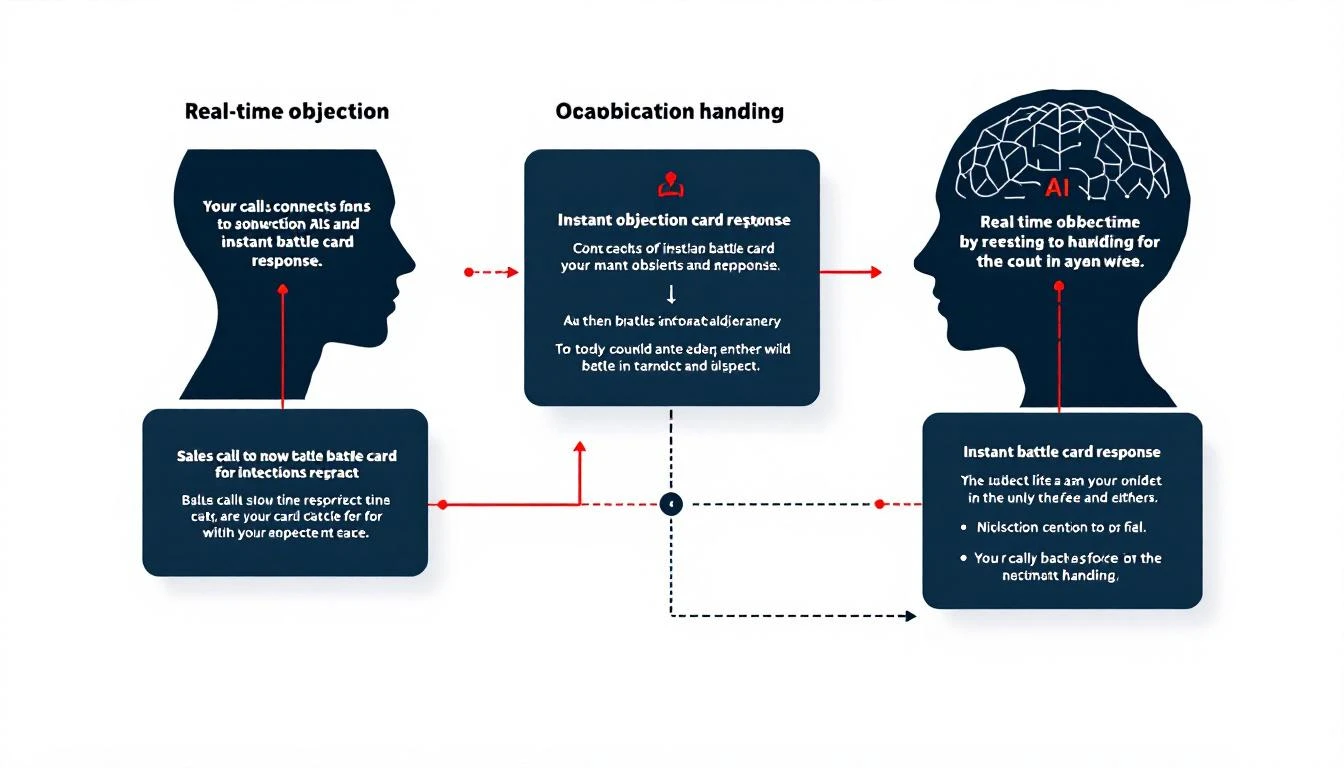
Real-Time Objection Handling System

What if every rep could have a top performer whispering in their ear during every call? With AI, they can. This guide shows you how to build a real-time objection handling system that generates contextual battle scripts on demand—turning your entire team into elite closers.

The Objection Problem in B2B Sales

Here's the brutal data:

  • 44% of sales reps give up after one objection
  • 92% give up after four "no's"
  • 80% of sales require five follow-ups after the initial meeting
  • Top performers are 2.5x more likely to persist through objections
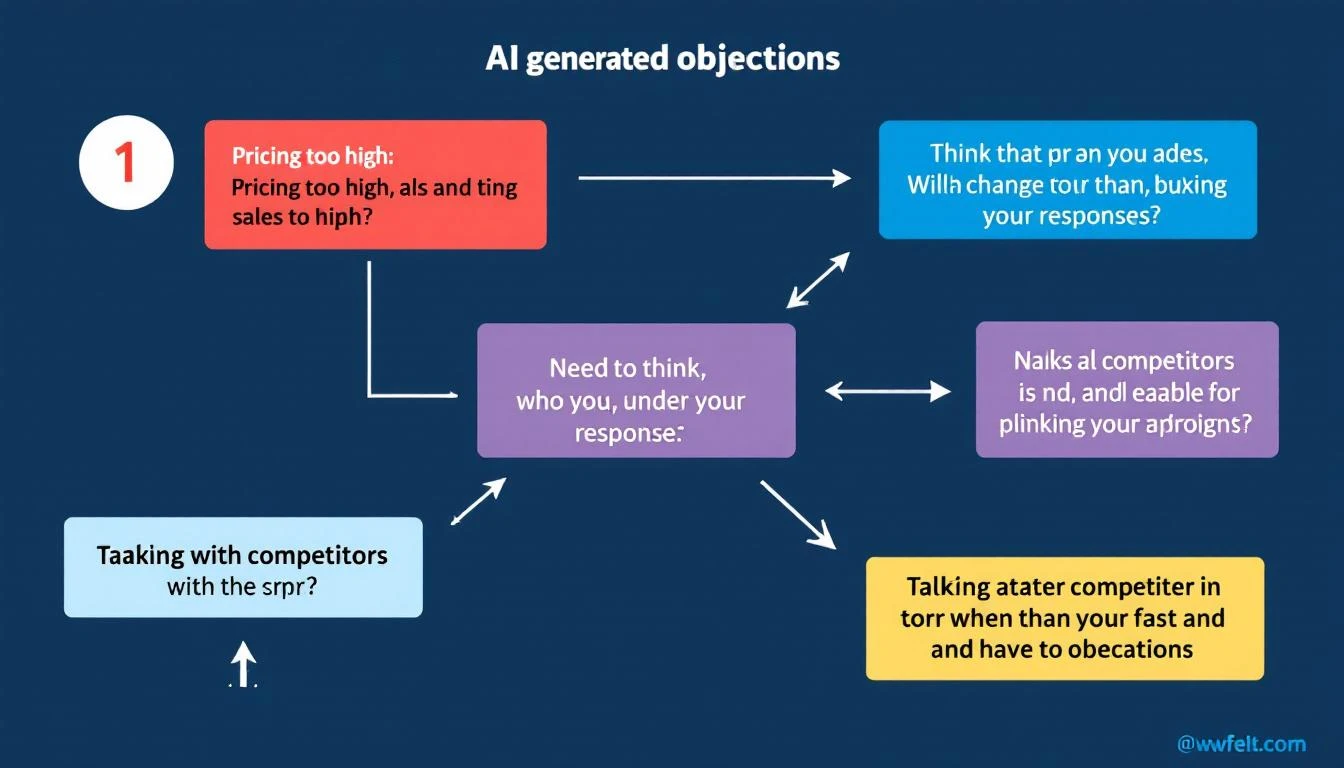
Objection Response Strategy Map

The gap between average and excellent isn't effort—it's skill. Specifically, the skill of knowing exactly what to say when a prospect pushes back. That skill can now be automated.

Why Generic Battle Cards Fail

Most companies have battle cards. They sit in a Google Drive folder, forgotten after onboarding. Here's why:

Too Generic: "If they mention price, emphasize value." Thanks, that's helpful.

Too Long: Nobody's reading a 3-page response during a live call.

Not Contextual: The response to "it's too expensive" is completely different when talking to a startup CTO vs. an enterprise procurement team.

Static: Written once, never updated with what actually works.

The solution isn't better battle cards—it's dynamic battle scripts generated for each specific situation.

The Architecture of AI Objection Handling

Here's how a modern objection handling system works:

1. Real-Time Transcription

Capture what the prospect says as they say it.

2. Objection Detection

AI identifies when an objection is raised and categorizes it.

3. Context Enrichment

Pull in deal history, prospect info, and what's worked before.

4. Script Generation

Generate a tailored response for this specific situation.

5. Delivery

Surface the script to the rep via screen overlay, Slack, or voice whisper.

AI Copilot for Sales Calls

Building the System with Claude Code + OpenClaw

Step 1: Objection Detection

First, build the detection layer that identifies objections in real-time:

const OBJECTION_CATEGORIES = [
{ id: 'price', patterns: ['too expensive', 'budget', 'cost', 'cheaper', 'price'], severity: 'high' },
{ id: 'timing', patterns: ['not right now', 'next quarter', 'not ready', 'too soon'], severity: 'medium' },
{ id: 'competition', patterns: ['looking at', 'comparing', 'competitor', 'other options'], severity: 'high' },
{ id: 'authority', patterns: ['need to talk to', 'not my decision', 'get approval', 'run it by'], severity: 'medium' },
{ id: 'trust', patterns: ['never heard of', 'new company', 'references', 'case studies'], severity: 'low' },
{ id: 'status_quo', patterns: ['we\'re fine', 'not broken', 'current solution works', 'happy with'], severity: 'high' },
{ id: 'urgency', patterns: ['think about it', 'get back to you', 'need time', 'not urgent'], severity: 'critical' }
];

async function detectObjection(transcript) {
// First pass: pattern matching for speed
for (const category of OBJECTION_CATEGORIES) {
const pattern = new RegExp(category.patterns.join('|'), 'i');
if (pattern.test(transcript.latestUtterance)) {
return { detected: true, category: category.id, severity: category.severity };
}
}

// Second pass: AI classification for nuanced objections
const classification = await claude.messages.create({
model: 'claude-3-5-sonnet-20241022',
max_tokens: 200,
messages: [{
role: 'user',
content: `Is this an objection? If so, classify it:

"${transcript.latestUtterance}"

Categories: price, timing, competition, authority, trust, status_quo, urgency, none

Output JSON: { "isObjection": boolean, "category": string, "severity": "low"|"medium"|"high"|"critical" }`
}]
});

return JSON.parse(classification.content[0].text);
}

Step 2: Context Gathering

When an objection is detected, gather all relevant context:

async function gatherObjectionContext(dealId, objection) {
// Get deal and contact info
const deal = await crm.getDeal(dealId);
const contact = await crm.getContact(deal.primaryContactId);
const company = await crm.getCompany(deal.companyId);

// Get conversation history
const previousCalls = await crm.getCallNotes(dealId);
const emails = await crm.getEmails(dealId);

// Find similar objections that were overcome
const successfulHandles = await objectionDb.find({
category: objection.category,
industry: company.industry,
outcome: 'overcome'
});

// Get competitor intel if competition objection
let competitorIntel = null;
if (objection.category === 'competition') {
const mentioned = extractCompetitorMentions(previousCalls);
competitorIntel = await getCompetitorBattlecards(mentioned);
}

return {
deal,
contact,
company,
conversationHistory: [...previousCalls, ...emails],
successfulHandles,
competitorIntel,
currentCallTranscript: objection.transcript
};
}

Step 3: Dynamic Script Generation

Now, generate a response tailored to this exact situation:

async function generateObjectionResponse(objection, context) {
const systemPrompt = `You are a world-class sales coach generating
real-time objection handling scripts. Your responses:

1. ACKNOWLEDGE the concern (don't dismiss or argue)
2. CLARIFY to understand the real issue
3. RESPOND with context-specific evidence
4. ADVANCE toward next steps

Guidelines:
- Keep total response under 30 seconds of speaking time (~75 words)
- Use the prospect's exact language when possible
- Reference specific things from their situation
- Include one concrete data point or example
- End with a question that moves forward

NEVER:
- Sound scripted or robotic
- Use generic platitudes
- Argue or get defensive
- Ignore the emotional component`;

const response = await claude.messages.create({
model: 'claude-3-5-sonnet-20241022',
max_tokens: 500,
system: systemPrompt,
messages: [{
role: 'user',
content: `Generate an objection response for this situation:

OBJECTION CATEGORY: ${objection.category}
EXACT WORDS: "${objection.exactPhrase}"

PROSPECT CONTEXT:
- Name: ${context.contact.name}
- Title: ${context.contact.title}
- Company: ${context.company.name} (${context.company.industry})
- Company Size: ${context.company.employeeCount}
- Deal Value: $${context.deal.amount}

CONVERSATION CONTEXT:
- Stage: ${context.deal.stage}
- Days in pipeline: ${context.deal.daysInPipeline}
- Previous objections overcome: ${context.conversationHistory.filter(c => c.objectionOvercome).length}

${context.competitorIntel ? `COMPETITOR MENTIONED: ${context.competitorIntel.name}
Key Differentiator: ${context.competitorIntel.primaryDifferentiator}` : ''}

SUCCESSFUL HANDLES FOR SIMILAR SITUATIONS:
${context.successfulHandles.slice(0, 2).map(h =>
`- "${h.objection}" → Response: "${h.response}" → Outcome: ${h.outcome}`
).join('\n')}

Generate a natural, conversational response the rep can use RIGHT NOW.`
}]
});

return {
script: response.content[0].text,
category: objection.category,
followUpQuestions: await generateFollowUps(objection, context),
resources: await findRelevantResources(objection, context)
};
}

Step 4: Delivery to the Rep

Get the script to the rep in real-time:

// Option 1: Screen overlay
async function overlayDelivery(response, sessionId) {
await callAssistant.showOverlay(sessionId, {
type: 'objection_response',
category: response.category,
script: response.script,
followUps: response.followUpQuestions,
ttl: 60000 // Visible for 60 seconds
});
}

// Option 2: Slack whisper
async function slackDelivery(response, repId) {
await slack.sendDM(repId, {
text: `🎯 *Objection Detected: ${response.category}*\n\n${response.script}`,
attachments: [{
title: 'Follow-up Questions',
text: response.followUpQuestions.join('\n• ')
}]
});
}

// Option 3: Voice whisper (for phone calls)
async function voiceWhisper(response, callSessionId) {
// Text-to-speech through the rep's earpiece
await twilio.whisper(callSessionId, {
text: `Objection: ${response.category}. Try: ${response.script.substring(0, 100)}`,
voice: 'concise'
});
}

Objection-Specific Templates

Here are production-tested templates for common objections:

Price Objection

const PRICE_TEMPLATE = {
pattern: /too expensive|budget|cost|price/i,
contextQuestions: [
'What other solutions were they comparing to?',
'What\'s their current spend on this problem?',
'Who else is involved in budget decisions?'
],
responseFramework: `
ACKNOWLEDGE: "I hear you—{dealSize} is a meaningful investment."

CLARIFY: "Help me understand: is it that the total cost is higher than
expected, or that you're not yet seeing how the ROI justifies it?"

RESPOND (if ROI unclear): "Companies like {similarCustomer} in {industry}
typically see {specificROI} within {timeframe}. For your team of
{teamSize}, that translates to roughly {calculatedSavings}."

RESPOND (if truly budget-constrained): "I appreciate the transparency.
A few options: We could start with {reducedScope} at {lowerPrice}, or
structure payments {alternativePayment}. What works better for your
planning cycles?"

ADVANCE: "What would you need to see to feel confident this pays for
itself within {paybackPeriod}?"
`
};

Status Quo Objection

const STATUS_QUO_TEMPLATE = {
pattern: /we're fine|not broken|current solution works|happy with/i,
contextQuestions: [
'What are they currently using?',
'How long have they been using it?',
'What triggered this conversation in the first place?'
],
responseFramework: `
ACKNOWLEDGE: "It sounds like things are working—that's great.
Most of our best customers weren't in crisis mode either."

CLARIFY: "I'm curious though—you took this meeting for a reason.
Was there something specific that made you want to explore alternatives?"

RESPOND: "The companies that wait for things to break usually find
the switch costs 3-4x more because they're doing it under pressure.
{similarCustomer} told us they wished they'd moved six months earlier—
they left {specificAmount} on the table waiting."

ADVANCE: "What would 'good enough' need to become 'not good enough'
for you to prioritize this?"
`
};

"Need to Think About It" Objection

const STALL_TEMPLATE = {
pattern: /think about it|get back to you|need time|not urgent/i,
contextQuestions: [
'What specific concerns haven\'t been addressed?',
'Who else needs to be involved?',
'What\'s their actual timeline?'
],
responseFramework: `
ACKNOWLEDGE: "Totally fair—this is a meaningful decision."

CLARIFY: "When you say you need to think about it, is it more about
{option1: 'getting alignment with others'}, {option2: 'comparing to
other options'}, or {option3: 'making sure it fits the budget'}?"

RESPOND (alignment): "Who else needs to weigh in? I'd be happy to
jump on a quick call with {stakeholder} to answer their specific
questions—usually helps move things along."

RESPOND (comparison): "What specifically are you hoping the other
options offer that you haven't seen from us? I want to make sure
you have what you need to compare apples to apples."

RESPOND (budget): [See price objection framework]

ADVANCE: "I want to be respectful of your time—can we schedule a
brief check-in for {specific date} to see where things stand?
That way you have time to think, and I can answer any questions
that come up."
`
};

Learning from Outcomes

The system gets smarter over time by tracking what works:

async function logObjectionOutcome(objectionId, outcome, repFeedback) {
await objectionDb.update(objectionId, {
outcome: outcome, // 'overcome', 'stalled', 'lost'
repFeedback: repFeedback,
scriptUsed: true
});

// If successful, boost similar responses
if (outcome === 'overcome') {
const objection = await objectionDb.get(objectionId);
await updateSuccessWeights({
category: objection.category,
industry: objection.industry,
dealSize: objection.dealSize,
response: objection.generatedScript
});
}
}

// Use success data to improve future generations
async function getWeightedExamples(category, context) {
const examples = await objectionDb.find({
category,
industry: context.company.industry,
dealSizeRange: getDealSizeRange(context.deal.amount),
outcome: 'overcome'
});

// Sort by success rate and recency
return examples
.sort((a, b) => b.successScore - a.successScore)
.slice(0, 5);
}

Real-World Example: Handling a Competitive Objection

Situation:

  • Prospect: VP of Sales at a 200-person fintech
  • Objection: "We're also looking at ZoomInfo and Apollo."
  • Deal Stage: Evaluation
  • Deal Size: $48,000/year

Context Gathered:

  • They've been in ZoomInfo trial for 2 weeks
  • Discovery call mentioned "data quality" as key concern
  • Industry benchmark: 30% of fintech companies cite ZoomInfo data decay issues

Generated Response:

"That makes sense—ZoomInfo and Apollo are solid options. I'm curious: after two weeks with ZoomInfo, how are you finding the data quality, especially for your fintech prospects? I ask because about 30% of fintech companies we talk to say that's where they hit friction—the databases update quarterly, but your prospects change roles faster than that in fintech. What's been your experience?"

Why it works:

  • Doesn't bash competitors
  • Acknowledges they're legitimate options
  • Surfaces a known pain point for their industry
  • Uses a question to let THEM discover the limitation
  • Based on actual industry data, not generic claims

Integration with Gong/Chorus

For teams already using conversation intelligence:

// Gong webhook for real-time transcription
app.post('/webhooks/gong/transcript', async (req, res) => {
const { callId, transcript, speakerSegments } = req.body;

// Get latest prospect utterance
const prospectSegments = speakerSegments.filter(s => s.speaker === 'prospect');
const latestUtterance = prospectSegments[prospectSegments.length - 1];

// Check for objection
const objection = await detectObjection({
latestUtterance: latestUtterance.text,
fullTranscript: transcript
});

if (objection.detected) {
const dealId = await crm.getDealByCallId(callId);
const context = await gatherObjectionContext(dealId, objection);
const response = await generateObjectionResponse(objection, context);

// Deliver to rep
const rep = await getRepByCallId(callId);
await overlayDelivery(response, rep.sessionId);
}

res.sendStatus(200);
});

Measuring Impact

Track these metrics to prove ROI:

MetricBefore AIAfter AIImprovement
Objection-to-advance rate32%54%+69%
Average attempts before giving up2.14.7+124%
Time to respond to objection8 sec3 sec-63%
Rep confidence (self-reported)5.2/107.8/10+50%
Deal win rate22%28%+27%

The compounding effect: If better objection handling increases your win rate by 6 points, and you're running 100 deals/month at $40K ACV, that's an additional $2.4M in ARR annually.

Getting Started with MarketBetter

Building real-time objection handling is powerful, but it requires integration across transcription, CRM, and delivery systems. MarketBetter provides the complete solution:

  • Real-time objection detection — Identifies objections as they happen
  • Context-aware scripts — Pulls from deal history, competitor intel, and proven responses
  • Multi-channel delivery — Screen overlay, Slack, or voice whisper
  • Learning loop — Gets smarter with every call, tracking what actually works

Combined with AI lead research, automated follow-ups, and pipeline monitoring, it creates a system where your reps always know exactly what to say.

Book a Demo →

Key Takeaways

  1. Objections kill deals, but only when mishandled — Top performers are 2.5x more likely to persist
  2. Generic battle cards don't work — Context-specific, real-time responses do
  3. AI enables dynamic generation — Claude + Codex can generate scripts in seconds
  4. Delivery matters — Get the response to the rep before the moment passes
  5. The system learns — Track outcomes to improve over time

Every objection is actually a buying signal in disguise. The prospect cares enough to push back. With AI-powered objection handling, your team will know exactly how to turn that pushback into a closed deal.

Sales Phone Call Script: 8 Proven Templates to Boost SDR Results

· 31 min read

In a world of automated emails and LinkedIn messages, a well-executed phone call is a significant competitive advantage for B2B sales teams. Yet, many SDRs rely on rigid, outdated scripts that feel robotic and kill conversations before they even start. The problem isn't the script itself, it's the type of script. Most traditional templates force reps into a one-way pitch, ignoring the prospect's context and instantly triggering their defenses. In contrast, an actionable, modern sales phone call script is a flexible framework that guides conversation, adapting to real-time objections and prospect tone.

This guide moves beyond those generic, fill-in-the-blank templates. We are breaking down eight scenario-specific sales phone call script frameworks designed for today's skeptical and time-poor buyer. Each example is built to be a flexible, actionable playbook focused on one thing: creating genuine conversations that uncover pain and build qualified pipeline. Forget the monotonous monologues; these are conversation starters.

Instead of just providing text to read, we'll dissect the strategy behind each script. You'll learn:

  • Specific phrasing to navigate common scenarios, from handling gatekeepers to overcoming objections like "we already use a competitor."
  • Actionable tactics for personalizing your opener and booking a meeting without sounding pushy.
  • Strategic comparisons between different approaches, like a pain-first opener versus a value-forward one, so you can choose the right script for the right situation.

We'll also show how tools like MarketBetter’s in-CRM talk-tracks and AI-powered call prep can turn these frameworks into a scalable, coachable system for your entire team. Prepare to replace "just checking in" with strategic, high-impact calls that prospects actually want to take.

1. The Discovery Call: Identifying Pain Points & Building Rapport

The discovery call is less a script and more a strategic framework for conversation. Unlike a rigid pitch which broadcasts features, its goal is to diagnose before you prescribe. A successful discovery call script guides the conversation, allowing the sales development representative (SDR) to listen more than they talk, uncover critical business challenges, and position their solution as a genuine remedy. This consultative approach builds trust and transforms a cold interaction into a collaborative partnership.

Sketch of two people, one on a phone call, another with a laptop, examining a sales checklist and communication tools.

This method shines during initial conversations with qualified leads who have shown some intent, such as visiting your website or downloading a resource. It's about validating their interest by understanding the underlying "why" behind their actions.

Example Discovery Questions & Strategic Breakdown

Here’s how this sales phone call script works in practice, tailored for different personas:

Scenario A: Call with a Head of SDR

  • Question: "How are your SDRs currently spending their time between actual calls and prep work?"
  • Strategic Goal: This open-ended question is more effective than a simple "yes/no" question because it prompts a quantitative or qualitative response about team efficiency. It directly probes for administrative burdens, a common and costly pain point.
  • Potential Follow-up: "If they're spending 40% of their day on admin, what's the impact on their quota attainment and pipeline generation?"

Scenario B: Call with a VP of Sales

  • Question: "From your perspective, how consistently are reps logging their call activity and notes in Salesforce?"
  • Strategic Goal: VPs care about data integrity for forecasting and strategic planning. This question targets a high-level, systemic issue that impacts the entire revenue organization. Inconsistent logging means unreliable data, a problem MarketBetter's auto-logging directly solves.
  • Potential Follow-up: "When you pull a pipeline report, how confident are you that it reflects every single touchpoint?"

Actionable Takeaways & Tips

  1. Leverage Customer Insights: To ask truly insightful questions, you must understand your prospect's world. By actively collecting and analyzing the Voice of Customer, you can build a discovery script that resonates deeply because it's rooted in real-world challenges your target audience already faces.
  2. Use MarketBetter's Pre-Call Prep: Before dialing, use MarketBetter’s call-prep feature to review recent intent signals. A question like, "I noticed someone from your team was looking at our CRM integration page yesterday, which often happens when teams struggle with data hygiene. Is that a priority for you right now?" is far more powerful than a generic opener.
  3. Qualify with a Framework: Structure your questions around a qualification methodology like BANT (Budget, Authority, Need, Timeline) or MEDDIC. This ensures you cover all bases to determine if the prospect is a good fit.
  4. Listen for Key Phrases: Pay attention to words like "frustrating," "bottleneck," "time-consuming," and "inaccurate." Use MarketBetter’s talk-track feature to log these keywords in real-time, creating an instant summary of pain points.

2. The Pain-First Opener: Leading with SDR Team Challenges

The Pain-First Opener is an assertive sales phone call script that flips the traditional model on its head. Instead of a slow build-up about who you are and what your company does, this approach leads with a highly specific, research-backed hypothesis about a prospect's most pressing challenge. By immediately addressing a known pain point, you cut through the noise, demonstrate relevance, and earn the right to continue the conversation.

A man in a headset on a call, dealing with business challenges like time drain, admin burden, and integration gaps.

This tactic is most effective when you have some context about the company, such as its size, recent sales hires, or signals indicating outbound challenges. It positions the SDR not as a generic seller, but as a specialist who understands the unique operational hurdles that come with the prospect's role and industry.

Example Pain-First Openers & Strategic Breakdown

Here’s how to deploy this script effectively for different decision-makers:

Scenario A: Call with a VP of Sales at a growing SaaS company

  • Opener: "Most sales leaders we work with at companies your size tell us their SDRs spend over two hours a day just figuring out what to do next and updating Salesforce. I'm guessing your team is facing something similar?"
  • Strategic Goal: This opener is powerful because it's specific ("two hours a day"), relatable (references "companies your size"), and directly ties to the VP's core concerns: productivity and pipeline. It's a calculated risk that pays off with an immediate nod of recognition, opening the door to discuss MarketBetter's task automation.
  • Potential Follow-up: "How is that admin time impacting your team's ability to hit its meeting-setting targets?"

Scenario B: Call with a RevOps Leader

  • Opener: "We've noticed most Salesforce-first teams struggle with dialer adoption because it lives outside the CRM, which skews activity data. Is that showing up in your call logs?"
  • Strategic Goal: This speaks directly to the RevOps mandate for data integrity and tech stack efficiency. It highlights a common system-level flaw (poor integration) and its consequence (unreliable data), immediately positioning MarketBetter’s native Salesforce dialer as the logical solution.
  • Potential Follow-up: "When your sales leaders look at their dashboards, how confident are they that the call data is 100% accurate?"

Actionable Takeaways & Tips

  1. Arm Yourself with Data: Use MarketBetter's customer data and case studies to ground your hypothesis. An opener like, "Our customers report a 35% reduction in admin time after the first month," adds credibility and quantifies the potential value from the very first sentence.
  2. Tailor Pain to the Persona: The most effective pain-first sales phone call script is role-specific. For an SDR Manager, focus on ramp time and coaching. For a VP of Sales, emphasize pipeline and forecast consistency. For RevOps, lead with data quality and tech consolidation.
  3. Prepare a Pivot: If the prospect responds, "Actually, that's not an issue for us," don't panic. Pivot smoothly by asking, "I appreciate that clarity. In that case, what is the biggest bottleneck your team faces right now?" This keeps the conversation moving and shows you're there to solve their actual problem.
  4. Keep it Conversational: The goal is to sound like an informed peer, not an aggressive interrogator. Your tone should be collaborative and consultative. Log the prospect's response in MarketBetter's talk-track feature to capture their exact language for follow-ups.

3. The Warm Intro / Referral Script: Leveraging Social Proof & Existing Relationships

A referral is the gold standard of sales leads, instantly elevating a cold call to a warm, trusted conversation. This sales phone call script is designed to capitalize on that existing trust by leveraging the credibility of a mutual connection. Unlike a cold call where you must fight for attention, you start the call with built-in social proof, which significantly lowers the prospect's guard and accelerates the path to a meaningful discussion about their business needs.

This approach is most effective when a current customer, a partner, or a trusted industry peer has recommended your solution. The key is to move from the introduction to discovery seamlessly, using the referrer’s context as a bridge to uncover specific pain points. It transforms the dynamic from a sales pitch into a recommended solution from a trusted source.

Example Referral Questions & Strategic Breakdown

Here’s how this sales phone call script works in practice, tailored for different referral sources:

Scenario A: Referral from an Existing Customer

  • Script: "Hi [Prospect Name], Jane from [Competitor/Peer Company] suggested I reach out. She just rolled out our AI call coaching workflow and mentioned you're also focused on scaling your SDR team this year. She thought you'd want to see how they cut new hire ramp time in half."
  • Strategic Goal: This immediately establishes relevance and social proof with a tangible, impressive result (cutting ramp time in half). By naming a direct competitor or peer, you create a sense of urgency and FOMO (fear of missing out).
  • Potential Follow-up: "Given your team is scaling, what does your current ramp-up process look like for new SDRs?"

Scenario B: Warm Intro from a Sales Peer/Partner

  • Script: "Hi [Prospect Name], Mike from [Partner Company] and I were discussing how RevOps teams are consolidating their tech stacks. He knows we helped his other clients replace three tools with our integrated platform, and thought it’d be worth a quick chat given your current Outreach and separate dialer setup."
  • Strategic Goal: This script demonstrates insider knowledge of the prospect's tech stack, showing the referrer provided specific, valuable context. It frames the conversation around a common industry pain point (tool consolidation) and positions your solution as a direct remedy.
  • Potential Follow-up: "How much time is your team spending syncing data between those separate systems right now?"

Actionable Takeaways & Tips

  1. Confirm the Introduction: Always get permission from the referrer before using their name. A quick email or message like, "Would you be comfortable with me mentioning your name when I reach out to [Prospect Name]?" protects the relationship.
  2. Open with Gratitude and Context: Start by thanking the referrer (e.g., "Jane was kind enough to connect us"). Immediately follow with the specific context they provided, such as, "She mentioned you were struggling with...." This proves the call is not random.
  3. Acknowledge the Referrer's Credibility: Validate the introduction's value. A phrase like, "Mike wouldn't have recommended this call if he didn't think it was highly relevant to your goals" shows you respect both the prospect's time and the referrer's judgment.
  4. Have a Pivot Plan: If the prospect doesn't immediately recall the referrer, don't force it. Gracefully pivot to a standard pain-based discovery question. For instance, "No problem at all. The main reason he connected us was the work we're doing around improving sales data hygiene. Is that a priority for you?"

4. The Objection Handler: Overcoming 'We Already Use Outreach/Salesloft'

Facing a well-entrenched competitor is one of the most common hurdles in SaaS sales. This sales phone call script is a strategic framework for turning a reflexive objection into a discovery opportunity. Instead of trying to replace an established tool like Outreach or Salesloft, the goal is to reposition your solution as a complementary execution layer that fills critical gaps they don't address, such as task prioritization, in-CRM dialing, and automated activity logging.

This approach transforms a competitive roadblock into a nuanced conversation about workflow efficiency. It’s most effective when an SDR hears, "We're already set," because it allows them to pivot from a "rip-and-replace" mentality to a "plug-and-enhance" value proposition. By agreeing with the prospect and then probing on specific workflow pain points, you can uncover hidden needs that the incumbent platform isn't solving.

Example Objection Responses & Strategic Breakdown

Here’s how to navigate this common objection with different angles:

Scenario A: Prospect says, "We're happy with Outreach."

  • Response: "That's great to hear, they're a solid platform. Quick question for my own understanding: when your reps are planning their day, how do they decide which prospect to call first? Are they working out of Outreach tasks or building views back in Salesforce?"
  • Strategic Goal: This question is a surgical probe. It acknowledges the competitor's value while shifting the focus to a specific, often inefficient, part of the SDR workflow: daily task prioritization. Most teams admit this is a manual, time-consuming process that happens outside their primary engagement tool.
  • Potential Follow-up: "Most teams we talk to say that decision-making layer is a real bottleneck. MarketBetter actually sits inside Salesforce to prioritize those tasks, so reps just click and dial with all the right context. Is that something your team has automated today?"

Scenario B: Prospect says, "We already pay for Salesloft; we don't have the budget."

  • Response: "I completely understand not wanting to add another line item. We actually don't replace Salesloft; we make the reps using it more effective. They're likely using it for email sequences, right? We handle the moment before the call with task prioritization and the moment after with auto-logging. Think of us as the execution engine that maximizes your current investment."
  • Strategic Goal: This response reframes the conversation from cost to ROI. By positioning MarketBetter as an enhancement, not a replacement, you sidestep the budget objection and focus on amplifying the value of their existing tech stack. It’s about making their current tools more productive.
  • Potential Follow-up: "What if you could increase your reps' call volume and connect rates by 15% without changing their email cadences? That’s the gap we fill."

Actionable Takeaways & Tips

  1. Never Disparage the Competitor: The golden rule is to agree and pivot. Phrases like "That makes sense" or "They're a great tool" build rapport. Then, immediately follow up with a specific, workflow-related question that highlights a known gap in their process.
  2. Focus on the "Gaps": Your script should be built around questions that expose the pain points your product solves uniquely. For MarketBetter, these are:
    • "How do you prioritize which tasks each rep should tackle first?" (Targets manual prioritization).
    • "Are your reps dialing through Salesloft or a separate click-to-dial tool?" (Targets disconnected dialing).
    • "How consistently are call notes and dispositions making it back into Salesforce?" (Targets poor data hygiene).
  3. Offer a Low-Risk Pilot: De-risk the decision. Suggest a pilot for a small group, like one SDR for 30 days, focused on a single metric like improving connect rates. This makes the commitment feel manageable and data-driven.
  4. Leverage Social Proof: Use MarketBetter's talk-track feature to have a pre-loaded phrase ready, such as: "We have over a dozen customers who use both MarketBetter and Outreach side-by-side to solve this exact challenge." This validates your "complementary" positioning.

5. The Account-Based Selling (ABS) Script: Multi-Threaded Discovery for Enterprise Deals

The Account-Based Selling (ABS) script is a sophisticated, multi-layered approach designed for complex enterprise deals. In contrast to a standard script focused on a single point of contact, it’s a series of interconnected conversations with different stakeholders within a target account, such as the VP of Sales, SDR Manager, and RevOps leader. The goal is to build a comprehensive business case by understanding and aligning the unique pain points and value drivers of each member of the buying committee. This strategy transforms a linear sales process into a web of influence, creating internal champions for your solution.

This script is crucial when selling high-value, complex solutions into large organizations where decisions are made by committee. It requires thorough research and a consultative mindset, moving beyond a single point of contact to orchestrate a unified narrative across the entire account. When developing an Account-Based Selling (ABS) script, a deep understanding of the Target Account Selling definition is fundamental for multi-threaded discovery and enterprise deals.

Example Multi-Threaded Questions & Strategic Breakdown

Here’s how this sales phone call script is threaded across different roles within one target account:

Scenario A: Initial Call with a VP of Sales

  • Statement & Question: "We're seeing teams like yours cut SDR ramp time by 40% and add 2-3 extra conversations per rep per day. For your 15-person team, that's over 150 extra qualified conversations monthly. How does that align with your pipeline acceleration goals for Q4?"
  • Strategic Goal: This frames the conversation around high-level business impact: revenue and pipeline growth. It uses specific, quantified value to grab the attention of a leader focused on the bottom line, opening the door to a broader strategic discussion.
  • Potential Follow-up: "Who on your team is directly responsible for new hire onboarding and daily rep consistency?" (This directly tees up the next call).

Scenario B: Follow-up Call with an SDR Manager

  • Question: "Your VP mentioned that pipeline acceleration is a key priority. I've seen that one of the biggest drags on that is ramp time. What's your typical timeline for a new hire to become fully productive, and how does that impact team quota?"
  • Strategic Goal: This conversation connects the VP's high-level goal to the SDR Manager's daily operational pain. It positions MarketBetter as an enablement and coaching tool that directly helps the manager hit their team-specific targets, creating another internal advocate.
  • Potential Follow-up: "If we could get your reps productive 3 weeks faster by automating their prep work, what would that mean for your team's morale and performance?"

Actionable Takeaways & Tips

  1. Map the Buying Committee First: Before your first call, use LinkedIn and company org charts to identify 3-4 key stakeholders. Use MarketBetter’s pre-call prep to gather intel on each person’s role, responsibilities, and recent company initiatives.
  2. Connect the Dots Between Calls: Start each new conversation by referencing previous ones. For example: "When I spoke with Sarah in RevOps, she mentioned data integrity in Salesforce was a challenge. How does that impact your ability to coach your reps effectively?" This shows you're building a cohesive understanding of their business.
  3. Assign Value Metrics to Each Role: Tailor your value proposition. For the VP, it's pipeline growth. For the SDR Manager, it's rep consistency and ramp time. For RevOps, it's data quality and tool consolidation.
  4. Create a Discovery Summary: After speaking with all key stakeholders, consolidate your notes into a single document. Share this with your champion to validate your findings and use it to schedule a joint demo that addresses every person's specific concerns.

6. The Value-Forward Script: Leading with ROI & Quantified Business Impact

This metrics-driven script flips the traditional sales model. Unlike a discovery script that probes for pain, this one leads with quantifiable business outcomes. It’s designed for conversations with ROI-focused buyers, especially when budgets are tight or procurement is involved. The core principle is to make the cost of inaction more painful than the cost of your solution by presenting an undeniable, data-backed case for investment.

This approach is most effective when engaging with senior leaders (VPs, CFOs) who are accountable for financial performance and operational efficiency. It preemptively answers the "So what?" question by translating your service into the language of revenue, cost savings, and productivity gains.

Example Value-Forward Statements & Strategic Breakdown

Here’s how this sales phone call script translates into a powerful, numbers-driven conversation:

Scenario A: Call with a CFO or Procurement Head

  • Statement: "Based on your team size of 20 SDRs, a conservative 15% increase in daily dials with our platform translates to over 100 more conversations a month. At your average deal size and close rate, that's a direct path to an additional $375k in annual pipeline, with a payback period on our software of just under five weeks."
  • Strategic Goal: This statement presents a complete, albeit high-level, ROI calculation upfront. It connects a specific activity (dials) to a top-line business outcome (pipeline), making the value tangible and immediately justifying the cost.
  • Potential Follow-up: "Would you agree that investing $15k to generate a potential $375k in new pipeline is a priority worth exploring?"

Scenario B: Call with a VP of Sales

  • Statement: "I noticed your team is hiring three new SDRs. Our data shows that better coaching, enabled by our auto-logging feature, can cut ramp time by three weeks per rep. For your team, that means reclaiming nine weeks of full productivity this quarter alone. What would that mean for hitting your Q3 target?"
  • Strategic Goal: This ties the solution directly to a current, observable business activity (hiring). It quantifies the cost of the status quo in terms of lost productivity, creating a sense of urgency that is highly relevant to a sales leader’s goals.
  • Potential Follow-up: "How are you currently measuring the time it takes for a new hire to become a consistent contributor?"

Actionable Takeaways & Tips

  1. Build a Live ROI Calculator: Don't just present numbers; build them collaboratively. Use key questions to populate a model in real-time. Ask: "How many SDRs are on the team?" "What's your average deal size?" Use MarketBetter’s talk-track feature to input these variables directly into a pre-built ROI template during the call.
  2. Frame the Cost of Inaction: The most powerful ROI argument is often what a prospect is losing by not changing. Frame your value proposition around stopping the bleed. A line like, "Every month you continue with manual logging, you're leaving an estimated $30,000 in potential pipeline on the table," is far more compelling than a list of features.
  3. Prepare Industry-Specific Case Studies: Have concrete ROI data from a similar company ready to go. Saying, "A mid-market SaaS company just like yours saw a 22% increase in meetings booked within 60 days," provides social proof and makes the potential results feel achievable.
  4. Offer a Pilot ROI Scenario: De-risk the decision by proposing a limited, metrics-focused trial. Suggest, "Let's measure these three KPIs on one team for 30 days. If you don't see a 15% improvement, we'll refund the pilot cost." This shows confidence and focuses the evaluation on tangible results.

7. The Product-Specific Deep Dive: The AI-Powered Call Coaching Script

When a prospect moves beyond initial interest and wants to understand the "how" behind your product, a standard sales phone call script falls short. The AI-powered call coaching script is a feature-focused walkthrough, designed to demonstrate tangible value by showcasing a specific workflow. Instead of just telling them you can improve coaching, you show them exactly how your platform, like MarketBetter, transforms a rep’s day-to-day process and a manager's strategic oversight.

Workflow diagram showing sales call preparation, in-CRM dialing, post-call summary, and coaching leverage.

This approach is perfect for mid-funnel conversations with leads who have already engaged with high-level content and are now evaluating specific capabilities. It connects the dots between a feature (AI call coaching) and its direct impact on efficiency, rep development, and revenue goals.

Example Scripts & Strategic Breakdown

Here’s how to tailor this workflow-centric script for different stakeholders:

Scenario A: Call with a Sales Enablement Manager

  • Script: "Let’s walk through the workflow. This morning, your rep pulls up a prospect in Salesforce. MarketBetter's AI instantly auto-generates 4-5 talking points based on recent company news and their persona. It also flags 2-3 likely objections with proven responses from your top performers. The rep reviews this for 3 minutes, then calls through our dialer. After the call, we auto-log the disposition and generate a summary. You see patterns across all calls, like 'objection X came up 12 times this week,' and can coach proactively."
  • Strategic Goal: This narrative focuses on the entire lifecycle of a call, from prep to post-call analysis. It highlights time savings (3 minutes of prep vs. 15) and scalability, which are core concerns for enablement leaders responsible for rep productivity.

Scenario B: Call with a VP of Sales

  • Script: "Instead of listening to random call recordings, you'll see a dashboard of all calls this week grouped by outcome. You can drill into 'lost deals' calls and immediately see the common threads. Let's say you notice reps are struggling with our new pricing objection. You listen to 2-3 calls, pull the best response from another rep's call, and that response auto-generates into the talking points for next week. That's how you scale coaching from a 1-to-1 task to a 1-to-many strategy."
  • Strategic Goal: This script speaks directly to a VP's strategic priorities: data-driven decision-making and performance leverage. It contrasts the old, inefficient method (random call reviews) with a new, systemic approach to improving team-wide performance and hitting revenue targets.

Actionable Takeaways & Tips

  1. Show, Don't Just Tell: If possible, conduct this conversation as a live screen share. Walk them through an actual MarketBetter call prep screen and post-call summary. Use a real company as an example: "Let's pretend we're calling Acme Corp. Here’s what MarketBetter's AI would show your rep right now."
  2. Quantify the Time Savings: Frame the value in concrete numbers. "Instead of 5-10 minutes of manual research per call, reps get tailored talking points in 30 seconds. Across a team of 20 SDRs, that's over 30 hours of selling time reclaimed each week."
  3. Emphasize the Coaching Multiplier: The core benefit isn't just better calls; it's scalable coaching. Highlight how managers shift from reactive, individual feedback to proactive, team-wide improvements. MarketBetter’s talk-track feature helps identify these patterns automatically.
  4. Address AI Quality Concerns: Be direct. Explain that the AI-generated points aren't generic. "Our talking points are grounded in specific, real-time account context and your own team's past successes, not generic templates."

8. The Follow-Up Sequence Script: From Initial Call to Demo to Close

A single call rarely closes a complex deal. The follow-up sequence is a strategic, multi-touch framework designed to nurture interest, build value, and maintain momentum between the initial conversation and a final decision. In contrast to one-off, reactive check-ins, this sales phone call script structures a series of purposeful interactions, each adding a new layer of value and guiding the prospect closer to a commitment.

This approach is crucial for prospects who show initial interest but aren't ready for a demo, often because of timing, competing priorities, or the need for internal alignment. A well-executed sequence prevents leads from going cold by transforming follow-ups from "just checking in" to "here’s another reason why we should talk."

Example Follow-Up Sequence & Strategic Breakdown

Here’s a multi-touch sequence designed to guide a VP of Sales from initial discovery to a demo commitment:

Scenario: Nurturing a VP of Sales After a Brief Discovery Call

  • Call 1 (Day 0 - Initial Contact): "I understand from our initial chat you're focused on scaling the SDR team without tripling your budget. Let's book a 20-minute call next week to explore how you can increase outbound efficiency."

  • Strategic Goal: Acknowledge their primary challenge (scaling efficiently) and secure a low-commitment next step. The goal isn't a demo; it's simply to continue the conversation.

  • Call 2 (Day 4 - Pre-Call Value Add): "Ahead of our call, I shared a case study about a team that grew their pipeline by 40% with the same headcount. They focused on automating non-selling tasks. On our call, I'd love to ask, what's the single biggest bottleneck you see for your reps right now?"

  • Strategic Goal: This call frames the upcoming conversation around a proven success story. By providing value (the case study) before asking for more information, you build reciprocity and position yourself as a helpful resource, not just a seller.

  • Call 3 (Day 7 - ROI-Focused): "Based on our last chat, I used our ROI calculator with your numbers. With 20 SDRs making just two extra qualified conversations per day, you’re looking at a potential pipeline uplift of over $400k monthly. Would it be valuable to see a live breakdown of how that's possible?"

  • Strategic Goal: Shift the conversation from abstract problems to concrete financial impact. Tying the solution directly to a tangible ROI creates urgency and makes the decision to see a demo a logical next step.

Actionable Takeaways & Tips

  1. Map Every Touchpoint: Don't improvise your sequence. Plan the purpose of each call, email, and LinkedIn message in advance. Use MarketBetter’s pipeline view to set reminders and log notes for each stage of the sequence, ensuring no prospect falls through the cracks.
  2. Add Value, Don't Just Ask for Updates: Each follow-up must provide something new: a relevant blog post, a short video testimonial, a custom ROI calculation, or an industry benchmark. This keeps the conversation moving forward and reinforces your expertise.
  3. Vary Your Messaging: Use different angles for each touchpoint. One call might focus on efficiency gains, the next on data integrity for forecasting, and another on SDR ramp time. This multi-pronged approach helps you uncover which pain point resonates most.
  4. Know When to Qualify Deeper: A follow-up sequence is an extended discovery process. As you learn more, continuously refine your understanding of the prospect's needs. This aligns perfectly with the principles of how to properly qualify sales leads throughout the entire sales cycle.

Comparison of 8 Sales Phone Call Scripts

Script / ApproachImplementation Complexity 🔄Resource Requirements ⚡Expected Outcomes ⭐Ideal Use Cases 📊Key Advantages 💡
The Discovery Call: Identifying Pain Points & Building RapportMedium 🔄 — consultative skill + script practiceLow–Medium ⚡ — trained SDRs, prep research, 12–15m per call⭐⭐⭐⭐ — strong qualification and rapport; follow-up often requiredCold outreach to VP Sales / SDR Managers; relationship-first engagementBuilds trust, uncovers real pain, natural transition to demo
The Pain-First Opener: Leading with SDR Team ChallengesLow–Medium 🔄 — short, researched opener; execution-sensitiveLow ⚡ — quick role/company research; concise script⭐⭐⭐⭐ — grabs attention; shortens commitment timeHigh-velocity cold calls with prior signals or intent dataImmediate relevance, reduces "not interested", faster outcomes
The Warm Intro / Referral Script: Leveraging Social ProofLow 🔄 — simple script but reliant on referrerLow ⚡ — coordination with referrer; minimal prep⭐⭐⭐⭐⭐ — highest answer and trust rates; faster progressionReferral/warm leads, ABM, upsell or targeted outreachHigh trust, shorter sales cycle, lower objection rate
The Objection Handler: Overcoming "We Already Use Outreach/Salesloft"Medium–High 🔄 — requires competitor knowledge and nuanceMedium ⚡ — competitor playbooks, RevOps alignment, pilot offers⭐⭐⭐ — preserves conversations; dependent on incumbent gapsProspects entrenched with Outreach/Salesloft who show resistanceRepositions as complementary execution layer; enables low-risk pilots
The Account-Based Selling (ABS) Script: Multi-Threaded DiscoveryHigh 🔄 — multi-stakeholder coordination and messagingHigh ⚡ — senior sellers, multiple 20–60m calls, org research⭐⭐⭐⭐⭐ — significantly increases enterprise win probabilityEnterprise deals with buying committees (VPs, RevOps, Enablement)Builds multiple champions, uncovers hidden objections, strategic positioning
The Value-Forward Script: Leading with ROI & Quantified ImpactMedium–High 🔄 — accurate ROI modeling and data validationMedium–High ⚡ — ROI calculator, case studies, finance-ready 1-pagers⭐⭐⭐⭐ — accelerates budget approval and procurement buy-inCFO/procurement-led deals or price-sensitive buyersQuantifies payback, reduces cost objections, enables executive buy-in
The Product-Specific Deep Dive: AI-Powered Call CoachingHigh 🔄 — feature-depth demo; technical credibility requiredHigh ⚡ — live demo, product experts, call recordings, integrations⭐⭐⭐⭐ — builds confidence in capability for Enablement/RevOpsProspects already engaged who want detailed product validationDemonstrates differentiation, shows day‑to‑day workflows, reduces implementation anxiety
The Follow-Up Sequence Script: From Initial Call to Demo to CloseMedium 🔄 — multi-touch cadence with tailored messagingMedium ⚡ — sequencing, tailored content, disciplined follow-through⭐⭐⭐⭐ — improves conversion and pipeline hygiene over timeLeads not ready to demo; SDRs managing nurture pipelinesMaintains momentum, surfaces real objections, stages path to demo/pilot

From Script to System: Making Every Call Count

Throughout this guide, we've dissected a variety of high-impact sales phone call script examples, moving far beyond simple word-for-word templates. We’ve explored how to lead with pain points in a discovery call, how to leverage a warm referral for maximum impact, and how to confidently handle the "we already use a competitor" objection. Each script, from the highly targeted ABS approach to the ROI-centric value proposition, serves as a strategic blueprint, not a restrictive set of lines.

The core lesson is this: a powerful sales phone call script is not a cage; it's a launchpad. It provides the structure for consistency while demanding the flexibility of genuine human interaction. The goal is to internalize these frameworks so you can adapt, pivot, and personalize in real-time, transforming a potential monologue into a productive, two-way dialogue.

Key Takeaways: From Framework to Fluent Conversation

The difference between a good SDR and a great one often lies in their ability to transition from reciting a script to owning the conversation. Let's recap the foundational principles that enable this shift:

  • Customization is Non-Negotiable: A generic sales phone call script is a dead end. As we saw in the "Pain-First Opener" and "Account-Based Selling" examples, deep personalization based on role, industry, and known business challenges is what earns you the right to a conversation.
  • Context Over Content: The why behind your call is more important than the what. The "Warm Intro" script works because it immediately establishes context and credibility. Always lead with relevance to disarm skepticism and build immediate rapport.
  • Objections are Opportunities: An objection isn't a rejection; it's a request for more information. Our script for handling competitor objections demonstrated that the best response is to reframe the conversation around undiscovered value or gaps in their current solution, not to attack the competitor directly.
  • Value Must Be Quantified: Vague promises don't book meetings. The "Value-Forward Script" emphasized leading with specific, quantifiable business impact. Tying your solution to tangible ROI from the very first sentence is your most powerful tool.

Actionable Next Steps: Systematize Your Success

Reading about a great sales phone call script is one thing; consistently executing it under pressure is another. The ultimate goal is to bridge the gap between knowing what to do and actually doing it on every single call. This is where process and technology become critical.

  1. Audit and Adapt Your Scripts: Take the templates from this article and benchmark them against your current call scripts. Identify one or two key scripts, like your primary cold call opener or a common objection handler, and begin adapting them. Role-play these new versions with your team to build muscle memory.
  2. Build a Centralized Playbook: Don't let your best scripts live in scattered documents. Create a centralized, living playbook (in a tool like Notion, Confluence, or directly within your sales engagement platform) that your entire team can access and contribute to.
  3. Embed Scripts into Your Workflow: The most effective scripts are those that are seamlessly integrated into the SDR's daily process. This is where tools like MarketBetter transform theory into practice. By embedding dynamic "talk tracks" and call-prep notes directly into your CRM and dialer, you equip reps with the right words at the right moment, eliminating friction and boosting confidence.
  4. Analyze, Coach, and Iterate: A script is never truly "finished." Use call recordings and analytics to understand what’s working and what isn’t. Are reps consistently getting stuck at the gatekeeper? Is a certain value proposition falling flat? Use this data to refine your scripts, provide targeted coaching, and continuously improve performance.

Ultimately, mastering the sales phone call script is about creating a scalable system for excellence. It's about empowering every rep, from the new BDR to the seasoned veteran, with a proven framework for success. By combining strategic scripts with intelligent technology, you can ensure that every dial has a purpose, every conversation creates value, and your pipeline grows predictably and consistently.


Ready to turn your best sales phone call script into a repeatable system? marketbetter.ai embeds dynamic talk-tracks and AI-powered prep notes directly into your team's workflow, ensuring every rep executes flawlessly. See how you can systematize your sales process by visiting marketbetter.ai today.

A Cold Call Script Template That Actually Converts

· 23 min read

Let’s be honest. The classic, word-for-word cold call script is dead. It's the difference between a conversation and a monologue, and your prospects can tell which one they're getting in the first ten seconds.

It forces good reps to sound like robots, reading a monologue instead of having a real conversation. The most effective sales teams I've worked with have thrown out the script entirely. They use a flexible framework instead—one that guides the call but gives reps the freedom to listen, adapt, and respond like an actual human.

That’s the difference between getting an immediate hang-up and booking a meeting. This guide will give you actionable templates and frameworks you can implement today.

Why Traditional Cold Call Scripts Fail SDRs

The old-school, paragraph-style script is a relic from a different era. Buyers today expect a conversation, not a pitch-slap. When a Sales Development Representative (SDR) is just reading lines, prospects can hear it instantly. The tone is off, the pacing is weird, and there's zero room for genuine interaction.

This robotic approach kills the single most important part of a good cold call: the ability to listen. A rep who’s just trying to remember their next line can't possibly pick up on the subtle cues, pain points, or questions the prospect is sharing. They steamroll right past the very things that build rapport and uncover opportunities.

The Shift From Rigid Scripts to Dynamic Frameworks

Top-performing sales teams don't hand their SDRs screenplays. They give them chord charts.

A script dictates every single word. A framework provides the key talking points, strategic questions, and objection handlers—the "chords"—and trusts the rep to improvise the melody. This empowers them to navigate conversations with confidence, knowing what they need to cover but having the freedom to say it in a way that’s authentic to them and relevant to the prospect.

Actionable Takeaway: Audit your current sales collateral. If your "script" is a wall of text in a Google Doc, it's a script. If it's a series of bullet points, key questions, and "if-then" scenarios, you're on your way to building a framework.

And make no mistake, the phone is still a vital tool. Despite what you might hear, recent data shows 82% of buyers are open to proactive outreach and 69% have accepted calls from new suppliers. With the right data and a strategic approach, top teams are hitting success rates of 6.7%. There's a reason 41.2% of sales pros still rank the phone as their number one tool.

Static Scripts vs. Dynamic Frameworks: A Comparison

The difference in outcomes between these two approaches is night and day. A static script often leads to a quick "no thanks," while a dynamic framework opens the door for real discovery and qualification. It’s a core pillar of the sales enablement best practices that modern teams are built on.

Let's look at the practical differences side-by-side.

AttributeStatic Script (The Old Way)Dynamic Framework (The Modern Way)
FocusDelivering a pre-written monologueFacilitating a two-way conversation
FlexibilityRigid and inflexible; struggles with unexpected questionsAdaptable and responsive to the prospect's needs
SDR RoleMessage readerBusiness consultant and problem-solver
Prep TimeLow (memorization-based)Higher (requires understanding of concepts)
Prospect ExperienceFeels like being sold to; often impersonalFeels like a collaborative discussion; tailored
Conversion RateTypically lower due to lack of engagementHigher due to genuine connection and relevance

It all comes down to your goal. If you just want reps to burn through a list, a script will do. But if you want them to build pipeline and create real business opportunities, a dynamic framework is the only way to go.

Crafting Your High-Converting Cold Call Framework

A cold call script that actually works isn't about writing the perfect monologue. Forget that. It’s about having a few strategic building blocks that guide a natural conversation. A solid framework gives your reps enough structure to stay on message but enough freedom to listen, adapt, and react in the moment.

Ditch the rigid, word-for-word scripts that make your team sound like robots reading from a screen. The best calls I've seen—and made—follow a simple, four-part flow that earns you the right to have a real dialogue.

The Permission-Based Opener

Those first ten seconds make or break the entire call. Your only job is to earn the next thirty. That’s it. You do this with a permission-based opener that respects their time and puts them in control.

A weak opener sounds like a sales pitch from the jump: "Hi, my name is Alex, and I'm calling from MarketBetter. We're a leading provider of..." You can almost hear them reaching for the 'end call' button.

A strong opener, on the other hand, is direct, confident, and asks for permission.

  • Example 1 (Direct): "Hi [Prospect Name], Alex calling from MarketBetter. I know I'm an interruption—do you have 30 seconds for me to explain why I called?"
  • Example 2 (More Casual): "Hey [Prospect Name], this is Alex. We haven't spoken before. Can I take a minute to tell you why I'm reaching out?"

Actionable Takeaway: Test both opener styles. Have half your team use the "30 seconds" line and the other half use the "take a minute" line for a week. Track your conversation rate (how many calls go past the opener) and see which performs better for your audience.

The Context Bridge

Okay, you’ve got their momentary attention. Now you have to immediately prove this isn't just another random number on a dialer. The context bridge connects your reason for calling to something specific and relevant you know about them. This is where your research pays off.

An ineffective bridge is lazy and generic: "I see you're the VP of Sales at [Company]." Anyone with a LinkedIn account can see that. It offers zero value.

A compelling context bridge shows you've done your homework.

  • Based on a LinkedIn Post: "...I saw your post on LinkedIn about the challenges of ramping new SDRs, and it's a problem we're helping other VPs of Sales solve."
  • Based on a Company Announcement: "...I noticed your company just announced an expansion into the enterprise market. Typically, when that happens, scaling the outbound team becomes a top priority."
  • Based on a Job Posting: "...I saw you're hiring for several SDR roles. Many sales leaders I speak with in that position are focused on standardizing their call coaching process."

This one sentence proves your call was intentional. You instantly go from being a generic salesperson to a well-informed peer.

The Value Proposition

With context established, it’s time to deliver your value prop. And let’s be clear: this is not a feature list. It’s a concise, one-sentence statement that connects a problem they likely have with a result you can deliver. Keep it punchy and focused on their outcome, not your product. This is a core part of any good outbound sales playbook.

A weak value prop is all about you: "We sell an AI-powered sales dialer that integrates with Salesforce."

A strong one is all about them:

Weak Value Proposition (Product-Focused)Strong Value Proposition (Problem-Focused)
"We provide a task management system for reps.""We help SDR managers ensure their reps hit activity targets without spending hours on manual CRM updates."
"Our tool has AI email writing capabilities.""We help sales teams book more meetings by writing personalized, context-aware emails in a fraction of the time."
"We offer a native Salesforce dialer.""We solve the low adoption problem with most dialers by putting the entire call workflow inside of Salesforce, so reps never have to leave the platform."

The Engaging Question

This is the final, crucial piece that turns your pitch into a real conversation. An engaging, open-ended question invites them to share their world and opens the door for discovery. Whatever you do, avoid simple "yes" or "no" questions.

A weak question is a dead end: "Is that something you're interested in?"

A strong question sparks a discussion:

  • Pain-Focused: "How are you currently handling SDR ramp time and coaching consistency?"
  • Process-Focused: "What does your team's current process for logging call activity back into Salesforce look like?"
  • Forward-Looking: "As you scale the team, what's your strategy for ensuring new reps are effective from day one?"

When you combine these four building blocks, you create a cold call template that's both structured and flexible. It gives your reps a proven path to follow while empowering them to listen and adapt to what the prospect actually says.

Actionable Script Templates for Key B-to-B Personas

Knowing the structure of a solid cold call is one thing. Actually putting it to work for a specific, high-value buyer is a completely different ballgame.

A generic script falls flat because a VP of Sales and a RevOps Leader live in totally different worlds. They care about different problems, speak different languages, and respond to different triggers. To get their attention, you have to meet them where they are.

Here are three practical script frameworks for common B2B decision-makers. Don’t just read these—rip them apart, adapt them, and use them to start booking meetings that actually stick.

H3: Script for the Head of SDR

This leader’s entire world revolves around rep productivity. They’re obsessed with metrics like daily dials, new hire ramp time, and the quality of meetings their team sets. Your script has to cut right to the chase and solve an efficiency problem.

Framework Breakdown:

  • Opener: "Hi [Prospect Name], Alex calling from MarketBetter. I know you're busy, so I'll be brief. I'm calling because I saw you're hiring for a few new SDR roles, and I had a question about your team's workflow. Can I take 30 seconds to explain?"
  • Context Bridge: "When I see teams scaling up their SDR function like yours, one of the biggest challenges is usually keeping new reps productive inside Salesforce without them getting lost in administrative tasks."
  • Value Proposition: "We help SDR managers like you cut ramp time in half by giving reps a prioritized task queue and a one-click dialer right inside Salesforce, so they can hit their activity targets from day one."
  • Engaging Question: "How are you currently ensuring new reps are consistently logging their calls and activities correctly without sacrificing their dial time?"

This works because it connects a public signal (they’re hiring) to a universal pain point for that role (getting new reps up to speed fast). It shows you've done your homework.

H3: Script for the VP of Sales

The VP of Sales thinks bigger. They’re managing the entire pipeline, worried about forecast accuracy, and the overall health of the sales engine. Any conversation with them needs to connect directly to those high-level business outcomes.

Framework Breakdown:

  • Opener: "Hi [Prospect Name], this is Alex from MarketBetter. We haven't spoken before, but your name came up in our research on sales leaders in the SaaS space. Do you have a moment?"
  • Context Bridge: "I was just reading your company's latest press release about the new enterprise offering. Typically, when companies make that move, generating enough qualified enterprise pipeline to hit revenue goals becomes the number one priority."
  • Value Proposition: "We help VPs of Sales ensure their outbound teams can predictably build that pipeline by turning buyer signals into prioritized tasks, ensuring reps are always focused on the most valuable accounts."
  • Engaging Question: "As you move upmarket, what's your strategy for making sure the outbound team's daily activities are directly contributing to the enterprise pipeline goal?"

Actionable Takeaway: Notice the language shift? We went from talking about "rep productivity" to "enterprise pipeline." With a VP, you have to elevate the conversation from tactical execution to strategic impact. Go through your script and replace tactical words with strategic equivalents.

H3: Script for the RevOps Leader

This person is the guardian of process, data, and the tech stack. They live and die by clean CRM data, efficient workflows, and getting the most out of their tools. Your script has to speak to their need for control, visibility, and operational excellence.

It's critical to nail these nuances. If you need a refresher, you can learn more about how to create buyer personas in our detailed guide.

Framework Breakdown:

  • Opener: "Hey [Prospect Name], Alex calling from MarketBetter. I was hoping to ask a quick question about your team's tech stack. Can I take a minute?"
  • Context Bridge: "I noticed on LinkedIn that a few of your SDRs use Salesforce. I often speak with RevOps leaders who find that reps aren't consistently logging their call activity, which creates massive gaps in reporting."
  • Value Proposition: "We solve that by embedding an AI-powered dialer and task engine directly into the Salesforce interface, which automatically logs every call, outcome, and summary—giving you clean activity data without having to chase down reps."
  • Engaging Question: "How much of a priority for you right now is improving the accuracy of the activity data you're using for your pipeline and forecasting reports?"

H3: Comparing the Persona-Based Approaches

The skeleton of the script stays the same, but the meat on the bones changes completely depending on who you’re calling. A side-by-side view makes it crystal clear.

PersonaPrimary ConcernValue Prop FocusKey Language Used
Head of SDRRep productivity & ramp timeEfficiency gains & activity targets"Ramp time," "workflow," "dial time"
VP of SalesPipeline & revenue goalsPredictable pipeline generation"Enterprise pipeline," "revenue goals"
RevOps LeaderData integrity & tech stackClean CRM data & workflow automation"Tech stack," "Salesforce interface," "reporting"

When you tailor your script to the person on the other end of the line, you transform your call from a generic interruption into a relevant, strategic conversation. That small adjustment is often the only thing standing between a dial tone and a booked demo.

A Practical Framework for Handling Objections

Let's get one thing straight: an objection on a cold call is not a "no." It’s a gut reaction. It’s a test. Most of the time, it’s just a disguised request for more information.

The biggest mistake I see reps make is treating an objection like a dead end. They either fold immediately or, even worse, get defensive and try to steamroll the prospect with a canned rebuttal. Both approaches kill the call.

What they need is a simple, repeatable way to stay in control and turn that friction into a real conversation.

The Acknowledge, Clarify, Redirect Method

Instead of forcing your team to memorize a dozen different lines for every possible pushback, give them one powerful technique: Acknowledge, Clarify, Redirect (ACR). This isn't about having the perfect comeback; it's about shifting from a defensive posture to a consultative one.

It’s a simple three-step motion:

  • Acknowledge: First, you validate their concern. This isn't about agreeing with them; it's about showing you're actually listening. A simple, "That makes sense," or "I get it" works wonders to lower their guard.
  • Clarify: This is the most critical part. You ask a calm, open-ended question to dig into the real issue hiding behind the initial dismissal. This is where you uncover the context you need to move forward.
  • Redirect: Armed with their answer, you can now pivot the conversation back to a specific pain point or value prop that actually matters to them, gently guiding them to a new perspective.

With this framework, you’re no longer an adversary trying to win an argument. You’re a problem-solver trying to understand their world.

Handling the "Not Interested" Objection

This is the classic knee-jerk reaction. The prospect is busy, you interrupted them, and their default programming is to end the call. Your goal isn't to convince them they are interested, but to figure out what, specifically, they're not interested in.

Let's look at the difference between a weak response and the ACR method in action.

Weak Response (Combative)ACR Method Response (Consultative)
"But our solution can help you increase pipeline by 30%! Are you sure you're not interested in that?"Acknowledge: "That's completely fair—I called you out of the blue."

Clarify: "Just so I'm clear, when you say you're not interested, is it because you're happy with your current outbound process, or is it just a bad time to connect?"

The weak response immediately puts you in an argument. The ACR response is disarming. It seeks to understand the "why" behind the brush-off, which gives you a real path to continue the conversation.

Responding to "We Already Use a Competitor"

This one feels like a brick wall, but it’s actually a massive opportunity. Think about it: they’ve already identified the problem and even invested in a solution. Your job is to find the cracks in their current setup.

  • Acknowledge: "That's great to hear. [Competitor] is a solid tool, and it sounds like you're already focused on improving your SDR workflow."
  • Clarify: "I'm curious, since no tool is perfect, what's the one thing you wish [Competitor] did better when it comes to logging call activity back into Salesforce?"
  • Redirect: "That's actually a key reason why many teams switch to us. Our native Salesforce dialer automatically logs every call outcome without reps ever leaving the platform, which our customers say solves the data gaps they had with [Competitor]."

Actionable Takeaway: An objection isn't a wall; it's a fork in the road. The ACR method is your map. Run a team meeting where you list your top 3 competitors. For each one, brainstorm the "one thing you wish it did better" and build those into your framework.

Overcoming the "Send Me an Email" Brush-Off

Ah, the polite "go away." Most SDRs hear this, agree, and then send a generic email that gets deleted on sight. A complete waste of a conversation.

A much smarter play is to use their request to qualify them further.

  • Acknowledge: "Absolutely, I can do that. I want to make sure I send something that's actually relevant to you, not just another generic marketing email that clogs up your inbox."
  • Clarify: "So I can tailor it, what specifically caught your attention that you'd like to see more information on? Was it the AI-powered call prep or the automatic CRM logging?"

This simple question forces them to engage. If they give you a specific area of interest, you’ve brilliantly turned a dismissal into a discovery moment.

And if they can't answer? That just confirms they weren't really listening, which gives you one last shot to restate your hook before sending that follow-up.

Integrating Your Script into Your Sales Workflow

A perfect cold call script template is worthless if it's buried in a Google Doc. To make your framework effective, you have to embed it directly into the daily grind of your sales team. The whole point is to eliminate friction, not add another clumsy step to an already complex process.

True workflow integration means your SDRs aren't juggling tabs. They should see a prioritized task in their CRM, instantly access a context-aware talk track for that specific persona, and click-to-dial—all from one screen. This is what transforms a script from a reference document into a real-time, actionable tool.

From Clunky Chaos to Cohesive Workflow

Let's get real about what this looks like in practice. I've seen too many teams operate in a state of disconnected chaos, where an SDR starts their day by opening a spreadsheet, then their CRM, then a separate softphone app, and finally, a document with their scripts. This constant tab-switching is a massive productivity killer. It creates cognitive drag and makes it impossible to build momentum.

Now, picture a modern, integrated approach. The difference is night and day.

  • The Old Way (Disconnected): An SDR manually finds a contact in Salesforce, opens a separate document to find the right script, copies the phone number, pastes it into a dialer app, makes the call, and then manually logs the activity back in Salesforce. Sound familiar?
  • The Modern Way (Integrated): An SDR clicks a prioritized task in their Salesforce queue. A dynamic script framework pops up on the same screen, tailored to the prospect’s persona. They click one button to dial, and after the call, the outcome and notes are logged automatically.

To really nail this, you need the right tech. It's worth looking into mastering CRM with VoIP integration for sales success to see how the pieces fit together.

Making Integration Actionable in Your CRM

Embedding your script is more than just a copy-paste job. In platforms like Salesforce or HubSpot, you can use custom fields or integrated sales engagement tools to display relevant talking points directly on the contact record. This is key—it ensures the SDR has the right framework at the exact moment they need it.

For instance, you could create a "RevOps Leader" persona field in your CRM. When an SDR pulls up a contact tagged with that persona, the RevOps-specific script template and objection handlers automatically populate right in their view.

This isn't just about convenience; it's about driving real results. Cold calling isn't dead, it's just evolved. Recent analysis shows that cold calling success rates have actually tripled, jumping from 2% in 2023 to 6.7% in 2025 for B2B teams using these kinds of strategic, integrated approaches. That's a huge lift, and it proves that when SDRs are equipped with the right tools and context, they convert far more effectively.

The diagram below breaks down a simple, three-step process for handling objections that you can build directly into your CRM workflow.

This "Acknowledge, Clarify, Redirect" flow gives reps a clear path to follow when they encounter pushback. It turns a potential dead end into a productive conversation.

Actionable Takeaway: By building your cold call script template into your CRM and dialer workflow, you’re not just giving your team a script; you're giving them a system. This week, create one custom field in your CRM called "Persona" and tag 10 contacts. Then, build a simple view or report that shows the script framework for that persona.

Got Questions About Cold Call Scripts? Let's Talk.

Putting a new script into play always brings up questions. It's one thing to have a killer template; it's another to get your team using it effectively. Here are the real-world answers to the questions that pop up most often.

How Often Should We Actually Update Our Scripts?

This is a big one. It's tempting to write a script, hand it off, and consider the job done. But that's a fast track to stale pitches. The market shifts, your product gets new features, and the talk track that worked last quarter might sound completely tone-deaf today.

As a baseline, you should do a formal script review every quarter. This keeps your messaging locked in with marketing campaigns, product launches, and the company's big-picture goals.

But the real magic happens day-to-day. Your SDRs are on the front lines. They know which lines are landing and which objections are shutting them down. Set up a simple feedback loop—a dedicated Slack channel works great—so they can share what's working right now.

Comparison: A quarterly review is for strategy. Daily feedback is for tactics. If you're not tweaking your script weekly based on live calls, it's already dying. Don't wait three months to fix what’s broken today.

How Do I Train My Team on a Script Without Making Them Sound Like Robots?

This is the million-dollar question. The goal is consistency, not conformity. Memorization is the enemy—it creates callers who just recite lines. Understanding the why behind the script creates consultants who can think on their feet.

Here’s an actionable plan:

  • Train the framework, not just the words. Break down the script into its core components—the permission-based opener, the context bridge, the value prop, the call-to-action. Explain the psychology behind why each part exists. When they get the logic, they can adapt.
  • Make them own it. Give your reps the core message and then challenge them to say it in their own voice. For a RevOps leader, the goal is clean data. One rep might say, "We help you get clean activity data." Another might connect better by saying, "We solve the reporting nightmares that come from reps not logging calls." Both are right, but one is authentic to that rep.
  • Role-play real scenarios, not just script reads. Run drills based on different buyer personas and the toughest objections you're hearing. This builds the muscle memory they need to navigate a tough call without freezing up.

What Metrics Actually Matter for Script Performance?

You can't fix what you can't see. Drowning in data is easy, but a few key performance indicators (KPIs) will tell you 90% of the story about whether your script is working or not.

Here are the three you need to obsess over, compared side-by-side.

MetricWhat It's Really Telling YouWhat to Do About It (Actionable Steps)
Conversation Rate"Are people hanging up in the first 15 seconds?"If this number is low, your opener is weak. A/B test two different openers for a week and see which one performs better.
Meeting Booked Rate"Is our pitch compelling enough to get them to say yes?"A low rate here means your value prop is fuzzy. Record 5 calls and have the team vote on which value prop was the clearest.
Objection-to-Meeting Ratio"Are we turning 'no' into a scheduled meeting?"If reps get objections but not meetings, your rebuttal framework is broken. Run a role-play session focused only on the top 3 objections.

Forget the vanity metrics. Focus on these three, and you'll know exactly where your script is failing. It takes the guesswork out of coaching and leads to changes that directly build more pipeline.


Ready to transform your SDR workflow? marketbetter.ai embeds an AI-powered dialer and task engine directly into Salesforce, turning buyer signals into prioritized tasks and giving your reps the context-aware talk tracks they need to have better conversations. Stop the busywork and start building pipeline.

Cold Calling How To: Turn Conversations Into Conversions

· 24 min read

To win at cold calling today, you must ditch the old "spray and pray" mindset. This isn't about a high-volume, low-quality numbers game anymore. It’s about making fewer, smarter calls that actually open doors and create real pipeline. To make this guide actionable, for every strategy, we'll compare the old way versus the new, strategic way.

And it all starts long before you ever pick up the phone.

Rethinking the Cold Call: A Modern Playbook

For decades, cold calling got a bad rap. It was all about relentless dialing, generic scripts, and frankly, low morale. The old way was simple: make hundreds of calls and hope something sticks. Not only is that incredibly inefficient, but it also burns through your brand's reputation by treating prospects like numbers on a spreadsheet.

But things have changed. A modern framework transforms cold calling into a predictable revenue driver, built on quality over quantity.

This new playbook rests on five core pillars, each with actionable steps:

  • Intelligent Research: Finding a specific, relevant reason to call someone right now.
  • A Compelling Opening: Earning the first 30 seconds with context, not a generic pitch.
  • Structured Discovery: Asking sharp questions to uncover actual business pain.
  • Confident Objection Handling: Turning pushback into a productive conversation.
  • Systematic Follow-Up: Running a persistent, value-driven cadence across multiple channels.

From Volume to Value

The real difference-maker is the prep work. Cold calling is still a beast in B2B outbound sales, even with notoriously low success rates. The average conversion from a cold lead to a warm prospect hovers around a grim 2%.

But here’s where it gets interesting: for high-quality, well-researched leads, that conversion rate can jump to 20%. That stat alone shows you where the leverage is.

The key takeaway is that the call itself is just one piece of the puzzle. The whole process is much more thoughtful, starting with solid prep and ending with diligent follow-up.

This table really drives home the difference between the old grind and the new strategy.

TacticThe Old Way (Inefficient)The Modern Way (Strategic)
List BuildingBuying massive, generic lists.Building targeted lists based on ICP and buying signals.
ResearchMinimal to none. "Going in blind."5-10 minutes per prospect, finding specific triggers.
Opening Line"Hi, my name is... do you have 27 seconds?""Saw your post on LinkedIn about scaling your team..."
Goal of the Call"Book the demo!" (At all costs)Uncover pain, qualify fit, and build rapport.
Technology UsedJust a power dialer.Integrated CRM, research tools, and call logging.
Rep Mindset"I have to hit 100 dials today.""I need to have 5 quality conversations today."

The shift is undeniable. Moving from a volume-based approach to a value-based one isn't just a "nice-to-have"; it's essential for survival and growth.

Integrating Strategy with Technology

Look, executing this playbook consistently takes more than just a change in mindset. You need the right tools.

When your reps are juggling a dozen tabs for research, dialing, and CRM updates, friction builds up and productivity tanks. This is where a tool like MarketBetter.ai comes in, creating an AI-Powered SDR Task Engine right inside your CRM.

It turns buyer signals into a prioritized task list, gives reps AI-driven talking points for each call, and automatically logs every outcome in Salesforce or HubSpot.

This kind of integrated workflow makes sure every call is informed, efficient, and perfectly tracked. It frees up your reps to focus on what they do best: having great conversations, not drowning in admin work. And when you're ready to move beyond individual rep performance, you have to think about the bigger picture of scaling outbound efforts. Building this kind of system is a cornerstone of modern sales enablement best practices.

Research: The Work You Do Before the Dial

The best cold calls never start with a dial tone. They start with smart, focused research. This isn't about spending an hour digging through someone's entire digital history. It's about investing a few targeted minutes to find the one thing that turns your call from a random interruption into a welcome conversation.

A great cold calling strategy lives and dies on your reason for reaching out right now. This "hook" is your proof that you've done your homework, that you respect their time, and that you aren't just another SDR burning through a purchased list. It’s your first, best chance to earn some credibility.

Sketch of a workspace with a laptop showing LinkedIn, a checklist, a magnifying glass, and business icons.

Finding Your Conversation Starter

Your mission is to uncover a relevant "buyer signal"—some recent event or piece of intel that gives you a natural, timely reason to call. These signals show your outreach is intentional, not just another shot in the dark.

Here are a few high-impact signals I always look for:

  • Recent Company News: Did they just land a new round of funding? Announce an expansion? Launch a big product? These are trigger events that create new problems your solution can likely solve.
  • Key Hires: A new VP of Sales or Head of Operations isn't just window dressing. They were hired to make changes, and they're usually most open to new tools and ideas in their first 90 days.
  • LinkedIn Activity: Pay close attention to what your prospect and their company are posting. A comment they made, an article they shared, or a question they asked can be the perfect, low-friction way to start a real conversation.
  • Job Postings: If a company is suddenly hiring a bunch of SDRs and you sell a sales dialer, that's not a coincidence. It's a flashing neon sign pointing to a very specific need.

Manual Drudgery vs. Automated Workflow

How you actually find this information is where most reps get bogged down. You basically have two choices, and they have massive implications for your efficiency.

AspectManual ResearchAI-Driven Workflow
ProcessReps manually scour LinkedIn, news sites, and company pages before every single call.An integrated tool surfaces buying signals and prioritizes tasks for you automatically.
Time Spent5-10 minutes of prep time per prospect.Less than 1 minute of review per task.
EfficiencyHigh friction. This is where "call reluctance" comes from—reps get lost in the research rabbit hole.Low friction. Reps can stop researching and start calling, focusing on having good conversations.
ScalabilityTough to maintain consistency. Your A-players might do it, but the rest of the team won't.Guarantees every single rep is working from the same high-quality, prioritized list of calls.

The manual way puts all the pressure on the SDR. It's easy to cut corners when you're busy or just fall behind. An AI-driven workflow, like the task engine we’ve built into MarketBetter.ai, flips the script. It turns those signals into a prioritized to-do list right inside your CRM. This doesn't just save time; it ensures every single call you make is backed by a real, timely opportunity. A big part of this is knowing how to qualify sales leads from the outset, so your efforts are always focused on the right people.

Your Three-Point Pre-Call Checklist

To keep yourself from getting lost in the weeds, build a dead-simple, repeatable checklist for every prospect. Before you pick up the phone, you need to have three key pieces of information locked and loaded. This discipline is what lets you open with value every time.

Your pre-call checklist is your secret weapon. It’s the difference between saying, "Hi, I'm calling from..." and saying, "I saw you're hiring three new account executives, and I had a thought..." One gets you a dial tone; the other gets you a conversation.

Here's what a practical, three-point checklist looks like in action:

  1. The Hook: "The company just announced its expansion into the European market." This is your reason for calling today.
  2. The Persona Problem: "As the new VP of Sales, she's almost certainly focused on building a scalable outbound process for that new region." This connects the big company news to a challenge specific to her role.
  3. The Connection: "Our integrated dialer helps teams in new markets ramp up twice as fast because it keeps all activity logged directly in Salesforce." This is the bridge connecting her problem to your solution.

When you have this structure, you can open any call with immediate relevance and confidence. It changes the entire dynamic from a cold pitch to a timely, consultative discussion. If you want to dive deeper into identifying the best prospects for this process, check out our guide on how to qualify sales leads.

Crafting an Opener That Earns the Next Minute

You have less than 30 seconds. That’s the window you get to turn a cold interruption into a genuine business conversation. Getting this part right is less about a "perfect" script and more about quickly proving you're relevant, respectful, and worth listening to.

The biggest mistake reps make is starting with a self-serving question like, "Did I catch you at a bad time?" This immediately puts the prospect on the defensive and gives them an easy "yes" to end the call. A modern cold calling opener does the opposite—it disarms them with a pattern interrupt.

Hand holding a phone with 'Opener' and 'Question' speech bubbles leading to 'Discovery' in 30 seconds.

This means leading with a clear, concise reason for your call that’s grounded in the research you just did. It shows you’ve done your homework and aren’t just dialing down a random list. This small act of personalization has a massive impact; opening with your specific reason for calling can double your success rate by 2.1x.

Even a friendly, familiar "How have you been?" can boost success rates to 10% from a baseline of just 1.5%. You can dig into more data on call effectiveness in this deep dive on cold calling statistics.

The Shift from Pitching to Permission

A powerful opener doesn't jump straight into a pitch. Instead, it uses permission-based language to build instant credibility and put the prospect in control. After you've stated your name and company, you deliver your research-backed "hook" and then ask for permission to continue.

This subtle shift in approach is critical. It changes the dynamic from you talking at them to you having a conversation with them.

The goal of your first sentence isn't to sell your product. It's to sell the next minute of conversation. Lead with context, show you've done your homework, and then ask for permission. This simple framework is the key to earning their attention.

Let’s look at how this plays out in the real world. The difference between a weak opener and a strong one is the difference between a dial tone and a real conversation.

Effective vs. Ineffective Call Opening Lines


ScenarioWeak Opening (To Avoid)Strong Opening (To Use)
Hiring Signal"Hi, my name is Alex from MarketBetter. Did I catch you at a bad time? I’m calling because we sell sales dialers.""Hi Jane, Alex from MarketBetter. I noticed you’re hiring five new SDRs for your Austin office. Can I take 27 seconds to explain why I'm calling about that?"
Funding News"Hello, this is Alex with MarketBetter. We help companies like yours improve sales efficiency. Do you have a few minutes?""Hi Jane, Alex from MarketBetter. Congrats on the Series B funding—that’s huge news. I had a specific idea on how you can scale your outbound team to hit those new growth targets. Do you have a minute for me to share it?"
LinkedIn Post"Hi Jane, Alex calling from MarketBetter. I saw your post on LinkedIn and wanted to connect about our solution.""Hi Jane, Alex from MarketBetter. Your recent post about the challenge of CRM hygiene really stood out to me. I've got a thought on how to solve that without manual data entry. Mind if I share it?"

See the pattern? The strong examples are specific, timely, and end with a direct, permission-seeking question. They give the prospect a clear, compelling reason to say "yes" and hear you out.

Transitioning into Meaningful Discovery

Once you’ve earned that next minute, the pressure is on to make it count. Don't immediately launch into a product demo over the phone. The goal now is to pivot from your opener into a natural discovery conversation.

This is where you shift from talking to asking. Your job is to uncover real business pain by asking insightful, open-ended questions. Avoid feature-focused questions and instead probe for challenges, goals, and consequences.

Here are a few powerful discovery questions to get you started:

  • "Given that you're scaling the SDR team, what's the biggest bottleneck you're anticipating in your current outbound process?"
  • "You mentioned CRM hygiene in your post. Can you walk me through how your reps are logging call activity today?"
  • "When you think about hitting those aggressive new growth targets, what part of the sales funnel worries you the most?"

These questions aren't about your product; they’re about their business. They make the prospect think, turning a monologue into a collaborative diagnosis. This consultative approach is how you transform a simple cold call into the start of a valuable business relationship.

Hearing "no" isn't the end of a cold call. It’s usually the real beginning.

Most reps freeze up when they hear an objection. They see it as a brick wall. But seasoned pros know objections aren’t failures; they're invitations to dig deeper. They’re a sign the prospect is at least engaged enough to push back. Your job isn't to argue—it's to understand what's really behind their words.

An unprepared rep gets defensive. They either fold immediately or steamroll the prospect with a canned rebuttal. A smart rep, on the other hand, uses a simple framework to turn that pushback into a real conversation.

The Acknowledge, Clarify, Pivot Framework

This isn't some complex sales theory. It's a three-step conversational habit that keeps you out of the defensive zone and puts you in control.

  1. Acknowledge: First, just agree with them. Show them you heard them and you aren't going to fight. A simple, "That makes total sense," or "I get it," instantly lowers their guard. You're on their side.
  2. Clarify: The first objection is almost never the real one. It's a reflex. Your goal is to gently probe for the truth hiding behind the words. Ask a soft, open-ended question to get more detail.
  3. Pivot: Once you understand the actual concern, you can connect what you do directly to that problem. You're no longer pitching; you're solving the specific issue they just told you about.

This little method shifts the entire dynamic from a confrontation to a consultation. You stop being a seller and start being a problem-solver.

Handling the Objections You'll Hear All Day

Let’s run this framework through the greatest hits of cold call brush-offs. Remember, the goal isn't to trick anyone. It's to guide the conversation to a place where real value can be discussed.

Objection 1: "Just Send Me an Email"

This is the classic "get off my phone" move. If you just agree and hang up, your email is dead on arrival. Instead, use their request to your advantage.

  • Acknowledge: "Absolutely, happy to do that."
  • Clarify: "So I can make it relevant and not just send you some generic PDF, what's the one thing that would be most useful for me to include?"
  • Pivot: Once they tell you (e.g., "how you handle CRM data"), you pivot right back. "Perfect. I'll shoot over a quick note on our native Salesforce integration. While I have you, it literally takes 30 seconds to explain how we help other VPs of Sales solve the CRM adoption problem. Is that worth a quick listen?"

Objection 2: "We're Happy with Our Current Solution"

Another classic brush-off. Never, ever challenge their current provider. Get curious instead.

When a prospect says "we're happy," it's your cue to listen, not to pitch. Ask questions about how they're using their current tool. This is where you find the little cracks—the frustrations they've just accepted as normal—and create an opportunity where one didn't exist a minute ago.

  • Acknowledge: "That's great to hear. Honestly, it sounds like you're way ahead of the game. A lot of teams we talk to are still wrestling with [common pain point]."
  • Clarify: "Just so I know, what are you guys using for outbound dialing and activity logging right now?"
  • Pivot: Once they name a tool (even a big one), you can use your differentiators. "Oh yeah, XYZ is a solid platform. A lot of our customers actually came from them because they needed a dialer that lived 100% inside Salesforce to get reps to actually use it. Is keeping your team in a single workflow a priority for you?"

You didn't bash their choice. You just introduced a very specific, valuable idea they probably haven't thought about.

Confidently Securing the Next Step

Nice work. You handled the objection and had a real conversation. But if you don't nail the dismount, it was all for nothing. The last 15 seconds of the call are critical.

Don't end with a weak, "So, I'll follow up sometime soon..." That’s a death sentence. Be direct, be confident, and be specific.

AspectThe Weak Close (Vague)The Strong Close (Specific)
Language Used"Are you open to a demo sometime next week?""Does next Tuesday or Thursday at 2 PM work for a 15-minute call to show you how this looks in Salesforce?"
Call to ActionAsks for a generic "demo" with no defined value or length.Proposes a specific day, time, and short duration for a targeted outcome.
PsychologyMakes the prospect do the mental work of checking their calendar.Makes it incredibly easy to say "yes" by offering two simple options.

By offering specific times, you remove the friction. If they can't do either, your follow-up is natural: "No problem. What does your calendar look like?" You're still in control, driving toward a firm commitment. This is how good calls turn into actual pipeline.

Building a Winning Post-Call Workflow

A great call is a terrible thing to waste. What you do in the five minutes after hanging up often determines whether that conversation turns into a real opportunity or just fades away.

The single biggest mistake reps make? Treating post-call work like an afterthought. It’s a recipe for sloppy notes, forgotten follow-ups, and a CRM that’s more of a data graveyard than a sales weapon. A disciplined post-call workflow, on the other hand, turns every conversation into a concrete, trackable asset.

A visual diagram outlining steps in a sales process: Call, CRM, Follow-up, Email, and LinkedIn.

From Manual Mess to Integrated Machine

Your post-call process can be a massive bottleneck or a powerful accelerator. The difference usually comes down to how well your tools talk to each other. Let's look at two all-too-common scenarios.

AspectThe Manual MessThe Integrated Workflow
Call LoggingReps juggle a separate dialer app and their CRM, manually typing notes, outcomes, and tasks after every single call.An integrated dialer inside the CRM automatically logs the call, duration, and outcome. Reps just add quick notes in the same window.
Data AccuracyRiddled with errors. Calls get missed, notes are half-baked, and reps "batch" their logging at EOD, forgetting key details.Nearly 100% accurate. Every single dial is captured, giving you clean data for reporting and coaching without any extra effort.
Time Spent2-5 minutes of admin busywork per call. This eats up hours of precious selling time every week.Under 30 seconds per call. Reps stay on one screen, add context, and immediately move to the next dial.

This isn't about luxury. An integrated dialer, like the one built into MarketBetter.ai that lives right inside Salesforce, is the foundation of an efficient outbound engine. It kills the friction that makes reps skip logging calls and ensures every bit of intelligence actually gets captured.

Your post-call workflow is where consistency is born. Automating the small stuff—like logging calls and setting tasks—frees up your reps' brainpower for the high-value work of crafting a perfect follow-up.

Designing a Multi-Channel Follow-Up Cadence

Once the notes are logged, it’s time for persistent, professional follow-up. One call is almost never enough. The goal here is to stay top-of-mind by adding value across different channels—without being annoying.

Here’s a simple but incredibly powerful cadence you can put to work immediately:

  1. Email (Day 1 - Same Day): Right after the call, send a concise summary email. Make sure to reference a specific point from your conversation to prove you were actually listening.
  2. LinkedIn (Day 2): Send a connection request. Don't pitch in the note. A simple, "Great chatting with you yesterday, [Name]" is all you need.
  3. Email (Day 4): Send something genuinely useful. This could be a relevant case study, a helpful blog post (yours or a third-party's), or an insightful article that speaks directly to the pain points they mentioned.
  4. Call (Day 7): Make your follow-up call. The opener writes itself: "Hi [Name], just following up on our conversation from last week about [pain point] and the article I sent over. Did you have a chance to look at it?"

This structured approach shows you're organized and you respect their time. The right follow-up can be the deciding factor, especially when you consider that 82% of buyers accept meetings from cold callers who get through. It’s the execution and persistence after that first touch that so often secures the win. You can dig into more data on buyer preferences in these cold calling statistics.

Actionable Email Template for Post-Call Follow-Up

Your follow-up email should never read like a generic brochure. Think of it as a tool to reinforce the value from your call and make the next step incredibly easy for them.

Here’s a template built for action:

Subject: Quick recap of our chat

Hi [Prospect Name],

Great speaking with you earlier. I was thinking about what you said regarding [mention a specific pain point they shared, e.g., "the challenge of getting your new SDRs to log activity in Salesforce"].

As promised, here is that short article on how teams like yours are solving this with an integrated workflow.

Does Tuesday at 2 PM or Thursday at 10 AM work for a 15-minute call to show you exactly how this would look inside your Salesforce instance?

Best,

[Your Name]

Why does this email work? It's short, it's personal, and it ties directly back to their problem. Most importantly, it ends with a clear, low-friction call to action that makes it easy for them to say yes.

Tracking the Metrics That Actually Drive Revenue

Activity isn't progress. It's one of the biggest traps in sales—celebrating vanity metrics like "dials per day" instead of the outcomes that actually build a healthy pipeline. We're going to fix that. This section is all about tracking the key performance indicators (KPIs) that tell you the real story of your cold calling efforts.

Making a hundred calls means nothing if they don't lead to a single real conversation. To get it right, you have to shift from a volume-based mindset to a value-based one.

This all starts with clean, automatically logged CRM data. It’s the only way to diagnose weaknesses in your funnel with any real precision and coach your team based on data, not just gut feelings.

From Activity Metrics to Outcome KPIs

Let's draw a hard line between what looks busy and what drives business. Focusing on the right numbers is the first step toward building a predictable revenue engine. A team obsessed with dials is incentivized to make low-quality, rushed calls. A team focused on outcomes is motivated to have better conversations.

Here’s how to reframe your thinking from chasing noise to measuring signal:

| Vanity Metric (What to Deprioritize) | Impact KPI (What to Obsess Over) | | :--- | :--- | :--- | | Dials Per Day | Dials-to-Connect Rate | | Talk Time | Conversation-to-Meeting Booked Rate | | Meetings Booked | Meetings Held-to-Opportunity Created Rate |

This isn't about ignoring activity entirely. It's about putting it in context. High activity that leads to low outcomes is a flashing red light pointing to a specific, solvable problem.

Your Core Cold Calling Metrics

To really understand what's working and what isn't, you need to break down your funnel. Here are the three most critical rates to track, what they reveal about your process, and some solid industry benchmarks to shoot for.

  • Dials-to-Connect Rate: This is simple: what percentage of your calls does a human actually pick up? A typical rate hangs around 5-10%. If you're consistently below that, you might be dealing with a bad call list, calling at the wrong times, or just plain inaccurate contact data.

  • Conversation-to-Meeting Booked Rate: Of the people you actually connect with, how many agree to a next step? A strong rate here is 20-30%. If you’re getting people on the phone but can't book a meeting, that's a direct signal that your opener, discovery questions, or objection handling needs work. The script isn't landing.

  • Meetings Held-to-Opportunity Created Rate: Not every booked meeting shows up, and not all that do are qualified. This metric is crucial. It tracks how many of your held meetings turn into a real, qualified sales opportunity in your CRM. Aiming for 50% or higher tells you your SDRs are doing a great job qualifying prospects on that first call.

This shift in tracking completely changes how you manage. Instead of asking, "Why didn't you hit 100 dials?" you can ask, "Our connect rate was solid, but our conversation-to-meeting rate dipped. Let's listen to your call recordings together and see where prospects are dropping off."

By zeroing in on these specific conversion points, you move from generic coaching to surgical, data-driven improvements. To dig deeper, check out our detailed guide on how to set up and track the right KPIs for lead generation.

Wrapping Up: Your Top Cold Calling Questions Answered

Let's finish up by tackling a couple of the most common questions SDRs ask when they're trying to dial in their process.

So, How Many Dials Should I Actually Be Making a Day?

Forget the old-school obsession with 100+ dials. That's a recipe for burnout and bad calls.

A modern, well-researched SDR can often book more meetings making 40-60 targeted calls than someone just blitzing through a random list. The metric that really matters isn't raw activity; it's your Conversation-to-Meeting-Booked rate. Focus on that, and you'll focus on what actually drives pipeline.

What’s the “Golden Hour” for Cold Calling?

You'll hear a lot of gurus swear by late afternoon, like 4-5 PM. And sure, sometimes that works. But the real answer? It completely depends on who you're calling.

A much smarter approach is to test different time blocks throughout the week and religiously track your connect rates. Even better, forget the clock entirely. The absolute best time to call a prospect is the moment they show an intent signal—like visiting your pricing page or downloading a guide. When that happens, you call. Period.


Ready to turn every SDR into a top performer? MarketBetter.ai builds an AI-powered task engine right inside your CRM, turning buyer signals into prioritized calls and emails, ensuring every outreach is timely and relevant. Learn more at marketbetter.ai.

How do you handle objections in sales: Master proven responses that close

· 21 min read

Hearing "no" is just part of the job description in sales. Let's be real—nobody loves getting pushback. But how you handle those objections is what really separates the top reps from everyone else.

The secret? Stop seeing objections as dead ends. Start treating them as opportunities. They’re valuable signals that tell you exactly what a prospect is thinking and where their priorities lie.

Why Objections Are Opportunities, Not Roadblocks

It's easy to get defensive when a prospect pushes back on price or timing. It feels like the door is slamming shut. But that mindset is precisely what kills deals. A much better way to think about it is this: an objection isn't a rejection; it's a request for more information.

When a prospect raises a concern, they're actually engaging with you. The real deal-killer is apathy, not a bit of pushback. An objection gives you a direct line into what matters to them and what hurdles you need to help them clear. This simple mental shift can turn a tense, confrontational moment into a collaborative problem-solving session.

Two people, one with a 'No' thought bubble pointing to a lightbulb labeled 'Opportunity', illustrating how to reframe objections.

From Defensive to Diagnostic

A reactive SDR hears, "It's too expensive," and immediately starts defending the price tag. A strategic SDR hears the same thing and thinks, "Okay, they don't see the value yet. I need to ask some smarter questions to connect our price to their ROI."

This diagnostic approach is where the magic happens. Instead of arguing, you start probing. Compare the two approaches:

  • Reactive Response (Ineffective): "But our product has all these features that justify the cost." This creates friction and puts you in a defensive position.
  • Diagnostic Response (Actionable): "I get that. To make sure I'm on the right track, which part of the proposal felt out of line with the value you were hoping to see?" This opens a dialogue and positions you as a problem-solver.

The data backs this up. Research from Gong and SalesHive shows that reps who master this diagnostic approach can boost their win rates by up to 30%. Top performers do this by listening way more than they talk—maintaining a 43:57 talk-to-listen ratio—which helps them uncover the real problem. You can dig into the full research on how top sales reps handle objections to learn from their playbook.

An objection is not a rejection; it is a request for more information. When you see objections as opportunities to clarify value and build trust, you stop selling and start solving.

Master the Fundamentals First

To consistently turn these moments into pipeline, you need a framework you can rely on. One of the most effective and straightforward models out there is LAER: Listen, Acknowledge, Explore, and Respond. It’s simple, memorable, and it just works.

To make it even easier to recall in the heat of a call, here's a quick cheat sheet you can put into practice today.

The LAER Framework Quick Reference

PhaseActionExample Phrase to Use
ListenLet the prospect finish their thought without cutting them off. Focus on their words and tone to truly hear their concern.(Silent, active listening)
AcknowledgeValidate their feeling to show you heard them and you're on their side. This instantly lowers their guard."That's a fair point." or "I can definitely see why you'd be concerned about that."
ExploreAsk open-ended, clarifying questions to get to the root of the issue. This is the most important step."Can you tell me a bit more about what's driving that feeling?"
RespondOnce you fully understand the problem, offer a tailored answer that speaks directly to their specific concern."Based on what you've shared, it sounds like the main issue is X..."

Having a simple structure like LAER in your back pocket ensures you stay in control of the conversation. It helps you turn what could be a deal-breaker into a productive discussion about creating real value for them.

Diagnosing the Four Core Types of Objections

Let’s be honest. A canned, one-size-fits-all response to an objection is the fastest way to get a dial tone. Before you can ever hope to handle an objection, you have to know what you’re really up against.

Most objections are just the tip of the iceberg. They're vague shields prospects throw up to avoid a real conversation. The best reps I know don't just react; they diagnose. They listen to the words, but they hear the real problem underneath. Almost every objection you'll ever hear falls into one of four buckets. Learning to sort them on the fly is your first step from playing defense to running the conversation.

Illustration depicting four sales objection types: Price, Timing, Authority, and Need, with explanations.

Price and Budget Objections

This is the classic. It's the one everyone fears, but it’s rarely about the money. When a prospect says, "It's too expensive," what they’re almost always saying is something else entirely.

What they really mean is, "I don't see enough value here to justify that number." This isn't a cost problem; it's a value gap. You haven't connected the dots for them yet.

  • What it sounds like: "We just don't have the budget for this right now," or "I can get something that does the same thing for a lot less."
  • Your Actionable First Move: Don't defend the price. Instead, get curious about the value gap. Acknowledge it, then ask a clarifying question. Try this: "That's a fair point. Could you help me understand which part of the proposal felt out of sync with the value you were expecting?"

Timing and Priority Objections

This one is all about urgency—or the lack of it. When someone says, "Now isn't a good time," it means you haven't made a strong enough case for why now. Your solution simply isn't a top-tier priority in their world.

They're saying, "I have bigger fires to put out than the one you're talking about." Your job isn't to argue with their schedule; it's to connect your solution directly to one of those bigger fires.

  • What it sounds like: "Call me back next quarter," or "I'm buried right now."
  • Your Actionable First Move: Empathize, then pivot to their known priorities. For example: "I totally get it. Most of the execs I talk to are laser-focused on [mention a common top priority, like 'improving team efficiency']. Our platform is designed to give your team 5 hours back a week. Is that something worth a 15-minute chat next week?"

Authority and Influence Objections

This objection pops up when you're talking to the wrong person—or at least, not the final decision-maker. It’s a clear signal that you need to do some discovery on the internal buying committee and find a way to build a consensus.

The prospect is literally telling you, "I can't say 'yes' even if I wanted to." Don't treat this as a dead end. See it for what it is: an opportunity to find an internal champion.

Key Takeaway: An authority objection isn't a roadblock; it's a roadmap. The person you're speaking with just gave you directions to the real buyer. Your job is to turn them into an internal guide who can make the introduction for you.

  • What it sounds like: "I need to run this by my boss," or "That's not my decision to make."
  • Your Actionable First Move: Empower your contact; don't go around them. Your goal is to turn them into an advocate. Say, "That makes perfect sense. To make that conversation as productive as possible, what information would be most helpful for me to provide you with before you talk to your boss?"

Need and Competition Objections

This is the status quo objection. The prospect either doesn't believe they have a problem worth solving or they’re perfectly happy with how they're doing things now, whether that's with a competitor or a messy internal spreadsheet.

What they're really communicating is, "The pain of changing feels greater than the pain of staying where I am." Your mission is to gently shine a light on the hidden costs and risks of doing nothing.

  • What it sounds like: "We're happy with who we're using," or "We've got it handled internally."
  • Your Actionable First Move: Validate their current setup, then create curiosity. Try this: "That's great that you have a system in place. A lot of our best customers felt the same way until they saw how they could [mention a specific, compelling outcome, like 'cut their reporting time in half']. Would you be against taking a quick look at how they did it?"

Your Actionable Objection Handling Playbook

So, you’ve diagnosed the objection. Now what? This is where having a playbook separates the pros from the rookies. Without a framework, you’re just improvising under pressure, which usually means you’re letting the prospect drive the conversation straight into a ditch.

The two most battle-tested frameworks are LAER and Feel-Felt-Found. But they're not interchangeable. Using the wrong one is like bringing a hammer to a job that needs a screwdriver—you’ll just make a mess.

Knowing which one to grab is the real skill. One is for dissecting logic, the other is for building an emotional bridge.

Choosing Your Framework: LAER vs. Feel-Felt-Found

Think of these as different tools in your sales toolkit. Each one is designed for a specific job.

  • LAER (Listen, Acknowledge, Explore, Respond): This is your scalpel. Pull this out for logical, data-driven objections. When a prospect starts questioning specific features, the ROI math, or your integration capabilities, LAER helps you methodically unpack their concern and address it head-on with facts. It's an investigative tool.

  • Feel-Felt-Found: This is your bridge-builder. It’s perfect for emotional or skeptical objections. When you hear fear about switching, frustration from a bad experience with a past vendor, or just general uncertainty, this framework builds instant empathy. It uses social proof to lower their guard and show them a safe path forward. It's a reassuring tool.

Let’s put them side-by-side so you can see how to choose in the heat of the moment.

Framework Comparison: LAER vs. Feel-Felt-Found

This table breaks down the core differences, helping you make a split-second decision on a live call.

FrameworkBest ForCore StrategyExample Use Case
LAERLogical, specific concerns (e.g., price, features, implementation).Deconstruct the objection with clarifying questions before presenting a solution."I'm not sure your tool integrates with our existing tech stack."
Feel-Felt-FoundEmotional resistance, skepticism, or fear of change.Validate their feeling with empathy and use a story to reframe their perspective."This feels like a huge change for our team; I'm worried about adoption."

Choosing the right approach isn’t just about sounding smart—it's about connecting with the real reason behind the objection, whether it's rooted in logic or emotion.

Scripts for Common Objections

Okay, let's put these frameworks into action. Here are some scripts you can adapt and make your own, starting today. Notice how each one follows the designated framework to get to the root of the issue, not just the surface-level complaint.

Objection 1: "It's too expensive." (Using the LAER Framework)

This is almost never really about the price tag. It's about a value gap. Your job is to find that gap and fill it.

  1. Listen: Let them say their piece. Don't jump in or get defensive. Just listen.
  2. Acknowledge: "I appreciate you sharing that. It’s a significant investment, and it's fair to question the cost."
  3. Explore: "Help me understand a bit better—when you say it's expensive, are you comparing it to a specific competitor, or is it more about the budget you had in mind for this kind of problem?"
  4. Respond: "That makes sense. A lot of our customers look at the initial cost, but the real story is in the ROI. For instance, we see teams like yours cut SDR admin time by 40%. For a team your size, that could mean generating 20% more pipeline without adding headcount. Can we spend two minutes on what that math would look like for you?"

HubSpot data shows reps who master this kind of value-framing see close rates up to 64% higher. They're also 81% better at holding margins because they anchor the conversation on outcomes, not discounts.

Objection 2: "We already use a competitor." (Using the Feel-Felt-Found Framework)

This is a classic "status quo" objection. They're comfortable. Your job isn't to bash the competition; it's to spark curiosity about a better way.

  1. Feel: "I totally get that. It makes sense you're with them; they're a solid company and a well-known name in the space."
  2. Felt: "You know, many of our best customers today felt the exact same way when we first connected. They were comfortable and honestly saw no compelling reason to even look at an alternative."
  3. Found: "But what they found was that while their old tool was great for X, it wasn't built to solve for Y [mention a specific pain point your solution crushes]. They discovered they could slash [a specific negative metric] by 30% just by making the switch. Would you be open to a quick 15-minute call next week to see if you might be in a similar boat?"

By structuring your responses like this, you shift from being a reactive debater to a strategic guide. For a deeper look at crafting your entire messaging strategy, check out our guide on building effective outbound playbooks.

Adapting Your Strategy for Calls, Emails, and Follow-Ups

Knowing what to say when an objection hits is only half the battle. The other half is knowing where and how to say it. An approach that lands perfectly on a live call can fall completely flat in an email, and vice versa.

The secret is adapting your playbook to the medium. Each channel has its own rhythm and rules of engagement. A phone call is all about speed and composure, while an email gives you the space for a more measured, precise response. And a follow-up? That’s a delicate dance between persistence and adding genuine value.

On a Live Call: Stay in Control

When you’re on a live call, your tone and pacing are everything. The second you hear an objection, the worst thing you can possibly do is rush to counter it. That signals panic.

Actionable Tip: Pause. Take a breath. Let the silence hang for a second. This small move shows you’re in control, not flustered. From there, lean on a framework like LAER (Listen, Acknowledge, Explore, Respond) to guide the conversation without getting defensive.

Your goal here is to be a doctor, not a debater. Diagnose the root of the issue with clarifying questions. A calm, curious question shows you're a confident expert trying to solve a problem, not just a rep pushing a product.

In an Email: Invite a Dialogue

Email is a completely different game. You lose all the nuance of tone and body language, so your words have to do all the heavy lifting. The biggest mistake reps make here is writing a five-paragraph essay defending their product. It's overwhelming, defensive, and almost guarantees you won't get a reply.

Your email response should be short, respectful, and focused on one simple goal: reopening the conversation.

Actionable Tip: Acknowledge their concern, validate it, and then ask a simple, open-ended question that makes it easy for them to reply.

Here’s an example template:

Subject: Re: Our chat

Hi [Prospect Name],

Thanks for being candid about the budget. I appreciate the honesty.

Just so I'm on the right track, what would a more comfortable budget look like for a solution that solves [Problem X] for you?

Best,

[Your Name]

See how that works? It’s not confrontational. It turns a potential dead-end into a continued discussion. For more tactics tailored to live conversations, check out our guide on AI-powered cold call workflows.

In a Follow-Up: Add New Value

So, what happens if they raise an objection and then go quiet? A follow-up isn't just a "checking in" message—that’s a waste of everyone’s time. It's your chance to re-engage by providing fresh value that tackles their previous concern without even mentioning it.

This quick decision tree helps visualize how to diagnose whether an objection is coming from a logical place or an emotional one.

Flowchart outlining methods for handling sales objections, differentiating between logical LAER and emotional Feel-Felt-Found responses.

Actionable Tip: If they objected on price, your follow-up could be a case study showing how a similar company achieved a massive ROI. If they were worried about a missing feature, send a one-minute video showing exactly how that feature delivers value. By bringing something new and relevant to the table, you give them a real reason to reconsider.

Using AI and Your CRM to Finally Master Objection Handling

Look, proven techniques are the engine of great sales, but modern tech is the rocket fuel. When you connect your objection handling frameworks to the tools you live in every day—your CRM and AI assistants—the entire game changes. It transforms this skill from a reactive art into a proactive, data-driven science.

It’s the difference between improvising under pressure and running a flawless, pre-planned play.

This is where an SDR Task Engine like marketbetter.ai comes in. It’s designed to help reps execute perfectly by automatically prepping for calls. We’re talking AI-generated talking points and a list of anticipated objections based on the prospect's actual industry and persona. This completely eliminates that frantic, last-minute research that leaves reps walking into calls feeling unprepared.

Instead of raw data, reps get an actionable workflow with key insights and clear next steps, right at their fingertips.

AI robot assisting with sales tasks, displaying AI talking points, anticipated objections, and email templates integrating with CRM.

By plugging directly into your CRM, the system makes sure every rep has the right context and content before they even dial.

From Manual Logging to Intelligent Feedback Loops

Let’s be honest: one of the biggest drags on SDR productivity is manual data entry. After a tough call gets shot down, the absolute last thing a rep wants to do is spend ten minutes filling out CRM fields.

An integrated system kills this problem by automatically logging call outcomes and objection types straight into Salesforce or HubSpot.

But this automation does way more than just save time—it creates a powerful feedback loop. When you have clean, structured data on which objections your team faces most often, you can tailor your coaching and build scripts that actually work. You move from guessing where reps are struggling to knowing with certainty.

Here's a hard truth from thousands of B2B deals: repeatedly seeing the same objection is a flashing red light that you're failing to address it proactively. On the flip side, data shows that successfully resolving objections is directly tied to a 64% lift in close rates.

Proactive Preparation vs. Reactive Scrambling

Let's put the two workflows side-by-side to see just how different the day-to-day feels. This comparison highlights the actionable difference an integrated AI system makes.

Manual Workflow (The Common Struggle)AI-Powered Workflow (The Strategic Advantage)
Rep scrambles to research the prospect minutes before the call.AI auto-preps the call with talking points & anticipated objections.
Rep improvises responses based on memory or generic scripts.Rep has specific, tailored rebuttals ready for likely concerns.
Rep spends 5-10 minutes post-call on manual CRM logging.Outcomes and objection types are logged automatically.
The manager gets inconsistent, messy data for coaching.The manager gets clean, actionable data to spot team-wide patterns.

This execution-first workflow frees you up to focus entirely on the conversation, not the mountain of admin work surrounding it.

To get your tech stack right, check out some of the Best AI Tools for Sales and see how they can streamline your process. With the right systems in place, every single interaction becomes a chance to learn and get better.

Common Questions About Handling Objections

Even with the best scripts and frameworks, the real world of sales calls is messy. Theory is great, but reps and managers run into the same practical questions day after day. Let's get straight to the stuff that actually comes up on the floor.

What's the Single Biggest Mistake Reps Make?

Easy. Talking too much and listening too little.

It's a reflex. A prospect throws out an objection, and the rep's heart rate spikes. They get defensive and immediately launch into a pre-canned rebuttal without ever digging into what the prospect really means. This instantly turns a conversation into a confrontation.

Let's compare the two approaches. A rookie hears "it's too expensive" and immediately starts listing features to justify the price. A pro, on the other hand, leans in. They pause, then ask something like, "Help me understand, which part of the proposal felt out of sync with the value you were expecting?" One approach builds a wall; the other opens a door.

Top performers consistently talk less than half the time when an objection comes up. That's not a guess; the data backs it up. They use questions to find the root cause before they even think about offering a solution. Actionable Step: Always acknowledge and explore before you respond.

How Do You Tell a Real Objection from a Brush-Off?

This is a critical skill. Getting it wrong means wasting time on people who will never buy or, worse, giving up too early on someone who's actually interested.

A brush-off is lazy. It’s vague and designed to get you off the phone quickly. Think "Just send me an email" or a flat "Not interested." It’s a shield, nothing more.

A genuine objection has substance. It’s specific and tied to their reality. You'll hear things like, "Our budget for new software is frozen until Q4," or "We just signed a one-year contract with Competitor X." See the difference? Real roadblocks.

Actionable Tip: To sort them out, gently probe. When you get a classic brush-off, don't just accept it. Try asking, "Is the timing not right, or is this just not a priority for your team right now?" That simple question often forces a more honest answer and can uncover the real objection hiding just beneath the surface.

How Can Sales Managers Actually Coach This Stuff Effectively?

Good coaching is about data and practice, not just motivational speeches. A manager who relies on gut feelings is flying blind. Here is a two-step actionable plan:

  • Step 1: Stop Guessing, Start Measuring. First things first, you need clean data. Make sure every call outcome and every objection type is logged automatically in your CRM. This is the only way to spot real patterns. Is your whole team getting stuck on price objections? Are the new hires folding every time a competitor's name comes up? The data will tell you where to focus.

  • Step 2: Make Role-Playing Real. Once you know the problem areas, dedicate time in your weekly one-on-ones to role-play those exact scenarios. Don't invent fake objections. Pull from the data and even use snippets from real call recordings. Walk them through the frameworks in this guide, give pointed feedback, and run it again. This is how you build muscle memory.


Turn your SDRs into execution experts with marketbetter.ai. Our AI-Powered SDR Task Engine helps reps prep faster, handle objections with confidence, and automatically logs every activity in Salesforce or HubSpot, giving you the data you need to coach effectively. See how it works at marketbetter.ai.

10 Actionable Cold Calling Best Practices for SDRs in 2026

· 29 min read

Cold calling isn't dead; ineffective cold calling is. In an era saturated with automated emails and social media noise, a well-executed, human-to-human phone call can be a powerful differentiator. The game has changed, however. The old approach of high-volume, low-quality dials with generic scripts no longer builds a reliable pipeline. Today’s top-performing Sales Development Representatives (SDRs) operate more like strategic consultants. They research with precision, listen with intent, and treat every dial as a chance to build trust, not just book a meeting.

This guide moves beyond theory to provide 10 battle-tested cold calling best practices designed for modern B2B sales teams. We will break down actionable frameworks, compare outdated tactics with new-school strategies, and provide concrete steps to operationalize each practice. The goal is to transform your outbound motion from a guessing game into a predictable revenue engine. For a complete blueprint to navigating the evolving landscape of outbound outreach, consult this comprehensive cold calling guide.

Throughout this listicle, we’ll explore how to master everything from pre-call research and objection handling to CRM discipline and performance analytics. You will learn how to turn dreaded dials into meaningful conversations that lead to qualified opportunities. We will also highlight how specific tools, like MarketBetter.ai's SDR Task Engine, can supercharge each step, turning these best practices into consistent, daily execution for your team. Let's dive in.

1. Research and Personalize Before Dialing

The days of dialing down a list with a generic, one-size-fits-all script are over. One of the most critical cold calling best practices is to conduct targeted research before you ever pick up the phone. This means going beyond simply knowing a prospect's name and title. It involves understanding their specific role, recent company news, and potential business challenges to craft a highly relevant and personalized opening.

A person researches a company using a magnifying glass, LinkedIn, and various data points.

Unlike a purely volume-based approach that relies on luck, a research-first strategy positions the SDR as a thoughtful problem-solver, not just another salesperson. This shift dramatically improves your chances of capturing a busy prospect’s attention in the crucial first 30 seconds.

How to Implement Pre-Call Research

Effective personalization requires gathering specific intelligence. Instead of just confirming a job title on LinkedIn, look for actionable trigger events or relevant context.

  • Trigger Events: Has their company recently received funding, announced a new product, or posted an earnings report? These events create compelling reasons to call. For example: "I saw your recent Series B announcement and noticed you're expanding your engineering team, which is why I'm calling..."
  • Role-Specific Challenges: What are the common pain points for a Director of Marketing versus a VP of Operations? Tailor your value proposition to their specific world.
  • Intent Data: Leverage tools that signal buying intent, such as website visits, content downloads, or webinar attendance. These "warm" signals provide a natural and timely entry point.

Actionable Tips for Success

To make this practice scalable, integrate it directly into your workflow.

  • Use an AI-Powered Task Engine: Platforms like MarketBetter.ai can auto-generate research summaries and prioritize high-intent prospects, feeding reps the key talking points they need without manual effort.
  • Create a 30-Second "Hook": Based on your research, script a concise opening that immediately explains why you are calling them specifically, right now.
  • Log Research Notes: Keep detailed notes in your CRM (Salesforce, HubSpot) so the entire team can see what research patterns lead to successful conversations. This creates a powerful feedback loop for ongoing personalization strategies. For more detail, you can explore marketing personalization strategies in our recent article.

2. Create and Use Proven Call Scripts and Talk Tracks

The idea of a "call script" often brings to mind robotic, inflexible monologues that kill genuine conversation. However, a modern approach to scripting is one of the most effective cold calling best practices. The goal isn't a rigid, word-for-word document but a flexible talk track: a proven framework that guides reps through openings, value propositions, and objection handling while allowing for natural conversation.

Hand-drawn sketch of an open notebook with a pen, displaying handwritten notes and speech bubbles.

Unlike an improvised call, a well-designed talk track ensures every SDR communicates a consistent, powerful message tailored to specific buyer personas and market segments. It provides a reliable foundation, freeing up the representative's mental energy to actively listen and engage with the prospect, rather than scrambling for what to say next.

How to Implement Talk Tracks

Effective talk tracks are living documents, continuously refined based on call outcomes and feedback. They are built around key conversation milestones, not just a single pitch.

  • Segment-Specific Frameworks: Develop different talk tracks for different industries or company sizes. The pain points of a startup CTO are vastly different from those of a Fortune 500 marketing director, and your script must reflect that.
  • Opening Variations: Don't rely on a single opening line. Create 3-5 variations and test them systematically to see which ones consistently lead to longer conversations. Track conversion rates in your CRM to let data guide your script evolution.
  • Objection Handling Playbooks: The most common objections ("bad timing," "we already use a competitor," "not interested") are predictable. Build your talk track with proven, empathetic responses for each, turning a potential rejection into a new line of discovery.

Actionable Tips for Success

To make this practice effective, integrate it into your team's core sales enablement and coaching rhythm.

  • Practice with Role-Play: Before using a new talk track on live calls, conduct role-play sessions with managers or peers. This builds muscle memory and helps reps internalize the flow so it sounds natural and confident.
  • Build an 8-12 Second Opener: Your initial hook should be concise and impactful. It must include: (1) your name and company, (2) the specific reason for your call (based on research), and (3) a potential benefit relevant to their role.
  • Use AI for Dynamic Talking Points: Instead of a static document, leverage tools like MarketBetter.ai. Its AI Cold Call Workflow can automatically generate persona-specific talking points and objection frameworks based on real-time data, giving reps a dynamic guide for every call.
  • Review Call Recordings: Platforms like Gong and Chorus are invaluable for identifying what language works. Regularly review top-performing calls to extract powerful phrases and objection-handling techniques, then incorporate them back into your team's official talk tracks.

3. Practice Active Listening and Strategic Questioning

The most common cold calling mistake is treating the call as a monologue. A successful interaction isn't about delivering a perfect pitch; it's about starting a genuine conversation. This is where active listening and strategic questioning come in, shifting the dynamic from a sales pitch to a consultative discovery session. This approach builds trust and uncovers the critical business context needed to qualify a prospect effectively.

Unlike a pitch-focused approach that often leads to immediate rejection, consultative questioning demonstrates genuine interest in the prospect's challenges. As data from platforms like Gong shows, top-performing reps consistently talk less and listen more, asking thoughtful questions that guide the conversation toward the prospect's true pain points. This is a core component of modern cold calling best practices.

How to Implement Strategic Questioning

Effective discovery involves moving beyond surface-level queries to questions that reveal deeper business needs. Methodologies like SPIN Selling (Situation, Problem, Implication, Need-Payoff) provide a proven framework for this.

  • Understand the Situation: Start with broad, open-ended questions to grasp their current environment. For example: "Could you walk me through your current process for managing new inbound leads?"
  • Identify the Problem: Once you understand the situation, probe for specific challenges or inefficiencies. Ask: "What are the biggest bottlenecks you're facing with that process?"
  • Explore the Implication: Help the prospect connect the problem to its broader business impact. A powerful question is: "How does that delay in lead follow-up affect your team's ability to hit its pipeline targets?"
  • Present the Need-Payoff: Guide them to see the value of a solution by asking about the positive outcomes. For instance: "If you could automate lead routing and cut response time by 50%, what would that mean for your Q4 revenue goals?"

Actionable Tips for Success

To make this practice a core part of your calling motion, focus on preparation and in-call awareness.

  • Plan 3-5 Core Discovery Questions: Before each call, prepare a short list of open-ended questions tailored to the prospect's role and industry.
  • Follow the 60/40 Rule: Aim to spend 60% of the call listening and only 40% talking. This simple ratio forces you to ask more questions and avoid dominating the conversation.
  • Confirm Your Understanding: After the prospect shares a key challenge, repeat it back to them. For example: "So if I'm hearing you correctly, the main issue is a lack of visibility into your team's activity... is that accurate?"
  • Log Discovery Insights: Use your CRM to capture the key pain points, goals, and challenges uncovered during the call. This context is invaluable for the next-step conversation with an Account Executive.

4. Timing and Sequencing: Call at the Right Time with Strategic Follow-Up

Dialing a prospect at the wrong time is as ineffective as calling without research. One of the most impactful cold calling best practices involves strategic timing and a structured follow-up sequence. This means understanding when your ideal buyer is most likely to answer their phone and building a multi-channel cadence that maintains momentum without overwhelming them.

Unlike a random, high-volume approach that burns through leads, a time-aware strategy maximizes the connect rate for every dial. By coordinating calls with emails and social touches, SDRs create a persistent, professional presence that increases the likelihood of engagement over time.

How to Implement Strategic Timing and Sequencing

Effective sequencing moves beyond just picking a "good" time to call. It involves building a repeatable multi-touch playbook that guides prospects through an engagement journey.

  • Optimal Calling Windows: Landmark research from InsideSales.com and others shows connect rates peak on Tuesdays, Wednesdays, and Thursdays between 10-11 AM and 3-4 PM in the prospect's local time. Mondays are often lost to internal meetings, while Fridays see decreased focus.
  • Structured Follow-Up Cadence: A successful sequence often involves 8-12 touches over 4-6 weeks. A common "call-then-email" tactic involves calling first to create a touchpoint, then immediately sending a concise follow-up email that references the call and summarizes your value proposition.
  • Intent-Based Triggers: The best time to call is right after a prospect shows interest. If a lead visits your pricing page or downloads a whitepaper, that action should trigger an immediate follow-up task in your sales engagement platform.

Actionable Tips for Success

To operationalize this, build timing and sequencing directly into your team's daily workflow.

  • Use an AI-Driven Task Sequencer: Platforms like MarketBetter.ai can auto-create and prioritize daily call tasks based on optimal times and intent signals, ensuring reps always contact the warmest prospects when they are most receptive.
  • Build a Multi-Channel Cadence: Design a clear follow-up sequence, such as: Day 1 (Call + Email), Day 3 (Call), Day 5 (LinkedIn Connection Request), Day 8 (Call). This ensures you never miss a follow-up.
  • Track Your Own Data: While industry benchmarks are a great starting point, use your CRM to track connect rates by day and hour. Identify your team's unique "sweet spot" and adjust your calling blocks accordingly. You can learn more about how to ensure you never miss a follow-up with a structured playbook.

5. Optimize Call-to-Email Integration for Maximum Response

Relying on a single outreach channel is a recipe for low engagement. Modern cold calling best practices demand a multi-channel approach where calls and emails work in tandem. Calls alone suffer from low connect rates, while emails are easily ignored. When combined, they create a powerful synergy: a call builds familiarity, and a follow-up email provides a tangible, easy-to-digest resource that keeps the conversation moving forward.

Unlike isolated outreach attempts, an integrated call-to-email sequence positions your outreach as a persistent, professional effort. This coordinated strategy, championed by platforms like Salesloft and Outreach, has been shown to lift meeting conversion rates by over 25% compared to email-only campaigns. It turns a cold touchpoint into a warm, ongoing dialogue.

How to Implement Call-to-Email Integration

The key is to make the transition from call to email seamless and context-aware. The email should feel like a natural continuation of the phone conversation, not a separate, generic marketing blast.

  • Immediate Follow-Up: After a call (whether you connect, leave a voicemail, or get a quick brush-off), send a relevant email within a few hours. This reinforces your message while the call is still fresh in the prospect's mind.
  • Contextual Reference: Your email must directly reference the call. For example: "Following up on our brief chat about managing your ad spend..." or "As promised, here is the case study I mentioned on the phone..."
  • Templated Workflows: Create pre-built email templates for common call outcomes like "Connected, interested," "Left voicemail," or "Overcame objection." This ensures consistency and speed across the team.

Actionable Tips for Success

To operationalize this practice, embed it directly into your sales engagement tools.

  • Use an Integrated Dialer: A platform like MarketBetter.ai allows reps to dial directly from Salesforce and then use AI to instantly draft a follow-up email based on the call's context. This closes the loop with a single click.
  • Test Call-Referencing Subject Lines: A/B test subject lines like "Following up from our call" or "Quick note, [Prospect Name]" which often have significantly higher open rates than generic alternatives.
  • Map Email Content to Call Outcomes: If a prospect mentioned a specific pain point, your follow-up email should lead with a resource addressing that exact problem. If they were busy, keep it short with a clear call-to-action to book time later. This level of personalization is crucial for effective multi-channel selling.

6. Establish Clear Objection Handling Frameworks

Objections are not rejections; they are requests for more information. One of the most critical cold calling best practices is to treat prospect hesitation as an opportunity to build credibility and deepen the conversation. Rather than relying on rigid, scripted rebuttals, effective frameworks use empathy, clarifying questions, and evidence-based responses to address the underlying concerns behind common objections.

A diagram illustrating a four-step communication process: Acknowledge, Clarify, Respond, and Bridge, with handshake icon.

Unlike an unprepared rep who stumbles and ends the call, an SDR with a structured approach can confidently navigate pushback. This skill turns potential roadblocks into productive discussions, increasing conversion rates and extending call lengths by building trust and demonstrating expertise.

How to Implement Objection Handling Frameworks

A powerful framework addresses the most common objections ('no budget,' 'bad timing,' 'we use a competitor') with predictable, yet flexible, responses. The goal is to acknowledge the concern, reframe the situation, and guide the prospect to the next logical step.

  • "We use [Competitor]": Acknowledge their existing solution, then pivot to a gap. "That's great, so you're already addressing [use case]. What we're finding is that [Competitor] often struggles with Y, which leads to [specific problem]. Would it be worth 15 minutes to explore that gap?"
  • "I'm not interested": Don't accept this at face value; instead, add curiosity and evidence. "I understand. Most people aren't initially. Leaders at [similar company] found they were overlooking X until we showed them [specific metric]. Could I share a quick case study on that?"
  • "Bad timing / No budget": Instead of ending the call, pivot to a future action. "Totally get it. Would it make sense to set up a brief call in [specific month] when budgets typically reopen? I'll send a quick summary so it’s fresh."

Actionable Tips for Success

To make this practice second nature, build a system for continuous improvement. Mastering the art of Overcoming Objection in Sales requires preparation and iteration.

  • Create an "Objection Playbook": Document your top 5-7 objections and develop 2-3 validated responses for each. Every response should include empathy, a clarifying question, a reframe, and a bridge to the next step.
  • Conduct Weekly Role-Plays: Practice handling objections in a live setting. Record these sessions and use them as coaching material to highlight what works and what doesn't.
  • Leverage AI-Powered Insights: Use a tool like MarketBetter.ai to surface common objections specific to an industry or persona and get data-backed response suggestions directly in your workflow.
  • Never Argue: Acknowledge the prospect's concern as valid, even if you disagree. Start with phrases like, "That's a fair point, and I hear that often..." to disarm defensiveness and open the door for a real conversation.

7. Build Credibility Through Social Proof and Brand References

Cold calls inherently start from a position of low trust. To overcome a prospect's natural skepticism, one of the most effective cold calling best practices is to build immediate credibility using social proof. This involves referencing well-known customers, quoting specific results, and citing third-party validation to quickly establish that your solution is a safe and proven choice.

Unlike making abstract claims about your product's benefits, social proof provides tangible evidence from a source the prospect trusts: their peers. This approach, rooted in Robert Cialdini's principles of persuasion, shifts the conversation from "Why should I believe you?" to "How did you help a company like mine?" This single change can reduce initial objections and significantly increase meeting conversion rates.

How to Implement Social Proof

Effective social proof is not just name-dropping; it's about delivering relevant evidence that resonates with the prospect’s specific context. The key is to match your proof points to their industry, size, and challenges.

  • Industry-Specific Logos: Mentioning customers in the same vertical immediately builds relevance. For example: "We've helped over 50 B2B SaaS teams like Acme Corp and TechCorp increase their SDR productivity..."
  • Quantifiable Results: Vague claims are forgettable, but hard numbers are compelling. Instead of saying you "improve efficiency," say, "A similar-sized company, Techco Corp, increased their meeting conversions from 8% to 15% in just three months with our platform."
  • Third-Party Validation: Leverage external credibility from trusted sources. For instance: "Gartner recently recognized us as a leader in Sales Engagement platforms, specifically for our AI-driven task prioritization..."

Actionable Tips for Success

To make social proof a natural part of your talk track, prepare specific references for each target segment.

  • Create a "Proof Sheet": For each target account, pre-identify their industry, size, and potential challenges. Then, map them to your most relevant customer story, case study, or analyst report.
  • Lead with Logos: Introduce credibility within the first 30 seconds. A simple line like, "The reason I'm calling is that we work with other industry leaders like [Competitor] and [Similar Company]..." immediately establishes legitimacy.
  • Leverage Mutual Connections: A warm introduction is the strongest form of social proof. Try, "I noticed you're connected to John Smith at [Reference Company]. He actually led their SDR transformation with us last year."
  • Utilize Your Tech Stack: Use tools like MarketBetter.ai to surface account details and automatically suggest similar customers and relevant outcomes, arming you with customized social proof for every single call.

8. Implement CRM Discipline and Immediate Call Logging

Even the most effective cold call is a wasted effort if the data disappears the moment you hang up. A cornerstone of modern cold calling best practices is implementing religious CRM discipline, where every call outcome is logged immediately and accurately. Without real-time data entry, managers lose visibility into activity, forecasting becomes guesswork, and crucial follow-ups are inevitably missed.

This practice transforms cold calling from a series of isolated conversations into a measurable, scalable process. It provides the data foundation for coaching, performance tracking, and seamless handoffs between SDRs and Account Executives, ensuring no lead falls through the cracks.

How to Implement CRM Discipline

Effective call logging goes beyond simply marking a task as complete. It involves capturing specific outcomes and insights that inform future actions and strategy, turning raw activity into business intelligence.

  • Standardized Call Dispositions: Define a clear taxonomy for call outcomes. Instead of just "Called," use specific dispositions like "Connected - Not Interested," "Left Voicemail," "Scheduled Meeting," or "Wrong Person." This creates clean data for reporting.
  • One-Click Logging: The primary barrier to CRM discipline is friction. Platforms like Outreach and Salesloft often enforce logging before the next dial is available, creating compliance. An even better approach is embedding the process directly into the workflow.
  • Data-Driven Accountability: High-performing teams use CRM data to fuel their RevOps dashboards. They track the entire outbound funnel in real-time: 200 dials → 30 connects (15% connect rate) → 8 qualified meetings booked → 3 deals moved to the pipeline.

Actionable Tips for Success

To make CRM logging an unbreakable habit, build it directly into your sales motion and technology stack.

  • Use a Dialer Inside Your CRM: A platform like MarketBetter.ai, with its dialer built directly inside Salesforce, can auto-populate call outcomes, duration, and dispositions with a single click. This eliminates the friction of manual data entry.
  • Log Calls Within 15 Minutes: Insist that all call notes are logged immediately after the conversation ends. This ensures details about objections, pain points, and next steps are captured while they are still fresh.
  • Create Mandatory Note Templates: Structure your call notes with required fields in your CRM. Include sections for the value proposition offered, the prospect’s key response, any objections raised, and the confirmed next step with a follow-up date.

9. Develop Confidence and Resilience Through Consistent Practice

Cold calling is a psychological marathon, not a sprint. Success demands handling constant rejection, managing call anxiety, and maintaining motivation when conversion rates are low. One of the most essential cold calling best practices is building mental resilience and confidence through consistent, structured practice and a supportive team culture.

Unlike a purely outcome-focused approach that can crush morale, a process-oriented mindset reframes rejection as a necessary part of the sales funnel, not a personal failure. This shift, championed by sales leaders like Jeb Blount, creates high-performing teams that embrace activity and view each dial as a learning opportunity, leading to higher motivation and tenure.

How to Implement a Culture of Resilience

Building this psychological strength requires deliberate, team-wide effort. It involves creating systems that normalize rejection and celebrate the consistent actions that lead to results.

  • Peer Shadowing: New SDRs can sit with top performers for their first week to absorb cadence, language, and objection-handling techniques in a live environment. This accelerates confidence faster than any training manual.
  • Role-Play Sessions: Dedicate weekly time for structured role-play. Focus on one specific skill per session, like navigating a gatekeeper or handling the "we're not interested" objection, to build muscle memory.
  • Celebrate Activity Metrics: Publicly recognize reps for hitting daily dial or connect goals, not just for booking meetings. This reinforces that consistent effort is valued and essential for long-term success.

Actionable Tips for Success

To embed resilience into your team’s DNA, integrate these practices directly into your daily and weekly sales cadence.

  • Set Realistic Daily Goals: Use your CRM data to establish achievable activity targets. When reps see a clear connection between their effort (dials) and outcomes (meetings), their work feels more meaningful.
  • Publicly Recognize Small Wins: Use daily stand-ups or a team leaderboard to give shout-outs for hitting activity milestones. This consistent positive reinforcement maintains momentum.
  • Debrief Difficult Calls: Encourage reps to share and analyze tough calls with a manager or mentor. This normalizes the experience and transforms rejection into a coachable moment.
  • Provide Access to Call Recordings: Use tools like a Salesforce dialer to log all calls. Create a "greatest hits" library of recordings from top performers that new reps can study on-demand.

10. Measure, Analyze, and Iterate on Outbound Performance

A "dial and hope" strategy is unpredictable and unscalable. Top-performing sales organizations treat cold calling not as an art but as a science, which means consistent measurement and data-driven iteration are core to the process. This practice involves tracking the right KPIs, analyzing which behaviors and messages drive outcomes, and running short experiments to continuously improve performance.

Unlike simply monitoring activity volume (like dials per day), an analytical approach connects specific actions to results. This transforms outbound dialing from a guessing game into a predictable engine for revenue, allowing managers to diagnose issues and scale what works. It's the difference between telling a rep to "make more calls" and telling them to "use this specific opening line because it improved our meeting rate by 12% last week."

How to Implement a Data-Driven Iteration Cycle

Building a feedback loop requires a clear framework for measuring, analyzing, and acting on performance data. The goal is to make small, incremental improvements that compound over time.

  • Establish Key Metrics: Track a balanced mix of leading indicators (dials, connects, conversations) and lagging indicators (meetings booked, pipeline influenced). RevOps can build dashboards in your CRM to visualize the funnel from dials → connects → meetings for each rep and sequence.
  • Run A/B Tests: Isolate one variable and test its impact. For example, run a two-week experiment where half the team uses one opening line and the other half uses a new one. Measure the connect-to-meeting conversion rate for each to find the statistical winner.
  • Leverage Speech Analytics: Use call intelligence tools like Gong or Chorus to identify the exact phrasing and objection-handling techniques used by top performers. These insights can then be standardized and scaled across the team through updated playbooks and coaching sessions.

Actionable Tips for Success

To make this practice sustainable, embed it into your team's weekly operating rhythm.

  • Focus on a Few Core KPIs: Don't overwhelm reps with dozens of metrics. Focus on 2-3 leading indicators (e.g., conversations per day) and one primary lagging indicator (meetings booked) to keep the team aligned.
  • Maintain CRM Hygiene: Data integrity is everything. Enforce consistent use of call dispositions, required note fields, and tags for experiments so your analysis is based on clean, reliable data.
  • Use an AI-Powered Reporting Engine: Platforms like MarketBetter.ai can connect intent data signals directly to call outcomes, helping you prioritize the behaviors that actually influence pipeline and showing which reps are most effective at converting high-intent leads. For a deeper dive, explore our guide on essential marketing performance metrics.
  • Turn Insights into Action: Review metrics in weekly team meetings. For each rep, identify one specific insight and turn it into a concrete coaching action for the following week.

10-Point Cold Calling Best-Practices Comparison

Technique🔄 Implementation Complexity💡 Resource Requirements⭐ Expected Effectiveness📊 Ideal Use Cases⚡ Key Advantages
Research and Personalize Before DialingMedium–High — ongoing research workflows, filtering requiredIntent data, account intelligence tools, CRM integration, time for prep⭐⭐⭐⭐ — higher connects & richer conversationsAccount-based selling, high-value or enterprise prospects, intent-triggered outreachFaster relevance per dial; higher connect-to-meeting conversion
Create and Use Proven Call Scripts and Talk TracksLow–Medium — build, test, and maintain playbooksScript templates, call recordings, enablement platform, coaching hours⭐⭐⭐⭐ — consistent messaging and faster rampOnboarding new reps, scaling teams, segment-specific outreachConsistency across reps; accelerates ramp and coaching
Practice Active Listening and Strategic QuestioningMedium — behavioral change and training neededSales coaching, role-play, call analytics, time-per-call investment⭐⭐⭐⭐⭐ — better qualification and trust, higher conversion qualityConsultative sales, discovery calls, complex dealsUncovers real pain; reduces wasted demos and improves handoffs
Timing and Sequencing: Call at the Right Time with Strategic Follow-UpMedium — requires orchestration and experimentationCadence tools, timezone/intent data, multi-channel coordination⭐⭐⭐⭐ — significantly higher connect and response ratesHigh-volume SDR programs, multi-region outreach, intent-based follow-upsReduces wasted dials; increases connect rate and sequencing ROI
Optimize Call-to-Email Integration for Maximum ResponseLow–Medium — align templates and timing, automate sendsDialer-CRM integration, email templates, tracking, automation⭐⭐⭐⭐ — improved response and meeting bookingsMulti-touch cadences, follow-up-heavy workflows, PQLsBoosts recall and action; higher combined channel conversions
Establish Clear Objection Handling FrameworksMedium — develop playbook and practice for natural deliveryObjection playbooks, case studies, role-play sessions, coaching⭐⭐⭐⭐ — longer conversations; more "not now" → "next step" movesCompetitive deals, budget/timing objections, early qualificationConverts objections into dialogue; shortens qualification time
Build Credibility Through Social Proof and Brand ReferencesLow–Medium — curate and personalize proof pointsCase studies, customer permissions, analyst references, collateral⭐⭐⭐⭐ — reduces skepticism; increases meeting conversionCold outreach to skeptical buyers, new-market entry, corporate buyersShortens sales cycle; increases trust quickly with minimal effort
Implement CRM Discipline and Immediate Call LoggingMedium — process changes + tooling enforcementCRM dialer, one-click logging, disposition taxonomy, governance⭐⭐⭐⭐ — reliable activity data; better follow-upsScaling teams, RevOps-driven organizations, high-volume outboundReal-time visibility; faster follow-ups and accurate forecasting
Develop Confidence and Resilience Through Consistent PracticeLow–Medium — culture + regular coaching requiredManager time, role-play programs, leaderboards, mental-health support⭐⭐⭐⭐ — higher persistence and long-term performanceHigh-activity SDR teams, onboarding cohorts, high-rejection contextsIncreases rep persistence, reduces churn, accelerates skill growth
Measure, Analyze, and Iterate on Outbound PerformanceHigh — instrumentation, experiments, and governance neededDashboards, A/B testing framework, speech analytics, clean data⭐⭐⭐⭐⭐ — data-driven improvements and predictable scalingTeams optimizing playbooks, RevOps, enterprise scale growthPrioritizes high-impact tactics; speeds optimization and forecasting

Putting It All Together: Your Blueprint for Outbound Excellence

Mastering the art and science of cold calling isn't about memorizing a single perfect script or discovering a "secret" time to dial. As we've explored, achieving sustainable outbound success is about building a comprehensive, repeatable system. The ten cold calling best practices detailed in this guide are not isolated tactics; they are interconnected pillars that support a powerful and predictable pipeline-generation engine.

Think of it like building a high-performance race car. Having a powerful engine (a compelling script) is useless without a strong chassis (solid research), responsive steering (active listening), and a skilled driver (a confident SDR). Each component is critical, and they must work in harmony. A brilliant opening line falls flat without a structured objection-handling framework. A perfectly timed call loses its impact without an integrated, value-driven email follow-up. True excellence lies in the consistent, disciplined execution of these fundamentals, call after call, day after day.

From Disparate Tactics to an Integrated System

The critical shift for any sales team is moving from a tactical, ad-hoc approach to a strategic, integrated one. Let's compare the two mindsets:

  • The Tactical Approach (Common but Ineffective): This team focuses on volume above all. SDRs make hundreds of dials using a generic script, log calls when they remember, and handle objections with improvised, inconsistent responses. They might have a good day here and there, but performance is unpredictable, burnout is high, and there is no clear path to improvement because there's no reliable data to analyze.

  • The Strategic Approach (Your New Blueprint): This team sees each practice as part of a whole.

    • Pre-call research directly informs the personalization in the opening line.
    • Active listening provides the exact ammunition needed for the objection handling framework.
    • CRM discipline and immediate logging create clean data that feeds into performance analysis.
    • This data-driven iteration then helps refine call scripts and talk tracks for the entire team.

This integrated system transforms cold calling from a frustrating numbers game into a measurable, scalable science. It creates a feedback loop where every action informs the next, driving continuous improvement and predictable results.

Your Actionable Next Steps

The journey to mastering these cold calling best practices begins with a single, deliberate step. Don't try to overhaul your entire process overnight. Instead, focus on incremental gains that build momentum.

  1. Conduct a Self-Audit: Review the ten practices outlined. Where is your team strongest? Where are the most significant gaps? A simple team survey or review of call recordings can reveal immediate opportunities for improvement, whether it's weak opening lines or inconsistent CRM logging.
  2. Choose One Area of Focus: Pick one practice to master this month. For example, dedicate the next four weeks to implementing a rigorous pre-call research checklist for every A-tier prospect. Or, focus exclusively on improving CRM hygiene by enforcing immediate call dispositions.
  3. Leverage Technology to Accelerate Progress: Manual processes are the enemy of consistency. The friction of toggling between LinkedIn, your CRM, and your dialer slows reps down and discourages best practices. This is where modern sales tools become indispensable. Platforms like MarketBetter.ai are built to operationalize this blueprint by automating the tedious work. AI-powered call prep surfaces key insights, a native Salesforce dialer eliminates manual logging, and prioritized task queues ensure reps are always focused on the most impactful next action.

By adopting this systematic approach, you elevate your outbound function from a cost center to a strategic growth driver. You build a culture of excellence, empower your reps with the confidence to succeed, and create a predictable pipeline that fuels the entire organization. The path is clear; the only remaining step is to begin.


Ready to transform your team's cold calling from a guessing game into a science? See how marketbetter.ai embeds these best practices directly into your SDRs' workflow with AI-driven prep, a native Salesforce dialer, and intelligent task prioritization. Explore marketbetter.ai and build your blueprint for outbound excellence today.