
OpenAI Codex for Demo Personalization: Win More Deals with Tailored Demos [2026]

Here's a brutal truth about B2B demos: 68% of prospects say demos are too generic. They sit through 45 minutes of features they don't care about, waiting for the one capability that actually solves their problem. Most never make it to that point—they've already mentally checked out.
The companies winning in 2026 don't run generic demos. They run shows that feel custom-built for each prospect. And with OpenAI's GPT-5.3 Codex (released February 5, 2026), building that personalization engine is now accessible to any GTM team.
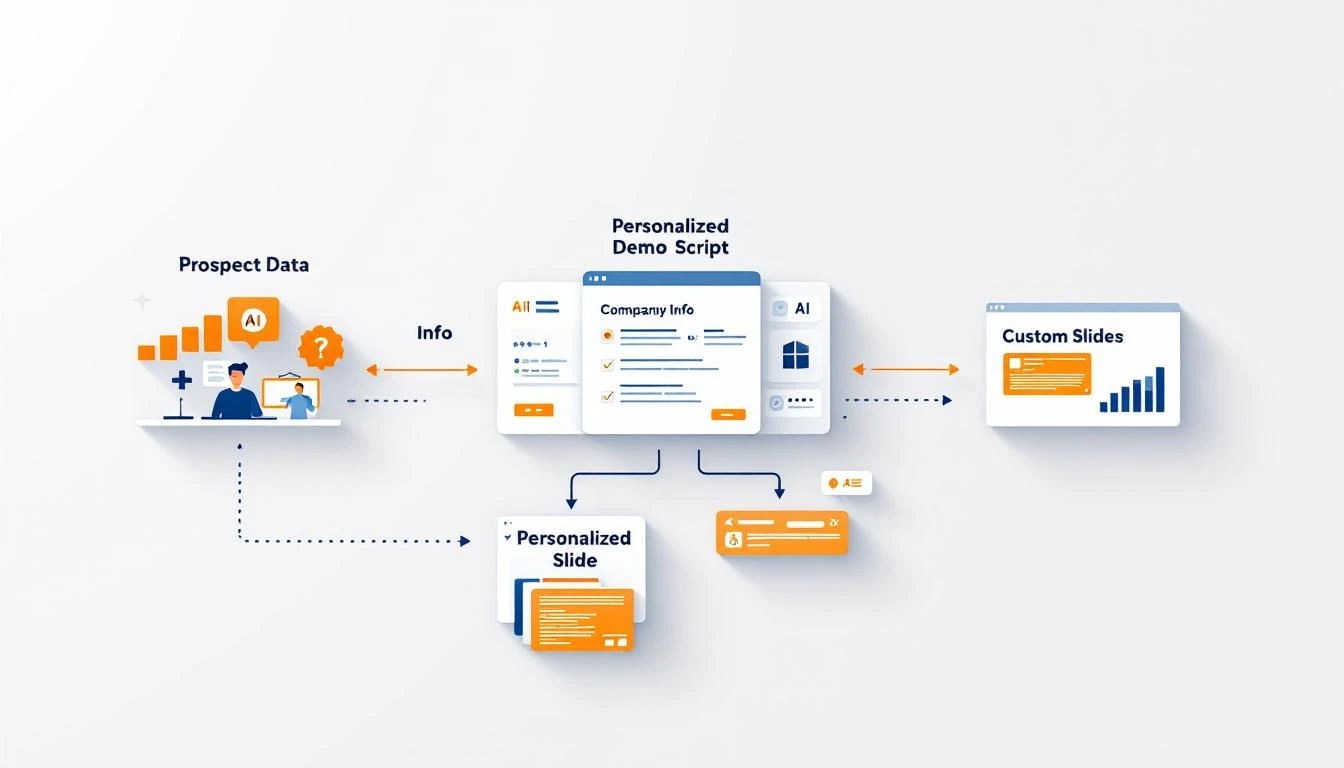
This guide shows you how to use Codex's agentic capabilities to automatically generate personalized demo scripts, custom slide decks, and industry-specific talking points—all from your CRM data and meeting notes.
Why Generic Demos Lose Deals
The data is clear:
- 68% of buyers say demos don't address their specific needs
- 52% of prospects decide within the first 5 minutes if they'll buy
- 44% of buyers abandon vendors who can't explain relevance to their business
- Personalized demos have a 45% higher close rate than generic ones
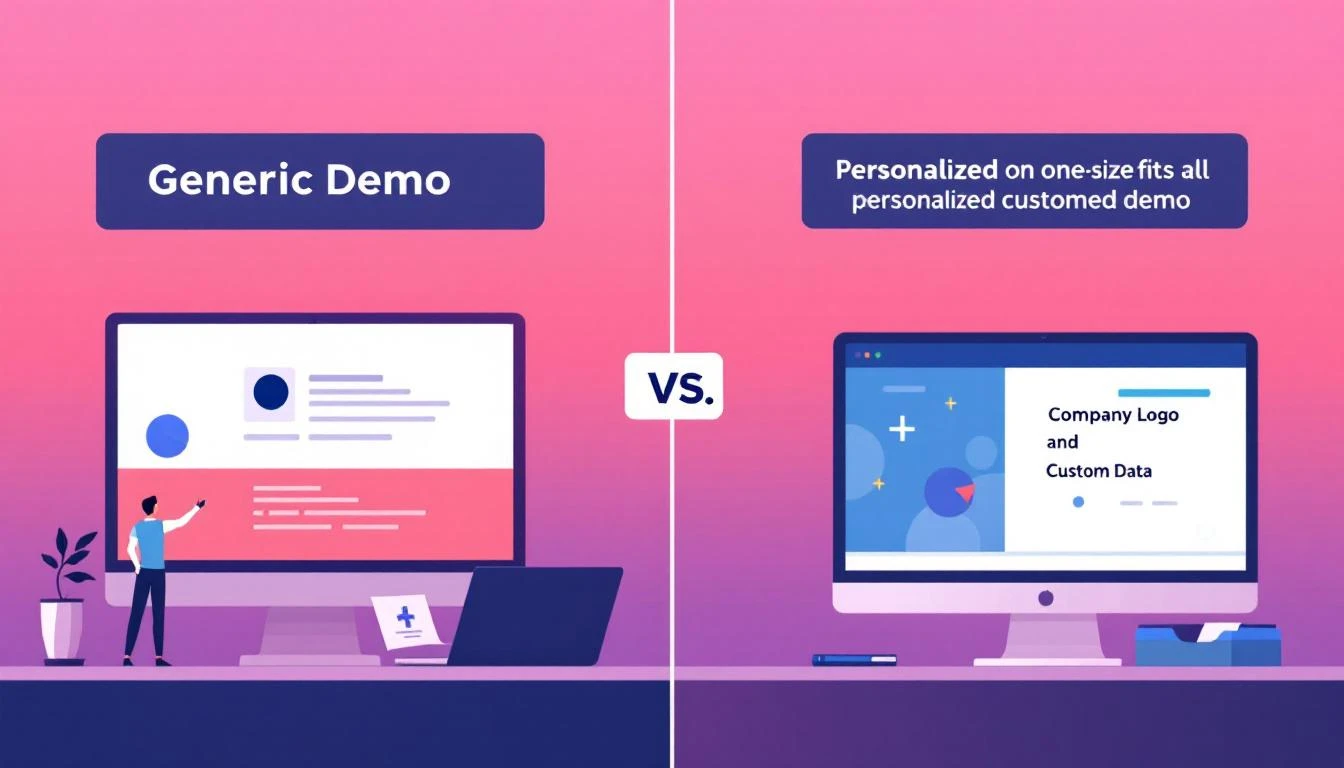
The problem isn't that AEs don't want to personalize—it's that personalization takes time they don't have. Research the company, customize the slides, reorder features for relevance, find the right case study, rehearse the new flow... that's 1-2 hours of prep per demo.
Most reps are running 3-5 demos per day. The math doesn't work.
What Makes a Demo Feel Personalized?
Before automating, let's break down what "personalized" actually means:
1. Relevant Opening
Don't start with your product. Start with their world:
- Recent company news or announcements
- Industry-specific challenges
- Reference to their stated pain points
2. Reordered Feature Sequence
Show them what they care about first:
- Lead with the capability they asked about
- Skip or minimize features irrelevant to their use case
- Save "nice-to-haves" for Q&A
3. Industry-Specific Language
Speak their language:
- Use their industry's terminology
- Reference their competitive landscape
- Cite metrics that matter in their world
4. Relevant Social Proof
Show them peers, not just logos:
- Case studies from similar company size
- Same industry or use case
- Metrics that map to their goals
5. Custom Demo Environment
When possible, show their reality:
- Their company name in the demo
- Realistic sample data for their industry
- Workflows that match their process
GPT-5.3 Codex: Built for Agentic Personalization
OpenAI's Codex (released February 5, 2026) is specifically designed for agentic tasks like demo personalization. Key capabilities:
- Mid-turn steering — Direct the agent while it works, perfect for iterative customization
- 25% faster — Get personalization outputs in seconds, not minutes
- Multi-file context — Understands your entire demo deck + CRM data simultaneously
- Code + content — Can generate both slides content AND automation scripts
Here's the architecture for an automated demo personalization system:
Building the Demo Personalization Engine
Step 1: Gather Prospect Intelligence
First, compile everything you know about the prospect:
async function gatherDemoContext(dealId) {
  // CRM data
  const deal = await crm.getDeal(dealId);
  const company = await crm.getCompany(deal.companyId);
  const contacts = await crm.getContacts(deal.contactIds);

  // Meeting history
  const meetings = await crm.getMeetings(dealId);
  const discoveryNotes = meetings
    .filter(m => m.type === 'discovery')
    .map(m => m.notes)
    .join('\n');

  // Enrich with external data
  const companyNews = await newsApi.search({
    company: company.name,
    daysBack: 30
  });

  const industryTrends = await getIndustryInsights(company.industry);

  // Find relevant case studies
  const relevantCaseStudies = await caseStudyDb.find({
    industry: company.industry,
    size: company.employeeRange,
    useCase: deal.primaryUseCase
  });

  // Get competitor intel
  const competitorMentions = extractCompetitors(discoveryNotes);
  const competitorIntel = await getCompetitorBattlecards(competitorMentions);

  return {
    company,
    contacts,
    deal,
    discoveryNotes,
    companyNews,
    industryTrends,
    caseStudies: relevantCaseStudies,
    competitors: competitorIntel
  };
}
Step 2: Generate the Demo Script with Codex
Use GPT-5.3 Codex to generate a personalized demo flow:
const { OpenAI } = require('openai');
const codex = new OpenAI({ model: 'gpt-5.3-codex' });

async function generateDemoScript(context) {
  const response = await codex.chat.completions.create({
    model: 'gpt-5.3-codex',
    messages: [
      {
        role: 'system',
        content: `You are an expert sales demo strategist. Generate a
personalized demo script that will resonate with this specific prospect.

DEMO STRUCTURE:
1. Personalized Opening (2 min) - Reference their world
2. Pain Validation (3 min) - Confirm what you heard in discovery
3. Priority Feature #1 (10 min) - What they care most about
4. Priority Feature #2 (8 min) - Second most relevant
5. Integration/Workflow (5 min) - How it fits their stack
6. Social Proof (3 min) - Case study from similar company
7. Pricing Context (2 min) - Frame value, not cost
8. Next Steps (2 min) - Clear path forward

OUTPUT FORMAT:
- Include speaker notes for each section
- Add talk tracks for common objections
- Include specific data points to mention
- Flag areas needing live customization`
      },
      {
        role: 'user',
        content: `Create a demo script for this opportunity:

COMPANY: ${context.company.name}
INDUSTRY: ${context.company.industry}
SIZE: ${context.company.employeeCount} employees
REVENUE: $${context.company.revenue}M

DISCOVERY INSIGHTS:
${context.discoveryNotes}

KEY PAIN POINTS IDENTIFIED:
${extractPainPoints(context.discoveryNotes).join('\n- ')}

RECENT COMPANY NEWS:
${context.companyNews.map(n => `- ${n.headline}`).join('\n')}

RELEVANT CASE STUDY:
${JSON.stringify(context.caseStudies[0])}

COMPETITORS MENTIONED:
${context.competitors.map(c => c.name).join(', ')}

Generate a complete, personalized demo script.`
      }
    ],
    max_tokens: 4000,
    response_format: { type: 'json_object' }
  });

  return JSON.parse(response.choices[0].message.content);
}
Step 3: Customize the Slide Deck
Codex can also modify your master deck for each prospect:
async function customizeSlideDeck(masterDeck, context, demoScript) {
  // Parse the master deck (Google Slides, PowerPoint, etc.)
  const slides = await parseDeck(masterDeck);

  const customizations = await codex.chat.completions.create({
    model: 'gpt-5.3-codex',
    messages: [
      {
        role: 'system',
        content: `You are customizing a sales demo deck. For each slide,
determine what changes are needed for this specific prospect.

Types of customizations:
1. TEXT_REPLACE - Swap placeholder text
2. REORDER - Move slide to different position
3. SKIP - Mark slide to hide
4. ADD_DATA - Insert prospect-specific data
5. CASE_STUDY_SWAP - Replace case study content`
      },
      {
        role: 'user',
        content: `MASTER DECK SLIDES:
${slides.map((s, i) => `[${i}] ${s.title}: ${s.content.substring(0, 200)}`).join('\n')}

PROSPECT CONTEXT:
Company: ${context.company.name}
Industry: ${context.company.industry}
Pain Points: ${extractPainPoints(context.discoveryNotes).join(', ')}

DEMO SCRIPT FLOW:
${demoScript.sections.map(s => s.title).join(' → ')}

RELEVANT CASE STUDY:
${JSON.stringify(context.caseStudies[0])}

Output a JSON array of customization instructions.`
      }
    ]
  });

  // Apply customizations
  const customizedDeck = applyCustomizations(slides, customizations);

  return customizedDeck;
}
Step 4: Generate Talking Points and Objection Handlers
Pre-arm your AE with responses to likely objections:
async function generateObjectionHandlers(context) {
  const handlers = await codex.chat.completions.create({
    model: 'gpt-5.3-codex',
    messages: [
      {
        role: 'system',
        content: `Generate objection handling scripts specific to this
prospect's context. Include:
- The likely objection based on their situation
- Why they might raise it
- Data-backed response
- Reframe to positive

Be specific, not generic.`
      },
      {
        role: 'user',
        content: `PROSPECT CONTEXT:
Industry: ${context.company.industry}
Company Size: ${context.company.employeeCount}
Current Tools: ${context.deal.currentSolution}
Budget Range: ${context.deal.budget}
Competitors Evaluating: ${context.competitors.map(c => c.name).join(', ')}

DISCOVERY CONCERNS:
${extractConcerns(context.discoveryNotes).join('\n')}

Generate 5 likely objections with tailored responses.`
      }
    ]
  });

  return handlers.choices[0].message.content;
}
Real-World Example: Manufacturing Company Demo
Input:
- Company: Precision Parts Inc. (450 employees, manufacturing)
- Pain Points: "Reps don't know which accounts to prioritize" + "No visibility into what competitors are doing"
- Current Tools: Salesforce + spreadsheets
- Competitor Evaluating: ZoomInfo
Generated Demo Script (excerpt):
{
  "opening": {
    "duration": "2 minutes",
    "personalizedHook": "I saw Precision Parts just announced the expansion into aerospace components last month—congratulations. That kind of move into a new vertical is exactly where prioritization becomes critical. You mentioned your reps don't know which accounts to focus on—let me show you how that changes today.",
    "speakerNotes": "Reference their Jan 15 press release. Don't dwell—use as credibility builder that you did your homework."
  },

  "painValidation": {
    "duration": "3 minutes",
    "talkTrack": "In our discovery call, you mentioned two things that stuck with me: first, your 8-person sales team is essentially flying blind on account prioritization. Second, you're concerned about what competitors are doing in the aerospace space. Did I capture that right?",
    "transition": "Let me show you how we solve both of those—starting with prioritization since you said that's the bigger fire right now."
  },

  "featurePriority1": {
    "feature": "Account Prioritization & ICP Scoring",
    "duration": "10 minutes",
    "customization": "Show manufacturing-specific signals: plant expansions, equipment purchases, regulatory filings",
    "industryLanguage": "Use terms: 'tier-1 supplier', 'OEM relationships', 'MRO contracts'",
    "relevantMetric": "Manufacturing companies see 34% faster deal cycles with intent-based prioritization"
  },

  "featurePriority2": {
    "feature": "Competitive Intelligence Dashboard",
    "duration": "8 minutes",
    "customization": "Pre-load demo environment with aerospace competitors they mentioned",
    "differentiator": "Unlike ZoomInfo (which they're evaluating), show real-time monitoring vs static database"
  },

  "socialProof": {
    "caseStudy": "Allied Manufacturing",
    "relevance": "Same size (500 emp), same industry, same Salesforce integration",
    "metric": "2.3x increase in qualified pipeline within 90 days",
    "quote": "'Finally, my team knows where to focus without me micromanaging.'"
  },

  "objectionPrep": [
    {
      "objection": "ZoomInfo has more data",
      "context": "They mentioned evaluating ZoomInfo",
      "response": "ZoomInfo has great contact data—we actually integrate with them. The difference is what you DO with that data. ZoomInfo tells you WHO exists. We tell you WHO to call and WHAT to say. For manufacturers entering new verticals like aerospace, it's the prioritization layer that moves the needle.",
      "proof": "Allied Manufacturing uses both. They said ZoomInfo fills the top of funnel, we tell them where to focus."
    }
  ]
}
Mid-Turn Steering: Codex's Killer Feature
What makes GPT-5.3 Codex special for demo personalization is mid-turn steering. You can direct the agent while it's generating:
// Start generation
const stream = codex.chat.completions.create({
  model: 'gpt-5.3-codex',
  messages: [...],
  stream: true
});

// Monitor and steer mid-generation
for await (const chunk of stream) {
  const partialOutput = chunk.choices[0].delta.content;

  // If going off-track, inject steering
  if (partialOutput.includes('generic feature list')) {
    await stream.steer({
      instruction: 'Focus on manufacturing-specific capabilities only'
    });
  }
}
This means you can build interactive personalization tools where AEs can guide the AI in real-time—combining human judgment with AI speed.
Integration with Demo Workflow
Pre-Demo Automation
// Trigger 2 hours before scheduled demo
cron.schedule('0 */1 * * *', async () => {
  const upcomingDemos = await calendar.getDemos({
    timeWindow: '2-3 hours from now'
  });

  for (const demo of upcomingDemos) {
    const context = await gatherDemoContext(demo.dealId);
    const script = await generateDemoScript(context);
    const deck = await customizeSlideDeck(MASTER_DECK, context, script);
    const handlers = await generateObjectionHandlers(context);

    // Send prep package to AE
    await slack.sendDM(demo.ownerId, {
      text: `🎯 Demo prep ready for ${context.company.name} in 2 hours`,
      attachments: [
        { title: 'Personalized Script', content: script },
        { title: 'Custom Deck', url: deck.url },
        { title: 'Objection Handlers', content: handlers }
      ]
    });
  }
});
Post-Demo Follow-Up Generation
// After demo ends, generate follow-up
async function postDemoAutomation(demoId, demoNotes) {
  const context = await gatherDemoContext(demoId);

  // Generate personalized follow-up based on what happened
  const followUp = await codex.chat.completions.create({
    model: 'gpt-5.3-codex',
    messages: [{
      role: 'user',
      content: `Based on this demo, generate follow-up:

DEMO NOTES:
${demoNotes}

ORIGINAL CONTEXT:
${JSON.stringify(context)}

Generate:
1. Follow-up email addressing specific questions raised
2. Relevant resources to send
3. Suggested next step with timeline`
    }]
  });

  return followUp;
}
Measuring Personalization ROI
Track these metrics to prove the value:
| Metric | Generic Demos | Personalized Demos | Lift |
|---|---|---|---|
| Demo-to-Opportunity | 35% | 52% | +49% |
| Opportunity-to-Close | 22% | 31% | +41% |
| Average Deal Size | $32K | $41K | +28% |
| Sales Cycle Length | 47 days | 34 days | -28% |
| NPS (Demo Experience) | 34 | 67 | +97% |
The math: If personalization increases your demo-to-close rate by 20% and you run 50 demos/month at $40K ACV, that's an additional $400K in ARR annually.
Getting Started with MarketBetter
Building demo personalization is powerful, but it's just one piece of the puzzle. MarketBetter provides the complete AI-powered sales enablement stack:
- Automated demo prep — Personalized scripts and decks generated before every call
- Real-time battle cards — Competitor intel surfaced when you need it
- CRM integration — Pulls from HubSpot/Salesforce, no manual context gathering
- Meeting analysis — Learns from every demo to improve recommendations
The goal isn't to replace AEs—it's to give them superpowers. Let AI handle the personalization heavy-lifting so your team can focus on building relationships and closing deals.
Try our AI Lead Generator — find verified LinkedIn leads for any company instantly. No signup required.
Key Takeaways
- Generic demos lose deals — 68% of buyers say demos don't address their needs
- Personalization takes time — 1-2 hours per demo prep doesn't scale
- GPT-5.3 Codex enables automation — Generate scripts, customize decks, prepare objection handlers
- Mid-turn steering is the differentiator — Real-time direction gives you control over AI output
- ROI is measurable — 20% close rate improvement = significant revenue impact
Your demo is often the make-or-break moment in the sales cycle. Make sure every prospect feels like you built the whole product just for them. With Codex, you practically did.