24 posts tagged with "signal-based-selling"

View All Tags

Why Professional Services Firms Are Replacing Cold Outreach with AI Signal Selling (And Closing 2x More Deals)

ยท 13 min read
MarketBetter Team
Content Team, marketbetter.ai

AI-powered sales for professional services firms

Professional services companies have a sales problem that's fundamentally different from SaaS, and most sales advice ignores it entirely.

When you sell software, your buyer has a persistent need. They need a CRM every day. They need email marketing every month. The demand is continuous, and your job is to show up at the right moment in a long evaluation cycle.

When you sell professional services โ€” investigations, consulting, specialized staffing, forensic accounting, compliance auditing โ€” your buyer's need is episodic and urgent. They don't need you every day. They need you on the day something goes wrong. An employee theft case surfaces. A regulatory audit gets announced. A litigation hold requires forensic analysis. A due diligence review has a two-week deadline.

If you're not in front of them at that exact moment, someone else is. And in professional services, switching costs are almost zero. There's no contract to cancel, no data migration to worry about. They just call another firm.

This is the story of how one professional services firm โ€” a private investigations company โ€” went from manual cold outreach to AI-powered signal selling. They replaced their clunky scheduling tools, implemented a smart dialer, and doubled their close rate in under three months.

12 Best B2B Buying Signal Tools for SDR Teams [2026]

ยท 15 min read
sunder
Founder, marketbetter.ai

Best B2B Buying Signal Tools 2026

Your SDRs are working from static lists. Meanwhile, your best prospects are visiting your pricing page, hiring for roles you solve, and researching your competitors โ€” right now. Without buying signal tools, your team misses these windows entirely.

Buying signal tools capture real-time indicators that an account is in-market: website visits, job changes, funding rounds, technology adoption, content consumption, and competitive research. The difference between a cold call and a warm outreach often comes down to whether you caught the signal in time.

We evaluated 12 platforms across signal types, data freshness, action layer, and total cost of ownership. Here's what actually works for SDR teams in 2026.

What Are B2B Buying Signals?โ€‹

Buying signals are observable behaviors that indicate a company or contact is actively evaluating solutions in your category. They fall into several categories:

  • First-party signals: Website visits, pricing page views, content downloads, chatbot interactions, demo requests
  • Third-party intent signals: Research activity across publisher networks on topics relevant to your product
  • Job change signals: When a champion or buyer moves to a new company (and might bring your tool with them)
  • Firmographic signals: Funding rounds, hiring spikes, technology changes, company growth
  • Engagement signals: Email opens, ad clicks, event attendance, social interactions

The best tools combine multiple signal types and โ€” critically โ€” tell your SDRs what to DO with those signals, not just show a dashboard of data.

How We Evaluatedโ€‹

CriteriaWhat We Looked For
Signal CoverageHow many signal types (first-party, intent, job change, firmographic)
Data FreshnessReal-time vs. daily vs. weekly signal delivery
Action LayerDoes it just show signals or tell reps what to do next?
Integration DepthCRM, email, dialer, Slack connectivity
Pricing TransparencyCan you find pricing without a demo?
SDR Workflow FitBuilt for reps or for data analysts?

1. MarketBetter โ€” Signals + SDR Playbook in One Platformโ€‹

Best for: SDR teams that want signals converted into daily action items, not another dashboard to monitor.

MarketBetter doesn't just surface buying signals โ€” it turns them into a daily SDR playbook. Website visitor identification, intent signals, email engagement, and chatbot interactions feed into a prioritized task list that tells each rep exactly who to contact, through which channel, and with what message.

Signal types covered:

  • Website visitor identification (company-level)
  • Chatbot engagement signals
  • Email open/click/reply tracking
  • Content download intent
  • Conference attendee signals
  • Champion job change tracking

What sets it apart: Most signal tools stop at "Company X is showing intent." MarketBetter goes further: "Call Sarah at Company X about their pricing page visit yesterday โ€” here's a talk track based on what they viewed." The daily playbook eliminates the interpretation gap between signal and action.

Key capabilities:

  • AI-powered daily SDR playbook with prioritized accounts
  • Smart dialer for warm outbound calls
  • AI chatbot that engages visitors in real-time
  • Hyper-personalized email sequences triggered by signals
  • Multi-channel orchestration (email + phone + LinkedIn)
  • Conference scraper for event-based prospecting

Pricing: $99/user/month with full signal access. Standard plan at $1,500/month adds the SDR dashboard and expanded actions. No per-signal fees.

Integrations: Salesforce, HubSpot, major email providers, LinkedIn, Slack

Start a free trial โ†’


2. Common Room โ€” Community and Product Signal Aggregationโ€‹

Best for: Product-led growth companies tracking community activity alongside traditional intent.

Common Room aggregates signals from community platforms (Slack, Discord, GitHub, Stack Overflow), product usage, social media, and traditional intent sources into unified account profiles. It's designed for companies where community engagement is a meaningful buying signal.

Signal types covered:

  • Community activity (Slack, Discord, GitHub contributions)
  • Product usage patterns
  • Social media mentions and engagement
  • Website visits (via integrations)
  • Third-party intent data (via Bombora partnership)

Strengths: Unique community signal layer that no other platform offers. Strong for developer-focused companies where GitHub stars and Slack activity predict purchasing intent.

Limitations: The signal-to-action gap is real. Common Room shows you who's active but relies on your team to decide what to do. No built-in dialer, email sequencing, or automated playbook generation. You'll need additional tools to act on the signals.

Pricing: Free tier available. Team plan starts around $500/month. Enterprise pricing requires a demo.


3. UserGems โ€” Champion Tracking and Job Change Signalsโ€‹

Best for: Teams with a strong customer base who want to re-engage buyers when they change jobs.

UserGems specializes in one signal type and does it exceptionally well: job changes. When your champion or power user moves to a new company, UserGems alerts your team so you can re-engage them before a competitor does. This "follow the buyer" motion generates some of the highest-converting outbound.

Signal types covered:

  • Champion job changes (primary focus)
  • Past-customer new-company alerts
  • Hiring pattern signals
  • Organizational changes

Strengths: The champion tracking data is among the most accurate in the market. The signal is inherently warm โ€” you're reaching out to someone who already knows and used your product.

Limitations: Narrow signal coverage. If you need website visitor ID, intent data, or engagement tracking, you'll need additional tools alongside UserGems. Pricing reflects the premium positioning.

Pricing: Revv Up plan starts at $12,000/year for tracking up to 10,000 contacts. Cruise plan starts at $18,000/year for broader account coverage. Add-ons available for org charts and database cleanup.


4. Warmly โ€” AI-Powered Website Visitor Orchestrationโ€‹

Best for: Teams focused primarily on website visitor identification with automated outreach.

Warmly identifies website visitors at the company and contact level, then uses AI agents to automate initial outreach. It combines visitor data with third-party intent signals from Bombora to prioritize accounts showing multiple buying indicators.

Signal types covered:

  • Website visitor identification (company + contact level)
  • Third-party intent data (Bombora)
  • Social media signals
  • CRM engagement history

Strengths: Strong visitor identification accuracy with the AI agent layer that can automate initial chat and email sequences. Good for teams that want hands-off top-of-funnel engagement.

Limitations: No smart dialer. No daily playbook that prioritizes and sequences actions for SDRs. The AI agent approach works for initial engagement but lacks the human-in-the-loop workflow that experienced SDR teams need. Limited conference and event signal coverage.

Pricing: Starts around $700/month. Enterprise tiers go significantly higher based on traffic volume and features.


5. 6sense โ€” Enterprise Intent Data and ABM Orchestrationโ€‹

Best for: Large enterprise teams running sophisticated ABM programs with big budgets.

6sense uses AI to predict which accounts are in-market based on third-party intent signals, firmographic data, and engagement patterns. The platform assigns buying stage predictions and intent scores that marketing and sales teams use to orchestrate multi-channel campaigns.

Signal types covered:

  • Third-party intent data (proprietary network)
  • Buying stage predictions (Awareness โ†’ Decision)
  • Technographic data
  • Firmographic changes
  • Advertising engagement

Strengths: The buying stage model is genuinely useful for large teams coordinating between marketing and sales. Predictive capabilities help prioritize accounts across massive TAMs. Strong ABM advertising integration.

Limitations: Enterprise pricing puts it out of reach for most SMB teams ($50,000-$100,000+/year). The platform requires significant setup and a dedicated RevOps resource. Intent data is aggregated at the account level โ€” you still need contact data from another source to actually reach someone. The signal-to-action gap is wide: 6sense tells you an account is in-market but doesn't build your rep's daily task list.

Pricing: Starts around $50,000/year. Most implementations run $75,000-$120,000/year with full feature access. Contact-level data and advertising features are add-ons.


6. ZoomInfo โ€” B2B Data + Intent Signal Layerโ€‹

Best for: Teams that need contact data AND intent signals in one database.

ZoomInfo combines one of the largest B2B contact databases with intent data signals through their partnership with Bombora and their own browsing data. The platform lets you build prospect lists filtered by both firmographic criteria and active intent signals.

Signal types covered:

  • Third-party intent data (Bombora + proprietary)
  • Website visitor identification (via WebSights)
  • Hiring signals
  • Technology install data
  • Funding and financial signals

Strengths: Unmatched contact database depth. The ability to filter by intent score alongside firmographic data means you can build highly targeted lists of contacts at in-market accounts. ZoomInfo Copilot adds AI-powered signal prioritization.

Limitations: Intent data is an add-on requiring Advanced or Elite tiers ($25,000-$40,000+/year). The platform is optimized for list-building, not daily SDR workflow management. You get data to work with, not a playbook to follow. Annual contracts with auto-renewal and significant price increases are common pain points in reviews.

Pricing: Base plans start around $15,000/year. Intent features require Advanced ($25,000+) or Elite ($40,000+) tiers. Per-credit pricing for enrichment and exports.


7. Bombora โ€” The Intent Data Infrastructure Layerโ€‹

Best for: Teams that want raw intent data to feed into existing CRM and sales tools.

Bombora is the intent data layer behind many platforms on this list. Their Data Co-op aggregates content consumption signals across 5,000+ B2B publisher websites to identify which companies are actively researching specific topics. Many platforms (ZoomInfo, 6sense, Common Room) license Bombora data.

Signal types covered:

  • Third-party content consumption intent (primary)
  • Topic surge scores
  • Historical intent trends

Strengths: The largest consent-based B2B intent data co-op. Topic-level granularity lets you see exactly what subjects an account is researching. Clean API for feeding signals into any system.

Limitations: Pure data play โ€” no workflow, no dialer, no email, no playbook. You need to build the action layer yourself. Company-level only; no contact-level identification. Pricing requires significant minimum commitment.

Pricing: Starts around $25,000/year for direct access. Volume-based pricing scales with account coverage.


8. Apollo.io โ€” Affordable Data + Engagement Signalsโ€‹

Best for: Budget-conscious teams that need basic intent signals alongside a contact database and email sequencing.

Apollo combines a 200M+ contact database with buyer intent signals, engagement tracking, and built-in email sequencing. It's the most affordable option for teams that want signals and outreach tools in one platform.

Signal types covered:

  • Buyer intent signals (via Bombora partnership)
  • Email engagement tracking
  • Website visitor identification (basic)
  • Job change alerts
  • Company news signals

Strengths: Incredible value for money. The free tier includes basic signals. Paid plans start at $49/user/month with intent data included at higher tiers. Built-in email sequencing means you can act on signals without switching tools.

Limitations: Intent data depth doesn't match 6sense or ZoomInfo. Contact data accuracy varies โ€” heavy reliance on community-contributed data. No smart dialer (phone verification is a paid add-on). The platform tries to do everything, which means nothing is as deep as specialized tools.

Pricing: Free tier available. Basic: $49/user/month. Professional: $79/user/month. Organization: $119/user/month (intent data included at this tier).


9. Leadfeeder (now Dealfront) โ€” Website Visitor Intent for European Marketsโ€‹

Best for: European companies that need GDPR-compliant website visitor identification.

Dealfront (formerly Leadfeeder + Echobot) identifies website visitors and combines them with European B2B data for prospecting. Strong GDPR compliance makes it the go-to for EU-headquartered teams.

Signal types covered:

  • Website visitor identification
  • European company database signals
  • Web activity tracking
  • CRM engagement correlation

Strengths: Best-in-class European data coverage and GDPR compliance. Simple setup with Google Analytics integration. Clean interface that doesn't overwhelm smaller teams.

Limitations: Primarily a visitor identification tool. No intent data, no job change tracking, no champion monitoring. North American data coverage is weaker than US-focused competitors. No built-in outreach tools โ€” you need separate email and dialer platforms.

Pricing: Free tier (limited visitors). Paid plans from โ‚ฌ99/month based on identified companies.


10. Cognism โ€” GDPR-First Signals with Phone-Verified Dataโ€‹

Best for: SDR teams doing cold calling that need verified mobile numbers alongside intent data.

Cognism combines a phone-verified B2B contact database with Bombora intent data. Their Diamond Data verification process delivers 87%+ connect rates on mobile numbers โ€” a significant advantage for phone-heavy SDR teams.

Signal types covered:

  • Third-party intent data (via Bombora)
  • Hiring signals
  • Technology install changes
  • Funding and financial signals

Strengths: Phone-verified contact data is genuinely differentiated. For SDR teams where phone outreach is primary, Cognism's connect rates save significant time. Strong European coverage with built-in GDPR compliance (DNC list checking, consent tracking).

Limitations: Intent data is Bombora-sourced (same as many competitors). No website visitor identification. No daily playbook or action prioritization โ€” you get data, not workflow. Pricing is not publicly available and typically runs $15,000-$30,000/year.

Pricing: Not publicly listed. Reports suggest $15,000-$30,000/year depending on seat count and data volume.


11. LoneScale โ€” Real-Time Job Change and Hiring Signalsโ€‹

Best for: Teams that want to automate outreach based on hiring and job change triggers.

LoneScale monitors hiring patterns and job changes to surface buying signals in real time. When a company starts hiring for roles your product serves, or when a champion changes jobs, LoneScale triggers automated sequences.

Signal types covered:

  • Job change signals
  • Hiring pattern alerts
  • Technology adoption changes
  • Company growth signals

Strengths: Real-time signal delivery (not batched weekly). Strong automation layer that connects signals directly to email sequences and CRM workflows. Clean, focused product that does a few things well.

Limitations: Narrow signal coverage โ€” no website visitor ID, no third-party intent data, no engagement tracking. Useful as a complement to broader platforms, not as a standalone signal solution.

Pricing: Growth plan starts at $600/month. Enterprise pricing available for larger teams.


12. LeadIQ โ€” Prospecting with Signal-Driven Prioritizationโ€‹

Best for: Individual SDRs who want signals embedded in their prospecting workflow.

LeadIQ captures contact data from LinkedIn Sales Navigator and enriches it with buying signals like job changes, company news, and technology changes. The platform is built for individual rep productivity rather than team-level orchestration.

Signal types covered:

  • Job change alerts
  • Company news and trigger events
  • Technology changes
  • LinkedIn engagement signals

Strengths: Tight LinkedIn Sales Navigator integration. AI-powered email personalization that references signals in outreach. Affordable per-seat pricing.

Limitations: Individual rep tool, not a team-level signal platform. No website visitor identification. No daily playbook or multi-channel orchestration. Signal depth doesn't match enterprise platforms.

Pricing: Free tier available. Essential: $36/user/month. Pro: $79/user/month. Enterprise pricing available.


Buying Signal Tool Comparison Matrixโ€‹

ToolWebsite Visitor IDIntent DataJob ChangeAction LayerStarting Price
MarketBetterโœ…โœ…โœ…Full Playbook$99/user/month
Common RoomVia integrationโœ… (Bombora)โŒDashboard only$99/user/month
UserGemsโŒโŒโœ… (Best)Alerts + CRM$12,000/yr
Warmlyโœ… (Best)โœ… (Bombora)โŒAI Agent chat~$700/mo
6senseโŒโœ… (Best)โŒABM orchestration~$50,000/yr
ZoomInfoโœ… (WebSights)โœ… (Bombora+)โœ…Data export$15,000/yr
BomboraโŒโœ… (Source)โŒAPI/Data only~$25,000/yr
ApolloBasicโœ… (Bombora)โœ…Built-in sequencesFree / $49/user
Dealfrontโœ…โŒโŒDashboard onlyโ‚ฌ99/mo
CognismโŒโœ… (Bombora)โœ…Data + verify~$15,000/yr
LoneScaleโŒโŒโœ…Automation$600/mo
LeadIQโŒโŒโœ…LinkedIn captureFree / $36/user

How to Choose the Right Buying Signal Toolโ€‹

By Team Sizeโ€‹

Solo SDR or small team (1-5 reps): Apollo or LeadIQ. You need affordable access to signals without enterprise overhead. Apollo's free tier lets you start immediately.

Growing SDR team (5-15 reps): MarketBetter or Warmly. You need a platform that turns signals into workflow, not just data. MarketBetter's daily playbook eliminates the "what do I do with this data?" problem.

Enterprise team (15+ reps): 6sense or ZoomInfo for signal coverage, but pair with an execution platform for the action layer. Or MarketBetter's Enterprise plan for an all-in-one approach.

By Primary Signal Needโ€‹

Website visitors: MarketBetter, Warmly, or Dealfront (EU) Intent data: 6sense, Bombora, or ZoomInfo Job changes: UserGems or LoneScale All-in-one: MarketBetter or Apollo

By Budgetโ€‹

Under $500/month: Apollo (paid tier) or LeadIQ $500-$2,000/month: MarketBetter (best signal-to-action ratio) $2,000-$5,000/month: Warmly or Common Room + add-ons $5,000+/month: 6sense, ZoomInfo, or enterprise stacks


The Signal-to-Action Gap: Why It Mattersโ€‹

Most buying signal tools have a fundamental problem: they show you data but don't tell you what to do with it. Your SDR sees that Company X has high intent โ€” great. Now what? Which contact? Which channel? What message? When?

This gap is where deals die. Signals decay fast. A website visit is warm for 24 hours, not two weeks. A job change is actionable for 30 days, not six months. If your team can't move from signal to outreach within hours, you're leaving pipeline on the table.

The tools that bridge this gap โ€” converting raw signals into prioritized, channel-specific, personalized outreach โ€” deliver dramatically higher ROI than platforms that just surface data and leave the interpretation to already-overloaded SDRs.

That's why MarketBetter built the SDR playbook. Signals are inputs. Actions are outputs. Your SDRs shouldn't be data analysts.


Free Tool

Try our AI Lead Generator โ€” find verified LinkedIn leads for any company instantly. No signup required.

Bottom Lineโ€‹

The buying signal tool you choose should match your team's execution capability. If you have a mature RevOps team that can build workflows and interpret data, platforms like 6sense or ZoomInfo give you raw signal power. If your SDRs need a daily action plan built from signals, MarketBetter closes the gap between insight and execution.

The worst outcome isn't picking the wrong tool โ€” it's paying for signals and never acting on them fast enough to matter.

Ready to turn buying signals into booked meetings? See MarketBetter in action โ†’

The Warm Outbound Playbook: How to Turn Buying Signals Into Meetings [2026]

ยท 11 min read
sunder
Founder, marketbetter.ai

Cold outbound is dying. Not because outbound doesn't work โ€” but because cold outbound doesn't work.

The numbers tell the story:

  • Average cold email reply rate: 1โ€“3% (down from 8% in 2020)
  • Average cold call connect rate: 4.8% (Gong, 2025)
  • Percentage of buyers who say cold outreach is "irrelevant to their needs": 72% (LinkedIn State of Sales)

Meanwhile, warm outbound โ€” reaching out to prospects who've already shown buying signals โ€” converts at 3โ€“5x higher rates than cold approaches.

The difference isn't the rep. It's not the script. It's not even the product. It's timing and relevance.

Cold outbound interrupts strangers. Warm outbound engages buyers who are already looking.

This playbook shows you exactly how to build a warm outbound motion from scratch โ€” what signals to track, how to prioritize them, and how to turn them into meetings.

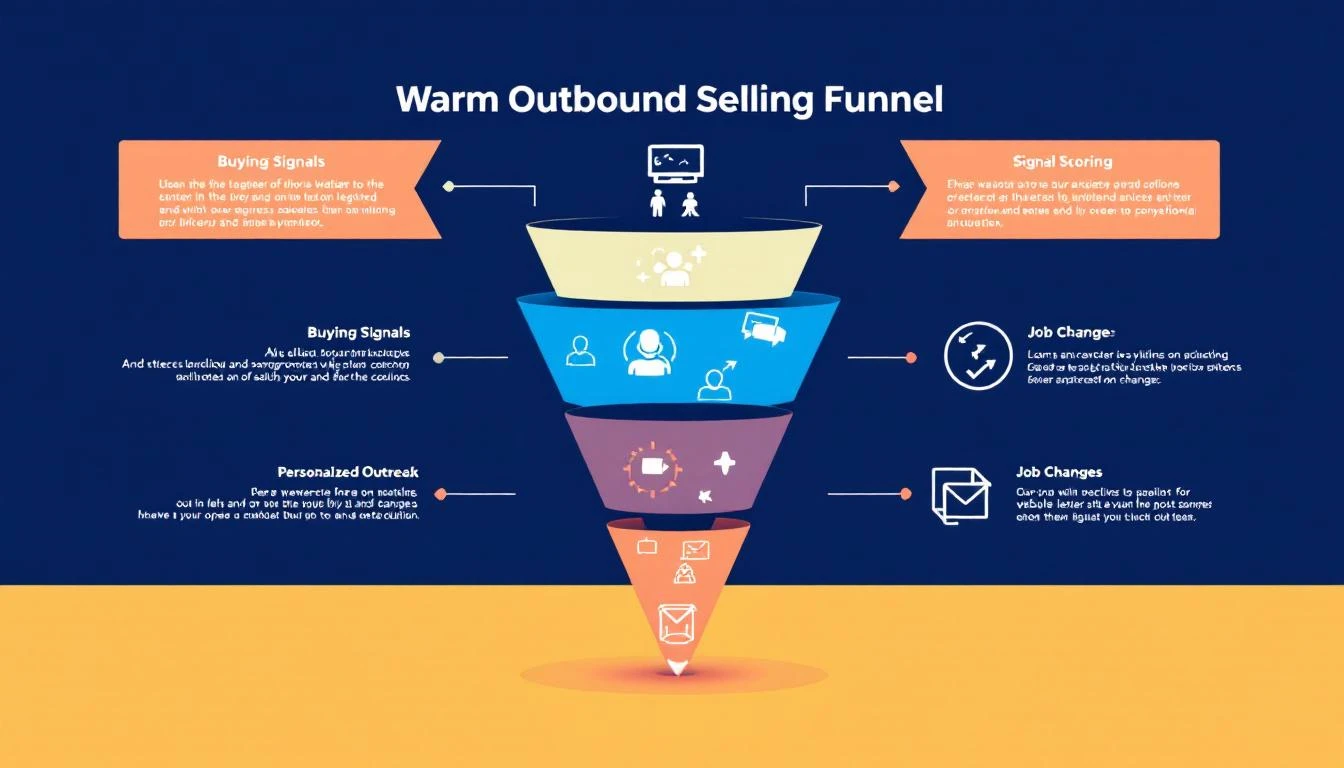
Warm Outbound Signal Funnel

What Is Warm Outbound?โ€‹

Warm outbound is proactive sales outreach to prospects who've shown intent or interest signals โ€” but haven't yet raised their hand (filled out a form, requested a demo, etc.).

It sits between two extremes:

ApproachSignal LevelExample
InboundHand-raise"I want a demo" form fill
Warm OutboundIntent signalsVisited pricing page 3x, competitor search, champion moved
Cold OutboundNo signalRandom list from a data provider

Warm outbound captures the 95% of buyers who are researching but haven't filled out a form. They're evaluating. They're comparing. They're building internal business cases. They just haven't reached out yet.

Your competitors are waiting for the form fill. You're going to reach them first.

The 7 Buying Signals That Power Warm Outboundโ€‹

Not all signals are equal. Here's how to tier them:

Tier 1: High-Intent Signals (Act Within 24 Hours)โ€‹

1. Website Visitor Identification โ€” Pricing & Demo Pages

When a company visits your pricing page or demo page multiple times, someone is actively evaluating your product. This is the single highest-converting warm outbound signal.

  • What it looks like: "3 visitors from Acme Corp viewed your pricing page in the last 48 hours"
  • Why it matters: They're past awareness. They're doing math. They're probably comparing you.
  • How to act: Direct call or email to the likely buyer (VP Sales, SDR Manager). Reference their evaluation: "I noticed your team has been evaluating SDR tools โ€” mind if I share how we compare on the areas that usually matter most?"

2. Champion Job Changes

When a previous champion, power user, or customer moves to a new company, you have a built-in referral. They already know your product works.

  • What it looks like: "Sarah Chen (former AE at Hologram, your customer) just joined TechCorp as VP Sales"
  • Why it matters: 70% of champions who move will evaluate their previous tools at the new company (UserGems data)
  • How to act: Personal, non-pushy outreach: "Congratulations on the move to TechCorp. When you're settled in, would love to see if we can help there too."

3. Active Competitor Evaluation

When a prospect is searching for your competitors, reading comparison pages, or visiting G2 comparison pages, they're in active buying mode.

  • What it looks like: "Prospect searched 'Apollo vs ZoomInfo' and landed on your comparison page"
  • Why it matters: They're deciding NOW. Not next quarter. Now.
  • How to act: Fast, relevant outreach that positions your differentiation: "I see you're comparing outbound tools โ€” most teams in [their industry] choose us for [specific differentiator]. Worth 15 minutes?"

Tier 2: Medium-Intent Signals (Act Within 48โ€“72 Hours)โ€‹

4. Content Engagement Patterns

A single blog post visit means nothing. But a pattern โ€” 3 blog posts about SDR productivity, a whitepaper download, and a webinar registration in the same week โ€” signals active research.

  • What it looks like: "Director of Sales Ops at DataCorp downloaded your ROI calculator and read 3 SDR-related blog posts"
  • Why it matters: They're building a business case. They might not know your product yet, but they're solving a problem you solve.
  • How to act: Value-led outreach tied to their research topic: "I saw you downloaded our SDR ROI calculator โ€” curious what you found. Most teams we talk to in [industry] are seeing [specific metric]. Mind sharing what you're working on?"

5. Tech Stack Changes

When a company adopts or drops specific technologies, it creates adjacent buying needs. New Salesforce adoption? They'll need outbound tools. Dropped their dialer? They're looking for a new one.

  • What it looks like: "TechCorp just adopted Salesforce (detected via technographic data)"
  • Why it matters: Technology adoption creates buying windows โ€” 60โ€“90 day periods where adjacent purchases spike
  • How to act: Frame your outreach around the transition: "Noticed you recently adopted Salesforce โ€” most teams add outbound tooling within the first quarter. Happy to share what we've seen work."

Tier 3: Contextual Signals (Act Within 1โ€“2 Weeks)โ€‹

6. Hiring Signals

When a company posts SDR or sales manager job listings, they're investing in outbound. That means they need tools to make those new hires productive.

  • What it looks like: "Acme Corp posted 4 SDR roles and a Head of Sales Development position on LinkedIn"
  • Why it matters: They're building or scaling a sales team โ€” exactly when they need your platform
  • How to act: Frame around their growth: "Saw you're scaling the SDR team โ€” the ramp time challenge is real. We help teams get new reps productive in 6 weeks instead of 4 months."

7. Funding and Expansion Events

A company that just raised Series B, opened a new office, or announced expansion plans is spending money. GTM is almost always a top priority post-funding.

  • What it looks like: "DataFlow just raised $30M Series B (Crunchbase alert)"
  • Why it matters: Post-funding companies allocate 30โ€“40% of new capital to sales and marketing (First Round data)
  • How to act: Relevant, congratulatory outreach: "Congrats on the raise โ€” exciting time. Most Series B teams we work with are figuring out how to scale outbound without scaling headcount linearly. Worth a conversation?"

Building Your Signal Stackโ€‹

Warm outbound requires three layers of technology:

Layer 1: Signal Collectionโ€‹

You need tools that capture buying signals from multiple sources:

  • Website visitor identification โ€” Know which companies are visiting your site and which pages they're viewing
  • Intent data providers โ€” Track off-site research behavior (G2 visits, competitor comparisons, keyword searches)
  • LinkedIn monitoring โ€” Job changes, company updates, hiring patterns
  • Technographic data โ€” Tech stack adoptions and changes
  • CRM signals โ€” Re-engagement from closed-lost deals, email opens on old threads

Layer 2: Signal Scoring and Prioritizationโ€‹

Raw signals are noise. You need a system that scores and ranks them so reps know what to act on first.

A simple scoring model:

SignalPointsDecay
Pricing page visit (3+ times)507 days
Demo page visit407 days
Champion job change4530 days
Competitor comparison page3514 days
Content pattern (3+ pieces)2514 days
Tech stack change2030 days
Hiring signal1530 days
Funding event1060 days

Accounts that cross your threshold (e.g., 50+ points) go into the "act now" queue. Everything else goes to nurture.

Layer 3: Action Orchestrationโ€‹

This is where most signal stacks fail. They collect data and score it โ€” but they don't tell reps what to do.

Your action layer should:

  • Generate a daily prioritized list for each rep
  • Recommend the best channel (call vs. email vs. LinkedIn) based on persona and signal type
  • Suggest personalized messaging based on the specific signal
  • Track multi-touch sequences across channels
  • Feed outcomes back into the scoring model (closed-won = boost similar signals)

The Warm Outbound Workflow (Step-by-Step)โ€‹

Here's the daily rhythm for an SDR running warm outbound:

Morning (8:00โ€“8:30 AM): Signal Reviewโ€‹

  1. Open your daily playbook / signal dashboard
  2. Review new signals from overnight (website visits, champion moves, intent spikes)
  3. Prioritize: High-intent signals first, then medium, then contextual
  4. Identify the top 10โ€“15 accounts to work today

Mid-Morning (8:30โ€“11:00 AM): Phone Blockโ€‹

  1. Call high-intent signal accounts first (pricing page visitors, champion moves)
  2. Reference the signal in your opener: "I'm calling because [specific reason]"
  3. Log outcomes and next steps in CRM
  4. Queue follow-up sequences for no-answers

Late Morning (11:00 AMโ€“12:00 PM): Email and LinkedInโ€‹

  1. Send personalized emails to medium-intent signal accounts
  2. Connect on LinkedIn with contextual connection notes
  3. Engage with prospect content (genuine comments, not "Great post!")
  4. Follow up on opened emails from previous sequences

Afternoon (1:00โ€“3:00 PM): Follow-Up and Researchโ€‹

  1. Follow up on callbacks and email replies
  2. Research new signals for tomorrow's priority list
  3. Update CRM with signal data and engagement history
  4. Review call recordings from the morning (self-coaching)

End of Day (3:00โ€“3:30 PM): Pipeline Reviewโ€‹

  1. Update opportunity stages
  2. Note any signals that changed (new visits, additional engagement)
  3. Flag accounts for AE warm handoff
  4. Set next-day priorities

Cold vs. Warm Outbound: The Performance Gapโ€‹

Here's what the data looks like when teams switch from cold to warm:

MetricCold OutboundWarm OutboundImprovement
Email reply rate1โ€“3%8โ€“15%3โ€“5x
Cold call connect rate4.8%12โ€“18%2.5โ€“3.7x
Meeting conversion rate0.5โ€“1%3โ€“6%5โ€“6x
Pipeline per SDR per month$50Kโ€“$100K$150Kโ€“$300K2โ€“3x
Average deal cycle45โ€“60 days28โ€“38 days30โ€“40% faster
SDR quota attainment52%78%50% higher

The ROI is undeniable. But it requires infrastructure, not just hustle.

5 Warm Outbound Mistakes to Avoidโ€‹

1. Treating Every Signal the Sameโ€‹

A pricing page visit and a blog post visit are not equal signals. If your reps treat them with the same urgency, they'll waste time on low-intent accounts and miss high-intent ones.

Fix: Build a tiered signal scoring model (see above) and prioritize ruthlessly.

2. Over-Automating the Outreachโ€‹

Warm outbound works because it's relevant and personal. If you blast automated sequences to every signal, you'll kill the advantage.

Fix: Automate signal collection and prioritization. Keep the outreach human. A 2-sentence personalized email beats a 5-paragraph automated one.

3. Ignoring Signal Decayโ€‹

A pricing page visit from 3 weeks ago is stale. A champion job change from 6 months ago is ancient history. Signals have a shelf life.

Fix: Build decay into your scoring model. Signals lose value over time. A 50-point pricing visit should drop to 25 after 7 days and 0 after 14.

4. No Feedback Loopโ€‹

If your reps don't know which signals actually convert to revenue, they can't improve their prioritization. Most teams track signals in โ†’ meetings out, but never close the loop to pipeline and revenue.

Fix: Track signal-to-revenue attribution. Which signal types generate the highest-value pipeline? Double down on those.

5. Separate Signal and Action Toolsโ€‹

If your reps need to check one tool for visitor ID, another for intent data, another for champion tracking, and then manually build their outreach list โ€” they'll spend more time toggling than selling.

Fix: Consolidate into a single platform that collects signals AND orchestrates actions.

How MarketBetter Powers Warm Outboundโ€‹

MarketBetter was built specifically for warm outbound. Here's how it works:

Signal Collection โ†’ Scoring โ†’ Daily Playbook โ†’ Execution

  1. Website Visitor Identification: Know which companies visit your site, which pages they view, and how often โ€” no form fills required
  2. Buying Signal Aggregation: Website visits, email engagement, champion job changes, and intent data all feed into a single signal score
  3. Daily SDR Playbook: Every morning, each rep gets a prioritized list of who to contact, why they're a priority, and what to say
  4. Multi-Channel Execution: Email sequences, smart dialer, and LinkedIn โ€” all from one platform
  5. AI Personalization: The AI researches each prospect and generates personalized outreach based on their specific signals
  6. Closed-Loop Attribution: Track which signals generate pipeline and revenue, then optimize your scoring model

Most signal platforms tell you who. MarketBetter tells you who, why, and what to do next.

That's the difference between a dashboard and a playbook.

Ready to switch from cold to warm? Book a demo โ†’

Free Tool

Try our AI Lead Generator โ€” find verified LinkedIn leads for any company instantly. No signup required.

Signal-Based Selling: The Complete Guide to Signal-Based Market (SBM) for Sales Teams

ยท 18 min read
sunder
Founder, marketbetter.ai

Your SDRs have a list of 30,000 accounts. They're calling, emailing, and LinkedIn-ing their way through it โ€” one cold outreach at a time, praying that someone picks up.

Here's the math nobody talks about: at 80 activities per day, it takes a single rep 375 business days to touch every account once. That's 18 months. And by the time they circle back to account #1, whatever signal triggered the initial outreach is long dead.

This is the fundamental problem with traditional outbound. You're treating every account the same. The company that visited your pricing page three times this week gets the same generic sequence as the company that hasn't thought about your category in two years.

Signal-based selling fixes this. Instead of working a static list, you work a dynamic, living market โ€” the accounts showing real buying behavior right now. We call this your Signal-Based Market (SBM), and it changes everything about how modern sales teams operate.

What Is Signal-Based Selling?โ€‹

Signal-based selling is a GTM strategy where every sales action โ€” who to call, what to say, when to reach out โ€” is driven by real-time buying signals rather than static lists or gut instinct.

Instead of asking "Who's on my list today?", signal-based sellers ask: "Who's showing buying behavior today?"

Those signals include:

  • First-party engagement: Website visits, pricing page views, content downloads, demo page visits
  • Behavioral patterns: Repeat visits, increasing session depth, multi-stakeholder browsing
  • Champion movements: Key contacts changing jobs to new companies (they already know your product)
  • Firmographic changes: Funding rounds, hiring patterns, tech stack changes
  • Conversation intelligence: What prospects say on calls โ€” pain points, timeline, budget mentions

The shift is subtle but profound. Traditional selling is push-based โ€” you push your message to a list and hope for the best. Signal-based selling is pull-based โ€” you let buyer behavior pull you toward the accounts most likely to convert.

The best salespeople have always done this instinctively. Signal-based selling just makes it systematic, scalable, and available to every rep on the team โ€” not just the top 10%.

Understanding the Signal-Based Market (SBM)โ€‹

The Signal-Based Market is the core concept that makes this work. Think of it as a funnel โ€” but instead of a marketing funnel, it's a focus funnel that tells your sales team exactly where to spend their time.

The TAM โ†’ ICP โ†’ SBM Funnelโ€‹

Here's how a Signal-Based Market narrows the aperture from "everyone" to "right now":

StageWhat It RepresentsExample SizeHow You Define It
TAM (Total Addressable Market)Every company that could buy your product~150,000 accountsIndustry, company size, geography
ICP (Ideal Customer Profile)Companies that should buy your product~30,000 accountsFirmographic fit, technographic match, budget indicators
SBM (Signal-Based Market)Companies showing buying behavior today~100-150 accountsReal-time engagement + readiness signals overlaid on ICP

Read that last row again. From 150,000 accounts to ~100 that matter today. That's not a marginal improvement โ€” that's a 1,500x increase in focus.

Your TAM is everyone. Your ICP narrows it by fit. Your SBM narrows it by timing. And timing is everything in sales.

The Three-Signal Venn Diagramโ€‹

Your Signal-Based Market lives at the intersection of three signal categories:

๐ŸŽฏ Circle 1: ICP / Firmographic Fit Does this account match your ideal customer profile? Right industry, right size, right tech stack, right budget range? This is the foundational filter โ€” if they don't fit, no amount of intent signal matters.

๐Ÿ“Š Circle 2: Engagement Score Is this account actively engaging with your brand? Visiting your website, reading your content, clicking your emails, attending your webinars? Engagement signals tell you they know you exist and are actively researching.

โšก Circle 3: Readiness Score Are they showing signals that suggest they're ready to buy soon? Pricing page visits, competitor comparison research, multi-stakeholder engagement, expansion hiring, budget cycle timing? Readiness signals separate browsers from buyers.

The center of this Venn diagram โ€” where all three circles overlap โ€” is your Signal-Based Market. These are accounts that fit your ICP, are actively engaging with your brand, AND are showing readiness to buy. This is where your SDRs should spend 80%+ of their time.

An account that fits your ICP but isn't engaging? Nurture them. An account that's engaging but doesn't fit? Let marketing handle it. An account that's ready but doesn't fit? Pass.

But an account that fits, is engaging, AND is ready? That's a phone call. Today. Right now.

Why Traditional Prospecting Is Brokenโ€‹

Let's be honest about why most SDR teams struggle. It's not a people problem โ€” it's a system problem.

The Spray-and-Pray Realityโ€‹

The average SDR workflow looks like this:

  1. Get assigned a territory of 5,000-30,000 accounts
  2. Build sequences in a sales engagement platform
  3. Blast those sequences to as many contacts as possible
  4. Hope that sheer volume produces enough responses
  5. Cherry-pick the replies and book meetings
  6. Repeat until quota or burnout (usually burnout)

The conversion math is brutal: 1-2% reply rates on cold outbound means you need 5,000 emails to generate 50-100 replies, which yield maybe 10-15 meetings, which close 2-3 deals.

And here's the kicker โ€” those 2-3 deals would have likely come in anyway, because those prospects were already in a buying cycle. You didn't create demand. You just happened to catch them at the right time through brute force.

The Real Cost of Unfocused Outboundโ€‹

The hidden costs go beyond low conversion rates:

  • Rep burnout: SDRs churn at 35-40% annually. The #1 reason? Feeling like they're spinning their wheels
  • Brand damage: Every bad-fit email erodes your brand reputation. Recipients who aren't a fit don't just ignore you โ€” they remember you negatively
  • Opportunity cost: Every minute spent on a cold account is a minute NOT spent on a warm one
  • Data decay: By the time you circle back through 30K accounts, the data is stale

Signal-based selling doesn't just improve efficiency โ€” it fundamentally changes the experience of being an SDR. When reps know their outreach is going to people who are actually in-market, everything improves: response rates, conversation quality, confidence, and ultimately, retention.

The Signal Hierarchy: Not All Signals Are Created Equalโ€‹

This is where most intent data strategies go wrong. Teams buy a third-party intent data feed, light up a dashboard of "hot accounts," and expect magic. It doesn't work because they're using commoditized signals.

Commoditized vs. Proprietary Signalsโ€‹

Think of signals like stock market alpha. Public information is priced in. Everyone has access to the same job posting data, the same LinkedIn activity feeds, the same Bombora surge topics. When every competitor sees the same "intent signal," nobody has an advantage.

Signal TypeExamplesCompetitive Advantage
Commoditized (Public)Job postings, LinkedIn posts, press releases, G2 reviewsLow โ€” everyone sees these
Semi-ProprietaryThird-party intent data (Bombora, etc.), technographic changesMedium โ€” requires a subscription, but many competitors have it
Proprietary (Your Alpha)YOUR website visitors, YOUR content engagement, YOUR pricing page views, YOUR call recordingsVery High โ€” only YOU have this data
Compound SignalsProprietary signals layered with firmographic fit + timing triggersMaximum โ€” this is your Signal-Based Market

The real alpha in signal-based selling is in proprietary, compound signals. A company visiting YOUR pricing page three times in a week while also matching your ICP and having a champion who previously used your product at another company โ€” that's a signal stack that no competitor can replicate because it's built from YOUR data.

First-Party Signals Are Your Competitive Moatโ€‹

This is why website visitor identification is so critical to signal-based selling. Your website traffic is the highest-quality intent signal available because:

  1. It's exclusive to you: Only you know who's visiting YOUR site
  2. It's high-intent by definition: They found you, not the other way around
  3. It's timely: You see the visit when it happens, not weeks later in a third-party report
  4. It compounds: A single visit is interesting. Three visits with a pricing page view is a buying signal. Five visits with multiple stakeholders from the same company is a red alert

MarketBetter customers typically see 35,000+ website visits tracked monthly, with 5,000+ companies identified โ€” and these aren't random visitors. These are companies actively researching your solution.

Building Your Signal-Based Market: A Practical Frameworkโ€‹

Enough theory. Here's how to actually build and operationalize a Signal-Based Market for your sales team.

Step 1: Define Your ICP with Precisionโ€‹

Your ICP is the foundation of your SBM. Get this wrong and you'll be chasing signals from accounts that will never close.

Go beyond basic firmographics. A modern ICP includes:

  • Firmographic fit: Industry, employee count, revenue range, geography
  • Technographic fit: Current tech stack (do they use tools that complement or compete with yours?)
  • Behavioral fit: How do your best customers find you? What content do they consume? What's their buying journey look like?
  • Negative filters: Who should you explicitly EXCLUDE? (Too small, wrong industry, already using a competitor with a 3-year contract)

Pro tip: Analyze your last 20 closed-won deals. What do they have in common beyond the obvious? Look for patterns in tech stack, hiring velocity, funding stage, and growth trajectory. These are your hidden ICP dimensions.

With MarketBetter's Audience Builder, you can define these ICP criteria and use AI enrichment to automatically score every account in your database against your ideal profile โ€” no manual research required.

Step 2: Instrument Your Engagement Signalsโ€‹

Once your ICP is defined, you need to capture engagement signals from accounts that match:

Website Visitor Identification (Your #1 signal source)

  • Track anonymous website visitors and resolve them to companies
  • Identify which pages they visit (pricing = high intent, blog = research phase)
  • Track visit frequency and recency (3+ visits in a week = active buying cycle)
  • Identify multi-stakeholder visits (multiple people from the same company = committee forming)

Content Engagement

  • Which accounts are downloading your whitepapers?
  • Who's watching your webinars?
  • Which companies are engaging with your LinkedIn content?

Email and Outreach Engagement

  • Opens and clicks are noisy โ€” focus on reply sentiment and multi-touch engagement
  • An account that opens 5 emails without clicking is not engaged; an account that clicks once and visits your site is

Step 3: Layer Readiness Signalsโ€‹

Engagement tells you who's interested. Readiness tells you who's ready to buy. The difference matters.

Key readiness signals:

  • Pricing page visits: The clearest buying signal in B2B. If they're on your pricing page, they're evaluating budget
  • Repeat visits with increasing depth: Going from blog โ†’ features โ†’ pricing โ†’ about us โ†’ pricing again = active evaluation
  • Champion job changes: When a former customer or power user moves to a new company, that's a warm introduction waiting to happen
  • Competitive research signals: Visiting your comparison pages or G2 reviews
  • Internal momentum: Multiple stakeholders from the same account engaging simultaneously = buying committee activation
  • Conversation intelligence: On calls, listen for pain point articulation, timeline mentions, budget discussions, and stakeholder references

MarketBetter's GTM signal engine captures these readiness signals automatically and feeds them into a unified scoring model โ€” so your reps don't have to stitch together data from 8 different tools.

Step 4: Create the Daily SDR Playbookโ€‹

This is where SBM comes to life. Every morning, your SDRs should see a prioritized list of ~100-150 accounts that are:

โœ… ICP fit (firmographic + technographic match) โœ… Actively engaging (website visits, content consumption, email interaction) โœ… Showing readiness (pricing page views, repeat visits, champion moves, multi-stakeholder engagement)

This is the Daily SDR Playbook โ€” and it eliminates the single biggest productivity killer in sales: deciding who to call.

Instead of browsing through thousands of accounts wondering where to start, your reps open their playbook and see exactly who needs attention TODAY, ranked by signal strength. The #1 account might be a perfect-fit company whose VP of Sales just visited your pricing page for the third time this week. The #50 account might be a good-fit company with rising blog engagement.

Both are better than cold outreach to a random account on a static list.

MarketBetter's Daily SDR Playbook does exactly this โ€” it synthesizes ICP fit, engagement signals, and readiness indicators into a single prioritized view. Reps see who to call, why they should call, and what to say. Every morning. Automatically.

Step 5: Personalize Outreach Based on Signalsโ€‹

Signal-based selling doesn't stop at prioritization. The signals themselves tell you what to say.

Instead of: "Hi [Name], I noticed [company] is growing fast and thought you might be interested in..."

Try: "Hi [Name], I saw that a few folks from [Company] have been looking at our pricing and integration docs this week. Looks like you're evaluating solutions for [specific use case]. Would it help if I walked you through how companies like [similar customer] set this up?"

That's not creepy โ€” that's relevant. And relevance drives 3-5x higher response rates than generic personalization.

Signal-aware messaging templates:

Signal DetectedMessaging Approach
Pricing page visitLead with ROI and implementation ease
Competitor comparison pageDifferentiate on your unique value prop
Champion job changeReference their previous experience with your product
Multiple stakeholders browsingAcknowledge the evaluation and offer a team demo
Repeat blog visitor moving to product pagesBridge from their content interest to a product conversation
High engagement + no demo bookedAsk directly โ€” they're clearly interested, remove the friction

Signal-Based Selling Metrics: What to Trackโ€‹

If you're shifting to signal-based selling, you need new metrics. The old ones (activities per day, emails sent, calls made) measure effort. SBM metrics measure impact.

Activity Metrics โ†’ Signal Metricsโ€‹

Old Metric (Activity-Based)New Metric (Signal-Based)Why It Matters
Emails sent per daySignal-triggered outreach %What % of your outreach is based on a real signal? Target 70%+
Calls per dayConversations per signalHow many signals convert to actual conversations?
Accounts touchedSBM coverageAre you working ALL your hot accounts, or leaving signals on the table?
Response rate (overall)Response rate (signal vs. cold)Side-by-side comparison proves the model works
Meetings bookedSignal-to-meeting conversionHow efficiently do signals convert to pipeline?
Pipeline generatedPipeline per signal sourceWhich signals generate the most valuable pipeline?

Benchmarks for Signal-Based Sellingโ€‹

Based on data from teams running signal-based workflows:

  • Signal-triggered outreach response rate: 3-5x higher than cold outbound
  • Time to first meeting: 40-60% faster when working signal-prioritized accounts
  • SDR ramp time: Reduced significantly โ€” new reps don't need to "learn" the territory because the signals tell them where to focus
  • Rep retention: Higher โ€” reps who feel productive and have meaningful conversations stay longer
  • Pipeline quality: Deals from signal-sourced accounts close at higher rates because the timing is right

Common Mistakes in Signal-Based Sellingโ€‹

Mistake 1: Treating All Intent Data as Equalโ€‹

Buying a third-party intent data subscription and calling it "signal-based selling" is like buying a gym membership and calling yourself fit. The data is just the raw material โ€” you need to layer it with your own first-party signals and ICP scoring to create real intelligence. Read more about why generic intent data fails sales teams.

Mistake 2: Overcomplicating the Signal Stackโ€‹

You don't need 15 signal sources. Start with three:

  1. Website visitor identification โ€” your highest-quality, most actionable signal
  2. ICP scoring โ€” firmographic and technographic fit
  3. Engagement scoring โ€” email, content, and website engagement combined

That's enough to build a functioning SBM. You can add champion tracking, conversation intelligence, and third-party intent data later.

Mistake 3: Not Acting Fast Enoughโ€‹

Signals have a half-life. A pricing page visit from 30 minutes ago is a hot lead. A pricing page visit from 30 days ago is a historical footnote. Your SBM needs to feed into a daily (ideally real-time) workflow, not a weekly report that sits in someone's inbox.

Mistake 4: Ignoring Signal Decayโ€‹

Related to above: signals decay. A company that was hot last month may be ice cold today (they chose a competitor, the project got shelved, the champion left). Your SBM must be dynamic โ€” accounts should move in AND out of your active market based on current signals, not historical ones.

Mistake 5: Not Connecting Signals to CRMโ€‹

If your signals live in a dashboard that's separate from your CRM and sales engagement tools, reps won't use them. The signal has to appear where reps already work โ€” in Salesforce, HubSpot, or their daily workflow tool. MarketBetter pushes signals and daily playbook tasks directly into your CRM, eliminating the "another tab to check" problem.

Signal-Based Selling vs. Traditional Approachesโ€‹

DimensionTraditional OutboundABMSignal-Based Selling
Account selectionStatic list, territory-basedCurated list, committee-basedDynamic, signal-driven
PrioritizationAlphabetical, round-robin, or gut feelTier 1/2/3 based on fitReal-time signal scoring
TimingWhen the sequence firesWhen the campaign launchesWhen the buyer shows intent
PersonalizationName and company merge fieldsAccount-specific content and adsSignal-specific messaging
Daily rep workflow"Work through the list""Run the plays for target accounts""Here are 100 accounts showing buying signals TODAY"
AdaptabilitySlow โ€” requires list rebuildsMedium โ€” requires campaign updatesReal-time โ€” SBM updates continuously
SDR experienceGrindingStructured but slowFocused and productive

Signal-based selling isn't replacing ABM โ€” it's making it dynamic. You still need account selection and personalized engagement. But instead of running static plays against a fixed target account list, you're running signal-triggered plays against a live market.

How MarketBetter Powers Signal-Based Sellingโ€‹

We built MarketBetter specifically for signal-based selling because we lived the pain of the alternative. Every feature maps to a piece of the SBM framework:

Audience Builder + AI Enrichment โ†’ ICP Fit (Circle 1) Define your ICP criteria โ€” industry, size, tech stack, growth signals โ€” and let AI enrichment automatically score and segment your entire addressable market. No manual research. No spreadsheet gymnastics.

Website Visitor Identification โ†’ Engagement Score (Circle 2) Track every company visiting your website. See which pages they view, how often they return, and how many stakeholders are engaging. Our customers track 35,000+ visits and identify 5,000+ companies monthly โ€” all feeding directly into their SBM.

GTM Signal Engine โ†’ Readiness Score (Circle 3) Pricing page visits. Repeat visits with increasing depth. Champion job changes. Conversation intelligence from call recordings. All synthesized into a readiness score that tells you who's ready to buy.

Daily SDR Playbook โ†’ The Center of the Venn (Your SBM) Every morning, your reps see a prioritized list of the ~100 accounts sitting at the intersection of ICP fit, engagement, and readiness. No guessing. No list-surfing. Just focused, signal-driven outreach to the accounts most likely to convert today.

CRM Integration โ†’ Signal-to-Action Every signal, every playbook recommendation pushes directly into Salesforce and HubSpot. Reps never need to leave their workflow to access their SBM.

This isn't theoretical. MarketBetter holds a 4.97 rating on G2 โ€” the highest-rated platform in our category โ€” because teams using signal-based selling with our platform see real results: higher response rates, more meetings booked, faster ramp times, and reps who actually enjoy their jobs.

Getting Started with Signal-Based Sellingโ€‹

You don't need to overhaul your entire GTM motion overnight. Here's a practical 30-day ramp:

Week 1: Foundation

  • Define your ICP (or sharpen the one you have)
  • Implement website visitor identification
  • Identify your top 3 signal sources

Week 2: Instrumentation

  • Set up engagement scoring based on website visits + email engagement
  • Configure readiness signals (pricing page alerts, repeat visit tracking)
  • Build your first Daily SDR Playbook

Week 3: Activation

  • Train reps on signal-based workflow (who to call, what signals mean, how to personalize)
  • Run signal-based outreach alongside traditional outbound to benchmark results
  • Start tracking signal-based metrics (response rates, conversion rates by signal type)

Week 4: Optimization

  • Analyze which signals correlate with pipeline creation
  • Adjust signal weights and ICP scoring based on results
  • Scale what works, cut what doesn't

Beyond 30 days:

  • Add champion tracking and conversation intelligence
  • Build signal-based sequences (different messaging triggered by different signals)
  • Layer in AI SDR capabilities for automated follow-up on lower-priority signals

The Future of Signal-Based Sellingโ€‹

Signal-based selling isn't a trend โ€” it's the inevitable evolution of B2B sales. As buying cycles become more complex, more digital, and more committee-driven, the teams that win will be the ones that can:

  1. See buying signals in real-time across every channel
  2. Prioritize the right accounts at the right moment
  3. Act with speed and relevance that matches the buyer's urgency
  4. Learn which signals drive pipeline and continuously refine their SBM

The SDR role isn't going away. But the SDR who manually prospects from a spreadsheet is going the way of the door-to-door salesman. The future belongs to signal-driven reps โ€” armed with real-time intelligence, working a dynamic market, and spending every minute on accounts that actually want to hear from them.


Free Tool

Try our AI Lead Generator โ€” find verified LinkedIn leads for any company instantly. No signup required.

Ready to Build Your Signal-Based Market?โ€‹

MarketBetter gives you the complete signal-based selling stack: ICP scoring, website visitor identification, GTM signal engine, and a Daily SDR Playbook that tells your reps exactly who to work today.

Stop spraying and praying. Start signal-based selling.

๐Ÿ‘‰ Book a demo and see your Signal-Based Market in action