86 posts tagged with "comparison"

View All Tags

12 Best AI BDR Platforms & Tools 2026: Tested for Meetings Booked

ยท 17 min read
sunder
Founder, marketbetter.ai

12 Best AI BDR Tools Compared for 2026

Last updated: July 2026.

The AI BDR market exploded in 2025. Every outbound sales tool now claims to "replace your BDR team" or "automate outbound prospecting with AI" โ€” and most of them are squarely focused on one job: top-of-funnel pipeline generation through cold outreach.

Here's the reality: most AI BDR tools only automate one slice of the outbound prospecting workflow โ€” usually cold email sequencing. They find contacts, write templated emails, and blast them at scale. That's not a BDR. That's a mail merge with a ChatGPT wrapper.

A real BDR does much more for outbound pipeline gen: they identify the right target accounts, research them, time their outreach to buying signals, personalize across multiple channels, qualify cold responses, and hand sourced opportunities to AEs. The best AI BDR tools in 2026 handle most of this outbound workflow โ€” not just the email part.

Looking for inbound qualification too? This guide covers tools built specifically for outbound prospecting and pipeline generation. If you also need to handle inbound leads, website visitors, and full-funnel SDR workflows, see Best AI SDR Tools for 2026 โ€” most teams ultimately want one platform that covers both.

We evaluated 12 platforms across five criteria that actually matter:

  1. Prospecting depth โ€” Does it find the right people, or just any people?
  2. Signal awareness โ€” Can it detect intent and buying signals before outreach?
  3. Multi-channel reach โ€” Email only, or email + LinkedIn + phone?
  4. Personalization quality โ€” Generic AI copy, or genuinely relevant messages?
  5. Pipeline impact โ€” Does it book meetings, or just send emails?

What Is an AI BDR?โ€‹

An AI BDR (AI Business Development Representative) is software that automates the top-of-funnel work a human BDR does: finding target accounts, researching prospects, timing outreach to buying signals, and running personalized email, LinkedIn, and phone sequences to book qualified meetings. Unlike a basic email tool, a real AI BDR platform decides who to contact and when based on intent โ€” not just how many messages to blast.

The best AI BDR platforms in 2026 go well beyond cold email. They combine prospecting data, buying-signal detection, and multi-channel execution so your reps spend their time on conversations, not list-building. That distinction โ€” intelligence versus volume โ€” is what separates the tools that actually book meetings from the ones that just fill inboxes. The rest of this guide compares the 12 leading AI BDR platforms on exactly that.

AI BDR vs AI SDR: What's the Difference?โ€‹

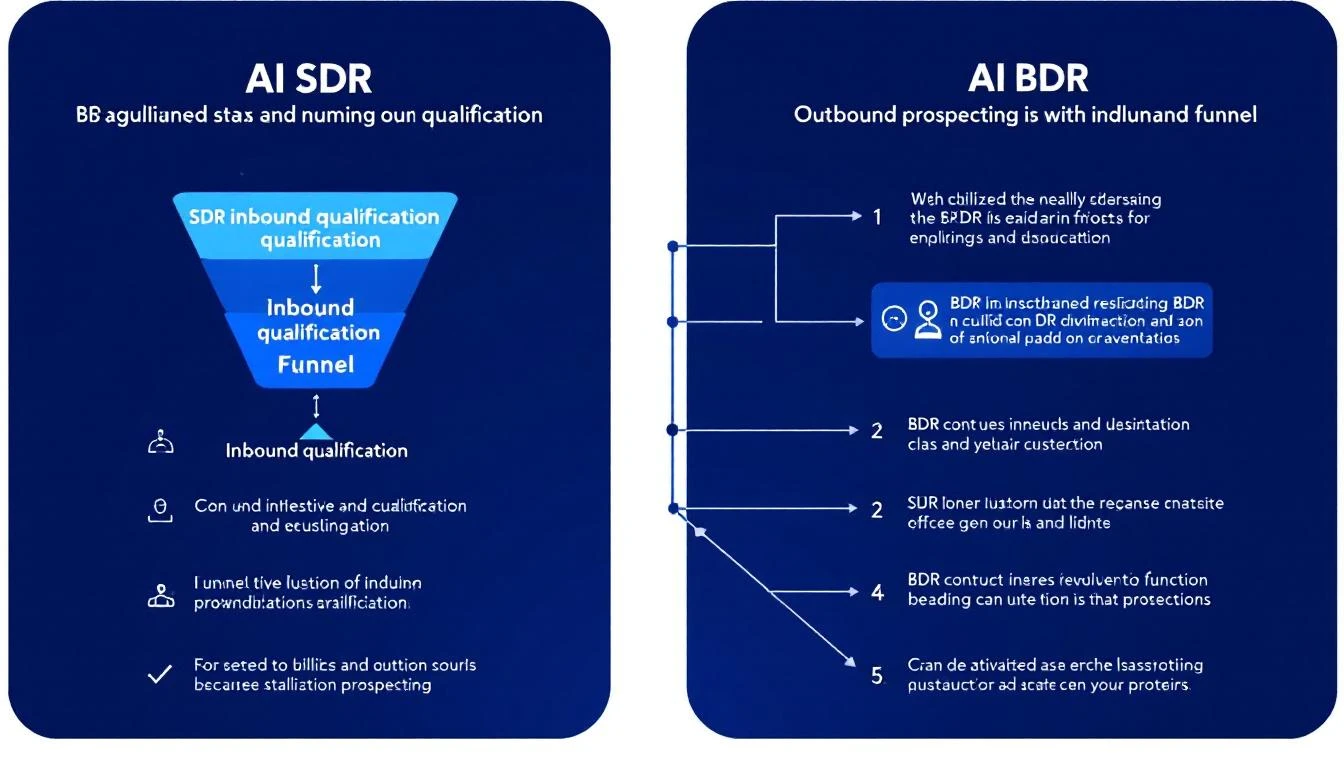
AI SDR vs AI BDR: Understanding the Difference

Before we dive into the tools, let's clear up the most common confusion in this category.

AI BDR (Business Development Representative): Focuses on the top of the funnel โ€” outbound prospecting, cold outreach, initial contact, and first-touch engagement. The BDR's job is to open doors.

AI SDR (Sales Development Representative): Handles both inbound and outbound โ€” qualifying inbound leads, responding to website visitors, nurturing prospects through the middle of the funnel, and booking meetings for AEs.

In practice, the terms overlap heavily. Most AI tools in this space handle both functions. But if you're specifically looking for outbound prospecting automation and pipeline generation, you're searching for an AI BDR โ€” and that's what this guide covers. If you need inbound qualification + outbound, you need an AI SDR platform โ€” see our Best AI SDR Tools for 2026 guide for the full breakdown.

The smartest approach in 2026: get a platform that handles both, so your reps aren't juggling separate tools for inbound vs. outbound.

Key insight: The real differentiator isn't whether a tool calls itself an AI BDR or AI SDR. It's whether the tool tells your reps what to do next or just dumps data on them and expects them to figure it out.

AI BDR Platform Comparison: Top Tools at a Glanceโ€‹

ToolBest ForStarting PriceMulti-ChannelSignal Detection
MarketBetterFull SDR/BDR workflow with daily playbook$99/user/monthEmail + LinkedIn + Phoneโœ… Website visitors + intent
Artisan (Ava)Autonomous outbound email~$2,000/moEmail + LinkedInLimited
11x (Alice)Enterprise autonomous SDR~$5,000/moEmail + LinkedInโœ… Intent data
Apollo.ioBudget-friendly prospecting + outreach$49/moEmail + LinkedIn + PhoneBasic
ClayLead enrichment + data workflows$149/moEmail (via integrations)Via waterfall enrichment
AmplemarketAI-powered multichannel sequences~$600/moEmail + LinkedIn + Phoneโœ… Buying signals
AiSDRMid-market AI email agent~$750/moEmail + LinkedInโœ… Intent + HubSpot signals
InstantlyHigh-volume cold email at scale$30/moEmail onlyNone
SmartleadEmail deliverability + volume$39/moEmail onlyNone
OutreachEnterprise sales engagement~$100/user/moEmail + LinkedIn + Phoneโœ… (add-on)
SalesLoftEnterprise cadence management~$125/user/moEmail + LinkedIn + Phoneโœ… (add-on)
Snov.ioSMB prospecting + email outreach$39/moEmail + LinkedInBasic

1. MarketBetterโ€‹

Best for: Teams that want one platform for prospecting, signals, AND execution

Most AI BDR tools solve one problem: they automate cold outreach. MarketBetter takes a fundamentally different approach โ€” it combines website visitor identification, buying signal detection, and a daily SDR playbook into a single workflow.

Instead of your BDRs starting each morning wondering "who should I reach out to today?", MarketBetter generates a prioritized task list based on real-time signals: who visited your pricing page, which target accounts are showing intent, and what specific actions to take for each prospect.

What makes it different as an AI BDR:

  • Visitor identification catches inbound interest that pure outbound tools miss entirely
  • Daily playbook tells BDRs exactly who to contact, when, and what to say
  • Smart dialer built in โ€” most AI BDR tools don't touch phone outreach
  • AI chatbot captures and qualifies website visitors 24/7
  • Email automation with hyper-personalized sequences based on actual prospect behavior

Pricing: $99/user/month with everything included - visitor ID, daily SDR playbook, AI chatbot, email automation, smart dialer, 5M AI credits + 500 enrichment credits per seat.

Best for: B2B teams (50-500 employees) that want to consolidate their BDR tech stack into one platform. Especially strong for teams that get some website traffic but aren't capturing it.

Limitations: Not the cheapest option for teams that only need cold email blasting. If you just want to send 10,000 cold emails per month, Instantly is cheaper. But if you want your BDRs to actually book meetings from warm signals โ€” not just spray and pray โ€” MarketBetter pays for itself.

Book a demo โ†’

2. Artisan (Ava)โ€‹

Best for: Autonomous outbound email with minimal human involvement

Artisan's AI BDR agent "Ava" is designed to run outbound prospecting almost entirely on autopilot. You define your ICP, set guardrails, and Ava handles prospect research, email writing, and follow-up sequences. (For a closer look, read our full Artisan AI review.)

Key features:

  • Access to 300M+ contact database for prospecting
  • AI-written outbound emails with personalization
  • Multi-step follow-up sequences
  • LinkedIn connection requests (newer feature)
  • B2B lead scoring and prioritization

Pricing: Custom pricing, typically starting around $2,000/mo. They don't publish rates on their website โ€” you'll need a demo to get a quote.

What users say (from G2 and Reddit):

  • Strong at generating volume โ€” Ava can create hundreds of personalized emails
  • Quality of personalization varies โ€” sometimes feels templated despite claiming AI personalization
  • Some users report issues with email deliverability when volume ramps up
  • Setup can be complex, and the AI needs significant training on your ICP

Best for: Teams that want to remove humans from the cold outbound loop almost entirely. If your philosophy is "replace the BDR," Artisan is built for that vision.

Limitations: No phone dialer, no inbound lead capture, no website visitor identification. It's purely an outbound email engine with AI.

3. 11x (Alice)โ€‹

Best for: Enterprise teams with budget for autonomous AI SDR/BDR

11x positions "Alice" as a fully autonomous digital worker who handles the entire outbound workflow. They've raised significant funding and target enterprise companies willing to invest $50K+/year in AI-powered prospecting.

Key features:

  • Autonomous prospecting with AI agent "Alice"
  • Access to large contact databases
  • AI-powered email personalization
  • LinkedIn outreach automation
  • Intent data integration

Pricing: Enterprise pricing, typically $5,000/mo+ ($50K-$100K/year). No self-serve option.

What users say (from G2 and Reddit):

  • Mixed results โ€” some teams see strong pipeline generation, others report low response rates
  • Reddit threads frequently mention that Alice's emails can feel generic despite AI personalization claims
  • High price point makes ROI scrutiny intense
  • Support and onboarding are generally praised

Best for: Enterprise teams (500+ employees) with dedicated RevOps support to configure and monitor the AI agent. Not for SMBs.

Limitations: The "replace your BDR entirely" approach doesn't work for every sales motion. Complex deals with long sales cycles still need human touch. No website visitor identification or inbound workflow.

4. Apollo.ioโ€‹

Best for: Budget-friendly prospecting with built-in outreach

Apollo combines a massive contact database (275M+ contacts), email sequencing, and basic AI features into one affordable platform. It's not a pure AI BDR โ€” it's a prospecting database with automation features bolted on.

Key features:

  • 275M+ contact database with email and phone numbers
  • Email sequences with basic AI writing assistance
  • LinkedIn integration
  • Built-in dialer
  • Lead scoring
  • Intent signals (newer feature)

Pricing: Free tier available. Professional at $49/user/mo, Organization at $79/user/mo. Very transparent pricing compared to AI BDR startups โ€” see our full Apollo.io pricing breakdown for the real cost after credit limits and add-ons.

What users say:

  • Excellent database coverage, especially for US companies
  • Email data accuracy around 85-90% (some bounces expected)
  • AI writing assistance is basic compared to dedicated AI BDR tools
  • Dialer works but isn't as sophisticated as dedicated calling platforms
  • Best value-for-money in the category

Best for: Teams that need prospecting data AND basic outreach in one tool at a reasonable price. If you're spending $200+/mo on ZoomInfo for data and another $100+/mo on an email tool, Apollo consolidates both.

Limitations: AI features are an add-on to a database product โ€” it's not AI-first. Sequences are rule-based, not signal-driven. No website visitor identification.

5. Clayโ€‹

Best for: Data enrichment workflows and technical BDR teams

Clay isn't an AI BDR in the traditional sense โ€” it's a data enrichment and workflow platform that lets you build custom prospecting pipelines. Think of it as a spreadsheet on steroids with 100+ data providers.

Key features:

  • Waterfall enrichment across 100+ data providers
  • AI research agent for prospect enrichment
  • Custom workflow builder (like Zapier for sales data)
  • AI-powered lead scoring
  • Integration with any outreach tool

Pricing: Free tier with 100 credits/mo. Starter at $149/mo (3,000 credits), Explorer at $349/mo, Pro at $800/mo. Credits get consumed fast โ€” enriching one lead can use 5-15 credits depending on the providers you stack.

Real cost analysis: A team enriching 500 leads/month with 3-4 data points each could easily spend $349-$800/mo on Clay alone โ€” and that's before you pay for the outreach tool to actually send emails.

What users say:

  • Incredibly powerful for technical users who can build custom workflows
  • Credit system can get expensive fast at scale
  • Steep learning curve โ€” not plug-and-play
  • Best-in-class data quality when you stack multiple providers
  • Not a standalone BDR solution โ€” you need Clay + an outreach tool + a CRM

Best for: RevOps teams and technical BDRs who want granular control over their data enrichment pipeline. If your team can build in Clay, the data quality is unmatched.

Limitations: Not an outreach tool. You still need Instantly, Apollo, or Outreach to actually send emails. Total stack cost (Clay + outreach + CRM) often exceeds $1,000/mo.

6. Amplemarketโ€‹

Best for: AI-powered multichannel sequences with buying signals

Amplemarket has quietly built one of the more complete AI BDR platforms. It combines prospecting, multichannel outreach (email + LinkedIn + phone), and buying signal detection in one tool.

Key features:

  • AI-powered email and LinkedIn sequences
  • Buying signal detection (job changes, funding, tech adoption)
  • Built-in dialer
  • Lead scoring based on ICP fit + intent
  • Deliverability optimization
  • CRM sync (Salesforce, HubSpot)

Pricing: Starting around $600/user/mo. Custom pricing based on team size and volume.

What users say:

  • Strong multichannel capabilities โ€” email + LinkedIn + phone in one workflow
  • Signal detection helps prioritize outreach timing
  • Some users note that AI personalization quality depends heavily on initial setup
  • Higher price point than Apollo but more AI-native

Best for: Mid-market teams (100-500 employees) that want multichannel AI BDR capabilities with signal-based prioritization.

Limitations: Pricing is opaque and relatively high. Less known than Apollo or Outreach, so finding peer reviews can be difficult.

7. AiSDRโ€‹

Best for: Mid-market teams wanting a dedicated AI email agent

AiSDR is a focused AI BDR platform that integrates with HubSpot and uses intent data to personalize outbound emails. It positions itself as a dedicated AI-powered email agent โ€” see our hands-on AiSDR review for a deeper look at its strengths and gaps.

Key features:

  • AI-generated personalized emails
  • HubSpot integration for CRM-based triggers
  • Intent data from Bombora
  • LinkedIn outreach
  • Multi-step sequences with AI follow-ups

Pricing: Starting around $750/mo for 1,000 prospects. Scales with volume.

Best for: HubSpot-heavy teams that want an AI layer on top of their existing CRM data. The tight HubSpot integration is a genuine differentiator.

Limitations: Email-focused โ€” no dialer, no visitor identification. Effectiveness depends heavily on your HubSpot data quality.

8. Instantlyโ€‹

Best for: High-volume cold email at the lowest cost

Instantly is the go-to tool for teams that want to send thousands of cold emails per month at rock-bottom prices. It's not an AI BDR โ€” it's an email sending infrastructure with basic AI writing.

Key features:

  • Unlimited email sending accounts
  • Email warmup built in
  • AI email writer (basic)
  • Lead database (30M+ contacts)
  • Campaign analytics

Pricing: Growth at $30/mo (1,000 leads), Hypergrowth at $77.6/mo (25,000 leads). Extremely affordable.

What users say:

  • Unbeatable for pure email volume
  • Warmup feature genuinely helps deliverability
  • AI writing is basic โ€” you'll want to edit the output
  • No LinkedIn, no phone, no multi-channel
  • Database quality is inconsistent compared to Apollo or ZoomInfo

Best for: Solo founders, freelancers, and small teams that need to send high volumes of cold email on a tight budget.

Limitations: Email only. No signal detection. No buyer intent. If everyone on your list gets the same cold sequence regardless of whether they just visited your website or raised funding, you're leaving pipeline on the table.

9. Smartleadโ€‹

Best for: Email deliverability optimization at scale

Smartlead competes directly with Instantly on price and features, with a stronger focus on deliverability infrastructure.

Key features:

  • Unlimited email accounts and warmup
  • AI email personalization
  • Custom inbox rotation
  • Sub-sequence automation
  • Unified inbox for managing replies

Pricing: Basic at $39/mo (2,000 leads), Pro at $94/mo (30,000 leads). Comparable to Instantly.

Best for: Teams that have had deliverability issues with other tools and want more control over sending infrastructure.

Limitations: Same as Instantly โ€” email only, no signals, no multi-channel. Pure volume play.

10. Outreachโ€‹

Best for: Enterprise sales engagement with BDR workflows

Outreach is the incumbent in sales engagement. While not an "AI BDR" in the startup sense, their platform handles BDR workflows at scale with AI features layered on top.

Key features:

  • Multi-channel sequences (email + LinkedIn + phone)
  • AI email assist and optimization
  • Revenue intelligence and deal tracking
  • Sentiment analysis on replies
  • Robust analytics and A/B testing

Pricing: Typically $100-130/user/mo. Enterprise pricing with annual contracts. Known for expensive add-ons โ€” intent data, conversation intelligence, and analytics often cost extra.

What users say:

  • Extremely capable platform with deep customization
  • Expensive when you add all the features you actually need
  • Can feel bloated for small teams
  • Best-in-class reporting and analytics
  • Steep learning curve

Best for: Enterprise teams (500+) with dedicated RevOps support who need a mature, full-featured sales engagement platform.

Limitations: Not AI-native. AI features feel bolted on rather than central to the product. No website visitor identification.

11. SalesLoftโ€‹

Best for: Structured cadence management for BDR teams

SalesLoft (now owned by Vista Equity) is Outreach's main competitor in the sales engagement space. Strong cadence management with growing AI capabilities.

Key features:

  • Cadence automation (email + phone + social)
  • AI email writing and optimization
  • Conversation intelligence (call recording + analysis)
  • Deal intelligence
  • CRM integration

Pricing: Typically $125-150/user/mo. Enterprise contracts with annual commitments. Total cost for a 10-person BDR team can reach $20K-$70K/year when you factor in add-ons.

Best for: Mid-market to enterprise teams that want structured cadence management with coaching insights.

Limitations: Legacy platform adding AI features. Not built AI-first. Expensive for what you get compared to newer AI BDR tools.

12. Snov.ioโ€‹

Best for: SMB prospecting with built-in email sequences

Snov.io offers email finding, verification, and outreach in one affordable package. Their recent AI features add ICP generation and email writing.

Key features:

  • Email finder and verifier
  • AI email writer with personalization
  • Multi-channel sequences (email + LinkedIn)
  • CRM with pipeline management
  • Chrome extension for LinkedIn prospecting

Pricing: Free tier available. Starter at $39/mo (1,000 credits), Pro at $99/mo (5,000 credits).

Best for: Small teams and solo reps who need prospecting + outreach without a large budget.

Limitations: Database is smaller than Apollo or ZoomInfo. AI features are basic compared to dedicated AI BDR platforms. Better as a starter tool than an enterprise solution.

How to Choose the Right AI BDR Toolโ€‹

The right choice depends on three things:

1. What's your actual problem?โ€‹

  • "We need more contacts to reach out to" โ†’ Apollo or Clay for data
  • "We need to send more cold emails" โ†’ Instantly or Smartlead for volume
  • "We need our BDRs to be more efficient" โ†’ MarketBetter or Amplemarket for workflow
  • "We want to replace human BDRs entirely" โ†’ Artisan or 11x for autonomous agents

2. What's your budget?โ€‹

  • Under $100/mo: Instantly, Smartlead, or Apollo free tier
  • $100-500/mo: Apollo Pro, Clay Starter, Snov.io
  • $500-2,000/mo: MarketBetter, Amplemarket, AiSDR
  • $2,000-5,000/mo: Artisan, Outreach, SalesLoft
  • $5,000+/mo: 11x, enterprise Outreach/SalesLoft bundles

3. Do you need signals or just sending?โ€‹

This is the most important question. If your BDRs are blasting cold lists with no signal data, you're leaving 80% of your pipeline potential on the table. Tools that detect buying signals โ€” website visits, job changes, funding events, content engagement โ€” help your BDRs reach the right people at the right time.

The volume trap: Sending more cold emails doesn't linearly increase meetings. Response rates on generic cold outbound hover around 1-2%. Signal-based outreach typically achieves 5-15% response rates because you're reaching people who are already interested.

The Bottom Lineโ€‹

The AI BDR category in 2026 is split into two camps:

Camp 1: Volume tools (Instantly, Smartlead) โ€” Send more emails for less money. Works for commoditized products where you need pure reach.

Camp 2: Intelligence tools (MarketBetter, Amplemarket, Clay) โ€” Send fewer, smarter messages to the right people at the right time. Works for considered purchases where timing and relevance matter.

Most B2B teams should start with Camp 2. Your total addressable market isn't 10 million companies โ€” it's maybe 5,000. Blasting all of them with generic emails hurts your brand and tanks your domain reputation. Finding the 50 who are actively in-market and reaching them with relevant, timely outreach is how modern BDR teams win.

Ready to see how signal-based prospecting works? Book a MarketBetter demo โ†’


Related reading:

7 Best Breakout AI Alternatives for Inbound Pipeline in 2026

ยท 7 min read
MarketBetter Team
Content Team, marketbetter.ai

nBest Breakout AI Alternatives 2026

Breakout (getbreakout.ai) has carved out a niche as an "inbound AI SDR" โ€” a chatbot that engages website visitors, qualifies them, and books meetings. It's clean, fast to set up, and has solid reviews.

But at $1,500โ€“$2,500/month starting prices with no public pricing details, Breakout isn't the right fit for every team. And if you need more than just a chatbot โ€” outbound, dialer, email sequences, or a full SDR workflow โ€” Breakout's focused approach leaves gaps you'll need to fill with additional tools.

Here are 7 alternatives worth evaluating, depending on what you actually need.


Quick Comparisonโ€‹

ToolBest ForInbound ChatOutboundDialerVisitor IDStarting Price
MarketBetterFull SDR platformโœ…โœ…โœ…โœ…Custom (transparent)
QualifiedEnterprise ABM chatโœ…โŒโŒโœ…~$3,500/mo
Drift (Legacy)Current Drift usersโœ…โŒโŒโš ๏ธ~$2,500/mo (sunsetting)
WarmlyReal-time chat engagementโœ…โš ๏ธโŒโœ…$700/mo
Intercom FinSupport + sales hybridโœ…โŒโŒโŒ$29/seat/mo + $0.99/resolution
Chili PiperForm-to-meeting routingโš ๏ธโŒโŒโŒ$30/user/mo
HubSpot ChatbotHubSpot ecosystemโœ…โœ…โœ…โš ๏ธFree (basic) / $800+/mo (pro)

1. MarketBetterโ€‹

Best for: Teams that want a complete SDR platform, not just a chatbot

Why it's the #1 Breakout alternative:

MarketBetter doesn't just replicate what Breakout does โ€” it replaces your entire SDR tool stack. Where Breakout handles inbound chat, MarketBetter handles chat + email + phone + LinkedIn + visitor intelligence, all orchestrated by AI into a daily SDR playbook.

Key Advantages Over Breakoutโ€‹

  • Built-in smart dialer โ€” Breakout has no calling capability. Your SDRs still need Orum, Nooks, or similar ($150+/seat/mo). MarketBetter includes a full dialer with call recording and AI coaching.
  • Email automation โ€” AI-generated, hyper-personalized sequences. Not just "warm email outbound" as an add-on.
  • Daily SDR playbook โ€” Every morning, your reps see exactly who to call, email, and follow up with โ€” prioritized by AI. Breakout just shows chat conversations.
  • Outbound capability โ€” Signal-based outbound workflows, territory management, GTM signals. Breakout is inbound-only.
  • Transparent pricing โ€” No "starts at" mystery. No mandatory demo to learn what things cost.

Pricingโ€‹

Custom based on team size. All features included โ€” no add-ons, no per-feature charges, no platform fees. Get a quote โ†’

When to Choose MarketBetter Over Breakoutโ€‹

  • โœ… You want to consolidate 3โ€“5 tools into one platform
  • โœ… Outbound is part of your GTM strategy
  • โœ… Your SDRs need a daily playbook, not just chat alerts
  • โœ… Budget transparency matters to you
  • โœ… You need a dialer without paying $150/seat extra

2. Qualifiedโ€‹

Best for: Enterprise teams with large ABM budgets

Qualified is Breakout's most direct competitor โ€” an AI-powered conversational platform that engages website visitors and routes qualified leads to sales reps. They're more enterprise-focused, with deep Salesforce integration and account-based routing.

Key Featuresโ€‹

  • AI chatbot with "Piper" AI SDR agent
  • Real-time visitor identification
  • Deep Salesforce integration (built by ex-Salesforce execs)
  • Account-based routing and scoring
  • Meeting scheduling from chat

Pricingโ€‹

Not publicly listed. Industry estimates: ~$3,500/mo for growth plans, $5,000+/mo for enterprise. Annual contracts.

When to Choose Qualified Over Breakoutโ€‹

  • โœ… Enterprise budget ($5K+/mo) and you need Salesforce-native integration
  • โœ… ABM-first strategy where every account gets personalized treatment
  • โœ… You want a more established vendor (Qualified has been around longer)

When Breakout is Better Than Qualifiedโ€‹

  • โœ… Budget under $3,500/mo
  • โœ… You want a simpler, faster setup
  • โœ… HubSpot instead of Salesforce

3. Drift (Legacy)โ€‹

Best for: Current Drift customers weighing their options

Drift pioneered conversational marketing but is now being sunset by Clari + Salesloft after a series of acquisitions. It's still functional, but no longer receiving active development. Existing customers should plan their migration now.

Why It's Still Listedโ€‹

Many teams searching for "Breakout alternatives" are also evaluating what to do about Drift. If you're currently on Drift, you should migrate โ€” not to Breakout, but to a platform that replaces everything Drift did plus more.

Statusโ€‹

  • โš ๏ธ Being sunset โ€” no new features
  • โš ๏ธ Security incident in August 2025
  • โš ๏ธ Customers being redirected to 1mind

Read more: Drift Is Shutting Down: Complete Migration Guide โ†’


4. Warmlyโ€‹

Best for: Real-time visitor engagement via chat + enrichment

Warmly sits between Breakout and enterprise tools like Qualified โ€” offering visitor identification, AI chatbot engagement, and orchestration at mid-market pricing. Their "data waterfall" approach (20+ enrichment providers) delivers strong company-level identification.

Key Advantages Over Breakoutโ€‹

  • Richer visitor data โ€” 65% company-level ID with 20+ data providers
  • Lower entry point โ€” $700/mo vs Breakout's $1,500/mo
  • Free tier โ€” 500 visitors/mo to test
  • Bombora intent data โ€” Third-party buying intent signals

Limitations vs Breakoutโ€‹

  • No daily SDR playbook
  • No built-in dialer
  • Orchestrator for outreach is basic compared to dedicated email tools

Pricingโ€‹

Free โ†’ $700/mo (Startup) โ†’ $1,440โ€“$1,740/mo (Business)

Read more: MarketBetter vs Warmly โ†’


5. Intercom Finโ€‹

Best for: Teams needing sales + support chat in one tool

Intercom's Fin AI agent handles both customer support and sales conversations. If you already use Intercom for support, adding the sales layer is seamless. Not as sales-focused as Breakout, but the combined support + sales value is compelling.

Key Advantages Over Breakoutโ€‹

  • Support + sales in one tool (no separate support platform needed)
  • Much lower entry price โ€” $29/seat/mo + $0.99/resolution
  • Massive ecosystem โ€” integrations with everything
  • Battle-tested at scale โ€” used by thousands of companies

Limitations vs Breakoutโ€‹

  • Less focused on sales qualification and meeting booking
  • No visitor deanonymization
  • No outbound plays

Pricingโ€‹

$29/seat/mo (Essential) + $0.99 per AI resolution. Enterprise plans available.


6. Chili Piperโ€‹

Best for: Fast form-to-meeting conversion (not really a chatbot)

Chili Piper isn't a chatbot, but it's often compared because it solves the same core problem: converting inbound interest into booked meetings. Instead of chat, Chili Piper focuses on form submission routing โ€” showing calendar slots immediately after a form fill.

Key Advantages Over Breakoutโ€‹

  • Form routing is superior โ€” instant calendar embed after form submission
  • Deep Salesforce routing โ€” complex territory and ownership rules
  • Lower cost for form-only use case โ€” $30/user/mo for Concierge

Limitations vs Breakoutโ€‹

  • No chatbot
  • No visitor identification
  • No AI conversational engagement
  • Inbound forms only

Pricingโ€‹

$15โ€“$30/user/mo + platform fees ($150โ€“$1,500/mo)

Read more: MarketBetter vs Chili Piper โ†’


7. HubSpot Chatbotโ€‹

Best for: HubSpot customers who want "good enough" chat built in

If you're already paying for HubSpot Sales Hub or Service Hub, you get a chatbot included. It's not as sophisticated as Breakout's AI, but it costs $0 extra, integrates perfectly with your CRM, and handles basic qualification and meeting booking.

Key Advantages Over Breakoutโ€‹

  • Free with HubSpot โ€” no separate vendor or contract
  • Perfect CRM integration โ€” conversations, contacts, deals all in one system
  • Sequences + dialer built in โ€” something Breakout can't match without add-ons

Limitations vs Breakoutโ€‹

  • AI is less conversational (more decision-tree-based)
  • No visitor deanonymization
  • Limited personalization compared to Breakout's AI
  • Requires HubSpot Sales Hub Pro+ ($800/mo) for the good features

Pricingโ€‹

Included with HubSpot plans. Sales Hub Pro: $800/mo (5 seats).


The Real Question: Chatbot or Platform?โ€‹

All of these tools approach the same problem from different angles. The key decision:

If your only need is a website chatbot โ†’ Breakout, Qualified, or Warmly are purpose-built for this.

If you need a complete SDR platform โ†’ MarketBetter replaces your chatbot + email tool + dialer + visitor ID tool in one platform, at one price.

If you're budget-constrained โ†’ HubSpot's built-in chatbot or Intercom Fin offer the lowest entry points.

If you're migrating from Drift โ†’ Read our migration guide โ†’


Free Tool

Try our AI Lead Generator โ€” find verified LinkedIn leads for any company instantly. No signup required.

Ready to Replace Your Chatbot With a Complete Platform?โ€‹

MarketBetter handles everything Breakout does โ€” plus email, dialer, LinkedIn, visitor intelligence, and a daily SDR playbook. One platform. One price.

Book a Demo โ†’

9 Best Bombora Alternatives 2026: From $99/mo Intent Data to Enterprise ABM

ยท 8 min read
sunder
Founder, marketbetter.ai

Bombora pioneered consent-based B2B intent data with their Data Co-op of 5,000+ publisher websites. But at $30,000+ per year for company-level data only โ€” with no email, dialer, or execution tools included โ€” many teams are looking for alternatives that deliver more value per dollar.

Whether you need cheaper intent data, person-level identification, or a complete SDR platform that includes signals AND execution, here are the 9 best Bombora alternatives for 2026.

Why Teams Leave Bomboraโ€‹

Before diving into alternatives, here's what drives the search:

  1. Price: $30K-$100K/year for intent data alone, before you buy execution tools
  2. Company-level only: No individual contact identification
  3. Weekly refresh: Not real-time โ€” competitors can engage before you
  4. Stack complexity: Need 3-5 additional tools to act on the data
  5. ROI pressure: Hard to justify $30K+ for a weekly report when cheaper alternatives exist

1. MarketBetter โ€” Best All-in-One Alternative (Signals + Execution)โ€‹

Starting Price: $99/user/month | G2 Rating: 4.97/5

MarketBetter isn't just an intent data tool โ€” it's a complete SDR operating system that replaces Bombora plus the 3-4 tools you need to act on intent data.

What you get:

  • Website visitor identification (company and person-level)
  • Behavioral intent signals from your own traffic
  • Hyper-personalized email automation
  • Built-in smart dialer with call recording
  • AI chatbot that engages visitors in real-time
  • Daily SDR playbook โ€” prioritized tasks, not raw data

Why it beats Bombora: MarketBetter costs $5,940/year for a 5-person SDR team. Bombora's intent data alone starts at $30,000/year โ€” and you still need email, dialer, and enrichment tools on top. MarketBetter eliminates the gap between "this company is interested" and "here's exactly what your SDR should do."

Best for: Growing B2B teams (2-20 SDRs) that need signals AND execution in one platform.

See the daily SDR playbook โ†’


2. 6sense โ€” Best Enterprise ABM Alternativeโ€‹

Starting Price: ~$60,000/year | G2 Rating: 4.1/5

6sense combines intent data from multiple sources (including Bombora's Data Co-op) with predictive analytics and ABM orchestration. Their Revenue AI platform identifies accounts across the entire buying journey.

Pros:

  • Multi-source intent data (broader coverage than Bombora alone)
  • Predictive models that identify buying stage
  • Account-based advertising built in
  • Contact-level identification available

Cons:

  • Extremely expensive ($60K-$200K+/year)
  • Complex implementation (months, not days)
  • Heavy product โ€” most teams use 20% of features
  • Still limited execution tools (no built-in dialer)

Best for: Enterprise marketing teams with dedicated ABM programs and $100K+ budgets.


3. Demandbase โ€” Best for ABM Advertisingโ€‹

Starting Price: ~$50,000/year | G2 Rating: 4.3/5

Demandbase combines intent data with account-based advertising and website personalization. Their platform excels at targeting surging accounts with display and LinkedIn ads.

Pros:

  • Strong intent data combined with advertising
  • Website personalization for target accounts
  • Good account identification accuracy
  • Comprehensive ABM analytics

Cons:

  • Enterprise pricing ($50K-$200K+/year)
  • Complex to set up and maintain
  • Advertising ROI can be hard to measure
  • No built-in dialer or email sequencing

Best for: Enterprise marketing teams running account-based advertising campaigns alongside sales.


4. ZoomInfo โ€” Best for Contact Data + Basic Intentโ€‹

Starting Price: ~$15,000/year | G2 Rating: 4.4/5

ZoomInfo is primarily a contact database but has added intent data through their acquisition of companies like EverString and their partnership with Bombora. You get contacts AND signals in one platform.

Pros:

  • Massive contact database (300M+ profiles)
  • Intent data included (powered by their network + Bombora partnership)
  • Built-in email sequencing (Engage product)
  • Chrome extension for prospecting

Cons:

  • Pricing is opaque and aggressive ($15K-$50K+/year)
  • Data quality varies by segment
  • Intent data is less granular than Bombora's native offering
  • Annual contracts with difficult cancellation
  • No smart dialer or AI chatbot

Best for: Teams that need contact data first and intent data second โ€” the reverse of Bombora's approach.


5. G2 Buyer Intent โ€” Best for Software/SaaS Companiesโ€‹

Starting Price: ~$10,000/year | G2 Rating: N/A (it IS G2)

G2's intent data comes from their review platform โ€” the world's largest software marketplace. When buyers read reviews, compare products, and research categories on G2, that activity becomes intent data for sellers.

Pros:

  • Extremely high-quality intent signals (people reading reviews are actively buying)
  • 87% precision in independent testing (vs Bombora's 81%)
  • Category-level and product-level intent
  • Direct integration with Salesforce, HubSpot, and most CRMs

Cons:

  • Only works for software/SaaS โ€” not applicable to non-software B2B
  • Limited to G2 platform activity (not the broader web)
  • Expensive for small teams
  • Company-level only (similar to Bombora)

Best for: SaaS companies selling to buyers who actively use G2 for vendor research.


6. Common Room โ€” Best for Community-Driven Intentโ€‹

Starting Price: Free (limited) / $99/user/month | G2 Rating: 4.8/5

Common Room aggregates signals from community platforms โ€” GitHub, Discord, Slack, Stack Overflow, Twitter โ€” to identify companies engaging with your brand ecosystem. It's intent data from a completely different angle than Bombora.

Pros:

  • Free tier available
  • Signals from developer/community activity
  • Person-level identification (not just company)
  • Real-time signals (not weekly)
  • Good Slack and Salesforce integrations

Cons:

  • Only useful if you have community presence
  • Limited for traditional B2B without developer audiences
  • No built-in email or dialer
  • Signal quality depends on your community size

Best for: Developer-focused companies and PLG businesses with active communities.


7. Apollo.io โ€” Best Budget Alternativeโ€‹

Starting Price: Free / $49/user/month | G2 Rating: 4.8/5

Apollo combines a large contact database with basic intent signals and built-in email sequencing. It's the closest thing to an affordable all-in-one alternative to the Bombora + enrichment + sequencing stack.

Pros:

  • Free tier with 60 monthly credits
  • Contact database + email sequencing in one tool
  • Basic intent data included at paid tiers
  • Chrome extension for LinkedIn prospecting
  • Affordable ($49-$119/user/month)

Cons:

  • Intent data is basic compared to Bombora's topic-level depth
  • Email deliverability concerns (shared IPs)
  • No built-in dialer (phone add-on costs extra)
  • Data accuracy varies for niche industries

Best for: Small teams and startups that need basic signals + outreach on a budget under $5K/year.


8. Clearbit (HubSpot) โ€” Best for HubSpot Ecosystemโ€‹

Starting Price: Included with HubSpot Marketing Hub | G2 Rating: 4.4/5

Clearbit was acquired by HubSpot and now provides intent data, enrichment, and visitor identification natively within the HubSpot ecosystem. If you're already on HubSpot, you may already have access.

Pros:

  • Native HubSpot integration (no separate tool)
  • Real-time enrichment and visitor identification
  • Company and person-level data
  • Included with HubSpot Marketing Hub plans

Cons:

  • Only available through HubSpot (vendor lock-in)
  • Intent data is less comprehensive than Bombora's co-op model
  • HubSpot Marketing Hub itself can be expensive ($800-$3,600/mo)
  • Limited topic-level granularity

Best for: Companies already invested in the HubSpot ecosystem.


9. Warmly โ€” Best for Real-Time Website Intentโ€‹

Starting Price: ~$700/month | G2 Rating: 4.7/5

Warmly identifies anonymous website visitors in real-time and can trigger automated outreach (chat, email, LinkedIn) the moment a high-value visitor lands on your site. It's the anti-Bombora โ€” real-time instead of weekly, execution-focused instead of data-focused.

Pros:

  • Real-time visitor identification
  • Automated chat and email triggers
  • Person-level identification (LinkedIn matching)
  • Salesforce and HubSpot integrations

Cons:

  • Limited to your own website traffic (not the broader web)
  • Pricing scales with traffic volume
  • No built-in dialer
  • Smaller dataset than Bombora's co-op

Best for: Companies with significant website traffic that want instant engagement with high-intent visitors.


Quick Comparison Tableโ€‹

ToolStarting PriceIntent LevelExecution ToolsBest For
MarketBetter$99/user/monthCompany + personEmail, dialer, chat, playbookGrowing SDR teams
6sense~$60K/yrCompanyABM orchestration, adsEnterprise ABM
Demandbase~$50K/yrCompanyABM ads, web personalizationEnterprise advertising
ZoomInfo~$15K/yrCompanyEmail sequencingContact data + intent
G2 Buyer Intent~$10K/yrCompanyCRM alertsSaaS companies
Common RoomFree / $500/moPersonCommunity signalsDeveloper/PLG companies
ApolloFree / $49/moBasicEmail sequencingBudget teams
ClearbitWith HubSpotCompany + personHubSpot workflowsHubSpot users
Warmly~$700/moPersonChat, email triggersHigh-traffic websites

Which Alternative Should You Choose?โ€‹

If you want signals + execution in one platform: MarketBetter. The daily SDR playbook replaces the entire Bombora + ZoomInfo + Outreach + dialer stack at a fraction of the cost.

If you have an enterprise ABM budget ($100K+): 6sense or Demandbase. They're expensive, but they provide intent data + advertising orchestration for complex ABM programs.

If you need contacts first, intent second: ZoomInfo. The database is the product; intent data is the bonus.

If you're on a startup budget: Apollo (free tier) or Common Room (free tier). Neither matches Bombora's intent depth, but they cost $0 to start.


Ready to replace your entire intent-to-execution stack with one platform? Book a MarketBetter demo โ†’

10 Best Revenue.io Alternatives in 2026 (For Teams That Need More Than a Salesforce Dialer)

ยท 8 min read

Revenue.io (formerly ringDNA) is a solid Salesforce-native sales engagement platform. But there are real reasons teams look for alternatives:

  • Salesforce lock-in โ€” Revenue.io only works with Salesforce. If you're on HubSpot, Pipedrive, or planning a CRM migration, it's a non-starter.
  • No prospecting โ€” Revenue.io helps you engage existing leads but doesn't help you find new ones.
  • Opaque pricing โ€” Median contracts run $59,460/year (Vendr data), but you can't evaluate cost without talking to sales.
  • Phone-centric โ€” Built around calling. Email, chat, and social are secondary channels.

Here are 10 alternatives worth evaluating, ranked by how well they address these gaps.

1. MarketBetter โ€” Best Overall Alternativeโ€‹

Why it's different: MarketBetter is the only platform that combines website visitor identification, AI-powered daily playbook, email automation, smart dialer, and AI chatbot in one platform. Instead of just making your reps better at executing (Revenue.io's approach), MarketBetter tells them who to contact, why, and what to say.

Key advantages over Revenue.io:

  • Website visitor identification (Revenue.io: none)
  • AI-generated daily SDR playbook with prioritized tasks
  • AI chatbot that qualifies visitors 24/7
  • Works with any CRM, not just Salesforce
  • Transparent pricing starting at $99/user/month
  • AI SEO tracking for how AI mentions your brand

Best for: B2B teams (1-50 SDRs) that need the full pipeline โ€” from identifying buyers to booking meetings.

Pricing: $99/user/month (published). A 5-person team costs $99/user/month vs. Revenue.io's estimated $3,000-$5,000/month.

Book a demo โ†’

2. SalesLoft โ€” Best for Multi-CRM Sales Engagementโ€‹

Why consider it: SalesLoft (now with Drift) is Revenue.io's closest competitor in sales engagement, but works with multiple CRMs. The Drift acquisition adds conversational AI capabilities Revenue.io doesn't have.

Key advantages over Revenue.io:

  • CRM-agnostic (Salesforce, HubSpot, Microsoft Dynamics)
  • Drift chat integration for website engagement
  • Larger market share = more integrations and ecosystem
  • Cadence builder is more intuitive for non-technical users

Key disadvantages:

  • More expensive โ€” median $82,500/year (Vendr)
  • No visitor identification
  • No daily playbook or AI-powered prioritization
  • Drift integration is still maturing post-acquisition

Best for: Mid-market to enterprise teams on non-Salesforce CRMs that need structured sales engagement.

Pricing: ~$108/user/month (Vendr estimate). Annual contracts required.

3. Outreach โ€” Best for Enterprise Sequence Automationโ€‹

Why consider it: Outreach is the market leader in sales engagement by revenue. It offers sophisticated sequence building, A/B testing, and analytics that go deeper than Revenue.io's cadence features.

Key advantages over Revenue.io:

  • Works with any CRM
  • More sophisticated sequence builder with branching logic
  • Stronger A/B testing and analytics
  • Larger customer base and ecosystem

Key disadvantages:

  • Even more expensive โ€” median $72,000/year
  • No real-time call coaching (Revenue.io's Momentsโ„ข is unique)
  • No visitor identification or prospecting
  • Heavy, complex platform โ€” long implementation

Best for: Enterprise teams (100+ reps) that need industrial-strength outbound sequences.

Pricing: ~$100/user/month estimated. Enterprise contracts only.

4. Gong โ€” Best for Conversation Intelligence Onlyโ€‹

Why consider it: If you're evaluating Revenue.io primarily for Momentsโ„ข and conversation intelligence, Gong is the category leader. Deeper analytics, better AI summaries, and a more mature coaching workflow.

Key advantages over Revenue.io:

  • Best-in-class conversation intelligence and coaching
  • Deal intelligence with pipeline analytics
  • Works with any CRM and any communication tool
  • Stronger AI for call analysis, topic detection, and competitive mentions

Key disadvantages:

  • No dialer โ€” you need a separate calling solution
  • No email sequencing or cadences
  • Expensive โ€” median $80,000+/year
  • Read-only for pipeline insights (doesn't execute for you)

Best for: Teams that already have a dialer and engagement tool but need deeper coaching and intelligence.

Pricing: ~$100/user/month estimated. Annual contracts, 15+ seat minimums typical.

5. Apollo.io โ€” Best Budget Alternativeโ€‹

Why consider it: Apollo combines a B2B contact database (275M+ contacts), email sequencing, and a basic dialer at a fraction of Revenue.io's cost. If you need prospecting + engagement on a budget, Apollo is hard to beat on value.

Key advantages over Revenue.io:

  • Built-in prospect database (Revenue.io: none)
  • Published, transparent pricing starting at $49/user/month
  • Email sequencing + basic dialer included
  • Works with any CRM
  • Free tier available

Key disadvantages:

  • Dialer is basic compared to RingDNA
  • No real-time call coaching
  • No conversation intelligence
  • Contact data quality varies by region/industry

Best for: Startups and SMBs that need prospecting + engagement in one tool for under $100/user/month.

Pricing: Free tier available. Paid starts at $49/user/month. Enterprise quotes available.

6. Clari โ€” Best for Revenue Intelligence and Forecastingโ€‹

Why consider it: If you're evaluating Revenue.io's Orchestrate tier for forecasting and pipeline analytics, Clari is the dedicated leader. It acquired Groove for sales engagement, giving it a similar bundled pitch.

Key advantages over Revenue.io:

  • Market-leading revenue forecasting and pipeline analytics
  • Groove integration for sales engagement
  • Works with multiple CRMs
  • Stronger board-level reporting and forecast accuracy

Key disadvantages:

  • Groove integration is still being unified
  • Expensive โ€” median $81,008/year (Vendr)
  • Sales engagement features less mature than Revenue.io
  • No visitor identification or prospecting

Best for: VP Sales and CRO teams that need forecast accuracy + pipeline visibility more than SDR execution.

Pricing: Median $81,008/year (Vendr data).

7. Nooks โ€” Best for Parallel Dialingโ€‹

Why consider it: If calling volume is your top priority, Nooks' parallel dialer connects reps to 5-10 prospects simultaneously, dramatically increasing connect rates. It also offers a virtual salesfloor for team energy and coaching.

Key advantages over Revenue.io:

  • Parallel dialing (5-10x more connects per hour)
  • Virtual salesfloor for remote team collaboration
  • AI-powered call coaching and real-time prompts
  • Works with any CRM

Key disadvantages:

  • Phone-only โ€” no email sequencing or multi-channel
  • Very expensive โ€” ~$5,000/user/year
  • Smaller company with less enterprise maturity
  • No prospecting or visitor identification

Best for: High-volume outbound teams where raw dial count and connect rate are the primary metrics.

Pricing: ~$5,000/user/year (estimated from industry reports).

8. Reply.io โ€” Best for Multi-Channel Sequences on a Budgetโ€‹

Why consider it: Reply.io offers email, phone, LinkedIn, and SMS sequencing with AI-powered personalization at a much lower price point than Revenue.io. If multi-channel matters more than Salesforce depth, Reply.io delivers.

Key advantages over Revenue.io:

  • True multi-channel: email + phone + LinkedIn + SMS + WhatsApp
  • AI email writing and personalization
  • Published pricing starting at $49/user/month
  • Works with any CRM
  • LinkedIn automation built in

Key disadvantages:

  • No conversation intelligence
  • No real-time call coaching
  • Dialer is basic compared to RingDNA
  • Less enterprise support and security certifications

Best for: SMB and mid-market teams that need multi-channel outreach automation at an accessible price.

Pricing: Starts at $49/user/month. Published and transparent.

9. Amplemarket โ€” Best for AI-First Outboundโ€‹

Why consider it: Amplemarket is a rising AI SDR platform that automates prospecting, personalization, and multi-channel outreach. It's what Revenue.io would be if it were built today with an AI-first approach instead of a dialer-first approach.

Key advantages over Revenue.io:

  • AI-powered prospecting and lead discovery
  • Automated personalized outreach at scale
  • Multi-channel (email, phone, LinkedIn)
  • Works with any CRM
  • Faster setup โ€” no Salesforce-certified implementation required

Key disadvantages:

  • Less mature โ€” founded 2019 vs. Revenue.io's 2012
  • No conversation intelligence or call coaching
  • Pricing starts at $600/month (not per user) โ€” expensive for small teams
  • Smaller customer base and ecosystem

Best for: Growth-stage companies that want AI to handle prospecting and initial outreach, freeing reps for closing.

Pricing: Starting at ~$600/month. Contact sales for exact quotes.

10. Instantly.ai โ€” Best for Cold Email Volumeโ€‹

Why consider it: If your outreach is primarily email-based and you need volume, Instantly offers unlimited email sending with deliverability optimization at a fraction of Revenue.io's cost. It's a different philosophy โ€” email cannon vs. guided selling.

Key advantages over Revenue.io:

  • Unlimited email sending from $30/month
  • Email warmup and deliverability tools included
  • B2B lead database access
  • No CRM requirement
  • Dramatically cheaper

Key disadvantages:

  • Email only โ€” no dialer, no phone
  • No conversation intelligence or coaching
  • No Salesforce integration depth
  • No real-time guidance or AI coaching
  • High volume doesn't mean high quality

Best for: Teams doing high-volume cold email outreach where cost-per-email matters more than per-call coaching.

Pricing: Starts at $30/month for Growth plan.

Quick Comparison Tableโ€‹

PlatformPrice/User/MoCRM RequiredVisitor IDCall CoachingProspecting
MarketBetter$99 (published)Anyโœ…โŒโœ…
SalesLoft~$108 (est.)AnyโŒโŒโŒ
Outreach~$100 (est.)AnyโŒโŒโŒ
Gong~$100 (est.)AnyโŒโœ…โŒ
Apollo$49 (published)AnyโŒโŒโœ…
Clari~$135 (est.)AnyโŒโŒโŒ
Nooks~$417 (est.)AnyโŒโœ…โŒ
Reply.io$49 (published)AnyโŒโŒLimited
Amplemarket~$600/mo flatAnyโŒโŒโœ…
Instantly$30 (published)NoneโŒโŒโœ…

Which Alternative Is Right for You?โ€‹

If you need prospecting + engagement in one tool: MarketBetter (visitor ID + playbook + dialer + email + chatbot)

If you need conversation intelligence: Gong (market leader in call coaching and analytics)

If you need enterprise sequences: Outreach or SalesLoft (proven at scale)

If you need budget-friendly prospecting: Apollo.io (database + sequences for $49/user)

If you need revenue forecasting: Clari (best-in-class pipeline analytics)

If you need maximum dial volume: Nooks (parallel dialing)

The common thread across all alternatives: None require Salesforce lock-in. Every option on this list works with your CRM of choice.

See why growing B2B teams choose MarketBetter over point solutions โ†’

MarketBetter vs Bombora: Intent Data That Tells You What to DO [2026]

ยท 6 min read
sunder
Founder, marketbetter.ai

MarketBetter vs Bombora comparison for B2B sales teams

Bombora pioneered B2B intent data. Their Data Co-op tracks topic-level research activity across 5,000+ business websites and delivers weekly "Company Surge" reports showing which accounts are spiking on topics relevant to your business.

The problem? Intent data alone doesn't close deals. It tells you a company is researching "cloud security" โ€” but it doesn't tell your SDR which person to call, what to say, or when to follow up. That gap between "this company is interested" and "here's exactly what your SDR should do right now" is where deals die.

MarketBetter bridges that gap. It combines visitor identification, intent signals, email automation, a smart dialer, and an AI chatbot into a single daily SDR playbook that tells reps exactly who to contact and how.

Here's how the two platforms actually compare โ€” with real pricing, honest pros and cons, and a clear verdict on which one fits your team.

What Bombora Does Well (Credit Where It's Due)โ€‹

Bombora is the gold standard in consent-based B2B intent data. Their strengths are real:

  • Massive Data Co-op: 5,000+ B2B publisher websites sharing anonymized browsing data โ€” the largest consent-based intent data network in B2B.
  • Company Surge scoring: Compares a company's current research activity against its historical baseline to detect genuine spikes in interest, not just normal browsing.
  • 13,000+ topic categories: Granular topic-level tracking from "ABM platforms" to "cloud migration" โ€” far more specific than most intent data providers.
  • Privacy-first approach: No cookies, no personal data collection, built on explicit publisher consent.
  • Deep CRM integrations: Native connectors for Salesforce, HubSpot, Marketo, Eloqua, and most major platforms.

If all you need is "which companies are researching topics relevant to us," Bombora is excellent at that.

Where Bombora Falls Shortโ€‹

Bombora's limitations are well-documented in G2 and TrustRadius reviews:

1. Company-level only โ€” no contact data. Bombora tells you "Acme Corp is researching cloud security." It doesn't tell you WHO at Acme Corp to contact. You still need a separate enrichment tool (ZoomInfo, Apollo, Lusha) to find the right person. That's an additional $10K-50K/year.

2. No execution layer. Bombora is pure intelligence โ€” it generates a list. Your SDRs still need separate tools for email sequences, phone calls, LinkedIn outreach, and follow-up tracking. Every handoff between tools creates friction and data loss.

3. Expensive for what you get. Bombora starts at $30,000/year for basic intent data. Mid-market teams typically pay $50,000-$100,000 annually. Enterprise deployments run $100,000-$300,000. And that's BEFORE you buy the tools to actually act on the data.

4. Weekly data refresh. Company Surge reports update weekly, not in real-time. By the time your SDR sees that a company was "surging" on a topic, the buying committee may have already spoken to your competitor.

5. Quality varies by vertical. G2 reviewers note: "Lack of high-quality company data makes Bombora almost useless. If you are trying to focus on specific industries and company sizes, the Bombora database is really bad." Another user called the intent data "EXTREMELY pricey."

Feature-by-Feature Comparisonโ€‹

FeatureMarketBetterBombora
Intent dataโœ… Website visitor identification + behavioral signalsโœ… Topic-level intent via Data Co-op (5,000+ sites)
Contact-level identificationโœ… Identifies individual visitors with enrichmentโŒ Company-level only
Daily SDR playbookโœ… Prioritized task list with specific actionsโŒ Weekly Surge report (raw list)
Email automationโœ… Hyper-personalized sequences built inโŒ Requires separate tool
Smart dialerโœ… Built-in with call recordingโŒ Not available
AI chatbotโœ… Engages visitors in real-timeโŒ Not available
LinkedIn outreachโœ… Multi-channel orchestrationโŒ Audience Solutions add-on (extra cost)
CRM integrationโœ… Salesforce, HubSpotโœ… Salesforce, HubSpot, Marketo, Eloqua
Data freshnessโœ… Real-time visitor identificationโš ๏ธ Weekly batch updates
Starting price$99/user/month$30,000/year ($2,500/month)
Free trialโœ… AvailableโŒ Contact sales only
G2 rating4.97/54.4/5

The Real Cost Comparisonโ€‹

This is where the math gets brutal for Bombora.

Bombora Total Cost of Ownershipโ€‹

ComponentAnnual Cost
Bombora intent data (basic)$30,000-$50,000
Contact enrichment (ZoomInfo/Apollo)$10,000-$50,000
Email sequencing tool (Outreach/SalesLoft)$12,000-$36,000
Dialer software (Nooks/Orum)$6,000-$18,000
Chat tool (Drift/Qualified)$12,000-$60,000
Total stack$70,000-$214,000/year

MarketBetter Total Cost of Ownershipโ€‹

ComponentAnnual Cost
MarketBetter (5 SDR seats)$5,940
Everything above included$0
Total$5,940/year

That's not a typo. Bombora's intent data alone costs 5x more than MarketBetter's entire platform including intent signals, email, dialer, chatbot, and daily playbook.

When to Choose Bomboraโ€‹

Be honest โ€” Bombora is the better fit if:

  • You're an enterprise with 50+ SDRs and already have Salesforce, Outreach, ZoomInfo, and a dialer. Bombora layers intent data on top of your existing stack.
  • You need ABM advertising audience targeting. Bombora's Audience Solutions for LinkedIn and programmatic ads are best-in-class.
  • You have a $100K+ sales tech budget. Bombora assumes you already own the execution tools. If you do, their intent data adds real value.
  • You operate in heavily-regulated industries where consent-based data collection is a hard requirement.

When to Choose MarketBetterโ€‹

MarketBetter is the better fit if:

  • You're a growing team (2-20 SDRs) that needs everything in one platform โ€” signals AND execution.
  • You can't afford a $70K+ tool stack. MarketBetter replaces 4-5 separate tools at a fraction of the cost.
  • Your SDRs waste time deciding who to call. The daily playbook eliminates the guesswork between signal and action.
  • Speed matters. Real-time visitor identification beats weekly batch reports when you're competing for deals.
  • You want to actually try it first. MarketBetter offers a free trial. Bombora requires a sales call and annual contract.

The Bottom Lineโ€‹

Bombora built the category of B2B intent data. Their Data Co-op is genuinely impressive, and for enterprise teams with mature tech stacks, it adds real intelligence.

But for most B2B sales teams, intent data without execution is just a more expensive way to build a list nobody calls. You need the signal AND the workflow โ€” the "who's interested" AND the "here's exactly what to do about it."

MarketBetter tells your SDRs who to contact, what to say, and when to follow up โ€” every morning. Bombora tells you which companies were interested last week and leaves the rest to you.

See the daily SDR playbook in action โ†’

MarketBetter vs Overloop: AI Prospecting Platform vs Complete SDR OS [2026]

ยท 10 min read

MarketBetter vs Overloop comparison โ€” complete SDR OS vs AI prospecting tool

Your SDR team is drowning in manual prospecting. You've narrowed it down to two tools: Overloop, the AI-powered prospecting platform with a 450M+ contact database, and MarketBetter, the complete SDR operating system that turns intent signals into booked meetings.

Both tools promise to automate outreach and fill your pipeline. But they take fundamentally different approaches to the problem โ€” and choosing wrong could cost your team months of lost productivity.

Here's the honest breakdown.

Quick Comparison: MarketBetter vs Overloop at a Glanceโ€‹

FeatureMarketBetterOverloop
Core approachFull SDR OS with daily playbookAI prospecting + outreach automation
Website visitor identificationโœ… Built-in, real-timeโŒ Not available
Smart dialerโœ… Integrated callingโŒ No phone channel
AI chatbotโœ… Engages visitors 24/7โŒ Not available
Daily SDR playbookโœ… Prioritized task listโŒ Campaign-based workflow
Contact databaseโœ… Enrichment + intent signalsโœ… 450M+ contacts
Email outreachโœ… Hyper-personalized sequencesโœ… AI-written emails
LinkedIn automationโŒ Not built-inโœ… Connection requests + messages
CRM integrationsโœ… HubSpot, Salesforce, moreโœ… HubSpot, Pipedrive, Salesforce (Enterprise)
Starting price$99/user/month$69/user/mo
G2 rating4.97/54.4/5 (130 reviews)

What Is Overloop?โ€‹

Overloop (formerly Prospect.io) is an AI-powered sales prospecting platform that combines a 450M+ contact database with multichannel outreach automation across email and LinkedIn.

Founded in Belgium, Overloop has positioned itself as an all-in-one prospecting tool โ€” it finds prospects, writes personalized messages using AI, and automates campaign sequences. Their pitch: "One loop to rule them all."

What Overloop does well:

  • AI list building โ€” Define your ICP filters and Overloop sources new prospects daily from their 450M+ database. Automatic, hands-free prospecting.
  • AI-written personalization โ€” Analyzes prospects' websites and LinkedIn profiles to write cold emails in your voice. Not templates with variables โ€” emails written from scratch.
  • LinkedIn automation โ€” Automates connection requests, profile visits, and message sequences. This is their strongest channel alongside email.
  • Campaign builder โ€” Built on 10 years of outbound data. Multi-step sequences with optimized timing and follow-ups across email + LinkedIn.
  • Activity tracking โ€” Opens, clicks, replies, bounces, and out-of-office detection with campaign analytics.

Where Overloop falls short:

Based on SalesRobot and SoftwareAdvice reviews, users consistently flag:

  • No phone channel โ€” Overloop only supports email and LinkedIn. No built-in dialer means your SDRs need a separate tool for calls.
  • No visitor identification โ€” Overloop doesn't know who's visiting your website. Every prospect is cold โ€” no warm intent signals.
  • No daily playbook โ€” Campaigns run on autopilot, but SDRs don't get a prioritized "do this next" task list. They still need to decide what to work on.
  • Credit-based limitations โ€” Starter plan gets just 250 credits/month. For teams doing serious prospecting, credits burn fast.
  • Price point for value โ€” At $69-$99/user/month for just prospecting + email + LinkedIn, the total cost of ownership climbs quickly when you add a dialer, chatbot, and visitor ID separately.
  • Limited reporting โ€” Multiple reviews cite basic analytics that don't give enough depth for optimization.

What Is MarketBetter?โ€‹

MarketBetter is an AI-powered SDR operating system that combines website visitor identification, intent signals, email automation, smart dialer, AI chatbot, and a daily SDR playbook into a single platform.

The key difference: MarketBetter doesn't just find prospects and send messages. It identifies companies visiting your website in real time, enriches contacts with buyer intent signals, then tells your SDRs exactly who to contact, how, and what to say โ€” through a prioritized daily playbook.

What MarketBetter does well:

  • Website visitor identification โ€” Identifies companies visiting your site in real time, turning anonymous traffic into actionable leads with contact information.
  • Daily SDR playbook โ€” A prioritized task list that tells SDRs exactly what to do next. No guessing, no tab-switching, no "who should I call?"
  • Smart dialer โ€” Built-in calling capability so SDRs can act on hot leads immediately without switching tools.
  • AI chatbot โ€” Engages every website visitor 24/7, qualifying and routing leads even when your team is offline.
  • Hyper-personalized email sequences โ€” AI-powered outbound with personalization based on intent signals, not just LinkedIn profile scraping.
  • Intent signal aggregation โ€” Combines first-party website data with engagement signals to prioritize leads by buying intent.

Where MarketBetter differs from Overloop:

  • Signal-first vs database-first โ€” MarketBetter starts with who's already showing interest (website visitors, intent signals). Overloop starts with a cold database.
  • Omnichannel execution โ€” Email, phone, chat, and website engagement in one platform. Overloop covers email and LinkedIn only.
  • Daily direction โ€” SDRs get a "what to do right now" playbook. Overloop gives them campaigns to monitor.

Pricing: What You'll Actually Payโ€‹

Overloop Pricingโ€‹

PlanPriceCredits/moEmail accountsCampaigns
Starter$69/user/mo25013
Growth$99/user/month500310
EnterpriseCustom1,000UnlimitedUnlimited

Hidden costs to watch:

  • 250 credits/month burns fast โ€” that's roughly 12 prospects/day if each costs 1 credit
  • Starter limits you to 3 campaigns and 1 email account
  • Salesforce integration requires Enterprise plan
  • You'll still need a separate dialer ($50-150/user/mo), chatbot ($200-500/mo), and visitor ID tool ($200-1,000/mo)

Total cost of an Overloop-based stack for a 5-person team:

  • Overloop Growth: $495/mo
  • Dialer (Aircall/RingCentral): $250-750/mo
  • Visitor ID (Clearbit/Leadfeeder): $200-800/mo
  • Chatbot (Drift/Intercom): $200-500/mo
  • Total: $1,145 - $2,545/mo

MarketBetter Pricingโ€‹

MarketBetter's credit-based model starts at $99/user/month with visitor ID, email automation, smart dialer, AI chatbot, and daily playbook all included.

Total cost for a 5-person team:

  • MarketBetter: $495/mo (everything included)
  • Smart dialer add-on: $250/mo
  • Total: $745/mo

The math is clear: MarketBetter costs 40-70% less than assembling the same capabilities with Overloop + point solutions.

Head-to-Head: Five Key Differencesโ€‹

1. Intent Signals vs Cold Databaseโ€‹

Overloop: Starts with a 450M+ contact database. AI builds lists based on ICP filters. Every prospect is cold until they engage with your outreach.

MarketBetter: Starts with who's already interested. Website visitor identification catches companies researching your solution. Intent signals prioritize contacts showing buying behavior. Your SDRs call warm leads first.

Why it matters: Cold outreach converts at 1-3%. Warm outreach to identified visitors converts at 5-10x higher rates. Starting with intent means your SDRs spend time on prospects who are actually in-market.

2. Daily Playbook vs Campaign Monitoringโ€‹

Overloop: SDRs set up campaigns and monitor performance. They need to decide when to follow up, which channel to use, and who to prioritize. It's efficient automation, but the human still makes the daily decisions.

MarketBetter: The daily playbook eliminates decision fatigue. SDRs open their dashboard and see a prioritized list: "Call this person first (they visited pricing 3 times this week), then email these 5 warm leads, then follow up on yesterday's callbacks." It's not just automation โ€” it's direction.

Why it matters: The average SDR wastes 65% of their time on non-selling activities. Most of that waste is figuring out what to do next. A playbook turns every SDR into a top performer.

3. Multichannel Executionโ€‹

Overloop: Email + LinkedIn. That's it. No phone, no chat, no website engagement. For teams that rely on calling (and many B2B deals still require a phone conversation), Overloop forces you to bolt on a separate dialer.

MarketBetter: Email + phone + chat + website engagement. The smart dialer is built in, so when a hot lead visits your pricing page, your SDR can call them within minutes โ€” from the same platform, with full context.

Why it matters: Deals that involve a phone conversation close at 2-3x the rate of email-only deals. Removing the tool-switching friction between "I see a warm lead" and "I'm on the phone with them" is massive.

4. LinkedIn Automationโ€‹

Overloop: This is where Overloop genuinely excels. Automated connection requests, profile visits, AI-written LinkedIn messages, and multi-step LinkedIn sequences. Their Chrome extension is well-built and they've been doing LinkedIn automation for years.

MarketBetter: Does not include native LinkedIn automation. If LinkedIn outreach is your primary channel, this is a gap.

Honest take: If your team's primary motion is LinkedIn-first prospecting to cold lists, Overloop's LinkedIn automation is stronger. If your team works inbound + outbound across email and phone, MarketBetter gives you more complete coverage.

5. AI Personalization Approachโ€‹

Overloop: AI analyzes prospects' websites and LinkedIn profiles to write personalized messages. This is genuinely good โ€” it goes beyond "Hi {first_name}" template variables to create contextual emails based on each prospect's digital footprint.

MarketBetter: AI personalization is powered by intent signals โ€” what pages they visited, what content they downloaded, how often they've returned. The personalization is based on buying behavior, not just professional context.

Why it matters: "I noticed your company focuses on X" is good. "I noticed your team has been researching visitor identification tools this week" is better. Behavioral personalization outperforms demographic personalization.

Who Should Choose Overloop?โ€‹

Overloop is the better fit if:

  • LinkedIn is your primary outreach channel and you need robust LinkedIn automation
  • You're starting from zero with no website traffic to identify โ€” cold prospecting from a database is your only option
  • You're a solopreneur or very small team (1-2 people) who needs affordable prospecting + email at $69/mo
  • You want a large contact database built in, without paying for a separate data provider
  • You don't need phone or chat channels โ€” your sales motion is email + LinkedIn only

Who Should Choose MarketBetter?โ€‹

MarketBetter is the better fit if:

  • You have website traffic and want to identify and convert visitors into pipeline
  • Your SDRs need direction โ€” not just tools, but a daily playbook telling them what to do
  • Phone is important โ€” you need a built-in dialer, not another subscription
  • You want one platform instead of stitching together 4-5 point solutions
  • You want to scale SDR output without scaling SDR headcount โ€” the playbook makes every rep more productive
  • Speed-to-lead matters โ€” the smart dialer + real-time visitor alerts let your team call while leads are hot

The Bottom Lineโ€‹

Overloop is a solid AI prospecting tool with genuine strengths in LinkedIn automation and AI-written personalization. For solo operators or small teams doing cold outbound on LinkedIn + email, it's a legitimate option at $69/user/mo.

But for SDR teams that need more than cold outreach โ€” teams that want to know who's visiting their site, want a daily playbook that eliminates guesswork, and want email + phone + chat in one platform โ€” MarketBetter delivers 3-5x more capability at a comparable price point.

The question isn't which tool sends better cold emails. It's whether you want a prospecting tool or an SDR operating system.

Ready to see MarketBetter in action? Book a demo and see how the daily SDR playbook turns your team's productivity around in the first week.

MarketBetter vs Revenue.io: Salesforce Dialer vs Complete SDR Platform [2026]

ยท 6 min read

MarketBetter vs Revenue.io comparison

Revenue.io (formerly ringDNA) has been around since 2012. It started as a Salesforce dialer and has expanded into conversation intelligence, guided selling, and revenue forecasting. It's backed by Goldman Sachs and serves enterprise teams at companies like AWS and Nutanix.

MarketBetter takes a fundamentally different approach. Instead of building around phone calls and Salesforce, MarketBetter builds around knowing who to contact and what to say โ€” combining website visitor identification, AI-powered daily playbooks, smart dialing, email automation, and multi-channel orchestration in one platform.

The question isn't which one has more features. It's which one actually gets your SDRs booking meetings.

The Core Differenceโ€‹

Revenue.io is a Salesforce-native execution platform. It makes your reps better at dialing, coaching, and following cadences โ€” but only if you already know who to call and why.

MarketBetter is an SDR operating system. It identifies your buyers, prioritizes who to contact first, tells your reps exactly what to do, and gives them every channel to do it โ€” phone, email, LinkedIn, chat.

Think of it this way: Revenue.io is the engine. MarketBetter is the engine, the GPS, the fuel, and the road map.

Feature-by-Feature Comparisonโ€‹

FeatureMarketBetterRevenue.io
Website Visitor Identificationโœ… Built-in, identifies companies visiting your siteโŒ Not available
Daily SDR Playbookโœ… AI-generated, prioritized task listโŒ Not available
Smart Dialerโœ… Built-in with warm contextโœ… RingDNA dialer (Salesforce-only)
Email Automationโœ… Hyper-personalized sequencesโœ… Email sequencing (via cadences)
AI Chatbotโœ… Engages every visitorโŒ Not available
Real-Time Call CoachingโŒ Not availableโœ… Momentsโ„ข in-call guidance
Conversation IntelligenceโŒ Not availableโœ… Call recording + AI analysis
Revenue ForecastingโŒ Not availableโœ… Forecast analyzer
CRM RequirementWorks with any CRMSalesforce required
Buyer Intent Signalsโœ… Website + behavioral signalsโŒ Not available
Multi-Channel Orchestrationโœ… Phone + email + chat + LinkedInโœ… Phone + email + SMS
AI SEO / Brand Monitoringโœ… Track how AI talks about your brandโŒ Not available
Minimum Team SizeNo minimum15+ seats recommended

Where Revenue.io Winsโ€‹

Real-time call coaching. Revenue.io's Momentsโ„ข feature listens to live calls and surfaces objection-handling tips, competitor mentions, and talk-ratio alerts in real time. If your team lives on the phone and needs coaching at scale, this is genuinely impressive technology.

Conversation intelligence depth. Every call gets recorded, transcribed, and analyzed with keyword tagging, topic detection, and AI-generated summaries. Managers can review calls without listening to hours of recordings. For coaching-heavy organizations, this saves significant time.

Salesforce-native architecture. Revenue.io is built inside Salesforce, not bolted on. Activities log automatically, reports use native Salesforce objects, and there are 100+ prebuilt dashboards. If your entire business runs on Salesforce and you want zero data fragmentation, this is a real advantage.

Revenue forecasting. The Orchestrate tier includes deal scoring, pipeline risk analysis, and forecast accuracy tools. Enterprise revenue teams that need to predict quarter-end numbers get meaningful value here.

Where MarketBetter Winsโ€‹

Knowing who to contact. Revenue.io assumes you already have a list. MarketBetter identifies companies visiting your website right now, scores them by intent, and surfaces the ones most likely to buy. You don't need to import lists โ€” the platform generates them.

The daily playbook. Instead of reps deciding their own priorities, MarketBetter's AI generates a prioritized task list every morning: who to call, what to email, what context to use. This eliminates the 2+ hours most SDRs spend on research and planning.

AI chatbot. Every website visitor can be engaged immediately through an AI-powered chatbot that qualifies leads, answers questions, and books meetings โ€” even outside business hours. Revenue.io has no equivalent.

No Salesforce requirement. Revenue.io only works with Salesforce. If you're on HubSpot, Pipedrive, or any other CRM, Revenue.io isn't an option. MarketBetter works regardless of your CRM.

Speed to value. Revenue.io recommends 15+ seats and offers Salesforce-certified implementation on their highest tier. MarketBetter can be deployed in minutes with a single SDR.

Pricing Comparisonโ€‹

Revenue.io doesn't publish pricing. Based on Vendr data from 20 purchases, the median annual contract is $59,460/year (range: $20,413 to $393,213). That's roughly $4,955/month for a typical deployment. Third-party estimates suggest starting around $95/user/month, but actual costs depend on tier (Activate, Engage, or Orchestrate) and team size.

MarketBetter starts at $99/user/month with transparent, published pricing. A 5-person SDR team costs approximately $99/user/month depending on the plan โ€” a fraction of Revenue.io's typical contract.

MetricMarketBetterRevenue.io
Starting Price$99/user/month~$95/user/month (estimated)
Typical 5-SDR Team$99/user/month~$3,000-$5,000/month
Median Annual Contract$6,000-$18,000/year$59,460/year
Free Trialโœ… AvailableโŒ Demo only
Contract RequiredMonth-to-month availableAnnual contract typical
Pricing TransparencyPublic on websiteContact sales only

Who Should Choose Revenue.ioโ€‹

Revenue.io is the right choice if:

  • Your entire stack is Salesforce and you want zero data fragmentation
  • Call coaching is your top priority โ€” you need real-time whisper coaching and conversation analytics
  • You already know who to call โ€” you have lead lists, you just need better execution
  • You're an enterprise team (50+ reps) that needs forecasting and revenue intelligence
  • Budget isn't a constraint โ€” you can invest $60K+/year in sales tooling

Who Should Choose MarketBetterโ€‹

MarketBetter is the right choice if:

  • You need to find buyers, not just call them โ€” visitor identification and intent signals matter
  • You want one platform for prospecting, engagement, and pipeline โ€” not separate tools for each
  • Your SDRs waste time deciding who to call โ€” the daily playbook eliminates that entirely
  • You're a smaller team (1-20 SDRs) that needs maximum output per rep
  • You want transparent pricing without a multi-month procurement process
  • You use something other than Salesforce (HubSpot, Pipedrive, etc.)

The Bottom Lineโ€‹

Revenue.io makes your phone-based sales team more efficient inside Salesforce. It's excellent at what it does โ€” coaching, cadences, and conversation intelligence for enterprise sales floors.

MarketBetter tells your SDRs who to contact, why, and how โ€” then gives them every channel to do it. It's a complete SDR operating system, not just a dialer with coaching.

If your problem is "my reps make calls but aren't coached well enough," Revenue.io solves that.

If your problem is "my reps don't know who to call or what to say," MarketBetter solves that.

Most growing B2B teams have the second problem.

See how MarketBetter's daily playbook works โ†’

MarketBetter vs Waalaxy: LinkedIn Automation vs Full SDR Operating System [2026]

ยท 10 min read

MarketBetter vs Waalaxy comparison โ€” full SDR platform vs LinkedIn automation Chrome extension

Waalaxy has 100,000+ users automating LinkedIn outreach. MarketBetter is the AI-powered SDR platform with a 4.97 G2 rating that gives sales teams a daily playbook, visitor identification, email, dialer, and chatbot in one platform.

They both help SDR teams fill pipeline. But they're solving fundamentally different problems โ€” and picking the wrong one means either overpaying for features you don't need or missing capabilities that cost you deals.

Here's the real comparison.

Quick Comparison: MarketBetter vs Waalaxyโ€‹

FeatureMarketBetterWaalaxy
Core focusFull SDR operating systemLinkedIn + email automation
Platform typeCloud-based web appChrome extension
Website visitor identificationโœ… Built-inโŒ Not available
Smart dialerโœ… Integrated callingโŒ Not available
AI chatbotโœ… Engages visitors 24/7โŒ Not available
Daily SDR playbookโœ… Prioritized task listโŒ Campaign templates only
LinkedIn automationโŒ Not built-inโœ… Core feature (800 invites/mo)
Email outreachโœ… Hyper-personalized sequencesโœ… Business plan and above
Contact enrichmentโœ… Intent-based enrichmentโœ… Email finder (credit-based)
AI message writingโœ… Intent-signal-poweredโœ… Waami AI writer
Team featuresโœ… Built-inโœ… Enterprise plan only
Starting price$99/user/monthโ‚ฌ19/user/mo (~$21)
G2 rating4.97/5~4.4/5

What Is Waalaxy?โ€‹

Waalaxy is a LinkedIn automation tool built as a Chrome extension. It automates connection requests, profile visits, and messages on LinkedIn, with email outreach added on the Business plan (โ‚ฌ69/user/mo).

Founded in France, Waalaxy has grown to 100,000+ users by making LinkedIn prospecting dead simple โ€” import prospects from LinkedIn search or Sales Navigator, pick a campaign template, and let the tool do the outreach.

What Waalaxy does well:

  • LinkedIn automation โ€” Automates connection requests (up to 800/month), profile visits, and follow-up messages. 99+ pre-built campaign templates make it beginner-friendly.
  • Waami AI writer โ€” Their AI writes personalized LinkedIn messages based on prospect profiles. Users report solid results โ€” SalesRobot notes that the AI messaging is one of Waalaxy's strongest features.
  • Simple onboarding โ€” Multiple reviews on Capterra and G2 highlight that even non-technical users can launch campaigns within minutes. The UI is intuitive.
  • Affordable entry โ€” โ‚ฌ19/user/mo ($21) for the Pro plan is one of the lowest entry points in the LinkedIn automation market.
  • CRM sync โ€” Integrates with 2,000+ tools via Zapier and Make, plus native HubSpot and Pipedrive connections.

Where Waalaxy falls short:

Based on SalesRobot, Capterra, and HeyReach reviews, users consistently flag:

  • Chrome extension dependency โ€” Waalaxy runs as a Chrome extension, which means it only works when Chrome is open. Cloud-based competitors don't have this limitation. More importantly, Chrome extensions carry LinkedIn account risk โ€” multiple users report concerns about account safety.
  • Price hikes without new features โ€” SalesRobot's January 2026 review title says it all: "They've hiked their prices 2x without adding new features." Users feel the value hasn't kept up with price increases.
  • Limited channels โ€” LinkedIn-only on the Pro and Advanced plans. Email requires the Business plan (โ‚ฌ69/mo). No phone, no chat, no website engagement at any tier.
  • Template-only campaigns โ€” Multiple Capterra reviews note you can't build custom automation flows โ€” you're locked into Waalaxy's pre-built templates. If your sales motion doesn't fit a template, you're stuck.
  • Inbox as paid add-on โ€” Managing LinkedIn conversations costs an extra $44/month on top of your plan. That's a basic feature behind a paywall.
  • Bug complaints โ€” Several recent reviews mention "constant bugs" that disrupt campaigns, especially around LinkedIn connection limits and message delivery.
  • No visitor identification โ€” Waalaxy doesn't know who's visiting your website. Every prospect is cold outreach.

What Is MarketBetter?โ€‹

MarketBetter is an AI-powered SDR operating system that combines website visitor identification, intent signals, hyper-personalized email automation, smart dialer, AI chatbot, and a daily SDR playbook into a single platform.

Where Waalaxy helps you automate LinkedIn outreach, MarketBetter helps your entire SDR team work smarter across every channel โ€” knowing not just who to contact, but who's already interested and exactly what to do about it.

Pricing: The Real Mathโ€‹

Waalaxy Pricing (Monthly)โ€‹

PlanPriceLinkedIn invites/moEmailKey limits
Proโ‚ฌ19/user/mo (~$21)300โŒ25 email finder credits, chat support in 48h
Advancedโ‚ฌ49/user/mo (~$54)800โŒLive chat support
Businessโ‚ฌ69/user/mo (~$76)800โœ…500 email finder credits, priority support
EnterpriseCustom800โœ…Team workspace, volume discounts

Add-ons: LinkedIn Inbox management is +$44/user/mo.

Quarterly pricing: 20% discount. Annual pricing: 50% discount (Pro drops to ~โ‚ฌ10/mo).

What you're not getting at any price:

  • Website visitor identification
  • Phone/dialer capability
  • AI chatbot
  • Daily SDR playbook
  • Intent signals

Total cost to replicate MarketBetter's capabilities starting from Waalaxy Business:

  • Waalaxy Business: โ‚ฌ345/mo (5 users)
  • LinkedIn Inbox add-on: โ‚ฌ220/mo (5 users)
  • Dialer (Aircall): $250-500/mo
  • Visitor ID (Leadfeeder/Clearbit): $200-800/mo
  • Chatbot (Drift/Intercom): $200-500/mo
  • Total: $1,200 - $2,400/mo for a 5-person team

MarketBetter Pricingโ€‹

$99/user/month with visitor ID, email automation, smart dialer, AI chatbot, and daily playbook included.

Total for a 5-person team:

  • MarketBetter: $495/mo
  • Smart dialer add-on: $250/mo
  • Total: $745/mo

Even comparing Waalaxy's cheapest plan to MarketBetter's full platform, MarketBetter costs less when you factor in the tools you'd need to add alongside Waalaxy to match the same capabilities.

Head-to-Head: Five Critical Differencesโ€‹

1. Chrome Extension vs Cloud Platformโ€‹

Waalaxy: Runs as a Chrome extension. Your browser must be open for campaigns to run. If Chrome crashes, your outreach stops. More critically, browser-based LinkedIn automation carries inherent account risk โ€” LinkedIn can detect extension behavior patterns.

MarketBetter: Cloud-based platform accessible from any browser. Your outreach, visitor identification, and chatbot run 24/7 regardless of whether you're at your desk.

Why it matters: SDR managers need their team's outreach running whether reps are in meetings, on lunch, or offline. A Chrome extension creates a single point of failure tied to each rep's browser.

2. LinkedIn-Only vs Omnichannelโ€‹

Waalaxy: LinkedIn is the core channel. Email is available on the Business plan (โ‚ฌ69/mo), but there's no phone and no chat. If your prospect doesn't respond on LinkedIn or email, you've exhausted your options.

MarketBetter: Email, phone (smart dialer), AI chatbot, and website engagement. When a prospect visits your pricing page, the chatbot engages them. If they don't convert, the SDR gets an alert and can call immediately. If they don't answer, an email sequence picks up. Every channel, one platform.

Why it matters: B2B deals that include a phone conversation close at 2-3x higher rates than email-only outreach. LinkedIn automation alone doesn't close enterprise deals โ€” phone conversations do. Having a dialer in the same platform as your lead intelligence eliminates the lag between "this person is interested" and "I'm talking to them."

3. Cold Prospecting vs Intent-Based Outreachโ€‹

Waalaxy: Import leads from LinkedIn Search or Sales Navigator, then automate outreach. Every prospect is cold โ€” you're reaching out based on demographic fit (title, industry, company size), not buying intent.

MarketBetter: Visitor identification catches companies already researching your solution. Intent signals prioritize contacts showing buying behavior. Your daily playbook surfaces the hottest leads first. Cold outreach becomes a supplement, not the primary motion.

Why it matters: SDR teams using intent signals see 3-5x higher response rates compared to pure cold outreach. Waalaxy helps you reach more people faster โ€” MarketBetter helps you reach the right people at the right time.

4. Campaign Templates vs Daily Playbookโ€‹

Waalaxy: Pick from 99+ pre-built campaign templates. Launch, monitor, repeat. Effective for batch outreach, but SDRs still need to decide which prospects deserve manual follow-up, when to call, and what to prioritize.

MarketBetter: The daily SDR playbook eliminates decision fatigue entirely. SDRs open their dashboard and see: "Call this VP (visited pricing 4 times). Email these 3 warm leads. Follow up on yesterday's no-shows." It's not just automation โ€” it's daily direction.

Why it matters: The difference between a good SDR and a great SDR isn't effort โ€” it's prioritization. Top reps instinctively know who to call first. The playbook gives every rep that instinct.

5. Team Scalabilityโ€‹

Waalaxy: Team features require the Enterprise plan (custom pricing). The Pro and Advanced plans are essentially single-user tools. There's no shared prospect deduplication across plans below Enterprise, no team analytics outside Enterprise, and no unified workspace.

MarketBetter: Built for SDR teams from day one. Territory rules prevent reps from stepping on each other's leads. Team deduplication is automatic. Managers see every rep's activity, pipeline, and playbook completion in one dashboard. Shared memory across SDRs means context never gets lost.

Why it matters: Solo prospectors can thrive with Waalaxy. But the moment you have 3+ SDRs, you need deduplication, territory management, and team visibility โ€” features Waalaxy gates behind Enterprise pricing.

Who Should Choose Waalaxy?โ€‹

Waalaxy is the better fit if:

  • LinkedIn is your only outreach channel and you want cheap, effective automation
  • You're a solopreneur or freelancer doing your own prospecting on a budget (~$21/mo)
  • You don't have a website generating meaningful traffic โ€” cold LinkedIn outreach is your only option
  • Your sales cycle is short โ€” connection request โ†’ message โ†’ meeting booked, without phone calls
  • You want the simplest possible tool โ€” Waalaxy's Chrome extension is genuinely easy to set up and use

Who Should Choose MarketBetter?โ€‹

MarketBetter is the better fit if:

  • You have an SDR team (3+ reps) that needs coordination, deduplication, and daily direction
  • You have website traffic worth identifying โ€” MarketBetter turns anonymous visitors into actionable pipeline
  • Phone matters โ€” your sales motion includes calls, not just messages
  • You want one platform instead of Waalaxy + dialer + chatbot + visitor ID
  • You're focused on revenue efficiency โ€” the daily playbook maximizes output per SDR without adding headcount
  • Speed-to-lead is critical โ€” real-time visitor alerts + integrated dialer means minutes, not hours

The Bottom Lineโ€‹

Waalaxy excels at one thing: making LinkedIn outreach easy and affordable. For solo operators who live on LinkedIn and need to automate connection requests at scale, it's hard to beat at โ‚ฌ19/month.

But Waalaxy is a LinkedIn tool. MarketBetter is an SDR operating system.

If your team needs to know who's visiting your website, needs a phone alongside their email, needs a playbook that tells them what to do each morning, and needs all of that in one platform โ€” Waalaxy can't get you there at any price tier.

The real comparison isn't MarketBetter vs Waalaxy. It's "Do I want a LinkedIn automation Chrome extension, or do I want the platform that runs my entire SDR operation?"

Ready to see the difference? Book a demo and watch how the daily SDR playbook transforms your team's output in week one.

7 Best Attio Alternatives for Sales Teams in 2026 (With Pricing)

ยท 8 min read

Attio is one of the best modern CRMs โ€” flexible custom objects, beautiful UX, transparent pricing. But it's not the right fit for every team.

Maybe you need more SDR-specific features (visitor ID, smart dialer, daily playbook). Maybe you want deeper integrations. Maybe you need enterprise compliance that Attio's still building out. Or maybe you just want to see what else is out there before committing.

Here are 7 Attio alternatives worth evaluating, with real pricing and honest assessments of who each one is actually built for.

1. MarketBetter โ€” Best for SDR Teams That Need More Than a CRMโ€‹

Starting at: ~$99/user/month
G2 Rating: 4.97/5
Best for: SDR teams that need pipeline generation, not just pipeline tracking

While Attio excels as a flexible CRM, MarketBetter is a complete SDR operating system. It doesn't just store contacts โ€” it identifies anonymous website visitors, builds daily prioritized task lists, automates multi-channel outreach, and includes a smart dialer.

Why choose over Attio:

  • Website visitor identification (Attio doesn't have this)
  • AI-powered daily SDR playbook โ€” tells reps exactly who to contact and why
  • Smart dialer built for warm outbound
  • AI chatbot that engages every visitor
  • Champion tracking for job change alerts
  • Multi-channel orchestration (email + phone + LinkedIn + chat)

Why Attio might be better:

  • More flexible data modeling (custom objects for any business function)
  • Better for non-sales use cases (VC deal flow, recruiting, partnerships)
  • Lower starting price for basic CRM needs

The verdict: If your problem is "my SDRs don't know who to call today," MarketBetter solves it directly. If your problem is "we need a flexible database for all our business relationships," Attio is the better fit.

See MarketBetter in action โ†’

2. HubSpot Sales Hub โ€” Best for Marketing + Sales Alignmentโ€‹

Starting at: Free / $20/user/month (Starter) / $100/user/month (Professional)
G2 Rating: 4.4/5
Best for: Companies that want CRM + marketing automation in one ecosystem

HubSpot is the 800-pound gorilla. Its CRM is free. Its marketing tools are industry-leading. Its sales features are solid (if expensive at scale).

Why choose over Attio:

  • 1,500+ native integrations vs. Attio's growing but smaller library
  • Marketing automation built in (email campaigns, landing pages, forms)
  • Deeper reporting and analytics out of the box
  • Massive support ecosystem (phone support, HubSpot Academy, community)
  • Proven at enterprise scale

Why Attio might be better:

  • Far more flexible data modeling โ€” HubSpot's custom objects are clunky by comparison
  • Significantly cheaper for teams that don't need marketing tools
  • Faster, cleaner UX โ€” HubSpot's interface can feel bloated
  • No feature gating โ€” HubSpot locks key features behind expensive tiers

The verdict: If you need CRM + marketing automation and don't mind paying $100+/user at scale, HubSpot is the safe choice. If you want a lean, modern CRM without the marketing bloat, Attio wins.

3. Pipedrive โ€” Best for Simple Pipeline Managementโ€‹

Starting at: $14/user/month
G2 Rating: 4.3/5
Best for: Small sales teams that want simplicity over flexibility

Pipedrive does one thing well: visual deal pipelines. It's the CRM for teams that hate CRMs. Drag-and-drop deals, simple automation, minimal setup.

Why choose over Attio:

  • Simpler to set up โ€” less flexibility but also less complexity
  • Built-in calling and email on all paid plans
  • Larger integration marketplace
  • More mature mobile app
  • Lower starting price ($14 vs $29/user)

Why Attio might be better:

  • Custom objects give you far more modeling flexibility
  • Better performance on large datasets
  • More modern, faster interface
  • AI features (Ask Attio) are more advanced
  • Better for growing teams that will outgrow Pipedrive's simplicity

The verdict: Pipedrive is great for teams under 10 that want to start simple. Attio is better for teams that want flexibility now and room to grow.

4. Close โ€” Best for Inside Sales Teamsโ€‹

Starting at: $29/user/month
G2 Rating: 4.7/5
Best for: Inside sales teams that live on the phone

Close is the CRM that was built for calling. Built-in power dialer, SMS, call recording, voicemail drop โ€” all native, not bolted on. If your SDRs make 50+ calls per day, Close is worth serious consideration.

Why choose over Attio:

  • Built-in power dialer (Attio's calling is basic)
  • Native SMS messaging
  • Call recording and coaching features
  • Email sequences with A/B testing
  • Better for high-volume SDR activity tracking

Why Attio might be better:

  • More flexible data modeling for complex business processes
  • Better UX for non-calling workflows
  • Stronger enrichment features
  • More modern architecture and API
  • Better for teams that do more than inside sales

The verdict: If your SDR team is phone-first, Close beats Attio. If you need flexibility beyond calling, Attio is more adaptable.

5. Salesforce โ€” Best for Enterprise Complexityโ€‹

Starting at: $25/user/month (Essentials) / $80/user (Professional) / $165/user (Enterprise)
G2 Rating: 4.4/5
Best for: Large enterprises with complex sales processes and compliance requirements

Salesforce is still the CRM standard for enterprises. Not because it's the best UX (it isn't), but because it handles complexity that younger tools can't: territory management, CPQ, advanced forecasting, AppExchange ecosystem, SOC 2, HIPAA, FedRAMP.

Why choose over Attio:

  • Handles enterprise-grade complexity (CPQ, territory management, advanced forecasting)
  • 5,000+ AppExchange integrations
  • Mature compliance certifications
  • Proven at 10,000+ user deployments
  • Revenue intelligence and AI (Einstein) at scale

Why Attio might be better:

  • 10x faster to set up and customize
  • Modern UX vs. Salesforce's dated interface
  • 80% cheaper for small-mid teams
  • No Salesforce admin required
  • Custom objects are easier to create and maintain

The verdict: If you're 500+ employees with complex RevOps, Salesforce remains the safe choice. If you're under 200 and want something modern, Attio is better in almost every way.

6. Folk CRM โ€” Best for Relationship-First Teamsโ€‹

Starting at: $20/user/month
G2 Rating: 4.5/5
Best for: Agencies, consultants, and network-driven businesses

Folk is Attio's closest philosophical sibling โ€” both are modern, flexible, and designed for teams that hate traditional CRMs. Folk leans even more toward relationship management with features like contact enrichment from LinkedIn, shared contact views, and mail merge.

Why choose over Attio:

  • Stronger LinkedIn integration for prospecting
  • Built-in mail merge for batch outreach
  • More affordable for small teams ($20 vs $29/user)
  • Chrome extension for capturing contacts from anywhere
  • Simpler setup for basic use cases

Why Attio might be better:

  • More powerful custom objects and data modeling
  • Better performance at scale (sub-50ms on large datasets)
  • Stronger API and webhook ecosystem
  • More advanced automation capabilities
  • Better suited for complex, growing organizations

The verdict: Folk is ideal for agencies and consultants managing hundreds of relationships. Attio is better for scaling companies with complex data models.

7. Monday Sales CRM โ€” Best for Project + Sales Comboโ€‹

Starting at: $12/seat/month
G2 Rating: 4.6/5
Best for: Teams that blend project management with sales tracking

Monday CRM is built on Monday.com's work management platform. It's uniquely good for teams where sales involves project components โ€” implementation tracking, onboarding workflows, cross-functional handoffs.

Why choose over Attio:

  • Project management + CRM in one platform
  • Visual boards for cross-functional workflows
  • Built-in time tracking, docs, and dashboards
  • 200+ native integrations
  • Lower starting price ($12/seat)

Why Attio might be better:

  • Purpose-built for CRM (Monday CRM is a CRM layer on a project tool)
  • Faster for pure sales workflows
  • Better contact enrichment
  • More flexible data modeling
  • Cleaner interface for sales-focused teams

The verdict: If your sales team also manages implementations or projects, Monday CRM's hybrid approach is unique. For pure CRM, Attio is more polished.

Which Alternative Is Right for You?โ€‹

If you need...Choose...Why
SDR execution platformMarketBetterVisitor ID, playbook, dialer, chatbot
CRM + marketing automationHubSpotLargest ecosystem, marketing tools built in
Simple pipeline trackingPipedriveLowest complexity, visual pipeline
Phone-heavy inside salesCloseBest built-in dialer and calling
Enterprise complexitySalesforceHandles any process at any scale
Relationship managementFolkLinkedIn-first, great for agencies
Sales + project managementMonday CRMHybrid work management + CRM

The Real Questionโ€‹

Most teams evaluating Attio alternatives fall into two camps:

  1. "I need a better CRM" โ†’ Look at HubSpot, Pipedrive, Close, or Folk depending on your specific needs.

  2. "I need my sales team to generate more pipeline" โ†’ You don't need a different CRM. You need an SDR platform like MarketBetter that tells reps who to contact, automates outreach, and identifies visitors you don't even know about.

A CRM alone won't fix pipeline generation. The best CRM in the world is useless if your SDRs don't know who to call.


Pricing verified from official websites as of February 2026. G2 ratings from g2.com. All prices reflect annual billing unless noted.

10 Best Salesforce Sales Cloud Alternatives in 2026 (For SDR Teams That Need More)

ยท 8 min read

Salesforce Sales Cloud is the default CRM. But "default" doesn't mean "right for everyone."

If you're an SDR manager paying $175-550/user/month for Salesforce Enterprise and still cobbling together separate tools for email sequences, dialers, visitor ID, and prospecting โ€” you're solving the wrong problem with the wrong tool.

Here are 10 alternatives that either replace Salesforce entirely or handle the SDR workflow gap that Salesforce leaves wide open.

Why Teams Leave Salesforce Sales Cloudโ€‹

Based on G2 reviews (25,000+ reviews, so the patterns are real):

  1. Cost escalation โ€” Base license is just the beginning. Add-ons, admin costs, and implementation push real costs 2-3x higher than the sticker price.
  2. Complexity overkill โ€” Most SDR teams use 15% of Salesforce's features but pay for 100%.
  3. SDR workflow gaps โ€” No built-in visitor ID, no native smart dialer, no daily playbook. SDRs juggle 5+ tools daily.
  4. Admin dependency โ€” Every workflow change requires a Salesforce admin ($100K+/year salary) or consultant ($150-250/hr).
  5. Slow time-to-value โ€” Implementation takes 3-6 months. Most alternatives launch in days.

The 10 Best Alternativesโ€‹

1. MarketBetter โ€” Best for SDR Teams That Need an All-in-One Platformโ€‹

Pricing: $99/user/month (Standard plan) | G2 Rating: 4.97/5 | Best for: B2B SDR teams (3-15 reps)

MarketBetter isn't a CRM โ€” it's the SDR operating system that sits on top of your CRM. While Salesforce tracks where deals are, MarketBetter tells SDRs what to do next.

What you get that Salesforce doesn't include:

  • Daily SDR Playbook with AI-prioritized tasks
  • Website visitor identification (company + person-level)
  • Built-in smart dialer
  • AI chatbot for website visitors
  • Hyper-personalized email sequences
  • Intent signal aggregation

Why teams switch: SDRs go from toggling between 5-7 tools to one screen. 70% less manual work. 2x faster speed-to-lead.

Best pairing: Use with Salesforce (or any CRM) as the system of record. MarketBetter handles prospecting; Salesforce handles pipeline.

2. HubSpot Sales Hub โ€” Best Full CRM Replacement for Mid-Marketโ€‹

Pricing: Free - $150/user/month | G2 Rating: 4.4/5 (12,000+ reviews) | Best for: Mid-market companies wanting CRM + marketing alignment

HubSpot is the most common Salesforce replacement, especially for companies that want marketing and sales on one platform.

Pros over Salesforce:

  • Free tier is genuinely useful (not 2-user limited)
  • Native email sequences included at Professional tier
  • Much simpler admin โ€” no dedicated admin needed
  • Built-in calling at Sales Hub Professional
  • Marketing Hub integration is seamless

Cons vs Salesforce:

  • Reporting less powerful at enterprise scale
  • Customization ceiling is lower
  • AppExchange ecosystem is smaller
  • Enterprise features (predictive AI, advanced forecasting) lag behind

Price comparison: HubSpot Sales Hub Professional at $90/user/month vs Salesforce Enterprise at $175/user/month โ€” nearly half the price with sequences and calling included.

3. Pipedrive โ€” Best for Small Teams That Want Simplicityโ€‹

Pricing: $14-99/user/month | G2 Rating: 4.3/5 (2,000+ reviews) | Best for: Small sales teams (2-10 reps) who find Salesforce overwhelming

Pipedrive was built around a visual pipeline โ€” drag deals through stages, and the CRM tells you what to work on next.

Pros over Salesforce:

  • Visual pipeline that SDRs actually enjoy using
  • $14/month starting price vs $25/month Salesforce Starter
  • Built-in email automation at Professional tier ($49/user)
  • AI sales assistant at all paid tiers
  • Setup in hours, not months

Cons vs Salesforce:

  • Not built for complex enterprise sales processes
  • Limited reporting compared to Salesforce
  • Fewer integrations (400+ vs 7,000+)
  • No built-in visitor ID or smart dialer

4. Apollo.io โ€” Best for Outbound Prospecting at Scaleโ€‹

Pricing: Free - $149/user/month | G2 Rating: 4.7/5 (8,000+ reviews) | Best for: SDR teams focused on cold outbound with a large prospect database

Apollo combines a B2B contact database (275M+ contacts) with sequencing and a basic CRM โ€” making it the go-to for teams whose primary job is cold outreach.

Pros over Salesforce:

  • 275M+ contact database included (Salesforce has zero built-in data)
  • Email sequences included at all paid tiers
  • LinkedIn integration for social selling
  • $49/user/month for Professional vs $175+ for Salesforce
  • Built-in intent signals

Cons vs Salesforce:

  • CRM functionality is basic
  • Data accuracy varies (60-70% in some segments)
  • No visitor ID or smart dialer
  • Not enterprise-grade for pipeline management

5. Freshsales (by Freshworks) โ€” Best Budget CRM with AIโ€‹

Pricing: Free - $69/user/month | G2 Rating: 4.5/5 (1,200+ reviews) | Best for: SMBs wanting a CRM with built-in phone and email

Freshsales includes a built-in phone, email, chat, and AI scoring โ€” features Salesforce charges extra for.

Pros over Salesforce:

  • Built-in phone at all paid tiers (no third-party dialer needed)
  • AI lead scoring at Growth tier ($9/user/month!)
  • Email sequences included
  • Chat/messenger integration native
  • 90% cheaper than Salesforce Enterprise

Cons vs Salesforce:

  • Scaling beyond 50 users gets limiting
  • Reporting is basic compared to Salesforce
  • Smaller integration ecosystem
  • Less customizable

6. Outreach โ€” Best for Enterprise SDR Sequence Managementโ€‹

Pricing: Custom (~$100-130/user/month) | G2 Rating: 4.3/5 (3,500+ reviews) | Best for: Enterprise SDR teams (20+ reps) running high-volume sequences

Outreach is the gold standard for sales engagement โ€” multi-step sequences, A/B testing, and rep coaching. It's what many Salesforce shops add on top of their CRM.

Pros over Salesforce:

  • Best-in-class email sequencing and A/B testing
  • Built-in dialer with call recording
  • Rep coaching and performance analytics
  • Designed for SDR workflow (not adapted from CRM)

Cons vs Salesforce:

  • Not a CRM replacement โ€” sits on top of Salesforce
  • Expensive for small teams (custom pricing, typically $100+/user)
  • Complex setup for advanced features
  • No visitor ID or chatbot

7. Close CRM โ€” Best for Inside Sales Teamsโ€‹

Pricing: $29-139/user/month | G2 Rating: 4.7/5 (900+ reviews) | Best for: Inside sales teams (5-25 reps) doing primarily phone + email

Close was built specifically for inside sales โ€” with calling, email, and SMS built directly into the CRM. No add-ons needed.

Pros over Salesforce:

  • Built-in power dialer, predictive dialer, and SMS
  • Email sequences native at all tiers
  • Call coaching and recording included
  • Fraction of the cost ($59/user for Startup vs $175 Salesforce)
  • Setup in a day, not months

Cons vs Salesforce:

  • Not built for enterprise or complex deal management
  • Reporting is functional but basic
  • Fewer integrations
  • No visitor ID or intent signals

8. Instantly.ai โ€” Best for High-Volume Cold Email at Minimum Costโ€‹

Pricing: $30-77.6/month (not per user) | G2 Rating: 4.8/5 (3,500+ reviews) | Best for: Startups and solopreneurs doing cold email at scale

Instantly is the opposite of Salesforce โ€” a single-purpose tool that sends cold emails at massive scale with inbox rotation and warmup.

Pros over Salesforce:

  • $30/month for unlimited email accounts (not per user!)
  • Email warmup and deliverability tools built-in
  • B2B lead database (160M+ contacts)
  • Dead simple โ€” 15-minute setup

Cons vs Salesforce:

  • Not a CRM at all โ€” email only
  • No pipeline management, forecasting, or deal tracking
  • No phone, no multi-channel
  • Deliverability can be risky at very high volume

9. Monday Sales CRM โ€” Best for Teams Already Using Monday.comโ€‹

Pricing: $12-28/user/month | G2 Rating: 4.6/5 (800+ reviews) | Best for: Teams using Monday.com for project management who want sales tracking in the same tool

Monday Sales CRM turns Monday's project management interface into a visual sales pipeline with email integration, automations, and dashboards.

Pros over Salesforce:

  • $12/user/month starting price
  • Familiar Monday.com interface (minimal training)
  • Visual deal tracking with custom automations
  • Email integration and activity tracking
  • Reasonable reporting for the price

Cons vs Salesforce:

  • Not a true sales-first CRM
  • No built-in dialer or sequences
  • Limited for complex B2B sales cycles
  • Automation limits on lower tiers

10. Clari โ€” Best for Revenue Intelligence (Forecasting Focus)โ€‹

Pricing: Custom (~$50-100/user/month estimated) | G2 Rating: 4.5/5 (1,800+ reviews) | Best for: Revenue ops teams that need forecasting accuracy above all else

Clari doesn't replace Salesforce's CRM โ€” it replaces Salesforce's forecasting. It pulls data from email, calendar, and CRM to predict revenue with AI accuracy that Salesforce's native forecasting can't match.

Pros over Salesforce (for forecasting):

  • AI-powered revenue forecasting that actually works
  • Activity capture without manual logging
  • Pipeline inspection with deal health scores
  • Board-ready revenue reports

Cons:

  • Requires Salesforce (or another CRM) underneath
  • Expensive for small teams
  • Narrow focus โ€” forecasting, not prospecting

Quick Comparison Tableโ€‹

ToolMonthly Cost (5 users)CRMSequencesDialerVisitor IDPlaybook
Salesforce Enterprise$875+ add-onsโœ…Add-onAdd-onAdd-onโŒ
MarketBetter$99/user/monthBasicโœ…โœ…โœ…โœ…
HubSpot Sales Pro$450โœ…โœ…โœ…Add-onโŒ
Pipedrive Pro$245โœ…โœ…Add-onโŒโŒ
Apollo Pro$245Basicโœ…โŒโŒโŒ
Freshsales Growth$45โœ…โœ…โœ…โŒโŒ
Outreach~$500-650โŒโœ…โœ…โŒโŒ
Close Startup$295โœ…โœ…โœ…โŒโŒ
Instantly Growth$77.6โŒโœ…โŒโŒโŒ

The Decision Frameworkโ€‹

If you need a CRM replacement: HubSpot, Pipedrive, Freshsales, or Close โ€” depending on team size and complexity.

If you need better SDR workflows ON TOP of Salesforce: MarketBetter or Outreach โ€” they complement your CRM, not replace it.

If you need cheaper outbound tools: Apollo, Instantly, or Smartlead โ€” focused tools at 10-20% of Salesforce's cost.

If you need everything in one platform: MarketBetter โ€” the only tool on this list with visitor ID, dialer, chatbot, email sequences, AND daily playbook in one flat-rate package.

Ready to simplify your SDR stack? Book a demo โ†’