26 posts tagged with "SDR"

View All Tags

SDR Onboarding Guide: How to Cut Ramp Time in Half [2026]

Β· 11 min read
sunder
Founder, marketbetter.ai

The average SDR takes 3 to 6 months to reach full productivity. That's 3 to 6 months of salary, benefits, and management attention before a single qualified meeting hits your pipeline.

For a team hiring 5 SDRs per quarter, that's the equivalent of $150K–$300K in unproductive payroll before anyone hits quota.

The problem isn't the SDRs. It's the onboarding.

Most sales teams still onboard reps the same way they did in 2019: dump a pile of PDFs, schedule a week of product training, assign a buddy, and pray. Then they wonder why ramp times keep stretching.

In 2026, the best SDR teams are cutting ramp time to 6–8 weeks β€” not by rushing training, but by replacing information dumps with structured, signal-driven onboarding systems.

This guide breaks down exactly how to do it.

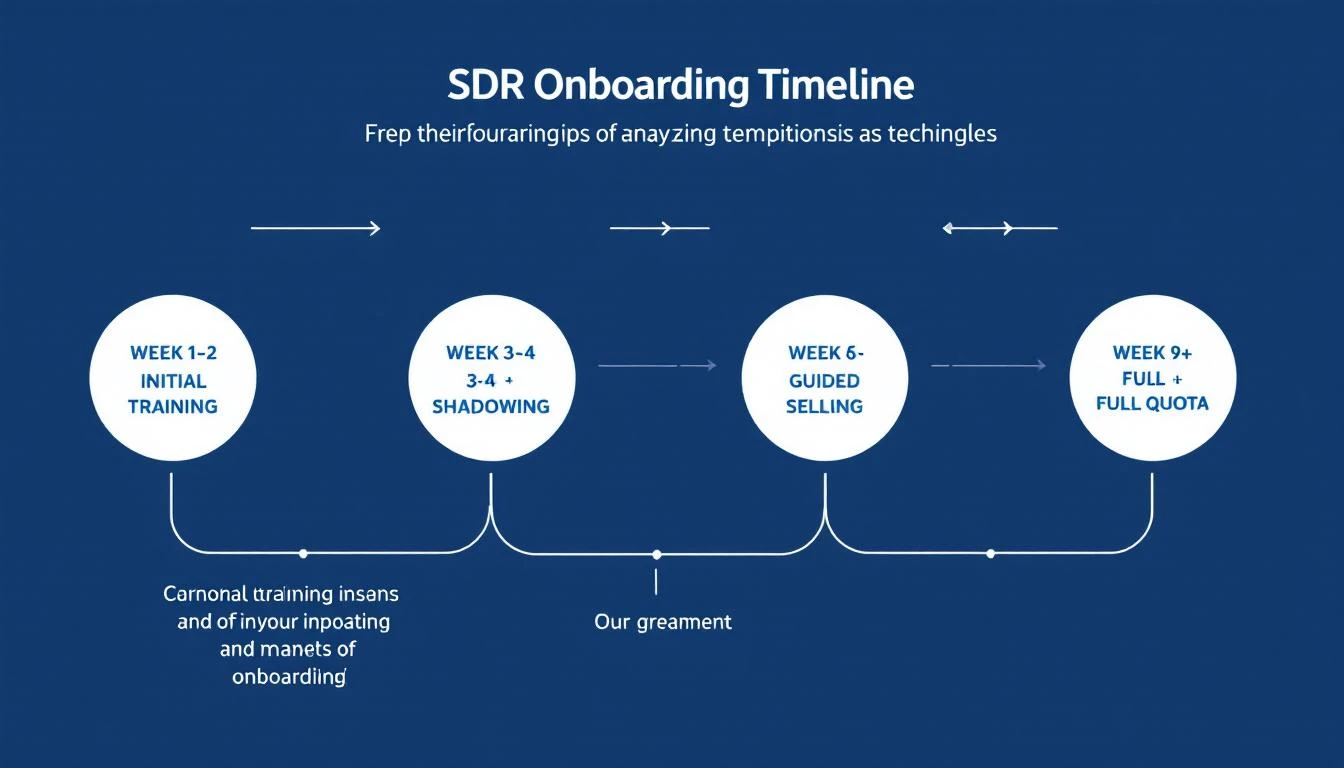
SDR Onboarding Timeline

Why SDR Ramp Time Is Getting Worse (Not Better)​

Before we fix it, let's understand why it's broken.

The Information Overload Problem​

New SDRs face more complexity than ever:

  • More tools: The average sales tech stack includes 10–15 tools (CRM, sequencer, dialer, enrichment, LinkedIn, intent data, chatbot, calendar...)
  • More channels: Email, phone, LinkedIn, video, chat β€” reps need fluency in all of them
  • More data: Intent signals, visitor identification, technographics, job changes β€” knowing what to act on is harder than finding it
  • More competition: Buyers get 50+ cold outreach messages per week. Differentiation requires deep product and persona knowledge

The Coaching Bandwidth Problem​

Sales managers average 6–9 meetings per day. They don't have time to sit with every new rep. So training becomes passive: recordings to watch, docs to read, maybe a weekly 1:1 to "check in."

The result? New reps learn in isolation, build bad habits unchecked, and take months to course-correct.

The Metrics Misalignment Problem​

Most onboarding programs measure the wrong things:

  • ❌ "How many calls did you make today?"
  • ❌ "Did you complete the training modules?"
  • ❌ "How many emails did you send?"

None of these tell you whether a rep is actually learning to sell. Activity metrics during onboarding create the illusion of progress while hiding fundamental gaps in messaging, targeting, and qualification skills.

The 8-Week SDR Onboarding Framework​

Here's the framework top-performing teams use to get SDRs productive in half the time:

Week 1–2: Foundation (Product, ICP, Tools)​

Goal: The rep can articulate your value proposition to any persona in your ICP without reading from a script.

Day 1–3: Company and Product Immersion

  • Company history, mission, and competitive positioning
  • Product demo (as a buyer, not a feature walkthrough)
  • Listen to 5 recorded discovery calls from top performers
  • Read 10 customer case studies or G2 reviews

Day 4–7: ICP and Persona Deep Dive

  • Define your top 3 buyer personas (title, pain points, language they use)
  • Map the buying committee for each target account size
  • Study 5 closed-won deals: what triggered the purchase? Who was involved?
  • Assignment: Write a 1-paragraph pitch for each persona. Get feedback from your AE.

Day 8–10: Tool Proficiency

  • CRM setup, pipeline stages, deal hygiene standards
  • Sequencer/email platform: build a test sequence
  • Dialer: make 10 practice calls (to internal team, not prospects)
  • LinkedIn Sales Navigator: build a sample target list
  • Signal tools setup: Configure visitor identification alerts, intent data filters, champion tracking notifications

Key Metric: Role-play assessment score (graded by manager or AE on value prop delivery, persona awareness, objection handling basics).

Week 3–4: Shadowing and Guided Practice​

Goal: The rep can run a cold call and send a personalized email sequence without step-by-step guidance.

Shadowing Protocol:

  • Shadow 10+ live calls from experienced SDRs (mix of cold calls, follow-ups, and discovery)
  • After each call, write a 3-sentence debrief: what worked, what didn't, what they'd do differently
  • Shadow 2 AE discovery calls to understand what "good" looks like downstream

Guided Practice:

  • Co-pilot calls: rep leads the call, experienced SDR listens and coaches after
  • Send first real email sequences (manager reviews before send)
  • Respond to first inbound leads with manager oversight

Daily Rhythm:

  • Morning: 30 min call review + coaching
  • Mid-day: Outreach block (with feedback)
  • End of day: 15 min debrief with manager or buddy

Key Metric: Number of "coachable moments" identified per call (not call volume). If a rep isn't making mistakes, they're not pushing themselves hard enough.

Week 5–6: Independent Outreach with Training Wheels​

Goal: The rep is working their own book of business with decreasing oversight.

Transition Steps:

  • Assign a real territory or account list
  • Rep builds their own target list using intent data and visitor identification signals
  • Rep prioritizes outreach based on buying signals (not alphabetical order)
  • Manager reviews sequences weekly (not daily)
  • Rep attends team call reviews and contributes feedback

Signal-Based Selling Introduction:

This is where modern onboarding diverges from the old playbook. Instead of giving reps a static list and saying "go," you teach them to read and act on buying signals:

  • Website visitors: "Company X visited your pricing page 3 times this week β€” that's your first call"
  • Champion job changes: "Your contact at Acme just moved to TechCorp β€” warm intro opportunity"
  • Content engagement: "This VP downloaded your ROI calculator β€” they're evaluating"
  • Tech stack signals: "They just adopted Salesforce β€” they'll need outbound tools next"

Reps who learn signal-based prioritization during onboarding consistently outperform those who start with cold lists. The data is clear: warm outreach based on buying signals converts 3–5x better than cold spray-and-pray.

Key Metric: Signal-to-meeting conversion rate (how many identified signals turn into booked meetings).

Week 7–8: Quota Ramp and Performance Calibration​

Goal: Rep hits 50–75% of full quota with increasing independence.

This Phase Includes:

  • Full quota assignment (or ramped quota at 50–75%)
  • Weekly pipeline review with manager
  • Monthly deal review with AE
  • Peer coaching sessions (reps review each other's calls)
  • Self-directed learning: rep identifies their own skill gaps

Graduation Criteria:

  • Can articulate value prop for all personas without notes
  • Has booked meetings from at least 2 different channels
  • Pipeline generation meets or exceeds ramped quota
  • AE confirms lead quality is acceptable
  • Can handle top 5 objections without coaching

5 Common Onboarding Mistakes That Double Ramp Time​

1. Training on Features Instead of Problems​

New reps don't need to know every feature your product has. They need to know what problems buyers are trying to solve and how your product solves them differently than alternatives.

Fix: Replace feature training with "problem-solution" training. For each use case, teach: the buyer's pain β†’ their current workaround β†’ how your product eliminates it β†’ proof it works (case study or metric).

2. Delaying Real Outreach Until "They're Ready"​

Some managers keep reps in training mode for weeks because they're "not ready." But reps don't learn to sell by watching β€” they learn by doing.

Fix: Start guided outreach by Week 3. Early mistakes with coaching are more valuable than late perfection without practice.

3. Measuring Activity Instead of Quality​

If your onboarding dashboard shows "calls made" and "emails sent," you're measuring effort, not skill. A rep can make 80 calls a day and learn nothing.

Fix: Measure coachable moments per call, signal-to-meeting conversion rate, and AE satisfaction scores on lead quality.

4. One-Size-Fits-All Onboarding​

A rep with 3 years of SDR experience doesn't need the same training as someone straight out of college. Yet most programs run everyone through identical 4-week bootcamps.

Fix: Assess experience level on Day 1 (role play, ICP quiz, tool proficiency check). Fast-track experienced reps. Give more structure to newer ones.

5. No Feedback Loop Between AEs and SDRs​

If your AEs don't give structured feedback on lead quality, SDRs have no way to calibrate. They'll keep booking meetings that go nowhere.

Fix: Weekly AE-SDR alignment meetings. AEs rate lead quality on a 1–5 scale. SDRs adjust targeting based on what converts downstream.

The Role of AI in SDR Onboarding (2026)​

AI isn't replacing SDR onboarding β€” it's accelerating it. Here's how the best teams are using AI tools during ramp:

AI-Powered Call Coaching​

Tools like Gong and Chorus record and analyze every call. During onboarding, they surface patterns that human coaches miss:

  • "You're talking 70% of the time on discovery calls β€” flip it to 30/70"
  • "Top performers mention the competitor by name β€” you're avoiding it"
  • "Your average call is 3 minutes β€” qualified meetings come from 8+ minute calls"

Signal-Based Daily Playbooks​

Instead of giving new reps a cold list, platforms like MarketBetter generate a daily playbook that tells each rep exactly:

  • Who to contact (based on website visits, intent signals, and champion tracking)
  • Why they're a priority (the specific signal that triggered the action)
  • How to reach them (recommended channel and suggested messaging angle)
  • What to say (personalized talking points based on their company and activity)

This is transformative for new reps. Instead of spending an hour deciding who to call, they log in and their priority list is waiting. The platform does the research; the rep does the selling.

AI Email Personalization at Scale​

New reps struggle with personalization because they don't know enough yet. AI tools can analyze a prospect's LinkedIn, company news, and website to generate personalized email openers that sound like the rep did 30 minutes of research.

The rep still controls the message, but the research barrier drops from 10 minutes per prospect to 30 seconds.

Automated CRM Hygiene​

Nothing kills an SDR's ramp faster than CRM confusion. AI-powered CRM automation handles:

  • Auto-logging calls and emails
  • Updating deal stages based on activity
  • Flagging stale leads for follow-up
  • Deduplicating contacts before outreach

Reps spend less time on admin and more time learning to sell.

SDR Onboarding Checklist: The Complete List​

Use this checklist as a template. Customize for your team, product complexity, and typical rep experience level.

Pre-Start (1 Week Before Day 1):

  • Send welcome doc with company overview, ICP summary, and competitive landscape
  • Set up all tool access (CRM, dialer, sequencer, LinkedIn Sales Nav, signal platform)
  • Assign onboarding buddy (experienced SDR, not AE)
  • Schedule Week 1 calendar with training sessions

Week 1–2 (Foundation):

  • Product demo from buyer's perspective
  • Listen to 5 top performer calls
  • Read 10 case studies / G2 reviews
  • ICP and persona deep dive
  • Write persona-specific pitches (get AE feedback)
  • CRM, sequencer, and dialer proficiency test
  • Signal platform setup (visitor ID, intent alerts, champion tracking)
  • Role-play assessment #1

Week 3–4 (Shadowing):

  • Shadow 10+ live calls
  • Write call debriefs
  • Shadow 2 AE discovery calls
  • Complete 5 co-pilot calls
  • Send first supervised email sequences
  • Role-play assessment #2

Week 5–6 (Independent):

  • Own territory / account list assigned
  • Build target list using signals
  • Prioritize outreach by buying signals
  • Weekly sequence review with manager
  • Attend and contribute to team call reviews

Week 7–8 (Quota Ramp):

  • Hit 50-75% of quota target
  • Weekly pipeline review
  • Monthly deal review with AE
  • Self-identified skill gaps documented
  • Graduation assessment passed

How MarketBetter Accelerates SDR Ramp Time​

MarketBetter's daily SDR playbook is designed specifically to solve the #1 onboarding problem: new reps don't know where to start.

Instead of handing a new SDR a list of 500 accounts and saying "figure it out," MarketBetter:

  1. Identifies who's visiting your website β€” so reps focus on accounts that are already showing interest
  2. Scores and prioritizes accounts by buying signals β€” website visits, content downloads, champion job changes, tech stack changes
  3. Generates a daily action list β€” every morning, your rep sees exactly who to contact, why, and what to say
  4. Tracks multi-channel engagement β€” email opens, LinkedIn views, call outcomes all feed back into signal scoring
  5. Provides AI-powered email personalization β€” so new reps can send relevant, personalized outreach from Day 1

The result: SDRs spend Week 1 learning the product and ICP. By Week 3, they're working signal-prioritized accounts with AI assistance. By Week 6, they're booking meetings at rates that used to take 4+ months to reach.

Ready to see how it works? Book a demo β†’

Free Tool

Try our AI Lead Generator β€” find verified LinkedIn leads for any company instantly. No signup required.

12 Best Sales Cadence Tools 2026 for SDR Teams (Salesloft, Outreach, Apollo)

Β· 13 min read
MarketBetter Team
Content Team, marketbetter.ai

Best Sales Cadence Tools for SDR Teams in 2026

A sales cadence is the structured sequence of touchpoints your SDR follows to engage a prospect β€” emails, calls, LinkedIn messages, and follow-ups, timed and ordered for maximum response.

The right cadence tool automates the execution so your reps focus on conversations, not scheduling follow-ups.

But here's what changed in 2026: the old "7-email sequence over 14 days" playbook is dead. Inboxes are flooded. Response rates to templated sequences have dropped below 2% for most B2B companies. The teams winning today use signal-driven cadences β€” sequences that trigger based on buying behavior, not arbitrary timelines.

This guide covers the 12 best sales cadence tools, from enterprise-grade platforms to scrappy startups, and explains which approach actually moves pipeline in 2026.

Related guides: Best Sales Engagement Software Β· Best Outbound Sales Tools Β· Best Cold Email Software Β· Best LinkedIn Automation Tools Β· Best Sales Dialers Β· Best Email Deliverability Tools

What Makes a Great Sales Cadence Tool​

  • Multi-channel steps β€” Email-only cadences underperform. The best tools include phone, LinkedIn, and SMS steps alongside email
  • Personalization engine β€” AI-generated personalization based on prospect data, not just {first_name} merge fields
  • Signal-based triggers β€” Start cadences when prospects show intent (website visit, job change, content download), not on an arbitrary schedule
  • Deliverability management β€” Email warm-up, domain rotation, and send throttling to protect your sender reputation
  • Analytics β€” Open rates, reply rates, and meeting-booked rates per cadence step, not just vanity metrics
  • CRM integration β€” Bi-directional sync with Salesforce, HubSpot, or your CRM of choice

Quick Comparison​

ToolBest ForStarting PriceChannelsSignal Triggers
MarketBetterSignal-driven SDR playbook$99/user/monthEmail + Phone + LinkedIn + Chatβœ… Visitor ID + Intent
OutreachEnterprise sequence management~$100/user/moEmail + Phone + LinkedInLimited
SalesLoftMid-market sales engagement~$125/user/moEmail + Phone + LinkedInLimited
Apollo.ioDatabase + sequencesFree–$49/user/moEmail + Phone + LinkedInBasic
InstantlyHigh-volume cold email$30/moEmail only❌
LemlistCreative personalized outreach$39/moEmail + LinkedIn❌
Reply.ioAI-powered sequences$49/moEmail + LinkedIn + Phone❌
SmartLeadVolume email at low cost$39/moEmail only❌
WoodpeckerB2B cold email compliance$29/moEmail only❌
MailshakeSimple email cadences$25/user/moEmail + Phone + LinkedIn❌
SaleshandyBudget email sequences$25/moEmail only❌
HubSpot SequencesHubSpot-native teamsIncluded in Sales HubEmail + TasksLimited

Detailed Reviews​

1. MarketBetter β€” Signal-Driven SDR Playbook​

Best for: B2B teams that want cadences triggered by real buying signals, not cold lists

MarketBetter takes a fundamentally different approach to sales cadences. Instead of building sequences and manually enrolling contacts, the platform identifies buying signals β€” website visits, intent data, champion job changes β€” and automatically surfaces the right prospects with recommended actions in a Daily SDR Playbook.

Your reps don't build cadences. They execute a prioritized task list that tells them exactly who to contact, on which channel, with what talking points.

Why it's different:

  • Website visitor identification tells you which companies are actively researching your solution before you start the cadence
  • Daily Playbook replaces manual cadence enrollment. The platform decides who gets contacted and in what order based on signal strength
  • Multi-channel orchestration β€” email, phone (Smart Dialer built in), LinkedIn, and AI chatbot all in one workflow
  • AI-powered personalization based on the prospect's actual behavior, not just firmographic data
  • 70% less manual SDR work β€” reps spend time selling, not building lists and enrolling contacts

Pricing: $99/user/month - one plan with everything included. 5M AI credits + 500 enrichment credits per seat. No contracts.

Ideal for: B2B teams (50-500 employees) in SaaS, IoT/connectivity, or tech that want to move from "spray and pray" sequencing to signal-driven outreach.

Book a demo β†’


2. Outreach β€” Enterprise Sales Engagement​

Best for: Large sales orgs with complex cadence requirements

Outreach is the category leader in sales engagement platforms, used by enterprise teams at companies like Cisco, Adobe, and DocuSign. It's the most feature-rich option for managing complex, multi-step sequences across large teams.

Key features:

  • Multi-step sequences with email, phone, LinkedIn, and custom task steps
  • AI-powered email scoring and recommendations
  • Revenue intelligence with deal health scoring
  • Advanced A/B testing on sequence steps
  • Governance controls for large team management
  • Salesforce and Microsoft Dynamics integration

Pricing: Not publicly listed. Enterprise pricing typically starts around $100/user/month with annual contracts. Implementation fees are common.

G2 Rating: 4.3/5 (3,400+ reviews)

Limitations: Expensive, especially with add-ons. Complex implementation (4-8 weeks typical). Overkill for teams under 20 reps. No website visitor identification. The platform's power can actually slow down small teams with unnecessary workflow complexity.

Common complaint (from G2 reviews): "The platform is powerful but takes months to configure properly. Our team of 5 didn't need 80% of the features."


3. SalesLoft β€” Mid-Market Sales Engagement​

Best for: Mid-market sales teams wanting structured cadence management

SalesLoft (now owned by Vista Equity Partners) competes directly with Outreach but positions itself as more user-friendly. It's popular with mid-market teams that want enterprise features without enterprise complexity.

Key features:

  • Cadence builder with email, phone, and social steps
  • Conversation intelligence (call recording + transcription)
  • Deal intelligence and pipeline analytics
  • Coaching workflows for managers
  • Rhythm (AI-prioritized actions)
  • HubSpot and Salesforce integration

Pricing: Not publicly listed. Vendr data suggests $100-$125/user/month for most mid-market deals, with add-on costs for conversation intelligence and deal management modules. Total cost for a 10-person team: $20K-$40K/year.

G2 Rating: 4.5/5 (4,000+ reviews)

Limitations: Pricing has crept up significantly after the Vista acquisition. Add-on pricing for conversation intelligence and analytics makes the true cost hard to predict. No website visitor identification. Limited intent data.

Common complaint: "Every feature we need is an add-on. Our quoted price was 2x the initial estimate after adding conversation intelligence and analytics."


4. Apollo.io β€” Database + Sequences in One​

Best for: Teams that need a contact database AND cadence execution without two separate tools

Apollo.io combines a 275M+ contact database with built-in sequencing, making it the most cost-effective option for teams that don't have a separate data provider.

Key features:

  • 275M+ contacts with verified emails and phone numbers
  • Multi-step sequences (email, phone, LinkedIn)
  • Built-in phone dialer
  • Intent data and buying signals (basic)
  • Email warm-up
  • Free tier available

Pricing: Free plan with limited features. Basic at $49/user/month. Professional at $79/user/month.

G2 Rating: 4.8/5 (7,500+ reviews)

Limitations: Sequence builder is less sophisticated than Outreach/SalesLoft. Data accuracy varies significantly by region and industry. LinkedIn integration is basic. Phone data quality can be inconsistent. Intent data is limited compared to dedicated providers like Bombora or 6sense.

Best for: Startups and SMBs that want one tool for both prospecting data and outbound sequences.


5. Instantly β€” High-Volume Cold Email​

Best for: Teams running volume email outreach with multiple sender accounts

Instantly exploded in popularity by solving the email deliverability problem. It lets you connect unlimited email accounts and rotate sending across them to avoid domain burnout.

Key features:

  • Unlimited email accounts and warm-up
  • Smart send rotation across accounts
  • AI-powered email writer
  • B2B lead database (Instantly Leads)
  • Campaign analytics
  • Deliverability network (Instantly Deliverability)

Pricing: Growth at $30/mo (5,000 emails). Hypergrowth at $77.6/mo (25,000 emails). Enterprise pricing available.

G2 Rating: 4.8/5 (3,200+ reviews)

Limitations: Email-only β€” no phone dialer, no LinkedIn steps, no task management. It's a send engine, not a cadence platform. You'll need separate tools for calling, LinkedIn, and CRM. No signal-based triggers. Volume-first approach can damage brand if not managed carefully.

Common complaint: "Great for cold email, but we still need Outreach for the rest of our workflow. Ended up paying for both."


6. Lemlist β€” Creative Personalized Sequences​

Best for: Teams that differentiate through creative, personalized outreach

Lemlist pioneered custom image and video personalization in cold emails. It's evolved into a multi-channel platform with LinkedIn steps, but personalization remains its core strength.

Key features:

  • Custom image and video personalization at scale
  • Email + LinkedIn multi-channel sequences
  • lemwarm email warm-up
  • B2B lead database
  • AI campaign generator
  • Liquid syntax for advanced personalization

Pricing: Email Starter at $39/mo. Multichannel Expert at $69/mo. Outreach Scale at $99/mo.

G2 Rating: 4.4/5 (250+ reviews)

Limitations: LinkedIn automation requires Chrome extension (less safe than cloud-based). Phone channel is missing. Personalized images sound great in theory but open rates don't always justify the setup time. Database is smaller than Apollo's.


7. Reply.io β€” AI-Powered Multi-Channel Sequences​

Best for: Teams that want AI writing assistance built into their sequence builder

Reply.io combines email, LinkedIn, phone, and SMS in one sequence builder with strong AI capabilities for generating and optimizing messages.

Key features:

  • Multi-channel sequences (email, LinkedIn, calls, SMS, WhatsApp)
  • Jason AI assistant for message generation
  • Email deliverability toolkit
  • B2B contact database
  • Meeting scheduling built in
  • API and Zapier integrations

Pricing: Starts at $49/mo. Professional at $89/mo.

G2 Rating: 4.6/5 (1,300+ reviews)

Limitations: UI can feel cluttered with so many features. LinkedIn automation is basic compared to dedicated tools like Expandi. Phone dialer is functional but not as robust as dedicated dialers. Smaller contact database than Apollo.


8. SmartLead β€” Volume Email at Rock-Bottom Pricing​

Best for: Agencies and teams sending massive email volume on a budget

SmartLead competes directly with Instantly on price and volume. It's built for agencies and lead gen teams that need to send tens of thousands of emails per month across many domains.

Key features:

  • Unlimited email accounts and warm-up
  • Master inbox (all replies in one place)
  • Sub-accounts for agency management
  • AI email categorization
  • API access for custom workflows
  • White-label option

Pricing: Basic at $39/mo (6,000 emails). Pro at $94/mo (150,000 emails).

G2 Rating: 4.7/5 (200+ reviews)

Limitations: Email only β€” zero phone or LinkedIn capability. Best suited for cold email agencies, not full-stack SDR teams. UI is functional but not polished. Support can be slow.


9. Woodpecker β€” B2B Cold Email with Compliance Focus​

Best for: European B2B teams that need GDPR-compliant email cadences

Woodpecker is a cold email platform built with compliance as a core feature. It's popular with European companies navigating GDPR requirements.

Key features:

  • GDPR compliance tools built in
  • Email warm-up and deliverability monitoring
  • Condition-based campaign flows
  • A/B testing
  • Team collaboration
  • Salesforce and HubSpot integration

Pricing: Starts at $29/mo (500 contacted prospects). Scales with volume.

G2 Rating: 4.1/5 (40+ reviews)

Limitations: Email-only. Smaller market presence than competitors. Limited LinkedIn and phone integration. Compliance focus is great for EU teams but adds complexity for US-based teams that don't need it.


10. Mailshake β€” Simple, Effective Email Cadences​

Best for: Small sales teams that want straightforward email sequences without complexity

Mailshake has earned a loyal following by keeping things simple. It does email cadences well without trying to be an enterprise platform.

Key features:

  • Email cadences with phone and social tasks
  • AI email writer (SHAKEspeare)
  • Lead catcher for managing replies
  • Phone dialer add-on
  • LinkedIn automation (via Chrome extension)
  • Salesforce and HubSpot sync

Pricing: Email Outreach at $25/user/month. Sales Engagement at $75/user/month.

G2 Rating: 4.7/5 (260+ reviews)

Limitations: Phone dialer is an add-on, not native. LinkedIn automation is basic. Limited analytics compared to Outreach/SalesLoft. Can feel too simple as teams grow past 10 reps.


11. Saleshandy β€” Budget Email Sequences​

Best for: Cost-conscious teams that need email sequencing at the lowest price

Saleshandy is an email outreach tool that focuses on deliverability and affordability.

Key features:

  • Unlimited email accounts
  • Email warm-up
  • Sequence automation
  • Unified inbox
  • Prospect database (Saleshandy Connect)
  • Agency portal with white-label

Pricing: Outreach Starter at $25/mo (10,000 emails). Outreach Pro at $74/mo (125,000 emails).

G2 Rating: 4.6/5 (600+ reviews)

Limitations: Email-only. No phone dialer. No LinkedIn. Basic CRM integration. Best for pure cold email, not full cadence management.


12. HubSpot Sequences β€” For Teams Already on HubSpot​

Best for: Sales teams deeply invested in the HubSpot ecosystem

HubSpot Sequences is built into Sales Hub, making it the path of least resistance for teams already using HubSpot CRM. It handles email cadences with manual task steps.

Key features:

  • Email sequences with task reminders
  • Personalization tokens from CRM data
  • Automatic unenrollment on reply
  • Embedded in HubSpot CRM (no data sync needed)
  • Meeting scheduling integration
  • Email tracking and notifications

Pricing: Included in Sales Hub Professional ($90/user/month) and Enterprise ($150/user/month).

G2 Rating: 4.4/5 (as part of HubSpot Sales Hub, 12,000+ reviews)

Limitations: Email + tasks only β€” no native phone dialer or LinkedIn automation in sequences. Enrollment limits on Professional tier. Sequences are basic compared to dedicated tools. Can't send to contacts who haven't opted in (compliance feature that limits cold outreach).

Common complaint: "If you're already on HubSpot it's convenient, but the sequence builder feels limited compared to Outreach or even Apollo."


The Old Way vs. The New Way​

The old way (2020-2024): Build a 7-12 step email sequence. Enroll 500 contacts. Wait for replies. Follow up with anyone who opens. Repeat with a new list.

Result: 1-3% reply rates. Massive volume. Low conversion. Brand damage from spam-like outreach.

The new way (2026): Start with signals. A target account visits your pricing page β†’ their VP of Sales gets a personalized LinkedIn connection request β†’ 2 days later, a tailored email referencing their specific pain points β†’ your rep calls with context from the chatbot conversation their team had yesterday.

Result: 15-25% reply rates. Lower volume. Higher conversion. Your brand stays intact.

The tools in this list fall on a spectrum. On one end: volume email engines (Instantly, SmartLead, Saleshandy) that optimize for sending more. On the other end: signal-driven platforms (MarketBetter) that optimize for sending smarter.

Most teams will land somewhere in the middle, but the trend is clear β€” signal-driven cadences outperform volume-driven ones by 5-10x in meeting conversion.

How to Choose​

Budget under $50/mo: Apollo.io (free tier + sequences) or Saleshandy ($25/mo for email)

Email-focused team (5-10 reps): Instantly or Lemlist for creative outreach

Full-stack SDR team (5-20 reps): MarketBetter (signal-driven, all channels included) or Outreach (enterprise sequences)

Enterprise (20+ reps): Outreach or SalesLoft for governance and scale

Already on HubSpot: Start with HubSpot Sequences. Graduate to a dedicated tool when you hit its limits.

Free Tool

Try our AI Lead Generator β€” find verified LinkedIn leads for any company instantly. No signup required.

Bottom Line​

Sales cadence tools are commoditized. Every platform can send a timed email sequence. The differentiator in 2026 is intelligence β€” knowing who to sequence, when to start, and which channel will get a response.

If your cadence tool can't answer "why should I contact this person right now?", you're running cadences on autopilot. And autopilot cadences are what fill your prospects' spam folders.

The teams booking the most meetings aren't sending the most emails. They're sending the right emails to the right people at the right time β€” triggered by real buying signals.

Want to see what signal-driven cadences look like? Book a MarketBetter demo β†’

How to Personalize Sales Gifts That Actually Book Meetings

Β· 10 min read
sunder
Founder, marketbetter.ai

How to personalize sales gifts that actually book meetings

Your prospect's inbox has 127 unread emails. Your cold call went to voicemail. Your LinkedIn connection request is sitting in a queue of 40+ pending invitations.

Then a package arrives at their desk. A book they've been meaning to read β€” one that's eerily relevant to a challenge they mentioned in a recent LinkedIn post. With a handwritten note that references their keynote at last month's conference.

They respond within the hour.

This is the power of personalized sales gifting. Not swag. Not branded mugs with your logo. Not generic gift cards sent to a list of 500 people. Genuinely personalized gifts that demonstrate you've done your homework and care about the person, not just the deal.

It works because of a principle as old as human psychology: reciprocity.

The Psychology of Why Gifting Works in Sales​

The Reciprocity Principle​

Robert Cialdini's research on influence identified reciprocity as one of the six fundamental principles of persuasion. When someone gives us something β€” especially something thoughtful and unexpected β€” we feel a deep, almost unconscious obligation to reciprocate.

In sales, this translates directly:

  • Reachdesk data shows that personalized gifts like champagne or cupcakes can boost close rates by 19% and generate up to 447% more opportunities
  • eGifts (coffee cards, lunch vouchers) increase booked meetings and can boost response rates by 212% (Reachdesk, 2025)
  • Sendoso reports that corporate gifts can accelerate the sales cycle by 50%

The key word is personalized. A $10 Starbucks gift card sent to 500 people triggers no meaningful reciprocity. A $15 book that directly relates to something the prospect cares about creates a genuine connection.

The Endowment Effect​

Once someone receives a physical gift, they own it. The endowment effect means people value things they possess more than identical things they don't. A prospect who has your thoughtful gift on their desk feels a connection to you that a 100-word email can never create.

Pattern Interruption​

In a world of digital-only outreach, a physical gift breaks the pattern. It's unexpected. It demands attention in a way that email #47 from another sales rep doesn't. Your prospect has to physically interact with it β€” open the package, read the note, decide what to do with the gift.

That moment of attention is worth more than 50 cold emails.

When to Send Gifts in the Sales Cycle​

Timing matters more than budget. Here's when gifting creates the most leverage:

1. Pre-Meeting (Highest ROI)​

Goal: Get the meeting booked.

Send a small, personalized gift before asking for time. This is the highest-ROI use of gifting because it transforms a cold outreach into a warm one.

What works:

  • $10-$25 value range
  • eGift cards (coffee, lunch) tied to a personal message
  • A relevant book with a note explaining why you chose it
  • Something related to their hobby or interest (visible from LinkedIn)

Example:

Hi Sarah, I noticed from your LinkedIn that you're a runner training for the Austin Marathon β€” that's awesome. Sent you a $15 credit for [running nutrition brand]. Thought of you when I saw it.

Separately β€” I work with VPs of Marketing at companies like [similar company] who are struggling with [specific problem]. Would love to share what we're seeing. 15 minutes this week?

2. Post-Demo Follow-Up​

Goal: Stay top-of-mind during the evaluation period.

After a good demo or discovery call, a gift reinforces the positive experience and keeps you memorable during the decision process.

What works:

  • $25-$50 value range
  • Something tied to a personal detail from the conversation
  • A "thank you for your time" framing (not transactional)

3. Re-Engagement (Stalled Deals)​

Goal: Restart a conversation that's gone quiet.

When a prospect ghosts after seeming interested, a gift provides a natural reason to re-engage without being pushy.

What works:

  • $15-$30 value range
  • Light, no-pressure framing
  • "Thought of you when I saw this" positioning

4. Celebration Moments​

Goal: Build relationship equity.

Job promotions, company milestones, work anniversaries, and birthdays are natural gifting moments that build goodwill without any sales pressure.

What works:

  • $20-$50 value range
  • Congratulatory framing
  • No sales ask β€” pure relationship building

How to Personalize Gifts That Resonate​

Generic gifts fail. Personalized gifts work. Here's how to personalize at scale:

Step 1: Research the Prospect​

Before choosing a gift, spend 5-10 minutes on research:

LinkedIn profile:

  • Recent posts and articles (what topics do they care about?)
  • Activity (what have they liked or commented on?)
  • About section (personal interests, values)
  • Volunteer experience (causes they care about)
  • Education (alma mater, continuing education)

Twitter/X:

  • Tweets and retweets (interests, opinions, humor style)
  • Bio (hobbies, roles, identities)

Company news:

  • Recent funding, product launches, awards
  • Blog posts they've written
  • Podcast appearances

Step 2: Match Gift to Person​

Based on your research, choose a gift that connects to something personal:

SignalGift IdeaCost
Posts about running/fitnessRunning nutrition, race entry, fitness book$15-$40
Coffee enthusiast (mentions, photos)Specialty coffee subscription (1 month)$15-$25
Recent book recommendationThe book they mentioned wanting to read$15-$30
Dog owner (photos on social)Premium dog treats or toy$15-$25
Foodie (restaurant posts)Gift card to a highly-rated local restaurant$25-$50
Tech/gadget enthusiastInteresting tech accessory$20-$40
Parent (mentions kids)Fun family experience gift card$25-$50
Sustainability advocateEco-friendly brand gift card$15-$30
Just got promotedCongratulatory book on leadership$15-$25
Mentioned a specific challengeBook that addresses that challenge$15-$20

Step 3: Write the Note​

The note matters more than the gift. It should:

  1. Reference something specific (not "I saw your LinkedIn" but "your post about the challenges of scaling a content team really resonated")
  2. Explain why you chose this gift ("thought of you when I saw this because...")
  3. Be genuinely warm (not corporate, not transactional)
  4. Include a soft CTA (not "let's schedule a demo" but "would love to hear your perspective on [topic]")

Good note example:

Sarah β€” Loved your post about the challenges of building a marketing attribution model from scratch. Reminded me of this book (Chris Mercer's "Digital Marketing Measurement") that completely changed how we think about attribution. Hope you enjoy it as much as I did. Would love to pick your brain on how you're approaching it at [Company]. β€” [Your name]

Bad note example:

Hi Sarah, I'm reaching out from [Company]. We help businesses like yours improve marketing performance. I'd love to schedule a demo. Enjoy this gift card. β€” [Your name]

How to Scale Personalized Gifting​

"This sounds great, but I can't research every prospect for 10 minutes and hand-pick a gift."

Fair. Here's how to scale:

Tier Your Accounts​

Not every prospect gets the same treatment:

  • Tier 1 (Top 10-20 accounts): Fully personalized research + custom gift + handwritten note. Spend 15-20 minutes per prospect.
  • Tier 2 (Next 50-100 accounts): Personalized from LinkedIn data + curated gift options + personalized digital note. Spend 5 minutes per prospect.
  • Tier 3 (100+ accounts): AI-personalized recommendations + eGift + templated-but-customized message. Spend 2 minutes per prospect.

Use AI to Speed Up Research​

This is where MarketBetter's GiftDM Copilot transforms the workflow.

How GiftDM Copilot works:

  1. Enter a prospect's name, company, or LinkedIn URL
  2. AI researches the prospect β€” analyzing LinkedIn activity, company context, and public information
  3. Get AI-generated gift recommendations personalized to that specific prospect
  4. Get draft LinkedIn DMs tailored to their interests and role
  5. Send the gift and message with confidence that it'll resonate

What would take 15 minutes of manual research takes 30 seconds with AI.

Gift Fulfillment Platforms​

Once you know what to send, you need a way to send it:

  • Sendoso β€” Largest gifting platform with warehouse fulfillment. Integrates with Salesforce, HubSpot, Outreach. Enterprise pricing ($$$).
  • Reachdesk β€” European-focused gifting with good personalization features. From ~$3/gift.
  • Postal.io β€” Direct mail and gifting platform with marketplace. Plans from $49/month.
  • Tremendous β€” Digital rewards and gift cards at scale. Low per-gift costs.
  • Amazon directly β€” For books and specific items, send directly via Amazon wish list or gift shipment. No platform cost.

For most SDR teams, starting with Amazon + a handwritten note or digital gift cards + a personalized LinkedIn DM is enough. You don't need a $10K/year gifting platform to get started.

Gift Ideas That Work (Organized by Budget)​

Under $15​

  • Coffee gift card ($10 Starbucks/local shop) β€” universal, safe
  • eBook β€” Kindle gift of a relevant book
  • DoorDash/UberEats credit ($10-$15) β€” "lunch is on me"
  • Charity donation in their name (for prospects who value social impact)

$15-$30​

  • Physical book β€” always wins when well-chosen
  • Specialty coffee/tea β€” a step up from Starbucks
  • Desk plant (small succulent) β€” memorable and lasting
  • Quality notebook (Moleskine, Leuchtturm) β€” practical and appreciated

$30-$50​

  • Experience gift β€” cooking class, wine tasting (via platforms like Tinggly)
  • Premium food gift β€” artisanal chocolate, local bakery delivery
  • Personalized item β€” custom bookmark, engraved pen
  • Restaurant gift card to a place near their office

$50+ (Executive/Tier 1 only)​

  • Premium wine or spirits β€” for celebrating milestones
  • Masterclass subscription β€” educational and personal
  • High-quality tech accessory β€” noise-canceling earbuds, wireless charger
  • Curated gift box β€” themed around their interests

Measuring Gifting ROI​

Track these metrics to prove gifting works:

Response Rate Lift​

Compare response rates on gifted vs. non-gifted outreach sequences. Expect a 2-5x improvement.

Meeting Booking Rate​

Track meetings booked per gift sent. Good targets:

  • eGifts ($10-$15): 10-20% meeting rate
  • Physical gifts ($25-$50): 20-35% meeting rate
  • Premium gifts ($50+): 30-50% meeting rate

Pipeline Attribution​

Tag deals in your CRM that started with a gift touchpoint. Track:

  • Pipeline generated from gifting
  • Win rate on gift-sourced deals vs. non-gift deals
  • Average deal size comparison
  • Sales cycle length comparison

Cost Per Meeting​

Calculate: Total gifting spend Γ· meetings booked. If you spend $500 on 25 gifts at $20 each and book 5 meetings, your cost per meeting is $100 β€” likely cheaper than most paid channels.

Common Mistakes to Avoid​

1. Leading with the Gift, Not the Person​

The gift should feel like a natural extension of a genuine interest in the person. If it feels transactional ("here's a gift card, now take my meeting"), it backfires.

2. Over-Spending​

A $100 gift to a stranger can feel uncomfortable or even ethically questionable. Keep initial gifts in the $10-$30 range. Save bigger gifts for established relationships.

3. Generic Swag​

Company-branded merchandise is fine for customers and event attendees. For cold prospects, it screams "I'm trying to sell you something" and goes straight in the trash.

4. No Follow-Up​

A gift without a conversation is wasted. Always follow up within 2-3 days of delivery with a low-pressure message referencing the gift.

5. Ignoring Company Gifting Policies​

Many enterprises have policies about accepting gifts from vendors. Keep values modest and position gifts as "a book recommendation" or "coffee on us" rather than formal corporate gifts to avoid policy friction.

Get Started: Personalize Your First Gift in 60 Seconds​

Pick your most important prospect right now. The one you've been trying to reach for weeks.

Open MarketBetter's GiftDM Copilot β†’

Enter their name and company. In seconds, you'll get:

  • AI-researched insights about the prospect
  • Personalized gift recommendations
  • Draft LinkedIn DMs ready to send

No signup required. Free to use.


Build your complete prospecting workflow: find target companies with our Lookalike Finder, identify buyer contacts with the AI Lead Generator, and personalize your outreach with GiftDM Copilot. All free.

Why $35M AI Sales Startups Still Can't Replace Your SDR Team

Β· 5 min read
MarketBetter Team
Content Team, marketbetter.ai

Monaco just raised $35M. 11x raised $74M. Artisan raised $12M. Billions are flowing into AI sales tools with one implied promise: your human SDR team is about to become obsolete.

Except it's not.

And here's the thing β€” the smartest founders in the space know this. Sam Blond, Monaco's CEO, specifically designed his platform with human-in-the-loop guidance. He ran sales at Brex. He's seen what works. And he chose not to promise full automation.

So why does the "replace your SDRs" narrative persist? And why is it wrong?

The Automation Fallacy​

There's a persistent belief in tech that if you throw enough money and compute at a problem, you can automate it away. It works for some things β€” data entry, scheduling, report generation.

But sales isn't data entry.

What AI Can Automate​

  • βœ… Finding prospects in databases
  • βœ… Writing initial email drafts
  • βœ… Scheduling meetings
  • βœ… Logging CRM data
  • βœ… Researching companies
  • βœ… Prioritizing lead lists
  • βœ… Following up on sequences

What AI Can't Automate (Yet)​

  • ❌ Building trust with a stranger
  • ❌ Reading the room on a discovery call
  • ❌ Adapting a pitch in real-time based on subtle cues
  • ❌ Navigating office politics to reach the decision maker
  • ❌ Knowing when to push and when to pull back
  • ❌ Genuine empathy when a prospect shares a problem
  • ❌ Creative problem-solving for unique objections
  • ❌ Relationship-building over months of a sales cycle

The first list is grunt work. The second list is what actually closes deals.

The Results Speak​

11x.ai, the most well-funded "replace your SDR" company, has a ~3.5/5 rating on G2 after more than a year in market. Multiple reviewers cite generic-sounding outreach and lack of nuance.

Meanwhile, human-in-the-loop platforms like MarketBetter (4.97/5 on G2) consistently outperform on customer satisfaction. Why? Because they augment humans instead of replacing them.

The data is clear: AI that makes SDRs more productive beats AI that tries to replace them.

What $35M Buys You (and What It Doesn't)​

Monaco's $35M buys:

  • World-class engineering talent
  • An impressive AI-native CRM
  • A built-from-scratch prospect database
  • AI-powered email outbound with human oversight
  • A meeting notetaker

What it doesn't buy:

  • The ability to replace human judgment in complex sales
  • Magic that makes email-only outreach compete with multichannel
  • Website visitor identification (Monaco doesn't have it)
  • An AI chatbot for inbound leads (Monaco doesn't have it)
  • A smart dialer for phone outreach (Monaco doesn't have it)
  • Instant credibility (they're still in public beta)

Monaco is smart to embrace human-in-the-loop. But even their approach outsources the human element to Monaco's own experts β€” rather than empowering your team.

The Right Way to Think About AI + SDRs​

The question isn't "Can AI replace my SDRs?" The question is "Can AI make each SDR 3-5x more productive?"

The answer is yes. Here's what that looks like:

Without AI SDR Tools​

A typical SDR's day:

  • 30 min researching prospects manually
  • 45 min writing and personalizing emails
  • 20 min logging CRM data
  • 30 min figuring out who to call first
  • 15 min looking up prospect context before calls
  • = 2+ hours of admin before any real selling

With AI SDR Tools (MarketBetter)​

  • Daily Playbook: Opens to a prioritized task list β€” no figuring out what to do
  • Visitor identification: Warm leads surfaced automatically β€” no cold list building
  • AI email drafts: Personalized sequences ready to review and send β€” no starting from scratch
  • Pre-meeting intel: Auto-generated briefs β€” no manual research
  • Smart dialer: AI-powered scripts and call intelligence β€” more effective calls
  • AI chatbot: Inbound leads captured 24/7 β€” no leads slipping through

Time saved: 2+ hours per SDR per day. That's 2+ hours of additional selling time. Multiply by your team size. That's the ROI of AI β€” not replacement, but augmentation.

Why the "Replace" Companies Will Pivot​

Here's a prediction: within 18 months, most "AI SDR replacement" companies will pivot to "AI SDR augmentation." The market is telling them what works:

  1. Buyers prefer human interactions for complex B2B purchases
  2. Fully autonomous outreach produces diminishing returns as every company uses it
  3. Human-in-the-loop platforms have higher customer satisfaction (G2 ratings prove it)
  4. The total addressable market for "augment SDRs" is larger than "replace SDRs" β€” because every company with SDRs is a prospect, not just companies that want to cut headcount

Monaco already got the memo β€” they embedded human guidance from day one. The question is whether their feature set will catch up to platforms like MarketBetter that deliver the complete SDR stack.

The Bottom Line​

$35M doesn't replace human judgment, empathy, and relationship-building in sales. It never will.

What money CAN buy is better tools that make every SDR dramatically more effective. That's the right investment β€” in AI that empowers your team, not AI that replaces it.

MarketBetter gets this. Your SDRs keep their jobs. They just become superhuman at them.

Make Your SDRs Superhuman

MarketBetter doesn't replace your SDRs β€” it makes them 3-5x more productive. Visitor identification, daily playbook, smart dialer, AI chatbot. Book a demo and see the difference.

Free Tool

Try our AI Lead Generator β€” find verified LinkedIn leads for any company instantly. No signup required.

Why Your Next SDR Hire Should Be an AI Agent (But Your Current SDRs Are Safe) [2026]

Β· 7 min read
sunder
Founder, marketbetter.ai

Let's address the elephant in the room: AI is coming for your SDR team.

At least, that's what the headlines want you to believe.

The reality? After running a team of AI agents at MarketBetter for the past quarterβ€”watching them research prospects, draft emails, monitor competitors, and analyze dealsβ€”I can tell you definitively:

AI won't replace your SDRs. But AI will make your top SDRs unstoppableβ€”and your average SDRs obsolete.

Here's what's actually happening.

The AI Panic Is Real (And Mostly Wrong)​

Every sales leader I talk to has the same question simmering beneath the surface: "Should I be worried about my team?"

The panic is understandable. When you see AI tools:

  • Researching 100 prospects in the time a human researches 3
  • Personalizing 500 emails while maintaining quality
  • Working 24/7 across every timezone without complaining

…it's easy to imagine a future where human SDRs are simply obsolete.

But here's what the "AI will replace everyone" crowd misses:

Sales isn't data processing. Sales is psychology.

McKinsey's latest research shows that 42% of B2B decision-makers are implementing AI for salesβ€”but only 7% have AI "fully scaled" across their organization. Why the gap?

Because they learned what we learned: AI is phenomenal at preparation. AI is terrible at persuasion.

What AI Actually Does Well​

Let's be honest about AI's strengths. At MarketBetter, our AI agents (yes, we named themβ€”Zenith, Orbit, Recon, Signal) handle:

1. Research at Scale​

Before AI, researching a single enterprise account took 30-45 minutes. Now Recon synthesizes:

  • Company news and hiring patterns
  • Tech stack from job postings
  • Competitor relationships
  • Pain signals from G2 reviews
  • LinkedIn activity from key stakeholders

Time to insight: 3 minutes. Not 30.

2. First Drafts That Don't Suck​

Our AI writes the first draft of prospecting emails. Not generic templatesβ€”actual personalized messages referencing specific company events, tech decisions, and pain points.

Human SDRs used to spend 40% of their time writing emails. Now they spend 10% editing AI draftsβ€”and the output is better.

3. Repetitive Task Automation​

  • CRM data entry? Automated.
  • Meeting prep briefs? Generated.
  • Follow-up scheduling? Handled.
  • Competitor monitoring? Continuous.

The average SDR spends 66% of their time on non-selling activities. AI can reclaim most of that.

4. Pattern Recognition at Scale​

AI doesn't get tired. It doesn't have bad days. It notices patterns humans miss:

  • "Prospects who mention 'consolidating vendors' convert 3x higher"
  • "Reaching out within 2 days of a leadership change increases response by 47%"
  • "This prospect's company just hired 3 SDRsβ€”they're investing in outbound"

Humans spot these patterns eventually. AI spots them instantly.

What AI Cannot Do (And Won't Anytime Soon)​

Here's where the AI-replacement narrative falls apart:

1. Build Genuine Trust​

When a VP of Sales is evaluating your product, they're not just buying software. They're betting their career on a decision.

No AI can look them in the eye (metaphorically or literally) and say: "I understand. I've been there. Here's how we've helped teams like yours."

Trust is built through shared vulnerability, through admitting uncertainty, through moments of genuine human connection. AI can simulate empathy. It cannot feel itβ€”and people can tell the difference.

2. Navigate Political Complexity​

Enterprise deals involve 6-10 stakeholders with conflicting priorities:

  • The CFO wants cost reduction
  • The VP of Sales wants quota attainment
  • The IT Director wants security compliance
  • The end users want simplicity

A skilled SDR reads the room, adjusts messaging in real-time, and builds individual relationships with each stakeholder. AI sees stakeholders as data points. Humans see them as people with fears, ambitions, and hidden agendas.

3. Handle True Objections​

AI can respond to common objections with pre-programmed responses. But what about:

"We tried something similar and it destroyed our team's morale."

"Our CEO's golf buddy runs your competitor."

"I'm actually getting pushed out in 3 months, so I can't champion anything."

These aren't logical objections. They're human moments requiring human intuition.

4. Create Something From Nothing​

The best SDRs aren't just executing playbooksβ€”they're inventing new approaches:

  • A creative way to get past gatekeepers
  • An unexpected angle that resonates with a specific persona
  • A referral strategy that opens doors no email ever could

AI optimizes existing patterns. Humans create new ones.

5. Adapt to the Unexpected​

AI thrives on patterns. Sales is unpredictable.

When a prospect suddenly pivots the conversation, brings up an unexpected concern, or makes an off-script comment that reveals their true priorityβ€”AI flounders. Great SDRs flourish.

The Hybrid Model: 10x SDRs​

Here's the insight nobody's talking about:

The future isn't AI vs. humans. It's AI + humans vs. everyone else.

The most dangerous sales teams in 2026 aren't replacing SDRs with AI. They're giving each SDR an AI co-pilot that handles:

  • 100% of research
  • 80% of first-draft writing
  • 100% of data entry
  • 100% of scheduling

This transforms what an SDR can accomplish:

MetricTraditional SDRHybrid AI+SDR
Prospects researched/day10-15100+
Personalized emails sent30-50150-200
Time on actual selling34%75%+
Response rate2-3%5-8%

That's not a marginal improvement. That's a category shift.

What This Means for Your Team​

If You're a Sales Leader​

Don't replace your SDRs. Augment them.

  1. Identify time sinks: Where do your SDRs waste time? Research? CRM? Scheduling? Those are AI opportunities.
  2. Invest in AI tools: Not chatbot gimmicksβ€”real AI workflows that integrate with your stack.
  3. Upskill your team: Train SDRs on working with AI, not against it. Prompt engineering is a sales skill now.
  4. Redefine metrics: Stop measuring "activities." Start measuring "conversations" and "pipeline influence."

If You're an SDR​

Your job isn't disappearing. It's getting harderβ€”and more valuable.

The SDRs who thrive will be those who:

  • Use AI to work at 10x scale while maintaining quality
  • Focus their human time on relationship-building and complex deals
  • Develop skills AI can't replicate: empathy, creativity, strategic thinking
  • Become invaluable because they're irreplaceable, not because they're cheap

If You're a Founder (Like Me)​

Your next hire might be an AI agent.

Not instead of an SDRβ€”alongside one. At MarketBetter, our AI squad does the work of 3-4 full-time employees in research, content, and ops. The humans on our team focus exclusively on what only humans can do.

The math works. The results speak for themselves.

Free Tool

Try our AI Lead Generator β€” find verified LinkedIn leads for any company instantly. No signup required.

The Bottom Line​

AI won't replace SDRs in 2026, 2027, or anytime soon.

But AI will make the gap between great SDRs and average SDRs exponentially wider.

The question isn't "Will AI take my job?"

The question is "Will I learn to work with AI before my competitor's SDRs do?"


Ready to see how AI can amplify your sales team? MarketBetter combines AI-powered research, personalization, and workflow automation to make your SDRs 10x more effectiveβ€”without replacing them.

Book a Demo β†’


Related reading: