The morning our dashboard ticked past $5M in annual recurring revenue, I didn't celebrate. I sat in my car in the parking lot for fifteen minutes, staring at my phone, thinking about every door that got slammed in our face to get there.
When it comes to building a predictable B2B sales pipeline, using email marketing to generate leads is still the most reliable play in the book. It consistently crushes almost every other channel on ROI, transforming what used to be a manual outreach grind into a high-performance system that drives revenue without burning out your team.
In a world overflowing with marketing channels, email is the undisputed workhorse. Social media and paid ads get all the hype, but email gives you a direct, owned channel to your prospects. You're not at the mercy of some algorithm's mood swing or skyrocketing ad costs. It’s the engine that powers predictable pipeline growth.
Let's be real—the main problem for modern sales teams isn't a shortage of potential leads. It's the soul-crushing manual work it takes to actually engage them. This is where a smart, automated email strategy completely changes the game. We're not talking about sending a monthly newsletter. We're talking about building a system that turns your CRM into a powerful task engine that works for you.
When you stack email up against the other usual suspects, the numbers make the decision for you. Email consistently outperforms paid media and events, both in cost and in return.
The data is pretty clear: multiple studies across different industries put email marketing’s average ROI somewhere between $36 and $40 in revenue for every single dollar you spend. That's a massive 3,600%–4,000% return.
Now, look at the alternatives. The typical cost per lead for Google Ads has crept up to around $70.11. That's a big reason demand gen teams are leaning so heavily on owned channels like email to keep customer acquisition costs from spiraling. And events? They’re in another league entirely, averaging an eye-watering $811 per lead, making them nearly 10–20 times more expensive. You can dig into more email marketing ROI statistics on porchgroupmedia.com if you want to see the full picture.
This process isn't complicated. It's about a smart, initial investment that pays dividends over and over.
The takeaway here is that a small investment in the right tools and a solid strategy creates a scalable, automated system that just keeps producing revenue.
Think of this guide as your tactical playbook for building that exact system. We’re going to get past the high-level theory and give you actionable steps to use email marketing to generate leads that actually convert, turning your outreach into a predictable source of qualified opportunities for your sales team.
A killer email campaign doesn't start with a clever subject line. It starts with the right audience.
This is where so many teams go wrong. They chase quantity over quality and end up with a bloated list that produces nothing but dismal open rates and wasted effort. To actually generate leads with email marketing, you have to build a list of high-intent prospects who want to hear from you.
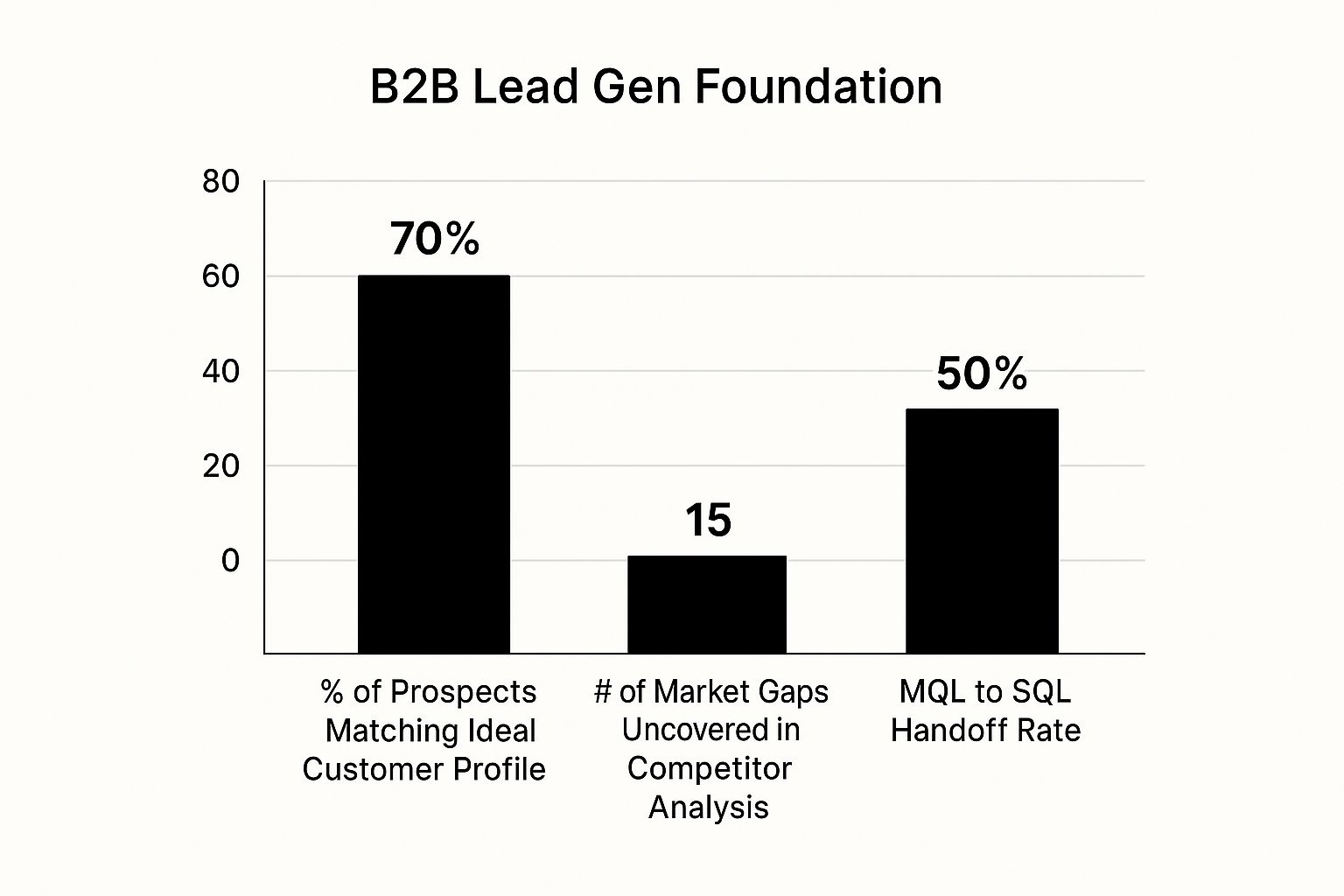
Think of your list as the foundation of your entire lead generation engine. Without a solid, engaged audience, even the most brilliant emails fall on deaf ears. The real goal isn't just collecting email addresses; it's attracting people who fit your ideal customer profile (ICP) and are actively searching for the exact solutions you provide.
First things first: how are you going to get these contacts? You’ve got two main paths, each with its own flavor, and your sales development reps (SDRs) will need to master both.
Inbound Opt-Ins: These are the folks who willingly trade their email for something valuable you're offering. Because they made the first move, they’re usually higher-intent. They're essentially raising their hand and saying, "I'm interested."
Targeted Outbound: This is where you proactively identify and source contacts who perfectly match your ICP but haven't found you yet. It gives you direct control, letting you go after high-value accounts instead of waiting for them to stumble upon you.
For most B2B teams, the sweet spot is a hybrid approach. Use inbound to capture active interest and outbound to strategically target the big fish that might otherwise swim by.
A lead magnet is the currency you use to earn an email address. Forget the generic, low-effort PDFs from 2015. High-intent B2B leads are busy, and they're looking for practical value that helps them solve a real problem right now.
Instead of another basic ebook, think about offering something with tangible value:
Interactive Calculators: An ROI calculator or a pricing comparison tool gives immediate, personalized insight. It helps a prospect quantify their pain, which is a powerful nudge toward finding a solution.
Industry Benchmark Reports: Give them exclusive data they can't get anywhere else. This instantly positions you as an authority and gives your prospect something valuable to share with their team.
Exclusive Webinar Recordings: Gate the recordings of your most popular, high-value webinars. The content is already made, and it automatically targets prospects interested in a very specific topic.
The idea is to create something so genuinely useful that your ICP would gladly hand over their contact info for it. It's no wonder that 76.2% of marketers who use opt-in forms prefer pop-ups—they capture that contact information at the absolute peak moment of interest.
Here’s a quick comparison to help you pick the right tool for the job.
This table compares common B2B lead magnets based on their typical target audience, lead quality, and effort to create, helping teams choose the right asset for their goals.
Lead Magnet Type
Target Funnel Stage
Typical Lead Quality
Effort to Create
Best Use Case
Checklist/Template
Top/Middle
Low to Medium
Low
Driving broad top-of-funnel sign-ups with practical, easy-to-digest content.
Ebook/Whitepaper
Top/Middle
Medium
Medium
Educating prospects on a complex problem and positioning your company as an expert.
Webinar/Event
Middle
Medium to High
High
Engaging a live audience on a specific topic and generating interactive Q&A.
Benchmark Report
Middle/Bottom
High
High
Providing unique industry data that establishes authority and helps in decision-making.
Calculator/Tool
Bottom
Very High
Medium
Helping prospects build a business case by quantifying the value of your solution.
Choosing the right magnet isn't just about getting an email; it's about starting the right kind of conversation from the very first interaction.
Building a list is only half the battle. Maintaining it is where the real work begins.
Poor data hygiene—think old contacts, typos, and bounced emails—is a silent killer. It tanks your sender reputation, hurts deliverability, and sends your beautifully crafted emails straight to the spam folder. This is the boring, behind-the-scenes work that makes or breaks an email marketing to generate leads strategy.
This is what it looks like when it all works together. A clean, well-managed list is the engine that turns systematic email outreach into actual revenue.
A clean email list isn't a "nice-to-have"—it's a non-negotiable for success. Regularly validating emails and pruning inactive subscribers protects your deliverability and makes sure your message actually reaches the people who matter.
The data backs this up. A full 48% of marketers rank email as their single most effective tactic for lead generation, according to a survey highlighted on EmailToolTester.com. With 74.7% of marketers actively working to grow their lists, the competition for inbox attention is fierce.
Ultimately, your most valuable asset is a list built on high-quality contacts who are showing real buying signals. If you want to get better at spotting those signals, check out our recent guide on what is intent data.
So, you got their email address. Great. Now the clock is ticking.
This is that critical window where a prospect goes from casually interested to genuinely sales-ready. Dumping them into your generic monthly newsletter is the fastest way to get ignored, deleted, or worse, marked as spam. Real email marketing to generate leads is all about strategic, automated nurture sequences that deliver the right message at exactly the right time.
This isn't about blasting out content and hoping something sticks. Think of it as building a conversation. A well-designed sequence acts as a digital guide, anticipating a lead's questions, hitting on their pain points, and systematically building trust until they're asking to talk to sales.
Let's be honest, most nurture sequences are lazy. You see the classic "newsletter" approach all the time—every new subscriber gets the same weekly update, regardless of who they are or what they care about. It's low-effort, sure, but it's also incredibly low-impact. This strategy makes the fatal mistake of treating a brand-new, top-of-funnel lead the same way it treats an MQL who’s been all over your pricing page.
A context-aware sequence, on the other hand, delivers hyper-relevant content based on how that lead entered your world. Someone who downloaded a deep-dive technical case study is in a completely different headspace than someone who signed up for a high-level trends webinar. Your follow-up has to reflect that reality.
The goal of a nurture sequence isn't just to stay top-of-mind; it's to advance the conversation. Each email should build on the last, moving the prospect one step closer to a solution—and a sales meeting.
By tailoring the journey from the very first email, you prove you understand their specific challenges. That’s the bedrock of any real business relationship.
For new subscribers who just grabbed a lead magnet, those first few emails are everything. This is your shot to make a killer first impression and set the tone for everything that follows. I’ve found a 5-email welcome series, spread over about two weeks, works wonders.
Here’s a simple, proven framework:
Email 1 (Immediate): Deliver the Goods. This email has one job: give them the thing they asked for. Keep it short, direct, and focused on value. I like to end with a P.S. that teases what's coming next, like, "P.S. Keep an eye on your inbox tomorrow for a quick tip on how to put this into action."
Email 2 (Day 2): Provide Context and a Quick Win. Now, build on the lead magnet. If they downloaded a template, maybe share a 90-second video on how to get the most out of it. The goal is to help them get an immediate win from what you provided.
Email 3 (Day 4): Introduce a Related Problem. Time to broaden the conversation. Connect the topic of the lead magnet to a bigger, more strategic business problem that your company just so happens to solve. Link out to a relevant blog post or a customer story.
Email 4 (Day 7): Share Social Proof. This is where you build authority. Drop in a powerful customer testimonial, a jaw-dropping statistic, or a short case study that proves your impact. You’re shifting the focus from "what you do" to "what you've done for others."
Email 5 (Day 11): The Soft Pivot to a CTA. You've just spent a week and a half delivering pure value. You've earned the right to ask for something small in return. This is where you can introduce a low-friction CTA, like an invitation to a webinar or a suggestion to check out a product tour. The "book a demo" ask can wait.
This structured flow is miles more effective than a random series of emails because it follows a logical narrative designed to educate, build trust, and gently guide them forward.
The game changes completely when you're nurturing an MQL—someone who has shown clear buying intent by, say, visiting your pricing page three times or requesting a demo. These leads are hot. They need a more direct, but still value-driven, approach. A 7-touchpoint sequence over 3-4 weeks usually hits the sweet spot.
With MQLs, your job is to seamlessly bridge the gap between marketing and sales. The content should be laser-focused on solutions and speak directly to how your product solves their specific problems.
Sequence Stage
Email Focus
Example Call-to-Action
Emails 1-2
Acknowledge their action, provide value related to their interest.
"Here's a case study from a company in your industry."
Emails 3-4
Address common objections, share third-party validation (reviews, awards).
"See how we compare to other solutions."
Emails 5-6
Make the sales connection clear, highlight the value of a conversation.
"Would a 15-minute call to discuss [their goal] be helpful?"
Email 7
The "breakup" email—a final, friendly offer to help before moving them to a less frequent list.
"Is this still a priority for you?"
This focused sequence respects their time while making it obvious that the next logical step is a conversation. To accelerate the process of writing compelling, personalized copy for each stage, many teams now use AI email writer tools. These platforms can generate relevant and engaging copy for each touchpoint, saving your team a ton of time.
You can dive deeper into the mechanics of building these sequences in our complete guide to marketing automation workflows.
At the end of the day, a successful nurture sequence is just an automated system for building relationships at scale. It makes sure no lead ever falls through the cracks and that your sales team only spends time with educated, engaged prospects who are ready to talk business.
Automating your lead generation shouldn't mean sounding like a robot. Dropping in a {\{first_name\}} merge tag is a start, but let's be honest—it’s table stakes in a crowded B2B inbox. Real personalization goes way deeper. It’s about turning a generic email blast into a message that feels like a one-to-one conversation.
The real power kicks in when your automation feels human. This means moving past basic mail merge fields and actually using the rich data you have—in your CRM, from your website—to send hyper-relevant content that speaks directly to a lead’s industry, job title, and behavior. This is how you make a prospect feel understood, not just marketed to.
Basic vs. Advanced Personalization: What’s the Difference?
Let's get practical. Basic personalization uses static data points that rarely change, like a name or company. Advanced personalization, on the other hand, is dynamic. It adapts the message based on who the person is and what they’ve actually done.
The gap in impact is massive.
Personalization Level
What It Uses
Example in Action
Prospect's Reaction
Basic
Static CRM fields like {\{first_name\}} or {\{company_name\}}.
"Hi Sarah, wanted to share some info about Acme Corp."
"Okay, another generic sales email."
Advanced
Behavioral data (website visits), firmographics (industry), and CRM data (job title).
"Hi Sarah, saw you checked out our manufacturing case study. As a VP of Operations, you might find this ROI calculator for production lines useful."
"Wow, this is actually relevant to my job and what I was just looking at."
It’s night and day. One feels like a broadcast; the other feels like a helpful, timely conversation. That shift is what builds trust and moves leads down the funnel.
Your CRM is a goldmine of context. Every single data point—from job title and industry to the original lead source—is a potential trigger for a highly personalized email. The trick is to connect those data points to specific, automated actions.
Instead of one generic nurture sequence, you can build several smaller, more targeted ones that run automatically:
Industry-Specific Content: When a new lead from the "Manufacturing" industry signs up, immediately send them your most popular manufacturing case study. No waiting.
Role-Based Nurturing: A "Director of IT" has completely different problems than a "CMO." Your email content should reflect that, speaking their language and hitting their specific pain points.
Behavioral Triggers: This is where things get really interesting. A lead visiting your pricing page is a huge buying signal. You can build an automation that triggers a personal email from an SDR 24 hours later, offering to walk them through the different tiers.
The secret to scaling relevance isn't about writing thousands of individual emails. It's about building smart systems that use data to send the right email to the right person automatically.
This is exactly where an SDR task engine like marketbetter.ai shines. It connects these buyer signals directly to prioritized tasks, so your reps know exactly who to email and what to say based on real-time activity, all right inside their CRM.
Use Dynamic Content to Make Every Email Feel Unique
Triggered campaigns are powerful, but what if you could personalize the content inside a single email? That’s the magic of dynamic content. It lets you show different text, images, or calls-to-action to different people, all within the same email campaign.
Here’s a quick example of how a SaaS company might use it in one promotional email:
This screenshot shows a smart automated sequence where engagement dictates the next move. The CTA for a meeting only goes out after the lead is warmed up. It's this kind of smart sequencing, fueled by personalization, that prevents you from asking for the meeting too soon.
So, instead of creating three separate emails for three different industries, you just create one email with a dynamic content block.
A lead from the healthcare industry sees a customer testimonial from a hospital.
A lead from the finance industry sees a testimonial from a bank.
A lead from the retail industry sees one from an e-commerce brand.
The rest of the email is exactly the same, but that one crucial piece of social proof is perfectly tailored to the recipient's world. This move dramatically increases how much your message resonates, all without tripling your workload. If you want to dive deeper into the nuts and bolts, you can learn more about what is dynamic content and how to set it up.
By combining behavioral triggers with dynamic content, you can create a truly personal experience at scale. Suddenly, your email marketing to generate leads feels less like automation and more like a real relationship.
Email lead generation is never a "set it and forget it" game. If you want to prove your efforts are actually working—and frankly, to get more budget—you have to measure what leadership actually cares about. And I'll give you a hint: it’s almost never the open rate.
A disciplined approach to measurement is what separates a guessing game from a predictable revenue engine.
This isn’t about drowning in a sea of data. It’s about zeroing in on the numbers that prove your email marketing to generate leads is creating real business impact, not just a blip of inbox activity.
The single most common mistake I see teams make is obsessing over "Activity Metrics." These are the easy-to-track vanity numbers like opens and clicks. They tell you if people are engaging, but they don't tell you if they're buying.
"Outcome Metrics," on the other hand, are tied directly to pipeline and sales. These are the numbers that get your VP of Sales to lean in during a meeting. They measure tangible business results, proving your email campaigns are a critical part of the entire sales motion.
Most marketers get stuck tracking activity. That's fine for optimizing tactics. But if you want to talk strategy and ROI with leadership, you need to speak the language of outcomes. Here's a quick guide to what to measure, what it really tells you, and who's paying attention.
Metric Category
Example Metrics
What It Tells You
Who Cares Most
Activity Metrics
Open Rate, Click-Through Rate (CTR), Unsubscribe Rate, Bounce Rate
Are people opening and interacting with our emails? Is our list healthy?
Is our email outreach creating real sales conversations and revenue opportunities?
VP of Sales, CRO, CEO, Sales Development Leaders, RevOps
Both sets of metrics absolutely have their place. Activity metrics help you diagnose why a campaign is or isn't working at a tactical level. But outcome metrics are what prove its strategic value to the business.
A/B testing is your best friend for making small, consistent improvements that add up. Instead of just guessing what works, you let the data tell the story. For sales development teams, this means running disciplined tests on the variables that most directly impact your outcomes.
Forget testing everything at once. Focus your energy on a few high-impact elements.
Test Subject Lines for Meetings Booked: Instead of just optimizing for opens, measure success by the number of meetings booked from each email variant. A clever subject line might get more opens, but a direct, value-driven one often gets more meetings.
Test the Call-to-Action (CTA): Pit a direct CTA like "Book a 15-min call here" against a softer one like "Interested in learning more?" Track which one leads to more SQLs over a 30-day period.
Test the "From" Name: For an outbound sequence, test sending from a specific SDR's name versus a general sender like "The Team at [Company]." That personal touch can make a huge difference in qualified replies.
The goal of A/B testing isn't just to get more clicks; it's to find the specific combination of words and offers that consistently generates more qualified pipeline. Always tie your tests back to a meaningful business outcome.
So how do you actually track outcome metrics like "Opportunities Created" back to a specific email? This is where a clean, seamless integration between your email platform and CRM becomes non-negotiable. Without it, attribution is just a shot in the dark.
When your systems are connected, you see the entire journey unfold.
A lead clicks a link in Email #3 of your nurture sequence. They visit the pricing page, which triggers a high-intent signal. An SDR gets an automatic follow-up task from a tool like marketbetter.ai. That SDR books a meeting, logs it in the CRM, and it becomes a qualified opportunity with a dollar value attached.
This kind of closed-loop reporting is the only way to prove which email campaigns are generating real pipeline. It shifts the conversation from, "Our last email got a 2.7% click-through rate," to something far more powerful: "Our last email generated $75,000 in new sales opportunities."
That’s a conversation every leader wants to have. For a deeper look at which specific performance indicators to monitor, this guide on the essential email campaign performance metrics provides a solid framework for tracking what really drives growth.
Free Tool
Try our AI Lead Generator — find verified LinkedIn leads for any company instantly. No signup required.
Even with the best playbook, you're going to hit a few roadblocks when you get into the weeds. It just happens. Let's tackle some of the most common questions and sticking points that marketers and sales leaders run into when they're really trying to make email generate leads.
Getting these right can be the difference between a stalled campaign and a pipeline that's humming along.
Here are some clear, no-fluff answers to help you push past those hurdles and build a program that actually works.
This is the classic question, and the answer comes down to one word: quality.
Buying a static, off-the-shelf list is almost always a terrible idea. Period. Those things are usually stale, packed with people who have no interest in you, and they’re a fast track to getting your domain blacklisted. You're buying volume, not opportunity.
What does work is using a modern data provider to build a highly targeted, compliant list of contacts that perfectly match your ideal customer profile (ICP). Think of it as list acquisition, not list buying. You partner with a service that gives you verified contacts based on real signals—like company size, tech stack, and even buying intent—so you know you're reaching out to people who might actually want to talk.
The biggest mistake you can make is blasting your entire list with the same number of emails at the same time. Cadence has to match context. The frequency of your emails should depend entirely on where that lead is in their journey and how much they're engaging.
Here’s a practical way to think about it for different segments:
New Inbound Leads: These folks are hot. Hit them with a welcome sequence of 3-5 emails over two weeks. This is your chance to deliver value while you have their full attention.
Warm MQLs: They've shown interest, so you can keep the momentum going. A sequence of 5-7 touches over three to four weeks works well here. It’s persistent without being annoying.
Cold Outbound Prospects: For a cold audience, you have to earn their attention. Start slow. An initial email, then a follow-up every 4-5 business days, is a solid baseline.
The real key is using automation to let their behavior dictate your next move. If someone clicks a link, that's a signal to follow up sooner. If they go quiet for a few weeks, ease them into a long-term, low-touch nurture track.
This really comes down to a trade-off between control and specialized horsepower.
An in-house team lives and breathes your product. They get the culture, the nuances, the voice. But building that team is a serious investment in hiring, training, and the right tools.
An agency, on the other hand, gives you instant access to experts who have run this playbook a hundred times. You get their processes and experience on day one, often for less than the cost of a full-time hire. The potential downside? They might not have that deep, intrinsic knowledge of your specific business.
For most B2B companies, a hybrid approach hits the sweet spot. Let your in-house team own the overall strategy and manage the hot, bottom-of-funnel leads. Then, bring in an agency or use powerful tools to handle the heavy lifting of top-of-funnel list building and campaign execution.
This way, you keep control over what matters most while leveraging outside expertise to scale your efforts faster than you could on your own.
Ready to turn buyer signals into prioritized SDR tasks and execute outreach faster? marketbetter.ai provides the AI-powered task engine your team needs to send relevant emails and make smarter calls, all inside Salesforce or HubSpot. See how you can build a consistent outbound motion without the busywork at https://www.marketbetter.ai.
Key Performance Indicators (KPIs) are your revenue engine's dashboard. They're the specific, vital signs you track to see if your lead generation efforts are actually working—turning curious prospects into real, paying customers. It’s about more than just counting leads; it’s about measuring the quality and efficiency of your entire funnel. This is how you build a predictable growth machine.
For too long, marketing and sales have been stuck on a hamster wheel, chasing an ever-growing pile of leads. The old thinking was simple: more leads equals more revenue. But this volume-first approach, while it feels productive, creates chaos. Sales reps drown in low-quality contacts, and good prospects slip through the cracks. It's like trying to navigate a ship by counting the waves instead of using a compass.
A modern kpi lead generation strategy changes the game completely. You stop asking "how many?" and start asking "how effective?" Instead of just stuffing the top of the funnel, you use precise metrics to measure what happens at every single stage, from first touch to closed deal. It turns guesswork into a clear, predictable process.
Before we dive deep, let's get a quick lay of the land. These are the seven core metrics that every growth-focused team needs to have on lock. Think of this as your high-level cheat sheet.
Relying only on lead count creates massive friction between your teams and hides deep, costly problems. This old-school method almost always leads to:
Wasted Sales Effort: Your reps burn valuable time chasing leads that were never going to buy. It’s a fast track to burnout and frustration.
Misaligned Marketing Spend: The marketing team keeps pouring budget into channels that look great on paper (big lead numbers!) but deliver almost zero actual revenue.
Zero Visibility: Leadership has no real clue about the pipeline's health, making it nearly impossible to forecast accurately.
This disconnect is a painfully common story. The average organization generates 1,877 leads per month. But with lead-to-MQL (Marketing Qualified Lead) rates hovering between 5%-15%, it's obvious most of that volume is just noise. You can dig into why a focused demand generation strategy is the only way to win in this environment.
Adopting a KPI-focused mindset is like upgrading from a basic car dashboard with just a speedometer to a high-performance system showing engine health, fuel efficiency, and GPS navigation. It gives you the visibility you need to build a revenue machine that can scale. It empowers your team to make smart decisions based on hard data, not just gut feelings.
By measuring metrics like MQL-to-SQL conversion rates, Customer Acquisition Cost (CAC), and pipeline velocity, you gain a clear understanding of what’s working and what isn’t. This clarity separates high-growth teams from stagnant ones, enabling you to optimize your processes for maximum impact.
Decoding Your Sales Funnel From MQLs to Opportunities
If you want to master lead generation, you have to speak the language of your sales funnel. Every single lead that comes your way is on a journey, and tracking how they move through it is like reading a map that points straight to revenue. The first step? Learning to tell the curious window-shoppers from the serious buyers.
Think of a Lead as anyone who’s raised their hand, even slightly, by giving you their contact info. They’re on your radar, but that’s all you know. It’s a wide net, catching everyone from a newsletter subscriber to someone who downloaded a whitepaper.
The first real filter is turning them into a Marketing Qualified Lead (MQL). This is someone your marketing team has flagged as being more likely to buy, based on what they’ve done or who they are.
An MQL is like a window shopper who keeps coming back to the same store to look at the same item. They haven't asked for help, but their repeat visits are a dead giveaway that they’re more than just a casual browser.
This is where your strategy, your metrics, and your optimization efforts have to snap together. If they don't, you're just guessing.
This hierarchy makes it plain: a solid strategy tells you which metrics to watch. Those metrics, in turn, show you what to optimize. One piece can't function without the others.
The next stop is the Sales Qualified Lead (SQL). This is a big one. An SQL is an MQL that the sales team has looked at and officially accepted as a real prospect worth their time. Sales has confirmed the lead has a genuine need, the budget to solve it, and the authority to pull the trigger.
Back to our store analogy, an SQL is the customer who walks right up to an associate and says, "I'd like to try this on." Their intent is crystal clear. This handoff from MQL to SQL is precisely where things fall apart for a lot of companies, creating a nasty rift between marketing and sales.
The fix is a clear Service Level Agreement (SLA) that lays out the rules of engagement. This gets everyone on the same page.
Actionable Tip: Host a joint workshop between marketing and sales leaders. Have sales bring examples of 5 fantastic leads and 5 terrible ones from the past month. Use this comparison to collaboratively define the exact criteria for an MQL.
Establish Handoff Protocol: How, and when, do MQLs get passed to sales? Is it an automated trigger in your CRM, or does someone manually assign it?
Set Follow-Up Expectations: How fast does a sales rep have to contact a new SQL? Speed is everything here; you have to strike while the iron is hot.
A tight process is essential for understanding what’s really happening with your prospects. We dig into this much deeper in our guide to B2B customer journey mapping.
Once you have these stages locked down, you can finally measure how well your funnel is actually working. These simple formulas tell you exactly where you’re leaking leads and where you're crushing it.
Lead-to-MQL Rate: (Total MQLs / Total Leads) x 100
MQL-to-SQL Rate: (Total SQLs / Total MQLs) x 100
SQL-to-Opportunity Rate: (Total Opportunities / Total SQLs) x 100
Let’s say you brought in 1,000 leads last month, and 100 of them became MQLs. Your Lead-to-MQL rate is a clean 10%. If sales accepted 20 of those MQLs as SQLs, your MQL-to-SQL rate is 20%. Suddenly, you have hard numbers to work with.
So, what’s a “good” number? While it varies, a healthy MQL-to-SQL conversion rate often lands somewhere between 10% and 30%. But here’s the kicker: the source of that lead changes everything.
For B2B teams, some channels just plain work better than others.
LinkedIn, for example, is a monster for B2B lead gen, proving to be 277% more effective than other social platforms. A staggering 40% of B2B marketers point to it as their top source for high-quality leads. While a lead from organic search closes at a respectable 14.6%, the laser-focused nature of LinkedIn often yields better results—its Lead Gen Forms, for instance, average a 13% conversion rate.
The real goal isn't to hit some universal benchmark. It’s to establish your own baseline. Track these conversion rates for every single channel. Find out what truly moves the needle for your business, and then just focus on making it a little bit better, month after month.
Once you move past the alphabet soup of MQLs and SQLs, you get to the metrics that really matter in the boardroom: cost and value. Tracking conversions is fundamental, but understanding the actual financial health of your lead generation engine is what separates the businesses that scale from those that just spin their wheels.
This is where you draw a straight line from marketing and sales activity right to the bottom line.
Two of the most powerful KPIs in your entire arsenal are Customer Acquisition Cost (CAC) and Customer Lifetime Value (LTV). Think of them as two sides of a scale. One side measures what you spend to get a customer, and the other measures what that customer is worth to you over time. Sustainable growth is all about keeping that scale balanced in your favor.
Your CAC is simply the total cost of your sales and marketing efforts divided by the number of new customers you brought in over a specific period. It’s the price tag for winning a new deal.
Let's say your SaaS company spent $50,000 on sales and marketing last quarter. That number should include everything—ad spend, content creation, trade shows, sales salaries, commissions, the works. In that same quarter, you closed 50 new customers.
Formula: Total Sales & Marketing Spend / Number of New Customers = CAC
Example: $50,000 / 50 Customers = $1,000 CAC
So, on average, it cost you $1,000 to bring each new customer in the door. Is that good? Bad? Honestly, by itself, that number is meaningless. You can't know until you measure the other side of the equation. Digging deeper into metrics like Cost Per Action (CPA) is also key. To get a better handle on this, check out this guide on Adwords Target CPA and Google Ads Cost Per Action.
Customer Lifetime Value (LTV) flips the script. It predicts the total revenue you can expect from a single customer over the entire time they do business with you. It forces you to think beyond the first sale and focus on long-term profitability.
Sticking with our SaaS example, let's say your average customer pays $250 per month and sticks around for about 36 months.
Formula: Average Monthly Revenue Per Customer x Customer Lifespan = LTV
Example: $250/month x 36 months = $9,000 LTV
Now that $1,000 CAC is starting to look pretty great, isn't it? You're spending $1,000 to acquire a customer who will generate $9,000 in revenue. That's a fantastic return. You can play around with these numbers for your own business with our customer acquisition cost calculator.
The real magic happens when you put these two KPIs together in the LTV:CAC ratio. This single number is one of the most powerful indicators of your business model's health and scalability.
For our SaaS company, the ratio is $9,000:$1,000, which simplifies to a rock-solid 9:1. A healthy benchmark for most SaaS businesses is generally considered to be 3:1 or higher. A ratio below that might mean you’re spending too much to grow. A very high ratio like 9:1, believe it or not, could mean you're underinvesting in marketing and leaving money on the table.
Heads up: the way you assign credit for a lead directly impacts your CAC calculation. Different attribution models will spit out very different numbers, so picking the right one is critical for making smart budget decisions.
Attribution Model
How It Works
Impact on CAC & Actionable Advice
First-Touch
Gives 100% credit to the very first marketing interaction a lead had.
Favors top-of-funnel channels like blogs. Action: Use this model if your primary goal is brand awareness and filling the top of your funnel.
Last-Touch
Gives 100% credit to the final touchpoint right before the conversion.
Favors bottom-of-funnel channels like demo request pages. Action: Use this if you need to optimize for immediate conversions and prove direct ROI.
Multi-Touch
Spreads credit across multiple touchpoints in the buyer's journey (e.g., Linear, U-Shaped).
Gives a more balanced, realistic view. Action: Implement this model once you have a mature marketing operation to understand the full customer journey.
Choosing an attribution model isn’t just a technical task; it's a strategic decision that dictates where your money goes. A first-touch model might tell you to pour cash into SEO, while a last-touch model screams for more paid search ads.
Tracking kpi lead generation ROI reveals that direct sales is the top metric for 28.6% of companies, with a healthy benchmark demanding a 3:1 ROI or better. While B2C often gets higher lead volume, B2B teams can see incredible ROI from channels like affiliate marketing (46%), paid ads (43%), and email (34%). This is exactly why you have to track revenue per lead source—it tells you where to invest for profitable growth, not just busywork.
How to Build Your High-Performance Lead Generation Dashboard
Knowing your KPIs is one thing. Visualizing them in a way that actually forces action is something else entirely. A well-designed dashboard isn't just a collection of charts—it's the command center that turns raw data into a clear story about your pipeline's health.
This is what moves your kpi lead generation strategy from a theoretical exercise into a practical, daily tool for your entire revenue team. The goal is to create a single source of truth that aligns everyone, from the C-suite down to the individual sales rep. A great dashboard tears down data silos and gives managers the visibility they need to coach effectively.
But here’s the biggest mistake I see teams make: building a one-size-fits-all dashboard.
A VP of Sales and a Sales Development Representative (SDR) care about wildly different metrics. A powerful dashboard is tailored to the audience, showing each person exactly what they need to see to win in their role.
For VPs of Sales and other execs, the dashboard needs to tell a story about business health and long-term strategy. They need the 30,000-foot view, not a granular look at daily dials. Their focus is on outcomes and profitability.
Key reports for an executive dashboard should include:
Pipeline Value by Stage: This shows the total potential revenue sitting in each part of the sales funnel. It's the bedrock of accurate forecasting.
LTV:CAC Ratio Over Time: This is the ultimate health check. Are we acquiring customers profitably, and is that trend getting better?
Customer Acquisition Cost by Channel: This answers a critical question: "Where should we invest our next marketing dollar for the best return?"
Sales Cycle Length: This tracks how long it takes to close a deal, instantly highlighting efficiency gains or ugly bottlenecks in the process.
An SDR or BDR Manager needs a dashboard that’s all about team performance and coaching opportunities. Their job is to manage the engine, not just look at the destination. They have to spot trends, identify top performers, and see who needs help before the month is a wash.
A manager's dashboard should be built around:
MQL to SQL Conversion Rate by Rep: This is arguably the single most important metric for an SDR leader. It shows which reps are most effective at qualifying leads and is a direct measure of whether they trust the leads marketing is sending.
Meetings Booked and Attended per Rep: This tracks the primary output of the SDR team. A big gap between booked and attended meetings can signal a need for better follow-up or confirmation processes.
Activity Volume vs. Outcomes: Are the reps making the most calls also booking the most meetings? If not, it's a flashing red light for a coaching session on quality over quantity.
This comparative view is crucial. It separates the busy reps from the effective ones, allowing managers to clone the successful behaviors of their top performers across the rest of the team.
This dashboard from Salesforce provides a clear example of how to visualize multiple KPIs, from lead sources to closed business, in a single view.
This kind of visualization allows leaders to instantly compare performance across different segments and pinpoint which channels are driving the most valuable leads.
Finally, the individual sales rep needs a dashboard that tells them one thing: "What should I do right now?" Their view should be hyper-focused on daily execution and personal performance against their quota. It’s less about long-term trends and all about immediate action.
An individual rep’s dashboard must include:
Daily Activities Completed (Calls & Emails): A simple scorecard tracking their progress against daily activity goals.
New MQLs Worked: This shows them the fresh leads that need their immediate attention.
Meetings Booked this Week/Month: A clear progress bar showing exactly how close they are to hitting quota.
Connect Rate & Conversation Rate: These are efficiency metrics that help them self-diagnose. If their connect rate is low, they might need to adjust their call times or the quality of their data.
By building these three distinct views, you create a system where everyone is looking at the right data for their role. This alignment turns your dashboard from a simple reporting tool into a strategic asset that drives performance at every level of the organization.
Knowing your numbers is one thing. Actually making them move is where the real work begins. This is how you stop staring at dashboards and start pulling the levers that build a predictable revenue engine.
A low MQL-to-SQL conversion rate is one of the most common—and frustrating—bottlenecks. This number is a gut check on how well your sales and marketing teams are aligned. When it’s low, it means sales reps are rejecting leads, which wastes time, burns cash, and creates a ton of friction between the two teams.
The fix isn't just about telling everyone to "work harder." It's about getting smarter with lead quality and prioritization. This means tightening up your MQL scoring, but more importantly, it means acting on intent data. When a prospect hits your pricing page or a key contact at a target account starts engaging with a competitor’s content, those are alarm bells. They tell you exactly who to call right now.
Great lead follow-up isn't just about being fast; it's about being relevant and making things easy for the buyer. A clunky, confusing website will kill your conversion rates before a lead even gets to your team. Making sure your site is a smooth, intuitive experience is the first step in capturing high-quality leads. For a deeper dive, check out these 7 Ways To Improve Website Usability And Accessibility.
But once you capture those leads, the real race starts. The biggest challenge for most SDR teams is simply managing the chaos of signals and tasks. A traditional, manual workflow is a recipe for missed opportunities and rep burnout.
A typical SDR starts their day staring at a messy CRM, trying to guess which of the 100+ tasks matters most. They spend an hour digging up research on an account, another 30 minutes crafting a generic email, then jump to another tool to make calls—often forgetting to log the activity. That fragmented process absolutely kills momentum.
This is where a modern, AI-powered task engine changes the entire game. Instead of relying on guesswork, the system turns those buyer signals directly into prioritized tasks for your team.
Manual vs. AI-Powered SDR Workflows: A KPI Comparison
The difference between a manual workflow and an AI-powered one is night and day. It directly impacts core metrics like Connect Rate and Meetings Booked. The old way forces reps to be researchers, data entry clerks, and part-time writers. The new way lets them actually sell.
The table below breaks down the real-world impact of shifting from a traditional, chaotic workflow to one driven by a smart task engine. You're not just asking reps to work harder; you're giving them a system that makes every single action more effective.
Manual vs AI-Powered SDR Workflows: A KPI Comparison
This table illustrates the direct impact of adopting an AI-driven task engine on core SDR performance metrics, comparing a traditional workflow with one optimized for efficiency and execution.
KPI
Manual SDR Workflow (The Old Way)
AI-Powered Workflow (The MarketBetter Way)
Daily Activities Per Rep
Low and inconsistent; reps get bogged down by research and data entry.
High and consistent; reps focus entirely on executing calls and sending emails.
Connect Rate
Lower; calls are often poorly timed and lack immediate, relevant context.
Higher; calls are prioritized based on real-time buying signals from the prospect.
Meetings Booked
Unpredictable; success relies heavily on individual rep intuition and manual effort.
Predictable and scalable; driven by a systematic, data-informed process.
CRM Data Hygiene
Poor; reps often forget to log calls and outcomes, leading to bad data and worse reporting.
Excellent; all activities are logged automatically, ensuring a clean and reliable CRM.
An AI-driven platform like marketbetter.ai transforms this entire process. It acts as an SDR's co-pilot, turning buyer signals into a prioritized task list. Reps never have to guess what to do next because the system tells them, providing all the context they need in one place.
Prioritized Tasks: Instead of a random to-do list, reps get a clear "next best action" based on account fit and recent buyer activity.
Context-Aware Emails: The AI generates relevant, personalized emails based on the prospect’s persona and recent signals, cutting prep time from hours to seconds.
Integrated Dialer: Reps can click-to-dial directly from their task list in Salesforce or HubSpot, with every call and outcome logged automatically. No more manual data entry.
By moving to an AI-powered workflow, you systematically remove the bottlenecks that kill your KPIs. Reps spend less time on admin work and more time having meaningful conversations with high-intent prospects—the fastest path to a healthy pipeline.
From Insights to Revenue: Putting Your Lead Gen KPIs to Work
Let's be honest. Mastering kpi lead generation isn't about staring at a spreadsheet until your eyes glaze over. It’s about building a predictable system that turns raw numbers into a real, sustainable revenue engine. The goal is to stop chasing deals reactively and start selling proactively, armed with data that fills your pipeline.
We’ve walked through the whole process, from the foundational metrics all the way to building dashboards that actually tell you what to do next. But the real magic happens when you connect those insights to what your team does every single day. Your most critical numbers—MQL-to-SQL conversion, CAC, LTV, and Pipeline Velocity—aren’t just metrics. They’re the vital signs of your growth strategy, telling you exactly where your process is humming along and, more importantly, where it’s falling apart.
Having a solid measurement framework is mission-critical, but it's only half the battle. The other half is giving your sales team the tools to act on that data without getting bogged down.
Tracking your KPIs is step one. Empowering your team to hit them is the real game. A dashboard can show you a low connect rate, but it can’t pick up the phone and make the next dial for your SDR. True optimization happens when sharp insights are paired with powerful execution.
This is where strategy meets the messy reality of the sales floor. The gap between knowing what to do and actually doing it is where most teams stumble. A chaotic workflow, packed with manual research and endless CRM data entry, is the sworn enemy of a high-performing sales team. It burns out your best reps and lets your hottest leads go cold.
Discover how an AI-powered SDR task engine can turn your data into more conversations and a healthier pipeline. MarketBetter.ai closes the gap between insight and execution, ensuring your team not only knows which leads to contact but has the tools to do it faster and more effectively than ever before. This is how you stop just measuring your pipeline and start actively building it.
Free Tool
Try our AI Lead Generator — find verified LinkedIn leads for any company instantly. No signup required.
Got Questions About Lead Gen KPIs? Let's Get Practical.
Even with the best strategy laid out, the real world always throws a few curveballs. When the rubber meets the road, practical questions pop up. Here are straight, no-fluff answers to some of the most common ones we hear about managing kpi lead generation.
Everyone wants a magic number here, but the honest answer is: it depends. A solid benchmark to aim for is somewhere between 10% and 30%. But that range is massive for a reason.
Think about it. A lead who fills out a "Request a Demo" form is practically raising their hand to talk to sales. Their conversion rate is going to be sky-high. Compare that to someone who downloaded a top-of-funnel eBook. They're just kicking the tires. Lumping them together and judging them by the same number is a recipe for bad decisions.
The smarter move is to benchmark your channels against each other. If your organic search leads are converting to SQLs at 25%, but your paid social leads are stuck at 8%, that’s a real, actionable insight. You've just learned where your highest-quality leads are coming from.
Chasing an arbitrary industry number is a waste of time. The real goal is to get a baseline for your own funnel, figure out which channels are pulling their weight, and find ways to make incremental gains every single month. That's how you build a predictable growth engine.
For an SDR Manager, What’s the One KPI That Matters Most?
If an SDR Manager has to pick one metric to obsess over, it has to be "Meetings Booked" or "Sales Accepted Opportunities." That's the scoreboard. It's the tangible output of their team's hustle and the clearest signal they're actually contributing to the sales pipeline.
But you can't manage the scoreboard directly. Great managers live in the leading indicators—the daily activities they can actually coach and influence to change the final outcome.
These are the levers they can pull:
Activities per Rep: Is the team putting in the raw effort? Are they making enough calls and sending enough emails to even have a shot?
Connect Rate: When they dial, is anyone actually picking up? A low connect rate might signal a problem with the data, the call times, or the phone numbers themselves.
Conversation-to-Meeting Rate: This is the big one. When they get someone on the phone, are they skilled enough to turn that conversation into a booked meeting? This is where coaching on messaging and objection handling pays dividends.
A drop in Meetings Booked is a lagging indicator; the damage is already done. But a drop in the Connect Rate? That's a leading indicator. It's the flashing red light on the dashboard that gives a manager time to dive in and fix the problem before the team misses its number.
Tracking KPIs is the first step. The next is giving your team the tools to actually hit them. See how marketbetter.ai turns your data into more conversations and a much healthier pipeline.
Website visitor identification software is the tech that unmasks the anonymous companies checking out your website. For a Sales Development Representative (SDR), this isn't just another tool; it's a competitive advantage. It takes invisible digital footprints and turns them into real, actionable sales intelligence, transforming "ghost" visitors into tangible, high-intent accounts your sales team can engage with right now.
Think of it this way: instead of starting your day with a cold, static list, you get a live feed of companies that are already evaluating you. The difference is night and day.
Picture this: your absolute ideal customer—a perfect-fit, high-value account—is clicking around your pricing page right now. They're weighing your features, seeing if you're the right solution, and showing all the signs of being ready to buy.
And then… they're gone. Vanished, without a trace.
For most Sales Development Reps (SDRs), this isn't just a story. It’s what happens every single day. The brutal reality is that the vast majority of your website traffic stays completely anonymous. A staggering 97% of B2B website visitors never fill out a form, leaving your sales and marketing teams totally in the dark.
This creates a massive blind spot in your pipeline. If you want to learn more about closing that gap, Factors.ai has a great guide on anonymous website visitor identification. Without this insight, SDRs are stuck doing the one thing they hate most: cold, uninformed outreach.
The old-school SDR playbook is a grinding numbers game. You start with a giant list of cold accounts, burn hours digging for contacts, and blast out countless emails, just hoping something sticks. It’s wildly inefficient, frustrating, and, frankly, pretty demoralizing.
Website visitor identification flips that entire model on its head.
Instead of guessing who might be interested, you get a clean, prioritized list of companies that have already raised their hands simply by showing up. This one shift changes everything about an SDR's day-to-day work and their odds of success. It turns a reactive, volume-based job into a proactive, value-driven role.
"The difference is like fishing with a sonar versus casting a net into an empty ocean. One is strategic and targeted; the other is pure chance. Visitor identification gives SDRs the sonar."
This tech lets you stop playing a guessing game and start playing chess. To see just how stark the difference is, let's compare an SDR's workflow with and without this crucial intelligence.
Table: Anonymous Visitors vs Identified Opportunities
This table breaks down the day-to-day reality for an SDR. On one side, you have the frustrating guesswork of dealing with anonymous traffic. On the other, you have the focused, high-impact work that comes from knowing exactly who is showing interest. This is the core reason SDRs benefit from this technology.
SDR Challenge
Anonymous Visitor (Without Identification)
Identified Visitor (With Identification)
Prioritization
Chasing a massive, cold list. Every account looks the same.
Focusing on a small, warm list of companies already on the site.
Research
Spending hours on LinkedIn trying to find the right people at the right accounts.
Instantly knowing the company. Research is focused on finding key contacts.
Outreach
Generic, templated emails. "Hope you're having a great week..."
Personalized outreach based on the pages they viewed. "Saw you were on our pricing page..."
Timing
A complete guess. Reaching out at a random time, hoping it's relevant.
Perfect timing. Engaging the account while they are actively in a buying cycle.
Conversation
Cold start. "Hi, let me introduce our company..."
Warm start. "I can help answer any questions you might have about our solution."
Efficiency
Low. High volume of activity, very few positive replies.
High. Lower volume of outreach, much higher reply and meeting booking rates.
The takeaway is crystal clear. One path leads to SDR burnout and missed quotas; the other leads to a smarter, more effective sales process that consistently builds pipeline.
Knowing which companies are on your site gives your SDRs a powerful edge. It delivers the context they desperately need to craft relevant, timely, and personalized outreach that actually gets noticed.
Instead of starting a conversation from scratch, you're jumping in with the knowledge that the account is already aware of the problem and actively looking for a solution. This single insight is the bedrock of a more strategic and successful outbound engine, turning your anonymous traffic into your single best source of qualified leads.
How Website Visitor Identification Actually Works
So, how does this black box actually work? How do you unmask the companies checking out your site? Let's pull back the curtain on the mechanics, but for sales teams, not engineers. The goal is to show you why you can trust this data for your daily outreach.
The engine driving all of this is IP-to-company resolution, sometimes called reverse IP lookup.
Think of it as a digital Caller ID for your website. When someone from a company browses your site from their office network, their computer broadcasts its IP address. This unique digital address is almost always registered to their company. The identification software then cross-references that IP against a massive database to find the matching company name, industry, size, and even location.
In an instant, an anonymous digital footprint becomes a named account, giving your SDRs a massive head start.
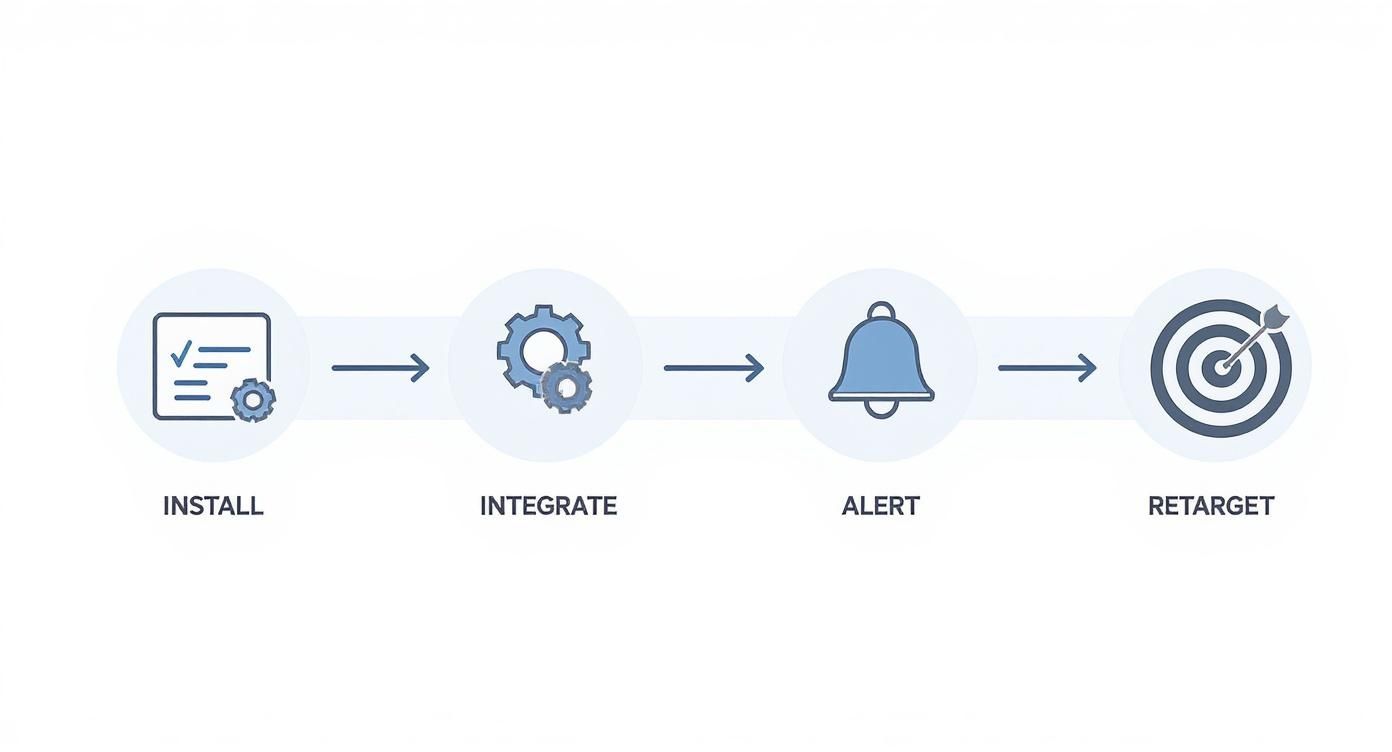
It’s a simple, three-step flow that turns invisible traffic into real opportunities your sales team can jump on.
This process shows exactly how an anonymous visitor gets identified by the tech and then turned into a tangible sales opportunity. It's that crucial middle step that makes all the difference for an SDR.
It’s important for SDRs to understand the difference between this modern, privacy-first approach and the old world of third-party cookies. For years, advertisers dropped cookies on browsers to track individual people across the web, building creepy, detailed profiles of their habits. It was powerful, but it created a major privacy backlash.
Now, major browsers are killing off third-party cookies, making that kind of tracking a thing of the past. To really get into the weeds, you need a solid grasp of understanding cookie policies and what they mean for businesses today.
This massive shift is what makes IP-to-company resolution so vital for B2B sales. Unlike cookies that stalk individuals, reverse IP lookup focuses on the company. This gives SDRs the account-level context they need without stepping over the privacy line. You know a target account is on your site, which is the perfect signal to start a confident, relevant conversation.
The real win for an SDR isn't knowing a specific person's name right away. It's knowing that a high-value account is actively researching your solution right now. That knowledge is what turns a cold call into a perfectly timed, warm conversation.
Look, for a Sales Development Rep, the tech itself doesn't matter as much as what it lets you do. You don't need to be a network guru to cash in. The bottom line is this: you get a reliable, real-time feed of companies showing legitimate buying intent.
Here’s what this process empowers you to do:
Trust the Signal: You know the data is based on a direct action—a visit from a company's network—not some fuzzy, third-party guess.
Act with Confidence: You can build your day around accounts that are already warm, which dramatically lifts your chances of booking a meeting.
Personalize Your Outreach: Your opener can be, "I saw someone from your company was checking out our features..." instead of a generic, shot-in-the-dark pitch.
The best visitor identification tools are built to be a source of truth for SDRs. While most tools today focus on the company level, the industry is always evolving. You can get a glimpse of what's next by learning about the future of person-level visitor identification vectors.
For now, though, the focus is squarely on giving you the clear, actionable signals you need to build pipeline, period.
On paper, a website visitor identification tool sounds like a slam dunk for any sales team. You get a list of companies poking around your site, and suddenly your Sales Development Reps (SDRs) have a fresh, warm pool of leads to dive into. It feels like a sure thing.
But what happens when that data is just plain wrong?
The hard truth is that not all identification tools are created equal. And bad data is far, far worse than no data at all.
Low-quality visitor information doesn't just fall flat—it actively poisons your sales efforts. For an SDR, this mess translates into hours of wasted productivity, day in and day out. They spend their time chasing ghosts, meticulously researching contacts at the wrong companies and crafting personalized outreach that lands in the wrong inboxes. All the while, the real high-intent accounts slip right through their fingers.
This digital "noise" pollutes your entire sales operation. It clogs your CRM with useless records, creates reporting nightmares, and slowly undermines the very pipeline you're trying to build.
Picture this: an SDR gets a hot alert in Slack. "XYZ Corp just visited the pricing page." They spring into action, find what looks like the perfect contact on LinkedIn, and fire off a perfectly timed, relevant email.
The problem? The tool misidentified the IP address. It wasn't the Fortune 500 company, XYZ Corp. It was a local coffee shop's shared Wi-Fi, located in the same office building.
This happens way more often than you think. Your SDR has now wasted valuable time and sent a completely irrelevant message, making your brand look sloppy. The hidden cost of crappy data is staggering, hitting sales pipelines right where it hurts.
A bombshell 2025 report from Customers.ai, based on some serious head-to-head testing, lays it all bare. A shocking 75% of providers deliver laughably low accuracy, averaging just a 5-30% true match rate. The leaders? They're hitting 65-85%. You can dive deeper into this data accuracy crisis by reading the full report on AgileBrandGuide.com.
This single error creates a domino effect of bad outcomes for SDR teams:
Wasted SDR Hours: Time spent on dead ends is time not spent on real opportunities.
Damaged Brand Reputation: Reaching out with the wrong context makes you look amateurish.
Plummeting Email Deliverability: Sending emails to bogus contacts gets your domain flagged as spam.
Polluted CRM Data: Every wrong entry degrades the quality of your most critical system, making future campaigns less effective.
The core issue here is that many tools prioritize quantity over quality. They cast a wide, sloppy net and leave your SDRs to clean up the mess. But a high-performing sales team doesn’t need more noise; it needs clean, reliable signals that point to actual opportunities.
The goal of website visitor identification isn't just to get a list—it's to get the right list.
A great visitor identification tool doesn’t just tell you who visited; it gives you the confidence to act immediately. Without that confidence, the data is just another distraction in an already crowded workflow.
To avoid these pitfalls, SDRs and their managers have to become savvy consumers of this tech. It means asking tough questions and demanding proof from vendors before you sign on the dotted line.
Don't just take a sales pitch at face value. Use these questions to cut through the marketing fluff and get to the truth about a vendor's data quality. This is how you choose a tool that provides genuine signals for your SDRs, not one that just creates more work.
Category
Key Question to Ask Your Vendor
Why It Matters for SDRs
Data Accuracy
"What is your verified match rate, and how do you validate it? Can you prove it with a trial?"
A high match rate means SDRs spend less time chasing ghosts and more time engaging real, interested accounts.
Identification Method
"How do you distinguish between a corporate IP, a public Wi-Fi hotspot, and an ISP?"
This determines if you're getting true business visitors or just random internet traffic, preventing wasted outreach.
Data Freshness
"How often is your IP-to-company database updated? What is your process for refreshing data?"
An outdated database means you’ll misidentify companies that have moved or changed providers, sending your SDRs on a wild goose chase.
Filtering & Segmentation
"Can we filter out ISPs, bots, and non-ICP traffic automatically within the platform?"
Your SDRs shouldn't have to manually sift through junk. Good filtering is non-negotiable for efficiency.
Choosing the right partner for website visitor identification is a critical decision. By prioritizing data accuracy and asking the right questions, you ensure your SDR team gets a powerful asset, not a productivity-killing liability.
Turning Visitor Signals Into Prioritized SDR Actions
Getting a list of companies that visited your website is a great start, but it's just raw data. The real magic—and the part that actually grows the pipeline—is turning those digital footprints into a crystal-clear action plan for your Sales Development Reps (SDRs).
This is where the idea of website visitor identification stops being a theory and starts being a powerful sales tool. It's not about giving your SDRs another dashboard to stare at. It's about feeding them a prescriptive to-do list that tells them exactly who to call, why today is the day, and what to say.
The shift is huge. An SDR’s day goes from a chaotic, reactive scramble through a cold list to a focused, proactive workflow guided by real-time buyer intent. They stop guessing and start acting with precision.
Let's look at a simple before-and-after to see how an SDR's entire approach changes when they have visitor signals.
Before Website Visitor Identification:
An SDR opens their CRM to a static list of 200 accounts. Every single one looks the same. The first hour is wasted just trying to figure out where to even begin, usually defaulting to alphabetical order or just picking one at random. The outreach is generic because there's zero context, leading to terrible engagement and a constant feeling of falling behind.
After Website Visitor Identification:
An SDR logs in and sees a dynamic, prioritized task queue. The system has automatically surfaced five key accounts. Why? Because one just spent ten minutes on your pricing page, another downloaded a high-value case study, and three others from their target list came back for the second or third time this week. The SDR knows exactly where to put their energy for the biggest impact.
This isn't just about efficiency. It's about morale and momentum. When SDRs engage with accounts that are already showing interest, their confidence skyrockets, conversations are better, and they book more meetings. It completely changes the dynamic of the job.
The real payoff comes from creating specific, repeatable plays based on different visitor behaviors. Each signal suggests a different level of intent, which should trigger a corresponding action from your sales team.
A good system doesn't just identify visitors; it scores their intent. If you're looking to build something more advanced, exploring AI lead scoring can give you a solid framework for ranking these signals automatically.
Here’s a practical playbook that maps common visitor signals to concrete SDR actions. It turns raw data into a clear set of instructions, taking the guesswork out of the equation.
Immediate, personalized email and a follow-up call within 24 hours.
"Saw someone from your company was exploring our pricing. I wanted to reach out and offer to clarify any of the features included in our different tiers."
Case Study Download
High
Email referencing the specific case study topic. Connect with a relevant person on LinkedIn.
"Noticed you downloaded our case study on [Industry/Problem]. Since you're interested in how we helped [Client Name], I thought a quick chat might be valuable."
Multiple Return Visits
Medium
Add the account to a multi-touch sequence. Focus on providing value with helpful resources.
"My system flagged that your team has been back to our site a few times. Clearly, something has piqued your interest, so I wanted to introduce myself."
Solutions Page View
Medium
Research the company's industry and pain points. Craft a message that connects your solution to their likely business challenges.
"Given your team was looking at our [Solution Name] page, I took a look at your company and had a few ideas on how we could help with [Specific Business Challenge]."
Homepage Visit Only
Low
Add to a nurturing campaign for brand awareness. Monitor for any future, higher-intent activity before direct outreach.
N/A (No direct outreach yet)
This playbook structure empowers SDRs to engage with relevance and confidence. By aligning specific actions to specific signals, you build a systematic process for converting anonymous interest into qualified sales pipeline. You ensure your team is always working smarter, not just harder.
Integrating Visitor ID Into Your Sales Tech Stack
A powerful tool is useless if it lives on an island. Even the most accurate website visitor identification data won't generate a single dollar of pipeline if your Sales Development Reps (SDRs) have to hunt for it across five different browser tabs. To actually make an impact, this intelligence has to flow seamlessly into the platforms where your sales team lives and breathes every single day.
This means native, frictionless integrations with your CRM (like Salesforce or HubSpot) and sales engagement platforms are completely non-negotiable. Without them, you’re not making your SDRs’ lives easier; you’re just adding another tedious task to their already packed workflow.
Think of it like this: a sales dialer built directly into Salesforce is a dream. An SDR can click-to-call, log notes, and move on to the next prospect in seconds. Now, imagine a clunky third-party dialer that forces them to copy and paste numbers and manually log every single call. It’s a productivity killer. The best tools don't add steps; they remove them.
Why Seamless Integration is a Game Changer for SDRs
A proper integration does way more than just shuttle data from point A to point B. It transforms raw visitor signals into prioritized, actionable tasks right inside the exact environment an SDR uses for outreach. This is the secret to driving adoption and seeing real results.
When your visitor identification data is deeply embedded in your tech stack, it enhances the existing workflow instead of blowing it up. This creates some huge wins for your sales team.
Here’s a quick breakdown comparing a connected system versus a standalone tool from an SDR's perspective:
Feature
Standalone Visitor ID Tool
Integrated Visitor ID System
SDR Workflow
Requires manually checking a separate platform, then hunting for the account in the CRM.
Automatically creates prioritized tasks or surfaces accounts directly within the CRM.
Data Logging
SDRs have to manually log all outreach activities related to the visitor signal.
All calls and emails are automatically logged to the correct account record in the CRM.
Speed to Lead
Slow. The lag between a site visit and an SDR action can stretch for hours.
Fast. Real-time alerts can trigger immediate outreach, capitalizing on that peak moment of interest.
CRM Hygiene
High risk of duplicate records and sloppy data entry, polluting your CRM.
Clean and consistent. Automated logging keeps your data accurate and standardized.
The difference is night and day. One approach creates friction and relies on manual grunt work, while the other automates the busywork and lets SDRs focus entirely on selling.
The end goal is to create a closed-loop system where data flows effortlessly. A visitor from a target account hits your pricing page, a task is instantly created in Salesforce for the account owner, and the SDR can fire off a call or email directly from that task with all the context they need.
This is the automated process that separates a nice-to-have tool from a must-have revenue engine for any SDR team.
The right integration ensures that your CRM remains the single source of truth. It prevents data silos and gives sales leaders a clear, accurate picture of which activities are driving pipeline, allowing for precise reporting and attribution.
To get the most out of your visitor identification efforts and truly empower your SDRs, seamless integration is everything. You can learn more about what CRM integration entails to see how unifying this data automates workflows and boosts the efficiency of your whole sales process. These connections are also the foundation for more advanced setups, like tying into a customer data platform integration for a true full-funnel view.
Ultimately, by embedding website visitor identification into your core sales tools, you equip your SDRs to act faster, with better context, and with far less administrative headache. It makes their jobs easier, their outreach more effective, and their impact on the pipeline undeniable.
Measuring the ROI of Your Visitor Identification Strategy
So, how do you prove that a website visitor identification tool is actually making you money and not just another line item on the expense report? For any sales leader, justifying this spend is everything. It means moving past flashy vanity metrics like ‘total visitors identified’ and zeroing in on the real-world results that drive revenue.
The true return isn’t hiding in a dashboard full of company logos. You'll find it in the day-to-day performance of your Sales Development Rep (SDR) team. When SDRs get to act on genuine, high-intent buying signals, their entire workflow changes—and that produces measurable results you can take straight to the bank.
Forget the abstract numbers. The real value of this tech shows up in your SDRs' weekly and monthly performance. Instead of just tallying up identified accounts, you need to track the core business metrics that tell the real story.
Here are the specific, SDR-focused KPIs to watch:
Increase in Meetings Booked: When your SDRs can reach out to accounts that are already warm and actively researching your solution, conversations just flow better. This translates directly into more meetings booked per rep, period.
Higher Outbound Conversation Rates: We all know cold calls are a grind. But calling a company that was just on your pricing page? That's a completely different ballgame. Track the percentage of dials that turn into actual, meaningful conversations—this number should climb, and fast.
Reduction in SDR Ramp Time: New SDRs often waste their first few months guessing which accounts to prioritize. Visitor identification gives them a clear, data-driven roadmap from day one, helping them build pipeline faster and slash the time it takes to become a fully productive member of the team.
Measurable Lift in Qualified Pipeline: At the end of the day, it’s all about pipeline. The goal is to draw a straight line from identifying a visitor to creating a new, qualified sales opportunity.
The most powerful ROI story you can tell is simple: we saw a high-intent visitor on our site, an SDR took immediate and relevant action, and that action directly created a new sales opportunity. That’s how you justify the investment, every single time.
To put this in real terms, you need a straightforward way to calculate the return. No need for a complex financial model. You can build a simple, powerful business case by comparing the cost of the tool against the value of the pipeline it helps create.
Follow these steps to build your case:
Calculate the Total Cost: Start with the annual or monthly subscription price of your visitor identification software. This is your total investment.
Track Attributed Opportunities: This is crucial. Work with your RevOps team to tag every opportunity in your CRM that started with a visitor identification signal. Good CRM hygiene is non-negotiable here.
Determine the Value of New Pipeline: Tally up the total dollar value of all the opportunities created from these signals over a set period, like a quarter or six months.
Calculate the ROI: Use this simple formula:
(Value of New Pipeline - Tool Cost) / Tool Cost x 100 = ROI %
For example, if your tool costs $15,000 a year and helps you generate $150,000 in new, qualified pipeline, your ROI is a massive 900%. This kind of clear, data-backed calculation completely changes the conversation from a discussion about cost to a strategic decision about revenue growth.
Free Tool
Try our AI Lead Generator — find verified LinkedIn leads for any company instantly. No signup required.
Still Have Questions? Let's Clear a Few Things Up.
When you're looking at tools that promise to identify who's on your website, a healthy dose of skepticism is a good thing. Sales Development Reps (SDRs) and their managers tend to ask the same smart questions. Let's tackle them head-on, no fluff.
This is the most common question, and the answer is simple. They solve two totally different problems.
Think of it this way: Website analytics tools like Google Analytics are brilliant at showing you the big picture. They tell you what is happening on your website—how many people visited, which pages are popular, and where the traffic came from. It’s all anonymous, aggregate data. Great for marketers.
Website visitor identification software, on the other hand, tells you who is on your site. It’s built to peel back the anonymity and reveal the specific companies showing interest. This turns a sea of anonymous clicks into a prioritized list of accounts for your SDRs to engage.
In short, analytics helps you optimize your website. Identification helps you build your pipeline.
Is Website Visitor Identification Legal and GDPR Compliant?
Yes, but only when it's done right. This is a critical point.
The best, most reputable tools are designed to identify the company, not the individual person. This is the key distinction. The main technique, reverse IP lookup, links a visitor's IP address to the business network they're using. This is considered standard B2B marketing intelligence, not personal data surveillance.
To stay on the right side of regulations like GDPR and CCPA:
Stick with vendors that focus on account-level identification.
Run from any tool that claims it can magically reveal anonymous individual identities. That's a massive legal gray area.
Make sure your own privacy policy is clear and you're getting the right consent for data processing on your site.
This is a totally fair concern, especially if you've been burned by bad lead lists before. A cheap, low-quality tool will absolutely bury your team in junk—useless traffic from ISPs, coffee shops, and companies that are a terrible fit.
But a truly high-quality platform is built to do the exact opposite.
It’s a filter, not a firehose. It automatically screens out the noise so your SDRs only see legitimate companies that actually match your ideal customer profile. The goal isn't to give your team a bigger list; it's to give them a smarter, more focused list of accounts that are already showing they're interested.
It cuts out the guesswork and points your team directly to the warmest opportunities in your pipeline.
Ready to stop guessing and start engaging the best accounts visiting your site? marketbetter.ai turns anonymous visitor signals into a prioritized task list for your SDRs, complete with AI-powered tools to execute outreach fast—all inside your CRM.
Let's be honest, waiting for leads to wander through your digital front door isn't a strategy—it's a hope. Outbound lead generation is the exact opposite. It's about proactively hunting for your ideal customers and starting the conversation yourself, using channels like cold email, LinkedIn, or a good old-fashioned phone call. This is how you target high-value accounts with surgical precision.
What Is Outbound Lead Gen and Why It Still Matters
Think of it like this: your business is a professional sports team. You can hold open tryouts and just see who shows up. That's inbound marketing. It works, but you get what you get.
Or, you can send a talent scout to find the exact all-star player you need to win the championship. That focused, proactive search is the soul of outbound lead gen.
Instead of writing a blog post and hoping the right VP of Engineering stumbles upon it, outbound flips the script. You identify the specific companies and decision-makers who are a perfect fit for what you sell, and you reach out directly. For B2B companies with a crystal-clear Ideal Customer Profile (ICP), this approach is pure gold.
The difference here isn't just about tactics; it's a completely different way of thinking. Inbound is a magnet. You're creating valuable content to attract prospects who are already aware of their problem and actively looking for answers. It's a long game that builds authority and pulls people into your orbit over time.
Outbound, on the other hand, is a hunter's game. It’s all about precision and control. You don’t wait for your dream customers to find you; you go out and find them. This makes it an absolutely critical strategy when you're:
Targeting specific, high-value accounts: You can literally build a list of your top 100 dream clients and focus every ounce of your energy on landing them.
Breaking into new markets: When nobody knows who you are, outbound lets you introduce yourself directly to the key players who need to know you exist.
Selling to people who aren't searching: Let's face it, many C-level executives aren't Googling for solutions to their biggest problems. But they will absolutely respond to a compelling, relevant offer that lands in their inbox and solves a massive headache.
In a world drowning in content, simply being loud isn't enough. While inbound is fantastic for building a reliable, long-term flow of leads, it just doesn't have the speed or the focus of a well-run outbound campaign. A proactive strategy gives you control over your own destiny—and makes your sales pipeline far more predictable.
Outbound lead generation is about creating opportunities, not just waiting for them. It allows you to engage decision-makers who might never have discovered your brand through traditional inbound channels.
This direct approach is still a vital part of any modern growth plan. Sure, the raw conversion rates might be lower than for inbound leads, but the strategic value is off the charts. In fact, depending on the industry, outbound-sourced leads often make up 40-60% of all marketing-sourced leads. It's a powerful engine for building your brand and zeroing in on the accounts that matter most.
You can dig into more lead generation statistics to see just how big of an impact this can have on modern sales pipelines.
When you're trying to build a predictable growth engine, the whole inbound vs. outbound argument misses the point. It’s not about which one is "better." It’s about knowing what tool to pull out of the toolbox for the job at hand. The real magic happens when you blend them together, creating a system that’s both aggressive and sustainable.
Think of it like fishing.
Inbound lead generation is like casting a massive net in a busy channel. You publish blog posts, dial in your SEO, and build a social media presence to attract prospects who are already out there looking for answers. It’s a fantastic way to catch a high volume of leads over time, but you're waiting for the fish to come to you.
Outbound lead gen is the complete opposite. It’s spear-fishing. You identify the exact high-value fish you want—that ideal customer profile—and you go right after it with a laser-focused approach. It’s all about precision, control, and getting results now.
The biggest difference comes down to one thing: control.
With inbound, the buyer is firmly in control. They decide when they want to search on Google, what content they want to read, and if or when they’ll ever fill out a form on your website. You're attracting people who are already problem-aware and hunting for a solution on their own time.
Outbound flips the script entirely. You are in the driver's seat. You get to proactively pick the market, the company, and even the specific person you want to talk to. This kind of surgical precision is just not possible with inbound alone, which is why outbound is non-negotiable when you’re targeting a list of dream accounts or trying to break into a new market where no one knows your name.
The core difference is simple: Inbound marketing earns a prospect's attention, while outbound lead gen goes out and captures it directly. One builds a magnetic brand over time; the other creates targeted opportunities right now.
Now, let's talk about the practical stuff: your budget and your timeline. How you approach lead gen has a massive impact on your resources and when you can expect to see a return.
On paper, inbound often looks more efficient. The numbers don't lie: inbound channels typically produce leads at a lower cost and boast higher close rates. In fact, some reports show inbound leads can be ~62% cheaper to acquire than outbound ones. Conversion rates tell a similar story, with some studies putting inbound lead close rates as high as 14.6%, dwarfing the typical 1.5–1.8% seen from outbound. You can discover more insights about lead generation costs to dig deeper into the numbers.
But that’s not the full picture.
What outbound lacks in raw conversion stats, it makes up for with sheer speed and predictability. You can spin up an outbound campaign and start booking meetings in a matter of days. A solid inbound engine, on the other hand, can easily take 6-12 months to gain real traction with SEO and content.
The sales cycle is another piece of the puzzle. Inbound leads have usually done their homework, so once they engage, they tend to move through your pipeline faster. Outbound leads might need a bit more nurturing since you're often the one starting the conversation, sometimes before they were even actively looking.
To make this crystal clear, let's stack them up side-by-side. This table should help you figure out how to allocate your team's time and money based on what you need to achieve today versus what you’re building for tomorrow.
Attribute
Outbound Lead Gen
Inbound Lead Gen
Primary Goal
Proactively target and engage specific high-value accounts.
Attract a broad audience of interested prospects over time.
Control
You control who you target, when, and with what message.
The buyer controls their journey, discovering you on their terms.
Speed to Results
Fast. You can see initial results and book meetings in days or weeks.
Slow. It often takes months to build authority and organic traffic.
Targeting
Highly precise. You can select individual companies and people.
Broad. You target personas or keywords, attracting anyone who fits.
Cost Per Lead
Generally higher due to the direct resources required.
Generally lower over the long term as content assets mature.
Scalability
Can be scaled quickly by adding more reps or tools.
Slower to scale, as it depends on content and domain authority.
At the end of the day, the smartest companies don't pick a side. They build a hybrid engine. They use outbound to light a fire under the pipeline right now while their inbound machine is warming up. That's how you create a powerful, resilient model for growth that delivers today and builds for the future.
Picking the right channels for your outbound strategy is like packing a toolkit for a job. You wouldn't bring just a hammer if you needed to build a house. You need a variety of tools that work together. A modern strategy doesn't just rely on one channel; it blends several to create a presence that's impossible for your ideal customer to ignore.
The three pillars of any strong B2B outbound campaign are cold email, LinkedIn outreach, and the trusty cold call. They can each get results on their own, but their real power is unlocked when you weave them together into a single, cohesive sequence that surrounds your prospect with value.
Cold email is still a cornerstone of outbound for one simple reason: it works. It's direct, you can scale it, and it lets you put a highly personalized message right in a decision-maker's inbox. But let's be clear—the days of "spray and pray" with generic templates are long gone. Success today is all about relevance and respect.
A great cold email isn't a sales pitch. It’s the start of a conversation. Your only job is to prove you’ve done your homework and have a legitimate reason for showing up in their inbox.
An actionable framework for emails that get replies:
Subject Line: Compare a generic subject like "Quick Question" with a specific one like "Question about [Their Company]'s recent project". The specific version shows research and sparks relevant curiosity.
Opening Line: Make it about them, not you. Reference a recent company announcement, a LinkedIn post they wrote, or something you both have in common. This proves you aren't just blasting a template.
Value Prop: State a problem you solve that actually matters to their role. Use a quick data point for proof, like, "We helped a similar company in your industry cut X by 25%."
Call-to-Action (CTA): Keep the ask small and easy. Compare a "hard CTA" like Book a 30-minute demo with a "soft CTA" like Open to learning more?. The soft CTA lowers the barrier to a reply.
LinkedIn isn't just a digital Rolodex anymore; it’s where professional relationships are built. Smart LinkedIn outreach is less about the hard sell and more about "social selling"—engaging with people in a genuine way before you ever ask for their time.
This is the perfect channel to add a human touch to your outreach. A well-timed comment or a thoughtful connection request can dramatically warm up a cold lead before you send that first email or make a call. For a deeper look at how to systemize this, check out our playbook on LinkedIn prospecting automation.
An actionable multi-touch LinkedIn strategy:
Step 1: View their Profile. It’s a quiet, non-intrusive first touch that lets them know you've stopped by.
Step 2: Engage with their Content. Like or, even better, leave a thoughtful comment on a post they shared. This shows you're paying attention.
Step 3: Send a Connection Request. Add a short, personalized note that references your shared interest or that recent post you commented on.
Step 4: Follow-up Message. Once you're connected, send a message that continues the conversation, not one that immediately pitches your service.
Despite what you may have heard, cold calling is far from dead—it has just grown up. A modern cold call isn't about brute-forcing your way through a script. It's about being a sharp problem-solver who can quickly identify a potential need and connect it to a relevant solution.
Preparation is everything. Before you even think about dialing, you should know the person's role, what their company has been up to, and have a solid guess about the challenges they’re likely facing.
The goal of a modern cold call isn't to sell something on the first touch. It's to earn the next conversation by showing you're credible and relevant in under 60 seconds.
An actionable framework to replace rigid scripts:
Opener: State your name and company, then immediately pivot to why you're calling. "Hi [Name], this is [Your Name] from [Your Company]. I saw your company just launched [New Initiative], and I had a quick question about it."
Problem Hypothesis: Ask a question that gets them thinking about a pain point. "A lot of leaders in your role tell me that [Common Challenge] is a real bottleneck. Is that something on your radar?"
Value Statement: If they agree, briefly explain how you help solve that exact problem.
CTA: Don't ask for a long demo. Just ask for a dedicated discovery call later in the week.
The real magic happens when you stop thinking about these channels in silos and start conducting them like an orchestra. Relying on a single channel just doesn't cut it anymore. In fact, sales teams that use three or more outreach channels see a massive spike in engagement. Many report up to a 50% increase in prospect interactions when using a multi-channel approach versus email alone.
Combining channels creates a series of professional touchpoints that reinforce your message without being annoying. It shows you’re persistent and serious, which dramatically increases the odds of getting a response.
Here’s a practical look at how you can blend email and LinkedIn into a simple but effective sequence.
View the prospect's profile. A subtle, non-intrusive first touch.
3
Email
Send your personalized Email #1 with a strong, relevant opening line.
5
LinkedIn
Engage with a recent post (like or comment).
8
Email
Send Email #2, referencing a new angle or providing a short case study.
12
LinkedIn
Send a personalized connection request with a brief, relevant note.
This kind of structured, multi-channel approach respects the buyer's time while ensuring your message is seen. It's about being thoughtfully persistent, not just loud.
Building a powerful outbound engine isn't about just sending a few campaigns and hoping for the best. It's about engineering a repeatable, measurable system. Think of it like assembling a high-performance car—every single part has to be chosen carefully and fitted perfectly to make the whole machine run smoothly.
The goal isn't just to "do outreach." It's to build a system that consistently finds the right people, says the right thing to them, and uses technology to do it all efficiently at scale. From finding that first prospect to booking the meeting, every step needs a process.
Before you write a single line of a cold email, you have to know exactly who you're talking to. This is your Ideal Customer Profile (ICP). An ICP isn't some vague marketing persona; it's a razor-sharp, data-backed definition of the perfect company for what you sell.
If you try to sell to everyone, you’ll end up connecting with no one.
To nail down your ICP, look at your best customers right now. What do they all have in common? Get specific and focus on hard data points:
Firmographics: Company size, industry, annual revenue, and where they're located.
Technographics: What tech stack are they already using? Are they a Salesforce shop or a HubSpot user? This tells you a lot about their priorities.
Behavioral Data: Did they just get a round of funding? Are they hiring for a specific role? Did they just expand into a new market? These are massive buying signals.
A solid ICP is your North Star. It guides every single decision you make and ensures your team's energy is only spent on prospects who can actually become great customers.
With a crystal-clear ICP, you can now build your prospect list. This is where so many teams fail. A bad list will kill your campaign before it even starts, tanking your engagement rates and landing you in spam folders. Quality over quantity, every single time.
Your mission is to get accurate contact info for the key decision-makers inside your ICP accounts. This isn't just about scraping names from a website; it’s about verifying and enriching that data so you know it's reliable. This is where tech comes in. You’ll absolutely need the right tools—check out the best lead generation tools to see what’s out there.
A great outbound list isn't just a collection of contacts; it's a curated portfolio of future customers. Each name should be there for a specific, strategic reason.
Generic, one-size-fits-all emails are dead. They were dead ten years ago. Today, your outreach has to feel like it was written for an audience of one. And personalization means a whole lot more than just dropping in a [First Name] tag.
It's about proving you understand their world. Your message has to connect a specific challenge they're facing with the solution you provide. Mention something real about their company—a recent press release, a product they just launched, or even a podcast their CEO was on.
This one simple step proves you've done your homework. It gives you a legitimate reason to be in their inbox. You're not just pitching; you're starting a conversation.
This diagram shows a common multi-channel flow that weaves together email, LinkedIn, and phone calls into one cohesive campaign.
By hitting them on different channels, you create multiple touchpoints that reinforce your message and keep you top-of-mind.
To make this whole engine run without burning out your team, you need the right tools. A smart, integrated tech stack handles all the repetitive grunt work, gives you the data you need to make decisions, and frees up your reps to actually sell.
Don't look for a single unicorn tool that does everything. Instead, build a stack with a few best-in-class solutions that work together.
Here are the three core components you can't live without:
List Building & Data Enrichment: Tools like ZoomInfo, Apollo.io, or Clearbit are your go-to for finding and verifying contact data for your target accounts.
Sales Engagement Platform: This is your mission control. Platforms like Outreach, Salesloft, or Mixmax let you build and automate your multi-channel sequences of emails, calls, and social touches.
CRM (Customer Relationship Management): Your CRM, like Salesforce or HubSpot, is the central source of truth. It tracks every interaction and manages your entire pipeline from the very first touch to a closed deal.
These three pieces form the operational backbone of your outbound machine, creating a seamless workflow from prospect discovery to a meeting on the calendar.
Personalization at scale used to be a fantasy. Sales teams had to make a tough choice: go wide with a generic message or go deep with a handful of accounts. You couldn't do both.
That trade-off is officially dead. AI is completely changing the outbound game, letting teams send thousands of hyper-relevant messages that feel like they were written one by one.
Think of AI less as a robot and more as the world's best research assistant for your sales team. It handles the tedious work of finding the right people, figuring out what to say, and even learning when to say it. This gives your reps a level of precision that used to take hours of manual digging for a single prospect.
Every great outbound campaign starts with a killer prospect list. The old way involved endless hours of scrolling through LinkedIn and company databases—a slow process where it was easy to miss the mark.
AI-powered tools tackle this with surgical accuracy. They chew through thousands of data points—financials, hiring sprees, tech stacks, press releases—to pinpoint companies that are a perfect match for your ideal customer profile (ICP). This goes way beyond simple filters.
Manual vs. AI-Powered Prospecting:
Manual Prospecting: You filter by industry, employee count, and maybe location. It’s a good start, but you’re flying blind when it comes to timing. For example, you find a great company, but they just signed with a competitor last month.
AI-Powered Prospecting: The AI spots subtle buying signals in real-time. It flags a company that just announced a huge funding round, started hiring a dozen engineers, or whose executive just spoke about a problem you solve. These are the accounts with budget and a problem to solve right now.
This smarter targeting means your team stops wasting time on dead-end leads and focuses only on accounts ready to convert.
Once you know who you're talking to, you have to break through the inbox noise. This is where generative AI becomes your secret weapon.
Modern AI tools can scan a prospect’s LinkedIn profile, company news, and recent podcast appearances to draft a personalized opening line in seconds. Instead of the tired "Hope you're having a great week," AI can generate an intro that references a specific quote from an article they wrote.
That kind of detail immediately shows you've done your homework.
AI doesn't replace the human touch; it scales it. It does the grunt work of research and drafting, freeing up your reps to focus on strategy, building relationships, and actually closing deals.
For a deeper dive into this, plenty of great resources cover the nuts and bolts of AI for Lead Generation.
Outbound is never "set it and forget it." It demands constant tweaking to get the best results. AI and machine learning can analyze your campaign data in real-time, pulling out insights that would take a human analyst days to find.
These systems can automatically A/B test subject lines, calls-to-action, or different value props to see what actually connects with your audience. AI can even figure out the best time of day to email a CFO versus a marketing manager, making sure your message hits their inbox at the perfect moment.
If you want to get into the weeds on this, our guide on AI for marketing automation is a great place to start.
When you bring AI into your workflow, your outbound engine becomes a learning machine. Every email sent and every reply received makes the entire system smarter, faster, and more effective over time.
Running an outbound campaign without tracking the right numbers is like driving blind. You're definitely moving, but you have no idea if you're getting closer to your destination or just burning gas. To build a reliable growth engine, you have to measure what matters and never stop tweaking.
Too many teams get hung up on what we call vanity metrics. These are the numbers that look impressive on a slide deck but don't actually tell you if you're on track to hit your revenue goals.
The real trick is to shift your focus from what feels good to what actually drives business. A high open rate is nice, but a booked meeting is what keeps the lights on.
It's about trading ego-boosting stats for metrics that have a direct line to your bottom line.
Vanity Metric (What to Deprioritize)
Actionable KPI (What to Obsess Over)
Why It Matters
Open Rates
Positive Reply Rate
This tells you if your message actually connects, not just if your subject line was clever enough to earn a click.
Email Clicks
Meetings Booked
This is the clearest signal that you've created a real sales opportunity. It's the ultimate goal of B2B outreach.
Impressions
Cost Per Acquisition (CPA)
This measures the actual financial efficiency of your efforts and helps you prove a positive return on investment (ROI).
These are the KPIs that give you an honest, unfiltered look at your campaign's health. For a more exhaustive list, check out our deep dive on lead generation key performance indicators.
Killer results don't happen by accident. They're born from a relentless cycle of testing, measuring, and iterating. The best outbound teams live in this loop. This is where strategic A/B testing becomes your best friend.
A/B testing is simple: run two slightly different versions of your outreach to see which one gets a better response. The golden rule? Don't test everything at once. Isolate one variable at a time so you know exactly what moved the needle.
Here are a few actionable A/B tests to run now:
Subject Lines: Test a question-based subject line ("Question about X?") against a benefit-driven one ("A new way to manage X").
Value Propositions: Compare a hard data point (e.g., "reduce overhead by 15%") against a pain point (e.g., "tired of inefficient workflows?").
Calls-to-Action (CTAs): Test a direct "hard" ask ("Book a 15-minute demo") against a softer, interest-based "soft" ask ("Open to learning more?"). Log the reply rates for each to find your winner.
A weekly review of your A/B test results should be non-negotiable. This simple habit is what turns raw data into smart decisions, making your outbound engine more efficient with every send.
When you zero in on revenue-driving KPIs and build a culture of constant testing, you stop throwing darts in the dark. Instead, you start building a fine-tuned, predictable machine for growth. This is what separates the good campaigns from the great ones.
Free Tool
Try our AI Lead Generator — find verified LinkedIn leads for any company instantly. No signup required.
Even the best-laid plans run into questions on the ground. When you're in the trenches with outbound, a few common hurdles always seem to pop up, whether you're just starting or trying to hit the next level. Let's tackle them head-on.
This is the classic balancing act. You have to be persistent to cut through the noise, but you can't be so aggressive you burn your list to the ground. There's no single magic number here. The real answer is to focus on the value of each touchpoint, not the sheer volume.
Think about it like a real-world conversation. You wouldn't walk up to someone and ask the same question ten times in a week. The same rules of professional courtesy apply here. A solid, well-paced sequence often involves 5-8 touches spread over 3-4 weeks, mixing channels like email and LinkedIn to stay on their radar without being a nuisance.
The key isn't the number of touchpoints, but the quality of each interaction. If every message provides a new piece of value or a different perspective, you earn the right to stay in their inbox.
This is where outbound really shines compared to its inbound cousin. Inbound marketing is a long game; it can easily take six months or more to build momentum and see a real return. A sharp outbound campaign, on the other hand, can deliver results much, much faster.
You should start seeing initial signs of life—opens, clicks, and a few replies—within the first couple of days of launching. But the metric that really matters is meetings booked. It’s totally reasonable to expect your first qualified meetings to land on the calendar within 2-4 weeks. Of course, this all hinges on the quality of your list, how sharp your messaging is, and how consistently your team executes the plan.
Ah, the age-old debate. Should your closers also be your prospectors? Let's break down the two models everyone talks about.
Model
Description
Pros
Cons
Full-Cycle Rep
One person handles it all, from finding the lead to closing the deal.
Reps have total control and deep knowledge of their accounts.
It's inefficient. Every hour spent prospecting is an hour not spent selling.
Specialized Roles
Sales Development Reps (SDRs) find and qualify leads, then pass them to Account Executives (AEs) to close.
Hyper-efficient. Everyone focuses on what they do best.
Requires a bulletproof handoff process so nothing gets lost in translation.
For most teams looking to scale, specialization is the only way to fly. It lets your AEs—your closers—focus their energy on the one thing that brings in revenue: closing deals. Meanwhile, your SDRs become absolute experts at starting valuable conversations. This division of labor creates a far more powerful and scalable outbound lead gen engine.
Generating inbound leads boils down to a single, powerful idea: attract, don't chase. It's about creating content and experiences so genuinely valuable that your ideal customers are pulled toward you, turning strangers into your biggest fans. The alternative—outbound marketing—relies on interrupting prospects with cold calls and emails, a strategy that's not only more expensive but often less effective.
Before you write a single blog post or launch a campaign, you need a solid foundation. Jumping straight into content creation without a clear plan is like building a house with no blueprint—it’s going to be a mess. Effective inbound marketing isn't about guesswork. It's a calculated process that starts with knowing, truly knowing, who you're trying to reach.
The goal here is to get so specific that your ideal customers feel like your content was made just for them. This initial groundwork is what makes every marketing dollar and every hour you spend actually count toward bringing in high-quality leads.
This is the core flow: define your audience, map their journey, and then—and only then—create your content blueprint.
As you can see, each step builds on the last. It’s a logical progression that roots your entire marketing plan in a deep understanding of your customer.
Too many marketers get stuck on buyer personas—fictional characters like "Marketing Mary." It’s a decent starting point, but it often lacks the teeth you need to drive real results. A far better approach is to develop a data-backed Ideal Customer Profile (ICP).
An ICP isn't a guess. It’s a razor-sharp description of the company that gets the most value from your product. You build it by looking at your actual best customers, not by imagining a perfect one.
Action Step: Build Your ICP in 3 Steps
Export Your Customer List: Pull a list of your top 10-20 clients (by revenue, lifetime value, or product usage).
Identify Commonalities: Look for patterns across firmographics (industry, company size, location), technographics (tools they use), and behavioral data (highest LTV, lowest churn).
Write a Definition: Synthesize this data into a clear statement. For example, instead of "Marketing Mary," your ICP becomes: "B2B SaaS companies with 50-200 employees in North America using Salesforce."
This exercise shifts your focus from a vague idea to an actionable target, making it a critical first step to generating inbound leads that are actually a good fit. If you're looking for more advanced methods, our guide on effective customer segmentation strategies offers a deeper dive.
Key Takeaway: A persona describes a person, which is great for copywriting. An ICP describes a company, which is essential for targeting and qualification. You need both, but the ICP has to come first.
Once you know exactly who you're targeting, you need to map their journey. B2B prospects don't just wake up one morning and decide to buy your software. They go through a deliberate, often lengthy, process of research and evaluation. Your content needs to meet them at every single stage.
The journey typically breaks down into three core phases.
1. Awareness Stage
At this point, your prospect is feeling a pain but might not have a name for it yet. They're searching for educational content to help them understand their challenge.
Their Questions: "Why is my sales team missing targets?" or "How to improve marketing efficiency?"
Actionable Content: Create blog posts like "5 Signs Your Lead Nurturing is Broken," helpful infographics, and broad industry reports.
2. Consideration Stage
Now they've defined their problem and are actively researching solutions. They're comparing different approaches, methodologies, and categories of tools.
Their Questions: "Best CRM software for small business" or "HubSpot vs. Salesforce comparison."
Actionable Content: Offer in-depth guides, comparison whitepapers, webinars, and case studies that show how others solved the exact same problem.
3. Decision Stage
The finish line is in sight. Your prospect has decided on a solution category and is now evaluating specific vendors—including you. They're looking for proof that you're the right choice.
Their Questions: "marketbetter.ai pricing" or "marketbetter.ai implementation timeline."
Actionable Content: Get straight to the point with free trials, live demos, customer testimonials, and clear, detailed pricing pages.
Mapping this journey isn't just an academic exercise. It ensures you create content with a purpose—guiding prospects from one stage to the next and systematically generating qualified inbound leads for your sales team.
Once you’ve locked in who you’re talking to, it's time to build the machine that actually brings them to your door. This isn’t about throwing content at the wall and seeing what sticks. It's about architecting a smart content and SEO strategy that consistently attracts, engages, and converts your ideal customers into real leads.
A solid strategy turns your website from a static brochure into your hardest-working salesperson. Every article, guide, and video you create has a job to do—answering your ICP’s most urgent questions and building trust with every click. This is where you translate deep customer knowledge into assets that generate pipeline.
It’s a serious investment, no doubt. But the payoff is massive. Leads coming from SEO close at a 14.6% rate, completely eclipsing the 1.7% from outbound efforts. That’s not a small difference; it’s a total game-changer. On top of that, businesses that blog regularly get 67% more leads, and a wild 82% of marketers who blog see positive ROI. The numbers don't lie.
Before a single word is written, you need a blueprint. Two models dominate the conversation for a reason: they work. They help you build the topical authority that Google craves and users trust. The right choice really comes down to your resources and how complex your core topics are.
Pillar-and-Cluster Model
Think of this like a hub-and-spoke system for your knowledge. You create one massive, comprehensive "pillar" page on a big topic (like "AI in Marketing"). This pillar then links out to shorter, more focused "cluster" articles on specific subtopics ("Using AI for Email Copywriting," "AI-Powered Ad Optimization"). Every cluster post links back to the pillar, creating a powerful, interconnected web that signals deep expertise to search engines.
Best for: Companies going after broad, competitive keywords where you need to prove you’re the definitive resource to even have a chance at ranking.
Actionable Example: Create a pillar page on "Marketing Automation." Then, write cluster articles on "Setting Up Your First Email Nurture Sequence" and "Lead Scoring Best Practices," making sure each links back to the main pillar.
Hub-and-Spoke Model
This is a slightly different flavor. The "hub" page here acts more like a resource library or a table of contents, rather than a single long-form article. It’s less of a narrative and more of a curated collection, linking out to various related "spoke" articles.
Best for: Businesses that cover several distinct but related topics. It’s perfect for building out a resource center where users might want to jump between different, but equally important, subjects.
Actionable Example: A project management tool could build a "Project Management Methodologies" hub page. The spokes would be deep-dive articles on "Scrum," "Kanban," "Agile," and "Waterfall," all pointing back to the central hub.
Our Take: For most B2B companies trying to own a specific niche, the Pillar-and-Cluster model is the way to go. It’s just more effective at creating that tight-knit content ecosystem that search engines reward, helping you dominate your topic from all angles.
Now, let's connect your content model back to the buyer's journey. The keywords you target and the format you use absolutely must match where someone is in their decision-making process. Miss this, and you’re just creating noise.
Their Mindset: Informational. They're asking "what," "why," and "how" questions to understand their problem.
Keywords: Go for long-tail, question-based phrases. Think "how to improve lead quality" or "signs of an inefficient sales process." The search volume might be lower, but the intent is crystal clear.
Formats: This is all about being helpful. Create educational blog posts, checklists, and infographics. A title like "5 Data-Backed Ways to Increase Your MQL to SQL Conversion Rate" is perfect—it solves a problem, no sales pitch needed.
Their Mindset: Commercial Investigation. They know the problem and are now actively comparing solutions.
Keywords: This is where you get more specific. Target terms like "best CRM for small business," "marketbetter.ai alternatives," or "email automation software comparison."
Formats: They need more depth now. Produce in-depth guides, webinars, and case studies. A downloadable asset like "The Ultimate Guide to Choosing Marketing AI" speaks directly to their need to evaluate options and make an informed choice.
Their Mindset: Transactional. They’re ready to pull the trigger.
Keywords: Target your own branded terms. Things like "marketbetter.ai pricing" or "marketbetter.ai demo."
Formats: Get out of the way and make it easy for them. This is where clear pricing pages, frictionless free trial sign-ups, and compelling customer testimonials do the heavy lifting. Your job is to remove any last-minute friction.
Building this content engine is a marathon, not a sprint. But it's the only truly sustainable way to generate high-quality inbound leads over the long haul. As you ramp up, you'll need a system to keep the machine running smoothly. For that, check out our guide on how to scale content marketing without letting quality slip.
Let’s be honest: traffic is just a vanity metric if it doesn’t turn into actual conversations. To really nail inbound, you have to master the art of the value exchange. This is where you stop begging for sign-ups with generic "Subscribe to Our Newsletter" buttons and start offering something so damn useful that your ideal prospects want to give you their email.
That's the entire point of a great lead magnet. It's the handshake that turns an anonymous visitor into a known contact. It’s your first real chance to solve a small, specific problem for them, show off your expertise, and earn the right to talk to them again. A killer lead magnet makes the conversion feel like a no-brainer for the prospect, not a favor they're doing for you.
Not all lead magnets are created equal. The right one depends entirely on your audience, where they are in their buying journey, and what you can realistically create. The whole game is matching the format to their immediate pain point.
To help you decide where to focus, here’s a quick look at how different lead magnets stack up in the real world.
A simple checklist often converts better than a dense whitepaper because it offers an immediate win. Someone can download it and use it right now. A webinar, on the other hand, is a bigger ask—it requires a real time commitment. But the leads you get are far more engaged and usually much closer to making a decision.
Actionable Assets That Actually Drive Conversions
The best lead magnets solve a specific, nagging problem for your ICP. They're tactical, not theoretical. Nobody wants to read another 50-page ebook on "The Future of Marketing." They want a template that saves them three hours of work this afternoon.
Checklists: Got a great "how-to" blog post? Turn the steps into a printable checklist. An "On-Page SEO Audit Checklist" is infinitely more useful than an article that just talks about doing an audit.
Templates: Give them a shortcut. A B2B software company could offer a "Quarterly Business Review (QBR) PowerPoint Template" that a sales manager can download and use in their next meeting. Instant value.
Webinars: Don't just lecture; teach a specific skill. A webinar titled "How to Build Your First Lead Scoring Model in 30 Minutes" will crush one called "The Importance of Lead Scoring." One is an outcome, the other is a lecture.
Pro Tip: Your lead magnet’s title is 80% of the battle. It has to scream value and promise a specific, tangible outcome. Think action verbs and clear benefits.
You can have the greatest lead magnet in the world, but if the landing page sucks, it's all for nothing. A high-converting landing page has one job and one job only: get the person to fill out the form. Every single element on that page should serve that goal.
1. Nail the Value Prop Instantly
Your headline and subheadline have about five seconds to answer two questions: "What is this?" and "Why should I care?" Be specific and focus on the benefit. Instead of "Download Our Ebook," try "Get the 5-Step Framework to Double Your MQLs This Quarter."
2. Make the Form Frictionless
Only ask for what you absolutely need. For a top-of-funnel checklist, a name and email are plenty. Remember, every extra field you add can slash your conversion rate by as much as 11%. Don't get greedy.
3. Show, Don't Just Tell (Social Proof)
People are herd animals. Show them others have already found value. Add testimonials, logos of companies that have downloaded it, or the total number of downloads. If it's a webinar, add some urgency by saying "Only 50 spots left." It's a simple psychological trigger that works wonders.
Turning Interest Into Action: Nurture and Automate Your Leads
Getting a new lead is just the first handshake. The real work—and where the money is made—is in what happens next. This is your chance to turn a fleeting moment of curiosity into a genuine, trusting relationship.
It's not about carpet-bombing their inbox with sales pitches. It’s about being the helpful expert who shows up with the right advice at the right time. Smart automation is how you do this at scale without sounding like a robot. You're guiding them from "I'll download this checklist" to "I need to talk to these people."
A well-oiled system makes prospects feel seen and understood, not just targeted.
So, someone just downloaded your "On-Page SEO Audit Checklist." Now what? A generic "Thanks for your download!" is a dead end. The best nurturing campaigns start immediately, acknowledging exactly what they did and delivering something that builds on it.
This is where you get surgical with segmented email sequences.
Action Step: Build a 3-Part Nurture Sequence
Let’s use the SEO checklist example. Instead of one generic drip campaign for everyone, build a specific journey for that person.
Email 1 (Day 1): "Subject: Here's Your Checklist + A Quick Tip." Deliver the PDF, but also add a simple, actionable tip they can use right away. You're instantly adding value beyond the download.
Email 2 (Day 3): "Subject: 3 SEO Mistakes We See (and How to Fix Them)." Send a short blog post or video that helps them sidestep common screw-ups. You're proving your expertise.
Email 3 (Day 5): "Subject: Case Study: How We Doubled Organic Traffic for [Similar Company]." Now you connect the dots. You show them a real-world success story that links their problem (SEO) to your solution.
This isn't just theory—it’s wildly efficient. Content marketing produces three times more leads per dollar spent than paid search. And it gets cheaper over time. After just five months of this kind of inbound marketing, the average cost per lead can plummet by 80%.
To make all this happen without losing your mind, you need the right tech. Marketing automation platforms are the engine room for your entire lead nurturing strategy.
Here’s a quick breakdown of where to start.
Tactic/Tool
Best For
Key Advantage
Potential Downside
Email-Only Tools (e.g., Mailchimp, ConvertKit)
Startups & Solopreneurs
Simple and affordable for getting basic email sequences and segmentation up and running.
They hit a wall fast. No deep CRM sync, lead scoring, or multi-channel capabilities.
All-in-One Platforms (e.g., HubSpot, Marketo)
Growing & Established Businesses
A single source of truth for email, landing pages, CRM, chatbots, and powerful analytics.
Can be expensive, and there's a definite learning curve to unlock their full potential.
While email is your foundation, don't sleep on other automation plays. On-site chatbots are a huge win for engaging visitors in real-time. Instead of a boring contact form, a bot can ask smart qualifying questions and book meetings directly on a sales rep's calendar—24/7. For smaller operations, implementing small business marketing automation is a total game-changer for punching above your weight.
Key Takeaway: Automation isn't about replacing people. It's about freeing them up. Automate the repetitive follow-ups so your team can focus on the high-value human conversations that actually close deals.
Let's be real: not every lead is a good lead. The person who downloaded a top-of-funnel checklist is worlds away from the one who hit your pricing page three times and watched your entire demo video.
Lead scoring is how you quantify that interest and automatically separate the curious from the committed.
It’s a simple points system where you assign value to who they are (fit) and what they do (interest).
Company Size: 100-500 employees (+15 points, if that’s your sweet spot)
Industry: B2B SaaS (+10 points)
Define Behavioral Rules (Interest):
Visited Pricing Page: +15 points
Downloaded a Case Study: +10 points
Opened 5+ Emails: +5 points
Unsubscribed: -50 points (and an automatic removal from the sequence)
Set an MQL Threshold: Decide on a score (e.g., 100 points) that triggers a handoff to sales.
You set a threshold—let's say 100 points. Once a lead hits that number, your automation platform flags them as a Marketing Qualified Lead (MQL) and instantly routes them to sales. This stops your reps from wasting time on tire-kickers and lets them focus 100% of their energy on the prospects who are actually ready to talk.
Look, creating great content is only half the job. The old "if you build it, they will come" fantasy is just that—a fantasy. Unless you have a smart, repeatable system for getting that content in front of the right eyeballs, you're just shouting into the void.
This is all about moving past the "publish and pray" mindset. You need a distribution engine that multiplies the impact of every blog post, guide, and video you create. It’s how you make sure your best insights don't get buried.
Think of a single 2,000-word blog post as a goldmine. Instead of just tweeting the link and calling it a day, you need to break it down into bite-sized pieces for different platforms. This massively increases your content's surface area, making it discoverable in more places by more of your ideal customers.
Action Step: The "Content Atomization" Checklist
For one single blog post, you can create:
3-5 Quote Graphics: Pull out the most powerful sentences for LinkedIn or X.
1 Short Video Clip: Explain the main point in under 60 seconds for Shorts or Reels.
1 Infographic: Summarize key data or steps for Pinterest and blog embeds.
1 LinkedIn Carousel or X Thread: Break down the core argument into a multi-part post.
This is just about respecting how people actually use these platforms. Nobody’s reading a novel-length post on Instagram, but they’ll absolutely swipe through a smart carousel that teaches them something valuable in seconds.
When you need to get results faster, paid promotion is your accelerator. For most B2B companies trying to generate inbound leads, the conversation boils down to Google Ads vs. LinkedIn Ads. They're both powerful, but they solve very different problems.
Here’s how they stack up for B2B lead gen:
Feature
Google Ads (Search)
LinkedIn Ads
Targeting
Based on keyword intent. You’re reaching people actively looking for a solution right now.
Based on professional firmographics. You reach people by job title, company size, or industry.
Lead Quality
Usually higher intent. These users are problem-aware and hunting for answers.
Can be lower intent. You’re interrupting their scroll, so they aren't always in "buy" mode.
Cost Per Click
Generally lower, but can get pricey for highly competitive keywords.
Significantly higher. Expect to pay 2-3x more per click than you would on Google Search.
Best Use Case
Capturing active, bottom-of-funnel demand. Think of it as harvesting.
Building top-of-funnel brand awareness and reaching precise decision-makers. Think of it as farming.
Actionable Tip: Don't treat this as an either/or choice. Use them together. Run LinkedIn Ads to introduce your brand and high-value content to a cold but perfectly defined ICP. Then, use Google Ads to retarget everyone who visited your site, catching them the moment they start searching for solutions like yours. That's a full-funnel strategy that makes every dollar work harder.
If you're not measuring your inbound efforts, you're not marketing—you're just guessing. A data-driven approach is the only way to build a sustainable machine that generates leads predictably. It's how you go from hoping for results to actually engineering them.
Your goal isn't to build some monster dashboard. It's to get an honest, real-time look at what’s actually working. Without it, you're just pouring money into content that looks great but fails to produce a single qualified lead.
Forget drowning in vanity metrics. You only need a handful of key performance indicators (KPIs) to really understand the health of your funnel. These are the numbers that connect your content directly to business outcomes.
Start with these three essentials:
Landing Page Conversion Rate: This is the purest measure of your offer’s pull. If 1,000 people hit your webinar landing page and 100 sign up, your conversion rate is 10%. A low rate here usually screams that there's a disconnect between your ad copy and your page, or that your value prop just isn't landing.
Cost Per Lead (CPL): This one keeps your ad spend honest. Just divide your total campaign spend by the number of leads you got. If you spent $500 on LinkedIn ads and got 25 leads, your CPL is $20. Simple as that.
Lead-to-Customer Conversion Rate: Here it is—the bottom-line metric. What percentage of the leads you generate actually become paying customers? If you bring in 100 leads in a month and 5 of them sign a contract, your rate is 5%.
These metrics tell a story together. A cheap CPL is great, but not if your lead-to-customer rate is zero. To go deeper on this, check out our guide on the most important lead generation key performance indicators you should be watching.
Once you start tracking CPL, the financial upside of inbound marketing becomes painfully obvious. Inbound slashes the cost per lead by 61-62% compared to old-school outbound methods. Some data even shows inbound leads are 62% cheaper, saving companies an average of $14 for every new customer they land.
This is exactly why 34% of all leads marketers generate now come from inbound. The efficiency is just too good to ignore.
A lower CPL from inbound isn't just a cost saving; it's a strategic advantage. It means you can acquire more customers for the same budget, giving you the fuel to outpace competitors still stuck on expensive outbound tactics.
Data doesn't just tell you what happened; it tells you what to do next. A/B testing is your secret weapon for making small tweaks that lead to huge gains over time.
Don't overcomplicate it. Start with simple, high-impact tests on your landing pages.
Here are two dead-simple A/B tests you can run today:
Headline vs. Headline: Pit a benefit-driven headline ("Double Your MQLs This Quarter") against a more direct one ("Get Our Free Guide to MQL Generation"). Your headline is the first thing people see. A small change here can make or break your conversion rate.
CTA Button Copy: Test a generic CTA like "Submit" against something more specific and action-oriented like "Get My Free Checklist" or "Save My Spot." Specificity almost always wins because it reminds the user of the value they're about to get.
At the end of the day, your inbound funnel's success hinges on your ability to measure marketing ROI and prove you're making a tangible impact on the business.
Free Tool
Try our AI Lead Generator — find verified LinkedIn leads for any company instantly. No signup required.
Even with the best playbook in hand, a few questions always come up. The world of inbound marketing is full of nuance, so let's tackle the practical hurdles and concerns I hear most often from teams on the ground.
This is the big one, and the honest-to-goodness answer is: it’s a marathon, not a sprint. Sure, you can spin up a paid promotion campaign and see some initial leads trickle in within the first 1-3 months. That's renting an audience.
Building a real, predictable engine from organic search takes more time. Think of it like buying an asset instead of renting one. It takes longer to build, but it pays dividends for years to come. For most B2B companies, you should expect to see a meaningful, consistent flow of organic leads after about 6 to 12 months of focused, high-quality work.
Key Takeaway: Inbound marketing results compound. The blog post you publish today could very well be your top lead generator two years from now. A paid ad can never do that.
What Is the Difference Between Inbound and Outbound Leads?
The entire difference boils down to one simple question: Who started the conversation? Answering that tells you everything you need to know about the model and why inbound leads are so much more valuable.
Inbound Leads (Pull): These are the people who find you. They stumbled upon your blog, watched your demo video, or found you through a Google search. They're reaching out because they have a problem and suspect you might have the solution.
Outbound Leads (Push): This is when your company finds them. Think cold calls, cold emails, or direct mail. You're initiating contact based on a hypothesis that they might be a good fit.
This distinction in who makes the first move directly impacts lead quality. An inbound lead is already halfway there—they've self-identified a need and shown genuine interest in how you solve it. That's a conversation worth having.
Ready to build an inbound machine that works smarter, not harder? marketbetter.ai uses AI to help you create high-quality content, automate personalized journeys, and prove your marketing ROI with confidence. Explore the platform today.
Inbound lead gen isn't about shouting into the void with cold outreach. It’s the art of attracting customers to your business with genuinely valuable content and experiences. Think of it as a magnetic approach that pulls interested prospects toward you, creating warmer, more qualified leads who are already looking for the exact solution you provide.
This shift—from pushing messages out to pulling an audience in—is the entire game for sustainable B2B growth.
Let's be real: B2B buyers are smarter and more self-sufficient than ever. They’re deep into their research online—reading blogs, comparing solutions, watching demos—long before they ever want to talk to a salesperson. This is precisely where inbound marketing shines. It meets buyers exactly where they are with helpful information, not an unsolicited pitch.
The philosophy is simple: earn attention, don't buy it.
An outbound strategy, like a mass cold email blast, is a pure interruption. You're fighting for a sliver of a prospect's time they never planned on giving you. Inbound, on the other hand, builds a lasting asset. When a potential customer stumbles upon your definitive guide that solves one of their biggest headaches, you're not just another vendor. You're a trusted authority.
This difference in approach creates a massive difference in results. Sure, outbound can sometimes generate a quick spark of interest (often low-quality), but inbound builds a predictable engine for growth that runs for you. Let's compare the two head-to-head.
Feature
Inbound Lead Gen (Magnetic)
Outbound Lead Gen (Megaphone)
Approach
Attract prospects with valuable content (SEO, blogs, social).
Interrupt prospects with direct outreach (cold calls, email blasts).
Lead Quality
Higher quality; leads are actively researching a solution.
Lower quality; leads are often unqualified and not in-market.
Cost
Lower cost-per-lead over time as content assets compound.
Higher cost-per-lead; requires constant manual effort and ad spend.
Scalability
Highly scalable; a single blog post can generate leads for years.
Difficult to scale; requires hiring more reps to make more calls.
Inbound marketing is about creating a system where your ideal customers find you, trust you, and actually want to do business with you. It transforms your marketing from a line item expense into a revenue-generating asset that appreciates over time.
This isn't just a philosophical debate; the numbers don't lie.
Recent studies show inbound tactics generate 54% more leads than outbound marketing, all while slashing the cost per lead by a whopping 62%. The advantage gets even starker when you look at closing rates. SEO-driven leads, for instance, have a lead-to-close rate that is seven times higher than outbound leads.
To really make this work, you need to build an automated lead generation system that consistently pulls in, nurtures, and converts your ideal customers. That strategic foundation is what separates a few lucky wins from sustainable, cost-effective growth.
Every great inbound lead gen program starts with a moment of intense clarity, not a flurry of content creation. Before you touch a keyboard to write a blog post or design a landing page, you have to be crystal clear on two things: who you're talking to and what you're trying to accomplish.
Without that foundation, you're just making noise.
Trying to market to everyone is the fastest way to resonate with no one. The real first step is nailing down a detailed Ideal Customer Profile (ICP). This goes way beyond surface-level details like company size or industry. A truly useful ICP defines the specific DNA of the companies that get the most value from what you sell—and, in turn, are the most profitable for you.
A weak ICP sounds like, "We sell to mid-market tech companies." That's not a profile; it's a guess.
A strong, actionable ICP gets surgically precise: "We target Series B to D SaaS companies with 200-1,000 employees, a dedicated marketing team of at least 10 people, and a clear need to improve content creation velocity."
See the difference? That level of detail is what allows you to actually target your marketing. Once you have that company-level foundation, you can start building out personas for the key people inside those accounts. You have to remember that in B2B, you're never selling to just one person.
The buying committee is a real thing, and each member has their own agenda.
The Champion (e.g., Content Marketing Manager): They're in the trenches, worrying about content quality and workflow headaches.
The Decision-Maker (e.g., CMO/VP Marketing): They live and die by ROI, campaign performance, and hitting board-level targets.
The Influencer (e.g., Marketing Ops): Their world is about smooth tech integrations and making sure the process doesn't break.
When you understand these distinct roles, you can stop creating generic content and start speaking directly to each person’s problems. A deep-dive guide on customer segmentation strategies in our guide, for example, is tailor-made for that marketing director trying to get their team to focus on the right accounts.
Okay, so you know exactly who you're talking to. Now what? You need to set goals that actually mean something. "Get more leads" isn't a goal; it's a wish. It’s useless for guiding a team.
This is where the SMART framework—Specific, Measurable, Achievable, Relevant, and Time-bound—comes in. It’s a classic for a reason. It forces you to turn vague ambitions into concrete targets that create real accountability.
The difference is night and day.
Vague Goal
SMART Goal
Increase website conversions.
Increase the conversion rate on our main demo request landing page from 2.5% to 4% by the end of Q3.
Generate more MQLs.
Generate 150 new Marketing Qualified Leads (MQLs) from organic blog traffic in Q2.
Lower acquisition costs.
Reduce our Customer Acquisition Cost (CAC) for inbound leads from $550 to $475 within the next six months.
These are goals you can build a plan around. They give your team a finish line to run toward, transforming your inbound strategy from a collection of random activities into a focused, data-driven growth engine.
The connection between a well-defined audience and sharp, measurable goals is the most critical link in any inbound lead gen strategy. One without the other is a recipe for wasted resources and disappointing results.
By anchoring your entire plan in who you're talking to and what success looks like, you create a powerful filter for every decision you make. Suddenly, every blog post, every ad campaign, and every dollar spent has a clear purpose: driving your business toward its most important objectives.
Alright, you’ve defined your goals and you know exactly who you’re talking to. Now comes the fun part: building the engine for your entire inbound lead gen machine. I’m talking about content.
But let's be clear. This isn't about tossing random blog posts into the void and hoping someone bites. It's a calculated process. We're going to map specific content formats to each stage of the buyer's journey to attract, engage, and ultimately, get them to raise their hand.
Think of it like this: every piece of content you create has a job to do. It’s supposed to guide a prospect from one room to the next, building trust and momentum along the way. Your goal is a content calendar where every single asset—from a short video to a deep-dive whitepaper—is pulling its weight.
The content that grabs the attention of someone just realizing they have a problem is worlds away from what a buyer needs when they're comparing you against two competitors. This is one of the most common places I see strategies fall apart. You can't offer a demo to someone who doesn't even have a name for their pain point yet.
Let's break down how to get this right:
Awareness Stage: Your ideal customer is feeling the pain, but they can't quite diagnose it. Your job here is to educate, not to sell. Think helpful blog posts like "5 Signs Your Manual Reporting is Costing You Money," easy-to-digest infographics, or short, sharp educational videos.
Consideration Stage: They've put a name to their problem and are now actively hunting for solutions. This is where you can start to introduce your brand as a credible answer. Webinars that go deep, detailed case studies, and comprehensive guides that compare different approaches are gold here.
Decision Stage: The prospect has a shortlist, and you're on it. Now, your content needs to scream, "Here's why you should choose us." This is the time to roll out the big guns: product demos, free trials, one-on-one consultations, and crystal-clear pricing pages.
The best inbound programs don’t just create content; they create a content experience. Each piece should feel like the natural next step, guiding a prospect from a vague problem to a clear solution—with your brand as the trusted expert.
So, how do you stop guessing what to write about and start creating things your audience is actually searching for? You need a system.
Start by talking to your sales and customer success teams. Seriously, book the time. They are on the front lines every single day, hearing the raw, unfiltered challenges your customers face. Their insights are your topic goldmine.
Once you have a list of ideas, fire up a keyword research tool to validate them. You're looking for phrases with decent search volume and an intent that perfectly matches your ICP's problems. This two-step dance—internal interviews plus external data—is the key to making sure your content is both relevant and discoverable. To really nail this down, check out this complete content marketing strategy guide.
To help you visualize this, here's a table that breaks down which content formats work best at each stage of the funnel. Think of it as your cheat sheet for matching the right asset to the right audience at the right time.
Funnel Stage
Primary Goal
Effective Content Formats
Key Metrics
Top of Funnel (Awareness)
Attract & Educate
Blog Posts, Infographics, Social Media, Short Videos, Checklists
Website Traffic, Social Engagement, Keyword Rankings, Video Views
Middle of Funnel (Consideration)
Build Trust & Provide Solutions
Case Studies, Webinars, Whitepapers, Ebooks, Comparison Guides
Lead Magnet Downloads, Webinar Registrations, Time on Page
Using a map like this takes the guesswork out of your content calendar. You're no longer just creating "stuff"—you're strategically deploying assets designed to move people forward.
Creating a brilliant piece of content is only half the job. A game-changing whitepaper that nobody ever sees is just a fancy PDF sitting on your server. Your distribution strategy is what turns that asset into a lead-generating powerhouse.
You've got a few key levers to pull, and a balanced approach usually wins.
Channel
Primary Goal & Use Case
Key Advantage
SEO
Long-term organic discovery. This is for grabbing people who are actively searching for answers to their problems.
Builds a compounding asset that generates leads around the clock without you having to constantly feed it ad dollars.
LinkedIn
Precise audience targeting. Perfect for pushing content to specific job titles, industries, and company sizes.
There is simply no better platform for B2B targeting. You can put your content right on the screen of your ICP.
Email Newsletters
Nurturing existing contacts. Ideal for re-engaging your list and guiding them deeper into the funnel.
You own this channel. It's a direct, reliable line to your warmest audience—people who have already said yes.
Ultimately, the right mix depends on your immediate goals. For sustainable, long-term growth, SEO is your bedrock. For hyper-targeted ABM plays, LinkedIn is your scalpel. And to get the most value from the audience you've already earned, email is your most trusted tool.
Getting traffic to your site is a great start, but it's really just the first half of the inbound lead gen playbook. The real work begins when you have to turn that hard-won traffic into actual, actionable leads your sales team can run with. This is where you build the machine that separates anonymous visitors from qualified prospects.
It all starts with optimizing every single conversion point, from your landing pages and forms to the very first conversation a prospect has with your brand. A huge piece of this puzzle is using smart tools like lead generation chatbots to engage and qualify visitors 24/7. These bots can handle the initial questions and gather key info without any friction, keeping the momentum going even when your team is offline.
Think about the path a buyer takes—it's not a straight line. They move from being vaguely aware of a problem to actively considering solutions, and finally, making a decision.
This journey underscores a critical point: your capture strategy needs to meet buyers where they are, offering the right thing at the right moment.
Let's be honest, not all forms are created equal. Slapping the wrong one on a landing page is a surefire way to tank your conversion rates. The guiding principle is simple: the value of what you're offering must feel greater than the "cost" of filling out the form.
For a top-of-funnel asset—say, a quick checklist or an infographic—keep the barrier to entry almost nonexistent. Name and email. That's it. If you start asking for their phone number, company size, and job title right away, you’re creating friction for someone who's just kicking the tires.
This is where progressive profiling is a game-changer. When that same person comes back for a more substantial, middle-of-funnel piece like a detailed whitepaper or a case study, you can ask for a little more. Smart forms will recognize them and swap out the fields they've already filled in for new ones, letting you build a richer profile over time without being intrusive.
Form Type
Best For
Typical Fields
Key Benefit
Short-Stack Form
Top-of-funnel assets (checklists, infographics)
First Name, Email
Maximizes conversion volume by reducing friction.
Progressive Profiling
Mid-funnel assets (webinars, case studies)
Job Title, Company Size (on 2nd visit)
Gathers deeper qualifying data without overwhelming new leads.
Long-Form / Demo
Bottom-of-funnel requests (demo, consultation)
All relevant fields, including custom questions
Captures high-intent leads with all necessary info for sales.
Okay, so the leads are coming in. Now what? You need a system to sift through them and separate the curious browsers from the people who are actually ready to talk to sales. That’s exactly what lead scoring is for. It's a method of assigning points to leads based on who they are and how they're interacting with you.
A solid scoring model ensures your sales team doesn't waste a single minute on unqualified leads and can pour all their energy into the opportunities most likely to close. It’s the critical bridge between marketing activity and sales results.
You can start by defining criteria that fall into two main buckets.
1. Firmographic and Demographic Data (Who They Are)
This is all about how well a lead fits your Ideal Customer Profile (ICP). You assign points based on the explicit data they give you.
Job Title: A "VP of Marketing" might get +15 points, while a "Student" gets -10.
Company Size: If you target enterprise, a company with 1,000+ employees could be worth +20 points.
Industry: A lead from a target industry like "B2B SaaS" might get +10 points.
2. Behavioral Data (What They Do)
This is where you track engagement to gauge their interest and intent. These actions signal they're actively researching a solution like yours.
High-Value Page Visits: Someone checking out your pricing page? That’s a strong signal. Give them +15 points.
Content Downloads: Downloading a "Decision Stage" case study is a big deal. That could be worth +20 points.
Email Engagement: If they’re consistently opening and clicking your emails, add +5 points for each action to reflect that interest.
Your lead scoring threshold—the magic number that turns a lead into a Marketing Qualified Lead (MQL) ready for sales—shouldn't be set in a vacuum. It needs to be a collaborative decision, the handshake agreement that gets marketing and sales perfectly aligned on what a "good" lead really looks like.
Building a model from scratch can feel complicated, but it's an essential part of an efficient inbound engine. If you're ready to go deeper, our playbook on AI-powered lead scoring offers a complete framework for building a predictive and highly effective system. When you combine firmographic fit with behavioral intent, you create a powerful machine that doesn’t just capture leads—it intelligently qualifies them to drive real revenue.
Turning Interest into Pipeline with Smart Nurture Sequences
Alright, so you’ve got a new lead in the system. Your content worked. But let’s be real for a second: 96% of the people who land on your website aren't ready to buy anything. Not even close.
This is the moment where your inbound lead gen machine shifts gears—from simply capturing a name and email to actually building a relationship. And smart automation is how you do this at scale without drowning your team in manual follow-ups.
The goal here isn't to blast them with sales pitches. It's about guiding them, giving them value, and building trust so that when they are ready to talk, they think of you first.
A generic, one-size-fits-all nurture sequence is a massive missed opportunity. The smartest thing you can do is match the follow-up to the action that triggered it. This simple shift is what makes your automation feel helpful instead of robotic.
Let’s look at two of the most common nurture campaigns you’ll build.
Campaign Type
Welcome Sequence
Topic-Specific Drip
Trigger
Someone subscribes to your newsletter.
Someone downloads a specific whitepaper (e.g., "AI in Marketing").
Goal
Introduce your brand, set expectations, build a foundation.
Reinforce your expertise on that one topic and guide them deeper.
Content Focus
Your "greatest hits" content, company story, what makes you unique.
More on the original topic: case studies, related blogs, webinar invites.
Example Email #1
"Welcome! Here’s What to Expect..."
"Your AI Whitepaper + 3 More Resources to Check Out"
See the difference? One is a handshake; the other is a direct follow-up to a conversation they already started.
Here’s the golden rule for nurturing: educate, don't sell. Your job in these early emails is to become a trusted advisor. If every message screams "Book a demo!", you're just training people to hit the delete button.
A few tips I’ve learned for writing emails that people actually open and read:
One Goal Per Email: Don't throw the kitchen sink at them. Don't cram five links and three CTAs into one email. Each message should have a single, clear purpose. Is it to share a case study? Invite them to a webinar? Stick to one thing.
Go Beyond [First Name]: Personalization is more than just a name merge. Use dynamic content in your marketing automation platform to reference the exact thing they downloaded or the industry they're in. It shows you're paying attention.
Write Like a Person: Ditch the corporate-speak. Use a conversational tone, ask questions, and make it feel like it came from a human, not an automation bot.
Your nurture emails should feel less like a marketing blast and more like a helpful colleague forwarding an article they know you'll find useful. That’s how you earn the right to eventually ask for their time.
Let’s make this real. Imagine someone just downloaded your "Ultimate Guide to B2B SEO." Here’s a simple, effective nurture sequence you can build out.
Email 1 (Immediately): Deliver the Goods.
Subject: Here's your SEO Guide!
Content: Keep it simple. A quick thank you and a clear, can't-miss-it link to the guide. Nothing else. Just deliver on your promise, instantly.
Email 2 (Day 2): Offer a Quick Win.
Subject: One quick SEO tip from the guide
Content: Pull out one super actionable tip from the guide and spell it out in the email. This adds value right away and encourages them to actually open that PDF.
Email 3 (Day 4): Show, Don't Tell.
Subject: How [Client Name] grew organic leads by 45%
Content: A relevant case study is pure gold. It takes the ideas from the guide and makes them feel real and achievable for a company just like theirs.
Email 4 (Day 7): Zoom Out a Little.
Subject: Is your content strategy ready for SEO?
Content: Connect their initial interest (SEO) to a related, bigger-picture challenge (content strategy). This starts to position you as a broader strategic partner. Link to a relevant blog post or webinar on the topic.
Email 5 (Day 10): The Gentle Pivot (Soft CTA).
Subject: A simpler way to manage your SEO & content
Content: Now you can start to introduce your solution. Briefly explain how your product or service helps solve the challenges you've been talking about. Instead of a hard "Book a call" push, offer something lower commitment, like a short video demo or a free tool.
This isn't rocket science. It's a strategic flow that builds trust and qualifies interest over time, turning a cold download into a warm, sales-ready conversation. This is the engine that drives your whole inbound strategy.
An inbound strategy isn't a "set it and forget it" machine. The moment you stop measuring, you start losing ground. This is where you graduate from just doing marketing activities to running a predictable, data-driven system that proves its value to the business. It’s how a good strategy becomes a great one.
Your starting point has to be a dedicated marketing dashboard. This is your single source of truth, the place your entire team looks to understand what's working. We're not talking about tracking every vanity metric under the sun; we're focused on the handful of KPIs that draw a straight line from your marketing spend to actual revenue.
To really get a feel for the health of your inbound engine, you have to watch how leads move through each stage. These three conversion rates are non-negotiable. They tell a powerful story about where your process is humming along and where it's breaking down.
Visitor-to-Lead Rate: How good are you at turning anonymous website traffic into actual contacts? A low number here is a red flag. It usually points to a mismatch between your content and your audience, or weak, uninspired calls-to-action.
Lead-to-MQL Rate: This tells you if you're attracting the right people. If this rate is tanking, your lead magnets might be great at pulling in a crowd, but it's the wrong crowd—one that doesn't fit your ideal customer profile.
MQL-to-SQL Rate: This is the ultimate test of your alignment with the sales team. A low conversion rate here screams that there's a disconnect. What marketing calls "qualified" and what sales considers "ready to talk" are two different things.
The numbers don’t lie. If your MQL-to-SQL rate is consistently below your target, it's time to pull a sales leader into a room and recalibrate your lead scoring model together. That alignment is the bedrock of an efficient pipeline.
Beyond just tracking the flow, you need to know which channels and content are actually pulling their weight. That's the whole point of marketing attribution. Is the company blog driving more qualified demos than your LinkedIn ad campaigns? Attribution models give you the data to answer these questions, so you can double down on what works and cut the dead weight.
This data-first mindset is absolutely critical, especially when you realize that more than 50% of marketers see lead generation as a top priority. With businesses pouring over 40% of their digital marketing budgets into this function, you have to be able to prove your ROI. You can explore more lead generation statistics and trends to see just how high the stakes are.
Once you have your baseline metrics locked in, the real fun begins: optimizing for incremental gains with A/B testing. This is all about making small, controlled changes to see what moves the needle. Don't try to test five things at once; you'll never know what actually worked. Focus on one variable at a time for clean, actionable results.
Element to Test
Example A (Control)
Example B (Variation)
Potential Impact
Landing Page Headline
"Our Industry-Leading Software"
"Cut Your Reporting Time by 50%"
Conversion Rate
CTA Button Copy
"Submit"
"Get Your Free Guide"
Click-Through Rate
Email Subject Line
"Company Newsletter - June"
"A quick question about your goals?"
Open Rate
This constant cycle—measure, analyze, test, repeat—is what separates stagnant programs from high-growth inbound engines. Every test, win or lose, gives you a new insight that helps you build a smarter, more effective lead generation machine over time.
Free Tool
Try our AI Lead Generator — find verified LinkedIn leads for any company instantly. No signup required.
Got Questions About B2B Inbound? We've Got Answers.
Even if you’ve been running B2B marketing for years, inbound can feel like its own beast. Let's tackle a few of the questions I hear all the time from teams trying to get their inbound engine humming.
Look, if you need leads tomorrow, paid ads are your friend. But if you want a sustainable, compounding asset, you need to play the long game.
Expect it to take a solid six to nine months to see real, repeatable momentum from inbound. The first few months are all about laying the foundation—creating content, building topical authority, getting your SEO legs under you. Unlike outbound's sugar rush, inbound is about building trust and an audience that comes to you. It’s an investment that works for you 24/7 once it’s up and running.
This one trips up a lot of teams and is a classic source of friction between sales and marketing. Getting it right is non-negotiable.
Marketing Qualified Lead (MQL): This is someone who fits your Ideal Customer Profile (ICP) and has shown interest. They downloaded your case study or signed up for a webinar. They’re a good fit, but they aren't ready for a sales call just yet.
Sales Qualified Lead (SQL): This is an MQL that the sales team has looked at, accepted, and agrees is ready for a direct conversation. They've crossed a threshold—defined by your lead scoring—that signals real buying intent.
The handoff from MQL to SQL isn't just a status change in your CRM; it's the most critical moment in your entire funnel.
"But Does Inbound Work for Our Super Niche Industry?"
Yes. In fact, it often works better.
When you're in a highly specialized B2B space, your goal isn’t to attract thousands of leads. It's to attract the right few dozen. Blasting a huge outbound list is a waste of time and money here.
Inbound lets you create incredibly specific content that speaks directly to the unique pains of that tiny, high-value market. You’re not shouting into a void; you’re whispering the exact right thing to the only people who need to hear it. This is how you become the go-to expert and pull in the deals that truly matter.
Ready to build an inbound engine that consistently delivers qualified leads? The marketbetter.ai platform gives you the tools to create high-performing content, automate nurture sequences, and measure your ROI with precision. See how it works at https://www.marketbetter.ai.
Lead generation KPIs (Key Performance Indicators) are the specific, measurable numbers that tell you if your marketing and sales efforts are actually working. They go way beyond simple counts. Instead of just tracking activity, they focus on the outcomes that directly grow your business—things like lead quality and how many of those leads turn into actual customers.
Trying to run a marketing campaign without tracking KPIs is like driving cross-country without a map. Sure, you're moving, but you have no idea if you're getting any closer to your destination.
It’s easy to get caught up in vanity metrics like just collecting contacts, but the real goal is to generate qualified opportunities that drive revenue. Measuring the right things is what turns marketing from a cost center into a predictable growth engine.
This is more important than ever. The global lead generation industry is on track to hit $295 billion by 2027, growing at a blistering pace of 17% each year. That kind of growth means data-driven strategies are no longer optional—they're essential for staying in the game.
This infographic paints a clear picture of how KPIs form the critical bridge between your day-to-day marketing activities and the revenue you’re trying to generate.
As you can see, great marketing isn't just about making noise. It’s about using the right KPIs to translate that effort into results you can take to the bank.
It’s crucial to understand the difference between a simple metric and a true KPI. For instance, website traffic is a metric. The traffic-to-lead conversion rate? That's a KPI. The first one tells you how many people showed up; the second tells you how effective your site is at getting them to raise their hand. Making this distinction is the cornerstone of any solid demand generation strategy.
Actionable Tip: A metric counts activity, but a KPI measures effectiveness. To make a metric actionable, compare it to a business goal. Don't just report "10,000 website visits." Instead, analyze "Our website converted 2% of its 10,000 visitors into leads, hitting our 2% goal."
To really use KPIs as a compass for growth, you need to connect them to proven lead generation best practices. This alignment makes sure your measurement framework is built on strategies that are already known to work.
When you focus on the right indicators, you can:
Pinpoint Inefficiencies: Immediately see which channels or campaigns are wasting your time and money.
Optimize Spending: Confidently shift your budget to the activities that deliver the highest impact.
Improve Sales Alignment: Hand over higher-quality, conversion-ready leads that your sales team will actually love.
Your lead generation engine starts at the top of the funnel (ToFu). This is where you cast your net, trying to attract a broad but still relevant audience. Think of these top-of-funnel KPIs as your sonar—they tell you if you're fishing in the right spots and if your bait is actually interesting.
Getting this stage wrong causes huge problems later. If you attract the wrong crowd here, you'll be dealing with unqualified leads all the way down the pipeline. Let's dig into the core metrics that show you how well your initial outreach is working.
Click-Through Rate is the first real test of your messaging. It tells you what percentage of people who saw your ad, social post, or email subject line actually bothered to click it. It’s a direct gut-check on how compelling your creative and copy are.
Formula: (Total Clicks / Total Impressions) x 100 = CTR (%)
A high CTR means your message is hitting the mark. A low one means you've got a disconnect. For example, a CTR of 2% is often considered good for search ads, while a 0.5% CTR on a social media ad might signal poor targeting or uninspired creative.
Actionable Tip: If your CTR is low, don't just scrap the campaign. Test different headlines or images. A simple A/B test comparing "Save 20% Today" vs. "Stop Wasting Time on Admin Tasks" can quickly reveal which message resonates with your audience and double your CTR.
This one is simple but powerful: Cost Per Lead is the final price tag for acquiring one new contact. It’s the metric that keeps your budget honest, tying your marketing spend directly to a tangible result.
Formula: Total Campaign Cost / Total New Leads = CPL
Actionable Tip: Don't just track your overall CPL. Segment it by channel to find your most efficient sources. If LinkedIn ads generate leads at a CPL of $75 but your organic blog generates them for $20, you have a clear directive: invest more in content creation and SEO to scale your most profitable channel.
The real magic happens when you compare CPL across channels. Let's say your LinkedIn ads bring in leads for $75 a pop, but your organic blog content generates them for just $20. That tells you exactly where to double down. Mastering your CPL is the foundation of a healthy inbound marketing lead generation strategy.
While CTR shows initial interest, the Traffic-to-Lead Ratio tells you what happens after the click. Of all the people who landed on your page, how many actually filled out the form and became a lead? This metric puts your landing page experience under the microscope.
Formula: (Total New Leads / Total Website Visitors) x 100 = Traffic-to-Lead Ratio (%)
Here's where looking at these KPIs together paints the full picture.
Scenario A (High CTR, Low Conversion): You have a killer CTR (5%) but a terrible Traffic-to-Lead Ratio (1%). Your ad is fantastic at getting people to click, but your landing page is dropping the ball. The problem isn't the ad; it's what happens next. Action: A/B test your landing page headline, form length, or call-to-action button.
Scenario B (Low CTR, High Conversion): Your CTR is dismal (0.5%), but your Traffic-to-Lead Ratio is amazing (10%). Your ad is clearly missing the mark. But the few people who do click are so motivated they convert instantly. Your landing page is great, but your ad targeting or copy is broken. Action: Refine your ad audience or rewrite your ad copy to better match your high-converting landing page.
By analyzing these metrics together, you stop guessing and start diagnosing. You can see exactly where the leaks are in your funnel and plug them, making sure a steady stream of good prospects keeps flowing in.
So you’ve grabbed a lead's attention. Great. Now the real work begins. The middle of the funnel (MoFu) is where that initial curiosity has to become real intent. The KPIs at this stage are your heat map, showing you exactly who’s warming up and who’s going cold.
This is the make-or-break handoff between marketing and sales. Nail it, and your sales team gets a steady stream of promising conversations. Get it wrong, and they’ll burn hours chasing dead ends, leading to wasted money and a seriously frustrated team.
First things first: you need to draw a clear line between a Marketing Qualified Lead (MQL) and a Sales Qualified Lead (SQL). This isn't just fluffy jargon—it's the fundamental agreement that gets your marketing and sales teams rowing in the same direction.
MQL (Marketing Qualified Lead): This is someone who's definitely interested but not quite ready to talk to a salesperson. They’ve downloaded your ebook, joined a webinar, or maybe they keep coming back to your pricing page. They fit your ideal customer profile and are engaging with your content.
SQL (Sales Qualified Lead): This lead is the real deal. They've been vetted, either by automation or a sales development rep, and they check the important boxes: a clear need, a budget, and the authority to pull the trigger. They've taken a high-intent action, like requesting a demo or a quote.
Think of it like fishing. An MQL is a fish that’s nibbling at your bait. An SQL is the one you've hooked and are ready to reel in. The whole point of MoFu KPIs is to figure out which nibblers are about to bite down hard.
How do you tell the difference between a window shopper and a serious buyer automatically? The answer is Lead Scoring. It's a system that assigns points to leads based on who they are (demographics, company size) and what they do (website visits, email opens, content downloads).
A VP of Marketing at a 500-person tech firm? They’ll get more points than an intern from a tiny agency. Someone who requests a demo gets a massive score bump compared to someone who just reads a blog post.
This isn’t just a nice-to-have; it's a powerful lever for growth. Companies that implement Lead Score Tracking can see conversion rates jump by up to 28%. It’s a data-driven way to automatically surface your hottest prospects, so your sales team always knows who to call first.
You don't need a data science degree to build a lead scoring model. It’s really about comparing different signals of intent and assigning a logical value to each one.
Action Taken by Lead
Point Value
Rationale
Visited Pricing Page
+15
Shows strong buying intent and consideration.
Attended a Webinar
+10
Demonstrates a commitment of time and interest in a solution.
Downloaded Ebook
+5
Indicates interest in a topic but is lower-intent.
Opened an Email
+1
A basic engagement signal, shows the lead is still active.
Actionable Tip: Set a threshold—let's say 50 points. Once a lead hits that number, automate two actions: flag them as an MQL in your CRM and immediately send a notification to the assigned sales rep. This simple automation bridges the gap between marketing interest and timely sales follow-up, ensuring hot leads never go cold.
Connecting Marketing to Revenue with Bottom-of-Funnel KPIs
This is where the rubber meets the road. If top-of-funnel metrics are about starting conversations, bottom-of-funnel (BoFu) KPIs are about cashing the checks.
These are the numbers your CFO and CEO actually care about. Why? Because they draw a straight line from your marketing campaigns to the company's bank account, proving your work isn't just a cost center—it's a revenue engine. We're moving past clicks and downloads to focus purely on efficiency and profit.
Getting this right lets you confidently answer the most important question: "Which of our marketing activities are making us the most money?"
While Cost Per Lead (CPL) tells you what you paid for a handshake, Customer Acquisition Cost (CAC) tells you the total cost of winning a paying customer. It's the real deal.
CAC rolls up all your sales and marketing expenses—salaries, ad spend, software licenses, the whole shebang—and divides it by the number of new customers you closed in a set period.
Formula: Total Sales & Marketing Costs / Number of New Customers = CAC
Think of CAC as the ultimate stress test for your go-to-market strategy. A high CAC can bleed your company dry, even if you’re closing deals left and right. The goal isn't just to lower it, but to lower it without sacrificing the quality of the customers you bring in.
To make CAC truly useful, you have to slice it up by channel. An overall CAC is a good health metric, but channel-specific CAC is where the strategic magic happens.
Imagine your paid search campaigns have a CAC of $1,500, but the customers coming from your organic blog content cost only $400 to acquire. That data isn't just a report card; it's a roadmap. It tells you exactly where to pour your next dollar for the biggest impact.
Actionable Tip: Create a simple table comparing the CAC of each marketing channel against the average deal size from that channel. If Channel A has a $500 CAC but brings in $5,000 deals, while Channel B has a $250 CAC but only brings in $1,000 deals, you can make a strategic decision to invest more in Channel A for higher ROI, despite its higher initial cost.
This KPI is all about the handoff between marketing and sales. It measures how many of the leads your sales team accepted as qualified (SQLs) actually signed on the dotted line and became customers.
Formula: (New Customers / Total SQLs) x 100 = SQL-to-Customer Rate (%)
A low number here screams that there's a disconnect. Either marketing is sending over-hyped leads that aren't truly ready to buy, or the sales process has a leak that needs plugging. A common benchmark for B2B is around 20-30%. If yours is at 5%, it’s time for a joint meeting between marketing and sales to review lead qualification criteria.
Finally, we have Customer Lifetime Value (CLV). This isn't about the first sale; it's about the entire relationship. CLV predicts the total amount of revenue you can expect from a single customer over the entire time they do business with you. It’s the long game.
Formula: (Average Purchase Value x Average Purchase Frequency) x Average Customer Lifespan = CLV
Comparing your CLV to your CAC is the moment of truth for your business model. A healthy, scalable business needs its CLV to be much higher than its CAC. The classic benchmark is a 3:1 ratio.
Actionable Tip: If your CLV:CAC ratio is a dangerous 1:1, you have two levers to pull. You can work to decrease CAC by optimizing your marketing channels, or you can work to increase CLV by launching customer retention programs, upsell campaigns, or loyalty initiatives. Analyzing this ratio tells you whether to focus on acquisition efficiency or customer satisfaction.
Tying all these numbers together requires a solid grasp of where the revenue is actually coming from. To get a clearer picture, it’s worth exploring different multi-touch attribution models to see which touchpoints are doing the heavy lifting. This kind of analysis is what allows you to invest with confidence, knowing every decision is backed by hard financial data.
Knowing your lead generation KPIs is one thing. Actually tracking them is how you win. A good dashboard turns a mountain of raw data into a handful of smart decisions, giving you a live look at the health of your marketing engine. It gets you out of the spreadsheet weeds and helps you see the story the numbers are telling.
The right tool really just depends on your scale. If you're a startup, a well-organized spreadsheet can be a surprisingly powerful (and free) command center. But once you're scaling, automated platforms like HubSpot or Marketo become non-negotiable for taming the complexity and seeing the entire funnel in one place.
When you're comparing tools, the big differentiators are automation and integration. A simple spreadsheet means someone has to manually punch in the numbers. That's fine for a weekly review, but it’s not going to cut it for daily monitoring.
A dedicated marketing platform, on the other hand, does the heavy lifting for you. It pulls data automatically from all your sources—your website, your CRM, your ad accounts—and gives you a single source of truth.
Spreadsheets (Google Sheets, Excel): You get total flexibility at zero cost. Best for: Early-stage companies focusing on a few core metrics like CPL and conversion rate. Actionable Use: Create a weekly scorecard where you manually input leads, cost, and customers by channel.
Marketing Platforms (HubSpot, Marketo): These give you automated, real-time dashboards that connect the dots from first touch to final sale. Best for: Scaling businesses that need to track the full customer journey and complex attribution. Actionable Use: Build a "Funnel Health" dashboard showing MQLs generated this month, SQL-to-Customer rate, and channel-specific CAC.
The screenshot below from a HubSpot dashboard is a perfect example of this. It turns performance data into something you can actually understand at a glance.
This visual approach makes it dead simple to spot trends, like which channels are bringing in the best leads, without having to become a spreadsheet wizard.
A dashboard is just a pretty picture if you don't act on what it's showing you. You need a rhythm for reviewing it. I recommend weekly check-ins for small tactical tweaks and monthly meetings for bigger strategic shifts.
During these reviews, don't just read the numbers off the screen. Ask why. Why did CPL suddenly spike? Was it that new ad campaign we launched? Did that blog post go viral and flood the top of our funnel?
This focus on turning insights into action has never been more critical. In 2025, lead generation is still the top priority for 34% of companies. Yet a mind-boggling 80% of those leads never become sales. That’s a huge disconnect. As you can find in these lead generation statistics on DesignRush.com, it highlights a massive need to focus on lead quality, not just quantity—a shift you can only make with consistent KPI analysis.
Your dashboard's job is to flag problems and opportunities. Treat it like a diagnostic tool for your growth engine. It helps you find the bottlenecks, celebrate the wins, and constantly refine your game plan.
Tracking your lead generation KPIs is non-negotiable, but let’s be honest—tracking the wrong things is even worse than tracking nothing at all. It’s like sending your team on a wild goose chase for ghosts while real, paying customers walk right out the door.
The biggest trap? Vanity metrics. We all know them. Social media likes, page views, email open rates. They feel good, they look great in a report, but they don't pay the bills. A blog post with 10,000 likes that brings in zero leads is a distraction. The targeted article with only 100 views that lands two high-quality MQLs? That's the real winner.
Another classic pitfall is staring at numbers in a vacuum. Let’s say your overall Cost Per Lead (CPL) is a tidy $50. Sounds great, right? But what happens when you start slicing up that data?
You might find your LinkedIn ads are actually costing you $200 per lead, while your organic search CPL is a lean $15. Without digging into the segments, you'd keep pouring money down the drain, completely clueless that one channel is bleeding you dry while another is a goldmine.
Your top-level numbers tell you what happened. Segmented data tells you why. Always slice your KPIs by channel, campaign, and audience to get the real story behind the numbers.
This tunnel vision often leads to another problem: celebrating top-of-funnel wins without looking at the whole picture. A huge spike in new leads is great, but if none of them ever become Sales-Qualified Leads (SQLs), you've just created a lot of noise. You have to connect the dots from the first click all the way to the final sale.
Building a smart measurement system isn't complicated—it just requires discipline. Here’s how you can steer clear of these common traps:
Tie Everything to Revenue: For every single KPI you track, ask yourself: "How does this number get us closer to a sale?" If you can't draw a straight line, it’s probably a vanity metric. Action: Replace a "Page Views" goal with a "Traffic-to-Lead Ratio" goal.
Compare Apples to Apples: Don't just look at your overall CPL. Track the CPL for your Google Ads campaign versus your content marketing efforts. Compare the SQL-to-Customer rate from webinar leads against ebook downloads. Action: Create a monthly "Channel Performance" report that ranks your channels by CPL and CAC to force a data-driven budget conversation.
Build a Full-Funnel View: Your dashboard should tell a story. Put your Traffic-to-Lead Ratio right next to your MQL-to-SQL Rate and your Customer Acquisition Cost (CAC). Action: Structure your marketing meetings around the funnel stages (ToFu, MoFu, BoFu) to ensure no single stage is analyzed in isolation.
Free Tool
Try our AI Lead Generator — find verified LinkedIn leads for any company instantly. No signup required.
You've got the list, the formulas, and the strategy. But a few common questions always pop up when teams start getting serious about measurement. Let's tackle them head-on.
What’s the Real Difference Between a Metric and a KPI?
Think of it like driving. A metric is your speedometer—it tells you how fast you're going right now. It's just a number, a piece of data. Your website traffic is a metric. It just tells you how many people showed up.
A KPI, on the other hand, is your GPS. It tells you if you're actually getting closer to your destination. Your traffic-to-lead ratio is a KPI because it measures how good your website is at turning those visitors into actual leads, directly tying your speed (traffic) to your goal (more business).
The difference is all about focus. Chasing metrics like social media likes can keep you busy but not productive. Focusing on KPIs like SQL-to-customer conversion rate ensures every move you make is aimed squarely at driving revenue.
How Often Should I Actually Look at These Numbers?
This isn't a one-size-fits-all answer. Your review schedule should match the speed of the channel you're managing. A clear comparison helps:
Fast-Paced Channels (e.g., Paid Ads): Review these weekly. Bids, creative, and CPC can fluctuate rapidly. A weekly check-in lets you shift budget from an underperforming ad set to a winning one before you waste money.
Long-Term Channels (e.g., SEO, Content): Review these monthly. It takes time for content to rank and for organic trends to become clear. A monthly review helps you spot overarching trends, like which content clusters are driving the most organic leads, without overreacting to daily traffic dips.
Actionable Tip: Schedule two recurring meetings: a 30-minute "Weekly Tactical Huddle" to review ad performance and a 60-minute "Monthly Strategic Review" to analyze full-funnel trends and make bigger decisions on budget and channel focus.
We’re a B2B SaaS Company. Which KPIs Matter Most?
For B2B SaaS, the game is all about long-term value, not just a quick win. While top-of-funnel KPIs are important, the ones that truly define success are at the bottom of the funnel. Here's a comparison of what to prioritize:
Good to Track: Cost Per Lead (CPL) and number of MQLs. These are early health indicators.
Critical to Track: Customer Acquisition Cost (CAC), Customer Lifetime Value (CLV), and the CAC to CLV Ratio. These are the bottom-line truths of your business model.
A healthy, sustainable SaaS business should be aiming for a CLV that's at least 3x its CAC. Anything less, and you're likely spending too much to acquire customers who don't stick around long enough to pay you back. If your ratio is 1:1, you have a financial emergency. If it's 5:1, you are likely underinvesting in growth and should spend more aggressively.
Ready to turn your data into decisions? marketbetter.ai uses AI to optimize your campaigns and prove your marketing impact. Stop guessing and start growing by exploring our AI-powered marketing platform.
If you've ever stared at your website analytics, you know the feeling. You see a flood of traffic, but most of it vanishes without a trace. The first step to fixing this is to stop thinking of that traffic as just a number and start seeing it for what it is: a massive, untapped goldmine.
The process is about connecting the dots—using the right tools and a smart strategy to turn anonymous data points like IP addresses and browsing behavior into real company names and actionable sales intelligence. This guide provides an actionable framework to do just that.
It’s a familiar frustration for any marketer or sales leader. That analytics dashboard shows thousands of visitors, but almost none of them fill out a form. They come, they click around, and they leave.
The hard truth is that 97-98% of your website traffic is completely anonymous. They never give you a name, an email, or any sign of who they are. That staggering number represents a huge pool of missed opportunities. And with privacy shifts from Apple, Mozilla, and now Google's phase-out of third-party cookies, this challenge is only getting tougher. You can get a deeper dive into this trend over at listkit.io.
Letting all that traffic walk away isn't just about missed leads; it's actively costing you money and holding your business back. When you're operating in the dark, the consequences are very real. Let's compare two scenarios:
Scenario A: Operating Blind
Scenario B: With Visitor Identification
Wasted Ad Spend: You drive accounts to your site but can't prove ROI because you don't know who arrived.
Actionable Ad Spend: You identify which target accounts from your ad campaigns are landing on your site, proving ROI and enabling immediate sales follow-up.
Ineffective Personalization: Every visitor gets the same generic pitch, tanking engagement.
Actionable Personalization: You tailor the website experience for returning companies, showing them relevant case studies and content to boost conversion rates.
Missed Sales Opportunities: High-intent buyers from your dream accounts visit your pricing page, and your sales team is completely clueless.
Actionable Sales Opportunities: Your sales team gets a real-time alert the moment a target account hits the pricing page, allowing them to engage at the peak of buyer intent.
The real challenge isn't just about lead capture. It's about understanding intent. Knowing which companies are actively researching your solutions lets you engage them at the perfect moment, turning a passive website visit into a real sales conversation.
It's time for a mindset shift. Your website isn't just a digital brochure; it needs to become an active intelligence-gathering machine. By putting the right tech and strategies in place, you can start to ethically unmask this anonymous traffic.
This guide will walk you through the practical, no-fluff methods to identify who's on your site. We’ll cover how to connect those anonymous visits to real companies, analyze their on-site behavior to figure out who's serious, and build workflows that feed these hot leads straight to your sales team. This is how you turn anonymous data into a powerful, predictable pipeline.
Trying to pick a visitor identification platform can feel like walking through a funhouse. Every vendor promises the world, but it's crucial to look past the flashy marketing and understand what’s actually running under the hood. The tech you choose will make or break your results.
The most basic tools still rely on reverse IP lookup, a method that matches a visitor's IP address to a company's known IP range. It’s a decent starting point, but its reliability has tanked with the rise of remote work. An IP address might point to a company, but it just as easily could be a coffee shop or a home office.
This is where more advanced platforms create separation. They use sophisticated identity graph technology, which is a fancy way of saying they connect billions of digital breadcrumbs—device IDs, hashed emails, cookies, and more—to build a persistent, unified profile of a user. The result? You get a much clearer picture of who is on your site, often down to the specific person. You can get a full breakdown of how this works in our guide to person-level visitor identification.
Good identification is only half the battle, though. The real magic happens when that data is enriched. Tools that integrate B2B data enrichment layer on crucial firmographic and demographic details, turning an anonymous signal into a highly qualified, actionable lead for your sales team.
To make sense of the options, it helps to see them side-by-side. Each technology serves a different purpose, and what's right for a startup won't be enough for a enterprise team.
Comparison of Visitor Identification Technologies
Technology Type
Typical Accuracy
How It Works
Best For
Actionable Use Case
Reverse IP Lookup
Low to Medium
Matches visitor IP address to a known company IP block.
Small businesses needing basic company-level insights on a tight budget.
Identifying large companies visiting your site to inform broad marketing trends.
Cookie Matching
Medium
Uses third-party cookies to sync visitor data across different websites.
B2C marketing or retargeting campaigns where individual behavior is key.
Retargeting a specific user with ads for a product they viewed.
Identity Graph
High
Connects billions of data points (device IDs, hashed emails) to create a persistent user profile.
B2B companies focused on ABM, sales intelligence, and high-value lead generation.
Triggering a real-time alert to a sales rep when a specific decision-maker from a target account visits the pricing page.
Form Submissions
Very High
Captures user-provided information directly from forms on your site.
Nurturing known leads and converting inbound interest into direct conversations.
Enrolling a user in a specific email nurture sequence after they download a whitepaper.
Ultimately, the best approach often combines these technologies. An identity graph gives you the initial signal, enrichment adds context, and a form submission confirms direct interest.
Here's the brutal truth: the single most important metric is accuracy, and the gap between the best and the rest is staggering. The 2025 State of the Website Visitor Identification Industry Report found that two-thirds of providers tested had abysmal accuracy rates of just 5-30%.
Think about that. Your team could be chasing ghosts 95% of the time.
In sharp contrast, top-tier solutions hit accuracy rates between 65-85%. The best platforms typically identify 15-40% of total B2B traffic with a company match accuracy of 85-95%. You can read the full report on data accuracy to see the data for yourself.
A tool with low accuracy doesn't just give you bad data—it actively misleads your sales team, torching their time and your budget on dead-end leads. Verified accuracy isn't a "nice to have"; it's the only way to get a positive ROI.
When you're vetting vendors, you need to be direct. Don't let them hide behind vague talk of "proprietary algorithms." Get answers to these questions:
Actionable Step:Ask Vendors to Define Their Metrics. During a demo, ask: "Can you please differentiate your identification rate from your accuracy rate?" A good vendor will answer clearly. A vague answer is a red flag.
Data Sources: Where, specifically, does your identity graph data come from?
Match Rate: What percentage of our total website traffic can you realistically identify?
Accuracy Rate: What is your verified accuracy for matching a visit to the correct company and the right person?
Compliance: How do you ensure compliance with privacy laws like GDPR and CCPA?
Integrations: How clean is the integration with our CRM and marketing automation stack?
Choosing the right tool comes down to weighing these factors against your goals. If you're just dipping your toes in, a simple IP lookup tool might seem fine. But if you’re serious about strategic, account-based marketing, you need the precision that only a high-quality identity graph can deliver.
Okay, knowing the company name behind a visit is a huge win. But the real magic happens when you figure out why they’re on your site at all. This is where you graduate from identification to interpretation, shifting the focus from "who" to "what do they actually want?"
Actions always speak louder than anonymous data. When you start tracking what visitors do—the pages they hit, the content they consume—you can read their intent and spot buying signals long before a form ever gets filled out. It’s about translating clicks into a clear story about a prospect's needs.
Think of it as digital body language. Every click, scroll, and download is a breadcrumb that tells you something about where they are in their buying journey. A single click is just noise, but a pattern of clicks reveals a clear narrative.
You can learn to spot high-intent accounts by watching for a few key actions. These are the behaviors that signal genuine, active interest.
Some of the most telling moves include:
Pricing Page Visits: Anyone repeatedly checking your pricing page isn't just window shopping. They're in evaluation mode.
Case Study Engagement: Time spent on success stories means they're trying to picture themselves using your solution to solve their own problems.
Key Content Downloads: Grabbing a technical whitepaper or a deep-dive buyer's guide shows a much deeper level of research and commitment.
Demo Video Views: If someone watches more than 75% of your product demo, that’s one of the strongest buying signals you can possibly get.
Once you start analyzing these patterns, you can begin to truly identify anonymous website visitors who are actively in-market, which lets you focus your team's energy where it matters most. For more on this, the team at Lift AI offers some great research on how user actions signal intent.
The next step is to make all this insight actionable. A behavioral scoring model is just a system that assigns points to different on-site actions, automatically flagging the accounts that show the most promise. This isn't guesswork; it's a data-driven way to surface your hottest leads.
Setting up a basic model is pretty straightforward. You simply assign higher scores to actions that are more closely tied to a purchase. Here’s a quick way to think about it:
Low-Intent Behavior (Lower Score)
High-Intent Behavior (Higher Score)
Actionable Next Step for Sales
Visited the blog homepage
Read three articles on a specific topic
Add to a topic-specific nurture email sequence.
Clicked on the "About Us" page
Visited the "Integrations" page
Send a targeted email mentioning how your tool integrates with their tech stack.
Spent 30 seconds on the homepage
Spent over 3 minutes on a product page
Trigger an alert for the account owner to review their activity.
Downloaded a top-of-funnel eBook
Watched a full demo video
Immediately route to sales as a Marketing Qualified Lead (MQL) for direct follow-up.
This scoring system works quietly in the background, building a prioritized list of accounts for your sales team. Instead of having them blast out cold calls to a massive list, they can zero in on prospects who have already raised their hands with their behavior.
Imagine your sales team getting an instant alert: "An account from your target list just watched the entire demo video and is now on the pricing page." That's the power of behavioral analysis—it turns your website into a proactive lead generation engine.
This approach also drives smarter, more relevant conversations. Knowing what a prospect actually cares about lets your team craft outreach that hits the mark every time. For more on this, check out our guide on developing effective marketing personalization strategies. This is how you stop guessing and start turning raw data into closed deals.
Putting Your Visitor Identification Workflow Into Action
Okay, so you've picked your tech and you're getting a feel for reading the digital body language of your visitors. Now for the fun part: making that intelligence do something. A powerful tool collecting dust is just an expensive dashboard. The real value is unlocked when you weave this data directly into the daily rhythm of your sales and marketing teams.
It all starts with a simple piece of code. Your visitor identification provider will hand you a small tracking script, usually just a snippet of JavaScript. This is typically a one-time setup. You can either pop it directly into your website's header or, if you're using one, deploy it through a tag manager. Quick and simple.
Think of this script as the central nervous system for your entire identification strategy. It’s what collects the raw data that fuels everything else. As soon as it goes live, your platform will start connecting the dots between those anonymous visits and real-world company profiles.
With data pouring in, the immediate priority is getting it to your team where they already work. This means setting up clean integrations with the tools they live in every day—most importantly, your Customer Relationship Management (CRM) platform.
Top-tier identification platforms offer native integrations with CRMs like Salesforce and HubSpot. This is huge. It allows you to automatically push rich, identified company data straight into your system of record. Instead of your sales reps manually digging for new leads, the insights just appear right where they manage their pipeline. This is non-negotiable for building a scalable process, and you can get a deeper look at connecting these systems in our guide on effective customer data platform integration.
The goal here is to eliminate friction. The easier it is for your team to access and act on this intelligence, the more deals you'll actually close from it.
Your identification tool is the scout that spots an opportunity. Your CRM is the command center where the plan of attack gets organized. If the link between them is broken, the message never gets through.
One of the most powerful things you can do with this data is create real-time alerts. These are automated pings that fire the instant a high-value account does something meaningful on your website.
Here are a few high-impact alert workflows you can build right away:
Actionable Workflow 1: Target Account Alert.Trigger: A company on a rep’s named account list visits any page. Action: Send an instant Slack message to that account owner with a link to the company's activity log.
Actionable Workflow 2: High-Intent Behavior Alert.Trigger: Any identified company with >50 employees spends more than 60 seconds on the pricing page. Action: Automatically create a "High-Intent" task in your CRM for the appropriate rep to follow up within 24 hours.
Actionable Workflow 3: Competitive Alert.Trigger: A known competitor's domain is identified on your site. Action: Send a summary email to a specific list of marketing and sales leaders.
These alerts flip the switch for your sales team, moving them from reactive to proactive. They can now engage prospects at the absolute peak of their interest.
Finally, don't forget about marketing. This data is gold for your ad campaigns. You can build dynamic audiences based on the companies your platform identifies, allowing you to launch razor-sharp retargeting campaigns on platforms like LinkedIn. Suddenly, you're serving ads only to companies that just showed they're interested. This closes the loop, turning anonymous traffic into a warm, engaged audience you can nurture and win.
The power to identify anonymous visitors isn't just a sales tactic; it's a huge responsibility. How you handle this data is the difference between building a lasting relationship and completely eroding customer trust. One wrong move and your brand’s reputation takes a serious hit.
The guiding principle here is simple: use what you learn to create a better, more relevant experience. The goal is helpful personalization, not creepy surveillance. It all comes down to being upfront about what you're collecting and giving visitors clear control over their information.
Let's be clear: privacy isn't optional anymore. Rules like GDPR in Europe and CCPA in California have drawn sharp lines in the sand for how businesses handle personal data. Ignoring them can lead to massive fines and a public relations nightmare.
Making sure you're on the right side of the law is critical, especially when navigating global privacy regulations. And while B2B data is often viewed differently than consumer data, the core principles of transparency and consent are non-negotiable.
Here’s a practical checklist to keep your visitor identification program ethical and compliant:
Actionable Step:Update Your Privacy Policy. Spell it out. Clearly state that you use technology to identify visiting companies for B2B marketing. Explain what data you collect (like IP addresses and browsing behavior) and what you do with it.
Actionable Step:Implement Clear Consent. No ambiguous language. Use cookie banners that give users a real choice to opt-in or opt-out, especially in regions where the law demands it. Compare your banner's language to industry leaders. Is it as clear and simple as theirs?
Actionable Step:Anonymize When You Can. Not every insight needs to be tied to a specific person. For broader trend analysis, use aggregated or anonymized data whenever possible.
This infographic breaks down the typical flow of processing visitor data, from the initial tracking all the way to taking action.
Think of each step in this process as a checkpoint where you need to double-down on data ethics to maintain trust.
Just ticking the legal boxes isn't the goal. The real win is earning genuine confidence from your audience. When visitors trust that you're using their data to actually help them, they're far more likely to engage.
Transparency is the new currency of marketing. When you're open about how you identify anonymous website visitors, you're not just complying with the law—you're demonstrating a respect for your audience that builds loyalty and long-term value.
This philosophy has to trickle down to your sales and marketing outreach. Ditch the generic "I saw you were on our website" line. Instead, lead with value based on the content they viewed. Compare these two approaches:
Creepy & Ineffective
Helpful & Actionable
"Hi, I saw someone from your company was looking at our pricing page."
"Hi, I'm reaching out because companies in the manufacturing space are often evaluating solutions like ours for [solve X problem]. I thought you might find this case study on how [Peer Company] achieved [Y result] useful."
The second approach turns a potentially invasive interaction into a helpful, relevant conversation. You're respecting their intelligence and privacy, and in doing so, turning ethical data use into a powerful competitive advantage.
Free Tool
Try our AI Lead Generator — find verified LinkedIn leads for any company instantly. No signup required.
Unpacking The Details: Common Questions About Visitor Identification
Jumping into visitor identification always brings up a few critical questions. Is this even legal? How good is the data, really? And once I have it, what am I supposed to do with it? Let's get those sorted out so you can build a strategy that’s not just effective, but also trustworthy.
Is It Legal to Identify Anonymous Website Visitors?
Yes, for B2B marketing, it’s generally legal—but with a huge asterisk. You have to operate strictly within privacy regulations like GDPR and CCPA.
It all comes down to transparency. Your website's privacy policy needs to be crystal clear, stating that you use technology to identify visiting companies, which is usually based on their IP addresses. If you're dealing with jurisdictions that demand explicit consent, your site has to get a clear opt-in from users before any tracking kicks off.
Most B2B tools work by matching an IP address to a company profile, which is considered public business information and typically keeps you in the clear. Still, it's absolutely crucial to work with a reputable provider who lives and breathes this stuff and puts legal compliance first.
This is the make-or-break question, and the answer is: it varies wildly. Accuracy is everything.
A lot of the cheaper, low-end tools have frankly dismal accuracy rates, sometimes landing as low as 5-30%. Using data like that just sends your sales team on wild goose chases and burns their trust. It’s one of the most important things to grill a vendor on when you're comparing options.
On the other end of the spectrum, the top-tier platforms that use advanced identity graphs can hit 65-85% accuracy when identifying the actual person and up to 95% accuracy matching a visit to the right company. The difference is night and day.
A pro tip when you're vetting a vendor: always ask them to separate their identification rate (how many visitors they can put a name to) from their accuracy rate (how often that name is actually correct). Get it in writing, then run a trial to see the data quality for yourself. Don't take their word for it.
What Should I Do with the Data Once I Identify a Visitor?
Data sitting in a dashboard is worthless. You have to put it to work. The information you get from visitor identification should immediately plug into your sales and marketing workflows to turn those insights into actual revenue.
Here’s where the rubber meets the road:
Actionable Step: Enrich and Route Leads. The first step is to take the identified company data and enrich it with contact info for the right decision-makers. Then, get those hot leads routed straight to the right sales rep in your CRM. No delays.
Actionable Step: Set Up Real-Time Alerts. This is a game-changer. Create automated Slack or email pings for your sales team the moment a target account hits a key page—think pricing, case studies, or a demo request. This lets them jump in with immediate, relevant outreach.
Actionable Step: Personalize the Experience. Use the data to tailor what returning visitors see. If a company from the manufacturing industry comes back, show them a case study from a peer. It’s a simple way to show you’re paying attention.
Actionable Step: Launch Targeted Ads. Finally, use this data to build custom audiences for razor-sharp ad campaigns on platforms like LinkedIn. You'll stop wasting ad spend on companies that have zero interest and focus only on those already checking you out.
Ready to stop guessing and start converting your anonymous traffic into a real sales pipeline? marketbetter.ai uses an advanced, AI-powered identity graph to pinpoint high-intent accounts on your site and deliver actionable insights straight to your team. See what you're missing at https://www.marketbetter.ai.
Generating B2B leads isn't just about blasting emails and hoping for the best. It's a two-part play: first, you build a rock-solid strategic foundation, and then you execute hyper-targeted campaigns. The whole process starts with knowing your ideal customer inside and out and ends with handing off sales-ready relationships. Get this right, and lead gen stops being a guessing game and starts being a predictable revenue engine.
Jumping straight into tactics without a plan is like building a house without a blueprint—it’s destined to crumble. To get a steady stream of high-quality B2B leads, you have to lay the groundwork first. This phase isn't about flashy campaigns; it’s about deep strategic work that makes every future marketing dollar you spend more effective.
And this foundational work is critical. Lead generation is still the lifeblood of B2B marketing, with a staggering 91% of marketers calling it their most important goal. Yet, the data shows that up to 80% of new leads never convert into sales. That’s a massive disconnect, and it screams for a quality-first approach, not just chasing volume.
First things first: you need a razor-sharp Ideal Customer Profile (ICP). This goes way beyond surface-level details like company size or industry. A truly useful ICP is a detailed portrait of the perfect company to sell to—the one that gets the most value from your solution, sticks around the longest, and is your most profitable.
Think of it as the difference between a blurry photo and a high-resolution image. A weak ICP says, "tech companies with 50-200 employees." A strong, actionable one gets specific: "SaaS companies between 75-150 employees in the FinTech space that just hired a VP of Sales and are struggling with CRM data integration." See the difference?
To get that level of clarity, here's what to do:
Action Step 1: Analyze Your Best Customers. Pull a list of your top 10 happiest, most successful clients. Interview them. Find the common threads—their business model, their tech stack, the exact problems they were trying to solve before they found you.
Action Step 2: Talk to Sales and Success. Schedule 30-minute interviews with your top sales rep and a customer success manager. Ask them: "What are the real pain points that make someone buy?" and "What are the objections that kill a deal in its tracks?"
Action Step 3: Map Their Buying Journey. Who’s actually involved in the decision? What content do they need at each stage? Create a simple flowchart that outlines who needs what information, and when, to move a deal forward.
For a deeper dive into organizing your target audience, check out our comprehensive guide on customer segmentation strategies.
Once you know exactly who you're targeting, you need to understand the competitive landscape. The goal isn't to copy your competitors. It's to find the gaps they've left open—the underserved customer needs, the marketing channels they’re ignoring, or the messaging they haven't claimed.
For example, if all your competitors are banging the drum about "enterprise-grade security," you might find an opening by positioning your solution around "effortless implementation for mid-market teams."
Actionable Tactic: Don't just read your competitors' websites. Go to G2 or Capterra and filter their reviews for 1, 2, and 3-star ratings. This is a goldmine for finding unmet needs and common frustrations you can solve. Note down the exact language customers use to describe their problems.
This chart shows what happens when you nail these foundational pieces, comparing metrics like ICP match rate against the crucial MQL-to-SQL handoff.
The data is clear: a stronger foundation—meaning better ICP alignment and competitor insight—leads directly to a more efficient sales handoff and plugs the leaks in your funnel.
Creating a Sales and Marketing Service Level Agreement
Finally, let's talk about the most common point of failure in B2B lead gen: the chasm between sales and marketing. Marketing generates leads, sales says they’re junk, and the whole process grinds to a halt. This friction kills momentum and wastes a ton of money.
The fix is a formal Service Level Agreement (SLA). This isn’t just a document; it’s a pact between the two teams that defines the rules of engagement. It answers the hard questions:
What exactly qualifies a lead as a Marketing Qualified Lead (MQL)? (e.g., Downloaded an eBook AND works at a company of 50+ employees).
What actions turn an MQL into a Sales Qualified Lead (SQL)? (e.g., Attended a demo OR requested a price quote).
What’s the agreed-upon time for sales to follow up on an SQL? (e.g., 24 hours maximum).
What’s the process for handing leads back to marketing for more nurturing? (e.g., A specific "Nurture" status in the CRM).
Getting this shared language and process down on paper eliminates the finger-pointing. It ensures a seamless handoff and transforms your lead generation efforts into a cohesive, revenue-focused machine.
Mastering Inbound Marketing for a Sustainable Lead Flow
Outbound is about chasing. Inbound is about attracting. It’s the difference between knocking on doors and having your ideal customers line up at yours. When you get it right, inbound marketing becomes a powerful magnet—a system that pulls in, engages, and qualifies leads 24/7. It’s no longer a nice-to-have; it’s the core of any predictable B2B growth engine.
The data tells the story. Confidence in old-school outbound is cratering, with just 18% of marketers believing it delivers high-quality leads. The real action is online, where a sharp digital presence is fueling modern B2B growth. If you want to dive deeper, check out these complete B2B sales statistics to see just how much the game has changed.
Before we get into the inbound weeds, it helps to see how it stacks up against its outbound counterpart. They're two sides of the same coin, each with its own strengths.
Here’s a quick breakdown of how these two core approaches compare, from how they work to what they cost and where they shine.
Strategy
Approach
Cost Per Lead
Sales Cycle
Best For
Inbound Marketing (SEO, Content)
Attracts prospects with helpful content and resources, pulling them into your orbit.
Lower over time
Longer
Building long-term brand authority and a sustainable, scalable lead pipeline.
Outbound Marketing (Cold Calls, Email)
Proactively reaches out to a targeted list of prospects, pushing a message out to them.
Higher upfront
Shorter
Generating immediate meetings and targeting specific high-value accounts (ABM).
Ultimately, the strongest B2B strategies don't choose one or the other—they blend both. But for creating that sustainable, always-on engine, inbound is where you lay the foundation.
B2B SEO: Finding Keywords That Signal Buying Intent
Getting tons of website traffic is a B2C game. For B2B, the only traffic that matters is the right traffic. That means targeting keywords that scream "I have a business problem and I need to solve it now"—the exact problem your product fixes.
A comparison highlights the difference. Someone searching "what is CRM" is just kicking tires (informational intent). But a search for "CRM for manufacturing companies" shows someone actively looking for a solution in their industry (commercial intent). That's a warm lead.
To dig up these high-intent keywords, here's your action plan:
Action Step 1: Brainstorm Problem-Based Searches. List the top 5 pain points your product solves. Turn them into "how to" or "fix" queries (e.g., "how to reduce sales cycle length" or "improve marketing attribution").
Action Step 2: Hunt for Comparison Keywords. Use an SEO tool to find searches like "[Your Competitor] alternative" or "[Your Product Category] pricing." Anyone searching these is deep in the buying cycle.
Action Step 3: Identify Feature-Specific Terms. Look for queries like "salesforce integration for email marketing" that signal a very specific technical need you can fulfill.
Once you have these keywords, don't just throw them on your blog. Your core service and solution pages are your money pages in B2B. Optimize them. This is where serious buyers land to see if you can actually solve their problem.
A blog is table stakes. Real B2B content marketing creates high-value assets that prospects will gladly trade their contact information for. These are your lead magnets, and you need to match the format to the buyer.
An engineer will download a dense, 20-page technical white paper. A CFO? They want to plug numbers into an ROI calculator and see the business case in 60 seconds.
Here's a look at how three popular lead magnets stack up in the real world:
Lead Magnet Format
Best For
Why It Works
Downside
White Papers & eBooks
Establishing deep expertise on complex topics.
Positions your brand as a thought leader. Perfect for prospects in the early research phase.
Can be a slog to create and might feel less urgent or interactive than other options.
Webinars
Demonstrating your product to an engaged live audience.
The real-time interaction is gold. You can answer questions and build personal connections at scale.
Takes serious promotion to get people to show up and a confident speaker to keep them engaged.
ROI Calculators & Tools
Grabbing the attention of bottom-of-funnel prospects.
These give instant, personalized value and help buyers build a solid business case for your solution.
Can be tricky to develop and requires a deep understanding of your customer's financial drivers.
Choosing the right format isn't a trivial decision—it directly impacts the quality and type of leads you generate.
LinkedIn isn't just a digital Rolodex. For B2B, it's a powerhouse for building authority, talking directly with prospects, and getting your best content in front of the right eyeballs. The numbers back it up: B2B companies with active blogs generate 67% more leads, and LinkedIn is the number one place to amplify that content.
Actionable Tactic: Don't just post a link and run. Pull a key insight, stat, or quote from your content. Turn it into a native LinkedIn text post that starts a conversation. Then, drop the link to the full article in the first comment. The algorithm favors native content and this approach sparks more engagement.
Let's compare the two approaches:
The Passive Approach: A company posts a link: "Check out our new case study!" It gets a handful of likes, mostly from their own employees. Crickets.
The Authority-Building Approach: A marketing director pulls the single most surprising statistic from that case study. They write a short post on what that stat means for the industry, ask a smart question, and then drop the link to the full study in the comments. This sparks debate, positions them as an expert, and drives clicks from people who are genuinely interested.
This is how you turn a passive content library into an active conversation starter—generating leads who already see you as someone they can trust.
Inbound marketing is a fantastic long-term play, like planting an orchard. But sometimes, you need fruit now. This is where targeted outbound and paid campaigns come in. They give you the speed and precision to spark conversations with high-value accounts, test new messaging, and keep the pipeline full while your inbound engine gets up to speed.
Let's be clear: this isn't about spamming the masses. Modern outbound is a surgical strike, not a carpet bomb. When you learn how to generate leads for B2B, you realize it’s all about controlling your timing and targeting with absolute accuracy. Forget those stale, impersonal templates. Success today is built on real personalization and coordinating your outreach across multiple channels.
Crafting Outbound Sequences That Actually Get Replies
The first rule of modern outbound? Stop selling and start a conversation. Your only goal with that first email isn't to close a deal—it's just to get a response. That means shifting away from generic pitches and toward genuinely helpful, personalized outreach.
It all starts with a rock-solid, curated list. Stop buying massive, stale contact databases. Instead, fire up tools like LinkedIn Sales Navigator or ZoomInfo to build a small, hyper-focused list of people who are a perfect match for your Ideal Customer Profile (ICP).
With your list in hand, you can build a multi-step sequence that uses a few different touchpoints. Here's an actionable template:
Day 1: Email 1 (The Hook). Lead with a personalized insight. Did their company just announce something? Do you have a shared connection? Did you notice a problem relevant to their role? Start there.
Day 3: Email 2 (The Value Add). Send over a helpful resource. This isn't a sales pitch. It’s a relevant case study, a benchmark report, or an interesting article.
Day 4: LinkedIn Connection. Send a connection request. Add a short, personalized note that references your email so they have some context.
Day 7: Email 3 (The Gentle Nudge). One last, brief follow-up. Just a quick check-in to see if your initial message resonated.
The key is being persistent without being a pest. Every single touchpoint has to deliver some kind of value.
Paid Acquisition: The Google Ads vs. LinkedIn Ads Showdown
Paid campaigns are your direct, scalable line to buyers, right at the moment they’re looking for what you sell. For most of us in B2B, the two main battlegrounds are Google Ads and LinkedIn Ads. They both get the job done, but they serve completely different strategic purposes.
Figuring out the core differences is the key to spending your budget wisely.
Platform
Best For
Audience Targeting
User Intent
Google Ads
Capturing high-intent demand.
Based on keywords and search behavior.
Active Intent: Users are actively searching for a solution to a problem.
LinkedIn Ads
Generating new demand and ABM.
Based on firmographics like job title, industry, and company size.
Passive Intent: Users are not actively searching but fit your ideal customer profile.
Actionable Takeaway: Use Google Ads to target people already looking for you (or a solution like yours). Use LinkedIn Ads to target the specific people at the specific companies you want to do business with, even if they aren't looking yet. A mature strategy uses both.
Anyone can launch a campaign. Making it profitable is the hard part. The gap between burning cash and generating quality leads is closed by relentless, obsessive optimization.
Here are actionable tips for each platform:
For Google Ads:
Action Step 1: Focus on Long-Tail Keywords. Don’t waste your budget bidding on broad, expensive terms like "CRM software." Get specific. Target phrases like "CRM for small manufacturing firms." The search volume is lower, but the intent—and the lead quality—is sky-high.
Action Step 2: Create Hyper-Relevant Landing Pages. Your ad copy and your landing page need to be perfectly in sync. If your ad promises an "ROI calculator," the landing page better have an ROI calculator front and center, not your generic homepage.
Action Step 3: Use Negative Keywords Aggressively. Actively block your ads from showing up for search terms you don't want. Add terms like "free," "jobs," or "training" to your negative keyword list. This is one of the easiest ways to protect your budget.
For LinkedIn Ads:
Action Step 1: Get Granular with Audience Targeting. Layer those targeting options. Don't just target "Marketing Managers." Target "Marketing Managers" at "SaaS companies" with "100-500 employees" who are members of specific industry groups. The more specific, the better.
Action Step 2: Test Compelling Offers. A "Request a Demo" CTA is a big ask. Instead, try offering high-value content—a webinar, an exclusive report, or a free assessment tool. Give them something valuable in exchange for their contact info.
Action Step 3: Use Retargeting. Install the LinkedIn Insight Tag on your website. This is crucial. It lets you run specific campaigns targeting people who have already visited your site, keeping your brand top-of-mind with a warm audience.
Leveraging AI and Technology to Scale Your Efforts
Let's be honest: manual effort alone won't get you there. In B2B lead generation, technology is the great equalizer. It’s the force multiplier that lets you work smarter, not just harder.
The right tech stack can turn a series of disconnected actions into a cohesive, humming system. It automates the grunt work and digs up the data insights that actually matter.
This isn’t about chasing every shiny new tool. It’s about building a solid foundation with a few core platforms, then layering in AI to get a real competitive edge. The goal is simple: automate the mundane so your team can focus on what humans do best—building relationships.
Every serious B2B marketing team runs on a foundational tech stack. This trio is the central nervous system for your entire operation, responsible for capturing data, managing relationships, and figuring out what's actually working.
Customer Relationship Management (CRM): This is your single source of truth for every prospect and customer. Think of it as your team's collective memory.
Marketing Automation Platform: This is the engine that drives your campaigns, handling everything from email nurturing and lead scoring to landing pages.
Analytics Tools: These platforms cut through the noise to show you what’s driving results and what’s a waste of time, helping you make decisions based on data, not guesses.
Many platforms now bundle these functions. HubSpot, for example, is a fantastic all-in-one solution for small to mid-sized businesses that need a system that just works out of the box. On the other end of the spectrum, a platform like Marketo (Adobe) offers incredibly deep customization, making it a better fit for enterprise teams with dedicated ops staff.
It boils down to the classic "ease of use vs. raw power" debate. If you need to get running quickly with a less technical team, HubSpot is a no-brainer. If you have complex workflows and need granular control over every little detail, Marketo provides that power.
Once your foundation is solid, AI is where you really start to pull away from the competition. It goes way beyond simple automation to make intelligent predictions and personalize interactions in ways that just weren't possible a few years ago.
AI doesn't replace marketers; it gives them superpowers. It handles the repetitive, data-heavy lifting, freeing up your team to be more creative and strategic. The real win is using AI to deliver a better, more relevant experience to your prospects at scale.
Here are three practical ways B2B teams are using AI right now to generate more qualified leads:
Predictive Lead Scoring: Traditional lead scoring relies on rules you set up manually (e.g., "add 10 points if they visit the pricing page"). Predictive scoring is different. It uses AI to analyze historical data from all your won and lost deals, identifying the subtle patterns of your best customers. It then automatically scores new leads based on their likelihood to close, letting your sales team focus only on the absolute hottest prospects.
AI-Powered Personalization: Writing truly personalized emails for hundreds of prospects is a massive time sink. AI tools can analyze a prospect's LinkedIn profile, company news, and industry trends to suggest hyper-relevant opening lines or talking points for your outreach. This gives you the scale of automation with the personal touch that actually gets replies.
Intelligent Chatbots: Forget the clunky, rules-based chatbots of the past. Modern AI chatbots understand natural language, answer complex questions, and qualify visitors in real-time on your website. They can even book meetings directly on a sales rep's calendar, ensuring you never miss an opportunity with a high-intent visitor—even at 2 AM.
Adding new tools is exciting, but it can quickly lead to a messy, disconnected system if you're not careful. The key is to start with a clear problem you're trying to solve. Don't buy an AI personalization tool just because it's trendy; buy it because your sales team is struggling to personalize outreach effectively.
Here’s a look at the core categories that make up a powerful B2B lead gen stack.
By building your tech stack one piece at a time, you ensure each tool serves a distinct purpose. This strategic approach helps you create an efficient machine for generating B2B leads. To see how these pieces fit together, you can learn more about how to use AI for marketing automation in our detailed guide.
Turning Interest Into Revenue: Funnel Nurturing and Measurement
Getting a lead is the starting line, not the finish line. The real work—and where most deals are won or lost—is in the careful process of guiding that initial flicker of interest into a signed contract. This is where smart nurturing and relentless measurement come into play.
Just tossing a raw lead over the fence to the sales team is a recipe for wasted effort. You need to build trust, educate your prospects, and move them through the funnel until they're not just qualified, but genuinely ready for a sales conversation.
Designing Automated Nurturing Sequences That Actually Work
Good nurturing isn't about spamming prospects with random emails. It’s a strategic, automated sequence designed to deliver the right message at exactly the right time. Your goal is to be a helpful guide, not just another pushy salesperson in their inbox.
One of the biggest mistakes I see is treating every lead the same way. A prospect who downloaded a top-of-funnel eBook needs a completely different conversation than someone who just sat through a 45-minute product demo.
Here’s a direct comparison of how that plays out:
Nurturing Scenario
Primary Goal
Content Focus
Post-Webinar Follow-Up
Capitalize on high engagement and drive immediate action.
Send the recording, share related resources, and offer a direct call-to-action for a demo.
Cold Lead Re-engagement
Reignite interest from leads who have gone dark.
Offer a new, high-value asset, share a compelling case study, or invite them to a different event.
Think of these sequences as conversation pathways. If someone clicks on a case study about ROI, your next touchpoint should probably focus on financial benefits. If they downloaded a technical white paper, send them more feature-focused information next. It’s all about relevance.
Knowing how to generate leads for B2B is only half the battle; you have to measure what actually matters. It's way too easy to get mesmerized by vanity metrics like total lead volume or website traffic. Sure, they look great on a slide, but they don’t tell you if you're actually making money.
Actionable Takeaway: Connect your marketing platform to your CRM. This is non-negotiable. You must be able to track performance from the first click to the final close. This allows you to tie every dollar spent back to a measurable business outcome.
To get serious about performance, you need to focus on KPIs that truly signal business health. This isn't just a trend; it's a fundamental shift. A recent look at B2B lead generation metrics shows that while things like clicks are still tracked, 28.6% of marketers now consider direct sales or revenue generated as their most important metric. That’s a clear signal that the focus is on bottom-line impact. You can see more B2B lead generation stats over at databox.com.
This means zeroing in on a handful of business-critical KPIs.
To really understand if your marketing is working, you need metrics that connect your activities directly to sales outcomes. These are the numbers your CFO and CEO actually care about.
Here are the three you absolutely can't ignore:
Lead-to-Customer Rate: This is the ultimate sniff test for lead quality. It tells you exactly what percentage of the leads you generate become paying customers. If this number is low, you either have a targeting problem (Action: Revisit your ICP) or your nurturing process is broken (Action: Analyze your email sequence performance).
Cost Per Acquisition (CPA): This is the bottom line. It calculates the total cost to acquire one new customer, rolling up everything from ad spend and software licenses to salaries. A healthy business ensures the CPA is significantly lower than a customer's lifetime value (LTV). (Action: If CPA is too high, audit your ad spend for inefficient campaigns).
Sales Cycle Length: How long does it take for a lead to become a customer? Tracking this helps you forecast revenue and spot bottlenecks in your funnel. If your sales cycle is getting longer, it could mean leads aren't being properly qualified before the sales handoff. (Action: Review your MQL/SQL definitions with sales).
When you focus on these metrics, the conversation shifts from "we generated 500 leads" to "we generated $250,000 in new pipeline with a CPA of $5,000." For a comprehensive look at what to track, check out our guide on essential lead generation key performance indicators. This is how you start speaking the language of business impact and prove real marketing ROI.
Free Tool
Try our AI Lead Generator — find verified LinkedIn leads for any company instantly. No signup required.
You're not alone. The world of B2B lead generation is full of the same recurring questions and challenges. Here are some straight answers to the hurdles most marketers hit on the path to building a predictable sales pipeline.
How Long Until I See B2B Lead Generation Results?
This really comes down to a classic speed vs. sustainability trade-off. The timeline depends entirely on the channels you pick.
Inbound Marketing (SEO & Content): Think of this as a long-term investment. You're building an asset—organic authority—and that just takes time. Realistically, expect to see a consistent flow of high-quality leads after 6 to 12 months of dedicated effort.
Outbound & Paid Ads: These tactics are built for pure speed. A well-tuned LinkedIn or Google Ads campaign can start pulling in leads within a few days. The catch? The moment you turn off the budget, the leads stop.
The smartest approach is usually a blended one. Use paid campaigns to get some immediate wins and sales pipeline flowing while your more sustainable inbound engine is warming up in the background.
What Is the Biggest Mistake in B2B Lead Generation?
The single most common—and most expensive—mistake is the disconnect between sales and marketing. It’s a classic story: marketing generates leads that sales immediately dismisses as unqualified. This misalignment doesn't just waste budget; it creates massive internal friction.
It's no surprise that 85% of B2B marketers point to lead generation as their number one challenge. This siloed thinking is a huge reason why.
Actionable Fix: Implement a formal Service Level Agreement (SLA). Don't think of it as just another document. It's a pact. Schedule a meeting with sales and marketing leadership to agree on the exact definition of a "qualified lead" and map out the handoff process step-by-step.
Getting this alignment in place ensures everyone is pulling in the same direction: revenue.
For pretty much every B2B business out there, the answer is simple: quality trumps quantity, every single time.
A massive volume of leads might look great on a marketing dashboard, but it often just buries the sales team in dead-end conversations. That tanks both their morale and their efficiency.
It’s far more effective to focus on attracting a smaller number of high-quality leads who are a perfect match for your Ideal Customer Profile (ICP). This leads to a much smoother sales process and a way higher chance of landing valuable, long-term customers.
There's no magic bullet that works for every single industry, but a couple of channels consistently deliver the best bang for your buck.
Organic search (SEO) and email marketing frequently come out on top. Why? Because they're owned channels. Once you build them up, the long-term costs are significantly lower than paid alternatives.
For companies that need results faster and have the budget for a higher cost per lead, targeted LinkedIn Ads can provide a fantastic return by letting you reach specific decision-makers with surgical precision.
The real key is to test a few channels, see what resonates with your specific audience, and then double down on what works.
Ready to transform your marketing with a platform that scales content, optimizes campaigns, and personalizes customer journeys? marketbetter.ai integrates AI across your entire strategy to drive measurable growth. Discover how our AI-powered marketing platform can help you generate higher-quality B2B leads by visiting us at https://www.marketbetter.ai.


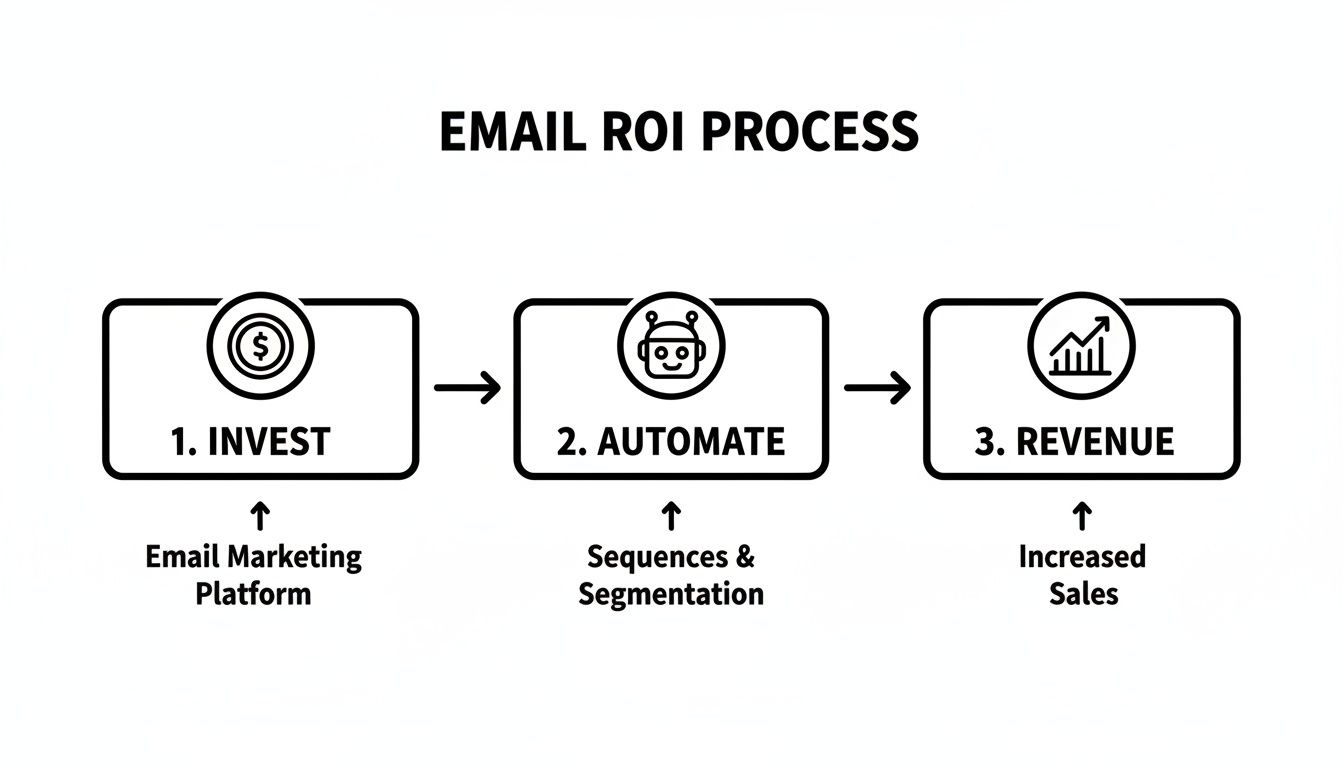
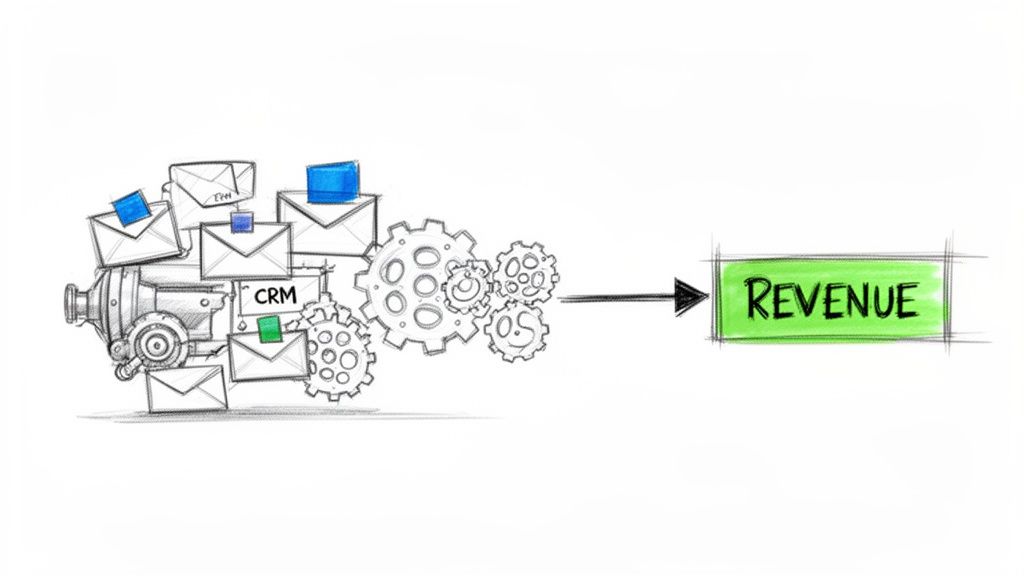
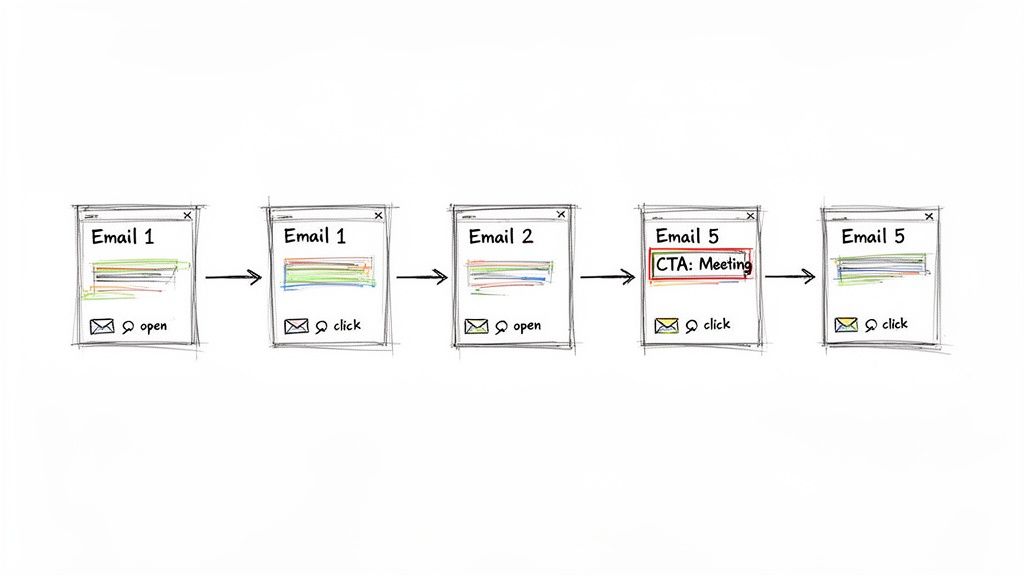
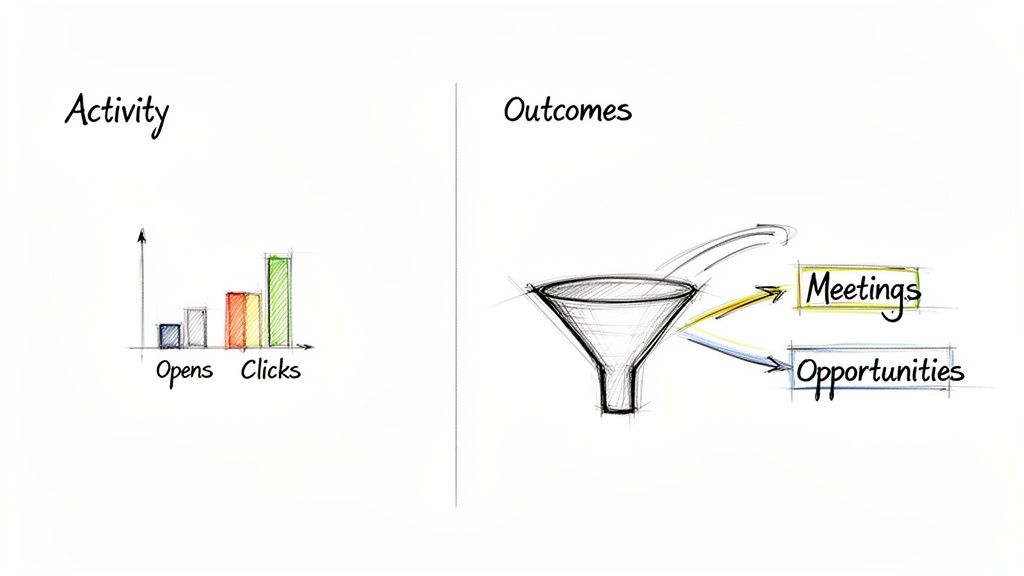
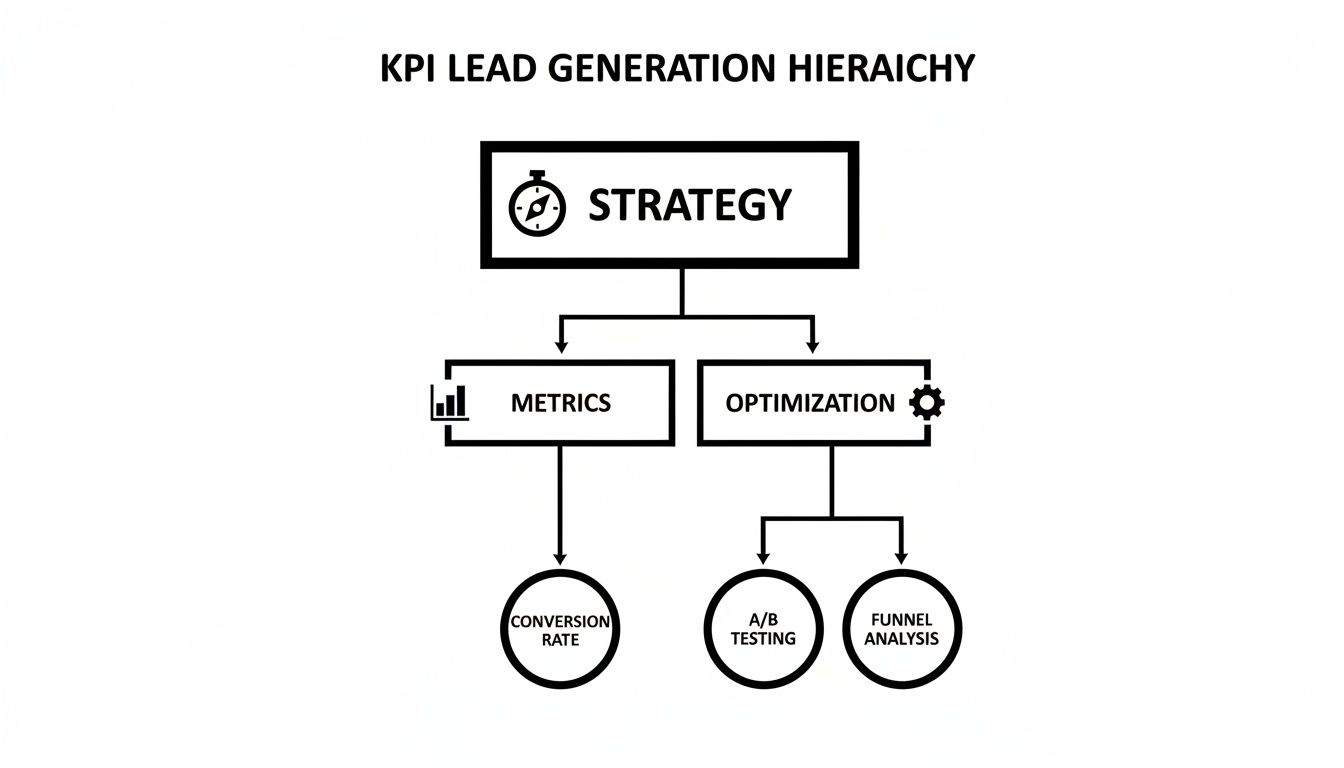
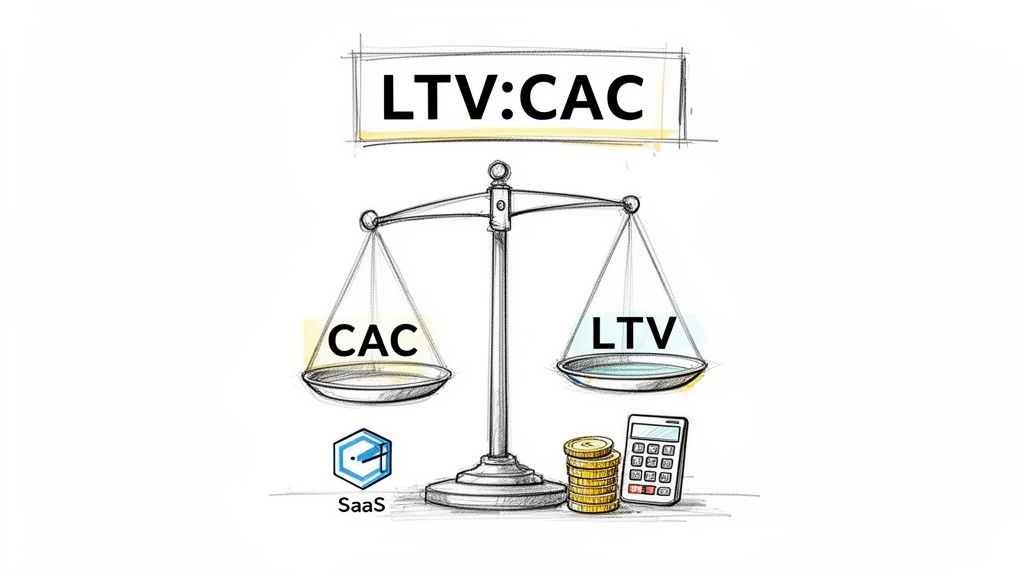
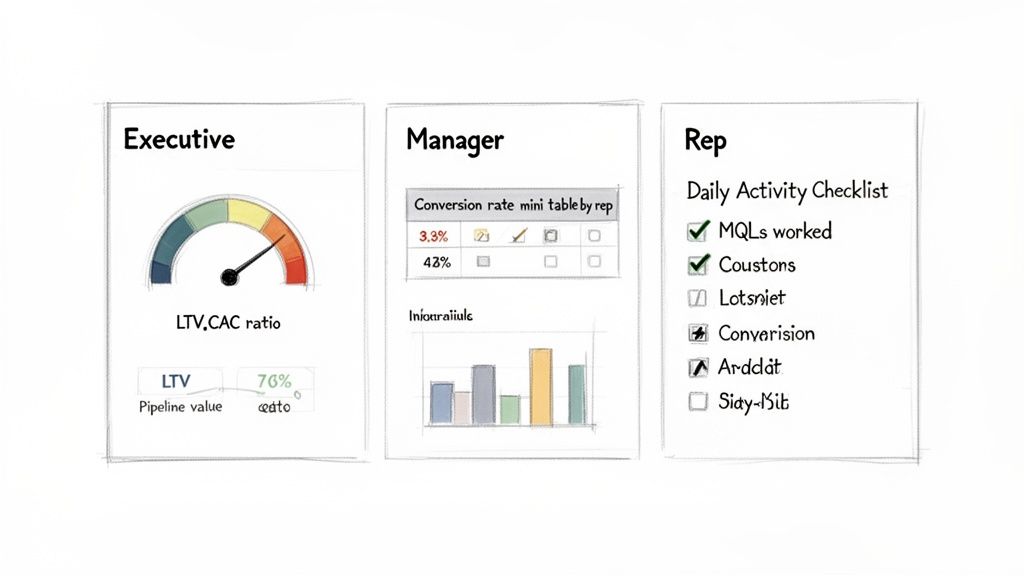
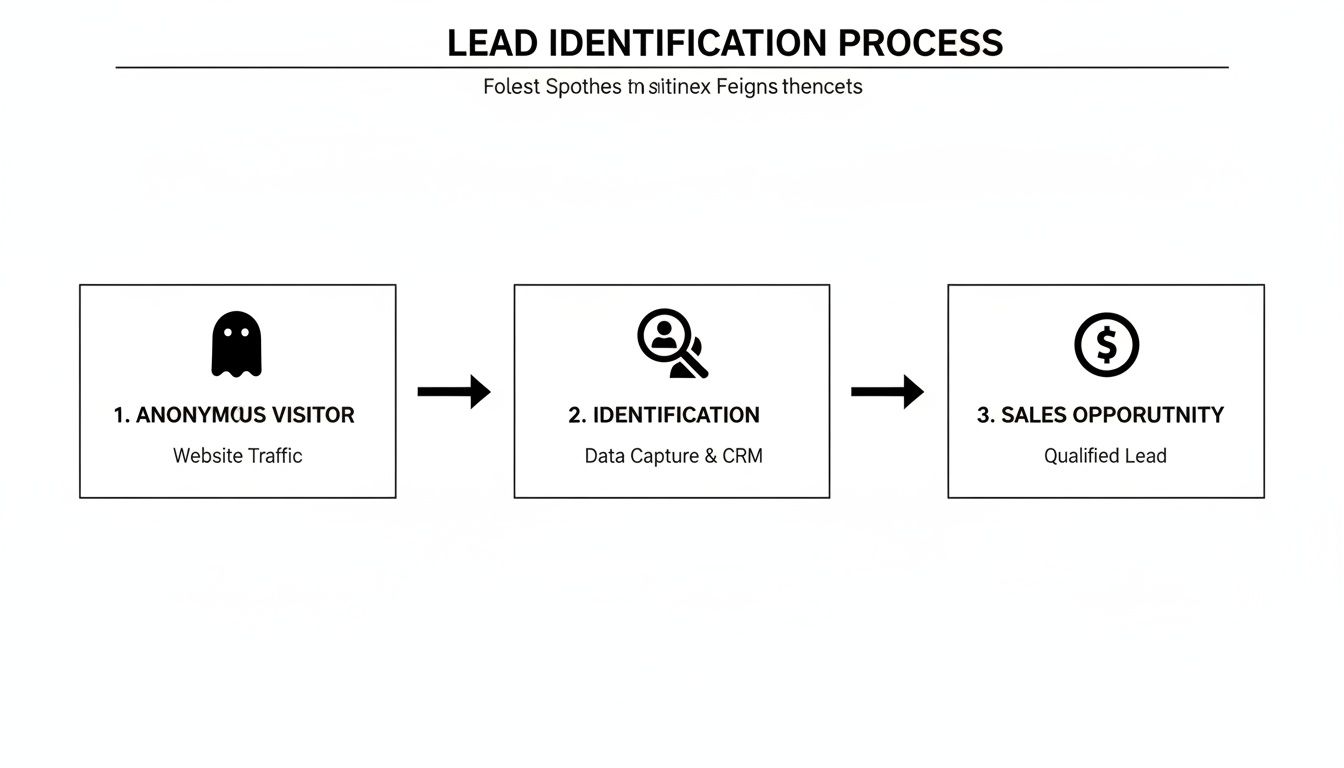
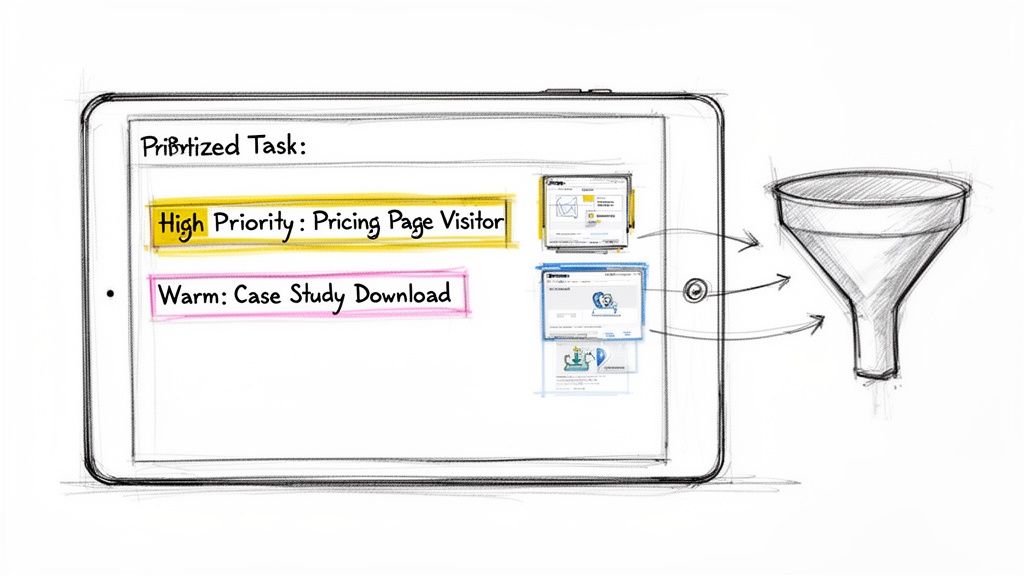
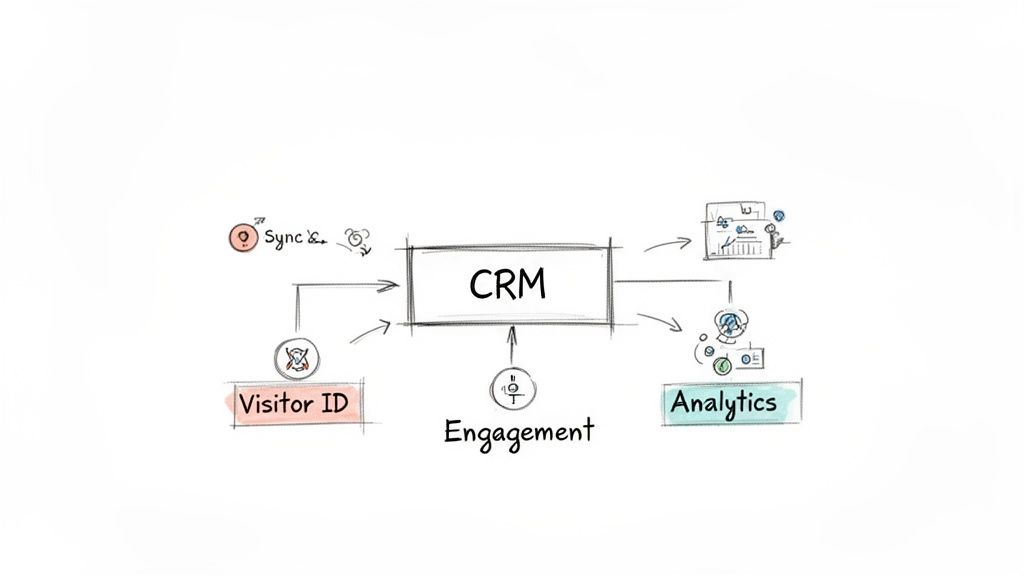


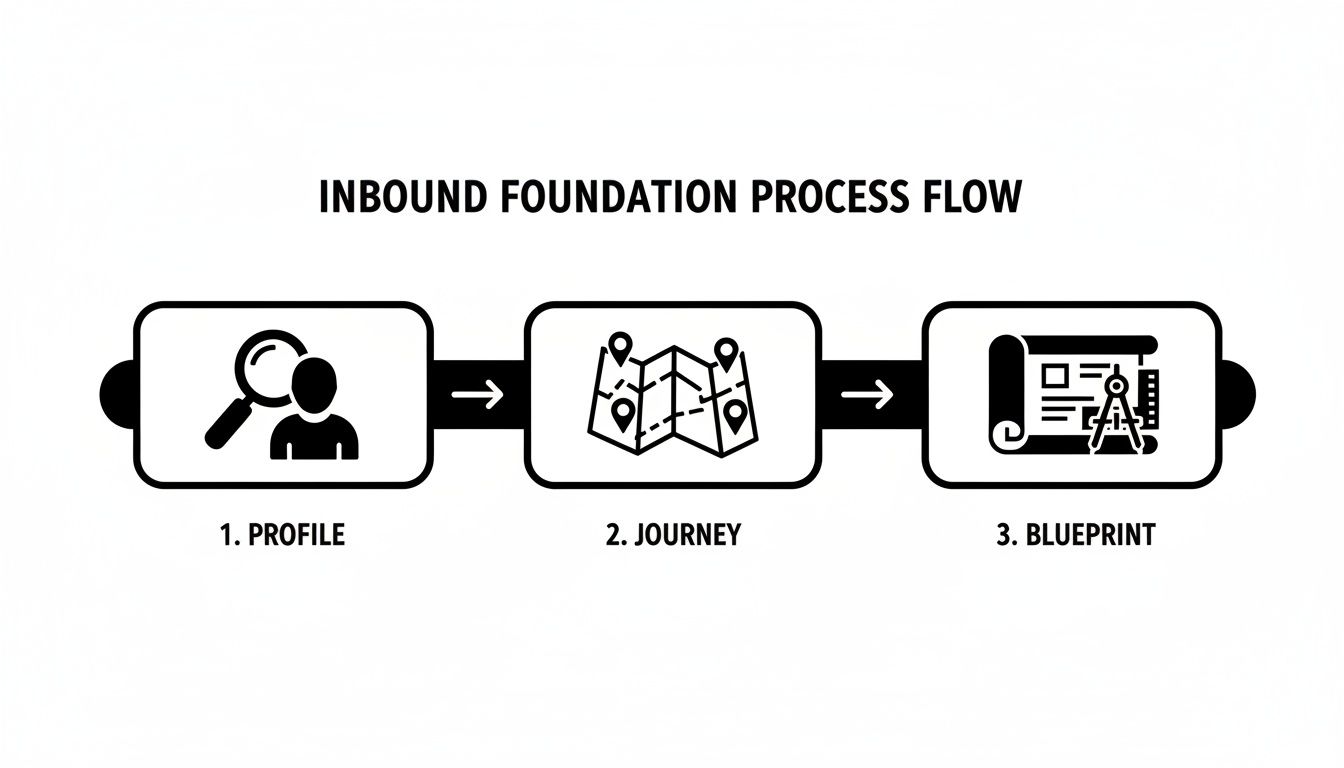


 If you're not measuring your inbound efforts, you're not marketing—you're just guessing. A data-driven approach is the only way to build a sustainable machine that generates leads predictably. It's how you go from hoping for results to actually engineering them.
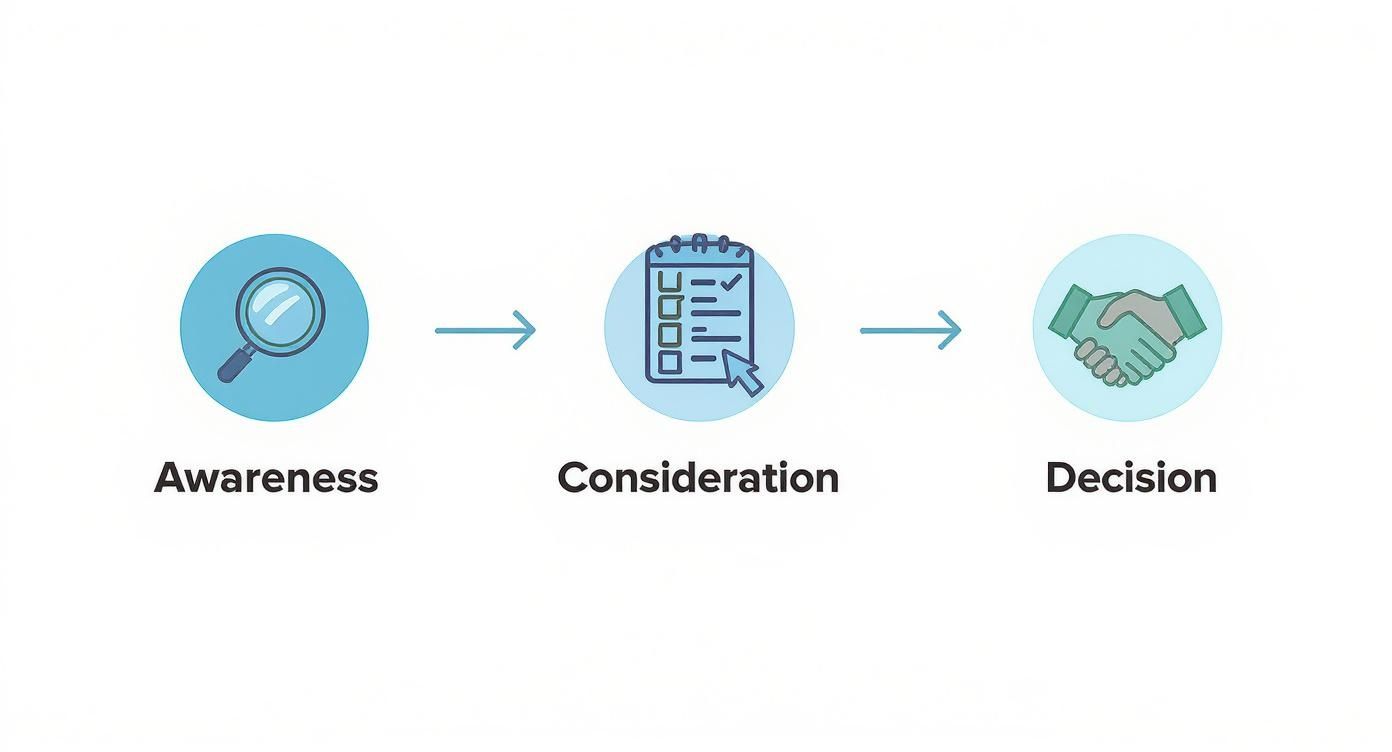

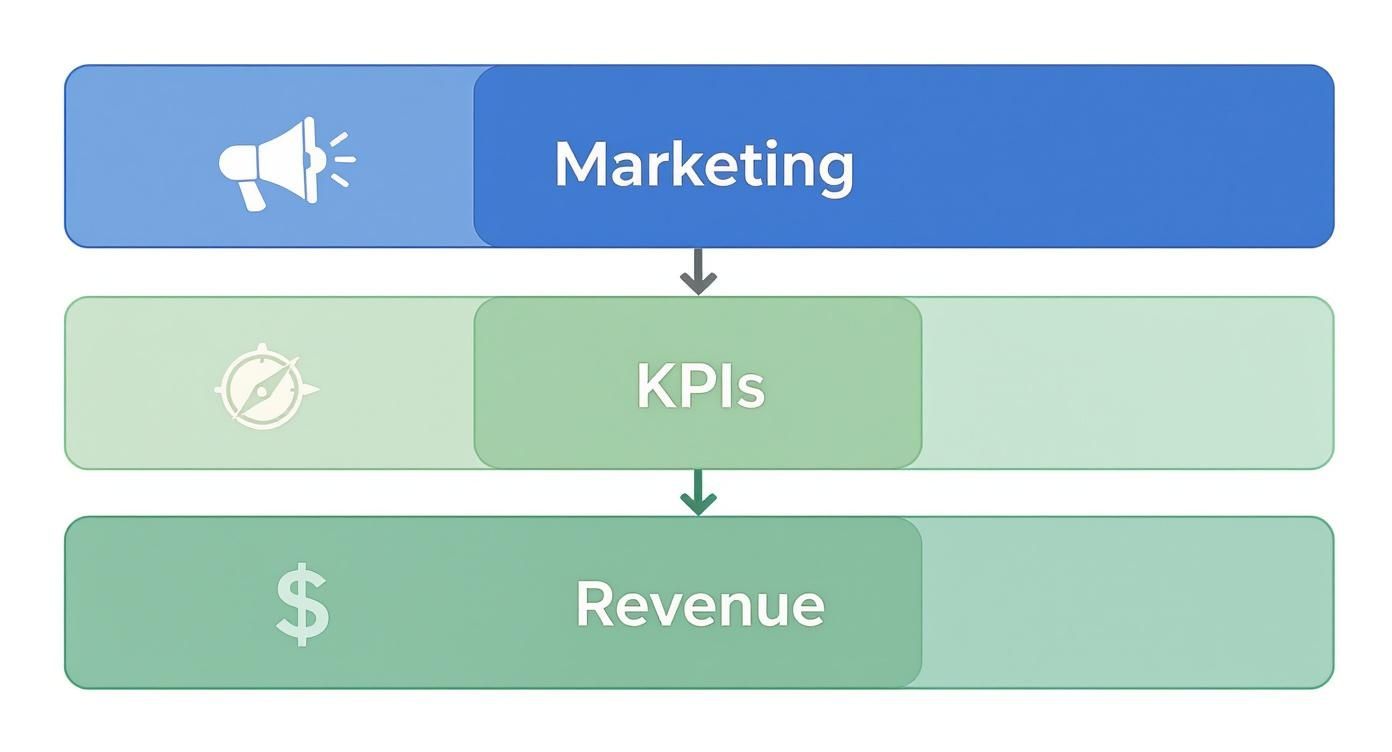




 Okay, knowing the company name behind a visit is a huge win. But the real magic happens when you figure out why they’re on your site at all. This is where you graduate from identification to interpretation, shifting the focus from "who" to "what do they actually want?"