The IoT SIM management space is one of the most lopsided markets in B2B technology. On one side, you have entrenched players — massive telecom carriers and global connectivity platforms with thousands of enterprise customers, dedicated sales teams spanning three continents, and marketing budgets that dwarf your entire annual revenue. On the other, you have scrappy startups with a genuinely differentiated product, maybe two or three people wearing every hat, and a desperate need to get in front of the right buyers before runway disappears.
If you're building an IoT SIM management platform — the kind that helps companies provision, monitor, and manage cellular connectivity for their device fleets — you already know the product challenge is only half the battle. The harder fight is getting anyone to pay attention when they've never heard of you.
This is the story of how one small IoT SIM management company transformed its outbound motion from "spray and pray" to a precision operation — without hiring a single additional SDR.
Every quarter, someone on LinkedIn declares outbound dead. Again.
And every quarter, the same teams running signal-based outbound quietly book 15+ meetings a month while the "outbound is dead" crowd wonders why their inbound funnel can't keep up.
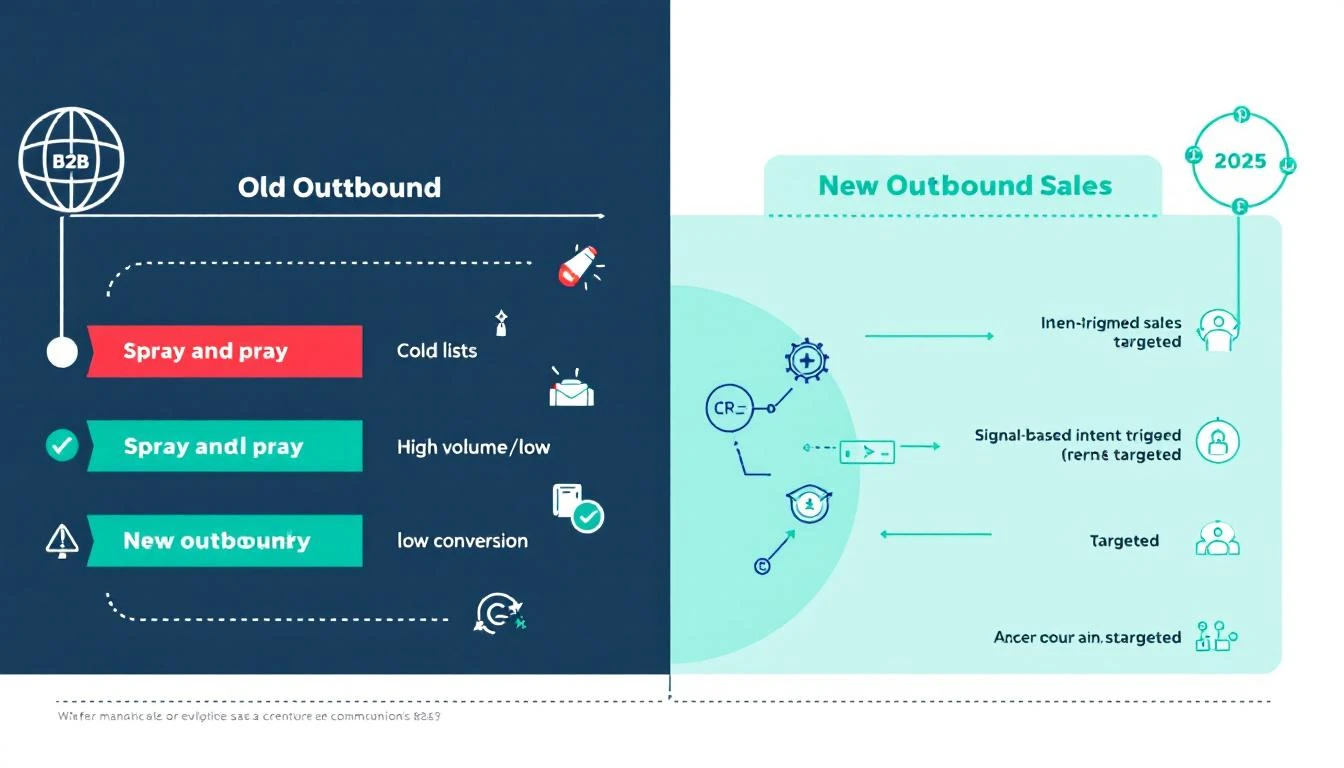
Here's the thing: they're both right. The old outbound — spray-and-pray cold emails to purchased lists, generic sequences blasted at 5,000 contacts a week — that outbound is dying. The numbers are brutal and getting worse.
But outbound itself? The motion of proactively reaching out to people who are likely to buy? That's never been more effective — if you know who to reach, when to reach them, and what to say.
We pulled data from 14 major B2B sales studies published between 2024 and 2026, covering 170,000+ leads, 939 companies, and millions of sales activities. Here's what the numbers actually say.
The Case Against Outbound (And Why It's Misleading)
Let's start with the numbers that fuel the "outbound is dead" narrative. They're real, and they're ugly:
91% of cold outreach emails get zero response (Backlinko, 2025)
Cold email reply rates hover at 1–5% for most campaigns (SoPro, 2026; Mailshake, 2026)
Cold outreach conversion rates sit at 0.2–2% from contact to customer (Martal Group, 2025)
83.4% of SDRs fail to consistently hit quota (SalesSo, 2025)
52% of outbound marketers say their efforts are "ineffective" (HubSpot, via SPOTIO 2026)
If you stopped here, you'd conclude outbound is a money pit. And for teams doing outbound the 2019 way — buying lists, writing generic templates, and hoping for the best — it absolutely is.
But the data tells a much more interesting story when you separate random outbound from signal-based outbound.
The Data That Proves Outbound Is Evolving, Not Dying
1. Buyers Still Want to Hear From Sellers (When It's Relevant)
The loudest stat against outbound comes from buyer surveys. But the actual surveys tell the opposite story:
82% of buyers accept meetings initiated through cold calls (RAIN Group, via Leads at Scale, 2026)
81% of decision-makers engage with cold outreach when it's tailored to their company or context (SoPro Buyer Intelligence Report, 2026)
79% of decision-makers reply to cold outreach when it's personalized and relevant (SoPro, 2026)
The pattern is clear. Buyers aren't rejecting outbound. They're rejecting irrelevant outbound. There's a massive difference.
Generic emails get generic results. The data shows exactly how much personalization matters:
Advanced personalization doubles cold email response rates — 18% vs. 9% for generic (SoPro, 2026)
89% of sales teams see positive ROI when using personalization in cold email campaigns (SoPro, 2026)
Emails referencing a specific trigger event (new hire, funding round, tech adoption) see 3x higher reply rates than standard personalization (name + company)
This isn't about {first_name} merge fields. It's about knowing that a prospect's company just visited your pricing page, that their competitor signed with you last month, or that they posted about the exact problem you solve.
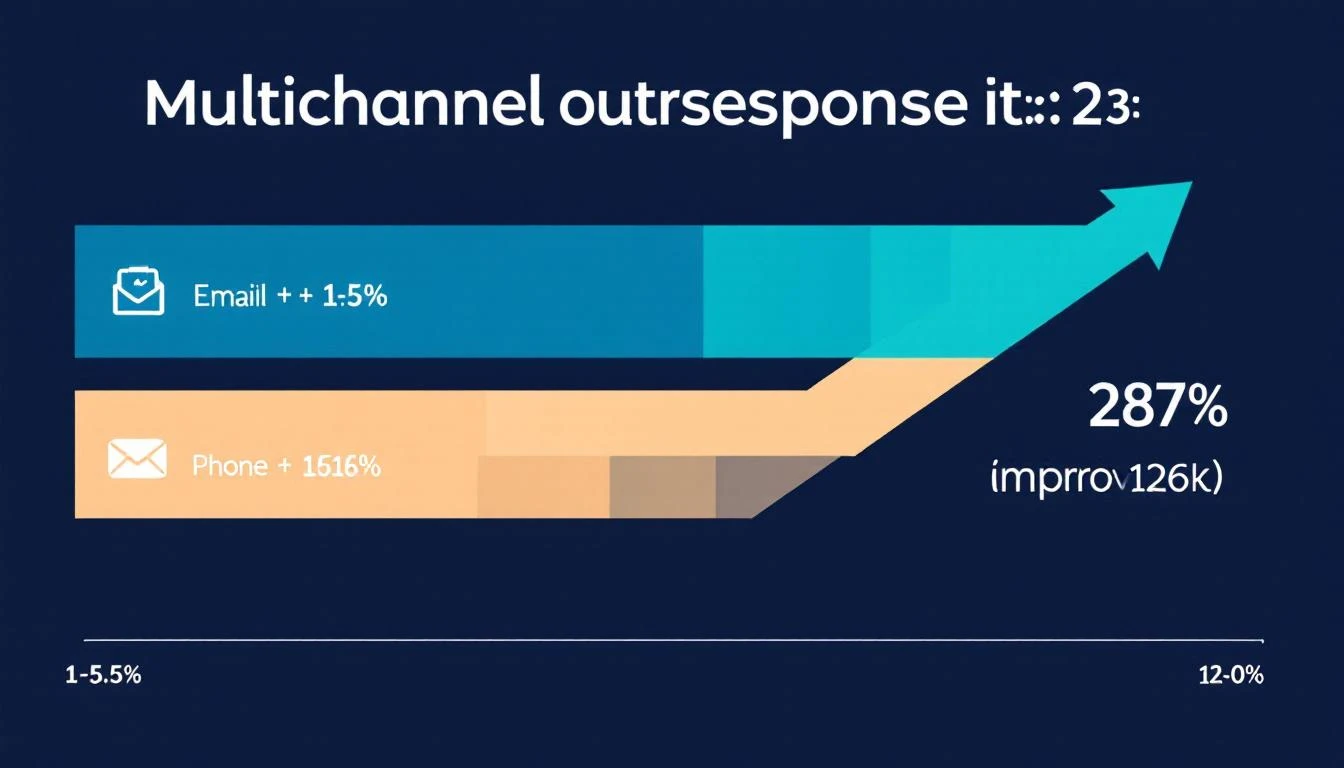
3. Multichannel Outreach Crushes Single-Channel by 287%
The single most important stat in modern outbound:
Outreach using email, phone, and LinkedIn together increases response rates by 287% compared to single-channel efforts. — Martal Group, 2025
Here's the breakdown from Optifai's study of 939 B2B SaaS companies:
Channel
Conversion to Meeting
Cold call only
2.0–3.5%
Cold email only
0.8–2.0%
LinkedIn DM only
2.0–4.5%
Multi-touch sequence
4.0–7.0%
Multi-touch sequences convert at 2–3x any single channel. Yet most SDR teams still run email-only or phone-only motions because their tools don't coordinate across channels.
Despite the "outbound is dead" narrative, top-quartile SDRs consistently generate 12–15 qualified meetings per month. The median sits at 8–10. Elite performers (top 10%) hit 18+ meetings monthly (Optifai Pipeline Study, 2026; N=939).
The gap between top and bottom performers has never been wider:
Performance Tier
Monthly Meetings
Top 10% (elite)
18+
Top 25%
12–15
Median
8–10
Bottom 25%
4–6
What separates them isn't effort. Bottom-quartile SDRs often make just as many calls. The difference is what they do before they pick up the phone: which accounts they target, what signals they act on, and how they sequence across channels.
5. Speed Still Wins — But Almost Nobody Is Fast Enough
The data on speed-to-lead hasn't changed. What's changed is how few teams achieve it:
Responding within 5 minutes makes you 100x more likely to connect than waiting 30 minutes (InsideSales/XANT)
Average lead response time: 29+ hours (SalesSo, 2025)
63% of leads never get a response at all (SalesSo, 2025)
The teams that respond fastest aren't doing it through heroic effort. They're using intent signals and automated triggers to surface the right leads the moment they show interest — then routing them to reps with the context needed to have a real conversation.
Sending 5,000 emails to a purchased list with no intent data, no personalization beyond {company_name}, and no multi-channel follow-up. This approach now yields 0.2% conversion rates at best.
The old playbook: more dials = more meetings. But the data shows SDRs making 80+ calls/day with poor targeting often underperform those making 50 calls with better research (Optifai, 2026). Quality won the war against quantity.
Email-only cadences. Phone-only blitzes. Any outreach strategy that doesn't coordinate across at least 2–3 channels is leaving 287% response improvement on the table.
40% of replies convert to meetings = 1.2 meetings/day
20 working days = 24 meetings/month
Cost per meeting: $100–$150
Same SDR. Same hours. 3x the meetings at 1/3 the cost. The difference is what happens before the outreach: signal detection, prioritization, and context.
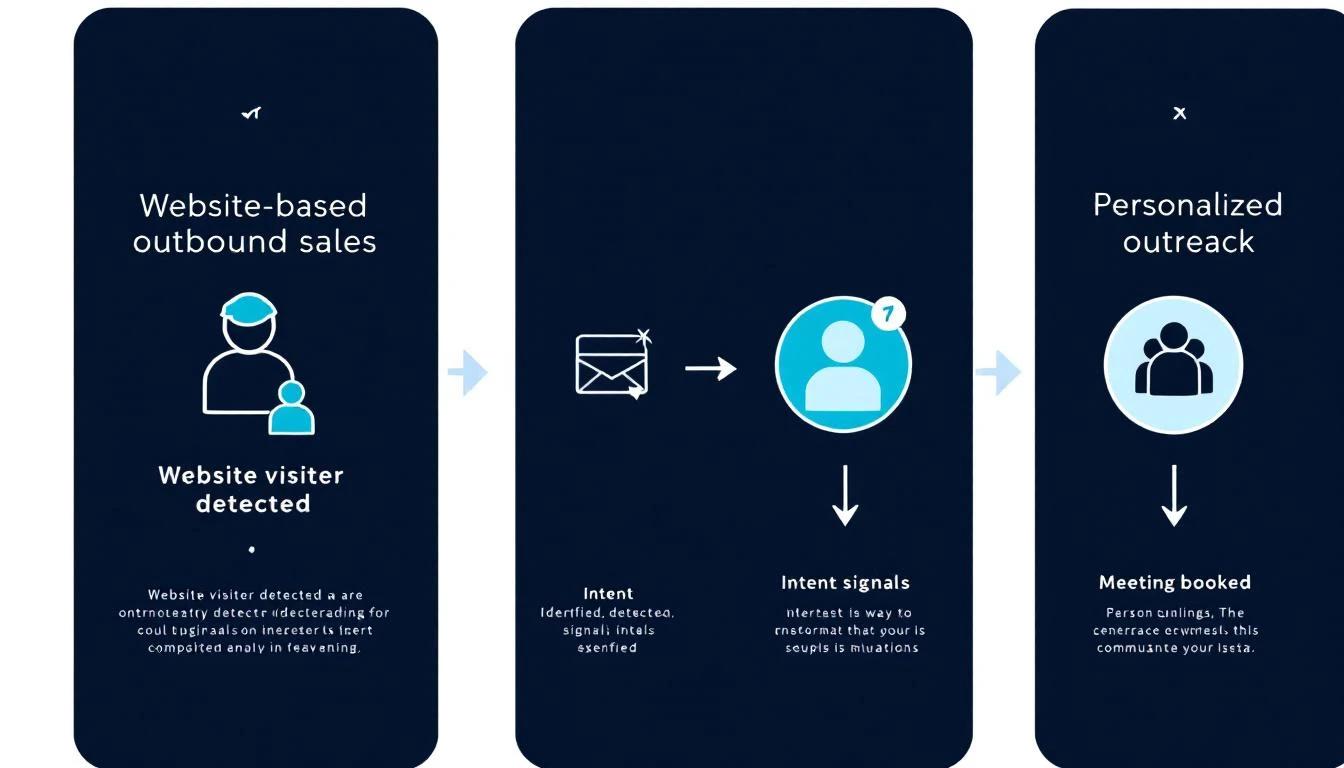
You can't respond to signals you can't see. Website visitor identification is no longer optional — it's the foundation of modern outbound. Knowing which companies are researching you right now is the highest-intent signal available.
Email + phone + LinkedIn in coordinated sequences. Not three separate efforts — one orchestrated motion that adapts based on prospect engagement. The 287% improvement stat isn't theoretical. It's the baseline expectation.
Not just speed-to-lead. Speed-to-signal. When a target account hits your pricing page at 10:14 AM, the outreach should start by 10:20 AM. Manually? Impossible for most teams. Automated signal routing makes it systematic.
The SDR playbook isn't a static document anymore. It's a live, prioritized task list that updates throughout the day based on incoming signals. "Call these 15 accounts, in this order, because of these signals, saying these things." That's what eliminates the 60% of time SDRs waste on non-selling activities.
Personalization doubles response rates, but doing it manually doesn't scale. AI SDR tools that draft contextual outreach based on real signals — not just mail-merge tokens — bridge the gap between personalization quality and outbound volume.
The data is unambiguous: buyers want to hear from sellers who understand their business, reference real context, and reach them through the right channel at the right time. That's not cold outreach — that's signal-based selling.
The teams declaring outbound dead are the same teams still sending 5,000 generic emails a week and wondering why nobody replies. The teams quietly booking 15–24 meetings a month are doing something fundamentally different: they're starting with signals, orchestrating across channels, and letting AI handle everything that isn't a human conversation.
The question isn't whether outbound works in 2026. The question is whether your outbound has evolved past 2019.
Ready to see what signal-based outbound looks like in practice?Book a demo → and we'll show you exactly which companies are visiting your site right now — and what to do about it.
If you run sales for a market research firm in the connected consumer space — smart home, IoT devices, streaming, connected health, wearables — you already know this truth: your pipeline lives and dies by the conference calendar.
Unlike SaaS companies that can scale demand generation through SEO and paid ads, market research firms sell expertise and data that's deeply tied to industry-specific trends. Your buyers are product managers, corporate strategists, and innovation leaders at consumer electronics brands, service providers, and technology platforms. They don't Google "buy market research." They attend CES, meet you at a panel, grab your whitepaper at a booth, and — if you're lucky — remember your name three weeks later when budget opens up.
The problem is that "if you're lucky" is doing a lot of heavy lifting in that sentence. Most market research firms treat conferences as a top-of-funnel blast: scan badges, collect cards, dump everything into the CRM, and hope the follow-up sequence lands before the prospect forgets who you are.
This is the story of how one market research firm in the connected consumer space replaced hope-based conference follow-up with a signal-driven pipeline machine — and turned event attendance from a cost center into their highest-converting acquisition channel.
Professional investigation is one of those industries that most B2B sales advice completely ignores. The playbooks written for SaaS companies selling to enterprise IT departments? They barely apply. Investigation firms operate in a different universe — one where leads are urgent, trust is everything, the phone is still king, and a missed call can mean a lost $10,000 case.
Yet the underlying sales challenge is the same as any other B2B business: how do you consistently fill your pipeline with qualified prospects while your team is busy actually doing the work?
This is the story of how a mid-sized professional investigation firm — roughly $750,000 in annual revenue, a small team wearing multiple hats, and a founder who was simultaneously the lead investigator, the sales team, and the operations manager — rebuilt their client acquisition process from the ground up using modern sales technology. What they did is applicable to any professional services firm where the phone matters and speed-to-lead is everything.
The average B2B SDR uses 4 to 10 different tools every day (Source: UpLead, 2025). That's 4–10 logins, 4–10 tabs, 4–10 invoices.
But here's the number nobody talks about: what does all of that actually cost?
Not the "starting at $49/mo" from landing pages. The real number — after annual commitments, per-seat fees, credit overages, add-ons, and the enterprise pricing wall that shows up the moment you ask for a demo.
We did the math. We pulled real pricing data from 15+ sales tools across six categories — CRM, sales engagement, intent data, enrichment, dialers, and AI SDR platforms — and calculated the true total cost of ownership (TCO) for SDR teams of different sizes.
Professional tier required for sequences, automation
Salesforce Sales Cloud
$25/user/mo (Essentials)
$825/mo (Professional)
Most teams need Professional at $165/user/mo
Pipedrive
$14/user/mo
$250/mo (Professional)
Good value, but limited enterprise features
Close
$49/user/mo
$495/mo (Professional)
Built-in calling — reduces dialer need
Realistic CRM cost for a 5-SDR team: $250–$825/mo
The gotcha with CRM pricing is that the "Starter" tier almost never has the features SDR teams need. Sequences, workflow automation, reporting dashboards — all gated behind Professional or Enterprise tiers. HubSpot's jump from $20/user to $100/user at Professional is the most dramatic.
Layer 2: Sales Engagement — Where the Bills Start Climbing
This is where most SDR budgets blow up. Sales engagement platforms handle email sequences, call tasks, and multi-touch cadences.
Realistic sales engagement cost for a 5-SDR team: $250–$750/mo
The hidden cost here isn't the seat price — it's the annual commitment. Outreach and SalesLoft don't offer monthly contracts. You're signing a 12-month deal on day one, and renewal increases of 10–20% are standard.
Apollo is the budget-friendly option, but once you need advanced features (AI scoring, dialer, advanced analytics), you're back to $79/user/mo — which puts it on par with the "expensive" platforms.
Layer 3: Intent Data — The Most Expensive Layer Nobody Budgets For
Intent data is where the sticker shock hits. These platforms tell you which accounts are actively researching solutions like yours. The problem? They price like it.
Realistic intent data cost for a 5-SDR team: $700–$5,000+/mo
Here's the uncomfortable truth about intent data pricing: you're paying for the signal, not the seat. 6sense and Bombora don't scale with your team size — they scale with your TAM size, data volume, and integration requirements. A 5-person SDR team at a mid-market company easily spends $40K–$60K/year on intent data alone.
This is also the category with the most buyer's remorse. According to G2 reviews, the #1 complaint about 6sense and Bombora is "hard to prove ROI." You're paying enterprise prices for data that your SDRs may or may not act on.
The consolidation opportunity is massive here. Tools like MarketBetter bundle visitor identification, intent signals, AND the SDR playbook that tells reps what to do with those signals — starting at a fraction of the standalone intent data cost. Learn more in our Complete Guide to B2B Intent Data.
Realistic enrichment cost for a 5-SDR team: $250–$2,500/mo
ZoomInfo is the gorilla here. At $15K minimum (annual-only contracts), it's often the single most expensive tool in an SDR's stack. And that's the starting price — real-world costs typically land between $30K and $60K once you factor in credit overages and add-ons.
The credit model is designed to upsell. You start with 5,000 credits, burn through them in month two, and suddenly you're negotiating a mid-contract upgrade. Every enrichment vendor does this.
Layer 5: Dialer — Calling Isn't Dead, But It's Expensive
Realistic dialer cost for a 5-SDR team: $0–$1,500/mo
Dialers are the category where consolidation pays off the most. If your CRM or sales engagement platform includes one, you save $9K–$18K/year. If you're paying for a standalone parallel dialer like Orum on top of Outreach on top of ZoomInfo... your per-SDR tooling cost is going to be eye-watering.
The AI SDR category is the Wild West of pricing. 11x charges $50K+ per year for a single AI agent — roughly the cost of a junior human SDR. Artisan is more accessible but still commands $9K+ annually. Most of these tools are so new that pricing changes quarter to quarter.
The key question isn't "can AI replace my SDRs?" — it's "does the AI tool integrate with my existing stack, or is it yet another silo?" More on this in our Best AI SDR Tools comparison.
The Total: Three Real-World GTM Stacks, Priced Out
Here's what it actually costs to equip a 5-SDR team in 2026, across three common configurations:
This stack works for seed-stage and early Series A companies. The trade-off: you're running lean, which means your SDRs are doing more manual work — but your tooling cost per rep is under $260/mo.
This is where most Series B and established mid-market companies land. The jump from Stack A is dramatic — enrichment alone can add $15K–$25K annually. And notice: no AI SDR automation. Most companies at this tier can't afford to layer AI on top of their existing stack.
Enterprise stacks routinely hit $100K–$200K+ per year for a 5-person SDR team. That's before headcount. A fully-loaded SDR (salary + tools + management overhead) at this tier costs the company $150K–$200K annually.
Beyond the dollar cost, there's a productivity cost that's almost impossible to measure:
Context switching. Every time an SDR Alt-Tabs between ZoomInfo, Outreach, Salesforce, and Gong, they lose focus. Research from the American Psychological Association estimates that task-switching can consume up to 40% of productive time.
At the Optifai benchmark of 8–10 qualified meetings per month for a median SDR, that means 3–4 meetings per month are lost to tool friction alone.
Here's what that looks like in practice:
Step 1: Check intent signals in 6sense (Tab 1)
Step 2: Enrich the contact in ZoomInfo (Tab 2)
Step 3: Build a sequence in Outreach (Tab 3)
Step 4: Log the activity in Salesforce (Tab 4)
Step 5: Review the last call recording in Gong (Tab 5)
Step 6: Update the deal stage in your CRM (back to Tab 4)
Six steps, four tools, zero flow state.
This is why the industry is moving toward consolidation. Platforms that combine signals + engagement + dialer into one workflow — like what we've built at MarketBetter — eliminate the tab-switching tax and let SDRs stay in one place.
Annual savings: $90K–$120K — enough to hire another SDR.
This isn't theoretical. Only 19% of companies increased SDR headcount in 2025 (Source: SaaStr), the lowest growth rate across all sales functions. Teams are consolidating tools and doing more with less.
The question isn't "which is the best tool in each category?" It's "which platform eliminates the most categories?"
Sales engagement platforms (Outreach, SalesLoft) are adding AI features, but they don't have their own intent signals
Enrichment providers (ZoomInfo) are adding engagement features, but they're bolted on, not native
The winner is whoever combines signal detection + recommended action + execution in a single workflow
This is exactly what MarketBetter's Daily SDR Playbook does: identifies who's on your site, enriches the contact, surfaces the intent signal, and tells your SDR exactly what to do next — all in one screen. No tab-switching. No context loss. No $60K ZoomInfo invoice.
This analysis used pricing data from the following sources:
Official pricing pages (accessed February–March 2026)
Vendr marketplace data for enterprise negotiated rates
G2 and Capterra reviews mentioning specific price points
Reddit r/sales threads with real user-reported costs
Our own published pricing breakdowns (linked throughout)
All prices are in USD. "Per seat" pricing assumes annual billing unless noted. Enterprise quotes are estimated ranges based on multiple sources — actual quotes vary by company size, use case, and negotiation leverage.
For tool-specific deep dives, visit our pricing breakdown series:
If your SDR team is drowning in tools and your per-rep tooling cost is north of $1,000/mo, there's a better way.
MarketBetter combines visitor identification, intent signals, the daily SDR playbook, smart dialer, AI chatbot, and email automation — starting at $500/mo. One platform. One login. One invoice.
Think of it this way: what if every single one of your sales reps had a dedicated expert assistant? Someone who handled all the mind-numbing, tedious tasks, freeing them up to do what they do best—actually sell.
That’s the core idea behind sales automation software. It’s the technology that closes the gap between a brilliant sales strategy and the consistent, daily grind needed to hit quota.
Let's paint a picture of a sales team running on pure manual effort. Reps are drowning in spreadsheets, their monitors are covered in sticky notes, and they have a dozen browser tabs open at all times. They manually log calls (when they remember), take a wild guess at which lead to contact next, and burn hours on admin work instead of building relationships. It’s chaotic, reactive, and just plain inefficient.
Now, imagine that same team with a powerful sales automation platform in place. The system becomes an air traffic controller for each Sales Development Rep (SDR). It intelligently lines up the day’s most important tasks, serves up all the context needed for every call, and handles the busywork humming quietly in the background.
This fundamental shift from manual chaos to guided, predictable execution is exactly why businesses are adopting these tools so quickly. To really get started, it helps to understand the basics of what is sales automation.
At its heart, sales automation software solves a massive problem: it turns your strategy into daily, repeatable action. A VP of Sales can map out the most sophisticated go-to-market plan, but if reps can’t execute it consistently, it’s just a nice-looking document.
Automation is what translates those high-level goals into a predictable workflow.
For instance, instead of an SDR scrambling to find a lead's information before dialing, the software presents it automatically. Rather than guessing who to email, the platform prioritizes leads based on real buying signals. This simple change unlocks some serious benefits:
Focus on Selling: Reps get to spend more of their day on high-value work, like having actual conversations and running demos.
Maintain Consistency: Every single lead gets the right touchpoint at the right time. No more opportunities falling through the cracks.
Improve Data Quality: Calls, emails, and notes are logged to the CRM automatically, giving leadership a crystal-clear view of what's really happening on the ground.
The demand for this kind of efficiency is clear. The global sales automation software market, valued at USD 11.36 billion in 2026, is on track to hit a staggering USD 26.86 billion by 2035. This explosive growth is driven by one simple fact: top-performing teams use automation to create a massive competitive advantage.
To see the real-world impact, let's compare the daily grind of a rep working with and without modern automation. The difference isn't just noticeable; it's a complete transformation of their productivity and effectiveness.
Reps rely on gut feelings or basic list sorting to guess which lead is "hot."
The system analyzes buying signals (like website visits) to automatically surface high-priority tasks.
Outreach Prep
Reps waste 15-20 minutes researching a single prospect across LinkedIn, the company site, and news articles.
Key data points and AI-suggested talking points are presented right within the task, ready to go.
Activity Logging
Reps manually type call notes and email details into the CRM, often forgetting or making mistakes.
Every call, email, and outcome is automatically logged to the correct CRM record without a single click.
Following Up
Reps use a messy system of calendar reminders and spreadsheets, leading to missed or late follow-ups.
The platform automatically schedules the next step in a sequence based on prospect engagement (or lack thereof).
This comparison makes it obvious: automation isn't just about doing things faster. It's about doing the right things more effectively.
By building a true operational rhythm, this software empowers reps to be more strategic and, ultimately, more successful. If you're looking to put these ideas into practice, our guide can help you automate sales processes to get the most out of your team.
Not all sales automation tools are built the same. While many platforms talk a big game about efficiency, the ones that actually deliver are built around a handful of essential features. These aren't just flashy add-ons; they are the core components that solve the biggest problems and time-wasters for modern sales teams.
So, let's move from the 'what' to the 'how.' Here's an actionable breakdown of the four capabilities that are absolutely non-negotiable for any team serious about scaling its outbound efforts. Each one tackles a specific bottleneck, turning manual grunt work into a smooth, repeatable process.
The fastest way to kill adoption of a new tool? Force your reps to leave their primary workspace. If your team lives and breathes in Salesforce or HubSpot, your sales automation software has to live there, too. A true CRM-native workflow means your reps can do everything—make calls, send emails, log notes—without ever having to switch tabs.
This is a world away from tools that just "sync" with your CRM. A sync-based setup still makes reps jump back and forth between applications. It’s clunky, creates a disjointed experience, and almost always leads to messy data and frustrated users.
Actionable Tip: During a product demo, ask the vendor: "Show me how a rep completes their top three daily tasks without leaving their CRM screen." If they have to switch tabs, it's not truly native. A native dialer that lets an SDR click-to-call directly from a Salesforce contact record is a productivity multiplier, ensuring 100% of call activity gets logged automatically.
The best sales teams don't just work harder; they work smarter. Intelligent task automation is the engine that makes this happen. It acts as a guide for your reps, sifting through a sea of buyer signals and turning them into a clear, prioritized to-do list.
Compare these two scenarios:
Without it: A rep starts their day looking at a huge list of 200 leads and asks, "Who should I call first?"
With it: The software analyzes buyer signals (like a pricing page visit or a competitor's contract ending) and surfaces the top 5 highest-priority tasks for that moment.
This shifts your team from a reactive "who should I call next?" mentality to a proactive, signal-driven workflow. Instead of reps playing a guessing game, the system points them toward the very next best action, ensuring their energy is always focused on the most qualified opportunities.
Writer's block is a massive productivity drain, especially for reps trying to hit high outbound numbers. It's easy to waste precious minutes staring at a blank screen, trying to come up with the perfect cold email. AI-powered messaging solves this by generating relevant, context-aware drafts that reps can quickly personalize and send.
This isn't about churning out robotic, one-size-fits-all templates. A good AI engine analyzes the prospect’s persona, their industry, and details about their account to create outreach that feels specific and human. A generic tool might just insert {\{first_name\}}, but a context-aware AI might reference a recent company announcement or a common pain point for their role, giving the rep a huge head start.
For an SDR staring down a tough list of cold prospects, this feature is a lifesaver. It provides a solid, high-quality starting point for every conversation, boosting both the speed and the relevance of their outreach.
If an activity isn’t in the CRM, it might as well have never happened. Every sales leader knows this, but getting reps to consistently log their work often feels like a constant battle. Automated data hygiene makes clean data the default by capturing every touchpoint without any manual work.
Let’s compare the old way versus the new way:
Activity
Manual Logging (The Old Way)
Automated Logging (The New Way)
Email Sent
Rep has to remember to Bcc the CRM or use a plugin. It's easy to forget.
Every single email sent from the platform is logged to the contact record. Instantly.
Call Made
Rep manually creates a task, types out notes, and sets the outcome.
The call outcome, duration, and any notes are logged automatically the second the call ends.
Data Quality
Spotty, full of gaps, and not something you can trust for forecasting.
A clean, complete, and trustworthy record of every single sales activity.
This isn’t just about making life easier for reps; it’s a game-changer for RevOps and sales leadership. You get a crystal-clear, real-time picture of team performance and pipeline health, which means more accurate forecasting and data-driven coaching—all without adding another administrative task to your reps' plates.
Let's be honest, "AI in sales" gets thrown around a lot. But there's a world of difference between a generic AI content spinner and an AI that’s truly built to drive sales. One spits out soulless, robotic text. The other acts as an intelligent co-pilot for your reps, making every single interaction smarter.
The market is already voting with its wallet. The AI sales software space is on a tear, projected to jump from $35.9 billion in 2026 to a staggering $71.83 billion by 2031. This isn't just hype; it's a fundamental shift. We're moving past tools that just store data and toward platforms that provide real-time guidance to make reps better at their jobs.
This new wave of AI isn't about replacing your team. It’s about making them more potent by turning a flood of data into a clear list of prioritized actions and high-quality outreach.
A huge, and frankly valid, fear is that AI-written emails sound robotic. And often, they do. That’s because most basic AI tools are flying blind—they lack crucial context. They pull from the vast, generic internet, creating messages that feel impersonal and instantly get deleted.
True sales automation software with sophisticated AI works differently. Think of a context-aware AI engine as a seasoned researcher working alongside every single rep.
It knows things like:
Account Details: It's aware of the prospect's industry, company size, recent funding rounds, and their current tech stack.
Buyer Persona: It understands the difference between a VP of Finance and an IT Manager, tailoring the message to focus on financial ROI instead of technical specs.
Intent Signals: It flags when a prospect has visited your pricing page or downloaded a whitepaper about a specific problem.
By weaving these data points together, the AI can generate a hyper-personalized draft that a rep can fine-tune in seconds. It might suggest an opening line like, "Saw your team recently expanded its logistics division, which often puts pressure on supply chain visibility..." That’s a conversation starter, not a generic "Hope you're having a great week!"
For many sales teams, the biggest productivity killer is manual research. An SDR can easily sink 20 minutes digging through LinkedIn, company websites, and press releases just to prep for one email or call. Purpose-built AI collapses that entire process into a few seconds.
Actionable Tip: Instead of reps playing detective, the AI serves up the clues. When a task pops up, it should arrive pre-loaded with talking points, likely objections, and relevant company insights. This completely changes the game.
Imagine this workflow: a high-priority task is created. The moment an SDR opens it, they see:
A pre-written email draft that's 80% of the way there, referencing the prospect’s specific role and a recent company milestone.
A call script with three key bullet points to guide the conversation.
A quick list of common objections from that persona and how to counter them.
This execution-first approach doesn't just make reps faster; it makes them better. They spend their time having meaningful, well-informed conversations, not buried in prep work. To see how this works in the real world, check out our guide on how AI sales assistants are changing the game. It’s this focus on execution that directly translates into a stronger pipeline and real business growth.
How to Choose the Right Sales Automation Software
Picking the right sales automation software is a big decision. It’s not just another tool for the tech stack; it's a strategic investment in your team's ability to hit its numbers and drive real growth. But with so many options out there, all making big promises, it’s easy to feel overwhelmed.
Let’s cut through the noise. This guide is designed to give you a clear, practical framework for evaluating your options so you can choose a platform with confidence. Making the wrong call means more than just a wasted budget—it leads to frustrated reps and a tool that sits on a digital shelf collecting dust.
To avoid that, we'll focus on the handful of make-or-break factors that truly matter.
This is the big one. The single most important factor for getting your team to actually use a new tool is whether it lives where they work. If your reps have to constantly jump between their CRM and another tab, they just won't do it. It creates friction and kills momentum.
You need to look for true CRM-native integration. This means your team can do everything—make calls, send emails, log notes, and manage tasks—without ever leaving Salesforce or HubSpot.
When you're talking to vendors, ask pointed questions to see how deep the integration really goes:
Can my reps click-to-dial a contact and have the call logged automatically inside our CRM? No manual entry needed?
Do email sequences run from a separate app, or are they managed directly within our CRM's interface?
How do you handle data sync conflicts? Is it a one-way or two-way push, and what's the delay?
A huge red flag is any workflow that forces reps to manage their day in a separate web app. If it’s not truly native, adoption will fail. Period.
Does It Adapt to Your Workflows (and Is the AI Actually Smart)?
Your sales process is your secret sauce. A rigid, one-size-fits-all automation tool will force you to change your proven workflows, not enhance them. The software has to be flexible enough to bend to your will, whether you're running complex, multi-touch enterprise plays or high-velocity SMB outreach.
Just as important is the quality of the AI. Let's be honest, a lot of "AI" out there is just generic template-filling that spits out robotic, impersonal messages. That doesn't help; it hurts your brand. What you need is context-aware AI that produces genuinely helpful, human-sounding drafts.
A great AI engine isn't just a text generator; it's a research assistant. It should be able to look at account details, buyer personas, and recent buying signals to help your reps write relevant, insightful messages that give them a massive head start.
To get a better handle on what's possible, it's worth checking out some of the best AI sales automation tools for 2026. Seeing what top-tier platforms can do will give you a solid benchmark.
Will Your Team Use It (and Can It Grow With You)?
Even the most powerful software on the planet is worthless if your team finds it clunky or confusing. A clean, intuitive interface is absolutely essential for high user adoption. During a demo, pay close attention to the user experience. How many clicks does it take to complete a core task, like making a call or personalizing an email?
At the same time, you have to think about tomorrow. Will this platform scale as you grow your team and your ambitions?
Think about scalability and analytics from these angles:
Performance Insights: Does it give you clear, easy-to-read dashboards on activity metrics, sequence performance, and individual rep productivity?
Team Growth: How easy is it to add new users, create team-based templates, and manage permissions as you expand?
Drill-Down Analytics: Can you dig into the data to see exactly which activities and messages are driving meetings and closing deals?
Choosing a tool that reps love to use and that gives leadership the insights they need is the key. It ensures the platform delivers value from day one and can keep up as you scale.
To help you stay organized during your search, use a scorecard to compare vendors side-by-side. This turns a subjective process into a more objective, data-driven decision.
Can reps execute 100% of their workflow inside the CRM without switching tabs?
High
Data & Activity Logging
Are all calls, emails, and tasks logged automatically and in real-time to the correct record?
High
AI-Assisted Messaging
Does the AI analyze the contact/account to provide context-aware, relevant drafts?
High
Workflow Flexibility
Can we build custom, multi-step sequences that match our unique sales plays?
High
Ease of Use (Adoption)
How many clicks does it take to complete a core task? Is the interface intuitive?
High
Leadership Dashboards
Does it provide clear, actionable analytics on team and sequence performance?
Medium
Onboarding & Support
What does your onboarding process look like, and what level of support is included?
Medium
Scalability & Pricing
Can the platform grow with our team? Is the pricing model transparent and predictable?
Medium
By rating each potential vendor on these critical points, you'll have a much clearer picture of which platform is the best fit for your team's specific needs and long-term goals.
In the world of sales automation, there are two competing ideas about how to make reps more productive: engagement and execution. They might sound like two sides of the same coin, but the difference is huge. It's the key to understanding why some tools become a team's secret weapon while others end up as just another login nobody uses.
Picking the right approach is critical. Let's dig into what sets them apart.
Most traditional Sales Engagement Platforms (SEPs) are built around the idea of "engagement." At their core, they operate like glorified project management tools, but for sales. Reps are expected to live in this separate platform, managing complex sequences, sifting through endless task lists, and trying to orchestrate their outreach from a system that's completely disconnected from their main workspace—the CRM.
This creates a whole new layer of admin work. Instead of making a rep's day simpler, it adds another system to juggle. The result? Poor adoption, inconsistent activity logging, and a whole lot of frustration.
An execution-first workflow completely flips that model on its head. The goal isn't to manage the work; it’s to create the perfect moment for a rep to actually do the work.
Instead of showing a rep a giant to-do list of a hundred things they could do, an execution-first platform surfaces the single next best action they should be taking, right now.
This is all about collapsing the distance between a sales signal and the action that follows. It's about delivering a task to a rep with everything they need to execute it instantly, all without ever asking them to leave their CRM.
Here's what that looks like in the real world:
A Buyer Signal Occurs: A prospect from a high-value account visits your pricing page. A traditional tool might just log the event. An execution-first platform sees this as an urgent trigger for action.
A Task is Automatically Created: The system instantly creates a high-priority "Call & Email" task for the account's owner. It's not just another item on a list; it’s flagged as the most important thing to do next.
The Rep Executes Instantly: When the SDR clicks into that task inside their CRM (like Salesforce or HubSpot), they aren't met with a research project. They're immediately presented with an AI-generated email draft and a click-to-call button.
This workflow directly solves the most common headaches plaguing sales teams: wasted admin time, spotty data, and the low adoption of tools that pull reps out of their main workflow.
The fundamental difference comes down to where the platform directs a rep's focus. One asks them to manage a process. The other guides them to take an action.
This is the simplified, action-oriented workflow that an execution-first platform creates.
The real beauty of this process is its efficiency. It cuts out all the manual steps that usually get in the way between spotting an opportunity and acting on it.
Let's break down the comparison even further:
Feature
Engagement-First (The Old Way)
Execution-First (The New Way)
Primary Goal
Manage complex sequences in a separate platform.
Drive the next best action from within the rep's existing CRM workflow.
Rep Experience
Reps juggle their CRM and the SEP, managing lists and deciding what to do next.
Reps get prioritized tasks inside their CRM and have everything they need to act immediately.
AI's Role
Often used for generic content generation that needs heavy editing.
Generates context-aware drafts for emails and calls, presented right at the moment of action.
Data Logging
Relies on a sync that can be slow or break, leading to incomplete CRM data.
Automatically logs 100% of activity in real-time because every action happens inside the CRM.
The contrast is clear: engagement platforms give reps another tool to manage, while execution platforms give them a system that helps them act. The latter is far more effective at driving consistent outbound motion and ensuring no opportunity is missed.
At the end of the day, the goal of sales automation software shouldn't be to add more complexity. It's to build a system that makes doing the right thing the easiest thing. By focusing on that moment of execution, you empower your team to be more productive, more consistent, and ultimately, far more successful.
Investing in new tech always boils down to a single question: what’s the return? With the right sales automation software, the ROI isn't just theoretical—it's something you can actually see, measure, and feel across your entire revenue team. The payoff goes way beyond simple convenience, creating a clear financial and operational impact that leadership can get behind.
This push toward automation is happening fast. In fact, sales force automation (SFA) software solutions are on track to grab over 72% of the market share by 2026, with a global value topping US$9.0 billion. Top-performing sales teams are already way ahead of the curve, with 61% integrating automation compared to just 46% of underperformers. The result? Better productivity and higher conversion rates. For sales leaders, this trend points to a clear path for building a scalable, consistent outbound engine.
For the leader on the front lines, the impact is immediate and dramatic. An SDR Manager’s world is all about activity, consistency, and how fast they can get new reps ramped up. The right platform directly improves all three.
Instead of spending weeks getting new hires up to speed, managers can see them become productive almost overnight. When AI handles the grunt work of research and call prep, a brand-new rep can confidently start making high-quality calls on day one.
Actionable Metric: This isn't just a feeling; it translates into real numbers. A manager might see new hires hitting their quota 50% faster than before. Across the whole team, cutting out manual tasks can lead to a 30% lift in daily outbound activities per rep—all while improving the quality of every single interaction.
What does a VP of Sales need more than anything? A predictable pipeline. An execution-first sales automation platform delivers exactly that. By enforcing a consistent sales process and giving clear visibility into team performance, it takes the guesswork out of forecasting.
They’re no longer flying blind and relying on anecdotal updates from the floor. Now, they have a dashboard showing precisely how many calls and emails are going out, which sequences are actually working, and where the pipeline is coming from. This data-driven clarity is gold for strategic planning and reporting up to the board.
For a RevOps leader, the holy grail is clean, reliable data in the CRM. They are often stuck chasing reps for updates and trying to stitch together reports from incomplete or just plain wrong information. It's a huge time sink and a constant source of frustration.
The right sales automation software solves this problem at its source. By automatically logging every call, email, and task outcome, it guarantees pristine data hygiene. Finally, a RevOps leader can actually trust the numbers in their reports. This frees them up to focus on higher-value work, like optimizing workflows and uncovering strategic insights. The ability to measure success accurately is a core part of growth; you can learn more about applying AI to revenue attribution for GTM teams.
Achieving 95% activity logging compliance without any manual nagging isn't a pipe dream. It's the direct result of a system built for execution, not just engagement.
As you explore sales automation software, some important questions are bound to come up. Let's walk through the most common ones I hear from sales leaders to help you find the right path for your team.
This is a fair question. Many teams have tools that manage their sales engagement, but very few have tools that actually drive execution. There's a huge difference.
If your reps are living in Salesforce but have to jump over to another browser tab for their dialer or task list, you’re paying a hidden "app-switching tax." This constant back-and-forth drains momentum, kills productivity, and almost always leads to incomplete data in your CRM.
A truly effective sales automation platform brings the work directly to your reps, right inside their CRM. It tees up the very next best action—the call to make, the email to send—without them ever having to leave the screen. This execution-first approach removes friction, skyrockets daily activity, and guarantees every single action is logged automatically. The result? You finally get data you can actually trust.
I get it. The thought of robotic, impersonal AI messages going out under your company’s name is a real concern. The generic AI writing tools we’ve all seen are famous for producing exactly that kind of content.
But the AI built into modern sales automation software is a different beast entirely. It’s context-aware. This means it digs into account details, buyer personas, and recent buying signals to create drafts that are surprisingly relevant and human-sounding.
Actionable Tip: Think of it less like a robot writing for you and more like a brilliant assistant handing you a solid first draft. Your action is to empower reps to take that 80% complete draft and add their own 20% of personalization. This preserves your brand’s voice while moving much, much faster.
A long, painful implementation can destroy a new tool's ROI before your team even gets started. That's why a smooth, low-friction rollout isn't just a "nice-to-have"—it's critical. The best strategy is to begin with a single, high-impact workflow that delivers value on day one.
For example, you could start by simply turning on a native CRM dialer and automated task logging. Reps immediately feel the benefit of saved time, and leadership gets clean, accurate activity data from the get-go.
Once that foundation is set, you can start layering in more powerful features like AI-assisted messaging or real-time call coaching. This allows your team to adopt new habits and capabilities at a comfortable pace, ensuring the tool actually gets used.
Ready to see how an execution-first workflow can reshape your team’s outbound efforts? marketbetter.ai turns buyer signals into a prioritized task list and helps reps execute faster with AI-powered outreach and a dialer that lives right inside your CRM. Discover a better way to drive pipeline.
This was a big week. The team shipped features that touch every stage of the pipeline — from the first demo request, to the emails your SDRs send, to how your chatbot greets visitors. Here's what's new.
Instead of every form submission landing in a calendar invite and hoping for the best, MarketBetter now uses AI to qualify leads in real-time — right when they submit the form. The system evaluates the prospect against your ICP criteria and routes them accordingly.
What this means for you:
Qualified leads get booked instantly — no friction, no delay
Unqualified submissions get a polite thank-you instead of wasting your SDR's time
You can customize the qualification criteria to match your exact ICP — industry, company size, use case, whatever matters to your sales motion
If the AI qualification service is ever unavailable, the form automatically falls back to a standard submission flow. No leads get lost.
This is the kind of feature that compounds. Every unqualified meeting you don't take is 30 minutes your closer spends on a real opportunity instead.
Your outbound emails just got significantly more persuasive.
Previously, MarketBetter generated personalized emails based on prospect data and intent signals. Now, the system plans three distinct angles for every prospect and rotates them across your email sequence:
Social Proof — References your actual customers that the prospect would recognize. No fabricated names — only real companies from your customer list, selected for relevance to the prospect's industry and role.
Collateral — Surfaces your best-matching content (case studies, whitepapers, blog posts) and includes real links. The system matches based on the prospect's industry and pain points, not generic content dumps.
Signal-Based — Leads with the specific intent signal or trigger that put this prospect on the list in the first place.
The result: Instead of three touches that feel like the same email reworded, each email in the sequence hits a different psychological angle. Social proof builds credibility. Collateral demonstrates expertise. Signals show you're paying attention.
The system automatically leads with whichever angle is strongest for each prospect and rotates across touches. If social proof data isn't available for a particular prospect, it gracefully skips to the next angle — no awkward gaps or generic fallbacks.
We've integrated video avatar support directly into the chatbot settings. You can browse, search, and preview available avatars, then assign one to your chatbot with a click. The avatar appears as a live video presence when visitors interact with your chatbot — making the experience feel more human and engaging.
Setup is simple:
Go to your chatbot settings
Open the new Video Avatar tab
Search and preview from a library of available avatars
Select the one that fits your brand
This is particularly powerful for high-intent pages (pricing, demo request, product pages) where a human-like presence can increase engagement and conversion rates.
Every SDR has a voice. Now MarketBetter can match it.
A new Writing Style settings card lets you customize how the AI writes outreach on behalf of each SDR. Adjust tone, formality, and style preferences so that AI-generated emails sound like they came from that specific rep — not a generic template.
This is especially valuable for teams where different reps work different segments. An enterprise AE reaching out to a Fortune 500 VP needs a different voice than an SDR booking meetings with startup founders.
We completely rebuilt the billing and seat management experience:
Clear seat controls — See exactly how many paid seats you're using and who occupies them. Add or remove seats directly from billing settings.
Viewer vs. paid seats — Team members who only need read-only access (managers reviewing dashboards, for example) don't consume a paid seat. Only users who actively run campaigns, create audiences, or use the dialer need a paid seat.
AI credit auto-recharge — Set a threshold and your AI credits automatically top up when they run low. No more paused campaigns because credits ran out overnight.
Usage transparency — A redesigned usage page breaks down exactly where your AI credits and enrichment credits are going, by feature.
A quick but important one — if you had more than three pipeline stages, the chart legends were overlapping and the X-axis labels were colliding. Both fixed. Your pipeline view now scales cleanly regardless of how many stages you have.
That's the roundup. AI qualification, smarter emails, video chatbots, and billing clarity — all live now.
An AI sales email generator is a smart tool that writes personalized sales emails for you. It’s not just about filling in blanks on a template. Instead, it digs into prospect data, what’s happening at their company, and even real-time buying signals to write messages that actually feel relevant and get a response.
The quick verdict (2026): We put 8 AI sales email generators against one simple bar — can it produce a better first-touch than a good SDR writing manually with 10 minutes of research? By that bar, only three cleared the line: MarketBetter (signal-triggered, CRM-native execution), Clay (deep per-prospect research via its Claygent agent), and Lavender (real-time coaching that makes a human's own email measurably better). The other five draft fast but produce output a sharp SDR still beats on relevance. The full scorecard, pricing, and where each tool fits are below. Prefer to build your own generator instead of buying one? See our walkthrough on building an AI sales email engine with Claude Code.
Think of it like the difference between an old paper map and the GPS on your phone. The paper map shows one static route. It can’t tell you about a sudden traffic jam or a new, faster shortcut. That’s exactly how old-school cold emailing works—you blast the same generic message to a huge list and just hope someone, somewhere, bites.
An AI sales email generator is your sales team’s GPS. It’s an intelligent co-pilot for your Sales Development Reps (SDRs), constantly analyzing data to find the quickest, most effective path to a real conversation.
Let’s be honest: SDRs spend way too much of their day on manual tasks. They’re jumping between LinkedIn profiles, company news feeds, and their email drafts, trying to find one little nugget of information to make their message stand out. It’s slow, it’s draining, and it’s nearly impossible to do at scale.
The real issue is that the time they put in doesn't match the results they get out. Reps get stuck doing low-impact work, which leads to a few common problems:
Wasted Time: Hours get eaten up by research and writing instead of actually talking to potential customers.
Low Engagement: Generic-sounding emails land with a thud, leading to dismal open and reply rates that crush team morale.
Mixed Messaging: Without a consistent process, every SDR ends up with their own style, and your company’s voice gets lost in the noise.
Making the Shift from Generic Blasts to Smart Conversations
A good AI sales email generator does more than just spit out words. It connects the dots between different pieces of information to create relevance, and it does it for every single prospect. It’s not just giving you a route; it’s analyzing real-time signals—like a prospect checking out your pricing page or their company landing a new round of funding—to suggest the perfect message for that specific moment.
The market for these tools is growing fast because businesses are seeing real results. Outreach that’s personalized with these kinds of signals is getting 15–25% reply rates. Compare that to the typical 3–5% for standard cold emails, and you’re looking at a potential 5x jump in engagement. You can dig into the numbers behind this shift in the 2026 State of AI Sales Prospecting report.
This table shows the practical difference in how teams operate with and without this technology.
Automated, deep personalization based on real-time data
Productivity
Low; hours spent on research and writing
High; reps focus on engaging warm leads, not drafting
Reply Rates
Typically 3-5%
Often 15-25% with signal-based outreach
Messaging
Inconsistent across the team
Consistent, on-brand, and optimized for performance
Scalability
Extremely difficult to scale personalization
Easily scales relevant messaging across thousands of contacts
The difference is clear. While traditional outreach often feels like shouting into a void, AI-powered outreach is about starting targeted, intelligent conversations. This is why these generators have become an essential piece of the modern sales toolkit, directly solving the long-standing frustrations of outbound sales.
To see the bigger picture, it helps to understand how these tools are evolving into a complete AI sales agent. These systems are fundamentally changing how top-performing sales teams work, turning what was once a manual art form into a science that scales.
There are dozens of tools that will write you an email. Far fewer produce a first-touch that actually beats what a good SDR writes by hand. We looked at eight of the most-used AI sales email generators in 2026 and held each to the same bar: does the output beat a strong SDR spending 10 minutes on manual research? Anything that just reformats a template or hallucinates a "personalized" line doesn't clear it.
Tool
Best for
Starting price
What it actually does
Beats a manual SDR?
MarketBetter
SDR teams that want signal-to-send inside the CRM
$99/user/mo
Turns a live buying signal into a prioritized task and a context-aware draft, logged automatically
✅ Yes
Clay
RevOps who want deep per-prospect research
Free (100 credits), $149/mo
Claygent researches each prospect in real time, then writes an opener anchored to what it found
✅ Yes
Lavender
Individual reps improving their own writing
$29/mo
Scores your email 1-100 and coaches length, tone, and hooks as you type
✅ Yes (human + Lavender)
Autobound
Fast first drafts on top of an existing stack
$59/mo
Pulls 400+ signals to draft outbound copy at volume
⚠️ Often not without edits
Regie.ai
Enterprises wanting an all-in-one agent + dialer
~$35K/yr
Autonomous prospecting agents, enrichment, and a parallel dialer in one platform
⚠️ Fast, but generic
Apollo.io
Reps who want data plus basic AI in one place
Free, $49/user/mo
270M+ contact database with a basic AI suggestion for the first line
❌ Not on copy alone
Instantly.ai
High-volume senders focused on deliverability
$37/mo headline (often $200-400 real)
Unlimited inboxes, warmup, and credit-based AI writing built for scale
❌ Volume, not relevance
AiSDR
Teams wanting a hands-off autonomous SDR
~$900/mo
Full autonomous SDR that sources, writes, and sends across channels
1. MarketBetter — signal-triggered execution, not just text. The reason a good SDR still out-writes most AI tools is context: they know why now. MarketBetter closes that gap by starting from the buying signal itself — a pricing-page visit, a funding round, a key hire — and turning it into a prioritized task with a draft already anchored to that event, right inside Salesforce or HubSpot. The rep isn't editing a generic paragraph; they're approving a message that already knows the "why now." That's the difference between drafting and executing, and it's why it clears the bar. See how it stacks up in our MarketBetter vs Autobound and MarketBetter vs Clay breakdowns.
2. Clay — the deepest research per prospect. Clay's Claygent agent will visit a prospect's site, read recent LinkedIn activity, pull funding and hiring data, and write an opener referencing all of it. When the data is there, that opener is genuinely better than what a rushed SDR would surface. The catch is a steep learning curve and credits that burn fast once you stack enrichments — read the full Clay review and Clay pricing breakdown before committing.
3. Lavender — it makes the human better, not obsolete. Lavender doesn't replace the SDR; it grades their draft 1-100 and coaches length, reading level, and hook placement in real time. A rep writing with Lavender reliably beats the same rep writing alone, which is why it clears the bar as a human-in-the-loop tool. Details in our Lavender AI review.
Autobound drafts fast from 400+ signals, but users report generic output without manual edits and data-accuracy issues — some cite 50%+ invalid emails. Great for a first draft, not a send-as-is. Full Autobound review.
Regie.ai bundles autonomous agents and a dialer, but at roughly $35K/year the content is fast rather than sharp. Our Regie.ai review covers who it actually fits.
Apollo.io is a data powerhouse (270M+ contacts) with an AI first-line suggestion bolted on — fine for variables, not for relevance. See the Apollo.io review.
Instantly.ai wins on deliverability and unlimited inboxes, but its AI writing is built for volume, not per-prospect relevance. The Instantly review has the real numbers.
AiSDR runs a fully autonomous motion, which is exactly why the copy trends generic — autonomy trades away the human judgment that makes a message land. Full AiSDR review.
The pattern is clear: the tools that clear the bar don't just write better — they either bring better context to the message (MarketBetter, Clay) or make a human's own writing measurably better (Lavender). Everything else is a faster first draft, which is useful, but not the same thing. If cold email is your primary channel, pair your pick with a deliverability-first sender from our best cold email software roundup, and read why most AI email tools fail SDR teams so you sidestep the common traps.
The market is flooded with tools that can write an email. It’s a solved problem. From general-purpose AI assistants to features tacked onto marketing platforms, generating text is no longer the bottleneck. But this has created a new kind of confusion where sales leaders mistake content creation for actual sales execution.
A basic AI writer is like a calculator. You give it an input—a prompt—and it spits out a function—a block of text. While that's helpful, it doesn't solve the core operational headaches that drag down sales development teams.
True sales execution is about closing the loop. It’s not just about what an email says, but whether it’s the right message for the right person at the right time. And just as important, making sure every single action is tracked flawlessly. An elite ai sales email generator isn’t just a writer; it’s an execution engine. This engine is built on three core pillars that set it miles apart from simple content tools.
Most AI writers churn out emails that sound plausible but feel completely hollow. They might pull a company name and job title, but they almost always miss the "why now?"—the one thing that actually grabs a prospect's attention. This is where deep contextual personalization changes the entire game.
A real execution engine doesn't just wait for a prompt. It actively pulls in data from multiple sources to understand the complete picture:
Account Context: It knows the prospect’s industry, company size, and the specific business challenges tied to them.
Persona Context: It understands you're emailing a VP of Engineering, not a Marketing Manager, and adjusts the language, pain points, and value props on the fly.
Real-Time Signals: Most critically, it connects outreach to timely buying signals, like a recent funding round, a visit to your pricing page, or a key executive hire.
This multi-layered context is the difference between an email that says, "I see you work at Company X," and one that says, "I saw your team is hiring five new account executives, which often puts a major strain on data hygiene in Salesforce." The first is noise; the second starts a real conversation.
Another huge pitfall of basic AI writers is that they produce long, rambling emails that are totally wrong for modern outbound. Sales is a multi-touch process. Your initial outreach needs to be short, direct, and built to fit into a broader sequence.
A true execution-focused ai sales email generator is designed for this reality. It doesn’t just write one email; it crafts sequence-ready components.
Generating the perfect email draft is only 10% of the battle. The other 90% involves delivering the right message at the right moment and ensuring every action is perfectly logged in your system of record. Without execution, content is just a document.
This means the tool should generate concise, punchy messages and subject lines built for a multi-step cadence. The output isn't a one-off email blast but the first building block in a planned series of interactions. The goal is to get a quick response or move the prospect to the next touchpoint, not to send them a novel they’ll never read.
This last pillar is completely non-negotiable for any serious sales team. If your AI tool operates in a separate browser tab, outside of your CRM, it’s doomed to fail. Why? Because it shatters the workflow your reps live in all day and creates a data black hole.
A top-tier tool is built with native CRM integration, usually for platforms like Salesforce or HubSpot. This isn't just about a simple API connection; it means the entire workflow happens inside the CRM.
Feature Comparison
Basic AI Writer
Execution Engine (CRM-Native)
Workflow Location
Separate tab or application
Directly within Salesforce/HubSpot records
Activity Logging
Manual copy-pasting required
Automatic logging of emails, calls, and outcomes
Data Hygiene
Poor; creates data silos
Excellent; maintains a clean, single source of truth
User Adoption
Low; reps hate switching tabs
High; works within existing rep habits
When a sales rep can click a contact in Salesforce, generate a contextual email, send it, and have the activity logged automatically without ever leaving the page, you’ve hit peak workflow efficiency. This is the ultimate litmus test: does the tool make a rep's job easier inside their primary system, or does it add another tedious step? An execution engine removes steps, making it an indispensable part of the sales process.
Let's move this conversation from theory to reality. Bringing an AI sales email generator into your team’s daily routine isn't about just adding another tool to the pile. It’s about embedding real intelligence directly into the processes they already use. The goal is to create a seamless flow from a buyer "Signal" straight to "Execution," finally solving that nagging "what do I do next?" problem that stalls out so many sales reps.
A truly effective setup automates the grunt work and steers reps toward the actions that actually matter. It all starts with a critical buyer signal—maybe a prospect just visited your pricing page, or their company posted a job for a new marketing director. That signal shouldn't just get buried in a report. It should instantly trigger a prioritized task for an SDR.
And here’s the key: the best systems drop this task right into the SDR’s main workspace, which for most teams is their CRM. Instead of a vague "follow up" reminder, the task is loaded with context. It tells the rep exactly why this specific prospect is a priority right now. This is how you start turning random activity into a smart, structured outbound strategy.
Okay, so the task shows up. What happens next? This is where a powerful, CRM-native AI sales email generator really proves its worth. The SDR clicks the task right inside of Salesforce or HubSpot, and the AI immediately goes to work. It doesn't just pop open a blank email draft; it crafts a highly relevant message on the spot.
Because the AI is already connected to both your CRM and the specific signal that created the task, it understands the full story. The email it generates isn't some generic template. It’s a sharp, relevant message that directly references the signal that caught your attention.
For that pricing page visit: "Saw you were exploring our advanced features—teams often dig into that tier when they're hitting a wall with [common pain point]."
For that new executive hire: "Congrats on bringing on a new VP of Sales. When companies make that move, they're usually laser-focused on scaling their outbound team quickly."
Think about how different this is from the old way. Without an integrated AI, the SDR would have to hunt down the prospect's info, try to find a hook, and then stare at a blank screen while drafting an email. That's a 15-20 minute process for a single lead. With an execution engine, it’s done in seconds.
This screenshot shows what a prioritized task list can look like right inside the CRM. It gives reps a clear roadmap for their day.
The big idea here is that the workflow starts with a clear, prioritized action. We’re taking the guesswork and cognitive load off the SDR’s shoulders so they can just focus on what they do best: executing.
The same click-to-execute principle applies to making calls. The AI can instantly generate a prep sheet with key talking points, recent company news, and likely objections. This arms the rep to have a much smarter conversation, whether they choose to email or dial first.
The final—and arguably most critical—piece is closing the loop. After an SDR sends that AI-generated email or makes a call, the system must automatically log the activity and its outcome right back into the CRM. This is a massive point of failure for tools that live in a separate browser tab.
Manual activity logging is the enemy of good CRM data and accurate reporting. One study found that sales reps spend an average of 4.5 hours per week on manual data entry. That's time they could be using to actually sell. An integrated system gives them that time back.
When an AI sales email generator is truly baked into the workflow, every single action is tracked without the rep lifting a finger. This creates a perfect, unblemished data trail.
A Tale of Two Logging Methods
Logging Method
Manual (Separate Tools)
Automated (CRM-Native)
SDR Action
Rep has to copy-paste email text and manually log call notes. It’s a pain.
Email and call activities are logged automatically the second they happen.
Data Accuracy
Riddled with errors, skipped entries, and inconsistent notes.
Consistently accurate, with standardized dispositions and outcomes.
Adoption
Low. Reps inevitably skip this step when busy, creating huge data gaps.
100% adoption. It’s part of the job, not an extra task.
Manager Visibility
Incomplete. Managers are flying blind, guessing what reps are doing.
Complete. Leaders get a real-time, accurate view of what’s working.
This kind of seamless integration completely changes the SDR role. Reps stop being administrative workers drowning in research and data entry and become strategic operators executing informed plays. And for sales leaders? You finally get the clean, reliable data you need to measure what’s actually driving your pipeline.
Picking the right AI sales email generator is a make-or-break decision. It will directly affect everything from your reps’ daily productivity to the health of your sales pipeline. The market is flooded with tools that look great in a demo but fail to solve the real-world problems your team faces. To see past the slick marketing, you need a practical way to evaluate what really matters.
The single most important distinction is this: are you looking at a tool that just creates content, or one that actually drives your team to execute tasks within their existing workflow? This isn't a small feature difference—it’s a fundamental split in philosophy that will determine whether the tool gets used or gathers dust.
First things first, where does the tool live? Many AI writers operate as standalone apps in a separate browser tab. This is a workflow killer, plain and simple. It forces reps to constantly jump back and forth, pulling them out of their CRM—like Salesforce or HubSpot—just to generate an email, then copy and paste the text back in.
This friction is the #1 reason for low user adoption. Your reps are measured on their activity and results, so any tool that adds clicks and slows them down will get ignored. In contrast, a CRM-native ai sales email generator is built to live right inside your CRM. Reps can generate and send emails, log calls, and complete tasks without ever leaving the contact or lead record they're working on.
A critical question for any vendor should be: “Can my reps execute their entire outreach motion—from task to email to call—without leaving their CRM screen?” If the answer is no, you are setting yourself up for a failed implementation.
Next, you have to understand the tool’s core purpose. Is it just a content generator, or is it a true execution engine? A content generator is pretty straightforward: you give it a prompt, and it spits out text. It's a neat trick, but its usefulness is limited. The real work of figuring out who to email, why now, and what to do next still falls squarely on the sales rep's shoulders.
An execution engine is a different beast entirely. It connects buyer signals (like a job change or a website visit) to prioritized tasks, turning raw data into a clear "to-do" list for your team. It doesn't just write an email; it helps the SDR decide which prospect is worth their attention in the first place.
This is what that process looks like in practice. It's about turning a signal into a completed action.
The key takeaway is that an execution-focused tool doesn't start with a blank text box. It starts with a prioritized action, streamlining the entire sales motion from the initial signal all the way to the final outreach.
Finally, think about whether you need another massive, all-in-one platform or a focused solution that does one job incredibly well. Many large sales engagement platforms are adding AI writing as a feature, but it's often a bolt-on. It rarely has the deep, CRM-native workflow needed to drive real efficiency gains.
A dedicated ai sales email generator that’s built as an execution engine actually complements these larger platforms. It solves the "first-mile" problem: creating a hyper-relevant, personalized message based on a timely signal. That perfectly crafted message can then be pushed into your sequencing tool, making the entire cadence more effective from the very first touch.
To help you cut through the vendor claims, here's a simple checklist to guide your evaluation. Use it to ask the right questions and figure out what a tool can really do for you.
CRM-Native: Operates entirely inside Salesforce or HubSpot.
High user adoption; reps stay in their primary workspace.
Activity Logging
Automatic: Every email, call, and outcome is logged instantly.
Eliminates manual data entry and provides accurate reporting.
Core Function
Execution Engine: Turns signals into prioritized tasks and actions.
Solves the "what to do next" problem for reps.
Output Quality
Sequence-Ready: Creates short, relevant emails for multi-touch cadences.
Matches modern outbound best practices and improves reply rates.
By focusing your evaluation on these practical differentiators, you can cut through the noise. You’ll be much better equipped to choose an ai sales email generator that actually empowers your reps, keeps your CRM data clean, and ultimately helps you build more pipeline.
The real magic of an AI sales email generator comes alive in your prompts. Think of it like this: if you give a world-class chef vague directions, you'll get a decent but generic meal. But if you tell them exactly what ingredients to use and the feeling you want the dish to evoke, you get a masterpiece. The same goes for AI—the quality of your input directly dictates the quality of your output.
While some basic AI tools can feel like a guessing game, a true execution-first platform is built to understand sales context. The point isn’t to spend all your time writing the perfect prompt from scratch. Instead, you just need to feed the AI the key variables, and it will handle the heavy lifting of crafting a relevant, human-sounding message. This is how you generate emails that actually feel personal.
Let’s get practical. Imagine a prospect just spent time on your pricing page. That's a huge buying signal, and your first email needs to be both fast and smart. Forget the generic "just checking in" message; a focused prompt can generate something far better.
The Context:
Prospect: Sarah Jones, Head of Sales Ops at FinCorp
Company: FinCorp, a 500-employee fintech company
Signal: Visited the "Enterprise Plan" pricing page for 3 minutes.
Pain Point: Mid-size fintech firms often struggle with CRM data hygiene as they scale.
The Prompt:
"Write a short, direct email to a Head of Sales Ops who just viewed our Enterprise pricing page. Acknowledge her role and company (FinCorp). Connect the pricing page visit to the common challenge of maintaining CRM data hygiene for scaling fintech teams. CTA is to ask for 15 minutes to discuss their current process."
See how that works? This specific prompt gives the AI all the puzzle pieces it needs to build a message that is timely, relevant, and shows you've done your homework.
Now, what about a lead who went cold? Let's say a few weeks go by, and you see on LinkedIn that their company just announced a big funding round. That's the perfect trigger to re-engage.
Prospect: David Chen, VP of Marketing at Innovate Inc.
Signal: Innovate Inc. just announced a $20M Series B funding round.
Pain Point: After a funding round, marketing teams are under immense pressure to show ROI and grow the pipeline.
The Prompt:
"Draft a concise follow-up email to a VP of Marketing. Congratulate him on Innovate Inc.'s recent Series B funding. Connect the new funding to the increased pressure on marketing to generate measurable pipeline. Offer to share a case study on how a similar company doubled their MQLs. CTA is a soft 'worth a look?'"
This prompt turns a cold follow-up into a timely, strategic touchpoint that speaks directly to a new and urgent business pressure.
Sometimes, you need to send one last, value-packed email before marking a lead as closed-lost. The "break-up" email should be polite but also create a little urgency. When choosing an AI sales email generator, it helps to understand the full landscape of the best cold email software so you know what's possible.
Prospect: Maria Garcia, Director of Demand Gen
History: Engaged with two previous emails but has been unresponsive for 3 weeks.
Value Prop: Your tool saves demand gen teams ~10 hours per week on manual reporting.
The Prompt:
"Write a polite and professional break-up email for a Director of Demand Gen who has gone silent. Reference our previous conversations. Reiterate the core value prop: saving her team 10+ hours a week. State that this will be the last email and ask if closing their file is the right move. Keep it under 75 words."
These examples show that effective prompting isn't about becoming a prompt engineer. It’s about giving the AI specific business context so it can do what it does best. Getting this right will have a direct impact on your outreach quality and, most importantly, your reply rates. For more on this, check out our guide on creating compelling subject lines for sales emails.
Bringing an AI sales email generator into your tech stack isn't just another software expense. It's a strategic investment in the very heart of your revenue engine. For any VP of Sales or RevOps leader, the real question is simple: how do we measure the return?
Sure, higher reply rates are a great starting point, but they don't paint the whole picture. The true value of these tools shows up in core business outcomes—the kind that directly build your pipeline and sharpen your team's efficiency. To see the real impact, you have to look past surface-level engagement and focus on the numbers that matter.
The best metrics are the ones that connect the dots between the tool's function and your bottom line. Here’s what successful sales organizations track to prove the value of their AI sales email generator:
Meetings Booked Per SDR: This is the ultimate output for any outbound team. A great AI tool should directly lift the number of qualified meetings each rep sets, plain and simple. It helps them send better emails, faster.
Pipeline Generated from AI-Assisted Outreach: How much pipeline value can you trace back to emails created with the AI tool? This ties the software directly to revenue and makes its contribution to the sales funnel undeniable.
Reduced SDR Ramp Time: New hires often struggle to find their footing. An AI tool that guides them on what to say and who to reach out to can dramatically shorten that learning curve. Measure the time it takes a new rep to hit their first quota—you should see that window shrink.
Improved CRM Data Hygiene: Automatic activity logging means no more manual data entry errors or missing information. This gives you far more reliable reporting and a cleaner CRM, an operational win that pays dividends for years.
There’s a world of difference between a standalone AI writer and a CRM-native execution engine, especially when it comes to measuring ROI. A separate tool creates a data black hole. Reps copy and paste text, and activities are logged inconsistently, if at all, making it nearly impossible to attribute what's actually working.
A natively integrated system, on the other hand, gives you perfect visibility. Every email sent, every call made, and every outcome is automatically logged right inside your CRM. This creates a crystal-clear picture of your sales process. You can finally answer questions like, "Which email variants are booking the most meetings?" or "Which buyer signals lead to the highest conversion rates?" This is how you turn your outbound efforts into a measurable, scalable machine.
Automation in email-driven sales has become a dominant force for efficiency. Automated outreach now delivers an 18.5x efficiency multiplier compared to one-off campaigns. Despite representing only 2% of total email volume, automated emails are responsible for driving a remarkable 37% of all email-generated sales. You can explore more data on how automation impacts email-driven sales on GenesysGrowth.com.
Ultimately, measuring the return on your AI investment is about connecting those dots. When you focus on metrics like pipeline generated and SDR productivity, you reframe the tool not as a cost, but as a core driver of growth. For a deeper dive into this topic, check out our guide on how to calculate marketing ROI to apply similar principles to your sales tech stack.
Got questions about putting an AI sales email generator to work? You're not alone. Here are the honest answers to the questions we hear most often from sales leaders, RevOps, and the reps on the front lines.
Will an AI Sales Email Generator Replace My SDRs?
Not a chance. In fact, it does the exact opposite—it makes them more effective. A good AI sales email generator takes on the most mind-numbing parts of the job, like digging through data for personalization hooks and drafting the same basic emails over and over.
This doesn't make your reps obsolete; it gives them back their most valuable asset: time. Instead of getting bogged down in repetitive work, they can focus on the activities that actually drive revenue. We're talking about deep personalization, navigating tricky objections, and having real, strategic conversations with high-value prospects. It helps your best people do what they do best, but better.
How Does This Work With Our Sales Engagement Platform?
Think of a modern AI tool as the "brains" that feeds your existing sales engagement platform. It works before your sequence even starts, solving the "what do I even say?" problem that stalls so many reps. It perfectly complements tools like Outreach or Salesloft.
The AI spots a key buying signal, flags it as a priority task for a rep, and then drafts the initial, highly relevant message. That perfectly crafted email can then be dropped right into your team's existing sequences. This way, you know your outreach is hitting the mark from the very first touchpoint.
Our Team Lives and Breathes Salesforce. How Hard Is This to Set Up?
This is exactly what a true CRM-native tool is designed for. Implementation should be surprisingly simple. You can often start with a single, focused workflow, like connecting a specific buyer signal to a task that generates a ready-to-send email with one click.
The real magic is that this all happens inside the interface your reps already use all day, every day.
The goal of a native tool is to work with your team's existing habits, not force them to learn new ones. This approach slashes training time, reduces friction, and boosts the user adoption you need to get a real return on your investment.
Ready to turn your sales team into an execution powerhouse? See how MarketBetter builds an AI-powered task and email generator right into Salesforce and HubSpot to drive consistent, high-impact outreach — starting from the buying signal, not a blank text box.
Your best prospects are researching solutions like yours right now. They're reading comparison articles, checking G2 reviews, attending webinars, and visiting your pricing page.
But they haven't filled out a form. They haven't booked a demo. As far as your CRM is concerned, they don't exist.
This is the reality of B2B buying in 2026: up to 70% of the buyer journey happens in the dark funnel — the invisible research phase where buyers evaluate vendors without ever raising their hand. By the time they contact sales, they've already shortlisted 2-3 vendors. If you're not on that shortlist, you're not in the deal.
Intent data changes the equation. Instead of waiting for buyers to come to you, it reveals who's actively researching solutions in your category — so you can engage them while they're still making decisions.
The B2B buyer intent data market is worth an estimated $4.5 billion in 2026, growing at a 15.9% CAGR. But market size doesn't mean market maturity. Most sales teams still get intent data wrong — buying expensive signals they can't activate, drowning SDRs in noise instead of giving them focus.
This guide covers everything: what intent data actually is, the different types and where they come from, how to evaluate providers, implementation frameworks that work, and the mistakes that burn budgets.
Selling IoT connectivity to school districts is a patience game.
Budget cycles run on fiscal years. Decisions involve superintendents, IT directors, procurement offices, and sometimes school boards. A single deal can take 6-12 months from first contact to signed PO. And your buyer persona — the district technology coordinator who manages connectivity for 40 schools — doesn't respond to cold LinkedIn DMs.
Now imagine managing this across 1,400+ school district customers spread nationwide, with a three-person SDR team covering geographic territories. Every territory looks different. Every state has different E-Rate funding cycles. Every district has different procurement rules.
This is the reality one K-12 education IoT connectivity company faced — and how they transformed their go-to-market by replacing guesswork with AI-powered signals.