Selling technology to school districts is one of the hardest go-to-market motions in B2B.
You're not selling to a single decision-maker with a credit card. You're selling to a procurement committee. A superintendent. A director of IT who manages infrastructure for 47 schools across three counties. A board that meets once a month and takes six months to approve a vendor.
And the market? There are roughly 13,000 public school districts in the United States. That sounds like a lot until you realize most edtech companies can only serve a subset — based on size, geography, existing infrastructure, or budget. Your total addressable market might be 2,000 to 4,000 districts. That's not a volume play. That's a precision play.
This is the story of how one K-12 education technology company — a connectivity platform serving over 1,400 school districts nationwide — went from brute-force outbound to signal-driven pipeline generation. And tripled their demo bookings within two quarters.
The environmental health and safety (EHS) software market is projected to hit $3.4 billion by 2028, growing at over 10% annually. Regulatory pressure isn't slowing down — it's accelerating. Every new OSHA update, every EU chemical regulation, every ESG reporting requirement creates demand for compliance tools.
But here's what makes selling EHS software uniquely painful: your buyers don't wake up looking for you. They wake up worried about an audit, a workplace incident, or a regulatory deadline. By the time they actively search for software, they've already built a shortlist — and you might not be on it.
That's the EHS sales paradox. Massive TAM, urgent buyer need, but a funnel that runs cold because outbound BDR teams are spraying generic emails at safety directors who get 200 cold pitches a month.
This is the story of how one EHS compliance platform — a European-headquartered SaaS company with BDRs across EMEA — went from cold outbound chaos to signal-driven pipeline generation. No names. Just the playbook.
IoT and telecom companies face a sales challenge that most B2B SaaS vendors never encounter: selling a deeply technical product across vastly different geographies, languages, and buying cultures — simultaneously.
Your EMEA rep is navigating procurement cycles in Germany. Your US team is running demos for mid-market fleet management companies. Your Latin America rep — fluent in Spanish — is building pipeline across Mexico, Colombia, and Brazil. Each territory has different ICPs, different competitive dynamics, and different urgency drivers.
The result? Most IoT sales teams drown in CRM chaos. Reps work the same accounts without knowing it. Signals get buried in Salesforce queues nobody checks. Champion contacts leave companies and nobody notices until the renewal conversation goes cold.
This is the story of how one enterprise IoT cellular connectivity platform rewired their entire sales operation around signals instead of sequences — and what every IoT/telecom company can learn from it.
Here's the dirty secret of IoT and telecom sales: the product is sticky, but the pipeline is fragile.
Once a customer deploys your SIM cards, modules, or connectivity platform across thousands of devices, switching costs are enormous. Churn is low. But getting that first deployment? That's where IoT companies bleed.
Why? Because IoT sales cycles are:
Long — 6-12 months for enterprise deals, sometimes 18+
Technical — engineers and product managers are involved alongside procurement
Multi-threaded — you need buy-in from operations, IT, finance, and sometimes the C-suite
Geography-dependent — carrier relationships, regulatory requirements, and pricing models vary by region
Traditional outbound (blast emails to a purchased list, hope for replies) fails spectacularly here. The ICP is narrow. The decision-makers are hard to find. And generic messaging about "connectivity solutions" gets deleted instantly.
The company in question had a solid sales team: experienced reps covering EMEA, the US, and Latin America. They had Salesforce. They had a decent tech stack. But their process was fundamentally reactive:
Marketing would generate MQLs through webinars and content downloads
SDRs would work those MQLs alongside cold outbound lists
Territory assignment was manual — leads routed by region, but overlap was constant
No signal intelligence — they couldn't see which target accounts were actively researching IoT platforms
Champion tracking was nonexistent — when a contact left a customer account, the team found out months later (usually when a renewal stalled)
The Latin America rep, who was the team's only Spanish-speaking SDR, was particularly stretched. She was covering an entire continent with a spreadsheet and LinkedIn Sales Navigator. High-value accounts in Mexico City were getting the same cold email template as startups in São Paulo.
The first unlock was identifying the companies visiting their website. IoT and telecom buyers do extensive online research before ever filling out a form. They're reading documentation, checking pricing pages, comparing features.
With visitor identification tools, the team suddenly had a daily feed of companies actively evaluating IoT connectivity platforms. These weren't cold leads — these were companies already in-market.
The impact was immediate:
EMEA SDR started seeing German manufacturing companies researching IoT fleet management — and could reach out with industry-specific messaging within 24 hours
US SDR identified three Fortune 500 logistics companies visiting the pricing page in a single week — none of them had been on the target list
LatAm SDR caught a major Mexican telecom provider evaluating the platform — a deal that would have taken months to surface through traditional prospecting
This was the game-changer for an IoT company with a sticky product and long customer relationships.
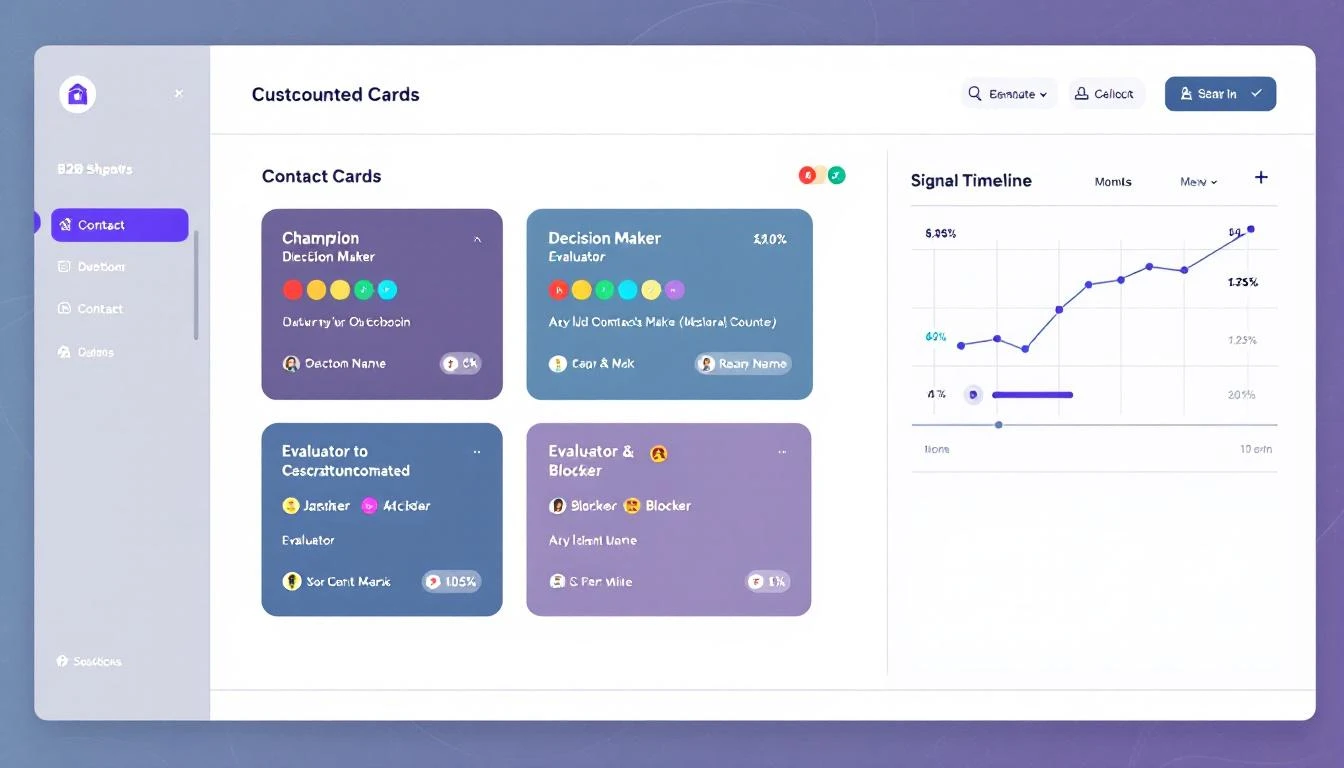
IoT platforms live and die by their internal champions — the VP of Engineering who chose your platform, the Director of Operations who manages the deployment. When those people leave, your renewal is at risk. When they arrive at a new company, you have your warmest possible lead.
The team implemented champion tracking to monitor every contact in their customer base. Within the first month:
A former customer's Head of IoT moved to a major European industrial company → warm intro, demo booked in 2 weeks
A champion who left a US customer landed at a Series B startup → they adopted the platform within 60 days
The LatAm rep spotted a former partner contact now leading connectivity at a Brazilian agritech company → Spanish-language demo, pipeline created same week
As one rep put it: "Champion signals are the closest thing to a guaranteed meeting in IoT sales."
With signals flowing, the next challenge was routing them intelligently across territories.
In a multi-region sales org, the wrong routing costs deals. An enterprise account headquartered in London with operations in Dallas needs the EMEA rep for the commercial conversation but the US rep for the technical evaluation. A Latin American subsidiary of a US company might need the Spanish-speaking rep for relationship building but the US rep for contract negotiation.
The team built automated routing rules:
Primary territory assignment by HQ location (EMEA, US, LatAm)
Signal-based alerts that fire to the territory owner and any rep with an existing relationship at the account
Language-aware routing — Spanish-language website visits and form fills automatically flagged for the LatAm rep
Overlap detection — when two reps were working the same global account from different subsidiaries, the system surfaced it before conflicting outreach went out
This eliminated the "two reps, same account, different continents" problem that plagues every global sales team.
The real magic wasn't any single signal. It was the combination. When a former champion moves to a new company and that company starts visiting your website and they're in a territory your best rep covers — that's not a cold lead. That's a warm handshake waiting to happen.
For IoT and telecom specifically, this compound signal approach works exceptionally well because:
The buyer universe is small — there are only so many companies deploying IoT at scale. You can monitor all of them.
Relationships carry — IoT champions know the pain of evaluating connectivity platforms. When they move, they bring that context.
The research phase is long — buyers visit websites, read documentation, and compare platforms for weeks before reaching out. Signals catch them early.
Territory boundaries matter — global routing ensures the right rep engages the right way, in the right language.
1. Start with Visitor Identification — It's the Lowest-Hanging Signal
If you sell connectivity, IoT platforms, or telecom infrastructure, your buyers are researching online right now. Identifying those companies gives you a daily feed of in-market accounts without any manual prospecting.
Your customer base is your most valuable signal source. Every contact who leaves a customer and joins a prospect is a warm lead. Champion tracking tools automate this monitoring.
If you have multi-language sales teams (and most global IoT companies do), route signals based on language preference and geography. A Spanish-language website session from a Mexican company should go to your Spanish-speaking rep — not your US generalist.
4. Replace Cold Outbound Volume with Signal Quality
IoT sales is not a volume game. You don't need 10,000 emails. You need 50 perfectly-timed, signal-informed touchpoints with the right decision-makers at in-market accounts. Focus your SDR tools on surfacing quality over quantity.
Build dashboards that show when multiple signals converge on the same account: website visit + champion movement + intent data spike. These "compound signal" accounts should be your SDRs' top priority every morning.
IoT and telecom sales teams are uniquely positioned to benefit from signal-based selling. The narrow buyer universe, long research cycles, sticky products, and high champion value create the perfect conditions for intent-driven pipeline generation.
The companies that figure this out first — that move from spray-and-pray outbound to signal-aware, territory-intelligent selling — will dominate their markets. The ones that don't will keep wondering why their cold emails aren't working.
The signals are already there. The question is whether you're watching.
MarketBetter combines visitor identification, champion tracking, intent signals, and automated SDR workflows into a single platform built for complex B2B sales. See how it works →
Market research firms have a pipeline problem that's hiding in plain sight: they know exactly where their buyers gather, but they have no system for converting that knowledge into deals.
Think about it. If you sell research, data, or advisory services in a specific vertical — smart home, connected consumer, healthcare tech, industrial IoT — you already know which conferences your buyers attend. You sponsor some of them. You speak at others. Your analysts walk those expo halls, shake hands, collect business cards, and then... what?
Those business cards sit in a desk drawer. The LinkedIn connections get a generic "great meeting you" message. The attendee list from the conference organizer (if you even get one) goes into a spreadsheet that nobody touches after week one.
Meanwhile, the companies that attended those events are actively researching solutions. They're visiting your website. They're reading your competitor's blog. They're in-market — and you're sending them a quarterly newsletter.
This is the story of how one market research firm in the smart home and connected consumer space rebuilt their pipeline engine around event-driven signals — and why every research and advisory firm should pay attention.
The Unique Sales Challenge of Market Research Firms
Market research firms don't sell widgets. They sell intelligence, access, and influence. Their products are subscriptions, custom research projects, advisory retainers, and event sponsorships. The buyers are CMOs, VPs of Strategy, Product leaders, and business development executives at companies within their coverage universe.
If you cover the smart home industry, you can name every major company, most mid-market players, and a healthy chunk of emerging startups. Your total addressable market isn't millions of companies — it's hundreds, maybe a few thousand. You probably already have relationships with many of them.
CES, IFA, industry-specific summits — your buyers come to you. They attend your conferences, visit your booth, sit in your sessions. The problem isn't awareness. It's conversion after the event ends.
A VP of Product at a smart TV manufacturer doesn't fill out a "Request Demo" form on your website. They download a report excerpt. They revisit your research methodology page three times. They send a junior analyst to your webinar. The intent signals are there, but they're quiet — and most firms miss them entirely.
The analyst who covers smart home audio today might cover connected health tomorrow. The client contact who was VP of Marketing at Company A is now SVP at Company B. These relationship threads are the firm's most valuable asset — and the hardest to track systematically.
The firm in question had built a strong brand in the connected consumer and smart home space over many years. They had marquee clients, a respected analyst team, and a calendar full of events. But their sales motion was — by their own admission — "artisanal."
Here's what their pipeline process actually looked like:
Pre-event:
The sales team would review the attendee list (when available) and highlight target companies
They'd try to pre-schedule meetings at the conference
Marketing would send a "come visit our booth" email blast to their database
During the event:
Analysts and sales reps would work the conference floor
Business cards collected, conversations had, sometimes a LinkedIn connection sent from the hotel bar at 11 PM
Notes scribbled on the back of agendas (if at all)
Post-event:
The VP of Sales would ask everyone to log their contacts into the CRM
Maybe 40% of conversations actually got logged
A generic follow-up email would go out 5-7 days later (by which point, the moment was gone)
Two weeks later, the event was ancient history and the team was prepping for the next one
The result: Great conversations at events, terrible conversion to pipeline. The firm estimated they were capturing less than 15% of the revenue opportunity from their conference presence.
Firmographic data (company size, vertical focus, tech stack)
Prior engagement history (past subscriptions, event attendance, content downloads)
This creates a tiered priority list:
Tier
Signal Combination
Action
🔴 Tier 1
Former client champion + website visitor + attending
Personal outreach from analyst, pre-schedule meeting
🟡 Tier 2
Target company + website activity OR prior engagement
Personalized sequence with research preview
🟢 Tier 3
ICP match, no prior signals
Awareness email with event-specific offer
Before implementing this system, the team was treating all attendees the same. Now, the sales team walks into every conference knowing exactly who to find first.
During the event itself, two signal channels run simultaneously:
1. Website visitor surge monitoring
Conference attendees don't just visit booths — they visit websites. During CES, CEDIA, or any major smart home event, the firm's website visitor identification system tracks a predictable spike in traffic. Companies that visit the research methodology page or pricing page during the conference are actively evaluating.
These real-time alerts go directly to the sales team's phones:
"🔴 [Major Smart TV OEM] just visited the pricing page for the third time today. Their VP of Product is at the conference. Booth #412."
That's not a cold walk-up. That's a warm conversation backed by data.
2. Social listening for event engagement
Conference hashtags, speaker mentions, and live-tweet threads often reveal which companies are most engaged with specific topics. When a product manager at a target company tweets about your analyst's keynote, that's a signal worth acting on that day, not two weeks later in a generic follow-up email.
This is where most firms drop the ball — and where signal-based selling creates the biggest lift.
Instead of a single "great meeting you at [Conference]" email blast, the team now runs signal-triggered post-event sequences that adapt based on behavior:
Sequence A — Hot Signal (website visit + event interaction):
Day 1: Personal follow-up from the analyst they met, referencing specific research relevant to their company
Day 3: Exclusive research preview (ungated, full access for 7 days)
Day 7: Case study showing ROI for a similar company in the same vertical
Day 14: Calendar link for a strategy session
Sequence B — Warm Signal (event attendance, no website visit yet):
Day 1: "Insights from [Conference]" summary with original data
Day 5: Research excerpt targeting their specific sub-vertical
Day 10: Invitation to an upcoming analyst briefing
Day 21: Personalized outreach from the relationship manager
Sequence C — Cold (attended conference, no engagement):
Added to the long-term nurture campaign with quarterly touchpoints
The key difference: these sequences adjust in real-time based on engagement. If a Tier 3 contact suddenly visits the website and downloads a report during the post-event window, they automatically escalate to Sequence A. No manual intervention. No leads falling through cracks.
The Results: From 15% to 60% Conference ROI Capture
The transformation didn't happen overnight, but after two full event cycles with the signal-based approach:
Pre-scheduled meetings per conference: 2-3 → 8-12 (4x increase)
Post-event pipeline generated: Up 250% compared to the previous year's same events
Time-to-first-meeting after conference: Dropped from 14 days to 2 days (for Tier 1 contacts)
CRM logging rate: From ~40% to 95% (because the system captures signals automatically, reducing manual data entry)
Conference ROI capture: From an estimated 15% to over 60% of potential revenue opportunity
Perhaps the most surprising result came from champion job change monitoring. In the smart home and connected consumer space, executives move between companies frequently. A Director of Product at a smart speaker company becomes VP of Connected Devices at an appliance manufacturer. A strategy consultant at a big firm joins an IoT startup as COO.
The firm had been losing track of these movements — and losing the relationships that came with them. With automated champion tracking:
12 former client contacts who had moved to new companies were identified in the first quarter
5 of those 12 became active opportunities within 60 days
3 converted to new subscriptions — representing over $200K in annual contract value from a signal that previously went undetected
Actionable Takeaways for Market Research and Advisory Firms
1. Your Conference Attendee Lists Are Gold — Stop Treating Them Like Lead Lists
Enrich every attendee with visitor identification data, engagement history, and champion tracking signals before the event. Walk in with a prioritized plan, not a hope.
When 500 of your target companies are in the same building, your website traffic tells a story. Companies visiting your pricing or methodology pages during a conference are sending a buying signal. Act on it the same day.
3. Replace the Generic Follow-Up Blast with Signal-Triggered Sequences
Your post-event email should be a conversation, not a broadcast. Build sequences that adapt based on real engagement behavior. A contact who visited your website twice gets a different experience than one who only picked up a brochure.
4. Implement Champion Tracking for Your Client Universe
In industry-specific research firms, your client contacts are your network. When they move companies, that's your warmest possible lead. Automated tracking ensures you never miss these transitions.
Every SDR should start each day with a prioritized task list driven by overnight signals — not a cold call sheet from last quarter's attendee dump. The right tools make this possible without adding complexity.
Market research pipeline doesn't follow a linear quarterly pattern. It follows the event calendar. Build your signal monitoring and outreach cadences around the 6-8 major events your buyers attend each year. Every event is a pipeline catalyst if you have the signals to capture it.
The market research industry is under pressure from every direction. Clients expect more value per dollar. AI-generated research is commoditizing basic market reports. And the competition for advisory relationships has never been fiercer.
In this environment, the firms that win won't be the ones with the best analysts (though that matters). They'll be the ones with the best signal infrastructure — the ability to detect buying intent, track relationship movements, and act on opportunities faster than their competitors.
The conferences are already on your calendar. The buyers are already in your database. The signals are already being generated. The only question is whether you're capturing them — or letting them disappear into the noise.
MarketBetter combines visitor identification, champion tracking, intent signals, and automated SDR workflows into a single platform built for B2B sales teams. Learn how it works for your industry →
Professional services companies have a sales problem that's fundamentally different from SaaS, and most sales advice ignores it entirely.
When you sell software, your buyer has a persistent need. They need a CRM every day. They need email marketing every month. The demand is continuous, and your job is to show up at the right moment in a long evaluation cycle.
When you sell professional services — investigations, consulting, specialized staffing, forensic accounting, compliance auditing — your buyer's need is episodic and urgent. They don't need you every day. They need you on the day something goes wrong. An employee theft case surfaces. A regulatory audit gets announced. A litigation hold requires forensic analysis. A due diligence review has a two-week deadline.
If you're not in front of them at that exact moment, someone else is. And in professional services, switching costs are almost zero. There's no contract to cancel, no data migration to worry about. They just call another firm.
This is the story of how one professional services firm — a private investigations company — went from manual cold outreach to AI-powered signal selling. They replaced their clunky scheduling tools, implemented a smart dialer, and doubled their close rate in under three months.
Professional services is a $6 trillion global industry — and one of the most underserved verticals in B2B sales technology.
Here's why: most sales tools are built for high-volume SaaS companies running sequences to thousands of contacts. But a professional services firm — whether it's an investigation agency, a consulting practice, a staffing company, or a legal services provider — operates differently. Their deals are relationship-driven. Their pipeline depends on speed-to-contact. And their SDR team is usually one or two people wearing five hats.
The typical sales tech stack (Salesforce + Outreach + ZoomInfo + five other tools) costs $3,000+/month and requires a full-time RevOps person to manage. That's overkill for a 15-person firm that needs to book three meetings a week.
This article tells the story of a professional services firm that replaced their entire fragmented sales stack with a unified platform — and tripled their pipeline in 60 days.
Lead qualification isn't just another piece of sales jargon—it's the actionable process of determining which prospects are likely to become paying customers. Think of it as a critical filter that separates high-intent buyers from casual window shoppers, ensuring your sales team invests their time on deals they can actually win.
Why Lead Qualification Is the Bedrock of Your Sales Strategy
Imagine your sales team are highly skilled chefs and leads are their ingredients. Even the best chef can't create a five-star meal (a closed deal) using rotten vegetables. Lead qualification is the art of sourcing the best ingredients—finding the fresh, high-quality produce (qualified leads) and discarding what's unusable.
Without this filtering process, your sales development reps (SDRs) are stuck chasing ghosts. They spend days calling prospects who have no budget, no authority to make a decision, or no real need for what you’re selling. This common gap between marketing's lead generation and sales' need for ready-to-buy prospects creates friction and wastes massive amounts of time and money.
When sales teams are handed unfiltered lists of leads, the consequences are more than just frustration—they hit your bottom line, hard. A stunning 67% of lost sales are the direct result of sales reps not properly qualifying leads in the first place. That means companies are pouring resources into conversations that were doomed from the start.
This table breaks down just how expensive poor qualification can be compared to a well-defined process:
Problem Area
Impact of Poor Qualification
Benefit of Strong Qualification
Wasted SDR/BDR Time
Reps spend up to 50% of their time on unproductive prospecting.
Reps focus on high-potential leads, boosting productivity and morale.
Inefficient Sales Cycles
Unqualified leads clog the pipeline, increasing sales cycle length by 20-30%.
A cleaner pipeline leads to faster deal velocity and more accurate forecasting.
Lower Conversion Rates
Engaging the wrong prospects tanks morale and lead-to-opportunity rates.
Higher-quality conversations naturally lead to better conversion rates.
Marketing Budget Waste
Marketing spends money attracting leads that sales can't close.
Marketing ROI improves as they refine campaigns to attract more qualified leads.
It’s a bleak picture. But effective qualification turns this around by creating a clear, shared definition of a "good lead" that both marketing and sales agree on. This alignment is the foundation of a healthy B2B sales funnel and is essential for predictable growth.
At its core, lead qualification is all about making sure you’re focused on getting the right leads—the ones who will actually move the needle for your business. It's the strategic discipline that separates high-growth companies from those stuck spinning their wheels.
The whole point of asking "what is lead qualification?" is to understand how it transforms your sales operation from a reactive mess into a proactive, well-oiled machine. Instead of treating every name on a list the same, a solid qualification process lets your team prioritize their efforts based on a prospect's real potential.
This systematic approach brings several huge advantages to the table:
Sky-High Sales Efficiency: Your reps stop wasting hours on dead-end conversations and focus their energy on prospects who have a genuine need and the intent to buy. Their productivity goes through the roof, and so does their morale.
Better Conversion Rates: When SDRs connect with well-qualified leads, the conversations are instantly more relevant and impactful. This naturally leads to a higher lead-to-opportunity conversion rate and, you guessed it, more closed-won deals.
Accurate Sales Forecasting: A pipeline filled with genuinely qualified leads gives you a much more reliable crystal ball for revenue forecasting. You can predict future sales with far greater confidence because you know the opportunities are real.
Smarter Marketing ROI: By seeing which types of leads actually convert, your marketing team can double down on what works. They can refine their campaigns to attract more prospects who fit your ideal customer profile, ensuring every dollar of their budget is spent effectively.
Once you’ve bought into why lead qualification is so important, the next question is how. You can’t just have your reps fire off random questions and hope for the best. That’s a recipe for inconsistent results. What you need is a system—a structured framework that guides the conversation.
Think of these frameworks as conversational roadmaps for your sales team. They make sure reps gather the right intel every single time to figure out if a prospect is truly a good fit.
The right framework depends entirely on what you're selling and who you're selling to. Think of it like a fishing net. You wouldn’t use a massive, deep-sea trawler net to catch trout in a stream. In the same way, the framework you choose needs to match the size and complexity of the deals you’re chasing.
At its core, the logic is simple. A qualified lead is someone who’s a good fit for what you sell and is actually ready to buy. This little decision tree sums it up perfectly.
Qualification is really a two-part test that separates real opportunities from all the noise. Let’s dive into the most common frameworks that help your team run this test effectively.
You’ve probably heard of BANT. It's one of the oldest frameworks in the book and has stuck around for a reason: it's simple and direct.
BANT stands for:
Budget: Can they actually afford what you're selling?
Authority: Are you talking to the person who can sign the check?
Need: Do they have a real problem that your product solves?
Timeline: Are they looking to buy now, or sometime next year?
BANT is all about efficiency. It’s fantastic for high-volume sales teams with shorter, more straightforward sales cycles. It quickly weeds out leads who simply can't buy.
But its biggest strength is also its biggest weakness. In today's world of consultative selling, leading with "What's your budget?" can feel abrasive. It can shut down a good conversation before it even starts and often misses the deeper "why" behind a potential purchase.
Enter CHAMP, which flips the BANT model on its head to be more customer-friendly. Instead of leading with the wallet, it starts with the problem.
CHAMP stands for:
CHallenges: What specific issues are they trying to solve?
Authority: Who's involved in making this decision?
Money: What’s the financial impact of doing nothing, and what have they set aside to fix it?
Prioritization: How big of a fire is this, really?
By starting with Challenges, reps immediately position themselves as helpful problem-solvers, not just quota-crushing vendors. This is a much better fit for modern B2B buyers who are looking for a partner, not just a product. CHAMP shines in any sales process where understanding the customer's pain is the key to unlocking the deal.
Then there’s MEDDIC. This isn't for your average SMB deal. This is the heavy-duty framework for navigating complex, high-stakes enterprise sales with long cycles and a dozen people on the buying committee.
MEDDIC is less of a checklist and more of an operating system for winning massive deals. It stands for:
Metrics: What are the measurable results the prospect expects to see? Think ROI.
Economic Buyer: Who holds the ultimate P&L responsibility and can give the final "yes"?
Decision Criteria: What specific, formal criteria will they use to judge your solution?
Decision Process: What are the exact, step-by-step stages they follow to sign a contract?
Identify Pain: What business pain is so acute it’s forcing them to act now?
Champion: Who is your inside person, the one selling your solution for you when you’re not in the room?
MEDDIC forces your reps to dig incredibly deep, giving them a 360-degree view of the entire opportunity. It's total overkill for a $5k deal but absolutely essential if you're trying to land a $500k one.
Actionable Step: Choosing the Right Qualification Framework
A comparative overview of BANT, CHAMP, and MEDDIC to help your team select the best model for your sales process. Using MEDDIC for a simple sale is like using a sledgehammer to crack a nut, while using BANT for a complex enterprise deal is like bringing a knife to a gunfight.
Framework
Best For
Core Focus
Key Question Example
BANT
Transactional or less complex sales cycles.
Buyer's readiness and available resources.
"Do you have a budget allocated for this solution?"
CHAMP
Modern B2B sales where pain points drive action.
Understanding the prospect's challenges first.
"What is the primary challenge you are trying to solve right now?"
MEDDIC
Complex, enterprise-level deals with multiple stakeholders.
Operationalizing the sales process for predictable wins.
"What metrics will the economic buyer use to evaluate success?"
To make this actionable:
Analyze your average deal size and sales cycle length. Are they small and fast, or large and complex?
Review your last 10 closed-won deals. What information was critical to closing them? Was it budget, understanding pain points, or navigating a complex buying committee?
Choose one framework that best aligns with your findings and train your entire sales team on it to ensure consistency.
While frameworks like BANT are great for structuring conversations, truly modern qualification is all about the data. To figure out who your SDRs should call right now, you have to answer two simple but critical questions:
Do they look like our best customers?
Are they acting like they're ready to buy?
Getting this right means blending two very different types of information. The first is all about who the company is—the static, foundational stuff. The second is about what they’re doing—the dynamic, real-time actions that signal intent. The secret to separating the tire-kickers from the truly sales-ready leads lies in mastering this combo.
Building Your Ideal Customer Profile with Firmographics
The first layer is defining your Ideal Customer Profile (ICP). This isn't just a vague notion of who you sell to; it's a laser-focused, data-driven description of the perfect company for your solution.
This profile is built on hard data points, often called firmographics. Think of them like demographics, but for businesses. Key attributes usually include:
Industry: Which verticals see the biggest wins with your product? (e.g., SaaS, Manufacturing, Financial Services)
Company Size: How many employees do they have? (e.g., 50-250, 1,000+)
Annual Revenue: What's the sweet spot for revenue? (e.g., $10M-$50M)
Geography: Where are they based? (e.g., North America, EMEA)
But you can get even more specific. Smart teams add technographics to the mix—data on the tech stack a company uses. For a SaaS business, this is pure gold. Knowing a prospect uses a complementary tool like Salesforce, or even a direct competitor, tells you a ton about their needs and potential budget.
Here’s the thing: an ICP only tells you if a prospect looks good on paper. It doesn't tell you if they have a burning problem they’re trying to solve today.
That's where behavioral signals come in. These are the digital breadcrumbs a prospect leaves behind that scream "I'm interested!" and hint at buying intent. These actions show a prospect is moving out of passive research into active consideration.
Key Takeaway: An ICP identifies the companies you should be talking to. Behavioral signals identify the companies you should be talking to right now. The magic happens when these two data sets overlap.
Just look at the difference between a lead who only fits your ICP versus one who's also lighting up the activity feed.
Lead Characteristic
Lead A (ICP Fit Only)
Lead B (ICP Fit + Behavioral Signals)
Profile
A 200-employee SaaS company in your target industry.
A 200-employee SaaS company in your target industry.
Actions
No recent interactions with your brand.
Visited your pricing page twice, downloaded a case study, and attended a webinar last week.
Qualification Status
Actionable Step: Cold but promising. Add to a long-term automated nurturing sequence.
Actionable Step: Hot and sales-ready. This is a top priority for immediate, personalized outreach today.
Lead A is a solid prospect for a long-term marketing sequence. But Lead B is a different story. They're showing clear buying signals and need to be at the very top of an SDR's list for a call or personalized email, today. This blend of "fit" and "intent" is the engine of efficient, modern sales.
Alright, so you’ve mapped out your ideal customer and you know what buying signals to look for. Now what? The next move is to operationalize that knowledge so you can sort through hundreds or thousands of leads without losing your mind. This is exactly where lead scoring comes into play.
Think of it like a video game. As a lead interacts with your brand, they collect points for certain actions and attributes. The higher their score, the closer they are to being “sales-ready.” A solid lead scoring system automatically tallies these points, giving your reps a crystal-clear leaderboard of who to engage right now.
It’s a powerful concept, but surprisingly, only 44% of companies are actually doing it. That’s a huge miss, especially when you consider how effective it is. For example, Product-Qualified Leads (PQLs)—which are identified almost purely by their behavior—often see 20-30% conversion rates. This just proves that intent is a game-changer, which you can read more about in our guide on how B2B lead generation is evolving.
A good lead scoring model isn't complex. It just needs to balance who the lead is (explicit data) and what they're doing (implicit data). You assign points to each piece of information based on how well it predicts that a lead will become a customer.
1. Score for Fit (Explicit Data): Does the lead match your ICP?
Job Title: A C-level exec is a great sign (+15 points). An intern is not a buyer (-10 points).
Industry: If you exclusively sell to fintech, a lead from that industry deserves a boost (+10 points).
Company Size: If your product shines in companies with 100-500 employees, a lead from a company that size gets +10 points.
2. Score for Intent (Implicit Data): Are they actively researching a solution?
High-Intent Actions: Requesting a demo is a direct ask for a sales conversation (+25 points). Visiting your pricing page shows commercial intent (+15 points).
Medium-Intent Actions: Attending a webinar (+10 points) or downloading a detailed case study (+5 points) shows they're actively researching.
Negative Actions: Visiting your careers page suggests they are a job seeker, not a buyer (-20 points).
Let's make this tangible. Here's a quick-and-dirty model for a B2B SaaS company that targets mid-sized tech companies.
Category
Attribute or Behavior
Points
Explicit (Fit)
C-Level or VP Title
+15
Director or Manager Title
+10
Target Industry (e.g., Tech)
+15
Company Size (100-1,000 employees)
+10
Implicit (Intent)
Requested a Demo
+25
Visited Pricing Page
+15
Attended a Product Webinar
+10
Downloaded a Case Study
+5
Unsubscribed from Emails
-20
Actionable Step: Setting Your Qualification Thresholds
With your scoring system ready, the final piece is deciding what to do with the scores. This is where sales and marketing need to be completely in sync. You’ll want to set at least two thresholds.
Marketing Qualified Lead (MQL): This is the "getting warm" stage. The lead is interesting, but not quite ready for a sales call. Actionable Step: Set an MQL threshold (e.g., 50 points) and automatically enroll these leads into a targeted nurture campaign.
Sales Qualified Lead (SQL): This is the green light. The moment a lead hits this score, they are officially sales-ready. Actionable Step: Set an SQL threshold (e.g., 75+ points) and create an automated workflow that immediately assigns the lead to an SDR and creates a high-priority task for follow-up.
This system removes the guesswork. The data tells your team who to call next, creating a clean, automated handoff from marketing to sales.
While building a manual lead scoring model is a massive step forward, the next frontier is handing the most repetitive work over to artificial intelligence. AI isn't just a buzzword here; it’s the engine that transforms qualification from a time-sucking manual chore into a slick, automated workflow.
Think of it this way: a manual process is like a lone miner panning for gold, hoping to find a nugget. An AI-powered process is like a modern mining operation using advanced sensors to pinpoint exactly where the richest veins are. This shift helps sales teams move faster and with far more precision, ensuring no high-intent lead slips through the cracks. The AI acts as a tireless digital assistant, constantly watching for the signals that matter most.
The real magic of AI in lead qualification isn't just spotting top prospects—it's turning that insight into action. Modern tools don’t just serve up a list of "hot leads"; they translate those signals into a clear next best action for your SDRs. This is where strategy finally meets execution.
Imagine an AI that not only flags a prospect who fits your ICP and just hit your pricing page, but also immediately creates a prioritized task in the SDR's queue. And this task isn't empty; it's loaded with context.
Who is this person? The AI pulls their title, company details, and relevant social media activity.
Why now? It highlights the exact behavioral signals, like "viewed pricing page 3 times" or "downloaded case study on X."
What should I say? It can even provide contextual talking points or draft a personalized email based on the prospect's industry and known pain points.
This makes the entire workflow—from signal detection to outreach—incredibly efficient. It bridges the gap between knowing what to do and actually doing it, fast.
The difference between a manual approach and an AI-driven one is night and day. While both aim for the same goal—finding qualified leads—their methods and outcomes couldn't be more different.
Aspect of Qualification
Manual Process (The Old Way)
AI-Powered Process (The New Way)
Lead Prioritization
Reps manually scan CRM lists, relying on gut feeling or sorting by last activity date.
AI automatically scores and ranks leads based on fit and real-time intent, creating a prioritized task list.
Research & Prep Time
SDRs spend 30-50% of their day on manual research across LinkedIn, company sites, and news articles.
AI instantly synthesizes company info, relevant news, and key talking points, slashing prep time to minutes.
Outreach Execution
Reps write every email from scratch or use generic templates that need heavy editing.
AI generates personalized, context-aware email drafts and call scripts, letting reps execute faster.
CRM Hygiene
Calls, emails, and notes are often logged inconsistently, creating messy data and zero visibility.
Activity is auto-logged directly into the CRM (like Salesforce or HubSpot), ensuring clean data and accurate reporting.
This comparison makes it obvious: AI doesn't replace the salesperson. It kills the administrative grunt work, freeing them up to do what humans do best—build relationships and have strategic conversations.
Platforms like MarketBetter.ai are built for this exact purpose, turning buyer signals into prioritized tasks and helping reps execute with an AI-powered dialer and email writer directly inside their CRM. The result is a sales team that spends less time on busywork and more time actually selling. By automating the tedious parts of qualification, you empower your reps to be more productive and, ultimately, to drive more revenue.
You can learn more about how this works by exploring our deep dive into the AI Lead Scoring Codex.
How to Measure the Success of Your Qualification Process
You can't fix what you don't measure. That’s especially true for lead qualification. To make sure all your hard work is actually paying off, you need to track specific Key Performance Indicators (KPIs) that tie directly back to revenue.
Think of these metrics as a report card for your qualification strategy. They tell you exactly what’s working and what’s falling flat, turning a vague process into a predictable engine for growth.
Actionable Step: Build Your Qualification Dashboard
To get a clear picture, start with a few core funnel metrics. These KPIs are the lifeblood of your process, showing how smoothly you’re turning initial interest into real business opportunities.
Lead-to-SQL Rate: What percentage of all your incoming leads actually get qualified by your team? A low number here is a flashing red light. It could mean your lead sources are off the mark, or maybe your initial filtering isn't tight enough.
SQL-to-Opportunity Rate: Of all the leads your SDRs qualify (SQLs), how many do your Account Executives accept and turn into a real, pipeline-worthy opportunity? This metric is the ultimate test of lead quality. A low rate here means your definition of "qualified" is misaligned with sales reality.
Lead-to-Customer Conversion Rate: This one’s the bottom line. It tracks the full journey from the very first touchpoint all the way to a signed contract. Seeing this number tick up over time is the best proof that your entire system is getting smarter and more efficient.
As a ballpark, many B2B SaaS companies find that around 13% of leads become SQLs, and of those, about 22% convert into opportunities. But don't treat these as gospel—your industry, market, and price point can change everything. The real goal is to set your own baseline and improve it month over month.
Don't Just Look at the Numbers—Listen to Your Reps
Data is crucial, but it only tells half the story. The most valuable, ground-truth insights will always come from your sales team. They're in the trenches every single day.
Actionable Step: Schedule a bi-weekly "Lead Quality Huddle" with your marketing and sales teams. Ask them straight up:
Are the leads I’m sending you actually ready to talk?
What are the most common pushbacks you're getting from supposedly "qualified" leads?
Which lead sources are producing the best conversations? Which are duds?
A low SQL-to-Opportunity rate is just a statistic. A rep telling you, "Leads from the last webinar were amazing, but the ones from that ebook download are wasting my time," is pure gold. That’s an insight you can act on immediately.
Combining the hard data with this on-the-ground feedback is how you truly master what is lead qualification and build a system that works in the real world.
Quick Answers to Common Lead Qualification Questions
Even the best-laid plans hit a few bumps in the road. As you start putting your lead qualification process into action, questions are bound to pop up. Here are some straightforward answers to the most common ones we hear from sales teams.
What’s the Real Difference Between an MQL and an SQL?
An MQL (Marketing Qualified Lead) has shown interest (e.g., downloaded an ebook) and fits basic criteria, making them a good fit for marketing nurture. An SQL (Sales Qualified Lead) is an MQL that a sales rep has vetted and confirmed has a real, near-term need, budget, and authority, making them ready for a sales conversation.
The Comparison: Think of it like a relay race. Marketing (MQL) runs the first leg and hands the baton to sales (SQL) only when the runner is in a strong position to finish the race. The handoff is a critical quality check.
How Often Should We Revisit Our Lead Scoring Model?
You should be giving your lead scoring model a tune-up at least once a quarter. Your business goals shift, your ideal customer evolves, and what worked last quarter might be totally off base today.
Actionable Step: Review your last quarter's closed-won and closed-lost deals. Do the winners consistently have high scores? Do the losers have low scores? If not, adjust the point values on the attributes and behaviors that correlate most strongly with winning deals.
Can a Small Team Actually Qualify Leads Without Fancy, Expensive Tools?
Yes, absolutely. At the end of the day, qualification is a strategy, not a software subscription. A small team can get started with a clearly defined Ideal Customer Profile (ICP) and a straightforward framework like CHAMP.
Actionable Step: Create a shared Google Sheet or document with your ICP and your chosen qualification framework's questions. Have reps manually research prospects on LinkedIn and use the sheet to guide their calls. While tools add scale, getting the fundamentals right is the one step no team can afford to skip.
Ready to stop guessing and start executing? marketbetter.ai turns buyer signals into a prioritized task list for your SDRs, helping them execute with AI-written emails and a CRM-native dialer. Learn more about how we help sales teams build consistent outbound motion without the busywork.
Overcoming objections isn't about winning a debate. It's about getting to the heart of what’s really making a buyer hesitate.
The real shift happens when you stop thinking in terms of reactive rebuttals and start building a proactive, empathetic approach. This isn’t about having a clever comeback for everything; it’s about building trust and uncovering the genuine issues behind their concerns. The modern playbook is all about preparation and real dialogue.
Why Traditional Objection Handling Fails Sales Teams
Let's be honest: the old playbook for handling sales objections is toast. Today’s B2B buyers are incredibly well-informed. They’ve done their homework. When a rep meets a thoughtful concern with a generic, canned response, they don't sound confident—they sound completely out of touch.
That outdated method treats objections like roadblocks to plow through, not opportunities to actually understand the buyer's world. This reactive mindset immediately creates friction, turning the conversation into a battle of wills. You end up eroding the very trust you need to build. Instead of moving the deal forward, you get stalled conversations and burnt-out reps stuck reciting lines from a script.
A modern, empathetic approach completely flips the script. The entire focus shifts from winning an argument to genuinely understanding the buyer’s hesitation. This takes real preparation, not just a list of pre-approved comebacks. A truly prepared rep walks into a call already understanding the account’s context, likely pain points, and specific industry challenges.
This proactive strategy is all about anticipating, not just reacting. It transforms the sales process from a confrontation into a collaboration. Let’s compare the two mindsets side-by-side:
Traditional (Reactive) Approach: Waits for an objection, then fires back with a pre-written, often irrelevant, rebuttal. The goal is to just "handle" it and move on.
Modern (Proactive) Approach: Uses data and research to anticipate likely concerns and weave them into the conversation early. The goal is to build a business case so strong that major objections never even surface.
Sticking to the old way has real consequences. Poor preparation is a direct line to revenue leakage. In fact, a staggering 55% of US sales leaders report losing revenue simply because their sales processes are poorly defined. And within that chaos, objection handling is a massive weak point. Without a system, conversion rates plummet as the same common doubts derail deal after deal. You can get more insights on how process gaps kill revenue over at The Sales Collective.
This image perfectly captures the difference between the old-school, aggressive tactics and a modern, data-driven strategy.
The evolution is clear: we’ve moved from pushy sales tactics to a consultative partnership, where understanding and data are the bedrock of the relationship.
The Four Common Types of Sales Objections and How to Spot Them
The secret to handling any sales objection is knowing what you're really up against. A prospect’s first reason for saying "no" is almost never the real one. It's just a smokescreen for a deeper concern.
If you can learn to diagnose the real issue behind the initial pushback, you stop reacting and start solving. It's the difference between a conversation hitting a brick wall and having a breakthrough. Most objections you'll ever hear fall into one of four buckets.
Before we dive into the specifics, here's a quick-reference guide to help you translate what you're hearing on a call into what the prospect is actually thinking. This is the first step—correctly identifying the problem.
Objection Category
What You Hear
What It Often Means
Price & Budget
"It's too expensive." "We don't have the budget."
"I don't see enough value to justify this cost." "You haven't made this a priority for me."
Authority & Timing
"I need to talk to my boss." "Call me back next quarter."
"I'm not the final decision-maker." "I'm not convinced this is urgent enough to deal with now."
Need & Fit
"We're happy with our current solution." "I don't think we have that problem."
"You haven't connected your solution to a pain I actually feel." "I don't understand how this is different or better."
Trust & Credibility
"I've never heard of your company." "How do I know this will work?"
"I'm worried about the risk of making a bad decision." "You haven't proven that I can count on you or your product."
Think of this table as your field guide. Once you've identified the category, you can deploy the right strategy instead of just guessing.
This is the one every rep hears, but it's rarely about the money. A price objection is almost always a value objection in disguise.
When a prospect says, "We don't have the budget for this," what they’re really communicating is, "You haven't convinced me the value of your solution is worth the cost right now." Don't jump to offering a discount—that just validates their belief that your price was too high to begin with. Your first move is to explore that value gap. The goal is to re-anchor the entire conversation around the high cost of inaction.
Actionable Step: Instead of defending the price, ask: "Setting the price aside for a moment, do you believe our solution can solve [specific pain point]?" This pivots the conversation from cost back to value.
This bucket covers anything related to a prospect’s power to sign the check or their timeline for doing so. Hearing "I need to run this by my boss" or "Call me back next quarter" can feel like a total shutdown. But these are usually just signals of internal uncertainty or a lack of urgency.
Let's compare two ways to handle this:
The Weak Response: "Okay, when would be a good time to follow up?" This just accepts the delay at face value.
The Strong Response: "That makes sense. To help you have that conversation, what specific metrics are most important for your boss when evaluating new tools?"
See the difference? The second response positions you as a helpful advisor, not just a persistent vendor. You're giving your champion the tools they need to sell for you internally. To learn more about this, check out our guide on asking better sales discovery questions to uncover the real decision-makers and timelines early on.
"We're happy with our current provider." "I don't think we really need this right now." These are classic need-based objections. They're a direct sign that you haven’t connected your solution to a real, pressing pain point. The prospect simply doesn’t see a meaningful gap between where they are today and the better future you're promising.
Actionable Step: Don't list features. Instead, ask about their current process. For example: "That's great you have a solution in place. Could you walk me through how your team handles [specific task] right now?" This uncovers hidden inefficiencies and creates an opening to discuss improvement.
This last category is probably the most sensitive. Objections like, "I've never heard of your company" or "How do I know this will actually work for us?" come from a fundamental lack of trust. This has nothing to do with your product's features. It’s all about their confidence—in your company, in your product's promises, and in you.
Building credibility requires a completely different playbook than defending your price. You have to show, not just tell.
Share a case study from a customer they'll recognize.
Offer to connect them with a current user in their industry.
Point to objective, third-party reviews on sites like G2 or Capterra.
Every move you make should be focused on one thing: reducing their perceived risk and proving you’re a safe bet.
If you're still relying on rigid scripts, you're losing deals. It's that simple. When a prospect raises a concern, they aren't looking for a canned rebuttal; they want to feel heard and understood. The secret to handling objections isn't about memorizing the perfect line—it's about having a repeatable process that works for any curveball they throw your way.
That’s where the AERC framework comes in.
AERC stands for Acknowledge, Explore, Respond, and Confirm. Think of it as your universal key for unlocking any objection. This simple, four-step approach completely changes the dynamic of the conversation, turning a potential confrontation into a collaborative problem-solving session. You stop fighting the objection and start working with the prospect to get to the root of it. This is how you build real trust and uncover what's actually holding them back.
Whether they’re hung up on price or questioning if they even have the authority to buy, this framework gives you a path forward.
The second a prospect objects, most reps jump straight into defense mode. Huge mistake. Your first move, always, is to acknowledge what they’ve said and validate their perspective. You don’t have to agree with them, but you do have to show them you’re listening.
This simple act of empathy works wonders. It instantly disarms them and proves you respect their point of view.
Phrases to have in your back pocket:
"That's a fair point. I can see why you'd feel that way."
"I appreciate you bringing that up. It's a valid concern."
"I hear that a lot, and it makes complete sense why you'd ask."
Notice the subtle but critical difference here. You aren't agreeing with the objection itself. You're just agreeing that the feeling behind it is legitimate. That nuance is everything—it builds rapport while keeping you in control of the call.
Okay, you've acknowledged their point. Now, you have to fight the urge to launch into your pitch. The next, and most important, step is to explore the "why" behind their objection. The first thing they say is almost never the real issue; it’s just the tip of the iceberg.
To get to the truth, you need to ask thoughtful, open-ended questions that get them talking. Patience is your best friend here. Data from Gong shows that top-performing reps pause for a noticeably long time after hearing an objection. We're talking 2-3 seconds or more. This gives the prospect space to elaborate, and it leads to 20-30% higher win rates in deals where objections are common.
Let’s see it in action:Prospect: "Your price is just too high."
Average Rep: "But we offer way more value than our competitors..." (Wrong move.)
Top Rep: "I appreciate you sharing that. So I can understand better, when you say the price is too high, could you tell me what you're comparing it to?"
See the difference? The top rep is digging for context.
Now you can respond. Once you've truly understood the root cause of their hesitation, you can connect your solution directly to the specific problem they just shared with you. A generic feature dump is a waste of everyone's time. A response tailored to the problem they just articulated? That’s what gets their attention.
This isn't about winning an argument. It's about showing them how your product or service directly solves the very specific concern they just laid out. If they revealed the real issue is long-term ROI, you talk about ROI—not some shiny new feature they don't care about.
You're almost there. The final step is to simply confirm you've actually addressed their concern. Never assume their silence means they're on board. You have to close the loop and get their explicit buy-in before moving on.
Asking a quick confirmation question solidifies the progress you’ve made and stops that same objection from popping up again five minutes later. While AERC is a fantastic all-purpose tool, it's also smart to dig into more specific, proven frameworks for handling B2B sales objections for different scenarios.
Effective ways to get confirmation:
"Does that help clarify things for you?"
"Did I address that concern to your satisfaction?"
"With that in mind, does this seem like a more viable path forward?"
This final check ensures you're both on the same page and gives you the green light to take the next step.
Having a framework like AERC in your back pocket is great, but theory goes out the window when a prospect hits you with a real-world objection mid-call. So let’s get practical. We’re going to break down exactly how to handle the objections you hear all day, every day.
This is about more than just having a clever comeback. It’s about fundamentally reframing the conversation. A weak response sounds defensive and generic. A strong one, on the other hand, is curious, specific, and opens the door to a real discussion. You're not trying to win an argument; you're trying to understand their world.
This is probably the most common brush-off in the book. A rookie rep hears this and immediately jumps into a feature-by-feature battle, which just makes the prospect dig their heels in. A top performer sees this for what it is: an opening.
Weak Response (The Old Way): "Oh, okay. Well, we're actually better because we have X, Y, and Z features that they don't." This immediately forces them to defend a decision they've already made. Dead end.
Strong Response (The MarketBetter Way): "That's great to hear, they're a solid company. Since you're already up and running with a solution like this, could you tell me what you like most about their platform? And maybe one thing you wish it did better?"
See the difference? This approach is completely disarming. You start by validating their choice, which builds rapport. Then, you use their existing expertise to pinpoint specific gaps or frustrations that your solution is perfectly designed to fix. You’re not trying to rip and replace; you’re looking for a way to add value.
Actionable Step: Position yourself as a complementary tool, not a full-on replacement. Try this: "A lot of our customers actually use us alongside [Competitor] because we solve a very specific problem around X. Is that a workflow your team has run into?" This reframes the conversation from "switch" to "add."
Ah, the classic timing objection. Let's be honest, this is usually just a polite way of saying, "You haven't convinced me this is a priority." If you just accept it and set a reminder, you're letting a potential deal go cold. Your real job here is to figure out why they want to delay.
Weak Response (The Old Way): "Sure thing, I'll put a note in my calendar to reach out in three months. Have a great quarter!" You’ve just handed over all control and momentum.
Strong Response (The MarketBetter Way): "I'm happy to do that. Just so I can come prepared for our next chat, what's slated to change for your team between now and then?"
This is a simple, respectful question that often cracks the code. It helps you uncover the real bottleneck.
Is a budget cycle about to end?
Is a key decision-maker out of office?
Is there another massive project eating up all their time?
Getting that context is everything. It lets you tailor your follow-up so you stay relevant. Sometimes, just asking this question clears up a misunderstanding, and the prospect realizes the conversation is more urgent than they first thought. To keep the momentum going between calls, you can lean on strategies like social selling to build your relationship and stay top-of-mind.
This one feels like a brick wall, but it's almost never about a literal lack of funds. It's a value objection. They're really saying, "I don't believe the return on this is worth the investment." The worst thing you can do is jump straight to a discount. That just cheapens your product and confirms their suspicion that it wasn't worth the list price.
Weak Response (The Old Way): "I understand. Well, we can offer a 15% discount if you sign this month. Would that help?"
Strong Response (The MarketBetter Way): "That's a fair point, and budgets are tight everywhere right now. If we set the price aside for just a moment, do you feel our solution could actually help solve the challenges we talked about with [mention their specific pain point]?"
This is a masterful pivot. You’re taking the conversation away from cost and putting it squarely back on value.
If they say "yes," the problem shifts from "buying a product" to "finding a way to afford a necessary solution." If they say "no," you’ve just learned the real objection isn't the budget at all—it’s that you haven’t sold them on the impact. For more ways to navigate these critical moments, check out these battle-tested sales call scripts for inspiration.
Before we move on, let's look at a quick comparison that really drives home the difference between a reactive approach and an informed, tool-assisted one.
Objection Handling Comparison: Old Way vs. The MarketBetter Way
Objection
The Old Way (Generic Rebuttal)
The MarketBetter Way (Informed Response)
"We already use Competitor X."
"We're better because of features A, B, and C."
"Great, they're a good company. What do you like most, and what's one thing you'd change?"
"Call me back next quarter."
"Okay, I'll set a reminder."
"Happy to. To prepare, what's changing between now and then?"
"We don't have the budget."
"What if I offer you a 15% discount?"
"Fair point. Price aside, do you believe this solves [pain point]?"
"Just send me an email."
"Sure, what's your email? I'll send it now."
"I can do that. To make it relevant, what should I focus on? The part about [benefit 1] or [benefit 2]?"
As you can see, the "old way" is reactive and often leads to a dead end. The MarketBetter way is proactive, turning objections into opportunities for deeper discovery. It's about changing the entire dynamic of the conversation.
Having a few rockstar reps who can dance around any objection is great, but it’s not a strategy for growth. To really scale, you need a system that lifts the entire team's game. This means ditching the one-off coaching sessions and building a repeatable process for sharing what works, tracking performance, and making smart, data-driven improvements.
It all starts with a centralized objection library—a set of battle cards, if you will. Instead of every SDR fumbling to come up with a response on their own, this shared playbook captures new objections and the exact talk tracks that have proven to work. Suddenly, tribal knowledge becomes a team asset.
But a library is just a library. It's static. You have to bring it to life with active practice, and that means running role-play sessions that don't suck.
Let's be honest, most role-playing feels awkward and forced. The key to making it work is to get hyper-specific. Forget generic situations and zero in on the top three objections your team is actually hearing this week. Pull the data straight from your CRM to see what's really tripping people up.
Weak Role-Play: "Okay, pretend I'm a prospect who says we're too expensive. Go." This is lazy. It’s a vague prompt that doesn’t mirror the pressure or specifics of a real call.
Actionable Role-Play: "Team, 'bad timing' objections are up 15% this week. Let's dig in. Sarah, you're the prospect who just signed a contract with a different vendor. John, use the AERC framework to uncover what's really behind that timing issue."
See the difference? That specificity makes the practice immediately relevant. It gives your reps concrete tactics they can use on their very next call and shifts the focus from a cringey performance to a genuine practice session. It’s about creating a safe space to fail, learn, and get better. For this to truly stick, these practices need to be part of a bigger sales enablement strategy that supports reps from day one.
This is where your tech stack becomes your secret weapon. When every call's outcome and objection is logged automatically, you stop guessing where the problems are. You get a crystal-clear view of team-wide trends and can pinpoint exactly who needs help with what.
A perfect example of this comes from Outreach. They noticed one of their SDRs, Katie, was getting hit with the 'bad timing' objection on 15% of her calls—way above the team average. Instead of just telling her to "get better," her manager used call intelligence to review those specific conversations and give targeted feedback. A few months later, Katie's bad-timing objection rate plummeted to 5.9%. That’s a 60% improvement that directly boosted her pipeline.
That’s the power of a scalable system. The manager didn't need to listen to hundreds of hours of calls; the data led them right to the coaching opportunity. When you combine a shared playbook, targeted role-play, and data-backed insights, you create a powerful feedback loop that turns objection handling from an art into a science.
Your Burning Questions About Handling Objections, Answered
Even with the best frameworks in your pocket, the real world always throws curveballs. Let's tackle some of the most common questions and "what-if" scenarios that pop up when teams start getting serious about objection handling.
The moment a prospect raises a concern, so many reps go into full-on debate mode, trying to prove the prospect wrong. It's a natural instinct, but it’s a deal-killer. They jump straight to a defensive rebuttal without ever stopping to figure out why the prospect feels that way.
This immediately puts the buyer on the defensive and makes them feel like you aren't listening. The best reps I've seen make a simple but profound mindset shift:
Losing Approach: Tries to "convince" the prospect their objection is invalid. This creates an adversarial dynamic.
Winning Approach: Seeks to "collaborate" with the prospect. It's all about understanding their world and figuring out if there's a path forward together.
It's the difference between a battle and a partnership.
How Do You Prepare for Objections You Can't Predict?
You can't have a script for everything, and you shouldn't try. The goal isn't to memorize a million responses; it's to internalize a single, flexible process so deeply that it becomes muscle memory.
When a truly unexpected objection comes out of left field, your framework is your safety net. Don't panic—just fall back on your process.
Actionable Step: Acknowledge their point immediately. Say, "That's a fair question, I hadn't thought about it from that angle." This buys you time. Then, pivot to exploration: "To make sure I understand, can you walk me through what's driving that concern for you?"
This simple one-two punch does two critical things: It buys you a few precious seconds to think, and more importantly, it ensures you’re responding to the real issue, not just the one on the surface.
How Do We Get Better at This Across the Whole Team?
Scaling this skill means moving away from relying on a few star performers and building a system that elevates everyone. If you want to see team-wide improvement, focus your energy on three key areas.
Build a Living "Battle Card" Library: Create a shared, central document where reps can drop new objections they hear and, crucially, the responses that actually worked. This turns every individual learning moment into a resource for the entire team.
Run Targeted Role-Play Sessions: Don't just "do role-play." Get specific. Dedicate 15-20 minutes in your weekly team meeting to practice the top one or two objections the team is actually struggling with this week. Keep it focused and relevant.
Use Your CRM as a Coaching Tool: This is where the magic happens. By having reps log call dispositions and objection types, you suddenly have real data. Managers can see exactly which objections are killing the most deals and deliver targeted coaching that solves actual pipeline problems.
Ready to turn objections from roadblocks into opportunities? MarketBetter.ai gives your SDRs the AI-powered task engine they need to master every part of their outreach, from AI-driven call prep to instant CRM logging, all inside Salesforce or HubSpot. See how we help you build a consistent, high-performing outbound motion at https://www.marketbetter.ai.
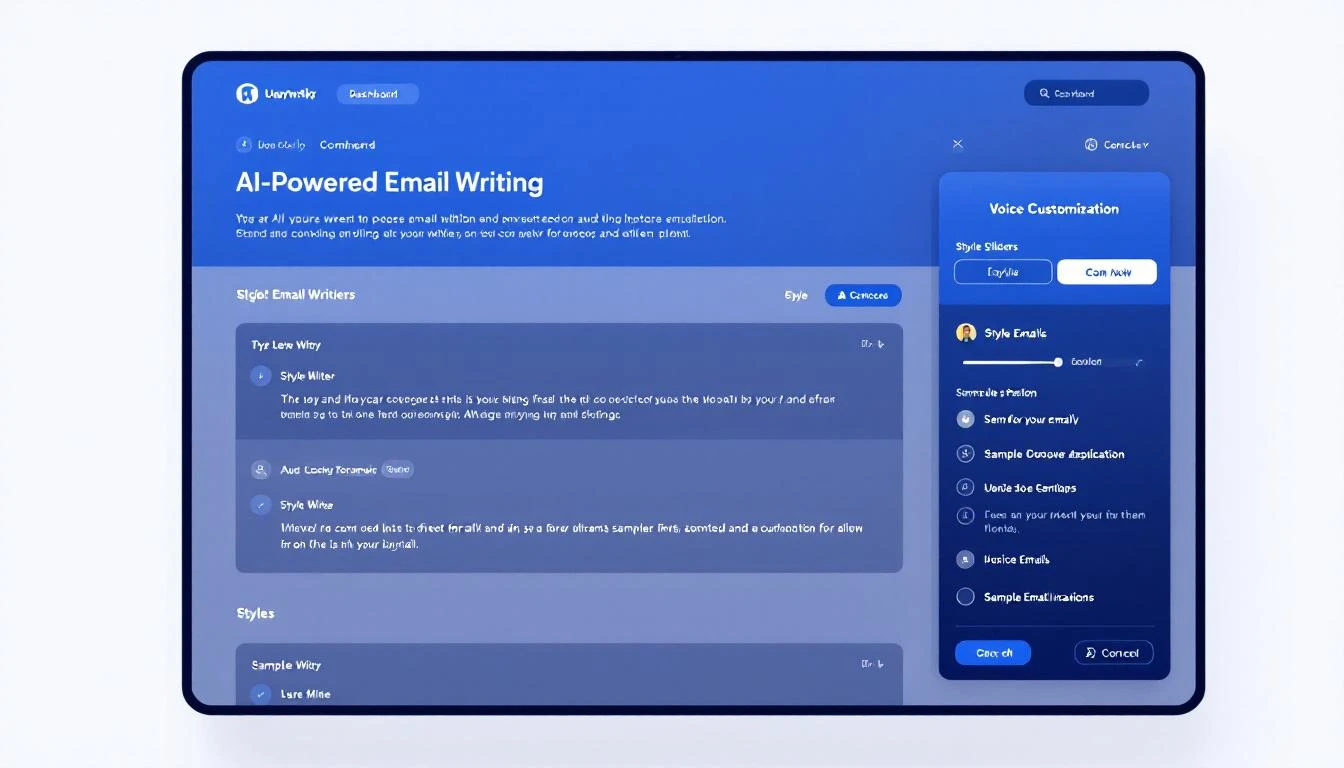
This is one I'm personally excited about. Every SDR writes differently. Some are punchy and direct. Others are consultative and warm. Your AI-generated emails should sound like you, not like a robot pretending to be you.
Starting today, you can teach MarketBetter exactly how you write:
Style instructions — Describe your tone, approach, and preferences in plain English. "Keep it under 3 sentences. Always lead with a question. Never use exclamation marks." Whatever makes your outreach sound authentic.
Sample emails — Paste two of your best-performing emails. The AI studies your structure, word choice, and cadence — then mirrors it in every email it generates.
This applies everywhere MarketBetter writes for you: automated sequences, one-off drafts, and follow-up suggestions. Your entire team can set their own voice, so every SDR's outreach sounds like it came from them.
Building a new campaign from scratch takes time. Picking the audience, setting up workflows, choosing outreach steps — it adds up. Campaign templates skip all of that.
We're launching with a template we've seen work incredibly well across our customer base:
Closed Lost Deal Resurrector — Automatically targets deals your team lost in the past 6-12 months, then runs a re-engagement sequence tuned to what's changed since they said no. New budget cycle? Leadership change? Product update that fixes their objection? The AI finds the angle and writes the outreach.
Here's what makes templates powerful:
One click to deploy — Select a template, pick your target, and it creates the audience + workflow for you. No manual setup.
CRM-connected — Templates that pull from your CRM (like Closed Lost) come pre-configured with the right filters and fields. If you're on HubSpot, the deal stage filters are already set.
Fully customizable — Templates are a starting point. Once deployed, you can tweak the audience criteria, adjust the workflow steps, or change the messaging — it's your campaign now.
More templates are coming. We're building playbooks for job-change outreach, competitor displacement, and expansion signals — all based on patterns we see working across hundreds of campaigns.
Your MarketBetter chat page now shows conversations from every source in one place — chatbot visitors, workflow-triggered conversations, and manual chats. No more switching between views to find a conversation.
Each conversation shows a source badge so you can tell at a glance whether someone came in through your website chatbot, was engaged by an automated workflow, or started a direct conversation. You can filter, search, and pick up any conversation regardless of how it started.
It's a small change that removes a real friction point: your SDRs no longer have to remember where a conversation happened to find it again.
We're working on more campaign templates, deeper CRM integrations for template targeting, and improvements to how the AI handles multi-threaded conversations. Stay tuned.
Breakout (getbreakout.ai) has carved out a niche as an "inbound AI SDR" — a chatbot that engages website visitors, qualifies them, and books meetings. It's clean, fast to set up, and has solid reviews.
But at $1,500–$2,500/month starting prices with no public pricing details, Breakout isn't the right fit for every team. And if you need more than just a chatbot — outbound, dialer, email sequences, or a full SDR workflow — Breakout's focused approach leaves gaps you'll need to fill with additional tools.
Here are 7 alternatives worth evaluating, depending on what you actually need.
Best for: Teams that want a complete SDR platform, not just a chatbot
Why it's the #1 Breakout alternative:
MarketBetter doesn't just replicate what Breakout does — it replaces your entire SDR tool stack. Where Breakout handles inbound chat, MarketBetter handles chat + email + phone + LinkedIn + visitor intelligence, all orchestrated by AI into a daily SDR playbook.
Built-in smart dialer — Breakout has no calling capability. Your SDRs still need Orum, Nooks, or similar ($150+/seat/mo). MarketBetter includes a full dialer with call recording and AI coaching.
Email automation — AI-generated, hyper-personalized sequences. Not just "warm email outbound" as an add-on.
Daily SDR playbook — Every morning, your reps see exactly who to call, email, and follow up with — prioritized by AI. Breakout just shows chat conversations.
Qualified is Breakout's most direct competitor — an AI-powered conversational platform that engages website visitors and routes qualified leads to sales reps. They're more enterprise-focused, with deep Salesforce integration and account-based routing.
Best for: Current Drift customers weighing their options
Drift pioneered conversational marketing but is now being sunset by Clari + Salesloft after a series of acquisitions. It's still functional, but no longer receiving active development. Existing customers should plan their migration now.
Many teams searching for "Breakout alternatives" are also evaluating what to do about Drift. If you're currently on Drift, you should migrate — not to Breakout, but to a platform that replaces everything Drift did plus more.
Best for: Real-time visitor engagement via chat + enrichment
Warmly sits between Breakout and enterprise tools like Qualified — offering visitor identification, AI chatbot engagement, and orchestration at mid-market pricing. Their "data waterfall" approach (20+ enrichment providers) delivers strong company-level identification.
Best for: Teams needing sales + support chat in one tool
Intercom's Fin AI agent handles both customer support and sales conversations. If you already use Intercom for support, adding the sales layer is seamless. Not as sales-focused as Breakout, but the combined support + sales value is compelling.
Best for: Fast form-to-meeting conversion (not really a chatbot)
Chili Piper isn't a chatbot, but it's often compared because it solves the same core problem: converting inbound interest into booked meetings. Instead of chat, Chili Piper focuses on form submission routing — showing calendar slots immediately after a form fill.
Best for: HubSpot customers who want "good enough" chat built in
If you're already paying for HubSpot Sales Hub or Service Hub, you get a chatbot included. It's not as sophisticated as Breakout's AI, but it costs $0 extra, integrates perfectly with your CRM, and handles basic qualification and meeting booking.


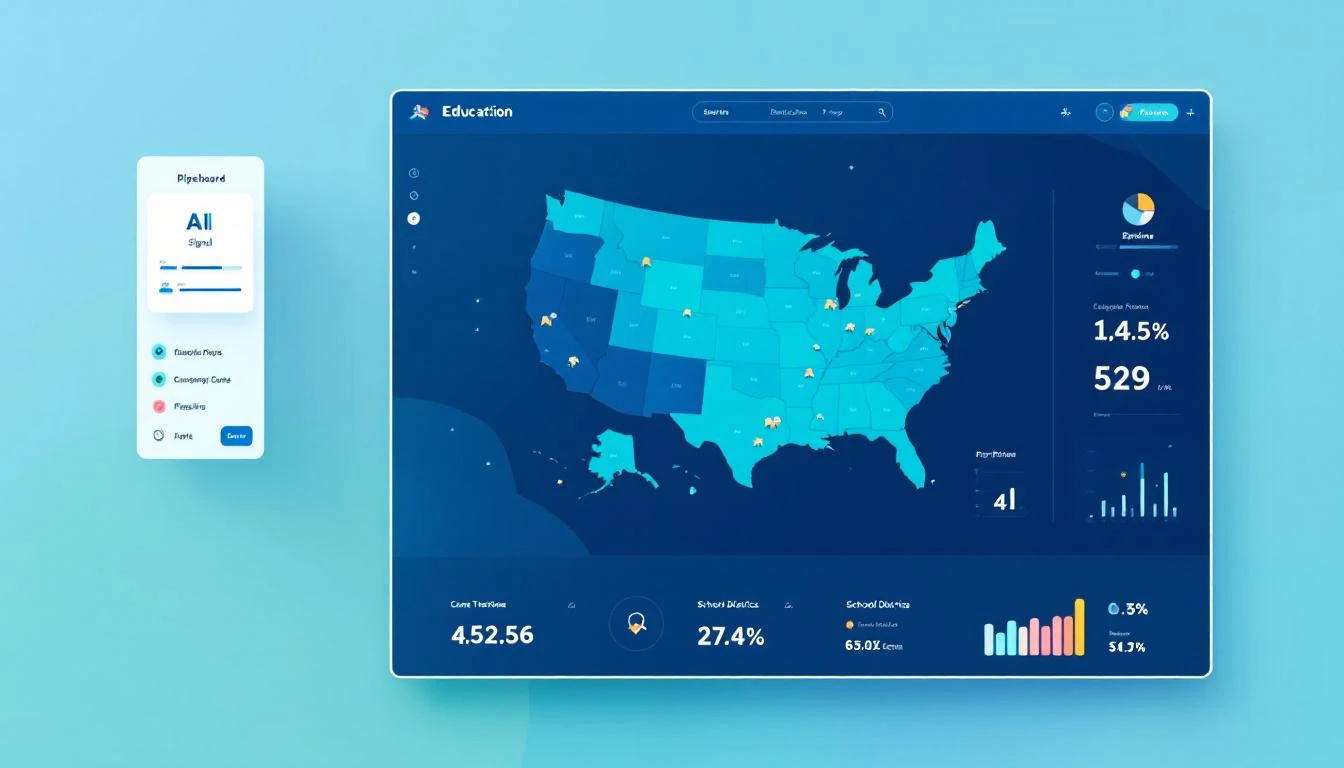






 Alright, so you’ve mapped out your ideal customer and you know what buying signals to look for. Now what? The next move is to operationalize that knowledge so you can sort through hundreds or thousands of leads without losing your mind. This is exactly where lead scoring comes into play.