Amplemarket Pricing Breakdown 2026: Plans, Hidden Costs & Better Alternatives

· 6 min read
sunder
Founder, marketbetter.ai

Amplemarket pricing breakdown 2026

Amplemarket positions itself as an all-in-one AI sales platform — multichannel outreach, lead search, and email sequencing bundled together. But the pricing? It's designed to look simple while hiding the real cost.

If you're evaluating Amplemarket for your SDR team, here's what you need to know before you sign that annual contract.

Amplemarket Pricing Plans at a Glance

Amplemarket offers three tiers. Only the Startup plan has a published price — the others require a sales conversation.

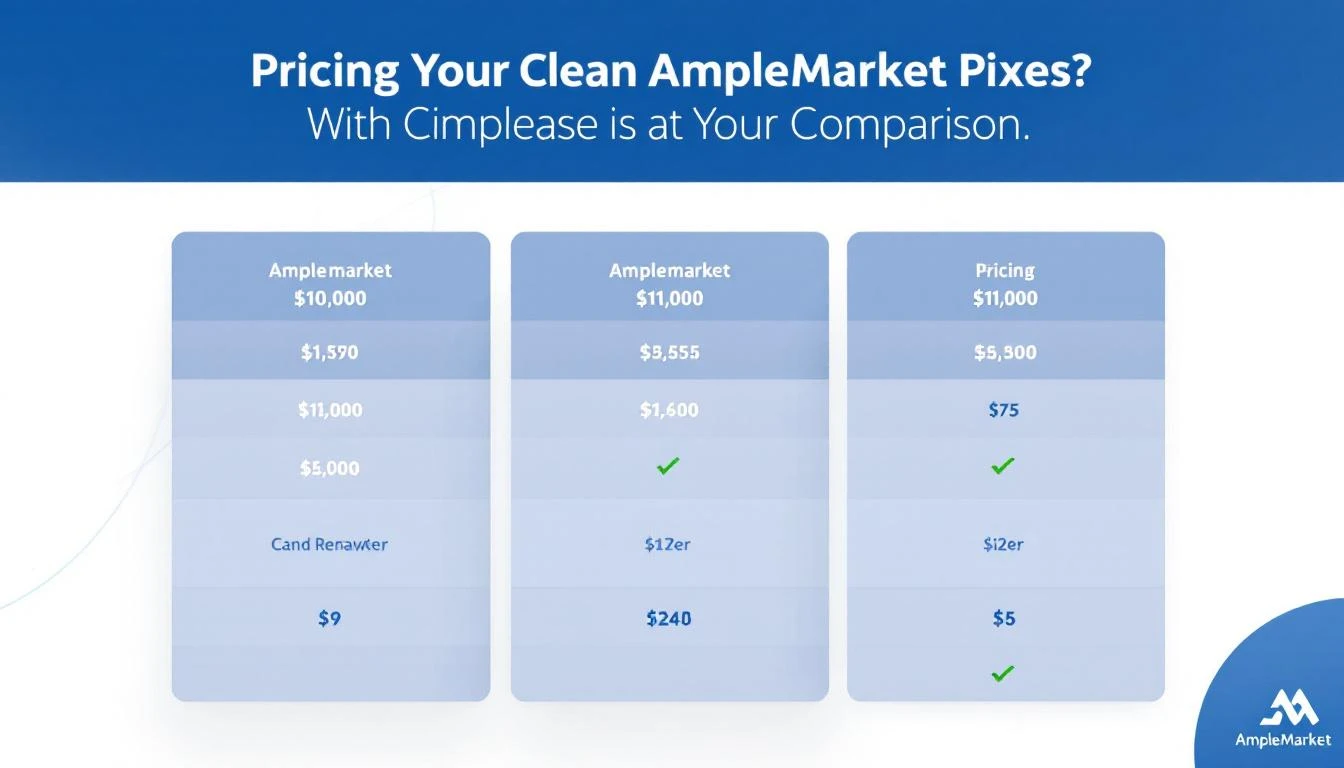
PlanUsers IncludedMonthly CostAnnual CommitmentEmail Credits/User/YearPhone Credits/User/Year
Startup2$600/mo$7,200/year15,000480
Growth4+$2,000-5,000/mo (est.)Custom70,0001,500
Elite10+$10,000-50,000/mo (est.)Custom100,0003,600

The catch: Every plan requires an annual commitment. There is no monthly billing option at any tier.

What Each Plan Actually Includes

Startup Plan ($600/month)

The entry point gets you:

  • 2 user seats maximum
  • Basic email outreach sequences
  • LinkedIn automation
  • Chrome extension
  • CRM sync (Salesforce, HubSpot)
  • Scaled (not dedicated) customer support
  • Access to ~30,000 contacts in their database

This sounds reasonable until you do the math. Two users with 15,000 email credits each per year means about 1,250 emails per user per month. For an active SDR running outbound campaigns, that can burn through fast.

Growth Plan (Custom Pricing)

The Growth tier is where most mid-market teams land. Based on user reports and review site data, expect $2,000-$5,000/month depending on team size. You get:

  • 4+ users (additional seats run ~$300-400/month each)
  • 70,000 email credits per user per year
  • Enhanced intent signals and job change alerts
  • Deliverability optimization
  • Dedicated CSM
  • Advanced multichannel sequences

Elite Plan (Custom Pricing)

Enterprise-grade pricing, typically $10,000-$50,000/month. Features include:

  • 10+ users with volume discounts
  • 100,000 email credits per user annually
  • Duo Copilot (AI writing assistant)
  • AI voice features and personalized messages
  • Full competitive intelligence
  • Priority support

The Hidden Costs Nobody Mentions

Here's where Amplemarket pricing gets tricky:

Additional User Fees

Each user beyond your plan's included seats costs approximately $300-400/month ($3,600-$4,800/year). Scaling from 2 to 5 users on the Startup plan? That's an extra $900-$1,200/month on top of your base price.

Credit Overages

Blow through your email or phone credits? You'll need to purchase additional credits — and the overage pricing isn't transparent. One Reddit user reported paying $7,500 for just 1,500 contacts on a basic plan.

AI Feature Add-Ons

Features like AI Voice, Duo Copilot, and advanced automation are included in Elite but cost extra on lower tiers. These add-ons aren't priced publicly.

No Monthly Flexibility

Every plan is annual-only. If you realize after 3 months that Amplemarket isn't the right fit, you're locked in for 9 more months of payments.

Real-World Cost Scenarios

Let's calculate what real SDR teams would actually pay:

Solo SDR or founder doing outreach:

  • Startup Plan: $600/mo ($7,200/year)
  • One of your 2 seats is probably wasted
  • Works out to about $0.24 per email credit

5-person SDR team:

  • Growth Plan base: ~$3,000/mo (estimated)
  • Additional user if needed: ~$350/mo
  • Annual commitment: ~$36,000-$40,000/year

10-person SDR org:

  • Elite Plan: ~$15,000-$25,000/mo (estimated)
  • Annual commitment: $180,000-$300,000/year

What Users Actually Say

Based on G2 reviews (150+ ratings) and Reddit discussions:

What users like:

  • Multichannel outreach in one platform
  • AI personalization saves time on repetitive messaging
  • When you get a dedicated CSM, support is responsive

Common complaints:

  • "Pricing feels high, especially for smaller teams"
  • "Credit consumption happens faster than expected on cold outreach"
  • "Annual billing requirement makes it hard for startups to commit"
  • "Email deliverability can be inconsistent"
  • "Contact data sometimes outdated"

The satisfaction breakdown across 150+ reviews shows about 65% enthusiastic, 27% pragmatic but cost-concerned, and 8% skeptical of the ROI.

How Amplemarket Compares on Price

PlatformStarting PriceBillingUsers IncludedKey Difference
Amplemarket$600/moAnnual only2Multichannel sequencing
MarketBetter$99/user/monthMonthly availableVisitor ID + daily playbook
Apollo$49/user/moMonthly1Largest contact database
Instantly$30/moMonthly1Email volume focus
Outreach~$100/user/moAnnual1Enterprise SEP

The key difference: Amplemarket is a multichannel sequencing platform. It helps you execute outreach across email, LinkedIn, and phone. But it doesn't tell you who to contact first or what to say to each prospect based on their buying signals.

That's where signal-driven platforms diverge. Instead of starting with a sequence and hoping it lands, signal-first tools like MarketBetter identify which prospects are actively showing intent — visiting your website, checking your pricing page, researching your category — and then tell your SDRs exactly who to prioritize and what action to take.

Who Should Actually Consider Amplemarket?

Amplemarket makes sense if:

  • You have 4+ SDRs doing high-volume outbound
  • You need multichannel sequencing (email + LinkedIn + phone in one tool)
  • You have budget for annual commitment of $7,200+
  • Your team primarily does cold outbound (not warm/signal-driven)

Amplemarket doesn't make sense if:

  • You're a small team (1-3 reps) watching your budget
  • You need monthly billing flexibility
  • You want buyer intent signals driving your outreach
  • You need visitor identification to know who's on your website
  • You want a daily action plan, not just a sequence builder
Free Tool

Try our AI Lead Generator — find verified LinkedIn leads for any company instantly. No signup required.

The Bottom Line

Amplemarket is a capable multichannel outreach platform, but its pricing structure — annual-only contracts starting at $600/month, steep per-user fees, and credit-based overages — makes it a significant commitment. For teams that need pure sequencing firepower, it delivers. For teams that want intelligence-driven selling with signals telling them who to contact and why, there are better options.

Looking for a platform that combines visitor identification, buying signals, and an AI-powered daily playbook? MarketBetter starting at $99/user/month included, monthly billing available, and no credit-based gotchas.

See how MarketBetter compares →

Book a demo →

Amplemarket Review 2026: AI Sales Platform Worth the $600/Month Price Tag?

· 8 min read
sunder
Founder, marketbetter.ai

Amplemarket Review 2026

Amplemarket has quietly become one of the most talked-about AI sales platforms in the B2B space, with over 1,000 companies reportedly migrating from legacy tools like Outreach, Apollo, and ZoomInfo. But at $600+/month with mandatory annual contracts, is it actually worth the investment for your SDR team?

We spent weeks analyzing G2 reviews, SalesRobot deep dives, user feedback on Reddit, and comparing Amplemarket's capabilities against the broader AI SDR landscape. Here's our honest take.

What Is Amplemarket?

Amplemarket positions itself as an "AI Sales Copilot" — a unified platform that combines lead search, multichannel outreach (email, LinkedIn, phone), AI personalization, and competitive intelligence into a single workspace.

The pitch is compelling: instead of juggling ZoomInfo for data, Outreach for sequences, and a dozen browser tabs for research, Amplemarket consolidates everything. Their AI handles prospect research, writes personalized messages, and even tracks competitor movements — all from one dashboard.

Key capabilities include:

  • AI-powered lead search with 220M+ contact database
  • Multichannel sequencing (email, LinkedIn, phone, WhatsApp, iMessage)
  • Intent signal tracking at the lead level (not just company level)
  • Competitive intelligence monitoring
  • Native CRM integrations (Salesforce, HubSpot, Zendesk Sell)
  • AI-generated personalization for each prospect

Amplemarket G2 Rating and User Sentiment

Amplemarket holds a 4.6/5 rating on G2, with particularly strong marks for Quality of Support (9.3/10). That's a solid score, putting it in the upper tier of AI sales tools.

But averages hide nuance. Here's what users consistently highlight:

What Users Love

Multichannel in one place. The most common praise centers on having email, LinkedIn, and phone outreach in a single platform. Users repeatedly mention eliminating tab-switching and the productivity gain from unified workflows.

AI personalization quality. Several G2 reviewers note that Amplemarket's AI-written messages sound significantly more human than competitors. The platform pulls data from LinkedIn profiles, company news, and job postings to craft relevant opening lines.

Support responsiveness. Multiple reviewers call out specific support team members by name — always a good sign. Response times and willingness to customize are frequently praised.

Lead-level intent data. Unlike tools that only show "someone at Company X visited a pricing page," Amplemarket ties intent signals to specific people. This makes prioritization far more actionable for SDRs.

What Users Dislike

Email deliverability issues. This is the most consistent complaint across reviews. Several users report emails landing in spam or experiencing deliverability drops after scaling sequences. For a platform at this price point, deliverability should be bulletproof.

Outdated contact data. Despite claiming 220M+ contacts, users report encountering stale phone numbers and outdated email addresses. Data accuracy reportedly sits around 90% — better than many tools, but when you're paying $600+/month, every bounce stings.

Confusing billing and credit system. Contact access is credit-based, not unlimited. Multiple users express frustration about unexpected overages and unclear credit consumption. The lack of transparent pricing on their website compounds the issue.

Annual contracts only. No monthly billing option exists. If the platform doesn't work for your use case, you're locked in for 12 months. Combined with pricing that starts at $600/month, this creates significant risk for smaller teams.

Steep learning curve for advanced features. While basic sequencing is straightforward, users report that getting full value from AI features, intent signals, and competitive intelligence requires substantial setup time.

Amplemarket Pricing Breakdown

Amplemarket doesn't publish pricing on their website (red flag for transparency), but here's what we've gathered from user reports and review sites:

PlanEstimated CostBest For
Startup~$600/monthSmall teams, founder-led sales
Growth~$3,000/monthMid-market (Series A/B)
Elite$10,000+/monthEnterprise with global reach

All plans require annual contracts. Contact access is credit-based, adding variable costs on top of the base subscription.

The Real Cost Calculation

Amplemarket proponents argue the platform replaces multiple tools:

  • ZoomInfo for data: ~$15,000/year
  • Outreach for sequencing: ~$8,400/year
  • AI writing tools: ~$1,800/year
  • Email verification: ~$1,000/year

Total replaced: ~$26,200/year in software alone.

If Amplemarket's Growth plan costs $30,000–$40,000/year, the ROI math works — if you're actually using all those capabilities. For teams that only need one or two of those functions, you're overpaying for bundled features you don't use.

Amplemarket Strengths: Where It Genuinely Excels

1. Data Quality (When It Works)

Amplemarket claims 90% phone accuracy — significantly better than Apollo's estimated 65%. For cold calling teams, that 25-point accuracy gap means 40 fewer dead-end calls per 100 dials. At scale, that translates to hours of SDR time saved daily.

2. Lead-Level Intent Signals

This is Amplemarket's genuine differentiator. While ZoomInfo tells you "someone at IBM is researching CRM software," Amplemarket tells you "John Smith at IBM visited your competitor's pricing page yesterday." That granularity makes the difference between a cold call and a warm one.

3. True Multichannel Orchestration

The addition of WhatsApp and iMessage outreach (beyond email, LinkedIn, and phone) gives Amplemarket one of the broadest channel mixes in the category. For teams selling internationally or into mobile-first industries, this matters.

4. Competitive Intelligence Baked In

Rather than requiring a separate tool for competitive monitoring, Amplemarket tracks competitor mentions, product launches, and hiring patterns — feeding those signals directly into your outreach workflow.

Amplemarket Weaknesses: The Real Concerns

1. Deliverability Is a Dealbreaker Risk

For a premium-priced sequencing tool, email deliverability issues are the most critical weakness. If your emails aren't landing in inboxes, the best AI personalization in the world doesn't matter. Multiple G2 reviews mention this problem, and it's not a minor annoyance — it's a fundamental failure of the product's core job.

2. No Signal-to-Action Pipeline

Amplemarket excels at helping you find people and reach out. But it doesn't answer the strategic question: "Of all these signals, what should my SDR do RIGHT NOW?"

There's no daily playbook, no prioritized task list, no "here are your top 5 actions for this morning." You still need an SDR manager (or another tool) to translate Amplemarket's signals into a daily workflow.

3. Pricing Opacity Creates Trust Issues

When a company won't publish pricing, it usually means they want to charge based on perceived value rather than cost. For budget-conscious SDR leaders, this makes it nearly impossible to get approval without a sales call — adding friction to the evaluation process.

4. Credit-Based Contacts Add Unpredictable Costs

The credit system for contact access means your monthly cost isn't truly fixed. Heavy prospecting months can blow past credit allocations, creating surprise invoices that make finance teams nervous.

Who Should Consider Amplemarket?

Good fit:

  • Mid-market to enterprise teams (Series A+ funding) with $30K+ annual sales tool budgets
  • Teams currently juggling 4+ tools for data, sequencing, and intelligence
  • Organizations where multichannel outreach (email + LinkedIn + phone + WhatsApp) is core strategy
  • Companies with dedicated RevOps to manage setup and optimization

Bad fit:

  • Solo founders or small teams under 3 SDRs
  • Teams primarily focused on inbound (Amplemarket is an outbound engine)
  • Organizations that need daily SDR task management and accountability
  • Budget-conscious teams that need transparent, predictable pricing

The Bottom Line

Amplemarket is a powerful AI sales platform that genuinely consolidates multiple tools into one. The data quality, lead-level intent signals, and multichannel capabilities are real differentiators.

But it's not without serious concerns. Email deliverability issues at this price point are hard to forgive. The opaque pricing and annual lock-in create significant buyer risk. And the platform still requires human judgment to translate signals into daily SDR actions.

Our verdict: 7/10. If you have the budget and the RevOps support to fully implement it, Amplemarket can deliver strong ROI. But if you're looking for a platform that tells your SDRs exactly what to do each morning — not just who to target — you'll still have a gap to fill.

Free Tool

Try our AI Lead Generator — find verified LinkedIn leads for any company instantly. No signup required.

Explore Other Options

Before committing to a $7,200+/year platform, consider tools that combine signal detection with actionable daily workflows:


Looking for an AI SDR platform that turns signals into a daily action plan — not just a database? Book a demo with MarketBetter and see how the Daily SDR Playbook prioritizes your team's outreach automatically.

12 Best AI BDR Tools for 2026: Automate Prospecting Without Losing the Human Touch

· 16 min read
sunder
Founder, marketbetter.ai

12 Best AI BDR Tools Compared for 2026

The AI BDR market exploded in 2025. Every sales tool now claims to "replace your BDR team" or "automate outbound prospecting with AI."

Here's the reality: most AI BDR tools only automate one slice of the business development workflow — usually cold email sequencing. They find contacts, write templated emails, and blast them at scale. That's not a BDR. That's a mail merge with a ChatGPT wrapper.

A real BDR does much more: they identify the right accounts, research them, time their outreach to buying signals, personalize across multiple channels, qualify responses, and hand warm leads to AEs. The best AI BDR tools in 2026 handle most of this workflow — not just the email part.

We evaluated 12 platforms across five criteria that actually matter:

  1. Prospecting depth — Does it find the right people, or just any people?
  2. Signal awareness — Can it detect intent and buying signals before outreach?
  3. Multi-channel reach — Email only, or email + LinkedIn + phone?
  4. Personalization quality — Generic AI copy, or genuinely relevant messages?
  5. Pipeline impact — Does it book meetings, or just send emails?

AI BDR vs AI SDR: What's the Difference?
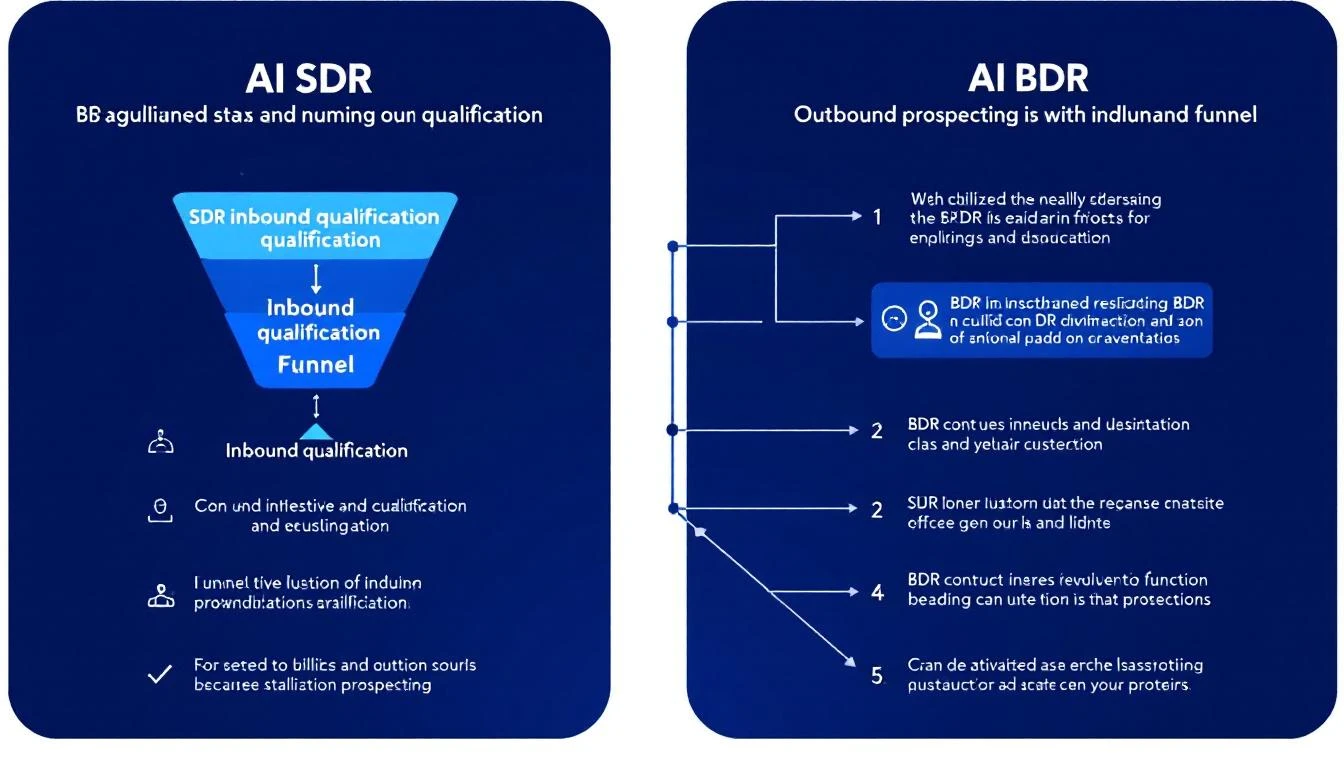
AI SDR vs AI BDR: Understanding the Difference

Before we dive into the tools, let's clear up the most common confusion in this category.

AI BDR (Business Development Representative): Focuses on the top of the funnel — outbound prospecting, cold outreach, initial contact, and first-touch engagement. The BDR's job is to open doors.

AI SDR (Sales Development Representative): Handles both inbound and outbound — qualifying inbound leads, responding to website visitors, nurturing prospects through the middle of the funnel, and booking meetings for AEs.

In practice, the terms overlap heavily. Most AI tools in this space handle both functions. But if you're specifically looking for outbound prospecting automation, you're searching for an AI BDR. If you need inbound qualification + outbound, you need an AI SDR platform.

The smartest approach in 2026: get a platform that handles both, so your SDRs aren't juggling separate tools for inbound vs. outbound.

Key insight: The real differentiator isn't whether a tool calls itself an AI BDR or AI SDR. It's whether the tool tells your reps what to do next or just dumps data on them and expects them to figure it out.

Quick Comparison: Top AI BDR Tools at a Glance

ToolBest ForStarting PriceMulti-ChannelSignal Detection
MarketBetterFull SDR/BDR workflow with daily playbook$99/user/monthEmail + LinkedIn + Phone✅ Website visitors + intent
Artisan (Ava)Autonomous outbound email~$2,000/moEmail + LinkedInLimited
11x (Alice)Enterprise autonomous SDR~$5,000/moEmail + LinkedIn✅ Intent data
Apollo.ioBudget-friendly prospecting + outreach$49/moEmail + LinkedIn + PhoneBasic
ClayLead enrichment + data workflows$149/moEmail (via integrations)Via waterfall enrichment
AmplemarketAI-powered multichannel sequences~$600/moEmail + LinkedIn + Phone✅ Buying signals
AiSDRMid-market AI email agent~$750/moEmail + LinkedIn✅ Intent + HubSpot signals
InstantlyHigh-volume cold email at scale$30/moEmail onlyNone
SmartleadEmail deliverability + volume$39/moEmail onlyNone
OutreachEnterprise sales engagement~$100/user/moEmail + LinkedIn + Phone✅ (add-on)
SalesLoftEnterprise cadence management~$125/user/moEmail + LinkedIn + Phone✅ (add-on)
Snov.ioSMB prospecting + email outreach$39/moEmail + LinkedInBasic

1. MarketBetter

Best for: Teams that want one platform for prospecting, signals, AND execution

Most AI BDR tools solve one problem: they automate cold outreach. MarketBetter takes a fundamentally different approach — it combines website visitor identification, buying signal detection, and a daily SDR playbook into a single workflow.

Instead of your BDRs starting each morning wondering "who should I reach out to today?", MarketBetter generates a prioritized task list based on real-time signals: who visited your pricing page, which target accounts are showing intent, and what specific actions to take for each prospect.

What makes it different as an AI BDR:

  • Visitor identification catches inbound interest that pure outbound tools miss entirely
  • Daily playbook tells BDRs exactly who to contact, when, and what to say
  • Smart dialer built in — most AI BDR tools don't touch phone outreach
  • AI chatbot captures and qualifies website visitors 24/7
  • Email automation with hyper-personalized sequences based on actual prospect behavior

Pricing: $99/user/month with everything included - visitor ID, daily SDR playbook, AI chatbot, email automation, smart dialer, 5M AI credits + 500 enrichment credits per seat.

Best for: B2B teams (50-500 employees) that want to consolidate their BDR tech stack into one platform. Especially strong for teams that get some website traffic but aren't capturing it.

Limitations: Not the cheapest option for teams that only need cold email blasting. If you just want to send 10,000 cold emails per month, Instantly is cheaper. But if you want your BDRs to actually book meetings from warm signals — not just spray and pray — MarketBetter pays for itself.

Book a demo →

2. Artisan (Ava)

Best for: Autonomous outbound email with minimal human involvement

Artisan's AI BDR agent "Ava" is designed to run outbound prospecting almost entirely on autopilot. You define your ICP, set guardrails, and Ava handles prospect research, email writing, and follow-up sequences.

Key features:

  • Access to 300M+ contact database for prospecting
  • AI-written outbound emails with personalization
  • Multi-step follow-up sequences
  • LinkedIn connection requests (newer feature)
  • B2B lead scoring and prioritization

Pricing: Custom pricing, typically starting around $2,000/mo. They don't publish rates on their website — you'll need a demo to get a quote.

What users say (from G2 and Reddit):

  • Strong at generating volume — Ava can create hundreds of personalized emails
  • Quality of personalization varies — sometimes feels templated despite claiming AI personalization
  • Some users report issues with email deliverability when volume ramps up
  • Setup can be complex, and the AI needs significant training on your ICP

Best for: Teams that want to remove humans from the cold outbound loop almost entirely. If your philosophy is "replace the BDR," Artisan is built for that vision.

Limitations: No phone dialer, no inbound lead capture, no website visitor identification. It's purely an outbound email engine with AI.

3. 11x (Alice)

Best for: Enterprise teams with budget for autonomous AI SDR/BDR

11x positions "Alice" as a fully autonomous digital worker who handles the entire outbound workflow. They've raised significant funding and target enterprise companies willing to invest $50K+/year in AI-powered prospecting.

Key features:

  • Autonomous prospecting with AI agent "Alice"
  • Access to large contact databases
  • AI-powered email personalization
  • LinkedIn outreach automation
  • Intent data integration

Pricing: Enterprise pricing, typically $5,000/mo+ ($50K-$100K/year). No self-serve option.

What users say (from G2 and Reddit):

  • Mixed results — some teams see strong pipeline generation, others report low response rates
  • Reddit threads frequently mention that Alice's emails can feel generic despite AI personalization claims
  • High price point makes ROI scrutiny intense
  • Support and onboarding are generally praised

Best for: Enterprise teams (500+ employees) with dedicated RevOps support to configure and monitor the AI agent. Not for SMBs.

Limitations: The "replace your BDR entirely" approach doesn't work for every sales motion. Complex deals with long sales cycles still need human touch. No website visitor identification or inbound workflow.

4. Apollo.io

Best for: Budget-friendly prospecting with built-in outreach

Apollo combines a massive contact database (275M+ contacts), email sequencing, and basic AI features into one affordable platform. It's not a pure AI BDR — it's a prospecting database with automation features bolted on.

Key features:

  • 275M+ contact database with email and phone numbers
  • Email sequences with basic AI writing assistance
  • LinkedIn integration
  • Built-in dialer
  • Lead scoring
  • Intent signals (newer feature)

Pricing: Free tier available. Professional at $49/user/mo, Organization at $79/user/mo. Very transparent pricing compared to AI BDR startups.

What users say:

  • Excellent database coverage, especially for US companies
  • Email data accuracy around 85-90% (some bounces expected)
  • AI writing assistance is basic compared to dedicated AI BDR tools
  • Dialer works but isn't as sophisticated as dedicated calling platforms
  • Best value-for-money in the category

Best for: Teams that need prospecting data AND basic outreach in one tool at a reasonable price. If you're spending $200+/mo on ZoomInfo for data and another $100+/mo on an email tool, Apollo consolidates both.

Limitations: AI features are an add-on to a database product — it's not AI-first. Sequences are rule-based, not signal-driven. No website visitor identification.

5. Clay

Best for: Data enrichment workflows and technical BDR teams

Clay isn't an AI BDR in the traditional sense — it's a data enrichment and workflow platform that lets you build custom prospecting pipelines. Think of it as a spreadsheet on steroids with 100+ data providers.

Key features:

  • Waterfall enrichment across 100+ data providers
  • AI research agent for prospect enrichment
  • Custom workflow builder (like Zapier for sales data)
  • AI-powered lead scoring
  • Integration with any outreach tool

Pricing: Free tier with 100 credits/mo. Starter at $149/mo (3,000 credits), Explorer at $349/mo, Pro at $800/mo. Credits get consumed fast — enriching one lead can use 5-15 credits depending on the providers you stack.

Real cost analysis: A team enriching 500 leads/month with 3-4 data points each could easily spend $349-$800/mo on Clay alone — and that's before you pay for the outreach tool to actually send emails.

What users say:

  • Incredibly powerful for technical users who can build custom workflows
  • Credit system can get expensive fast at scale
  • Steep learning curve — not plug-and-play
  • Best-in-class data quality when you stack multiple providers
  • Not a standalone BDR solution — you need Clay + an outreach tool + a CRM

Best for: RevOps teams and technical BDRs who want granular control over their data enrichment pipeline. If your team can build in Clay, the data quality is unmatched.

Limitations: Not an outreach tool. You still need Instantly, Apollo, or Outreach to actually send emails. Total stack cost (Clay + outreach + CRM) often exceeds $1,000/mo.

6. Amplemarket

Best for: AI-powered multichannel sequences with buying signals

Amplemarket has quietly built one of the more complete AI BDR platforms. It combines prospecting, multichannel outreach (email + LinkedIn + phone), and buying signal detection in one tool.

Key features:

  • AI-powered email and LinkedIn sequences
  • Buying signal detection (job changes, funding, tech adoption)
  • Built-in dialer
  • Lead scoring based on ICP fit + intent
  • Deliverability optimization
  • CRM sync (Salesforce, HubSpot)

Pricing: Starting around $600/user/mo. Custom pricing based on team size and volume.

What users say:

  • Strong multichannel capabilities — email + LinkedIn + phone in one workflow
  • Signal detection helps prioritize outreach timing
  • Some users note that AI personalization quality depends heavily on initial setup
  • Higher price point than Apollo but more AI-native

Best for: Mid-market teams (100-500 employees) that want multichannel AI BDR capabilities with signal-based prioritization.

Limitations: Pricing is opaque and relatively high. Less known than Apollo or Outreach, so finding peer reviews can be difficult.

7. AiSDR

Best for: Mid-market teams wanting a dedicated AI email agent

AiSDR is a focused AI BDR platform that integrates with HubSpot and uses intent data to personalize outbound emails. It positions itself as a dedicated AI-powered email agent.

Key features:

  • AI-generated personalized emails
  • HubSpot integration for CRM-based triggers
  • Intent data from Bombora
  • LinkedIn outreach
  • Multi-step sequences with AI follow-ups

Pricing: Starting around $750/mo for 1,000 prospects. Scales with volume.

Best for: HubSpot-heavy teams that want an AI layer on top of their existing CRM data. The tight HubSpot integration is a genuine differentiator.

Limitations: Email-focused — no dialer, no visitor identification. Effectiveness depends heavily on your HubSpot data quality.

8. Instantly

Best for: High-volume cold email at the lowest cost

Instantly is the go-to tool for teams that want to send thousands of cold emails per month at rock-bottom prices. It's not an AI BDR — it's an email sending infrastructure with basic AI writing.

Key features:

  • Unlimited email sending accounts
  • Email warmup built in
  • AI email writer (basic)
  • Lead database (30M+ contacts)
  • Campaign analytics

Pricing: Growth at $30/mo (1,000 leads), Hypergrowth at $77.6/mo (25,000 leads). Extremely affordable.

What users say:

  • Unbeatable for pure email volume
  • Warmup feature genuinely helps deliverability
  • AI writing is basic — you'll want to edit the output
  • No LinkedIn, no phone, no multi-channel
  • Database quality is inconsistent compared to Apollo or ZoomInfo

Best for: Solo founders, freelancers, and small teams that need to send high volumes of cold email on a tight budget.

Limitations: Email only. No signal detection. No buyer intent. If everyone on your list gets the same cold sequence regardless of whether they just visited your website or raised funding, you're leaving pipeline on the table.

9. Smartlead

Best for: Email deliverability optimization at scale

Smartlead competes directly with Instantly on price and features, with a stronger focus on deliverability infrastructure.

Key features:

  • Unlimited email accounts and warmup
  • AI email personalization
  • Custom inbox rotation
  • Sub-sequence automation
  • Unified inbox for managing replies

Pricing: Basic at $39/mo (2,000 leads), Pro at $94/mo (30,000 leads). Comparable to Instantly.

Best for: Teams that have had deliverability issues with other tools and want more control over sending infrastructure.

Limitations: Same as Instantly — email only, no signals, no multi-channel. Pure volume play.

10. Outreach

Best for: Enterprise sales engagement with BDR workflows

Outreach is the incumbent in sales engagement. While not an "AI BDR" in the startup sense, their platform handles BDR workflows at scale with AI features layered on top.

Key features:

  • Multi-channel sequences (email + LinkedIn + phone)
  • AI email assist and optimization
  • Revenue intelligence and deal tracking
  • Sentiment analysis on replies
  • Robust analytics and A/B testing

Pricing: Typically $100-130/user/mo. Enterprise pricing with annual contracts. Known for expensive add-ons — intent data, conversation intelligence, and analytics often cost extra.

What users say:

  • Extremely capable platform with deep customization
  • Expensive when you add all the features you actually need
  • Can feel bloated for small teams
  • Best-in-class reporting and analytics
  • Steep learning curve

Best for: Enterprise teams (500+) with dedicated RevOps support who need a mature, full-featured sales engagement platform.

Limitations: Not AI-native. AI features feel bolted on rather than central to the product. No website visitor identification.

11. SalesLoft

Best for: Structured cadence management for BDR teams

SalesLoft (now owned by Vista Equity) is Outreach's main competitor in the sales engagement space. Strong cadence management with growing AI capabilities.

Key features:

  • Cadence automation (email + phone + social)
  • AI email writing and optimization
  • Conversation intelligence (call recording + analysis)
  • Deal intelligence
  • CRM integration

Pricing: Typically $125-150/user/mo. Enterprise contracts with annual commitments. Total cost for a 10-person BDR team can reach $20K-$70K/year when you factor in add-ons.

Best for: Mid-market to enterprise teams that want structured cadence management with coaching insights.

Limitations: Legacy platform adding AI features. Not built AI-first. Expensive for what you get compared to newer AI BDR tools.

12. Snov.io

Best for: SMB prospecting with built-in email sequences

Snov.io offers email finding, verification, and outreach in one affordable package. Their recent AI features add ICP generation and email writing.

Key features:

  • Email finder and verifier
  • AI email writer with personalization
  • Multi-channel sequences (email + LinkedIn)
  • CRM with pipeline management
  • Chrome extension for LinkedIn prospecting

Pricing: Free tier available. Starter at $39/mo (1,000 credits), Pro at $99/mo (5,000 credits).

Best for: Small teams and solo reps who need prospecting + outreach without a large budget.

Limitations: Database is smaller than Apollo or ZoomInfo. AI features are basic compared to dedicated AI BDR platforms. Better as a starter tool than an enterprise solution.

How to Choose the Right AI BDR Tool

The right choice depends on three things:

1. What's your actual problem?

  • "We need more contacts to reach out to" → Apollo or Clay for data
  • "We need to send more cold emails" → Instantly or Smartlead for volume
  • "We need our BDRs to be more efficient" → MarketBetter or Amplemarket for workflow
  • "We want to replace human BDRs entirely" → Artisan or 11x for autonomous agents

2. What's your budget?

  • Under $100/mo: Instantly, Smartlead, or Apollo free tier
  • $100-500/mo: Apollo Pro, Clay Starter, Snov.io
  • $500-2,000/mo: MarketBetter, Amplemarket, AiSDR
  • $2,000-5,000/mo: Artisan, Outreach, SalesLoft
  • $5,000+/mo: 11x, enterprise Outreach/SalesLoft bundles

3. Do you need signals or just sending?

This is the most important question. If your BDRs are blasting cold lists with no signal data, you're leaving 80% of your pipeline potential on the table. Tools that detect buying signals — website visits, job changes, funding events, content engagement — help your BDRs reach the right people at the right time.

The volume trap: Sending more cold emails doesn't linearly increase meetings. Response rates on generic cold outbound hover around 1-2%. Signal-based outreach typically achieves 5-15% response rates because you're reaching people who are already interested.

The Bottom Line

The AI BDR category in 2026 is split into two camps:

Camp 1: Volume tools (Instantly, Smartlead) — Send more emails for less money. Works for commoditized products where you need pure reach.

Camp 2: Intelligence tools (MarketBetter, Amplemarket, Clay) — Send fewer, smarter messages to the right people at the right time. Works for considered purchases where timing and relevance matter.

Most B2B teams should start with Camp 2. Your total addressable market isn't 10 million companies — it's maybe 5,000. Blasting all of them with generic emails hurts your brand and tanks your domain reputation. Finding the 50 who are actively in-market and reaching them with relevant, timely outreach is how modern BDR teams win.

Ready to see how signal-based prospecting works? Book a MarketBetter demo →


Related reading:

7 Best Amplemarket Alternatives 2026: Cheaper, Smarter SDR Platforms

· 6 min read
sunder
Founder, marketbetter.ai

Amplemarket is a solid multichannel outreach platform, but it's not for everyone. Annual contracts starting at $7,200, credit-based pricing that can balloon, and no monthly billing option push many SDR teams to look elsewhere.

Whether you're switching from Amplemarket or evaluating it alongside alternatives, here are 7 platforms worth considering — each solving the outbound sales problem differently.

Why Teams Look for Amplemarket Alternatives

The most common reasons teams leave (or skip) Amplemarket:

  • Price shock: $600/month minimum with annual lock-in, additional users at $300-400/month each
  • Credit-based pricing: Email and phone credits run out faster than expected, leading to overage charges
  • No monthly billing: Can't test with a small commitment first
  • No visitor identification: Amplemarket doesn't tell you who's visiting your website
  • No daily playbook: It's a sequence builder, not a signal-driven action platform
  • Overkill for small teams: 2-seat minimum on a $7,200/year plan when you only need one

1. MarketBetter — Best for Signal-Driven Selling

Starting price: $99/user/month

MarketBetter takes a fundamentally different approach than Amplemarket. Instead of starting with a sequence and hoping it connects, MarketBetter identifies who's showing buying signals — website visits, pricing page views, category research — and delivers a daily playbook telling SDRs exactly who to contact and what to do.

What you get:

  • Website visitor identification (know which companies are on your site)
  • AI-powered daily SDR playbook
  • Email automation with hyper-personalization
  • Smart dialer for warm outbound calls
  • AI chatbot that engages every website visitor
  • AI SEO tracking (how AI talks about your brand)
  • Enrichment credits included (no separate data costs)

Why teams switch from Amplemarket:

  • Monthly billing available (no annual lock-in required)
  • included in base price vs. Amplemarket's 2
  • Signal-driven selling vs. cold sequencing
  • Visitor ID means you know who to call, not just who to sequence

Best for: B2B sales teams (50-500 employees) that want intelligence driving their outreach, not just automation executing it.

Compare MarketBetter vs Amplemarket →

2. Apollo — Best for Contact Data + Budget Outreach

Starting price: $49/user/month (free tier available)

Apollo offers the largest B2B contact database (275M+ contacts) with built-in email sequencing and a basic dialer — all at a fraction of Amplemarket's price.

Strengths over Amplemarket:

  • Massive contact database included (Amplemarket limits to ~30K on Startup)
  • Monthly billing available
  • Free tier for testing
  • Much lower per-user cost

Where it falls short:

  • Basic dialer (no parallel dialing)
  • Limited intent signals
  • No visitor identification
  • Email deliverability can be inconsistent at scale

Best for: Teams that need a large contact database with basic outreach capabilities on a tight budget.

3. Outreach — Best for Enterprise Sales Engagement

Starting price: ~$100/user/month (annual)

Outreach is the enterprise standard for sales engagement — sophisticated sequencing, revenue intelligence, and deep Salesforce integration.

Strengths over Amplemarket:

  • More mature platform with deeper enterprise features
  • Better revenue intelligence and forecasting
  • Stronger Salesforce integration
  • Larger customer base and ecosystem

Where it falls short:

  • Also expensive (~$100/user/month + add-ons)
  • Complex to set up and manage
  • Annual contracts required
  • No visitor identification

Best for: Large enterprise SDR orgs (50+ reps) already invested in the Salesforce ecosystem.

Read our Outreach pricing analysis →

4. Instantly — Best for High-Volume Email at Scale

Starting price: $30/month

If your primary channel is email and you need volume, Instantly delivers massive sending capacity at a fraction of Amplemarket's cost.

Strengths over Amplemarket:

  • Dramatically cheaper ($30/mo vs. $600/mo)
  • Unlimited email accounts
  • Built-in email warmup
  • Simple to set up and use
  • Monthly billing

Where it falls short:

  • Email only (no LinkedIn, no phone)
  • Basic contact data
  • Limited personalization compared to Amplemarket's AI
  • No CRM integration depth

Best for: Solo founders and small teams running high-volume cold email campaigns.

Read our Instantly pricing analysis →

5. SalesLoft — Best for Structured Sales Cadences

Starting price: ~$125/user/month

SalesLoft (now part of Vista Equity) is Outreach's main competitor in the sales engagement space — structured cadences, call coaching, and deal intelligence.

Strengths over Amplemarket:

  • More structured cadence management
  • Conversation intelligence built-in
  • Better coaching and training tools
  • Stronger deal management features

Where it falls short:

  • Expensive (similar to Amplemarket's Growth tier)
  • Annual contracts standard
  • Add-on pricing for advanced features pushes total cost high
  • No visitor identification

Best for: Mid-market to enterprise teams that want structured selling processes with coaching.

Read our SalesLoft pricing analysis →

6. Lemlist — Best for Personalized Cold Outreach

Starting price: $39/month

Lemlist focuses on highly personalized cold outreach — custom images, landing pages, and liquid syntax for dynamic personalization at scale.

Strengths over Amplemarket:

  • Much cheaper ($39/mo vs. $600/mo)
  • Superior personalization features (custom images, videos)
  • Monthly billing available
  • Built-in email warmup (Lemwarm)
  • LinkedIn automation included

Where it falls short:

  • Smaller contact database
  • Basic analytics
  • No phone dialer
  • Limited intent signals

Best for: Small teams that prioritize creative, highly personalized outreach over volume.

Read our Lemlist pricing analysis →

7. Clay — Best for Data Enrichment Workflows

Starting price: $149/month

Clay is a data enrichment and workflow platform — not a traditional outreach tool. It connects 75+ data providers, lets you build custom enrichment workflows, and feeds data into your existing tools.

Strengths over Amplemarket:

  • Dramatically better data enrichment (75+ sources)
  • Flexible workflow builder for any use case
  • Waterfall enrichment finds data others miss
  • Integrates with your existing stack

Where it falls short:

  • Not an outreach platform (doesn't send emails)
  • Credit-based pricing can get expensive
  • Steep learning curve
  • Requires additional tools for actual outreach

Best for: RevOps teams that need deep data enrichment and custom workflows, with separate tools for outreach.

Read our Clay pricing analysis →

Quick Comparison Table

PlatformStarting PriceMonthly BillingVisitor IDDaily PlaybookDialerEmail Sequences
MarketBetter$99/user/month
Apollo$49/user/mo✅ Basic
Outreach~$100/user/mo
Instantly$30/mo
SalesLoft~$125/user/mo
Lemlist$39/mo
Clay$149/mo
Free Tool

Try our AI Lead Generator — find verified LinkedIn leads for any company instantly. No signup required.

The Verdict

Amplemarket is a capable multichannel platform, but in 2026, the market has enough alternatives that you shouldn't settle for annual lock-ins and credit-based overages if they don't work for your team.

If you want signal-driven selling — where buying intent tells you who to contact, not just a static list — MarketBetter is the strongest alternative. If you need budget-friendly email — Instantly or Lemlist. If you need enterprise-grade engagement — Outreach or SalesLoft.

The best alternative depends on what matters most to your team: signals, price, volume, or enterprise features.

Book a MarketBetter demo →

7 Best Lavender AI Alternatives 2026: Email Tools That Do More

· 6 min read
sunder
Founder, marketbetter.ai

Lavender AI is a great email coaching tool — it scores your emails, suggests improvements, and helps SDRs write messages that get replies. But it's just that: an email coach. It doesn't find prospects, send sequences, identify website visitors, or tell you who to prioritize.

In 2026, most SDR teams need more than email coaching. Here are 7 alternatives that solve broader problems.

Why Teams Look Beyond Lavender

Lavender does one thing well. But sales teams are finding that:

  • It's a coaching layer, not a platform. You still need 3-4 other tools for actual selling.
  • No contact data. Lavender doesn't find prospects for you.
  • No email sending. It coaches writing but doesn't manage sequences or deliverability.
  • No buying signals. It can't tell you WHO to email — just HOW to email them.
  • Stack cost adds up. Lavender ($29-69/mo) + data tool ($49-200/mo) + sequencer ($100+/mo) + dialer ($35-417/mo) = expensive.

1. MarketBetter — Best All-in-One SDR Platform

Starting price: $99/user/month

MarketBetter replaces your entire SDR tool stack — not just email coaching, but prospecting, signals, outreach, and calling. The platform identifies who's visiting your website, surfaces buying signals, and delivers a daily playbook telling reps exactly who to contact.

What you get that Lavender doesn't:

  • Website visitor identification
  • AI-powered daily SDR playbook
  • Full email automation and sequences (AI-written, not just AI-coached)
  • Smart dialer for warm outbound calls
  • AI chatbot engaging website visitors
  • Enrichment and contact data
  • LinkedIn intelligence

Why it's better than Lavender + 4 other tools:

  • One platform, one login, one vendor
  • Signal-driven (contact people showing intent, not random lists)
  • Monthly billing available
  • Total cost often lower than a 4-tool stack
  • AI writes AND sends, not just coaches

Where Lavender still adds value:

  • Dedicated email scoring is more granular than any platform's built-in AI
  • Individual rep skill development over time
  • Email-specific analytics and coaching
  • Low-cost add-on if budget allows

Best for: B2B teams that want one platform for everything instead of assembling a 5-tool Frankenstein stack.

Book a MarketBetter demo →

2. Apollo — Best for Email + Data on a Budget

Starting price: $49/user/month (free tier available)

Apollo bundles a 275M+ contact database with email sequences, a basic dialer, and AI-powered writing assistance. It's not an email coach, but it handles the complete prospecting-to-outreach workflow.

Strengths over Lavender:

  • Finds prospects (275M+ contacts) — Lavender can't
  • Sends email sequences — Lavender can't
  • Includes a basic dialer — Lavender can't
  • AI writing built into sequence builder
  • Monthly billing with a generous free tier

Where Lavender wins:

  • Better email scoring and coaching
  • More sophisticated writing suggestions
  • Dedicated skill development focus

Best for: Teams that need an affordable prospecting + outreach platform with decent AI writing.

3. Copy.ai — Best for AI Content Generation

Starting price: $49/month

If your primary need is AI-powered writing (not just email coaching), Copy.ai generates sales emails, LinkedIn messages, blog content, and marketing copy at scale.

Strengths over Lavender:

  • Generates complete emails from scratch (not just coaching existing ones)
  • Multi-format: emails, LinkedIn, ads, blog posts
  • Workflow automation for content pipelines
  • Better for teams that need volume content generation

Where Lavender wins:

  • Sales-specific coaching (Copy.ai is general-purpose)
  • Email scoring and analytics
  • Real-time suggestions while writing
  • Focused on reply rates, not just content quality

Best for: Marketing and sales teams that need AI writing across multiple formats beyond email.

4. Regie.ai — Best for Autonomous AI Outreach

Starting price: ~$5,000+/year

Regie.ai goes beyond email coaching into fully autonomous prospecting — AI agents that find leads, write personalized messages, and execute outreach without human intervention.

Strengths over Lavender:

  • Autonomous agents handle prospecting end-to-end
  • 220M+ contact database included
  • Email + LinkedIn + phone outreach
  • Signal monitoring across 100+ sources
  • AI Dialer included

Where Lavender wins:

  • Much cheaper ($29/mo vs. $5K+/year)
  • Better for individual rep development
  • Not trying to replace humans — coaching them

Best for: Teams ready to let AI handle autonomous prospecting with human oversight.

Read our Regie.ai pricing analysis →

5. Instantly — Best for High-Volume Email at Scale

Starting price: $30/month

Instantly focuses on sending massive volumes of cold email with built-in warmup and deliverability optimization. No coaching, but if volume is your strategy, it delivers.

Strengths over Lavender:

  • Actually sends emails (Lavender just coaches)
  • Built-in email warmup
  • Unlimited email accounts
  • Much higher sending capacity
  • Simple, affordable pricing

Where Lavender wins:

  • Email quality coaching
  • Reply rate optimization
  • Individual rep skill building
  • Better for quality over quantity approach

Best for: Solo founders and small teams running high-volume cold email.

Read our Instantly pricing analysis →

6. Outreach — Best Enterprise Email + Engagement

Starting price: ~$100/user/month

Outreach is the enterprise sales engagement platform — sophisticated email sequences, revenue intelligence, and workflow automation with AI-powered messaging.

Strengths over Lavender:

  • Full sales engagement platform (sequences, tasks, analytics)
  • AI-powered email suggestions at enterprise scale
  • Revenue intelligence and forecasting
  • Deep CRM integration
  • Call recording and coaching

Where Lavender wins:

  • Much cheaper ($29/mo vs. ~$100/mo)
  • Better pure email coaching and scoring
  • Simpler to use
  • Lower barrier to entry

Best for: Enterprise SDR orgs (50+ reps) that need a complete engagement platform.

Read our Outreach pricing analysis →

7. Grammarly Business — Best for General Writing Quality

Starting price: $15/user/month

If your team's emails need help with grammar, tone, and clarity (not sales-specific coaching), Grammarly Business is a more affordable general writing assistant.

Strengths over Lavender:

  • Cheaper ($15/mo vs. $29-69/mo)
  • Works across ALL writing, not just sales emails
  • Tone detection and adjustment
  • Brand voice consistency
  • Works in more applications

Where Lavender wins:

  • Sales-specific scoring and coaching
  • Reply rate analytics
  • Prospect research integration
  • Built for SDRs, not general writers

Best for: Teams that need overall writing improvement across all communications, not just sales.

Quick Comparison Table

PlatformPrice/User/MoWrites EmailSends EmailFinds ProspectsSignalsCoaching
MarketBetter~$167/seat✅ AI✅ Built-in
Apollo$49✅ AI✅ 275M+
Copy.ai$49 flat✅ AI
Regie.aiCustom✅ AI✅ 220M+
Instantly$30 flat
Outreach~$100✅ AI❌ Limited
Grammarly$15✅ General✅ General
Free Tool

Try our AI Lead Generator — find verified LinkedIn leads for any company instantly. No signup required.

The Real Question

Before choosing a Lavender alternative, ask yourself: Do you need better email coaching, or do you need a better selling platform?

If your emails are the bottleneck — keep Lavender. It's affordable and genuinely improves reply rates.

If your bottleneck is finding the right people, knowing when they're ready to buy, and executing across email, phone, and LinkedIn — you don't need an email coach. You need a platform that handles all of it.

MarketBetter delivers the full SDR operating system: visitor identification, buying signals, AI-powered email, smart dialer, and a daily playbook that tells your reps exactly what to do. No assembly required.

See MarketBetter in action →

Best Lusha Alternatives 2026: 8 Tools That Don't Run Out of Credits

· 7 min read
sunder
Founder, marketbetter.ai

Lusha is great for simple contact lookups. But as SDR teams scale, three problems keep surfacing:

  1. Credits run out too fast — especially for phone-heavy teams (10 credits per phone reveal)
  2. No buyer signals — Lusha finds contacts, but can't tell you who's actually in-market
  3. Data only, no workflow — you still need 3–4 other tools to actually run outbound

If you're hitting any of these walls, here are 8 alternatives worth evaluating — from pure data providers to complete SDR platforms.

Quick Comparison

ToolBest ForStarting PriceCredit SystemKey Differentiator
MarketBetterFull SDR workflow$99/user/month500 enrichment credits per seatVisitor ID + daily playbook
ApolloBudget data + sequencing$49/user/moUnlimited email creditsAll-in-one at low cost
ZoomInfoEnterprise data~$14,995/yrSeat-basedLargest database (600M+)
CognismEuropean dataCustomUnlimited viewsGDPR-compliant, no credits
RocketReachQuick lookups$39/mo80 lookups/moSimple, email-focused
ClayData enrichment workflows$149/moCredit-based75+ data providers in one
ClearbitReal-time enrichmentCustomAPI-basedHubSpot native integration
Seamless.AILarge list building~$147/mo250 credits/userReal-time search engine

1. MarketBetter — When You Need More Than Data

Best for: SDR teams that want one platform instead of a data tool + sequencer + dialer + intent tool

Why switch from Lusha: MarketBetter doesn't just find contacts — it identifies anonymous website visitors (people already researching your product), enriches them, and creates a daily SDR playbook with prioritized actions and AI-written messaging.

Key differences:

  • Website visitor identification reveals companies visiting your site — no credits burned on cold lookups
  • Daily SDR playbook tells each rep exactly who to contact, in what order, and what to say
  • AI chatbot engages visitors in real-time, qualifying leads 24/7
  • Smart dialer built in — no separate tool needed
  • Enrichment credits included — 2,000/month on Starter, 5,000 on Growth

Pricing: $99/user/month with everything included. Enterprise custom pricing available

The Lusha comparison: Lusha Premium for 5 users costs ~$3,146/year. MarketBetter at $6,000/year includes visitor ID, chatbot, playbook, and enrichment — replacing multiple point solutions.

See full comparison →

2. Apollo — Most Features for the Money

Best for: Budget-conscious teams that need data + outbound sequencing in one tool

Why switch from Lusha: Apollo includes unlimited email credits on paid plans, built-in email sequencing, and a 275M+ contact database — all starting at $49/user/month.

Key differences:

  • Unlimited email credits (no 10x phone penalty like Lusha)
  • Built-in email sequences and task management
  • Buyer intent data included on mid-tier plans
  • Much larger database (275M+ vs. Lusha's 100M+)

Pricing: Free plan (limited), Basic $49/user/mo, Professional $79/user/mo, Organization $119/user/mo

The catch: Apollo's data accuracy has mixed reviews. The free plan is generous but feature-limited. Interface can feel overwhelming compared to Lusha's simplicity.

3. ZoomInfo — Enterprise-Grade Database

Best for: Large sales orgs that need the deepest B2B database available

Why switch from Lusha: ZoomInfo's database is 6x larger (600M+ profiles), with advanced intent data, technographics, and org charts. No credit system — seat-based pricing.

Key differences:

  • 600M+ contacts, 135M+ verified phone numbers
  • Buyer intent signals and technographic data included
  • Org charts and reporting hierarchies
  • Website visitor identification (add-on)

Pricing: Starts around $14,995/year for small teams. Enterprise pricing $30K–$100K+/year.

The catch: Expensive. Annual contracts only. Can take weeks to implement. Overkill for teams under 10 SDRs.

4. Cognism — No Credit System at All

Best for: Teams selling into EMEA who want unlimited data access without credit anxiety

Why switch from Lusha: Cognism eliminates the credit system entirely. License-based pricing with unlimited views and exports means SDRs never worry about rationing reveals.

Key differences:

  • Unlimited views and exports (no credits)
  • Strongest European data coverage (GDPR-compliant from the ground up)
  • Diamond Data for phone-verified mobile numbers
  • Intent data powered by Bombora

Pricing: Custom pricing, typically higher than Lusha. Estimated $15,000–$30,000/year for small teams.

The catch: Significantly more expensive than Lusha. US data coverage isn't as strong as ZoomInfo's. Custom pricing means no self-serve option.

5. RocketReach — Lightweight Lusha Alternative

Best for: Individual prospectors who need occasional lookups at lower cost

Why switch from Lusha: Similar Chrome extension experience at a competitive price point. RocketReach also includes personal email addresses (useful for reaching founders and executives).

Key differences:

  • Includes personal emails in addition to work emails
  • Strong for tech industry contacts
  • API access on lower-tier plans
  • Simpler pricing structure

Pricing: Essentials $39/mo (80 lookups), Pro $99/mo (200 lookups), Ultimate $249/mo (500 lookups)

The catch: Smaller database than Lusha. Limited team features. No intent data or buyer signals. Best for individual use, not team-scale prospecting.

6. Clay — Data Enrichment on Steroids

Best for: Revenue ops teams that want to combine 75+ data sources into one enrichment workflow

Why switch from Lusha: Instead of relying on one database, Clay waterfall-enriches contacts across dozens of providers (including Lusha itself). You get the best match rate possible, not just one vendor's data.

Key differences:

  • 75+ data providers in one platform
  • Waterfall enrichment (tries Provider A, falls back to B, C, etc.)
  • AI-powered research and personalization
  • Workflow builder for custom enrichment logic

Pricing: Starter $149/mo (2,400 credits), Explorer $349/mo (6,000 credits), Pro $800/mo (24,000 credits)

The catch: Credit-based (same problem as Lusha at scale). Steep learning curve. Built for ops teams, not individual SDRs. Can get expensive fast with heavy usage ($1K–4K/month for real teams).

See full Clay comparison →

7. Clearbit (Now Breeze Intelligence by HubSpot)

Best for: HubSpot-native teams that want automatic CRM enrichment

Why switch from Lusha: If you're already on HubSpot, Clearbit (now Breeze Intelligence) enriches contacts and companies automatically — no manual lookups needed.

Key differences:

  • Real-time enrichment via API
  • Automatic CRM data population
  • Company identification (website visitors)
  • Tight HubSpot integration

Pricing: Custom pricing based on API usage. Typically $12K–$30K/year.

The catch: Expensive for small teams. Limited to HubSpot ecosystem for full value. Not a prospecting tool — it enriches data you already have, not data you're looking for.

8. Seamless.AI — High-Volume List Building

Best for: Teams that need to build large prospect lists quickly with a real-time search engine

Why switch from Lusha: Seamless.AI's real-time search engine finds contacts on demand rather than relying on a static database. Pro plans include 1,000 daily credits (vs. Lusha's 800 monthly on Premium).

Key differences:

  • Real-time AI search (vs. static database)
  • Higher credit volumes on Pro/Enterprise plans
  • Prospecting automation features
  • Job change alerts (add-on)

Pricing: Free (50 credits), Basic (250/mo, ~$147/mo), Pro (1,000/day for 5+ seats, custom), Enterprise (custom)

The catch: Biggest red flag in B2B sales tools — cancellation horror stories everywhere. G2 and Capterra reviewers report auto-renewals, difficulty canceling, and being charged after requesting cancellation. Data accuracy is also inconsistent.

See full Seamless.AI comparison →

Free Tool

Try our AI Lead Generator — find verified LinkedIn leads for any company instantly. No signup required.

How to Choose

If you need simple contact lookups and budget matters: Stay with Lusha or try Apollo.

If you're scaling outbound and credits are the bottleneck: Cognism (unlimited access) or Apollo (unlimited emails).

If you want to stop stacking tools entirely: MarketBetter replaces the need for a separate data tool, sequencer, dialer, and intent platform — one SDR operating system.

If European data quality matters: Cognism is the clear winner for EMEA coverage.

If you want to combine multiple data sources: Clay lets you waterfall-enrich across 75+ providers.

The Bottom Line

Lusha is a solid entry point for B2B contact data. But most growing SDR teams outgrow it — either hitting credit limits, needing intent signals, or wanting a complete workflow platform.

The best alternative depends on what's actually slowing your team down: is it data quality, data volume, or the gap between finding contacts and knowing what to do with them?

See how MarketBetter turns visitor data into SDR action →

7 Best Nooks Alternatives 2026: AI Dialers & Sales Platforms Compared

· 6 min read
sunder
Founder, marketbetter.ai

Nooks pioneered the AI parallel dialer with virtual salesfloors — but at ~$5,000/user/year with annual contracts and no published pricing, it's not the right fit for every team. Whether you need something cheaper, more full-featured, or simply more transparent, here are 7 alternatives worth evaluating.

Why Teams Look for Nooks Alternatives

Common reasons SDR teams explore beyond Nooks:

  • Cost: $5,000/user/year adds up fast for teams of 10+
  • Phone-only focus: Nooks is a dialer, not a full SDR platform
  • No email or LinkedIn automation: You need separate tools for multichannel
  • Annual contracts: No monthly billing flexibility
  • No visitor identification: Doesn't tell you who's on your website
  • No buyer signals: Great at dialing fast, but doesn't tell you WHO to dial first

1. MarketBetter — Best Full-Stack SDR Platform with Smart Dialer

Starting price: $99/user/month ()

MarketBetter isn't just a dialer — it's a complete SDR operating system that happens to include a smart dialer. The key difference: instead of parallel-dialing a cold list, MarketBetter tells your SDRs who to call based on actual buying signals.

What you get:

  • Smart dialer built into the platform
  • Website visitor identification
  • AI-powered daily SDR playbook
  • Email automation and sequences
  • AI chatbot for website visitors
  • Enrichment credits included
  • LinkedIn intelligence

Why it's better than Nooks for most teams:

  • One platform vs. Nooks + email tool + visitor ID tool + data tool
  • Signal-driven calling (warm outbound, not cold dialing)
  • Monthly billing available
  • Lower total cost when you factor in all the tools Nooks doesn't replace
  • included in base price

Where Nooks still wins:

  • Parallel dialing (call 5 numbers at once)
  • Virtual salesfloor for live coaching
  • AI roleplay for call training
  • Better for pure phone-first teams making 200+ calls/day

Best for: B2B teams that want calling, email, and signals in one platform instead of stitching together 4+ tools.

Compare MarketBetter vs Nooks →

2. Orum — Best Enterprise Parallel Dialer

Starting price: ~$300/user/month

Orum is Nooks' most direct competitor — a parallel dialer built for enterprise SDR teams with deep Salesforce integration.

Strengths over Nooks:

  • More established in enterprise market
  • Deeper Salesforce integration
  • AI-powered voicemail detection
  • Live call monitoring and whispering

Where Nooks wins:

  • Better virtual salesfloor experience
  • More innovative AI coaching features
  • Stronger community and training resources

Best for: Large enterprise SDR teams (20+ reps) deeply embedded in Salesforce.

3. Kixie — Best Budget-Friendly Dialer

Starting price: $35/user/month

Kixie offers power dialing, SMS capabilities, and CRM integration at a fraction of Nooks' price. No parallel dialing, but for many teams, power dialing is sufficient.

Strengths over Nooks:

  • 85-95% cheaper ($35/mo vs. ~$417/mo)
  • SMS capabilities included
  • Monthly billing, no annual commitment
  • Quick setup (hours, not weeks)
  • Free trial available

Where Nooks wins:

  • Parallel dialing (Kixie is sequential)
  • Virtual salesfloor
  • AI coaching and roleplay
  • Better for high-volume teams

Best for: Small to mid-size teams that need reliable calling + SMS without enterprise pricing.

4. JustCall — Best for Global Teams

Starting price: $19/user/month

JustCall is a cloud phone system with power dialing, SMS, and WhatsApp — designed for teams that sell globally.

Strengths over Nooks:

  • Dramatically cheaper ($19/mo vs. ~$417/mo)
  • International calling support
  • WhatsApp integration
  • SMS campaigns
  • Monthly billing

Where Nooks wins:

  • Parallel dialing
  • AI coaching
  • Virtual salesfloor
  • US-focused SDR team features

Best for: Teams selling internationally that need phone + SMS + WhatsApp in one affordable tool.

5. PhoneBurner — Best for Simplicity

Starting price: $124/user/month

PhoneBurner is a straightforward power dialer — no bells and whistles, just reliable high-volume calling with voicemail drops and email follow-ups.

Strengths over Nooks:

  • Simpler to set up and use
  • Lower price point
  • Voicemail drop included
  • Email follow-up automation
  • Monthly billing available

Where Nooks wins:

  • Parallel dialing (PhoneBurner is power dial)
  • AI coaching and training
  • Virtual salesfloor
  • More sophisticated analytics

Best for: Teams that want a reliable dialer without the complexity of AI features they won't use.

6. Apollo — Best Dialer + Contact Data Bundle

Starting price: $49/user/month (includes dialer)

Apollo bundles a basic dialer with the largest B2B contact database (275M+) and email sequencing. If your team needs data + calling + email in one affordable package, Apollo delivers.

Strengths over Nooks:

  • 275M+ contact database included
  • Email sequences built-in
  • Much cheaper ($49/mo vs. ~$417/mo)
  • Monthly billing with free tier
  • Multichannel (email + phone + LinkedIn)

Where Nooks wins:

  • Parallel dialing (Apollo is basic)
  • Virtual salesfloor and coaching
  • Call quality and analytics
  • Better for phone-focused teams

Best for: Teams starting outbound that need data, email, and calling in one budget-friendly tool.

7. Regie.ai — Best for AI-Autonomous Prospecting + Dialer

Starting price: ~$5,000+/year

Regie.ai bundles an AI dialer with autonomous prospecting agents and a 220M+ contact database. The dialer comes as part of their agent package — you can't buy it separately.

Strengths over Nooks:

  • Autonomous AI agents handle initial prospecting
  • 220M+ contact database included
  • Email + LinkedIn + phone in one platform
  • Signal monitoring across 100+ sources

Where Nooks wins:

  • Better parallel dialing technology
  • Virtual salesfloor
  • More transparent (Nooks is more upfront about what it does)
  • Better for teams that want human-driven calling

Best for: Teams betting on autonomous AI prospecting with integrated calling.

Read our Regie.ai pricing analysis →

Quick Comparison Table

PlatformMonthly Cost/UserParallel DialVirtual FloorSignalsEmailMonthly Billing
MarketBetter~$167/seat❌ Smart dial
Orum~$300
Kixie$35-95❌ Power dial
JustCall$19-49❌ Power dial
PhoneBurner$124❌ Power dial✅ Basic
Apollo$49❌ Basic
Regie.aiCustom✅ AI

How to Choose

If calling is 80%+ of your outreach: → Nooks, Orum, or PhoneBurner (purpose-built dialers)

If you need calling + email + signals in one platform: → MarketBetter (full SDR OS with smart dialer)

If budget is the primary concern: → Kixie ($35/mo) or JustCall ($19/mo)

If you need data + calling + email bundled cheaply: → Apollo ($49/user/mo)

If you want AI agents doing the prospecting: → Regie.ai (autonomous approach)

Free Tool

Try our AI Lead Generator — find verified LinkedIn leads for any company instantly. No signup required.

The Bottom Line

Nooks is the best pure parallel dialer on the market. But in 2026, most SDR teams need more than a dialer — they need a platform that tells them who to call, why, and what to say. The best Nooks alternative depends on whether you're optimizing for call volume (stay with a dialer) or call quality (move to a signal-driven platform).

Book a MarketBetter demo →

7 Best Regie.ai Alternatives 2026: Smarter AI Prospecting Platforms

· 7 min read
sunder
Founder, marketbetter.ai

Regie.ai has evolved into an ambitious autonomous prospecting platform — AI agents, a 220M+ contact database, and a bundled dialer. But opaque pricing, forced annual contracts, and the all-or-nothing agent packaging push many teams to evaluate alternatives.

Here are 7 platforms that solve the AI prospecting problem differently.

Why Teams Look for Regie.ai Alternatives

The most common concerns driving teams away from Regie.ai:

  • No published pricing. You can't budget without going through a sales process.
  • Forced bundling. Can't buy the dialer without agents, or agents without everything.
  • Fully autonomous approach. Not every team wants AI replacing humans in prospecting.
  • Outreach quality concerns. G2 reviews mention quantity over quality with AI-generated messages.
  • Annual contracts. No monthly flexibility for testing.
  • No visitor identification. Regie agents prospect from signals, but don't identify who visits YOUR website.

1. MarketBetter — Best for Signal-Driven Human Selling

Starting price: $99/user/month

MarketBetter takes the opposite approach from Regie.ai. Instead of autonomous AI agents replacing your SDRs, MarketBetter gives your human SDRs superpowers — identifying buying signals, surfacing the right accounts, and delivering a daily action plan.

What you get:

  • Website visitor identification (know who's on your site right now)
  • AI-powered daily SDR playbook (who to contact, why, and how)
  • Email automation with AI personalization
  • Smart dialer for warm outbound
  • AI chatbot for website visitors
  • Enrichment credits included
  • AI SEO tracking

Why teams choose MarketBetter over Regie.ai:

  • Transparent pricing — published plans, monthly billing available
  • Human-guided AI — augments your team vs. replacing them
  • Visitor identification — Regie monitors external signals, but doesn't ID your website visitors
  • Daily playbook — structured action plan vs. autonomous agents doing their own thing
  • Lower total cost for small-medium teams

Where Regie.ai has advantages:

  • 220M+ contact database included (MarketBetter uses enrichment credits)
  • Truly autonomous operation (less human time required)
  • AI Dialer with smart prioritization

Best for: B2B teams (50-500 employees) that want AI intelligence driving human decisions, not replacing them.

Book a MarketBetter demo →

2. Apollo — Best for Budget-Friendly Prospecting

Starting price: $49/user/month (free tier available)

Apollo offers the largest B2B database (275M+ contacts) with email sequences, a basic dialer, and AI writing — at a fraction of Regie.ai's cost.

Strengths over Regie.ai:

  • Published, transparent pricing
  • Monthly billing with free tier
  • 275M+ contact database (larger than Regie's 220M+)
  • Much lower entry cost
  • Quick setup, no implementation needed

Where Regie.ai wins:

  • Autonomous AI agents
  • More sophisticated signal monitoring
  • Better AI dialer
  • Intent-driven account prioritization

Best for: Teams starting outbound that need data + sequences + basic dialer affordably.

3. Outreach — Best for Enterprise Sales Engagement

Starting price: ~$100/user/month

Outreach is the enterprise standard for sales engagement — mature platform, deep Salesforce integration, revenue intelligence, and sophisticated sequencing.

Strengths over Regie.ai:

  • More mature, battle-tested platform
  • Deeper enterprise features and integrations
  • Better revenue intelligence and forecasting
  • Larger ecosystem of add-ons and partners
  • More predictable (manual engagement vs. autonomous)

Where Regie.ai wins:

  • Autonomous agents (Outreach requires human operation)
  • Contact data included (Outreach doesn't have a database)
  • Lower per-seat cost for the features included
  • More innovative AI capabilities

Best for: Large enterprise SDR orgs already using Salesforce who want proven, human-operated engagement.

Read our Outreach pricing analysis →

4. Clay — Best for Custom Data Workflows

Starting price: $149/month

Clay is a data enrichment and workflow platform that connects 75+ data providers. It's not a selling platform, but it's the best tool for building custom prospecting data pipelines.

Strengths over Regie.ai:

  • 75+ data providers (vs. Regie's single data source)
  • Extremely flexible workflow builder
  • Waterfall enrichment for maximum data coverage
  • Works with your existing tools (not trying to replace them)
  • Published pricing

Where Regie.ai wins:

  • Actually sends outreach (Clay doesn't)
  • Built-in dialer
  • Autonomous agents
  • One platform vs. Clay + outreach tool

Best for: RevOps teams that need deep data enrichment with custom workflows.

Read our Clay pricing analysis →

5. Amplemarket — Best for Multichannel Sequencing

Starting price: $600/month (annual)

Amplemarket offers multichannel outreach (email, LinkedIn, phone) with AI personalization and lead search — similar to Regie.ai but with a more traditional sequencing approach.

Strengths over Regie.ai:

  • More transparent pricing ($600/mo published)
  • Proven multichannel sequencing
  • LinkedIn automation included
  • Better CRM integrations (Salesforce, HubSpot)
  • More predictable human-controlled outreach

Where Regie.ai wins:

  • Autonomous agents (Amplemarket is human-operated)
  • Larger contact database (220M+ vs. ~30K on Startup)
  • Better signal monitoring
  • Built-in dialer (Amplemarket's phone is credit-based)

Best for: Mid-market teams that want multichannel outreach with human control.

Read our Amplemarket pricing analysis →

6. 11x.ai — Best for Full SDR Replacement

Starting price: Custom (~$5,000+/month)

11x.ai takes the autonomous approach even further — their AI SDR "Alice" handles end-to-end prospecting, from research to personalized outreach. It's the most direct Regie.ai competitor in the autonomous space.

Strengths over Regie.ai:

  • Single AI agent model (simpler concept)
  • Strong personalization using prospect research
  • Growing enterprise traction

Where Regie.ai wins:

  • 220M+ built-in database (11x requires data sources)
  • Built-in dialer
  • More mature signal monitoring
  • More flexible agent configuration

Where both struggle:

  • G2 reviews for both mention quality concerns with fully autonomous outreach
  • Enterprise buyers increasingly skeptical of "fully autonomous" claims
  • Both have opaque pricing

Best for: Teams explicitly looking to replace SDR headcount with AI.

7. Salesloft — Best for Structured Selling

Starting price: ~$125/user/month

Salesloft (Vista Equity) offers structured sales cadences, conversation intelligence, and deal management — a traditional approach to sales engagement with AI assistance.

Strengths over Regie.ai:

  • Published pricing (more transparent)
  • Structured cadence management
  • Conversation intelligence and coaching
  • Deal management and forecasting
  • More control over outreach quality

Where Regie.ai wins:

  • Autonomous agents
  • Built-in contact database
  • Better signal monitoring
  • Lower total cost for data + outreach combined

Best for: Mid-market to enterprise teams wanting structured, human-controlled selling with coaching.

Read our Salesloft pricing analysis →

Quick Comparison Table

PlatformStarting PriceData IncludedAutonomousDialerMonthly Billing
MarketBetter$99/user/monthEnrichment incl.❌ Human-guided
Apollo$49/user/mo275M+ contacts✅ Basic
Outreach~$100/user/mo
Clay$149/mo75+ providers
Amplemarket$600/mo~30K-100KCredit-based
11x.ai~$5K+/moVaries✅ Full
Salesloft~$125/user/mo
Free Tool

Try our AI Lead Generator — find verified LinkedIn leads for any company instantly. No signup required.

The Core Decision: Autonomous vs. Augmented

Choosing a Regie.ai alternative comes down to one fundamental question: Do you want AI to replace your SDRs, or empower them?

If you want autonomous AI: → 11x.ai is the most direct alternative → But both 11x and Regie face quality and trust concerns

If you want AI-augmented humans: → MarketBetter gives your team intelligence + tools + a daily playbook → Apollo or Outreach give proven engagement platforms → The data suggests augmented teams outperform autonomous agents in complex B2B sales

The market is still early on fully autonomous SDRs. Most deals over $20K ACV still need human judgment, relationship building, and contextual selling that AI agents can't replicate. The safest bet in 2026: use AI to find the right accounts and surface the right signals, then let skilled humans close.

See how MarketBetter augments your SDR team →

Best Seamless.AI Alternatives 2026: 8 Tools Without the Contract Nightmares

· 7 min read
sunder
Founder, marketbetter.ai

The #1 reason teams leave Seamless.AI isn't the product — it's the experience. Auto-renewals without warning, cancellation runarounds, and opaque pricing have pushed thousands of users to look elsewhere.

If you're evaluating alternatives because you've hit Seamless.AI's contract wall (or want to avoid it entirely), here are 8 options ranked by what matters most: transparent pricing, honest contracts, and actual SDR value.

Quick Comparison

ToolBest ForStarting PriceCancellationData Focus
MarketBetterFull SDR platform$99/user/monthStandardVisitor ID + enrichment
ApolloAll-in-one budget$49/user/moEasy275M+ database
LushaSimple lookups$29.90/user/moStandardChrome extension
CognismEuropean dataCustomStandardUnlimited views
ZoomInfoEnterprise teams~$14,995/yrAnnual contract600M+ database
ClayEnrichment workflows$149/moStandard75+ providers
RocketReachIndividual reps$39/moEasyEmail-focused
UpLeadAccuracy-first$99/moStandard95% accuracy guarantee

1. MarketBetter — Replace Data Tools With an SDR Operating System

Best for: Teams tired of stacking data tool + sequencer + dialer + intent platform

Why it's different: MarketBetter isn't a Seamless.AI clone — it's a different category entirely. Instead of searching for contacts manually, MarketBetter identifies anonymous companies visiting your website, enriches key contacts automatically, and creates a daily SDR playbook with prioritized actions.

What you get that Seamless.AI doesn't offer:

  • Website visitor identification — Know which companies are researching you right now
  • Daily SDR playbook — Every rep gets a prioritized task list each morning
  • AI chatbot — Engages visitors 24/7, qualifies leads in real-time
  • Smart dialer — Built in, no separate tool needed
  • Email automation — Hyper-personalized sequences included

Pricing: $99/user/month, $1,500/mo (Growth, 5 seats), $3,000/mo (Scale, 10 seats)

Contract: Month-to-month available. Cancel anytime. No horror stories.

The comparison: Seamless.AI Pro for 5 users runs $4,740–$17,940/year (plus add-ons). MarketBetter at $18,000/year includes everything — visitor ID, enrichment, playbook, chatbot, dialer. One vendor, one bill, no surprises.

See MarketBetter vs Seamless.AI comparison →

Best for: Teams that want Seamless.AI's functionality with transparent pricing and a generous free plan

Apollo is the most common Seamless.AI replacement, and for good reason. It combines a 275M+ contact database with built-in email sequencing, a solid Chrome extension, and actual published pricing.

Key advantages over Seamless.AI:

  • Unlimited email credits on paid plans (vs. Seamless.AI's credit system)
  • Published pricing: $49, $79, or $119/user/month
  • Generous free plan for testing
  • Built-in email sequences and workflows
  • G2 rating: 4.8/5 (vs. Seamless.AI's 4.2)

The catch: Data accuracy is mixed (similar to Seamless.AI). The interface can be overwhelming. Phone data quality varies.

Pricing: Free (generous), Basic $49/user/mo, Professional $79/user/mo, Organization $119/user/mo

3. Lusha — Simplest Alternative

Best for: Teams that want dead-simple contact lookups without complexity

Lusha is the anti-Seamless.AI in terms of pricing transparency. Every plan is listed on the website. The Chrome extension is best-in-class for LinkedIn prospecting. Setup takes minutes.

Key advantages over Seamless.AI:

  • Fully transparent, published pricing
  • Easiest setup in the category (minutes, not days)
  • Chrome extension that "just works"
  • No cancellation horror stories
  • 81% data accuracy rate (above industry average)

The catch: Credit system can be restrictive (phone reveals cost 10x email reveals). Smaller database. No built-in sequencing.

Pricing: Free (70 credits/mo), Pro $29.90/user/mo, Premium $69.90/user/mo, Scale custom

See Lusha comparison →

4. Cognism — Eliminate Credits Entirely

Best for: EMEA-focused teams that want unlimited data access with no credit anxiety

Cognism takes the opposite approach to both Seamless.AI and Lusha: license-based pricing with unlimited views and exports. No credits, no rationing, no running out mid-month.

Key advantages over Seamless.AI:

  • No credit system — unlimited views and exports
  • Strongest European data (GDPR-compliant from day one)
  • Diamond Data: phone-verified mobile numbers
  • Bombora intent data included
  • Transparent contract terms

The catch: Significantly more expensive. US data coverage isn't ZoomInfo-level. Custom pricing requires a sales conversation.

Pricing: Custom, typically $15K–$30K/year for small teams

5. ZoomInfo — The Enterprise Standard

Best for: Large sales organizations that need the deepest, most verified B2B database available

ZoomInfo is the market leader for a reason: 600M+ contact profiles, advanced intent data, technographic intelligence, and org charts. If you need enterprise-grade data, this is the benchmark.

Key advantages over Seamless.AI:

  • 6x larger database
  • Seat-based pricing (no credit system)
  • Advanced intent signals and technographics
  • Org charts and reporting hierarchies
  • Website visitor identification (add-on)

The catch: Very expensive ($15K+/year minimum). Annual contracts only. Complex implementation. Overkill for small teams.

Pricing: Starting ~$14,995/year. Enterprise $30K–$100K+/year

6. Clay — Aggregate 75+ Data Providers

Best for: Revenue ops teams building sophisticated enrichment workflows

Clay doesn't compete with Seamless.AI on search — it competes on data quality. By waterfall-enriching contacts across 75+ data providers (including Seamless.AI, Lusha, Apollo, and others), Clay delivers higher match rates than any single provider.

Key advantages over Seamless.AI:

  • 75+ data sources in one platform
  • Waterfall enrichment (best match rate possible)
  • AI-powered research and personalization
  • Custom workflow builder

The catch: Credit-based (can get expensive). Steep learning curve. Built for ops, not frontline SDRs. $1K–4K/month for real usage.

Pricing: Starter $149/mo, Explorer $349/mo, Pro $800/mo

See Clay comparison →

7. RocketReach — Lightweight and Easy

Best for: Individual reps who need occasional contact lookups without enterprise complexity

RocketReach is the most lightweight option here. Simple search, Chrome extension, personal + work emails, and straightforward pricing. No annual contract traps.

Key advantages over Seamless.AI:

  • Includes personal emails (useful for executives/founders)
  • Simple, transparent pricing
  • API access on lower-tier plans
  • No contract issues reported
  • Good tech industry coverage

The catch: Smaller database. Limited team features. No intent data. Best for individual use.

Pricing: Essentials $39/mo (80 lookups), Pro $99/mo (200 lookups), Ultimate $249/mo (500 lookups)

8. UpLead — Accuracy-First Alternative

Best for: Teams where data accuracy is the #1 priority (and Seamless.AI's inconsistency burned them)

UpLead differentiates on one thing: a 95% data accuracy guarantee. If Seamless.AI's inconsistent accuracy caused bounced emails and wasted credits, UpLead's verification-first approach is the direct antidote.

Key advantages over Seamless.AI:

  • 95% data accuracy guarantee (vs. Seamless.AI's inconsistent rates)
  • Real-time email verification before credits are deducted
  • Transparent pricing published on website
  • Intent data included on higher plans
  • Easy cancellation

The catch: Smaller database (~155M contacts). Higher per-credit cost. Less feature-rich than Apollo or ZoomInfo.

Pricing: Essentials $99/mo (170 credits), Plus $199/mo (400 credits), Professional custom

Decision Framework

Leaving because of contract/cancellation issues? → Apollo, Lusha, or UpLead (all transparent, easy cancellation)

Leaving because of data accuracy? → UpLead (95% guarantee) or Cognism (phone-verified Diamond Data)

Want to eliminate the data tool entirely? → MarketBetter (visitor ID + enrichment + playbook in one platform)

Need the biggest database possible? → ZoomInfo (600M+) or Clay (75+ providers aggregated)

Selling into Europe? → Cognism (strongest EMEA coverage, GDPR-native)

Budget matters most? → Apollo (most value per dollar, generous free plan)

Free Tool

Try our AI Lead Generator — find verified LinkedIn leads for any company instantly. No signup required.

The Bottom Line

Seamless.AI built good search technology wrapped in bad business practices. The cancellation issues, opaque pricing, and add-on structure push teams away faster than the product pulls them in.

Every alternative on this list publishes pricing, offers standard cancellation terms, or both. The only question is whether you need another data tool (Apollo, Lusha, Cognism) or whether you're ready to replace the entire stack with an SDR platform that includes data, signals, and workflow in one (MarketBetter).

See how MarketBetter replaces the data-tool stack →

The AI-Powered SDR: How Claude Code + MarketBetter Changes Everything

· 12 min read
MarketBetter Team
Content Team, marketbetter.ai

🟢 Series Difficulty: BASIC (Part 1 of 10)No AI experience needed. Start here.

There's a quiet revolution happening in sales development, and most SDRs are about to get left behind.

While everyone's talking about AI replacing salespeople, the real story is different: the SDRs who learn to work with AI tools are outperforming their peers by 5-10x. Not because they're better sellers. Because they've eliminated the busywork that eats 70% of their day.

This is the first post in our 10-part series on how SDRs can use Claude Code together with MarketBetter to become radically more effective. No coding background needed. No engineering degree required. Just practical workflows that any sales professional can start using today.

What Is Claude Code (and Why Should You Care)?

Let's start simple. Claude Code is an AI assistant built by Anthropic that lives in your terminal — think of it like having a super-smart research analyst sitting next to you, ready to do whatever you ask.

But here's what makes it different from ChatGPT or other AI chatbots: Claude Code can actually do things. It doesn't just generate text. It can:

  • Read and analyze files — drop in a CSV of 500 leads and ask it to prioritize them
  • Search and research — pull together company intel from multiple sources in seconds
  • Write and edit — craft personalized emails, call scripts, and LinkedIn messages
  • Process data — clean up your CRM exports, find duplicates, standardize job titles
  • Build simple tools — create lead scoring models, competitive tracking sheets, and more

Think of it this way: if your current AI tool is a calculator, Claude Code is a full spreadsheet. Same category, completely different capability.

"But I'm Not a Developer..."

Good. You don't need to be. The way you interact with Claude Code is by typing plain English. You tell it what you want, and it figures out how to do it.

Here's a real example:

"I have a meeting with the VP of Sales at Acme Corp tomorrow. Pull together everything you can find about them — recent news, their tech stack, any recent job postings, and what their LinkedIn presence looks like. Give me a one-page brief I can review in 5 minutes."

That's it. That's the "prompt." No code. No special syntax. Just tell it what you need like you'd tell a colleague.

The Current SDR Reality (It's Not Pretty)

Let's be honest about what most SDRs' days actually look like:

ActivityTime SpentRevenue Impact
Researching prospects2-3 hoursIndirect
Updating CRM1-2 hoursZero
Writing/personalizing emails1-2 hoursModerate
Actual selling (calls, meetings)1-2 hoursHigh
Admin tasks1 hourZero

The math is brutal. Out of an 8-hour day, the average SDR spends less than 2 hours on activities that directly generate revenue. The rest? Research, data entry, email drafting, and the soul-crushing ritual of tabbing between 12 different browser tabs trying to figure out if a prospect is worth calling.

This isn't a "work harder" problem. It's a leverage problem. And AI is the lever.

Enter Claude Code + MarketBetter: The 10x SDR Stack

Here's our thesis: when you combine Claude Code's analytical power with MarketBetter's signal-driven platform, you create a workflow that turns an average SDR into a top performer.

Not by making them faster at bad activities. By fundamentally changing which activities they spend time on.

How the Stack Works Together

MarketBetter is your signal engine. It tells you:

  • Which companies are visiting your website right now
  • Who the actual people are behind those visits (person-level identification)
  • What pages they looked at and how many times they came back
  • When a cold lead suddenly re-engages
  • Which accounts are showing buying intent

Claude Code is your research and execution engine. It:

  • Takes those signals and instantly builds detailed prospect briefs
  • Crafts hyper-personalized outreach based on real research
  • Cleans and enriches your contact data
  • Analyzes patterns in your pipeline
  • Builds custom workflows for your specific sales process

Together, they create a loop:

  1. MarketBetter surfaces the signal → "Company X visited your pricing page 3 times this week"
  2. Claude Code does the research → "Here's everything about Company X: they're a 200-person SaaS company, just raised Series B, hiring 5 SDRs, their VP of Sales just posted about outbound challenges on LinkedIn..."
  3. You make the call → Armed with context that would have taken 30 minutes to gather manually, in 30 seconds
  4. MarketBetter delivers the sequence → AI-written follow-up sequences triggered by behavior

That's the loop. Signal → Research → Action → Follow-up. And it happens in minutes, not hours.

What This Series Will Cover

Over the next nine posts, we're going deep into every part of this workflow. The series is structured as a progression — Basic → Medium → Advanced — so you build skills step by step. Each post builds on what you learned in the previous ones, and by the end, you'll have a complete AI-powered SDR workflow.

Here's what's coming:

🟢 BASIC (Posts 1-3) — Getting Started

These posts assume zero AI experience. If you've never used Claude Code, start here.

Part 2: Prospect Research in 30 Seconds — Your first real use case. Learn how to use Claude Code to build complete account dossiers instantly. Pair with MarketBetter's visitor identification to know exactly who to research and when.

Part 3: Writing Hyper-Personalized Cold Emails at Scale — Build on your research skills to craft emails that genuinely feel personal. Then deploy them through MarketBetter's AI sequences.

🟡 MEDIUM (Posts 4-6) — Building Your System

Now that you're comfortable with basic prompts, these posts show you how to build repeatable workflows.

Part 4: LinkedIn-to-Pipeline — Automate your Sales Navigator workflow. Combines the research skills from Part 2 with the email writing from Part 3, plus MarketBetter's Chrome Extension for importing leads.

Part 5: Competitive Intelligence on Autopilot — Monitor what your competitors' customers are saying. Turn insights into targeted outreach using the techniques from earlier posts.

Part 6: Building a Lead Scoring Model — Create simple but effective scoring logic without a data team. Use MarketBetter's daily playbook to act on the scores.

🔴 ADVANCED (Posts 7-9) — Mastering AI-Powered Sales

These posts tackle more complex workflows that combine multiple skills. Best tackled after you're comfortable with Parts 1-6.

Part 7: CRM Cleanup in Minutes — Process large datasets, fix dirty data, and build maintenance systems. Clean data powers everything else in this series.

Part 8: Meeting Prep That Doesn't Suck — Build an automated meeting prep system that combines Claude Code research with MarketBetter behavioral data. Multi-step workflows for every meeting on your calendar.

Part 9: Never Let a Lead Go Cold — AI-powered follow-up sequences that combine signal detection, research, and personalized re-engagement. The most sophisticated workflow in the series.

🏆 CAPSTONE (Post 10) — The Full Playbook

Part 10: The Complete AI SDR Playbook — Everything from Posts 1-9, assembled into a complete daily routine. Your minute-by-minute schedule as an AI-powered SDR.

The 5 Principles of the AI-Powered SDR

Before we dive into tactics, let's establish the mindset. These five principles guide everything in this series:

1. Signals Over Spray-and-Pray

Traditional outbound is a numbers game. AI-powered outbound is an intelligence game. Instead of emailing 200 people and hoping 5 respond, you identify the 20 who are most likely to buy and reach out with perfect context. The result? Higher response rates with less effort.

For a deep dive on this approach, check out our guide to signal-based selling.

2. Research Speed = Revenue Speed

The faster you can go from "who is this prospect?" to "here's exactly what to say to them," the more conversations you have. Claude Code compresses research from 20 minutes to 20 seconds. Over a day, that's hours reclaimed for actual selling.

3. Personalization Is a Competitive Moat

Generic outreach is dead. When every SDR is using the same templates, the reps who win are the ones who make every touchpoint feel custom. AI lets you achieve true personalization at volume — not "Hi {first_name}, I see you work at {company}" personalization, but "I noticed you just posted about scaling your outbound team, and your company is hiring 3 new SDRs — here's how others in that situation have approached it" personalization.

Learn more in our post on how to write cold emails that actually get replies.

4. Clean Data Is Non-Negotiable

AI tools are only as good as the data you feed them. Garbage in, garbage out. That's why Part 7 of this series focuses entirely on using Claude Code to clean your CRM data. It's not sexy, but it's the foundation everything else is built on.

5. The Human Makes the Decision

AI doesn't close deals. People do. The role of AI in this stack is to give you better information faster so you can make better decisions about who to call, what to say, and when to follow up. You're still the one building relationships, reading rooms, and closing business. AI just makes sure you're spending your time on the right prospects.

A Day in the Life: AI-Powered SDR vs. Traditional SDR

Let's make this concrete. Here's how the same morning looks for two SDRs:

Traditional SDR: Sarah's Morning

  • 8:00 AM — Opens CRM, scrolls through her list of 200 accounts. No idea which ones to prioritize.
  • 8:15 AM — Picks 10 accounts alphabetically (she left off at "M" yesterday). Opens LinkedIn to research the first one.
  • 8:30 AM — Spends 15 minutes on the first account. Finds the VP of Sales on LinkedIn, reads their last 3 posts, checks the company news page, looks up their tech stack on BuiltWith.
  • 8:45 AM — Writes a personalized email. Revises it twice. Sends it.
  • 8:50 AM — Starts researching the second account...
  • 10:00 AM — Has sent 4 personalized emails. Feeling productive but exhausted.

AI-Powered SDR: Marcus's Morning

  • 8:00 AM — Opens MarketBetter's daily playbook. Sees that 12 accounts visited the website overnight, 3 of them hit the pricing page, and 1 is a return visitor from a cold lead that went dark 2 months ago.
  • 8:05 AM — Asks Claude Code to research all 12 accounts. Gets back complete dossiers — company overview, key contacts, recent news, tech stack, LinkedIn activity — for all 12 in under 2 minutes.
  • 8:10 AM — Reviews the briefs for the 3 pricing page visitors. Asks Claude Code to draft personalized emails for each based on the research.
  • 8:15 AM — Reviews and tweaks the emails. Sends all 3 through MarketBetter with AI-powered follow-up sequences attached.
  • 8:20 AM — Calls the return visitor. Already knows their website visit history (MarketBetter), their recent LinkedIn activity (Claude Code research), and that they just posted a job opening for a demand gen role (Claude Code found it). Opens with: "Hey, I noticed you're building out your demand gen team — we've been helping companies in your space solve exactly that challenge..."
  • 8:30 AM — Books a meeting. Moves to the next batch.
  • 10:00 AM — Has sent 15 personalized emails, made 8 calls, and booked 2 meetings.

Same two hours. Wildly different outcomes.

Getting Started: What You Need

Ready to try this yourself? Here's what you'll need:

  1. Claude Code — Available from Anthropic. You can use it through the terminal or through tools that integrate it. If you're not sure where to start, your team's RevOps or sales ops lead can set it up for you in minutes.

  2. MarketBetter — Sign up to start identifying anonymous website visitors and running AI-powered sequences. Book a demo to see how it works with your existing workflow.

  3. Your existing tools — Claude Code works with the data you already have. CRM exports, lead lists, Sales Navigator searches — it all feeds into the workflow.

That's it. No complex integrations. No months-long implementation. You can start using Claude Code for prospect research today and layer in MarketBetter's signals as you go.

What About Other AI Tools?

Fair question. We've written about the differences between Claude Code, ChatGPT, and Codex for sales teams. The short version: Claude Code's ability to handle large amounts of context (up to 200K tokens — think of it as being able to read an entire book at once) and its agentic capabilities make it particularly powerful for sales research and analysis.

That said, the principles in this series apply to any capable AI tool. We focus on Claude Code because it currently offers the best combination of research depth, context handling, and practical utility for SDRs.

Free Tool

Try our AI Lead Generator — find verified LinkedIn leads for any company instantly. No signup required.

Try This Today

Here's your homework before the next post:

Open Claude Code and give it this prompt:

"I'm an SDR at [your company]. We sell [your product] to [your target market]. My biggest time wasters are [list 2-3 things]. Suggest 5 specific ways I could use AI to reclaim that time and spend more of my day on actual selling."

Take the response and highlight the one suggestion that would save you the most time. That's your starting point.

Then read Part 2: Prospect Research in 30 Seconds to learn how to turn Claude Code into your personal research analyst.


This is Part 1 (🟢 Basic) of our 10-part series on using Claude Code + MarketBetter to become a more effective SDR. Start with Part 2: Prospect Research →

Want to see how MarketBetter's signal-driven platform fits into your sales workflow? Book a demo and we'll show you exactly how it works with your existing tools.