Sumble Pricing in 2026: Free Tier, Pro, Enterprise β€” Is It Worth It?

Β· 7 min read
MarketBetter Team
Content Team, marketbetter.ai

Sumble has generated significant buzz in the sales intelligence space β€” 550% year-over-year revenue growth, $38.5M in funding from Coatue and Canaan Partners, and angel investors like Marc Benioff and Nat Friedman. With 19 enterprise customers including Snowflake, Figma, Wiz, Vercel, and Elastic, it's clearly solving a real problem.

But what does Sumble actually cost? And more importantly: when you add up everything you need to go from "intelligence" to "closed deal," does the math work?

Here's the full breakdown.

Sumble's Pricing Tiers​

Sumble offers three pricing levels:

Free Tier ($0/month)​

Sumble's free web app lets anyone search their knowledge graph of 2.6 million companies. You can look up a company and see:

  • What tools and technologies they use
  • Department-level tech stack data
  • Key contacts and org chart information
  • Recent projects and initiatives

What's limited:

  • Search volume is capped
  • No API access
  • No bulk enrichment (Sumble Enrich)
  • No real-time alerts (Sumble Signals)
  • No data exports at scale

The free tier is genuinely useful for ad-hoc research. If you're a sales rep who needs to prep for a specific call, searching Sumble's free app can surface useful technographic context. But it's a research tool, not a sales workflow.

Pro Subscription (Pricing not publicly listed)​

Sumble's Pro tier unlocks higher search volumes and additional features. About 30% of Sumble's users convert to Pro β€” a notably high conversion rate that suggests the free tier creates real "aha moments."

What Pro likely includes:

  • Higher or unlimited searches
  • Data export capabilities
  • Enhanced filtering and saved searches
  • Priority data freshness
  • Possibly limited API access

What we don't know:

  • Exact monthly/annual pricing
  • Whether it's per-seat or per-team
  • Usage caps or overage fees
  • Contract length requirements

The lack of transparent pricing is a yellow flag. When a company doesn't publish prices, it usually means one of two things: they're still experimenting with pricing, or the answer is "more than you'd expect."

Enterprise (Custom pricing)​

Sumble's enterprise tier includes their full product suite:

Sumble Enrich β€” Bulk data enrichment via API. Upload a list of companies and get back technographic profiles, tech stack data, and contact information at scale.

Sumble Signals β€” Real-time alerts when target accounts adopt new tools, launch projects, post relevant job listings, or show other buying signals.

Custom API access β€” For teams building Sumble's intelligence into custom GTM workflows, CRM enrichment pipelines, or internal tools.

Enterprise pricing is fully custom β€” based on data volume, number of companies monitored, API call volume, and seats.

The Hidden Cost: Everything Sumble Doesn't Do​

Here's where the pricing conversation gets real. Sumble is a data platform. It tells you what companies use, who works there, and what they're building. That's valuable intelligence.

But intelligence alone doesn't close deals. Here's what you'll need alongside Sumble:

Outreach or SalesLoft β€” $100-150/month per seat​

Sumble doesn't send emails. It doesn't build sequences. It doesn't automate follow-ups. You'll need a dedicated sales engagement platform to turn Sumble's insights into actual outreach.

Dialer β€” $150-300/month per seat​

Sumble doesn't make phone calls. If your SDRs pick up the phone (and they should β€” phone is still the highest-converting outbound channel), you'll need Orum, Nooks, ConnectAndSell, or another dialer.

Website Visitor Identification β€” $200-700/month​

This is the big gap. Sumble trawls public data β€” job boards, company websites, social media, regulatory filings. What it doesn't do is tell you who's visiting your website right now. For first-party intent signals, you'll need a separate visitor identification tool like Warmly, RB2B, or Clearbit.

Chatbot β€” $100-500/month​

Sumble doesn't engage website visitors. If you want real-time conversations with prospects who are actively browsing your site, that's another tool and another line item.

Total Stack Cost with Sumble​

Let's estimate the full cost of building a sales execution stack around Sumble:

ToolMonthly Cost (per seat)
Sumble Pro~$100-200/month (estimated)
Outreach / SalesLoft$100-150/month
Dialer (Orum, Nooks)$150-300/month
Visitor ID (Warmly, RB2B)$200-700/month (shared)
Chatbot$100-500/month (shared)
Total per SDR$550-1,150+/month

For a team of 10 SDRs, you're looking at $5,500-$11,500/month in tool costs β€” and that's before CRM, data enrichment, and other infrastructure.

The Alternative: All-in-One Pricing​

What if you didn't need five tools?

MarketBetter bundles visitor identification, smart dialer, email automation, AI chatbot, and the Daily SDR Playbook into one platform. Instead of managing five vendors, five contracts, and five integration points, your SDRs get everything in one tab.

CapabilitySumble + StackMarketBetter
Technographic intelligenceβœ… Sumbleβœ… Via intent signals
Website visitor identification❌ Need separate toolβœ… Built-in
Smart dialer❌ Need Orum/Nooksβœ… Built-in
Email automation❌ Need Outreach/SalesLoftβœ… Built-in
AI chatbot❌ Need separate toolβœ… Built-in
Daily SDR playbook❌ Not available anywhereβœ… Built-in
Number of vendors5+1
Number of logins5+1
Integration complexityHighNone
Pricing$550-1,150+/seat/monthUsage-based, transparent

When Sumble Is Worth the Investment​

Sumble's pricing makes sense if:

  • You already have a mature outreach stack β€” Outreach, Orum, and a CRM workflow that works. Sumble adds an intelligence layer on top.
  • You sell into technical markets β€” Sumble's technographic data is especially deep for tech companies. If knowing your prospect uses Snowflake's data sharing vs. Databricks Lakehouse matters to your pitch, Sumble delivers.
  • You have a data engineering team β€” Sumble's API and Enrich products are powerful for teams building custom GTM pipelines. If your RevOps team can ingest Sumble data into internal workflows, the API is valuable.
  • Volume is your game β€” Sumble Enrich processes large datasets quickly. If you're enriching hundreds of thousands of accounts, the bulk pricing likely makes sense at enterprise scale.

When Sumble Isn't Worth It​

Reconsider Sumble if:

  • Your SDRs are drowning in tools β€” adding another data source without an execution layer makes the problem worse, not better
  • You need first-party website intent β€” Sumble doesn't tell you who's on your website right now. That's arguably the strongest buying signal in B2B.
  • You want one platform β€” if reducing tool count is a goal, Sumble moves you in the wrong direction
  • Transparent pricing matters β€” unpublished pricing means unpredictable budgets
  • You're a team of 5-20 SDRs β€” at this size, the stack cost of Sumble + everything else adds up fast
Free Tool

Try our AI Lead Generator β€” find verified LinkedIn leads for any company instantly. No signup required.

The Bottom Line on Sumble Pricing​

Sumble's free tier is genuinely useful for research. Their knowledge graph is impressive, and 550% YoY revenue growth suggests real value.

But Sumble is a data platform, not a sales execution platform. The real cost isn't what you pay Sumble β€” it's everything you need alongside it to go from "we know their tech stack" to "we booked a meeting."

If you want the intelligence and the execution in one platform β€” with visitor identification, smart dialer, email automation, AI chatbot, and a daily SDR playbook β€” book a demo with MarketBetter and compare the total cost of ownership.


Related reads:
Sumble vs MarketBetter: Which Sales Intelligence Platform Wins in 2026?

Β· 8 min read
MarketBetter Team
Content Team, marketbetter.ai

Two different philosophies. One goal: help B2B sales teams close more deals.

Sumble starts with the question: "What do we know about this account?" It builds a knowledge graph of 2.6 million companies, scraping the web, social media, job boards, regulatory filings, and company websites to surface technographic data β€” which tools companies use, in which departments, and who to talk to.

MarketBetter starts with a different question: "What should my rep do right now?" It identifies who's visiting your website, combines that with intent signals, and turns everything into a prioritized daily task list β€” with built-in email, dialer, and AI chatbot to execute immediately.

Both are valid approaches. The right choice depends on where your team's bottleneck is: intelligence or execution.

The Two Approaches to Sales Intelligence​

Sumble: Knowledge Graph Intelligence​

Sumble was built by Anthony Goldbloom and Ben Hamner β€” the co-founders of Kaggle (the data science competition platform Google acquired). Their data-first DNA shows.

Sumble's knowledge graph ingests data from:

  • Company websites and tech documentation
  • Job postings (revealing tech stack adoption)
  • Social media and LinkedIn profiles
  • Regulatory filings and business registrations
  • App marketplaces and developer communities

The output: a detailed, company-level intelligence profile showing what tools a company uses across engineering, marketing, sales, finance, and other departments. Plus org charts, key contacts, and signals about new projects or technology changes.

The strength: Depth of intelligence. If you need to know that Acme Corp just switched from Segment to RudderStack in their data engineering team, Sumble surfaces that.

The limitation: Sumble stops at intelligence. It tells you about the account. It doesn't tell your rep what to do next, and it doesn't provide the tools to do it.

MarketBetter: Signal-to-Action Platform​

MarketBetter starts with a different data source: your own website. Website visitor identification reveals which companies and contacts are actively researching your solution β€” right now.

This is first-party intent data, which is fundamentally more actionable than scraped public data. Someone visiting your pricing page at 2 PM is a stronger signal than a job posting from three weeks ago.

But identification is just the start. MarketBetter wraps that intelligence in an execution layer:

  • Daily SDR Playbook β€” a prioritized list of exactly what each rep should do today
  • Smart Dialer β€” call directly from the platform, no separate tool
  • Email Automation β€” AI-personalized sequences that launch automatically
  • AI Chatbot β€” engages visitors in real-time while they're still on your site

The strength: End-to-end workflow from signal to action.

The limitation: MarketBetter's intelligence is anchored to your website visitors and known contacts. For broad market mapping of accounts you've never interacted with, Sumble's knowledge graph casts a wider net.

Head-to-Head: What Each Does Better​

Where Sumble Wins​

Technographic depth. Sumble's knowledge graph goes deeper than most platforms on tech stack data. Knowing that a prospect uses Snowflake vs. Databricks, or HubSpot vs. Salesforce, at the department level is genuinely valuable for personalized outreach.

Broad market discovery. Sumble covers 2.6 million companies. If you're building a target account list from scratch β€” especially in technical markets β€” Sumble's research capabilities are strong.

API and data products. Sumble Enrich (bulk enrichment) and Sumble Signals (real-time alerts) are built for teams that want to pipe intelligence into their own systems. If you have a RevOps team building custom workflows, these are serious tools.

Viral adoption. Sumble's free web app spreads organically through Slack channels β€” reportedly going from 1 to 500 MAUs in some organizations within 6 months. Getting buy-in is easy because reps can start using it immediately.

Where MarketBetter Wins​

First-party intent signals. Sumble scrapes public data from across the web. MarketBetter tells you who's on your website right now. A prospect browsing your case studies page is a fundamentally stronger buying signal than a job posting that mentions your category.

All-in-one execution. This is the decisive difference for most teams. MarketBetter replaces 4-5 separate tools:

Without MarketBetterWith MarketBetter
Sumble for intelligenceβœ… Built-in intent signals
Outreach for email sequencesβœ… Built-in email automation
Orum/Nooks for callingβœ… Built-in smart dialer
Drift/Intercom for chatβœ… Built-in AI chatbot
Spreadsheet for prioritizationβœ… Built-in daily SDR playbook

Daily SDR Playbook. No other platform β€” Sumble included β€” gives reps a prioritized daily action list. Each morning, your SDR opens MarketBetter and sees: call this person first, email this account second, follow up with this lead third. No interpretation needed. No "20 tabs" workflow.

Real-time engagement. MarketBetter's AI chatbot captures intent while prospects are actively on your site. By the time Sumble surfaces a signal from a job posting or tech adoption, that moment may have passed.

Proven user satisfaction. MarketBetter holds a 4.97/5 rating on G2, ranked as a Top Performer across 15 lead generation categories. That kind of rating at scale indicates consistently strong user experience.

The Workflow Comparison​

Here's how a typical outbound motion looks on each platform:

Sumble Workflow​

  1. Search Sumble's knowledge graph for target accounts
  2. Identify companies using competitor tools or launching relevant projects
  3. Export contacts and technographic data
  4. Import into your CRM
  5. Build sequences in Outreach or SalesLoft
  6. Make calls through a separate dialer
  7. Hope your chatbot catches any inbound visitors
  8. Manually prioritize tomorrow's tasks

Time to first outreach: Hours (best case). Days if your CRM sync is slow. Tools involved: 4-6

MarketBetter Workflow​

  1. Open the Daily SDR Playbook
  2. See prioritized actions based on yesterday's website visitors, engagement signals, and pipeline data
  3. Call the first prospect using the built-in dialer
  4. Send the AI-drafted follow-up email
  5. Move to the next task on the list
  6. AI chatbot handles visitors while you're on calls

Time to first outreach: Minutes. Tools involved: 1

Pricing: The Real Comparison​

Sumble's pricing isn't fully transparent, but here's the realistic comparison:

Sumble + required tools:

  • Sumble Pro: ~$100-200/month (estimated)
  • Sales engagement (Outreach/SalesLoft): $100-150/seat/month
  • Dialer (Orum/Nooks): $150-300/seat/month
  • Visitor ID tool: $200-700/month (team)
  • Chatbot: $100-500/month (team)
  • Total: $650-1,850/seat/month

MarketBetter:

  • Usage-based pricing that includes all five capabilities
  • One vendor, one contract, one integration point
  • Book a demo for a custom quote

Even if Sumble's standalone price is modest, the total cost of the stack you need alongside it typically exceeds what an all-in-one platform costs. See our full Sumble pricing analysis.

Who Should Choose Sumble?​

βœ… You have a mature outreach stack (Outreach + dialer) and just need better intelligence βœ… You sell into technical markets where tech stack data directly impacts your pitch βœ… You have a data/RevOps team that can build custom workflows around Sumble's API βœ… You want a free research tool that reps can start using immediately βœ… Broad market mapping matters more than acting on today's intent signals

Who Should Choose MarketBetter?​

βœ… You want first-party website intent data β€” the strongest buying signal in B2B βœ… Your SDRs are drowning in tools and need fewer tabs, not more βœ… You want a daily prioritized action list, not just a data feed βœ… You need built-in dialer, email automation, and AI chatbot βœ… Reducing tool sprawl and total cost of ownership is a priority βœ… You want one platform your reps actually use every morning

Free Tool

Try our AI Lead Generator β€” find verified LinkedIn leads for any company instantly. No signup required.

The Verdict​

Sumble is a strong data platform. Its knowledge graph is impressive, its backing is serious (Coatue, Canaan Partners, Marc Benioff), and its 550% YoY growth is real.

But for most B2B sales teams, the bottleneck isn't intelligence β€” it's execution. Your reps don't need another tab of data. They need to know what to do next and the tools to do it.

If your sales motion is "research β†’ act," here's the question: do you want to build that workflow across 5 tools, or get it in one?

Book a MarketBetter demo and see the Daily SDR Playbook in action.


Related reads:

11x AI Pricing Breakdown 2026: Is Alice Worth $5,000/Month?

Β· 5 min read

11x.ai positions Alice, their AI SDR, as a "digital worker" that can replace a human SDR at a fraction of the cost. Sounds compelling β€” until you look at the actual pricing.

At roughly $5,000/month ($50,000–60,000/year), Alice isn't cheap. And when you dig into what you actually get for that price, the math starts to look less attractive than the marketing suggests.

Here's the full breakdown.

11x Pricing: What You'll Pay​

11x doesn't publish pricing on their website. You need to book a demo and talk to sales. Based on multiple reports and user reviews, here's what to expect:

Estimated Annual Cost: $50,000–$60,000/year

Monthly Equivalent: ~$5,000/month

What that gets you:

  • ~3,000 email contacts per month
  • Up to 5 emails per contact (including follow-ups)
  • AI-generated email sequences
  • LinkedIn messaging automation
  • Meeting scheduling
  • Basic CRM integrations

Contract terms: Annual commitment required. Users report inflexible contracts with limited opt-out options, even when promised during the sales process.

What Alice Actually Does​

Alice is 11x's flagship AI SDR. Here's what the platform handles:

Lead Generation & Qualification Alice identifies and qualifies leads based on your ICP criteria. She pulls from third-party data providers (11x doesn't have its own proprietary database) and builds target lists automatically.

Email Outreach Personalized email sequences at scale β€” Alice writes emails based on prospect data and sends them through integrated email infrastructure. Each contact receives up to 5 touches including follow-ups.

LinkedIn Messaging Automated LinkedIn outreach, including connection requests and InMail-style messages. This is handled through third-party LinkedIn automation tools, not a native integration.

Meeting Scheduling Alice handles the back-and-forth of scheduling and drops confirmed meetings on your calendar.

Where 11x Falls Short​

1. No Proprietary Data​

Unlike platforms with their own B2B databases, 11x relies entirely on third-party data providers for contact information. This means:

  • Data quality depends on providers Alice connects to
  • You're paying 11x a premium to resell data you could access directly
  • Coverage gaps in specific industries or regions

2. No Built-In Dialer​

Phone remains the highest-converting outbound channel. 11x doesn't include any calling capabilities. If your SDRs make calls (they should), you'll need Orum, Nooks, or ConnectAndSell on top β€” adding $200–500/month per rep.

3. No Website Visitor Identification​

11x has no website visitor identification feature. You can't see who's visiting your site, which companies are showing buying intent, or use visitor data to prioritize outreach. For intent-driven selling, this is a major gap.

4. No Daily SDR Playbook​

Alice automates outreach, but she doesn't prioritize. There's no unified dashboard that says "these are your highest-priority prospects, here's what to do with each one." Reps still need to interpret data and decide next steps.

5. Basic Email Personalization​

Multiple reviewers note that Alice's emails are "simplistic" β€” the personalization doesn't go deep enough. Without deep prospect research or multi-variable personalization waterfall, emails can feel generic at scale.

6. Inflexible Contracts​

This is the most common complaint in user reviews. 11x requires long-term (typically annual) contracts, and users report difficulty exiting even during promised opt-out windows. If Alice doesn't deliver results in the first few months, you're stuck paying anyway.

7. No Quality Control​

There are no built-in safeguards against AI hallucination. Alice can fabricate prospect details or company information in outreach emails, which damages brand credibility and can burn leads permanently.

11x Pricing vs. Alternatives​

Here's how 11x stacks up against other AI SDR platforms:

Feature11x (Alice)MarketBetterArtisan (Ava)
Monthly cost~$5,000Usage-basedQuote-based
Contacts/month~3,000Scales with usage1,000–5,400+
Website visitor IDβŒβœ…βŒ
Smart dialerβŒβœ…βŒ
Daily SDR playbookβŒβœ…βŒ
AI chatbotβŒβœ…βŒ
Email automationβœ…βœ…βœ…
LinkedIn automationβœ…βœ…βœ…
Own database❌ (third-party)N/Aβœ… (300M+ contacts)
Contract flexibility❌ Annual lock-inFlexibleAnnual

Is 11x Worth $60K/Year?​

The math: A junior SDR costs $50,000–70,000/year in salary alone, plus benefits, management overhead, and ramp time. At $60K/year, 11x is positioned as a cost-equivalent replacement.

The reality: Alice does email and LinkedIn outreach. A real SDR does email, LinkedIn, phone calls, Slack messages, event attendance, customer research, team collaboration, and creative problem-solving. Alice replaces maybe 40% of an SDR's job at 100% of the cost.

When 11x makes sense:

  • You have a large addressable market (100K+ companies in ICP)
  • Your sales motion is purely email/LinkedIn outbound
  • You don't need phone as a channel
  • You can commit to a 12-month contract with confidence

When to look elsewhere:

  • You need phone calling (no dialer)
  • You want website visitor identification
  • You need flexible contracts
  • You want a daily prioritized workflow for your team
  • Your budget needs predictable, transparent pricing
Free Tool

Try our AI Lead Generator β€” find verified LinkedIn leads for any company instantly. No signup required.

A Better Approach: Actions, Not Just Automation​

The fundamental limitation of AI SDR platforms like 11x is they automate sending without automating thinking. They blast emails at scale, but they don't help your team prioritize who to call, when to follow up, or which prospects are actually showing buying intent right now.

MarketBetter takes a different approach: instead of replacing your SDRs, it makes them 10x more effective by combining visitor identification, intent signals, smart dialing, email automation, and a daily playbook into one workflow.

Your reps spend zero time figuring out who to contact. They open MarketBetter and start executing.

See how it works β†’


Related reads:

6sense Pricing [2026]: What It Really Costs and Who It's Actually For

Β· 7 min read

6sense is the premium intent data platform in B2B sales. It uses AI and predictive analytics to identify accounts that are in-market before they ever fill out a form. The technology is genuinely impressive.

The pricing? Also impressive β€” but not in a good way.

6sense doesn't publish pricing on their website. You'll go through a sales process to get a quote. But based on publicly available data, G2 reviews, and verified user reports, here's what 6sense actually costs in 2026.

6sense Pricing Tiers​

6sense offers four tiers, though the Free plan is extremely limited:

Free Plan β€” $0/month

  • 50 credits per month
  • Basic company identification
  • Limited intent data
  • Chrome extension
  • Very basic CRM integration

The Free plan exists mostly as a lead generation tool for 6sense's own sales team. With 50 credits/month, you can barely test the product, let alone run a sales workflow.

Team Plan β€” Starting at ~$15,000-$20,000/year

  • More credits (exact number varies by deal)
  • Account identification
  • Basic buyer intent data
  • CRM integration
  • Audience management

The Team plan gives you enough to start using 6sense for account-based prospecting, but the intent data at this tier is still fairly basic.

Growth Plan β€” Starting at ~$25,000-$60,000/year

  • Advanced AI-driven intent signals
  • Predictive analytics
  • Account scoring
  • Multi-channel orchestration
  • Advanced reporting and dashboards
  • More seats and credits

Growth is where 6sense's real power kicks in β€” the predictive models, account scoring, and intent intelligence that differentiate it from simpler tools.

Enterprise Plan β€” Starting at ~$60,000-$100,000+/year

  • Everything in Growth
  • Custom AI models
  • Advanced data governance
  • Custom integrations and API access
  • Dedicated success team
  • Advanced compliance features
  • Revenue AI features

Enterprise deals for large organizations routinely exceed $100,000/year when you factor in seat counts, data volume, and add-ons.

The Real Cost of Running 6sense​

Credit Costs​

Like most data platforms, 6sense operates on credits. Running out mid-contract means purchasing additional credit blocks at premium rates.

Implementation​

6sense is not a plug-and-play tool. Expect 4-8 weeks of implementation, CRM configuration, and training. Many teams hire consultants or dedicated RevOps specialists to manage 6sense β€” an additional $60K-$120K/year in headcount.

Annual Contracts with Auto-Renewal​

6sense requires annual contracts. Cancellation windows are tight, and auto-renewal is standard. Multiple G2 reviewers mention getting surprised by automatic renewals.

CRM Seat Licensing​

CRM access within 6sense is licensed per user. For sales teams of 10+, this adds meaningful cost on top of the platform fee.

Real-World Cost: A 5-Person Sales Team​

ItemAnnual Cost
Growth plan (base)$35,000
Additional user seats (2 extra)$5,000
Credit overage (typical)$3,000
RevOps specialist (partial allocation)$15,000
Total~$58,000/year

That's nearly $5,000/month β€” and you still don't have a dialer, email sequencing, or chatbot included.

What 6sense Does Well​

6sense has earned its reputation for legitimate reasons:

  • Best-in-class intent data: Their AI models identify buying signals before prospects raise their hand. This is genuinely powerful and more sophisticated than most competitors.
  • Predictive account scoring: Tells you not just who's interested, but how likely they are to buy and when.
  • Buyer journey mapping: Tracks where accounts are in their buying journey (awareness to consideration to decision) and adjusts recommendations accordingly.
  • Ad targeting: 6sense can power display advertising campaigns targeted at in-market accounts β€” unique in the sales intelligence space.
  • ABM orchestration: If you're running a serious account-based marketing program, 6sense provides the data backbone.

Where 6sense Falls Short​

For all its predictive power, 6sense has notable gaps β€” especially for growing sales teams:

Enterprise pricing for a mid-market need. Most B2B companies between 50-500 employees can't justify $25K+ for intent data alone. At that price point, you need guaranteed ROI within the first quarter β€” and 6sense's long implementation cycle makes that unlikely.

Data without action. 6sense tells you an account is "in the Decision stage" with a "high likelihood to buy." Great β€” now what? Your SDR still needs to figure out who to call, what sequence to put them in, and how to prioritize against 50 other "high intent" accounts. 6sense identifies opportunities but doesn't execute on them.

Complexity requires expertise. Getting value from 6sense requires someone who understands predictive analytics, intent data methodologies, and account-based orchestration. Without a dedicated admin, teams often underutilize the platform β€” paying enterprise prices for basic firmographic filtering.

No built-in engagement tools. 6sense doesn't include a dialer, email sequencer, or chat widget. You'll need Outreach or SalesLoft ($100-$150/user/month) for sequences, a dialer ($50-$100/user/month), and a chatbot ($200-$99/user/month) β€” adding another $10K-$20K/year to your stack.

G2 reviews flag steep learning curve. Among the 1,288 G2 reviews for 6sense Revenue Marketing, a common theme is the learning curve and the need for ongoing training to use the platform effectively.

6sense vs. MarketBetter: Predictive Intelligence vs. Daily Execution​

The core difference between 6sense and MarketBetter comes down to a fundamental question: Do you need better data, or better execution?

6sense answers: "Which accounts should we target?" It uses AI and intent signals to identify in-market accounts and predict buying behavior. It's a strategic intelligence layer that informs your GTM approach.

MarketBetter answers: "What should each SDR do right now?" It combines website visitor identification, intent signals, and engagement data into a daily playbook. Your reps open it up and start working β€” no interpretation needed.

Feature Comparison​

Capability6senseMarketBetter
Intent data qualityBest-in-class AIIntent + real-time visitor signals
Predictive scoringβœ… Advancedβœ… Built into playbook
Website visitor IDβœ… Yesβœ… Yes
Daily SDR playbook❌ Noβœ… Yes β€” the core product
Smart dialer❌ Noβœ… Built-in
AI chatbot❌ Noβœ… 24/7 visitor engagement
Email automation❌ No (needs Outreach/SalesLoft)βœ… Hyper-personalized sequences
Display advertisingβœ… Yes❌ Not the focus
Annual minimum~$25,000Transparent, no five-figure minimum
Time to value4-8 weeksDays (G2: Easiest Setup)
G2 rating4.34.97
Best forEnterprise ABM programsGrowth-stage sales teams

The Stack Cost Comparison​

To match MarketBetter's functionality with 6sense, you need:

ToolAnnual Cost
6sense Growth$35,000
Outreach/SalesLoft (5 users)$9,000
Separate dialer (5 users)$6,000
Chatbot (Drift/Intercom)$6,000
Total tech stack~$56,000/year

MarketBetter replaces all four tools with one platform. One login. One daily task list. One bill.

Who Should Choose 6sense?​

6sense is the right investment if you:

  • Have a $40K+ annual budget for sales intelligence
  • Run a sophisticated ABM program with dedicated ops support
  • Need predictive analytics for strategic account planning
  • Want to power display advertising with intent data
  • Have an existing engagement stack (Outreach, SalesLoft, dialer)
  • Operate at enterprise scale with 20+ reps

Who Should Choose MarketBetter?​

MarketBetter makes more sense if you:

  • Want your SDRs productive on day one, not after an 8-week implementation
  • Need visitor identification, dialing, sequencing, and chat in one tool
  • Can't justify $25K+ for a data layer that still requires execution tools
  • Prefer transparent pricing without annual lock-ins
  • Want 70% less manual SDR work and 2x faster speed-to-lead
  • Are a growth-stage team (10-500 employees) that needs to move fast
Free Tool

Try our AI Lead Generator β€” find verified LinkedIn leads for any company instantly. No signup required.

The Bottom Line​

6sense is arguably the most sophisticated intent data platform on the market. Its predictive models and buyer journey tracking are genuinely best-in-class. But sophistication comes at a cost β€” both in dollars and in the operational complexity required to extract value.

For enterprise ABM teams with dedicated RevOps, 6sense is a strategic asset. For everyone else, it's an expensive crystal ball that still doesn't tell your SDRs what to do at 9 AM on Tuesday.

MarketBetter skips the crystal ball and hands your team a to-do list. Every intent signal becomes a specific action. Every website visit becomes a prioritized task. Your SDRs don't need to interpret dashboards β€” they just work the playbook.

Want to see the playbook in action? Book a demo and judge for yourself.

AI Account-Based Marketing Orchestration with OpenClaw [2026]

Β· 8 min read

Account-based marketing is supposed to be the precision weapon in your GTM arsenal. Instead, most ABM programs devolve into "spray slightly fewer people with slightly more relevant emails."

The problem isn't strategy. It's execution. ABM requires coordinating research, scoring, personalization, and multi-channel outreach across dozens β€” sometimes hundreds β€” of target accounts. That's a full-time job for a team, not a side project for your demand gen manager.

What if an AI agent handled the orchestration layer? Not replacing your strategy, but executing it at a scale no human team can match.

That's exactly what OpenClaw enables. In this guide, we'll walk through building an AI-powered ABM orchestration system that runs 24/7, scores accounts in real time, and coordinates personalized outreach across email, LinkedIn, and Slack β€” completely automated.

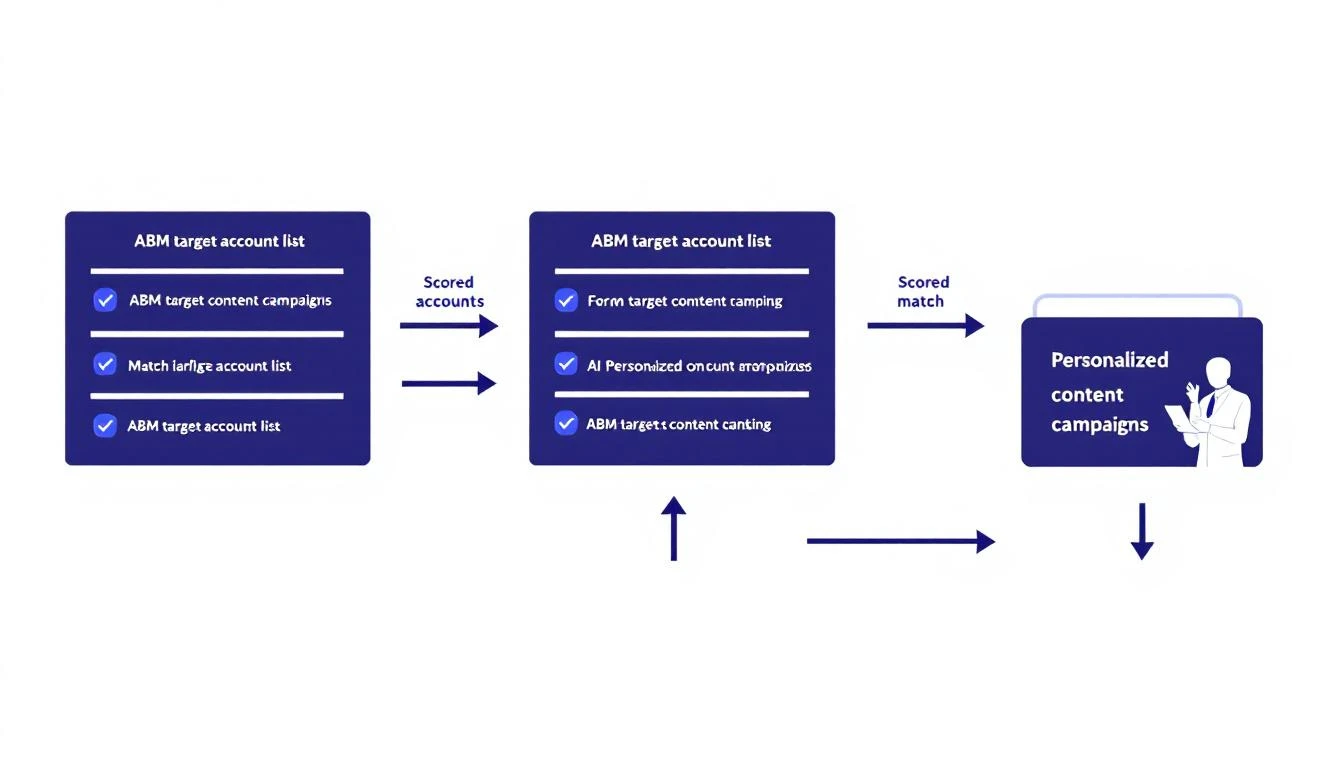
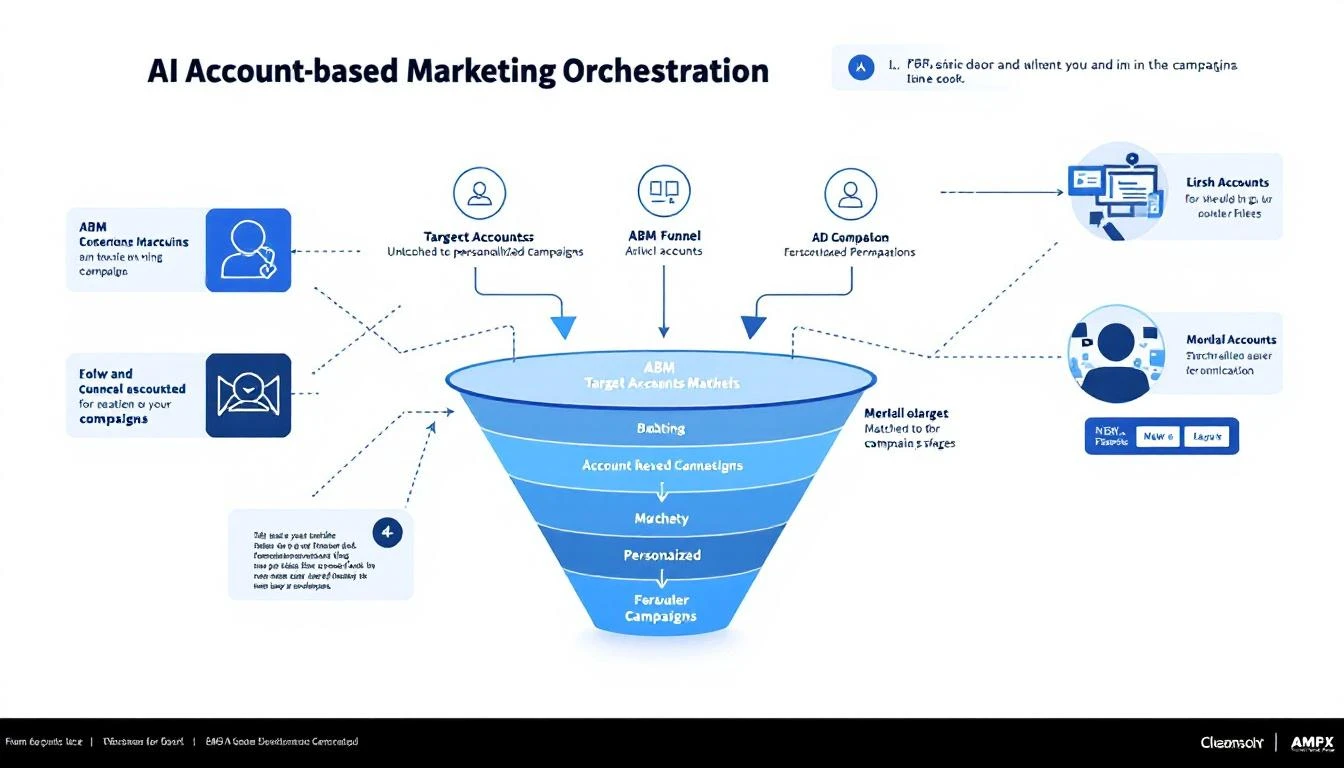
AI ABM orchestration workflow showing target accounts being matched to personalized campaigns

Why Traditional ABM Falls Apart​

Let's be honest about why most ABM programs underperform:

Research bottleneck. Your SDRs spend 45 minutes per account researching company news, tech stack, hiring patterns, and key stakeholders. With 100 target accounts, that's 75 hours of pure research β€” before a single email goes out.

Stale scoring. Your account scores update quarterly (if you're lucky). But buying signals change daily. A company that wasn't ready last month just posted three SDR job openings and raised a Series B. Your static score missed it.

Generic personalization. "I noticed your company is in the cybersecurity space" isn't personalization. It's a search result. Real personalization requires understanding the specific challenges that account faces right now.

Channel silos. Your email team doesn't talk to your social team. LinkedIn touches happen independently of email sequences. The buyer experience feels disjointed because it is.

An AI orchestration layer fixes all four problems simultaneously.

The Architecture: OpenClaw as Your ABM Brain​

OpenClaw runs as a self-hosted gateway that connects AI models to your messaging channels, CRM, and data sources. Think of it as the central nervous system for your ABM engine.

Here's the architecture:

Data Layer: CRM (HubSpot, Salesforce) + Intent signals + Website visitors + Social signals

Intelligence Layer: Claude or GPT analyzing account data, scoring readiness, identifying triggers

Orchestration Layer: OpenClaw coordinating timing, channel selection, and message personalization

Execution Layer: Email sequences, LinkedIn outreach, Slack notifications to SDRs

The beauty of OpenClaw is that it's open source and self-hosted. You're not paying $35K-$50K/year for an AI SDR platform. You own the infrastructure.

Step 1: Automated Account Research​

The first job of your ABM agent is continuous research. Instead of manual account reviews, your agent monitors target accounts around the clock.

Set up an OpenClaw cron job that runs every few hours. The agent pulls data from multiple sources:

  • Company news (press releases, funding announcements, leadership changes)
  • Job postings (hiring SDRs? Expanding? Restructuring?)
  • Technology changes (new tools in their stack, migrations)
  • Social signals (executives posting about challenges you solve)
  • Website visits (if they're checking your pricing page, that's a signal)

The agent compiles this into a structured account brief. Not a data dump β€” an actionable brief that identifies the trigger events that make outreach relevant right now.

This isn't theoretical. With OpenClaw's web search and fetch capabilities, your agent can check 100 accounts in the time it takes a human to research one.

Step 2: Dynamic Account Scoring​

Static account scores are dead. Your AI agent should update scores based on real-time signals.

AI scoring target accounts and matching them to personalized content campaigns

Here's a scoring framework your OpenClaw agent can implement:

Firmographic fit (0-25 points)

  • Company size matches ICP: +10
  • Industry alignment: +10
  • Revenue range: +5

Behavioral signals (0-35 points)

  • Website visit (pricing page): +15
  • Multiple page views in a week: +10
  • Downloaded content: +10

Trigger events (0-40 points)

  • New funding round: +15
  • Leadership change in target department: +10
  • Job posting for role your product helps: +10
  • Public statement about pain you solve: +5

The agent recalculates scores daily and automatically promotes accounts between tiers. A "nurture" account that just raised $50M and posted three SDR job openings? That's now a "priority" account β€” and the agent adjusts outreach accordingly.

Step 3: Personalized Campaign Generation​

This is where AI truly shines. Your OpenClaw agent doesn't just pick a template β€” it generates genuinely personalized messaging for each account.

The agent uses Claude's 200K context window to process the full account brief (research, triggers, past interactions, stakeholder profiles) and generate:

Email sequences tailored to the specific trigger event. "Congratulations on the Series B" emails are table stakes. Your agent writes about how the specific challenges that come with scaling from 50 to 200 employees create the exact problem your product solves.

LinkedIn connection requests that reference something specific the prospect posted or published. Not "I'd love to connect" β€” something that demonstrates you've done your homework.

Internal briefings for SDRs that summarize the account situation, recommended approach, and talking points β€” delivered via Slack before any call.

The key difference from traditional tools: your agent generates this content fresh for each account, using current intelligence. Not recycled templates with a company name swapped in.

Step 4: Multi-Channel Orchestration​

The orchestration layer is what separates real ABM from "emails with company names in them."

Your OpenClaw agent coordinates timing and sequencing across channels:

Day 1: LinkedIn connection request to primary stakeholder Day 2: Email to secondary stakeholder (different message, same thread) Day 3: If LinkedIn accepted β€” engage with their recent post Day 4: Follow-up email to primary with a relevant case study Day 7: Slack notification to SDR: "Account X engaged on 3 channels, call recommended"

The agent tracks responses across all channels and adjusts the sequence dynamically. If an email gets opened but no reply, the next touch shifts to a different channel. If a LinkedIn post gets a response, the agent escalates to the SDR immediately.

This multi-channel coordination is nearly impossible for a human to manage across 50+ accounts. But it's trivial for an AI agent that never sleeps.

Step 5: SDR Enablement and Handoff​

Your AI agent isn't replacing SDRs β€” it's making them dramatically more effective.

When an account reaches the threshold for human engagement, the agent prepares a complete handoff package:

  • Account summary: One paragraph on who they are and why they're ready
  • Trigger event: What changed that makes outreach relevant now
  • Stakeholder map: Who to contact, their roles, what they care about
  • Recommended approach: What to say, which pain points to lead with
  • Conversation starters: Specific, researched talking points
  • Risk factors: Competitor presence, budget timing, potential objections

This package arrives in Slack (or whatever channel your team uses) with everything the SDR needs to have a productive conversation β€” without spending 45 minutes on research.

The Cost Equation​

Let's talk numbers, because this is where it gets compelling.

Traditional ABM platform: $35,000-$80,000/year (6sense, Demandbase, etc.)

OpenClaw-powered ABM:

  • OpenClaw: Free (open source, self-hosted)
  • AI API costs: ~$200-500/month (depending on volume)
  • Hosting: ~$50-100/month (any cloud provider)
  • Total: $3,000-7,000/year

That's a 10x cost reduction. And because you own the code, you can customize every aspect of the scoring, research, and orchestration logic to match your specific ICP and go-to-market motion.

Getting Started​

You don't need to build this all at once. Start with one piece:

  1. Account research automation β€” Set up an OpenClaw agent that monitors your top 20 accounts and delivers daily briefs
  2. Add scoring β€” Layer in trigger event detection and dynamic scoring
  3. Personalize outreach β€” Generate custom messaging based on research
  4. Orchestrate channels β€” Coordinate timing across email, LinkedIn, and Slack

Each step compounds on the last. Within a few weeks, you'll have an ABM engine that operates at a scale your competitors can't match β€” at a fraction of the cost.

Free Tool

Try our Lookalike Company Finder β€” find companies similar to your best customers in seconds. No signup required.

The Bottom Line​

ABM has always been limited by execution capacity. The strategy is straightforward: identify high-value accounts, understand their needs, engage them with relevant messaging across multiple channels.

The bottleneck was always human bandwidth. AI agents remove that bottleneck.

OpenClaw gives you the infrastructure to build an ABM orchestration layer that runs 24/7, stays current on every target account, and coordinates personalized outreach at scale. No $50K platform fee. No 6-month implementation. Just an AI agent that does what your team always wanted to do but never had the bandwidth for.

The companies that figure this out first will have an unfair advantage in pipeline generation. The question is whether you'll be one of them.


Ready to see how AI-powered GTM works in practice? MarketBetter's Daily SDR Playbook already turns intent signals into actionable next steps for your team. Book a demo to see it in action.

How to Build Automated Buyer Persona Research with Claude Code [2026]

Β· 9 min read

Most B2B buyer personas are fiction. Not the useful kind β€” the kind where a marketing team spent two weeks in a conference room inventing "Marketing Mary" based on assumptions and anecdotes.

The result? SDRs ignore the persona doc. Campaigns target the wrong pain points. And your messaging sounds like it was written for a composite sketch instead of a real person.

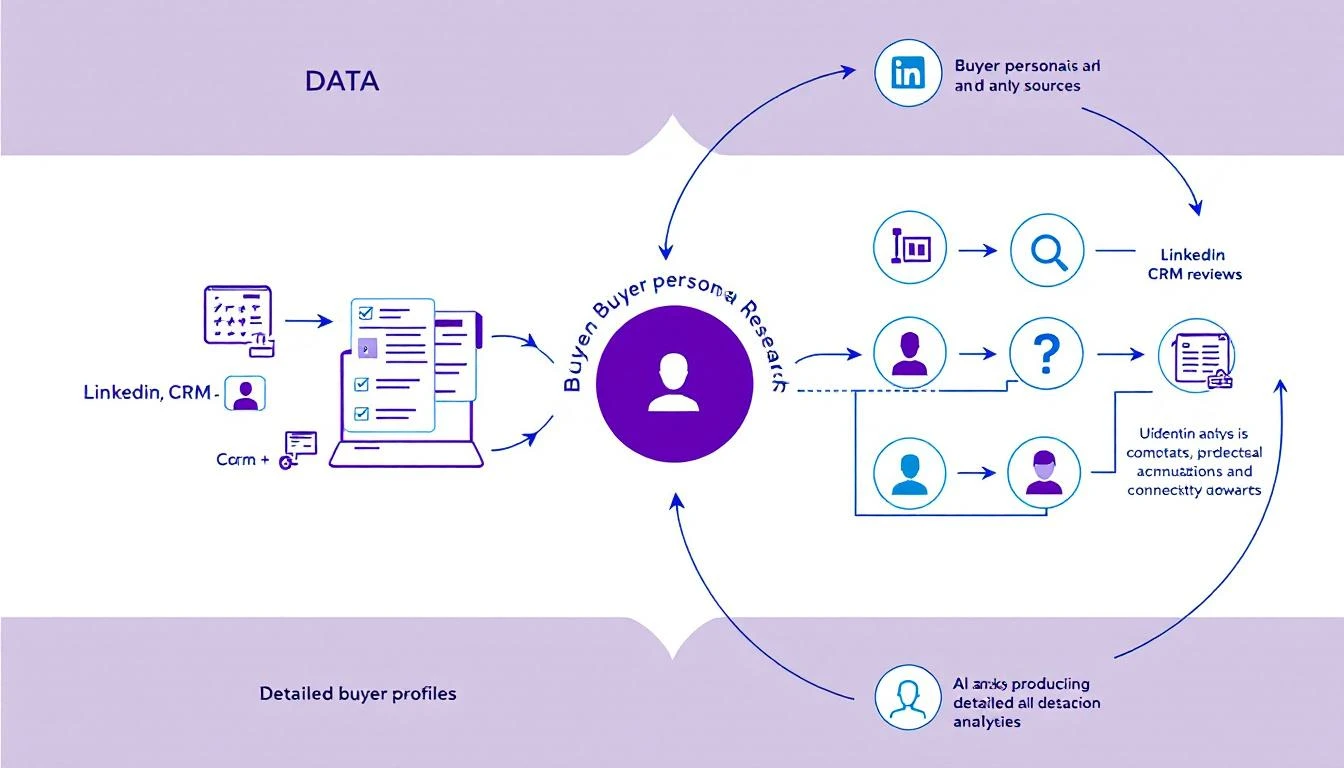
AI coding agents like Claude Code make persona research fundamentally different. Instead of guessing, you analyze actual data β€” G2 reviews, LinkedIn activity, CRM records, support tickets, call transcripts β€” and extract patterns that reveal who your buyers really are, what they actually care about, and how they make decisions.

Here's how to build an automated buyer persona research pipeline that stays current without manual effort.

Buyer persona research automation workflow

Why Traditional Persona Research Fails​

Before we build, let's understand what we're fixing:

The interview problem: Companies interview 8-12 existing customers and call it research. This creates survivorship bias β€” you only hear from people who already bought, not the 90% who didn't.

The staleness problem: Personas are created once, shared in a slide deck, and never updated. Your ICP from 18 months ago doesn't reflect today's market.

The abstraction problem: "VP of Sales at mid-market SaaS" describes 50,000 people. That's not a persona β€” that's a demographic.

The gap between research and action: Even good personas sit in a Google Doc. They don't connect to your CRM, your outreach sequences, or your content calendar.

Claude Code solves all four problems by making persona research continuous, data-driven, and directly actionable.

The Automated Persona Research Stack​

Here's what you need:

  1. Data sources β€” LinkedIn profiles, G2/Capterra reviews, CRM deal history, call transcripts, support tickets
  2. Claude Code β€” For analysis, pattern recognition, and persona synthesis
  3. OpenClaw (optional) β€” For scheduling automated research updates
  4. Your CRM β€” For validation against actual pipeline data

Step 1: Mine Your CRM for Buyer Patterns​

Your CRM is a goldmine of buyer intelligence that most teams never analyze. Feed Claude Code your closed-won deals from the last 12 months:

Analyze these closed-won deals and identify patterns:

1. Title/role distribution β€” What titles buy from us?
2. Company size patterns β€” Where's our sweet spot?
3. Industry clusters β€” Are there unexpected verticals?
4. Deal cycle patterns β€” Which buyer types close fastest?
5. Entry point β€” Who initiated contact? (Champion vs. evaluator)
6. Multi-threading β€” How many stakeholders in won deals vs. lost?
7. Trigger events β€” What happened at the company before they bought?
8. Competitive displacement β€” Who were they using before?

The output usually surprises teams. You think your buyer is the VP of Sales, but your data shows that 60% of deals are initiated by Sales Ops managers who bring in their VP later.

Step 2: Analyze Review Sites for Pain Points​

G2 and Capterra reviews β€” both yours and competitors' β€” are unfiltered buyer voice data. Claude Code can extract systematic insights:

Analyze these G2 reviews for [competitor] and extract:

1. Top 5 pain points mentioned (with frequency)
2. Features they love vs. features they wish existed
3. Who writes the reviews (title/role patterns)
4. Switching triggers β€” What made them look for alternatives?
5. Decision criteria β€” What factors did they evaluate?
6. Objections they had during evaluation
7. Results they achieved (or didn't)
8. Language patterns β€” What words and phrases do buyers use?

That last point is gold for messaging. When buyers say "we needed something that could actually tell our reps what to do next," you should use that exact language in your outreach β€” not "AI-powered sales orchestration platform."

Step 3: LinkedIn Signal Analysis​

LinkedIn profiles and activity patterns reveal buying signals and role-specific priorities:

For these LinkedIn profiles of our recent buyers, analyze:

1. Career trajectory β€” What roles did they hold before this one?
2. Skills endorsed β€” What do they value being known for?
3. Content engagement β€” What topics do they post about or react to?
4. Group memberships β€” Where do they learn and network?
5. Common connections β€” Who influences their network?
6. Time in role β€” Are they typically new to their position?
7. Company stage β€” Are they at growth-stage or mature companies?

A pattern might emerge: your best buyers have been in their role for 6-18 months (long enough to own the problem, new enough to want to fix it), previously held an IC role (so they understand the pain firsthand), and engage with content about sales efficiency.

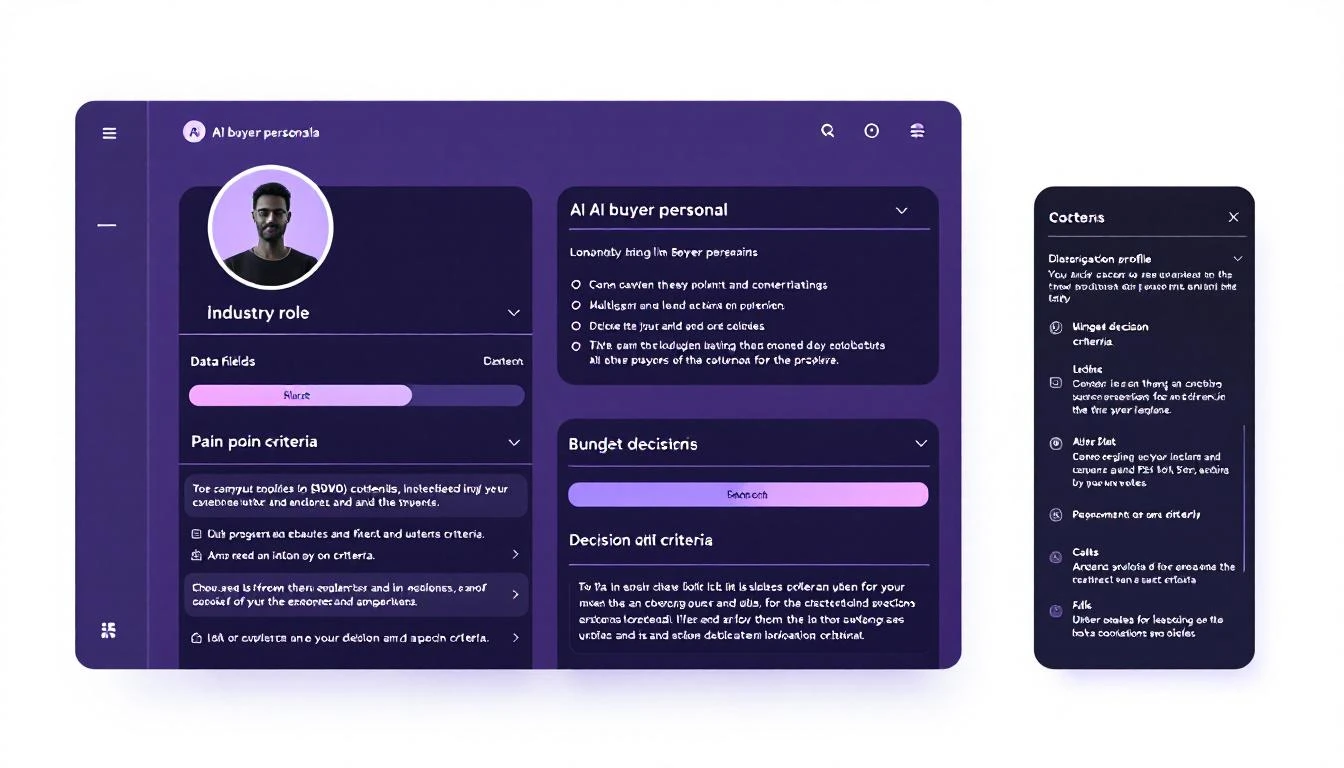
AI-generated buyer persona profile card

Step 4: Synthesize Into Actionable Personas​

Here's where Claude Code's reasoning ability shines. Feed it all the data from steps 1-3 and ask for synthesis:

Based on all the data analyzed, create 3-4 distinct buyer personas. For each persona include:

**IDENTITY**
- Specific title (not generic)
- Company size and stage
- Industry verticals where they concentrate
- Reporting structure (who they report to, who reports to them)

**PSYCHOLOGY**
- Top 3 professional priorities this quarter
- Biggest fear related to our product category
- How they measure personal success
- Information sources they trust
- How they prefer to buy (self-serve, demo, pilot)

**TRIGGER EVENTS**
- What happens at their company that makes them start looking
- What they Google when they start researching
- Who else gets involved in the decision
- What internal event would kill the deal

**MESSAGING**
- The one sentence that would make them stop scrolling
- Subject line that gets opened
- Case study angle that resonates
- Objection they'll raise and how to handle it

**SIGNAL INDICATORS**
- CRM data points that indicate this persona
- Website behavior patterns
- Email engagement patterns
- Social selling entry points

This isn't a static doc β€” it's a living playbook that connects directly to how your team prospects, messages, and sells.

Building a Continuous Research Pipeline​

The real power of AI-driven persona research isn't the initial build β€” it's keeping it current automatically.

Weekly Persona Refresh Workflow​

Set up a weekly pipeline using Claude Code (and optionally OpenClaw for scheduling):

Monday: Pull new closed-won deals from CRM, analyze for pattern changes Wednesday: Scan competitor reviews for new pain points and switching triggers
Friday: Update persona docs with any shifts, flag changes to the sales team

Quarterly Deep Dive​

Every quarter, run a comprehensive analysis:

Compare our buyer persona data from Q1 vs Q2:

1. Has our buyer profile shifted? (title, company size, industry)
2. Are new pain points emerging?
3. Has the competitive landscape changed?
4. Are deals closing faster or slower?
5. Are new stakeholders entering the buying committee?
6. What content resonated most with each persona?

Highlight the 3 most significant shifts and recommend messaging adjustments.

This catches market shifts before they show up in your revenue β€” like when a new competitor enters your space and changes how buyers evaluate solutions.

From Persona to Personalization at Scale​

The ultimate goal isn't a perfect persona document β€” it's personalized outreach that feels 1:1 at scale.

Connecting Personas to Outreach​

Once you have data-driven personas, Claude Code can generate personalized messaging for each:

For the "Newly-Promoted SDR Manager" persona, generate:
1. A cold email sequence (3 emails) that addresses their specific fears
2. A LinkedIn connection request message
3. Talk track for a cold call
4. A personalized demo agenda

Use the language patterns we identified from G2 reviews.
Reference the trigger events that typically precede their buying process.

Dynamic Persona Matching​

When a new lead enters your pipeline, use Claude Code to match them to a persona:

Given this information about a new prospect:
- Title: [title]
- Company: [company, size, industry]
- Source: [how they found us]
- Behavior: [pages visited, content downloaded]

Which of our 4 personas is the closest match?
What specific messaging approach should we use?
What objections should we prepare for?
Who else at this company should we engage?

This turns your CRM from a data warehouse into an intelligence engine.

Advanced: Negative Personas​

Just as important as knowing who to target is knowing who NOT to target. Claude Code can build negative personas from your lost deals:

Analyze our closed-lost deals and identify:

1. Common characteristics of deals we consistently lose
2. Early warning signs that appeared in the first 2 weeks
3. Buyer profiles where our win rate is below 10%
4. Company characteristics that predict a long, unsuccessful cycle
5. Competitive situations where we rarely win

Build 2 "negative personas" β€” buyer profiles we should deprioritize or disqualify early.

This saves your team hours every week by steering them away from deals they're unlikely to win.

Making It Operational with MarketBetter​

While Claude Code handles the research and analysis, you still need a system to turn insights into daily SDR actions. That's where a platform like MarketBetter comes in:

  • Website visitor identification matches anonymous visitors to your persona profiles
  • Daily SDR Playbook tells reps exactly who to contact and what messaging to use
  • Smart Dialer prioritizes calls based on persona-specific timing patterns
  • AI Chatbot engages visitors with persona-appropriate messaging

The combination of Claude Code (for research) + OpenClaw (for automation) + MarketBetter (for execution) creates a persona-driven revenue engine that's always learning.

Free Tool

Try our Lookalike Company Finder β€” find companies similar to your best customers in seconds. No signup required.

Key Takeaways​

  1. Real personas come from data, not brainstorms β€” Mine your CRM, reviews, and LinkedIn for actual patterns
  2. Personas should be living documents β€” Set up weekly refreshes with Claude Code
  3. The goal is actionable, not accurate β€” A slightly wrong persona that drives specific actions beats a perfect one that sits in Google Docs
  4. Negative personas save more time than positive ones β€” Know who NOT to sell to
  5. Connect personas to daily workflows β€” They should inform every email, call, and demo

Your buyers are telling you exactly who they are, what they need, and how they want to buy. You just need AI that can listen at scale.


Want to turn buyer personas into a daily playbook for your SDR team? Book a demo and see how MarketBetter identifies your ideal buyers and tells your reps exactly what to do next.

How to Automate Competitive Content Monitoring with Claude Code [2026]

Β· 8 min read

Your competitor just published a blog post positioning themselves directly against you. They changed their pricing page last Tuesday. Their CEO posted a LinkedIn thread announcing a new feature that overlaps with your roadmap.

You found out about all of this two weeks later, during a deal you lost.

Competitive intelligence isn't a "nice to have" β€” it's survival. But most teams treat it like a quarterly research project instead of a continuous monitoring system. That's like checking the weather once a month and being surprised when it rains.

In this guide, we'll build an always-on competitive content monitoring system using Claude Code and OpenClaw that tracks your competitors' every public move and delivers actionable intelligence to your team in real time.

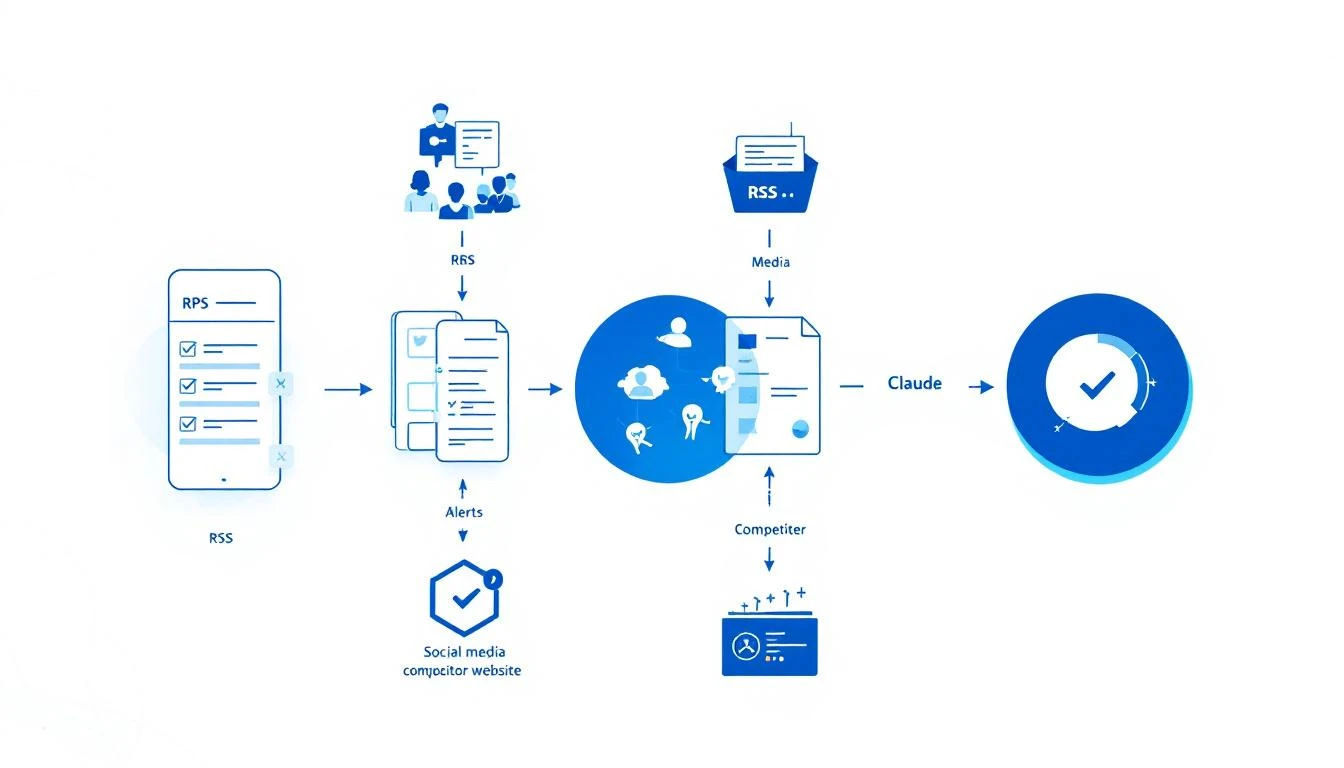
Competitive Content Monitoring System

What Most Teams Get Wrong About Competitive Intel​

Problem 1: Point-in-time research. Someone creates a competitive analysis deck once per quarter. By the time it's presented, half the information is outdated. Competitors ship features monthly. They adjust positioning weekly. They publish content daily.

Problem 2: Signal overload. Even teams that try to monitor competitors get overwhelmed. RSS feeds pile up. Google Alerts send irrelevant noise. Nobody has time to read 50 competitor blog posts a month AND do their actual job.

Problem 3: No analysis, just aggregation. Collecting competitor content isn't intelligence. Intelligence is understanding WHAT changed, WHY it matters, and WHAT you should do about it. That requires reasoning β€” exactly what AI coding agents excel at.

Problem 4: Knowledge stays siloed. The product manager who notices a competitor's new feature doesn't tell the sales team. The marketing person who spots a positioning shift doesn't tell the CEO. Critical intel dies in someone's browser tabs.

The AI-Powered Competitive Monitor​

Here's the system architecture:

Data Collection Layer:

  • Competitor blog RSS feeds / sitemaps
  • Pricing pages (checked daily for changes)
  • LinkedIn company feeds and executive posts
  • G2/Capterra review feeds
  • Job postings (reveals strategic direction)
  • Press releases and news mentions

Analysis Layer (Claude Code):

  • Content categorization (feature announcement, thought leadership, competitive positioning)
  • Sentiment and messaging shift detection
  • Feature comparison against your product
  • Pricing change analysis
  • Strategic implications summary

Distribution Layer (OpenClaw):

  • Slack alerts for high-priority changes
  • Weekly competitive digest emails
  • Real-time battlecard updates
  • CRM notes on relevant accounts

Building It: Step by Step​

Step 1: Define Your Competitive Landscape​

Before monitoring anything, get clear on what matters:

Tier 1 Competitors (Monitor Daily):

  • Direct competitors who come up in deals
  • Companies your prospects compare you to
  • Anyone bidding on your brand keywords

Tier 2 Competitors (Monitor Weekly):

  • Adjacent players who might expand into your space
  • Companies serving the same ICP differently
  • Emerging startups getting VC attention

Tier 3 (Monitor Monthly):

  • Large platforms that could add your functionality
  • International players entering your market

For each competitor, catalog their public channels:

  • Blog URL / RSS feed
  • Pricing page URL
  • LinkedIn company page
  • G2 profile URL
  • Careers page URL
  • Key executive LinkedIn profiles

Step 2: Set Up Content Change Detection​

The foundation of the system is detecting when something changes. Here's where OpenClaw's cron jobs become invaluable.

For blogs: Most company blogs have an RSS feed or sitemap. Your agent checks these every few hours and flags new posts. Claude Code then reads and analyzes each new post.

For pricing pages: This is where it gets interesting. Pricing pages don't have RSS feeds β€” they just change. Your agent needs to snapshot the page content, store it, and compare against the previous snapshot. Claude Code is perfect for this because it can understand semantic changes, not just text diffs.

For example, it won't flag a CSS tweak as a "pricing change." But it WILL flag when a competitor removes their free tier, adds a new enterprise plan, or increases prices by 15%.

For LinkedIn: Monitor key executive posts. When a competitor's VP of Product posts about "exciting announcements coming," that's a signal. When their CEO writes about a new market segment, that's a strategic shift.

For G2 reviews: New reviews β€” especially negative ones β€” are gold for sales teams. Your agent can analyze themes across reviews and surface specific objections your reps can address in deals.

Step 3: Build the Analysis Engine​

Raw data is noise. Analysis is intelligence. Here's how Claude Code transforms competitor content into actionable insight:

Content Categorization: Every new piece of competitor content gets classified:

  • Feature announcement β†’ Alert product team
  • Thought leadership / SEO content β†’ Note for marketing team
  • Customer case study β†’ Analyze which segments they're winning
  • Competitive positioning (mentioning you) β†’ URGENT alert to sales + marketing
  • Pricing / packaging change β†’ Alert sales + finance

Messaging Shift Detection: Claude's 200K context window is perfect for this. Feed it the last 20 competitor blog posts and ask: "What messaging themes are emerging? What topics are they investing in? How has their positioning shifted compared to 3 months ago?"

This kind of longitudinal analysis is impossible for a human to do consistently across 5-10 competitors. For Claude, it's routine.

Feature Gap Analysis: When a competitor announces a new feature, Claude can immediately compare it against your product capabilities and generate a battlecard update:

  • What they launched
  • How it compares to your equivalent feature
  • Talking points for sales
  • Gaps to flag for product

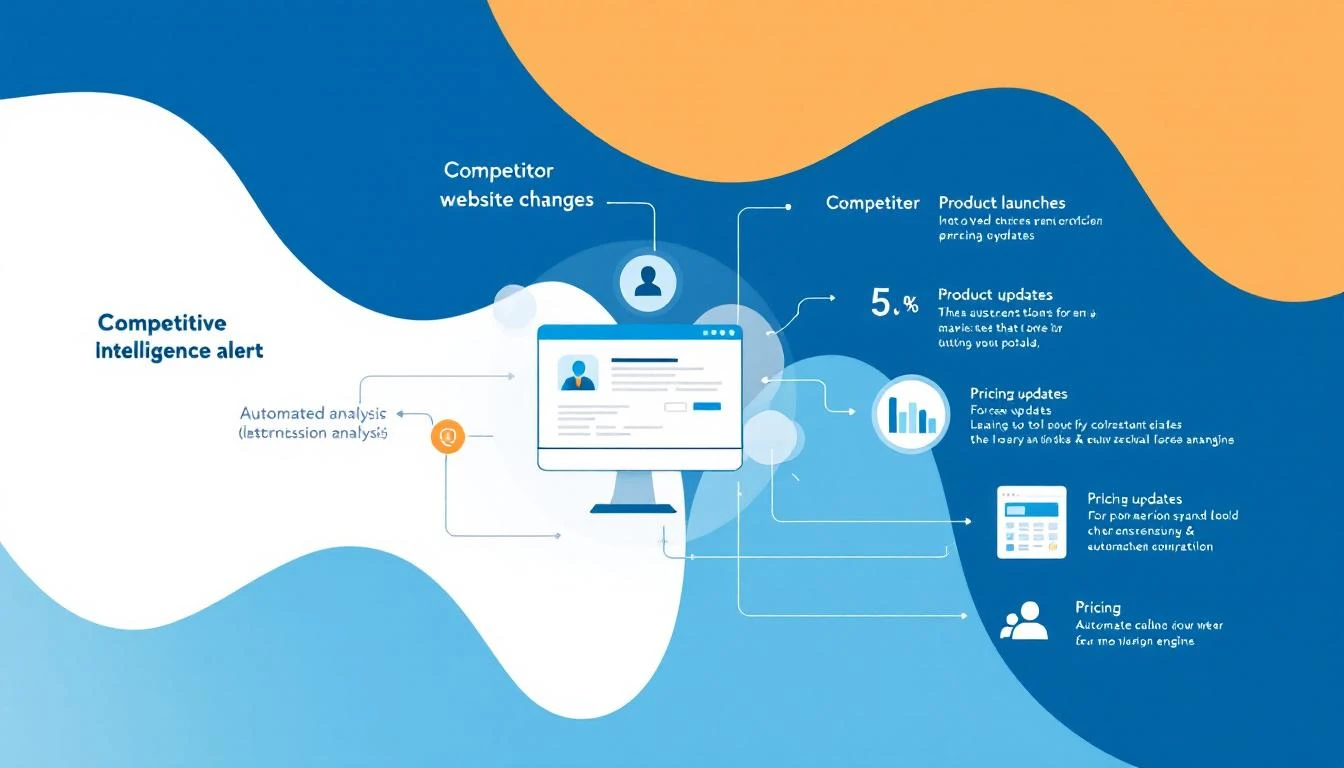
Competitive Intelligence Alert System

Step 4: Automate Distribution​

Intelligence that sits in a database is worthless. It needs to reach the right person at the right time.

Immediate Alerts (Within Minutes):

  • Competitor mentions your company by name β†’ Sales + Marketing leads
  • Pricing page changes β†’ Sales leadership + Finance
  • New feature that directly competes with yours β†’ Product + Sales

Daily Digest:

  • New blog posts published by all competitors
  • New G2 reviews with sentiment summary
  • Social media highlights from competitor executives

Weekly Strategic Brief:

  • Messaging trend analysis across all competitors
  • Feature shipping velocity comparison
  • Hiring pattern changes (are they building a sales team? Product team?)
  • Recommended strategic responses

Battlecard Updates (As Needed):

  • Auto-update competitive battlecards when new information surfaces
  • Flag outdated information for review
  • Add new objection-handling scripts based on competitor messaging

The OpenClaw Advantage: Free vs. $40K CI Platforms​

Let's talk about cost. Enterprise competitive intelligence platforms like Klue, Crayon, and Kompyte charge $25-75K per year. Here's what you get for free with OpenClaw:

CapabilityOpenClaw + ClaudeEnterprise CI Platform
Blog monitoringβœ… RSS + scrapingβœ… Built-in
Pricing change detectionβœ… AI-powered semantic diffβœ… Screenshot comparison
AI analysis qualityClaude (state-of-the-art)Proprietary (varies)
Custom analysis promptsβœ… Unlimited❌ Fixed templates
Distribution (Slack/Email)βœ… Nativeβœ… Built-in
Battlecard generationβœ… Claude-poweredβœ… Template-based
Cost$0 (self-hosted)$25-75K/year
Setup timeHalf a day2-4 weeks
G2 review monitoringβœ… With web scrapingβœ… Native integration

The enterprise tools add value with pre-built integrations and pretty dashboards. But if you're a startup or mid-market team watching every dollar, OpenClaw + Claude gives you 80% of the capability at 0% of the cost.

Advanced Use Cases​

Competitor Messaging A/B Testing Detection​

When a competitor runs messaging experiments on their website, Claude can detect it. If their hero tagline changes three times in a week, they're testing. Your agent can track which version they settle on β€” and what that tells you about what resonates with your shared audience.

Job Posting Intelligence​

Competitor job postings are one of the most underused competitive intelligence sources. They reveal:

  • What they're building β€” "Senior Engineer, AI/ML team" = they're investing in AI
  • Where they're expanding β€” New city = new market entry
  • Their pain points β€” "VP of Customer Success" posting after a year of churn = retention problems
  • Budget signals β€” Salary ranges in listings reveal compensation philosophy

Win/Loss Pattern Correlation​

Connect your competitive monitoring data with your CRM's win/loss data. When you lose a deal to Competitor X, did they publish something relevant that week? Did they change pricing? This correlation analysis helps you predict competitive threats before they affect your pipeline.

Getting Started​

You can have a basic competitive monitoring system running in under a day:

  1. Hour 1: List your top 5 competitors and catalog their public channels
  2. Hour 2: Set up OpenClaw with web scraping capabilities
  3. Hour 3: Create your Claude Code analysis prompts
  4. Hour 4: Configure Slack notifications and test the pipeline

Start with blog monitoring only. Once that's solid, add pricing page tracking. Then G2 reviews. Build incrementally.

Free Tool

Try our Tech Stack Detector β€” instantly detect any company's tech stack from their website. No signup required.

How MarketBetter Fits In​

MarketBetter's platform already bakes competitive intelligence into your SDR workflow. When a prospect visits a competitor's page before yours, our visitor identification catches it. When a lead is evaluating alternatives, our AI playbook adjusts the messaging to address specific competitive objections.

The Daily SDR Playbook doesn't just tell you who to call β€” it tells you what to say based on where the prospect is in their evaluation journey, including which competitors they're considering.

Want to see competitive intelligence built into your sales workflow? Book a demo and we'll show you how MarketBetter turns competitor awareness into closed deals.


Related reading:

How to Build an AI Customer Health Scoring System with OpenClaw [2026]

Β· 8 min read

Your CRM says the account is "active." Your CSM says the relationship is "strong." Then the customer churns β€” and everyone acts surprised.

The problem isn't that churn signals don't exist. They do. Login frequency dropping. Support tickets spiking. Feature adoption plateauing. The problem is that no human can monitor 200 accounts across 15 different signals in real time.

That's exactly the kind of work AI coding agents like OpenClaw and Claude Code were built for.

In this guide, we'll walk through how to build an automated customer health scoring system that monitors real-time signals, calculates composite health scores, and triggers proactive retention workflows β€” all without writing a single line of traditional application code.

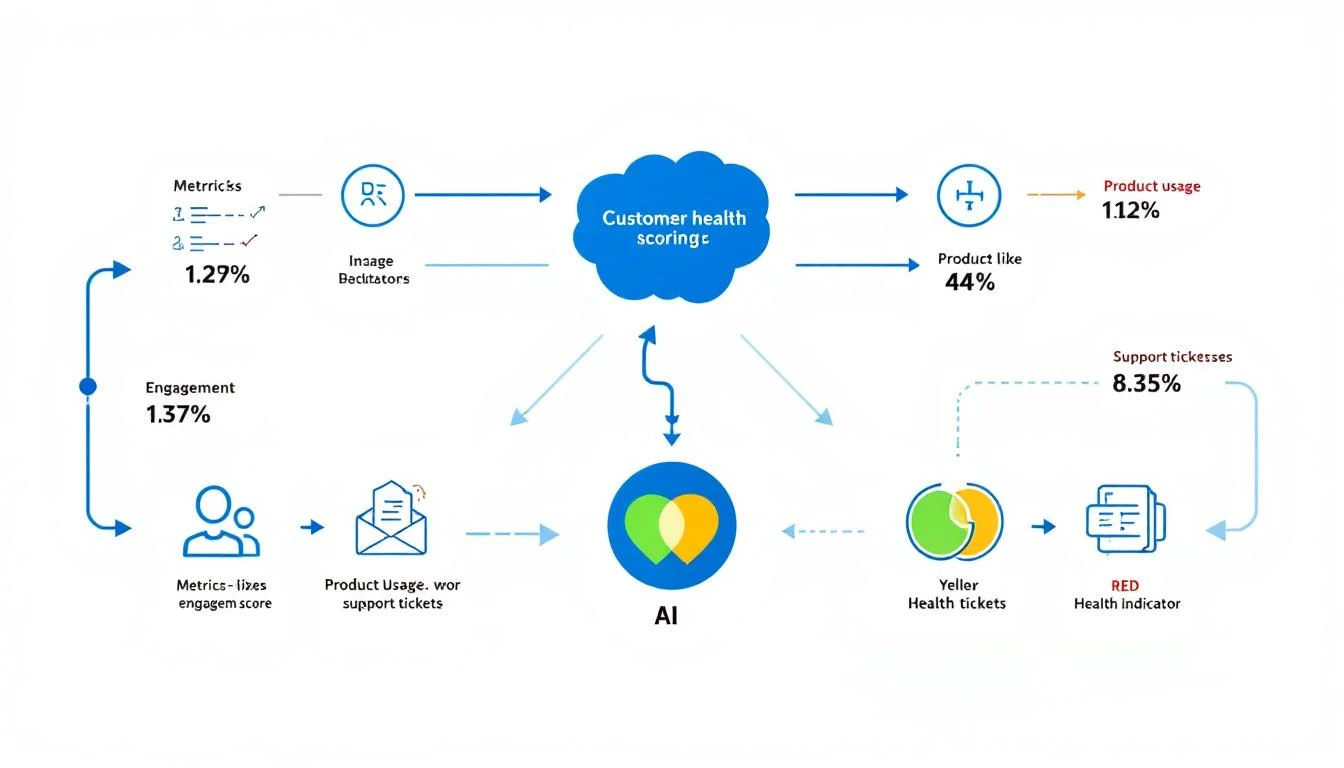
AI Customer Health Scoring System Architecture

Why Traditional Customer Health Scores Fail​

Most customer success teams calculate health scores quarterly β€” maybe monthly if they're disciplined. Here's why that's broken:

The data is always stale. By the time your CSM reviews a quarterly business report, the customer has already been disengaging for weeks. A 30-day delay in detecting churn signals is 30 days of preventable revenue loss.

Manual scoring doesn't scale. When you have 50 accounts, a spreadsheet works. At 200+ accounts, your CSMs are spending more time updating scores than actually saving accounts.

Single-signal blindness. Most teams track NPS or product usage, but not both together with support sentiment, billing patterns, and engagement velocity. Churn is almost always multi-signal.

No automated response. Even when a health score drops, the "workflow" is usually "CSM notices it in a weekly meeting and promises to reach out." By then, the customer is already evaluating competitors.

The AI-Powered Alternative​

Here's what an AI-driven health scoring system looks like:

  1. Continuous monitoring β€” Every hour, your AI agent pulls fresh data from your CRM, product analytics, support platform, and billing system
  2. Multi-signal scoring β€” Claude Code analyzes 10+ signals simultaneously, weighting each based on historical correlation with churn
  3. Trend detection β€” Instead of just current score, the system tracks velocity β€” is the score improving, stable, or deteriorating?
  4. Automated intervention β€” When a score drops below threshold, the system triggers the right playbook: CSM alert, executive outreach, or product team escalation

The Signals That Actually Predict Churn​

Before we build anything, let's define what to track. Based on analysis of B2B SaaS churn patterns, these are the signals that matter most:

High-Weight Signals (Direct Churn Predictors)​

  • Product login frequency β€” Declining logins over 14-day rolling window
  • Feature adoption depth β€” Number of core features used vs. available
  • Support ticket sentiment β€” Are tickets getting more frustrated?
  • Contract renewal date proximity β€” Accounts within 90 days of renewal need extra attention
  • Champion departure β€” Your internal champion leaving the company

Medium-Weight Signals (Leading Indicators)​

  • Time-to-resolution trend β€” Are their support issues taking longer to resolve?
  • Meeting engagement β€” Are they attending QBRs? Responding to check-ins?
  • Billing payment patterns β€” Late payments or disputes
  • Product usage breadth β€” How many team members are active?

Low-Weight Signals (Context Enrichment)​

  • Company news β€” Layoffs, restructuring, leadership changes
  • Competitor activity β€” Are they engaging with competitor content?
  • NPS/CSAT scores β€” Useful but lagging indicators

Building the System with OpenClaw + Claude Code​

Step 1: Set Up Your OpenClaw Agent​

OpenClaw runs as a gateway that connects AI models to your existing tools. Unlike enterprise customer success platforms that cost $30-50K/year, OpenClaw is free and self-hosted.

Your agent needs access to:

  • CRM API (HubSpot, Salesforce) β€” for account and contact data
  • Product analytics (Mixpanel, Amplitude, or your own database) β€” for usage data
  • Support platform (Zendesk, Intercom) β€” for ticket data
  • Billing system (Stripe, Chargebee) β€” for payment patterns

Step 2: Define Your Scoring Model​

Here's where Claude Code shines. Instead of hardcoding scoring rules, you describe the logic in natural language and let Claude generate the scoring algorithm:

Score each account on a 0-100 scale using these weighted factors:

- Login frequency (last 14 days vs. previous 14): 25% weight
- Feature adoption (features used / total available): 20% weight
- Support ticket sentiment (positive/neutral/negative): 15% weight
- Days until renewal: 15% weight
- Team member activity (active users / total seats): 10% weight
- Meeting attendance (last 3 scheduled meetings): 10% weight
- Payment status: 5% weight

Apply these rules:
- If champion contact has changed companies β†’ subtract 20 points
- If no login in 7+ days β†’ cap score at 40
- If support sentiment is "negative" for 3+ consecutive tickets β†’ subtract 15 points

The beauty of using Claude Code: when you want to adjust the model, you just update the natural language description. No code changes, no deployment, no sprint planning.

Step 3: Automate Data Collection with Cron Jobs​

OpenClaw's built-in cron system runs your health scoring agent on a schedule. Set it to run every 2 hours during business hours:

The agent pulls fresh data from each source, calculates the composite score, and stores the result. If any account drops below your threshold, it immediately triggers the intervention workflow.

Step 4: Build Intervention Playbooks​

This is where the system pays for itself. Instead of just flagging at-risk accounts, your AI agent takes action:

Score 70-85 (Yellow β€” Watch):

  • Log the score change in your CRM
  • Add to CSM's weekly priority list
  • Draft a personalized check-in email

Score 50-70 (Orange β€” Intervene):

  • Alert CSM via Slack immediately
  • Auto-draft a personalized outreach with specific talking points based on the signals driving the score drop
  • Schedule a "value review" meeting proposal

Score Below 50 (Red β€” Escalate):

  • Alert CSM + their manager + VP of CS
  • Generate an executive summary of the account risk
  • Draft an executive-to-executive outreach
  • Create a retention plan with specific actions

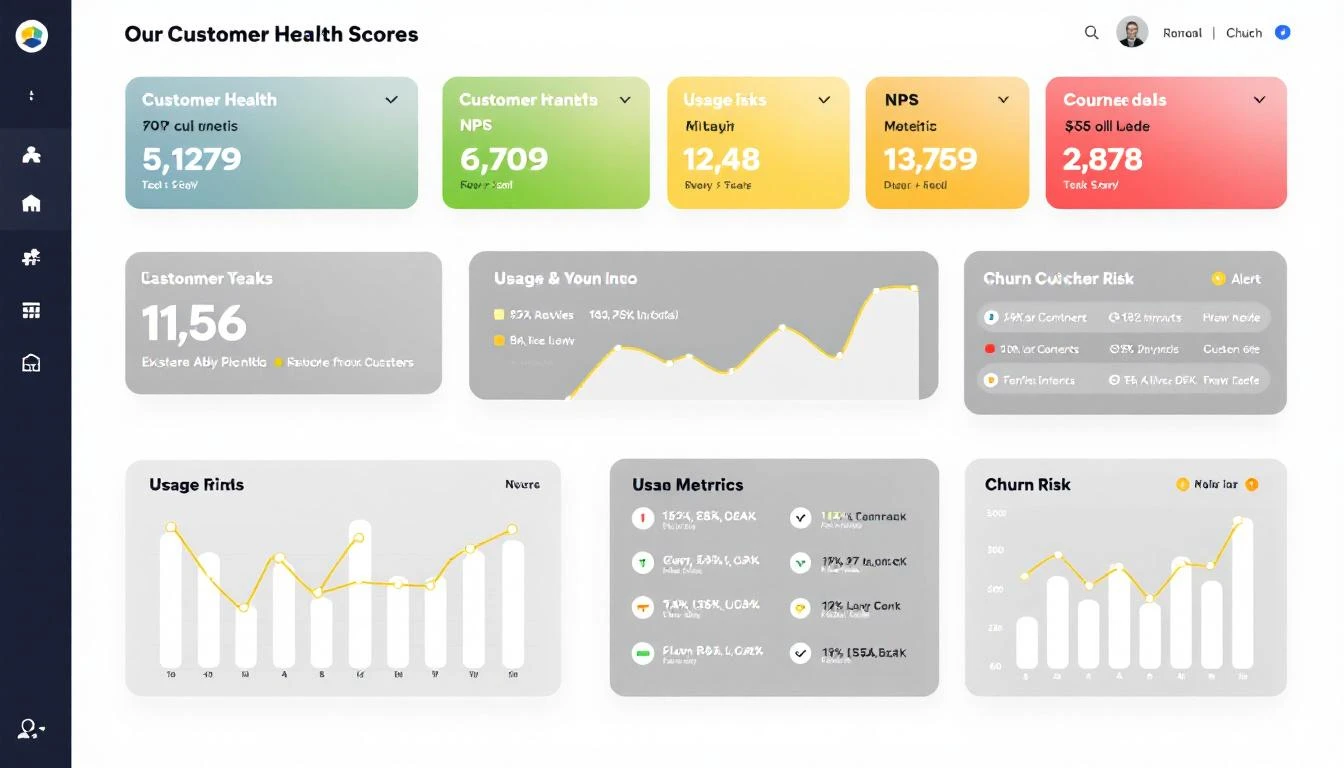
Customer Health Dashboard showing real-time scores

Real-World Impact: The Numbers​

Here's what teams typically see after implementing AI-powered health scoring:

MetricBefore AIAfter AIChange
Churn detection lead time2-4 weeks2-3 days85% faster
Accounts per CSM50-80150-2002.5x more capacity
Gross revenue retention85-90%93-97%5-8 points improvement
Time spent on scoring4-6 hrs/week0 hrs/weekFully automated
False positive rate40-50%15-20%60% reduction

The ROI math is straightforward: if you have $2M in ARR and improve retention by 5 points, that's $100K in saved revenue β€” from a system that costs essentially nothing to run.

OpenClaw vs. Enterprise Customer Success Platforms​

Let's compare this approach to traditional CS platforms:

CapabilityOpenClaw + ClaudeGainsight/Totango/ChurnZero
CostFree (self-hosted)$30-80K/year
Setup timeHoursWeeks to months
CustomizationUnlimited (plain English rules)Limited to platform features
AI qualityClaude's 200K context windowProprietary models
Integration depthAny APIPre-built connectors only
Scoring logic changesUpdate a promptSubmit a feature request
Multi-signal analysisNative (AI reasoning)Rule-based scoring

The enterprise platforms aren't bad β€” they're just expensive and rigid. OpenClaw gives you the same capabilities with 10x more flexibility at 1/100th the cost.

Advanced: Predictive Churn Modeling​

Once your basic scoring system is running, Claude Code can help you level up with predictive modeling:

Pattern Recognition: Feed Claude your historical churn data β€” accounts that churned vs. renewed β€” and ask it to identify the signal patterns that preceded churn. This creates a dynamic model that improves over time.

Cohort Analysis: Group accounts by industry, company size, or use case. Different segments churn for different reasons. Your scoring model should reflect that.

Leading Indicator Discovery: Sometimes the strongest churn predictor is something you weren't tracking. Claude can analyze unstructured data β€” email threads, meeting notes, support conversations β€” to surface hidden signals.

Getting Started Today​

You don't need to build the full system on day one. Start with this 3-step approach:

  1. Week 1: Set up OpenClaw with your CRM integration. Build a basic health score using just 3 signals: login frequency, support tickets, and renewal date.

  2. Week 2: Add automated Slack alerts for score drops. Get your CSMs comfortable with the system.

  3. Week 3: Expand to the full signal set. Build intervention playbooks. Measure the first 30-day impact.

The hardest part isn't building it β€” it's getting your team to trust the AI's judgment. Start small, prove accuracy, then expand.

Free Tool

Try our Lookalike Company Finder β€” find companies similar to your best customers in seconds. No signup required.

How MarketBetter Helps​

MarketBetter's Daily SDR Playbook already monitors buyer signals and tells your team exactly what to do next. The same philosophy applies to customer success: don't just show data β€” prescribe action.

Our platform identifies which accounts need attention, prioritizes them by revenue impact, and generates personalized outreach β€” so your team spends time saving accounts instead of analyzing spreadsheets.

Ready to see how AI-powered customer intelligence works? Book a demo and we'll show you how MarketBetter turns signals into action β€” for both prospecting and retention.


Related reading:

How to Generate Personalized Sales Decks with GPT-5.3 Codex [2026]

Β· 8 min read

Every sales rep has done it: spent 2 hours customizing a deck for a prospect, only to have the meeting cancelled. Or worse β€” used the generic deck because they didn't have time to customize, and the prospect could tell.

Personalized sales decks close deals. Generic decks lose them. The data is clear:

  • Personalized presentations are 68% more likely to advance to the next stage (Gong, 2025)
  • Prospects who see industry-specific content are 2.3x more likely to engage (Highspot)
  • The average rep spends 5-7 hours per week on deck customization (Seismic)

That's 5-7 hours of selling time burned on PowerPoint. GPT-5.3 Codex β€” OpenAI's newest agentic coding model, released February 5, 2026 β€” can do it in minutes.

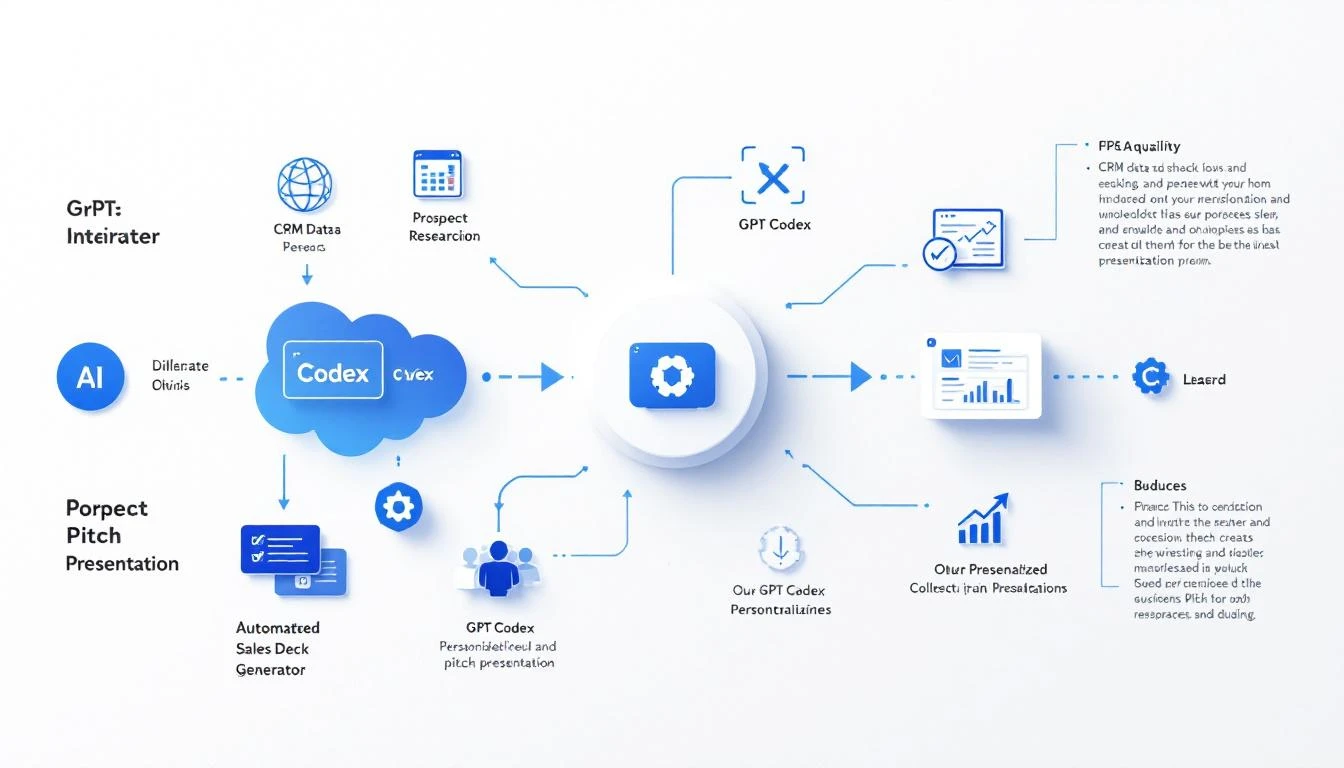
AI Sales Deck Generator Architecture

Why GPT-5.3 Codex Changes the Game​

OpenAI's Codex line has been strong for code generation, but GPT-5.3 adds two capabilities that make it perfect for sales deck automation:

Mid-Turn Steering: This is the killer feature. With previous AI models, you'd submit a prompt and hope for the best. With GPT-5.3 Codex, you can direct the agent WHILE it's working. "Actually, emphasize the ROI section more." "Add a competitive comparison slide." "Tone down the technical details." The agent adjusts in real time without starting over.

25% Faster Than 5.2: Speed matters when your rep has 15 minutes before a call. GPT-5.3 generates personalized deck content in 2-3 minutes, not 10. That's the difference between "I'll just use the generic deck" and "Let me customize this real quick."

Multi-File Context: Codex can read your template deck, CRM data, prospect's website, and recent email thread simultaneously. It understands the full context of the deal, not just a prompt.

The Anatomy of a Great Personalized Deck​

Before we automate anything, let's define what "personalized" actually means for a sales deck:

Level 1: Name and Logo (Table Stakes)​

  • Prospect's company name and logo on every slide
  • Contact name on the intro slide
  • Their industry mentioned in the title

Level 2: Relevant Use Cases (Where Most Stop)​

  • Industry-specific examples and case studies
  • Metrics relevant to their role (VP Sales cares about different KPIs than VP Marketing)
  • Competitive context (if they're evaluating alternatives)

Level 3: Deep Personalization (Where Deals Are Won)​

  • Reference specific pain points from discovery calls
  • Include data from their own website (traffic estimates, tech stack)
  • Map your features to THEIR specific workflow
  • Show ROI calculations using THEIR numbers (company size, average deal size, current conversion rates)
  • Address objections they've already raised

Most reps operate at Level 1, maybe Level 2. AI gets you to Level 3 every time.

Building the System​

Step 1: Create Your Template Deck Structure​

You need a modular deck template that AI can customize. Structure it as sections, not static slides:

Section 1: Opening (2-3 slides)

  • Prospect-specific hook
  • Agenda
  • "Why we're talking" (based on discovery notes)

Section 2: Problem (3-4 slides)

  • Industry challenges
  • Prospect-specific pain points
  • Cost of inaction (with their numbers)

Section 3: Solution (4-5 slides)

  • Product overview (customized to their use case)
  • Feature deep-dives (only features relevant to them)
  • Live demo talking points

Section 4: Proof (2-3 slides)

  • Case study from similar company (same industry, size, or use case)
  • Specific metrics and outcomes
  • Customer quote

Section 5: ROI (2 slides)

  • ROI calculator with their inputs
  • Payback period

Section 6: Next Steps (1-2 slides)

  • Proposed timeline
  • Implementation overview
  • CTA

Step 2: Set Up Data Collection​

Your Codex agent needs data from multiple sources:

From Your CRM:

  • Company name, size, industry
  • Deal stage and history
  • Discovery call notes
  • Key contacts and their roles
  • Previous email correspondence

From Their Website:

  • Company description and mission
  • Product/service offerings
  • Team size and key executives
  • Technology stack (via BuiltWith or similar)
  • Recent blog posts or press releases

From Public Data:

  • LinkedIn company info
  • Recent news and funding
  • G2 reviews (if they're a SaaS company)
  • Job postings (reveals priorities and pain points)

Step 3: Generate with Codex​

Here's where GPT-5.3 Codex does its magic. You provide the template structure, the data sources, and the customization rules. Codex generates the content for each section.

The mid-turn steering is where it shines in practice. Your rep reviews the generated deck and can say:

"The ROI section uses a 50-employee assumption but they actually have 200. Recalculate."

"They mentioned on the discovery call that they're frustrated with their current tool's reporting. Add a slide comparing our reporting to typical competitor dashboards."

"Remove the enterprise security slide β€” they're a startup, they don't care about SOC 2 yet."

The agent adjusts the specific sections without regenerating the entire deck. This interactive workflow means the rep stays in control while AI does the heavy lifting.

Manual vs AI Sales Deck Creation

Step 4: Output and Delivery​

Codex can generate deck content in multiple formats:

  • Markdown β†’ Convert to Google Slides or PowerPoint via API
  • HTML β†’ For interactive web-based presentations
  • Structured JSON β†’ Feed into your existing deck template engine

The smartest approach: generate content as structured data, then inject it into your branded template. This ensures design consistency while allowing unlimited content customization.

Mid-Turn Steering in Action: A Real Example​

Let's walk through how mid-turn steering transforms the deck creation workflow:

Initial prompt: "Generate a personalized sales deck for Acme Corp β€” 150-person B2B SaaS company in the cybersecurity space. VP of Sales is the buyer. They currently use Outreach for sequencing and HubSpot as CRM. Pain point: SDR team of 8 is struggling with lead quality and personalization at scale."

Codex generates the first draft β€” all sections populated with relevant content.

Rep reviews and steers:

  • "The case study section shows a healthcare company. Find one in cybersecurity or tech instead."
  • "Add a slide about our integration with HubSpot β€” they specifically asked about this."
  • "The ROI calc assumes $50K average deal size. Update to $85K based on what they told us."
  • "Add a competitive comparison slide showing us vs. Outreach for the use cases they care about."

Each steering command adjusts just the relevant section. Total time: 5 minutes of review + steering, compared to 2+ hours of manual customization.

Results: What Teams See After Implementation​

MetricBefore AI DecksAfter AI DecksImpact
Deck prep time2-3 hours5-10 minutes92% reduction
Decks customized per week3-515-204x increase
Discovery→Demo advance rate45%62%+17 points
Average deal sizeBaseline+12%Larger deals via personalization
Rep satisfaction"I hate making decks""This is actually useful"Priceless

OpenAI Codex vs. Claude Code for Deck Generation​

Both are excellent, but they have different strengths:

CapabilityGPT-5.3 CodexClaude Code
Mid-turn steeringβœ… Native❌ Not available
SpeedVery fast (25% faster than 5.2)Fast
Context windowLarge200K tokens (larger)
Long document handlingGoodExcellent
Code generationExcellentExcellent
Structured outputExcellentExcellent
CostAPI pricingAPI pricing

Recommendation: Use Codex for interactive, rep-driven deck creation (mid-turn steering is the differentiator). Use Claude Code for batch processing β€” generating 20 decks overnight for tomorrow's meetings.

You can also combine them: Claude Code for initial research and data gathering (leveraging its massive context window), then Codex for the actual deck generation with rep-in-the-loop steering.

Advanced: Deck Performance Analytics​

Once you're generating decks with AI, you can start tracking what works:

Slide-Level Analytics: Which slides do prospects spend the most time on? Which ones do they skip? Feed this data back into your template to optimize over time.

Content Pattern Analysis: Do case studies from their industry close better than generic ones? Does the ROI slide increase or decrease conversion? Let data drive your deck structure.

A/B Testing Decks: Generate two versions of key slides β€” one emphasizing cost savings, one emphasizing revenue growth β€” and track which closes better by segment.

Getting Started Today​

You don't need a complex setup to start:

  1. Day 1: Structure your current best deck as a modular template (sections, not slides)
  2. Day 2: Set up Codex CLI (npm install -g @openai/codex) and test with one prospect
  3. Day 3: Build the CRM data pull (HubSpot API or Salesforce API)
  4. Week 2: Train your reps on mid-turn steering commands
  5. Month 2: Analyze deck performance and optimize templates

The biggest risk isn't that the AI generates bad content β€” it's that your reps won't trust it at first. Start with your most tech-forward rep, let them prove the ROI, and the rest will follow.

How MarketBetter Accelerates This​

MarketBetter's Daily SDR Playbook already gathers the prospect intelligence you need for deck personalization β€” website visitor behavior, company data, intent signals, and engagement history. Instead of pulling data from 5 different sources, your Codex agent can pull from one.

Our platform tells you WHO to pitch and WHAT they care about. Codex turns that into HOW to pitch them. Together, they're the full-stack sales automation workflow.

Want to see prospect intelligence that powers personalized outreach? Book a demo and we'll show you how MarketBetter gives your reps the context they need to close.


Related reading:

AI Pipeline Velocity Optimization with Claude Code: Accelerate Every Deal [2026]

Β· 8 min read

Your pipeline is full. Your CRM shows a healthy forecast. But deals keep stalling, stages keep slipping, and your actual close rate tells a very different story than your pipeline coverage.

The problem isn't lead volume β€” it's pipeline velocity. How fast deals move from first touch to closed-won is the single most important metric most sales teams ignore.

Here's the good news: AI coding agents like Claude Code can analyze every deal in your pipeline, identify exactly where velocity drops, and automate the interventions that keep deals moving. Teams using AI-driven pipeline optimization are seeing a 52% increase in pipeline velocity and cutting average sales cycles by 34%.

This guide shows you exactly how to build it.

Pipeline velocity optimization workflow with AI agents

What Is Pipeline Velocity (And Why Most Teams Get It Wrong)?​

Pipeline velocity measures how quickly revenue moves through your sales funnel. The formula is simple:

Pipeline Velocity = (Number of Opportunities Γ— Average Deal Value Γ— Win Rate) Γ· Sales Cycle Length

Most teams focus exclusively on the numerator β€” more opportunities, bigger deals. But the highest-leverage variable is actually the denominator: sales cycle length. Cutting your cycle from 90 days to 60 days has the same impact as increasing your opportunity volume by 50%.

The Hidden Velocity Killers​

After analyzing hundreds of B2B pipelines, these are the patterns that destroy velocity:

  • Ghost deals β€” Opportunities that haven't had activity in 14+ days but sit in active pipeline
  • Stage camping β€” Deals that stay in "Proposal Sent" or "Negotiation" for 3x the median
  • Missing next steps β€” 40% of deals have no scheduled next action
  • Wrong-stage deals β€” Deals marked as "Discovery" that haven't had a discovery call
  • Zombie pipeline β€” Deals from last quarter that nobody has the heart to close-lost

Sound familiar? Claude Code can detect all of these automatically.

Setting Up Your Pipeline Velocity Analyzer​

Claude Code's 200K context window makes it uniquely powerful for pipeline analysis β€” you can feed it your entire pipeline snapshot and get intelligent analysis across every deal simultaneously.

Step 1: Define Your Velocity Benchmarks​

Before you can optimize, you need baselines. Use Claude Code to calculate your current velocity metrics per stage:

Analyze my pipeline export and calculate:
1. Median days in each stage (Discovery β†’ Demo β†’ Proposal β†’ Negotiation β†’ Close)
2. Stage-to-stage conversion rates
3. Deals currently exceeding 2x median stage duration
4. Average touches per stage for won vs lost deals
5. Day-of-week patterns in stage progression

Flag any deal that's been in the same stage for more than [your threshold] days.

This gives you your velocity fingerprint β€” the unique pattern of how deals move (or stall) in your pipeline.

Step 2: Build Your Deal Scoring Model​

Not every stalled deal is the same. Claude Code can categorize them by recovery likelihood:

Green (High Recovery): Recent engagement, stakeholder responses within 48 hours, clear next step exists but isn't scheduled

Yellow (Needs Intervention): No activity 7-14 days, last email went unanswered, unclear decision timeline

Red (Likely Lost): No activity 21+ days, champion went dark, multiple reschedules, no multi-threading

For each deal in the pipeline, assess:
- Days since last meaningful contact (not automated emails)
- Number of stakeholders engaged (multi-threading score)
- Whether a next meeting is scheduled
- Email response rate trend (improving/declining/flat)
- Competitive mentions in any communication

Classify as Green/Yellow/Red with specific recommended action for each.

Step 3: Automate Stage-Appropriate Interventions​

This is where velocity optimization gets powerful. Claude Code can generate hyper-specific interventions based on deal context:

For Discovery-stage stalls:

  • Draft a value hypothesis email based on the prospect's recent company news
  • Generate industry-specific discovery questions
  • Create a personalized ROI calculator pre-filled with estimated metrics

For Demo-stage stalls:

  • Generate a post-demo summary highlighting prospect-specific use cases
  • Draft a "next steps" email with proposed timeline
  • Create a champion enablement deck for internal selling

For Proposal-stage stalls:

  • Draft a procurement-friendly one-pager
  • Generate competitive differentiation talking points
  • Create an executive summary for C-suite stakeholders who weren't in the demo

Before and after pipeline velocity metrics comparison

Real-World Pipeline Velocity Playbook​

Here's a concrete workflow you can implement today:

Monday Pipeline Velocity Scan​

Every Monday morning, run your pipeline through Claude Code with this prompt framework:

Here's my current pipeline as of [date]. For each deal:

1. Calculate days-in-stage vs our median
2. Identify the #1 risk factor
3. Generate ONE specific action to advance the deal this week
4. Estimate close probability based on engagement patterns
5. Flag any deals that should be closed-lost (saves forecast accuracy)

Prioritize actions by: (a) deal value, (b) recovery likelihood, (c) time sensitivity

The output becomes your team's weekly execution plan. No more Monday pipeline review meetings where reps stare at their CRM and say "I'll follow up." Every deal gets a specific, contextual action.

Daily Velocity Alerts​

Set up automated daily scans that flag:

  • New stalls: Deals that just crossed your stage-duration threshold
  • Momentum shifts: Deals where engagement suddenly dropped (email opens stopped, meeting cancelled)
  • Acceleration opportunities: Deals showing buying signals (visited pricing page, added new stakeholders)

Automated Follow-Up Generation​

For each flagged deal, Claude Code generates:

  • A personalized follow-up email (not template-based β€” actually personalized to the deal context)
  • A suggested talk track for a phone call
  • A list of alternative stakeholders to engage if the champion went dark

Connecting Pipeline Velocity to Revenue​

Here's the math that should make every VP of Sales pay attention:

Scenario: 100 deals in pipeline, $25K average deal value, 25% win rate, 90-day average cycle

Current velocity: (100 Γ— $25,000 Γ— 0.25) Γ· 90 = $6,944/day

After AI optimization (30% cycle reduction, 5% win rate improvement): (100 Γ— $25,000 Γ— 0.30) Γ· 63 = $11,905/day

That's a 71% increase in daily revenue velocity from optimizing what you already have β€” no new leads required.

Advanced: Multi-Variable Velocity Optimization​

Claude Code's reasoning capability lets you run scenarios that would take analysts days:

Scenario Planning​

Given our current pipeline of [X deals worth $Y]:
- What happens to quarterly revenue if we reduce average cycle by 15 days?
- Which 10 deals, if accelerated by 2 weeks, would have the biggest revenue impact?
- If we could only focus on 5 deals this week, which 5 maximize velocity Γ— value?

Win/Loss Pattern Analysis​

Compare our last 50 won deals vs last 50 lost deals:
- At what stage do lost deals typically stall?
- What engagement patterns predict a win by Day 30?
- Which deal characteristics correlate with faster close times?
- Are there industry/size segments where our velocity is naturally faster?

This analysis often reveals that certain deal types close 3-4x faster than others β€” which should directly inform your prospecting strategy.

Connecting It All with OpenClaw​

While Claude Code excels at analysis and content generation, OpenClaw turns these insights into automated workflows:

  • Scheduled pipeline scans β€” Run velocity analysis every morning via cron jobs
  • Slack/WhatsApp alerts β€” Notify reps when their deals cross velocity thresholds
  • CRM integration β€” Update deal stages, add notes, and create tasks automatically
  • Multi-agent orchestration β€” One agent monitors pipeline, another generates follow-ups, a third tracks competitive intel

OpenClaw is free and open-source β€” no $35K/year AI SDR platform needed. You get the same automation at a fraction of the cost.

Why Pipeline Velocity Beats Pipeline Volume​

Every sales leader wants more pipeline. But adding leads to a slow pipeline just creates a bigger traffic jam.

Volume-first thinking: "We need 200 more MQLs this quarter" Velocity-first thinking: "We need to cut stage 3 duration from 21 days to 12 days"

The velocity approach is:

  • Cheaper β€” Optimizing existing pipeline costs nothing vs. acquiring new leads
  • Faster to implement β€” You can start today with Claude Code analysis
  • Compounding β€” Faster cycles mean more cycles per year, which means more revenue from the same team
  • Diagnostic β€” Velocity analysis tells you WHERE your process breaks, not just that it's broken
Free Tool

Try our AI Lead Generator β€” find verified LinkedIn leads for any company instantly. No signup required.

Getting Started Today​

You don't need to overhaul your tech stack. Here's how to start:

  1. Export your pipeline from your CRM (CSV or JSON)
  2. Feed it to Claude Code with the prompts above
  3. Identify your top 5 velocity killers β€” the deals stalling the longest
  4. Generate specific interventions for each
  5. Track results β€” measure stage duration changes week over week

For teams that want this running on autopilot, combine Claude Code with OpenClaw for 24/7 pipeline monitoring, or use a platform like MarketBetter that gives your SDRs a daily playbook of exactly who to contact, how, and what to do next.

Your pipeline isn't a number. It's a speed. Start measuring it that way.


Ready to accelerate your pipeline? Book a demo and see how MarketBetter turns intent signals into action β€” so your SDRs always know their next best move.