8 posts tagged with "automation"

View All Tags

15 Best LinkedIn Automation Tools for B2B Sales Teams [2026]

Β· 14 min read
MarketBetter Team
Content Team, marketbetter.ai

Best LinkedIn Automation Tools for B2B Sales Teams in 2026

LinkedIn has 1 billion+ members. Your buyers are there. The question isn't whether to prospect on LinkedIn β€” it's how to do it without burning 4 hours a day on manual connection requests and follow-ups.

LinkedIn automation tools solve that. They handle the repetitive work β€” sending connection requests, following up, visiting profiles, endorsing skills β€” so your SDRs focus on actual conversations.

But here's what most LinkedIn automation tools miss: they operate in a silo. You automate LinkedIn outreach, but it's completely disconnected from your email sequences, phone calls, visitor intelligence, and CRM. Your reps end up toggling between 5 tabs, duplicating effort, and losing track of who they've contacted where.

The best approach in 2026 isn't a standalone LinkedIn tool. It's a platform that orchestrates LinkedIn alongside every other channel β€” email, phone, chat β€” from a single daily playbook.

Let's break down the top 15 options.

Related guides: Best Outbound Sales Tools Β· Best Sales Prospecting Tools Β· Best Cold Email Software Β· Best Sales Engagement Software Β· Best Sales Cadence Tools

What to Look for in a LinkedIn Automation Tool​

Before diving into tools, here's what actually matters:

  • Safety and compliance β€” LinkedIn actively bans accounts that violate their terms. Cloud-based tools with dedicated IPs and human-like delays are safer than browser extensions
  • Multi-channel capability β€” LinkedIn-only outreach gets 15-25% reply rates. Add email and you hit 46-71% (per 2026 benchmarks)
  • Personalization at scale β€” Template blasts are dead. AI-powered personalization based on prospect data is now table stakes
  • CRM integration β€” Every touchpoint needs to log automatically. Manual CRM updates kill productivity
  • Analytics β€” Connection acceptance rates, reply rates, campaign performance by segment

Quick Comparison Table​

ToolBest ForStarting PriceMulti-ChannelCRM Integration
MarketBetterSignal-driven multi-channel outreach$99/user/monthβœ… Email + LinkedIn + Phone + Chatβœ… Native
HeyReachAgency-scale LinkedIn automation~$79/mo/seatLinkedIn onlyZapier
ExpandiSafe LinkedIn + email outreach$99/mo/seatLinkedIn + EmailZapier/native
Dux-SoupBudget LinkedIn prospecting$14.99/moLinkedIn onlyZapier
WaalaxyBeginners and small teamsFree–$112/moLinkedIn + EmailHubSpot, Salesforce
PhantomBusterData scraping + automation$48/moMulti-platformAPI
SkyleadMulti-channel sequences$100/mo/seatLinkedIn + EmailNative
LaGrowthMachineGrowth teams multi-channel€220/moLinkedIn + Email + TwitterNative
SalesflowB2B lead generation$99/moLinkedIn + EmailNative
LinkedHelperPower users and custom workflows$15/moLinkedIn onlyCSV export
ZoptoEnterprise LinkedIn outreach$197/moLinkedIn + EmailNative
Octopus CRMSimple LinkedIn automation$9.99/moLinkedIn onlyZapier
LemlistCreative email + LinkedIn$39/moEmail + LinkedInNative
Apollo.ioProspecting database + outreachFree–$49/moEmail + LinkedIn + PhoneNative
OverloopPipeline management + outreach$99/mo/userEmail + LinkedInNative

Detailed Reviews​

1. MarketBetter β€” Signal-Driven Multi-Channel Outreach​

Best for: SDR teams that want LinkedIn outreach driven by real buying signals, not spray-and-pray

Most LinkedIn automation tools start with a list. MarketBetter starts with a signal.

When a target account visits your website, researches your category, or shows intent β€” MarketBetter's Daily SDR Playbook tells your rep exactly who to contact, on which channel, with what message. LinkedIn outreach becomes one coordinated touchpoint in a multi-channel sequence, not an isolated activity.

Key differentiators:

  • Signal-first approach β€” LinkedIn outreach triggered by website visits, intent data, and buying signals instead of cold lists
  • Daily Playbook β€” Your SDRs don't decide who to contact. The platform tells them, with channel recommendations
  • Multi-channel orchestration β€” Email, LinkedIn, phone, and AI chatbot all coordinated from one interface
  • Smart Dialer included β€” Most LinkedIn tools have zero calling capability. MarketBetter has a built-in power dialer
  • Website visitor identification β€” Know exactly which companies are browsing your site before reaching out on LinkedIn

Pricing: $99/user/month - one plan with everything included. Visitor ID, email automation, smart dialer, AI chatbot, daily SDR playbook, 5M AI credits + 500 enrichment credits per seat. No contracts.

Best for teams that: Want to stop treating LinkedIn as a separate silo and start running coordinated, signal-driven outreach across every channel.

Book a demo β†’


2. HeyReach β€” Agency-Scale LinkedIn Automation​

Best for: Agencies managing multiple client LinkedIn accounts

HeyReach is built specifically for agencies and teams that need to run LinkedIn outreach across many accounts simultaneously. You can connect unlimited LinkedIn accounts to a single campaign, which is its biggest differentiator.

Key features:

  • Unlimited sender accounts per campaign
  • Post engagement scraping β€” build lists from people who interact with any LinkedIn post
  • Auto-rotation across sender accounts to stay under LinkedIn limits
  • Unified inbox for all connected accounts

Pricing: Starts around $79/mo per seat. Volume discounts for agencies.

G2 Rating: 4.6/5

Limitations: LinkedIn-only (no email or phone). No visitor identification. No calling. CRM integration only through Zapier.

Best for teams that: Run LinkedIn outreach at agency scale across 10+ accounts.


3. Expandi β€” Safe Cloud-Based LinkedIn + Email​

Best for: B2B teams prioritizing account safety with multi-channel reach

Expandi positions itself as the safest LinkedIn automation tool on the market. It uses dedicated country-based IP addresses and mimics human behavior patterns to reduce detection risk.

Key features:

  • Cloud-based with dedicated IP per account
  • Smart sequences combining LinkedIn actions (connect, message, InMail, endorse, follow) with email
  • Dynamic personalization with custom images and GIFs
  • A/B testing on connection requests and messages
  • Event and group-based targeting

Pricing: $99/seat/month

G2 Rating: 4.1/5

Limitations: Pricing adds up fast with larger teams. No calling capability. No website visitor intelligence. Analytics are basic compared to full sales platforms.

Best for teams that: Need safe, cloud-based LinkedIn automation with email as a secondary channel.


4. Dux-Soup β€” Budget-Friendly LinkedIn Prospecting​

Best for: Solo reps and small teams on a tight budget

Dux-Soup is a Chrome extension that automates LinkedIn profile visits, connection requests, and messaging. It's one of the oldest LinkedIn automation tools and remains popular for its simplicity and low price.

Key features:

  • Auto-visit profiles to trigger "who viewed your profile" notifications
  • Automated connection requests with personalized notes
  • Drip messaging campaigns
  • CRM integration via Zapier
  • Works with LinkedIn Free, Sales Navigator, and Recruiter

Pricing: Free plan available. Pro at $14.99/mo. Turbo at $55/mo.

G2 Rating: 4.3/5

Limitations: Browser extension (less safe than cloud-based tools). LinkedIn-only. No email, no phone. Limited analytics. Risk of account restrictions higher than cloud solutions.

Best for teams that: Want basic LinkedIn automation without a big investment.


5. Waalaxy β€” Beginner-Friendly Multi-Channel​

Best for: Teams new to LinkedIn automation who want simplicity

Waalaxy (formerly ProspectIn) makes LinkedIn + email outreach accessible with pre-built campaign templates and an intuitive UI. It's designed for people who aren't outbound experts.

Key features:

  • Pre-built outreach sequence templates
  • LinkedIn + email integration
  • Email finder built in
  • CRM sync with HubSpot and Salesforce
  • Team collaboration features

Pricing: Free plan (80 invites/month). Advanced at $112/mo for full features.

G2 Rating: 4.6/5

Limitations: Campaign templates can feel rigid for advanced users. Connection request limits on free plan. No phone channel.

Best for teams that: Are just getting started with LinkedIn outreach and want guided setup.


6. PhantomBuster β€” Data Extraction + Automation​

Best for: Growth teams that need LinkedIn data scraping alongside automation

PhantomBuster isn't just a LinkedIn tool β€” it's an automation platform for extracting data from LinkedIn, Sales Navigator, Google Maps, Instagram, and more. It's popular for building targeted prospect lists from LinkedIn.

Key features:

  • LinkedIn profile scraper, search scraper, post commenter scraper
  • Sales Navigator list export
  • Automated connection requests and messaging
  • Email enrichment integration
  • Chain multiple "Phantoms" into workflows

Pricing: Starts at $48/mo (Starter). Growth at $99/mo. Business at $399/mo.

G2 Rating: 4.3/5

Limitations: Steep learning curve. Credits-based pricing gets expensive at scale. Not purpose-built for SDR workflows. No CRM or calling.

Best for teams that: Need to extract and enrich LinkedIn data for building prospect lists.


7. Skylead β€” Multi-Channel Smart Sequences​

Best for: SDR teams running coordinated LinkedIn + email campaigns

Skylead combines LinkedIn automation with email outreach in smart sequences that adapt based on prospect behavior. If a LinkedIn connection isn't accepted, the sequence automatically switches to email.

Key features:

  • If/else smart sequences
  • LinkedIn + email in one campaign
  • Email discovery and verification built in
  • Image and GIF personalization
  • Dedicated inbox

Pricing: $100/seat/month

G2 Rating: 4.5/5

Limitations: No phone channel. No website visitor data. Limited to LinkedIn + email.

Best for teams that: Want intelligent multi-channel sequences that adapt to prospect responses.


8. LaGrowthMachine β€” Tri-Channel Growth Engine​

Best for: Growth teams wanting LinkedIn + email + Twitter automation

LaGrowthMachine is a multi-channel prospecting tool that orchestrates outreach across LinkedIn, email, and Twitter from a single campaign builder.

Key features:

  • LinkedIn, email, and Twitter in one workflow
  • Lead enrichment from LinkedIn profiles
  • AI-powered message writing
  • Detailed campaign analytics
  • CRM sync (HubSpot, Salesforce, Pipedrive)

Pricing: Starts at €220/mo per identity

G2 Rating: 4.8/5 (28 reviews)

Limitations: Expensive. Twitter/X channel is niche for B2B. Small review base. No phone or visitor identification.

Best for teams that: Want true tri-channel outreach including Twitter/X.


9. Salesflow β€” B2B LinkedIn Lead Generation​

Best for: B2B companies focused on LinkedIn-first lead generation

Salesflow is a cloud-based LinkedIn automation platform with built-in email capabilities. It's positioned for B2B sales teams and agencies.

Key features:

  • AI-powered messaging
  • Advanced reporting dashboard
  • LinkedIn + email sequences
  • Team management and permissions
  • White-label option for agencies

Pricing: Starts at $99/mo

G2 Rating: 4.3/5

Limitations: Interface can feel dated. No phone integration. Limited compared to full sales platforms.

Best for teams that: Want a solid LinkedIn + email tool with team management features.


10. LinkedHelper β€” Custom Workflow Power Tool​

Best for: Technical users who want maximum control over LinkedIn automation

LinkedHelper is a desktop application (not browser extension, not cloud) that offers deep LinkedIn automation with custom workflow builders.

Key features:

  • Automated profile visits, endorsements, connection requests, messages
  • Custom funnels with conditional logic
  • CSV and CRM export
  • Works with LinkedIn, Sales Navigator, Recruiter
  • No cloud dependency (runs locally)

Pricing: Standard at $15/mo. Pro at $45/mo.

G2 Rating: 4.5/5

Limitations: Desktop-only (needs your computer running). LinkedIn-only. Higher ban risk than cloud tools. No multi-channel. Steeper learning curve.

Best for teams that: Want granular control and don't mind managing a desktop application.


11. Zopto β€” Enterprise LinkedIn Outreach​

Best for: Enterprise teams with Sales Navigator accounts

Zopto is a cloud-based LinkedIn lead generation tool designed for enterprise sales teams using Sales Navigator.

Key features:

  • Campaign templates for different industries
  • LinkedIn + email outreach
  • A/B testing campaigns
  • Team dashboards and reporting
  • Dedicated account manager (higher tiers)

Pricing: Starts at $197/mo

G2 Rating: 4.4/5

Limitations: Expensive. Requires Sales Navigator. UI can be overwhelming. No phone channel.

Best for teams that: Have Sales Navigator and budget for premium LinkedIn outreach.


12. Octopus CRM β€” Simple LinkedIn Automation​

Best for: Individual reps who need basic LinkedIn automation

Octopus CRM is a no-frills Chrome extension for automating LinkedIn actions at a low price point.

Key features:

  • Auto-connect, message, endorse, visit
  • Personal CRM with pipeline tracking
  • Campaign analytics
  • Works with LinkedIn Free and Premium

Pricing: Starter at $9.99/mo. Unlimited at $24.99/mo.

G2 Rating: 4.6/5

Limitations: Chrome extension (higher ban risk). Very basic β€” no email, no sequences, no team features.

Best for teams that: Want dead-simple LinkedIn automation for under $25/month.


13. Lemlist β€” Creative Outreach Across Channels​

Best for: Teams that want personalized, creative outreach combining email and LinkedIn

Lemlist is primarily an email outreach tool that added LinkedIn steps to its sequences. It's known for personalized image and video emails.

Key features:

  • LinkedIn steps in email sequences (visit, connect, message)
  • Custom image and video personalization
  • Email warm-up built in (lemwarm)
  • B2B lead database
  • AI sequence generator

Pricing: Starts at $39/mo. Multichannel Expert at $69/mo.

G2 Rating: 4.4/5

Limitations: LinkedIn automation is secondary to email. Less robust LinkedIn features than dedicated tools. LinkedIn steps require Chrome extension.

Best for teams that: Already use email-first outreach and want to add LinkedIn touchpoints.


14. Apollo.io β€” Prospecting Database + Multi-Channel​

Best for: Teams that need a prospect database AND outreach in one platform

Apollo.io combines a 275M+ contact database with email, LinkedIn, and phone outreach capabilities. It's the broadest single tool for prospecting.

Key features:

  • 275M+ verified contacts with email and phone
  • LinkedIn extension for profile enrichment
  • Email sequences with LinkedIn steps
  • Built-in phone dialer
  • Intent data and buying signals
  • Free tier available

Pricing: Free plan available. Basic at $49/user/month. Professional at $79/user/month.

G2 Rating: 4.8/5 (7,500+ reviews)

Limitations: LinkedIn automation is basic compared to dedicated tools. Data accuracy varies by region. Can feel overwhelming with so many features. Limited visitor identification.

Best for teams that: Want an all-in-one prospecting database with built-in outreach.


15. Overloop β€” Pipeline-Focused Multi-Channel​

Best for: Teams that want outreach and pipeline management in one tool

Overloop (formerly Prospect.io) combines cold email, LinkedIn automation, and pipeline management into a single platform.

Key features:

  • Multi-channel campaigns (email + LinkedIn)
  • Email finder and verifier
  • Pipeline management with deal tracking
  • Chrome extension for LinkedIn
  • Custom fields and contact management

Pricing: $99/user/month

G2 Rating: 4.3/5 (90 reviews)

Limitations: Smaller user base than competitors. LinkedIn features are secondary to email. No phone channel.

Best for teams that: Want outreach and deal tracking in one interface.


The Real Problem with LinkedIn-Only Automation​

Here's what we see across hundreds of B2B sales teams: LinkedIn automation works until it doesn't scale.

Your rep connects with 100 people per week on LinkedIn. Great. But then:

  • 30% accept the connection
  • 10% reply to the first message
  • 3% book a meeting

That's 3 meetings per week from LinkedIn alone. Not bad. But you're leaving massive opportunity on the table by not coordinating LinkedIn with your other channels.

What high-performing SDR teams do differently:

  1. Start with signals β€” Don't blast everyone. Reach out to accounts showing buying intent (website visits, content downloads, competitor research)
  2. Coordinate channels β€” LinkedIn connection β†’ personalized email β†’ phone call β†’ LinkedIn follow-up. The sequence matters
  3. Use a single playbook β€” Your rep shouldn't toggle between a LinkedIn tool, an email tool, a dialer, and a CRM. One daily task list. One workflow

This is exactly what MarketBetter's Daily SDR Playbook does. Instead of running LinkedIn outreach in isolation, every touchpoint β€” LinkedIn, email, phone, chat β€” is orchestrated from a single interface, driven by real buying signals.

How to Choose the Right Tool​

If you're a solo rep or tiny team (1-3 people): Start with Dux-Soup ($15/mo) or Octopus CRM ($10/mo). Low cost, low risk. Graduate to Expandi or Waalaxy when you need multi-channel.

If you're an SDR team (5-20 reps): You need multi-channel β€” LinkedIn alone won't hit quota. Look at MarketBetter (signal-driven orchestration), Apollo (database + outreach), or Skylead (smart sequences).

If you're an agency: HeyReach is purpose-built for agency-scale LinkedIn outreach across multiple client accounts.

If you're enterprise: Zopto or LaGrowthMachine for dedicated LinkedIn, or MarketBetter for full-stack SDR orchestration with visitor identification, playbook, and calling built in.

Free Tool

Try our AI Lead Generator β€” find verified LinkedIn leads for any company instantly. No signup required.

Bottom Line​

LinkedIn automation is a solved problem. Every tool on this list can send connection requests and messages.

The unsolved problem is orchestration β€” making LinkedIn one coordinated piece of a multi-channel sales motion driven by real buying signals, not cold lists.

If your SDR team is spending time deciding who to contact and on which channel, they're wasting time a platform should handle. The best LinkedIn automation isn't just about LinkedIn. It's about making every channel work together.

Ready to see signal-driven outreach in action? Book a MarketBetter demo β†’

12 Best Sales Cadence Tools for SDR Teams [2026 Guide]

Β· 13 min read
MarketBetter Team
Content Team, marketbetter.ai

Best Sales Cadence Tools for SDR Teams in 2026

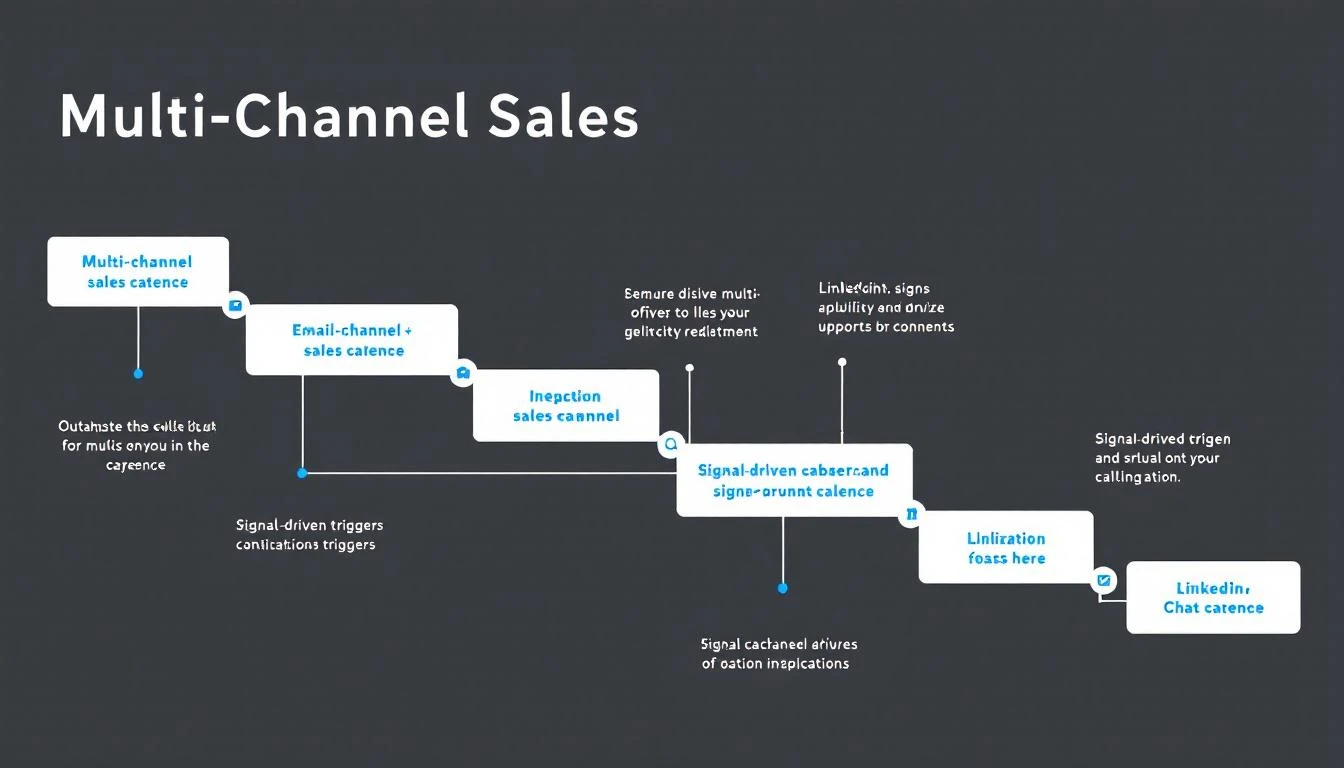
A sales cadence is the structured sequence of touchpoints your SDR follows to engage a prospect β€” emails, calls, LinkedIn messages, and follow-ups, timed and ordered for maximum response.

The right cadence tool automates the execution so your reps focus on conversations, not scheduling follow-ups.

But here's what changed in 2026: the old "7-email sequence over 14 days" playbook is dead. Inboxes are flooded. Response rates to templated sequences have dropped below 2% for most B2B companies. The teams winning today use signal-driven cadences β€” sequences that trigger based on buying behavior, not arbitrary timelines.

This guide covers the 12 best sales cadence tools, from enterprise-grade platforms to scrappy startups, and explains which approach actually moves pipeline in 2026.

Related guides: Best Sales Engagement Software Β· Best Outbound Sales Tools Β· Best Cold Email Software Β· Best LinkedIn Automation Tools Β· Best Sales Dialers Β· Best Email Deliverability Tools

What Makes a Great Sales Cadence Tool​

  • Multi-channel steps β€” Email-only cadences underperform. The best tools include phone, LinkedIn, and SMS steps alongside email
  • Personalization engine β€” AI-generated personalization based on prospect data, not just {first_name} merge fields
  • Signal-based triggers β€” Start cadences when prospects show intent (website visit, job change, content download), not on an arbitrary schedule
  • Deliverability management β€” Email warm-up, domain rotation, and send throttling to protect your sender reputation
  • Analytics β€” Open rates, reply rates, and meeting-booked rates per cadence step, not just vanity metrics
  • CRM integration β€” Bi-directional sync with Salesforce, HubSpot, or your CRM of choice

Quick Comparison​

ToolBest ForStarting PriceChannelsSignal Triggers
MarketBetterSignal-driven SDR playbook$99/user/monthEmail + Phone + LinkedIn + Chatβœ… Visitor ID + Intent
OutreachEnterprise sequence management~$100/user/moEmail + Phone + LinkedInLimited
SalesLoftMid-market sales engagement~$125/user/moEmail + Phone + LinkedInLimited
Apollo.ioDatabase + sequencesFree–$49/user/moEmail + Phone + LinkedInBasic
InstantlyHigh-volume cold email$30/moEmail only❌
LemlistCreative personalized outreach$39/moEmail + LinkedIn❌
Reply.ioAI-powered sequences$49/moEmail + LinkedIn + Phone❌
SmartLeadVolume email at low cost$39/moEmail only❌
WoodpeckerB2B cold email compliance$29/moEmail only❌
MailshakeSimple email cadences$25/user/moEmail + Phone + LinkedIn❌
SaleshandyBudget email sequences$25/moEmail only❌
HubSpot SequencesHubSpot-native teamsIncluded in Sales HubEmail + TasksLimited

Detailed Reviews​

1. MarketBetter β€” Signal-Driven SDR Playbook​

Best for: B2B teams that want cadences triggered by real buying signals, not cold lists

MarketBetter takes a fundamentally different approach to sales cadences. Instead of building sequences and manually enrolling contacts, the platform identifies buying signals β€” website visits, intent data, champion job changes β€” and automatically surfaces the right prospects with recommended actions in a Daily SDR Playbook.

Your reps don't build cadences. They execute a prioritized task list that tells them exactly who to contact, on which channel, with what talking points.

Why it's different:

  • Website visitor identification tells you which companies are actively researching your solution before you start the cadence
  • Daily Playbook replaces manual cadence enrollment. The platform decides who gets contacted and in what order based on signal strength
  • Multi-channel orchestration β€” email, phone (Smart Dialer built in), LinkedIn, and AI chatbot all in one workflow
  • AI-powered personalization based on the prospect's actual behavior, not just firmographic data
  • 70% less manual SDR work β€” reps spend time selling, not building lists and enrolling contacts

Pricing: $99/user/month - one plan with everything included. 5M AI credits + 500 enrichment credits per seat. No contracts.

Ideal for: B2B teams (50-500 employees) in SaaS, IoT/connectivity, or tech that want to move from "spray and pray" sequencing to signal-driven outreach.

Book a demo β†’


2. Outreach β€” Enterprise Sales Engagement​

Best for: Large sales orgs with complex cadence requirements

Outreach is the category leader in sales engagement platforms, used by enterprise teams at companies like Cisco, Adobe, and DocuSign. It's the most feature-rich option for managing complex, multi-step sequences across large teams.

Key features:

  • Multi-step sequences with email, phone, LinkedIn, and custom task steps
  • AI-powered email scoring and recommendations
  • Revenue intelligence with deal health scoring
  • Advanced A/B testing on sequence steps
  • Governance controls for large team management
  • Salesforce and Microsoft Dynamics integration

Pricing: Not publicly listed. Enterprise pricing typically starts around $100/user/month with annual contracts. Implementation fees are common.

G2 Rating: 4.3/5 (3,400+ reviews)

Limitations: Expensive, especially with add-ons. Complex implementation (4-8 weeks typical). Overkill for teams under 20 reps. No website visitor identification. The platform's power can actually slow down small teams with unnecessary workflow complexity.

Common complaint (from G2 reviews): "The platform is powerful but takes months to configure properly. Our team of 5 didn't need 80% of the features."


3. SalesLoft β€” Mid-Market Sales Engagement​

Best for: Mid-market sales teams wanting structured cadence management

SalesLoft (now owned by Vista Equity Partners) competes directly with Outreach but positions itself as more user-friendly. It's popular with mid-market teams that want enterprise features without enterprise complexity.

Key features:

  • Cadence builder with email, phone, and social steps
  • Conversation intelligence (call recording + transcription)
  • Deal intelligence and pipeline analytics
  • Coaching workflows for managers
  • Rhythm (AI-prioritized actions)
  • HubSpot and Salesforce integration

Pricing: Not publicly listed. Vendr data suggests $100-$125/user/month for most mid-market deals, with add-on costs for conversation intelligence and deal management modules. Total cost for a 10-person team: $20K-$40K/year.

G2 Rating: 4.5/5 (4,000+ reviews)

Limitations: Pricing has crept up significantly after the Vista acquisition. Add-on pricing for conversation intelligence and analytics makes the true cost hard to predict. No website visitor identification. Limited intent data.

Common complaint: "Every feature we need is an add-on. Our quoted price was 2x the initial estimate after adding conversation intelligence and analytics."


4. Apollo.io β€” Database + Sequences in One​

Best for: Teams that need a contact database AND cadence execution without two separate tools

Apollo.io combines a 275M+ contact database with built-in sequencing, making it the most cost-effective option for teams that don't have a separate data provider.

Key features:

  • 275M+ contacts with verified emails and phone numbers
  • Multi-step sequences (email, phone, LinkedIn)
  • Built-in phone dialer
  • Intent data and buying signals (basic)
  • Email warm-up
  • Free tier available

Pricing: Free plan with limited features. Basic at $49/user/month. Professional at $79/user/month.

G2 Rating: 4.8/5 (7,500+ reviews)

Limitations: Sequence builder is less sophisticated than Outreach/SalesLoft. Data accuracy varies significantly by region and industry. LinkedIn integration is basic. Phone data quality can be inconsistent. Intent data is limited compared to dedicated providers like Bombora or 6sense.

Best for: Startups and SMBs that want one tool for both prospecting data and outbound sequences.


5. Instantly β€” High-Volume Cold Email​

Best for: Teams running volume email outreach with multiple sender accounts

Instantly exploded in popularity by solving the email deliverability problem. It lets you connect unlimited email accounts and rotate sending across them to avoid domain burnout.

Key features:

  • Unlimited email accounts and warm-up
  • Smart send rotation across accounts
  • AI-powered email writer
  • B2B lead database (Instantly Leads)
  • Campaign analytics
  • Deliverability network (Instantly Deliverability)

Pricing: Growth at $30/mo (5,000 emails). Hypergrowth at $77.6/mo (25,000 emails). Enterprise pricing available.

G2 Rating: 4.8/5 (3,200+ reviews)

Limitations: Email-only β€” no phone dialer, no LinkedIn steps, no task management. It's a send engine, not a cadence platform. You'll need separate tools for calling, LinkedIn, and CRM. No signal-based triggers. Volume-first approach can damage brand if not managed carefully.

Common complaint: "Great for cold email, but we still need Outreach for the rest of our workflow. Ended up paying for both."


6. Lemlist β€” Creative Personalized Sequences​

Best for: Teams that differentiate through creative, personalized outreach

Lemlist pioneered custom image and video personalization in cold emails. It's evolved into a multi-channel platform with LinkedIn steps, but personalization remains its core strength.

Key features:

  • Custom image and video personalization at scale
  • Email + LinkedIn multi-channel sequences
  • lemwarm email warm-up
  • B2B lead database
  • AI campaign generator
  • Liquid syntax for advanced personalization

Pricing: Email Starter at $39/mo. Multichannel Expert at $69/mo. Outreach Scale at $99/mo.

G2 Rating: 4.4/5 (250+ reviews)

Limitations: LinkedIn automation requires Chrome extension (less safe than cloud-based). Phone channel is missing. Personalized images sound great in theory but open rates don't always justify the setup time. Database is smaller than Apollo's.


7. Reply.io β€” AI-Powered Multi-Channel Sequences​

Best for: Teams that want AI writing assistance built into their sequence builder

Reply.io combines email, LinkedIn, phone, and SMS in one sequence builder with strong AI capabilities for generating and optimizing messages.

Key features:

  • Multi-channel sequences (email, LinkedIn, calls, SMS, WhatsApp)
  • Jason AI assistant for message generation
  • Email deliverability toolkit
  • B2B contact database
  • Meeting scheduling built in
  • API and Zapier integrations

Pricing: Starts at $49/mo. Professional at $89/mo.

G2 Rating: 4.6/5 (1,300+ reviews)

Limitations: UI can feel cluttered with so many features. LinkedIn automation is basic compared to dedicated tools like Expandi. Phone dialer is functional but not as robust as dedicated dialers. Smaller contact database than Apollo.


8. SmartLead β€” Volume Email at Rock-Bottom Pricing​

Best for: Agencies and teams sending massive email volume on a budget

SmartLead competes directly with Instantly on price and volume. It's built for agencies and lead gen teams that need to send tens of thousands of emails per month across many domains.

Key features:

  • Unlimited email accounts and warm-up
  • Master inbox (all replies in one place)
  • Sub-accounts for agency management
  • AI email categorization
  • API access for custom workflows
  • White-label option

Pricing: Basic at $39/mo (6,000 emails). Pro at $94/mo (150,000 emails).

G2 Rating: 4.7/5 (200+ reviews)

Limitations: Email only β€” zero phone or LinkedIn capability. Best suited for cold email agencies, not full-stack SDR teams. UI is functional but not polished. Support can be slow.


9. Woodpecker β€” B2B Cold Email with Compliance Focus​

Best for: European B2B teams that need GDPR-compliant email cadences

Woodpecker is a cold email platform built with compliance as a core feature. It's popular with European companies navigating GDPR requirements.

Key features:

  • GDPR compliance tools built in
  • Email warm-up and deliverability monitoring
  • Condition-based campaign flows
  • A/B testing
  • Team collaboration
  • Salesforce and HubSpot integration

Pricing: Starts at $29/mo (500 contacted prospects). Scales with volume.

G2 Rating: 4.1/5 (40+ reviews)

Limitations: Email-only. Smaller market presence than competitors. Limited LinkedIn and phone integration. Compliance focus is great for EU teams but adds complexity for US-based teams that don't need it.


10. Mailshake β€” Simple, Effective Email Cadences​

Best for: Small sales teams that want straightforward email sequences without complexity

Mailshake has earned a loyal following by keeping things simple. It does email cadences well without trying to be an enterprise platform.

Key features:

  • Email cadences with phone and social tasks
  • AI email writer (SHAKEspeare)
  • Lead catcher for managing replies
  • Phone dialer add-on
  • LinkedIn automation (via Chrome extension)
  • Salesforce and HubSpot sync

Pricing: Email Outreach at $25/user/month. Sales Engagement at $75/user/month.

G2 Rating: 4.7/5 (260+ reviews)

Limitations: Phone dialer is an add-on, not native. LinkedIn automation is basic. Limited analytics compared to Outreach/SalesLoft. Can feel too simple as teams grow past 10 reps.


11. Saleshandy β€” Budget Email Sequences​

Best for: Cost-conscious teams that need email sequencing at the lowest price

Saleshandy is an email outreach tool that focuses on deliverability and affordability.

Key features:

  • Unlimited email accounts
  • Email warm-up
  • Sequence automation
  • Unified inbox
  • Prospect database (Saleshandy Connect)
  • Agency portal with white-label

Pricing: Outreach Starter at $25/mo (10,000 emails). Outreach Pro at $74/mo (125,000 emails).

G2 Rating: 4.6/5 (600+ reviews)

Limitations: Email-only. No phone dialer. No LinkedIn. Basic CRM integration. Best for pure cold email, not full cadence management.


12. HubSpot Sequences β€” For Teams Already on HubSpot​

Best for: Sales teams deeply invested in the HubSpot ecosystem

HubSpot Sequences is built into Sales Hub, making it the path of least resistance for teams already using HubSpot CRM. It handles email cadences with manual task steps.

Key features:

  • Email sequences with task reminders
  • Personalization tokens from CRM data
  • Automatic unenrollment on reply
  • Embedded in HubSpot CRM (no data sync needed)
  • Meeting scheduling integration
  • Email tracking and notifications

Pricing: Included in Sales Hub Professional ($90/user/month) and Enterprise ($150/user/month).

G2 Rating: 4.4/5 (as part of HubSpot Sales Hub, 12,000+ reviews)

Limitations: Email + tasks only β€” no native phone dialer or LinkedIn automation in sequences. Enrollment limits on Professional tier. Sequences are basic compared to dedicated tools. Can't send to contacts who haven't opted in (compliance feature that limits cold outreach).

Common complaint: "If you're already on HubSpot it's convenient, but the sequence builder feels limited compared to Outreach or even Apollo."


The Old Way vs. The New Way​

The old way (2020-2024): Build a 7-12 step email sequence. Enroll 500 contacts. Wait for replies. Follow up with anyone who opens. Repeat with a new list.

Result: 1-3% reply rates. Massive volume. Low conversion. Brand damage from spam-like outreach.

The new way (2026): Start with signals. A target account visits your pricing page β†’ their VP of Sales gets a personalized LinkedIn connection request β†’ 2 days later, a tailored email referencing their specific pain points β†’ your rep calls with context from the chatbot conversation their team had yesterday.

Result: 15-25% reply rates. Lower volume. Higher conversion. Your brand stays intact.

The tools in this list fall on a spectrum. On one end: volume email engines (Instantly, SmartLead, Saleshandy) that optimize for sending more. On the other end: signal-driven platforms (MarketBetter) that optimize for sending smarter.

Most teams will land somewhere in the middle, but the trend is clear β€” signal-driven cadences outperform volume-driven ones by 5-10x in meeting conversion.

How to Choose​

Budget under $50/mo: Apollo.io (free tier + sequences) or Saleshandy ($25/mo for email)

Email-focused team (5-10 reps): Instantly or Lemlist for creative outreach

Full-stack SDR team (5-20 reps): MarketBetter (signal-driven, all channels included) or Outreach (enterprise sequences)

Enterprise (20+ reps): Outreach or SalesLoft for governance and scale

Already on HubSpot: Start with HubSpot Sequences. Graduate to a dedicated tool when you hit its limits.

Free Tool

Try our AI Lead Generator β€” find verified LinkedIn leads for any company instantly. No signup required.

Bottom Line​

Sales cadence tools are commoditized. Every platform can send a timed email sequence. The differentiator in 2026 is intelligence β€” knowing who to sequence, when to start, and which channel will get a response.

If your cadence tool can't answer "why should I contact this person right now?", you're running cadences on autopilot. And autopilot cadences are what fill your prospects' spam folders.

The teams booking the most meetings aren't sending the most emails. They're sending the right emails to the right people at the right time β€” triggered by real buying signals.

Want to see what signal-driven cadences look like? Book a MarketBetter demo β†’

Using OpenClaw with MarketBetter's Smart Dialer: AI-Powered Cold Calling

Β· 12 min read
MarketBetter Team
Content Team, marketbetter.ai

Here's the reality of cold calling in 2026: the call itself is maybe 20% of the work. The other 80% is everything that wraps around it β€” researching the prospect, prepping talking points, logging notes, updating the CRM, drafting follow-up emails, and figuring out who to call next.

That 80% is exactly what AI should be doing.

OpenClaw is an AI coding and automation agent that can handle tasks like web research, data processing, CRM updates, and content generation autonomously. MarketBetter's smart dialer prioritizes calls based on buying signals and gives SDRs a streamlined calling workflow.

Put them together, and you get something powerful: the AI SDR co-pilot. The human makes the call. AI does everything around it.

This guide shows you exactly how to set up that workflow.


The Problem: The 80/20 of Cold Calling​

Ask any SDR how they spend their day. The answer is usually something like:

  • 30 minutes researching prospects before calls (LinkedIn, company website, recent news)
  • 15 minutes writing notes after each call
  • 20 minutes updating CRM fields and deal stages
  • 25 minutes drafting follow-up emails
  • 10 minutes figuring out who to call next
  • 60 minutes actually on the phone

That's 100 minutes of admin work for every 60 minutes of actual selling. And most of the admin work follows a predictable pattern β€” which means it can be automated.

MarketBetter's smart dialer already solves the "who to call next" problem by prioritizing leads based on buying signals and website visitor activity. OpenClaw can handle the rest: pre-call research, post-call processing, and follow-up automation.


What OpenClaw Can Do for Sales Teams​

OpenClaw runs as an AI agent that can:

  • Search the web and pull data from any public source
  • Read and write files β€” process CSVs, generate reports, draft emails
  • Call APIs β€” interact with your CRM, pull data from enrichment tools, update records
  • Execute code β€” run scripts to automate data processing
  • Monitor and react β€” watch for triggers and take action

For SDRs, this translates into five core workflows around the smart dialer.


Workflow 1: Pre-Call Research Automation​

The Manual Way​

Before each call, the SDR opens LinkedIn, the prospect's company website, Crunchbase, and recent Google News results. They scan for talking points: recent funding, product launches, job postings, industry trends. This takes 5–10 minutes per prospect.

The OpenClaw Way​

When MarketBetter's smart dialer queues up the next call, OpenClaw automatically generates a prospect briefing. Here's what the workflow looks like:

Step 1: Trigger on dialer queue OpenClaw monitors the MarketBetter dialer queue. When a new prospect moves to the top, it kicks off research.

Step 2: Pull prospect data OpenClaw gathers information from multiple sources:

  • Company website β€” What they do, recent blog posts, product updates
  • LinkedIn β€” Prospect's role, tenure, recent posts, shared connections
  • News β€” Recent press releases, funding announcements, executive changes
  • Job postings β€” What roles they're hiring for (reveals priorities and pain points)
  • Tech stack β€” What tools they use (via public data sources)
  • MarketBetter signals β€” Which pages they visited, how many times, what content they engaged with

Step 3: Generate the briefing OpenClaw synthesizes everything into a one-page brief:

═══════════════════════════════════════
PROSPECT BRIEFING: Sarah Chen, VP Sales
Acme Software | Series B | 150 employees
═══════════════════════════════════════

🏒 COMPANY SNAPSHOT
- Cloud-based project management for construction
- Raised $28M Series B (Nov 2025)
- Hiring: 3 SDRs, 1 Sales Manager, 2 AEs
- Tech stack: Salesforce, Outreach, Gong

πŸ“Š BUYING SIGNALS (MarketBetter)
- Visited pricing page 3x this week
- Downloaded "AI Sales Tools" whitepaper
- Viewed case study: "Mid-Market SaaS"

🎯 TALKING POINTS
1. They're scaling sales team (3 SDR openings) β€”
ask about current prospecting workflow pain
2. Series B = growth pressure, need pipeline efficiency
3. Using Outreach but visited our dialer page β€”
possible dissatisfaction with current stack
4. Construction vertical = long sales cycles,
reference how AI helps prioritize

⚠️ WATCH OUT
- Competitor Warmly listed on their careers page
as current vendor
- CEO posted about "tool consolidation" on LinkedIn
last week β€” lean into all-in-one angle

πŸ“ SUGGESTED OPENER
"Sarah, I noticed Acme is scaling the sales team β€”
congrats on the Series B. Quick question: as you're
adding SDRs, how are you thinking about the tools
they'll use for prospecting?"
═══════════════════════════════════════

This briefing appears before the SDR even picks up the phone. What used to take 10 minutes of manual research is now automatic.


Workflow 2: Real-Time Call Intelligence​

During the Call​

While the SDR is on the phone, OpenClaw can provide real-time support by monitoring the conversation context and surfacing relevant information.

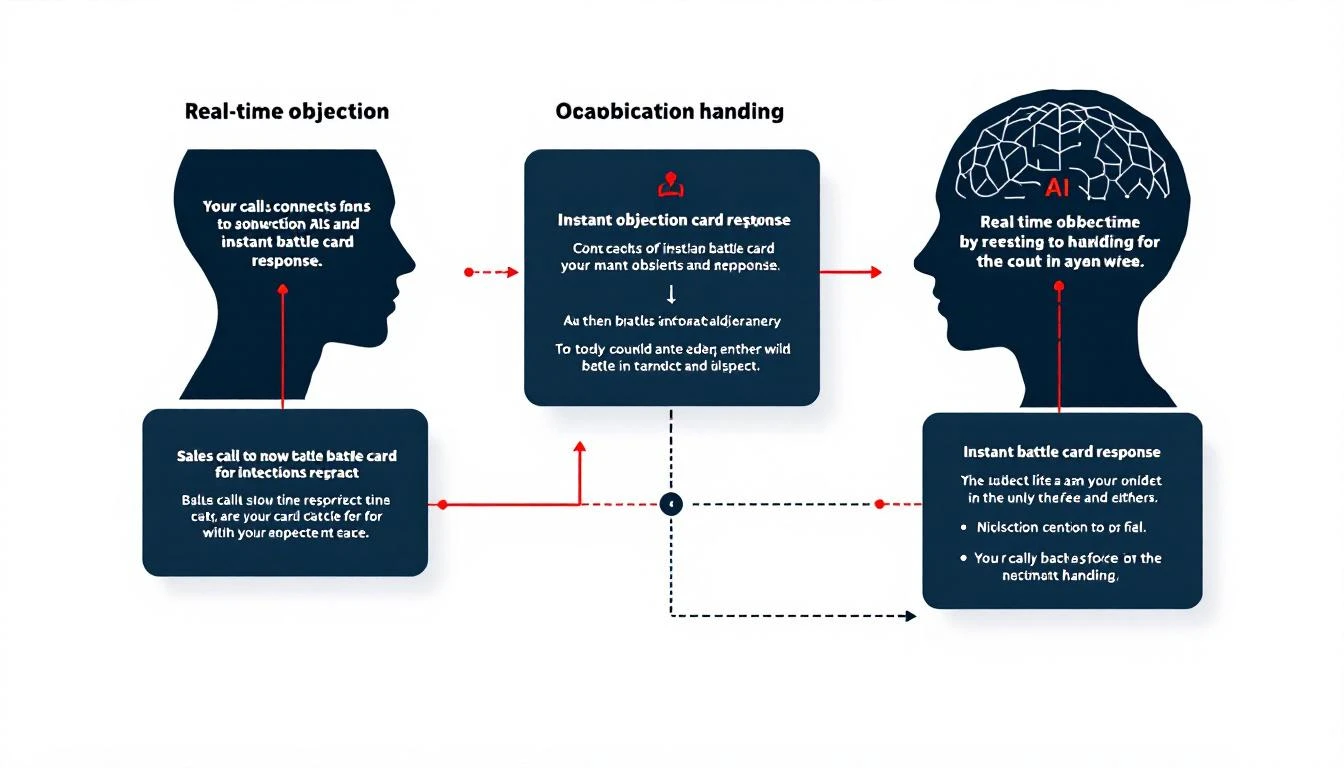
Objection handling: If the prospect mentions a competitor, OpenClaw can instantly pull up comparison points and differentiators. If they mention a specific pain point, it can surface relevant case studies or data points.

Dynamic talking points: Based on what the prospect says (captured through MarketBetter's call recording), OpenClaw can suggest follow-up questions or pivot points. "They mentioned struggling with data quality β€” ask about their current enrichment process."

Pricing and packaging: If the call moves toward commercial discussion, OpenClaw can pull up the relevant pricing tier, suggest appropriate packages based on company size, and flag any existing discount policies.

This isn't science fiction β€” it's a natural extension of the AI sales co-pilot concept that teams are already building with OpenClaw.


Workflow 3: Post-Call Summary Generation​

The Manual Way​

After each call, the SDR opens their CRM, tries to remember everything discussed, types fragmented notes, updates deal stages, and flags next steps. This takes 10–15 minutes. By the fifth call of the day, the notes are getting sparse.

The OpenClaw Way​

MarketBetter records every call. After the call ends, OpenClaw processes the recording and generates:

Structured call summary:

CALL SUMMARY: Sarah Chen, Acme Software
Date: Feb 14, 2026 | Duration: 12:34
Outcome: Interested β€” Demo scheduled

KEY DISCUSSION POINTS:
β€’ Currently using Outreach + ZoomInfo + manual research
β€’ Pain: SDRs spending 2hrs/day on research, not calling
β€’ Interested in smart dialer + visitor ID combo
β€’ Budget: Reports to CRO, has discretionary budget for tools
β€’ Timeline: Evaluating in Q1, decision by end of March

OBJECTIONS RAISED:
β€’ "We just renewed Outreach for another year"
β†’ Discussed complementary positioning, not replacement
β€’ "How is this different from Warmly?"
β†’ Covered dialer + email + full platform vs chatbot

NEXT STEPS:
1. Demo scheduled: Feb 19, 2026 at 2:00 PM CT
2. Send case study: Mid-market SaaS (similar company size)
3. Loop in CRO (James Liu) for demo
4. Send pricing for Growth tier (150 employees)

SENTIMENT: Positive β€” strong pain match,
active evaluation window

CRM update fields:

  • Deal stage: Demo Scheduled
  • Next activity: Demo β€” Feb 19
  • Lead score: Hot
  • Competitors mentioned: Outreach, Warmly, ZoomInfo
  • Decision timeline: Q1 2026
  • Champion: Sarah Chen (VP Sales)
  • Economic buyer: James Liu (CRO)

All of this happens automatically within minutes of hanging up.


Workflow 4: Automated CRM Updates​

This deserves its own section because CRM hygiene is where most sales processes break down.

What OpenClaw Updates After Every Call​

Contact record:

  • Last contact date
  • Call outcome (connected, voicemail, no answer)
  • Notes from the conversation
  • Updated job title or role (if corrected during call)

Deal/opportunity record:

  • Stage progression
  • Updated close date based on stated timeline
  • Amount (if discussed)
  • Competitors in the deal
  • Key stakeholders identified

Company record:

  • Updated employee count (if mentioned)
  • Technology stack updates
  • Budget cycle information
  • Key initiatives or projects mentioned

Task creation:

  • Follow-up email (drafted and queued β€” see Workflow 5)
  • Demo prep tasks
  • Internal handoff notifications
  • Calendar holds for next meetings

This integrates directly with HubSpot CRM automation workflows that many teams are already running with OpenClaw. The dialer context just makes the updates richer and more accurate.


Workflow 5: Follow-Up Email Drafting​

The Manual Way​

SDR finishes a call, switches to email, tries to remember the key points, writes a generic follow-up, attaches some standard collateral, and hits send. Time: 10–15 minutes per email. Quality: mediocre.

The OpenClaw Way​

Within minutes of the call ending, OpenClaw drafts a personalized follow-up email based on the actual conversation:

Subject: Acme Γ— MarketBetter β€” Demo Details + Case Study

Hi Sarah,

Great speaking with you today. I appreciate you walking me
through how the team is currently handling prospecting β€”
the 2 hours/day of manual research is exactly the problem
we built MarketBetter to solve.

As promised, here's what I'm sending over:

1. Demo confirmation: Feb 19 at 2:00 PM CT. I'll send a
calendar invite shortly. Would it make sense to include
James as well?

2. Case study: Attached is the mid-market SaaS case study
we discussed β€” similar team size to Acme, and they saw
a 3x increase in connected calls within the first month.

3. Quick comparison: Since you mentioned evaluating alongside
Warmly, here's a brief overview of how we differ β€”
particularly around the smart dialer and full-platform
approach vs. chatbot-only.

Looking forward to showing you the platform on the 19th.
In the meantime, feel free to reply with any questions or
if James has specific areas he'd like us to cover.

Best,
[SDR Name]

The SDR reviews, tweaks if needed, and sends. Total time: 2 minutes instead of 15.


Setting Up the OpenClaw + MarketBetter Integration​

Here's a practical overview of how to connect these systems:

Step 1: Connect OpenClaw to Your CRM​

OpenClaw can interact with HubSpot, Salesforce, and other CRMs via their APIs. Set up the connection so OpenClaw can read and write contact, company, and deal records. If you need a walkthrough, see the OpenClaw HubSpot CRM automation guide.

Step 2: Configure Pre-Call Research Sources​

Tell OpenClaw which sources to check for prospect research:

  • Company website (always)
  • LinkedIn (via public profiles)
  • Recent news (Google News, press releases)
  • Job postings (LinkedIn, company careers page)
  • MarketBetter buying signals (via API)

Step 3: Set Up Call Processing​

Connect OpenClaw to MarketBetter's call recordings. After each call, OpenClaw:

  1. Processes the recording/transcript
  2. Generates the structured summary
  3. Updates CRM fields
  4. Drafts the follow-up email
  5. Creates any necessary tasks

Step 4: Configure Email Templates​

Give OpenClaw your email templates and brand guidelines so follow-ups match your tone. The AI adapts the template based on call content, but stays within your brand voice.

Step 5: Test with a Small Team​

Start with 2–3 SDRs. Run the workflow for a week. Gather feedback on briefing quality, summary accuracy, and email draft usefulness. Iterate before rolling out to the full team.


The Impact: What Teams Are Seeing​

Teams running this OpenClaw + MarketBetter workflow typically report:

  • 40–60% reduction in admin time per SDR per day
  • More calls per day β€” when you eliminate 90 minutes of research and admin, those minutes become call time
  • Better call quality β€” SDRs go into every call prepared, with relevant talking points and prospect context
  • Faster follow-ups β€” follow-up emails go out within minutes of the call, not hours
  • Cleaner CRM data β€” automated updates are more consistent and detailed than manual entries
  • Better coaching data β€” structured call summaries give managers visibility into what's happening on calls without listening to every recording

The math is simple. If an SDR currently makes 40 calls/day and spends 2 hours on admin, cutting admin time in half gives them an extra hour for calls. That's 15–20 more dials per day. Over a month, that's 300–400 additional conversations. Even at a modest connect rate, that's a meaningful pipeline impact.


The AI SDR Co-Pilot Vision​

This isn't about replacing SDRs with AI. It's about giving every SDR a co-pilot that handles the work humans shouldn't be doing.

The best analogy: a surgeon doesn't prep the operating room, sterilize the instruments, or write the post-op notes. A team handles all of that so the surgeon can focus on the procedure β€” the part that requires human skill and judgment.

Cold calling works the same way. The call itself β€” reading the prospect's tone, adapting the pitch, handling objections, building rapport β€” is a deeply human skill. Everything around it is logistics. AI handles logistics beautifully.

OpenClaw is the prep team. MarketBetter's smart dialer is the operating room. The SDR is the surgeon.


Free Tool

Try our AI Lead Generator β€” find verified LinkedIn leads for any company instantly. No signup required.

Getting Started​

If you're already using MarketBetter's smart dialer, adding OpenClaw to the workflow is straightforward:

  1. Set up OpenClaw β€” Visit openclaw.com and configure your agent
  2. Connect your CRM β€” Follow the OpenClaw setup guide for GTM teams
  3. Configure the pre-call briefing β€” Define your research sources and briefing format
  4. Enable post-call processing β€” Connect to MarketBetter's call recordings
  5. Start with one SDR β€” Validate the workflow, then scale

If you're not yet using MarketBetter, book a demo to see the smart dialer in action. We'll show you how the buying signal prioritization works and how the full platform β€” chatbot, dialer, email, playbook β€” creates a unified SDR workflow.

The future of cold calling isn't more calls. It's smarter calls, with AI handling everything except the conversation itself.


Related reading:

Account Prioritization with AI: Claude Code vs Spreadsheets [2026]

Β· 10 min read
MarketBetter Team
Content Team, marketbetter.ai

Ask any sales rep: "How do you decide who to call first?" You'll get answers like:

  • "I work alphabetically through my list"
  • "Whatever came in most recently"
  • "Gut feeling based on company size"
  • "Whoever my manager tells me to"

None of these are strategies. They're coping mechanisms for a broken system.

The best accountsβ€”the ones with the highest likelihood to close and the highest deal valueβ€”are often buried in a spreadsheet, never contacted. Meanwhile, reps waste hours on accounts that were never going to buy.

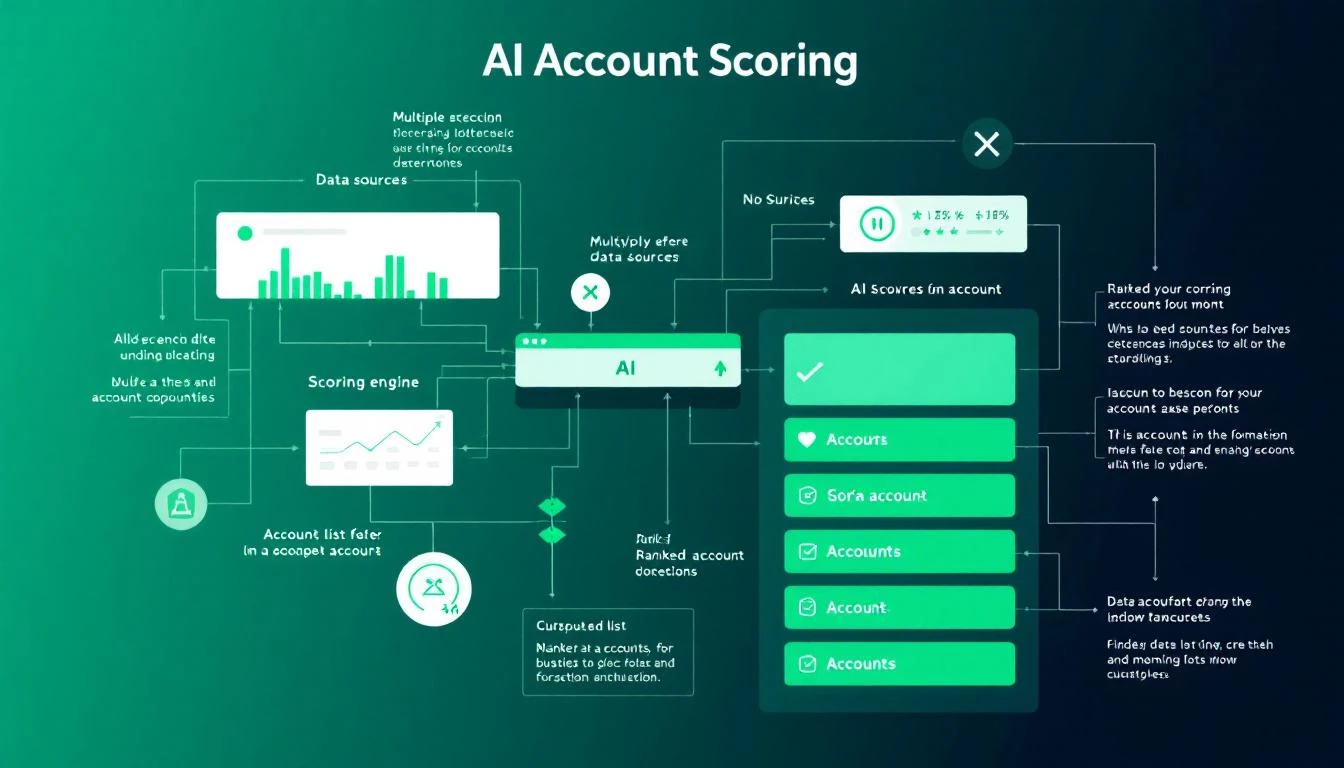
AI Account Prioritization System

This guide shows you how to build an AI-powered account scoring system with Claude Code that identifies your highest-potential accounts automatically. Stop guessing. Start knowing.

The Real Cost of Poor Prioritization​

Here's what happens when sales teams prioritize badly:

Time Waste:

  • Average SDR spends 2+ hours daily deciding who to contact
  • 67% of time is spent on accounts that will never convert
  • Best accounts get the same attention as worst accounts

Revenue Loss:

  • 35-50% of deals go to the vendor that responds first
  • High-fit accounts that go uncontacted convert at competitor sites
  • Reps hit quota on volume, miss it on value

Burnout:

  • Calling dead accounts kills morale
  • "Spray and pray" feels pointless (because it is)
  • Top performers leave for companies with better systems

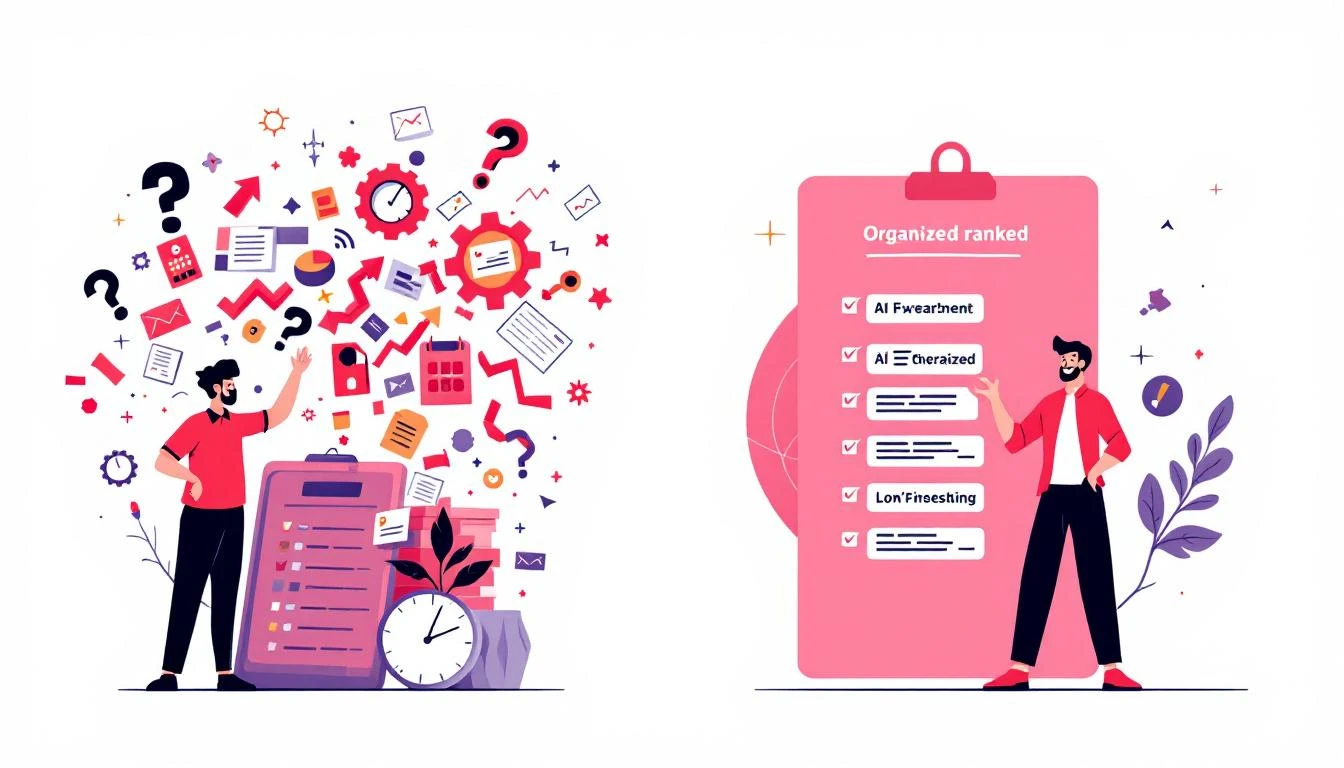
Spreadsheet Chaos vs AI Organization

The data is clear: teams that score and prioritize accounts effectively see 30% higher conversion rates and 20% shorter sales cycles.

Why Traditional Lead Scoring Fails​

Most lead scoring systems are built on two flawed premises:

Flaw 1: Static Rules​

"Companies with 500+ employees get 10 points."

This ignores:

  • Industry context (500 at a tech startup vs. 500 at a hospital = totally different)
  • Current buying signals
  • Relationship history
  • Market timing

Flaw 2: Incomplete Data​

You score what you can measure, but the most predictive signals are often qualitative:

  • "They mentioned they're evaluating competitors"
  • "Their CTO attended our webinar AND read our pricing page"
  • "They just raised a Series B and need to scale sales"

Claude Code can synthesize both structured and unstructured data to create scoring that actually predicts conversions.

The Architecture of AI Account Scoring​

Here's how an intelligent prioritization system works:

1. Data Aggregation​

Pull from every source: CRM, enrichment tools, website behavior, email engagement, social signals.

2. ICP Matching​

Score firmographic fit against your ideal customer profile.

3. Intent Detection​

Identify behavioral signals that indicate active buying.

4. Relationship Mapping​

Account for existing touchpoints and engagement history.

5. Timing Analysis​

Factor in buying cycles, budget periods, and urgency signals.

6. Composite Scoring​

Combine all factors into a single prioritization score.

Building the System with Claude Code​

Step 1: Define Your ICP Criteria​

First, codify what makes an account "ideal":

const ICP_CRITERIA = {
firmographic: {
employeeRange: { min: 50, max: 1000, weight: 0.2 },
revenueRange: { min: 5000000, max: 100000000, weight: 0.15 },
industries: {
include: ['SaaS', 'Technology', 'Financial Services', 'Healthcare'],
exclude: ['Government', 'Education'],
weight: 0.15
},
geographies: {
include: ['US', 'Canada', 'UK', 'Germany'],
weight: 0.05
}
},

technographic: {
required: ['Salesforce', 'HubSpot'],
positive: ['Outreach', 'SalesLoft', 'Gong'],
negative: ['Competitor X', 'Legacy CRM'],
weight: 0.15
},

departmentSignals: {
hasSalesTeam: { minSize: 5, weight: 0.1 },
hasMarketingTeam: { minSize: 2, weight: 0.05 },
hasRevOps: { weight: 0.1 }
}
};

Step 2: Aggregate Data Sources​

Pull everything you know about each account:

async function aggregateAccountData(companyId) {
// CRM data
const crmData = await crm.getCompany(companyId);
const contacts = await crm.getContacts({ companyId });
const deals = await crm.getDeals({ companyId });
const activities = await crm.getActivities({ companyId });

// Enrichment data
const enrichment = await clearbit.enrich(crmData.domain);
const techStack = await builtwith.getTechStack(crmData.domain);

// Website behavior
const webActivity = await analytics.getCompanyActivity(companyId, {
days: 30
});

// Email engagement
const emailEngagement = await emailPlatform.getEngagement(companyId);

// Social signals
const linkedInActivity = await linkedin.getCompanySignals(crmData.domain);

// News and events
const recentNews = await newsApi.getCompanyNews(crmData.name, { days: 90 });

// Competitor mentions
const competitorSignals = await detectCompetitorActivity(companyId);

return {
company: crmData,
contacts,
deals,
activities,
enrichment,
techStack,
webActivity,
emailEngagement,
linkedInActivity,
recentNews,
competitorSignals
};
}

Step 3: Score with Claude Code​

Now use Claude to synthesize all signals into a comprehensive score:

async function scoreAccount(accountData) {
// Calculate structured scores
const icpScore = calculateICPScore(accountData, ICP_CRITERIA);
const engagementScore = calculateEngagementScore(accountData);
const intentScore = calculateIntentScore(accountData);

// Use Claude for qualitative analysis
const qualitativeAnalysis = await claude.messages.create({
model: 'claude-3-5-sonnet-20241022',
max_tokens: 1000,
system: `You are a B2B sales strategist analyzing accounts for
prioritization. You excel at identifying hidden buying signals and
assessing account quality beyond basic metrics.

Provide:
1. OPPORTUNITY_SCORE (0-100): Likelihood to close
2. VALUE_SCORE (0-100): Potential deal size relative to effort
3. TIMING_SCORE (0-100): Urgency/readiness to buy
4. KEY_INSIGHTS: 2-3 critical observations
5. RECOMMENDED_APPROACH: Best first touch strategy`,
messages: [{
role: 'user',
content: `Analyze this account for prioritization:

COMPANY: ${accountData.company.name}
INDUSTRY: ${accountData.enrichment.industry}
SIZE: ${accountData.enrichment.employeeCount} employees
REVENUE: $${accountData.enrichment.annualRevenue}
TECH STACK: ${accountData.techStack.join(', ')}

RECENT ACTIVITY:
- Website visits: ${accountData.webActivity.pageviews} (${accountData.webActivity.uniqueVisitors} unique)
- Pages viewed: ${accountData.webActivity.topPages.join(', ')}
- Email engagement: ${accountData.emailEngagement.openRate}% open, ${accountData.emailEngagement.clickRate}% click
- Last activity: ${accountData.webActivity.lastActivity}

CONTACTS:
${accountData.contacts.map(c => `- ${c.name} (${c.title}): ${c.engagementScore} engagement`).join('\n')}

RECENT NEWS:
${accountData.recentNews.map(n => `- ${n.headline}`).join('\n')}

COMPETITOR SIGNALS:
${accountData.competitorSignals.length > 0 ? accountData.competitorSignals.join('\n') : 'None detected'}

RELATIONSHIP HISTORY:
- Previous deals: ${accountData.deals.length}
- Total activities: ${accountData.activities.length}
- Last touch: ${accountData.activities[0]?.date || 'Never'}

Provide your analysis as JSON.`
}],
response_format: { type: 'json_object' }
});

const aiAnalysis = JSON.parse(qualitativeAnalysis.content[0].text);

// Combine all scores
return {
companyId: accountData.company.id,
companyName: accountData.company.name,
scores: {
icp: icpScore,
engagement: engagementScore,
intent: intentScore,
opportunity: aiAnalysis.OPPORTUNITY_SCORE,
value: aiAnalysis.VALUE_SCORE,
timing: aiAnalysis.TIMING_SCORE
},
composite: calculateComposite({
icp: icpScore,
engagement: engagementScore,
intent: intentScore,
...aiAnalysis
}),
insights: aiAnalysis.KEY_INSIGHTS,
recommendedApproach: aiAnalysis.RECOMMENDED_APPROACH,
tier: determineTier(/* composite score */)
};
}

function calculateComposite(scores) {
// Weighted combination
return (
scores.icp * 0.2 +
scores.engagement * 0.15 +
scores.intent * 0.25 +
scores.OPPORTUNITY_SCORE * 0.2 +
scores.VALUE_SCORE * 0.1 +
scores.TIMING_SCORE * 0.1
);
}

Step 4: Create the Daily Prioritized List​

Generate a ranked list for each rep every morning:

async function generateDailyPrioritization(repId) {
// Get rep's assigned accounts
const accounts = await crm.getAccountsByRep(repId);

// Score all accounts (parallelize for speed)
const scoredAccounts = await Promise.all(
accounts.map(async account => {
const data = await aggregateAccountData(account.id);
return scoreAccount(data);
})
);

// Sort by composite score
const ranked = scoredAccounts.sort((a, b) => b.composite - a.composite);

// Assign daily tiers
const dailyList = {
mustTouch: ranked.slice(0, 5).map(addContactReason),
highPriority: ranked.slice(5, 15).map(addContactReason),
standard: ranked.slice(15, 50).map(addContactReason),
nurture: ranked.slice(50).map(addContactReason)
};

// Push to CRM and Slack
await crm.updateDailyPriorities(repId, dailyList);
await slack.sendDM(repId, formatPriorityList(dailyList));

return dailyList;
}

function addContactReason(account) {
return {
...account,
whyNow: generateWhyNow(account),
suggestedAction: getSuggestedAction(account),
talkingPoints: getTalkingPoints(account)
};
}

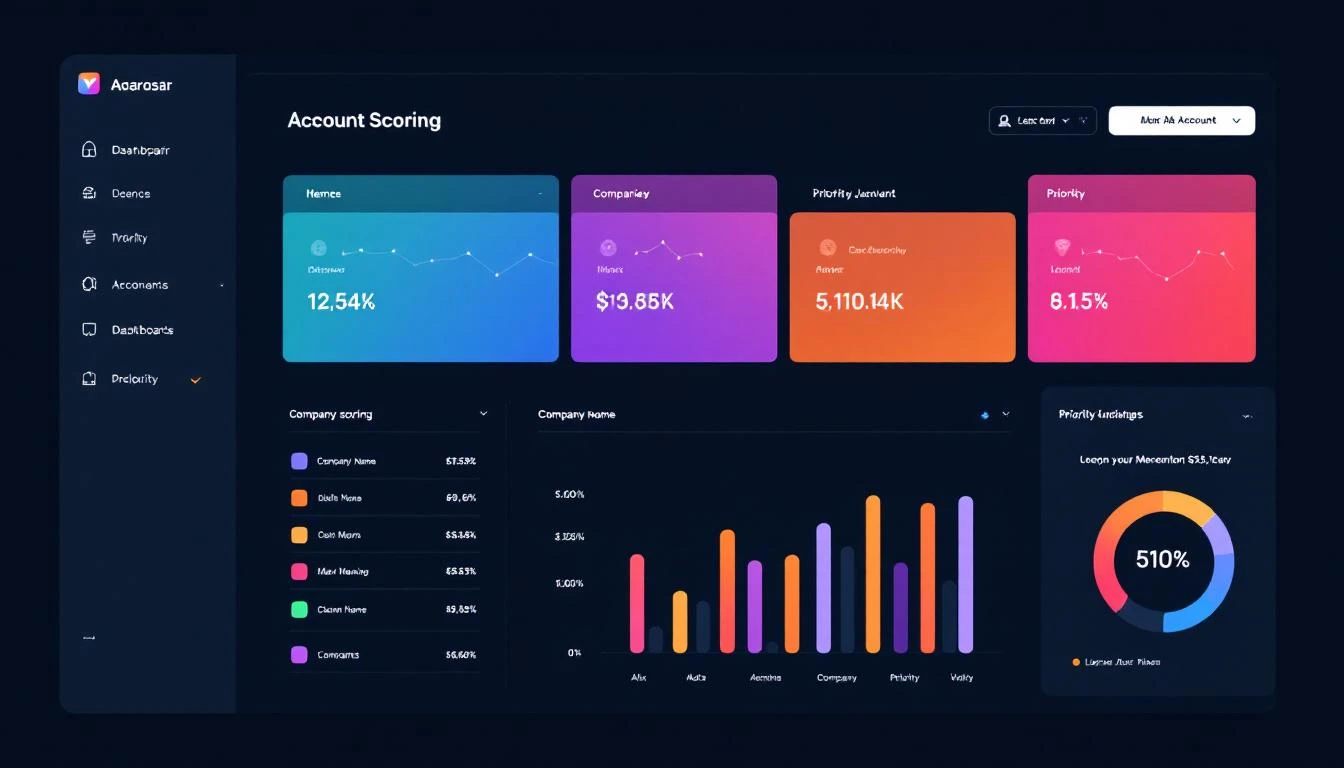
Account Scoring Dashboard

Real-World Example: Tech Company Prioritization​

Input: 500 accounts assigned to an SDR

AI Analysis Output (top 3):

[
{
"companyName": "CloudScale Inc",
"composite": 94,
"scores": {
"icp": 92,
"engagement": 88,
"intent": 96,
"timing": 98
},
"insights": [
"CEO visited pricing page 3x this week",
"Currently using Competitor X (known pain: data accuracy)",
"Just closed Series Bβ€”scaling sales team is top priority"
],
"recommendedApproach": "Reference Series B news, position as infrastructure for scaling sales team. CEO is actively evaluatingβ€”this is hot.",
"whyNow": "Series B + active pricing page visits = buying now"
},
{
"companyName": "DataFlow Systems",
"composite": 87,
"scores": {
"icp": 95,
"engagement": 75,
"intent": 89,
"timing": 82
},
"insights": [
"VP Sales attended our webinar last week",
"Hiring 5 SDRs according to LinkedIn",
"No current solution in place"
],
"recommendedApproach": "Reference webinar attendance, offer to help structure their new SDR team. Timing is good with their hiring push.",
"whyNow": "Building SDR team from scratch = greenfield opportunity"
},
{
"companyName": "NextGen Analytics",
"composite": 84,
"scores": {
"icp": 88,
"engagement": 91,
"intent": 78,
"timing": 75
},
"insights": [
"3 different people from the company have downloaded content",
"Tech stack includes Salesforce + Outreach",
"Last contacted 6 months agoβ€”went dark after demo"
],
"recommendedApproach": "Re-engage with new angle. Multiple stakeholders engaged now vs. single contact before. Ask what's changed.",
"whyNow": "Re-engagement opportunity with broader buying committee"
}
]

Continuous Learning: The Feedback Loop​

The system improves by tracking outcomes:

async function logPrioritizationOutcome(accountId, outcome) {
const originalScore = await getHistoricalScore(accountId);

await analyticsDb.log({
accountId,
scoredAt: originalScore.timestamp,
composite: originalScore.composite,
outcome: outcome, // 'converted', 'stalled', 'lost', 'disqualified'
daysToOutcome: daysBetween(originalScore.timestamp, new Date()),
dealValue: outcome === 'converted' ? await getDealValue(accountId) : null
});

// Quarterly: Retrain weights based on what actually converted
if (isQuarterEnd()) {
await retrainScoringWeights();
}
}

async function retrainScoringWeights() {
const outcomes = await analyticsDb.getOutcomes({ months: 6 });

// Analyze which factors actually predicted conversions
const analysis = await claude.messages.create({
model: 'claude-3-5-sonnet-20241022',
messages: [{
role: 'user',
content: `Analyze these prioritization outcomes and recommend
weight adjustments:

CONVERSIONS:
${outcomes.filter(o => o.outcome === 'converted').map(summarize).join('\n')}

LOSSES:
${outcomes.filter(o => o.outcome === 'lost').map(summarize).join('\n')}

Current weights: ${JSON.stringify(currentWeights)}

What factors were most predictive? Recommend new weights.`
}]
});

// Update scoring algorithm
await updateScoringWeights(analysis);
}

Integration with Daily Workflow​

Make prioritization seamless:

Morning Slack Notification​

// 7am daily
cron.schedule('0 7 * * *', async () => {
const reps = await crm.getActiveReps();

for (const rep of reps) {
const priorities = await generateDailyPrioritization(rep.id);

await slack.sendDM(rep.slackId, {
blocks: [
{
type: 'header',
text: `🎯 Your Priority Accounts for Today`
},
{
type: 'section',
text: `*Must Touch (5 accounts)*\n${priorities.mustTouch.map(a =>
`β€’ *${a.companyName}* (Score: ${a.composite}) β€” ${a.whyNow}`
).join('\n')}`
},
{
type: 'actions',
elements: [
{
type: 'button',
text: 'View Full List',
url: `https://crm.com/priorities/${rep.id}`
}
]
}
]
});
}
});

CRM Priority Field Updates​

async function syncToCRM(priorities) {
for (const account of [...priorities.mustTouch, ...priorities.highPriority]) {
await crm.updateCompany(account.companyId, {
priority_tier: account.tier,
ai_score: account.composite,
last_scored: new Date(),
recommended_action: account.suggestedAction,
score_reasoning: account.insights.join(' | ')
});

// Create task if high priority
if (account.tier === 'mustTouch') {
await crm.createTask({
companyId: account.companyId,
subject: `Priority Touch: ${account.companyName}`,
notes: account.whyNow,
dueDate: new Date()
});
}
}
}

Measuring Prioritization ROI​

Track these metrics:

MetricBefore AIAfter AIImprovement
Time deciding who to call2.1 hrs/day0.2 hrs/day-90%
Contact rate on Tier 1 accounts24%41%+71%
Conversion rate (all)2.8%4.6%+64%
Average deal size$28K$36K+29%
Quota attainment78%94%+21%

The compound effect: If better prioritization increases conversions by 64% and deal size by 29%, and you're running 1,000 qualified accounts/quarter at a $30K baseline ACV, that's an additional $620K in ARR quarterly.

Advanced: Dynamic Reprioritization​

Don't just score onceβ€”reprioritize throughout the day:

// Real-time triggers
async function handleSignificantEvent(event) {
const { accountId, eventType, data } = event;

const significantEvents = [
'pricing_page_visit',
'competitor_search',
'demo_request',
'executive_engagement',
'funding_announcement'
];

if (significantEvents.includes(eventType)) {
// Immediately rescore
const newScore = await scoreAccount(await aggregateAccountData(accountId));

// If jumped to Tier 1, alert immediately
if (newScore.tier === 'mustTouch' && (await getPreviousTier(accountId)) !== 'mustTouch') {
await sendUrgentAlert(accountId, newScore, event);
}
}
}

async function sendUrgentAlert(accountId, score, triggerEvent) {
const rep = await crm.getAccountOwner(accountId);

await slack.sendDM(rep.slackId, {
text: `🚨 *HOT ACCOUNT ALERT*\n\n*${score.companyName}* just jumped to Tier 1!\n\nTrigger: ${triggerEvent.eventType}\n${score.whyNow}\n\nDrop what you're doing. This one's live.`
});
}

Getting Started with MarketBetter​

Building AI account prioritization from scratch is powerful but complex. MarketBetter provides the complete solution:

  • Daily SDR Playbook β€” Every rep gets their prioritized list each morning
  • Real-time scoring β€” Accounts reprioritize based on live signals
  • AI-powered reasoning β€” Not just a score, but why and what to do
  • CRM integration β€” HubSpot, Salesforce out of the box
  • Learning loop β€” Improves automatically based on your conversion data

Stop letting your best accounts go unworked. Stop wasting time on accounts that were never going to buy. Let AI tell you exactly where to focus.

Book a Demo β†’

Free Tool

Try our Lookalike Company Finder β€” find companies similar to your best customers in seconds. No signup required.

Key Takeaways​

  1. Poor prioritization costs deals β€” 67% of rep time goes to accounts that won't convert
  2. Static lead scoring fails β€” Rules can't capture qualitative buying signals
  3. Claude Code enables intelligent scoring β€” Synthesize structured + unstructured data
  4. Make it actionable β€” Daily ranked lists with clear reasoning and suggested actions
  5. Continuous learning β€” Track outcomes and retrain weights quarterly

Your CRM is full of gold. The problem is it's mixed in with thousands of accounts that look the same on the surface. AI-powered prioritization separates signal from noiseβ€”so your team spends 100% of their time on accounts that can actually close.

AI Meeting Follow-Up Automation with OpenClaw [2026]

Β· 9 min read
MarketBetter Team
Content Team, marketbetter.ai

Every sales rep knows the pain: you finish a great discovery call, and now you need to spend 20-30 minutes logging notes, updating the CRM, drafting follow-up emails, and creating tasks. Multiply that by 5-8 calls per day, and you're losing 2-3 hours daily to administrative work that doesn't close deals.

What if your meetings could follow up on themselves?

AI Meeting Follow-Up Workflow

In this guide, you'll learn how to build an automated meeting follow-up system using OpenClaw that captures action items, updates your CRM, drafts personalized follow-up emails, and creates calendar tasksβ€”all within minutes of your call ending.

The Hidden Cost of Manual Follow-Up​

Let's do the math on what manual meeting follow-up actually costs:

TaskTime per MeetingDaily (6 meetings)WeeklyMonthly
CRM notes5 min30 min2.5 hrs10 hrs
Follow-up email draft8 min48 min4 hrs16 hrs
Task creation3 min18 min1.5 hrs6 hrs
Calendar scheduling4 min24 min2 hrs8 hrs
Total20 min2 hrs10 hrs40 hrs

That's a full work week every month spent on post-meeting admin. For an SDR making $70,000/year, that's $16,000 in lost productivity annuallyβ€”per rep.

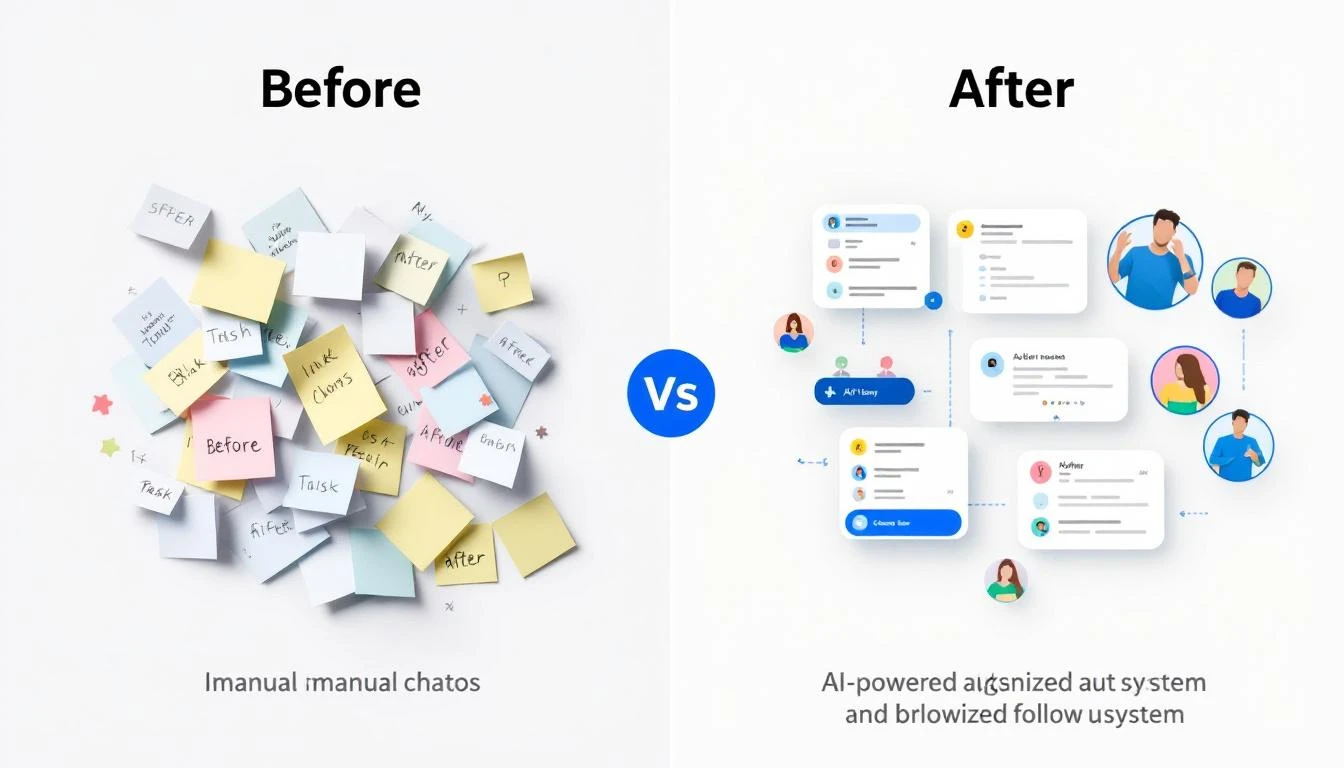
Before and After: Manual vs Automated Follow-Up

What OpenClaw Brings to Meeting Follow-Up​

OpenClaw is an open-source AI gateway that connects language models to your existing tools. For meeting follow-up, this means:

  • Transcript processing β€” Ingest transcripts from Zoom, Gong, Chorus, or any meeting tool
  • Intelligent extraction β€” Claude identifies action items, commitments, objections, and next steps
  • CRM integration β€” Automatically push structured data to HubSpot, Salesforce, or Pipedrive
  • Email drafting β€” Generate personalized follow-up emails based on conversation context
  • Task automation β€” Create to-dos and calendar events with proper assignments

The best part: it runs 24/7, processes meetings within minutes, and costs a fraction of enterprise alternatives.

Architecture Overview​

Here's how the automated follow-up system works:

  1. Trigger β€” Meeting ends, transcript becomes available (via webhook or polling)
  2. Ingest β€” OpenClaw agent receives the transcript via cron job or message
  3. Process β€” Claude analyzes transcript, extracts structured data
  4. Execute β€” Agent updates CRM, drafts emails, creates tasks
  5. Notify β€” Rep receives Slack/WhatsApp summary with one-click approvals

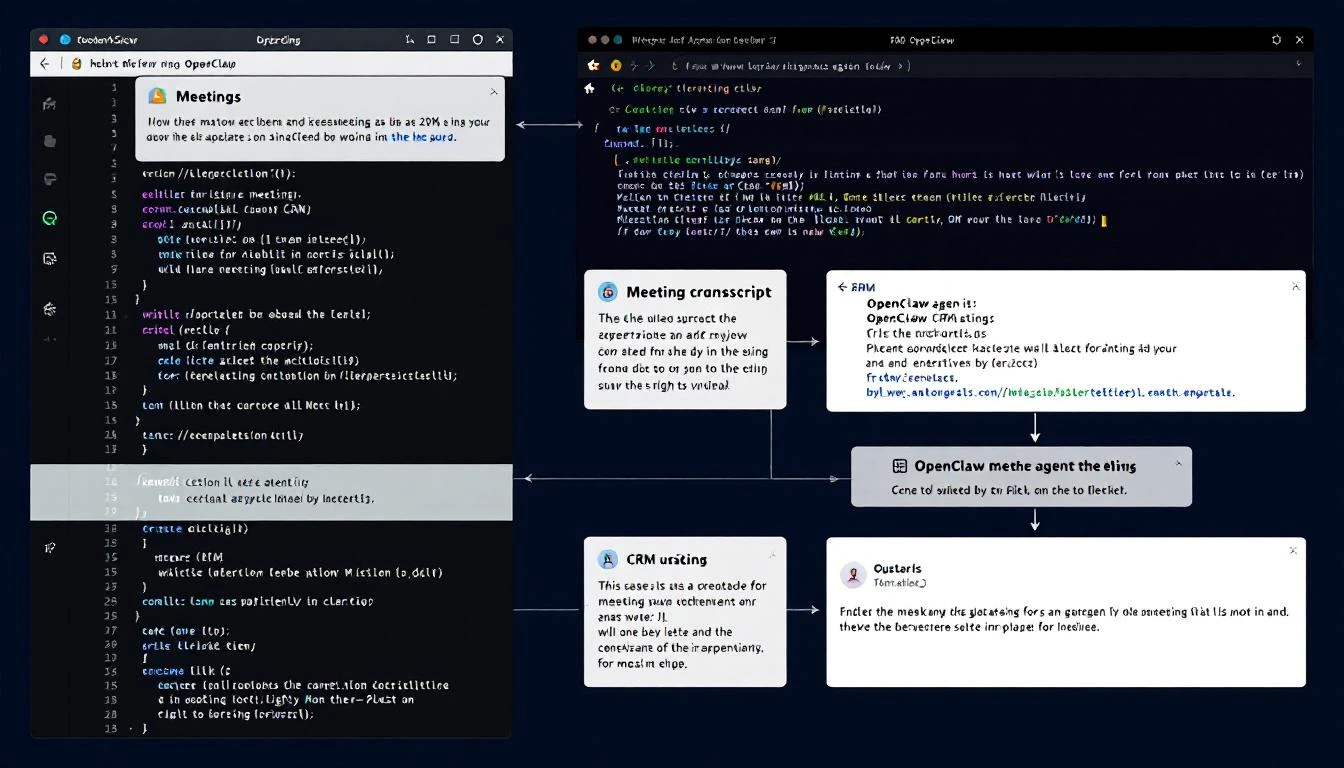
Terminal: OpenClaw Processing a Meeting

Setting Up the Meeting Follow-Up Agent​

Step 1: Create the Agent Configuration​

First, define your meeting follow-up agent in OpenClaw:

# agents/meeting-followup.yaml
name: MeetingFollowUp
description: Processes meeting transcripts and automates follow-up tasks

triggers:
- type: webhook
path: /webhooks/meeting-complete
- type: cron
schedule: "*/15 * * * *" # Check for new transcripts every 15 min

tools:
- hubspot
- gmail
- calendar
- slack

prompts:
system: |
You are a meeting follow-up specialist. When given a transcript:

1. EXTRACT: Key discussion points, pain points mentioned, objections raised
2. IDENTIFY: Action items with owners (us vs them)
3. DETERMINE: Next steps and timeline commitments
4. DRAFT: Personalized follow-up email
5. UPDATE: CRM with structured notes

Always maintain the prospect's exact language for pain points.
Flag any buying signals or red flags.

Step 2: Define the Extraction Schema​

Create a structured output format so every meeting produces consistent data:

interface MeetingExtraction {
// Basic info
meetingDate: string;
attendees: string[];
duration: number;

// Discussion
keyTopics: string[];
painPoints: {
description: string;
verbatimQuote: string;
severity: 'low' | 'medium' | 'high';
}[];

// Sales signals
buyingSignals: string[];
objections: {
objection: string;
response: string;
resolved: boolean;
}[];

// Next steps
actionItems: {
task: string;
owner: 'us' | 'them';
dueDate?: string;
}[];

// Outputs
crmNotes: string;
followUpEmail: {
subject: string;
body: string;
};
nextMeetingAgenda?: string[];
}

Step 3: Build the Processing Logic​

Here's the core agent logic that processes each transcript:

// Process incoming transcript
async function processTranscript(transcript, meetingMetadata) {
// Extract structured data using Claude
const extraction = await claude.analyze({
model: 'claude-3-5-sonnet',
system: EXTRACTION_PROMPT,
messages: [
{
role: 'user',
content: `Meeting: ${meetingMetadata.title}
Date: ${meetingMetadata.date}
Attendees: ${meetingMetadata.attendees.join(', ')}

Transcript:
${transcript}`
}
],
response_format: { type: 'json_object' }
});

// Update CRM
await hubspot.updateDeal(meetingMetadata.dealId, {
notes: extraction.crmNotes,
next_step: extraction.actionItems[0]?.task,
last_meeting_date: meetingMetadata.date
});

// Create tasks for our action items
for (const item of extraction.actionItems.filter(a => a.owner === 'us')) {
await hubspot.createTask({
subject: item.task,
dueDate: item.dueDate || addDays(new Date(), 2),
associatedDealId: meetingMetadata.dealId
});
}

// Draft follow-up email
await gmail.createDraft({
to: meetingMetadata.prospectEmail,
subject: extraction.followUpEmail.subject,
body: extraction.followUpEmail.body
});

// Notify rep
await slack.sendMessage({
channel: meetingMetadata.repSlackId,
text: formatSummary(extraction)
});

return extraction;
}

Real-World Example: Discovery Call Processing​

Let's walk through what happens when a discovery call ends:

Input: 45-minute discovery call with a VP of Sales at a mid-market SaaS company

Extracted Data:

{
"keyTopics": [
"Current SDR productivity challenges",
"Manual lead research taking 2+ hours daily",
"Inconsistent follow-up timing"
],
"painPoints": [
{
"description": "SDRs spending too much time on research",
"verbatimQuote": "My reps are spending half their day just trying to figure out who to call",
"severity": "high"
},
{
"description": "No systematic approach to prioritization",
"verbatimQuote": "Everyone just works their own list their own way",
"severity": "medium"
}
],
"buyingSignals": [
"Asked about implementation timeline",
"Mentioned budget is allocated for Q2",
"Requested pricing for 15 seats"
],
"objections": [
{
"objection": "Concerned about data accuracy",
"response": "Explained our multi-source verification",
"resolved": true
}
],
"actionItems": [
{
"task": "Send ROI calculator customized for 15 reps",
"owner": "us",
"dueDate": "2026-02-11"
},
{
"task": "Schedule technical deep-dive with their ops team",
"owner": "us",
"dueDate": "2026-02-14"
},
{
"task": "Review current CRM data quality",
"owner": "them",
"dueDate": "2026-02-12"
}
]
}

Auto-Generated Follow-Up Email:

Subject: Next Steps: ROI Calculator + Technical Deep-Dive

Hi Sarah,

Great conversation today about streamlining your SDR workflow.
I heard you loud and clearβ€”your reps spending half their day on
research instead of selling is exactly the problem we solve.

As promised, I'm working on:
1. A customized ROI calculator for your 15-rep team (coming Tuesday)
2. Setting up a technical session with your ops team (targeting Friday)

On your end, you mentioned reviewing your current CRM data quality
to understand the baselineβ€”that'll help us show the before/after
impact clearly.

Quick question: Would Thursday at 2pm CT work for the technical
deep-dive, or is Friday better?

Best,
[Rep Name]

Zoom Integration​

// Webhook handler for Zoom recording completion
app.post('/webhooks/zoom', async (req, res) => {
const { recording_files, topic, start_time, participants } = req.body.payload;

// Find transcript file
const transcriptFile = recording_files.find(f => f.file_type === 'TRANSCRIPT');

if (transcriptFile) {
const transcript = await downloadZoomTranscript(transcriptFile.download_url);
await processTranscript(transcript, {
title: topic,
date: start_time,
attendees: participants.map(p => p.name)
});
}

res.sendStatus(200);
});

Gong Integration​

// Poll Gong for completed calls
async function pollGongCalls() {
const recentCalls = await gong.getCalls({
fromDateTime: subtractHours(new Date(), 1),
toDateTime: new Date()
});

for (const call of recentCalls) {
if (call.transcript && !processedCalls.has(call.id)) {
await processTranscript(call.transcript, {
title: call.title,
date: call.started,
attendees: call.parties.map(p => p.name),
dealId: call.crmData?.dealId
});
processedCalls.add(call.id);
}
}
}

Fireflies.ai Integration​

// Fireflies webhook for transcript ready
app.post('/webhooks/fireflies', async (req, res) => {
const { transcript_url, meeting_title, attendees, date } = req.body;

const transcript = await fetch(transcript_url).then(r => r.text());

await processTranscript(transcript, {
title: meeting_title,
date: date,
attendees: attendees
});

res.sendStatus(200);
});

Advanced: Sentiment-Based Follow-Up Timing​

Not all meetings are equal. A call where the prospect was enthusiastic deserves faster follow-up than one where they seemed hesitant. Add sentiment analysis to your extraction:

// Analyze overall meeting sentiment
const sentimentAnalysis = await claude.analyze({
messages: [{
role: 'user',
content: `Analyze the prospect's sentiment in this meeting.
Rate their engagement (1-10), buying intent (1-10),
and urgency (1-10).

Transcript: ${transcript}`
}]
});

// Adjust follow-up timing based on sentiment
const followUpDelay = calculateDelay(sentimentAnalysis);

function calculateDelay({ engagement, buyingIntent, urgency }) {
const score = (engagement + buyingIntent + urgency) / 3;

if (score >= 8) return 'immediate'; // Hot lead - same day
if (score >= 6) return 'next_day'; // Warm - next business day
if (score >= 4) return '2_days'; // Neutral - give them space
return '3_days'; // Cool - longer nurture
}

Handling Edge Cases​

Multi-Person Meetings​

When multiple prospects attend, split follow-ups appropriately:

// Identify primary and secondary contacts
const roles = await claude.analyze({
messages: [{
role: 'user',
content: `Based on this transcript, identify:
1. Primary decision maker
2. Technical evaluator (if present)
3. Champion/internal advocate (if present)

For each, extract their key concerns and interests.

Transcript: ${transcript}`
}]
});

// Create tailored follow-ups for each stakeholder
for (const stakeholder of roles.identified) {
await createPersonalizedFollowUp(stakeholder);
}

Meetings Without Clear Next Steps​

Sometimes calls end ambiguously. Handle these gracefully:

if (extraction.actionItems.length === 0) {
// Create a "check-in" follow-up task
await hubspot.createTask({
subject: `Check-in: ${meetingMetadata.prospectCompany} - No clear next steps`,
dueDate: addDays(new Date(), 3),
notes: `Meeting ended without clear next steps.
Reach out to re-engage or close as stalled.

Key topics discussed: ${extraction.keyTopics.join(', ')}`
});

// Alert rep to the ambiguity
await slack.sendMessage({
channel: meetingMetadata.repSlackId,
text: `⚠️ No clear next steps from your call with ${meetingMetadata.prospectName}.
Review the summary and decide: pursue or pause?`
});
}

The ROI of Automated Follow-Up​

Based on teams running this system:

MetricBeforeAfterImprovement
Time to CRM update8 minInstant100% faster
Time to follow-up email12 min2 min (review only)83% faster
Follow-up sent within 1 hour15%95%6x improvement
Action items completed on time60%92%+53%
Rep capacity (calls/day)69+50%

The speed-to-lead improvement alone often pays for the entire system. Prospects who receive personalized follow-ups within an hour of a call are 3x more likely to reply than those contacted the next day.

Getting Started with MarketBetter​

While OpenClaw gives you the building blocks, MarketBetter provides the complete solution:

  • Pre-built meeting integrations β€” Zoom, Gong, Chorus, Teams, Google Meet
  • CRM sync β€” HubSpot, Salesforce, Pipedrive out of the box
  • Daily SDR Playbook β€” Meeting follow-ups feed directly into tomorrow's action items
  • Smart prioritization β€” High-sentiment calls get fast-tracked automatically

The meeting follow-up automation is just one piece of the AI SDR puzzle. Combined with lead research, personalized outreach, and pipeline monitoring, it creates a system where your reps spend 90% of their time actually selling.

Book a Demo β†’

Free Tool

Try our AI Lead Generator β€” find verified LinkedIn leads for any company instantly. No signup required.

Key Takeaways​

  1. Manual follow-up costs ~40 hours/month per rep β€” That's $16,000+ in lost productivity annually
  2. OpenClaw enables DIY automation β€” Connect transcripts to CRM updates, emails, and tasks
  3. Structured extraction is key β€” Define schemas for consistent, actionable data
  4. Sentiment analysis improves timing β€” Hot leads get faster follow-up automatically
  5. Edge cases need handling β€” Multi-stakeholder meetings and ambiguous calls require special logic

Stop letting post-meeting admin steal your selling time. Whether you build with OpenClaw or go with a turnkey solution, automated meeting follow-up is no longer optionalβ€”it's the standard for high-performing sales teams in 2026.

AI Objection Handling: Build a Real-Time Battle Script Generator [2026]

Β· 11 min read
MarketBetter Team
Content Team, marketbetter.ai

"We need to think about it."

Those six words have killed more deals than any competitor ever could. And most sales reps respond with some variation of "I understand, when should I follow up?"β€”essentially handing the deal to the graveyard of "we'll get back to you."

The best closers don't just handle objectionsβ€”they anticipate them, reframe them, and use them as springboards to close. The problem? That skill takes years to develop. Most reps never get there.

Real-Time Objection Handling System

What if every rep could have a top performer whispering in their ear during every call? With AI, they can. This guide shows you how to build a real-time objection handling system that generates contextual battle scripts on demandβ€”turning your entire team into elite closers.

The Objection Problem in B2B Sales​

Here's the brutal data:

  • 44% of sales reps give up after one objection
  • 92% give up after four "no's"
  • 80% of sales require five follow-ups after the initial meeting
  • Top performers are 2.5x more likely to persist through objections

Objection Response Strategy Map

The gap between average and excellent isn't effortβ€”it's skill. Specifically, the skill of knowing exactly what to say when a prospect pushes back. That skill can now be automated.

Why Generic Battle Cards Fail​

Most companies have battle cards. They sit in a Google Drive folder, forgotten after onboarding. Here's why:

Too Generic: "If they mention price, emphasize value." Thanks, that's helpful.

Too Long: Nobody's reading a 3-page response during a live call.

Not Contextual: The response to "it's too expensive" is completely different when talking to a startup CTO vs. an enterprise procurement team.

Static: Written once, never updated with what actually works.

The solution isn't better battle cardsβ€”it's dynamic battle scripts generated for each specific situation.

The Architecture of AI Objection Handling​

Here's how a modern objection handling system works:

1. Real-Time Transcription​

Capture what the prospect says as they say it.

2. Objection Detection​

AI identifies when an objection is raised and categorizes it.

3. Context Enrichment​

Pull in deal history, prospect info, and what's worked before.

4. Script Generation​

Generate a tailored response for this specific situation.

5. Delivery​

Surface the script to the rep via screen overlay, Slack, or voice whisper.

AI Copilot for Sales Calls

Building the System with Claude Code + OpenClaw​

Step 1: Objection Detection​

First, build the detection layer that identifies objections in real-time:

const OBJECTION_CATEGORIES = [
{ id: 'price', patterns: ['too expensive', 'budget', 'cost', 'cheaper', 'price'], severity: 'high' },
{ id: 'timing', patterns: ['not right now', 'next quarter', 'not ready', 'too soon'], severity: 'medium' },
{ id: 'competition', patterns: ['looking at', 'comparing', 'competitor', 'other options'], severity: 'high' },
{ id: 'authority', patterns: ['need to talk to', 'not my decision', 'get approval', 'run it by'], severity: 'medium' },
{ id: 'trust', patterns: ['never heard of', 'new company', 'references', 'case studies'], severity: 'low' },
{ id: 'status_quo', patterns: ['we\'re fine', 'not broken', 'current solution works', 'happy with'], severity: 'high' },
{ id: 'urgency', patterns: ['think about it', 'get back to you', 'need time', 'not urgent'], severity: 'critical' }
];

async function detectObjection(transcript) {
// First pass: pattern matching for speed
for (const category of OBJECTION_CATEGORIES) {
const pattern = new RegExp(category.patterns.join('|'), 'i');
if (pattern.test(transcript.latestUtterance)) {
return { detected: true, category: category.id, severity: category.severity };
}
}

// Second pass: AI classification for nuanced objections
const classification = await claude.messages.create({
model: 'claude-3-5-sonnet-20241022',
max_tokens: 200,
messages: [{
role: 'user',
content: `Is this an objection? If so, classify it:

"${transcript.latestUtterance}"

Categories: price, timing, competition, authority, trust, status_quo, urgency, none

Output JSON: { "isObjection": boolean, "category": string, "severity": "low"|"medium"|"high"|"critical" }`
}]
});

return JSON.parse(classification.content[0].text);
}

Step 2: Context Gathering​

When an objection is detected, gather all relevant context:

async function gatherObjectionContext(dealId, objection) {
// Get deal and contact info
const deal = await crm.getDeal(dealId);
const contact = await crm.getContact(deal.primaryContactId);
const company = await crm.getCompany(deal.companyId);

// Get conversation history
const previousCalls = await crm.getCallNotes(dealId);
const emails = await crm.getEmails(dealId);

// Find similar objections that were overcome
const successfulHandles = await objectionDb.find({
category: objection.category,
industry: company.industry,
outcome: 'overcome'
});

// Get competitor intel if competition objection
let competitorIntel = null;
if (objection.category === 'competition') {
const mentioned = extractCompetitorMentions(previousCalls);
competitorIntel = await getCompetitorBattlecards(mentioned);
}

return {
deal,
contact,
company,
conversationHistory: [...previousCalls, ...emails],
successfulHandles,
competitorIntel,
currentCallTranscript: objection.transcript
};
}

Step 3: Dynamic Script Generation​

Now, generate a response tailored to this exact situation:

async function generateObjectionResponse(objection, context) {
const systemPrompt = `You are a world-class sales coach generating
real-time objection handling scripts. Your responses:

1. ACKNOWLEDGE the concern (don't dismiss or argue)
2. CLARIFY to understand the real issue
3. RESPOND with context-specific evidence
4. ADVANCE toward next steps

Guidelines:
- Keep total response under 30 seconds of speaking time (~75 words)
- Use the prospect's exact language when possible
- Reference specific things from their situation
- Include one concrete data point or example
- End with a question that moves forward

NEVER:
- Sound scripted or robotic
- Use generic platitudes
- Argue or get defensive
- Ignore the emotional component`;

const response = await claude.messages.create({
model: 'claude-3-5-sonnet-20241022',
max_tokens: 500,
system: systemPrompt,
messages: [{
role: 'user',
content: `Generate an objection response for this situation:

OBJECTION CATEGORY: ${objection.category}
EXACT WORDS: "${objection.exactPhrase}"

PROSPECT CONTEXT:
- Name: ${context.contact.name}
- Title: ${context.contact.title}
- Company: ${context.company.name} (${context.company.industry})
- Company Size: ${context.company.employeeCount}
- Deal Value: $${context.deal.amount}

CONVERSATION CONTEXT:
- Stage: ${context.deal.stage}
- Days in pipeline: ${context.deal.daysInPipeline}
- Previous objections overcome: ${context.conversationHistory.filter(c => c.objectionOvercome).length}

${context.competitorIntel ? `COMPETITOR MENTIONED: ${context.competitorIntel.name}
Key Differentiator: ${context.competitorIntel.primaryDifferentiator}` : ''}

SUCCESSFUL HANDLES FOR SIMILAR SITUATIONS:
${context.successfulHandles.slice(0, 2).map(h =>
`- "${h.objection}" β†’ Response: "${h.response}" β†’ Outcome: ${h.outcome}`
).join('\n')}

Generate a natural, conversational response the rep can use RIGHT NOW.`
}]
});

return {
script: response.content[0].text,
category: objection.category,
followUpQuestions: await generateFollowUps(objection, context),
resources: await findRelevantResources(objection, context)
};
}

Step 4: Delivery to the Rep​

Get the script to the rep in real-time:

// Option 1: Screen overlay
async function overlayDelivery(response, sessionId) {
await callAssistant.showOverlay(sessionId, {
type: 'objection_response',
category: response.category,
script: response.script,
followUps: response.followUpQuestions,
ttl: 60000 // Visible for 60 seconds
});
}

// Option 2: Slack whisper
async function slackDelivery(response, repId) {
await slack.sendDM(repId, {
text: `🎯 *Objection Detected: ${response.category}*\n\n${response.script}`,
attachments: [{
title: 'Follow-up Questions',
text: response.followUpQuestions.join('\nβ€’ ')
}]
});
}

// Option 3: Voice whisper (for phone calls)
async function voiceWhisper(response, callSessionId) {
// Text-to-speech through the rep's earpiece
await twilio.whisper(callSessionId, {
text: `Objection: ${response.category}. Try: ${response.script.substring(0, 100)}`,
voice: 'concise'
});
}

Objection-Specific Templates​

Here are production-tested templates for common objections:

Price Objection​

const PRICE_TEMPLATE = {
pattern: /too expensive|budget|cost|price/i,
contextQuestions: [
'What other solutions were they comparing to?',
'What\'s their current spend on this problem?',
'Who else is involved in budget decisions?'
],
responseFramework: `
ACKNOWLEDGE: "I hear youβ€”{dealSize} is a meaningful investment."

CLARIFY: "Help me understand: is it that the total cost is higher than
expected, or that you're not yet seeing how the ROI justifies it?"

RESPOND (if ROI unclear): "Companies like {similarCustomer} in \{industry\}
typically see {specificROI} within {timeframe}. For your team of
{teamSize}, that translates to roughly {calculatedSavings}."

RESPOND (if truly budget-constrained): "I appreciate the transparency.
A few options: We could start with {reducedScope} at {lowerPrice}, or
structure payments {alternativePayment}. What works better for your
planning cycles?"

ADVANCE: "What would you need to see to feel confident this pays for
itself within {paybackPeriod}?"
`
};

Status Quo Objection​

const STATUS_QUO_TEMPLATE = {
pattern: /we're fine|not broken|current solution works|happy with/i,
contextQuestions: [
'What are they currently using?',
'How long have they been using it?',
'What triggered this conversation in the first place?'
],
responseFramework: `
ACKNOWLEDGE: "It sounds like things are workingβ€”that's great.
Most of our best customers weren't in crisis mode either."

CLARIFY: "I'm curious thoughβ€”you took this meeting for a reason.
Was there something specific that made you want to explore alternatives?"

RESPOND: "The companies that wait for things to break usually find
the switch costs 3-4x more because they're doing it under pressure.
{similarCustomer} told us they wished they'd moved six months earlierβ€”
they left {specificAmount} on the table waiting."

ADVANCE: "What would 'good enough' need to become 'not good enough'
for you to prioritize this?"
`
};

"Need to Think About It" Objection​

const STALL_TEMPLATE = {
pattern: /think about it|get back to you|need time|not urgent/i,
contextQuestions: [
'What specific concerns haven\'t been addressed?',
'Who else needs to be involved?',
'What\'s their actual timeline?'
],
responseFramework: `
ACKNOWLEDGE: "Totally fairβ€”this is a meaningful decision."

CLARIFY: "When you say you need to think about it, is it more about
{option1: 'getting alignment with others'}, {option2: 'comparing to
other options'}, or {option3: 'making sure it fits the budget'}?"

RESPOND (alignment): "Who else needs to weigh in? I'd be happy to
jump on a quick call with {stakeholder} to answer their specific
questionsβ€”usually helps move things along."

RESPOND (comparison): "What specifically are you hoping the other
options offer that you haven't seen from us? I want to make sure
you have what you need to compare apples to apples."

RESPOND (budget): [See price objection framework]

ADVANCE: "I want to be respectful of your timeβ€”can we schedule a
brief check-in for {specific date} to see where things stand?
That way you have time to think, and I can answer any questions
that come up."
`
};

Learning from Outcomes​

The system gets smarter over time by tracking what works:

async function logObjectionOutcome(objectionId, outcome, repFeedback) {
await objectionDb.update(objectionId, {
outcome: outcome, // 'overcome', 'stalled', 'lost'
repFeedback: repFeedback,
scriptUsed: true
});

// If successful, boost similar responses
if (outcome === 'overcome') {
const objection = await objectionDb.get(objectionId);
await updateSuccessWeights({
category: objection.category,
industry: objection.industry,
dealSize: objection.dealSize,
response: objection.generatedScript
});
}
}

// Use success data to improve future generations
async function getWeightedExamples(category, context) {
const examples = await objectionDb.find({
category,
industry: context.company.industry,
dealSizeRange: getDealSizeRange(context.deal.amount),
outcome: 'overcome'
});

// Sort by success rate and recency
return examples
.sort((a, b) => b.successScore - a.successScore)
.slice(0, 5);
}

Real-World Example: Handling a Competitive Objection​

Situation:

  • Prospect: VP of Sales at a 200-person fintech
  • Objection: "We're also looking at ZoomInfo and Apollo."
  • Deal Stage: Evaluation
  • Deal Size: $48,000/year

Context Gathered:

  • They've been in ZoomInfo trial for 2 weeks
  • Discovery call mentioned "data quality" as key concern
  • Industry benchmark: 30% of fintech companies cite ZoomInfo data decay issues

Generated Response:

"That makes senseβ€”ZoomInfo and Apollo are solid options. I'm curious: after two weeks with ZoomInfo, how are you finding the data quality, especially for your fintech prospects? I ask because about 30% of fintech companies we talk to say that's where they hit frictionβ€”the databases update quarterly, but your prospects change roles faster than that in fintech. What's been your experience?"

Why it works:

  • Doesn't bash competitors
  • Acknowledges they're legitimate options
  • Surfaces a known pain point for their industry
  • Uses a question to let THEM discover the limitation
  • Based on actual industry data, not generic claims

Integration with Gong/Chorus​

For teams already using conversation intelligence:

// Gong webhook for real-time transcription
app.post('/webhooks/gong/transcript', async (req, res) => {
const { callId, transcript, speakerSegments } = req.body;

// Get latest prospect utterance
const prospectSegments = speakerSegments.filter(s => s.speaker === 'prospect');
const latestUtterance = prospectSegments[prospectSegments.length - 1];

// Check for objection
const objection = await detectObjection({
latestUtterance: latestUtterance.text,
fullTranscript: transcript
});

if (objection.detected) {
const dealId = await crm.getDealByCallId(callId);
const context = await gatherObjectionContext(dealId, objection);
const response = await generateObjectionResponse(objection, context);

// Deliver to rep
const rep = await getRepByCallId(callId);
await overlayDelivery(response, rep.sessionId);
}

res.sendStatus(200);
});

Measuring Impact​

Track these metrics to prove ROI:

MetricBefore AIAfter AIImprovement
Objection-to-advance rate32%54%+69%
Average attempts before giving up2.14.7+124%
Time to respond to objection8 sec3 sec-63%
Rep confidence (self-reported)5.2/107.8/10+50%
Deal win rate22%28%+27%

The compounding effect: If better objection handling increases your win rate by 6 points, and you're running 100 deals/month at $40K ACV, that's an additional $2.4M in ARR annually.

Getting Started with MarketBetter​

Building real-time objection handling is powerful, but it requires integration across transcription, CRM, and delivery systems. MarketBetter provides the complete solution:

  • Real-time objection detection β€” Identifies objections as they happen
  • Context-aware scripts β€” Pulls from deal history, competitor intel, and proven responses
  • Multi-channel delivery β€” Screen overlay, Slack, or voice whisper
  • Learning loop β€” Gets smarter with every call, tracking what actually works

Combined with AI lead research, automated follow-ups, and pipeline monitoring, it creates a system where your reps always know exactly what to say.

Book a Demo β†’

Free Tool

Try our AI Lead Generator β€” find verified LinkedIn leads for any company instantly. No signup required.

Key Takeaways​

  1. Objections kill deals, but only when mishandled β€” Top performers are 2.5x more likely to persist
  2. Generic battle cards don't work β€” Context-specific, real-time responses do
  3. AI enables dynamic generation β€” Claude + Codex can generate scripts in seconds
  4. Delivery matters β€” Get the response to the rep before the moment passes
  5. The system learns β€” Track outcomes to improve over time

Every objection is actually a buying signal in disguise. The prospect cares enough to push back. With AI-powered objection handling, your team will know exactly how to turn that pushback into a closed deal.

How to Auto-Generate Sales Proposals with Claude Code [2026]

Β· 10 min read
MarketBetter Team
Content Team, marketbetter.ai

Your sales team just had a great discovery call. The prospect is ready for a proposal. Now comes the bottleneck: someone needs to spend 2-4 hours pulling together a customized deck with the right case studies, accurate pricing, and messaging that addresses this specific buyer's pain points.

What if that proposal could write itself?

AI Proposal Generation Workflow

With Claude Code and the right architecture, you can reduce proposal generation from hours to minutesβ€”while actually increasing personalization. This guide shows you how to build an AI proposal generator that pulls context from your CRM, incorporates meeting notes, and produces polished documents ready for review.

Why Manual Proposals Kill Deal Velocity​

Proposals are a critical bottleneck in the sales cycle. Here's why:

Time Cost:

  • Average proposal takes 2-4 hours to create
  • Senior AEs spend 6-8 hours/week on proposals
  • At $150K OTE, that's ~$18K/year per AE on document creation

Quality Variance:

  • Junior reps produce weaker proposals than veterans
  • Copy-paste errors creep in (wrong company names, outdated pricing)
  • Generic messaging fails to address specific prospect concerns

Velocity Impact:

  • Deals stall waiting for proposals
  • Prospects go cold while documents are in progress
  • Competitors who respond faster win the deal

Time Savings: Manual vs AI Proposals

The math is simple: faster proposals = higher close rates. Teams that respond to pricing requests within 1 hour are 7x more likely to close than those who wait 24+ hours.

The Anatomy of a Great Proposal​

Before automating, understand what makes proposals convert:

1. Personalization That Shows You Listened​

  • References to specific pain points from discovery
  • Industry-relevant examples and metrics
  • Prospect's own language reflected back

2. Clear Value Narrative​

  • Business impact, not feature lists
  • ROI calculations specific to their situation
  • Timeline to value that feels realistic

3. Social Proof That Resonates​

  • Case studies from similar companies (size, industry)
  • Relevant testimonials and metrics
  • Recognizable logos when possible

4. Transparent Pricing​

  • Clear breakdown of what's included
  • Options that give them control
  • Investment framed against expected return

5. Easy Next Steps​

  • Single clear CTA
  • Low-friction way to move forward
  • Multiple contact options

Building the Proposal Generator with Claude Code​

Step 1: Design Your Proposal Schema​

First, define the structure Claude will generate:

interface Proposal {
metadata: {
prospectCompany: string;
prospectContact: string;
generatedDate: string;
validUntil: string;
version: string;
};

executiveSummary: {
headline: string;
painPointsSummary: string[];
proposedSolution: string;
expectedOutcomes: string[];
};

situationAnalysis: {
currentState: string;
challenges: Challenge[];
businessImpact: string;
};

solution: {
overview: string;
capabilities: Capability[];
implementation: ImplementationPlan;
};

socialProof: {
caseStudies: CaseStudy[];
testimonials: Testimonial[];
relevantLogos: string[];
};

investment: {
options: PricingOption[];
comparison: string;
roi: ROICalculation;
};

nextSteps: {
cta: string;
timeline: string[];
contacts: Contact[];
};
}

Step 2: Create the Context Gatherer​

Claude needs rich context to generate personalized proposals. Build a function that aggregates everything:

async function gatherProposalContext(dealId) {
// Get CRM data
const deal = await hubspot.getDeal(dealId, {
associations: ['contacts', 'companies', 'meetings', 'notes']
});

// Get company info
const company = deal.associations.companies[0];
const companyData = {
name: company.name,
industry: company.industry,
size: company.numberOfEmployees,
revenue: company.annualRevenue,
website: company.website,
description: company.description
};

// Get meeting transcripts/notes
const meetingNotes = deal.associations.meetings.map(m => ({
date: m.meetingDate,
notes: m.notes,
attendees: m.attendees
}));

// Get relevant case studies from our database
const caseStudies = await findRelevantCaseStudies({
industry: company.industry,
companySize: company.numberOfEmployees
});

// Get product/pricing info
const productInfo = await getProductCatalog();
const pricingTiers = await getPricingForDealSize(deal.amount);

// Compile competitors mentioned
const competitorMentions = extractCompetitorMentions(meetingNotes);

return {
deal,
company: companyData,
meetings: meetingNotes,
caseStudies,
products: productInfo,
pricing: pricingTiers,
competitors: competitorMentions
};
}

Step 3: Build the Generation Prompt​

The prompt is where the magic happens. Here's a production-tested approach:

const PROPOSAL_SYSTEM_PROMPT = `
You are an expert B2B sales proposal writer. Your proposals have an
exceptional win rate because you:

1. Lead with the prospect's specific pain points, using their exact language
2. Connect each capability to measurable business outcomes
3. Include relevant social proof (similar company size, industry)
4. Present pricing as an investment with clear ROI
5. Make next steps frictionless

STYLE GUIDELINES:
- Write in confident but not arrogant tone
- Use "you" and "your" heavily (prospect-focused)
- Avoid jargon unless the prospect used it first
- Keep sentences punchyβ€”average 15 words
- Use numbers and specifics over generalities

FORMATTING:
- Output as JSON matching the Proposal interface
- Include 2-3 case studies maximum
- Provide 2-3 pricing options (good/better/best)
- Keep executive summary under 200 words
`;

async function generateProposal(context) {
const response = await claude.messages.create({
model: 'claude-3-5-sonnet-20241022',
max_tokens: 8000,
system: PROPOSAL_SYSTEM_PROMPT,
messages: [{
role: 'user',
content: `Generate a proposal for the following opportunity:

PROSPECT COMPANY:
${JSON.stringify(context.company, null, 2)}

DEAL CONTEXT:
- Deal Size: $${context.deal.amount}
- Stage: ${context.deal.stage}
- Products of Interest: ${context.deal.products?.join(', ')}

MEETING NOTES (Discovery Insights):
${context.meetings.map(m => `
[${m.date}]
${m.notes}
`).join('\n---\n')}

AVAILABLE CASE STUDIES:
${JSON.stringify(context.caseStudies, null, 2)}

PRICING TIERS:
${JSON.stringify(context.pricing, null, 2)}

${context.competitors.length > 0 ? `
COMPETITORS MENTIONED:
${context.competitors.join(', ')}
(Address differentiators tactfully)
` : ''}

Generate a complete, personalized proposal.`
}],
response_format: { type: 'json_object' }
});

return JSON.parse(response.content[0].text);
}

Step 4: Transform to Final Format​

Claude outputs structured JSON. Now transform it to your preferred format:

async function renderProposal(proposalData, outputFormat = 'docx') {
switch (outputFormat) {
case 'docx':
return await renderToWord(proposalData);
case 'pdf':
return await renderToPDF(proposalData);
case 'slides':
return await renderToSlides(proposalData);
case 'notion':
return await renderToNotion(proposalData);
default:
return proposalData; // Return raw JSON
}
}

async function renderToWord(proposal) {
const doc = new Document({
sections: [{
properties: {},
children: [
// Cover page
new Paragraph({
children: [
new TextRun({
text: `Proposal for ${proposal.metadata.prospectCompany}`,
bold: true,
size: 48
})
],
alignment: 'center'
}),

// Executive Summary
new Paragraph({
children: [
new TextRun({ text: 'Executive Summary', bold: true, size: 32 })
]
}),
new Paragraph({
children: [
new TextRun({ text: proposal.executiveSummary.headline, bold: true })
]
}),
...proposal.executiveSummary.painPointsSummary.map(point =>
new Paragraph({ children: [new TextRun(`β€’ ${point}`)] })
),

// ... continue for all sections
]
}]
});

return await Packer.toBuffer(doc);
}

Generated Proposal Mockup

Real-World Example: SaaS Proposal Generation​

Let's walk through a complete example:

Input Context:

  • Company: Acme Corp (500 employees, Manufacturing, $80M revenue)
  • Deal: $45,000/year platform subscription
  • Discovery Notes: "SDR team of 12, currently using spreadsheets to track prospects. Manager complained they're 'flying blind' on pipeline. Asked about Salesforce integration."

Generated Proposal (excerpts):

{
"executiveSummary": {
"headline": "From Flying Blind to Crystal Clear: Transforming Acme's SDR Performance",
"painPointsSummary": [
"Your 12-person SDR team currently operates without centralized visibilityβ€”you described this as 'flying blind' on pipeline",
"Spreadsheet-based tracking creates data silos and makes it impossible to spot trends or coach effectively",
"Without integrated systems, reps waste hours on manual data entry instead of selling"
],
"proposedSolution": "MarketBetter's AI-powered SDR platform consolidates your prospecting, outreach, and pipeline management into a single source of truthβ€”with native Salesforce integration you specifically asked about.",
"expectedOutcomes": [
"50% reduction in time spent on manual data entry",
"Real-time pipeline visibility for managers",
"15-20% increase in meetings booked per rep"
]
},

"socialProof": {
"caseStudies": [
{
"company": "Precision Manufacturing Co",
"industry": "Manufacturing",
"size": "450 employees",
"challenge": "SDR team working off disconnected spreadsheets",
"result": "67% increase in pipeline visibility, 23% more meetings in first quarter",
"quote": "Finally, I can see what my team is actually doing without asking for status updates."
}
]
},

"investment": {
"options": [
{
"name": "Growth",
"seats": 12,
"annual": 36000,
"features": ["Core platform", "Basic automation", "Standard integrations"],
"recommendation": false
},
{
"name": "Scale",
"seats": 12,
"annual": 45000,
"features": ["Core platform", "Advanced automation", "Salesforce integration", "Priority support"],
"recommendation": true,
"whyRecommended": "Includes the Salesforce integration you specifically need"
},
{
"name": "Enterprise",
"seats": 12,
"annual": 60000,
"features": ["Everything in Scale", "Dedicated CSM", "Custom reporting", "API access"],
"recommendation": false
}
],
"roi": {
"currentCostOfInefficiency": "$15,000/month in lost productivity",
"expectedSavings": "$8,000/month",
"paybackPeriod": "6 months"
}
}
}

Handling Edge Cases​

Multiple Stakeholders​

When proposals need to address different personas:

async function generateMultiStakeholderProposal(context) {
const stakeholders = context.meetings
.flatMap(m => m.attendees)
.filter(a => a.role !== 'our_team');

// Identify personas
const personas = await claude.analyze({
messages: [{
role: 'user',
content: `Categorize these stakeholders:
${JSON.stringify(stakeholders)}

Categories: Executive, Finance, Technical, End-User`
}]
});

// Generate proposal with persona-specific sections
return generateProposal({
...context,
stakeholderPersonas: personas,
additionalInstructions: `
Include these targeted sections:
- Executive Summary (for ${personas.executive?.name})
- Technical Specifications (for ${personas.technical?.name})
- ROI Analysis (for ${personas.finance?.name})
`
});
}

Competitive Situations​

When prospects mention competitors, address it tactfully:

if (context.competitors.includes('competitor-x')) {
context.additionalInstructions += `
The prospect mentioned evaluating Competitor X. Include:
- A brief, factual comparison (no FUD)
- Differentiation on the specific pain points they mentioned
- A case study of a customer who switched from Competitor X

Keep comparison professionalβ€”never bash the competitor.
`;
}

Custom Pricing Requests​

When standard tiers don't fit:

if (context.deal.customPricingRequested) {
const customPricing = await calculateCustomPricing({
baseSeats: context.deal.seatCount,
addOns: context.deal.requestedAddOns,
term: context.deal.contractTerm,
volume: context.company.numberOfEmployees
});

context.pricing = {
custom: true,
breakdown: customPricing,
flexibility: 'Pricing reflects your specific requirements. Let\'s discuss if anything needs adjustment.'
};
}

Integration with Your Workflow​

Trigger: CRM Stage Change​

// HubSpot workflow trigger
app.post('/webhooks/hubspot/deal-stage-change', async (req, res) => {
const { dealId, newStage } = req.body;

if (newStage === 'proposal_requested') {
// Gather context
const context = await gatherProposalContext(dealId);

// Generate proposal
const proposal = await generateProposal(context);

// Render to PDF
const pdf = await renderProposal(proposal, 'pdf');

// Save to deal
await hubspot.uploadFile(dealId, pdf, 'proposal.pdf');

// Notify rep
await slack.notify(context.deal.owner, {
text: `πŸ“„ Proposal generated for ${context.company.name}`,
actions: [
{ text: 'Review', url: `https://app.hubspot.com/deals/${dealId}` },
{ text: 'Send to Prospect', callback: 'send_proposal' }
]
});
}

res.sendStatus(200);
});

Human-in-the-Loop Review​

Always allow reps to review before sending:

async function queueForReview(proposal, dealId) {
// Create review task
await hubspot.createTask({
dealId,
subject: 'Review Generated Proposal',
priority: 'HIGH',
notes: `AI-generated proposal is ready for review.

Check:
- [ ] Pain points accurately captured
- [ ] Pricing correct
- [ ] Case studies relevant
- [ ] No copy/paste errors

Make edits directly in the attached document.`,
dueDate: addHours(new Date(), 4)
});
}

Measuring Success​

Track these metrics to quantify proposal automation ROI:

MetricBeforeAfterImpact
Time to proposal3 hours15 min-92%
Proposals/week/rep28+300%
Win rate25%31%+24%
Response time2 days4 hours-83%
Copy errors12/month0/month-100%

The compounding effect is significant. If faster proposals increase close rates by just 6%, and your reps can produce 4x more proposals, the revenue impact is dramatic.

Getting Started with MarketBetter​

Building your own proposal generator is powerful, but it takes time. MarketBetter offers proposal automation as part of the complete AI SDR platform:

  • One-click proposals from any deal in HubSpot or Salesforce
  • Smart case study matching based on prospect industry and size
  • Dynamic pricing that pulls from your CPQ configuration
  • Brand-compliant templates that match your company guidelines
  • Version tracking so you know what was sent when

Combined with AI lead research, automated follow-ups, and pipeline monitoring, it creates a system where proposals are generated in the flow of workβ€”not a bottleneck that delays them.

Book a Demo β†’

Free Tool

Try our AI Lead Generator β€” find verified LinkedIn leads for any company instantly. No signup required.

Key Takeaways​

  1. Manual proposals waste senior AE time β€” $18K/year per rep on document creation
  2. Speed wins deals β€” Responding in 1 hour vs 24 hours increases close rate 7x
  3. Claude Code enables intelligent generation β€” Pull CRM data + meeting context + case studies
  4. Structure matters β€” Define schemas so output is consistent and renderable
  5. Always human-in-the-loop β€” AI generates, humans approve and send

Your proposals are often the first professional deliverable a prospect sees. Make sure they're personalized, polished, and prompt. With AI, you can have all three.