
We Deleted 161 Blog Posts in One Night: A Content Pruning Case Study [2026]

On August 18, 2026, Google started rolling out its August spam update — an explicit crackdown on scaled content abuse. On August 19, we deleted 161 blog posts from this site. About 47,000 lines of content, gone in a single commit.
This wasn't panic. We had been staring at the data for months, and the update was simply the deadline that forced the decision. The numbers below are our real Google Search Console data — the kind most companies quietly bury. We're publishing them because almost every B2B team that scaled content with AI in the last two years is sitting on the same problem, and very few are willing to show what it actually looks like.

The short version
- We imported 161 templated, AI-scaled posts in late 2025 to build topical coverage fast.
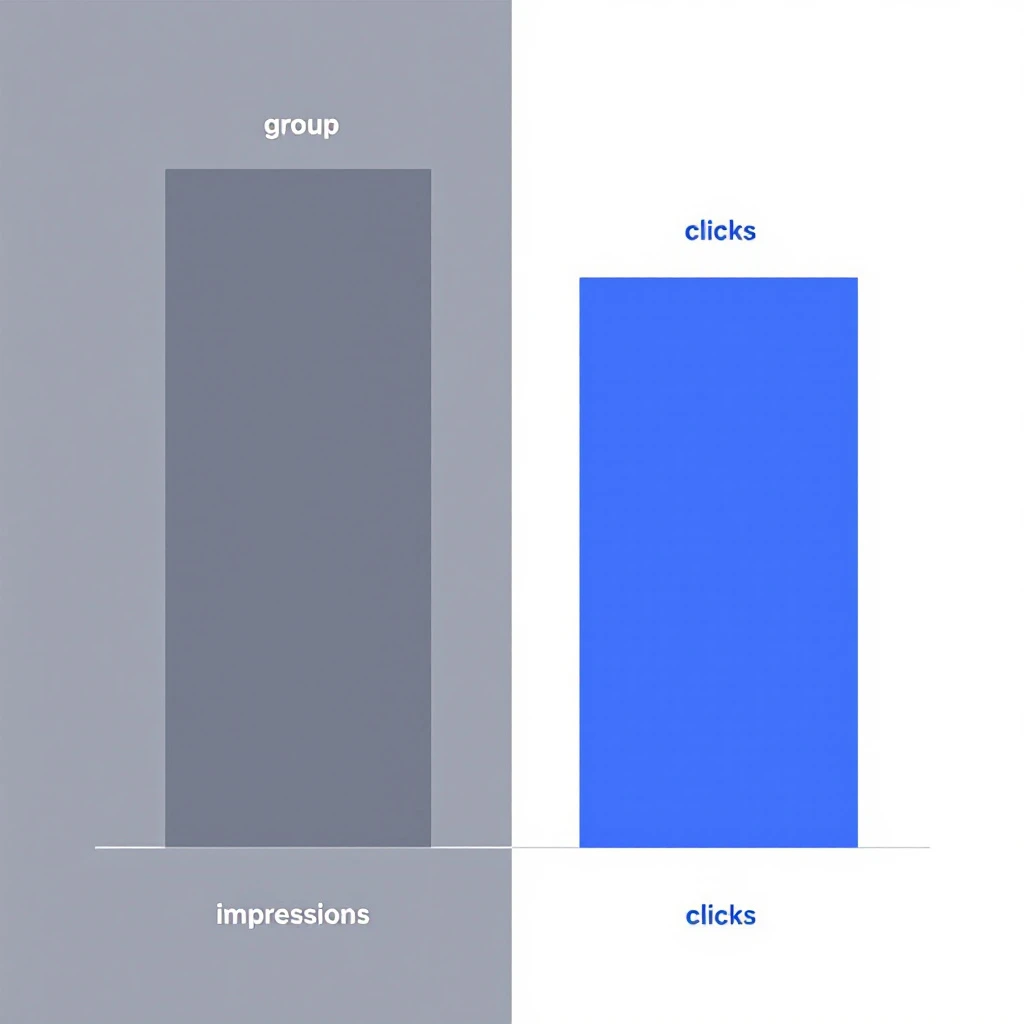
- Over their final 90 days, those posts earned 570,020 impressions and 521 clicks — a 0.091% CTR.
- 112 of the 161 posts (70%) earned zero clicks in those 90 days. Thirteen of them never appeared in search results at all.
- Our surviving, hand-built content earned a 0.280% CTR over the same window — more than 3x the scaled content.
- One deleted post ranked at position 5.3 for a query with 5,195 impressions and got zero clicks.
- We deleted all 161, removed 226 internal links pointing at them from 91 surviving posts, and let the URLs return 404.
If you want the strategic backdrop, our earlier study of 82,000 B2B sales-tech searches explains why this class of content fails: why "best tool" lists don't convert. This post is the operational sequel — what we did about it.
How we got 161 spammy posts in the first place
Honesty time. In late 2025, we did what half of B2B SaaS did: we used an AI content service to generate broad topical coverage. Generic marketing-education posts — "content marketing best practices," "how to conduct A/B testing," "marketing dashboard examples," "cold calling best practices." Dozens of them, all following the same template: intro, listicle body, generic conclusion.
The theory was standard programmatic SEO: coverage builds topical authority, topical authority lifts the pages that matter. The posts even "worked" by vanity metrics — impressions climbed steadily and several posts reached page one.
Then we looked at what those impressions were actually worth.
The data that made the decision
We pulled 90 days of Search Console data (May 22 – August 19, 2026) and split every blog URL into two buckets: the 161 imported posts, and everything we had written ourselves.
| Metric (90 days) | 161 AI-scaled posts | Original content |
|---|---|---|
| Impressions | 570,020 | 1,563,122 |
| Clicks | 521 | 4,384 |
| CTR | 0.091% | 0.280% |
| Posts with zero clicks | 112 of 161 (70%) | — |
Three things in this table ended the debate for us.
1. Page-one rankings with zero clicks. The most damning single data point: one post held position 5.3 for a query with 5,195 impressions and earned not one click. Another sat at position 5.1 on a 1,121-impression query — also zero clicks. Searchers saw these pages on page one, over and over, and collectively decided they weren't worth visiting. Google can see that too. That's not an SEO problem; that's a verdict.
2. The traffic was an illusion of one post. Of the 521 total clicks, a single post — a social media tools listicle — took 234. The other 160 posts shared 287 clicks over 90 days. That's fewer than two clicks per post per month. We were maintaining, internally linking, and staking our domain's reputation on content producing statistically nothing.
3. Our own content outperformed it 3-to-1. Same domain, same authority, same period: hand-built content earned 3.1x the CTR. The scaled posts weren't just failing on their own — they were the weakest 40% of our search footprint by volume, dragging down the sitewide quality signals that Google's systems now aggressively evaluate.
Why the August 2026 spam update forced the timeline
Google's August 2026 spam update, rolling out globally from August 18, explicitly targets scaled content abuse — "large volumes of pages produced primarily to rank, not to help anyone, regardless of whether AI, humans, or a mix produced them." Notably, this update does not touch link spam or site reputation abuse; it's aimed squarely at content like ours.
Read that definition against our data. 161 templated pages. 570K impressions. A 0.09% CTR proving nobody wanted them. If a classifier were built to find scaled content abuse, our imported posts were a textbook training example.
We had already watched this movie: the December 2025 core update hammered sites known for high-volume templated output. Waiting to see whether we'd get caught this time was a bet with terrible odds — keep ~500 clicks a quarter, risk the domain that drives our actual pipeline. We deleted the posts the day after the rollout began.
Exactly what we did (the pruning playbook)
If you're facing the same call, here's our process — it took one evening.
Step 1: Segment ruthlessly. Tag every URL by origin: scaled/imported vs. hand-built. Don't audit post-by-post looking for keepers; audit the cohort. If the cohort's CTR is a fraction of your site average, individual exceptions are noise.
Step 2: Check for anything actually earning. We found exactly one post with meaningful clicks (234 in 90 days) — and its queries ("content creation tools") were so far from our buyer that the traffic converted to nothing. B2B teams should weigh clicks by ICP relevance, not volume. We covered how to think about this in our search intent study: impressions from the wrong audience are worth zero.
Step 3: Delete, don't redirect. We let all 161 URLs return 404. Redirecting spam-cohort pages to unrelated surviving pages just teaches Google your good URLs inherit a bad neighborhood. A 404/410 is the honest signal: this content no longer exists. Reserve redirects for pages with genuine backlinks or a true one-to-one replacement — we had neither.
Step 4: Clean your internal link graph. This is the step everyone forgets. We removed 226 internal references across 91 surviving posts. Broken internal links waste crawl budget and keep dead URLs in Google's discovery path. Your surviving pages should link to each other — ours now form deliberate clusters around visitor identification, AI BDR tooling, and AI SDR economics.
Step 5: Resubmit and wait. Updated sitemap, requested recrawl, and — per Google's own guidance — we'll give it at least a week after the rollout completes before reading anything into Search Console.
What we expect to happen (and the follow-up)
Being honest about the forecast, since we'll publish the results either way:
- Impressions will crater. We're voluntarily giving up ~190K impressions a month. Impressions were never the goal; they were the vanity metric that let this problem hide for three quarters.
- Clicks should barely move. The deleted cohort produced ~174 clicks a month, mostly from one off-ICP listicle.
- The bet: sitewide quality signals improve, crawl budget concentrates on the 90-ish posts that actually convert, and our money pages — the ones driving demo bookings — hold or gain through the spam update.
We'll publish the 60-day before/after from Search Console as a follow-up. If pruning backfires, we'll show that too.
What this means for your content program
If you scaled content with AI in 2024–2026, run this exact analysis this week. Pull 90 days of GSC data, segment scaled vs. original, and look at cohort CTR. If your scaled cohort is under 0.1% CTR, you don't have a content library — you have a liability with a fresh classifier hunting for it.
The uncomfortable rule we've adopted: volume is not a strategy, and coverage is not authority. What survived our purge is content with a real point of view — original research, honest build-it-yourself guides, opinionated takes like why one-size-fits-all GTM tooling fails, and practical workflow content like running ABM with AI agents. That's the stuff earning a 3x CTR — and it's the only content strategy left that compounds instead of accumulating risk.
MarketBetter is a GTM platform, not an SEO tool — but this is exactly how we think about signal versus noise in sales too. A thousand impressions from the wrong audience are worth less than one visit from a buyer. If you want to see how we apply that logic to identifying and converting the buyers already on your site, book a demo.
Data source: Google Search Console, sc-domain property, May 22 – August 19, 2026. Cohorts: 161 imported posts (148 appeared in search during the window, 13 never did) vs. all remaining blog and site URLs. CTR computed on aggregate impressions/clicks per cohort, anchor-fragment rows excluded.