
Why Cursor's ChatGTM Won't Work for Your Sales Team [2026]


Published July 2026.
Every GTM leader in my feed is sharing the same story: Cursor built an internal sales AI called ChatGTM, and it booked 3x more qualified meetings while cutting AE ramp time by more than half. The takeaway everyone is drawing is seductive and simple — "stop buying sales tools, build your own."
I want to be the person who says the quiet part out loud: that's survivorship bias, and copying it will burn most teams that try.
Let me be clear up front — I'm not here to trash Cursor. What they built is genuinely impressive, and the results are real. But the lesson people are extracting from it is wrong, and it's wrong in a way that will cost you two quarters and a lot of goodwill with your sales team.
First, credit where it's due
ChatGTM is a legitimately good piece of engineering. From what's been shared publicly, it queries Salesforce, Gong, and other systems live via tool calls instead of pre-loading a static repository someone has to babysit. That's the right architecture — no staleness, no sync jobs rotting in the background. It surfaces morning account briefs, drafts personalized outbound, and answers rep questions during live calls. Their SDRs report 3x qualified meetings; AEs ramp in half the time. Across a 400-plus person sales org, that's a serious outcome.
So why am I telling you not to copy it?
Because the reasons it worked at Cursor are the exact reasons it won't work at your company.
The survivorship bias trap
When a story goes viral, you only hear about the one build that worked. You don't hear about the hundred sales teams that spun up an internal "sales copilot," burned a quarter of engineering time, and quietly killed it when the SDRs stopped opening it. Those stories don't get LinkedIn posts. They get buried in a Notion doc labeled "learnings."
ChatGTM is the visible rocket that launched. The grounded, broken ones you never see are the actual base rate — and the actual base rate is brutal.
The five preconditions Cursor had that you probably don't
ChatGTM didn't succeed because "internal builds are better." It succeeded because Cursor sat at the intersection of five conditions that almost no other company has all at once:
| Precondition | Cursor | Your company |
|---|---|---|
| World-class AI engineers to spare | Building AI dev tools is literally their business | Your engineers are heads-down on your actual product roadmap |
| A sales team that is technically fluent | They sell to developers and often are developers | Your reps want fewer tabs, not a plain-English automation IDE |
| Clean, structured data in Salesforce and Gong | Well-instrumented, disciplined CRM hygiene | Half your opportunities are missing a stage or a next step |
| AI is core differentiation, not overhead | Every hour on internal AI compounds their core expertise | Every hour you spend on this is an hour off your roadmap |
| Appetite to fund maintenance forever | Building and maintaining models is their normal | The moment your builder gets promoted, the tool rots |
If you can't honestly check all five, you are not Cursor — you are the base rate. And the base rate has data behind it.
What the data actually says
This is where the "just build it" crowd goes quiet. MIT's NANDA State of AI in Business 2025 report studied 300 public AI deployments alongside interviews and surveys of enterprise leaders. The headline finding:
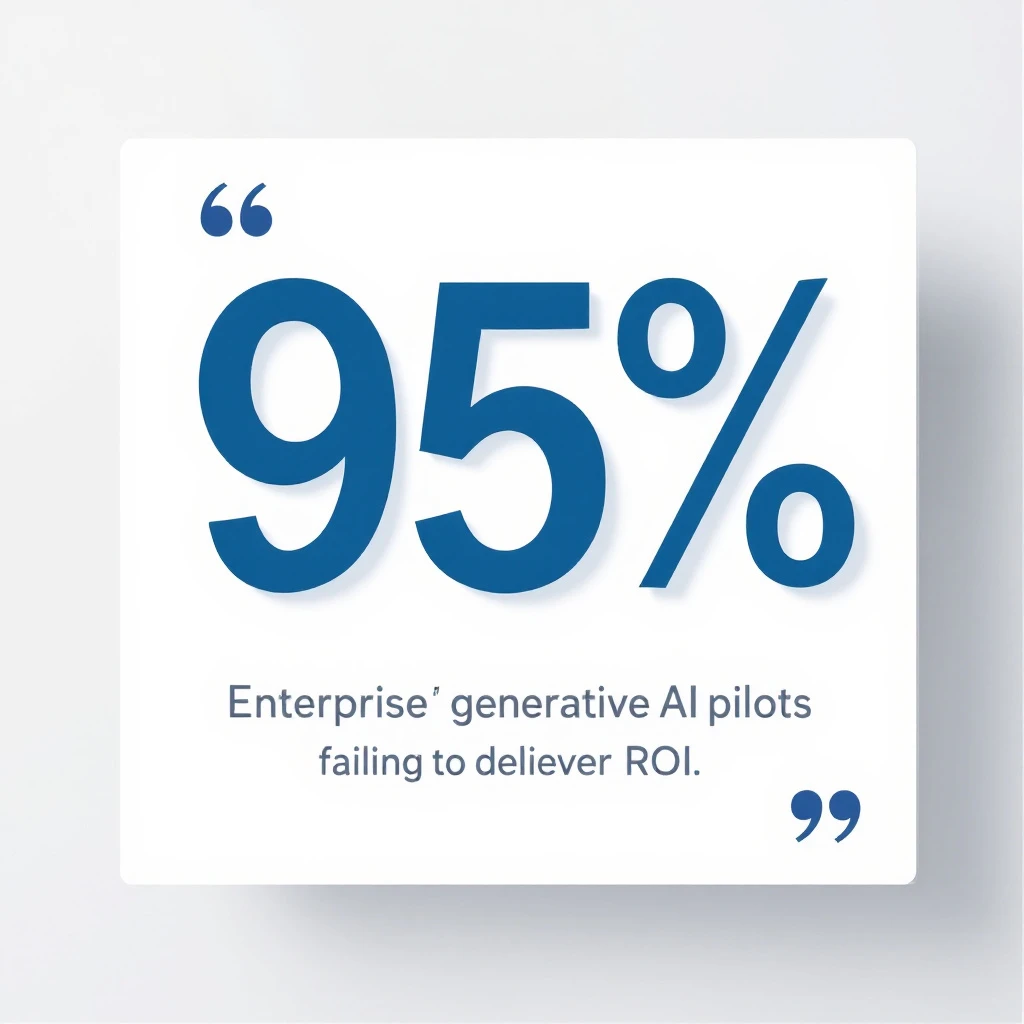
95% of enterprise GenAI pilots delivered no measurable P&L impact. Not "underperformed" — no measurable impact at all.
And when you split by who built the thing, the gap is stark:
- Tools bought from external vendors succeeded roughly twice as often as internal builds.
- Blended teams (internal specialists plus outside expertise) hit a 67% success rate.
- IT-only internal builds succeeded just 22% of the time.
Read that again. When your own team builds a sales AI in-house with no outside expertise, it fails nearly four times out of five. Cursor is in the winning 22% precisely because their internal team is world-class AI expertise. Yours, on this specific problem, probably isn't — and that's not an insult, it's just not your core competency.
The failure mode is almost never the model. It's the "learning gap" — the integration, the data hygiene, the workflow adoption, and the endless maintenance that a viral demo never mentions.
The real question isn't build vs buy
Here's the reframe that matters. "Build vs buy" is the wrong debate. The right question is: is a sales AI system your differentiating product, or is it internal overhead you need to just work?
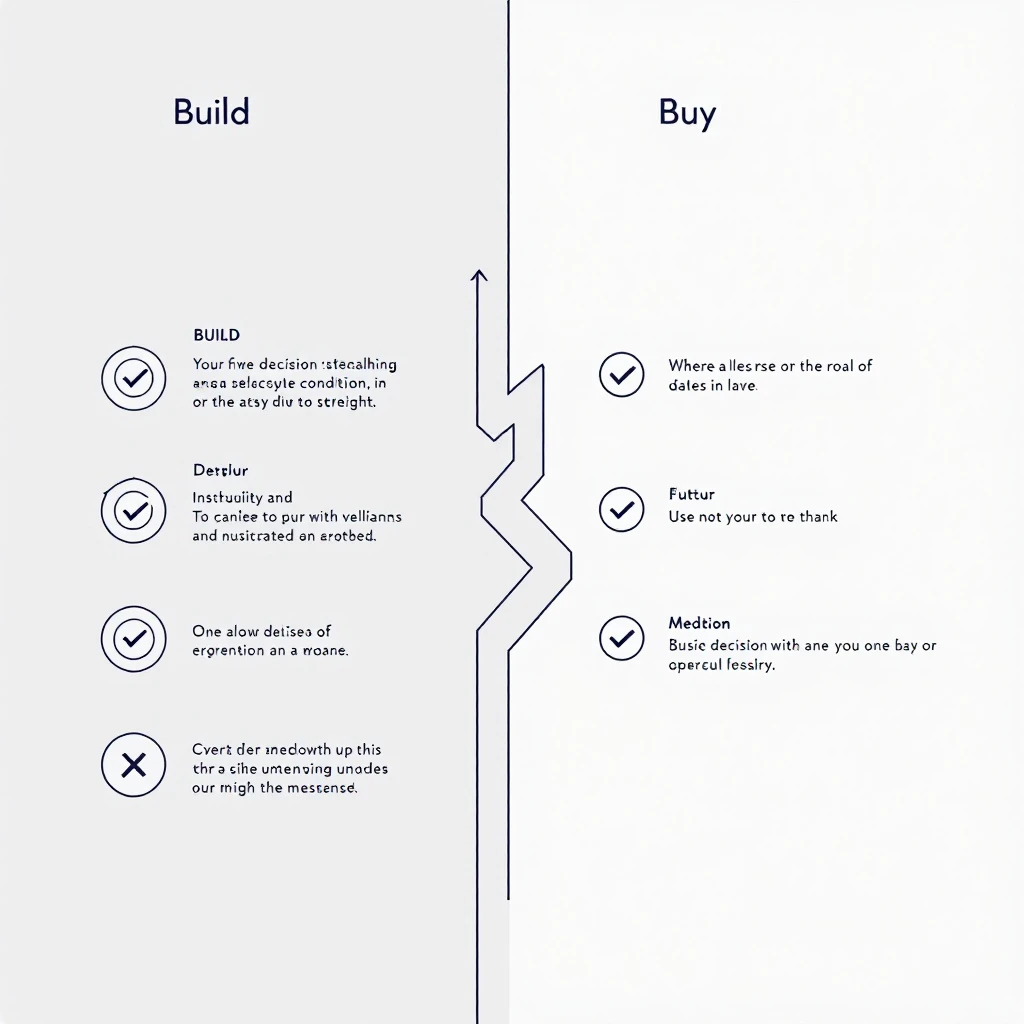
Build only if you can honestly say yes to all of these:
- The sales AI system is itself part of your product or core moat.
- You already run a production ML or applied-AI team with cycles to spare.
- Your CRM and call data are genuinely clean and well-instrumented today.
- You can fund 15-30% of the build cost, every year, forever, just on maintenance.
- Your reps will actually adopt a tool they have to help shape.
Miss even one, and building is a slow-motion way to arrive at the 95%.
Buy if any of these are true — and for most teams, they are:
- Your engineers are needed on the product customers pay for.
- Your data hygiene is a work in progress (whose isn't?).
- You need results this quarter, not after a two-quarter internal project.
- You want someone else absorbing the maintenance and model upgrades.
- You want your reps live in days, not after an internal adoption slog.
Buying gets you the outcome Cursor built — the morning briefs, the signal-aware outreach, the "tell me what to do next" — without staffing an internal AI team to build and babysit it.
What you actually wanted was the outcome
Nobody wants ChatGTM. They want what ChatGTM does: an SDR who walks in every morning knowing exactly which accounts are heating up, what to say, and what to do next — without opening seven tabs and re-explaining context to a generic chatbot.
That's the entire reason MarketBetter exists. It watches your buying signals — website visitors, intent, engagement — and hands each rep a daily playbook of who to contact, why now, and exactly what to send across email, LinkedIn, and phone. It's the ChatGTM outcome, productized, maintained, and live in days instead of quarters. You get the winning 22% odds by not building it yourself.
If you're weighing your options, these will help:
- Best AI SDR Tools for 2026 — the full-funnel landscape, honestly compared.
- 12 Best AI BDR Platforms & Tools for 2026 — outbound-focused tools, tested on meetings booked.
- The Real Cost of an AI SDR in 2026 — what these tools actually cost, build included.
The honest bottom line
Cursor's ChatGTM is a great story and a bad template. The next time someone in a GTM Slack says "we should just build our own," send them this: the version of you that copies Cursor is far more likely to join the 95% than the 5%. The version of you that recognizes you wanted the outcome, not the project, ships pipeline this quarter.
Build only if sales AI is your product. Everyone else — buy the outcome and get back to your roadmap.
Want the ChatGTM outcome without the ChatGTM build? See MarketBetter in action — signal-driven playbooks your reps will actually open, live in days.