The AI BDR market exploded in 2025. Every sales tool now claims to "replace your BDR team" or "automate outbound prospecting with AI."
Here's the reality: most AI BDR tools only automate one slice of the business development workflow — usually cold email sequencing. They find contacts, write templated emails, and blast them at scale. That's not a BDR. That's a mail merge with a ChatGPT wrapper.
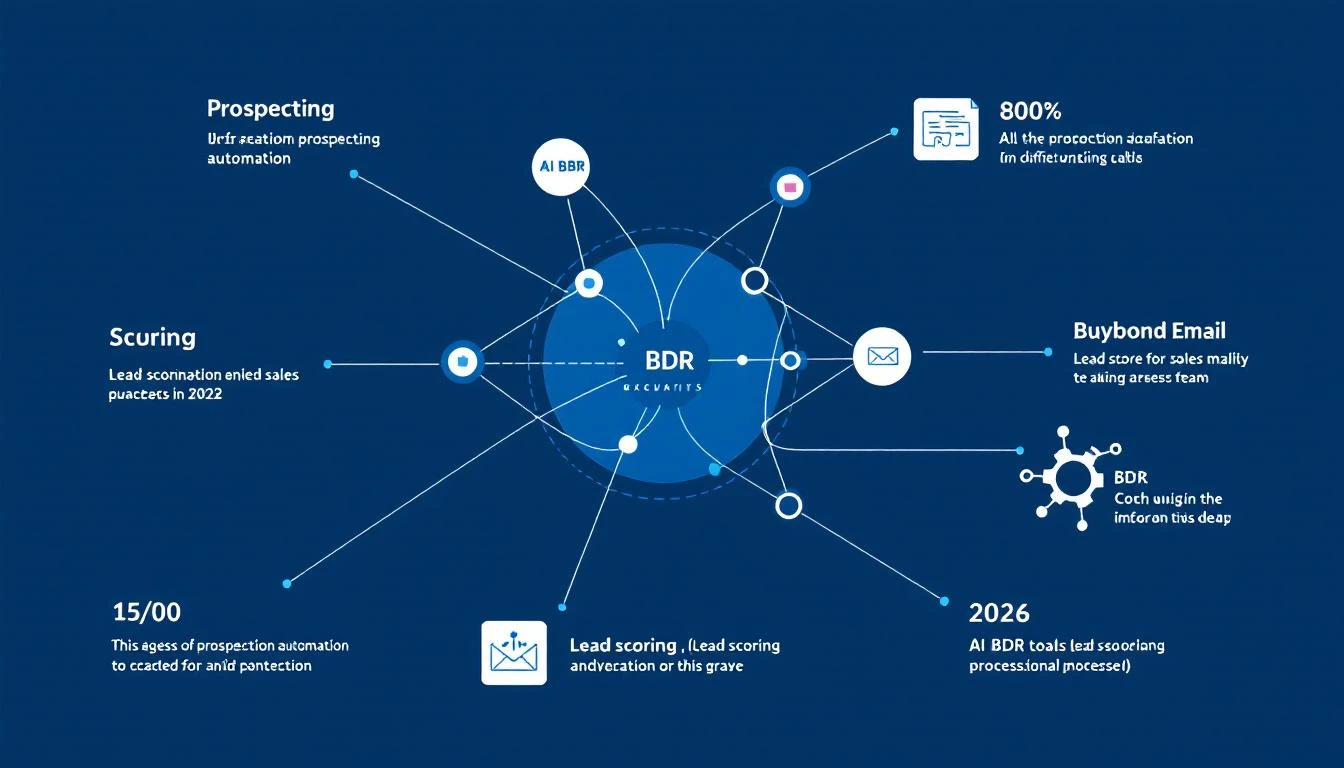
A real BDR does much more: they identify the right accounts, research them, time their outreach to buying signals, personalize across multiple channels, qualify responses, and hand warm leads to AEs. The best AI BDR tools in 2026 handle most of this workflow — not just the email part.
We evaluated 12 platforms across five criteria that actually matter:
- Prospecting depth — Does it find the right people, or just any people?
- Signal awareness — Can it detect intent and buying signals before outreach?
- Multi-channel reach — Email only, or email + LinkedIn + phone?
- Personalization quality — Generic AI copy, or genuinely relevant messages?
- Pipeline impact — Does it book meetings, or just send emails?
AI BDR vs AI SDR: What's the Difference?
Before we dive into the tools, let's clear up the most common confusion in this category.
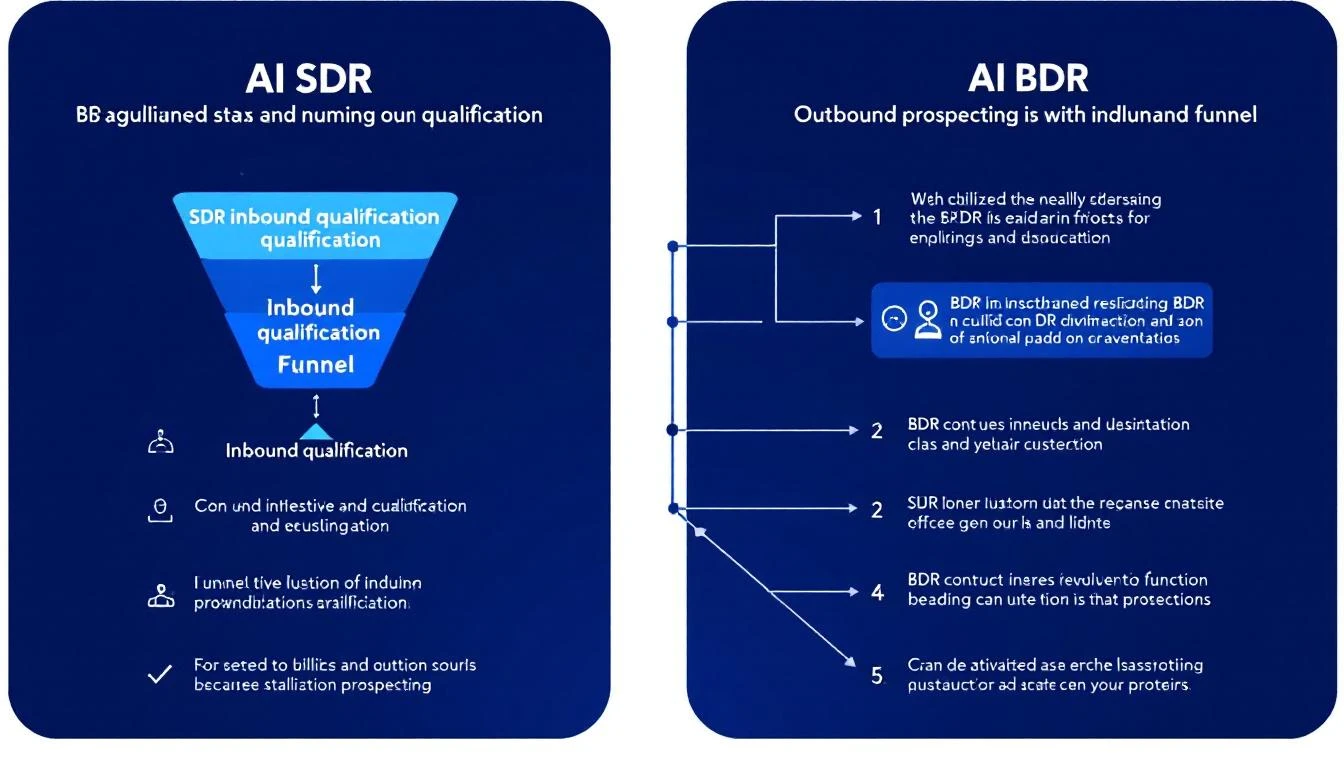
AI BDR (Business Development Representative): Focuses on the top of the funnel — outbound prospecting, cold outreach, initial contact, and first-touch engagement. The BDR's job is to open doors.
AI SDR (Sales Development Representative): Handles both inbound and outbound — qualifying inbound leads, responding to website visitors, nurturing prospects through the middle of the funnel, and booking meetings for AEs.
In practice, the terms overlap heavily. Most AI tools in this space handle both functions. But if you're specifically looking for outbound prospecting automation, you're searching for an AI BDR. If you need inbound qualification + outbound, you need an AI SDR platform.
The smartest approach in 2026: get a platform that handles both, so your SDRs aren't juggling separate tools for inbound vs. outbound.
Key insight: The real differentiator isn't whether a tool calls itself an AI BDR or AI SDR. It's whether the tool tells your reps what to do next or just dumps data on them and expects them to figure it out.
| Tool | Best For | Starting Price | Multi-Channel | Signal Detection |
|---|
| MarketBetter | Full SDR/BDR workflow with daily playbook | $500/mo | Email + LinkedIn + Phone | ✅ Website visitors + intent |
| Artisan (Ava) | Autonomous outbound email | ~$2,000/mo | Email + LinkedIn | Limited |
| 11x (Alice) | Enterprise autonomous SDR | ~$5,000/mo | Email + LinkedIn | ✅ Intent data |
| Apollo.io | Budget-friendly prospecting + outreach | $49/mo | Email + LinkedIn + Phone | Basic |
| Clay | Lead enrichment + data workflows | $149/mo | Email (via integrations) | Via waterfall enrichment |
| Amplemarket | AI-powered multichannel sequences | ~$600/mo | Email + LinkedIn + Phone | ✅ Buying signals |
| AiSDR | Mid-market AI email agent | ~$750/mo | Email + LinkedIn | ✅ Intent + HubSpot signals |
| Instantly | High-volume cold email at scale | $30/mo | Email only | None |
| Smartlead | Email deliverability + volume | $39/mo | Email only | None |
| Outreach | Enterprise sales engagement | ~$100/user/mo | Email + LinkedIn + Phone | ✅ (add-on) |
| SalesLoft | Enterprise cadence management | ~$125/user/mo | Email + LinkedIn + Phone | ✅ (add-on) |
| Snov.io | SMB prospecting + email outreach | $39/mo | Email + LinkedIn | Basic |
1. MarketBetter
Best for: Teams that want one platform for prospecting, signals, AND execution
Most AI BDR tools solve one problem: they automate cold outreach. MarketBetter takes a fundamentally different approach — it combines website visitor identification, buying signal detection, and a daily SDR playbook into a single workflow.
Instead of your BDRs starting each morning wondering "who should I reach out to today?", MarketBetter generates a prioritized task list based on real-time signals: who visited your pricing page, which target accounts are showing intent, and what specific actions to take for each prospect.
What makes it different as an AI BDR:
- Visitor identification catches inbound interest that pure outbound tools miss entirely
- Daily playbook tells BDRs exactly who to contact, when, and what to say
- Smart dialer built in — most AI BDR tools don't touch phone outreach
- AI chatbot captures and qualifies website visitors 24/7
- Email automation with hyper-personalized sequences based on actual prospect behavior
Pricing: Starts at $500/mo for 3 active SDR seats. Growth at $1,500/mo includes the full SDR dashboard and daily playbook.
Best for: B2B teams (50-500 employees) that want to consolidate their BDR tech stack into one platform. Especially strong for teams that get some website traffic but aren't capturing it.
Limitations: Not the cheapest option for teams that only need cold email blasting. If you just want to send 10,000 cold emails per month, Instantly is cheaper. But if you want your BDRs to actually book meetings from warm signals — not just spray and pray — MarketBetter pays for itself.
Book a demo →
2. Artisan (Ava)
Best for: Autonomous outbound email with minimal human involvement
Artisan's AI BDR agent "Ava" is designed to run outbound prospecting almost entirely on autopilot. You define your ICP, set guardrails, and Ava handles prospect research, email writing, and follow-up sequences.
Key features:
- Access to 300M+ contact database for prospecting
- AI-written outbound emails with personalization
- Multi-step follow-up sequences
- LinkedIn connection requests (newer feature)
- B2B lead scoring and prioritization
Pricing: Custom pricing, typically starting around $2,000/mo. They don't publish rates on their website — you'll need a demo to get a quote.
What users say (from G2 and Reddit):
- Strong at generating volume — Ava can create hundreds of personalized emails
- Quality of personalization varies — sometimes feels templated despite claiming AI personalization
- Some users report issues with email deliverability when volume ramps up
- Setup can be complex, and the AI needs significant training on your ICP
Best for: Teams that want to remove humans from the cold outbound loop almost entirely. If your philosophy is "replace the BDR," Artisan is built for that vision.
Limitations: No phone dialer, no inbound lead capture, no website visitor identification. It's purely an outbound email engine with AI.
3. 11x (Alice)
Best for: Enterprise teams with budget for autonomous AI SDR/BDR
11x positions "Alice" as a fully autonomous digital worker who handles the entire outbound workflow. They've raised significant funding and target enterprise companies willing to invest $50K+/year in AI-powered prospecting.
Key features:
- Autonomous prospecting with AI agent "Alice"
- Access to large contact databases
- AI-powered email personalization
- LinkedIn outreach automation
- Intent data integration
Pricing: Enterprise pricing, typically $5,000/mo+ ($50K-$100K/year). No self-serve option.
What users say (from G2 and Reddit):
- Mixed results — some teams see strong pipeline generation, others report low response rates
- Reddit threads frequently mention that Alice's emails can feel generic despite AI personalization claims
- High price point makes ROI scrutiny intense
- Support and onboarding are generally praised
Best for: Enterprise teams (500+ employees) with dedicated RevOps support to configure and monitor the AI agent. Not for SMBs.
Limitations: The "replace your BDR entirely" approach doesn't work for every sales motion. Complex deals with long sales cycles still need human touch. No website visitor identification or inbound workflow.
4. Apollo.io
Best for: Budget-friendly prospecting with built-in outreach
Apollo combines a massive contact database (275M+ contacts), email sequencing, and basic AI features into one affordable platform. It's not a pure AI BDR — it's a prospecting database with automation features bolted on.
Key features:
- 275M+ contact database with email and phone numbers
- Email sequences with basic AI writing assistance
- LinkedIn integration
- Built-in dialer
- Lead scoring
- Intent signals (newer feature)
Pricing: Free tier available. Professional at $49/user/mo, Organization at $79/user/mo. Very transparent pricing compared to AI BDR startups.
What users say:
- Excellent database coverage, especially for US companies
- Email data accuracy around 85-90% (some bounces expected)
- AI writing assistance is basic compared to dedicated AI BDR tools
- Dialer works but isn't as sophisticated as dedicated calling platforms
- Best value-for-money in the category
Best for: Teams that need prospecting data AND basic outreach in one tool at a reasonable price. If you're spending $200+/mo on ZoomInfo for data and another $100+/mo on an email tool, Apollo consolidates both.
Limitations: AI features are an add-on to a database product — it's not AI-first. Sequences are rule-based, not signal-driven. No website visitor identification.
5. Clay
Best for: Data enrichment workflows and technical BDR teams
Clay isn't an AI BDR in the traditional sense — it's a data enrichment and workflow platform that lets you build custom prospecting pipelines. Think of it as a spreadsheet on steroids with 100+ data providers.
Key features:
- Waterfall enrichment across 100+ data providers
- AI research agent for prospect enrichment
- Custom workflow builder (like Zapier for sales data)
- AI-powered lead scoring
- Integration with any outreach tool
Pricing: Free tier with 100 credits/mo. Starter at $149/mo (3,000 credits), Explorer at $349/mo, Pro at $800/mo. Credits get consumed fast — enriching one lead can use 5-15 credits depending on the providers you stack.
Real cost analysis: A team enriching 500 leads/month with 3-4 data points each could easily spend $349-$800/mo on Clay alone — and that's before you pay for the outreach tool to actually send emails.
What users say:
- Incredibly powerful for technical users who can build custom workflows
- Credit system can get expensive fast at scale
- Steep learning curve — not plug-and-play
- Best-in-class data quality when you stack multiple providers
- Not a standalone BDR solution — you need Clay + an outreach tool + a CRM
Best for: RevOps teams and technical BDRs who want granular control over their data enrichment pipeline. If your team can build in Clay, the data quality is unmatched.
Limitations: Not an outreach tool. You still need Instantly, Apollo, or Outreach to actually send emails. Total stack cost (Clay + outreach + CRM) often exceeds $1,000/mo.
6. Amplemarket
Best for: AI-powered multichannel sequences with buying signals
Amplemarket has quietly built one of the more complete AI BDR platforms. It combines prospecting, multichannel outreach (email + LinkedIn + phone), and buying signal detection in one tool.
Key features:
- AI-powered email and LinkedIn sequences
- Buying signal detection (job changes, funding, tech adoption)
- Built-in dialer
- Lead scoring based on ICP fit + intent
- Deliverability optimization
- CRM sync (Salesforce, HubSpot)
Pricing: Starting around $600/user/mo. Custom pricing based on team size and volume.
What users say:
- Strong multichannel capabilities — email + LinkedIn + phone in one workflow
- Signal detection helps prioritize outreach timing
- Some users note that AI personalization quality depends heavily on initial setup
- Higher price point than Apollo but more AI-native
Best for: Mid-market teams (100-500 employees) that want multichannel AI BDR capabilities with signal-based prioritization.
Limitations: Pricing is opaque and relatively high. Less known than Apollo or Outreach, so finding peer reviews can be difficult.
7. AiSDR
Best for: Mid-market teams wanting a dedicated AI email agent
AiSDR is a focused AI BDR platform that integrates with HubSpot and uses intent data to personalize outbound emails. It positions itself as a dedicated AI-powered email agent.
Key features:
- AI-generated personalized emails
- HubSpot integration for CRM-based triggers
- Intent data from Bombora
- LinkedIn outreach
- Multi-step sequences with AI follow-ups
Pricing: Starting around $750/mo for 1,000 prospects. Scales with volume.
Best for: HubSpot-heavy teams that want an AI layer on top of their existing CRM data. The tight HubSpot integration is a genuine differentiator.
Limitations: Email-focused — no dialer, no visitor identification. Effectiveness depends heavily on your HubSpot data quality.
8. Instantly
Best for: High-volume cold email at the lowest cost
Instantly is the go-to tool for teams that want to send thousands of cold emails per month at rock-bottom prices. It's not an AI BDR — it's an email sending infrastructure with basic AI writing.
Key features:
- Unlimited email sending accounts
- Email warmup built in
- AI email writer (basic)
- Lead database (30M+ contacts)
- Campaign analytics
Pricing: Growth at $30/mo (1,000 leads), Hypergrowth at $77.6/mo (25,000 leads). Extremely affordable.
What users say:
- Unbeatable for pure email volume
- Warmup feature genuinely helps deliverability
- AI writing is basic — you'll want to edit the output
- No LinkedIn, no phone, no multi-channel
- Database quality is inconsistent compared to Apollo or ZoomInfo
Best for: Solo founders, freelancers, and small teams that need to send high volumes of cold email on a tight budget.
Limitations: Email only. No signal detection. No buyer intent. If everyone on your list gets the same cold sequence regardless of whether they just visited your website or raised funding, you're leaving pipeline on the table.
9. Smartlead
Best for: Email deliverability optimization at scale
Smartlead competes directly with Instantly on price and features, with a stronger focus on deliverability infrastructure.
Key features:
- Unlimited email accounts and warmup
- AI email personalization
- Custom inbox rotation
- Sub-sequence automation
- Unified inbox for managing replies
Pricing: Basic at $39/mo (2,000 leads), Pro at $94/mo (30,000 leads). Comparable to Instantly.
Best for: Teams that have had deliverability issues with other tools and want more control over sending infrastructure.
Limitations: Same as Instantly — email only, no signals, no multi-channel. Pure volume play.
10. Outreach
Best for: Enterprise sales engagement with BDR workflows
Outreach is the incumbent in sales engagement. While not an "AI BDR" in the startup sense, their platform handles BDR workflows at scale with AI features layered on top.
Key features:
- Multi-channel sequences (email + LinkedIn + phone)
- AI email assist and optimization
- Revenue intelligence and deal tracking
- Sentiment analysis on replies
- Robust analytics and A/B testing
Pricing: Typically $100-130/user/mo. Enterprise pricing with annual contracts. Known for expensive add-ons — intent data, conversation intelligence, and analytics often cost extra.
What users say:
- Extremely capable platform with deep customization
- Expensive when you add all the features you actually need
- Can feel bloated for small teams
- Best-in-class reporting and analytics
- Steep learning curve
Best for: Enterprise teams (500+) with dedicated RevOps support who need a mature, full-featured sales engagement platform.
Limitations: Not AI-native. AI features feel bolted on rather than central to the product. No website visitor identification.
11. SalesLoft
Best for: Structured cadence management for BDR teams
SalesLoft (now owned by Vista Equity) is Outreach's main competitor in the sales engagement space. Strong cadence management with growing AI capabilities.
Key features:
- Cadence automation (email + phone + social)
- AI email writing and optimization
- Conversation intelligence (call recording + analysis)
- Deal intelligence
- CRM integration
Pricing: Typically $125-150/user/mo. Enterprise contracts with annual commitments. Total cost for a 10-person BDR team can reach $20K-$70K/year when you factor in add-ons.
Best for: Mid-market to enterprise teams that want structured cadence management with coaching insights.
Limitations: Legacy platform adding AI features. Not built AI-first. Expensive for what you get compared to newer AI BDR tools.
12. Snov.io
Best for: SMB prospecting with built-in email sequences
Snov.io offers email finding, verification, and outreach in one affordable package. Their recent AI features add ICP generation and email writing.
Key features:
- Email finder and verifier
- AI email writer with personalization
- Multi-channel sequences (email + LinkedIn)
- CRM with pipeline management
- Chrome extension for LinkedIn prospecting
Pricing: Free tier available. Starter at $39/mo (1,000 credits), Pro at $99/mo (5,000 credits).
Best for: Small teams and solo reps who need prospecting + outreach without a large budget.
Limitations: Database is smaller than Apollo or ZoomInfo. AI features are basic compared to dedicated AI BDR platforms. Better as a starter tool than an enterprise solution.
The right choice depends on three things:
1. What's your actual problem?
- "We need more contacts to reach out to" → Apollo or Clay for data
- "We need to send more cold emails" → Instantly or Smartlead for volume
- "We need our BDRs to be more efficient" → MarketBetter or Amplemarket for workflow
- "We want to replace human BDRs entirely" → Artisan or 11x for autonomous agents
2. What's your budget?
- Under $100/mo: Instantly, Smartlead, or Apollo free tier
- $100-500/mo: Apollo Pro, Clay Starter, Snov.io
- $500-2,000/mo: MarketBetter, Amplemarket, AiSDR
- $2,000-5,000/mo: Artisan, Outreach, SalesLoft
- $5,000+/mo: 11x, enterprise Outreach/SalesLoft bundles
3. Do you need signals or just sending?
This is the most important question. If your BDRs are blasting cold lists with no signal data, you're leaving 80% of your pipeline potential on the table. Tools that detect buying signals — website visits, job changes, funding events, content engagement — help your BDRs reach the right people at the right time.
The volume trap: Sending more cold emails doesn't linearly increase meetings. Response rates on generic cold outbound hover around 1-2%. Signal-based outreach typically achieves 5-15% response rates because you're reaching people who are already interested.
The Bottom Line
The AI BDR category in 2026 is split into two camps:
Camp 1: Volume tools (Instantly, Smartlead) — Send more emails for less money. Works for commoditized products where you need pure reach.
Camp 2: Intelligence tools (MarketBetter, Amplemarket, Clay) — Send fewer, smarter messages to the right people at the right time. Works for considered purchases where timing and relevance matter.
Most B2B teams should start with Camp 2. Your total addressable market isn't 10 million companies — it's maybe 5,000. Blasting all of them with generic emails hurts your brand and tanks your domain reputation. Finding the 50 who are actively in-market and reaching them with relevant, timely outreach is how modern BDR teams win.
Ready to see how signal-based prospecting works? Book a MarketBetter demo →
Related reading: