
How HR Benefits Technology Companies Can Build Territory-Based SDR Pipelines with AI-Powered Signals

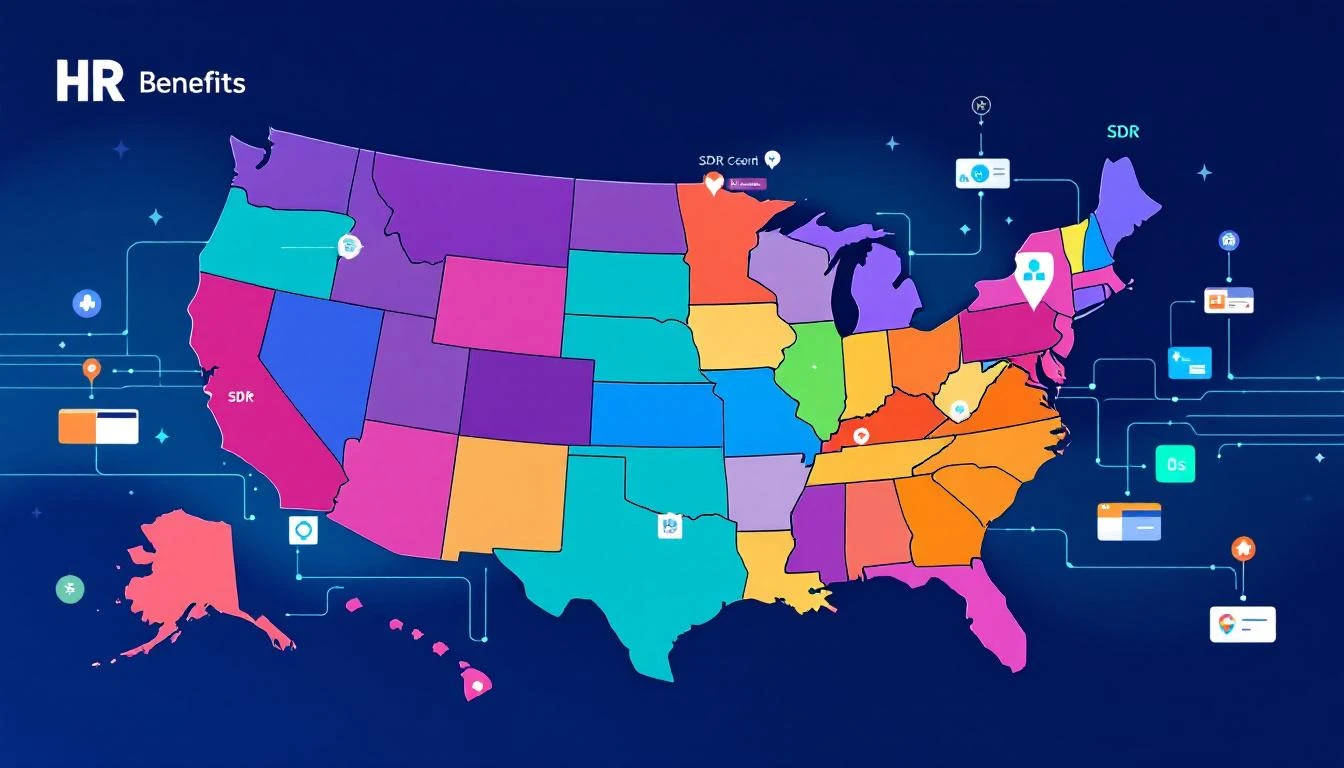
The HR benefits technology space is booming. Employers are scrambling to modernize how they distribute, manage, and communicate employee benefits — and the vendors serving them are growing fast. But growth creates a specific problem: how do you scale your sales development operation when your market segments are complex and your SDR team is still small?
This is the exact challenge facing benefits distribution platforms right now. Companies in this space typically sell to HR directors, benefits administrators, and brokers — but the buying motion varies wildly depending on company size, industry vertical, and geographic region. A 50-person startup evaluating benefits software has completely different needs than a 5,000-person manufacturing company with unionized workers across six states.
For SDR teams in HR tech, the result is chaos: reps waste time on accounts that don't fit, messaging falls flat because it's too generic, and pipeline stalls because nobody owns the right territory.
Signal-based selling changes the equation entirely.
The HR Benefits Sales Problem Nobody Talks About
Most HR benefits technology companies start their outbound motion the same way: buy a list, send emails, hope for replies. It works — barely — when you have one or two reps and a small addressable market. But the moment you try to scale past that, everything breaks.
Here's why the HR benefits vertical is uniquely difficult for traditional outbound:
1. ICP Complexity
Unlike SaaS companies selling to a single buyer persona, benefits platforms often have six or more distinct deal types. One company we've studied operates with these ICP segments:
- Mid-market employers (200-2,000 employees) buying direct
- Enterprise employers (2,000+) with RFP-driven procurement
- Benefits brokers acting as channel partners
- PEOs (Professional Employer Organizations) bundling benefits into payroll
- TPA (Third-Party Administrators) managing self-funded plans
- Health systems offering benefits as an employee retention tool
Each of these requires different messaging, different value props, and different SDR skill sets. A rep who crushes it with mid-market HR directors may bomb with enterprise procurement teams.
2. Geographic Territory Complexity
Benefits regulations vary by state. Compliance requirements differ. Even the language around benefits changes regionally. Companies in this space often need territory-based routing by US state to ensure reps understand local nuances — but most CRMs make this painful to configure and even harder to automate.
3. The Scaling Inflection Point
The hardest moment for a benefits tech company is going from 2 to 5 SDRs. At two reps, you can divide the world in half and figure it out. At five, you need real infrastructure: territory definitions, lead routing rules, ICP scoring, and automated handoffs. Without it, reps step on each other's deals, high-value accounts fall through cracks, and managers spend more time refereeing than coaching.
What "Before" Looks Like
One benefits distribution platform we've observed was stuck in exactly this pattern. They had:
- 2 SDRs doing everything manually
- A CRM (HubSpot) full of contacts but no systematic way to prioritize them
- Generic email sequences that treated a 100-person startup the same as a 5,000-person enterprise
- No territory definitions — both reps were essentially working the same national list
- Pipeline reviews that consisted of "what did you do this week?" instead of data-driven coaching
The results were predictable: inconsistent pipeline, feast-or-famine months, and growing frustration as the company prepared to hire a third SDR without confidence that the existing process could scale.
The core issue wasn't effort — both reps were working hard. It was infrastructure. They had no way to automatically route the right accounts to the right rep, no signals telling them which accounts were actually in-market, and no territory structure to prevent overlap.
The Signal-Based Transformation
Here's what changed when this company adopted an AI-powered signal approach to sales development:
Step 1: Define ICP Deal Types with Signal Layers
Instead of treating all prospects the same, they defined six distinct ICP profiles — each with its own signal criteria:
| Deal Type | Key Signals | Priority Score |
|---|---|---|
| Mid-market employer | Website visit to pricing page + 200-2K employees + benefits-related job postings | High |
| Enterprise employer | Multiple visitors from same company + RFP-related page views + 2K+ employees | Critical |
| Benefits broker | Repeat visits to partner page + broker-specific content downloads | High |
| PEO | Industry-specific page visits + multi-state presence indicators | Medium |
| TPA | Self-funded plan content engagement + compliance page visits | Medium |
| Health system | Healthcare vertical indicators + employee count + benefits page visits | Medium |
Each deal type got its own signal scoring model. A mid-market HR director visiting the pricing page three times in a week scores differently than a TPA browsing a compliance whitepaper once. This isn't just lead scoring — it's intent-based prioritization that tells reps not just who to call, but why and when.
Step 2: Territory-Based Routing by State
With the third SDR coming onboard, they implemented geographic territory routing:
- Rep A: Northeast + Mid-Atlantic (NY, NJ, PA, MA, CT, etc.)
- Rep B: Southeast + Central (TX, FL, GA, TN, IL, OH, etc.)
- Rep C: West + Mountain (CA, WA, CO, AZ, etc.)
But here's where signals made this actually work: instead of just assigning zip codes, the routing engine factored in which state's benefits regulations the prospect was most likely dealing with. A company headquartered in Delaware but with 80% of employees in California gets routed to the West territory rep — because that's where the benefits conversation will center.
This kind of intelligent routing is impossible with basic CRM round-robin. It requires visitor identification that captures not just company name, but firmographic context that informs routing logic.
Step 3: Automated Sequences by Deal Type
Generic "Hey, saw you visited our website" emails don't work in HR tech. The pain points are too specific. So they built deal-type-specific sequences:
For mid-market employers:
"Most HR teams your size are managing open enrollment with spreadsheets and prayer. We help 200-2,000 employee companies automate benefits distribution so your team isn't buried for six weeks every fall..."
For benefits brokers:
"Your clients are asking about digital benefits experiences, and you need a platform partner — not another vendor to manage. Here's how our broker portal gives you white-label distribution tools..."
For enterprise (RFP-driven):
"We know you're evaluating platforms — 73% of enterprises your size go through a formal RFP for benefits technology. Here's our compliance documentation and the 8 questions most procurement teams ask us first..."
Each sequence is triggered by signal combinations, not arbitrary time delays. A mid-market HR director who visits the pricing page AND the case study page within 48 hours gets a different sequence than one who only visited the homepage once. This is the power of combining website visitor identification with intent-driven automation.
Step 4: The Daily Playbook
Instead of reps opening their CRM each morning and deciding what to do, they now get a daily SDR playbook — a prioritized task list generated from overnight signals:
- Hot accounts: Companies that visited high-intent pages yesterday (pricing, demo request, comparison pages)
- Warming accounts: Companies showing increased visit frequency over the past week
- Champion alerts: Key contacts at target accounts who changed jobs (a former champion at Company A just joined Company B — instant warm intro opportunity)
- Follow-up tasks: Automated reminders based on sequence stage and engagement signals
This is what it means to go from 20 tabs to one task list. Reps aren't context-switching between LinkedIn, their CRM, email, and a spreadsheet. They're executing against a prioritized, signal-informed plan.
The Results: What Changed
Within 90 days of implementing this approach, the benefits platform saw measurable shifts:
- Pipeline per rep increased 2.4x — not because reps worked harder, but because they worked on the right accounts at the right time
- Territory conflicts dropped to near-zero — clear geographic routing with firmographic intelligence eliminated the "I was working that account" conversations
- Email reply rates jumped from 2.1% to 6.8% — deal-type-specific messaging resonated because it spoke to actual pain points, not generic value props
- Time-to-first-meeting decreased by 40% — signals told reps when prospects were actively evaluating, so outreach hit during the buying window instead of randomly
- The third SDR ramped in 3 weeks instead of 6 — because the playbook, territories, and sequences were already defined, the new rep just needed to learn the product, not build their own process from scratch
The Compounding Effect
The real magic wasn't any single improvement — it was how they compounded. Better targeting led to better reply rates. Better reply rates led to more meetings. More meetings with better-fit accounts led to higher close rates. Higher close rates justified hiring the third rep. The third rep, working a well-defined territory with proven sequences, generated pipeline faster than either of the original two had in their first year.
This is what infrastructure does. It turns linear growth (add rep → hope for proportional pipeline) into compounding growth (add rep → leverage existing signal data + proven playbooks → accelerate ramp).
Actionable Takeaways for HR Benefits Technology Companies
If you're selling benefits technology and struggling to scale your SDR operation, here's what to do:
1. Map Your ICP Deal Types Before You Hire
Don't add headcount until you can clearly articulate your distinct buyer segments. Most benefits platforms have 4-6 deal types. Define each one's:
- Ideal company size and industry
- Primary buyer persona
- Key pain points
- Buying process (self-serve vs. RFP vs. broker-influenced)
- Signal criteria (what behavior indicates they're in-market?)
2. Implement Territory Routing That Goes Beyond Zip Codes
State-based territories work well for benefits tech because regulations are state-specific. But don't just assign states — factor in:
- Where the prospect's employees are concentrated (not just HQ location)
- Which state's compliance requirements are most relevant
- Rep expertise in specific regulatory environments
3. Build Deal-Type-Specific Sequences
Kill your generic email templates. Write sequences that speak directly to each ICP segment's pain points. A broker cares about white-labeling and client retention. An enterprise HR director cares about compliance and implementation timeline. A PEO cares about multi-state support and API integration. Same product, completely different conversations.
4. Use Website Visitor Identification as Your Signal Foundation
You can't build any of this without knowing who's visiting your site. Website visitor identification is the foundation layer — it tells you which companies are in-market before they fill out a form. Layer intent signals on top (page-level behavior, visit frequency, content engagement) to prioritize outreach.
5. Give Reps a Playbook, Not a Pipeline
The daily playbook model works because it removes decision fatigue. Instead of asking "what should I work on today?", reps get a prioritized list of exactly who to contact, what to say, and why now. This is especially critical during the 2→5 SDR scaling phase when you need consistency across a growing team.
6. Track Champion Job Changes
In HR tech, relationships matter enormously. Benefits decisions are often made by the same people as they move between companies. Champion tracking alerts you when a contact who previously evaluated (or bought) your product joins a new company — giving your reps a warm path into an account that would otherwise be cold outbound.
The Bigger Picture: HR Tech Sales is a Territory Game
The HR benefits technology market is projected to grow significantly over the next five years as employers continue digitizing benefits administration. But growth in TAM doesn't automatically translate to growth in your pipeline.
The companies that will win in this space are the ones that build scalable SDR infrastructure — not just hire more reps and hope for the best. Territory-based routing, ICP-specific sequencing, and signal-driven prioritization aren't nice-to-haves. They're the difference between a sales team that scales linearly and one that compounds.
If your benefits platform is preparing to scale from a small SDR team to a larger one, the time to build this infrastructure is before you hire — not after. Define your territories. Map your ICPs. Implement visitor identification. Build your playbooks. Then hire into a machine that's already working.
Your reps should wake up knowing exactly who to call, what to say, and why today is the day. That's what signal-based selling delivers.
Want to see how MarketBetter's visitor identification and AI-powered playbook can help your HR tech company build territory-based SDR pipeline? Book a demo and we'll show you what your website traffic is already telling you about in-market buyers.