
GPT-5.3-Codex: What GTM Teams Need to Know [2026]

OpenAI dropped GPT-5.3-Codex on February 5, 2026. Three days later, the GTM world is still figuring out what it means.
Here's the short version: This is the most capable AI coding agent ever released, and it's going to change how sales and marketing teams build automation.
If you're a VP of Sales, SDR Manager, or RevOps leader wondering whether this matters to you—it absolutely does. Not because you need to become a developer, but because the barrier to building custom sales tools just dropped to near-zero.
Let me explain.
What Is GPT-5.3-Codex?
GPT-5.3-Codex is OpenAI's cloud-based AI agent designed specifically for software engineering tasks. Think of it as having a senior developer on call 24/7 who can:
- Write complete applications from scratch
- Refactor existing code
- Build integrations between your tools
- Create custom automations
But here's what makes 5.3 different from previous versions:
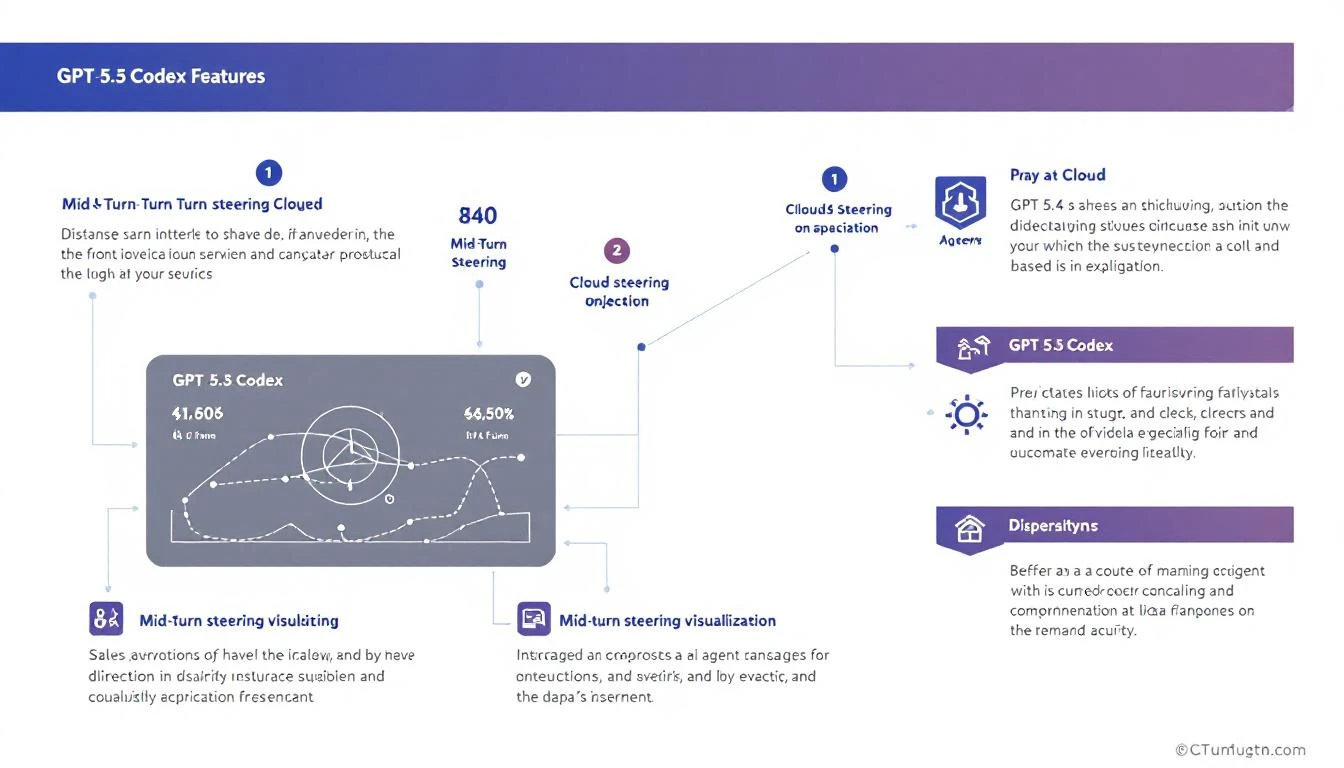
Mid-Turn Steering
This is the killer feature. Previous AI coding tools worked like this: you give a prompt, wait for the output, then correct mistakes and try again.
With mid-turn steering, you can redirect the agent while it's working. See it going down the wrong path? Tell it to change direction. Want to add a requirement halfway through? Just say so.
For GTM teams, this means:
- You can describe what you want in plain English
- Watch as the agent builds it
- Course-correct in real-time
- Get exactly what you need, faster
25% Faster Than GPT-5.2-Codex
Speed matters when you're iterating on sales tools. The new model generates code significantly faster, which means:
- Quicker prototypes of new automation ideas
- Faster debugging when something breaks
- More experiments per sprint
Multi-File Projects
Codex can now handle complex, multi-file projects natively. This means it can build real applications—not just scripts—including:
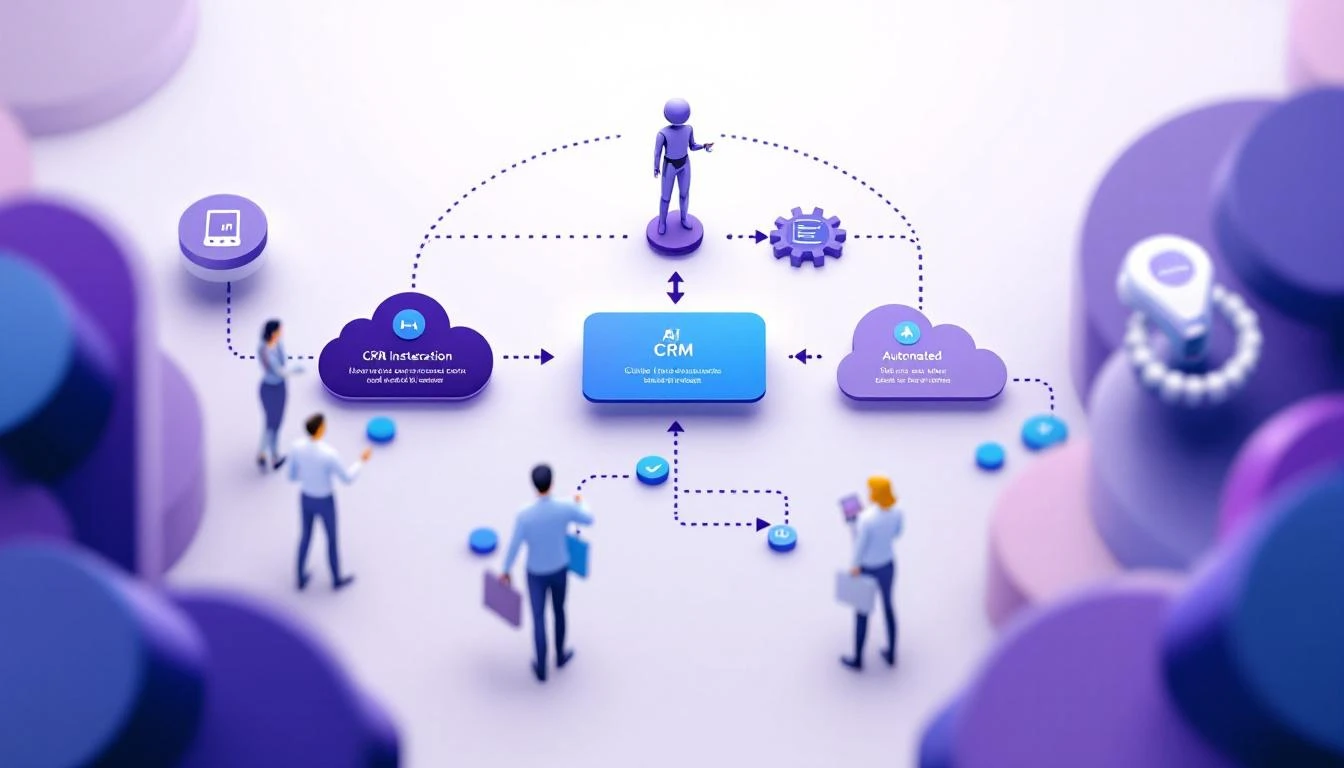
- Full CRM integrations
- Multi-step email sequences
- Dashboard applications
- API connectors
Why This Matters for GTM Teams
Here's the uncomfortable truth about sales technology in 2026: The best tools are the ones you build yourself.
Generic AI SDR platforms cost $35,000-50,000 per year. They're built for the average use case, which means they're perfect for nobody.
Meanwhile, the teams winning right now are:
- Identifying their specific bottlenecks
- Building custom automations to solve them
- Iterating weekly based on results
GPT-5.3-Codex makes this accessible to teams without dedicated developers.
Real Example: Custom Lead Research Agent
Let's say your SDRs spend 20 minutes researching each prospect before outreach. You could:
Option A: Pay for a generic "AI research" tool ($15-25K/year) Option B: Build exactly what you need with Codex
Here's what Option B looks like:
"Build me a lead research agent that:
1. Takes a company name and prospect name as input
2. Finds their recent LinkedIn posts (last 30 days)
3. Checks if they've raised funding recently
4. Identifies any job changes in their department
5. Outputs a 3-sentence research summary I can paste into my email"
With GPT-5.3-Codex, you can build this in an afternoon. Total cost: Your time + ~$20/month in API calls.
Real Example: Pipeline Alert System
Your VP of Sales wants to know immediately when:
- A deal over $50K stalls for more than 7 days
- An enterprise prospect opens a proposal 3+ times
- A competitor is mentioned in meeting notes
Building this with traditional development: 2-4 weeks and $5-10K
Building this with Codex + OpenClaw: A weekend
"Create a HubSpot integration that monitors our pipeline and sends
Slack alerts when:
1. Any deal over $50K hasn't had activity in 7+ days
2. Proposal tracking shows 3+ opens
3. Meeting notes (from Gong or Fireflies) mention competitor names

Run this check every 4 hours."
The OpenClaw Advantage
Here's where it gets interesting. Codex is powerful, but it's a tool—it doesn't run 24/7 on its own.
OpenClaw is an open-source gateway that lets you:
- Deploy AI agents that run continuously
- Connect to your messaging platforms (Slack, WhatsApp, Telegram)
- Schedule cron jobs for recurring tasks
- Give agents memory across sessions
- Access browser automation for web tasks
The combination of Codex + OpenClaw = DIY AI SDR infrastructure.
Build the automations with Codex. Deploy them on OpenClaw. Run them 24/7 for free (you're self-hosting).
Getting Started: A Practical Roadmap
Week 1: Install and Experiment
- Install the Codex CLI:
npm install -g @openai/codex
-
Start with a simple project—maybe a script that enriches a CSV of leads with company data.
-
Practice mid-turn steering. Give vague instructions, then refine as you watch it work.
Week 2: Build Your First Sales Tool
Pick your biggest time-waster. Common candidates:
- Manual CRM updates
- Lead research
- Follow-up scheduling
- Meeting prep
Build a tool that automates 50% of it. Don't aim for perfection—aim for "better than manual."
Week 3: Deploy with OpenClaw
Set up OpenClaw on a $5/month VPS (DigitalOcean, Vultr, etc.). Deploy your automation. Connect it to Slack so you can interact with it.
Week 4: Iterate Based on Results
Your first version will be wrong. That's fine. The advantage of building your own tools is that you can change them weekly.
What Codex Can and Can't Do
Codex Excels At:
- Building integrations between SaaS tools
- Creating data processing pipelines
- Writing API connectors
- Automating repetitive code tasks
- Generating boilerplate for common patterns
Codex Struggles With:
- Tasks requiring deep domain expertise
- Anything that needs real-time human judgment
- Complex UI design (it can build functional UIs, not beautiful ones)
- Tasks that require browsing the live web (use OpenClaw's browser tools for this)
Combine With Claude for Best Results
For GTM automation specifically, Claude Code tends to be better at:
- Writing persuasive copy
- Analyzing unstructured data (emails, call transcripts)
- Making judgment calls about prospect intent
The winning stack for most teams:
- Codex: Build the infrastructure
- Claude: Handle the nuanced tasks
- OpenClaw: Orchestrate everything
Cost Comparison: Build vs. Buy
| Solution | Annual Cost | Customization | Time to Value |
|---|---|---|---|
| Enterprise AI SDR Platform | $35-50K | Limited | 2-4 weeks |
| Mid-Market AI SDR Tool | $12-25K | Some | 1-2 weeks |
| Codex + OpenClaw (DIY) | ~$500* | Unlimited | 2-4 weeks |
*Assuming $20-40/month in API costs + minimal hosting
The catch: DIY requires someone on your team who's comfortable with technical projects. But you don't need a developer—you need someone curious enough to experiment.
The Build vs. Buy Decision
Build your own when:
- Your workflow is unique
- You need rapid iteration
- Budget is constrained
- You have someone technical-adjacent on the team
Buy off-the-shelf when:
- You need enterprise support/SLAs
- Nobody on the team wants to maintain tools
- Your use case is generic
- Speed-to-value is critical
For most SMB and mid-market GTM teams in 2026, the math now favors building.
What This Means for the AI SDR Market
GPT-5.3-Codex is going to put pressure on every AI sales tool that isn't providing genuine differentiation.
If your value proposition is "we connect to your CRM and do basic automation"—teams can now build that themselves in a weekend.
The winners will be tools that provide:
- Proprietary data (intent signals, company graphs)
- Deep workflow expertise (not just tools, but playbooks)
- Outcomes, not features
At MarketBetter, we've always believed in the "build your own" approach for teams that can handle it. That's why we focus on providing the intelligence layer—visitor identification, buying signals, and playbooks—rather than trying to own your entire workflow.
Try our AI Lead Generator — find verified LinkedIn leads for any company instantly. No signup required.
Getting Started Today
-
Try Codex: Even if you're not technical, spend an hour with it. Ask it to build something simple for your sales process.
-
Audit Your Workflow: Where do your SDRs lose time? Make a list of the 5 most repetitive tasks.
-
Pick One to Automate: Start small. One successful automation builds confidence for the next.
-
Consider OpenClaw: If you want your automations to run 24/7, OpenClaw is the easiest path.
The release of GPT-5.3-Codex isn't just a technical milestone. It's a shift in what's possible for GTM teams without dedicated engineering resources.
The question isn't whether AI will change how you sell. The question is whether you'll build your own advantage—or rent someone else's.
Ready to see how MarketBetter's intelligence layer works with your custom automations? Book a demo →