
Signals That Actually Load — How We Made MarketBetter 122x Faster

There is a particular kind of frustration that only SDR teams understand: you know a signal exists, you know it is time-sensitive, and you are staring at a loading spinner.
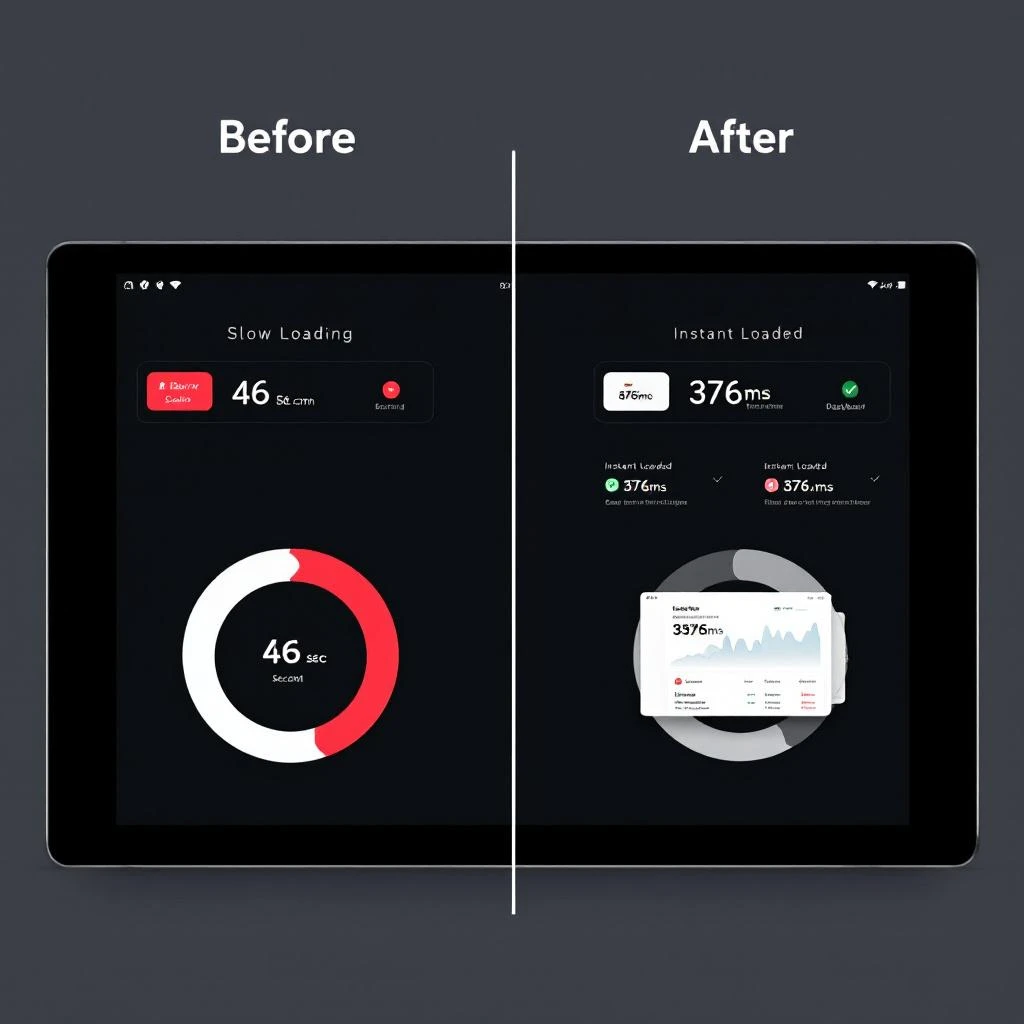
For teams running high-volume signal-driven outbound on MarketBetter, the Signals page was becoming a bottleneck. Not because the data was wrong or the signals were weak — but because loading them took too long. For accounts with large signal volumes, cold loads stretched to 46 seconds. Some pages timed out entirely.
That is not a minor inconvenience. That is a workflow killer.
We fixed it. The Signals page now loads in 376 milliseconds. That is a 122x improvement — and it changes what is possible for teams that live in signals all day.
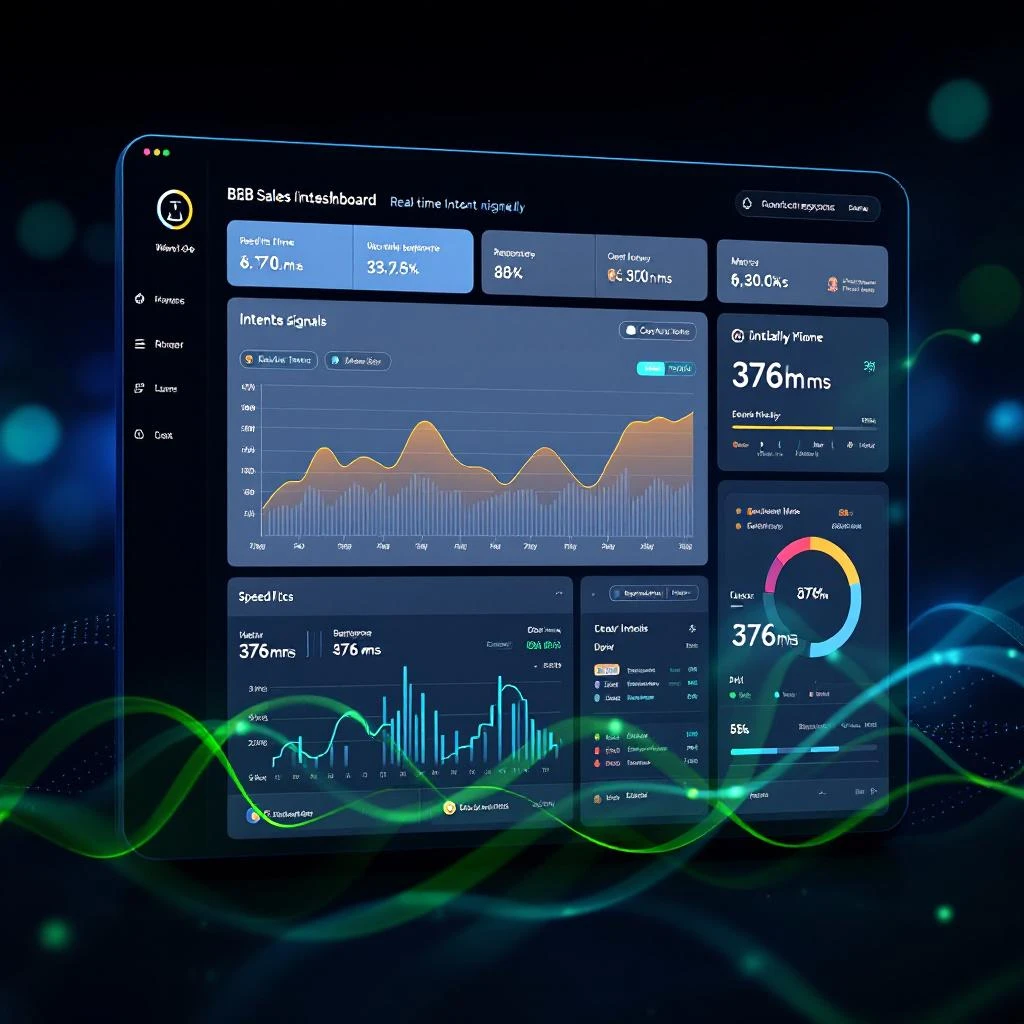
Speed Is Not a Feature. It Is Table Stakes.
Let's be honest about what 46 seconds actually costs.
An SDR checking signals at the start of their day does not check signals once. They check them dozens of times — filtering by account, by signal type, by recency, by priority. If each load takes 46 seconds, that is not a page load problem. That is a tax on every action your rep takes.
Multiply that across a team of 10 SDRs, each checking signals 20-30 times per day, and you are burning hours of productive selling time on waiting. Not researching. Not calling. Not writing personalized outreach. Waiting.
The math gets worse when you factor in context switching. A rep waiting 46 seconds does not sit there watching a spinner. They check Slack. They open another tab. They lose the thread on the account they were about to call. By the time the page loads, the mental model they had built about that prospect is gone.
Speed is not a nice-to-have in a signal-driven workflow. It is the difference between acting on a signal and missing it entirely.
The best signal in the world is worthless if your team cannot access it fast enough to act on it.
What Changed: From Unusable to Instant
The numbers tell the story:
| Metric | Before | After | Improvement |
|---|---|---|---|
| Cold load (large accounts) | 46 seconds | 376ms | 122x faster |
| Warm load | 8-12 seconds | ~200ms | 40-60x faster |
| Time to first signal visible | 15+ seconds | <400ms | Instant |
| Page timeout rate | Frequent for large accounts | Zero | Eliminated |
For teams with smaller account volumes, the old page was slow but functional. For teams running enterprise ABM motions with thousands of accounts generating signals daily, it was effectively broken. Pages would time out. Reps would refresh and wait again. Some gave up and relied on email notifications instead — which meant they were always a step behind.
Now, every team gets the same experience regardless of signal volume: instant.
Why This Matters More Than You Think
Speed improvements are easy to dismiss as incremental. A page that loaded in 46 seconds now loads in under a second — great, but so what?
Here is what changes when signals load instantly:
Signal-Driven Workflows Become Practical
Before this improvement, building a workflow around real-time signals was aspirational. You could tell reps to "check signals first thing every morning" and "act on high-intent signals within the hour," but if loading those signals ate minutes out of every check, the workflow collapsed under its own weight.
Now, checking signals is as fast as checking email. Reps can glance at their signal feed between calls, filter to high-priority accounts in a second, and act immediately. The signal-to-meeting pipeline that top SDR teams build — where a buying signal triggers outreach within hours, not days — only works if the signal is accessible the moment it fires.
Volume Stops Being a Penalty
One of the more counterintuitive problems with the old Signals page: the more successful your signal collection was, the worse the experience got. Teams that had invested in broad signal coverage — website visitors, community mentions, job changes, funding events, tech stack changes — were punished with slower load times.
That is exactly backwards. The teams investing the most in signal intelligence should have the best experience, not the worst. Now they do.
Managers Can Actually Use Signal Analytics
Sales managers reviewing team signal coverage, response rates, and pipeline attribution need to load signal views repeatedly across different accounts and time periods. A 46-second load made this analysis impractical for anything beyond spot checks. With sub-second loads, signal analytics becomes a daily management tool instead of a quarterly reporting exercise.
Community Mentions: Redesigned From the Ground Up
The speed improvement was the foundation. But we did not stop there.
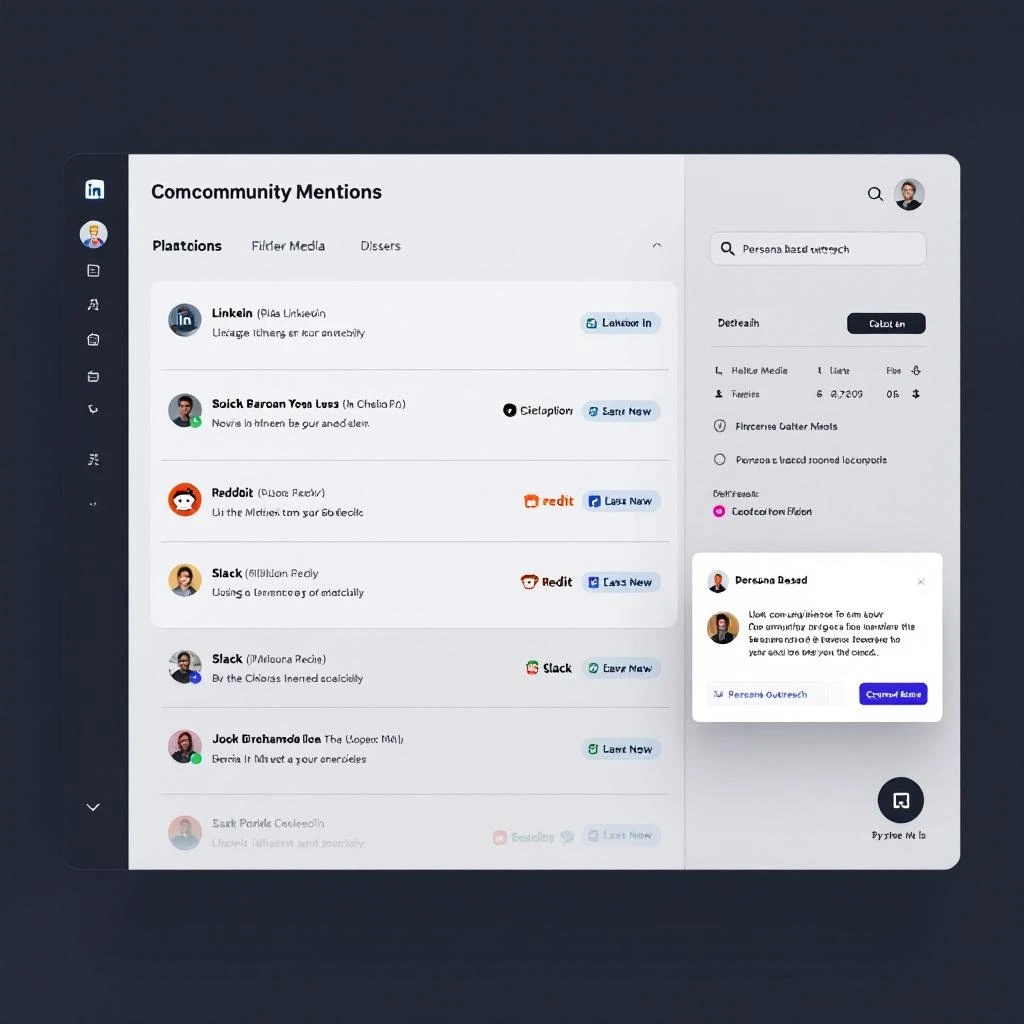
Community Mentions — previously called Social Mentions — got a complete redesign. This is the feature that surfaces when someone in your target accounts mentions your category, your competitors, or buying-intent keywords across social platforms and online communities.
Platform Filtering
The old Social Mentions view was a single, undifferentiated stream. Every mention from every platform in one list. For teams monitoring LinkedIn, Reddit, industry Slack communities, and forums simultaneously, finding relevant signals meant scrolling through noise.
Community Mentions now includes platform-specific filtering. Click LinkedIn to see only LinkedIn mentions. Filter to Reddit for community discussions. Focus on the platform where your buyers are most active today, then expand when you have bandwidth.
This sounds simple, but the impact on workflow efficiency is significant. An SDR who knows their ICP lives on LinkedIn can start every morning with a filtered view of just LinkedIn mentions, work through those signals methodically, then shift to Reddit or community forums. No scrolling past irrelevant platforms. No context switching between signal types.
Detail Sheet Panel
Previously, clicking on a mention took you to a new page or opened the source in a new tab. You lost your place in the signal feed. If you were working through 30 mentions, that meant 30 page navigations and constant back-button clicking.
The new detail sheet panel opens inline — click any mention, and a panel slides in showing the full context: the original post or comment, who said it, when, the full thread if available, and the account and contact data MarketBetter has enriched for that person.
You read the context, decide whether to act, and close the panel. Your place in the signal feed is exactly where you left it. This is the kind of interaction design that saves reps 30-60 minutes per day in navigation overhead alone.
Persona-Based Outreach From Mentions
This is the feature that connects signal intelligence to action.
From any Community Mention, you can now launch outreach directly — and that outreach is built on the persona MarketBetter has constructed for the contact. Not a generic template. Not "Hey, saw your post." Outreach that reflects the contact's role, their company's tech stack, recent activity, and the specific signal that triggered the workflow.
An SDR sees a VP of Sales at a target account asking about sales engagement platforms on LinkedIn. They click the mention, read the full context in the detail panel, and hit "Start Outreach." MarketBetter generates a personalized message that references the specific discussion, positions relevant capabilities, and matches the tone appropriate for a VP-level conversation.
No tab switching. No copying and pasting context from one tool to another. No manually looking up the contact's background. Signal to outreach in a single flow.
This is what we mean when we talk about signal-based selling replacing the spray-and-pray model. The signals were always there. What was missing was the ability to act on them at the speed they demand.
Real-Time Signal Workflows: What Becomes Possible
The combination of instant signal loading and the Community Mentions redesign unlocks workflows that were not practical before:
The Morning Signal Sweep. An SDR opens MarketBetter, filters signals by priority, and works through the top 20 in under 10 minutes. Each signal loads instantly. Each mention can be reviewed in context without leaving the page. Outreach launches from the same screen. Before this update, the same workflow took 45+ minutes — and most reps abandoned it halfway through.
Real-Time Signal Response. With sub-second load times, reps can check signals between every call. A prospect who just visited your pricing page gets a call within minutes, not hours. A community mention from this morning gets a response before lunch. The speed-to-lead advantage that separates top-performing teams from everyone else depends entirely on being able to access signals this fast.
Cross-Platform Signal Correlation. A target account shows website visitor activity this week, a LinkedIn mention yesterday, and a job posting for a role that suggests they are building the function you sell into. Seeing all three signals together — instantly, without waiting for separate pages to load — is what turns signal data into conviction. The rep does not just have a reason to call. They have three reasons, correlated, and they can articulate all of them in a single conversation.
Manager Signal Reviews. A sales manager reviewing signal-to-meeting conversion for the past week no longer needs to block 30 minutes for the analysis. They can check it in two minutes between their own meetings, spot trends, and coach reps on signal prioritization in real time.
The Bigger Picture: Why We Obsess Over Performance
We could have shipped the Community Mentions redesign without the speed work. The new filtering, the detail panel, the persona-based outreach — all of that functionality works regardless of load time.
But we have learned something building MarketBetter: features that are slow are features that do not get used.
It does not matter how powerful your signal intelligence is if reps stop checking it because the page takes too long. It does not matter how good your community monitoring is if the mention feed loads so slowly that reps default to manually checking LinkedIn instead.
Performance is not infrastructure work that happens in the background. Performance is the product. When your signals load in 376 milliseconds instead of 46 seconds, your team does not just save time. They change their behavior. They check signals more often. They act on more signals. They build muscle memory around signal-driven workflows that compound into pipeline over weeks and months.
That is the 122x improvement that matters — not the technical benchmark, but the behavioral shift it enables.
What This Means for Your Team
If you are already using MarketBetter Signals, the speed improvement is live. No migration, no settings change, no action needed. Your next page load will be fast.
If you have been holding off on rolling out signal-driven workflows because of performance concerns — especially if you have large account volumes that were hitting timeouts — those concerns are resolved. The Signals page now handles enterprise-scale signal volumes without breaking a sweat.
And if you are evaluating signal intelligence platforms and wondering whether they can actually keep up with the speed your SDR team needs: we'd love to show you what 376 milliseconds looks like in practice.
Speed kills — your competition's pipeline. See how MarketBetter's signal intelligence helps SDR teams act on buying signals before anyone else. Book a demo.