
Best Lead Routing Software for B2B Sales Teams in 2026 [Compared]
Every minute between "lead comes in" and "rep reaches out" costs you pipeline.
Harvard Business Review found that companies responding within five minutes are 100x more likely to connect with a lead than those waiting 30 minutes. Yet the average B2B company takes 42 hours to respond to a new lead.
The gap isn't effort — it's infrastructure. Manual lead assignment via spreadsheets, Slack messages, or CRM queues creates bottlenecks. The wrong rep gets the wrong lead. Hot leads sit cold while your team figures out who owns the account. SDRs cherry-pick easy leads while high-value prospects go untouched.
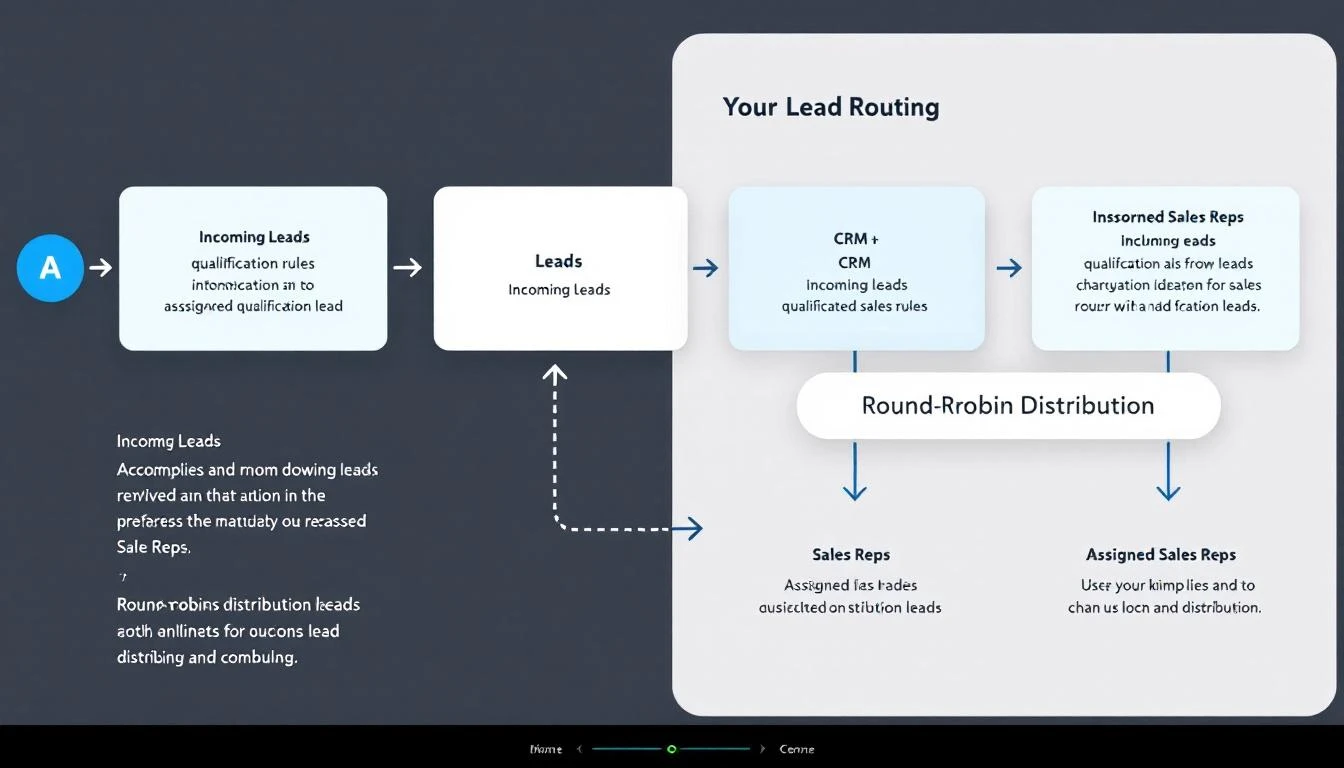
Lead routing software automates the entire flow: lead comes in → gets qualified → matches to the right account → routes to the right rep → rep gets notified instantly. No manual steps. No delays. No "I thought you had that one."
We evaluated 25+ lead routing platforms and narrowed it to the 12 that actually improve speed-to-lead for B2B sales teams.
What Makes Lead Routing Software Effective
Not all routing is equal. Here's what separates effective lead routing from "we have a round-robin":
Lead-to-Account Matching
New leads need to connect to existing accounts. When a director from Acme Corp fills out your form, the system should recognize Acme is already in your CRM, identify the account owner, and route accordingly. Without this, you get duplicate outreach, confused prospects, and wasted territory rules.
Rules Beyond Round-Robin
Round-robin is a starting point, not a strategy. Effective routing considers territory, deal size, product interest, lead source, rep capacity, quota attainment, and time zone. The best platforms let you layer these rules without requiring a developer.
Speed-to-Lead Automation
Routing a lead to the right rep means nothing if the rep doesn't see it for two hours. Instant notifications via Slack, email, or mobile push — plus escalation rules if the assigned rep doesn't respond within X minutes — are essential.
Intent-Based Prioritization
A visitor who read your pricing page three times this week should route differently than someone who downloaded a whitepaper six months ago. Intent signals should influence both who gets the lead and how urgently it's treated.
CRM Integration
Routing must read from and write to your CRM in real-time. If there's a lag, you get stale data, wrong assignments, and conflicting records. Native Salesforce and HubSpot integration is the minimum bar.
Quick Comparison: Lead Routing Software at a Glance
| Platform | Best For | Starting Price | Lead-to-Account | Round-Robin | Intent Routing | CRM |
|---|---|---|---|---|---|---|
| MarketBetter | SDR teams wanting routing + visitor ID + playbook | Contact for pricing | ✅ | ✅ | ✅ | HubSpot, Salesforce |
| Chili Piper | Form-to-meeting conversion | $22.50/user/mo | ✅ | ✅ | ❌ | HubSpot, Salesforce |
| LeanData | Salesforce-native complex routing | Contact sales | ✅ | ✅ | ❌ | Salesforce |
| ZoomInfo Operations | Data-enriched enterprise routing | ~$24,800/yr | ✅ | ✅ | ✅ | Salesforce, HubSpot |
| HubSpot | Teams already on HubSpot | Free (basic) | ✅ | ✅ | ✅ | HubSpot native |
| Default | PLG companies with self-serve | Contact sales | ❌ | ✅ | ❌ | Salesforce, HubSpot |
| Traction Complete | Salesforce matching at scale | Contact sales | ✅ | ✅ | ❌ | Salesforce |
| LeadAngel | Mid-market lead management | $99/month | ✅ | ✅ | ❌ | Salesforce, HubSpot |
| Salesforce Flow | Teams with in-house SF admins | Included with SF | ✅ | ✅ | ❌ | Salesforce native |
| Warmly | ABM teams with visitor ID | $10,000/yr | ✅ | ✅ | ✅ | Salesforce, HubSpot |
| 6sense | Enterprise ABM orchestration | Contact sales | ✅ | ✅ | ✅ | Salesforce, HubSpot |
| Distributely | HubSpot-native simple routing | $75/month | ❌ | ✅ | ❌ | HubSpot |
The 12 Best Lead Routing Platforms in 2026
1. MarketBetter
Best for: B2B sales teams that want lead routing woven into the entire SDR workflow — not bolted on as an afterthought.
Most lead routing tools solve one problem: getting the lead to the right rep. Then the rep still needs to research the prospect, decide on the channel, write the message, and figure out when to follow up. That's where deals die.
MarketBetter takes a different approach. Lead routing isn't a standalone feature — it's part of a complete SDR operating system. When a lead comes in (from your website, form, chatbot, or email campaign), MarketBetter:
- Identifies the company using built-in visitor identification
- Enriches the lead with firmographic and intent data
- Matches to existing accounts in your CRM
- Routes to the right rep based on territory, ownership, and capacity rules
- Adds the lead to the rep's daily playbook — a prioritized task list with the exact next action
The playbook is the key differentiator. Your SDR doesn't just get a notification that says "new lead." They get a specific task: "Call Sarah at Acme Corp. She visited pricing 3x this week. Use this talking point."
Key capabilities:
- Built-in visitor identification — Routing starts before the form fill. Know the company the moment they land on your site.
- Daily SDR Playbook — Routed leads appear as prioritized tasks with recommended actions, channels, and messaging.
- Multi-channel routing — Route to email, phone, LinkedIn, or chatbot based on lead signals and channel preferences.
- Team deduplication — Prevents two reps from working the same account across different lead sources.
- Smart Dialer integration — Hot leads routed directly to the dialer queue for immediate follow-up.
- Territory and capacity rules — Assign based on geography, company size, industry, or custom fields.
What sets it apart: Other routing tools hand off the lead and walk away. MarketBetter routes the lead AND tells the rep exactly what to do with it. That's the difference between "speed to lead" and "speed to meaningful conversation."
Pricing: Contact for pricing. Platform includes routing, visitor ID, playbook, chatbot, email automation, and smart dialer.
2. Chili Piper
Best for: Teams focused on converting inbound form fills into booked meetings with zero friction.
Chili Piper is the standard-bearer for form-to-meeting conversion. Its core product, Form Concierge, sits on top of your existing web forms and instantly qualifies, routes, and books meetings when a lead submits.
Instead of the typical "thanks, someone will reach out" experience, the lead sees available time slots immediately after form submission. This alone can double your form-to-meeting conversion rate — Chili Piper claims their customers see 2x improvement on average.
The Distro product handles lead distribution with round-robin, weighted routing, and custom assignment rules. Handoff manages meeting scheduling between SDRs and AEs during the handoff process.
Key capabilities:
- Instant meeting booking from web form submissions
- Multi-step qualification before routing
- Round-robin and weighted lead distribution
- Handoff scheduling between SDRs and AEs
- Salesforce and HubSpot native integration
- SLA enforcement with escalation rules
What's missing: No visitor identification — Chili Piper doesn't know who's on your site until they fill out a form. No outbound capability. No SDR workflow tools beyond the routing and scheduling. It's laser-focused on inbound conversion, which is a strength if that's your primary need.
Pricing: Instant Booker starts at $22.50/user/month. Form Concierge and Distro require higher tiers. Enterprise pricing available.
3. LeanData
Best for: Salesforce-centric enterprises that need complex, visual routing workflows.
LeanData is the gold standard for Salesforce-native lead routing. Its visual FlowBuilder lets you create routing logic using a drag-and-drop canvas — no Apex code, no Flow Builder headaches. You can see exactly how a lead moves through your routing rules, making it easy to audit and optimize.
The platform's lead-to-account matching uses fuzzy matching algorithms that handle variations in company names, domains, and subsidiaries. It's notably better than Salesforce's native matching for complex account hierarchies.
Key capabilities:
- Visual drag-and-drop routing workflow builder
- Industry-leading lead-to-account matching with fuzzy logic
- Round-robin, weighted, and capacity-based assignment
- Routing across leads, contacts, accounts, and opportunities
- Audit trail showing exactly how each lead was routed
- Merge and deduplicate records in the routing flow
What's missing: Salesforce only — HubSpot teams can't use it. No visitor identification or intent signals built in. The platform focuses purely on routing logic and doesn't include SDR workflow tools, email, or dialer. Setup can be complex for teams without RevOps expertise.
Pricing: Contact for pricing. Typically mid-to-high five figures annually for enterprise deployments.
4. ZoomInfo Operations
Best for: Enterprises that want routing powered by the industry's largest B2B database.
ZoomInfo Operations automates lead-to-account matching and routing using ZoomInfo's proprietary database of 100M+ companies and 500M+ contacts. Before a lead even hits your routing rules, ZoomInfo enriches it with firmographics, technographics, and intent data — giving your routing engine far more signal to work with than CRM data alone.
The no-code platform connects with 60+ data sources, deduplicates records, and routes leads in real-time based on territory, account ownership, intent signals, and custom criteria.
Key capabilities:
- Lead enrichment with ZoomInfo data before routing
- Lead-to-account matching using domain, company hierarchy, and subsidiaries
- Territory-based and intent-based assignment rules
- Real-time deduplication and data standardization
- Integration with 60+ data sources and all major CRMs
- No-code workflow automation
What's missing: ZoomInfo's pricing puts the full platform out of reach for most SMBs. You're buying the data platform, not just routing. Overkill if you only need basic round-robin assignment. Requires RevOps resources to configure and maintain.
Pricing: Platform starts around $24,800/year. Operations features are typically part of larger contracts.
5. HubSpot Lead Routing
Best for: Teams already on HubSpot who want native routing without another vendor.
HubSpot offers lead rotation and assignment within its Sales Hub. For teams already running their CRM on HubSpot, the built-in routing covers the basics: round-robin assignment, owner-based routing, and workflow-triggered distribution.
Professional and Enterprise tiers add more sophisticated rules — routing based on form fields, lifecycle stage, lead score, or any contact property. Combined with HubSpot's workflow automation, you can build multi-step qualification and routing flows without leaving the platform.
Key capabilities:
- Round-robin lead rotation across rep teams
- Workflow-based routing with conditional logic
- Lead scoring and lifecycle-stage-based assignment
- Native CRM integration (zero-latency, built-in)
- Automated task creation on assignment
- Sequences enrollment based on routing outcomes
What's missing: Lead-to-account matching is basic compared to LeanData or ZoomInfo. No visual routing workflow builder — you're building in HubSpot's general-purpose workflow editor, which can get messy for complex routing. No capacity-based routing in lower tiers.
Pricing: Free CRM includes basic lead assignment. Sales Hub Professional ($500/month for 5 users) adds workflows. Enterprise ($1,500/month for 10 users) adds advanced routing.
6. Default
Best for: PLG companies that want to route product-qualified leads based on in-app behavior.
Default is a newer entrant focused on product-led growth companies. It combines lead qualification, scheduling, routing, and enrichment in one workflow. The standout feature is its ability to route based on product usage signals — when a free user hits certain usage thresholds, they're automatically qualified and routed to the right sales rep.
The visual workflow builder lets you create end-to-end inbound flows: form submission → enrichment → qualification → routing → scheduling. It's designed to replace the patchwork of Chili Piper + Clearbit + manual routing that many PLG companies cobble together.
Key capabilities:
- End-to-end inbound qualification and routing workflows
- Product-usage-based routing triggers
- Built-in scheduling (no separate tool needed)
- Data enrichment within the routing flow
- Visual workflow builder
- Salesforce and HubSpot integration
What's missing: No lead-to-account matching. No visitor identification on your marketing site. Relatively new with a smaller customer base. Best for simple-to-medium complexity routing — enterprise-grade rules may require a more mature platform.
Pricing: Contact for pricing.
7. Traction Complete
Best for: Salesforce enterprises that need industrial-strength lead-to-account matching.
Traction Complete (now part of Salesloft) specializes in lead-to-account matching and assignment within Salesforce. Its matching engine handles complex account hierarchies, mergers, subsidiaries, and naming variations that break simpler matching tools.
The platform processes matching in real-time — as soon as a lead enters Salesforce, it's matched, enriched, and routed. Traction Complete's strength is accuracy: fewer misroutes, fewer orphaned leads, fewer territory conflicts.
Key capabilities:
- Real-time lead-to-account matching in Salesforce
- Handles subsidiaries, mergers, and complex hierarchies
- Round-robin and territory-based assignment
- Automated record deduplication
- Assignment audit trail and analytics
- Part of Salesloft ecosystem for broader sales engagement
What's missing: Salesforce only. No HubSpot support. Focused purely on matching and routing — no SDR workflow, no intent data, no engagement tools. Requires Salesforce admin expertise for configuration.
Pricing: Contact for pricing. Typically sold as part of the Salesloft platform.
8. LeadAngel
Best for: Mid-market teams that need lead management without enterprise pricing.
LeadAngel offers lead matching, routing, and management at a price point accessible to mid-market companies. The platform handles lead-to-account matching, round-robin distribution, and territory-based assignment with both Salesforce and HubSpot integration.
Its "OnDemand Cleaning" feature lets you deduplicate and clean your lead database before routing, which prevents the garbage-in-garbage-out problem that undermines many routing implementations.
Key capabilities:
- Lead-to-account matching with fuzzy logic
- Round-robin and territory-based routing
- Data deduplication and cleaning
- Calendar-based meeting scheduling
- Salesforce and HubSpot integration
- Routing analytics and performance tracking
What's missing: Less sophisticated than LeanData or ZoomInfo for complex enterprise routing. No visitor identification or intent signals. Smaller integration ecosystem. The UI is functional but not as polished as newer competitors.
Pricing: Starts at $99/month. Enterprise plans available.
9. Salesforce Flow (Native)
Best for: Teams with in-house Salesforce admins who want to build custom routing without additional vendors.
Salesforce Flow is Salesforce's native automation builder — and for teams with the right admin expertise, it can handle lead routing without any third-party tools. You can build assignment rules, round-robin logic, territory management, and notification workflows entirely within Salesforce.
The upside: no additional vendor cost, no integration complexity, no data leaving Salesforce. The downside: building and maintaining complex routing in Flow requires significant admin skill, and the lack of a purpose-built routing interface makes it harder to audit and optimize.
Key capabilities:
- Fully native Salesforce automation (zero integration risk)
- Territory management with assignment rules
- Custom routing logic using any Salesforce field
- Automated notifications and task creation
- No additional licensing cost (included with Salesforce)
- Apex trigger support for advanced scenarios
What's missing: No visual routing canvas (you're in Flow's general-purpose builder). Lead-to-account matching requires custom configuration. No fuzzy matching out of the box. Building, testing, and maintaining routing flows requires dedicated Salesforce admin resources. Debugging is harder than purpose-built routing tools.
Pricing: Included with Salesforce. Admin time is the real cost.
10. Warmly
Best for: ABM teams that want to route based on real-time website visitor intent.
Warmly combines visitor identification with lead routing, which means routing decisions start before a lead fills out a form. When a high-intent visitor from your ICP lands on your pricing page, Warmly can identify the company, score the visit, and route an alert to the right rep — all before any form submission happens.
This flips the traditional routing model. Instead of routing form fills after they happen, Warmly enables reps to engage prospects while they're still on the site.
Key capabilities:
- Real-time visitor identification and intent scoring
- Pre-form routing based on website behavior
- Round-robin distribution on Business plan
- Slack alerts for high-intent account visits
- AI chatbot engagement triggered by routing rules
- CRM integration with Salesforce and HubSpot
What's missing: Warmly's routing focuses on website visitors — it doesn't handle routing from forms, campaigns, or other lead sources as comprehensively. No outbound email or dialer. Pricing starts at $10K/year, which limits SMB adoption.
Pricing: Free plan available. Paid plans start at $10,000/year.
11. 6sense
Best for: Large enterprises running sophisticated ABM programs with intent-driven routing.
6sense's Revenue AI platform identifies anonymous buying teams, scores accounts based on intent signals, and segments them into buying stages. Its routing capabilities prioritize leads and accounts based on intent scores — sending the hottest prospects to your best reps.
For enterprise ABM teams with complex buying committees, 6sense's ability to identify and route based on the account's buying stage (awareness → consideration → decision → purchase) is uniquely valuable.
Key capabilities:
- AI-powered intent scoring and buying stage identification
- Account-level routing based on intent signals
- Anonymous visitor identification and matching
- Buying committee identification and mapping
- Orchestration across marketing and sales workflows
- Deep integration with Salesforce, HubSpot, and marketing platforms
What's missing: Enterprise pricing puts it out of reach for most companies. Significant implementation and onboarding required. Data accuracy for intent signals varies by industry and segment. Overkill for simple routing needs.
Pricing: Contact for pricing. Typically six-figure annual contracts.
12. Distributely
Best for: HubSpot teams that need simple, affordable lead rotation.
Distributely is a HubSpot-native lead routing app that adds round-robin and weighted distribution to HubSpot's CRM. It's built specifically for HubSpot users who need better lead assignment than what's included in the free CRM but don't want to pay for Sales Hub Enterprise.
The app installs directly from the HubSpot Marketplace and runs within the HubSpot interface. Setup takes minutes, not days.
Key capabilities:
- Round-robin and weighted lead distribution
- Availability-based routing (skip reps who are OOO)
- Company and deal assignment rules
- HubSpot Marketplace native installation
- Real-time assignment notifications
- Simple setup without admin expertise
What's missing: HubSpot only. No lead-to-account matching. No intent signals. No visual workflow builder. It's a simple routing tool — if you need complex multi-step qualification before routing, you'll outgrow it.
Pricing: Starts at $75/month.
How to Choose the Right Lead Routing Platform
If your main problem is "leads take too long to get to reps":
Start with Chili Piper (for form-to-meeting speed) or HubSpot native routing (if you're already on HubSpot). Both solve the speed-to-lead problem without a massive implementation.
If you need routing + the entire SDR workflow:
MarketBetter. Routing is just the beginning — the platform tells reps what to do after they get the lead. Visitor ID, daily playbook, smart dialer, and email automation in one system.
If you're on Salesforce and need complex routing logic:
LeanData for visual routing workflows. Traction Complete for best-in-class lead-to-account matching. Salesforce Flow if you have admin resources and want to avoid another vendor.
If intent signals should drive your routing:
6sense for enterprise ABM. Warmly for mid-market ABM with visitor identification. MarketBetter for teams that want intent-based routing plus outbound execution.
If you're budget-conscious:
LeadAngel ($99/month) or Distributely ($75/month for HubSpot). Both cover the basics without enterprise pricing.
Try our AI Lead Generator — find verified LinkedIn leads for any company instantly. No signup required.
The Real Cost of Bad Lead Routing
Lead routing isn't a "nice to have." The math is simple:
- Average B2B lead response time: 42 hours
- Optimal response time: Under 5 minutes
- Conversion difference: 100x (source: Harvard Business Review)
If your team generates 100 leads per month and your routing delays response by even 30 minutes, you're losing 60-80% of those leads to competitors who responded faster.
The right routing platform doesn't just organize your leads — it accelerates your entire revenue motion. The question isn't whether you can afford lead routing software. It's whether you can afford not to have it.
Related reading:
- Best AI Sales Chatbots 2026
- Best Website Visitor Tracking Software 2026
- Best Sales Automation Software 2026
- Best Sales Intelligence Software 2026
- Best Sales Dialers for SDR Teams 2026
- Best Sales Prospecting Tools 2026
See how MarketBetter routes leads directly into your SDR's daily playbook →