7 High-Conversion Cold Email Templates & Platforms for SDRs in 2026
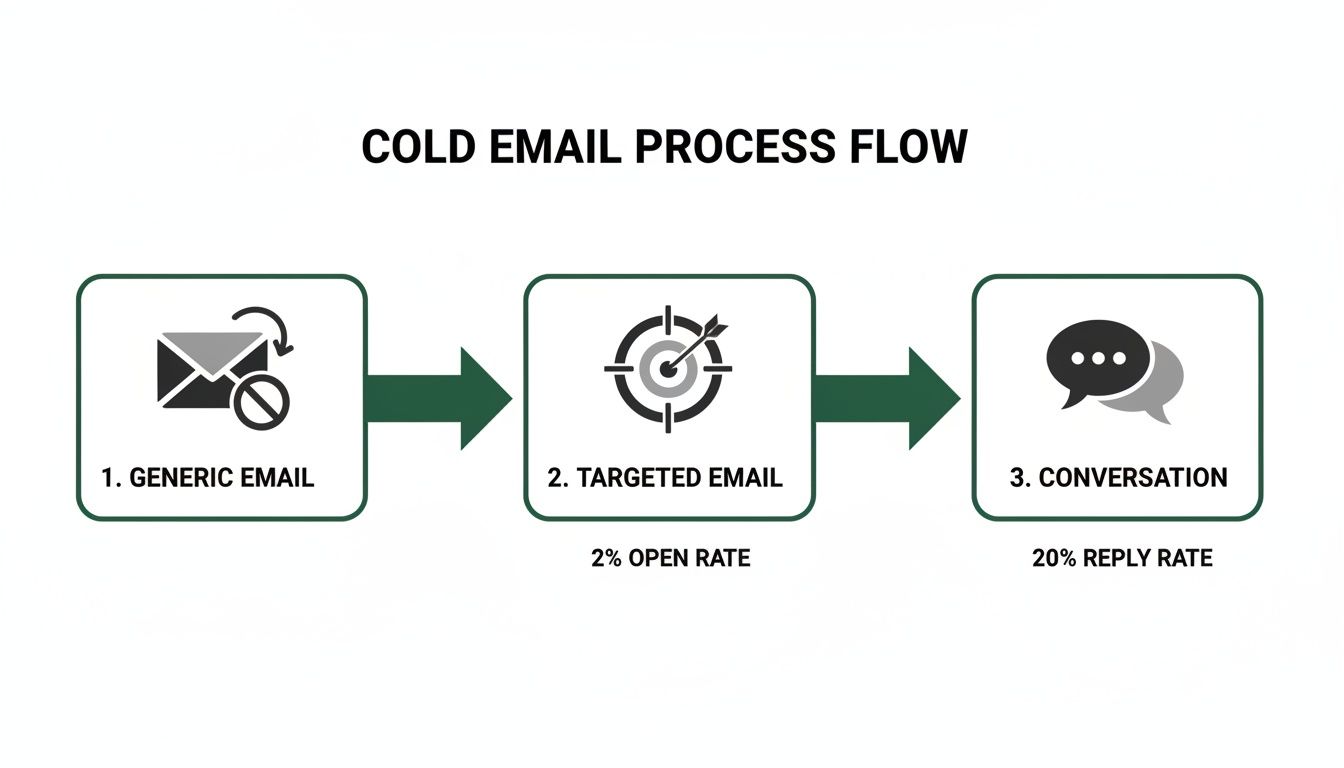
In B2B sales, a generic cold email is a deleted email. Sales Development Representatives (SDRs) are under immense pressure to generate pipeline, yet they often spend hours on manual research and crafting messages that get ignored. The problem isn't a lack of effort; it's a broken workflow that fails to scale personalization. A great template is a starting point, but true success comes from combining a proven structure with deep personalization and executing it efficiently within your CRM.
This guide moves beyond simple copy-paste solutions. We will provide an actionable framework for turning high-performing cold email templates into repeatable revenue. You'll get a direct comparison of the top platforms and resources, from static template libraries to dynamic AI-powered generation engines. We'll show you exactly how to implement these strategies and sequences within a real-world SDR workflow to get more replies and book more meetings. For a deeper understanding of the fundamental principles and strategies behind effective cold outreach, explore this comprehensive guide.
Each entry in our list includes screenshots, direct links, and a breakdown of its core strengths, so you can quickly identify the best fit for your team's specific needs. We’ll compare platforms like MarketBetter.ai for its AI-driven personalization, HubSpot for its integrated CRM templates, and Mailshake for its straightforward automation, giving you the insights needed to refine your outreach process. This isn't just a list; it's a playbook for building a more effective, scalable, and successful cold email strategy.
1. marketbetter.ai
MarketBetter.ai secures its position as our top choice by fundamentally redefining how sales teams approach cold outreach. Instead of offering a static library of cold email templates, it provides a dynamic, AI-powered task engine that turns buyer intent signals into perfectly timed, highly relevant outreach sequences directly within your CRM. This execution-first model addresses the core challenge of modern outbound: not just what to say, but when and why to say it, ensuring every email is rooted in context and data.
For SDRs, BDRs, and sales leaders, this platform is a significant upgrade from standalone AI writers or template repositories. It transforms the often-chaotic process of prospecting into a streamlined, prioritized workflow, significantly reducing the manual research and administrative busywork that consumes up to 70% of a rep's day.
Core Features and Strategic Advantages
MarketBetter.ai's strength lies in its cohesive, end-to-end workflow designed for high-performance outbound teams. It’s not just a tool for generating emails; it’s an operational system for executing a smarter, faster GTM strategy.
- AI-Generated Cold Email Sequences: The platform's AI goes beyond generic templates. It produces short, sequence-ready first touches and follow-ups based on the prospect's persona, industry, and recent intent signals (like website visits or content engagement). It also generates subject line and CTA variants, allowing for A/B testing and continuous optimization.
- Intent-Driven Task Prioritization: This is the key differentiator. MarketBetter automatically creates a daily task inbox for each SDR, pulling in leads from intent data, ICP triggers, and engagement signals. It then ranks these tasks by account fit, activity, and timing, ensuring reps always focus their energy on the most promising opportunities first.
- Native CRM Execution: With a built-in dialer and seamless integration, reps execute all tasks (emails and calls) directly inside Salesforce or HubSpot. This eliminates the need to switch between tabs, ensures 100% of activity is auto-logged, and maintains pristine CRM data hygiene for accurate reporting and coaching.
- AI-Assisted Cold Calling: Complementing its email capabilities, the AI Cold Call workflow provides reps with contextual research, relevant talk tracks, and automated post-call summaries. This comprehensive approach ensures message consistency across all touchpoints.
Practical Application: From Signal to Meeting
Here’s an actionable workflow for how a BDR would use MarketBetter.ai to operationalize cold email templates and outreach:
- Prioritized Tasks Appear: The SDR logs into Salesforce and finds their daily task queue, pre-populated and ranked by MarketBetter. A top task might be a Marketing VP at a target account who just downloaded a whitepaper.
- Context is Served: The task includes key research points: the prospect's LinkedIn activity, company news, and the specific content they engaged with.
- AI Crafts the Email: With one click, the AI generates a concise, relevant cold email referencing the whitepaper topic and connecting it to a relevant pain point for a Marketing VP.
- Execution is Instant: The SDR reviews the email, makes a minor tweak to match their personal style, and sends it directly from the Salesforce interface. The activity, including the email body, is logged automatically.
- Follow-up is Scheduled: The system queues up the next step in the sequence, whether it's a follow-up email or a call, ensuring no lead falls through the cracks.
Key Insight: The value of MarketBetter.ai isn't just in the quality of the AI-generated templates but in its ability to connect those templates to a specific, timely reason for outreach. This relevance is what drives a reported 5x increase in response rates for its users.
Pricing and Onboarding
MarketBetter.ai does not list public pricing, opting for a consultative sales process with custom quotes based on team size and feature requirements. They offer a free trial and a personalized demo to showcase the platform's value.
The company emphasizes fast time-to-value, with easy integrations for Salesforce, HubSpot, Gmail, Outlook, Slack, and Teams included at no extra cost. Their strong social proof, including a 4.97 G2 rating and awards for implementation support and ROI, suggests a smooth and effective onboarding experience.
Why It Stands Out
| Feature Comparison | Standard Template Library | Standalone AI Writer | MarketBetter.ai |
|---|---|---|---|
| Primary Function | Static content repository | On-demand text generation | End-to-end SDR workflow |
| CRM Integration | Manual copy/paste | Manual copy/paste | Native Execution & Auto-Logging |
| Personalization | Relies on manual research | Requires user-provided prompts | Automated from Intent Signals |
| Workflow | Disconnected from CRM | Disconnected from CRM | Prioritized, In-CRM Task Queue |
| Rep Productivity | Low | Moderate | High (70% less manual work) |
Ultimately, MarketBetter.ai is more than a source for cold email templates; it’s a strategic platform built to make your entire outbound engine more efficient, relevant, and effective. By embedding AI-powered content generation within a native CRM workflow driven by buyer intent, it empowers sales teams to act on the right signals at the right time with the right message.
Website: https://www.marketbetter.ai
2. HubSpot
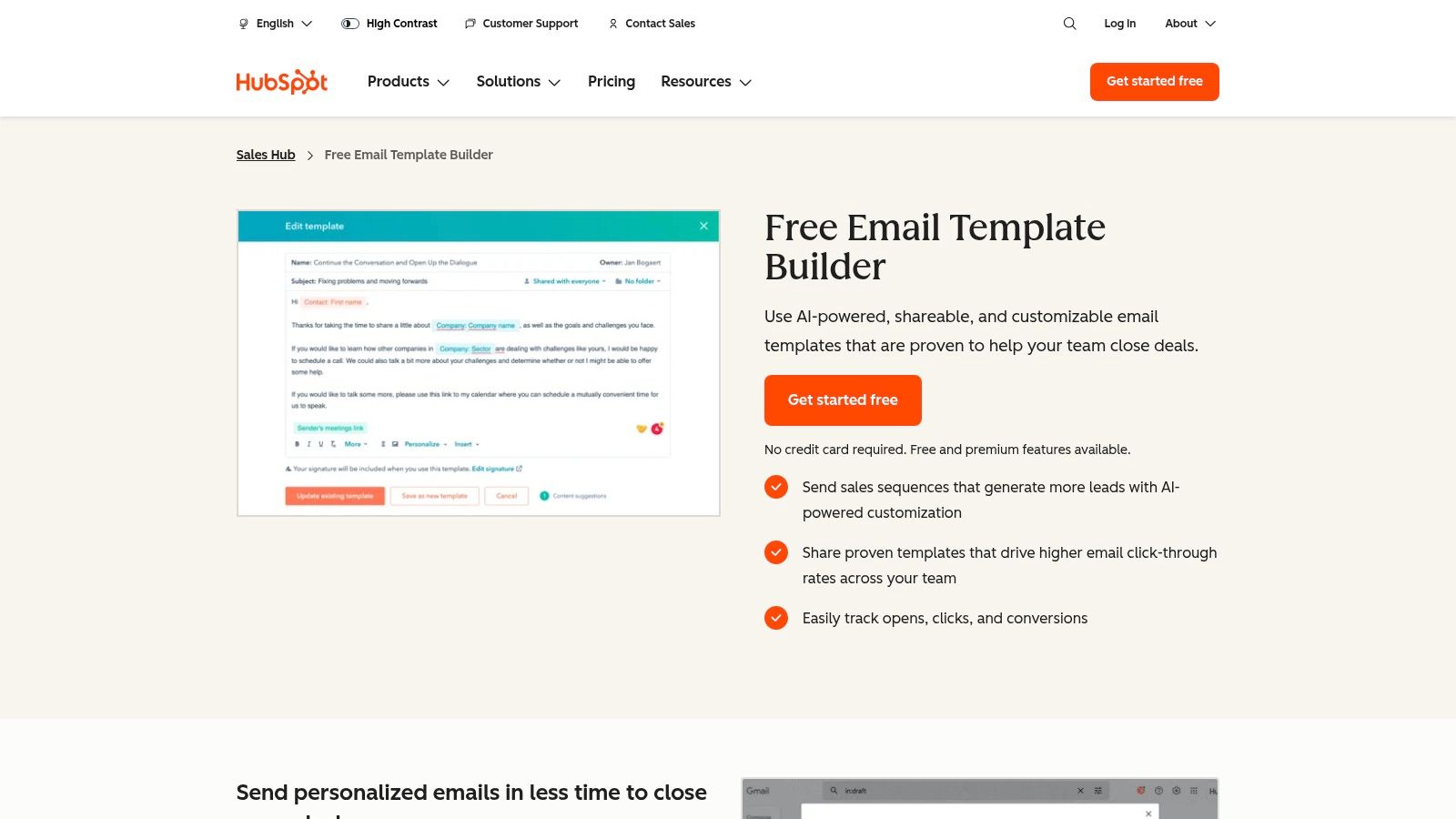
HubSpot is a powerhouse in the sales and marketing world, and its resources for cold email templates are no exception. Far more than just a blog post with a few examples, HubSpot offers a comprehensive ecosystem that combines high-quality, free template packs with a powerful, integrated CRM and sales automation platform (Sales Hub). This makes it an ideal choice for sales teams who want to move from simply copying templates to operationalizing them within a structured, data-driven workflow.
Unlike standalone template libraries or specialized outreach tools like Mailshake, HubSpot's primary advantage is its native integration into a full-funnel CRM. You can access and deploy templates directly from your Gmail or Outlook inbox, track opens and clicks in real-time, and enroll prospects into multi-step sequences without ever leaving your CRM. This unified approach eliminates the friction of switching between tools and provides a single source of truth for all your outreach activities.
Key Offerings and Features
HubSpot's template resources are split into two main categories: downloadable assets and in-product tools.
- Free Downloadable Template Pack: HubSpot offers a popular pack of over 50 sales email templates. This collection covers the entire sales cycle, from the initial cold outreach and follow-ups to re-engagement and breakup emails. While access requires submitting your email (gated content), the quality is consistently high and provides a solid foundation for any SDR.
- In-Product Templates & Sequences: Within the HubSpot Sales Hub, users can create, save, and share an unlimited number of templates. The platform supports personalization tokens that pull data directly from contact records in the HubSpot CRM, making it easy to customize emails at scale.
- Built-in Analytics: Each template’s performance is tracked automatically. You can monitor open rates, click-through rates, and reply rates to identify your top-performing messages and continuously optimize your approach.
Pricing and Access
HubSpot's approach to templates is tiered, making it accessible for individuals while offering robust features for growing teams.
| Feature/Tier | Free Tools | Sales Hub Starter (from $15/mo/seat) | Sales Hub Professional (from $90/mo/seat) |
|---|---|---|---|
| Template Access | 5 templates | 1,000 templates | 1,000 templates |
| Email Sequences | No | Yes | Yes (with advanced features) |
| Email Tracking | 200 notifications/month | Unlimited notifications | Unlimited notifications |
| Downloadable Packs | Yes (requires email signup) | Yes | Yes |
How to Use HubSpot Templates Effectively: An Action Plan
- Start with the Free Pack: Download HubSpot's free sales email template pack. Don't just copy-paste; identify 2-3 templates that align with your specific use case (e.g., "Referral Request" or "Problem-Agitator-Solve").
- Adapt and Import: Rewrite the chosen templates in your own brand voice. Then, import them into the HubSpot templates tool (even the free version allows for five).
- Connect to Your CRM: Use HubSpot’s personalization tokens (like
{{contact.firstname}}and{{contact.company}}) to dynamically insert prospect data. This is a critical step for scaling your outreach without sacrificing personalization. - Test and Measure: Send your templates to a small, targeted list of prospects. Use the built-in analytics to see which subject lines get the most opens and which body copy generates the most replies. The data doesn't lie.
Website: https://www.hubspot.com/products/sales/email-templates-sales
3. Mailshake
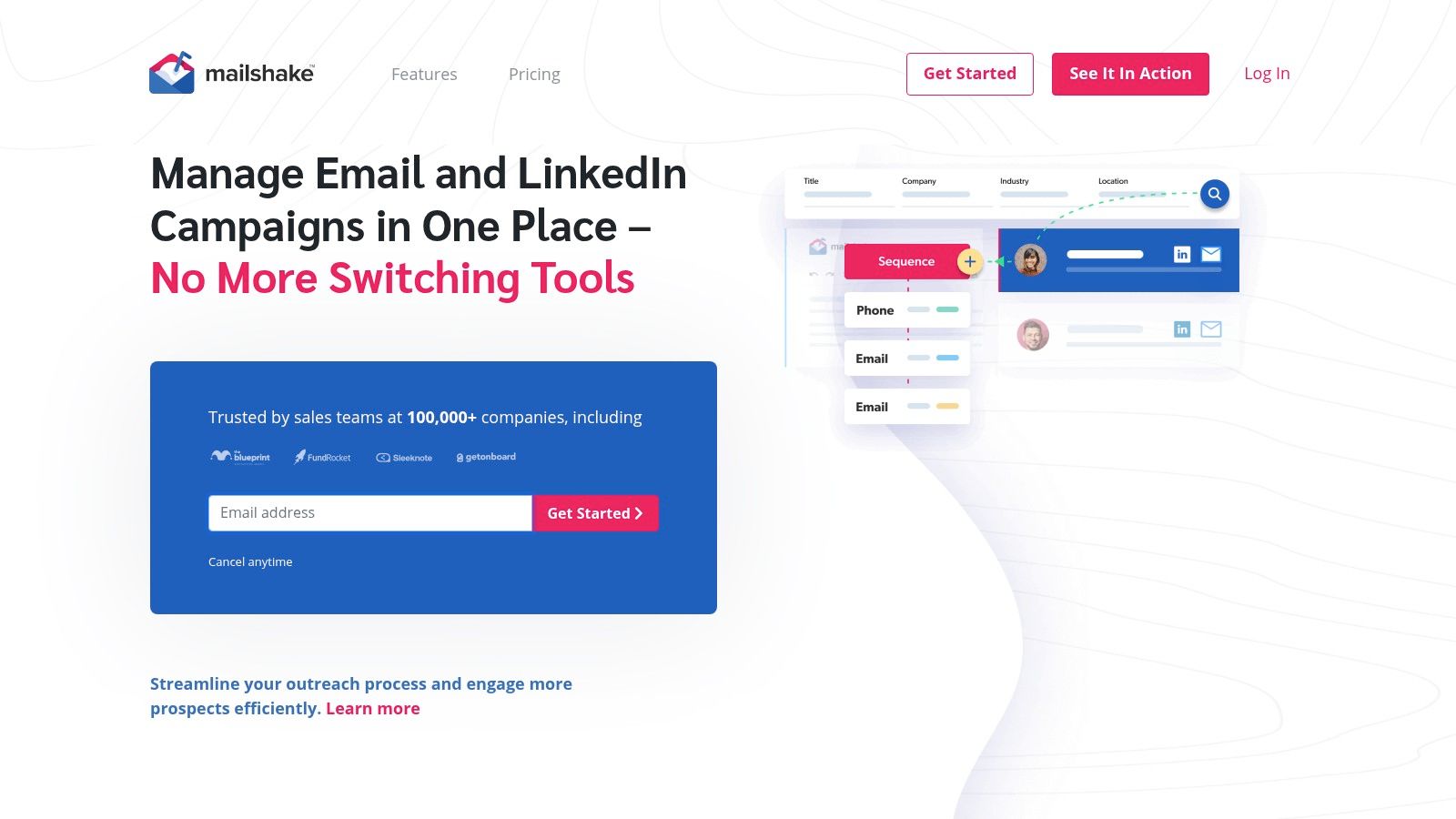
Mailshake is a dedicated sales engagement platform designed to streamline and automate cold outreach. While it offers a complete suite of tools for running campaigns, its foundation is built on a powerful system for managing and deploying effective cold email templates. Unlike general-purpose CRMs like HubSpot where templates are one feature among many, Mailshake puts the outreach sequence front and center. This makes it an excellent choice for sales development teams and individuals whose primary goal is to book meetings through scalable, multi-touch email campaigns.
The platform's core advantage is its focus on the entire outreach workflow, from creation to deliverability. Instead of just providing static examples, Mailshake integrates template management directly into campaign sequences, which can include phone calls and social media tasks. This holistic approach ensures your templates are part of a cohesive strategy, not just one-off messages.
Key Offerings and Features
Mailshake combines a rich resource library with powerful in-app tools to help users master cold outreach.
- Blog & Template Library: Mailshake maintains an extensive blog and resource center filled with tested cold email templates, playbooks, and strategies. These resources are freely available and cover a wide range of scenarios, from link building to enterprise sales.
- AI Writing Assistant (SHAKESpeare): Integrated directly into the platform, this AI copywriter helps you generate new email ideas, rewrite existing templates for a different tone, or overcome writer's block. It's a practical tool for quickly creating personalized variations.
- Built-in Deliverability Tools: Mailshake includes an email warm-up tool and list-cleaning integrations to ensure your templates land in the primary inbox. This focus on deliverability is a key differentiator from platforms that don't manage the technical side of sending.
- Multichannel Sequences: You can build templates not just for the initial email but for every follow-up, and even add steps for phone calls and LinkedIn engagement, all within a single campaign view.
Pricing and Access
Mailshake’s pricing is straightforward, with two primary tiers for sales-focused users. Unlike some competitors, there is no free-forever plan or free trial; payment is required upfront.
| Feature/Tier | Email Outreach (from $58/mo/seat) | Sales Engagement (from $83/mo/seat) |
|---|---|---|
| Email Campaigns | Yes | Yes |
| Template Storage | Unlimited | Unlimited |
| AI Writing Asst. | Yes | Yes |
| Phone Dialer | No | Yes |
| LinkedIn Automation | No | Yes (Add-on) |
| Blog/Resource Access | Yes | Yes |
How to Use Mailshake Templates Effectively: An Action Plan
- Start with Proven Examples: Explore Mailshake's public blog to find a battle-tested
cold email template for salesthat matches your campaign goal. These serve as a great starting point. - Use SHAKESpeare for Personalization: Once you have a base template, use the AI writing assistant to create 3-4 variations. Ask it to rewrite the template with a more casual tone, or to focus on a specific pain point.
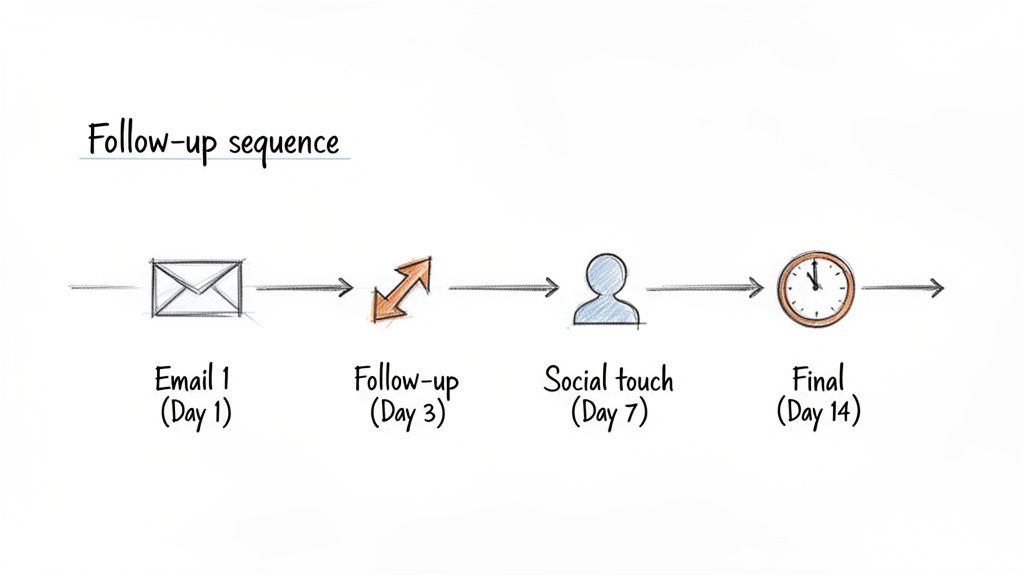
- Build a Multi-Step Sequence: Don't rely on a single email. Import your template into a Mailshake campaign and build a sequence of 3-5 follow-up emails. Use slight variations of your core message for each step.
- A/B Test Your Subject Lines: Create two versions of your campaign that are identical except for the subject line. Mailshake's analytics will show you which one gets a higher open rate, allowing you to optimize for performance.
Website: https://mailshake.com/
4. lemlist
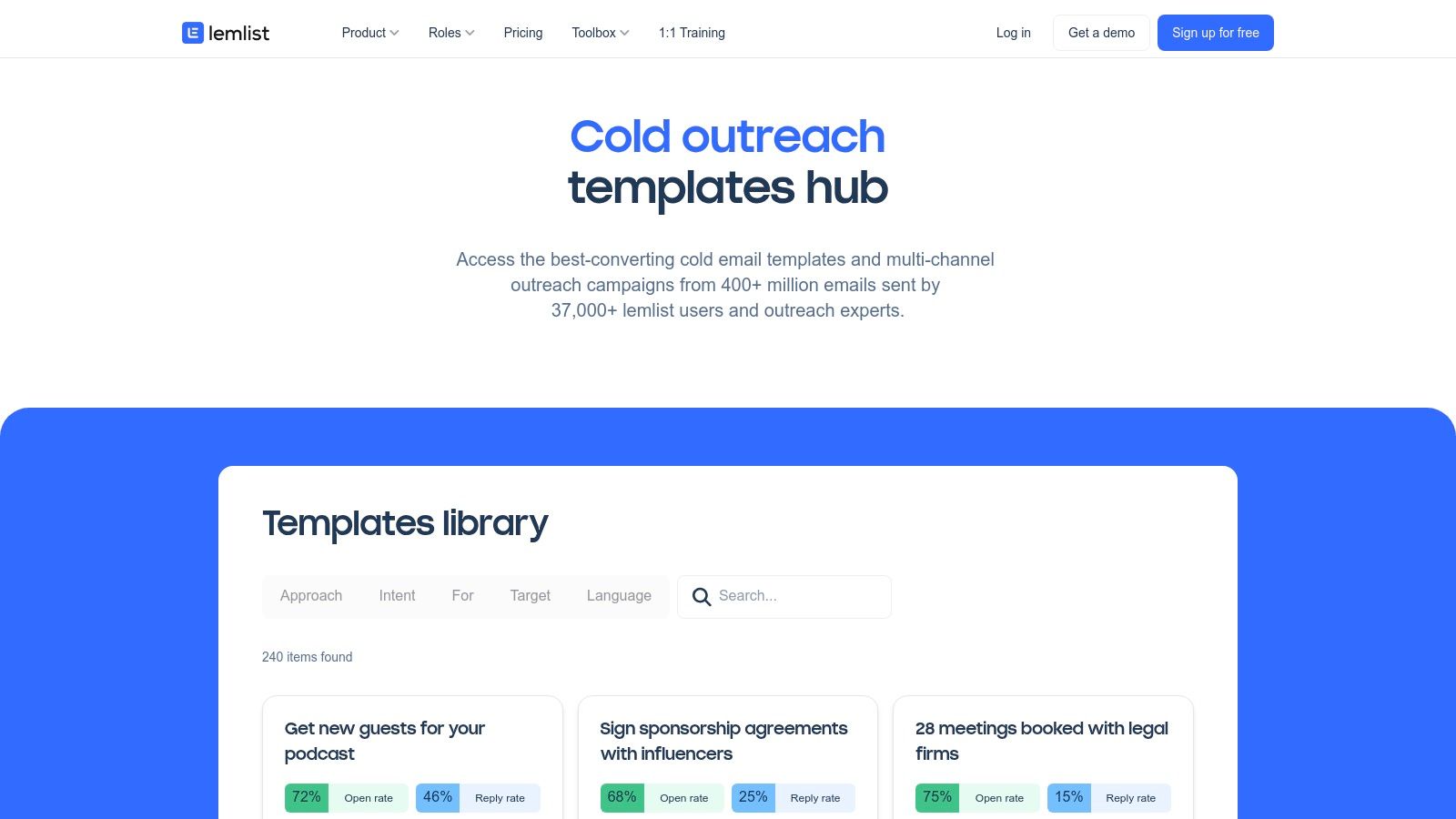
lemlist is a major player in the sales automation space, but its unique contribution to cold email templates comes from its community-driven and data-backed approach. Instead of just offering a static list of examples like a blog, lemlist provides a public hub of cold outreach sequences, many of which are submitted by its user community and include real-world performance benchmarks. This makes it an invaluable resource for SDRs who want to see what's actually working in the wild, not just what sounds good in theory.
The platform's core advantage is the direct bridge between inspiration and execution. You can browse templates filtered by goal (e.g., lead generation, link building) or industry, see their reported open and reply rates, and then, with a single click, duplicate an entire campaign sequence directly into your lemlist account. This seamless workflow is designed for action, helping teams move from learning best practices to implementing them with minimal friction.
Key Offerings and Features
lemlist’s resources are a blend of community-sourced templates and expert-led educational content, making it a well-rounded platform for outreach professionals.
- Public Template Hub: This gallery features hundreds of cold email templates and multi-step sequences. The key differentiator is that many include performance data like open rates and reply rates, offering a baseline for what you can expect.
- One-Click Campaign Duplication: For lemlist users, this is a game-changer. Found a sequence you like? You can import the entire thing, including all follow-up steps and timing, directly into your lemlist account to start a new campaign.
- Educational Resources: Beyond templates, lemlist provides extensive free resources, including playbooks, guides, and ebooks. These materials offer deep dives into the strategy behind successful outreach, helping users understand the "why" behind the "what." For more foundational knowledge, our guide on how to write cold emails is an excellent starting point.
Pricing and Access
While the template gallery is free to browse, its full power is unlocked with a lemlist subscription.
| Feature/Tier | Free Access | Email Starter (from $39/mo) | Email Pro (from $69/mo) |
|---|---|---|---|
| View Template Hub | Yes | Yes | Yes |
| Duplicate Campaigns | No | Yes | Yes |
| Educational Resources | Yes | Yes | Yes |
| Performance Benchmarks | Yes (on select templates) | Yes (on select templates) | Yes (on select templates) |
How to Use lemlist Templates Effectively: An Action Plan
- Browse with a Goal in Mind: Use the filters in the template hub to find sequences that match your specific objective, such as "SaaS sales" or "event invitation." Pay close attention to the reported performance benchmarks.
- Analyze the "Why": Don't just look at the template; analyze its structure. Why is the first follow-up a simple bump? Why does the third step use a different angle? The community data helps validate these strategic choices.
- Duplicate and Adapt: If you're a lemlist user, duplicate your chosen campaign. Immediately begin rewriting the copy to fit your unique brand voice, value proposition, and persona. The structure is your starting point, not the final product.
- A/B Test Against the Benchmark: Use the community-provided reply rate as your initial benchmark. Run an A/B test with your adapted version against the original to see if you can improve upon the results.
Website: https://www.lemlist.com/cold-email-templates
5. Yesware
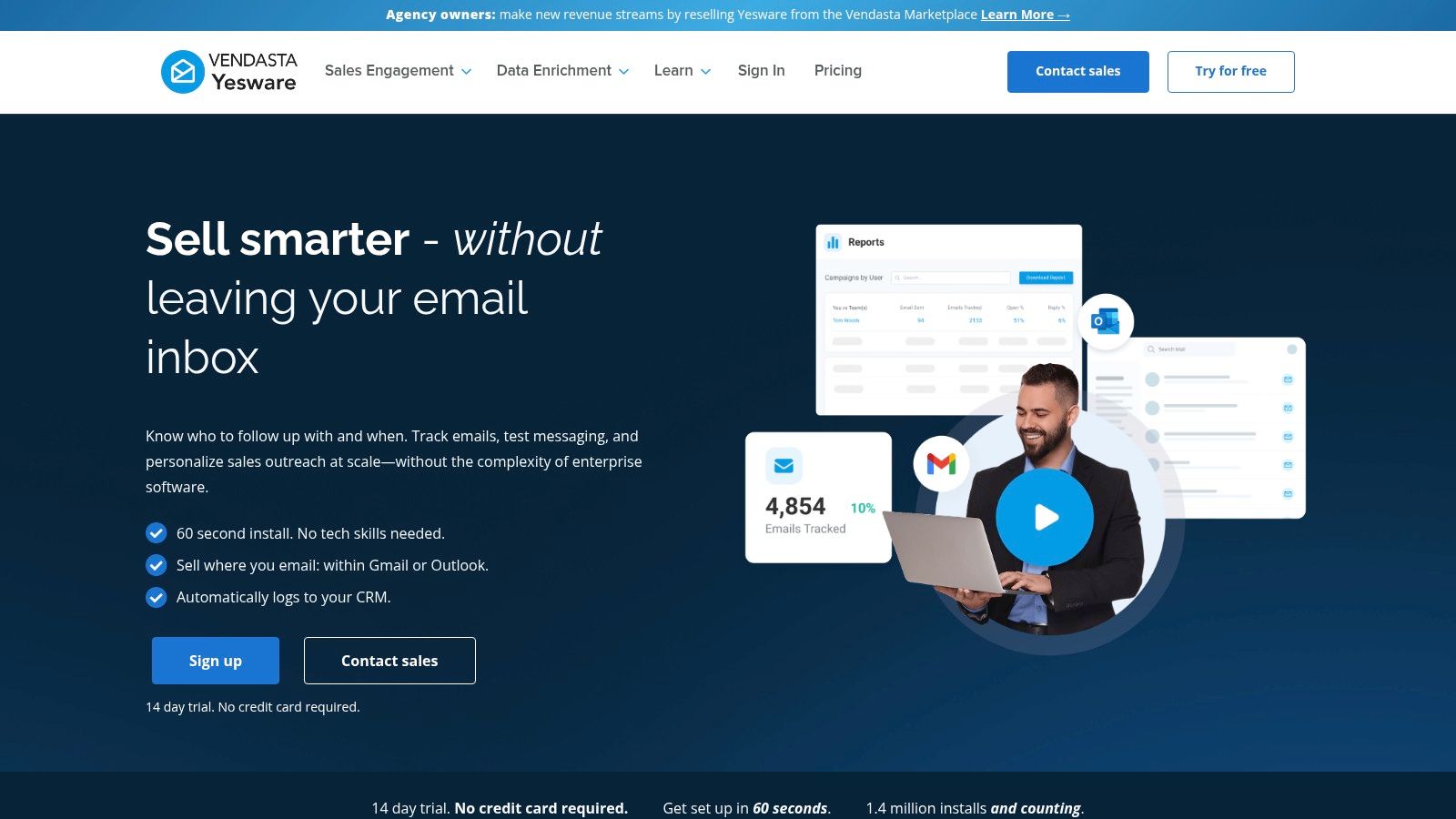
Yesware is a sales productivity platform built directly into your inbox, making it a standout choice for sales reps and SDR teams who live in Gmail or Outlook. Its approach to cold email templates is focused on accessibility and immediate application. Instead of being a separate tool, Yesware integrates template management, tracking, and analytics into the native email-writing experience, drastically reducing friction for busy sellers.
The core advantage of Yesware is its in-inbox workflow. Sales reps can create, access, share, and analyze templates without ever leaving their email client. This is a significant differentiator from standalone platforms like Mailshake or Reply.io that require constant context switching. For small to mid-sized teams looking to standardize their messaging and get quick insights on what works, Yesware offers a powerful, low-overhead solution.
Key Offerings and Features
Yesware's template functionality is designed for speed and team collaboration within the familiar environment of an inbox.
- In-Inbox Template Library: Create and save your best-performing cold emails directly within Gmail or Outlook. The library is easily searchable and allows for team-wide sharing, ensuring message consistency.
- Template Performance Reporting: Yesware provides detailed analytics on a per-template basis. You can track open rates, reply rates, and link clicks to objectively determine which messages are driving results and which need to be refined.
- Public Resources & Guides: Beyond the tool itself, Yesware offers a public library of proven templates and downloadable guides. These resources are excellent for inspiration and cover various scenarios, from initial outreach to follow-ups.
- Team Collaboration: Managers can create and share a set of approved templates with their team, promoting best practices and accelerating the onboarding process for new reps.
Pricing and Access
Yesware offers a tiered pricing model that scales from individual users to enterprise teams, with template features becoming more robust at each level.
| Feature/Tier | Free | Pro (from $15/mo/seat) | Premium (from $35/mo/seat) |
|---|---|---|---|
| Template Access | Yes (Limited) | Unlimited Personal Templates | Unlimited Personal & Team Templates |
| Email Tracking | Yes (Limited) | Unlimited | Unlimited |
| Team Reporting | No | No | Yes |
| Downloadable Guides | Yes | Yes | Yes |
How to Use Yesware Templates Effectively: An Action Plan
- Start with Proven Examples: Explore Yesware’s public template library or free guides to find a structure that fits your outreach goal. Pay attention to how they frame the value proposition.
- Build Your Core Templates: Adapt 3-4 of these proven templates and save them in your personal Yesware library. Use clear naming conventions like "Cold Outreach - VP Marketing - Pain Point A" for easy access.
- Use Personalization Fields: Leverage Yesware’s dynamic fields to insert prospect details like
{{First Name}}and{{Company}}. This is crucial for maintaining a personal touch while working efficiently. To make your messages stand out even more, craft compelling subject lines. Discover how to create your own by reading our guide on witty email subject lines. - Monitor Team-Wide Performance: If you are on a team plan, use the template reporting feature to see which messages have the highest reply rates across the entire team. This data-driven approach helps everyone adopt the most effective messaging.
Website: https://www.yesware.com/email-templates/
6. Reply.io
Reply.io is a comprehensive sales engagement platform designed for multichannel outreach, and its approach to cold email templates is deeply integrated into its automation workflow. Unlike platforms that just offer a static library, Reply.io treats templates as dynamic assets within a larger sequence of touchpoints that can include email, LinkedIn interactions, calls, and even SMS messages. This makes it a powerful choice for sales teams looking to execute sophisticated, multi-pronged outreach campaigns from a single hub.
The core advantage of Reply.io is its focus on sequence-based selling. Compared to an inbox tool like Yesware, Reply.io manages the entire outreach cadence from a central platform. You can build entire sequences, embedding various email templates for different stages, such as the initial touch, follow-ups, and re-engagement. The platform's AI capabilities can then suggest improvements to these templates, help personalize them at scale using prospect data from LinkedIn or your CRM, and provide detailed analytics on what’s working and what isn’t.
Key Offerings and Features
Reply.io’s template functionality is woven directly into its sales engagement tools.
- In-App Template & Sequence Library: The platform provides a library of pre-built, proven templates and multi-step sequences directly within its interface. These are categorized by goal (e.g., "Outbound Prospecting," "Inbound Lead Nurturing") and can be customized and saved for your team.
- AI-Powered Personalization: Reply.io's AI can analyze a prospect's LinkedIn profile to generate highly personalized icebreakers and value propositions, which can be inserted directly into your templates to boost reply rates.
- Multichannel Sequence Builder: Templates are not just for email. You can build sequences that automatically send an email, then schedule a LinkedIn connection request, and then create a call task for the sales rep, all from one visual builder.
- Built-in Analytics & A/B Testing: Every template and sequence comes with detailed performance tracking. You can monitor open, click, and reply rates, and easily set up A/B tests to optimize subject lines, calls-to-action, or entire email bodies.
Pricing and Access
Reply.io offers flexible pricing plans that cater to both individuals focused on email and teams running multichannel campaigns.
| Feature/Tier | Free | Starter (from $60/mo/user) | Professional (from $90/mo/user) |
|---|---|---|---|
| Email Accounts | 1 | 2 | 2+ |
| Templates & Sequences | Limited access | Yes | Yes |
| AI Features | Limited credits | Yes | Yes (more credits) |
| Multichannel | Email only | Email, LinkedIn, Calls, SMS | Advanced multichannel features |
How to Use Reply.io Templates Effectively: An Action Plan
- Choose a Sequence, Not Just a Template: Instead of looking for a single email, browse Reply.io's sequence library. Select a pre-built sequence that matches your goal, like the "Outbound Prospecting to C-level" cadence.
- Personalize with AI: Use the built-in AI assistant to generate personalized opening lines for your first-step email template. Connect your LinkedIn account to allow the AI to pull relevant details from your prospect's profile.
- Build a Multichannel Flow: Adapt the sequence to include more than just email. Add a LinkedIn profile view as step two and a connection request as step three. This surrounds the prospect and increases the likelihood of a response.
- Analyze and Optimize: After launching your campaign, review the sequence analytics. If you notice a high open rate on the first email but a low reply rate, A/B test the call-to-action in that specific template to improve its performance.
Website: https://reply.io
7. Saleshandy
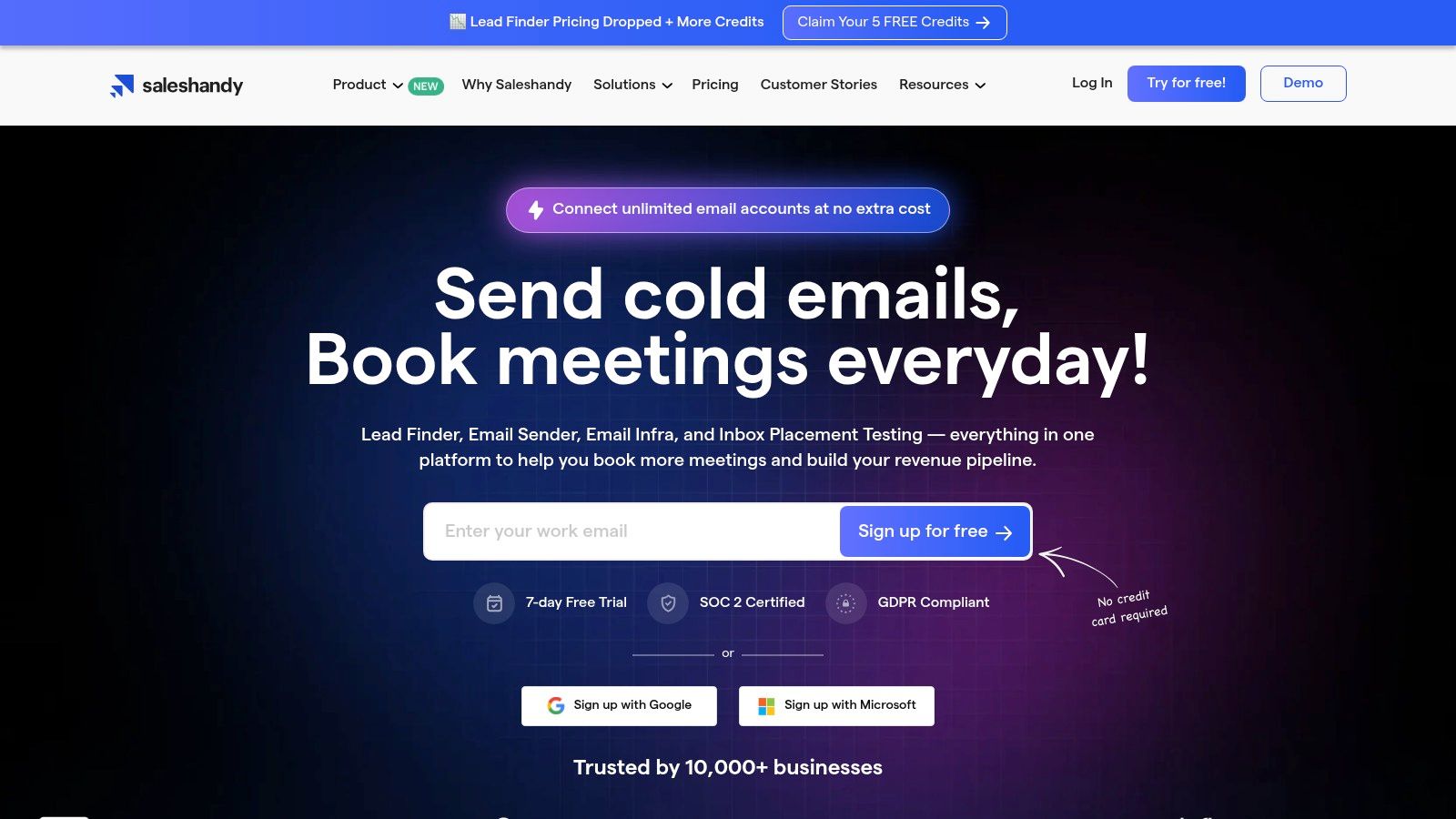
Saleshandy is a dedicated cold outreach platform that focuses on delivering high-volume campaigns while maintaining personalization and deliverability. Its approach to cold email templates is practical and deeply integrated into its sending workflow, making it a strong contender for sales teams and agencies that prioritize affordable sending limits alongside robust template management. The platform is designed for users who want to move beyond basic email blasts and operationalize their outreach with features like spintax and team-sharing.
What sets Saleshandy apart from more generalist CRMs is its specialized focus on the technical aspects of cold emailing. While a platform like HubSpot bundles templates with a full suite of marketing and sales tools, Saleshandy centers its features around the core needs of an SDR: creating variable templates, ensuring they land in the primary inbox, and managing multi-stage follow-ups efficiently. This makes it an excellent choice for teams whose primary goal is to scale outbound prospecting.
Key Offerings and Features
Saleshandy’s template features are built directly into its outreach and sequence tools, providing a seamless user experience.
- Public Template Collections: Saleshandy provides several "playbooks" and blog posts featuring dozens of ready-to-use cold email templates for various scenarios, including B2B sales, link building, and recruitment. These serve as a great starting point for new campaigns.
- In-App Template Management: Users can create, save, and share templates with their team directly within the platform. The editor supports merge tags for personalization (e.g.,
{{FirstName}},{{Company}}) and, crucially, spintax. Spintax ({Hello|Hi|Hey}) allows you to create multiple variations of words or phrases within a single template, which helps avoid spam filters. - Integrated Deliverability Tools: Higher-tier plans include email warm-up and inbox placement testing. This unique offering allows you to not only use great templates but also ensure they are being delivered and seen by your prospects.
Pricing and Access
Saleshandy's pricing is competitive, offering high sending limits and a clear feature progression across its tiers.
| Feature/Tier | Outreach Starter (from $36/mo) | Outreach Pro (from $94/mo) | Outreach Scale (from $187/mo) |
|---|---|---|---|
| Email Accounts | 2 per user | 5 per user | 10 per user |
| Active Prospects | 6,000 | 30,000 | 60,000 |
| Template Sharing | Yes | Yes | Yes |
| Email Warm-up | Add-on | Included | Included |
How to Use Saleshandy Templates Effectively: An Action Plan
- Leverage the Playbooks: Start by browsing Saleshandy's public template collections. Find a playbook that matches your industry or goal (e.g., "SaaS Sales") and select a high-performing first-touch email.
- Enhance with Spintax: Import the template into the Saleshandy app. Use the spintax feature to create variations for common greetings, opening lines, and calls-to-action. This is a key step to improve deliverability for larger campaigns.
- Build a Multi-Step Sequence: Don't rely on a single email. Use the template as Step 1 in a multi-touch sequence within Saleshandy. Add 2-3 follow-up steps using different templates that reference the initial message.
- Warm Up Your Domain: Before launching a large campaign, use Saleshandy’s email warm-up feature. This builds your sender reputation and ensures your carefully crafted templates don't land in the spam folder, maximizing their potential impact.
Website: https://www.saleshandy.com/cold-email-templates/
Cold Email Template Platform Comparison
| Tool | Ideal User Profile | Key Strength | How it Compares | Actionable Takeaway |
|---|---|---|---|---|
| marketbetter.ai | Enterprise & mid-market SDR teams using Salesforce/HubSpot | Intent-driven workflow. Turns signals into AI-generated outreach directly in the CRM. | Goes beyond templates to provide a full execution engine. Less about a static library, more about dynamic, timely outreach. | Use this if your biggest problem is reps wasting time on manual research and failing to act on buying signals quickly. |
| HubSpot | Teams already invested in the HubSpot ecosystem. | Seamless CRM integration. Templates are part of a unified sales, marketing, and service platform. | A great all-in-one solution but less specialized on advanced outreach tech (like deliverability) than dedicated tools. | Perfect for centralizing your sales efforts. Use its built-in analytics to find your team's winning templates. |
| Mailshake | Sales teams focused on scalable, email-first campaigns. | Deliverability and simplicity. Strong focus on email warm-up, A/B testing, and an easy-to-use AI writer. | More focused on the technical aspects of sending emails than HubSpot, but less of a full CRM. | Use this to scale your email volume confidently, knowing you have tools to protect your sender reputation. |
| lemlist | Creative outreach teams looking for proven campaign structures. | Community-backed templates. Provides sequences with real performance data from other users. | Differentiates with creative personalization (images/videos) and transparent community data, unlike more private libraries. | Don't just copy the templates; clone a high-performing sequence and use its structure as a proven blueprint for your own campaign. |
| Yesware | Individual reps or small teams living in Gmail/Outlook. | Inbox-native workflow. All features (templates, tracking, scheduling) are accessible without leaving the inbox. | Offers maximum convenience for inbox-centric sellers but lacks the advanced sequencing of Reply.io or Saleshandy. | Implement this to boost individual rep productivity with minimal disruption to their existing workflow. |
| Reply.io | Sales teams executing sophisticated, multi-channel cadences. | Multichannel automation. Builds complex sequences involving email, LinkedIn, calls, and SMS from one platform. | More robust for multi-channel than Mailshake or Yesware. Its AI personalization is a key differentiator. | Go beyond email. Build a sequence that warms up a prospect on LinkedIn before the first cold email even lands. |
| Saleshandy | Agencies and high-volume teams needing affordability at scale. | Scalability with deliverability. Offers high sending limits and technical features like spintax. | A more technical, volume-focused tool compared to the all-in-one nature of HubSpot or the creative angle of lemlist. | Use spintax on every template you create to maximize deliverability and avoid spam filters when sending at scale. |
From Templates to Pipeline: Your Next Move
We've journeyed through a comprehensive collection of high-conversion cold email templates, from piercing first-touch messages to persistent follow-up sequences. You’ve seen how to tailor outreach for different personas, adapt to various use cases, and integrate these frameworks into a modern sales workflow. But the most critical takeaway is this: a template is merely a starting point, not a final destination.
The true power of these cold email templates is unlocked when you treat them as strategic blueprints. The success of your outreach hinges not on blindly copying and pasting text, but on your ability to operationalize these blueprints efficiently. This means personalizing at scale, automating thoughtfully, and continuously iterating based on performance data. The goal is to build a repeatable system that empowers your SDRs and BDRs to spend less time on manual tasks and more time building relationships.
Synthesizing the Tools: How to Choose Your Engine
Choosing the right tool is the bridge between having a library of templates and actually generating pipeline. Your decision should be guided by your team's specific needs, existing tech stack, and strategic goals.
- For Deep CRM Integration and AI-Powered Personalization: If your team lives in Salesforce or HubSpot and your primary goal is to leverage AI for hyper-relevant, real-time email generation, MarketBetter.ai is designed for this exact purpose. It excels at turning intent signals directly into AI-assisted, personalized outreach within your CRM, minimizing context switching.
- For All-in-One Sales Engagement: Platforms like Reply.io and Saleshandy offer robust, multi-channel sequencing (email, calls, social touches) and are great for teams needing a comprehensive sales engagement platform that handles the entire outreach process from a central hub.
- For Simplicity and Email-Centric Campaigns: If you're primarily focused on email and want a straightforward, easy-to-use tool for sending campaigns and tracking basic metrics, Mailshake is a strong contender. Its simplicity is its core strength.
- For Creative, Visual Personalization: Teams that want to stand out with dynamic images, videos, and unique landing pages will find lemlist to be their ideal creative partner. It’s built for breaking through the noise with highly memorable, personalized visuals.
- For Inbox-Native Productivity: If your reps prefer to work directly from their Gmail or Outlook inbox, Yesware provides excellent tracking, template management, and scheduling features without forcing them to leave their familiar environment.
The key is to evaluate where your biggest bottleneck lies. Is it the time spent researching and writing? AI-driven tools are your answer. Is it managing multi-step, multi-channel cadences? A full sales engagement platform is what you need. Is it simply a lack of visibility into email performance? An inbox-native tool might be the perfect first step.
Your Action Plan for Implementation
Having the right templates and the right tool is only half the battle. Execution is everything. Here are your actionable next steps to turn this knowledge into revenue.
- Benchmark Your Current State: Before you change anything, document your current open rates, reply rates, and meeting booked rates. This baseline is crucial for measuring the impact of your new strategy.
- Select and Adapt 3-5 Templates: Don't try to implement everything at once. Choose a handful of cold email templates from this guide that best fit your ideal customer profile and core value proposition. Adapt them with your own voice and personalization tokens.
- Run a Controlled A/B Test: Assign a small group of reps to use the new templates and workflow within your chosen tool. Compare their results against the control group (using the old method) over a two-to-four-week period.
- Analyze, Iterate, and Scale: Review the data. Which subject lines won? Which calls-to-action generated the most replies? Use these insights to refine your templates, and then roll out the winning strategy to the entire team.
Ultimately, the most successful sales teams are not those with a secret stash of "perfect" templates. They are the ones who build a scalable, data-driven system for outreach. They use templates as a foundation, technology as an accelerator, and personalization as their competitive edge to consistently start valuable conversations that become a predictable, growing pipeline.
Ready to stop manually adapting templates and start generating hyper-personalized emails in seconds, right inside your CRM? See how marketbetter.ai uses AI to turn sales signals into revenue-generating conversations. Explore the future of sales outreach at marketbetter.ai.