
The SDR Playbook: How Top Sales Teams Prioritize Their Day [2026 Guide]
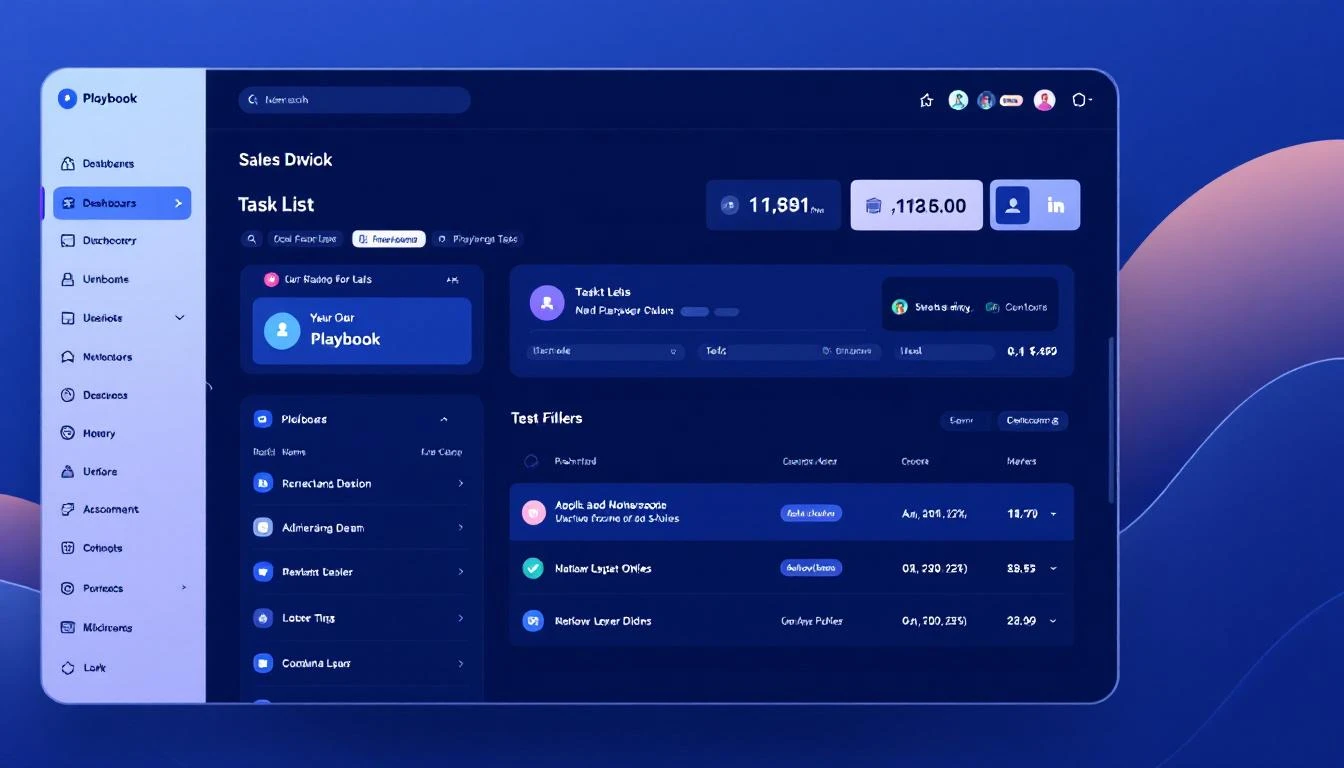
Here's what a typical SDR's morning looks like:
Open HubSpot. Check for new leads. Open Outreach. Check sequence tasks. Open LinkedIn Sales Navigator. Look for warm intros. Open ZoomInfo. Research a few accounts. Open Slack. Catch up on team updates. Open Gmail. Reply to a prospect who responded last night. Back to HubSpot. Log the activity.
Twenty minutes gone. Zero prospect conversations.
This is the workflow most SDR teams accept as normal — and it's why the average SDR spends only 35% of their time actually selling (Salesforce State of Sales Report). The rest is admin, research, data entry, and the soul-crushing act of figuring out what to do next.
The solution isn't more discipline. It's a better system. It's a playbook.
What Is an SDR Playbook?
An SDR playbook is the operational framework that defines how sales development reps spend their time. At its most basic level, it answers three questions:
- Who should I contact? (prioritized list)
- How should I contact them? (channel, messaging)
- What should I say? (context, personalization)
Traditional SDR playbooks are static documents — PDFs or Google Docs that outline general processes, scripts, and sequences. They're created once, updated rarely, and followed loosely.
Modern SDR playbooks are dynamic, AI-powered task lists that reprioritize throughout the day based on real-time buying signals.
The difference is night and day.
Static Playbooks vs. Dynamic Playbooks
| Aspect | Static Playbook (Document) | Dynamic Playbook (AI-Powered) |
|---|---|---|
| Format | PDF, Google Doc, Notion page | Live dashboard, integrated with CRM |
| Updates | Quarterly, manually | Real-time, automatically |
| Prioritization | General rules ("call inbound first") | AI-ranked by intent signals |
| Personalization | Generic scripts per persona | Context-specific per prospect |
| Lead routing | Round-robin, manual assignment | Availability-based, instant |
| After-hours | Not addressed | AI chatbot + auto-email handles 24/7 |
| Measurement | Self-reported activities | Automatic tracking of response time, touches, outcomes |
Static playbooks tell reps generally what to do. Dynamic playbooks tell them specifically who to call next and why.
Anatomy of a High-Performing SDR Playbook
Whether you're building a static playbook for a small team or evaluating tools for a dynamic one, every SDR playbook needs these components:
1. ICP Definition and Qualification Criteria
Your reps need to know exactly who they're looking for. Not vague personas — specific criteria:
- Company size: 50-500 employees (or by revenue)
- Industry: B2B SaaS, FinTech, HealthTech, etc.
- Geography: US, EMEA, etc.
- Technology signals: Uses HubSpot, Outreach, Salesforce
- Buying signals: Recently raised funding, hiring SDRs, evaluating competitors
Pro tip: Define negative criteria too. "Not consulting firms, not agencies, not companies under 20 employees." This saves reps from chasing leads that will never close.
2. Lead Prioritization Framework
Not all leads are equal. Your playbook should define a clear priority order:
Tier 1 — Respond in Under 5 Minutes:
- Inbound demo requests
- Pricing page visitors (identified via visitor ID)
- Return visitors with 3+ sessions this week
- Replies to outbound sequences
Tier 2 — Respond Within 1 Hour:
- Content downloads from ICP-fit companies
- Webinar registrants
- Chatbot-qualified leads
- LinkedIn connection accepts with engaged profiles
Tier 3 — Work Into Daily Outbound Block:
- New ICP-fit accounts in target market
- Trigger events (new funding, executive hires, expansion news)
- Re-engagement of closed-lost opportunities (90+ days)
Tier 4 — Automate or Deprioritize:
- Non-ICP downloads
- Generic newsletter signups
- Student/consultant inquiries
3. Channel Strategy by Scenario
Different situations call for different outreach channels:
| Scenario | Primary Channel | Secondary Channel | Why |
|---|---|---|---|
| Inbound demo request | Phone call | Follow-up email | Fastest connection, shows urgency |
| Pricing page visitor | Phone call | LinkedIn message | They're evaluating now |
| Content download (ICP) | Personalized email | Phone call Day 2 | Less urgent, build context first |
| Reply to sequence | Phone call | Same thread email | Strike while iron is hot |
| Cold outbound (ICP) | Email + LinkedIn | Phone call Day 3-5 | Multi-touch builds awareness first |
| Re-engagement | Email with new angle | Phone if opened | Need fresh reason to reconnect |
4. The Daily Structure
Here's what a world-class SDR day looks like:
8:00-8:15 AM — Playbook Review Open your daily playbook. Review overnight inbound leads, email replies, and new intent signals. Your hottest leads should already be at the top.
8:15-9:30 AM — Inbound Response + Hot Leads (Power Hour) Contact every Tier 1 lead immediately. This is your highest-ROI activity. Phone first, email second. No research paralysis — your playbook already provides context.
9:30-10:00 AM — Follow-Ups Work through Tier 2 leads and follow up on yesterday's conversations. Send follow-up emails, leave voicemails, connect on LinkedIn.
10:00-11:30 AM — Outbound Prospecting Block Build pipeline with Tier 3 outbound activities. This is the proactive work — cold calls, personalized emails, LinkedIn engagement.
11:30 AM-12:00 PM — Admin and Prep Log activities, update CRM, prep for afternoon block.
1:00-2:30 PM — Second Outbound Block Continue prospecting. Afternoon calls often have higher connect rates as executives are done with morning meetings.
2:30-3:00 PM — Playbook Refresh Check for new inbound leads, replies, and signals that arrived mid-day. Reprioritize remaining tasks.
3:00-4:30 PM — Multi-Channel Follow-Up LinkedIn engagement, video prospecting, referral requests, social selling activities.
4:30-5:00 PM — End-of-Day Review Log remaining activities. Set up tomorrow's priority list. Note any deals that need manager attention.
5. Messaging Frameworks by Situation
Your playbook should include proven messaging templates for each scenario:
Inbound Demo Request (Phone Script):
"Hi [Name], this is [Your Name] from [Company]. You just requested a demo — I wanted to catch you while [the challenge you're solving] is still fresh. What prompted you to look into this today?"
Pricing Page Visitor (Cold Call):
"Hi [Name], I noticed your team at [Company] has been evaluating [category] tools this week. A lot of companies your size are trying to solve [specific pain point]. Is that something on your radar?"
Content Download Follow-Up (Email):
Subject: Quick question about [content topic]
Hi [Name], you downloaded our guide on [topic]. Most [titles] I talk to grab that because they're dealing with [specific challenge]. Is that what's going on at [Company]?
6. Objection Handling
The playbook should prepare reps for the most common objections:
"We're already using [Competitor]."
"That's actually why I'm calling. A lot of teams that use [Competitor] tell us they love [specific feature] but struggle with [known weakness]. How is that working for your team?"
"We're not looking at anything right now."
"Totally fair. Most of the teams I talk to weren't actively looking either — they just realized their SDRs were spending more time on research than selling. Quick question: how much time do your reps spend finding their next action each day?"
"Just send me information."
"Happy to. But let me ask one quick question first so I send you the right stuff — what's the biggest challenge your SDR team faces right now?"
"We're too small / too early for this."
"Actually, teams your size tend to get the most out of this because you can't afford to miss any lead. When you're running a lean team, speed to lead is everything."
The Problem With Static Playbooks
Static playbooks work fine for teams of 2-3 reps where the manager can personally coach daily priorities. They break down at scale because:
They Can't Prioritize in Real-Time
A static playbook says "call inbound leads first." But which inbound lead? The demo request from a 500-person SaaS company, or the whitepaper download from a 10-person agency? Static playbooks can't make that distinction in the moment.
They Don't Account for Timing
If a prospect visited your pricing page at 2:47 PM, they're hot at 2:50 PM and lukewarm by 4 PM. A static playbook assigns them to tomorrow's call list. A dynamic playbook surfaces them immediately.
They Create Decision Fatigue
Every time an SDR opens their CRM and sees 50 unworked leads, they have to decide: who do I call first? This decision fatigue is one of the biggest hidden costs in sales. By rep #30 on the list, the SDR has used up mental energy on prioritization instead of selling.
They Can't Coordinate Across Reps
In a team of 5+ SDRs, static playbooks can't prevent two reps from contacting the same account, or ensure that the best-fit rep handles a specific lead.
Building a Dynamic SDR Playbook
A dynamic playbook is essentially an AI-powered task list that integrates with your CRM, email, website visitor data, and intent signals. Here's what it looks like in practice:
Morning: Rep Opens Their Playbook
Instead of 8 tabs and 20 minutes of sorting, the rep sees a single prioritized list:
- 🔴 Call Sarah Chen, VP Sales at Acme Corp — Requested demo 7 min ago. Visited pricing page 3x this week. ICP fit: 92%.
- 🔴 Call Mike Rodriguez at TechFlow — Replied to your email: "Let's talk this week." 2 hours ago.
- 🟡 Email Jennifer Wu at DataStream — Downloaded ROI guide. 250-person company, uses Salesforce. No prior contact.
- 🟡 Follow up with Ryan Park at CloudBase — Had intro call Tuesday. No response to proposal email sent Thursday.
- 🟢 LinkedIn connect David Kim, SDR Manager at ScaleUp — Commented on SDR productivity post. ICP fit: 85%.
Each task includes:
- Why this lead, why now (the signal that triggered the task)
- Suggested action (call, email, LinkedIn)
- Context (company info, recent activity, talking points)
- One-click action (call button, email template, LinkedIn profile link)
The rep doesn't decide what to do. They just execute, starting from the top.
Mid-Day: New Lead Arrives
At 1:15 PM, someone submits a demo form. Instead of waiting in a queue, the playbook:
- Identifies the company and enriches the lead automatically
- Scores the lead based on company fit + behavioral signals
- Surfaces it at the top of the available rep's task list
- Sends a push notification: "New inbound demo request — Acme Corp, VP Sales"
The rep calls within 3 minutes. The prospect is still at their desk, still thinking about their problem. Connection rate: 90%+.
End of Day: Automatic Logging
Every call, email, and interaction is logged automatically. No manual CRM updates. No "activity logging" sessions at 4:30 PM.
Key Metrics for Your SDR Playbook
Track these to ensure your playbook is actually working:
Activity Metrics
- Calls per day: Target 40-60 for outbound-focused reps
- Emails per day: Target 30-50 personalized touches
- Conversations per day: Target 8-12 meaningful conversations
- LinkedIn touches per day: Target 10-15 connections/messages
Outcome Metrics
- Speed to lead: Under 5 minutes for inbound (the most critical metric)
- Contact rate: 15-25% for cold outbound, 60%+ for inbound
- Meeting set rate: 2-4% of cold outbound touches, 30%+ of inbound conversations
- Meetings per rep per week: Target 4-8 qualified meetings
- Pipeline generated per rep per month: Varies by ACV
Efficiency Metrics
- Time selling vs. admin: Target 65%+ selling time (up from the 35% average)
- Tabs/tools per workflow: Target 1-2 (down from 8-10)
- Average lead research time: Under 30 seconds (with auto-enrichment)
- CRM logging time: Zero (with auto-logging)
The Cost of Not Having a Playbook
Let's do the math for a team of 5 SDRs:
Without a playbook:
- Each SDR wastes 90 minutes/day on tab-switching and decision-making
- 5 SDRs × 90 min × 22 working days = 165 hours/month of lost selling time
- At an average loaded cost of $80/hour = $13,200/month in wasted wages
- Plus the pipeline lost to slow response times (see speed-to-lead calculator above)
With a dynamic playbook:
- Reps start selling in the first 5 minutes of their day
- Inbound leads are contacted within 3 minutes
- Reps handle 30-40% more conversations per day
- Admin time drops from 65% to under 35%
The ROI math is straightforward: a playbook pays for itself in the first week.
How to Evaluate SDR Playbook Tools
When evaluating platforms, ask these questions:
1. Does it integrate all signal sources? Website visitor data, email engagement, CRM records, intent data, social signals — all in one view. If the rep still needs to check multiple tools, it's not a real playbook.
2. Does it prioritize by buying intent, not just lead score? Traditional lead scores are static (job title + company size). Intent-based prioritization uses real-time behavioral signals: pricing page visits, email opens, competitor research.
3. Does it tell reps what to DO, not just who to contact? "Call Sarah at Acme" is nice. "Call Sarah at Acme — she visited the pricing page 3x, opened your last email, and Acme just raised $20M" is a playbook.
4. Does it include communication tools? If the rep sees "Call Sarah" but then has to switch to a separate dialer, you've lost the speed advantage. Built-in calling, email, and LinkedIn integration are essential.
5. Does it handle after-hours leads? AI chatbot + automated email should cover the 40-50% of leads that arrive outside business hours.
6. Does it reduce admin, not add it? If the playbook requires manual logging or activity updates, it's just another tool to manage.
Platforms like MarketBetter are built specifically around the daily SDR playbook concept — combining visitor identification, AI chatbot, smart dialer, email automation, and intent-based prioritization into a single workflow. The result: reps go from 20 tabs to one task list, response time drops from hours to minutes, and pipeline grows without growing headcount.
Building Your First SDR Playbook: Step-by-Step
Even without specialized tools, you can build an effective SDR playbook:
Week 1: Define Your ICP and Tiers Document your ideal customer profile with specific criteria. Create a 4-tier prioritization framework.
Week 2: Set SLAs and Measure Baseline Define response time targets. Measure your current average. Set a 30-day improvement goal.
Week 3: Create Messaging Templates Write call scripts, email templates, and objection handlers for each tier and scenario.
Week 4: Implement Daily Structure Adopt the daily structure outlined above. Track adherence and results.
Month 2: Evaluate Tools Based on what you learned in Month 1, identify the biggest bottlenecks. Then evaluate playbook tools that address those specific gaps.
Try our AI Lead Generator — find verified LinkedIn leads for any company instantly. No signup required.
The Bottom Line
The best SDR teams in 2026 won't be the biggest. They'll be the ones with the best playbook.
A great playbook transforms SDR work from reactive chaos to proactive execution. Instead of 20 tabs and 50 decisions, reps get one task list and zero ambiguity.
The impact:
- Speed to lead drops from hours to minutes — because reps know exactly what to do the moment a lead arrives
- Selling time increases from 35% to 65%+ — because research, prioritization, and admin are automated
- Pipeline per rep grows 30-50% — because reps spend more time in conversations and less time context-switching
- Rep satisfaction increases — because the job becomes about selling, not about wrangling software
Stop building bigger SDR teams. Start building better SDR playbooks.
Related reading:
- Speed to Lead: The Complete Guide to Faster Response Times — The statistics and framework behind why response time is your highest-leverage metric
- Best AI SDR Tools & Software for 2026 — Every tool your SDR playbook should integrate with
- Best Sales Dialers for SDR Teams — The smart dialer component of your playbook
Want to see what an AI-powered daily SDR playbook looks like in action? Book a demo with MarketBetter and discover how top-performing teams go from 20 tabs to one task list.