
OpenAI Just Hired the OpenClaw Creator. Clay Has a $3.1 Billion Problem.

Sam Altman called him "a genius." Now Peter Steinberger is building the agent layer that could make Clay's $800/month platform obsolete.
It's Not Hypothetical Anymore
Last week, I wrote internally that if OpenAI ever acquired OpenClaw, Clay's business model would be in serious trouble.
I didn't expect it to happen this fast.
On February 15, Sam Altman announced that Peter Steinberger — creator of OpenClaw, the fastest-growing open-source project in GitHub history — is joining OpenAI to "drive the next generation of personal agents."
Altman's exact words: "He is a genius with a lot of amazing ideas about the future of very smart agents interacting with each other to do very useful things for people. We expect this will quickly become core to our product offerings."
Read that last sentence again. "Core to our product offerings."
That means this isn't a talent acqui-hire that gets buried in a research lab. OpenAI is building agent orchestration into ChatGPT. And they just hired the person who proved it works.
For anyone in sales tech — and especially for Clay's investors — this is the most consequential hire of 2026.
What OpenClaw Actually Is (And Why It Matters)
For the uninitiated: OpenClaw is an agent orchestration framework that crossed 145,000 GitHub stars at a rate of ~1,667 stars per day — 18x faster than Kubernetes hit the same milestone.
It's not a chatbot. It connects AI models to real-world tools and executes multi-step workflows autonomously:
- Email — read, compose, send, manage threads
- WhatsApp, Slack, Telegram — full messaging integration
- Web browsers — scrape, interact with dynamic pages, fill forms
- CRMs — sync contacts, deals, activities
- Calendars — schedule, reschedule, coordinate
When Steinberger demonstrated OpenClaw managing his entire personal and professional communication stack from a single WhatsApp thread, it wasn't a demo. It was a preview of what every knowledge worker's AI assistant will look like in 18 months.
Now imagine all of that running inside ChatGPT, with 200 million users and OpenAI's infrastructure behind it.
What Clay Actually Sells (And Why Each Piece Is Now at Risk)
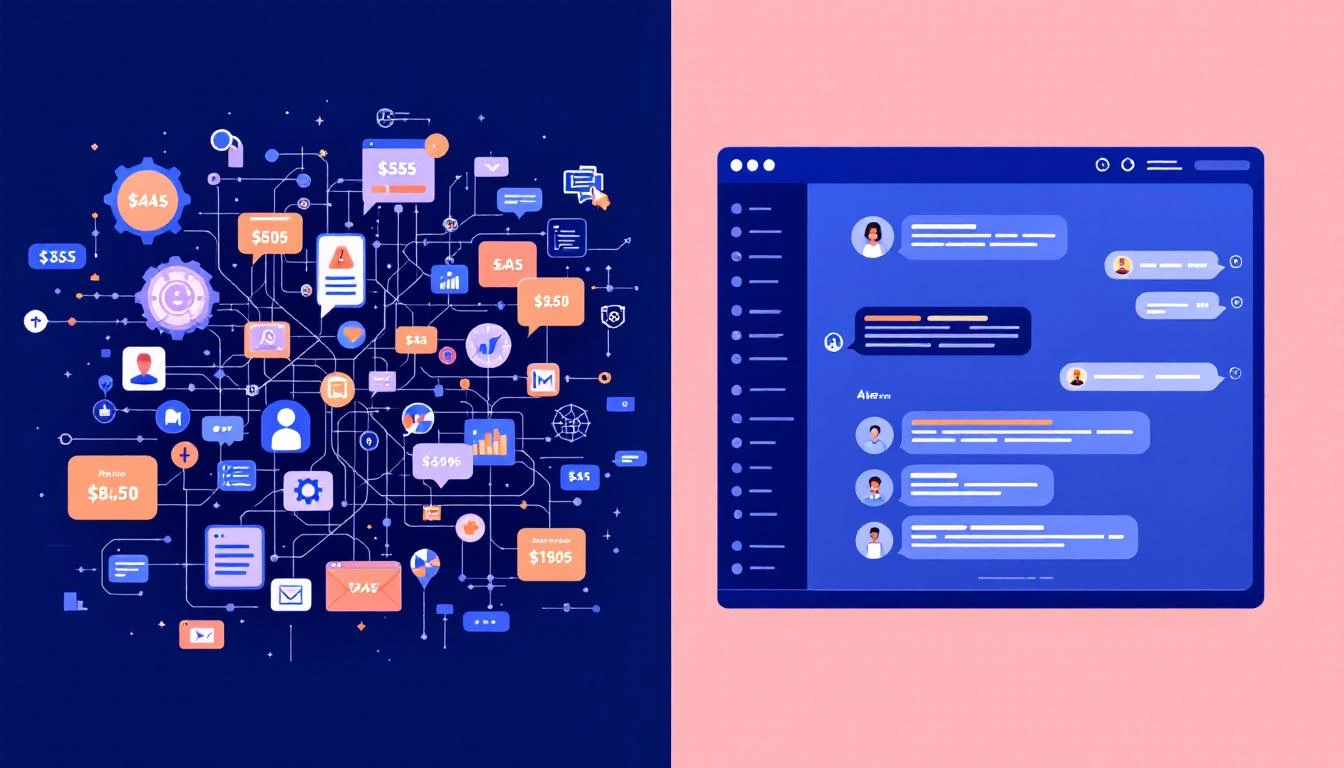
Clay raised $204 million at a $3.1 billion valuation. The business is built on three pillars. Every single one is now vulnerable.
Pillar 1: Data Enrichment → ChatGPT Deep Research
Clay's original value prop is "waterfall enrichment" — aggregating 150+ data providers (ZoomInfo, Apollo, Clearbit, Lusha) into a single meta-layer. Instead of subscribing to each, Clay cascades through them until it finds verified emails, phone numbers, firmographics, and technographics.
The problem: ChatGPT already has web browsing and Deep Research. Ask it to research a company — tech stack, funding, decision-makers, company size — and it returns a structured, reasonably accurate answer. Today. Without any data provider subscriptions.
Is it as complete as 150 providers? No. But for mid-market and SMB prospecting, publicly available data + AI synthesis is good enough for most use cases. And OpenAI's data partnerships are expanding quarterly.
Clay's enrichment moat is the provider aggregation layer. If ChatGPT achieves 80% coverage through open-web research and selective partnerships, that moat shrinks to a premium feature — not a platform.
Risk level: High within 12 months.
Pillar 2: Claygent → ChatGPT + OpenClaw Orchestration
This is where the Steinberger hire becomes existential for Clay.
Claygent is Clay's AI research agent — it scrapes websites, reads LinkedIn profiles, analyzes job postings, and returns structured account intelligence. "Find this company's tech stack." "Summarize their latest funding round." It's the feature Clay has invested most heavily in over the past 18 months.
These are the exact capabilities OpenClaw was built to orchestrate. Web scraping. Data synthesis. Structured extraction. Multi-step research workflows. OpenClaw doesn't just do these things — it chains them together with error handling, caching, and parallel execution.
Now Steinberger is building this into ChatGPT. Not as an open-source side project. As "core product offerings" at OpenAI.
The difference? Claygent runs inside Clay's $800/month platform. ChatGPT is used by 200 million people and costs $20/month.
Risk level: Critical. Timeline: 6-12 months.
Pillar 3: Outreach Orchestration → ChatGPT + OpenClaw Execution
This is the piece most people miss — and it's the most devastating.
Today, ChatGPT writes phenomenal outreach. Personalized, research-backed, tonally perfect. What it can't do yet is send it. It can't trigger sequences, manage follow-ups, handle replies, or coordinate across email + LinkedIn + Slack simultaneously.
OpenClaw can. That's literally what it does.
OpenClaw's native integrations include email (send and receive), WhatsApp (full messaging), Slack (channel and DM), and calendar management. It coordinates multi-step, multi-channel workflows orchestrated by AI.
Now imagine this scenario — possible within a year:
"ChatGPT, build me a list of Series B fintech companies in New York. Find their VP of Sales. Write a personalized 3-touch email sequence based on their recent blog posts. Send the first email Tuesday at 9am EST. If they don't reply in 3 days, follow up on LinkedIn."
Today, that workflow requires Clay ($800/month) + a sequencing tool ($200/month) + manual coordination. With ChatGPT + OpenClaw's architecture, it's a single conversation.
Risk level: Critical. This is the full-stack replacement scenario.
Why Altman Made This Hire
Look at what OpenAI gets:
Agent Orchestration Infrastructure. The missing execution layer that turns ChatGPT from "assistant that talks" to "assistant that acts." OpenAI would have spent 18 months building this from scratch. Now they have a battle-tested framework with 145K+ stars.
The integrations. Email, messaging, CRMs, browsers, calendars — the exact tools knowledge workers use daily. All built, tested, and community-validated.
The community. 145,000+ GitHub stars means thousands of contributors building plugins and integrations. That's an army of developers extending ChatGPT's capabilities for free.
The vision. In the Lex Fridman interview (Podcast #491, timestamp 2:27:41), Steinberger articulated the agentic future more clearly than anyone at OpenAI, Google, or Anthropic. He didn't just build a tool — he demonstrated a paradigm.
Altman didn't hire an engineer. He hired the person who showed the world what AI agents should actually do.
The Timeline Just Accelerated
Before the hire, I gave Clay 18-24 months before platform risk became real. That timeline just compressed dramatically:
Now (Q1 2026): Steinberger joins OpenAI. OpenClaw continues as open-source in a foundation (OpenAI will support it). The architecture and vision are now inside OpenAI's product org.
Q2-Q3 2026: ChatGPT gains agent orchestration capabilities. Multi-step workflows. Tool integrations. The early version will be rough, but it will ship to 200 million users overnight.
Q4 2026: The workflow that required Clay + three other tools runs natively inside ChatGPT. Data enrichment through web research + partnerships. Research through enhanced Deep Research. Outreach through the OpenClaw execution layer.
2027: Clay faces the classic platform squeeze. They're an $800/month point solution competing against a capability that ships free (or near-free) inside the world's most widely adopted AI platform. Enterprise contracts provide a buffer, but new customer acquisition stalls. The $3.1 billion valuation comes under pressure.
This is the pattern. Salesforce absorbing point solutions. Google killing standalone apps. Microsoft bundling capabilities into Office. The platform always wins when it decides to compete.
What This Means for Sales Teams
If you're a sales leader, RevOps manager, or GTM operator, here's what you should do this week:
1. Don't panic — but start planning.
Clay still works today. If your team depends on it, don't rip it out tomorrow. But start stress-testing: which parts of your Clay workflow could ChatGPT replace right now? Test it. The answer will surprise you.
2. Audit your Clay dependency.
How much of your workflow requires Clay specifically vs. the capabilities Clay provides? Enrichment + Claygent research = most vulnerable. Deeply customized table logic = more lock-in, but also more migration pain if you wait.
3. Build tool-agnostic processes.
Document your workflows in terms of what needs to happen, not which tool does it. The best GTM teams treat their tech stack as interchangeable components, not permanent infrastructure. This is always good practice — now it's urgent.
4. Watch OpenAI's product announcements.
Steinberger said in the Lex Fridman interview that the first thing he'd build at OpenAI is "agents that can actually do things for you across all your tools." That's not vague. That's a product roadmap. When the first ChatGPT agent features ship, evaluate immediately.
5. Evaluate alternatives now — while you have leverage.
If you're paying $800/month for Clay, you're paying a premium for a bundle that's about to unbundle. Platforms that give you enrichment, AI research, and orchestration — without single-vendor platform risk — are worth evaluating today, not when OpenAI ships the feature that makes Clay optional.
The Bottom Line
Clay built a phenomenal product. Waterfall enrichment was a breakthrough. Claygent was genuinely ahead of its time. The $3.1 billion valuation reflected real innovation.
But valuations reflect the future. And Clay's future now depends on one assumption: that their enrichment + AI research + orchestration bundle can't be replicated by a platform with 200 million users, unlimited AI infrastructure, and the guy who literally invented modern agent orchestration.
That assumption broke on Saturday.
Steinberger didn't just take the call. He took the job.
Your sales stack shouldn't be one hire away from obsolescence. Talk to our team about building a resilient, AI-native GTM operation that doesn't depend on any single vendor's survival.