
Claude's 200K Context Window: Why It Changes Everything for Sales Teams [2026]
Most AI tools choke when you need them most.
You're prepping for a demo. You want the AI to understand the prospect's entire journey—the 47-email thread, the Gong call transcript, the CRM notes from three different reps, their company's latest 10-K filing.
You paste it all in. The AI says: "This exceeds the maximum context length."
That's a 4K-32K context window in action. It's like trying to fit an enterprise deal into a Post-it note.
Claude's 200K token context window changes everything.
What is a Context Window (And Why Does Size Matter)?
A context window is how much text an AI can "see" at once. Think of it as working memory:
- 4K tokens (~3,000 words): One email thread, maybe
- 32K tokens (~24,000 words): A few documents
- 128K tokens (~96,000 words): A substantial research project
- 200K tokens (~150,000 words): An entire deal history. Every touchpoint. Every document.
For sales, this isn't a nice-to-have. It's the difference between AI that knows your prospect and AI that guesses.
Real Sales Use Cases for 200K Context
1. Complete Deal Context Before Every Call
Load into a single prompt:
- Every email exchange (all 47 of them)
- Gong/Chorus call transcripts from discovery + demo
- LinkedIn activity and posts from key stakeholders
- Their company's recent earnings call
- Competitor mentions from their 10-K
- Internal Slack conversations about the deal
- CRM notes from every rep who touched the account
Now ask: "What are the three objections most likely to come up in tomorrow's negotiation call?"
Claude doesn't guess. Claude knows.
2. Personalized Outreach at Scale
Traditional AI personalization:
"I noticed you're the VP of Sales at {company}. I'd love to show you how..."
200K context personalization:
Load: Their last 10 LinkedIn posts, company blog, recent podcast appearance,
job postings, press releases, G2 reviews they've written

Generate: Hyper-personalized email referencing their actual stated priorities,
using their vocabulary, addressing their specific challenges
The difference is palpable. One feels like spam. The other feels like you've done your homework.
3. Competitive Battle Cards That Actually Help
Instead of generic battle cards, load:
- Your competitor's entire pricing page
- Their G2 reviews (all of them, including the 1-stars)
- Their recent changelog/releases
- Job postings (reveals their priorities)
- Customer complaints on Twitter/LinkedIn
- Their sales team's LinkedIn posts (yes, really)
Ask: "Based on all of this, what are the three biggest weaknesses we should exploit, and how should we position against each?"
The output is specific, actionable, and current—not a PDF from six months ago.
4. Account Planning That Sees Everything
For enterprise deals, load the entire account history:
- All closed-won and closed-lost deals
- Every support ticket
- Product usage data
- Expansion history
- Key contact changes
- Champion departures
Ask: "Create an account plan for the renewal. What's the risk level, who are our champions, and what expansion opportunities exist?"
How to Use Claude 200K in Your Sales Stack
Option 1: Direct API Integration
import anthropic

client = anthropic.Anthropic()

# Load all your deal context
deal_context = load_deal_context("acme-corp")  # Returns ~100K tokens

response = client.messages.create(
    model="claude-3-5-sonnet-20241022",
    max_tokens=4096,
    messages=[
        {
            "role": "user",
            "content": f"""
            Here is the complete deal context for Acme Corp:

            {deal_context}

            Based on all of this information, prepare me for tomorrow's
            negotiation call. What objections should I expect? What
            leverage do we have? What's the likely outcome?
            """
        }
    ]
)
Option 2: OpenClaw for Continuous Context
OpenClaw maintains persistent context across conversations:
# openclaw.yaml
agents:
  sales-copilot:
    model: claude-3-5-sonnet-20241022
    systemPrompt: |
      You are a sales copilot with access to complete deal context.
      You remember all previous conversations about this account.
      You proactively surface relevant information.
The advantage: Context builds over time. Each interaction adds to what the AI knows.
Option 3: RAG + Full Context Hybrid
For truly massive datasets (10+ deals, entire CRM):
- Use RAG to retrieve relevant chunks
- Load retrieved chunks + current deal context into 200K window
- Get responses grounded in both specific and broad context
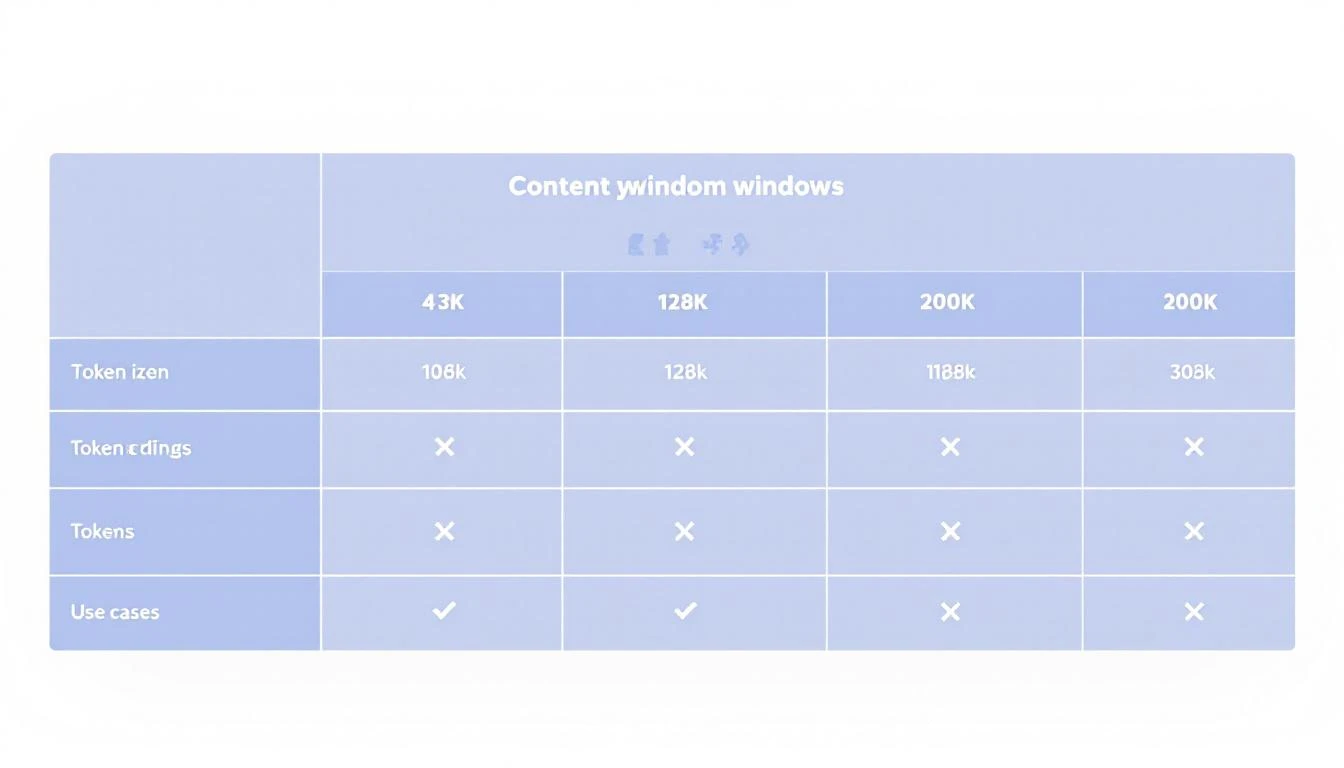
Context Window Comparison: Claude vs The Field
| Model | Context Window | Real-World Limit | Best For |
|---|---|---|---|
| GPT-4 | 128K | ~100K usable | Single-deal deep dives |
| GPT-4 Turbo | 128K | ~100K usable | Cost-effective analysis |
| Claude 3.5 Sonnet | 200K | ~180K usable | Multi-deal, full history |
| Claude 3 Opus | 200K | ~180K usable | Complex reasoning + full context |
| Gemini 1.5 Pro | 1M | ~900K usable | Massive document analysis |
For most sales use cases, Claude's 200K hits the sweet spot: enough context for complete deal history without the latency and cost of 1M+ windows.
What Fits in 200K Tokens?
To give you a sense of scale:
- 1 email: ~200-500 tokens
- 1 call transcript (30 min): ~5,000-8,000 tokens
- 1 10-K filing: ~40,000-60,000 tokens
- Complete deal history (6-month enterprise sale): ~50,000-80,000 tokens
- 10 LinkedIn posts: ~2,000-3,000 tokens
You can fit an entire enterprise deal's documentation in a single prompt.
The Prompt Pattern for Sales Context
Here's a template that works:
# Account Context: {Company Name}

## Company Overview
{Paste company research, 10-K summary, news}

## Stakeholder Map
{Paste LinkedIn profiles, org chart notes}

## Conversation History
{Paste all email threads, meeting notes}

## Call Transcripts
{Paste relevant Gong/Chorus transcripts}

## CRM Data
{Paste deal stage, notes, activity history}

## Competitive Context
{Paste what you know about their evaluation}

---

# Task
Based on all of the above context, {your specific request}
Common Mistakes to Avoid
❌ Dumping Everything Without Structure
Bad:
Here's everything: [massive text blob]
What should I do?
Good:
# Context organized by type
## Emails (chronological)
## Call transcripts
## Company research

# Specific question
What are the top 3 objections likely in tomorrow's call?
❌ Forgetting to Update Context
Your 200K context is only as good as its freshness. Build systems that automatically pull:
- New emails
- New CRM notes
- New call transcripts
- New stakeholder LinkedIn activity
❌ Ignoring Token Economics
200K tokens of input ≠ free. At ~$3/M input tokens for Claude 3.5 Sonnet:
- 200K tokens = ~$0.60 per full-context request
- Do it 100x/month per rep = $60/rep/month
Still cheaper than a bad deal, but worth optimizing.
The Bottom Line
Claude's 200K context window isn't a spec sheet number to brag about. It's a fundamental shift in what AI can do for sales.
When your AI knows everything about a deal—every email, every call, every document—it stops being a generic assistant and starts being a genuine copilot.
The question isn't whether to use large-context AI for sales. It's whether you can afford not to while your competitors do.
Try our AI Lead Generator — find verified LinkedIn leads for any company instantly. No signup required.
Ready to Put AI to Work for Your Sales Team?
MarketBetter turns AI insights into daily SDR action. Our AI-powered playbook tells your reps exactly who to contact, how to reach them, and what to say—based on real buyer signals.
Related reading: