
Build vs Buy: Why GTM Teams Should Build Their Own AI SDR Stack [2026]
There's a dirty secret in the AI SDR market: the vendors charging $35,000-$50,000 per year for "AI-powered sales development" are mostly wrapping the same foundation models you can access yourself.
GPT-5.3-Codex just dropped on February 5th. Claude 4 has a 200K context window. OpenClaw is free and open source. The building blocks for a world-class AI SDR system are available to anyone — often at 90% less cost than buying a platform.
So why are companies still writing six-figure checks?
Because "build vs buy" is the wrong framing. The real question is: what exactly are you buying, and can you build something better?
This guide breaks down the honest economics, technical requirements, and strategic implications of building your own AI SDR stack versus buying an off-the-shelf platform.
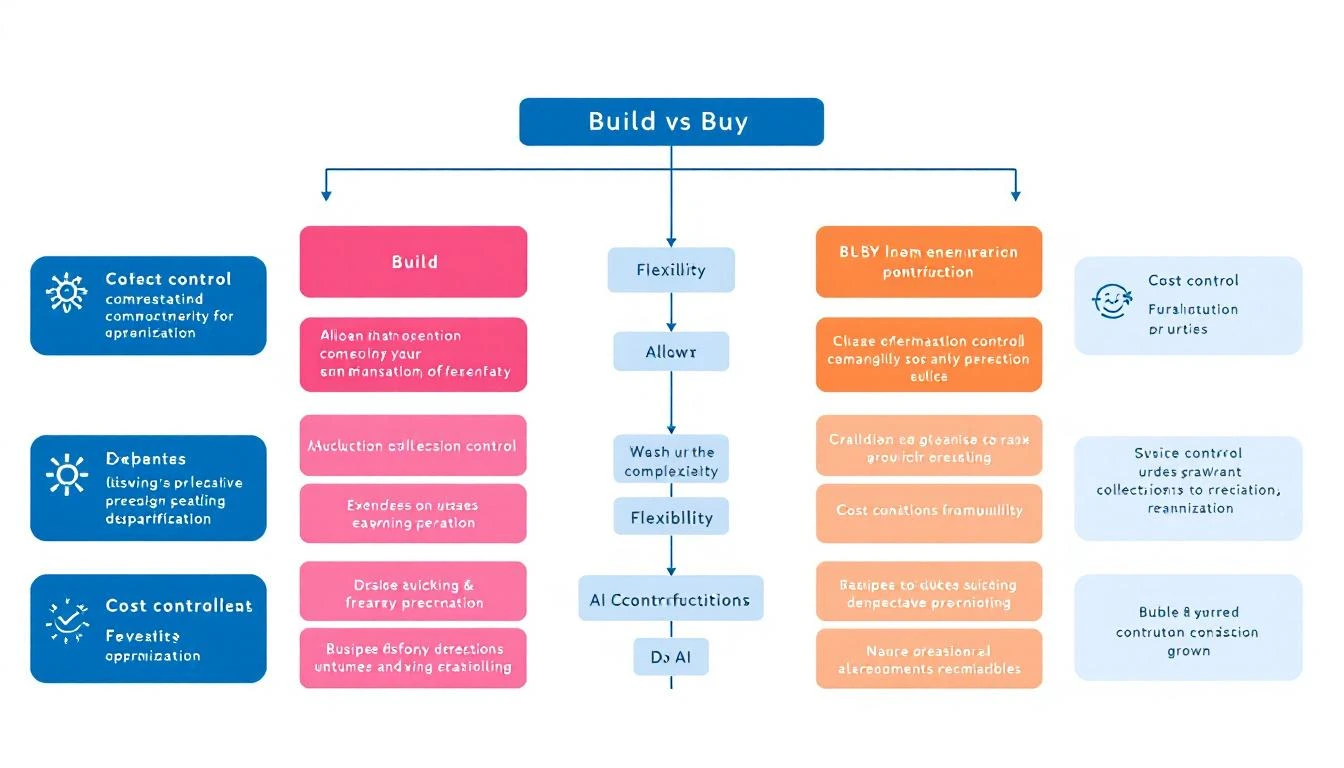
The Current AI SDR Landscape
Let's map the market honestly. Here's what you're looking at if you buy:
Enterprise AI SDR platforms ($30K-$80K/year):
- 6sense, Demandbase, ZoomInfo — intent data + basic AI features
- Lock-in through proprietary data sets
- 6-month implementation cycles
- You're paying for their data, not their AI
AI-native sales tools ($15K-$40K/year):
- Tools purpose-built around AI for prospecting and outreach
- Faster to implement
- Still black-box AI — you can't see or modify the prompts
- Your data trains their models (read the fine print)
Point solutions ($5K-$15K/year):
- AI email writers, LinkedIn automation, chatbots
- Each solves one piece of the puzzle
- Stack 5-6 of these and you're at $50K anyway
- They don't talk to each other
Now here's what you can build:
Open-source AI SDR stack ($3K-$7K/year):
- OpenClaw for orchestration (free)
- Claude or GPT for intelligence ($200-500/month in API costs)
- Your own CRM integration (you already have the CRM)
- Full customization, full data ownership, no lock-in
The math is stark. But cost isn't the only factor.
What "Buy" Actually Gets You
Let's be fair about what platforms offer that's genuinely hard to replicate:
Proprietary intent data. 6sense and Demandbase have massive B2B web tracking networks. They know when accounts in your ICP are researching solutions because they have tracking pixels on thousands of review sites, publications, and vendor pages. This is genuinely hard to replicate.
Pre-built integrations. Plug into Salesforce, HubSpot, Outreach, SalesLoft, LinkedIn Sales Nav — all configured and maintained by the vendor. No engineering time required.
Compliance and security. SOC 2, GDPR, data processing agreements — all handled. Your legal team signs one contract, not fifteen.
Support and training. Someone answers the phone when things break. Your team gets onboarded by humans.
These are real advantages. But here's the thing: most of them are table stakes, not differentiators. And the most critical piece — the AI intelligence that actually makes your outreach better — is something you can build better yourself.
What "Build" Actually Gets You
Here's what building gives you that no platform can:
Custom AI prompts tuned to your exact ICP. When you buy a platform, you get generic prompts that work "okay" for everyone. When you build, your AI knows that your best customers are VP-level buyers at B2B SaaS companies with 50-500 employees who just hired their first SDR manager. That specificity translates directly into better outreach.
Full prompt transparency. With a platform, the AI's reasoning is a black box. You can't see why it recommended Account A over Account B. When you build with OpenClaw + Claude, you see every prompt, every reasoning chain, every decision. You can debug and improve the intelligence layer continuously.
Data ownership. Your prospect data, your conversation history, your performance metrics — all yours. No vendor sunset risk. No price increases because they know you're locked in. No "we're pivoting our product" emails.
Infinite customization. Want your AI agent to check competitor pricing pages every morning and adjust your positioning? Done. Want it to cross-reference LinkedIn job postings with your CRM to identify expansion opportunities? Done. Try getting a platform vendor to build that feature for you — you'll be waiting 18 months.
Speed of iteration. When GPT-5.3-Codex dropped on February 5th, teams building their own stack could integrate it within hours. Platform users? They'll get it when the vendor's roadmap says they get it. Maybe Q3.
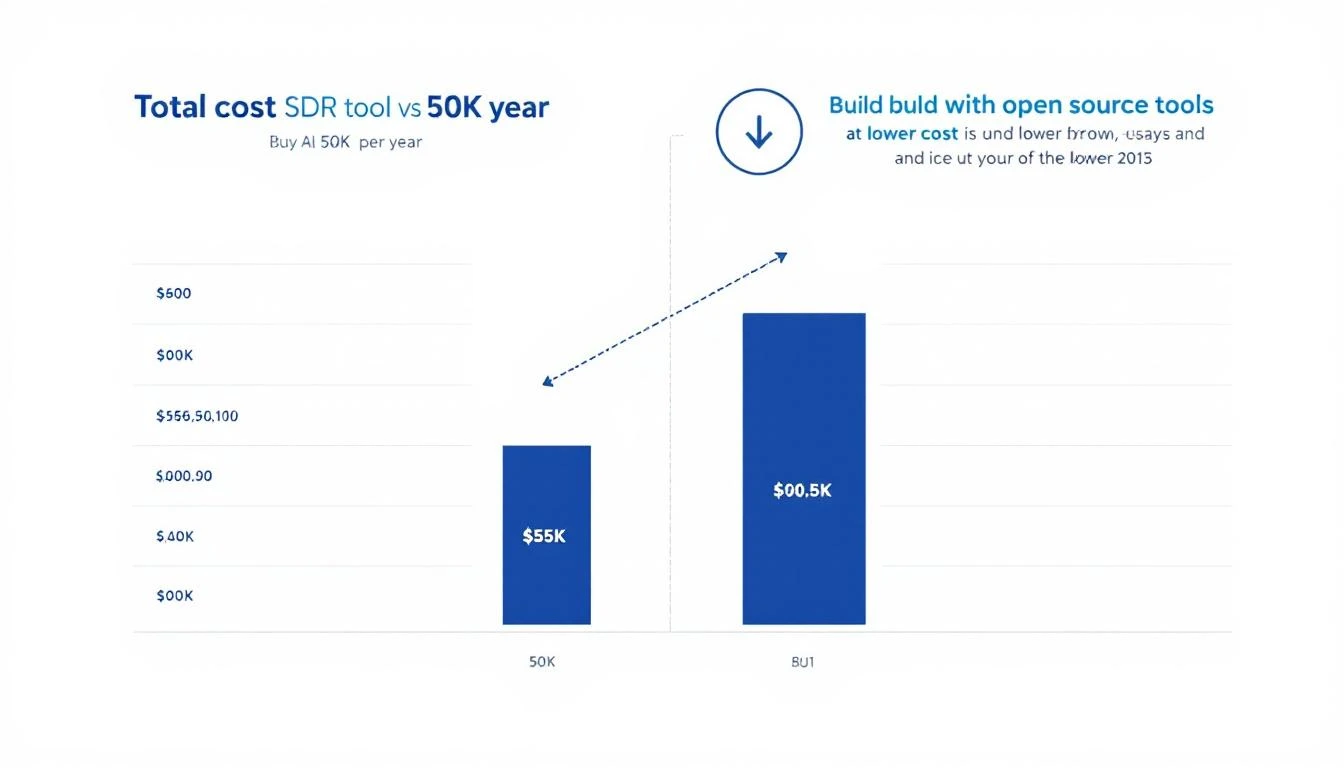
The Real Cost Breakdown
Let's do the math honestly, including the costs "build" advocates often leave out.
Buying a Platform
| Cost | Annual |
|---|---|
| Platform license (mid-tier) | $35,000 |
| Additional seats | $5,000 |
| Premium data enrichment | $8,000 |
| Implementation + training | $5,000 (year 1) |
| Total Year 1 | $53,000 |
| Total Year 2+ | $48,000 |
Building with Open Source
| Cost | Annual |
|---|---|
| OpenClaw (self-hosted) | $0 |
| Cloud hosting (AWS/Azure) | $1,200 |
| AI API costs (Claude/GPT) | $4,800 |
| Data enrichment APIs | $3,600 |
| Engineering time (setup) | $8,000 (year 1, ~2 weeks) |
| Maintenance (ongoing) | $4,000/year (~4 hours/month) |
| Total Year 1 | $17,600 |
| Total Year 2+ | $9,600 |
3-year total comparison:
- Buy: $149,000
- Build: $36,800
That's $112,200 saved over 3 years.
And here's the kicker: the "build" costs are conservative. Many teams report lower API costs because they optimize prompts over time. The "buy" costs are conservative too — many platforms charge more.
When You Should Buy
Building isn't always the right call. Here's when buying makes more sense:
You have zero engineering resources. If nobody on your team can write a config file or deploy a Docker container, building will be painful. OpenClaw is user-friendly, but it's not Canva.
You need intent data specifically. If your primary value is knowing which accounts are in-market right now, platforms like 6sense have proprietary data you can't easily replicate. The AI layer on top is commodity, but the data isn't.
Speed-to-value matters more than cost. If you're a funded startup burning cash and need pipeline yesterday, a platform gets you to "good enough" faster than building gets you to "great."
Your team is < 3 SDRs. At small scale, the ROI of building custom tooling is harder to justify. Use a platform until you hit scale, then evaluate building.
When You Should Build
Building is the right call when:
You have 5+ SDRs. At scale, the cost savings compound quickly. And the customization advantages matter more because you have enough data to tune the AI properly.
Your sales motion is complex. If you sell to multiple personas, have long sales cycles, or need deeply personalized outreach — platforms' one-size-fits-all approach will limit you. Custom AI agents can model your specific buyer journey.
You already use Claude Code or Codex. If your engineering team is already using AI coding agents, extending them to sales automation is a natural next step. The learning curve is minimal.
Data privacy matters. If you're in healthcare, fintech, or government — having full control over where prospect data lives and how it's processed is often a compliance requirement, not a preference.
You want to compound advantages. Every improvement you make to your AI SDR stack benefits only you. Every improvement a platform vendor makes benefits all their customers equally. Building creates a moat; buying creates parity.
The Hybrid Approach
Here's what smart teams actually do: build the intelligence layer, buy the data layer.
Use a data provider (ZoomInfo, Apollo) for contact information and basic firmographics. That's commodity data — pay for it.
But build your own:
- Account research with OpenClaw + Claude (web scraping, news monitoring)
- Scoring logic tuned to your specific ICP signals
- Outreach generation with prompts optimized for your voice and value props
- Multi-channel orchestration across email, LinkedIn, and Slack
- Performance analytics that track what actually drives meetings
This hybrid approach gives you the best of both worlds: reliable data from established providers, and custom AI intelligence that competitors can't replicate.
The Technical Stack
For teams ready to build, here's the stack we recommend:
Orchestration: OpenClaw (open source, self-hosted)
- Connects AI to all your channels
- Runs agents 24/7 with memory and cron jobs
- Browser automation for dynamic websites
- Free forever — github.com/openclaw/openclaw
Intelligence: Claude (Anthropic) or GPT-5.3-Codex (OpenAI)
- Claude: Best for nuanced writing, research, long-context analysis
- Codex: Best for structured data processing, code generation, multi-file operations
- Use both — they excel at different parts of the SDR workflow
CRM: HubSpot or Salesforce (whatever you already have)
- Connect via API — both have excellent APIs
- OpenClaw can read/write CRM data through tool integrations
Data: ZoomInfo, Apollo, or Clearbit for enrichment
- API access, pay per lookup
- Supplement with OpenClaw's web research for trigger events
Messaging: Native email + LinkedIn automation
- Email via your existing provider (Gmail, Outlook)
- LinkedIn via browser automation (OpenClaw supports this)
Getting Started in One Weekend
You don't need two weeks. Here's a realistic weekend sprint:
Saturday morning (3 hours):
- Deploy OpenClaw on your server or cloud instance
- Connect it to your CRM via API
- Set up a basic research agent that monitors your top 10 accounts
Saturday afternoon (3 hours): 4. Create prompt templates for account research 5. Set up a cron job for daily account monitoring 6. Test the research output — refine prompts
Sunday morning (3 hours): 7. Add email draft generation based on research 8. Set up Slack notifications for high-priority signals 9. Create a scoring framework in your agent's memory
Sunday afternoon (2 hours): 10. Test end-to-end: account research → scoring → draft email → Slack alert 11. Refine and document your setup
By Monday, you have a working AI SDR assistant that monitors accounts, generates personalized outreach, and alerts your team to opportunities. Not perfect, but functional — and infinitely improvable.
Try our AI Lead Generator — find verified LinkedIn leads for any company instantly. No signup required.
The Strategic Case
Beyond cost savings, building your own AI SDR stack is a strategic move.
The AI SDR platform market is consolidating rapidly. Vendors are raising prices, gating features, and pushing annual contracts. The switching costs get higher every year.
Meanwhile, the tools to build your own keep getting better and cheaper. GPT-5.3-Codex is 25% faster than its predecessor. OpenClaw adds features monthly. Claude's context window handles entire account portfolios in a single prompt.
Companies that build now will have 6-12 months of compounding advantage by the time their competitors realize they're overpaying for commoditized AI wrapped in a SaaS subscription.
The question isn't whether AI will automate SDR workflows. It will. The question is whether you'll own that automation or rent it from someone who marks it up 10x.
Want to see the "build" approach in action? MarketBetter uses AI-powered automation to turn intent signals into pipeline — and we practice what we preach. Book a demo to see how we built our GTM engine.