
Best Revenue Operations (RevOps) Tools and Software [2026]
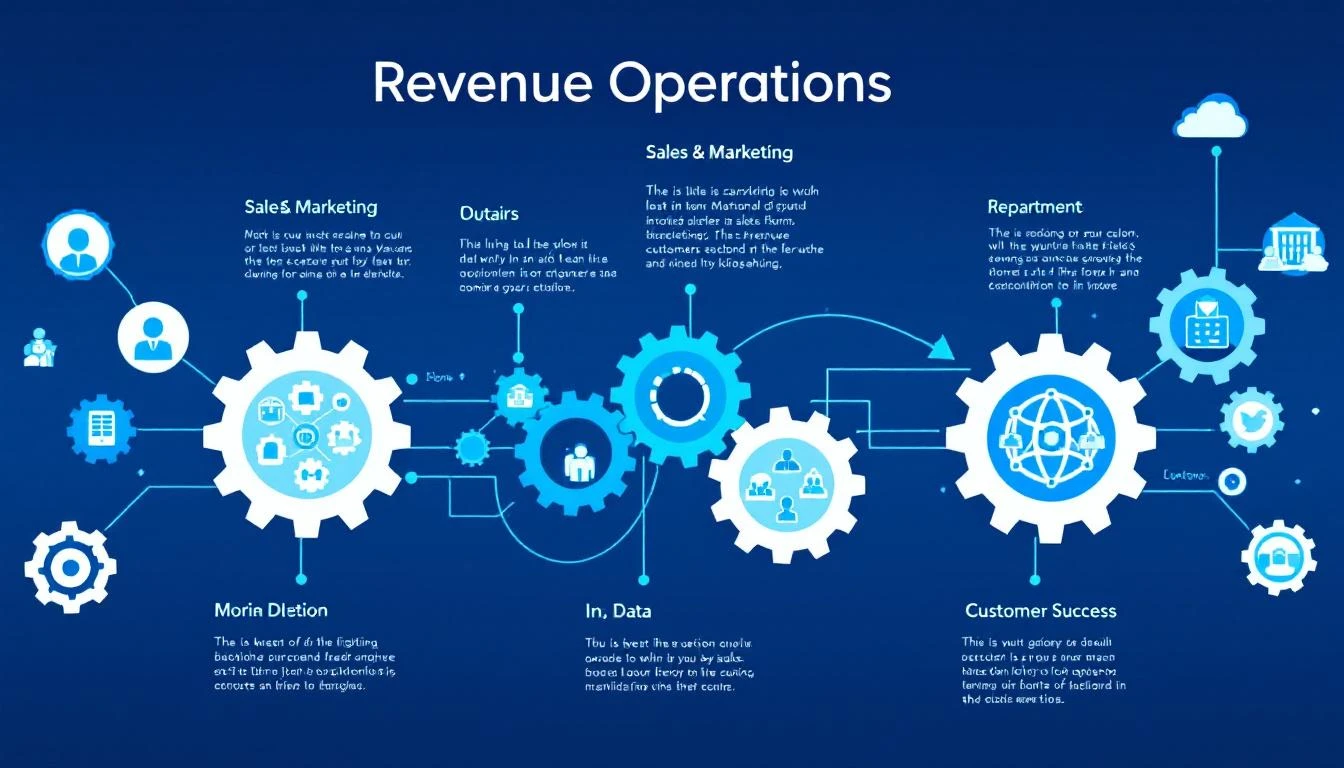
Revenue Operations is no longer a nice-to-have org chart experiment. It's the operating system that determines whether your sales, marketing, and CS teams pull in the same direction — or waste cycles fighting over data, attribution, and pipeline definitions.
According to Forrester, companies with aligned RevOps functions grow 12-15% faster than those without. Boston Consulting Group found that B2B companies implementing RevOps see 100-200% increases in digital marketing ROI. The numbers are clear. The question isn't whether you need RevOps tools — it's which ones.
This guide covers 15 RevOps tools across six categories: signal and pipeline intelligence, CRM and data management, revenue intelligence, forecasting, sales engagement, and workflow automation. We'll help you build the right stack for your team size and maturity.
What RevOps Tools Actually Do
RevOps tools unify three functions that traditionally operated in silos:
| Function | Without RevOps Tools | With RevOps Tools |
|---|---|---|
| Sales | Reps work from gut instinct, CRM is stale, pipeline reviews are guesswork | Real-time pipeline visibility, signal-based prioritization, accurate forecasting |
| Marketing | Leads thrown over the wall, no feedback loop on quality | Shared ICP definition, closed-loop attribution, content aligned to buyer signals |
| Customer Success | Reactive firefighting, no expansion signals | Health scoring, usage analytics, expansion triggers automated |
The best RevOps stacks eliminate three things:
- Data silos — One source of truth for contacts, accounts, and pipeline
- Manual handoffs — Automated lead routing, stage progression, and alerting
- Reporting conflicts — Unified metrics that all teams trust
The 15 Best RevOps Tools for 2026
1. MarketBetter — Signal-to-Action Revenue Operations
Best for: B2B sales teams (50-500 employees) that want RevOps infrastructure built around buyer signals, not just CRM hygiene.
Most RevOps tools help you manage revenue data. MarketBetter helps you generate revenue. The platform turns buyer intent signals — website visits, content engagement, champion job changes — into a Daily SDR Playbook that tells every rep exactly who to contact, how to reach them, and what to say.
This is RevOps at the execution layer. Instead of a dashboard showing pipeline health (which every tool does), MarketBetter shows each SDR their next 10 highest-priority actions based on real-time buying signals.
Key RevOps capabilities:
- Website visitor identification — Know which companies are on your site, which pages they visit, and which contacts to reach
- Daily SDR Playbook — Signal-weighted priority list that replaces manual pipeline review
- Email automation with deliverability infrastructure — Hyper-personalized sequences with built-in warmup and rotation
- Smart dialer — Click-to-call from the playbook, conversation intelligence logged automatically
- AI chatbot — Engages visitors instantly, qualifies and routes to the right rep
- Champion tracking — Detects when your champions change jobs and alerts reps to re-engage
- Team dedup and territory rules — No more reps stepping on each other's accounts
What makes it different for RevOps: Traditional RevOps tools sit on top of your CRM and help you analyze what happened. MarketBetter sits at the front of your revenue workflow and tells your team what to do next. That's the difference between revenue operations and revenue execution.
Pricing: $99/user/month, $1,500/mo (Growth, 5 seats), $3,000/mo (Scale, 10 seats)
Rating: 4.97/5 on G2 (Top Performer in 15 categories)
2. HubSpot Operations Hub — CRM-Native RevOps
Best for: Teams already on HubSpot CRM that need data sync, automation, and reporting without leaving the ecosystem.
HubSpot's Operations Hub turns HubSpot from a CRM into a RevOps platform. Data sync keeps your tools connected, data quality automation cleans records in real-time, and programmable automation lets you build custom workflows beyond the drag-and-drop builder.
Key features:
- Bi-directional data sync with 1,000+ app integrations
- Data quality automation (format names, clean phone numbers, deduplicate)
- Programmable automation with custom-coded actions
- Custom reporting across marketing, sales, and service data
- Datasets for reusable reporting dimensions
Pricing: Free (basic sync). Starter $20/mo, Professional $800/mo, Enterprise $2,000/mo.
Limitations: Powerful within HubSpot ecosystem, limited outside it. Operations Hub Professional is expensive — data quality features are locked behind the $800/mo tier. If you're not already on HubSpot CRM, the switching cost is high.
3. Salesforce Revenue Cloud — Enterprise Revenue Lifecycle
Best for: Enterprise organizations on Salesforce that need CPQ, billing, and revenue recognition unified with CRM.
Salesforce Revenue Cloud combines CPQ (Configure, Price, Quote), billing, and partner relationship management into Salesforce's CRM. It's the full revenue lifecycle from quote to cash, designed for complex enterprise sales motions with multiple product lines, custom pricing, and multi-year contracts.
Key features:
- CPQ with guided selling and approval workflows
- Subscription billing and revenue recognition
- Partner channel management
- Revenue analytics and forecasting
- Multi-cloud integration (Sales, Service, Marketing)
Pricing: CPQ from $75/user/month. Revenue Cloud pricing varies by module — expect $150-300+/user/month for full stack.
Limitations: Salesforce-native only. Implementation complexity is high (6-12 months typical). Requires dedicated Salesforce admin. Pricing adds up fast with multiple modules and seats.
4. Clari — Revenue Intelligence and Forecasting
Best for: Sales leaders who need AI-powered forecasting and pipeline inspection to call the quarter accurately.
Clari's revenue intelligence platform analyzes CRM data, email activity, calendar signals, and conversation data to provide real-time pipeline health and forecast accuracy. Their AI doesn't just aggregate — it identifies pipeline risk, deal slippage, and forecast gaps before they impact your number.
Key features:
- AI-powered revenue forecasting with confidence scoring
- Pipeline inspection and deal health scoring
- Activity capture (auto-logs emails, meetings, calls to CRM)
- Mutual action plans for deal execution
- Revenue analytics across teams and segments
Pricing: Custom pricing. Typically $50-100+/user/month depending on modules. Minimum contract often $30,000+/year.
Limitations: Expensive for SMBs. Forecasting AI requires clean CRM data to be accurate — garbage in, garbage out. Best for organizations with 50+ reps where forecast accuracy matters at the board level.
5. Gong — Conversation Intelligence for Revenue Teams
Best for: Sales managers who want to coach reps based on actual conversation data, not self-reported CRM notes.
Gong records, transcribes, and analyzes every sales conversation (calls, video meetings, emails) to surface winning patterns, deal risks, and coaching opportunities. For RevOps teams, Gong provides the missing data layer — what actually happens in sales conversations vs. what reps log in CRM.
Key features:
- Call recording and AI-powered transcription
- Deal intelligence (risk scoring, next steps, stakeholder mapping)
- Coaching scorecards and talk pattern analysis
- Market intelligence from aggregated conversation trends
- CRM integration with auto-populated deal fields
Pricing: Custom pricing. Typically $100-150/user/month. Annual contracts, often $50,000+ minimum for mid-market.
Limitations: Expensive. Recording consent requirements vary by state/country — legal review needed. Value depends on call volume — teams with fewer than 50 calls/week may not see sufficient ROI. Privacy concerns in some industries.
6. Apollo.io — Prospecting + Engagement for RevOps
Best for: Growth-stage teams that need a prospect database, sequences, and basic CRM in one affordable platform.
Apollo combines a 275M+ contact database with email sequences, a dialer, and lightweight CRM features. For RevOps teams at early-stage companies, Apollo can serve as the entire top-of-funnel stack without stitching together 5 separate tools.
Key features:
- 275M+ contact database with intent and job change signals
- Multi-channel sequences (email, LinkedIn, phone)
- Built-in dialer with call recording
- CRM with deal tracking and pipeline management
- Buyer intent data (website visits, topic research)
Pricing: Free plan (limited). Basic $59/user/mo, Professional $99/user/month, Organization $149/user/mo.
Limitations: Data quality varies — verified email accuracy around 85-90%. CRM is basic compared to dedicated platforms. Intent data is less granular than specialized providers. Best as a starting point, not an enterprise solution.
7. ZoomInfo — Data Foundation for RevOps
Best for: Mid-market and enterprise teams that need the deepest B2B contact and company database as their RevOps data layer.
ZoomInfo is the most comprehensive B2B data platform — 600M+ professional profiles, 35M+ companies, technographic data, intent signals, and org charts. For RevOps teams, ZoomInfo serves as the data foundation that enriches every other tool in the stack.
Key features:
- 600M+ contacts with direct dials and verified emails
- Company technographics (what tools they use)
- Buyer intent signals across 12,000+ topics
- Org chart visualization and decision-maker mapping
- Website visitor identification (basic)
- FormComplete for progressive profiling
Pricing: Not publicly listed. Typically $15,000-50,000+/year depending on credits, seats, and modules. SalesOS, MarketingOS, and OperationsOS sold separately.
Limitations: Expensive — prohibitive for most startups. Contract lock-in (annual, auto-renewing). Data freshness can lag for smaller companies. Intent data is third-party (Bombora-powered). Website visitor ID is account-level only, not contact-level.
8. LeanData — Lead Routing and Matching Engine
Best for: Salesforce-based teams with complex routing rules that need to match leads to accounts and route to the right rep instantly.
LeanData automates the critical RevOps workflow of lead-to-account matching and routing. When a new lead comes in, LeanData matches it to the right account, checks territory assignments, and routes to the correct owner — in seconds instead of hours.
Key features:
- Visual drag-and-drop routing builder
- Lead-to-account matching with fuzzy logic
- Round-robin and weighted assignment
- Routing audit trail and analytics
- Salesforce-native (runs inside SFDC)
Pricing: Starting around $39/user/month. Enterprise pricing varies.
Limitations: Salesforce-only. Solves one specific (but critical) RevOps problem — routing. You'll need other tools for everything else. Can be complex to configure for organizations with frequently changing territories.
9. Openprise — RevOps Data Orchestration
Best for: Enterprise RevOps teams that need to clean, enrich, segment, and route data across their entire tech stack without code.
Openprise is the ETL layer for RevOps. It connects your data sources (CRM, MAP, enrichment providers, intent tools), normalizes the data, applies business rules, and ensures every system has clean, consistent records. Think of it as the plumbing that makes all your other RevOps tools work properly.
Key features:
- No-code data orchestration across 50+ integrations
- Data cleansing and normalization rules
- Lead scoring model management
- Multi-provider enrichment waterfall (use multiple data vendors in sequence)
- Segment builder for ABM and marketing campaigns
Pricing: Custom pricing. Typically $50,000-150,000+/year for enterprise deployments.
Limitations: Enterprise pricing and complexity. Not for teams under 200 employees. Requires dedicated RevOps headcount to configure and maintain.
10. Rattle — CRM Automation via Slack/Teams
Best for: Sales teams that live in Slack or Teams and need CRM updates to happen from chat, not the CRM UI.
Rattle bridges the gap between where reps work (Slack/Teams) and where data needs to live (CRM). Reps can update deals, log activities, and progress pipeline stages without opening Salesforce. RevOps gets cleaner data because the friction of CRM updates drops to near-zero.
Key features:
- Update CRM records from Slack/Teams
- Automated deal alerts and stage change notifications
- Pipeline hygiene workflows (nudge reps to update stale deals)
- Meeting prep briefs pushed to Slack before calls
- Custom bot workflows without code
Pricing: Custom pricing. Typically $20-30/user/month.
Limitations: Requires Slack or Teams (not standalone). Salesforce or HubSpot CRM required. Solves CRM adoption, not CRM replacement. Value depends on how much your team uses Slack/Teams.
11. 6sense — ABM + Intent Data Platform
Best for: Mid-market and enterprise teams running account-based strategies that need intent data to prioritize target accounts.
6sense's Revenue AI platform identifies anonymous buying signals across the web, matches them to target accounts, and scores buying stage readiness. For RevOps teams, 6sense provides the intent data layer that drives ABM prioritization and marketing-to-sales alignment.
Key features:
- AI-powered intent data across 12,000+ topics
- Anonymous website visitor identification
- Account-level buying stage prediction
- Audience building for targeted advertising
- Integration with major CRMs and MAPs
Pricing: Not publicly listed. Typically $60,000-120,000+/year for mid-market deployments. Enterprise can exceed $200K.
Limitations: Expensive — typically requires $5M+ ARR to justify. Intent data is probabilistic, not deterministic (accounts "likely" in-market, not guaranteed). Implementation takes 3-6 months. ROI measurement can be challenging.
12. Nektar — Automated Activity Capture
Best for: RevOps teams that need complete activity data in CRM without relying on reps to log manually.
Nektar automatically captures all sales activities — emails, meetings, calls, LinkedIn touches — and associates them with the right contacts and opportunities in your CRM. The result: RevOps gets complete activity data for pipeline analysis without burdening reps with data entry.
Key features:
- Automatic activity capture from email, calendar, and LinkedIn
- Contact and opportunity association using AI
- Buyer group mapping (identifies all stakeholders in a deal)
- Pipeline risk alerts based on activity gaps
- CRM data enrichment
Pricing: Custom pricing. Typically $15-25/user/month.
Limitations: Activity capture requires email/calendar integration permissions. Works best with Salesforce. Captures activity data but doesn't prescribe next actions based on that data.
13. People.ai — Revenue Intelligence Through Activity Data
Best for: Enterprise sales organizations that want activity-based pipeline analytics and AI coaching.
People.ai captures and analyzes all sales activities to provide revenue intelligence — which activities drive pipeline progression, which deals have enough multi-thread engagement, and which reps follow winning patterns. For RevOps, it's the analytics layer that connects activity to outcomes.
Key features:
- Automatic activity capture and CRM sync
- Deal inspection with engagement scoring
- Playbook adherence tracking (are reps following the process?)
- Account-based engagement analytics
- AI recommendations for next best actions
Pricing: Custom pricing. Typically $50-75/user/month for enterprise.
Limitations: Enterprise focus — minimum 100+ seat deployments typical. Complex implementation. Value requires high-volume activity data (small teams won't see meaningful patterns).
14. Chili Piper — Inbound Lead Routing and Scheduling
Best for: Teams with significant inbound volume that need to route and book meetings instantly from forms.
Chili Piper eliminates the gap between form submission and meeting booking. When a prospect fills out your demo form, Chili Piper instantly qualifies, routes, and presents available time slots — converting form fills to booked meetings in seconds instead of days.
Key features:
- Instant scheduling from web forms (Concierge)
- Inbound lead routing with round-robin and territory rules
- Handoff scheduling between SDRs and AEs
- Reminders and no-show follow-up automation
- Analytics on form-to-meeting conversion rates
Pricing: $30/user/month (Instant Booker), $45/user/month (Handoff), $60/user/month (Concierge).
Limitations: Primarily inbound-focused. Doesn't help with outbound pipeline or prospecting. Scheduling-specific — you'll need other tools for CRM, sequences, and analytics.
15. Forecastio — Sales Forecasting for HubSpot Teams
Best for: HubSpot-native sales teams that need accurate pipeline forecasting without enterprise pricing.
Forecastio plugs directly into HubSpot and provides AI-powered sales forecasting, pipeline analytics, and performance tracking. It's built specifically for HubSpot (not a generic integration), so the data mapping is clean and insights are actionable.
Key features:
- AI-powered forecasting with scenario modeling
- Pipeline analytics with velocity tracking
- Rep performance dashboards
- Goal tracking and attainment analysis
- Weekly forecast reports
Pricing: Starting at $149/mo for HubSpot integration.
Limitations: HubSpot-only (no Salesforce support). Forecasting-focused — doesn't cover routing, engagement, or data hygiene. Newer platform with smaller customer base.
Building Your RevOps Stack by Stage
Seed to Series A (Under $2M ARR)
At this stage, you don't need a RevOps team — you need a RevOps-ready tool that does several jobs:
| Need | Recommended Tool | Monthly Cost |
|---|---|---|
| CRM + Pipeline | HubSpot Free or Apollo CRM | $0-59 |
| Prospecting + Signals | MarketBetter | $99/user/month |
| Scheduling | Calendly or Chili Piper | $0-30 |
| Total | $500-589 |
The key at this stage: Don't over-invest in analytics. You don't have enough data for AI forecasting to matter. Focus on signal quality and speed-to-lead.
Series A to B ($2M-$15M ARR)
Now you have enough data and enough people to benefit from specialized tools:
| Need | Recommended Tool | Monthly Cost |
|---|---|---|
| Signal-Driven Outbound | MarketBetter | $99/user/month |
| CRM | HubSpot Pro or Salesforce | $100-300/user |
| Conversation Intelligence | Gong or Chorus | $100-150/user |
| Data Enrichment | ZoomInfo or Apollo | $150-500/user |
| Lead Routing | LeanData or Chili Piper | $30-60/user |
| Total (10-person team) | $5,000-10,000 |
The key at this stage: Invest in data quality and routing. Misrouted leads and dirty CRM data are the biggest revenue killers at this scale.
Series B+ ($15M+ ARR)
Enterprise RevOps stacks need specialization and depth:
| Need | Recommended Tool | Monthly Cost |
|---|---|---|
| Revenue Execution | MarketBetter Enterprise | Custom |
| CRM | Salesforce Enterprise | $150-300/user |
| Revenue Intelligence | Clari | $50-100/user |
| Conversation Intelligence | Gong | $100-150/user |
| Intent Data | 6sense or Bombora | $5,000-10,000 |
| Data Orchestration | Openprise | $5,000-12,000 |
| Activity Capture | Nektar or People.ai | $15-75/user |
| Total (50-person team) | $30,000-60,000 |
The key at this stage: Unification matters more than individual tool power. Your stack should have one source of truth, automated data flow between tools, and consistent metric definitions across teams.
The RevOps Metric That Predicts Growth
Most RevOps teams track pipeline coverage, win rates, and forecast accuracy. Those are lagging indicators.
The leading indicator that predicts revenue growth? Speed-to-lead response time.
Harvard Business Review found that companies responding to leads within 5 minutes are 21x more likely to qualify than those who wait 30 minutes. InsideSales.com data shows the optimal response window is under 5 minutes — after that, conversion rates drop by 400%.
Yet the average B2B company takes 42 hours to respond to a lead.
This is where the signal-driven approach changes the game. Traditional RevOps stacks help you analyze your pipeline after the fact. Signal-driven platforms like MarketBetter put the right prospect in front of the right rep at the right time — before the lead goes cold.
RevOps isn't just about managing revenue. It's about accelerating it.
Try our AI Lead Generator — find verified LinkedIn leads for any company instantly. No signup required.
Bottom Line
RevOps tools range from $0 (HubSpot Free) to $200,000+/year (6sense + Gong + Clari + ZoomInfo enterprise stack). The right stack depends on your team size, deal complexity, and current pain points.
Start with signal quality, not analytics. The best CRM hygiene, forecasting, and conversation intelligence in the world can't fix bad targeting. Tools that identify buyer intent and prioritize action — like MarketBetter — should be the foundation. Layer analytics and optimization tools on top as your team scales.
Ready to build your RevOps stack around buyer signals, not just data? Book a demo with MarketBetter →