
AI Sales Battlecard Automation with GPT-5.3 Codex: Win More Competitive Deals [2026]
Your battlecards are out of date. You know it. Your reps know it. That feature comparison from Q3? Your competitor shipped a new version since then. That pricing grid? They changed it last month.
Static battlecards are a losing strategy in B2B sales. By the time someone in product marketing updates the Google Doc, your reps have already lost three competitive deals using outdated information.
GPT-5.3 Codex — OpenAI's most capable coding agent, released February 5, 2026 — changes the game. With its mid-turn steering capability and multi-file processing, you can build a battlecard system that updates itself continuously, pulling from real competitor data instead of quarterly manual reviews.
Here's the complete playbook.
Why Static Battlecards Fail
The numbers tell the story:
- 65% of sales reps say their battlecards are outdated (Gartner)
- 71% of competitive deals are lost due to incomplete competitor knowledge (Klue)
- The average battlecard is updated once per quarter — but competitors ship changes monthly
- Only 23% of reps actually use their company's battlecards regularly
The problem isn't the concept — battlecards are one of the highest-impact sales enablement tools when they're accurate. The problem is maintenance. Manual battlecard updates don't scale.
What GPT-5.3 Codex Brings to Battlecards
Codex isn't just a language model — it's an agentic coding system that can:
- Scrape competitor websites on a schedule, detect changes
- Analyze G2/Capterra reviews for competitor strengths and weaknesses
- Monitor pricing pages and flag updates
- Process multiple data files simultaneously (press releases, job postings, changelogs)
- Mid-turn steering — You can redirect Codex's research while it's running ("Focus more on their enterprise pricing, skip the SMB tier")
That last feature is a game-changer. You're not just submitting a prompt and waiting — you're collaborating with an AI research assistant in real time.
Building Your Automated Battlecard System
Step 1: Define Your Competitive Landscape
Start by mapping your competitive universe. Most teams have 3-5 direct competitors and 5-10 adjacent players:
Define our competitive landscape:

DIRECT COMPETITORS (feature-for-feature overlap):
1. [Competitor A] — Their positioning, website, G2 profile
2. [Competitor B]
3. [Competitor C]

ADJACENT COMPETITORS (partial overlap):
4. [Competitor D] — They compete on [specific feature]
5. [Competitor E] — They compete in [specific segment]

STATUS QUO (biggest "competitor"):
- Spreadsheets + manual process
- Existing tools cobbled together
- "We're fine for now"
That last category matters. Status quo wins 38% of B2B deals — more than any named competitor.
Step 2: Set Up Automated Competitor Monitoring
Codex can build scripts that monitor competitor presence across multiple channels:
Website monitoring:
Build a script that:
1. Checks [competitor] pricing page weekly
2. Saves a snapshot for comparison
3. Highlights any changes (pricing, features, packaging)
4. Alerts me when significant changes are detected
Review monitoring:
Monitor G2 reviews for [competitor]:
1. Collect new reviews weekly
2. Categorize by sentiment and topic
3. Flag negative reviews that mention switching triggers
4. Identify feature requests their customers want (that we have)
Job posting analysis:
Monitor [competitor] job postings on LinkedIn/careers page:
1. What roles are they hiring for? (tells you their focus)
2. What technologies do they mention? (tells you their stack)
3. Are they hiring in new regions? (tells you their expansion plans)
4. What's the ratio of engineering vs. sales hires? (tells you their stage)
Step 3: Build the Battlecard Template
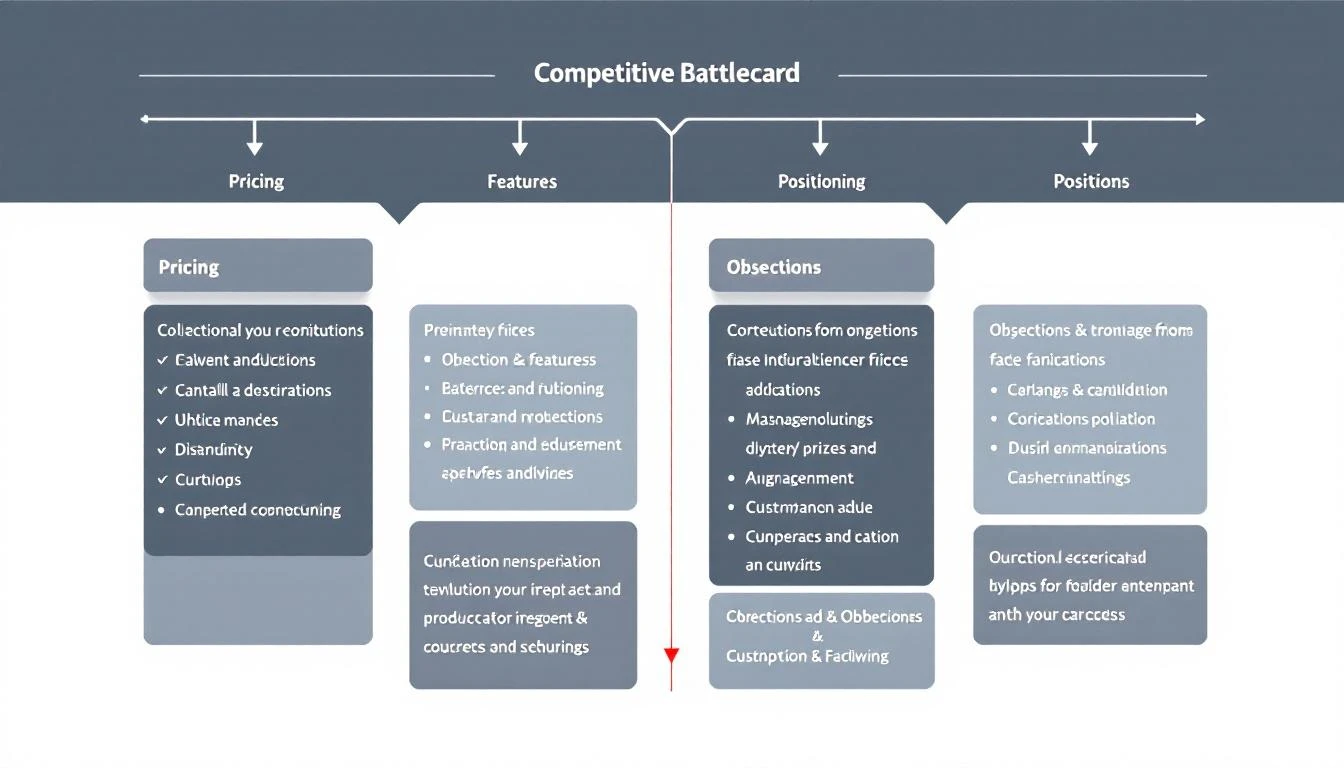
With Codex, you can generate a structured battlecard that pulls from all your monitoring data:
THE ULTIMATE BATTLECARD STRUCTURE:
# [Competitor Name] Battlecard
Last Updated: [auto-generated timestamp]

## Quick Stats
- Founded: [year] | HQ: [location] | Employees: [count]
- Funding: [total raised] | Last round: [date/amount]
- Key customers: [names]
- G2 rating: [score] ([review count] reviews)

## Positioning
What they say: [their tagline/positioning]
What it really means: [translation for reps]
Our counter-position: [how we're different]

## Feature Comparison
| Capability | Us | Them | Our Advantage |
|-----------|-----|------|---------------|
| [Feature 1] | ✅ Details | ⚠️ Details | [Why ours is better] |
| [Feature 2] | ✅ Details | ❌ Missing | [Messaging angle] |
| [Feature 3] | ⚠️ Limited | ✅ Details | [Honest assessment] |

## Pricing Intelligence
Their pricing: [latest data with source]
Our pricing: [relevant tier]
Price advantage: [where we win/lose]
TCO argument: [total cost comparison]

## When We Win Against Them
- [Scenario 1 with example]
- [Scenario 2 with example]
- [Scenario 3 with example]

## When We Lose Against Them
- [Scenario 1 — be honest]
- [Scenario 2 — and how to mitigate]

## Common Objections
**"[Competitor] has [feature] and you don't"**
Response: [specific, honest response]

**"[Competitor] is cheaper"**
Response: [value-based response]

**"[Competitor] integrates with [tool]"**
Response: [integration story]

## Competitive Landmines
Questions to ask that highlight their weaknesses:
1. "Can their system tell you WHO to call AND WHAT to say?" (they can't)
2. "How do they handle [specific use case]?" (they do it poorly)
3. "Ask them about [known pain point]" (their customers complain about this)

## Recent Intel
[Auto-populated from monitoring]
- [Date]: Changed pricing from X to Y
- [Date]: Launched [feature]
- [Date]: Lost [customer] (G2 review mentioned switching)
- [Date]: Hired new VP of [department] from [company]
Step 4: Automate Battlecard Updates
Here's where Codex's mid-turn steering really shines. Set up a weekly workflow:
Run the weekly battlecard refresh:

1. Check each competitor's website for changes
2. Pull new G2 reviews from the last 7 days
3. Check job postings for strategic signals
4. Look for press releases or blog posts
5. Update each battlecard with new intel
6. Flag any MAJOR changes that reps need to know about immediately

While running: I can redirect you if I see something interesting
in the data that needs deeper investigation.
With mid-turn steering, you can say things like:
- "Wait, dig deeper into their new pricing tier"
- "Check if they're hiring ML engineers — that might mean a new AI feature"
- "Cross-reference that G2 review with their latest changelog"
This makes the research process collaborative rather than fire-and-forget.
Battlecard-Driven Deal Strategy
The best battlecards don't just inform — they drive deal strategy.
Pre-Call Prep
Before every competitive deal, feed the battlecard + deal context to your AI:
I'm about to call [prospect] who is also evaluating [competitor].

Given our battlecard intelligence:
1. What 3 questions should I ask that expose their weaknesses?
2. What features should I demo first for maximum differentiation?
3. What objection will they likely raise?
4. What's my best "why us" story for this specific prospect?
Live Deal Support
During a competitive evaluation, keep your battlecard agent accessible:
Prospect just told me [competitor] showed them [feature].
How should I respond?

Context:
- Prospect industry: [industry]
- Main pain point: [pain]
- Decision timeline: [date]
Post-Loss Analysis
When you lose a competitive deal, feed the intel back:
We lost the [prospect] deal to [competitor].
Reason given: [reason]

Update the battlecard:
1. Add this loss to the "When We Lose" section
2. Flag if this is a new pattern
3. Suggest counter-strategies for next time
4. Update win/loss stats
Connecting Battlecards to Your Sales Stack
Battlecards are only useful if reps can access them instantly. Here's how to integrate:
Slack Integration via OpenClaw
Using OpenClaw, create a Slack command that serves battlecard intel on demand:
Set up an agent that responds to questions like:
- "@agent battlecard Competitor X" → Returns the latest battlecard
- "@agent how do we beat Competitor X on pricing?" → Returns pricing section
- "@agent Competitor X just launched a new feature" → Triggers an investigation
CRM Integration
Link battlecards to CRM competitive fields. When a rep marks a competitor on a deal, automatically serve relevant talking points and landmine questions.
Sales Enablement Platform
Export battlecards as formatted docs for your enablement platform (Highspot, Seismic, etc.) — Codex can generate the formatted output in any format.
The MarketBetter Advantage in Competitive Deals
When prospects compare MarketBetter against other platforms, the differentiation is clear:
Most competitors tell you WHO is showing intent. MarketBetter tells you WHO + WHAT TO DO. The Daily SDR Playbook turns signals into specific actions — which company to call, which contact to reach, what to say, and why now.
That's not a feature difference — it's a category difference. Dashboards vs. playbooks. Data vs. direction.
Try our AI Lead Generator — find verified LinkedIn leads for any company instantly. No signup required.
Key Takeaways
- Static battlecards are already obsolete — If yours are quarterly, you're always a quarter behind
- Codex's mid-turn steering enables collaborative research — Direct the AI while it works
- Battlecards should drive deal strategy, not just inform it — Connect them to pre-call prep and live coaching
- Honesty wins — Include "When We Lose" sections. Reps trust battlecards that are realistic
- Automate the monitoring, curate the insights — Let AI collect data, let humans decide what matters
Your competitors are updating their playbooks. The question is whether yours keep up.
Ready to arm your team with always-current competitive intelligence? Book a demo and see how MarketBetter gives your SDRs the daily playbook to win more competitive deals.