
AI Deal Desk Automation with Claude Code [2026]

Your deal desk is a bottleneck. Reps wait 24-48 hours for pricing approvals while prospects shop competitors. Finance demands margin analysis for every discount. And nobody can find last quarter's precedent pricing.
Sound familiar?
Deal desks handle some of the highest-stakes decisions in sales—pricing, discounts, contract terms. Yet most teams still run them on spreadsheets and email chains. That's insane.
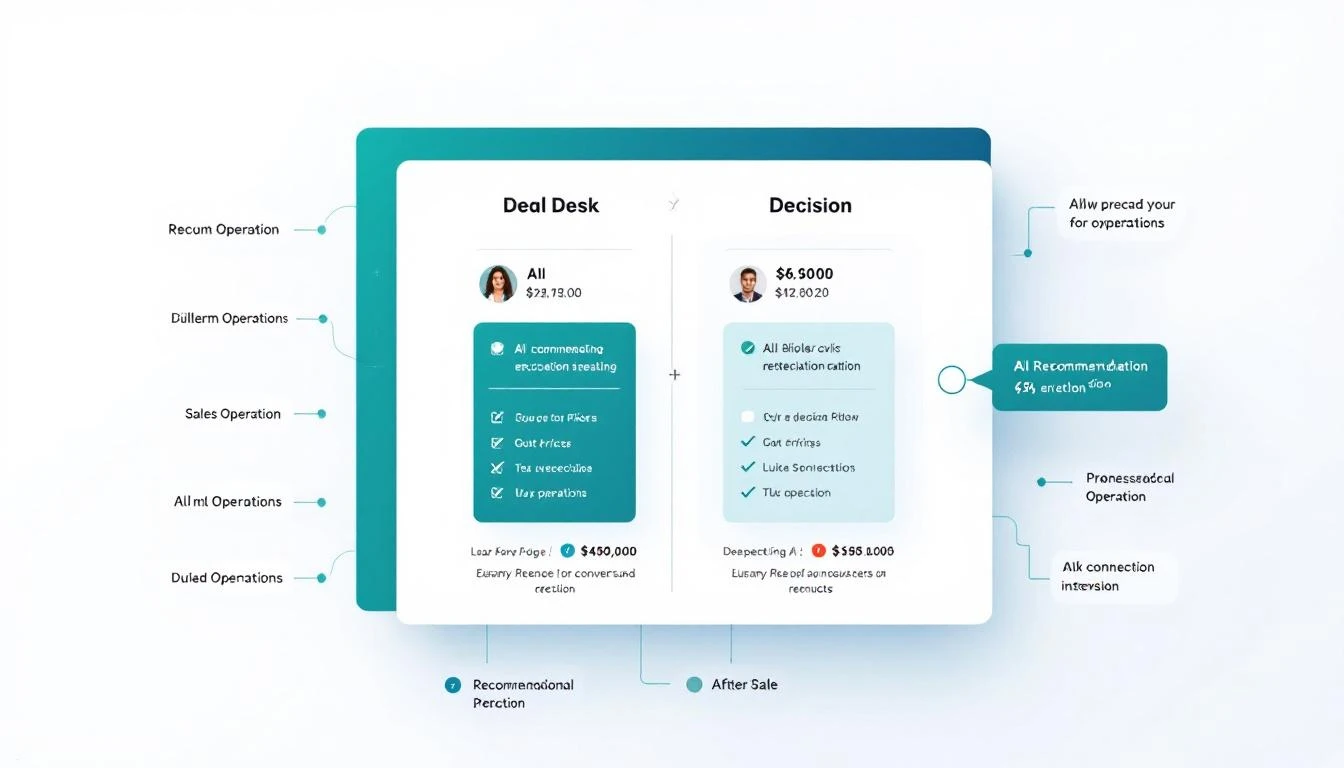
Let me show you how to build an AI-powered deal desk with Claude Code that approves routine requests instantly, flags edge cases for review, and gives you margin-protecting recommendations in seconds.

The Deal Desk Problem
Here's why your deal desk is killing deals:
- Approval latency: 24-48 hours average (prospects lose momentum)
- Inconsistency: Different reps get different discounts for similar deals
- No precedent search: "What did we charge Acme Corp last year?"
- Margin erosion: No systematic analysis of discount impact
- Bottleneck at scale: Deal desk head = single point of failure
Every day of delay in deal approval correlates with a 3-5% drop in close rate. Your "process" is literally costing you deals.
Why Claude Code for Deal Desk
Claude's 200K context window is the key differentiator here. Deal desk decisions require:
- Full contract history
- Customer relationship context
- Competitive positioning
- Margin calculations
- Precedent analysis
Other LLMs choke on this much context. Claude handles it natively.
Plus, Claude follows complex instructions precisely—critical when you're encoding your pricing rules, approval matrices, and exception policies.
Building Your AI Deal Desk
Step 1: Define Your Pricing Rules
First, codify what's currently in your deal desk manager's head:
// pricing-rules.js
const pricingRules = {
  standardDiscounts: {
    '1-year': { max: 10, autoApprove: 5 },
    '2-year': { max: 20, autoApprove: 10 },
    '3-year': { max: 30, autoApprove: 15 },
  },

  volumeTiers: {
    'starter': { seats: [1, 10], basePrice: 99 },
    'growth': { seats: [11, 50], basePrice: 79 },
    'enterprise': { seats: [51, 500], basePrice: 59 },
    'strategic': { seats: [501, Infinity], basePrice: 'custom' }
  },

  approvalMatrix: {
    '<10%': 'auto-approve',
    '10-20%': 'sales-manager',
    '20-30%': 'vp-sales',
    '>30%': 'cro-review',
    'payment-terms': 'finance',
    'custom-legal': 'legal'
  },

  autoRejectTriggers: [
    'competitor-matching below cost',
    'perpetual license requests',
    'unlimited usage without cap'
  ]
};
Step 2: Create the Claude Deal Analyst
// deal-analyst.js
const Anthropic = require('@anthropic-ai/sdk');

const claude = new Anthropic();

async function analyzeDeal(dealRequest) {
  const context = await gatherDealContext(dealRequest);

  const response = await claude.messages.create({
    model: 'claude-sonnet-4-20250514',
    max_tokens: 4096,
    system: `You are a Deal Desk Analyst for a B2B SaaS company.

Your job is to:
1. Analyze deal requests against pricing rules
2. Calculate margin impact
3. Find relevant precedents
4. Make approval recommendations

Always show your math. Be specific about risks.
Recommend approval ONLY if it meets policy.
Flag anything unusual for human review.

PRICING RULES:
${JSON.stringify(pricingRules, null, 2)}

CUSTOMER HISTORY:
${context.customerHistory}

PRECEDENT DEALS:
${context.precedents}`,

    messages: [{
      role: 'user',
      content: `Analyze this deal request:

**Customer:** ${dealRequest.customer}
**Deal Size:** ${dealRequest.arr} ARR
**Seats:** ${dealRequest.seats}
**Term:** ${dealRequest.term}
**Requested Discount:** ${dealRequest.discount}%
**Rep Justification:** ${dealRequest.justification}
**Competitor Mentioned:** ${dealRequest.competitor || 'None'}

Provide:
1. Margin analysis
2. Precedent comparison
3. Risk assessment
4. Approval recommendation with reasoning`
    }]
  });

  return parseAnalysis(response.content[0].text);
}
Step 3: Build the Approval Workflow
Connect Claude's analysis to your actual approval flow:
async function processDealApproval(dealRequest) {
  // Step 1: Claude analyzes the deal
  const analysis = await analyzeDeal(dealRequest);

  // Step 2: Auto-approve if within policy
  if (analysis.recommendation === 'auto-approve') {
    await updateCRM(dealRequest.dealId, {
      status: 'approved',
      approvedDiscount: dealRequest.discount,
      approvalNote: analysis.reasoning,
      approvedBy: 'AI Deal Desk'
    });

    await notifyRep(dealRequest.repId, {
      type: 'approved',
      message: `✅ ${dealRequest.customer} deal approved. ${analysis.summary}`
    });

    return { status: 'approved', analysis };
  }

  // Step 3: Route to appropriate approver
  const approver = determineApprover(analysis.approvalLevel);

  await createApprovalTask({
    assignee: approver,
    deal: dealRequest,
    analysis: analysis,
    deadline: calculateSLA(analysis.priority)
  });

  await notifyRep(dealRequest.repId, {
    type: 'pending',
    message: `⏳ ${dealRequest.customer} deal sent to ${approver} for review. Expected SLA: ${analysis.sla}`
  });

  return { status: 'pending-approval', analysis };
}
Precedent Search: The Secret Weapon
The most valuable deal desk feature isn't auto-approval—it's precedent search. When a rep asks "what did we charge similar customers?", Claude can search your entire deal history.
async function findPrecedents(dealRequest) {
  const searchCriteria = {
    industry: dealRequest.customer.industry,
    employeeRange: calculateRange(dealRequest.customer.employees),
    dealSize: { min: dealRequest.arr * 0.7, max: dealRequest.arr * 1.3 },
    term: dealRequest.term
  };

  const historicalDeals = await searchDeals(searchCriteria);

  const analysis = await claude.messages.create({
    model: 'claude-sonnet-4-20250514',
    max_tokens: 2048,
    messages: [{
      role: 'user',
      content: `Analyze these precedent deals for comparison:

CURRENT REQUEST:
${JSON.stringify(dealRequest, null, 2)}

HISTORICAL DEALS:
${JSON.stringify(historicalDeals, null, 2)}

Identify:
1. Most similar deal and why
2. Average discount given to similar customers
3. Any outliers and their justification
4. Recommended benchmark for this deal`
    }]
  });

  return analysis;
}
Margin Protection Analysis
Claude can calculate the real impact of discounts—not just the percentage, but the actual dollars at risk:
async function calculateMarginImpact(dealRequest) {
  const metrics = {
    listPrice: calculateListPrice(dealRequest),
    requestedPrice: dealRequest.arr,
    discountPercent: dealRequest.discount,
    discountDollars: calculateDiscountDollars(dealRequest),
    marginAtList: calculateMargin(dealRequest, 'list'),
    marginAtRequested: calculateMargin(dealRequest, 'requested'),
    marginDelta: calculateMarginDelta(dealRequest),
    ltv: estimateLTV(dealRequest),
    cacPayback: calculateCACPayback(dealRequest)
  };

  const analysis = await claude.messages.create({
    model: 'claude-sonnet-4-20250514',
    max_tokens: 1024,
    messages: [{
      role: 'user',
      content: `Provide margin analysis for this deal:

${JSON.stringify(metrics, null, 2)}

Context: Our target gross margin is 75%.
CAC payback target is 12 months.

Assessment needed:
1. Is this deal margin-positive?
2. What's the break-even discount level?
3. Any red flags on unit economics?
4. Would you approve from a finance perspective?`
    }]
  });

  return { metrics, analysis: analysis.content[0].text };
}
Real-World Implementation
Here's how a mid-market SaaS company implemented AI deal desk:
Before AI Deal Desk:
- 3-day average approval time
- 42% of deals required escalation
- Inconsistent discount rates (15-40% variance)
- Deal desk manager = bottleneck
After AI Deal Desk:
- 2-hour average approval time (15% approved instantly)
- 18% escalation rate
- Consistent discounts (5% variance)
- Deal desk manager focuses on strategic deals only
Results:
- $2.3M additional revenue from faster closes
- 3% margin improvement from consistent pricing
- VP Sales saves 10 hours/week on routine approvals
Integration Points
Slack Bot for Instant Requests
// Slack command: /deal-check
app.command('/deal-check', async ({ command, ack, respond }) => {
  await ack();

  const dealParams = parseCommand(command.text);
  const analysis = await analyzeDeal(dealParams);

  await respond({
    blocks: [
      {
        type: 'section',
        text: {
          type: 'mrkdwn',
          text: `*Deal Analysis: ${dealParams.customer}*`
        }
      },
      {
        type: 'section',
        fields: [
          { type: 'mrkdwn', text: `*Discount:* ${dealParams.discount}%` },
          { type: 'mrkdwn', text: `*Recommendation:* ${analysis.recommendation}` },
          { type: 'mrkdwn', text: `*Margin Impact:* ${analysis.marginImpact}` },
          { type: 'mrkdwn', text: `*Similar Deals:* ${analysis.precedentCount}` }
        ]
      },
      {
        type: 'actions',
        elements: [
          { type: 'button', text: { type: 'plain_text', text: 'Submit for Approval' }, action_id: 'submit_deal' },
          { type: 'button', text: { type: 'plain_text', text: 'View Precedents' }, action_id: 'view_precedents' }
        ]
      }
    ]
  });
});
CRM Integration
Connect directly to HubSpot or Salesforce:
// When deal moves to "Negotiation" stage
hubspot.deals.onStageChange('negotiation', async (deal) => {
  // Pre-analyze before rep even asks
  const analysis = await analyzeDeal({
    customer: deal.company.name,
    arr: deal.amount,
    seats: deal.properties.seats,
    term: deal.properties.contract_term,
    discount: 0, // Baseline analysis
    industry: deal.company.industry
  });

  // Attach analysis to deal
  await hubspot.deals.update(deal.id, {
    properties: {
      deal_desk_analysis: JSON.stringify(analysis),
      max_approved_discount: analysis.maxAutoApprove,
      pricing_guidance: analysis.recommendedPrice
    }
  });

  // Notify rep
  await slack.dm(deal.owner, {
    text: `📊 Pricing guidance ready for ${deal.company.name}. Max auto-approve: ${analysis.maxAutoApprove}%. View in HubSpot.`
  });
});
Best Practices
1. Start with Auto-Approve Rules
Don't try to AI-ify everything. Start with clear auto-approve criteria:
- Standard discount tiers
- Straightforward renewals
- Volume commitments
2. Build Confidence Gradually
Track accuracy. Start with AI recommendations, then move to auto-approval as you verify it's getting it right.
3. Always Show Reasoning
Reps need to understand WHY a deal was approved/rejected. Claude's explanations build trust.
4. Keep Humans in the Loop
AI handles 70% of routine work. Humans handle strategic decisions, relationship nuances, and exceptions.
Getting Started
- Document your current rules — What's in your deal desk manager's head?
- Export historical deals — You need precedent data
- Set up Claude — Start with analysis-only (no auto-approve)
- Run parallel — Compare AI recommendations to human decisions
- Calibrate and deploy — Adjust rules, then enable auto-approve
Related Resources
- AI Contract Review for Sales Teams
- Multi-CRM Sync Automation with Codex
- Claude 200K Context for Sales Workflows
Try our AI Lead Generator — find verified LinkedIn leads for any company instantly. No signup required.
Transform Your Deal Desk
MarketBetter helps GTM teams work smarter with AI-powered automation. From lead qualification to deal desk operations, we help you close faster without sacrificing margin.
See how AI can transform your sales operations.