
How to Automate Account Prioritization with AI Agents [2026]
Your SDRs are working accounts that will never close.
Not because they're lazy — because they can't tell which accounts matter. They're flying blind, treating a 10-person agency the same as a 500-person enterprise actively searching for your solution.
The result? According to TOPO research, SDRs spend 64% of their time on accounts that will never buy.
AI changes this equation completely.
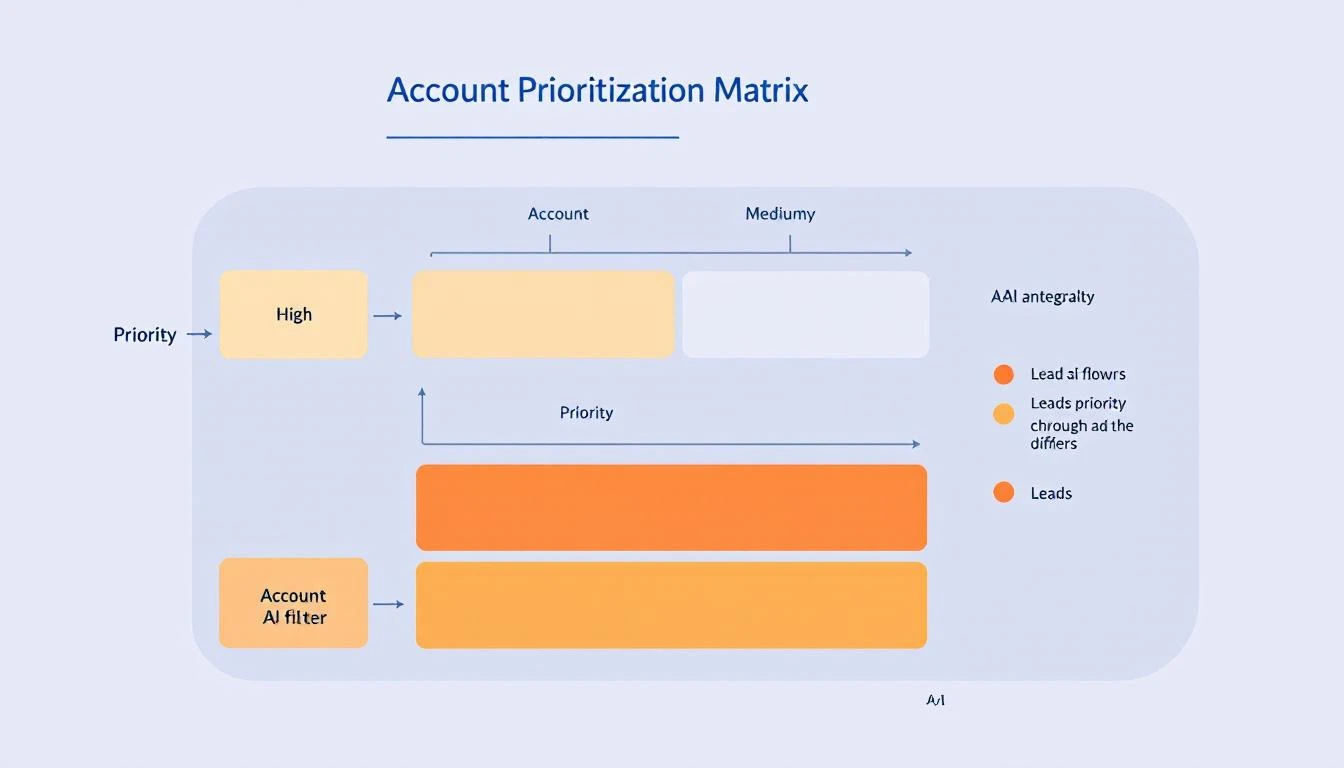
The Account Prioritization Problem
Traditional lead scoring is broken:
What most companies do:
- Assign points for form fills and page views
- Use static firmographic filters (size, industry)
- Update scores manually (if at all)
- Let SDRs pick accounts based on gut feel
What actually matters:
- Is the company actively researching solutions?
- Did they just get funding (budget unlocked)?
- Is the decision-maker engaging with your content?
- Do they match your best customer profile — really?
- What are they saying about you to competitors?
Static scoring can't capture this. AI can.
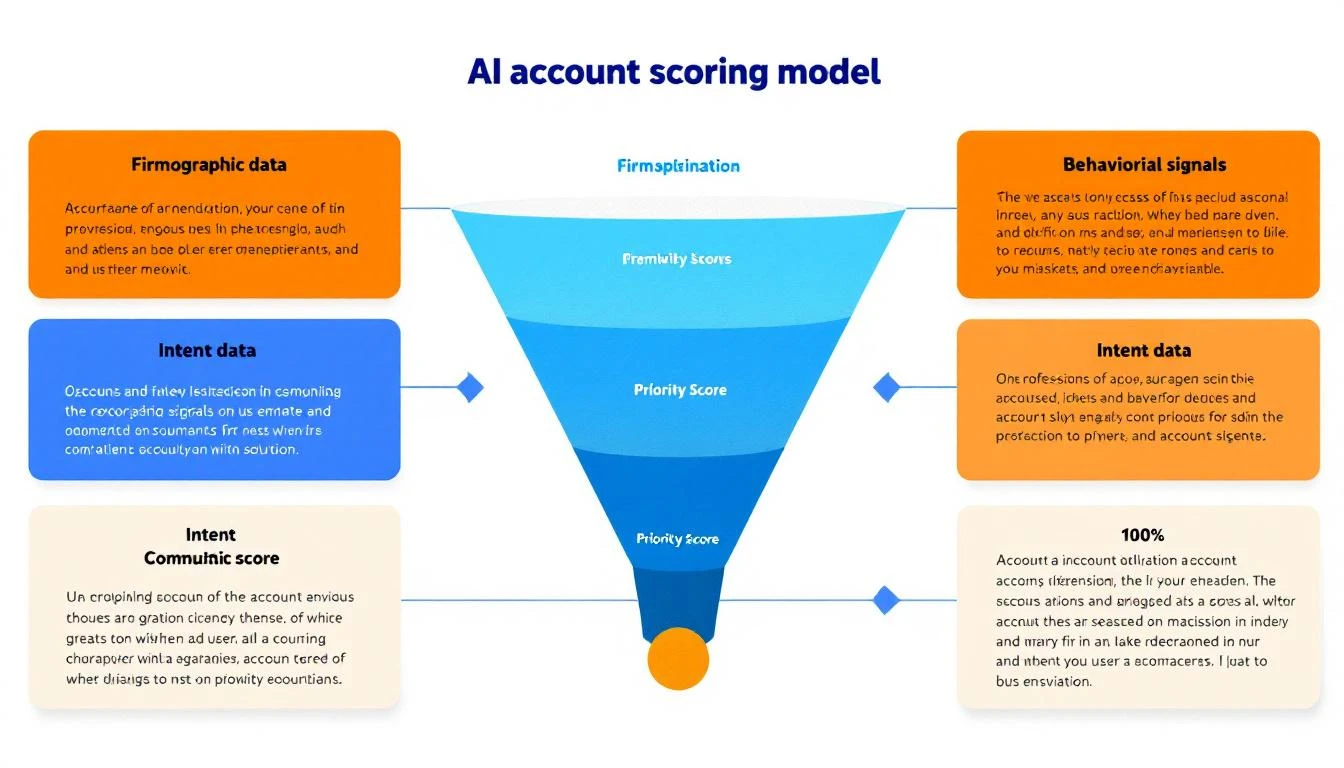
The AI Account Scoring Model
Here's how to build an account prioritization engine that actually works:
Layer 1: Firmographic Fit
Basic but essential. Use AI to enrich and score:
Signals:
- Company size (employees, revenue)
- Industry vertical
- Tech stack (from BuiltWith, Wappalyzer)
- Geography
- Growth indicators (hiring, office expansion)
AI Enhancement: Instead of binary yes/no on ICP fit, Claude analyzes:
Company: TechCorp Industries
Employees: 200
Industry: Manufacturing IoT

Analysis:
- Primary ICP match (IoT vertical)
- Size is mid-market (secondary target)
- Tech stack includes Salesforce (integration opportunity)
- Recently hired 3 sales roles (scaling GTM)

Firmographic Score: 78/100
Reasoning: Strong vertical fit, actively investing in sales, but not enterprise-tier deal size.
Layer 2: Intent Signals
This is where AI shines. Track and score:
First-party intent:
- Website visits (pages, frequency, recency)
- Content downloads
- Pricing page views
- Demo page visits without booking
- Email engagement patterns
Third-party intent:
- G2 category searches
- Competitor comparison searches
- Review site activity
- Industry publication engagement
- Job posting analysis
AI Processing:
const intentSignals = {
  websiteVisits: [
    { page: "/pricing", visits: 3, lastVisit: "2 days ago" },
    { page: "/vs-competitor", visits: 2, lastVisit: "1 day ago" },
    { page: "/case-studies", visits: 5, lastVisit: "today" }
  ],
  thirdPartyIntent: {
    g2Searches: ["SDR tools", "sales automation"],
    competitorResearch: ["Apollo", "Outreach"]
  }
};

// Claude's analysis
const intentScore = await claude.analyze({
  signals: intentSignals,
  prompt: `
    Analyze these intent signals for purchase readiness.
    Score 1-100 and explain the buying stage.

    Key indicators:
    - Pricing page visits = late-stage research
    - Competitor comparison = active evaluation
    - Multiple stakeholders visiting = committee forming
  `
});

// Output: Score 85/100
// "Active evaluation stage. Multiple pricing page visits
//  combined with competitor research indicates they're
//  building a shortlist. Recommend immediate outreach
//  with differentiation messaging against Apollo/Outreach."
Layer 3: Engagement Recency
Recent activity trumps historical engagement. Use AI to weight:
Decay model:
- Activity today = 100% value
- Activity this week = 80% value
- Activity this month = 50% value
- Activity > 30 days = 20% value
AI Enhancement: Claude considers context:
Engagement Pattern Analysis:

Account: DataFlow Inc.

- Downloaded pricing guide: 45 days ago
- Visited website: 2 days ago (pricing page)
- Downloaded competitor comparison: 1 day ago
- VP Sales viewed LinkedIn post: Today

Assessment: REACTIVATED INTEREST
Despite aging initial engagement, there's clear evidence
of resumed evaluation. Recent pricing + comparison
activity suggests they're revisiting a delayed decision.

Recommended action: Re-engage with "what's changed"
messaging, reference their earlier interest.
Layer 4: Relationship Signals
Who you know matters:
Signals:
- Previous interactions (calls, emails)
- Connection to existing customers
- Shared investors or advisors
- Conference attendance overlap
- Mutual LinkedIn connections
AI Processing:
Relationship Mapping:

Account: CloudScale Systems

- CRO previously worked at [Current Customer]
- Two LinkedIn connections in common with your team
- Attended same industry conference last quarter
- No previous outreach from your company

Relationship Score: 45/100
Opportunity: Warm intro possible through [Customer]
connection. Mention shared conference for relevance.
Layer 5: Propensity Modeling
This is the AI secret weapon — predicting which accounts will buy:
Training data:
- Historical won deals (what did they look like before close?)
- Lost deals (what warning signs appeared?)
- Time-to-close patterns
- Champion personas
- Common objections by segment
AI Model:
# Simplified propensity scoring
propensity_factors = {
    "matches_closed_won_profile": 0.35,
    "intent_signal_strength": 0.25,
    "engagement_recency": 0.20,
    "relationship_warmth": 0.10,
    "firmographic_fit": 0.10
}

# Claude augments with reasoning
propensity_prompt = """
Based on our historical data:
- Accounts that close have 3+ website visits in final month
- Champions are typically VP+ level
- Deals with competitor mentions close 40% faster
- Manufacturing IoT has 2x close rate vs general SaaS

Analyze this account against these patterns and predict
close probability with confidence interval.
"""
Building the Automation with OpenClaw
Here's how to run this 24/7:
OpenClaw Agent Configuration
# account-prioritization-agent.yaml
name: Account Prioritizer
schedule: "0 6 * * *"  # Run daily at 6 AM

data_sources:
  - hubspot_accounts
  - website_analytics
  - g2_intent_data
  - linkedin_sales_navigator

workflow:
  1_enrich:
    action: enrich_accounts
    sources: [clearbit, apollo, builtwith]

  2_score:
    action: ai_score
    model: claude-3-5-sonnet
    scoring_layers:
      - firmographic_fit
      - intent_signals
      - engagement_recency
      - relationship_mapping
      - propensity_model

  3_prioritize:
    action: rank_accounts
    tiers:
      hot: score >= 80
      warm: score >= 60
      nurture: score >= 40
      archive: score < 40

  4_route:
    action: assign_to_reps
    rules:
      - hot: round_robin_senior_reps
      - warm: round_robin_all_reps
      - nurture: marketing_automation

  5_notify:
    action: slack_alert
    channel: "#sales-prioritization"
    message: "Daily account prioritization complete. {hot_count} hot, {warm_count} warm."
Daily Output Example
🎯 DAILY ACCOUNT PRIORITIZATION - Feb 9, 2026

HOT (Immediate outreach) - 12 accounts
━━━━━━━━━━━━━━━━━━━━━━━━━━━━━━━━━━━━━━

1. DataFlow Inc. | Score: 94
   └─ Why: 5 pricing views, downloaded ROI calc, VP on LinkedIn
   └─ Action: Sarah to call - warm intro available through CloudCo

2. TechCorp Industries | Score: 91
   └─ Why: Competitor comparison research, 3 stakeholders visiting
   └─ Action: Mike to email - use manufacturing IoT case study

3. ScaleUp Systems | Score: 87
   └─ Why: Series B last week, hiring 4 SDRs, founder liked our post
   └─ Action: Sarah to DM founder on LinkedIn

WARM (This week) - 28 accounts
━━━━━━━━━━━━━━━━━━━━━━━━━━━━━━━━━━━━━━

4. Velocity Labs | Score: 72
   └─ Why: Downloaded comparison guide, ICP fit, no recent activity
   └─ Action: Nurture sequence #2

[...]

CHANGES FROM YESTERDAY:
- DataFlow Inc.: ↑ 45 → 94 (pricing page spike)
- OldCorp LLC: ↓ 65 → 38 (went dark, moving to nurture)
- NewTech Co.: NEW at 71 (first-time visitor, strong fit)
Measuring Impact
Track these metrics before and after implementing AI prioritization:
| Metric | Before AI | After AI | Change |
|---|---|---|---|
| Accounts worked per day | 35 | 15 | -57% |
| Meetings booked per day | 1.2 | 2.8 | +133% |
| Meeting-to-opportunity rate | 24% | 41% | +71% |
| Time spent on bad-fit accounts | 64% | 18% | -72% |
| SDR satisfaction score | 6.2 | 8.4 | +35% |
The math:
- SDR costs: $75K/year fully loaded
- Time recovered from bad accounts: ~25 hours/week
- Value of recovered time: ~$45K/year
- If that time books 2 extra meetings/week at $5K deal value = $520K pipeline
ROI is obvious.
Common Mistakes to Avoid
Mistake 1: Over-weighting firmographics
Big company ≠ good prospect. A 10,000-person enterprise with no intent signals is worse than a 100-person startup actively searching.
Fix: Weight intent and engagement higher than firmographics.
Mistake 2: Ignoring negative signals
Some accounts should be deprioritized:
- Recently churned
- In active legal dispute
- Competitor's biggest customer
- Bad reviews about your company
Fix: Include disqualification criteria in your scoring model.
Mistake 3: Static scoring
Markets change. Your ideal customer evolves. Scoring models decay.
Fix: Re-train your propensity model quarterly using recent closed-won/lost data.
Mistake 4: Not explaining the score
SDRs won't trust black-box scores.
Fix: Always show WHY an account scored high/low. Claude excels at this reasoning.
Getting Started
Week 1: Foundation
- Export your CRM data (last 12 months of closed deals)
- Identify your 5-layer scoring criteria
- Set up intent data sources (G2, Bombora, or website tracking)
Week 2: Build
- Create your Claude scoring prompts
- Configure OpenClaw agent
- Run first batch scoring on test accounts
Week 3: Validate
- Compare AI scores against rep intuition
- Adjust weightings based on feedback
- Review edge cases (high-score no-shows, low-score wins)
Week 4: Deploy
- Route scores to CRM
- Set up daily Slack reports
- Train reps on using prioritization data
Try our Lookalike Company Finder — find companies similar to your best customers in seconds. No signup required.
Ready to Prioritize Smarter?
AI account prioritization isn't the future — your competitors are using it now.
Every day you waste time on bad-fit accounts is a day your competitors are closing the good ones.
Next steps:
- Audit your current scoring model (or lack thereof)
- Identify your intent data gaps
- Book a demo with MarketBetter to see AI prioritization in action
Because working harder is not the same as working smarter.