
AI Account-Based Marketing Orchestration with OpenClaw [2026]
Account-based marketing is supposed to be the precision weapon in your GTM arsenal. Instead, most ABM programs devolve into "spray slightly fewer people with slightly more relevant emails."
The problem isn't strategy. It's execution. ABM requires coordinating research, scoring, personalization, and multi-channel outreach across dozens — sometimes hundreds — of target accounts. That's a full-time job for a team, not a side project for your demand gen manager.
What if an AI agent handled the orchestration layer? Not replacing your strategy, but executing it at a scale no human team can match.
That's exactly what OpenClaw enables. In this guide, we'll walk through building an AI-powered ABM orchestration system that runs 24/7, scores accounts in real time, and coordinates personalized outreach across email, LinkedIn, and Slack — completely automated.
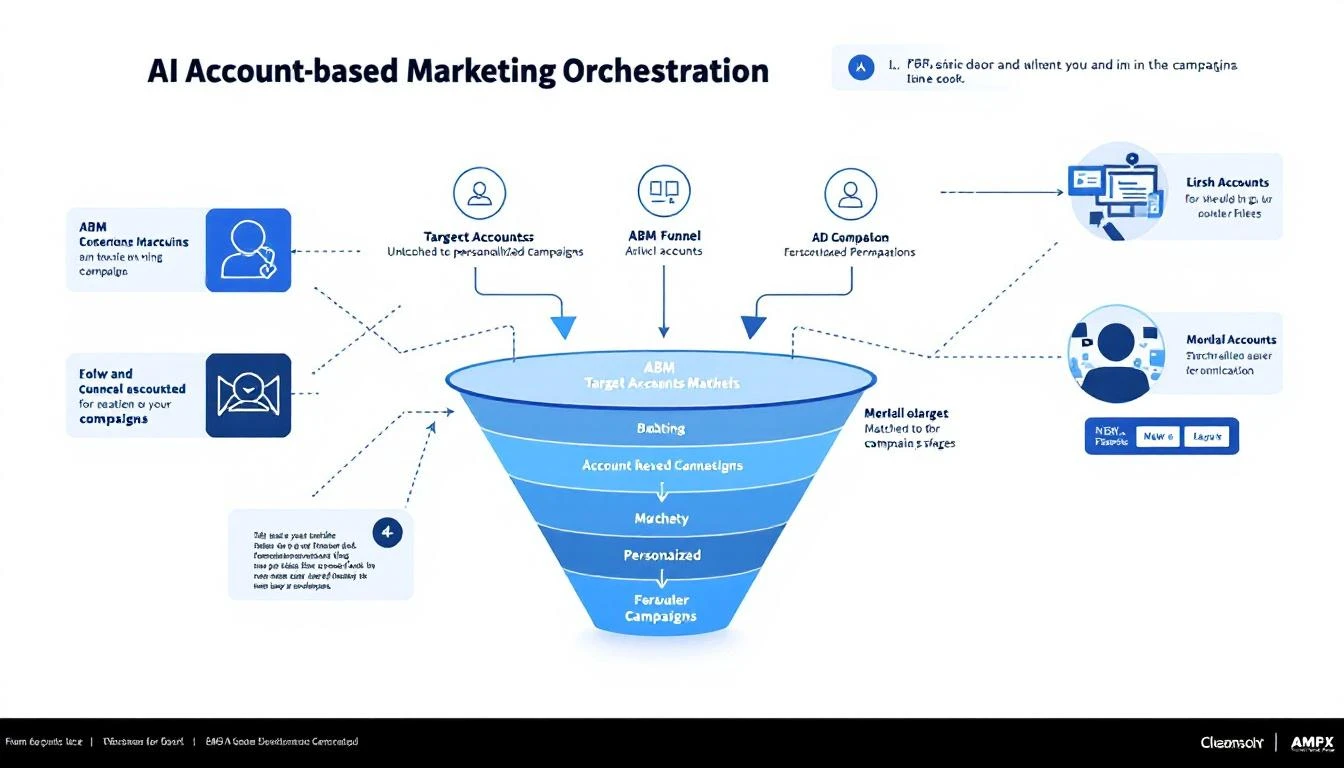
Why Traditional ABM Falls Apart
Let's be honest about why most ABM programs underperform:
Research bottleneck. Your SDRs spend 45 minutes per account researching company news, tech stack, hiring patterns, and key stakeholders. With 100 target accounts, that's 75 hours of pure research — before a single email goes out.
Stale scoring. Your account scores update quarterly (if you're lucky). But buying signals change daily. A company that wasn't ready last month just posted three SDR job openings and raised a Series B. Your static score missed it.
Generic personalization. "I noticed your company is in the cybersecurity space" isn't personalization. It's a search result. Real personalization requires understanding the specific challenges that account faces right now.
Channel silos. Your email team doesn't talk to your social team. LinkedIn touches happen independently of email sequences. The buyer experience feels disjointed because it is.
An AI orchestration layer fixes all four problems simultaneously.
The Architecture: OpenClaw as Your ABM Brain
OpenClaw runs as a self-hosted gateway that connects AI models to your messaging channels, CRM, and data sources. Think of it as the central nervous system for your ABM engine.
Here's the architecture:
Data Layer: CRM (HubSpot, Salesforce) + Intent signals + Website visitors + Social signals
Intelligence Layer: Claude or GPT analyzing account data, scoring readiness, identifying triggers
Orchestration Layer: OpenClaw coordinating timing, channel selection, and message personalization
Execution Layer: Email sequences, LinkedIn outreach, Slack notifications to SDRs
The beauty of OpenClaw is that it's open source and self-hosted. You're not paying $35K-$50K/year for an AI SDR platform. You own the infrastructure.
Step 1: Automated Account Research
The first job of your ABM agent is continuous research. Instead of manual account reviews, your agent monitors target accounts around the clock.
Set up an OpenClaw cron job that runs every few hours. The agent pulls data from multiple sources:
- Company news (press releases, funding announcements, leadership changes)
- Job postings (hiring SDRs? Expanding? Restructuring?)
- Technology changes (new tools in their stack, migrations)
- Social signals (executives posting about challenges you solve)
- Website visits (if they're checking your pricing page, that's a signal)
The agent compiles this into a structured account brief. Not a data dump — an actionable brief that identifies the trigger events that make outreach relevant right now.
This isn't theoretical. With OpenClaw's web search and fetch capabilities, your agent can check 100 accounts in the time it takes a human to research one.
Step 2: Dynamic Account Scoring
Static account scores are dead. Your AI agent should update scores based on real-time signals.
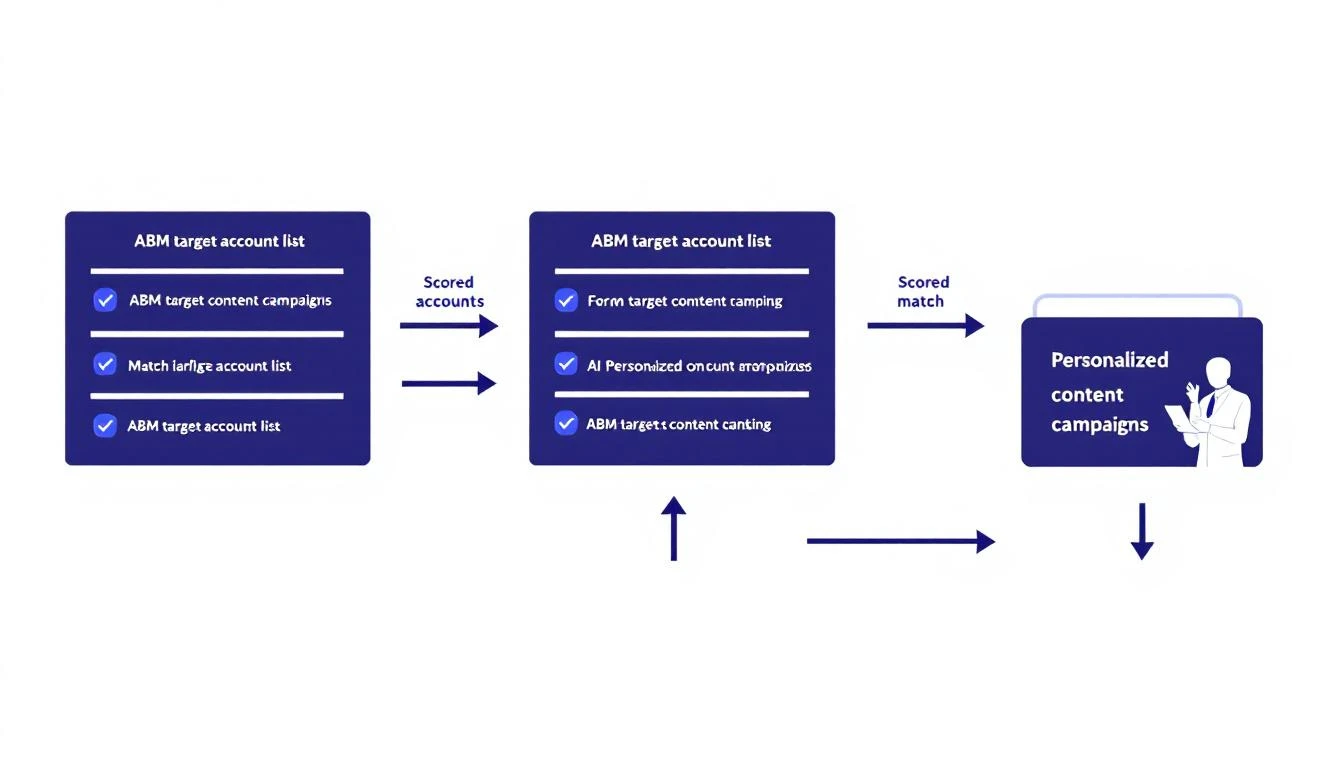
Here's a scoring framework your OpenClaw agent can implement:
Firmographic fit (0-25 points)
- Company size matches ICP: +10
- Industry alignment: +10
- Revenue range: +5
Behavioral signals (0-35 points)
- Website visit (pricing page): +15
- Multiple page views in a week: +10
- Downloaded content: +10
Trigger events (0-40 points)
- New funding round: +15
- Leadership change in target department: +10
- Job posting for role your product helps: +10
- Public statement about pain you solve: +5
The agent recalculates scores daily and automatically promotes accounts between tiers. A "nurture" account that just raised $50M and posted three SDR job openings? That's now a "priority" account — and the agent adjusts outreach accordingly.
Step 3: Personalized Campaign Generation
This is where AI truly shines. Your OpenClaw agent doesn't just pick a template — it generates genuinely personalized messaging for each account.
The agent uses Claude's 200K context window to process the full account brief (research, triggers, past interactions, stakeholder profiles) and generate:
Email sequences tailored to the specific trigger event. "Congratulations on the Series B" emails are table stakes. Your agent writes about how the specific challenges that come with scaling from 50 to 200 employees create the exact problem your product solves.
LinkedIn connection requests that reference something specific the prospect posted or published. Not "I'd love to connect" — something that demonstrates you've done your homework.
Internal briefings for SDRs that summarize the account situation, recommended approach, and talking points — delivered via Slack before any call.
The key difference from traditional tools: your agent generates this content fresh for each account, using current intelligence. Not recycled templates with a company name swapped in.
Step 4: Multi-Channel Orchestration
The orchestration layer is what separates real ABM from "emails with company names in them."
Your OpenClaw agent coordinates timing and sequencing across channels:
Day 1: LinkedIn connection request to primary stakeholder Day 2: Email to secondary stakeholder (different message, same thread) Day 3: If LinkedIn accepted — engage with their recent post Day 4: Follow-up email to primary with a relevant case study Day 7: Slack notification to SDR: "Account X engaged on 3 channels, call recommended"
The agent tracks responses across all channels and adjusts the sequence dynamically. If an email gets opened but no reply, the next touch shifts to a different channel. If a LinkedIn post gets a response, the agent escalates to the SDR immediately.
This multi-channel coordination is nearly impossible for a human to manage across 50+ accounts. But it's trivial for an AI agent that never sleeps.
Step 5: SDR Enablement and Handoff
Your AI agent isn't replacing SDRs — it's making them dramatically more effective.
When an account reaches the threshold for human engagement, the agent prepares a complete handoff package:
- Account summary: One paragraph on who they are and why they're ready
- Trigger event: What changed that makes outreach relevant now
- Stakeholder map: Who to contact, their roles, what they care about
- Recommended approach: What to say, which pain points to lead with
- Conversation starters: Specific, researched talking points
- Risk factors: Competitor presence, budget timing, potential objections
This package arrives in Slack (or whatever channel your team uses) with everything the SDR needs to have a productive conversation — without spending 45 minutes on research.
The Cost Equation
Let's talk numbers, because this is where it gets compelling.
Traditional ABM platform: $35,000-$80,000/year (6sense, Demandbase, etc.)
OpenClaw-powered ABM:
- OpenClaw: Free (open source, self-hosted)
- AI API costs: ~$200-500/month (depending on volume)
- Hosting: ~$50-100/month (any cloud provider)
- Total: $3,000-7,000/year
That's a 10x cost reduction. And because you own the code, you can customize every aspect of the scoring, research, and orchestration logic to match your specific ICP and go-to-market motion.
Getting Started
You don't need to build this all at once. Start with one piece:
- Account research automation — Set up an OpenClaw agent that monitors your top 20 accounts and delivers daily briefs
- Add scoring — Layer in trigger event detection and dynamic scoring
- Personalize outreach — Generate custom messaging based on research
- Orchestrate channels — Coordinate timing across email, LinkedIn, and Slack
Each step compounds on the last. Within a few weeks, you'll have an ABM engine that operates at a scale your competitors can't match — at a fraction of the cost.
Try our Lookalike Company Finder — find companies similar to your best customers in seconds. No signup required.
The Bottom Line
ABM has always been limited by execution capacity. The strategy is straightforward: identify high-value accounts, understand their needs, engage them with relevant messaging across multiple channels.
The bottleneck was always human bandwidth. AI agents remove that bottleneck.
OpenClaw gives you the infrastructure to build an ABM orchestration layer that runs 24/7, stays current on every target account, and coordinates personalized outreach at scale. No $50K platform fee. No 6-month implementation. Just an AI agent that does what your team always wanted to do but never had the bandwidth for.
The companies that figure this out first will have an unfair advantage in pipeline generation. The question is whether you'll be one of them.
Ready to see how AI-powered GTM works in practice? MarketBetter's Daily SDR Playbook already turns intent signals into actionable next steps for your team. Book a demo to see it in action.